Your Cheatin’ Heart

I love Harlan Ellison.

So, as you might remember, I recently read two wonderful Harlan Ellison short stories (to be fair, every Ellison short story is wonderful; his lesser efforts are better than most writer’s best), “On the Downhill Side” and the Edgar Award winning “The Whimper of Whipped Dogs,” both included in his collection Deathbird Stories. At one point I had a mass market paperback edition I’d picked up in a bookstore; I literally have no idea where that is–probably lost over the years during a move or something, or it may be on the bookshelves; at this point who knows? But I’ve gathered and collected Ellison collections over the years–recently getting, from eBay, the very same mass market paperback edition of Strange Wine, which was my gateway drug to reading Ellison–and even got the enormous collection The Essential Ellison, which still sits proudly in my bookcase.

The first time I heard of Ellison was when I read Stephen King’s brilliant introduction and evaluation of the horror/speculative fiction genre, Danse Macabre, which reminded me of many great films and books and TV shows I’d loved, and introduced me to still others. Shortly afterward, I was at a friend’s apartment drinking–this was my early twenties–and she had that copy of Strange Wine, and I thought, oh, Harlan Ellison! Stephen King praised him to the skies! I need to read this. I asked if I could borrow it and she gifted me with it (and in all honesty, I thought less of her for not wanting it back, particularly since she raved so much about how good it was), and then I took it home with me that night and the next morning I read the intro and the first story, “Croatoan,” and there was no looking back from that. I devoured the book, learned the term “speculative fiction” (which I much prefer to horror, science fiction, and fantasy; when I worked at Lambda I tried, unsuccessfully, to get that award category title changed to simply Best Speculative Fiction), and also became interested in writing it. This was during the time when I worshipped Stephen King so much that I wanted to become a writer like Stephen King, but wasn’t skilled or trained enough to really write really good speculative fiction–or fiction, really, of any kind. I still write it periodically, and some day when I have the time I’ll work on my short story collection Monsters of New Orleans more (hat tip to Lisa Morton; she suggested I do it years again at World Horror Con in New Orleans); in fact the story I started writing yesterday, “The Pestilence Maiden”, would be for Monsters of New Orleans. I looked for more of Ellison’s works every time I went to a bookstore for about a year after that, to no avail, and eventually Ellison got pushed to the back of my mind.

A few years later, one of the major networks (I want to say CBS) rebooted The Twilight Zone as, I think, maybe a summer replacement series (when that was a thing), and I noticed in the TV Guide one week that one of the two stories in that week’s episode was based on Stephen King’s truly creepy short story “Gramma,” and decided to tune itn. “Gramma’ was the first half hour, and it was totally creepy, just like the story; I stayed turned for the second half, which was called “Paladin of the Lost Hour” and starred Danny Kaye and Tim Reid of WKRP in Cincinnati fame. The story was powerful and beautiful and brilliant, and made me cry. As I watched the credits roll, I saw, to my joy and surprise, that it was based on a Harlan Ellison story and he may have even adapted it into a teleplay. It became a goal of mine to read that story, and so I began haunting used bookstores, looking for Ellison collections. I never, ever regretted reading an Ellison collection, and eventually I did finally find a collection that included “Paladin of the Lost Hour,” which remains to this day one of my favorite short stories.

I was reminded of Ellison recently because of a Twitter thread about short stories; I think perhaps Art Taylor may have started it, looking for short stories to teach in one of his classes (it may have been Facebook); and someone mentioned Ellison’s Edgar Award winning “The Whimper of Whipped Dogs.” (I, of course, suggested “Paladin of the Lost Hour,” which also led to a discussion of The Twilight Zone episode I mentioned earlier, which is actually now on Youtube; you can watch it here. I also didn’t know, until looking up the link, that it was Danny Kaye’s last screen appearance, and he deserved a goddamned Emmy for it; and I’m not even a fan.) I knew I’d recently downloaded, at some point, some Ellison collections to my Kindle app when they were cheap and/or free, so I decided to look to see if I had it. When I opened Deathbird Stories, it was open to “On the Downhill Side,” which turned out to be set in New Orleans; I read it, loved it, and then went to the table of contents, and sure enough, “The Whimper of Whipped Dogs” was in it. (I must have read it before; I am certain I read my paperback copy of Deathbird Stories, but I didn’t remember either story.)

This is how “On the Downhill Side” begins:

I knew she was a virgin because she was able to ruffle the silken mane of my unicorn. Names Lizette, she was a Grecian temple in which no sacrifice had been made. Vestal virgin of New Orleans, found walking without shadow in the thankgod coolness of cockroach crawling Louisiana night. My unicorn whinnied, inclined his head, and she stroked the ivory spiral of his horn.

Much of this took place in what is called the Irish Channel, a strip of street in old New Orleans where the lace curtain micks had settled decades before; now the Irish were gone and the Cubans had taken over the Channel. Now the Cubans were sleeping, recovering from the muggy today that held within its hours the deja vu of muggy yesterday, the deja reve of intolerable tomorrow. Now the crippled bricks of side streets off Magazine had given up their nightly ghosts, and one such phantom had some to me, calling my unicorn to her–thus, clearly, a virgin–and I stood waiting.

Had it been Sutton Place, had it been a Manhattan evening, and had we met, she would have kneeled to pet my dog. And I would have waited. Had it been Puerto Vallarta, had it been 20 36′ N, 105 13’W, and had we met, she would have crouched to run her fingertips over the oil-slick hide of my iguana. And I would have waited. Meeting in streets requires ritual. One must wait and not breathe too loud, if one is to enjoy the congress of the nightly ghosts.

She looked across the fine head of my unicorn and smiled at me. Her eyes were a shade of gray between onyx and miscalculation. “Is it a bit chilly for you?” I asked.

New Orleanians, of course, as I have noted before, are very protective and pedantic about fiction written about the city by people who don’t live here (always said with capital letters: People Not From Here)–this also stands for lazy journalistic features that always, inevitably, get everything incorrect–and in this beautifully written and incredibly poetic opening, there’s an error: the Irish Channel isn’t a strip of street, it’s an actual neighborhood, running alongside the Garden District from Jackson to Louisiana and from Magazine to the river. (I don’t know about the Cubans–I don’t know of any concentrated Cuban immigration to New Orleans, but I know enough not to question it because there’s so much about this magic place that I do not know, which is why I am reading New Orleans history) But the opening of this story is simply gorgeous, and the imagery Ellison uses is absolutely perfect; I particularly like the sentence Vestal virgin of New Orleans, found walking without shadow in the thankgod coolness of cockroach crawling Louisiana night–and wish I had written it.

As I read more of the story, it’s spectral beauty began casting a spell on me; Ellison didn’t try to write about New Orleans like a native or a local; his ghostly spirit with the unicorn, trapped like Lizette in the realm between worlds because of unfinished business, is also new to New Orleans, and sees it as a tourist would; and I realized how wise he was to make this storytelling choice; it makes errors not only acceptable but forgivable (I really can turn into a hellish banshee on this topic) and he also wrote some beautifully evocative lines about the city that I wish I had written:

I despise Bourbon Street. The strip joints, with the pasties over nipples, the smell of need, the dwarfed souls of men attuned only to flesh. The noise.

The Saint Louis Cemetery is ancient. It sighs with shadows and the comfortable bones and their afterimages of deaths that became great merely because those who died went to be interred in Saint Louis Cemetery. The water table lies just eighteen inches below New Orleans–there are no graves in the earth for that reason. Bodies are entombed aboveground in crypts, sepulchers, vaults, mausoleums. The gravestones are all different, no two alike, each one a testament to the stonecutter’s art. Only secondarily testaments to those who like beneath the markers.

It really is a gorgeous story, almost dream-like in its telling, and I absolutely loved it. I then moved on to the Edgar-winning “The Whimper of Whipped Dogs”:

On the night after the day she had stained the louvered window shutters of her new apartment on East 52nd Street, Beth saw a woman slowly and hideously knifed to death in the courtyard of her building. She was one of twenty-six witnesses to the ghoulish scene, and, like them, she did nothing to stop it.

She saw it all, every moment of it, without break and with no impediment to her view. Quite madly, the thought crossed her mind as she watched in horrified fascination, that she had the sort of marvelous line of observation Napoleon had sought when he caused to have constructed at the Comedie-Francaise theaters, a curtained box at the reat, so he could watch the audience as well as the stage. The night was clear, the moon was full, she had just turned off the 11:30 movie on Channel 2 after the second commercial break, realizing she had already seen Robert Taylor in Westward the Women, and had disliked it the first time; and the apartment was quite dark.

The murder of Kitty Genovese, based on my limited knowledge of Harlan Ellison and his work, seemed to weigh pretty heavily on his mind; he wrote this story, clearly influenced by the Genovese murder and the stories that arose around it; I also distinctly remember reading an essay he’d written in which he talked about it–I believe it may have been the introduction to Alone Against Tomorrow, or in one of the mini-essays he wrote about each story collected within its covers; I cannot remember which. But I remember how clearly appalled and horrified he was, not just by the murder, but the way the witnesses did nothing, tried nothing, said nothing, to either stop the murder or to help the hapless victim. As his spirits in “On the Downhill Side” are waiting for their green light to ascend to the spirit plane from this mortal realm, “The Whimper of Whipped Dogs” delves, not into the inhumanity involved in every aspect of the Kitty Genovese murder, but what created that very inhumanity, as Beth, new to New York, begins to see the dark, malevolent spirit that drives New York and sometimes, occasionally, demands blood sacrifice; and as she begins to harden her own shell in order to survive. It’s an extraordinary story, well worthy of the Edgar; although I am surprised it was so honored, as it blurs the boundaries between different genres–and back in the day, Edgar judges tended to be very strict about what was and wasn’t a crime story.

And yes, I will be delving back into Ellison’s short fiction–as a crossover between The Short Story Project and The ReRead Project.

febAnton Antipov4

I Walk the Line

It’s Thursday. Finally. I swear to God, this has been one of the longest and most bizarre weeks of my life thus far–and I’ve lived through some very strange and bizarre times. This reality, surreal for so long, is finally beginning to sink in somewhat, at least for me. I am someone who is completely dependent on structure and routine to achieve stability, which is required for me to function at a level sometimes (oft times) much higher than my natural tendency toward stasis, laziness, and a remarkable inability to finish things. I can’t be that person, and this sudden alteration of my reality was so quick I didn’t really have time to adjust to it. As such, my wiring has been completely off and my functionality dramatically slowed. But the shock is beginning to wear off, I’m adjusting if not adapting, and I might be able to start finding the order amidst the chaos again.

At least for as long as this new reality holds, at any rate.

It’s absolutely horrible to feel overwhelmed, and I sense that a lot of people are feeling overwhelmed right now. It’s a lot of change, all at once, and with very little warning. For some, the rug was literally pulled out from underneath them in  matter of hours. It’s terrifying to go from I wonder what I’ll do this weekend to oh my god how am I going to pay my rent in a matter of moments. I’ve certainly been feeling overwhelmed for quite some time now, with no end in sight. But if I learned anything from the Time of Troubles, there’s no sense in worrying or being concerned or making one’s self sick from stressing about things over which you have literally no control.

The best way to get through these things–which seem like they may never end–is to focus on micro rather than macro; the big picture is too overwhelming for our minds to grasp, grapple with and process. That’s the sure path to despair and depression–and the D twins don’t need much help gaining purchase in my brain. Your mileage might vary, but I think it’s terribly important to stay focused and stay positive, no matter how bad things are or how much worse they can get.

At some point this afternoon I am going to go for a walk, probably over to Magazine Street, just to get out into the fresh air and the sunshine. It’s overcast here today, but it’s been in the seventies and eighties all  week, so I can’t imagine that it’s not a simply gorgeous day out there. I need to not be inside all the time–tomorrow I am actually working a five hour shift at the office, primarily so I can get out of the house–the change of scenery is going to be crucial for the moment. I don’t know how long, obviously, we’re going to be on lock-down; it could go on for months, quite frankly, and adaptability, as I learned after Katrina, is going to be terribly important as a survival technique.

We picked up Dare Me again last night, on Episode 3, and I am amazed at how amazingly well done this show is; it’s very cinematic, the acting is pinpoint sharp, and this is a feminine point of view we’ve never seen much of before. Just as a visual, it’s a stunning show. I’d like to read the book again at some point–I’ve not read anything in a couple of weeks and I need to get back into reading again; it’s not like I don’t have lots of books on hand for me to sink my teeth and imagination into around here. Maybe I should, as I joked about on Facebook last week, reread The Stand. It has been awhile, and it’s always been one of my favorite King novels. A reread won’t require as much focus as reading something new…hmmm. And I am doing the Reread Project this year–although that seems like I started it a million years ago, doesn’t it?

And on that note, it’s back to the spice mines.

augEdwin-Bermoser1

Delta Dawn

What’s that flower you have on?

I’ve always thought the song “Delta Dawn” was kind of Faulknerian in its story-telling; I’ve always felt a little bad for the poor, slightly demented woman wandering around her small Southern town waiting for her lover to come back. Because make no mistake–she was definitely from a small Southern town. Up north, they wouldn’t let her wander around the way they would down South. As Julia Sugarbaker said once on Designing Woman, “we’re proud of our crazy people down here. We put them out on the porch so everyone can see them. We don’t ask if you have crazy people in your family, we ask which side are they on.”

It’s a very strange day this morning in the Lost Apartment. Yesterday the Tennessee Williams Festival/Saints & Sinners were cancelled because of the COVID-19 outbreak–we are up to 19 cases here in Louisiana now (the majority of them in the New Orleans area and its environs) and it seems as though some people who traveled here for Mardi Gras have tested positive. If it was already here during Carnival…it staggers the imagination on what that means for transmission and infection. The cancellation of the two festivals also felt like my soul and heart were being ripped from my body. Both have been a major part of my life–Saints & Sinners since we founded it all those years ago, and TWFest since that first year Paul and I volunteered back in 1997. For so many years now my life has been built around those two events. It’s going to be weird to not have them.

I often talk about my Imposter Syndrome–just yesterday, in fact–but one of the things I use to combat it is events like the two festivals, Bouchercon, serving on the MWA board, etc. Spending time around other authors, just talking about books and writing and marketing and the struggle and publishing, is always refreshing and invigorating for me. I always, for example, come away from TWF/S&S inspired to do more work and to do better work. I missed Bouchercon last year because of a sinus infection; this year I don’t get my adrenaline shot from TWF/S&S. As I am struggling at the moment with a severe case of Imposter Syndrome (an outbreak?), I was looking forward to that weekend to talk about books and writing and creativity to chase that away. Now I am going to have to somehow manage to muddle through it all on my own.

I am debating on whether I should go to the gym today or not. I have rubber gloves to wear, but it really is a matter of touching my face with the gloves on more than anything else. I absolutely hate to lose the momentum I’ve gained from the working out since I went back to the gym, but I also missed Wednesday because of emotional and physical exhaustion and missing again seems counter-intuitive. On the other hand…

I tend to be fatalistic when it comes to infectious diseases. By all means, take every possible precaution necessary–but having spent most of my twenties and thirties just assuming it was a matter of time before I seroconverted and became HIV positive (it’s still amazing to me that I am not), I kind of am fatalistic about this sort of thing. I think perhaps the most disturbing and frightening thing I learned about pandemics and their spread from The Stand was how basic human nature contributes to it. There was a brilliant scene in the book at one of the CDC centers–the one in Bennington, where Stu Redman was eventually moved to, to be studied as to why he didn’t get the superflu–where one of the nurses sneezes and thinks to herself, oh great, just what I need, a cold and then went about her business….and she was standing by a sign that said REPORT EVERY SIGN, EVEN IF IT’S JUST A COUGH OR A SNEEZE. We all have a natural feeling of invulnerability; a sense that nothing bad will ever happen to us. I don’t know if that’s some kind of defense mechanism or not; I was thinking yesterday that well, all I can do is the best I can to not get infected and I might as well focus on doing some work because the world won’t stop turning. Work has always been a helpful distraction for me; but being creative–difficult under the best of circumstances–isn’t always the easiest during difficult times. I didn’t really write much during the Time of Troubles, but that was when my blog started. I get made fun of sometimes for still having a blog and for still writing it every day, but it’s a comfort to me and when I am not writing, well, at least I am still doing this. Having a blog helped me navigate through the most difficult of times, gave me an outlet for my rage and depression and random musings, and while it’s evolved since then–I don’t talk about politics anymore here, for one thing–it’s still helpful for me to gather my thoughts and at least put sentences and paragraphs together, hopefully in a way that makes some sort of sense to the two or three of you who come here to read my daily meanderings.

And of course, like Katrina, a pandemic affects writers in many ways. Do we keep writing our books and pretend that in our fictional universes this didn’t happen, isn’t happening, won’t happen? There’s something very comforting in going into a fictional world where some of the bad things going on in the world haven’t happened, or aren’t happening. I managed to write all of my books and pretend that the Eternal Wars in Iraq and Afghanistan weren’t going on, for example; in my fictional universes that sort of thing doesn’t happen, and it’s nice to go there and forget about all the troubles and care of the world.

I’ve always found escape into fictional worlds a great coping mechanism.

And on that note, tis back to the spice mines with me.

10689530_10203925563313163_1773184084655464000_n

Hello Walls

Well, hello Thursday morning and a beautiful looking morning outside of my windows.

I’m not really sure what to make of what is going on in the world today. One of the reasons I always loved Stephen King’s The Stand so much was because it seemed so brutally realistic; I was amazed at how it played out and thinking wow this is exactly how it would happen, right down to the government lying and covering it up to suppression of the news and people spreading it despite containment policies, procedures and protocols. How on earth did he ever think this up?

Which is one of the biggest parts of why I love Stephen King’s writing. For one, the imagination to think up the stories–and the scale! I don’t know that I could ever create something like The Stand and do that kind of world-building, let alone keep track of all the individual characters and their story arcs, both their individual personal arcs as well as the over-arching arc of the main story. I’ve considered writing post-apocalyptic fiction–I have a really good idea for one, but I can’t make up my mind how to precisely do it, to be honest, and so it has always languished in the back of my mind. I had several different ideas for stories, actually; primarily triggered by the HIV/AIDS crisis of the 1980’s, and then I realized how I could weave them all into the same story. But…it’s an epic story and a massive undertaking, and I simply don’t have the confidence in my own writing abilities to actually try writing it.

And that’s the bottom line for the vast majority of the ideas and stories I have that would probably make amazing books–I just don’t have the confidence to write them.

Okay, here I am later in the evening, and I am still not sure what to think or how to process everything. Twitter and social media and the news are determined to terrify me; I don’t know what I should be thinking or worrying about or doing. I know I should use this time creatively; I should block everything out and just write and check in on the world later this evening. And yet…

I’m not sure what the deep root of the insecurity I was talking about earlier comes from. I feel confident that I’m good at what I do, but when you send a manuscript to twenty agents and only even bothers to write back to say, “Thank you but no thank you; I’m not taking on more clients at this time” it tends to wear on you. Manuscripts editors passed on were later published. Needless to say, I am very wary of agents, and still am to this day. I know I need one, should have kept trying years ago until I got one, but now…I go back and forth between your career isn’t the greatest but at least you have one, be happy with what you have and an agent will help me get better deals and better sales and my books more attention. This week I got my fifteenth Lambda Literary Award nomination; and I sold a gay-themed short story to a mainstream market (well, I haven’t heard back from them, but it’s been a bit of a week, hasn’t it?) so one would think I write well enough to draw even a little bit of interest from an agent. I’ve been nominated for numerous other, mainstream awards; I’ve even won some of them.

And yet…

AH, well. I think I need to spend some time with Scooter. Til tomorrow.

11021203_10153136147413923_2483112750047628738_n

Guitars, Cadillacs

And here it is Monday again; a week that began with the loss of an hour, a massive full moon, and ends with Friday the 13th. Nope, no trepidation there whatsoever.

Yesterday was a relatively good day, despite the shortness and loss of an hour. I managed to get my email inbox trimmed down to something reasonable–which is a plus–and I also managed to get some work done not only on the Sherlock story but on the Secret Project, which was simply not working out because I couldn’t name the main character and all the names I came up with simply didn’t work for me. It dawned on me this weekend what her name should be, and I am pleased to say this also opened up the story for me. I also decided it was silly to–oh, can’t say that, never mind; but let’s just say the setting was wrong, too.

Sometimes….I never learn. Again, I was being stubborn and trying to make something work because I wanted it to work, rather than thinking “okay, why isn’t this working? It shouldn’t be this difficult” which is, of course, the key to everything.

We started watching The Outsider on HBO last night, and we are intrigued thus far. I’ve not read the Stephen King novel on which it is based (we also watched 11/22/63 without me reading the book; but I remember so little of the show it won’t affect me when and if I finally do read the book)–which is weird to me; there used to be a time when I would devour the new Stephen King the day it was released. But I also don’t have the kind of free time that I used to have, either, where I could afford to lose myself in a book for a couple of days–which I do miss, really. I did enjoy the Mr. Mercedes trilogy, but I’m also trying to remember the last time (other than those) that I loved a new King book that I tore through it without stopping from beginning to end. I’m also having some doffoculty remembering the last time (outside of the afore-mentioned Charlie Hodges series) I greatly enjoyed a King novel. It’s certainly been a hot minute or two.

I’m not feeling especially great this morning; I have a head cold or something–which of course, has me paranoid with all this talk of coronavirus madness. I am debating–since I work in a public health clinic–whether I should stay home or not. I know staying home is probably the most responsible choice for me, but at the same time it’s just a stuffy nose and the occasional cough or sneeze. I don’t have a lot of sick time accumulated, either–which is another problem with our capitalistic system; people go to work sick because they either don’t have sick pay or they don’t have enough sick pay. But I don’t think I have anything like that–it’s just a head cold, maybe slightly sinus related–and the Dayquil I took this morning already is kicking in.

I did get some writing done this weekend–not much, not nearly enough–but I did get some done, which is, naturally, a step in the right direction. I have to get three stories finished by the end of the month, and I really am going to need to step up my game here. I was thinking–wondering–why I am having so much trouble focusing and writing lately, but can’t quite put my finger on what the problem is. I do need to figure it out, though.

Oh! I also sold a short story yesterday! Isn’t that exciting? I’m not going to say where or which story yet–until the contract is signed I never want to jinx anything–but that was some excellent news that I needed to get after the shitshow last week was.

And on that note, I should get ready for work.

10606350_1692884677602891_1202876425432991271_n

It Wasn’t God Who Made Honky Tonk Angels

I cannot say I am not happy to see this past week end; for all intents and purposes, it was much more stressful than any week needs to be and equally disappointing. It was both tiresome and tiring; irritating, really, like an itchy rash that just won’t go away, frankly. By Tuesday night I was so exhausted already it felt like a Friday; and yet there were three more days yet to go and it never really got any better.

Begone, foul week! Get thee behind me, Satan!

I am so far behind on my emails now I may never dig my way out; that’s part of the plan for this weekend, at any rate; to try to get caught up on everything and make some progress. I had some stomach issues yesterday so I wound up staying home rather than heading to the office (the bathrooms aren’t close enough to my desk, and yes, I think you get the picture) so I spent most of the day recalibrating and doing some chores around the house and trying to get caught up on everything. But progress was made; I started getting my electronic files in the cloud better organized (which is quite a chore, I might add; one that is sort of mindless yet time-consuming in the worst way), and did some filing and so forth. There’s still quite a bit more to get done today, of course (isn’t there always?)  but I also want to get some writing done before the month slips away through my fingers. Ideally, I’d like to get a first draft of the Sherlock story finished as well as a revision of the one I’m revising for that anthology; and there’s another one I want to revise to send to the Bouchercon anthology. I’d also like to make some progress on the Secret Project, but that’s also predicated on my getting this short story work taken care of. I cannot believe how many stories I’ve started writing recently; it’s more than a little insane, methinks.

But then again, it seems pretty standard for my life–chaos, disorganization, and more chaos.

One would think I’d be used to it by now.

I also want to finish reading Carol Goodman’s The Sea of Lost Girls today, if I can; so i can get started on Lori Rader-Day’s The Lucky One. I am moderating a panel with her, Elizabeth Little (Pretty as a Picture) and  Laura Lippman (Lady in the Lake) at the Tennessee Williams Festival at the end of the month, and it’s always better to be prepared to discuss their latest works. Don’t worry, I’ll also be asking Lippman about My Life as a Villainess, her essay collection coming out later this year.

We watched another episode of Harlan Coben’s The Stranger last night. It’s a fun, twisty show, with a rather complicated narrative; I think it’s actually better than his last one, The Five. I am way behind on my Coben reading–so far behind I may never catch up–but I do enjoy that he writes suspense novels built around family/friend structures. I’m behind on everyone, so don’t feel special, Harlan! I am also way behind on my reading of Michael Koryta, Jeff Abbott, Stephen King, and any number of other white males; prioritizing diverse writers and women (and a year judging the Edgars) will do that to one, I suppose. I really wanted to read The Outsider (Stephen King) before watching the show; perhaps once I finish the Goodman and the Rader-Day I can move on to the King and we can finally watch the show. I’ve become rather an enormous fan of Jason Bateman, and really can’t wait for Ozark to come back.

We also lose an hour tonight; the part of Daylight Savings Time that I really hate. But I do like having longer days; I like it still being light when I come home from work, or at least, the light fading into night rather than the velvety darkness of a winter nocturne. It’s a bright, sunny day out there today; I am debating whether I do want to go get the mail–it would be my only adventure out into the world today–and am thinking I might do it. I hate only going once in the week, but on the other hand I’m also not expecting any packages or anything urgent (read: a check) in the mail, either. But it looks like a lovely day outside–and perhaps I can do some scouting after I get the mail. We shall certainly see how I feel.

I think this morning I am going to read some more of the Goodman novel while I have my morning coffee, and then after a few hours of that I’ll decide whether I do, in fact, want to leave the house. (odds are I won’t, quite frankly. I know myself all too well)

And on that note, tis time to get back to the spice mines. May your Saturday be bright and happy and full of cheer.

1982058_10201646586392496_1725030329_n

Sunday Morning Comin’ Down

Well, I don’t know about coming down, but it’s definitely Sunday morning.

Then again, I did have to come downstairs, so I guess that’s somewhat applicable.

I wallowed in bed until nine this morning; I woke up originally at approximately seven AM and chose to stay in bed, it was kind of a lovely thing. The nice thing about football season being over is there’s no longer a need to get up early on the weekends in order to get things done before the games start–I’d forgotten how lovely it is to just stay in bed and relax and stay there until you really feel guilty about staying under the covers for so long. I stayed in bed pretty late yesterday morning–eight or nine, I don’t remember–but it is lovely, even if it throws my sleep schedule off a bit, seeing as how I must rise at six the next two mornings. But c’est la vie, right?

I did get some good work done yesterday on the Secret Project–which is going to be my primary focus this morning before I go to the gym–and I also have emails to answer. I also finished reading Tracy Clark’s terrific debut novel, Broken Places, yesterday, and then spent a good while trying to decide what to read next. As a general rule, I don’t like to read more than one book by a solitary author in a row, particularly when I have three of them to read; I’m interviewing Tracy for Sisters in Crimes’ quarterly newsletter, and so it behooves me to read them all. No worries–I am going to devote an entire entry at some point to Broken Places–probably shortly after I finish this one, to be honest.

I also got the lovely news that the Joni Mitchell anthology i contributed to, edited by Josh Pachter, The Beat of Black Wings, will be out and available in time for Malice Domestic! This anthology is a “crime stories inspired by the music of Joni Mitchell,” and the table of contents is a veritable who’s who of crime writers and people I am lucky enough to call friends. My story, “The Silky Veils of Ardor,” is one I particularly am proud of; I feel like I’ve been doing some terrific work on short stories over the past few years, dating back to the Short Story Project (which reminds me, I have another one I need to get started writing, and soon), and I do hope you’ll get a copy of the anthology. The proceeds are going to a charity; one of which Ms. Mitchell approves, and I believe the anthology is even going to promoted and featured on her website, which is very cool. More to come on that front, of course.

Oh, did I mention I am going to Malice Domestic this year? Yes, that’s correct, Constant Reader, I am going go be at Malice Domestic this coming May; I’ll be taking Amtrak down from Penn Station the morning after the Edgars to Malice Domestic. This is my second Malice, and I am really looking forward to it–particularly seeing friends win Agatha Awards two days after the Edgars. I’ll be flying home the following morning (that Sunday), but it’d going to be an absolutely lovely trip, and one which I hope will once again make me feel once again connected to the writing world.

Krewe de Vieux was last night, but I stayed home; Paul went to watch with friends, but I’m reserving my energy and strength for the St. Charles Avenue parade season, which opens this Friday with three parades. There are four or five more on Saturday, and then another two on Sunday; at least Sunday wraps up early in order for there to be rest and relaxation for the two-day break before the final stretch of six days and seemingly endless parades begins.

I can hardly believe it’s parade season again, but here we are.

I’m thinking, since we’re most likely going to start watching HBO’s adaptation of Stephen King’s The Outsider this evening, that perhaps it’s time to crack the spine of the first edition hardcover I own and start reading it; I do like to read the book along with the series adaptation whenever I can–this worked really well with Big Little Lies–but I am also thinking that maybe I should read a cozy next? It’s been a while since I’ve dipped my toe into the cozy waters, and perhaps it’s not a bad idea to read one next? But I simply cannot seem to make up my mind, heavy sigh. Maybe a reread of Where Are The Children  as a memorial to Mary Higgins Clark?

So many books to read, and so very little time.

Well, I suppose I can put off the decision a little longer…and perhaps it is time for me to get back to the spice mines.

Have a lovely Sunday, Constant Reader!

1005179_171929099651777_142273027_n

He’ll Have to Go

Saturday morning, and I slept in until nearly eight thirty! Living large here, I have to say.

Yesterday was one of those days; the temperature dropped, as you may recall, and once again when turning on the heat Thursday night, it didn’t really come on–it did, but it never truly got warm in the Lost Apartment, either upstairs or down. So, I wound up having to stay home from work to wait for the HVAC guys, who actually arrived dutifully when they said they would (this is so rare as to merit mention), and worked on it for a while. They did eventually leave, and I went to the gym and ran my errands.  I don’t know if the heat is actually fixed or not; we didn’t need it last night anywhere other than the kitchen, and I have a space heater for in there (it never warms up in the kitchen, ever) but I did manage to get a lot of cleaning and organizing done. I also managed to start watching the film of The Talented Mr. Ripley on the iPad yesterday at the gym (the Anthony Minghella version) and it veers away from the book’s narrative much more than I ever had supposed; the character of Meredith (played by Cate Blanchett) doesn’t exist in the book, nor does the entire subplot about Dickie’s affair with the village girl in Mongibello. But the one thing I will say about this film–and the thirty or so minutes of it I watched–Matt Damon is exceptionally great in the role of Tom; far more so than Jude Law as Dickie (he was nominated for an Oscar; the film made him a star), and this just might be one of Damon’s best performances.

Paul, I believe, is off to the office later today, and has plans with friends to go watch Krewe de Vieux tonight; I intend to stay home and work on the Secret Project, get my taxes together and sent off to the accountant, and emails to answer. There’s also organizing and filing to do, and I need to do the floors; I always leave the floors for Saturday vacuuming. Paul’s absence also gives me no excuse for not reading and writing for most of the day; around the cleaning, at any rate–and I am actually looking forward to getting a lot of both done today.

I’m still reading Tracy Clark’s Broken Places, which is really good, and in fact, once I finish writing this I am most likely going to  head over to the easy chair and spend a few hours with it this morning before moving on to the Secret Project. I am also really enjoying Jason Berry’s City of a Million Dreams, which I am not very far into, but I feel confident in recommending just based on the introduction and part of the first chapter. I’ve not read Berry before–he’s local, and has written quite a few books, including taking the Archdiocese to task for covering up the sexual abuse of children–but I am impressed enough to start adding his canon to my TBR list. We started watching Avenue 5, which was much funnier than I thought it would be–and Hugh Laurie is terrific as the captain; the entire cast is actually quite good. We’re probably going to also start watching The Outsider on HBO, which presents a conundrum for me; I generally like to read the book while I am watching the TV series based on it (I did this with Big Little Lies, and found it to be incredibly enjoyable; I’ve not read the King yet, but once I am done with the Clark, I am definitely going to pull The Outsider down from the shelf and give it a go)., but I guess pulling down The Outsider and moving it up to the top of the TBR list won’t hurt anyone or anything.

Parades also start this coming Friday on the St. Charles Avenue route; the challenge is going to be continuing to write and go to the gym around my job and the parades; parade watching is always a blast–it will probably never get old for me–but it’s also exhausting and keeps me up later at night than I probably need to be awake, given how early I will have to get up the following mornings.

It’s also lovely to wake up and sit at my desk and glance around and see clean, clear counters and a sink that is primarily empty of dirty dishes. There’s a load in the dishwasher that needs to be put away, and a load of laundry in the dryer that also neede to be fluffed and folded, but like I said, other than that and the floors (and these stacks of file folders and scribbled notes scattered around my desk), there’s no cleaning to be done this morning. My muscles are tired this morning from the gym yesterday, but I’m not sore, and I feel more stretched than I usually do, which also actually feels good–I may just stretch out a bit a little later; I’d forgotten how good it feels to have stretched muscles as opposed to tight ones.

So, that’s the plan for today, at any rate. I’m going to go pour yet another cup of coffee, take my book and repair to the easy chair; after that, it’s back to the desk to do some writing and answer some emails (I never actually send them until Monday morning; emails beget emails, and I’d rather not wake up Monday morning at the crack of dawn with an insane amount of emails to answer; it’s too, too daunting to deal with on a twelve hour day).

I was also thinking the other day–thanks to a post by someone on Facebook–about books that should be paired together, like a good wine and some good cheese; how reading the two back-to-back can enhance the reading pleasure of both. Michael Koryta’s The Prophet (which is one of my favorite books), for example, pairs beautifully with Megan Abbott’s Dare Me (and you need to be watching the television adaptation of Dare Me); Alafair Burke recommends pairing Scott Turow’s Presumed Innocent with Gillian Flynn’s Gone Girl, and there was one more I can’t quite remember, but it was also quite brilliant. (I also think pairing Stephen King’s Carrie and Christine together enhances the pleasure of reading each even more.)

I was also thinking about “event” books; Gone Girl was probably the most recent “event” book–a book that sold a gazillion copies and everyone was talking about. There have always been “event books”, which in the pre-Internet, pre-social media days was harder to have happen, and yet it did, all the time. Two such books from the 70’s include Thomas Tryon’s The Other and Peter Benchley’s Jaws; the fame of Jaws was spread even further by an event film based on it that has almost entirely eclipsed the book. Robin Cook’s Coma was another one of these; I intend to include The Other in my Reread Project this year, but rather than Jaws I am going to reread Benchley’s second novel, The Deep, and Cook’s second novel, Sphinx–which was Cook’s only non-medical thriller thriller.

And on that note, I am going to repair to the easy chair with my coffee and Tracy Clark. Have a lovely Saturday, Constant Reader; I certainly intend to.

1209113_10151802572687778_2028718899_n

Blue

So, Saints & Sinners and the Tennessee Williams Festival were a Jeopardy clue on Friday night; how fricking cool is that? I didn’t see it myself–I was cleaning–but any number of people tagged me on Facebook or on Twitter, so I got to see it, which is cool. The Tennessee Williams Festival has been a clue before, but I think this is the first time Saints & Sinners was–and it’s a queer/LGBTQ festival, so even more cool. Way to go, Jeopardy! There’s a reason why you’ve always been my favorite game show!

Hold up your hand if you didn’t think I’d get everything done yesterday that I’d planned. But it was still a good day, and I wrote some new stuff for the first time in a while. I have these horrible stagnant times, when I don’t get any writing done–and as we’ve already established, I always have to force myself to do it (despite loving doing it) and then when I’ve got my writing for the day finished, I wonder why I have to make myself do something I love–and those stagnant times always make me worry that I’ve lost the spark, the desire, to do it; that this time is the time I won’t be able to get back into it and do it. I worked on the Secret Project for a while yesterday, basically completely rewrote everything I wrote to begin with, and moved onto from the first scene to the next scene, which was also quite lovely.

I did get some organizing done–there’s more to be done today; my iCloud drive is so ridiculously disorganized that it’s almost impossible to use, and I probably should back everything up yet again–and some of the filing; I should be able to get more done this morning before I dive back into the Secret Project. I am also planning on heading to the gym for the first time in a very long time (I prefer not to think about just how long that time has been, frankly), which is my first move in my attempt to live a healthier, better organized, better life. I already am thinking of excuses to get out of going, frankly–which is par for the course, as always–but as long as I don’t tie myself to any particular time table, I should be good. I guess the Super Bowl is also tonight, but I don’t really care about either team–the 49ers or the Chiefs–though I suppose if I had to pick one I’d pick the Chiefs, and that’s mainly because they haven’t won a Super Bowl in forever and I think Kansas City could use the boost. We’ll probably spend the evening getting caught up on shows we watch. We still haven’t finished watching Messiah, are way behind on Dare Me, haven’t started the last season of Schitt’s Creek, and so on.

We haven’t even started HBO’s adaptation of Stephen King’s The Outsider, which is getting rave reviews. Who would have ever guessed The Hogan Family’s Jason Bateman would become one of our finest actors/directors/writers for television? I really can’t wait for Ozark to come back.

I also finally finished and published my blog post about Victoria Holt’s Kirkland Revels, part of my Reread Project; I still need to do The Talented Mr. Ripley–it’s started, but I need to finish it.

I am resisting the urge to read Dorothy B. Hughes’ The So Blue Marble next; I need to start reading Tracy Clark’s canon so I can interview her for Sisters; but I also have to read Lori Rader-Day’s The Lucky One for the panel I’m moderating this year at the Jeopardy clue Tennessee Williams Festival late next month. Decisions, decisions. Probably the smart thing to do is read Tracy Clark’s first book next, then Lori’s, and then back to Tracy again for her second book.

I’ve also reached the final section of Richard Campanella’s Bourbon Street, which I am looking forward to finally finishing this month. I’ve thoroughly enjoyed the book, which is interesting, well-written, and incredibly informative; it’s going to remain on my desk as an important reference guide for any future New Orleans writing I do–which reminds me, I’ve got to start that Sherlock Holmes story–and probably when I finish the Campanella I’ll probably move on to Jason Berry’s City of a Million Dreams: A History of New Orleans at Age 300. 

The plan is to get this work on the Secret Project finished this week, get started on the Sherlock story, and then get back to Bury Me in Shadows. I’d like to get Shadows turned in by the end of March, get back to the Kansas book–maybe with some serious focus I can get that finished and turned in by the end of May, and then I can get to work on Chlorine. I’d like to have the first draft of Chlorine finished by the end of summer.

Must stay organized, and must stay focused.

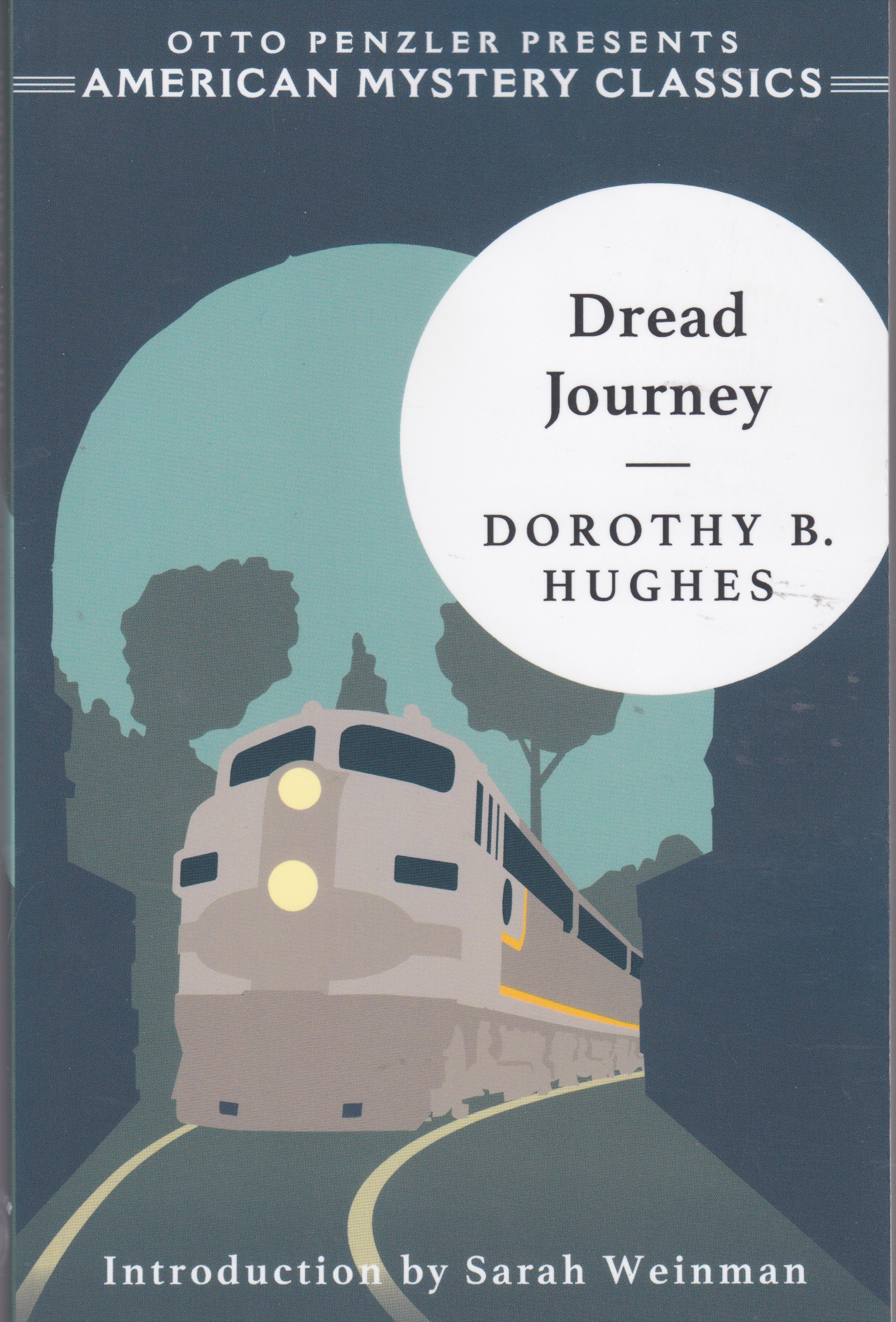
I also finished reading Dorothy B. Hughes’ Dread Journey yesterday.

dread journey

“I’m afraid.”

She had spoken aloud. She hadn’t meant to; she hadn’t wanted those words to come up from her throat to her lips. She hadn’t meant to think them, much less speak them. She didn’t want Gratia to have heard them.

But across the room the girl lifted her eyes from her book.

“What did you say?” she queried.

Dorothy B. Hughes is one of the more unjustly forgotten women writers of the mid to later twentieth century; fortunately Sarah Weinman worked–and has continued to work–tirelessly to bring this women back into the public eye. She wrote the introduction to Dread Journey, and in it she names Hughes as her favorite crime writer of all time. She’s not wrong, frankly; Sarah and my friend Margery are both huge fans of Hughes, and if not for them–and Megan Abbott–I may not have ever started reading Hughes, and for that I shall always be grateful to them. In a Lonely Place and The Expendable Man are both extraordinary; I think, frankly, The Expendable Man should be taught; it’s on my list for the Reread Project, for later in the year. Dread Journey is yet another masterwork by Hughes; I cannot wait to dig my teeth into more of her work.

Dread Journey takes place entirely on a train; the Chief, making its regular run from Los Angeles to Chicago–and you know, at some point, someone really needs to do a book or lengthy essay about crime novels and trains; not only did Hughes write one, but Christie wrote two (the very well known Murder on the Orient Express and the lesser known The Mystery of the Blue Train; as well as others that revolved around trains, like 4:50 from Paddington–called What Mrs. McGillicudy Saw! in the US) and of course, Graham Greene’s wonderful Orient Express comes to mind as well. Trains were part and parcel of the American experience. Trains made travel and connecting the massive distances across this continent much easier in the time before air travel became more commonplace and everyone wasn’t convinced they needed a car; there’s a certain nostalgic romantic element to train travel now, probably a result of these novels. I know that year we lived in Washington, we loved taking the train to Philadelphia and New York, even on to Boston; I’ve always, as I said the other day, wanted to write a book or a story called Murder on the Acela Express, and perhaps someday I will–even though the Acela is more of a commuter train without compartments. One of these days I want to take the City of New Orleans on its twenty-four hour ride to Chicago; it just seems like a lovely thing to do and the reading time! Oh, the reading time.

Anyway, the premise behind Dread Journey revolves around the dysfunctional and borderline abusive relationship between Viv Spender, a self-made Hollywood producer and studio head, and Kitten Agnew, a woman he discovered, became obsessed with, and groomed into a major star–America’s sweetheart, the girl next door. There is a huge difference between Kitten’s public image and who she is–a hard as nails fighter who won’t let go of her stardom in the face of Gratia Shawn, his new obsession, and whom he has decided will replace Kitten as the star of his dream project in the role of Clavdia Chauchat. But Kitten has a contract and isn’t giving up without a fight–and they, along with Viv’s longtime secretary Mike Dana, and several other characters–a journalist returning from the Far East, who drowns his memories of the atrocities and horrors he saw there in alcohol; a snippy, gossipy bandleader; a failed screenwriter returning to New York embittered by his failure; and of course, the car attendant, a man of color named James Cobbett–a decent working man who witnesses almost everything that happens on the car. Will Viv go so far as to kill Kitten to get out of the contract he has signed with her? She’s threatening to sue if she doesn’t play Clavdia; and the tension mounts as the cat-and-mouse game between the two of them slowly draws everyone else in the railroad car in.

It’s a very short read, and a good one. I highly recommend it, and of course, Sarah Weinman’s opening essay is worth the cover price alone.

And now, back to the spice mines.

Faded Love

I’ve always enjoyed romantic suspense, especially if it leaned really hard into the suspense aspect of the sub-genre. This sub-genre was enormously popular in the mid-to-late twentieth century; with authors like Dorothy Eden and Phyllis A. Whitney and Susan Howatch, among many others, scoring a number of successes with their books and even becoming international bestsellers. The sub-genre was so popular, in fact, that other female writers–who technically didn’t write romantic suspense–were often marketed as such, with the same styles of cover and fonts and cover design; often covers featuring a cover featuring a wind-swept beautiful young woman with long-flowing hair and a long gown, usually in the foreground with an enormous, spooky, brooding house/castle/mansion in the background with a solitary window lit up and the woman almost inevitably had a look of fear on her face. (I’ve always thought of them as girl running away from lighted window covers.)

But Victoria Holt was different from the others. Her books were varied, and while there were certainly tropes she followed, she often toyed with them in ways that were always clever and smart and original. Sometimes she followed the Jane Eyre style; in which the first third of the book is the main character’s history and how she wound up “running away from the lighted window”; sometimes she just inserted you right into the midst of the story as it developed….and once the mystery/suspense kicked into gear, it was impossible to stop reading.

kirkland revels original pb

I met Gabriel and Friday on the same day, and strangely enough I lost them together; so that thereafter I was never able to think about one without the other. The fact that my life became a part of theirs is, in a way, an indication of my character, because they both began by arousing some protective instinct in me; all my life up to that time I had been protecting myself and I think I felt gratified to find others in need of protection. I had never before had a lover, never before had a dog; and, when these two appeared, it was natural enough that I should welcome them.

I remember the day perfectly. It was spring, and there was a fresh wind blowing over the moors. I had ridden away from Glen House after luncheon ad I could at this time leave the house without a feeling that I had escaped. This feeling had been with me since I returned home from my school in Dijon; perhaps it had always been there, but a young woman senses these emotions more readily than a child.

My home was a somber place. How could it be otherwise when it was dominated by someone who was no longer there. I decided during the first days of my return that I would never live in the past. No matter what happened to me, when it was over I should not look back. Early in life–I was nineteen at this time–I had learned an important lesson. I determined to live in the present–the past forgotten, the future left to unfold itself.

Kirkland Revels  was the second novel British writer Eleanor Hibbert wrote under the name Victoria Holt; she used, over the course of her incredibly prolific career (using a manual typewriter for most of it) many different pseudonyms, including Jean Plaidy (historical fiction focusing on royalty; fictionalizing the lives of kings and queens and the mistresses of kings) and Philippa Carr (historical romantic suspense novels, all linked by the concept that each novel featured the daughter of the main character in the preceding novel, beginning with The Miracle at St. Bruno’s). The first Holt novel, Mistress of Mellyn, launched the Victoria Holt name quite successfully; she wrote numerous bestsellers under that name for decades. The first Holt novel I read was The Secret Woman, a novel I still remember fondly because its plot was so complicated and the mystery essentially unsolvable–the twist at the end caught me completely by surprise. Holt often did this with the mystery/suspense side of her novels–tightly plotted, and just as many twists and turns as any other suspense novel. (Although one of my personal favorites, On the Night of the Seventh Moon, has about as original–and far-fetched–a plot as anyone could have ever dreamed up; I’m still surprised, all these years later, her agent and publisher went with it.)

Kirkland Revels was unique for its sub-genre in that the heroine, Catherine, spent the entire suspense part of the book pregnant. The first half of the book details Catherine’s background and sets up the suspense half of the novel; she’s come home from a boarding school in France, her home is empty and strange, haunted by the absence of a dead mother and an absent-minded, rarely present father when she meets Gabriel Rockwell on the moors and also finds a stray dog. She and Gabriel have a whirlwind romance, they wed, and he brings her home to meet his family in the brooding mansion, Kirkland Revels–which is located near the ruins of an old abbey, whose stones were used to build the mansion and is supposedly haunted by a monk. But her time in this strange house is limited when Gabriel falls from a balcony to his death and the dog also disappears; she returns to her home as a young widow…only to discover she is actually pregnant from her brief marriage, and returns to the Rockwell manse as her child, if a boy, will inherit everything.

And soon, things take a turn to the dark side:

One prospective master of the Revels had died violently; was something being plotted against another?

That was the beginning of my period of terror.

Catherine soon finds out that her mother isn’t actually dead, but completely insane and locked away in a mental hospital; her father tried to shield her from this knowledge, and Catherine herself isn’t so sure of her own sanity as weird things continue to happen to her at the Revels. Is she imagining things? Is she really seeing the ghostly monk or is her grip on sanity slipping, the same way her mother’s did? (It was widely believed in the past that madness, or insanity, was inherited; the prospect of inherited insanity drove the plots of several of Holt’s books set in the past.) Holt was really good at building suspense and tension; all of her books read quickly, despite the old-fashioned, formal style in which she wrote them.

Kirkland Revels was never one of my favorite Holt novels, and I rarely, if ever, reread it when I was younger–I used to reread favorites over and over again–but now, as an adult, I realize that the reason the book wasn’t a favorite was the notion of a pregnant heroine in danger, the danger growing as she grew closer to term, made me uncomfortable; much the way Pet Sematary by Stephen King disturbed me so much I never reread it until recently. I’m glad I gave Kirkland Revels a reread; it’s actually quite well done–and while later Holt heroines might have been mothers (hell, the heroine of The House of a Thousand Lanterns was not only a mother but was on her THIRD marriage in that book!), they were never again pregnant throughout the suspense portion of the book.

Definitely worth a look, Constant Reader.