Thursday and I am off for doctors’ appointments today. I got to sleep a little later this morning (other than getting up to give Sparky breakfast, after which I went back to bed happily for a little more time), and I can leisurely take my time going from appointment to appointment. The first is in Metairie–eyes and new glasses–and then I get to go to a dermatologist for the first time in about fifteen or so years. I’ve been using the same stuff to try to control my eczema (or psoriasis, I’m not sure which is the one I have because I’ve been told both at different times)1, and I want to primarily see if there’s another way to treat/control it. After I am done with those things, I’ll run my errands and then come home to read, write, and clean. I work at home again tomorrow morning, and have some on-line trainings to get through before I am free for the weekend again. Huzzah!
I was tired when I got home last night, but I did work on a short story for a bit before becoming a Sparky bed. There’s plenty of stuff to keep me occupied around here this morning–including a sink full of dishes–and I have things that I want to do once the appointments are over. Tomorrow is my remote day (which I’ve always called “work-at-home” day, but this is the terminology my employer uses, so I should use it as well), which is nice and I have a lot of on-line trainings to get done before the end of the month…can’t really believe it’s almost November already, can you? I also need to get back to work on the book. I signed the contract for Hurricane Season Hustle last night, so the book is absolutely going to happen. The release date will be in the fall, but I’m not sure of the exact date at the moment.
We finished watching season 3 of American Horror Stories last night, and while the final episodes weren’t really my favorites (although I did like the final one of the season), I’ve had to revise my theory that the show’s not good overall. There was surprisingly little gay content (there was a gay episode that was delightfully twisty and creepy from whence it began), which was disappointing–and less gratuitous sexy male bodies than I would ordinarily expect from a Ryan Murphy show for sure. The show itself is nothing terribly new, just a modern reboot of The Twilight Zone or Tales from the Crypt–both being shows I loved, I must point out–so some episodes are better than others, but the lesser ones are entertaining enough, and the twisty endings are surprising in many cases. I do love a good plot twist–Ira Levin was such a master of these, as was Daphne du Maurier; which is partly why I love them both so much. I really do need to find my copy of Rosemary’s Baby…
It’s weird to be almost finished with October, isn’t it? Of course, the beginning of the year now seems like it was a million years ago, and I don’t really remember much of Carnival this year. I didn’t have to go out of town during it this year, and probably won’t next year, either. I kind of want to enjoy parade season this year, in all honesty. We haven’t really been able to enjoy ourselves for several years during Carnival now, and it would be nice to get back into the spirit of the entire thing again, rather than simply thinking of it as a nuisance. I mean, I always thought it was a nuisance before the first parades started rolling, but I always got back into it the further into the parades we got. These last three or four years? Not so much, so I hope this year will be different.
We can but hope. I don’t think I will be as exhausted as I was the last few years, either.
And on that note, I am going to head into the spice mines and have some breakfast. Not much exciting to write about this morning, was there? My apologies. I hope to be more entertaining at some point in the future. Until then, adieu!
Next week I get to see the podiatrist to see if I have arthritis in my toes. ↩︎
A month or so ago, Ira Levin’s A Kiss Before Dying was one of those “special deals for ebooks,” and I can never pass up a classic for a mere $1.99 (I generally replace my hard copy books with ebooks when they are on sale, so I can donate the real book; but Ira Levin novels will never be donated), which put me in mind of him again (the book is a crime fiction classic), and I started thinking about what is the best part of two of my favorites by him, Rosemary’s Baby and The Stepford Wives, which is the slow build of paranoia until the heroines are completely convinced that everyone is in on it and there’s no one she can trust. This is what I consider “women’s noir,” which is books that depict and explore women’s fears (which is why Gothics were so popular, I think; the wife can never trust the husband and always thinks he is trying to kill her–before the real culprit is exposed and they have their happily ever after. This, to me, mimics what it’s like for a woman when she gets married in real life; she wants to believe in her marriage and love, but how many times has that turned to ashes and dust in reality? Husbands kill wives or cheat on them or leave them; all these marriage fears were tentpoles of Gothics). I was going to revisit both novels–I had some other things I wanted to talk about with The Stepford Wives, and its similarities to Rosemary’s Baby, but I couldn’t find my copy of the latter so went with the former.
Since 2015, the term “gaslighting” has come back into vogue, with small wonder. Gaslighting can make you question your own judgment and your grasp on reality1; something many of us have experienced over the past nearly ten years and it isn’t an enjoyable experience.
Paranoia, combined with not being believed, makes for a fantastic novel that is very difficult to pull off; I can think of any number of films and books that use paranoia as a driving theme for their plots, and I always enjoy them. There really is nothing more frustrating than being being not believed about something that’s happened–or is happening–to you. It can make you crazy, make you question yourself and your own grasp of reality. It’s horrible and cruel in reality, and it’s something everyone can relate to because we have all not been believed at some point in our lives. It’s happened to me enough times (including losing jobs) that it certainly resonates with me. (I have an idea for a gaslighting/paranoia short story that I’ve been wanting to write for some time now.)
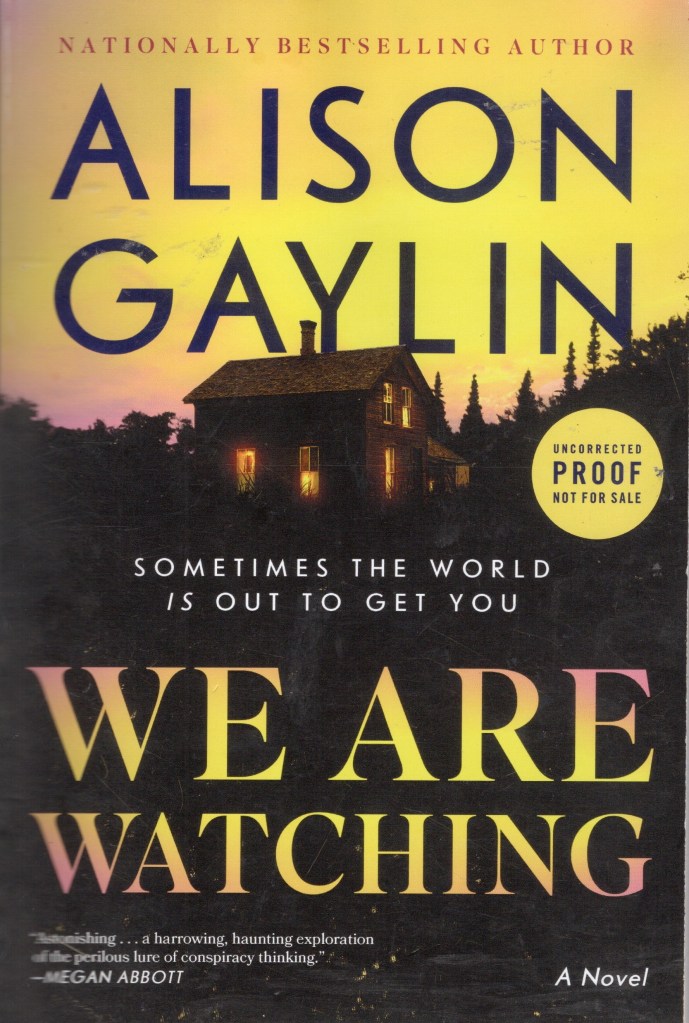
So, needless to say, I greatly enjoyed reading my advance copy of Alison Gaylin’s upcoming January release, We Are Watching.
It’s been the longest day of Meg Russo’s life, and it isn’t even half over. Her stomach gnaws at her, her hands heavy on the steering wheel. But when she glances at the clock on the dashboard, she sees that it’s a little shy of 11:30 a.m., which means that Meg, her husband, Justin, and their daugheter, Lily, have only been on the road for an hour. They’ve got at least three more hours on the thruway, and then they’ll have to contend with the series of veinlike country roads Meg and Justin haven’t traversed since their own college days. If they don’t hit too much traffic, they should be in Ithaca by five, which now feels like some point in a future so distant, Meg is incapable of envisioning it.
Time is strange that, the past eighteen years zooming by in an instant, all of it leading up to a single day that’s already lasted eons. Meg blames the stress of last night, wanting everything to be perfect for their daughter’s send-off, which led to thoughts of Lily’s first visit home for Thanksgiving break, which in turn made Meg think for the millionth time about how cold their house gets in the fall, and how Lily always complains about it. New windows, Meg had thought, lying in bed with her eyes open, envisioning insulated windows to replace those paper-thin sheets of glass, the same windows that were here when she and Justin bought the place twenty years ago–and it was a fixer-upper then. What if Lily came home to new windows? Meg mused, still awake in the wee hours of the morning. Will she have changed by then? Will she have grown too sophisticated to get excited over a warmer house? And so on, until the sky was pink and it was time to wake up and Meg had barely slept at all.
I’ve enjoyed Alison Gaylin’s work since I first read And She Was back in 2012, and have been a fan ever since, gobbling up each new book as she releases them. She has always been a terrific novelist, but what has been amazing to watch is how she pushes herself to do better with each book, tackling bigger themes and creating believable, relatable characters you can’t help but want to root for. We Are Watching may be her best yet, starting as a slow burn but building into an adrenaline boosting rollercoaster of a thriller.
The book opens with Meg and Justin taking their daughter Lily off to college, with all the emotions and fears and sense of loss that comes with a child leaving home and starting to move into their adulthood. Meg is likable, and so is her family. But as they drive a carload of skinheads pulls up alongside of them and start taking pictures. Meg reacts very strongly–so strongly that even I was like take a chill pill, girl!–which eventually leads to a crash that kills Justin, leaving the two women shattered shells of their previous selves. Lily decides to take time off from college and even Meg becomes housebound, despite needing to run her book store in the small Hudson Valley town they live in.
But things slowly begin closing in on both Meg and Lily; who were those skinheads in the other car? Why are truly strange, cult-like people showing up in the store or in town, chanting weird things at them? As Meg’s paranoia and fear grows, it soon becomes apparent that a religious cult is targeting her and her family, but why? But to find the truth, Meg has to not only survive the cult, which seems determined to kill her and her child, but when she has the time, to dig back into her own past to discover the truth–because the truth is the only thing that can set them free.
This book is fantastic, and I couldn’t put it down. It has all the hallmarks of a great Gaylin novel–a compelling and relatable main character doing the best she can in a terrible situation; a twisty plot full of surprises; and the kind of strong writing that makes her sentences and paragraphs sing.
Preorder it now and thank me in January when you finish reading it.
The film this term comes from, Gaslight, is a great movie and Ingrid Bergman is terrific as the wife who isn’t sure if she is losing her mind; she deserved her Oscar and the film still holds up–and a very young Angela Lansbury makes her screen debut in it. ↩︎
Ira Levin has always one of my favorite writers, but I often forget about him when I am talking about influences. I don’t know if Levin’s work influenced me; he was very sparing with his prose, and I am most definitely not that, but I know he has written some of my favorite novels of all time and his incredible popularity–based on very few novels written, most of them pretty short–was such that titles of his books became part of the popular culture; a “tl;dr” if you will to explain something: Rosemary’s Baby, The Stepford Wives, The Boys from Brazil. He wrote one of my favorite crime novels with a shocking twist (two thirds of the way in!), A Kiss Before Dying, which won an Edgar and should be considered one of the best crime novels of all time (the problem with it is a big part of the genius is in the twist, and it’s such a massive spoiler it can’t really be talked about except in criticism).
I knew about Rosemary’s Baby–everyone alive the year the movie came out knew what it was and what it referred to (I was wanting to do an entire post about Levin, but I couldn’t find my copy of Rosemary’s Baby) so settled for rereading The Stepford Wives over the weekend (it’s very short, very chilling, and downright terrifying in places. It was also the first Levin novel I read; I bought the Fawcett Crest edition pictured below, and I think I read the entire thing in a single afternoon. I’ve also seen both movies, both of which were okay, but again, the great thing about Levin is how he played his cards and which ones he withheld; the movie editions couldn’t get away with what he did in the book, which made the movies less compelling and less terrifying.
And it definitely holds up. In fact, it’s kind of compelling reading in this post-Dobbs time in which we find ourselves living these days.
This is the actual copy I had, and read. It looks very Gothic on the cover, but it’s not that at all.
The Welcome Wagon Lady, sixty if she was a day but working at youth and vivacity (ginger hair, red lips, a sunshine-yellow dress), twinkled her eyes and teeth at Joanna and said, “You’re really going to like it here! It’s a nice town with lots of nice people! You couldn’t have made a better choice!” Her brown leather shoulderbag was enormous, old and scuffed; from it she dealt Joanna packets of powdered breakfast drink and soup mix, a toy-size box of non-polluting detergent, a booklet of discount slips good at twenty-two local shops, two cakes of soap, a folder of deodorant pads–
“Enough, enough,” Joanna said, standing in the doorway with both hands full. “Hold. Halt. Thank you.”
The Welcome Wagon lady put a vial of cologne on top of the other things, and then searched in her bag–“No, really,” Joanna said–and brought out pink-framed glasses and a small embroidered notebook. “I do the ‘Notes on Newcomers,'” she said, smiling and putting on the glasses. “For the Chronicle.” She dug at the bag’s bottom and came up with a pen, clicking its top with a red-nailed thumb.
Are there still Welcome Wagon Ladies? And what a clever way to open a novel about a bedroom community town for New York–what else but the Welcome Wagon Lady welcoming a new family to Stepford. It puts the reader at ease, too–something very familiar to people in the 1970s was the Welcome Wagon Lady, so opening a novel with something ordinary and normal is an interesting choice, given what’s to come. (For the record, there will be spoilers here. I’m sorry, the book came out in the early 1970s, as did the original film version and even the dreadful remake is now at least twenty years old.) Joanna Eberhart is a stay-at-home mom who gave up a promising career as a photographer when she got married, but now that the kids are older, she and her husband have found a lovely home in an idyllic seeming town where he can commute into the city1, and they’re in the midst of the chaos of moving in. There’s an extra room that even had running water to function as a developing room2, so Joanna can get back to pursuing her photography career. Good schools, lots of space, all kinds of enticements to get a young family to move out there3…
It’s difficult for young people today to even imagine what a different world it was I grew up in, and the 1970’s might as well be the 1870’s to the younger generations…then again. didn’t 1945 and World War II seem a million years ago when I was a kid…but I was much closer in time to WW2 than teenagers today are to the 1970’s. (The actual equivalent would be fifty years ago, which would have been 1921 to me; when my grandparents were born there was still a German Empire, an Ottoman Empire, an Austria-Hungary, and the Romanovs were still on the throne in St. Petersburg.) But when this book was written the Women’s Movement was just really gaining a lot of traction (it was called Women’s Lib, and proponents of it were scathingly called “Libbers” by those who thought women were better off in the kitchen, unseen and unheard), and women were beginning to understand they didn’t have to subscribe to the old, tired gender roles that basically were invented after the Second World War. They could have a career. They didn’t have to get married. Among the things they were protesting was not being allowed to get bank loans, credit cards, or bank accounts without a husband–which was very difficult for widows and divorcees (and why a lot of women stayed with abusive jerks.) It wasn’t a crime to beat or rape your wife because you owned her. The Pill freed them–both married and unmarried–from the terror of getting pregnant and abortion was illegal. Sound familiar?
Levin, who was also an incredibly sly critic of social structures, the culture, and society in general, saw the beginnings of women starting to assert their independence, and asked the question so many bewildered men, unaccustomed to women’s freedom, didn’t know the answer to: if women were free and independent and could choose their own course in life, what was the new role in all of this for men? What was their place anymore? There was pushback against women’s liberation and not just from men; some of the most vocal opponents to women being made into whole people came from women.4 If it was, indeed, a “battle of the sexes” as the conservative gadflies kept insisting (or a “war on men”), what would men do?
The Stepford Wives was the chilling answer.
Once Joanna moves in, she begins noticing how the other wives in town are all beautiful, have great figures, and always have their hair done, a face of make-up, and are devoted to making their husbands happy. She meets another recent relocator, brash Bobbie Marlowe, whose house is just as messy as Joanna’s, and they begin to bond over the weirdness of the other women in town. They make another friend, Charmaine, and the three women kind of bemusedly wonder if there’s something in the water in Stepford that makes the women behave like such 1950’s June Cleaver housewives. There’s also the Men’s Association, a men’s club that all the men of Stepford belong–a secretive organization in a big house. Joanna and Bobbie are appalled at the sexism in the very idea of such a club, and their husbands promise to try to make including women an option–the old “change from inside” shtick we’ve all heard a million times. Joanna’s husband brings some of the club officers for her to meet and get a read on. One of them is a Frank Frazetta-style artist, who does a series of sketches of Joanna. Another used to work in the animatronic section of Disney. Another is doing a research project he asks Joanna to help with, having to do with accents and the way people speak, which requires her to record an insane amount of words into a tape recorder.
And then…Charmaine becomes one of the Stepford wives, and the two women are terrified.
Bobbie is convinced now there’s something from nearby chemical plants in their drinking water, and goes to extremes in her paranoia. Joanna forces Walter to agree to move, and then they start looking for other places in nearby towns. Heightening their paranoia is finding out there actually HAD been a Women’s Club in Stepford, and even had Betty Friedan come speak to them4! What happened to these women? Levin is exceptionally brilliant at writing paranoia, and the reader becomes wrapped in them, what is happening to them, and hoping that they’ll get away somehow. But the biggest betrayal of all is yet to come: their husbands, whom they loved and married and started families with, are also in on it.
The message of The Stepford Wives was that men don’t really want a full partner; they want a home manager who takes care of everything, including the kids, so they can focus on work.
Sound like tradwives or something Senator Katie Britt would love to impose (on other women, of course; tradwife for thee but not for me) on the country, doesn’t it? Women with no imaginations, animatronic creatures who feel like women, and cater to their every whim and desire?
Maybe The Stepford Wives should be required reading for all teenaged girls. And sadly, the book still holds up. It’s not a reach to believe that there’s a town like this somewhere, where the men have murdered their wives and replaced them with droids. I certainly see enough troglodyte men on-line who think that way.
This was a HUGE trope in 1970’s horror; moving away from the city to get fresh air and space…only to have that dream of a bigger house and a lawn and fresh air turn into a fucking nightmare, which I hope to write a longer essay about at some point. ↩︎
Yes, we used to take pictures with “cameras” on “film” that had to be processed and developed; Fotomats were popular, or you could get it done at Walgreens. There used a developer on Decatur Street just off Jackson Square; I had a lot of pictures developed there when I was in the Quarter more regularly. ↩︎
Interesting that Rosemary’s Baby also opens with a young married couple, hoping to have kids, moving into a new place. ↩︎
I hope Phyllis Schlafly is frying in hell, and is sharing a cast iron skillet with the Reagans and Jerry Falwell. ↩︎
If you don’t know who Betty Friedan is, shame on you and use google. ↩︎
So, in honor of Pride Month, I’ve decided to do things a little bit differently than I usually do when it rolls around every year. Usually, I’ll share book covers by queer authors that I either enjoyed or influenced me, either personally or professionally, in some way–or could be used for that hoary old cliché this made me gay. In a way, it’s a trip down memory lane for me, going back to my childhood, my teens, and twenties; places I am currently revisiting as I plan out The Summer of Lost Boys.
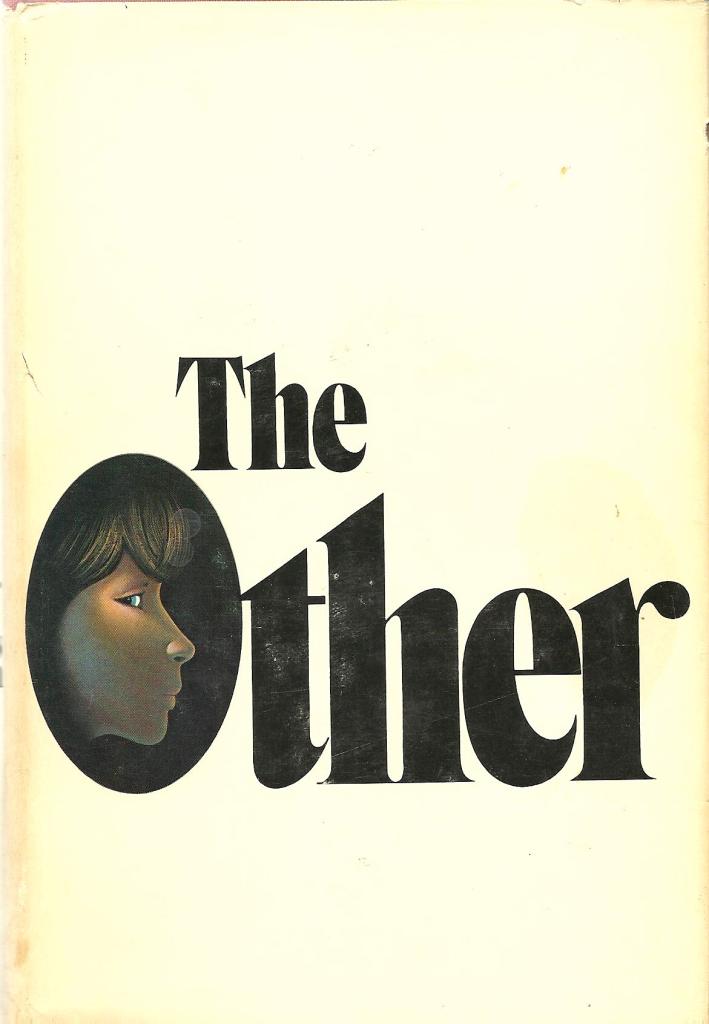
Thomas Tryon’s debut novel, The Other, is often heralded as one of the books (the others being The Exorcist and Rosemary’s Baby) that kicked off the horror craze of the 80’s and 90’s; Stephen King’s Carrie was released in 1974 and shifted the craze into four-wheel drive. I read this book when I was in the seventh grade, and it resonated with me in ways I didn’t fully understand or comprehend at the time. It drew me in, and fascinated me in ways I’d never been fascinated with a book before. Part of it was the transition I was making from reading kid’s books to more adult fare; I was already reading at a collegiate level by the seventh grade. (The Ken Holt series also resonated with me, as did the Rick Brant–which are getting their own entries.)
I wouldn’t learn until years later that Tryon was gay–although I should have known, were I more mature and gay wasn’t one of those things people didn’t talk about when I was a kid; it’s certainly there in his books–and then it made even more sense to me why the book resonated so much with me, why it intrigued me so much, and why I identified with it so much. Niles Perry, the point of view character, is a shy, reticent boy who mostly lives in his own head and world and doesn’t really interact a lot with people. He’s a nice kid who is always worried about getting in trouble and doing the wrong thing; his identical twin brother, Holland, is more of what we would now call a sociopath. But Holland has no fear, has no dread of consequence, and is more outgoing and adventurous; he’s more of a troublemaker and relishes getting revenge on people who’ve done him, in his mind, grievous wrongs. Niles loves his brother–adores him, wants to be like him, wants to be less timid–but is also afraid of him. He knows all Holland’s secrets and he knows everything that Holland does, and often he figures out Holland’s schemes and even tries to stop him…but Holland always outsmarts him, and leaves Niles to clean up his mess.
This brotherly dynamic–the closeness and the dominant/submissive relationship between the twins spoke to me. I saw myself as more of a Niles type than a Holland; shy and quiet and mostly keeping to myself–and always being drawn to flashier, more outgoing types as friends, to whom I was both devoted but also jealous of–a pattern I followed for most of my life. This is the same reason certain books drew me in as a teenager in most cases; A Separate Peace has that same underlying relationship theme–the flashier more outgoing more popular friend, and the quiet best friend content to live in his shadow but also being a bit resentful and jealous.
And then about two-thirds of the way through the book comes a plot twist that changes everything you’ve already read and processed and you have to see the book in an entirely new way–every time I reread it (which is every year or so since I got a hardcover copy off eBay), I try to find the clues to the twist in the first two-thirds, and they are there, but cleverly disguised so you don’t put it together until it’s literally revealed in such an incredibly powerful scene that just thinking about it–and its creepy conclusion–makes the hairs on my arm tingle a bit.
I didn’t have a brother, so I wasn’t sure about the brother dynamic Tryon explored so beautifully in the book; is that the way things work in real life between brothers? Probably not, as every set of brothers is different, of course. (I’ve rarely written about brothers, now that I think about it. Chanse has one who turned up in a short story and Scotty has Storm) But the relationship interested me, and it’s a trope that is often used in every style of fiction; two people, either siblings or close friends, one is more outgoing and daring and likes to take risks while the other is more nervous and afraid and namby-pamby, and that weird combination of love/jealousy that can often get involved in those stories.
It’s also a strong dynamic that can play out within gay couples, as well.
The Other is also written in a lyrical, beautiful, dream-like style; that lovely sense of remembering the past nostalgically, when everything was magic and the world seemed full of wonder.
I was paging through the book the other day and I began to realize that it’s impacted and influenced me as a writer far more than I had ever realized.
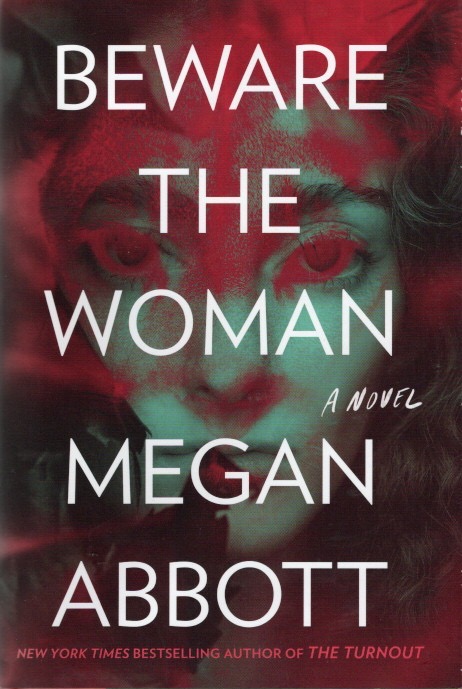
I finished reading the new Megan Abbott novel, Beware the Woman, this morning during a marvelous, raging thunderstorm that filled the gutters and streets of New Orleans with dirty swirling water, cutting the temperature to something bearable for once this summer and cooling the interior of my apartment to the point I needed to put on a sweatshirt and a knit cap on my head. Curled under a blanket with a good book while a thunderstorm rages with a warm cup of coffee on the side table, tendrils of steam rising in curly-cues of white from the creamer-lightened pool of soft brown, is perhaps my happiest of places.
Hell, reading anything new by Megan Abbott is my happiest of places.
My first Megan Abbott novel was Bury Me Deep, which stunned me with its craftsmanship, its voice, its literate choices of words and sentences structures that are short yet lyrical, minimalist strokes painting a broad canvas of human frailty and contradiction, crime and desire that comes from a primal place within, almost inexplicable and unexplainable yet so easily understandable and recognizable. I went on from there to Dare Me and the rest of her all-too-short canon; admiring, loving, respecting and enjoying each book with its magical spell woven by a true master of the literary form, astonishing in its humanity and an exploration of what lengths her characters will go to in order to get the thing (or things) they want, need, desire and hunger for.
Some of the earlier reviews I saw for Beware the Woman painted some parallels between the book and what is perhaps my favorite novel of all time, Rebecca by Daphne du Maurier…which had me intrigued and interested even more than usual.
But more on that later.
“We should go back,” he said suddenly, shaking me out of sleep.
“What?” I whispered, huddled under the thin bedspread at the motor inn, the air conditioner stuck on HI. “What did you say?”
“We should turn around and go back.”
“Go back?” I was trying to see his face in the narrow band of light through the stiff crackling curtains, the gap between every motel curtain ever. “We’re only a few hours away.”
“We should go back and just explain it wasn’t a good time. Not with the baby coming.”
His voice was funny, strained from the AC, the detergent haze of the room.
I propped myself up on my elbows, shaking off the bleary weirdness.
We’d driven all day. In my head, in my chest, we were still driving, the road buzzing beneath us, my feet shaking, cramped, over the gas.
Our main character here is Jacy Ashe, a pregnant wife in her early thirties, married to a neon sign artist, Jed, and working as an elementary school teacher. They are en route when the story opens to the remote upper peninsula of Michigan (primarily known to me from Steve Hamilton’s novels) to visit Jed’s retired doctor father, who lives up there in what used to be the family summer place, with his housekeeper, Mrs. Brandt. This is one of the classic set-ups of one of my favorite subgenres of crime fiction–the Gothic–as well as placing it strongly into another category I love, domestic suspense. This novel has echoes of du Maurier, Phyllis A. Whitney, Dorothy B. Hughes, and Margaret Millar…blended seamlessly together into a classic yet modern novel that updates and reinvigorates both subgenres, bringing them into the modern era and proving they are still just as relevant and important as they have ever been.
(Aside: I do not know where Abbott came up with the name “Jacy,” but it’s one I’ve always liked and wanted to use in my own work since first reading Larry McMurtry’s The Last Picture Show and seeing the Bogdonovich film based on it; I smiled and wondered if that was where Abbott got the unusual name from.)
The Gothic set-up is there, and I can also see the slight echoes from Rebecca: the brooding remote house in the country where tragedy has occurred in the past; the mysterious housekeeper who doesn’t seem to like our heroine very much; the slow-burn of slow revelations of secrets from the past; and the creeping paranoia and potential gaslighting of Jacy…often explained away as her pregnancy hormones or a reaction to the medications after she has a pregnancy complication. One of the strengths of Gothics, for me, is that question of paranoia vs. reality; the gaslighting that is always a hallmark of a Gothic novel. After all, what reason could either Jacy’s father-in-law or husband have for wanting to drive her mad and risking her baby’s health and well-being? She feels her husband slipping away from her and no one seems to believe her…this is probably one of the best depictions of a paranoid pregnant woman in literature since at least Rosemary’s Baby.
Someone once said the Gothic and domestic suspense novels were “women’s noir,” because the danger to them always arose from them being women and doing women’s things; a reaction to the terror of getting married and placing (until very recently) all of your agency into the hands of your husband–and what if you chose poorly?
Abbott takes the best elements of noir and combines them with the foundations of domestic suspense and Gothic to explore what it is like to be a woman, how it is to be a woman, and the trap of societal and cultural expectations for women.
And there’s a reason why the cops always look at the husband first when a woman is killed.
This is a brilliant novel, with many layers to unpack and unravel through its deceptively simple voice and brevity of language. Megan Abbott is a sorceress, a Scheherazade of crime fiction to whom you simply cannot stop listening. Read it, cherish it, love it.
Here we are back on another Monday morning with another work week staring us in the face and not blinking. Great, right? It was a lovely weekend around the Lost Apartment, if a bit lonely; Scooter was definitely needy all weekend and it’s weird to have the bed almost entirely to myself (not including Scooter). I felt well rested both weekend mornings when I arose; yet after running my errands on Saturday and doing some cleaning I became extremely fatigued, which sent me to my chair. I did manage to get some things done once the fatigue set in–I think low blood sugar had an awful lot to do with it, to be honest–and it’s irritating, frankly. I had wanted to be a lot more productive on Saturday than I actually was; but c’est la vie and all that nonsense. I do think I am going to need to do some restructuring of the opening chapters on my book, but that’s cool; it certainly makes more sense for me to order it the way that I am going to restructure it all. And no, I didn’t get a lot done this weekend. Maybe a restful weekend of recharging my batteries was just what the doctor ordered; who knows? I am trying not to get overly stressed out about everything that is pending for me.
Stress is the mindkiller.
I’ve oddly enough been sleeping better and more restfully recently, despite the addition of cappuccino to my morning routine every morning–but maybe the caffeine crash is why I am so tired in the afternoons. Maybe, but I was also tired in the afternoons before I got the new espresso machine (which I love, if I’ve not made that clear enough already) so who knows what the new normal/Greg’s reality is anymore? I certainly don’t know.
And it’s Halloween, of course. Happy Halloween!
I was going to rewatch the original Halloween last night, but instead I rewatched Robert Wise’s 1962 adaptation of The Haunting, based on the novel by Shirley Jackson. I originally saw this movie when I was a kid, staying up late one night to catch it on the late movie, and it was absolutely terrifying. It’s exceptionally well done, and Julie Harris is so definitive as Nell–the cast is all so definitive in their roles, really–that I can’t help but see them every time I reread the book. It really is a stunning performance by Harris–she really embodies Nell–and the entire thing is so claustrophobic and terrifying, really; the concept of what you cannot see being more terrifying than what you can played up perfectly by Wise’s incredibly capable direction and camera shots–and the editing ratchets up the suspense and terror perfectly. It follows the book incredibly closely–one of the most faithful adaptations of book-to-film; up there with Rosemary’s Baby, really–and as I watched, not terrified because I’ve seen it so many times so thus able to watch for the direction and the editing, which were superb, as was the black and white cinematography, I couldn’t help but marvel at what a great job Wise did with the cast and the film. The remake was terrible, absolutely terrible–unwatchably bad; which remake a classic in the first place, especially when you’re just going to go crazy with the CGI budget, which takes away the most important suspense/terror aspect of the book and the original film: you don’t see the monsters, you don’t see whatever it is that is haunting Hill House and it is never explained. I also don’t usually like movies that have voiceovers to show a character’s thoughts, but the book itself is so intimately from Nell’s point of view that it would be hard to translate that on film and get the same feeling–and the emotive way Julie Harris does the line reading makes it work, draws the viewer in, and makes the viewing experience incredibly intimate and claustrophobic at the same time, which is exactly how Jackson wrote the book.
I also recorded Alexia Gordon’s Cozy Corner podcast yesterday, and it was a lot of fun. We talked for a very very long time–we both lost track of the time, really–and talked about a lot of things. It was seven by the time I got off the ZOOM call, and when I got up to make myself something to eat was when the fatigue hit me. Was it related to the podcast and social intercourse, which also required me to think and be smart and actually put thought into my answers? I don’t know, maybe it was but I was pretty tired by the time I made my grilled-cheese-and-bacon sandwich for dinner and repaired to the living room to watch the movie. I didn’t stay up much longer after I finished watching either; I was watching some documentary on Youtube about the Hapsburgs and started nodding off, so I decided to just go on up and go to bed early–more sleep never hurt me, after all.
I may even go to bed at nine tonight. Perish the thought!
But I think my restful weekend did the trick, and it was clearly what I needed. I do feel refreshed and alive and rested, both physically and mentally, this morning–or it could be the cappuccino. I guess we’ll find out this afternoon when the caffeine wears off.
So on that note, without further ado, I am heading into the spice mines on this lovely cool Monday morning in New Orleans. And may your day be lovely and bright, Constant Reader–I will talk to you again tomorrow morning.
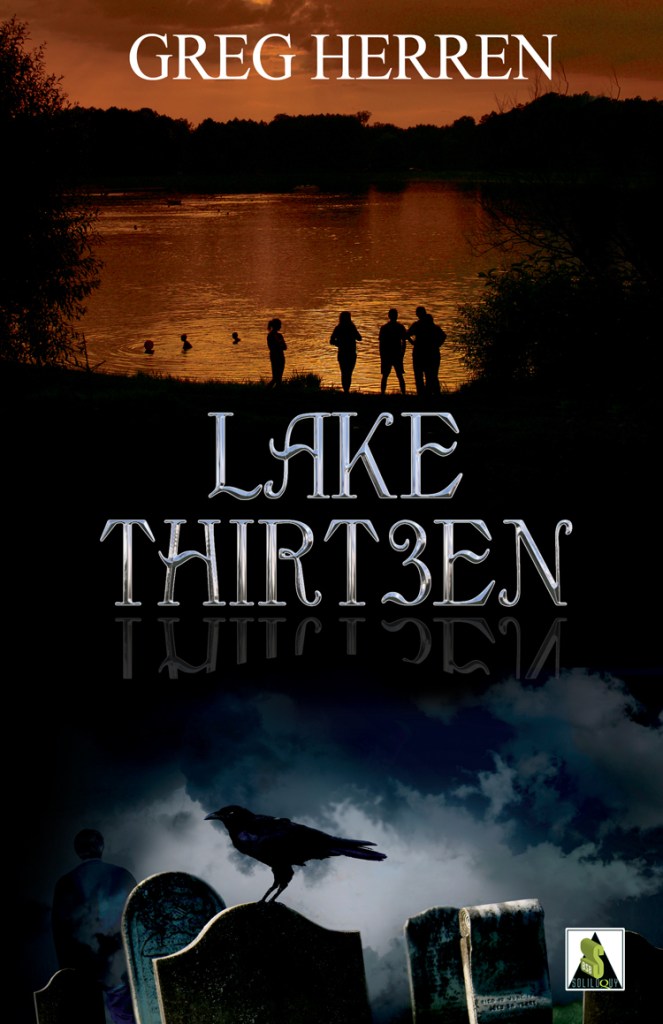
Lake Thirteen is one of my personal favorites of all my books.
Are authors not supposed to have favorites of their own books, like parents aren’t supposed to have favorites amongst their children (untrue in my experience, for the record; I’ve certainly observed enough to note which children are favored by their “impartial” parents)? Oh, well, too bad so sad. Every book I’ve written means something to me in some way, and sometimes I do remember others more fondly.
I love Lake Thirteen primarily because I love what it reminds me of–and it was also one of the easiest books I’ve ever written. It literally just flowed out of me, almost from the very beginning (although the opening of the book was very different in my original version than what saw print; I got some excellent advice from my editor about where the proper place to start the book was, and she was 100% correct in her assessment, thereby earning my eternal gratitude and respect) and so, simply for the ease of writing it would be a fond memory…but I was inspired to write this book by a trip I took, which just goes to show how sometimes books can organically create themselves in your mind. The trip was one of the most fun times I’ve ever had, and it was also a time when I got waaaaaaay out of my comfort zone…which just goes to show sometimes it pays to get outside your comfort zone.
How I eventually wound up writing for Bold Strokes Books is a story for another time, but suffice it to say that one of the things I found most interesting, once I’d moved there, was how the business tried to foster a sense of camaraderie between the staff as well as amongst the authors. It was the kind of mentality you don’t usually find in publishing–one that focused on we’re all in this together so let’s be supportive of each other, which I found to be highly refreshing for a change. They also hosted group events all over the country to which we were all invited and welcomed to attend; being reticent and shy and one who never does well when he is in an environment where he doesn’t know anyone, I always said no to these things. But eventually I felt guilty about always saying no, and said yes to a week-long retreat in the Adirondack mountains of upstate New York, nearly two hours’ drive north of Albany, at the Garnet Hill Lodge.
I committed, agreed to go, and bought my plane ticket…and then started having the second thoughts and doubts that are trademarks of my life. I don’t know anyone very well…I’m going to be the only male there…
But once I got to the airport, I relaxed. Ali Vali was on both of my flights, and once we reached Albany, we retrieved our rental cars and headed north in a convoy. As I made my turn onto the road that would lead me to the camp and up the side of the mountain, I noted that the road was THIRTEENTH LAKE ROAD. Well, I thought to myself, that would make a great book title, Lake Thirteen.
“Are you listening to me, Scotty?”
My mom’s voice was so loud, I almost dropped my cell phone. I looked up. She was smiling at me in the space between the two front seats of the rental Subaru Forester, but her eyes meant business.
“Seriously,” she went on, her smile never wavering, “if you’re going to spend the whole week staring at your phone or fiddling with it, I’ll just take it away from you now.” She held out her right hand, palm up. “I’m not joking.”
I looked at the screen of my phone and sighed before slipping it into my shorts pocket. I smiled back at her. “There, happy?”
“It’s only a week,” she said before turning back around. “You’ll live, trust me.”
Easy for you to say, I thought, turning to look out the window. It was still raining. It was raining when our flight from Chicago landed in Albany and hadn’t let up for even a minute as we headed north. I pressed my forehead against the rain-spattered glass as the GPS gave my dad another direction and he headed up an off-ramp.
“It’s only about another half hour,” my dad said as he came to a stop at the top of the ramp, turning on his left-turn signal. He looked at me in the rearview mirror. “You’re not still nervous, are you?”
I bit my lower lip and didn’t respond.
“I think you’re worrying for nothing,” Mom said. “Nancy and Jerry and Lynda and David raised their kids right, just like we did with you.”
Easy for you to say, I thought, looking out the back window at the two other rental cars following us. You’re not gay, and you didn’t just come out to them all in an e-mail.
We’d been taking these joint family vacations my entire life—I couldn’t remember a summer when our three families hadn’t taken one of these trips together. When we were kids, we’d shared a cousin-like camaraderie and looked forward to seeing each other every summer. But now that we were teens, we were like five strangers with a shared past. The last few years, it seemed to take a few days before everyone stopped sulking about having to come and decided to make the best of the situation. By the end of the week, the old bonds would be strongly and firmly in place again, and there would be sad good-byes at the airport. For about a week or so after, there would be a lot of texting and e-mailing. Once we settled back into our real lives and routines again, the contact became rarer. Within a month it died down again to an occasional comment on Facebook.
I was an only child, so it always seemed like I looked forward to the reunion more than the other four.
This year was different, though. This year, I’d dreaded coming, hadn’t wanted to leave our nice suburb of Chicago and spend a week with four almost-strangers my own age.
All I knew about their lives was gleaned from Facebook, which was hardly the best source for personal information.
One would never know from looking at my Facebook page, for example, that I was gay.
That first night at the Lodge, we all went down to North River, the nearest town, for a wonderful meal…and then came the big thrill of the evening: ghost hunting in a very old cemetery–one of the turn off roads was named CEMETERY ROAD, so we felt pretty confident there was a cemetery, and we were right. Maybe it was just us and we’d hyped ourselves up too much, but the cemetery was really spooky–there was also a low fog close to the ground that helped the atmosphere–and I felt myself drawn to a particular tombstone: ALBERT LINCOLN, who’d died at sixteen. “How sad, he was only sixteen. I wonder how he died?” I said out loud–and while I have never believed in the paranormal completely (too many questions that will never be answered) the strangest thing happened as soon as I finished speaking. I felt this overwhelming sense of sadness and melancholy, almost like my entire subconscious let out a sigh of incredible sadness. All the hair on my arms stood up, I got a cold chill–it was a muggy night–and I made sure to show this to some of my fellow ghost hunters to witness.
It was so weird, and I felt pretty confident that night I would have nightmares.
I couldn’t stop thinking about poor Albert, dead at sixteen (if he had died a decade later, I would have assumed is was the Spanish flu epidemic, but his tombstone read 1908 not 1918)…after we were finished and went back to the lodge, we watched Rosemary’s Baby on the DVD player in the lounge…and then I had to walk back to my cabin, a short walk down the road through the woods by myself. It was pitch black, and of course I could hear all kinds of weird noises coming from the woods as I walked, absolutely terrified, until I finally saw the light on the door where my room was. I happily escaped inside, and went around closing all the blinds and curtains because it was ink-black outside and if I ever looked over and saw someone or something in the window, I would have dropped dead on the spot.
I opened my laptop and wrote It seemed like a good idea at the time, and then started writing, doing an entire chapter about five teenagers staying at a rustic lodge in the Adirondacks who go ghost-hunting in a cemetery on the mountain only to stir up ghostly forces from a long-ago tragedy.
And I knew I was going to write that book someday, and it was going to be called Lake Thirteen.
I’ve always loved ghost stories; they are my favorites (if pressed to name a favorite novel, it would probably be The Haunting of Hill House by Shirley Jackson); I’ve always been drawn to stories about past tragedies and souls being tethered by the violent emotions felt before dying–and the quest for the truth to be known so that they can finally rest in peace. This was the driving force behind Lake Thirteen, with my main character Scotty’s (how many books have I written where I named the main character Scotty? I really need to stop doing that) visit to the cemetery leading him to a connection with a tombstone similar to the one I felt. The rest of the week, as we explored the area and the woods, I took tons of pictures everywhere to use to help with setting and place. It really was a marvelous week–I think all I did all week long was laugh and laugh and laugh more–and I was sorry to see it end.
And eventually, I did write the book. I did open it with It seemed like a good idea at the time with the teens all sitting around in the lodge bored–three families take a trip together every year, Scotty has recently come out and he doesn’t know what his friends from the other family will say or how they will react. My editor wrote back and said, This isn’t where you should start the story. Remember how the directions we were all given were bad and everyone was getting lost on the mountain trying to find the lodge? Open with them on their way, and that way you can get all the backstory in.
It was an easy fix, and it made the book a gazillion times better. It remains a personal favorite of my own stuff, and I even named the characters after some of my ghost-hunting buddies.
A few years later, at another similar event in Palm Springs, we went to visit the not-quite ghost town of Bombay Beach on the Salton Sea–I still haven’t written that book yet.
I am up amazingly early for a Sunday morning, but that’s okay. I have a lot of things to do today; I didn’t get as much done yesterday as I could have, but I am not allowing the things that derailed me from my productivity. I did get things done yesterday–laundry needs folding this morning, and there are dishes to put away and so forth–and I also was able to get some writing done yesterday, which was marvelous and lovely. The Scotty book is still kind of a sloppy mess, and I am not really sure what to do with Chapter Three quite yet–or how to write it–but I am going to try the old “start writing and see what happens” trick with it today. I also went over another project I am working on, and realized that it was much easier to fix than I had originally thought, quite frankly. So, once I get my coffee swilled down this morning and this posted, I am going to get cleaned up and dive into the writing. I think spending the entire morning writing should help get some things crossed off the list and should move me ahead somewhat.
I just checked Margaret Orr’s Twitter for updates on storms. One of the systems in the Atlantic has increased its possibility of getting organized, but most likely not until it’s north of the Bahamas, which has me thinking it’ll keep moving north in the ocean. The one in the Caribbean Sea also has increased its percentage of forming, but it’s most likely going to stay in the south and menace Mexico and the Yucatán. No word thus far on the other system in the Atlantic, but I only saw one tweet before reporting back. Oops, my bad; I misread her tweet and didn’t take as good a look at the map she shared before I came back here. The other system is the one north of the Bahamas with a low degree of development possibility; the one with a 70% likelihood of anything happening looks like it’s heading for Puerto Rice and/or Florida, and thus into the Gulf of Mexico.
Oh, and embiggening the map, there’s another system forming off the Cape Verde Islands. So, there will be a lot of storm tracking in the coming weeks. Our favorite September past-time in New Orleans. Hopefully, we won’t have to evacuate at any time in the coming weeks…and come to think of it, the freezer is a little on the full side, so maybe I should try working on getting that emptied out over the next few weeks–cooking things that are in there, at the very least, without refilling it until times are a little more settled. I’d hate to have to throw everything in there away again. That would completely suck.
Today marks seventeen year since that frantic morning we tried to be organized in our panic to leave while we still could; that day is etched in my memory even if the details are sketchy in my head. (To be fair, the memories and details were already difficult to remember in the days immediately thereafter, as I watched out lives wash away.) It looks like it may be a sunny day today without rain, at least it’s clear out there this morning. I also feel like I slept very well this morning, so we’ll see how the rest of it goes. I am going to have to make a to-do list, of course, and then make sure that everything that needs to be on it is, in fact, on it.
Last night, after we finished our work for the day, Paul and I settled in and binged W. Kamau Bell’s docuseries We Need to Talk About Cosby on HBO MAX. It was interesting, maybe one of the most interesting “artist vs. the art” conversations I’ve ever seen illustrated out in this manner. It’s certainly one of the most complex, and we as a society have had a lot of these discussions over the past decade…but it’s very easy to dismiss Roman Polanski’s art (I make the distinction of “art before the child rape” and “art after the child rape” with him, which clears both Rosemary’s Baby and Chinatown for me, and I know it’s probably a deeply problematic differentiation) and contributions than it is to write off Bill Cosby’s and the cultural and societal change his career had on the country as a whole, not to mention, as the documentary pointed out, how The Cosby Show was dedicated to showing, every week, Black excellence on our television screens in a way that was rarely ever seen before–if at all. (We’ve been bingeing documentary series lately like they are going out of style, probably because they’re easier to follow for my exhausted and overheating brain at the end of the day than a series.)
Obviously, my heart goes out to his victims, but while my sympathies lie with them entirely, the question of the art–which meant so much to the Black community–does remain. I don’t know the answer to that question–whether it’s Cosby or Polanski or any of the other abusers who created great art. I see the points on both sides of the discussion/argument/debate. But if the point of a documentary is to get the viewer to reflect on the questions raised, Bell’s docuseries certainly succeeded. Highly recommended.
And on that note, I think I am going to head into the spice mines for now. Have a lovely Sunday, everyone, and I will check in with you again tomorrow.
Saturday morning and it looks kind of gray outside the windows this morning as I look out at the world blearily and drink my first cup of coffee. I slept very well last night–which is always welcome–but woke up feeling a bit groggy this morning. I am sure the caffeine will work–it generally does–but as I glance around at the chaos of my office/kitchen my inclination is to pour the coffee out and go back to bed and sleep the rest of the day away, hoping magical elves or something else will show up whilst I sleep to finish organizing and arranging this mess into something resembling workable order. On the other hand, I don’t think that’s going to happen, so I am going to need to wake up, buckle up, and put my nose to the proverbial grindstone. I’ve got to contain this mess–and do it properly, no more sweeping things under proverbial rugs to get mess out of sight–and I’ve got to work on the book today and I need to run some errands. I also have to go to the gym today, so I will most likely follow football championship games today by periodically looking on-line to check scores only. Paul is going into his office this afternoon to do some work as well, and I need to update my to-do list and…yes, it’s a very busy day for a Gregalicious.
I finished reading Murder Most Fowl by Donna Andrews last night–charming, as always, delightful and witty and funny–and decided, since I was talking about how much I preferred Miss Marple to Hercule Poirot the other day, that I should revisit one of the Marple stories. I have a hardcover copy of A Caribbean Mystery–I don’t recall where it came from–but it has some sentimental value for me in that it was the first Marple novel of Christie’s I had read all those many moons ago when I was a child, holing up in my room on Saturdays with a book and a bag of Bar-B-Q Fritos. (My first Poirot was actually Halloween Party, which I also have a hardcover copy of and again, do not recall where I got it or how long I have had it; I read most Christies in paperbacks purchased at the Bolingbrook Zayre’s off their wire paperback racks) In those first few pages of the book, it spelled out exactly what I loved about the Marple stories–about how living in a small village actually exposes one to almost every kind of human behavior there is in a smaller ecosystem, and the great irony that the smallness and rural aspects of the small community are all too frequently seen as provincial and inexperienced in the world (why Grace Metalious’ Peyton Place was so shocking when it was originally published some seventy years ago; that placid, idyllic on the surface looking village/small town/rural community has a lot more going on than one would think at first glance). This is an excellent set-up, really, for the story Christie is writing about this fictional resort on a fictional West Indies island; her nephew, the successful novelist Raymond West, has paid for this trip for her to get some sun and recover from an illness…and when she originally protested about the expense and “who will watch out for my home in St. Mary Mead”–this response (which I hadn’t remembered) hit me right between the eyes:
Raymond had dealt with everything. A friend who was writing a book wanted a quiet place in the country. “He’ll look after the house all right. He’s very house proud. He’s a queer. I mean–“
He had paused, slightly embarrassed–but surely even dear old Aunt Jane had must have heard of queers.
Now, what is one to make of that? It was a jolt, certainly. It put me in mind of something I came across on Twitter the other day, written by Wil Wheaton, in which he had answered at a con somewhere a question regarding the current debate of “can you separate the art from the artist?” This is something I’ve pondered about quite a bit–most recently, the feeling of guilt I experienced in rewatching Chinatown, knowing now what I–we all–know about Roman Polanski. I enjoyed Chinatown every time I’ve seen it, and I was now watching–rewatching–through a different lens than I had before; I was watching in terms of my own Cynical 70’s Film Festival, to see how a 70’s film that actually harkened back to old-style crime/hard-boiled/noir styles, but with a more modern (at the time) sensibility fit into that 70’s cynicism and darkness about humanity and human behavior. But the discomfort kept popping up, particularly because Polanski himself appears in the film…and I eventually decided not to rewatch another favorite, Rosemary’s Baby, because of it.
I am not going to consign Agatha Christie to the trash heap of history; she was an extraordinary writer, and one of the most influential in the field in which I myself write. Nor do I think a simple throwaway line or two in a book originally published in 1964 is enough to dismiss Christie and her canon as homophobic and never revisit her work. In fact, given the time period in which the book was written, I am surprised the two sentences weren’t, frankly, much worse. Reading the sentences didn’t offend or outrage me; it was just a surprise, primarily because I didn’t remember them at all in a book I’ve read multiple times over the years–and I think when this hardcover came into my possession (I won’t swear to it, but I think I got it during one of my many eBay buying frenzies after Hurricane Katrina, when I felt it necessary to get copies of books with some sentimental value to me) I did actually read it again because I didn’t remember the plot–and this either went right past me or I noticed and didn’t think much of it.
Revisiting this book and viewing it through a modern lens is going to be interesting. And like I said, the reference could easily have been worse–but seeing queer used in this way reminds me of how it used to be used. The younger generations are reclaiming the word, and I myself have been advocating for it as a generic term for the non-straight community for eons…but I also can see why there are people of my generation/the one before me/the one after me who object to its use and why.
But I would a thousand times rather see the word queer used in an Agatha Christie novel than faggot. And I also remember the sympathetic depiction of a lesbian couple in my favorite Marple, A Murder is Announced.
Interesting thoughts on a Saturday morning. The sun has come out now and it’s not quite so gray outside; the second cup of coffee is certainly hitting the spot right now and the grogginess is beginning to leave from not only my head but from my body. I still don’t want to straighten up this mess, but there’s no choice, really, and I want to get some good work on the book done today and tomorrow. I need to go to the gym either today or tomorrow as well; perhaps later this afternoon once I get some writing/cleaning/organizing completed. I cannot be completely lazy this weekend, much as I would like to be; I have to get things done, and the more things I get done now the fewer things I will have to do later this month (I am not, for example, going to want to write on Christmas). But once a procrastinator, always a procrastinator.
And now it occurs to me that perhaps I am procrastinating here, so I am going to bring this to a close. Have a lovely Saturday, Constant Reader, and will talk to you soon.
Yesterday was not nearly as productive as it could have been. Generally, on mornings when I have to get up at six, will invariably have a cappuccino at home while I wake up, and then make another to take with me, which I sip at all morning. This gets me through the day pretty well, and through into my evening when I go home and write or edit or read or do chores. So, Constant Reader, you can only imagine my horror when I got to the office and my travel mug was not in its side holder on my back pack. (It turned out to be in the in the car–it fell out of its pocket when I got my backpack out of the car yesterday morning when I arrived at the office…) So yes, I ran out of steam yesterday afternoon, and was very tired by the time I got home from work. In other words, last night all I managed to do was a load of dishes, and quite frankly, this morning I’m not even sure what I watched last night, other than the final episode of It’s a Sin with Paul; turned out he did want to finish watching. Oh yes, now I remember; I watched this week’s episodes of Allen v. Farrow and John Oliver’s show. Allen V. Farrow continues to be a harrowing watch; this week’s episode was about the custody battle–which ended with Allen getting a massive bitchslap by both the court and the judge; in other words, the judge believed Mia to be a fit mother and Dylan a credible witness, and Allen didn’t prove himself to be a fit parent–in fact, his visitation rights with the two other children he shared with Farrow were limited by the court and had to be supervised. If the goal was to punish Farrow, it failed massively–other than making her miserable for a period of time. Interestingly enough, one of the main takeaways from the show is being blown away by how beautiful Mia still is, today. I never understood the desire to have so many children–not, of course, that my understanding was ever needed or necessary or required; my mentality was always “I don’t get the need for so many kids, but if it makes her happy, more power to her and she is adopting kids, which is terrific.” I don’t think Farrow has worked much since the break-up with Allen; her career was mostly starring in his movies after they became a couple…the real shame is I’d like to watch some of those films now (I’ve never seen many Allen films, not being a fan) but I’m not sure if I should. It’s another one of those Roman Polanski things–ironically, one of my favorite Polanski films also stars Farrow, Rosemary’s Baby–I think, but some of those Allen/Farrow films are considered classics.
In other welcome news, I discovered yesterday that I now weigh 203 pounds; the lowest since around 2011/2012, and just three pounds away from my goal weight. I managed to get down to around 212 last year or the year before, as a process, from the 225 I had ballooned up to about a decade or so ago; I set 200 as my goal weight for the year, but I’d be stuck at 212 for so long I didn’t think I was ever going to break through. A few weeks ago I was delighted to see I’d managed to break through that plateau and had dropped to 208; someone gave me a compliment yesterday which drove me to the scale in the (unused) nurse’s office and to my delight, I discovered that I had somehow dropped another five pounds–whether it’s the working out, the change in diet (which was neither extreme nor dramatic), or the walking to the gym and back and always using the stairs at the office, I am not sure–but it has happened, and it is most pleasing to our eyes. I also made some progress on my emails yesterday, which was a very pleasant development.
This weekend is the virtual Saints and Sinners Festival; I taped a panel about mystery and romance with four amazing writers (Carrie Smith, Carsen Taite, J. M. Redmann, and Cheryl Head), which I think is scheduled to air on Sunday, March 14th, at 3 pm CDT; I am not really sure where, so I will have to find out and post it later. I know that after its original air date it will be available for viewing on the Tennessee Williams Festival’s Youtube channel. I was woefully unprepared, but I also had a group of very smart, savvy, and talented women to give me great answers to simple questions and it was a lovely experience for me–I’m not so sure it was for them, but I didn’t see any eye-rolling on screen to my inane questions so they are also incredibly professional as well.
I don’t think I’ve mentioned it here either, but I also have an essay in the upcoming book from Mystery Writers of America Presents, How to Write a Mystery, edited by Lee Child and Laurie R. King. I know, right? I still have to pinch myself whenever I think about it. I got an ARC recently, and the book looks simply beautiful. And how awesome to be in a collection with some of the top writers in the field? I can now cross “be in an MWA anthology” off my bucket list–but “get selected for an MWA anthology through the blind read process” remains on the list. My essay is called “Writing the Talk” and is about dialogue, and it owes a heavy debt to editor Laurie R. King, who whipped it (and me) into publishable shape after a couple of rewrites and revisions.
And yes, there will be more about that later. 🙂
And on that note, I am heading into the spice mines. May your Tuesday be bright and fun and wonderful.





 Queer and Loathing in America