Wednesday and my last day in the office for the week! I was very tired yesterday when I got home from work, so very little was achieved here once I left the office. I did have a very good and productive day at work yesterday, and I don’t feel terribly tired this morning. I spent the evening catching up on the day’s news (I don’t know why I do this; I won’t ever have to look up the news I am really waiting for because his death will be everywhere and the celebration will be like the one at the end of Return of the Jedi), and then turned the television on the to US Open until I fell asleep in my chair between eight thirty and nine before going to bed shortly before ten. I am living large, am I not?
But I have the rest of the week off–I am hosting Noir at the Bar tomorrow night so I took the day off, and I have doctors’ appointments on Friday–and not having anything carved in rock to do for the weekend of Bouchercon is lovely. Both last night and this morning, the idea of not being around at all is more appealing than the thought of going and seeing people. I’m really not fully recovered from the illness yet, and the last thing in the world I want or need is a relapse or flare-up. I don’t want to feel like that ever again, frankly, and I hope the flare-ups are very few and very far in between.
LSU climbed in the rankings in yesterday’s polls, going to 3 in the AP poll and 4 in the coaches’ poll. I think this might be overrating; yes, they looked terrific on Saturday night at Clemson but we also don’t really know how good Clemson is, predicated on anything other than last season. They lost several games last year, including to South Carolina (whom LSU beat in their home stadium last year), and sure, they and their coach have a history of excellence…but Clemson hasn’t really been a contender since the last time they lost to LSU, in the championship game for 2019. Likewise, is Auburn back, or is Baylor terrible? Could be a very interesting college football season.
I got through most of my to-do list yesterday, and that was enormously pleasing. There wasn’t much traffic yesterday, either. I guess people took yesterday off? I’m actually hoping that they took the week so there’s not any traffic today. This cool streak appears to be holding through the weekend, but then again–People Not From Here don’t view temperatures the same way we do down here…I always forget that for most people high 80’s no humidity is uncomfortably hot for them. (Like I always forget that PNFH also love local food, so much so that places I think are “touristy” and would never pick are places they wind up loving. I got a reminder of that at Saints & Sinners this year…and that makes things so much easier when people ask about places to eat, too.)
And on that note, I am heading into the spice mines. Have a lovely day, Constant Reader, and I will be back tomorrow morning.
I was never much of a science fiction fan when I was a kid. I think the first science fiction I actually read was Dune (the original trilogy) when I was in high school; the first book was on my English class reading list. I loved Dune; still think of it fondly to this day, although it’s a bit dense and whenever I return to it kind of think the writing is a bit stiff…but it remains a treasured read of mine. Even Star Wars (I will die on the hill of refusing to call Episode IV A New Hope; when I saw it, it was called Star Wars and they didn’t add this abomination of a title until Return of the Jedi was released years later–I still remember my confusion when viewing The Empire Strikes Back and EPISODE V scrawled across the screen…”What the fuck do they mean, EPISODE V?”) didn’t really turn me into much of a science fiction fan; but as more Dune books were released, I would buy them and read them voraciously. I also read the novelizations of the Star Wars movies, but refused to read anything new and not in the films–the bitterness of being burned by Splinter of the Mind’s Eye (in which Luke and Leia were romantic interests….ewwwwww) still stings to this day; and of course when the sequel trilogy started being released all those books stopped being canon, so it was a wise decision on my part.
But Return of the Jedi did inspire me to try to write science fiction. I wrote a short story in which I created an entire universe–the science undoubtedly didn’t make sense–but it was fun to write, and I realized I needed to be better versed in science fiction if I wanted to write it.
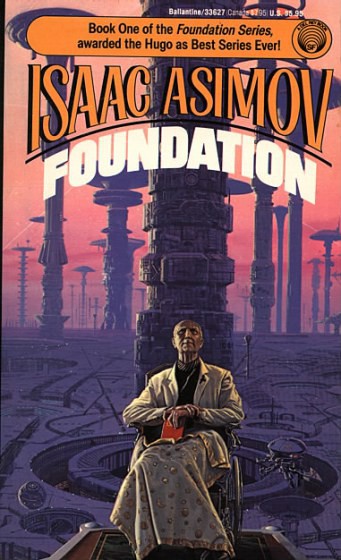
So, I went to the bookstore, asked the clerk “if I wanted to start reading science fiction, where would I start?” She smiled, and retrieved Foundation for me from the science fiction shelves. When she handed it to me, she said, “This book is aptly titled, because it’s basically the foundation for everything published in science fiction ever since.”
And she wasn’t wrong.
His name was Gaal Dornick and he was just a country who had never seen Trantor before. That is, not in real life. He had seen it many times on the hyper-video, and occasionally in tremendous three-dimensional newscasts covering an Imperial Coronation or the opening of a Galactic Council. Even though he had lived all his life on the world of Synnax, which circles a star at the edges of the Blue Drift, he was not cut off from civilization, you see. At that time, no place in the Galaxy was.
There were nearly twenty-five million inhabited planets in the Galaxy then, and not one but owed allegiance to the Empire whose seat was on Trantor. It was the last half-century in which that could be said.
To Gaal, this trip was the undoubted climax of his young, scholarly life. He had been in space before so that the trip, as a voyage and nothing more, meant little to him. To be sure, he had traveled previously only as far as Synnax’s only satellite in order to get the data on the mechanics of meteor driftage which he needed for his dissertation, but space-travel was all one whether one travelled half a million miles, or as many light years.
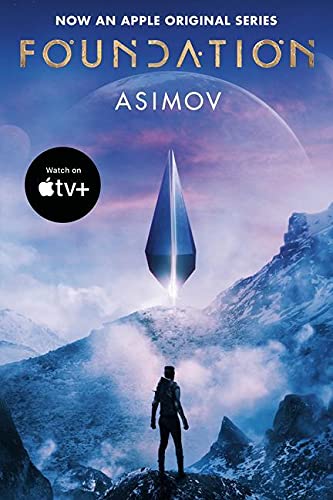
Having read almost all of the Foundation novels (I didn’t read the prequels that came later; ending with Foundation and Earth), I was very excited to see the Apple TV adaptation–while knowing it would be dramatically different (no doubt) from the books. But it was so different I thought it would be wise to go back and reread (or listen) to the original novel again. (It’s also been a very hot minute since I read them all, and I don’t remember everything I’ve read the way I used to…)
(Side note: I had actually read an Azimov novel in the 1970’s–Murder at the ABA–and still have my original paperback copy, purchased at the News Depot on Commercial Street in Emporia, Kansas. I’ve always wanted to revisit it–because it was very insider-y about the American Booksellers Association annual event–now Book Expo America and in decline–as well as about publishing itself, and I wanted to see how spot-on Azimov was with the book. I remember it fondly, and am also curious as to whether or not it still holds up as a mystery novel.)
There are differences; there are characters in the show that don’t exist in the book, there was no Thespin in the book (Anacreon does, however, play an important part in the book), there’s no Genetic Dynasty running the Empire (in fact, little to nothing in the book about the Empire once the Encyclopedists take off for Terminus), and of course, Azimov wrote about white men–the show is much more diverse as well as gender flips both Gaal and Salvor Hardin. If you’re an Azimov purist, you’ll probably dislike the show, I think; I enjoyed it even as I noticed the significant differences. But listening to the audiobook, I also realized that some of those changes were necessary–what worked in the book and was exceptionally clever probably wouldn’t translate well into a visual medium, but listening and getting refreshed in my memory of what the original work actually was made me appreciate the book all the more. I’d remembered it was incredibly smart and clever, particularly in how everything worked out to solve what came to be called “Seldon crises”–a situation where the Foundation was endangered, both from within and without, but the forces working against it eventually led to a point where only one possible action could be taken, and it was inevitably the right one; which meant they had to have an almost religious-like belief in Seldon and his mathematics (and how much did I love that math was the savior of the galaxy?) and trust that taking no action was the proper course of action. I also loved how the Foundation changed and adapted from its original mission (its true purpose was hidden from them to begin with, because foreknowledge would change things and alter outcomes), and how it even developed a religion around its technology to control inhabitants on other planets.
And, as that bookstore clerk all those years ago at the bookstore in Manchester Center Mall told me, the book–and Azimov, really–influenced every science fiction writer and novel that came in his wake. It truly was a foundational text for science fiction. And it’s also not difficult to see where his own influences came from–his Galactic Empire was very similar to the Roman Empire in decline, and the parallels to the decline of the American empire are almost impossible to miss.
I did enjoy the show–the production values are amazing, and it’s a great story as well, if it does get off to a bit of a slow start (but it picks up)–but I am even more glad that the show drove me to revisit the original novel again. It truly is a superb work.
Nostalgia is something I rarely indulge in, because I consider it to be dangerous in its apparent innocence. We tend to look back at the past with a rosier glow; see it through cheesecloth and Vaseline smeared on the lens to take away the wrinkles and ugliness, make it seem prettier than it actually was. My childhood actually ended when I was thirty-three and decided to live my life rather than continue to allow it to just happen; the events of my life prior to that influenced me and helped make me into the person I am today, so I cannot have any regrets or ‘what-ifs’; I love my life now and I like who I am. I try to live in the present and look ahead; plans and goals are helpful to keep one focused, but they also leave one at the mercy of whimsical fate. You never know, for example, when a hurricane is going to come to your city or a wildfire burn down your home and your plans turn out to be for naught; we are all at the mercy of nature and fate.
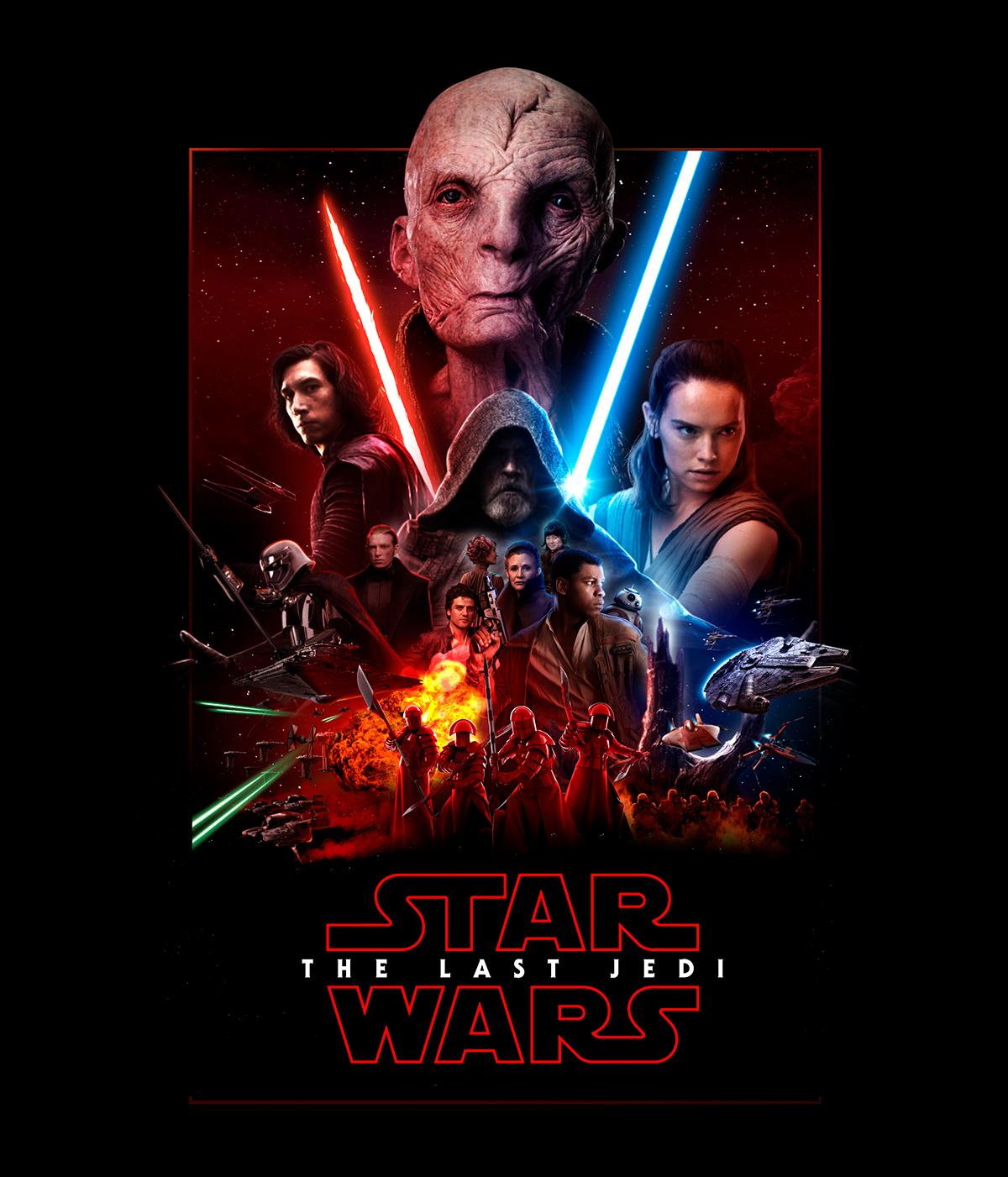
Nostalgia perhaps explains my love for the Star Wars films; the first film opened when I was a senior in high school, and I have been a fan ever since. I waited in line for three hours to see the very first showing of Return of the Jedi when it opened; the prequel trilogy was a sore disappointment to me. Yet The Force Awakens and Rogue One tapped into that magic I remembered as a teenager, looking up at the big screen and seeing an epic tale of magic and mystery, the battle between good and evil, between freedom and authoritarianism, play out with space ships and droids and light sabers, with heroes and villains that were easily identifiable, and American cinema, for good or bad, was changed forever.

 Queer and Loathing in America