Saturday Night

Well, it’s certainly Saturday morning. I woke up around eight, yet remained a lag-a-bed until around nine-ish, and you know what? Not sorry, not sorry in the least. I clearly needed to rest more–the work week seems to take more out of me these days than it used to, thank you, aging process–and now that I’m awake and swilling coffee, I feel more rested and relaxed than I did for most of the week. I still intend to write a lot this weekend, as well as get some serious cleaning done around here, and perhaps this is the time for me to finish reading Jamie Mason’s superb The Hidden Things, which is really fucking fantastic. She reminds me, in voice, style, and plotting, a lot of the great Patricia Highsmith. As I get deeper into the book and the stylish complexity of the plot becomes deeper and more tangled than I could have ever imagined when I read page one, I despair of the things that keep me from having more time to read so I can finish this exquisite gem of a novel. I am perhaps just over half-finished–which should give you an indication of how tired I’ve been lately; it’s taking me a really long time to finish this book–certainly longer than it should, given it’s consistent high quality.

The Anthony nomination this week (I still can’t believe it, to be honest) effectively derailed my entire week–but only because I allowed myself to bask in the glow of the enormous pat in the back from my colleagues, as well as the flood of congratulatory messages, posts, comments, and tweets. But now we’re in the afterglow stage of having to come back to earth and reality and get my life back together and on track yet again, particularly when it comes to writing. I really couldn’t afford to lose the days of writing I lost this week through my self-indulgence, and yet I did lose them. Chapter Eleven of the WIP has been a bitch to write; I started this past week and got about halfway through, and now have to go back to finish it and see if I can get on some kind of roll with writing it. I am going to try something; I am going to try finishing that chapter today and then move on to some short stories that have been languishing in my files for a while. Last night–or more properly, sometime yesterday–I finally figured out how to fix my story “And The Walls Came Down”; it’s a shift in the plot which will require some extreme changing. I also want to revise “This Thing of Darkness” one more time, and I’d like to get some done on my lengthy short story that is turning into a novella, “Never Kiss a Stranger.”

We watched Widows last night, which was good, but could have been better. The acting was topnotch, as were the relationships between the women–but the plot was so complicated and twisted I wasn’t sure I was actually following it and knew what was going on for most of the movie; that could also be entirely my fault. But Viola Davis is one of the finest actresses of our time, and I would watch her in anything, to be honest; her performances are always complex, nuanced, and brilliant.

We also need to catch up on Fosse/Verdonwhich I can’t recommend highly enough, and we have yet to start season two of Killing Eve, which I am also excited about watching; although I am very worried about sophomore slump; season one was so brilliant and fantastic that I have concerns that the second season won’t pass muster.

Today I have to go by the Cat Practice to get another bag of Scooter’s expensive food (no, his Majesty is NOT spoiled, thank you very much), and then have to swing uptown to get the mail and make some groceries (not many, thank you Baby Jesus) before returning home, where I plan to spend the rest of the afternoon writing and cleaning (and probably doing some preparatory cooking for next week, as well). I may get the car washed as well; it’s looking pretty dirty, and the Uptown Car Wash does a lovely job; or perhaps I can put it off until next week, what with the three day weekend and all.

Yes, there’s a three day weekend lurking on the horizon, which is exciting. Huzzah! I am obviously thinking I’ll be able to either get a lot done over its course, or get a lot of rest, or some combination of the two, which would also be incredibly lovely.

I also have to start pulling together an article for Sisters in Crime for my diversity column. I have some ideas for it,  and I know who I want to speak to for it, but at the same time I’ve not been able to come up with an over-all hook for it. Maybe some brainstorming over the course of this particular weekend will do the trick for me.

And on that note, Constant Reader, it’s back to the spice mines. Have a lovely Saturday!

014de5ba669736763585b8bf0af65be2

R.O.C.K in the USA

Happy Sunday and a good morning to all y’all.

I didn’t get as much done yesterday as I would have liked; running my errands in the pre-rain humidity literally wore me out, and then when I got going again I started cleaning and doing laundry and well, once I start doing that–as well as going through and trying to organize the books–I am pretty much done for the day….especially after I discovered Burnt Offerings was available for streaming on Prime. Oliver Reed! Karen Black! Bette Davis (who was totally wasted in her role)! I’d seen the movie years ago, I think when it first aired on television after it’s theatrical run, and while it’s still has some moments, it overall doesn’t hold up as well as I would have hoped. I read the book for the first recently in the last few years, and it was wonderful. But watching Burnt Offerings put me in mind of an essay about horror in the 1970’s; the 1970’s was a time when the suburbs really developed because of ‘white flight’ from the cities and desegregation; this was this whole movement of back to the country from the urban centers, and at the same time, there was horror that specifically focused on this phenomenon (without the racism and white flight issues); namely this book, Harvest Home by Thomas Tryon, The Stepford Wives by Ira Levin, and even Stephen King lightly touched on this in ‘salem’s Lot; the dangers of the country to people from the city.

One could even argue that James Dickey’s Deliverance also belongs in this category, and it put me in mind of an essay that I may never write. I also thought up another yesterday while running my errands, after car after car after car violated traffic rules and almost caused me to be in in accident (three times, to be exact; which might be a new record): “Right of Way,” in which I would extrapolate the American contempt for traffic rules and laws for everyone’s safety can be directly correlated to contempt for law and order, the system, taxes, everything. I made some notes, and this is one I may actually write. Essays are fun and I do enjoy writing them but I don’t very often, unless one is requested of me for something, and perhaps that’s the wrong approach.

Today I am going to go to the gym and I am going to start rereading Royal Street Reveillon and make notes for the big revision that is coming. I’m also going to start reading Jackson Square Jazz out loud for copy editing purposes, and I’d also like to work on “A Whisper from the Graveyard” today. I should at some point also work on finished “Never Kiss a Stranger,” which means I should also make a to-do list for everything I want to get done in July.

Hmmm. Perhaps not a bad idea, at that.

I also remembered I have notes on a short story I need to read and decide what revisions I need to be make.

It never truly ends, does it? But I am looking forward to Sharp Objects tonight on HBO; I actually liked this book by Gillian Flynn better than Gone Girl, which of course made her hugely famous and hopefully hugely rich. I still haven’t read her Dark Places, but that’s because I still subscribe to the “if I don’t read all the canon then I still have something by her to read” mentality, which is partly why I still have not read the entire canon of either Daphne du Maurier or Shirley Jackson or Patricia Highsmith.

So, I have a lot to do today–only one more day after today before I return to the office, but at least it’s only a four day work week–and so I should probably get back to the spice mines.

The next story up in Promises in Every Star and Other Stories is “Bloodletting”:

The damp air was thick with the scent of blood.

It had been days since I had last fed, and the desire was gnawing at my insides. I stood up, and my eyes focused on a young man walking a bicycle in front of the cathedral. He was talking on a cell phone, his face animated and agitated. He was wearing a T-shirt that read Who Dat Say They Gonna Beat Dem Saints? and a pair of ratty old paint-spattered jeans cut off at the knees. There was a tattoo of Tweetybird on his right calf, and another indistinguishable one on his left forearm. His hair was dark, combed to a peak in the center of his head, and his face was flushed. He stopped walking, his voice getting louder and louder as his face got darker.

I could smell his blood. I could almost hear his beating heart.

I could see the pulsing vein in his neck, beckoning me forward.

The sun was setting, and the lights around Jackson Square were starting to come on. The tarot card readers were folding up their tables, ready to disappear into the night. The band playing in front of the cathedral was putting their instruments away. The artists who hung their work on the iron fence around the park were long gone, as were the living statues. The square, so teeming with life just a short hour earlier, was emptying of people, and the setting sun was taking the warmth with it as it slowly disappeared in the west. The cold breeze coming from the river ruffled my hair a bit as I watched the young man with the bicycle. He started wheeling the bicycle forward again, still talking on the phone. He reached the concrete ramp leading up to Chartres Street. He stopped just as he reached the street, and I focused my hearing as he became more agitated. What do you want me to say? You’re just being a bitch, and anything I say you’re just going to turn around on me.

I felt the burning inside.

Desire was turning into need.

I knew it was best to satisfy the desire before it became need. I could feel the knots of pain from deprivation forming behind each of my temples and knew it was almost too late. I shouldn’t have let it go this long, but I wanted to test my limits, see how long I could put off the hunger. I’d been taught to feed daily, which would keep the hunger under control and keep me out of danger.

Need was dangerous. Need led a vampire to take risks he wouldn’t take ordinarily. And risks could lead to exposure, to a painful death.

The first lesson I’d learned was to always satiate the hunger while it was still desire, to never ever let it become need.

I had waited too long.

“Bloodletting” is an unusual story for me in that it’s actually a short story that bridges the gap between my novella “Blood on the Moon” and the novel Need; I eventually used it as the book’s first chapter. I have always wanted to give vampire fiction a try; I created an entire world that I first wrote about in the novella “The Nightwatchers,” which I always intended to develop into a series. I still would like to develop that series, and when the opportunity came to write “Blood on the Moon” I realized I could simply still use the world I’d created for “The Nightwatchers” and move on to different characters. The second book in the series, the one that was to follow Need, Desire, was going to tie the two story-lines together but Need didn’t sell as well as the publisher would have liked and so Desire died in the water. I may still go back and write it, of course, but I have no publisher for it and I am not particularly interested in self-publishing that much. But…I never say never. I wrote “Bloodletting” for Blood Sacraments, and only had to change the original concept a little bit; in the original idea Cord, my vampire, was actually sitting on the roof of St. Louis Cathedral watching the crowd for his next victim. I still love that image, and may use it sometime, but I did eventually change it to how it reads now.

57921a3ee18a224b7db94cbb1638e3d2

Alive and Kicking

Tuesday and a short work week! I am working half-a-day tomorrow, and taking off Thursday and Friday; which, coupled with Memorial Day, gives me a lovely mini-vacation which will enable to get some things done that I want to get done and rest and relax and write and…well, we’ll see how it goes, but I am heading into my mini-vac with seriously high hopes to get a lot accomplished.

And if I don’t? Well, at least I’ll be well-rested.

Watch this space for updates.

Seriously, though, we are continuing through Thirteen Reasons Why, with only two episodes left to go in this season, and while it continues to get better with every episode, I think there may have been a little too much conflict in the writer’s room when story-boarding this season. The show has yet to be picked up for a third season, but there are rumblings on line that Season 2 definitely left the door open for a third; possibly with major cliff-hanger endings to the various story-lines running through the show. It just gets frustrating when things are contrived for the plot, you know what I mean? But then, the original season was also contrived, since it was based on the notion that 1) she had access to cassette tapes 2) she was assuming everyone she wanted to listen to the tapes would have access to a cassette player and 3) she also assumed any one of the people wouldn’t just throw the tapes away. There was a bit of a blackmail threat, of course, but at the same time….I still think at least one of the kids would have destroyed the tapes, or at least not passed them on; especially one of the kids who didn’t really have as much to lose as the others.

But…the young cast is very appealing and compelling in their roles.

Also: we can watch the finale of The Terror tonight. Seriously, if you aren’t watching, it’s some of the best television I’ve seen in years.

And now, for a return to The Short Story Project, we have “The Good Cat” by Vicki Hendricks,  from Retreats from Oblivion: The Journal of Noircon:

I had no name till Dad took me home. Now I answer to Lickrish, Buddy, and Son–when I feel like it. I gave up chasing lizards, squirrels, and birds, and climbing trees, for Dad. None of it was as good as his fingers behind my ears, his soft belly-lap, and the tang of his silky armpit slung across out bedsheets where I curl. I am a good boy till I start trouble.

Dad is on the couch and I am in his lap, as we are supposed to be at night. He turns my head toward his snout. “Son,” he says, his fingers massaging the tingly spot above my tail, “You’re the only one Dad needs.” I stretch forward, head down, butt up. I hunker into a cuddly lump and purr, keeping my eyes cracked on a swaying palm frond outside the window. I’m lulled by the movement—happy—as Dad calls it. He rests his hand on my back and watches the picture-screen.

After a while he says, “Buddy, let’s take a drive to my Ami. Wanna?” It is a place with windows in the sky, a world of sand, and salty waves that try to drown you if you stop to dig a hole. I leap to his shoulder and tuck my forepaws into the dark stubble on his neck, scouring the side of his face with my tongue till he pulls me off. He does not understand what I am telling him, that we are happy on the couch. I do not want to go to his Ami, or anywhere, but I do not want to stay home all by myself.

Read the whole story here.

Vicki Hendricks should be one of the biggest names in crime fiction today, without question. I myself am just as guilty as all the rest of you; this is only my second experience reading some of her work, and I really need to remedy that failing. Her debut novel, Miami Purity, is one of the best noir novels of all time, period, no questions, no doubt. The entire time I read it–and if I recall correctly, I indulged in the entire thing one rainy afternoon in my easy chair, riveted from beginning to end, and it is still an accomplishment in noir writing that I can only try to emulate; I doubt, in all sincerity and honesty, that I could write its equal. After reading this short story, I immediately added all the rest of Hendricks’ novels to my list; I strongly urge you to do so as well.

“The Good Cat” reminded me of Patricia Highsmith’s short story “Ming’s Biggest Prey”; both are dark, noir tales from the point of view of a cat–which is not entirely an easy thing to pull off, but once you read the stories they totally make sense: what could be more noir than a cat? Both stories are about a cat’s love for their owner; Highsmith’s is darker because the character of the cat is more dark; Hendricks rather views a dark thing from the cat’s point of view; a cat who loves its owner, which makes the ending all the more heartbreaking and yes, noir. (Highsmith’s story ends with no small feeling of satisfaction in the reader.)

Read Vicki Hendricks. Do it. Now. 

IMG_1239

I Still Can’t Get Over Loving You

Wednesday, and Day 4 of Facebook Jail. You know something? I wonder if they’ve heard of unintended consequences over at the Facebook Community Standards department. I usually spend far too much time scrolling through my Facebook feed and interacting with friends. So far this week, instead of doing that, I’ve revised a short story, worked on an outline, read a book (a wonderful history of The Mary Tyler Moore Show, Mary and Lou and Rhoda and Ted), read several short stories, and gotten some other things done. As this thirty day sentence continues, I will probably visit Facebook less and less–it’s kind of frustrating being able to see things and not respond to them–and by the end of the sentence, probably will be completely broken of the need to go there, and hopefully my attention span will have snapped back to what it was in the days before social media. I’m also liking Tumblr, INstagram and Twitter–you don’t wind up spending nearly as much time there, at least don’t, at any rate. Once I get used to not being on Facebook and having all this free time…look out.

I also read Lois Duncan’s young adult novel Ransom. Originally published in 1967 as Five Were Missing, it’s clear to see why Duncan was named a Grand Master by the Mystery Writers of America shortly before her death. I’ve not read all of Duncan’s work–I’m working my way through them all–but her novels were startlingly original and fresh, particularly when you consider when they were originally published. Ransom, inspired by a true crime in northern California where a school bus was hijacked and the students kidnapped, reads very quickly. The five students on the bus all are fully developed and fleshed out beautifully; and Duncan uses the kidnapping as a way of getting inside the heads of the characters and exposing them for what they are; the golden boy with dark secrets and feet of lead; the spoiled cheerleader who dislikes and resents her stepfather, only to learn that the father she idolizes is unworthy of her love; the military brat, deeply intelligent, who is the first to realize the truth of their situation and finds depths of bravery she never knew she had; the younger brother of the golden boy who realizes his own identity, and finds he has levels of potential strength his brother can only aspire to; and the orphan, being raised by his bachelor uncle with scars of his own to hide who finds out that self-pity only keeps him from enjoying his life. The dialogue is a little stilted and old-fashioned, but as I said, it reads very quickly.

Duncan was definitely a master.

Speaking of masters, I read a short story by Patricia Highsmith yesterday as well, “The Heroine,” which is the lead off story in Sarah Weinman’s Troubled Daughters, Twisted Wives; a brilliant anthology of stories written by women crime writers from the 1940’s thru the 1950’s, a time when women dominated the industry and many of these wonderful writers are sadly, overlooked and forgotten.

troubled daughters twisted wives

The girl was so sure she would get the job, she had unabashedly come out to Westchester with her suitcase. She sat in a comfortable chair in the living room of the Christiansens’ house, looking in her navy blue coat and beret even younger than 21, and replied earnestly to their questions.

“Have you worked as a governess before?” Mr. Christianen asked. He sat beside his wife on the sofa, his elbows on the knees of his gray flannel slacks and his hands clasped. “Any references, I mean?”

“I was a maid at Mrs. Dwight Howell’s home in New York for the last seven months.” Lucille looked at him with suddenly wide gray eyes. “I could get a reference from there if you like…But when I saw your advertisement this morning I didn’t want to wait. I’ve always wanted a place where there were children.”

I love Patricia Highsmith, and I have an enormous volume that contains all of her short stories. It’s really criminal that I, like so many other people, don’t read more short stories (hence my short story project, which I might make a year-long thing rather than just a few months), and it deeply shames me that I’ve had Troubled Daughters Twisted Wives sitting on my shelf collecting dust all this time without taking it down and reading it. This Highsmith story, “The Heroine,” is genius, absolute genius, in the cold, slightly detached way that Highsmith uses as her point of view, which makes her stories and novels so much more chilling. It’s very clear, almost from the start–ah, that foreshadowing–that the Christiansens are probably making a terrible mistake in not checking on Lucille’s references. And how the story develops is so much more chilling than you think it is when you get that uh oh feeling in your stomach when Mrs. Christiansen charmingly says she won’t check Lucille’s references. Highsmith’s authorial voice is so distant, so cold and matter-of-fact, and her word choice is always simple and spare…but she always gets that feeling of suspense, of oh my god what is going to happen that you feel amping up as you finish reading each sentence…and her denouements never disappoint.

Weinman has done an excellent job curating this collection; she also did a two-volume collection of novels by these writers called Women Crime Writers: Eight Suspense Novels of the 1940’s and 1950s: A Library of America Boxed Set. Some of the novels included in that gorgeous set I’ve already read–Charlotte Armstrong’s Mischief, Margaret Millar’s Beast in View, Vera Caspary’s Laura–but I am definitely going to have to get that set down from the shelf and read the others as well. Weinman is also pretty expert on the crime genre in general; very well read, fiercely intelligent and deeply perceptive, her newsletter The Crime Lady is amazing, and I read it every week for her thoughts on true crimes, the books she’s read and recommends…you can sign up for it here. You can thank for me for it later. She’s also writing a true crime of her own right now that I can’t wait to read.

And now, back to the spice mines.

Drive

It is cold, gray and wet again this morning in New Orleans; the high is predicted to be 42. 42! Honestly. I turned the heat on yesterday and honestly, forgot to turn it off before i left for the day–and usually this makes the upstairs an inferno. Nope, it was merely comfortable up there when I got home from work last night. So, I turned it off when I went to bed, and turned it back on again this morning as I shiver at my computer. Heavy sigh.

But Paul comes home tonight, hurray! And it’s also Friday, so I have a short day today to usher in the weekend. I got an unexpected royalty check yesterday–it’s so lovely that the Frat Boy books from Kensington are still selling, all these years later–and that altered my weekend errand plans somewhat. There’s also no Saints game on Sunday, nor any college football, so I have absolutely no excuse to not clean and edit and write this weekend. I do hate that college football season is over almost entirely, but hey–what can you do? LSU did far better than I could have hoped after a rocky start, and the Saints did a lot better than I thought they would have, especially after that 0-2 start.

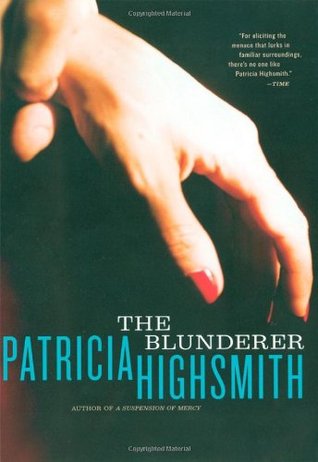
Last night, I finished reading Patricia Highsmith’s The Blunderer, and started rereading Larry McMurtry’s The Last Picture Show, which is my favorite novel of his. I read it the first time when I was about twelve, I think; and have reread it several times since; but I haven’t read it again in over twenty years, and I found a copy when I was cleaning out the storage unit and dragged it out. It’s not the first book people think of when they think of McMurtry–that would most likely be his Pulitzer Prize winning Lonesome Dove–and I’ve read a lot of McMurtry–not all of it, certainly–but I’ve always had a special regard for this novel. But I’ll talk more about that when I’ve finished the reread.

Meanwhile, The Blunderer by Highsmith was quite an interesting read.

276203

The man in dark-blue slacks and a forest-green sport-shirt waited impatiently in the line.

The girl in the ticket booth was stupid, he thought, never had been able to make change fast. He tilted his fat bald head up at the inside of the lighted marquee, read NOW PLAYING! Marked Woman,  looked without interest at the poster of a half-naked woman displaying a thigh, and looked behind him in the line to see if there was anyone in it he knew. There wasn’t. But he couldn’t have timed it better, he thought. Just in time for the eight o’clock show. He shoved his dollar bill through the scallop in the glass.

“Hello,” he said to the blonde girl, smiling.

“Hello.” Her empty blue eyes brightened. “How’re you tonight?”

It wasn’t a question she expected to be answered. It wasn’t.

And so begins Patricia Highsmith’s third novel. The thing that is so terrific about Highsmith is you really never know what you’re going to get with her; her plots are fiendishly original and clever, and so deliciously dark and relatable in some way. The Blunderer opens with Melchior Kimmel establishing an alibi for himself by going to see a film and being seen…and once seen and recognized, he keeps going and exits, heads for his car and then follows a bus north. At a designated rest stop he parks out of sight, finds his wife, who has gotten off the bus, convinces her to follow him to go and chat, and once they are out of sight he brutally murders her.

He gets away with it, too–he was seen at the movie theater, remember, and no one saw him at the rest stop. His wife’s murder remains unsolved.

Until lawyer Walter Stackhouse sees a notice in the paper about the murder. It intrigues him. He writes essays, or wants to write essays, about what he calls ‘unequal friendships,’ where one friend is lesser than the other and yet the better friend seems to get dragged along by the other. This murder fascinates him, and he starts trying to think how the husband could have done it and gotten away with it…and actually figures it out. Walter is also unhappily married; his wife, Clara, is frankly awful and is trying to ruin his friendships with other people and isolate him; yet she also makes him terribly unhappy. He tried to leave her once before and she threatened to kill herself, so they patched things up. But he is now introduced to another young woman whom he’s attracted to…and somehow Clara has figured this out and continues to make him miserable.

His idle fascination with the Kimmel murder eventually leads him to visit the bookstore Kimmel owns and operates, orders a book, and decides, after having seen Kimmel, that he must be innocent. His own life, meantime, gets worse. He tells Clara he wants a divorce and she attempts suicide. She gets out of the hospital and is just as awful as ever…and then her mother dies and she has to go back to her hometown in Pennsylvania to attend to things. She takes the bus. Obsessed with the Kimmel case, and wondering if he could, in fact, kill his own awful wife…he follows her bus in his car. When they reach a rest stop, he gets out of his car and looks for Clara…and cannot find her. But he’s seen…and later, Clara’s body is found at the bottom of a cliff. Suicide or murder? The police think it’s suicide at first…but the similarity to the Kimmel case is there….and his own fascination with that case now comes back to bite him in the ass.

I greatly enjoyed this book, as I have all of Highsmith’s that I’ve read thus far, and I love how she deftly changes directions in ways the reader cannot see coming. You can’t help but feel for Walter in his horrible dilemma, and the way his life starts to slowly spiral out of control all because he happened to read about an interesting murder in the newspaper. As the weird connections between the two cases slowly come to light, no one believes Walter is innocent–not the police, his friends, his co-workers, his maid, nor even his new love. It’s an extraordinary story, and the way Highsmith heightens the tension until it’s almost unbearable, the two parallel stories crossing and recrossing, is quite exceptional.

Highly recommended.

Sister Christian

It’s cold, gray, and damp in New Orleans this morning. I would guess it’s probably less than sixty degrees inside the Lost Apartment–I am wearing a wool cap and my hands are cold as I type this–but I also have a short day of work today, and I intend to use this time wisely this morning–writing, cleaning, etc. Paul returns home tomorrow everning late; so I am going to need to finish cleaning the upstairs. I bought our advance tickets for Star Wars VIII: The Last Jedi yesterday; Sunday of opening weekend so I won’t have to avoid spoilers on-line as long as I did for The Force Awakens. Woo-hoo!

I’m about halfway through Patricia Highsmith’s The Blunderer, and marveling at how bleak her world view is, to be honest. Highsmith writes in a very distant third person point of view, and her voice is terribly matter-of-fact, which makes the reality of the story she is telling much worse. Highsmith is a master of the wrong-place-wrong-time suspense tale; which is something I absolutely love. These kinds of stories build suspense naturally; the reader and the main character know they’re innocent of any wrong-doing, but no one else believes them, which also tends to make them paranoid and the pacing picks up the more paranoid the main character becomes. I sort of did this in Bourbon Street Blues, only Scotty’s only crime was to be the unwitting recipient of something both the villains and the FBI wanted to get their hands on. You can’t, of course, turn that type of a tale into a series, although part of the problem I’ve always had with writing Scotty books is I’ve always tried to turn each new book into a traditional mystery series tale, and Scotty books aren’t, and should never be, a traditional mystery tale. I always run into trouble when I try to make them out to be that way.

Heavy sigh.

I managed to get some work done on a short story yesterday as well; I’d love to get that first draft finished sooner rather than later, so I can polish it and get it into submission-ready shape.

Lord, it’s cold in the kitchen this morning. I may have to go get a blanket in a moment.

Christmas looms on the horizon, and I have yet to shop for anything. I will finish the Christmas cards this weekend–yes, I actually started addressing them and signing them and putting them into envelopes; I may even get them in the mail so people can receive them before the holiday, look at ME adulting–and I also probably should do some shopping this weekend. I need to make up my mind whether I want to simply shop on-line or if I want to actually brave a mall. I used to abhor malls, but over the years as I spend less time in them the rare occasions I actually go to them turn out to be kind of enjoyable. Lakeside Mall has both an Apple Store and a Macys, and that’s usually all I need to do at a mall, besides the Food Court–I always treat myself to something at the Food Court whenever I go to one; and yes, I am aware how weird it is that fast food is something I consider a treat. But I never eat fast food; there’s really not anything conveniently accessible, which made moving into this neighborhood a genius move for that reason alone.

And on that note, I think it’s time for me to head back into the spice mines.

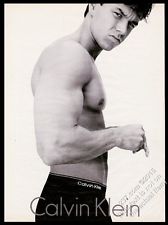
Here’s a Calvin Klein ad for your delectation; Marky Mark from the 1990’s for Throwback Thursday.

mtTyV-e_KgCwzELoBXyhSkg

Here Comes the Rain Again

It started raining yesterday, and hasn’t really let up since; and it has brought a biting, bitter cold with it. As such I slept later than I intended to this morning–Wednesdays being one of the days I have the luxury of not needing to use an alarm–but nevertheless, I am not awake,, wearing sweats and swilling coffee.

I finished reading Donna Andrews’ delightful How the Finch Stole Christmas last evening, curled up in my easy chair under a blanket, and started reading Patricia Highsmith’s The Blunderer, which, as always with Highsmith, is enthralling. Highsmith is one of my favorite writers, but I’ve never read her entire oeuvre since there will never be new Highsmith novels to read; this way there’s always more of them I haven’t read yet (I have also done this with Shirley Jackson and Daphne du Maurier); but after I finished the Andrews–which was an absolutely lovely comfort read–I wanted something a bit more biting and snide–and for that, you really can’t go wrong with Highsmith. The Blunderer is one of the novels curated by Sarah Weinman for the Library of America series about terrific women crime writers from the post-war era; Weinman’s ringing endorsement is one that simply should not be overlooked–she’s never wrong. I got several chapters into it last night before going to sleep, and am definitely looking forward to doing the same again this evening.

How the Finch Stole Christmas is a delight from start to finish, as are all of Donna Andrews’ Meg Langslow series.

Scan

“Shakespeare was right. The first thing we do, let’s kill all the lawyers.”

“I wish I could hear you say that in person,” I said.

“Yeah, over the cell phone you miss all my dramatic gestures.” Michael’s voice sounded more exasperated than angry. And since I knew my husband wasn’t usually prejudiced against the legal profession, I was puzzled instead of worried.

“Are you someplace where you can talk?” he asked.

“I’m not at the theater, if that’s what you mean. Reverend Robyn wanted to see me about something. At the moment, I’m over at Trinity, sitting in her office, waiting for her to solve a Christmas pageant prop emergency, so until she comes back, I’m at your service.”

The other night, I watched All About Eve again for perhaps the thousandth time, with a young friend who’d never seen it before. One of my favorite lines in the film is not one that is quoted regularly; Karen and Margo are sitting in the car, out of gas on their way to the train to take Margo back into the city for the evening performance she is going to miss. Margo turns on the radio, and some maudlin orchestral music plays for a few moments, with the camera focused on Margo’s face, one eyebrow arched. She turns the radio off and says, “I detest cheap sentiment.”

One of my biggest issues with Christmas is precisely that; cheap sentiment. I used that quote as an epigram for my Christmas anthology Upon a Midnight Clear, because I didn’t want to publish stories that were emotionally manipulative, and the stories in the book weren’t. Christmas is nothing if not a holiday rife with cheap, manipulative sentiment, and many carols and shows and movies mine this territory to the point where by the actual day’s arrival, I am so completely over the holiday and the saccharine-sweetness that I am almost afraid to turn on the television.

Donna Andrews, as Constant Reader already knows, or should by now, is one of my favorite writers and her Meg Langslow series is also one of my favorites. This is the fourth Christmas book in the series (following Ducks the Halls, Six Geese a-Slayin’, and The Nightingale Before Christmas), each more charming than the last–which is no easy feat. Andrews’ ability to keep this series fresh with each successive volume–and witty–is the mark of a master. Meg loves Christmas; the charming Virginia hamlet of Caerphilly she calls home feels much the same way–to the point where it has turned into a Christmas tourist destination (in no small part due to Meg’s efforts).

This year, rather than having a staged reading of A Christmas Carol, starring Meg’s husband (a retired actor who now teaches at the local college, and also appeared on a television series that has remained a cult hit for decades), the town has decided to mount a full production,  starring Malcolm Haver, a has-been actor who also starred in a television series back in the 80’s, and has a small but devoted following, as Scrooge. Haver has a drinking problem, can’t remember his blocking and his lines, and is a little on the irascible side…but has an ironclad contract for run of the play. Meg and her friends have managed to ensure that no one in town will sell Haver alcohol–but he is still getting it somewhere; and that’s what kicks this clever whodunnit off.

As always, the charms of the town, the wonderful people that live there, and of course Meg’s own ability to face everything with a “how do I fix this” attitude and a clever line makes this a fine addition to the series, and as ever, all’s well that ends well in this Christmas visit to Caerphilly. A perfect read for the Christmas season.

Allentown

I was so tired last night when I got home from work–and I worked a short day! After work yesterday, a friend and I went to lunch to a place on the corner of Tulane and Carrollton called Namese, and I had an enormous  bowl of beef pho, which was absolutely delicious. I was in the mood for noodles, and having never actually had pho before, was quite thrilled to try it, and it was amazing. I’ve been wanting to try pho since seeing a show on our local PBS channel, WYES, about the big Vietnamese community in New Orleans, and one of the things they talked about on the documentary was pho. I’d been wanting to try it ever since, and got my chance.

DAMN THAT WAS GOOD.

I’d known we have a big Vietnamese community in New Orleans for quite some time–most of them live in New Orleans East, and were devastated by the flooding after the levees failed back in 2005. Poppy Z. Brite wrote about that community in his brilliant (and deeply disturbing) Exquisite Corpse, doing it so well I never had the nerve to try to write about it myself. (Our first, and only,  Congressman from Orleans Parish was a Vietnamese; Joseph Cao, who defeated “Dollar Bill” Jefferson in the post-Katrina scandal created by the fifty thousand dollars in cash he had stored in his home freezer. Cao was born in Ho Chi Minh City (then called Saigon), and only served one term in Congress–but I liked Congressman Cao; he put New Orleans ahead of party, and I was sorry to see him go.

I have an idea for a noir involving the Vietnamese communities of the Gulf Coast that I hope to write some day. I’ve also been toying with an old idea for a horror novel that’s been dancing in my head for the last thirty years or so–I can tell that I am writing another book; my creativity always spikes when I am writing a book.

Honestly. One would think I could get that under control.

Anyway, I also finished reading Margaret Millar’s Do Evil in Return last night. It wasn’t the below edition I read, but rather one of the volumes of The Collected Millar; this volume also contains Fire Will Freeze, Experiment in Springtime, The Cannibal Heart, and Rose’s Last Summer. But I rather like that Gothic-style cover.

millar-do-evil-in-return-lancer

The afternoon was still hot but the wind carried a threat of fog to come in the night. It slid in through the open window and with curious, insinuating fingers it pried into the corners of the reception room and lifted the skirt of Miss Schiller’s white uniform and explored the dark hair of the girl sitting by the door. The girl held a magazine in her lap but she wasn’t reading it; she was pleating the corners of the pages one by one.

“I don’t know if Dr. Keating will be able to see you,” Miss Schiller said. “It’s quite late.”

The girl coughed nervously. “I couldn’t get here any sooner. I–couldn’t find the office.”

“Oh. You’re a stranger in town?”

“Yes.”

“Were you referred to Dr. Keating by anyone?”

“Referred?”

“Did anyone send you?”

Margaret Millar is a treasure, and her work, despite now being dated because of societal and social changes, are worthy of not only being read by modern audiences but also deserving of study. She, along with Dorothy B. Hughes and Charlotte Armstrong, formed a triumvirate of strong women writing suspense novels featuring women protagonists that were the equal of anything written by male contemporaries; there were numerous other women doing the same, but these three had longer careers and are now being rediscovered, in part thanks to the diligent work of Sarah Weinman and Jeffrey Marks. Library of America has released a two-volume collection of works by great women writers of the time; Soho Crime is releasing thick volumes collecting all of Millar’s work, which I am happily acquiring. I read Armstrong when I was young, and loved her; I am in the process of working my way through the canons of both Millar and Hughes, as well as two other great women writers of the same period, the incomparable Patricia Highsmith and my personal hero, Daphne du Maurier.

Do Evil in Return, originally published in 1950, is ultimately a novel about how society and its hypocritical misogynistic treatment of women can destroy them. The main character of the novel, Dr. Charlotte Keating, is a strong, independent woman with a successful practice in a small California coastal town. She is both single and hard-working; owns her own car and her own home–no small feat for a woman in 1950–and the book opens with a young woman coming to her for help. The woman, Violet O’Gorman, is only twenty and married, but finds herself with a particular problem; estranged from her husband, she had a one-night stand with a married man which has left her pregnant, and she is desperate for an abortion, which of course was illegal in 1950. Dr. Keating–Charley to her friends–refuses to break the law and perform this service, but her heart goes out to her patient and wants to help her, but while distracted by a phone call doesn’t notice the girl slipping out of her office. With a local address her only clue as to how to find Violet, she goes looking for her…and soon finds herself wrapped up in a terrible string of events beyond control, a noose tightening around her own neck. For, like her patient, Charley herself is involved in a love affair with a married man–a platonic one, to be sure, for she refuses to become intimate with him as he is married–and the similarities she sees between herself and young Violet is part of what drives her. The following morning, Violet’s body washes ashore, an apparent suicide, according to the police but Charley herself isn’t so sure.

And of course, she is right.

Millar’s particular genius lies in how casually she lays out her cards; she never tells her reader straight out what’s going on, but allows it to unfurl naturally, leaving it to her reader to figure it out. When we meet Charley’s platonic lover, there is no mention of his being married–Millar simply talks about the stifling existence he has at home with Gwen. As the story continues the reader slowly realizes that Gwen is actually his wife, and she is also one of Charley’s patients. Charley has tried to foist Gwen off on other doctors, but hypochondriac Gwen refuses to see anyone else–and is incredibly needy, ringing Charley for help at all hours of the day or night. Charley’s own feelings for Gwen’s husband also aren’t that simple; and in 1950 divorces weren’t as easy to obtain as they are today.

Perhaps the strongest part of the book is how Millar clearly depicts how claustrophobic a woman’s world was in 1950, and the delicate balance a single, independent professional woman had to maintain. Exposure of the relationship would ruin Charley, both personally and professionally; just as Violet’s unexpected pregnancy has ruined her. Society’s expectations of women, and their sexuality, are the true villains, the true evil in this novel; and the realization that this world Millar so brilliantly depicts was only sixty-seven years ago is truly chilling.

I think this book would be excellent reading for a Women’s Studies course; to let young women know how truly awful and misogynistic society was not so long ago, as a reminder to everyone today how far women have come in a short period of time, and how hard they fought to get to where they are today.


The Safety Dance

Labor Day.

Paul and I went out for a while yesterday–the first time we’ve “done” Southern Decadence in years–because it was one of my co-worker’s birthdays and we ended up staying out WAY later than I’d thought we would. I was a little sick at first–I took a Claritin-D before leaving the house and then drank a beer on top of it and felt really nauseous and had to sit down for about an hour, but it was entertaining seeing the passing spectacle and then meeting my co-workers later. I’d never actually spent time at the 700 Club; a gay bar that opened in the twilight of the going out portion of my life. It’s a nice bar, if small, and of course they were playing some fun music–you can never go wrong with either classic Madonna or Gladys Knight & The Pips–and it was nice. I enjoyed myself tremendously, but also don’t feel the need to go out again anytime soon. It was…different, I suppose, in a way that I can’t truly explain. I guess the easiest way to say it is that I’m in a different place now, if that makes sense. There’s probably an essay in this; one that right now is amorphous and ethereal, dancing just outside my conscious self and perhaps will come to me so that I can write it down.

But for now, it just is, and I can leave it as I had a lovely time, and I am quite fond of my co-workers, and it was lovely to spend time with them outside the confines of the office and work.

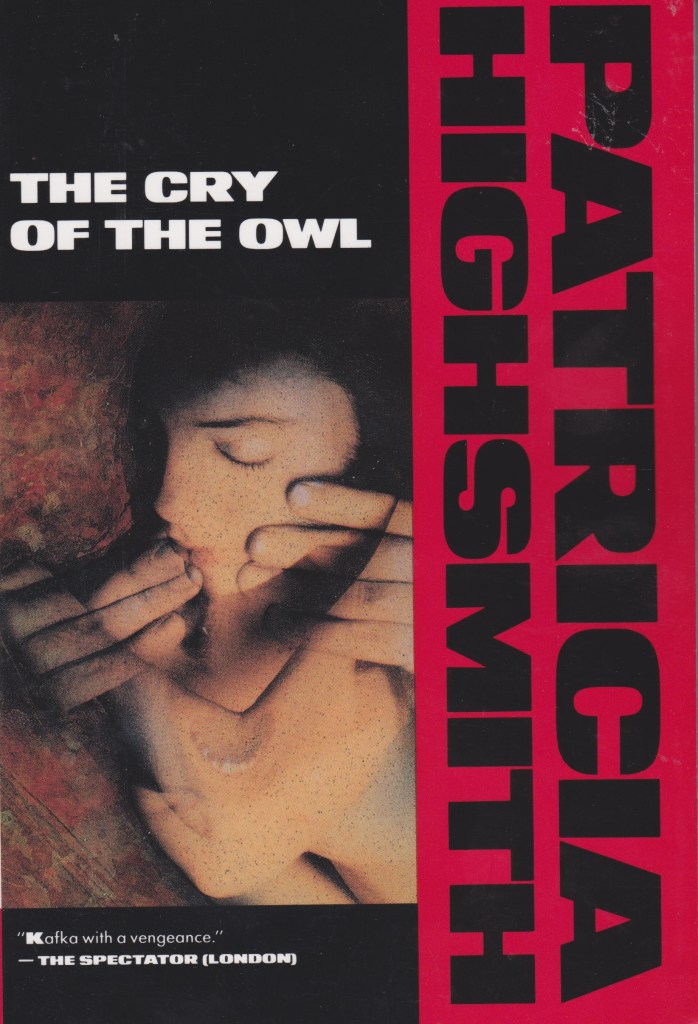
Before we went out yesterday, I spent the morning finishing reading Patricia Highsmith’s The Cry of the Owl.

the cry of the owl

Robert worked nearly an hour after quitting time at five. He had nothing to hurry home for and by staying on at his desk he avoided the chaos of employees’ cars that left the Langley Aeronautics parking lot between five and five-thirty. Jack Nielson was also working late, Robert noticed, and so was old Benson, who was usually the last. Robert turned off his fluorescent lamp.

“Wait for me,” Jack said. His voice sounded hollow across the empty drafting room.

Robert got his coat from his locker.

They said good night to Benson and walked toward the long, glass-enclosed reception hall, where the elevators were.

“So, you got your space shoes,” Robert said.

“Um-m.” Jack looked down at his big feet.

“You didn’t have them on at lunch, did you?”

“No, they were in my locker. You’re not supposed to wear them more than a couple of hours a day at first.”

They got into the automatic elevator.

“They look fine,” Robert said.

Jack laughed. “They look awful, but boy, they’re comfortable, I had something to ask you. Could you possibly loan me ten bucks till payday? Today happens to be–“

“Oh, sure.” Robert reached for his wallet.

“It’s Betty’s and my wedding anniversary and we’re going out to dinner, but could you come by for a drink with us? We’re going to open a bottle of champagne.”

Robert gave him the ten. “Wedding anniversaries–You and Betty out to be by yourselves.”

“Oh, come on. Just for a glass of champagne. I told Betty I’d try to get you to come over.”

“No, thanks, Jack. You’re sure that’s all you need if you’re going out to dinner?”

The book opens with this innocuous conversation between two co-workers who are friendly, but not close. Robert, as you can see, comes across as considerate and thoughtful, if a little bit unemotional. But Robert has another reason for not wanting to intrude on Jack and Betty’s wedding anniversary besides simple courtesy; he has become a bit obsessed with a young girl named Jenny, who lives in a small house out in the country. Robert is in the midst of a divorce, and has had problems with depression in the past; observing Jenny through her kitchen windows–doing dishes, making food, the little domestic chores every woman does in her kitchen–has a calming effect on him. He’s what used to be called, at least during the time the book was written, a ‘peeping Tom’; what would be called a stalker today. Jenny has a boyfriend named Greg; sometimes Robert watches the two of them interact in her kitchen. Robert knows what he’s doing is wrong, yet he is compelled to go there and risk exposure. Several times Jenny and Greg hear him make a slight noise, which concerns and worries them; but he never is caught until one night when Jenny, alone, catches him–and invites him in.

Before long, Robert is enmeshed in the troubled relationship between Jenny and Greg, as well as trying to get his own divorce from his wife settled–a wife who becomes more and more horrific as the novel continues. In fact, in a typical Highsmith switch, Robert–first seen as mentally troubled and damaged, might be the most sane person in the story. Jenny’s growing attachment to him, along with her obsession with death (a younger brother died as a child of meningitis), the equally troubled relationship with her violently dangerous fiance, Greg–continues to build in typical Highsmith fashion, using one of her favorite themes–the besieged innocent whom no one quite believes.

The book is also incredibly dark; Highsmith’s pessimism about her fellow human beings is evident on nearly every page. It’s quite wonderful, yet quite disturbing at the same time. It’s been filmed twice; one in the 1960’s, a French film (many of her works were made into French films) and an American version from 2010, with Julia Stiles.

I’ve enjoyed everything I’ve read of hers; I look forward to reading still more.

And on that note, I’d like to get some writing done today. Have a lovely Labor Day, Constant Reader!

Der Kommissar

Yesterday was, for want of a better word, odd.

Driving to work the city was a ghost town. Driving home from work, the same. This morning the sun is shining (we did have thunderstorms during the night) and while everything outside is wet and dripping, according to the forecast we have about a three hour window of heavy thunderstorms this afternoon. We might flood during that time, but when I drove home last night there wasn’t much standing water anywhere, other than around Coliseum Square, the lowest part of the neighborhood and where all our water seems to drain.

I woke up after a good night’s sleep to see that wretched Harvey has come ashore again, battering and flooding yet more of Texas–Beaumont and Port Arthur; I’ve not researched enough yet to see how things are around the Texas-Louisiana state line. It’s almost too much; I’m not having Katrina PTSD, thank God, as so many others here seem to be suffering; but I just keep donating what I can and sharing links to places where donations can be made.

Human suffering on such a large scale in our country is horrific; it’s occurring on an even larger scale in Bangladesh right now as well.

I haven’t written on the new book, or worked on inputting the line edit, as much as I should have these past few days; I know I need to focus and get on with it, but it’s difficult to not watch the Weather Channel or the news.

I did start reading Patricia Highsmith’s The Cry of the Owl last night, it’s quite good and melancholic, which kind of suits the mood I am currently in. I also reread some history last night (Leckie’s The Wars of America, one of my favorite comfort rereads) while watching the news.

Tickets for this Saturday’s LSU game go on sale to the general public today at 4; I am going to try to score some tickets for us.

And on that note, it’s back to the spice mines. Here’s a hunk for you, John Cena:

IMG_1781