The Boss

Work at home Friday! I didn’t have to go into the office today after all; the person I was covering for didn’t need me to cover for them after all, so I get to drink my own coffee and do some of my work-at-home chores in my pajamas–including my team meeting. Yay! Yesterday was a gray, rainy day, the kind that is also cold so you get that lovely cold dampness that goes right through you to the bone. I ran my errands on the way home, and I don’t have to leave the house at all today unless I so choose–and I am rather leaning towards choosing no definitively already. I woke up the remnants of a thunderstorm; everything outside my windows is wet and dripping. Yeah, definitely not leaving the house today if I don’t absolutely have to–I can run errands and make groceries tomorrow. I am going to do some chores this morning when I need a break from the computer–dishes, laundry, picking up, etc.–but thanks to the midweek weekend we enjoyed because of the holiday, I am not as far behind on housework as I usually am. Sparky let me sleep late this morning, and was a little cuddlebug before I did get up. It’s not even about getting more sleep anymore, it’s more along the lines of way too comfortable for me to get up. Paul was at the gym when I got home from doing some minor errands after work last night, and then after he came home he went upstairs to work for the evening, leaving me and Sparky to entertain ourselves downstairs, which is why I did some picking up and cleaning last night. Looking around this morning, I can honestly wonder why I didn’t do more last night. Hmmm.

I worked a bit on a Substack essay last night, too; the one I worked the most on is about outing and speculating about celebrity sexuality. Many of the essay drafts I have saved on Substack were triggered initially by something that happened in the world; this one “”Johnny Are You Queer?” was inspired by Shawn Mendes having to address all the rumors and speculation about his sexuality, and how that made me feel. It was the second time a celebrity had to do this recently, the other being Kit Conner from Heartstopper. Both instances made me look at the subject in an entirely new (and more empathetic) light, which was frighteningly staggering; I thought how could I ever speculate about a celebrity’s sexuality, when I personally know what it feels like to have people speculate about you that way–and I was never a good-looking hot young celebrity, either, which would be exponentially worse. This led me to how “outing” originally started; it was a political act of protest from a community that was dying and no one cared, and a way to strike at closet cases who were actively harming the queer community (remember anti-gay Aaron Schock and his Downtown Abbey congressional office? He’s now an A-Gay living on the party circuit, and much happier than when he was a closeted anti-gay politician. I’d say that worked out pretty well for him in the long run, wouldn’t you?). Outing eventually got out of control and more of a tabloid monster, far from its original intent, but I’m also thinking about privacy rights now a lot more than I ever did when I was younger–which I am trying to explore in more detail in the essay. I am also writing one about organized Christianity, but it keeps getting longer with more examples because cosplay Christians are always going to cosplay with their full chests while denying Christ with every breath they take.

I generally don’t pay too much attention to celebrity drama, mainly because I don’t care that much about celebrities; as I’ve gotten older, I care less about entertainment news and the celebrity gossip machine. I remember the Blake Lively thing from last summer when that movie was released, and how she was getting a lot of press for being, well, a difficult bitch on set. I did think it was strange–I generally can’t avoid celebrity gossip, despite trying very hard because it’s fucking everywhere–that if she was that awful, why were all her co-stars and everyone else involved with the movie backing her? Now, I’ve thought Justin Baldoni was hot since his days on Jane the Virgin, and I even bought his book about being a male feminist; because I’ve really been thinking about masculinity and what it means to be a man, which is what the book is about. I’ve not read the book–I still might, just to see what it says; even if he’s a hypocrite, that doesn’t necessarily mean he doesn’t have a point about some things–but of course the story exploded everywhere again on Christmas Eve when Lively sued Baldoni, claiming he hired a PR team to destroy Lively’s reputation so her concerns about inappropriate behavior on set by Baldoni wouldn’t be taken seriously–and she has receipts. Celebrity fan culture in this country really is something, and it really is out of control; I don’t know why so many people think being a fan of an artist entitles them to know everything about that artist (see above paragraph about speculating about celebrity sexuality), not to mention the horrors of being a celebrity on social media. Yikes, indeed. All I will say is that Hollywood has always had fixers; the only difference is that now they are guns for hire rather than salaried studio employees. Jordan Harper’s Everybody Knows explores the horrible world of Hollywood PR and what they cover up, and how they spin damage away from their client to someone else, even if that someone else’s life or career is destroyed by the spin. (Read Jordan’s book, seriously.) There’s a decent show on Prime starring Anna Paquin in which she plays a spin-doctor-for-hire, Flacks.

It’s also why no one can ever completely trust celebrity news; it’s literally the prime example of fake news.

And on that note, I am going to head into the spice mines. Have a lovely Friday, Constant Reader. I may be back later, one never knows. If not, though, I will definitely be back in the morning tomorrow.
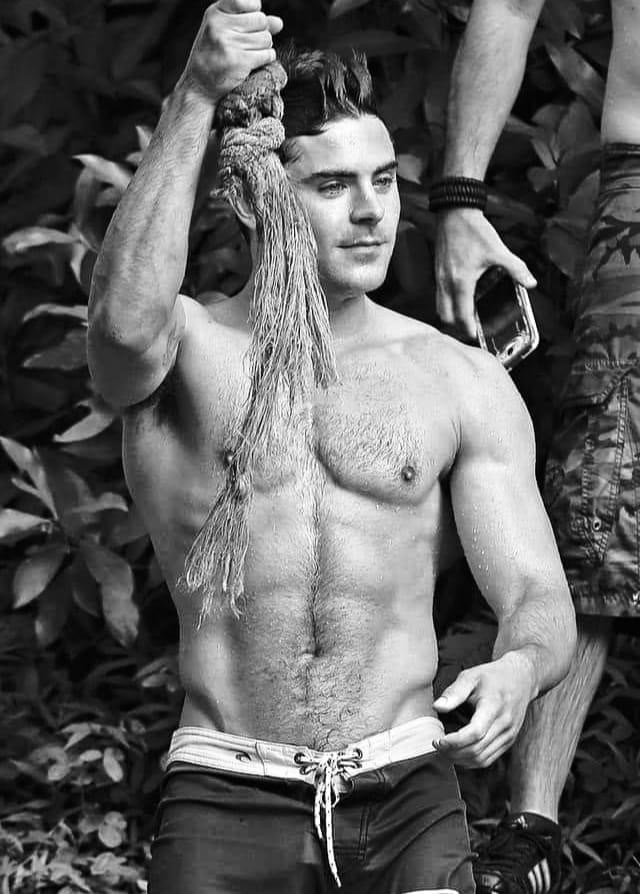
Yea, he’s handsome and has an exceptional build, but Zac Efron is more talented than he gets credit for.

Why Am I Like This?

So, Heartstopper, season two.

First, some preliminary discussion. Since the enormously popular first season dropped last year and turned the cast literally into worldwide stars, the almost constant speculation (and hounding he received) about the sexuality of adorable young Kit Connor, who plays Nick Nelson, forced him to come out publicly as bisexual earlier this year (He came out on Twitter, deleted his account, and hasn’t come back). Shortly after the second season dropped, Joe Locke, who plays Charlie Spring, the other lead and Nick’s love interest, voluntarily came out publicly; he’d been out to family and friends since he was twelve, but finally decided to go public with it. If we take away the sheer adorability factor of a young bisexual man playing a young bisexual male discovering his own sexuality, while playing against an openly gay man playing an openly gay male teenager discovering his own self-worth and value, this kind of visibility–as well as the visibility of the show, and its enormous popularity–is sorely needed and is probably changing lives as I type this. I didn’t know what to expect when I went into season one, and I have to admit the show turned me into an adoring, gushing teenaged girl….so obsessed that I also went ahead and bought the original ebooks of the story and read them all in one afternoon. So, as we go into my thoughts on Season Two and some thoughts about the show’s importance–as well as some of it’s failures (much as I love the show and the characters, I can also see why people would criticize it; I love the show but nothing is above critique.)–bear in mind there are spoilers for both the season and the books contained within.

And while I know Locke is over eighteen, posting sexy-style photos of him just feels kind of wrong. He looks like such a child…but then the entire cast does, which is why the sweetness of the show hits so strong…which brings up another point about queer young adult fiction–or any medium about queer teenagers for that matter: having queer characters in juvenile and young adult fiction is already seen as dangerous by the homophobes (“grooming! grooming!”), so how do you show queer teens wrestling with their sexuality and their identity without triggering the hypocritical pearl-clutching homophobes who want us all gone? Heartstopper danced around this by focusing on identity rather than sexuality; when season one opens everyone already knows Charlie is gay because he was outed the previous year and bullied mercilessly. The bullying has died down–which isn’t often the truth in reality, but will allow it for the sake of the show–and now Charlie, in season one, develops a crush on the school rugby star, Nick Nelson–who sits next to him in form (the UK version of homeroom), and Nick is actually a super sweet, nice guy. They begin to develop a very sweet friendship–Charlie of course develops a bit of a crush, which he knows is hopeless and his very protective friends think is a bad idea…but what nobody knows is that Nick is finding himself attracted to Charlie and drawn to him, which is confusing for him. This first season was all about Nick coming to terms with his attraction and feelings for Charlie–a constant refrain from both of them is “Why am I like this?” And the entire show was incredibly sweet and lovely and very teenaged; the cast were age appropriate as well; sexuality it a topic of discussion but it’s never seen. The boys are incredibly chaste for teenaged boys. There was also a delightful lesbian couple, a wonderful trans girl named Elle, and of course Tao, Charlie’s super-protective friend. (My personal favorite character of the entire cast is Charlie’s Goth sister Tori. I fucking love her.) The season ends with Nick and Charlie becoming “boyfriends” and Nick settling into his own bisexuality, coming out to his mother (the divine Olivia Colman) in the end.

I ain’t gonna lie, I loved season one to the extent that I watched it twice and then bought the books and read them all over the course of a day–graphic novels don’t take as long to read as novels–and loved them, and the characters, all the more.

If the first season serves to introduce us to the primary couple and cast of the show, and is very sweet (other than the homophobic rugby players and Charlie’s wretched ex, Ben), the darker issues that were merely hinted at–you had to pay attention to catch them–come more to the forefront in season two; just as the graphic novels got a bit more serious as they went on. I’m not seeing the same outpouring of love for the second season that the first got, but I may not be paying enough attention and let’s face it, both Facebook and Twitter have circled the drain since the first season aired. So I don’t know if the more serious tone of the second season played well with the audience or not; it’s not all cotton candy sweetness in the second season as we get to know the characters and their personal lives a bit more. Darcy, one of the lesbians, has a homophobic borderline abusive mother; the bullying Charlie dealt with that followed his accidental outing caused some mental health damage that hasn’t been dealt with or handled until Nick begins to notice and suspect something is wrong with the boy he loves; Tao and Elle deal with their feelings of attraction to each other (and he finally cuts off that wretched curly bang thing he had going); and Nick also has to deal with a homophobic older brother and an absent father–and discovers that coming out is actually a never-ending process. The charm and queer joy is still there, of course, but as everyone who has ever had to come out has learned, the joy and relief is all too frequently followed by having to deal with all the problems your concern about coming out pushed to the back of your mind. Coming out is just the start; your world has changed irrevocably and now you have to relearn how to navigate that world as your actual self, and that is hard.

And for me, one of the more interesting aspects of how Alice Oseman chose to tell the story is that we originally see everything from Charlie’s point of view, with some of Nick’s; the point of view shifts to be more from Nick’s point of view than Charlie’s as it moves on. Heartstopper is really Nick’s story, from his first bisexual stirrings to falling in love to coming out to learning more about himself and resolving issues he is facing while being strong and supportive for Charlie.

Spoiler alert for fans of the show who haven’t read the books: the stories will continue getting darker, but that hopeful optimism that underlies both the show and the novels is always there.

And if nothing else, the show’s depiction of queer joy is worth a watch.

Doo Doo Doo Doo Doo (Heartbreaker)

Well, I’ve decided on my audiobook for the drive to and from Alabama this weekend: Carol Goodman’s The Night Visitors. Carol is one of my favorite writers (and has become a friend! I love my life) and I love her works; if you’re not reading her already you need to get on it–and there’s a healthy canon to dig into as well (always a plus). She also has a new book coming out this spring, called The Bones of the Story, which is a great title. I’m working on a short story this week while I am letting my novel manuscripts rest, and it’s definitely some slow going. I got about two thousand words into this story about a year ago, and I think it works perfectly for this anthology a friend of mine is putting together; I just need to finish the damned thing. But tonight I have a ZOOM call I have to do and I have to pack for my weekend in Alabama, and tomorrow morning I’m getting up, writing a post and hitting the road while listening to the divine Carol Goodman.

Does life get better? I think not.

It’s actually kind of funny; after I finished yesterday I realized I could, for the first time in quite a while, take some down time to myself for a minute or two without guilt or something looming over me needing to be done. After I sent the manuscript (such as it is) in along with my editorial thoughts and analyses, I thought, wow, I’ve sure written a lot since just before Christmas and showed an incredible amount of discipline–the kind of single-mindedness you’ve not had for quite a while, and I should feel drained and tired but I don’t. That was an incredibly over-confident assumption to make, even though it was true at the time I thought it. When I got home from work I realized my candle wick had burned down so far that it needed to rest and be replenished for a while. I am still feeling motivated and creative, though; I was simply drained yesterday. Before I went to bed last night (after watching another episode of The Recruit, which I am really enjoying) I kind of felt like the batteries were already starting to recharge. I feel very tired this morning, too–I slept well, don’t get me wrong, but I think I needed to sleep longer. Ah, well. I don’t have to get up before the sun rises tomorrow, so that’s something.

I always like Thursday nights.

But the kitchen is still a mess. I wasn’t in the mood to clean last night when I got home, either. I just felt disoriented, emotionally and intellectually spent, and physically tired. I used to call it the malaise, because it felt like melancholy brought on by the utter exhaustion of my creativity and drive to write. It’s very weird. Usually, the malaise also brings with it the feeling that I don’t even want to think about writing anything else ever again–which is not the case this time, which is very weird to me. I am champing at the bit to get to work on more things, new things, even to start working on the editing of everything else. It is very weird, and I will keep you posted on how this weird new version of malaise works itself out.

But I’ll have to clean the kitchen before the ZOOM thing tonight. That, or turn off all the kitchen lights.

Heavy heaving sigh.

I watched an interesting documentary on Youtube in my tired malaise last night, a new one from James Somerton called The Death of Queer Privacy, which was interesting. The primary focus of the documentary–Somerton does popular media critiques from a queer perspective–was, to begin with, about outing as well as the potentially problematic tropes in Paul G. Tremblay’s A Cabin at the End of the World and it’s film adaptation, A Knock at the Cabin. It was another look–deconstruction, if you will–if whether a straight identified (I don’t know how he actually does identify) writer centering a gay couple/family at the heart of a horror novel/movie is either good representation (they could just as easily have been a straight couple, a mixed-race couple, lesbians, etc.; sexual orientation didn’t play a part in the plot and if anything, the fact that the gay family was presented as normal and not a big deal tends to undermine any critical analyses of this as intentionally or unintentionally sinister) or if the book/movie, at heart, centers the trauma of a queer family as entertainment for the masses. I may want to watch that again; I wasn’t paying a lot of attention because I was tired and scrolling through social media on my iPad, so I may have missed some things, but the critique and look at the film itself was merely an introduction to the main topic, which was the attack on queer people’s right to privacy–which served as an interesting counterpoint to a lot of the public discourse about queer celebrities and how much of their lives, if any, needs to be shared with the audience. The recent forced outing of Kit Conner from Heartstopper is perhaps the best example of this; the idea that queer people in the public eye need to–nay, must–come out and be publicly queer, no matter how they themselves feel about revealing that much of themselves to the world, is problematic on its face. Somerton then went on to talk about how gossip blogger (and garbage human being) Perez Hilton essentially dragged a couple of people out of the closet. And really, are the personal and private lives of any celebrity any of our business? Simply because we enjoy someone’s performance in film and television, or like someone’s music, doesn’t really give us the right to know intimate details of their personal lives. I’ve never cared, beyond mere idle interest in hearing gossip; but I don’t care that much about it because I don’t know these people. What does who Taylor Swift is dating have to do with her music–other than her break-ups tend to spawn some amazing music–and why do I care? Why would I care who Tom Hiddleston is fucking, unless it’s someone I actually know? (There’s an interesting dialogue to be had about our billion-dollar celebrity gossip industry…) To circle around back to Tremblay, I knew he was publicly identified as straight as far as I knew (and didn’t care to know more). I was a fan of his before reading A Cabin at the End of the World (having greatly enjoyed A Head Full of Ghosts and Disappearance at Devil’s Rock–I’ve not read the others yet–and so I was delightfully surprised that the family the book was centered on was a gay couple and their adopted child. It was yet another entry in the “people go to secluded place and then horrible things happen” trope of horror, but with a remarkable twist that made it even more intense and terrifying. (I’m really looking forward to the film.) I read the book and enjoyed it, and I didn’t read anything sinister into it; but I was also reading it from an entertainment perspective rather than to gain a sociopolitical perspective for writing a critique…which now I kind of want to do, thank a lot, James Somerton–this is how this kind of thing always happens to me.

In fact, an essay exploring three mainstream novels by non-queer writers centering queer characters could prove interesting–and the Tremblay, S. A. Cosby’s Razorblade Tears, and Laurie R. King’s Back to the Garden would be the perfect trio to look at as they are relatively current, critical successes, and often award recognized.

And on that note I am going to head into the spice mines. Have a lovely morning, Constant Reader, and I’ll check in with you again later.