…for Chanse, that is.
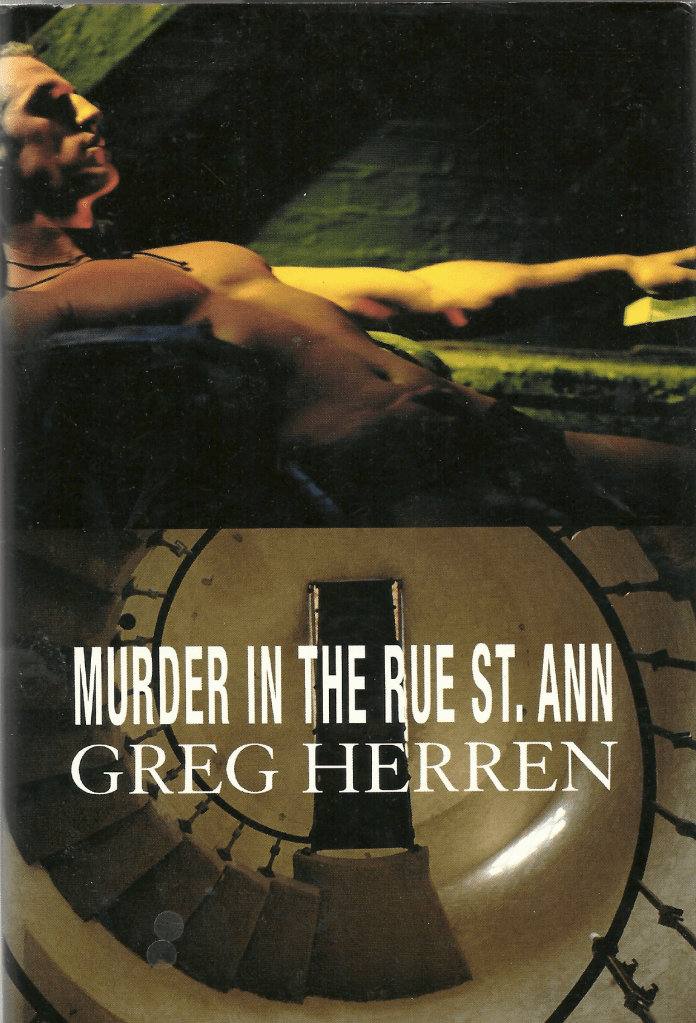
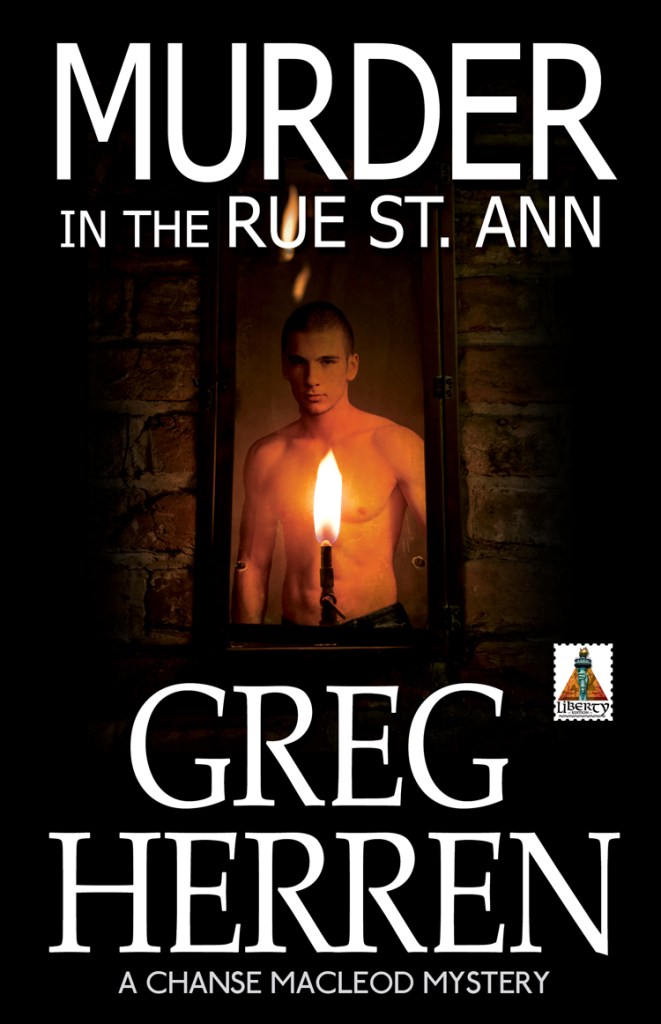
Oddly enough, the second Chanse was the fourth novel I published, and therein lies a tale.
Funny how with these earlier books there’s always a story, isn’t it?
So, I sold Murder in the Rue Dauphine to Alyson in September of 1999–but the pub date wasn’t until February 2002. I saw no point in writing a sequel to the book immediately; primarily because there was a nearly two and a half year wait between signing the contract and when they were able to schedule me in. So, I figured I had about a year and a half before I needed to get it finished (everyone told me it would be released a year after the first, and in all honesty, what was the point of writing two or three books while waiting for the first to come out so the others could be scheduled?), and so, with time to spare and a lengthy period of time to “waste”, I decided to start thinking about the “what ifs”–what if the book sells super-well and is popular? What if this isn’t just a one-off standalone and could be turned into a series? The more I thought about it, the more I liked the idea and I liked letting my mind roam.
So, what would I do if the series took off and I needed to write more?
Being creative and full of energy in my late thirties, and thrilled to death that now I wouldn’t die without having published a novel, I reread the manuscript and my analysis of who Chanse was and why he was who he was, and I started mapping out a personal journey for him, that lasted several books. He was a cynical loner, with a couple of friends, and he was still really not adjusted to being gay when the first book opens. He was estranged from his immediate family of younger sister and brother and his parents; he never returned to Cottonwood Wells after leaving for LSU. He’s ashamed of his family but he also knows they will never accept his sexuality, either, so it’s very easy for him to cut them off almost entirely. So, his journey was going to be like that of the main characters of the show Moonlighting; each case would teach himself something about life and himself, and he would grow from the lesson learned in each book. Each book going forward would have a life lesson for him (Rue Dauphine did as well; the lesson was ‘you can’t just trust someone automatically because they’re queer.’); and the one he’d learn in the second book would be about love and trust (the third would be about sacrifice, the fourth would deal with his family, the fifth would have him fall in love with someone else, the sixth would deal with him dealing with losing his best friend to her husband and realizing he does need other people, and the seventh, the swan song for the story, would find him ready to finally commit to someone and live with them, so the series would be seven books long).
Shortly after I sold the first book, I again learned that lesson myself–the case in the first book was inspired by a gay con artist who’d gotten involved with a non-profit here in the city and then blew out of town overnight, having stolen/embezzled a shit ton of money and leaving a pile of debts behind. I had written to a local color magazine for the gay community (I can’t remember the name!) about writing for them. I wrote something for them, and they hired me to be editor of the magazine, as the business was expanding and it would free up the founder to focus on the new directions while I ran the magazine. It was fun, I got to work with a lot of fun new friends, and…then it all blew up in our faces. It was very similar to the earlier situation–a gay con artist blows into town, makes a lot of promises, runs up a lot of debt and then it just blew up completely. Turns out the guy was a con artist with a record of credit card fraud, and he was on the FBI watchlist so yes, I did get interviewed several times by the local office of the FBI.
The second book, which had the working title Murder in the Rue Royal, was based on that story, but I had already been playing around with a stalker storyline, and then I realized how I could cross the two stories into one seamlessly and write the book. I managed to get another first draft finished when a two-book deal to write the Scotty series for Kensington and Alyson dropped the option for the second book, saying “two mystery series with a gay main character in the same city by the same author are too similar to each other”–which I took as a challenge to make Bourbon Street Blues and Scotty as different as I possibly could to prove them wrong. So, the manuscript went into a drawer and I started happily working on Scotty instead…and again, it was a stand-alone that morphed into a series.
I took a streetcar named St. Charles down to Canal, crossed the street and walked down to Royal.
It was eleven o’clock in the morning on one of those splendidly sunny September days that makes you glad to be alive. Taking the streetcar had been a good idea. The long heat of summer had broken, and the air was crisp and in the mid-seventies. The sky was that blue unique to New Orleans, with wispy white clouds scattered across its expanse. There was just a hint of cool moisture in the air. There were a lot of people milling around the sidewalks on Canal— a good sign for the tourist season. Canal used to be the main shopping drag of the city, with huge department stores like Maison Blanche and D. H. Holmes. Those were long gone. They had either gone out of business or fled to the suburbs— now it was mostly hotels, fast food, and Foot Lockers.
There were hopes that putting the Canal streetcar line back in place would stimulate a recovery for the street. So far, all the construction work had simply made the Quarter difficult to get to from uptown. Add to that the chore of trying to find a place to park that would get me a ticket in two hours or cost ten dollars, and I was kind of glad I was having car trouble—the streetcar down and a cab home was very simple.
Not that riding the streetcar didn’t bring its own set of aggravations. If the cars ran on any fixed schedule, I’d never been able to figure it out. You could wait for one for half an hour and then three in a row, all packed to the gills, would show up. The streetcar ostensibly operated as public transportation, but was also a de rigeur tourist attraction. There was no way of telling when you’d be able to catch one with a place to sit. But when you did, it was nice to find a window seat on a sunny day and enjoy the city clacking by.
So, when Alyson chose to drop the Chanse series after I signed with Kensington, Murder in the Rue Royal went back into a drawer, which was fine–it wasn’t a good book–and I moved on with my life. The advance for signing with Kensington paid for our move back to New Orleans from Washington, and moving back here was absolutely worth ending the Chanse series for, seriously. I still didn’t have an agent, but I’d been signed to book contracts by two publishers already, and I figured it might be easier now. We accomplished the move, get our new apartment set up on Sophie B. Wright Place, and started putting our lives back together. I don’t remember the timeline of how it came to be, but I was still working with Alyson on my first and second erotic anthologies (Full Body Contact and FRATSEX), so I was aware when my editor left and a new person, that I knew slightly, moved from assistant editor to senior editor. We were talking on the phone one day about Full Body Contact and she casually mentioned, “I don’t see your second Chanse book here on the schedule, what’s going on?” and I told her the story, “Oh for fuck’s sake, when can you get it done by?” and that became the second contract for Chanse.
So, after finished Jackson Square Jazz and turning it in, I broke out Murder in the Rue Royal (the title had already been changed on the contract to Murder in the Rue St. Ann; my new editor didn’t like the alliteration) from the drawer, blew the dust off it, and reread the manuscript. I looked at my timeline for the series, and saw that this was the one where he was supposed to fuck up his relationship, but I didn’t see it in the manuscript. I reread the first book, thought long and hard about Chanse and who he was at this point in his life and after several long days of musing it hit me, between the eyes: jealousy. Jealousy would be what fucks up his relationship, and it only made more sense to me that Chanse would be the jealous one. Paul had a loving, accepting family and was more secure in and of himself as a gay man and what he wanted out of life. Paul was considering becoming ground-based at the New Orleans airport so he could settle down and have more of a life with Chanse, which also has Chanse very alarmed and makes the jealousy even more intense….so what would be the thing that would set Chanse’s jealousy off? Something from Paul’s past that Chanse didn’t know but finds out about in the worst possible way?
I had had some issues, believe it or not, with stalkers over the years. I had always wanted to write about a stalker, so what if Paul had a stalker? Why would Paul have a stalker? And then it occurred to me that Paul had a past he wasn’t ashamed of, but had never mentioned to Chanse. Not out of a fear that Chanse wouldn’t understand, but mainly because he had no need to tell him because it wasn’t anything dark. He had done some nude modeling when he was younger and he had also done some soft-core wrestling fetish porn, which is where the stalker came from. And what if I could work the con man he’s been hired by was someone Paul knew from the soft-core fetish porn? What if the guy contacted Paul because he’d been getting threatening notes on top of everything else going on in his life? And what if Chanse ran into Paul when he was leaving the con man’s offices, which brings all this out about Paul’s past? What if it shook a jealous, possessive, insecure Chanse enough for them to fight about it? And what if Paul disappears after the con man is murdered?
That was something I could work with, and so I did.
I’ve always called Murder in the Rue St. Ann my most under-appreciated work. By the time the book had come out, Paul had lost his eye to the muggers and we were in recovery mode. I didn’t do much of anything to promote the book (other than a signing at Outwrite in Atlanta, where I signed all of my books until they closed), and it kind of came and went quickly. I felt it was the most unappreciated of all my books. Jackson Square Jazz had come out earlier in the year before Paul was attacked, and it sucked all the oxygen up that year intended for me–it was the Lambda nominee, not Rue St. Ann–and I didn’t pay much attention to the book after it came out, either. The ‘christians” came for me a few months after the book’s release as well, and then Katrina…so yeah, Rue St. Ann got no press, got no attention, but somehow still managed to sell well.
I did have the next one planned, Murder in the Rue St. Claude, which there was a proposal in for, but Alyson was also going through other, deeply concerning changes that showed how little the higher-ups knew about anything, let alone publishing. But that’s a tale for another time, I think.



 Queer and Loathing in America