All I Want for Christmas

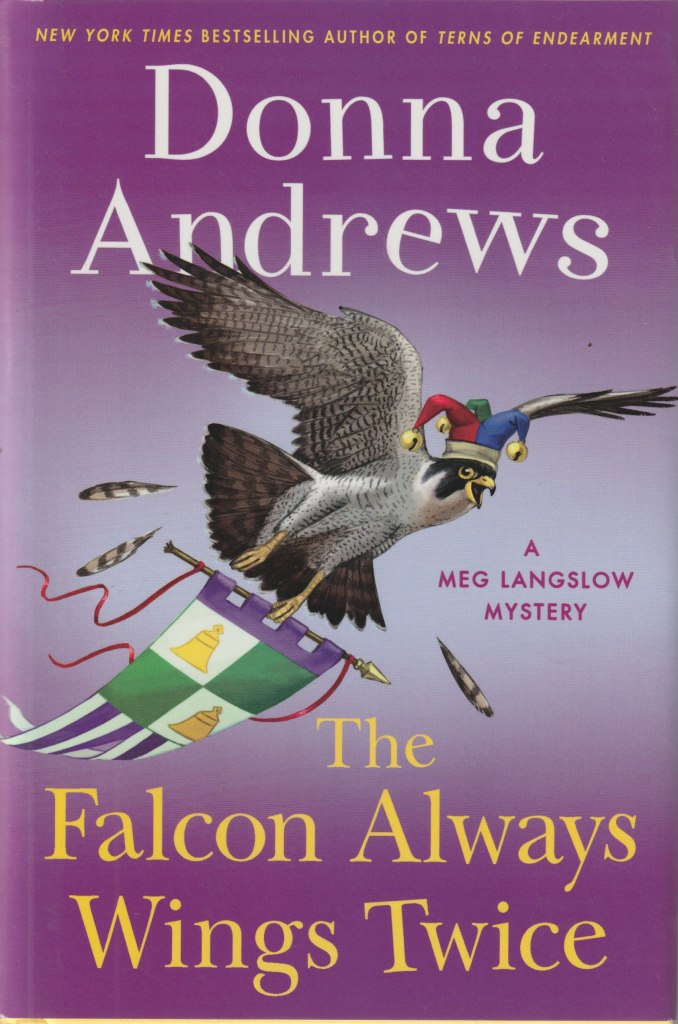
I love prolific writers, but keeping up with their canon when you have very little time to spare on actually reading for pleasure can be difficult. I somehow managed to fall years behind on one of my favorite series–the Meg Langslow mysteries by Donna Andrews–right around the time she started producing two books per year (a regular mystery and one centered on Christmas–hello, Hallmark? This series is perfect for you), which made it even harder to catch up. I did manage to read two this past week (well, I listened to one in the car on the way home, which made the drive a delightful experience), and yes, both were marvelous as always.

“Hoo! Woo-hoo HOO!…HOO! Woo-hoo HOO!”

The gray-haired couple standing at the tinsel-decked front desk of the Caerphilly Inn started slightly, and glanced over their shoulders in the direction of the hooting.

“That’s just the ornithologists again, Mr. Ackley.” Sami, the desk clerk, had probably been hired for his soothing voice. “Having their conference here, you know. Owl Fest.”

“They haven’t brought in live owls, have they?” Mrs. Ackley’s face was anxious. “Surely the hotel wouldn’t allow them to do that.”

“Jane’s terrified of birds.” The man put a protective arm around his wife’s shoulder.

“Of course not!” Sami managed to look shocked at the mere suggestion. “That would be completely against the Caerphilly Inn’s policies.”

Which is why we’d been confiscating all the live owls various ornithologists kept bringing into the conference, and taking them a few miles down the road to temporary headquarters at the Caerphilly Zoo. The owls, that is, not the ornithologists–although I’d been tempted. Two screech owls, a barn owl, and a northern saw-whet owl so far.

Christmas is hard to write about, really. My favorite quote from All About Eve isn’t nearly as famous as the ones everyone quotes regularly–“I detest cheap sentiment”–and I’ve tried to keep that quote in the forefront of my mind when I am writing. That isn’t to say that cheap sentiment doesn’t have its place in entertainment; there’s comfort to be found in works that can sometimes be cloyingly sentimental. For me, I define cheap sentiment as unearned; not coming from the honest emotions of the characters based on circumstance and situations and interactions, but rather from homilies: blood is thicker than water, family above all else, etc. I’ve always wanted to write about Christmas, but it’s a minefield when it comes to sentiment. I myself have written short stories about/around Christmas, but they seemed trite, cloying, and cheaply sentimental, with “all’s well that ends well” ending because, well, it’s Christmas. Everything is supposed to work out in the end because it’s Christmas, right? Clarence gets his wings, bullied Rudolph becomes a hero, etc. etc. I tried to avoid that with my own entry into Christmas crime writing, Royal Street Reveillon, and am not entirely certain I succeeded. Yes, the guilty were punished, but like Die Hard, it wouldn’t have to be the holiday season for the story to work. (This is why I fall on the side of “Die Hard is not a Christmas movie” because Christmas wasn’t integral to the story; it could have been Thanksgiving or the middle of the summer and still worked.)

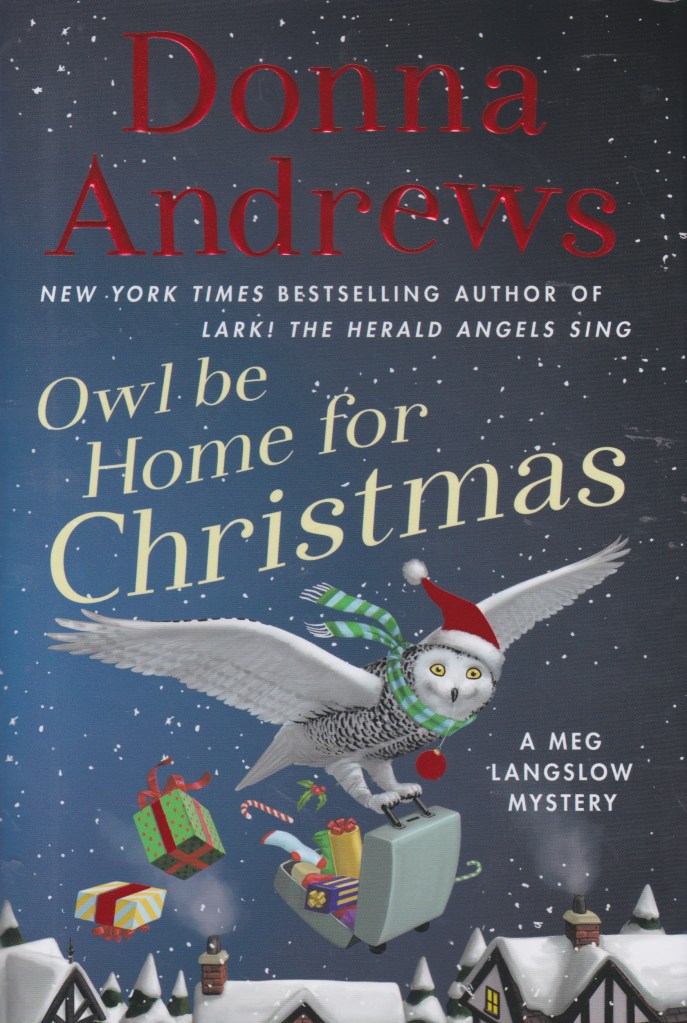
And yet, Donna Andrews manages to write a new Christmas murder mystery that leaves you feeling contented, satisfied, and enormously happy when you close the book after reading the last line–and Owl Be Home from Christmas is yet another gold standard work from the master.

The premise of this one is that Meg’s grandfather, wildlife expert and activist Dr. Blake, is hosting OwlFest at the Caerphilly Inn, and of course, his assistant Nigel is off for the holidays to visit family so the onerous task of keeping the conference running smoothly, and solving problems, falls to Meg, who has moved herself, husband Michael, and their twins (Josh and Jamie*) to one of the guest cottages on the property. Christmas is looming on the horizon, and a polar vortex has descended on Virginia from Canada, creating a blizzard that has everyone trapped at the Inn. In fact, the storm has cancelled flights up and down the eastern seaboard, and Caerphilly is woefully unprepared for a storm of this magnitude, with the city’s two snowplows stranded in snowbanks. Meg, as always, makes the best of every situation, and with the help of the impressively efficient Inn manager, Ekaterina, tries to make the situation of being stranded at the Inn as comfortable and fun for the conference attendees as possible.

Naturally, there are some difficult attendees who Meg would love to righteously smite–and certainly deserve said smiting–and when the obnoxious and well-hated villain of the book, Dr. Frogmore, drops dead at the conference banquet, there’s a plethora of suspects…and with the Inn cut off from civilization by the blizzard, obviously the killer is someone on site.

Meg and her intrepid family and friends now have to find the killer–while still keeping the conference running smoothly and continuing with plans to keep the stranded guests entertained and happy; making the best of a bad situation, which Meg is fantastic at doing.

I loved this book. Andrews has somehow managed to keep a series running for over thirty books without dropping a stitch. While other series tend to run dry (my own Chanse series, for example, and I regularly worry about Scotty doing the same), somehow she manages to keep her enormous supporting cast involved and memorable (I deeply appreciate the three-dimensional lives of the supporting cast, and she is expert at deciding which ones to highlight in each book; Rose Noire is becoming a favorite), and I don’t think there’s a single book in this series where I’ve not laughed out loud multiple times while reading. Caerphilly is a charming place, and every time I go back to visit–even if the cast isn’t in Caerphilly in the book–I always am a bit melancholy when I finish and have to face the real world again.

And she has managed to write all these Christmas books with heart, compassion, and love–and isn’t that what Christmas is really all about?

Masterful. Andrews is a gift the crime fiction community should cherish.

*More Josh and Jamie, please.

Freedom

Freedom’s just another word for nothing left to lose…

Happily, I made it through my first Monday back at work. Usually, I tend to take the day after I travel off from work–so if I fly home on Sunday I don’t work on Monday, so I can get acclimated and readjusted to being home–laundry, make groceries, get the mail, etc.–and usually I am exhausted from traveling so I need to sleep in a bit as well. But…yesterday somehow I managed to get up with the alarm, make some coffee, and got my shit together and wasn’t even the least bit grumpy about it. I was a bit tired–the legs especially; I walked a shit ton last week–but I made it through the day without incident and managed to run some errands on the way home. I had considered making a trip to the gym last night but decided it made more sense to go after work tonight–I know, I know, excuses to fail instead of reasons to succeed, but hey, I took a four hour flight yesterday, had to navigate two airports and so forth, not to mention the horrors of I-10 East through the burbs and into the city–no small feat. But I also started feeling low energy around three yesterday afternoon (nothing new; that’s when it usually hits me right between the eyes with a 2 x 4) so it wasn’t travel related at all, but was enough to make me rethink my gym strategy.

Ironically, once I get readjusted to my schedule, I’m off to Kentucky for Thanksgiving.

Which is not an excuse to not go to the gym this week.

The realization that Murder the Indigenous People Day looms on the horizon is also forcing me to rethink my grocery shopping necessities; I really don’t need to be buying anything perishable, and I need to make sure Paul is all stocked up with things he can easily prepare for himself (although he’ll inevitably simply end up eating out the entire time); but I have this weekend to worry about all of that and get it handled. I made significant progress yesterday on getting caught up on everything–still horribly behind on everything, of course–but at least I feel like I’m getting somewhere, and I don’t feel as terribly stressed out about being so far behind, which is also progress of a sort. I do want to get back to reading Barbara Ross’ delightful Shucked Away, which I started reading on the plane home Sunday, and I think next up will be another Leslie Budewitz; I loved the first in her wonderful Spice Shop series, but haven’t managed to get back to it yet, and of course, after Thanksgiving is the best time to read the next up in Donna Andrews’ Meg Langslow series, Owl Be Home for Christmas–it would actually be kind of great to have an entire season of Christmas books to read, wouldn’t it, and Andrews does one every year, which is also kind of marvelous as well, but I don’t want to read the books out of order.

I also began piecing together and outlining an article I am writing for Crime Reads to help promote the Kansas book when it’s released–I got the hook finally over the weekend at Crime Bake, for which I will always be grateful to that conference, and the New England chapters of MWA and Sisters in Crime–and that definitely counts as writing (I never count the blog as writing, despite the fact that every entry is more than five hundred words and sometimes even longer), so I am getting back into that saddle, which feels really great. I also managed to finish the laundry last night, emptied a load from the dishwasher so I could reload it, and got some filing and organizing done around the Lost Apartment so my desk area isn’t quite as disheveled and scattered as it was when I got home Sunday night. I still have to finish my blog posts on Invisible City by Julia Dahl and Jar of Hearts by Jennifer Hillier (if you haven’t read them, Constant Reader, you really need to get on with it! Don’t wait as long as I did, which was a huge mistake), and I also want to get some boxes prepared to clear out some more books for the library sale. I think Saturday I am going to drag a box down from the attic to dispose of as well; might as well get that project started–because the attic is definitely not ever going to clean itself out at any point in time.

We watched the recent episode of Dopesick last night, and the acting is truly superb; the entire show has been extremely well done and well-written; everyone in the cast should be tapped for an Emmy nomination; the young woman who plays Bets, the lesbian mine worker who gets hooked after a back injury is particularly fantastic, as is Mare Winningham and Michael Keaton. Rosario Dawson is no slouch, either, and if there was ever an oilier, slimier villain–the actor playing Richard Sackler is Bond-villain worthy. We’ll probably get caught up on our other shows the rest of this week–The Sinner, The Morning Show–and there’s some other shows I want to watch as well; I really do need to start making a list. I also want to get back to Chapelwaite, which I don’t think Paul was enjoying as much as I did; we’ll have to have a chat about that tonight when we both get home from the gym.

Yes, I am planning on going to the gym tonight. We’ll see how that turns out, won’t we?

And on that note, I am going to head into the spice mines. Have a lovely Tuesday, Constant Reader. I know I intend to.

Up To My Neck In Muddy Water

There seems to be a trend–at least to me–in mystery publishing that I am not sure how I feel about; primarily, that authors are moving away from writing series and going the stand alone route. Far be it from me to tell anyone what they should or shouldn’t write–if the market is stand alone novels are flying off the shelves while series books aren’t quite as popular, well, you have to write what is selling if you want to have a career; writing may be an art form, but publishing is a business. Why this is happening–or it’s entirely happening inside my brain and it’s completely made up from observations–is up for debate. I know with me, while I love discovering a new-to-me author and steadily working my way through their backlist is a joy, I also understand that you can look at an author’s backlist and think to yourself, oh dear God I will never have the time to read all of those books so why even try?

In my case, a great example of this is Michael Connelly. I had never read him, but a few years ago I read his debut Bosch novel, The Black Echo, and absolutely loved it. Yay! I thought. A new-to-me author with an extensive backlist I can dive into without fear of ever running out of something new to read! I had the same reaction when I read Louise Penny’s first Gamache novel, Still Life.

And yet here I sit, several years later, having not read anything else either of them have written. This isn’t a dis of either Connelly or Penny, for the record; I loved both books and sang their praises to the skies here on this blog when I finished reading them. I have the next two books in the Bosch series on hand, and I have the next four Penny novels here as well. I’m not sure why I don’t ever think to pick up their next novels when I am in search of my next read through the endless stacks and stacks of my TBR pile, but I do think it has something to do with the extant of the enormous backlists by both–and of course new books are coming out daily, and on and on and so it goes, forever and ever, amen.

I have also fallen behind on reading one of my favorite series of all time, Donna Andrews’ marvelous Meg Langslow series. Addictive as oxycontin, clever and witty and charming, I absolutely love these books. Caerphilly, where Meg and her cast of colorful, unique and lovable characters, made up of friends and family, is kind of like Schitt’s Creek to me; a charming, wonderful place with an underlying level and degree of kindness that always shines through in a believable and realistic way that you cannot help but love to go back to; it really does feel like coming home when you open the book to page one and start reading.

“Do you really think there’s room for all this luggage on the boat?”

“Ship,” I corrected. “I know it’s only a cruise ship, but I understand it demoralizes the crew when you call it a boat. And don’t worry, the porters will handle everything.”

Trevor Ponsonby-West sighed and looked put-upon. Well, he was put-upon. Being put-open was more or less his job. He was my grandfather’s personal assistant, which meant Grandfather delegated to him anything he didn’t want to bother with himself and couldn’t cajole his friends or family to do. Trevor’s job was demanding under normal circumstances and almost overwhelming when Grandfather traveled. And he traveled a lot. After all, even though he was now in his nineties, the world still expected to see Dr. J. Montgomery Blake rescuing endangered species, leading environmental protests, and appearing in the nature documentaries that had become such a staple on television channels like National Geographic and Animal Planet.

Trevor did a great job of getting Grandfather where he had to go, when he was supposed to be there, and equipped with whatever he needed to bring. If only he could do it without quite so much sighing.

What I wouldn’t give to write such a clever, witty, put-the-reader-right-into-the-middle-of-the-story opening for one of my books!

Meg and company are about to embark on a cruise–her grandfather is being paid to give lectures on board–but the cruise company is a smaller, less-famous one; one that isn’t an enormous floating hotel with thousands packed on board. Much of the regular cast–including her parents, cousin Horace the CSI, brother Rob and fiancee Delaney, cousin Rose Noire, husband and twin sons–are coming along for the cruise to Bermuda and back (it really wouldn’t be a Meg novel without the rest of the cast). And of course, whenever the lovably eccentric Langslow family goes or does anything…murder is sure to spring up along the way.

Sure enough, the arrival of a Diva at the pier, named Desiree St. Christophe, arrives in her Christian Laboutin stilettos, and all the pieces are in place. Desiree is a very successful romance novelist–early success, faded away, made a massive comeback–and there’s another group of writers also on board–who all hate her and blame her for the death of one of their group, a writer who’d been struggling with block for years, but had finally come up with a surefire winning manuscript (complete with bids from several publishers) before Desiree claimed she’d stolen one of Desiree’s manuscripts. The publishers withdrew their offers, her agent dropped her, and drowning in debt from a terrible divorce, their friend Nancy committed suicide. Desiree isn’t likable–demanding, unfriendly, and always drunk. On their first night at sea, Desiree apparently jumps overboard in a suicide…but it doesn’t make sense, and Meg and her mystery novel fan father soon think there may be foul play. The ship also becomes stranded out in the middle of the ocean, Trevor (from the opening paragraphs) appears to be missing, and the cruise quickly becomes one of those horrific Cruises from Hell.

But no one is more adept than Meg in a crisis!

The book is charming and wonderfully, cleverly written–there were times when I laughed out loud–as are all of the books in this marvelous series. The plotting is also terrific; I had no idea what skullduggery was going on, until Meg’s intrepid investigation starts uncovering clues and links in the chain of a diabolical conspiracy, and right up to the very end I had no idea who was responsible for all the things going on aboard the ship; which is the mark of a truly great mystery writer.

I can never stop reading once I’ve started reading a Meg adventure (misadventure?) and if you’ve not read this series, and it’s length (this is book 25) concerns you–you needn’t worry. You don’t have to start at the beginning (Murder with Peacocks), but can pick it up in the middle (I actually mistakenly started with book two)…but this is a series you absolutely should read from the beginning, because they are all a lot of fun, clever, charming, and like Schitt’s Creek, a lovely, wonderful world of love and kindness you’ll want to escape into over and over.

Mary Mary

I have always loved strong female characters, having cut my reading teeth on Nancy Drew, Trixie Belden, Vicki Barr, the Dana Girls, Judy Bolton, and Cherry Ames, just to name a few. As an adult reader of mysteries, two of my favorite series are Elizabeth Peters’ Amelia Peabody series (simply the best) and Donna Andrews’ Meg Langslow series (also a gem of a series); primarily because I love the characters of Amelia and Meg both so very much. They are both fiercely intelligent women with a very dry sense of humor, and are the kind of strong women that everyone around them comes to depend on for support–and droll wit. The death of Dr. Barbara Mertz (who wrote as Peters AND as Barbara Michaels) ended the Peabody series forever, much to my heartbreak; the Meg Langslow series is going strong still, so I am hopeful that I will have years and years of reading pleasure yet to come from Donna.

And then, last year I discovered Mary Russell.

The envelope slapped down onto the desk ten inches from my much-abused eyes, instantly obscuring the black lines of Hebrew letters that had begun to quiver an hour before. With the shock of the sudden change, my vision stuttered, attempted a valiant rally, then slid into complete rebellion and would not focus at all.

I leant back into my chair with an ill-stifled groan, peeled my wire-rimmed spectacles from my ears and dropped tjem onto the stack of notes, and sat for a long minute with the heels of both hands pressed into my eye sockets.

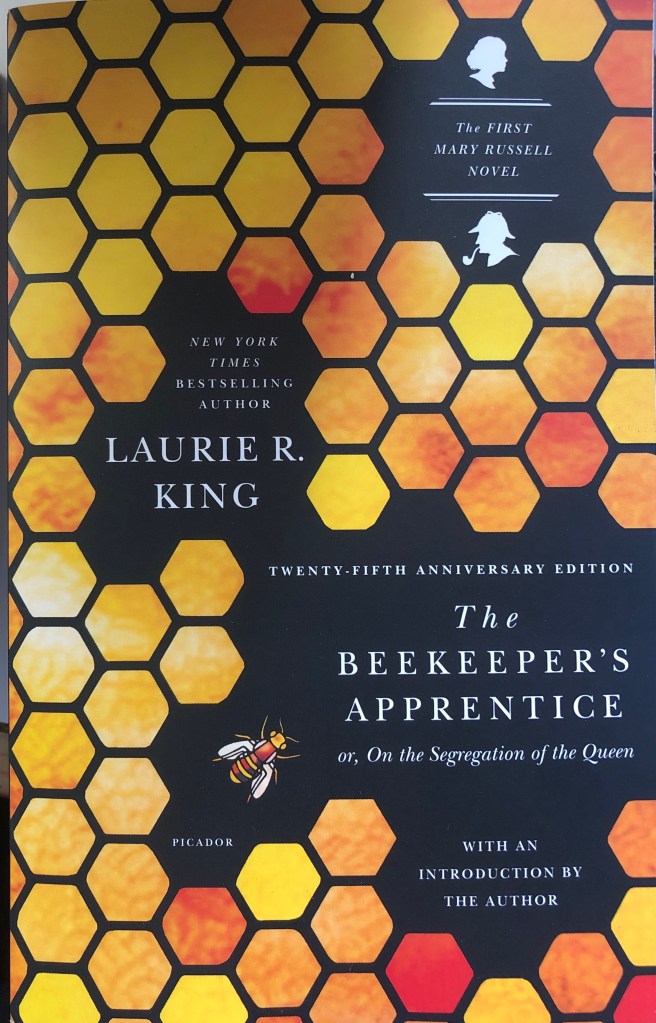
I was already a fan of Laurie R. King from her brilliant Kate Martinelli series, about a lesbian police detective. (If you’ve not read that series, you need to–it’s one of the best of the last thirty years.) I was reluctant to read the Mary Russell series, as Constant Reader may remember from my previous posts about earlier books in this series; for any number of reasons, but primarily not ever really getting into the Sherlock Holmes/Conan Doyle stories. This shifted and changed when I was asked to contribute a Sherlock story to Narrelle Harris’ The Only One in the World anthology; this required me to go back and do some reading of Doyle, and having worked with Laurie R. King on the MWA board, I decided to give her feminist take on Sherlock a go.

And I have not regretted that decision once.

Mary has stepped up to replace Amelia Peabody as one of my favorite on-going series; I love the character–a strong-minded, fiercely independent woman of no small intelligence who is more than capable of going toe-to-toe with Mr. Holmes. Theirs is, despite the age difference, a true partnership of equals; I love that Holmes, in King’s interpretation of him, isn’t quite so misogynistic or incapable of feeling–which I don’t think I’ve ever seen in a male-written version. I like King’s Holmes; the strong female character who is his equal was the perfect solution to whatever misogynistic issues I may have had with other interpretations. I also love that Russell is also pursuing a life of the mind; her studies into theology at Oxford are not just asides to add color and flavor to the character but are just as important to whom she is as a character as the love interest/relationship with Holmes. As I also have an amateur’s curiosity into the history of Christianity and how the faith changed and developed throughout the centuries following the New Testament stories…how that was shaped and influenced by men with not the purest of motives…is something I’ve always been interested in.

I think the first book that challenged Christian orthodoxy in a fictional form that I read–the first time I became aware of the possibilities that the BIble wasn’t actually the pure word of God and had been edited and revised repeatedly in the centuries since Christ ostensibly lived, died and was resurrected–was, of all things, a book by Irving Wallace called The Word (Wallace isn’t really remembered much today, but he wrote enormous books of great length that were huge bestsellers, and the subject matter and style of the books was essentially that they were very bery long thrillers: The Prize was about the maneuvering to win a Nobel; The Plot was about an international conspiracy to kill JFK; The Second Lady was about a Soviet plan to kidnap the First Lady and replace her with a lookalike who was a Soviet agent; etc etc etc). The premise of The Word is simply that a new testament, a document hidden away for centuries in a monastery in Greece, claims that not only did Jesus not die on the cross but went on to live for many decades, preaching his own ministry and even visiting Rome. This, of course, is a cataclysmic document–it would change everything everyone had ever known and believed…if it is indeed authentic.

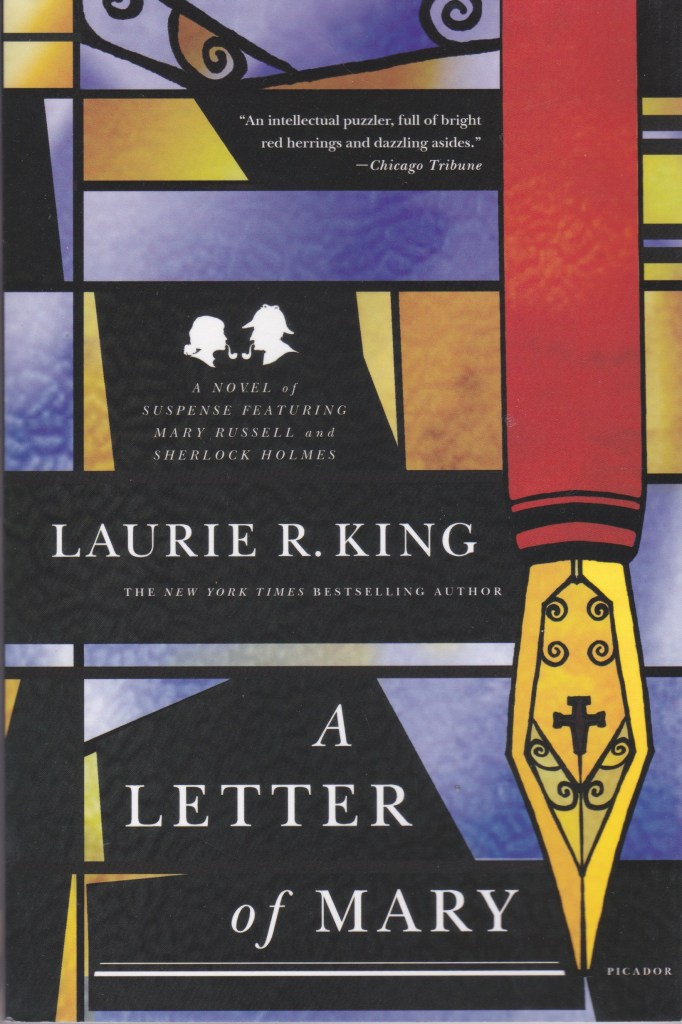
I’ve always loved a good thriller with a base in theology, ever since; and A Letter of Mary is just that, even if more of a mystery than a thriller. The role of Mary Magdalen has been questioned a lot in the last few decades–not the least reason of which is Holy Blood Holy Grail–an interesting concept if one that has been proven to based in a falsehood in the times since (or was THAT part of the Vatican’s plot?)–which inevitably led to Dan Brown’s The Da Vinci Code. I don’t find the idea that the Magdalen was a beloved disciple of Jesus–and that she may have been his favorite–a reach; likewise, there’s nothing I’ve ever seen in the actual New Testament that essentially says she was a prostitute, a “fallen woman.”

This book begins with Russell despairing over her research only to receive a letter that she and Holmes are going to be receiving a visitor–someone they met during their time in the Holy Land some time earlier–glossed over in The Beekeeper’s Apprentice but apparently explored more deeply in O Jerusalem! The visitor, an older heiress of no small means who is fascinated with archaeology and has been funding digs in the Holy Land, presents the pair with a gift as well as an ancient letter, unauthenticated, which is ostensibly a letter from Mary Magdalen some years after the death of Christ, written to a sister as the city of Jerusalem falls under seige by the Romans during the Jewish Wars, around 70 AD, that saw the sack of the city and the start of the diaspora; which makes it very clear that, if authentic, the Magdalen was one of the disciples and heavily involved in the ministry of the Christian church. Their guest returns to London, and is killed when she is stuck by a car the following day. Holmes and Russell sniff around the crime scene and find evidence that the old woman was murdered…but by whom? Why? Is this about the letter from Mary?

King always tells a great story–you never can go wrong with one of her books, really–and the characters are so well-defined, so real, that even if she didn’t tell a great story, you want to read about those characters more, get to know them better, and cheer them on to their successes and sympathize with their failures. Her writing style is also a joy to read; the Mary Russell voice is so different and so clearly distinct from Kate Martinelli that you can’t not marvel at her mastery.

The next book in the series is The Moor, and I am really looking forward to it.

Mary’s Song (Oh My My My)

I am the first to admit that I am a crime writer who was always kind of meh about Sherlock Holmes. I read some of the novels and some of the stories when I was in junior high, and while I enjoyed them somewhat, I was never particularly driven to go on to read the rest. I did read the Nicholas Meyer pastiches in the 1970’s–The Seven-Per-Cent-Solution, The West End Horror–but was never particularly driven to go back to Doyle. I never actually went back to Doyle (until recently; bear with me) but Holmes is so ubiquitous, so part of the crime fiction zeitgeist that it was impossible not to be aware of him and iconic parts of his canon, even the ones I’d not read–Irene Adler, Professor Moriarty, Mary who married Watson–and of course, like many others, I’ve watched a great deal of the Holmes film canon, including Young Sherlock Holmes, and am a big an of the Benedict Cumberbatch interpretation; we even watched the first few seasons of the Americanized Holmes, Elementary. But for the most part I’ve avoided pastiches and the originals, with the exception of a story here and there by one of the modern-day aficionados who worship at the altar of Sherlock.

I have always known that my lack of Sherlockian knowledge was perhaps detrimental to my career as a crime writer. Several years ago, I managed to find a gloriously beautiful hardbound edition of the Baring-Gould The Annotated Sherlock Holmes, and I have periodically dipped into it; no more so than when I was tasked to write my own Sherlock story, which became “The Affair of the Purloined Rentboy.” Writing the story, putting my own interpretation on someone else’s characters and breathing life into them to try to make them engaging and new while respecting the originals was quite a challenge for me, one at many times I felt I was not equal to bringing to fruition. The story was written and then revised with editorial input, which made the story much stronger (in my opinion) than how I’d originally envisioned it, and it also unlocked potential in my creative brain: I want to, and plan to, return to the New Orleans of 1916 that I created for iteration, and even see how some other historic stories about New Orleans could easily fit into my Sherlock world, could prove to be cases for the great brain residing at 821 B Royal Street in the French Quarter.

I also decided that reading Laurie R. King’s Mary Russell series was long overdue.

And seriously, what a treat it was.

Dear Reader,

As both I and the century approach the beginnings of our ninth decades, I have been forced to admit that age is not always a desirable state. The physical, of course, contributes its own flavour to life, but the most vexing problem I have found is that my past, intensely real to me, has begun to fade into the mists of history in the eyes of those around me. The First World War has deteriorated into a handful of quaint songs and sepia images, occasionally powerful but immeasurably distant; there is death in that war, but no blood. The twenties have become a caricature, the clothing we wore is now in museums, and those of us who remember the beginnings of this godforsaken century are beginning to falter. With us will go our memories.

I do not remember when I first realized that the flesh-and-blood Sherlock Holmes I knew so well was to the rest of the world merely a figment of an out-of-work medical doctor’s powerful imagination. What I do remember is how the realisation took my breath away, and how for several days my own self-awareness became slightly detached, tenuous, as if I too were in the process of transmuting into fiction, by contagion with Holmes. My sense of humour provided the pinch that woke me, but it was a very peculiar sensation while it lasted.

Now, the process has become complete: Watson’s stories, those feeble evocations of the compelling personality we both knew, have taken on a life of their own, and the living creature of Sherlock Holmes has become ethereal, dreamy. Fictional.

I first discovered Laurie R. King’s work with her Kate Martinelli series; I received a review copy of Night Work when I was editor of Lambda Book Report. I wasn’t familiar with the series, which caught me off guard–how did I not know about a crime series with a lesbian police detective as the protagonist?–and the book itself caught me completely off-guard. It was brilliant, so strongly written and the characters so real I was quite literally shocked to find out, many years later, that King was not herself a lesbian. I went back and read the entire series, loved each one, and was saddened when King ended the series with Book 5, moving on to a new series with Mary Russell–a series so completely different and disparate from the Martinelli series I didn’t see how it could work…and then add in the fact that it was actually a Holmes pastiche, and well, I wasn’t terribly interested.

It was sometime during the past year while working alongside King on the Mystery Writers of America board of directors (I will never get used to the big names I rub elbows with through my years of volunteering with MWA), and in the wake of my own Sherlockian writing experience, I thought, you love and admire her as a writer AND as a person, you should read her Mary Russell series.

It was quite literally one of the smartest decisions I have ever made.

I finished reading Book One of the Mary Russell/Sherlock Holmes series, The Beekeeper’s Apprentice, and as you can see from the above paragraphs, immediately I was immersed in the story. The voice, the style, everything about the character and the story was as far removed from the more hard-boiled, gritty Martinelli series, but the intelligence and warmth and humor was still there–only in a completely different manne, a completely different way. You could read a Kate book and then a Mary and easily believe it was two different authors, they are so different. This is genius, by the way; the ability to create such completely different worlds, completely different characters, completely different voices? And I was riveted by Mary Russell. By the end of the first chapter I was crazy about her–she reminds me of two of my favorite female series characters of all time, Elizabeth Peters’ Amelia Peabody and Donna Andrews’ Meg Langslow–and her warmth and intelligence and humor…she was more than a match for Holmes, and by seeing Holmes through the eyes of an intelligent, independent woman rather than an admiring doctor also helped greater humanize Holmes himself, something I never got from the Doyle works (but that could also entirely be my own failing; I am going to leisurely revisit Doyle this year methinks), and I also found myself caring about them deeply–not just about the case, but about them as people.

So, if you’re avoiding this series because you aren’t a Sherlockian, you’re being ridiculous because you can have no knowledge of Holmes whatsoever to enjoy this, and I can’t see how you can’t enjoy this if you are a Sherlockian. This is a version of Holmes that deserves to be shared on a screen–television or theater, it doesn’t matter–and I can also see any number of today’s younger actresses playing this role. And while I have only seen the television adaptation of The Alienist, but the young female detective played so brilliantly by Dakota Fanning, Sara Howard, seems to also have a lot in common with Mary Russell.

I cannot wait to read the next A Monstrous Regiment of Women, and not just because of that great title resonating with me (I’ve always wanted to write a history of the 16th century by exploring the many powerful regnant women, pilfering that title from the John Knox tract denouncing the most ‘unChristian’ fact of so many powerful women on the scene at the same time).

Color me a big fan!

Victory

And wasn’t yesterday’s entry boring as fuck? I should think at this point that it’s pretty clear, Constant Reader, that I don’t utilize this blog the way one is supposed to when one is a writer: as a conduit to convince readers to buy my books. I think I’ve done an excellent job over the years of proving that I, without question, have no idea how to sell books or how to make my work sound appealing enough for people to want to read, let alone buy.

I really suck at promoting myself. But to give myself credit, I never once believed “social media” would sell books, and from everything I’ve been reading lately, I was right. But it can make loyal readers aware you have something new coming out, and since the gay and lesbian bookstores are long gone…yeah, I’ve literally got nothing when it comes to reaching out and finding new readers, or reconnecting with old ones. I tried the newsletter thing way back in the days of my first website, but was always a little shocked whenever I’d send one out and people would ask to be removed…I was always a little, Why did you sign up in the first place? I never simply added people to my newsletter; you literally had to fill out a form to get on the list…and after a little while it was kind of depressing, so I gave up on the newsletter thing. It’s not like I’m that fascinating, anyway.

I do applaud those who do one, though.

It’s Christmas season already–according to some merchants, it has been since September–and of course, I’m a bit of a sucker for the Christmas season. I’m not a sucker for Christmas displays in September, or endless playing of Christmas carols over and over again on the radio or in public spaces; and while I also understand the importance of Christmas to our (retail) economy, I tire very quickly of Christmas commercials on television–my personal favorite the ones where people gift each other CARS for Christmas, because really? I’m not a Christian anymore; I’ve been in recovery for nearly thirty years, but the “reason for the season” has been forgotten by almost everyone else in the clamor for dollars and status and spend spend spend mentality of the holidays. The basic presumption behind Christmas–peace on earth and good will to all men–is a lovely one that I can certainly get behind; but Christmas has not only been commercialized it has also been politicized…because nothing says put the Christ back in Christmas like commercializing and politicizing the holiday that ostensibly celebrates the birth of Jesus. As always, I tire very quickly and easily of hypocrisy; and I tire of all the nonsense Christmas seems to trigger annually.

But I do like Christmas and the mentality behind it. I like the idea of a season to celebrate peace and love amongst all of humanity. I always wanted to write about Christmas; which is incredibly hard to do without giving into what I call ‘cheap sentimentality.’ I wrote a story a long time ago, my own attempt at writing a gay Christmas story because, frankly, there weren’t any that I was aware of, and it of course was terrible, absolutely terrible. It’s very difficult to come up with anything original about Christmas; but there’s also the possibility that the comfort of familiarity is what many enjoy about it. They enjoy watching the same films and television specials, listening to the same music recorded by the same artists, and follow the old traditions that transport them back to when they were children and the world seemed so much less complicated than it does as adults, and they want to give their kids that same comforting holiday experience they remember. I was quite mercenary as a child, and for me, for the longest time, Christmas was about the gifts I was going to get. As I got older, it gradually became more about the gifts I was giving as I began to understand the message more–and the message does seem to get lost all too frequently.

I also greatly appreciate the extra days off from work as well.

But I wanted to write about Christmas, as I said earlier. Early in my career I realized there weren’t many, if any, gay Christmas stories, so I decided to do an anthology of them, Upon a Midnight Clear, which was, I think, released in 2004. (My story, of course, turned out to be a horror tale, “The Snow Queen,” and I used a pseudonym.) I greatly enjoyed doing that anthology, and am still rather proud of it today. I wasn’t sure what I was expecting to get when I asked writer friends to write a story for me; but all of the stories were inventive and new takes on Christmas, from a gay perspective.

Donna Andrews’ Meg Langslow series (which Constant Reader knows is one of my favorites) releases a Christmas mystery every year, and the way Andrews manages to turn out a highly original mystery every year centered on Christmas in Caerphilly is absolute genius. She never descends into cheap sentimentality, and yet manages to infuse the books with a healthy dose of the Christmas spirit each time. Caerphilly is one of my happy places; there’s no greater joy than spending some time there every year. I have already mentioned that Andrews kind of inspired me to write a Scotty book set during the Christmas season, and I am probably going to have to do another; the plot for this one was pretty much already set when I decided to have it take place in December, and so it kind of became a Christmas book by default….I will undoubtedly do another one at some point, one that is more centered on Christmas itself rather than just the season. I’d love to play with Christmas tropes and traditions a bit more–especially since Scotty and his parents are pagans.

And on that note, tis back to the spice mines with me. Have a lovely day, all.

IMG_2445

Casanova

It’s Thursday morning in New Orleans and all is well–or right–in the world; well, at least in mine. It was also chilly and my bed comfortable and warm; and as I was sleeping well for yet another night, I didn’t want to get up. But I have things to do this morning before I head into the office, and once I’ve had enough coffee to sharpen and get my brain under control, I shall accomplish these tasks before getting ready for work.

I managed to get some chores done when I got home from work yesterday, so the Lost Apartment’s kitchen is not a disaster this morning. I made mac-and-cheese again (I think this week’s is better than last week’s was, frankly) but used some of my training from McDonalds as a teenager to “clean as I go” and as such, when the mac-and-cheese went into the oven everything I’d used to make it was cleaned and in the dishwasher already. I don’t know why I don’t do this every time I cook; it’s so lovely to finish cooking and have all the dishes and bowls and so forth I used be clean already.

The lessons one learns from working in fast food as a teenager will hold you in good stead later in life, apparently.

My mind is not fully cognitive yet this morning, but the space heater is blowing lovely warm air on my legs and my coffee is delicious and it surely won’t be much longer before I am functional. Or so I hope, at any rate.

Then I’ll start cleaning out the email inbox. I kind of need cognitive abilities to answer them all, and won’t it be lovely to have an empty inbox? That’s always my goal, every morning and every week, and it’s been far too long since I unlocked that achievement.

It also occurred to me–sometime late in November–that I should use my December blog entries to write about my most recent book; focusing not only on my characters but also on New Orleans, Christmas, and Christmas in New Orleans, since the book is set during the Christmas season. And not to worry–I have lots of pictures of hot guys in Christmas-type attire to share along with those entries. So, yes, y’all, Royal Street Reveillon is an actual Christmas-in-New-Orleans book in which I resisted the urge to try to adapt a traditional Christmas story to both Scotty and New Orleans–although it was incredibly tempting and I might do that very thing later in my life and in the series. One of my favorite Christmas episodes of any television series was the very first Christmas episode of Moonlighting–anyone else remember the show that made Bruce Willis a star?–in which Blue Moon Detective Agency secretary Miss DiPesto found a baby in a manger at Christmas time. They played very heavily on Christmas stories and traditions to tell the story in that extremely brilliantly witty way the writers had in the first season or so of the show; those first two seasons are some of the best television ever written and filmed. I thought about trying to do something similar with Royal Street Reveillon, but I also wanted to get the Grande Dames of New Orleans story into the book, and there was simply no way to graft all the reality show stuff onto a Christmas tale; so the book wound up simply being set during Christmas.

The Scotty series, which was originally intended to simply be a stand-alone, and then merely a trilogy, was built around holidays to begin with; the first was during Southern Decadence, and when it became a trilogy I decided to use the trinity of gay holidays in New Orleans: Southern Decadence, Halloween, and Carnival. When Book 4 rolled around, I set it around Easter and had the book open with the Gay Easter Parade. Book 5 was built around New Orleans winning the Super Bowl; Book 6 was built around Mike the Tiger (LSU’s live tiger mascot) and Book 7 didn’t really have a holiday or anything truly local to build it around. I’ve always felt there was some separation between the first three books in the series and the four that followed; primarily because of the gay holiday associations with the first three.

I decided, when putting this one together, to set it during the Christmas season because Christmas in New Orleans doesn’t get as much play as other holidays (not here, I mean nationally; no one thinks of “Christmas” and “New Orleans” together), and I do love Christmas–some of it. I love the idea of Christmas and its message; I despise the unrelenting commercialism and the playing of carols in September and the Christmas stuff being stocked in stores before Halloween and don’t even get me started on the horrors of Black Friday and Cyber Monday and so forth. I did think I could possibly work some of that into the story, of course; but there was literally so much going on in the book that snark about commercializing Christmas wasn’t needed or necessary, even though it would have been fun.

And let’s be honest: Charles Schultz did it best with A Charlie Brown Christmas in 1966.

But I’ve enjoyed Donna Andrews’ Christmas mysteries in her Meg Langslow series so much that I thought I should give one a try. And the result was Royal Street Reveillon.

And now it’s Christmas season in New Orleans; football season is winding up, but I am hoping that after this weekend, I can take a Saturday afternoon to head down to the Quarter–or drive around the city–taking pictures of Christmas lights and decorations and so forth. New Orleans, as I said in the book, loves nothing more than holiday decorating, and it’s so dark here at night the Christmas lights look even more magnificent.

And on that note, tis back to the spice mines.

12688110_993162820764202_5631823673803607070_n

Bridge over Troubled Water

Looks like we made it, Constant Reader; through another week of trials and tribulations and who knows what all, quite frankly. I woke up at six, but stayed in bed until just before eight, and feel obscenely well-rested, not tired at all; maybe a bit of a sleep hangover, but other than that, in tip-top shape for this lovely weekend. There’s condensation all over the windows around my workspace this morning; I suspect it rained over night and the air out there is probably warm and thick with water. It’s also not cold inside, which is a tip-off that it’s probably a lovely day outside. Paul is going to go into the office at some point today; I intend to go run some errands later as well as get some serious writing done. Conference championship football games are on television all day, but I really don’t care who wins any of them, if I’m going to be completely honest. The kitchen seems scattered and messy today, so does the living room, and of course, Paul is leaving for his winter visit to his family on this coming Wednesday, so I will have almost a full week of alone time.

I am, for December 1, disgustingly behind on everything; from Bury Me in Satin, stalled at Chapter Six, to finishing touches on both the Scotty book and the short story collection. I also need to proof read Jackson Square Jazz at some point so that can finally be available as an ebook; it never seems to end, does it? But I did somehow manage to tear through my to-do list this past week (other than anything writing/editing related that was on it) and I think now, finally, the day job is finally going to settle into a kind of routine schedule. I also picked up Bibliomysteries Volume I, edited by Otto Penzler, at the library yesterday, so I have a wealth of short stories to read. (I also still have all the volumes of anthologies and single author collections I was reading earlier in the year on the mantel in the living room; I should probably get back to those at some point as well.) I am probably going to keep The Short Story Project rolling into the new year; I do love short stories, and I keep finding more unread collections on my bookshelves.

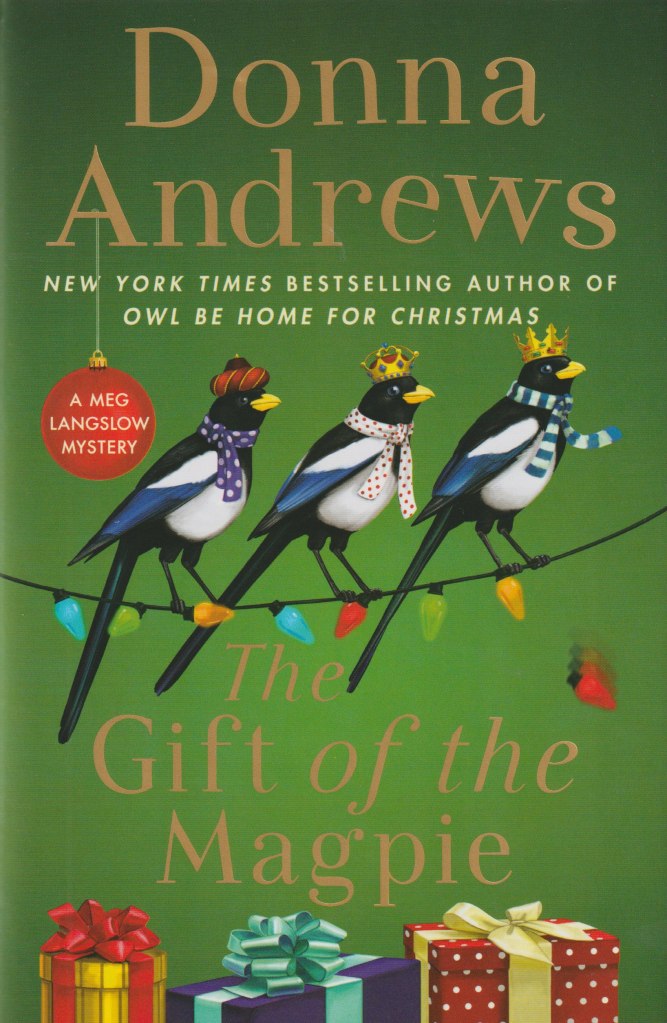
I got some books in the mail yesterday; the two most recent Donna Andrews Meg Langslows, Toucan Keep a Secret and Lark! The Herald Angels Sing (which I wish I could read over the Christmas holidays; I love reading Donna’s Christmas books during the season but I doubt I’ll have time to read Toucan first; and yes, I have to read them in order DON’T JUDGE ME); two novels by Joan Didion, Democracy and The Last Thing He Wanted; two books by Robert Tallant, one fiction (The Voodoo Queen, an undoubtedly error-riddled and racist biographical novel about Marie Laveau) and one nonfiction (Ready to Hang: Seven Famous New Orleans Murders); the next volume of George R. R. Martin’s A Song of Fire and Ice, A Clash of Kings; and Hester Young’s follow-up to The Gates of Evangeline, The Shimmering Road. 

So, yes, my plate is rather full this weekend–but I shall also have plenty to do while Paul is gone. I am also thinking about buying the third and final season of Versailles on iTunes to watch. I will probably make an enormous list of all the things I want to get done while Paul is in Illinois and wind up doing none of them.

Heavy heaving sigh.

I also need to figure out his Christmas presents while he’s gone, so I can get them and have them all wrapped before he gets home.

And so now, ’tis back to the spice mines with me. Have a lovely day, Constant Reader.

IMG_4424

Here Comes the Rain Again

It started raining yesterday, and hasn’t really let up since; and it has brought a biting, bitter cold with it. As such I slept later than I intended to this morning–Wednesdays being one of the days I have the luxury of not needing to use an alarm–but nevertheless, I am not awake,, wearing sweats and swilling coffee.

I finished reading Donna Andrews’ delightful How the Finch Stole Christmas last evening, curled up in my easy chair under a blanket, and started reading Patricia Highsmith’s The Blunderer, which, as always with Highsmith, is enthralling. Highsmith is one of my favorite writers, but I’ve never read her entire oeuvre since there will never be new Highsmith novels to read; this way there’s always more of them I haven’t read yet (I have also done this with Shirley Jackson and Daphne du Maurier); but after I finished the Andrews–which was an absolutely lovely comfort read–I wanted something a bit more biting and snide–and for that, you really can’t go wrong with Highsmith. The Blunderer is one of the novels curated by Sarah Weinman for the Library of America series about terrific women crime writers from the post-war era; Weinman’s ringing endorsement is one that simply should not be overlooked–she’s never wrong. I got several chapters into it last night before going to sleep, and am definitely looking forward to doing the same again this evening.

How the Finch Stole Christmas is a delight from start to finish, as are all of Donna Andrews’ Meg Langslow series.

Scan

“Shakespeare was right. The first thing we do, let’s kill all the lawyers.”

“I wish I could hear you say that in person,” I said.

“Yeah, over the cell phone you miss all my dramatic gestures.” Michael’s voice sounded more exasperated than angry. And since I knew my husband wasn’t usually prejudiced against the legal profession, I was puzzled instead of worried.

“Are you someplace where you can talk?” he asked.

“I’m not at the theater, if that’s what you mean. Reverend Robyn wanted to see me about something. At the moment, I’m over at Trinity, sitting in her office, waiting for her to solve a Christmas pageant prop emergency, so until she comes back, I’m at your service.”

The other night, I watched All About Eve again for perhaps the thousandth time, with a young friend who’d never seen it before. One of my favorite lines in the film is not one that is quoted regularly; Karen and Margo are sitting in the car, out of gas on their way to the train to take Margo back into the city for the evening performance she is going to miss. Margo turns on the radio, and some maudlin orchestral music plays for a few moments, with the camera focused on Margo’s face, one eyebrow arched. She turns the radio off and says, “I detest cheap sentiment.”

One of my biggest issues with Christmas is precisely that; cheap sentiment. I used that quote as an epigram for my Christmas anthology Upon a Midnight Clear, because I didn’t want to publish stories that were emotionally manipulative, and the stories in the book weren’t. Christmas is nothing if not a holiday rife with cheap, manipulative sentiment, and many carols and shows and movies mine this territory to the point where by the actual day’s arrival, I am so completely over the holiday and the saccharine-sweetness that I am almost afraid to turn on the television.

Donna Andrews, as Constant Reader already knows, or should by now, is one of my favorite writers and her Meg Langslow series is also one of my favorites. This is the fourth Christmas book in the series (following Ducks the Halls, Six Geese a-Slayin’, and The Nightingale Before Christmas), each more charming than the last–which is no easy feat. Andrews’ ability to keep this series fresh with each successive volume–and witty–is the mark of a master. Meg loves Christmas; the charming Virginia hamlet of Caerphilly she calls home feels much the same way–to the point where it has turned into a Christmas tourist destination (in no small part due to Meg’s efforts).

This year, rather than having a staged reading of A Christmas Carol, starring Meg’s husband (a retired actor who now teaches at the local college, and also appeared on a television series that has remained a cult hit for decades), the town has decided to mount a full production,  starring Malcolm Haver, a has-been actor who also starred in a television series back in the 80’s, and has a small but devoted following, as Scrooge. Haver has a drinking problem, can’t remember his blocking and his lines, and is a little on the irascible side…but has an ironclad contract for run of the play. Meg and her friends have managed to ensure that no one in town will sell Haver alcohol–but he is still getting it somewhere; and that’s what kicks this clever whodunnit off.

As always, the charms of the town, the wonderful people that live there, and of course Meg’s own ability to face everything with a “how do I fix this” attitude and a clever line makes this a fine addition to the series, and as ever, all’s well that ends well in this Christmas visit to Caerphilly. A perfect read for the Christmas season.