Yesterday Once More

I have sung the praises of Carol Goodman and her fantastic novels numerous times here on this blog; literally to the point that I have begun to wonder at times whether or not I have said certain things about her work before. I know I always bring up Dark Shadows and the great Gothic writers of my youth that I loved; give me a dark brooding mansion and a sinister legend of murders and ghosts and I am in my favorite place. But it does get repetitive, and that will hardly convince you, Constant Reader, to pick up one of her books (you won’t regret it), will it?

So, this time around, rather than talking about her Gothic sensibility, this might be a good time to look at this most recent read of hers in a different way.

“I’m just having trouble getting back on track.”

Nina Lawson isn’t the first student this semester–or even the first today–to attribute their academic woes to a deviation from some metaphorical track. As Dean of Liberal Arts, I’ve heard every excuse, sob story, and tragedy over the course of the last two years. But the image, coming as it does at the end of a long day at the end of a very long year, jolts me as if we’re both on a train that has suddenly jumped off the rails into an abyss.

To give myself time to craft a response I look down at Nina’s folder. I see that she comes from Newburgh–a small city about an hour south of campus–that she did well in her public high school even after her classes went remote in March of her senior year, and she’s earned the Raven Society writing scholarship to Briarwood on the basis of a short story she wrote in high school. There’s a note in my assistant’s meticulous handwriting that Nina had to defer admission for a year to help her single, out-of-work mother with the bills. She has a work-study job in the financial office and an off-campus job at a local restaurant. No wonder she looks tired, I think, gazing up at her. Her light brown skin is mottled with acne. She’s slouched in a zippered sweatshirt, hood up, eyes swollen and bloodshot, lips raw and chapped. “I wish you had come to see me sooner,” I say in my firm-but-gentle voice. “The withdrawal deadline passed six weeks ago.”

“Someone told me it had been extended,” she says, not looking up.

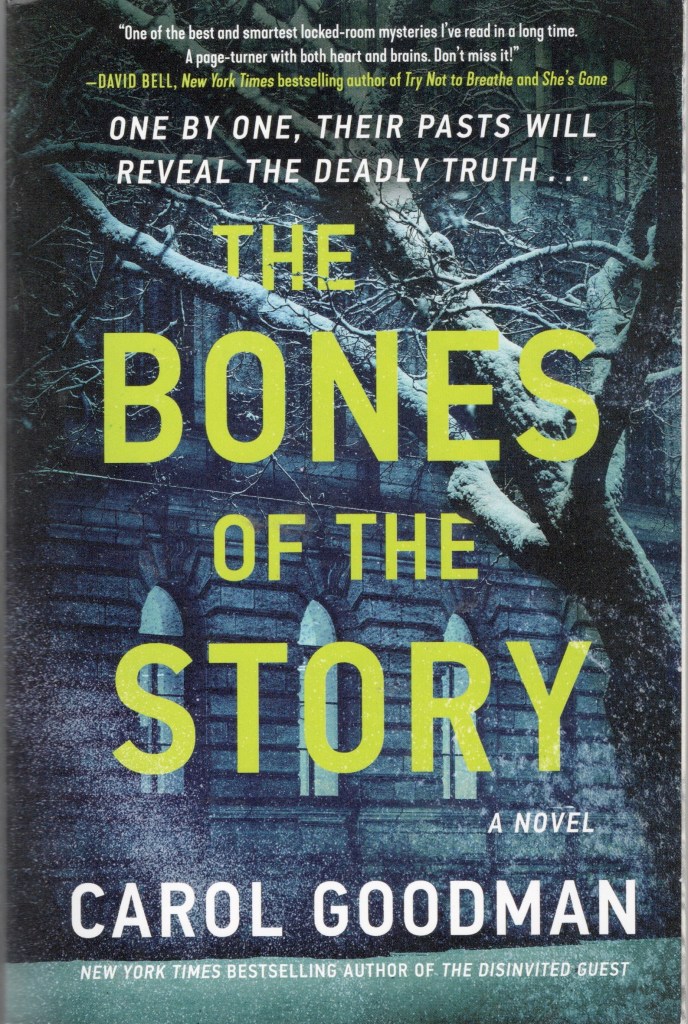
This opening scene establishes several things: the book is going to be set at a prestigious small private college; the school has an excellent creative writing program; and our main character is getting a little jaundiced and world-weary in her position. The “I’ve heard it all before” is a problem for people in these kinds of jobs, and often occurs in education–the weariness and suspicion that students are lazy and just don’t want to work eventually becomes so engrained that they have a closed mind before the student even starts talking. I’ve experienced this myself any number of times–this past week I related two experiences I had in school where I was basically called a liar by an educational authority figure only to get an apology later when I was proved to be telling the truth to my dad, which ended with an airy “teachers never believed me, ever”–which probably explains why I never really got into school the way other smart kids did. But fortunately, Nell gives Nina the withdrawal permission, because she thinks something else is going on with Nina and she wants to help her (which was lovely to read), but Nina won’t open up to her. Briarwood is getting ready to open it’s new Writer’s Center, and there’s a big celebratory party coming up–as well as a bad winter storm–and that night, at a traditional ceremony where the students carry candles up the side of a mountain, there’s an accident and Nina falls into one of the ice caves…and when she is rescued, the skeleton of a young woman is found–which triggers Nell’s memories of being a writing student twenty-five years ago, the friends she made in the program, and the secrets they’ve kept ever since.

Which means the book is also a dual-timeline novel, which is one of my favorite tropes in crime novels (any novels, really); the book is also a master class in how to do a dual-timeline novel. Part of Goodman’s skill is taking those young, wet-behind-the-ears college students and evolving them as they make their way through their college years, as well as who they’ve turned into in the intervening years. There’s not a single false step in any of the character development, which isn’t easy when you’re juggling any number of characters.

And in the present day timeline, Goodman pays homage to several classic crime novels–particularly Christie’s And Then There Were None, which was delightful. She also made several references, throughout the book, to MARY STEWART, who I often think of as Goodman’s literary godmother…and with the past story, there’s some real The Secret History stuff going on, too. The Stewart references aren’t for the terrific suspense novels she wrote, but the equally terrific Arthurian saga she created (The Crystal Cave, The Hollow Hills, The Last Enchantment, This Wicked Day), which I should revisit sometime.

The suspense and tension continues to build, and with everyone trapped on campus by a winter storm–and characters start dying, one by one…the suspense almost becomes unbearable as the secrets and lies from the past finally come home to roost in the present.

(I will say that when I started listening to the book, I thought to myself if this were a Gothic novel this is who the killer would be–only to be correct! But the motive wasn’t what I thought it was…)

The Bones of the Story is well-written, with great language, terrific tone and style, and very literate and smart…so another feather in the cap of the divine Carol Goodman.

Down by the River

My appreciation of all things Gothic is at least partly due to the old soap opera Dark Shadows, which I watched as a child and has crept its way into my work, my reading, and the majority of my entertainment consumption ever since. I have always loved anything with a touch of the Gothic in it, and spent my teen years (and a lot of my twenties and thirties) loving and consuming Gothic fiction. The post-war style of Gothic literature, marketed primarily towards women, was being done by authors whom I loved like Phyllis A. Whitney and Victoria Holt and others (while Mary Stewart’s work was also considered Gothic and featured many of the tropes of Gothic fiction, I consider her books to be Gothic-adjacent, and I will probably explain that better and in more depth at another time) and I couldn’t get enough of them. Holt and Whitney, to me, were the two best at this subgenre, and when Gothics stopped being published in such great numbers, I was disappointed and mournful.

Which is why I love Carol Goodman’s books so much. Her books have that Gothic feel to them, are beautifully literate in their prose and structure, and they are also incredibly smart. The books also cover art, education, and the classics; every book is filled with classical references that inevitably make me feel smarter for reading them.

The Drowning Tree is no exception.

The river feels wider from the shallow boat, the humpbacked hills of the Hudson Highlands looming like the giants Dutch sailors believed dwelled there.

“Just put the water behind you,” he says.

I can’t see the man in the boat behind me, and I don’t want to risk my precarious balance turning to see him.

“You’re been through the drill,” he goes on.

And I have. Six weeks practicing in the indoor pool under the watchful eye of the kayaking instructior, tipping myself into blue chlorinated water and rolling up again, gasping, into the humid air, all in one long in-drawn breath. I’ve practiced it until it’s become second nature, but it’s one thing to turn over in the clear, warm pool water and another to imagine myself hanging upside down in the cold gray water of the Hudson, trapped in the currents…

“This is where the current is most dangerous,” the voice says. “The Dutch called it World’s End.”

Like many of Goodman’s novels, this book is set in the Hudson Valley and there’s also an institute of higher learning–Penrose College–involved. Our main character here, Juno McKay, runs a stained glass restoration business in the same town where she went to college and grew up; she also lives in the building that houses her glass works. Her best friend from college, Christine, is coming back to the college to give a lecture into her research into a stained glass window at the college that Juno’s company is in the process of being restored. But before the lecture, Juno sees Christine arguing with the school president, the most recent Penrose, and afterwards when they have drinks together before Christine catches her train back into the city, Juno gets the impression that somethings’s going on with Christine–and then she is found, drowned in a creek along the shoreline of the original Penrose estate, near a sunken sculpture garden, in a scene very reminiscent of the scene in the stained glass window Juno is restoring. IS there a connection? Was it an accident, or was it murder or suicide?

Like any intrepid heroine in a Gothic novel, Juno is soon drawn into the mystery Christine was looking into–what happened years ago, between the first Penrose, his wife and her half-sister? How many secrets does the abandoned estate (very Nancy Drew, too–it reminded me of The Clue in the Crumbling Wall a bit) conceal? What secrets did the original Mr. Penrose, an artist and painter, conceal in his paintings and art and stained glass windows? Briarwood, a local mental institution, also comes into play as well; years ago, Juno’s ex-husband tried to kill her and their infant daughter by drowning them in the river. They survived, but his mental health did not and he’s been in Briarwood ever since. The pattern of three from the past with Penroses and the half-sister also seemed to play itself out with Juno, Christine, and Juno’s ex-husband, pulling the reader into all these complicated skeins and twists and turns, until the book comes to an extremely satisfying end with all secrets revealed and life back to normal at the end.

What a great read, and a great example of why I love Goodman’s work so much.

Close Enough to Perfect

I don’t remember when and where I first met Tara Laskowski; my memory has become a sieve over the years and the bout of long COVID in the summer of 2022 didn’t help much, nor did any of the things that have gone on for the last three or four years. But I’ve liked her from the very first–I love that she loves Halloween and centered one of her books arounnd it–and when I read her debut novel, I became a big fan. She, along with Carol Goodman, are killing the Gothic suspense novel genre, which has always been one of my favorites ever since I was a kid and discovered Mary Stewart and Victoria Holt and that Phyllis A. Whitney also wrote books for adults. She followed up her sensational debut One Night Gone with the Halloween book, The Mother Next Door, and it was also magnificent.

So I really was looking forward to her third novel, and Constant Reader, it did not disappoint.

Ever since Zack told me about The Weekend, it’s all I’ve been able to focus on. Most people would naturally be at least a little nervous to meet their significant other’s family for the first time.

But most people aren’t dating a Van Ness.

“Earth to Lauren.” Zach snaps his fingers, grinning over at me. He left work early to get on the road sooner and didn’t have time to change, so he’s still wearing his suit, purple tie slightly askew but knotted even after hours of driving.

“Sorry,” I say, tugging the ends of my hair. “Zoning out.”

“You look like I’m driving you to your death,” he says, then grabs my hand and squeezes. “Don’t worry. I promises it’ll be fun. Even if my family’s there.”

This is a great opening, and it sets up the story perfectly. Our sympathies are immediately with Lauren. Laskoswki has put her into a situation we can all relate to: the terror of meeting your partner’s family and the discomfort that comes with it, the self-doubt, the need to be liked and accepted. Zach is a Van Ness, too, and while we aren’t really certain what that means yet, it’s important and stressful enough so that Lauren, in communicating her thoughts and feelings, thinks it bears mentioning and we should understand how she feels. It works, and that outsider feeling (and haven’t we all felt like an outsider at some time? See Saltburn) keeps the reader’s sympathies with Lauren completely.

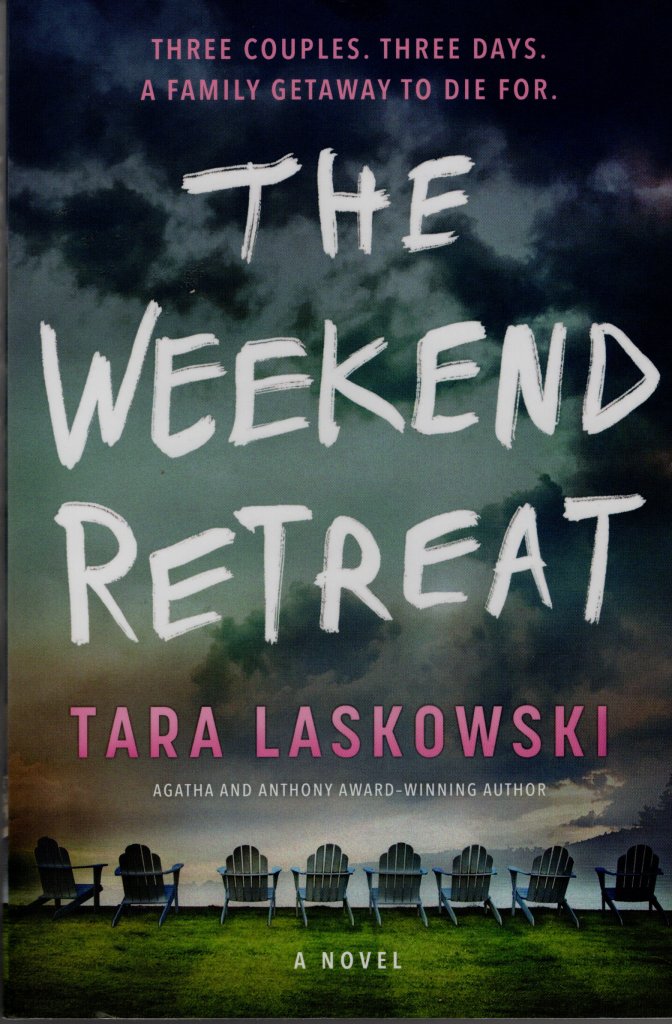
But there are three more point of view characters–two other women, one a Van Ness by blood and the other by marriage–which is always a difficult feat for an author to pull off, but making those voices distinct and clearly different from each other is what makes the book work. Harper, Zack’s sister, is harsh, tough, cold and vindictive. She runs her own beauty company and blog, VNity, which is struggling. Elle is married to Harper’s twin brother Richard, who oversees the vast Van Ness holdings, and like Lauren, has some serious “pick me” energy too; she joined the Van Ness family and has wiggled her way into the family by asserting herself as well as trying to take over the role of family matriarch, as their mother is dead. Their mother, Katrina, was a tough woman who was hard on her children, but babied the youngest, Zack–which the twins have always resented. The retreat, this Weekend, is a celebration of the twins’ birthdays, with a huge party being thrown the Saturday night of that weekend, spent up at the Van Ness Winery, in the Finger Lakes section of New York.

So yes, that Gothic feeling is there almost from the start. The wide-eyed young innocent, coming to the big family estate in a remote part of the country (see also, Beware the Woman by Megan Abbott) into a situation where she’s not sure she can entirely trust her boyfriend. The house is filled with secrets, too–hidden rooms, secret staircases and passage ways–and a lot of sibling resentment, bitterness, and anger begins bubbling up to the surface almost immediately.

There’s also a fourth POV character, known only as the Weekend Guest, who hates the Van Ness siblings and is trying to bring the entire family down as a brutal winter storm bears down on Van Ness Winery…

What a terrific read! Get a copy–you can thank me later.

Say You Will

It really boggles my mind that it took me so long to get into listening to audiobooks. I think it was more of a sense that it didn’t count as reading if I wasn’t holding a book (or my iPad) in my hands and scanning the words with my eyes. I’ve never really liked being read to, either; and while I do enjoy live readings by authors of their work, those generally don’t last more than ten hours. I also worried that, as I do have ADHD and good writing always inspires me and floods my brain with ideas for new work for me or stuff that I am already working on (driving through Alabama, for whatever reason, always is inspiring to me), and it’s very easy to go back to where I was reading when inspiration hit. It’s not quite as easy to do this when you’re listening–I haven’t exactly mastered the rewind thing while driving at eighty miles per hour–so I am always afraid I’ve missed something. But…audiobooks in the car on long trips has literally changed my life and made the drives less irritating, boring and painful.

I have always had a taste for fiction that could be classified as Gothic; two of my favorite writers (Daphne du Maurier and Mary Stewart) were masters of the genre. I thought with the deaths or retirements of the major Gothic authors of the mid to late twentieth century that the style (or sub-genre, if you will) had fallen out of fashion (after it’s peak in the 1970’s and early 1980’s) and I missed them, terribly. What I hadn’t known was authors were still writing them, updating and reinvigorating the field…because the cover styles that always marked a Gothic novel (big spooky house, light in a window, creepy looking tree, woman in a flowing nightgown with long hair running from it and looking back over her shoulder in fear) were actually which became obsolete.

I am so glad I found Carol Goodman.

When I picture the house I see it in the late afternoon, the golden river light filling the windows and gilding the two-hundred-year old brick. That’s how we came upon it, Jess and I, at the end of a long day looking at houses we can’t afford.

“It’s the color of old money,” Jess said, his voice full of longing. He was standing in the weed-choked driveway, his fingers twined through the ornate loops of the rusted iron gate. “But I think it’s a little over our ‘price bracket.'”

I could hear the invisible quotes around the phrase, one the Realtor had used half a dozen times that day. Jess was always a wicked mimic and Katrine Vanderburgh, with her faux country quilted jacket and English rubber boots and bright yellow Suburban, was an easy target. All she needs is a hunting rifle to look like she strode out of Downton Abbey, he’d whispered in my ear when she came out of the realty office to greet us. You’d have to know Jess as well as I did to know it was himself he was mocking for dreaming of a mansion when it was clear we could barely afford a hovel.

It had seemed like a good idea. Go someplace new. Start over. Sell the (already second mortgaged) Brooklyn loft, pay back the (maxed-out) credit cards, and buy something cheap in the country. By country, Jess meant the Hudson Valley, where we’d both gone to college. and where Jess had begun his first novel. He’d developed the superstition over the last winter that if he returned to the site where the muses had first spoken to him he would finally be able to write his long-awaited second novel. ANd how much could houses up there cost? We both remembered the area as rustic: Jess because he’d seen it through the eyes of a Long Island kid and me because I’d grown up in the nearby village of Concord and couldn’t wait to get out and live in the city.

Isn’t that a great opening?

All of Goodman’s novels are unique, but tied together by that strong, literate authorial voice that makes starting to read (or listen) to a new one as comfortable as slipping into your house shoes; the word choices are marvelous, and the sentence/paragraph constructions are so intricate yet not impenetrable to the reader. Goodman’s novels usually have a central core that has to do with education and/or literature of some kind, and are inevitably set in either upstate New York and/or the Hudson Valley or the city itself; but there’s always a brooding, old building involved. The books are also smart and well-paced, and there is often a dual timeline involved, whether it alternates between past and present or does an entire time-jump to reveal the secrets and the truths bedeviling our heroine. Goodman’s heroines are likable, relatable, and understandable.

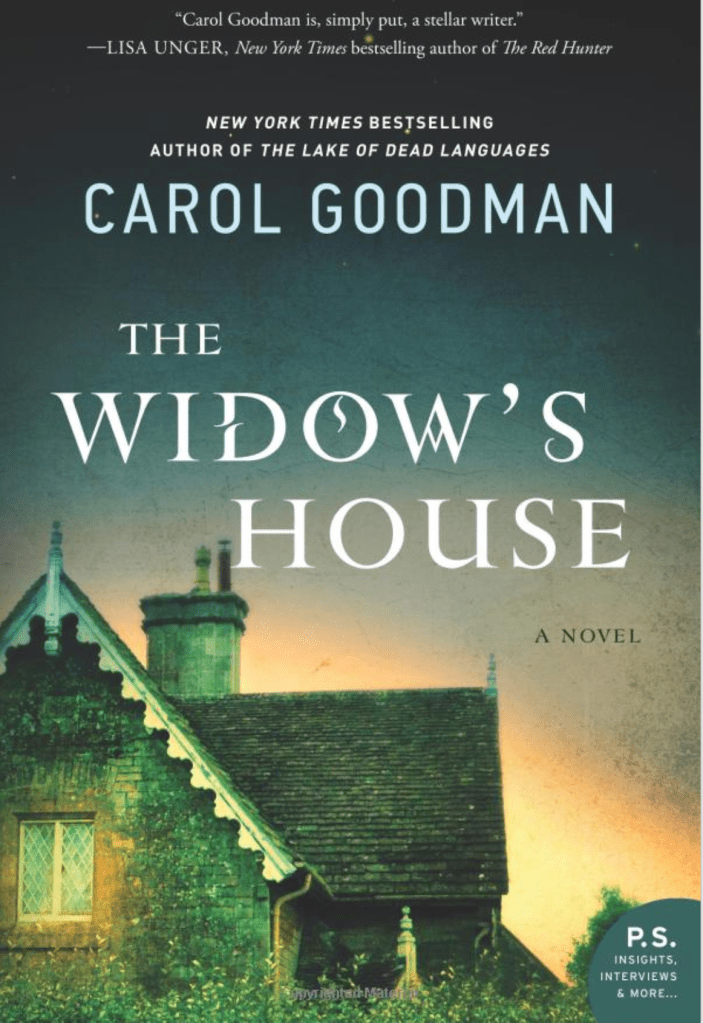
The Widow’s House focuses primarily on our main character, Clare Martin. Clare met her husband, Jess, in a creative writing seminar at a impressive university near Concord, where she grew up and she and Jess are currently looking for a house they cannot afford. Both were aspiring writers when they met; Jess wrote a debut novel that made a splash but is now ten years overdue on his second (aside: this always amazes me. I don’t think I’ve ever known a writer given an advance who then never delivered a manuscript for ten years or more without consequence, but this always pops up in novels about literary writers–Michael Chabon’s Wonder Boys comes to mind. Then again, most writers I know are genre writers and no crime writer could ever not deliver for ten years–I always feel horribly guilty when I miss a deadline and then it’s usually only an extra month that I need, not ten years. Maybe it’s different for those who write lit-ra-CHOOR) while Clare has buried her own authorial ambitions while working as an editor (and then a freelance one) to support Jess while he writes his book (I also would never let Paul go ten years without working while I couldn’t write so I could support him financially; I feel relatively confident the obverse is also true). The house their realtor is showing them at the opening of this book is called River House, but it’s also a site of many tragedies and deaths and madness, so much so that someone has taken a chisel and changed RIVER HOUSE on the gate column to RIVEN HOUSE. But the master of the crumbling old house is looking for caretakers to live on the property rent-free in exchange for upkeep work on the estate… but the master is the same writing professor in whose class they met–a professor Jess resents for trashing his debut novel in the New York Times, a review Jess is certain has kept him from breaking out as a major (best-selling) literary star. But the deal is too good to pass up, and Clare herself thinks moving there might help her restart her own writing…

Several of Goodman’s other novels tackle the world of the writer–The Stranger Behind You was a particular standout–and boy, could I relate to Clare’s fears and insecurities and anxieties about writing. To make matters worse, there also seems to be a ghost (or two, or maybe even three) at Riven House–but only Clare sees or experiences the haunting, to the point that she begins to question her own sanity. But why? Why would someone gaslight Clare, the wife of an underperforming novelist? There were some times in the book where Jess would be a bit of a emotionally abusive ass to her, and I would get a bit frustrated with her–a point I often had with the heroines of Victoria Holt and Phyllis A. Whitney–for subsuming herself and her needs and desires and dreams in service to his, and he doesn’t seem to appreciate it in the least. The ghost mystery has to do with tragedies in the path; the murder of an illegitimate child, the suicide of its mother, and madness and murder. Clare starts unraveling the mysteries from the past to get to the bottom of what is going on at Riven House–and there’s a marvelous, heart racing conclusion during a massive winter storm and power loss at Riven House, when Clare finally finds the truth and has to fight for her own life.

What a satisfying, thoroughly enjoyable read–which is what you always get from Carol Goodman. If you haven’t read her yet, START. Immediately.

You can thank me later.

Perhaps Some Other Aeon

Tuesday morning and heading out to Metairie for an appointment. I took the entire day off because I have no idea how long this might take or how I might feel after, so I figured it was better to not have to deal with clients. It’s nothing serious, and perhaps by being vague I am intensifying interest in what my appointment is; I’m just not comfortable talking about it just yet. Who knows? Tomorrow I might be here telling everything and more, always more than you could possibly want to know. Then again, you are here, after all.

I got some great work done on the book last night, and I am feeling most self-satisfied to the point where I can barely stand myself today. I hadn’t planned on using today to finish the revision when I asked for the day off, but how opportune this has turned out to be for me. When I get home, I can do some chores around here and then dive into the final two chapters of the book. Yes, I said the final two chapters. The end is clearly in sight, and the work I did today successfully pulled the story back in from some dead ends and subplots that were not absolutely necessary. I cannot wait to get home and finish it off this afternoon. But…we’ll see how it goes. One never knows when fate is going to throw a monkey wrench into your plans. (And what an odd phrase that is. I wonder what it’s origin was?)

We finished watching The Lake last night and it was quite fun and cute. I really like Justin Gavanis, and Julia Stiles is epic as Maisie the bitch no one likes and everyone fears. We also started watching the new Apple Plus Tom Holland series, The Crowded Room, which seems relatively intense and sad at the same time. But we’re intrigued and will most likely continue with it this evening. I also like Amanda Seyfried, and she’s the female lead.

I didn’t fall into a deep sleep last night but I rested, which is all that matters. I’ll hit a wall at some point this afternoon without doubt; but that’s okay. As long as I can get my work done once I’m back home from this appointment, that would be super great. I can also get some more chores around here done, too. Or I could get back to reading, if my brain isn’t too fried. Funny how reading used to be the thing for me when I was tired, to relax and refresh and reboot my brain, and now that I’m older I can’t focus enough to read when I’m tired. My reading has slowed down a lot this past year or so; the pandemic gave me a lot of time to read, but for the longest time I couldn’t. I did reread a lot of Mary Stewart novels to get me into reading again–I also reread some other marvelous older titles that I love, like Crocodile on the Sandbank by Elizabeth Peters–and that broke through that barrier to reading. Maybe I should do that again, once I get my current book finished reading? But I’ve also got some killer reads to get to–new books by Kelly J. Ford, Eli Cranor, Megan Abbott, and S. A. Cosby, with a new Carol Goodman and Laura Lippman coming later this summer. And then of course there are all the books I’ve got here that I haven’t read, because I am a book hoarder.

And I got the notes for the other manuscript I am trying to get finished and out of my hair as well. So, if I can get the last two chapters finished today, and write the epilogue, I can start doing the macro edits. I have a long lovely weekend ahead of me, thanks to the Juneteenth holiday, and of course the week after that I am heading to Alabama and Kentucky to spend some time with my dad. Their anniversary is–was–June 26th, so I am going to meet Dad there in Alabama for their anniversary and then we’ll caravan back up to Kentucky. And then we’re in July–another truncated work week for me–and next thing you know it’s Bouchercon and football season and then the holidays and the year ends and that, my dear Constant Reader, is how you run out of time and how quickly life shoots past.

And on that cheery note, I am going to head into the spice mines and start getting ready for this appointment. Have a lovely Tuesday, Constant Reader, and I’ll check in with you again later.

Flowers on the Wall

I love Carol Goodman’s work.

I don’t remember which of her books I read first; I am thinking it was The Sea of Lost Girls, but that may be wrong (probably is; my memory is for shit these days) but I DO know I first met her in person at the HarperCollins cocktail party at Bouchercon in St. Petersburg, and she’s just as marvelous as a person as she is a writer. Since then I’ve delved into her canon of brilliant books–have yet to come across one that is even slightly disappointing–and each one makes my fandom flame burn even more brightly.

And then in Minneapolis, over lunch with a few friends at that wonderful Irish pub near the hotel, I discovered the clincher: she is also a Dark Shadows fan. She even joked, “I’ve realized that most of my books are really about Barnabas Collins and Maggie Evans”–which made me think even more deeply about how much of an influence the show was on my own writing (Bury Me in Shadows owes a HUGE debt to the show). She has a new book coming out this summer, which is very exciting–I have that weird thing about never wanting to have read everyone’s entire backlist, so there’s always one more book for them to read without me having to wait to get my hands on it–and during my trip to Alabama for the First Sunday in May I listened to The Ghost Orchid, which was so good that when I got home that Sunday night, I grabbed my headphones and listened to the final thirty minutes of the book while unpacking and doing things around the apartment.

I came to Bosco for the quiet.

That’s what it’s famous for.

The silence reigns each day between the hours of nine and five by order of a hundred0year-old decree made by a woman who lies dead beneath the rosebushes–a silence guarded by four hundred acres of wind sifting through white pines with a sound like a mother saying hush. The silence stretches into the still, warm afternoon until it melts into the darkest spot of the garden where spiders spin their tunnel-shaped webs in the box-hedge maze. Just before dusk the wind, released from the pines, blows into the dry pipes of the marble fountain, swirls into the grotto, and creeps up the hill., into the gaping mouths of the satyrs, caressing the breasts of the sphinxes, snaking up the central fountain allée, and onto the terrace, where it exhales its resin- and copper-tinged breath out onto the glasses and crystal decanters laid out on the balustrade.

Even when we come down to drinks on the terrace there’s always a moment, while the ice settles in the silver bowls and we brush the yellow pine needles off the rattan chairs, when it seems like the silence will never be broken. When it seems that the silence might continue to accumulate–like the golden pine needles that pad the paths through the box-hedge maze and the crumbling marble steps and choke the mouths of the satyrs and fill the pipes of the fountain–and finally be too deep to disturb.

Then someone laughs and clinks his glass against another’s, and says…

“Cheers. Here’s to Aurora Latham and Bosco.”

“Here, here,” we all chime into the evening, sending the echoes of our voices rolling down the terraces lawn like brightly colored croquet balls from some long-ago lawn party.

“God, I’ve never gotten so much work done,” Bethesda Graham says, as if testing the air’s capacity to hold a longer sentence or two.

Carol Goodman’s books are, above and beyond anything else you might want to say about them, incredibly literate and smart. She reminds me of Mary Stewart in that way; Stewart’s novels, often dismissed as “romantic suspense” (don’t even get me started on that misogyny), were smart, clever and incredibly literate, with Shakespearean references and quotes and allusions to classical literature. Goodman’s works are also the same; Goodman’s background in classics scholarship is utilized in every one of her books but not in a way that feels intrusive or showing off. It’s all integrated into the story and not only moves the story forward but deepens and enriches the characters as well as the plot, which is not easy to do. Her books are often built around some sort of academic/intellectual backdrop, from boarding schools to small colleges to actual archaeological digs (The Night Villa is absolutely exquisite; superb in every way), and her heroines, aren’t pushovers (as in most “romantic suspense”) but strong and smart and driven, if haunted by their own insecurities and past failures. Goodman is also not afraid to cross the line over into supernatural occurances, either; the previous one I’d read had a touch of the woo-woo, as does The Ghost Orchid, but it’s not intrusive and it actually plays out so honestly and realistically that you don’t question it.

The main character of the book is a young woman named Ellis Brooks. Ellis is a young author-to-be who is working on a novel based on what is called “the Blackwell Affair.” She had already written and published a short story based on an old pamphlet she found; the book research makes her a natural to be chosen for a residency at Bosco, an old estate in upstate New York that has become an artist’s colony, sort of like Breadloaf, but for a much more extended stay and for fewer artists. “The Blackwell Affair” actually took place at Bosco, when the original mistress of the estate, Aurora Latham, brought an experienced medium named Corinth Blackwell to Bosco to hold seances to try to reach the spirits of her dead children–any number of whom were either stillbirths or died shortly after being born; she had four children who lived but lost three of them to a diphtheria outbreak the year before. Corinth Blackwell and the only surviving Latham child disappeared one night after a seance; hence “the Blackwell Affair.” As Ellis does her research and gets to know her fellow artists better, she becomes more and more aware that the past at Bosco doesn’t rest, and the untold stories of the past must be unearthed before everyone at Bosco can be safe.

Goodman is also a master of the dueling timeline; one in the past and one in the present, and weaves the stories together so intricately that I marveled at the mastery, as the present day characters wonder about something and then we get the answer in the past. There are so many secrets, so many lies, so many spirits; but as always with the best ghost stories, the past is finally laid to rest when the truth is exposed.

I loved this book, and it reminded me not only of Dark Shadows (knowing she’s a fan I’ll always see it in her work now) but also of Barbara Michaels’ best along with Mary Stewart. Can’t wait to dig into another Goodman novel!

The Power of Goodbye

I got home last night around eight o’clock. I am very glad I went up there this weekend; it meant a lot to Dad and it was kind of helpful for me as well. I am still kind of in shock that I was able to sleep in the motel room on Saturday night; I actually slept better that night than I did at home on Sunday, but here we are. I am composing an entry about the First Sunday in May; I started writing it last night when I got home but don’t want to finish it while I’m sleepy or foggy from sleep. It needs a clearer head, to be certain. It was hot and humid yesterday, and I have a bit of a sunburn on my scalp from the incredibly bright hot sun as we went from cemetery to cemetery.

I am very tired this morning, but am really glad I went this weekend. I feel like some of the darkness has receded–perhaps not for good, make that most likely–I have long since learned to know that once the constant darkness starts to recede that there are still going to be bad days in the weeks and months to come, but that first wave of grief that I’ve been living with seems to be over. Stay tuned, and keep your seatbelt fastened; there’s still more turbulence to come.

I didn’t finish listening to Carol Goodman’s marvelous The Ghost Orchid in the car, but I can finish listening while doing some chores around the office that always need to be done. It’s really fantastic; with DNA from Dark Shadows, Mary Stewart, and Elizabeth Peters; another one of those books that make you think why do I even bother? But Carol’s one of my favorite writers (and favorite people) so I prefer to enjoy her work than beat myself up over not being able to write books as well–there’s no point in that kind of thinking in the first place.

I do feel like the cathartic feel from this weekend might help me buckle down and get back on top of everything. I am so behind on everything that it’s not even funny. I do have an eye appointment this Saturday–just getting my prescription checked; will order new glasses from Zenni if they are needed (and I suspect they are)–and hopefully I will be able to get deeper into the book this week and maybe–just maybe–get all caught up by the end of this coming weekend. I need to go over my to-do list and come up with a new one; I won’t be able to take books to the library sale because of the eye appointment but I should take a box down from the attic this week to get started on the ultimate purge, and hopefully think ahead and plan as much as I can while this good feeling lasts.

And on that note, I am heading into the spice mines. Have a lovely day, Constant Reader, and I’ll check in with you again later.

Come Sail Away

Nothing will get my attention more quickly than a Daphne du Maurier comparison.

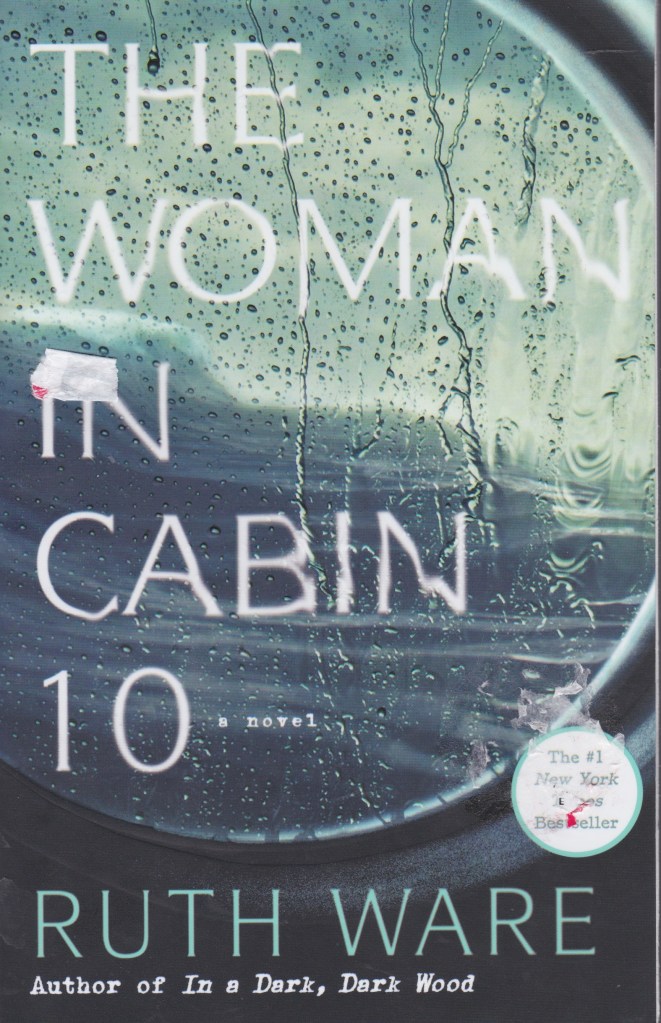
I’d been meaning to get around to reading Ruth Ware since her The Woman in Cabin 10 broke her out in the crime writing community. I’d heard lots of good things about her work from reviewers and people on social media, and as her career continued to grow and develop it seemed like all of her books–while similar, in some ways, to each other–were rather dramatically different from each other. I began acquiring copies of her books, unable to decide where to start while each new one joined the TBR pile and began collecting dust. When I saw someone had compared her The Death of Mrs. Westaway to du Maurier and Rebecca, that got my attention and I decided to start there. I listened to it on one of my drives to Kentucky and loved, loved, LOVED it.

So, while planning for my recent trip up, I decided to listen to The Woman in Cabin 10, and have been admonishing myself for the lengthy delay in getting to it ever since finishing. It is quite excellent, and I am finding myself becoming quite a fan of Ruth Ware.

The first inkling that something was wrong was waking in darkness to find the cat pawing at my face. I must have forgotten to shut the kitchen door last night. Punishment for coming home drunk.

“Go away,” I groaned. Delilah mewed and butted me with her head. I tried to bury my face in the pillow but she continued rubbing herself against my ear, and eventually I rolled over and heartlessly pushed her off the bed.

She thumped to the floor with an indignant little meep and I pulled the duvet over my head, but even through the covers I could hear her scratching at the bottom of the door, rattling it in its frame.

The door was closed.

I sat up, my heart suddenly thumping, and Delilah leaped onto my bed with a glad little chirrup, but I snatched her to my chest, stilling her movements, listening.

I might well have forgotten to shut the kitchen door, or I could even have knocked it to without closing it properly. But my bedroom door opened outward–a quirk of the weird layout of my flat. There was no way Delilah could have shut herself inside. Someone must have closed it.

I sat, frozen, holding Delilah’s warm, panting body against my chest and trying to listen.

How’s that for a beginning?

I defy anyone to stop reading after those opening paragraphs, seriously.

Our main character turns out to be Laura Blacklock–nicknamed Lo–who is an aspiring travel journalist working as an assistant at Velocity magazine. Usually her boss is the one who gets to go on trips to write about the experience, but pregnancy has forced her to turn over a rather plum assignment to Lo; taking a cruise on a luxury ship through Scandinavia, including a look at the Northern Lights and exploratory visits to fjords. But as she is preparing for the trip, her flat is broken into while she is in it. This understandably causes her some trauma, and she is already taking medication for anxiety. Shaken up and still having nightmares, she boards the Aurora Borealis in a determined attempt to fulfill her job responsibilities well enough to get a promotion or better assignments. Easier said than done, really; on the first night she hears the toilet in the next cabin–Cabin 10–at the same time realizing she doesn’t have any mascara. She goes to Cabin 10, borrows mascara from a beautiful young woman, and returns to her cabin. Having a few drinks at dinner to calm her nerves even more, she keeps an eye out for the young woman, who never shows. In the middle of the night a sound in the next cabin wakes her, and she goes out onto her veranda to glance around the privacy screen. Before she can get out there she hears a cry, a clank, and a splash; once she is out there she thinks she sees a human hand disappearing into the water, and smear of blood on the glass screen next door. She gets the ship’s security, but Cabin 10 is empty. The man who was staying in there cancelled at the last minute. There is no trace of the girl she met, no trace of anything exceptional having happened in Cabin 10–and the only proof of her story is the mascara tube, which she still has.

No one believes her–and her recent break-in and the anxiety medications, along with the drinking she’s done, make it relatively easy for her claims to be dismissed. Certain she’s a peripheral witness to a murder, Lo starts poking around–eventually finding herself in danger.

I really enjoyed this book. Ware makes you care about Lo, and you root for her to get to the bottom of what’s going on aboard the Aurora. Ware is, indeed, a modern day writer of Gothics in the mid-to-late twentieth century traditions of duMaurier, Victoria Holt and Phyllis A. Whitney, with a generous dash of Mary Stewart as well. Is she being gaslighted, and if so, by whom and why? Who was the woman? What was she doing on board? Why was she murdered? The reader knows Lo is telling the truth, which is a brilliant way of getting reader buy-in for both the character and the story, and the gaslighting is done so well that even the reader sometimes has to question Lo’s sanity; was it alcohol and drug-related PTSD? But as the story progresses and Lo learns more and more about her fellow passengers–this is a press junket, so everyone on board is a professional travel journalist of some sort–she starts putting together the pieces and fragments of information she gathers that gradually reveal the picture of a very clever murderer who won’t stop at anything to get away with their crime, even if it means killing Lo.

Highly recommended–especially if you, like me, love the old books with the woman in a nightgown running away from a scary looking house with a light on in one window on the cover. Cannot wait to read some more of Ruth Ware.

Sidebar: the story itself is very Hitchcockian in style, and of course the gaslighting made me think of the great film Gaslight which defined the word into the vernacular…and made me also think, sadly, of what a greater masterpiece Gaslight might have been had Hitchcock also directed it.

For All We Know

The world shut down in March of 2020, in the face of a deadly new virus that was spreading around the world, and spreading quickly. It was a major paradigm shift; everything changed and the world would never be the same as it was before. As everyone locked down and adapted (or decided it was all a hoax and chafed against the intrusion), the question began being asked of writers: how will you handle the pandemic in your work, or will you address it at all? A lot of authors said that they wouldn’t address it, because they couldn’t imagine anyone wanting to read about it, or revisit it again after it was over. I came down firmly on the side of “we have to address it”; pointing out that Hurricane Katrina was a paradigm shift for New Orleans and Louisiana authors, and we all had faced the same issue and question. Some writers chose not to deal with it at all, some stopped writing entirely, and others–like me–addressed it. I found it incredibly cathartic to write about the disaster by viewing it through someone else’s eyes, and of course, much of what Chanse saw and dealt with was taken directly from my own experience. Writing the book in some ways helped me to heal from the emotional trauma and deep depression I was experiencing, and I don’t think I would have possibly gotten over it had I not written it out of my system. I will undoubtedly deal with the pandemic in a Scotty book at some point–I already have the title for it picked out and a folder created to keep my notes and ideas in–but I am not quite there as yet.

Leave it to Carol Goodman to not only do it, but do it incredibly well.

“We’re here.”

Reed’s voice wakes me from the fitful sleep I’d fallen into somewhere north of Portland, the slap of wipers and the sluice of tires accomplishing what bourbon and sleeping pills had failed to do for the past two weeks. I open my eyes to a wall of sodden gray the color of wet cement. I can feel it pressing down my throat–

I cough.

Reed swivels his head toward me, blue eyes feverish in the gloom above his white surgical mask.

“I’m fine.” I reach for the water bottle and swig lukewarm water that tastes like copper. “The others–“

“Behind us. Crosby’s driving like an old woman, trying to protect his precious Volvo’s paint job. Honestly, for a supposed socialist he likes the trappings of the bourgeoisie.” He grins, his bones sharpening under sallow skin. With all the stress of the recent news and preparations to come to the island, neither of us has been eating much for the past few weeks.

“They could have gotten lost.”

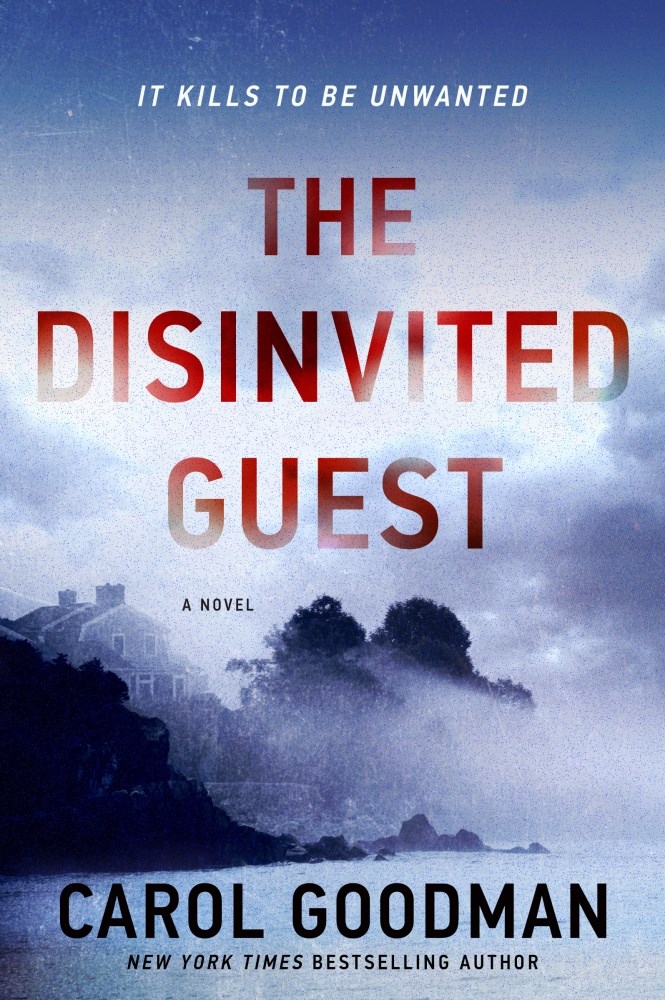
I’ve been a huge fan of Carol Goodman’s since my first dip into her canon, The Sea of Lost Girls. I have since been dipping back into at times as a reward to myself; she’s easily moved into my top ten list of current writers and won’t be dislodged anytime soon. She’s won numerous awards–deservedly–and is, to me at least, the modern incarnation of the great Mary Stewart. Goodman’s novels are decidedly Gothic and extremely smart and literate, with strong characters that are sharply defined and well rounded that the reader can easily identify with as well as like or dislike.

The premise of The Disinvited Guest is that another pandemic has descended upon the world after the 2020 COVID-19 one. Wealthy Reed Harper has decided to quarantine on an island his family owns–Fever Island, off the coast of Maine and near the mouth of the St. Lawrence River–since his wife Lucy has residual health problems since the first pandemic. Invited along are his lesbian sister Liz, a painter; Nico, Liz’ partner, a photographer; Ada, an old college friend of both Reed and Lucy who works now as an ER nurse; and her husband, also a medical professional in hospital administration, Crosby–who’s a bit of a dick. The remaining character is Mac, whose mother was a housekeeper for the Harper family working on the island. Mac knew Reed and Liz as children, and now he lives on the island as a caretaker. Reed, who also suffers from OCD, has carefully planned out every last aspect of this quarantine adventure–and while the quarantine and safety is the primary issue at stake here, any reader of crime or suspense knows that having seven people living together on a remote, isolated island is the perfect set-up for personality clashes and battles and intrigues and, of course, for murder. How many horror films or murder mysteries are set in such locales? (Goodman of course is wise enough to make an Agatha Christie/And Then There Were None reference in the text; the geographic elements of the island–the Dead Pool, the bog, Dead Man’s Cove, etc.–also sound like something out of the Hardy Boys, and she acknowledges that several times as well.)

There’s also some excellent backstory. Fever Island is named this because during the Irish immigration period of the late 1840’s–the potato famine and typhus epidemic–the ships with ill passengers were sent to Fever Island to quarantine before being admitted into Canada. A makeshift hospital is set up on the island, nuns come out to operate it along with several doctors–including a Harper ancestor–and so there is also a makeshift cemetery on the island. There’s also another legend, going back even further than the quarantine days; the earliest settlers believed a woman was a witch and essentially buried her alive on the island. The story claims she placed a curse on the island and summoned the devil. This is enough of a horrible backstory to make easily the possibility of supernatural forces at work on the island completely believable, which only adds to the suspense. There’s also the backstory of Reed and Liz’s own experiences spending their summers on the island with their horrible father and alcoholic mother; Reed’s dead former girlfriend, who died on the island during the first pandemic, along with his parents; and of course the diary of Dr. Nathaniel Reed Harper, who details life on the quarantine island and the growing suspicion amongst the superstitious fever victims and a group of sailors stranded their by a shipwreck that the witch’s curse is haunting them and that maybe even one of their party has been possessed by the witch and has summoned the devil.

Ada and Lucy were best friends and roommates in college, with Reed as the third side of their triangle. Lucy has also written one well-received novel, but hasn’t written anything since…and her discovery of the diary begins to inspire her to write about the island. Goodman is quite excellent at weaving the multiple storylines and multiple time-lines–Lucy is flashing back to the original pandemic, which is what brought her and Reed together as a couple; the incidents from the 1840’s as revealed in Dr. Harper’s journal; and of course, what happened on the island during the original pandemic.

Strange things start happening once they are all safely ensconced on Fever Island, and of course there are the inevitable personality clashes, which amp up the tension and then, of course, the deaths begin. At first Lucy can’t help but wonder if the island is indeed cursed–but slowly begins to realize that there is a very clever murderer on the island pursuing a definite agenda, but who?

And I love how Goodman chose to deal with the COVID-19 pandemic. Rather than setting the book during that shutdown, she instead chose to write about a future quarantine/shutdown, with the COVID-19 one in the distant past (ten years or so) but having a lot of impact on what is happening in the present.

I loved every minute and every word of The Disinvited Guest, and I cannot recommend it highly enough.

Peacekeeper

It is a cold Monday morning in the Lost Apartment and our heater is out again–every year it seems, the moment it gets cold it goes on the fritz the very first time we try to use it, so out came the space heater and I may need a second, just in case–but that’s fine. I sleep best when it’s cold, so last night’s sleep was quite nice. I also woke up at five again this morning, yay, but stayed in bed for another few hours. I probably should have just gone ahead and gotten up–it’s not like I don’t have things to do, you know–but again, cold and the pile of blankets was marvelously warm and comfortable. And now, sitting here at my desk in my sweats with a ski cap on and the space heater blowing warm air on me…I don’t even want to get up out of this warm space.

Sigh.

Paul and I had lunch with friends from out of town yesterday at Lula, the lovely restaurant on St. Charles just a couple of blocks from our house. I didn’t wear a jacket, although it was chilly, but it was nice. I always enjoy these sorts of things, but it’s always hard to get a Greg at rest into motion, you know? I’m not entirely sure why that is, but it just is, and I’ve learned to live with it. I have errands to run tonight when I get off work–prescriptions, mail, groceries–which will be wonderful in the cold, of course; it’s forty-five outside right now with a high predicted to be sixty-five; hardly the dead of winter everyone else is used to, but it is a bit on the extreme side for us here in New Orleans. I got some excellent work done on the book this weekend, which is always lovely when you shut off contact from the outside world for a few days to close off distractions so you can focus. I am still behind, of course, but I am hopeful I can get back on track by the end of this coming weekend.

We finished watching Young Royals last night–it doesn’t have very long seasons, six episodes or so–and I enjoyed it. (Although, as I pointed out several times, being a royal is a symbolic thing and not really necessary for Sweden anymore; it’s funny how these countries hang on to their pasts and traditions, no matter how archaic they may be; scratch a Brit and find a royalist) We also started watching a new supernatural show called The Bastard Son and The Devil Himself, which is actually quite good and we found ourselves enjoying it tremendously. The young male lead is also in Titans, playing a character whose name I cannot recall but I do remember from the comics as being the third Robin. It’s interesting and very well done and the fantasy/supernatural world it builds–two warring clans of witches–is also done pretty well.

It’s also hard to think that at this time next Monday I’ll be on the road, driving to Kentucky and listening to Carol Goodman. I already downloaded a book to my phone, but I don’t remember which one–but it doesn’t matter because they are always excellent. I’ve yet to read a Goodman that wasn’t, frankly, and I think she is definitely one of our finest suspense novelists of this time. Like Mary Stewart, her books are very literate and incredibly smart; they are also incredibly good reads with strongly developed characters and interesting, engaging plots that you can’t step away from–which is truly the mark of a terrific writer. I may listen to another on the way back, too. I am so glad I discovered audio books…it really makes a difference on long drives. Sure, my mind wanders from time to time, but I am always pulled back into the narrative quite easily.

I do feel a little disappointed with myself for not getting more done over the weekend. I really do need to do a deep clean before i leave so I don’t come home to a dirty apartment but the question is, when will I have the time to do it? I I am exhausted every day when I get home from work–but that’s the thing, isn’t it? I need to resist the urge–and the cat howling–to just sit down for a minute to relax because inevitably I wind up stuck there, feeling exhausted and depleted, and nothing gets done. This, of course, leads to self-flagellation as well: why did you blow off the entire evening? Imagine how much MORE relaxed you’d feel if you’d done the dishes or gotten the laundry sorted or picked up some of this mess…

I am a harsh taskmaster for myself, apparently.

And on that note, I am heading into the spice mines. Have a lovely Monday, Constant Reader, and I will talk to you later.