Walking on Broken Glass

Sometimes I try to remember the first time I saw or heard or watched or read something, anything, that made me feel less weird, less like an outsider…often to no avail. I can never remember if it was That Certain Summer (a very SPECIAL ABC Movie of the Week), or reading Larry McMurtry’s The Last Picture Show, or discovering The Front Runner on the paperback racks at the News Depot on Commercial Street in Emporia; and then I will remember something else, some vague memory of something–hints about Richard the Lion-Hearted in Norah Lofts’ The Lute Player, or subtle hints here and there throughout history (Edward II and Piers Gaveston; Louis XIV’s brother Phillippe Duc D’Orleans; James I and Robert Carr; Achilles and Patroclus)…Mary Renault’s Alexander the Great series…I can never remember precisely the first time I was exposed to who and what I am in popular culture, nor can I remember if it was positive or negative. I do know that in my own life, it was made very clear to me when I was very young that what I am was not normal, was unacceptable, wasn’t what I was supposed to be. My earliest memories are of me not being like other boys, and it took me a while to realize that the others were just playing at being boys (something I was never very good at) and were actually like that; that they weren’t, underneath, just like me, just better at pretending than I was.

This is why we have emphasized, as a community, the importance of representation in popular culture; kids needs to see themselves reflected in the culture they consume so they don’t feel like they don’t belong. Queer kids aren’t raised queer; we don’t learn how to be queer by interacting with our peers (who are mostly straight when we are kids), nor do we learn anything about being queer while we are inside the educational system in this country. I’ve always firmly believed that queers take longer–at least in the olden days–to form lasting romantic relationships because we don’t have “trial runs” when we are kids; we don’t get to date, we don’t get to “go steady”, etc. We don’t get to play House with other kids of the same gender, we don’t learn societal and cultural expectations about relationships and how they work when we are actually kids. Our queer adolescence doesn’t actually start until we come out–admit it to ourselves without shame, and then start telling our family and our friends and our co-workers that we aren’t wired the same way they are. It’s very tricky, and very complicated and sometimes very messy.

Representation absolutely matters.

And we cling to that representation when it shows up. When a prime time show like SOAP introduces the first long-running gay character to the world in Jody Dallas (does anyone even remember this was Billy Crystal’s big break, playing gay on a sitcom in the 1970’s/early 80’s?), we watch–even if the depiction is problematic to the extreme (you also learn very early that your hunger for representation will also force you to turn a blind eye to some things). Steven Carrington on Dynasty, the terrible film Making Love from the early 1980’s, as well as some other problematic depictions and films along the way–we took what we got, and always had to remember that these characters and stories also had to be palatable to straight people…that, in fact, these characters and stories were created with straight people in mind.

As they used to say, “but will it play in Peoria?”

As i stare down sixty this month, I am very happy to see that representation becoming common-place. It’s lovely to see gay books–THRILLERS, even–being published by major presses with queer characters in them. It’s lovely seeing straight writers including sensitive depictions of queer characters and their stories in their books.

And over the year, yes, problematic tropes that can make you very, very tired have also developed–which makes me wary every time I approach a book by a non-queer person that takes on a trope without hesitation, as S. A. Cosby’s Razorblade Tears does, and that trope is one of the biggest and most hated by the queer community: bury your gays.
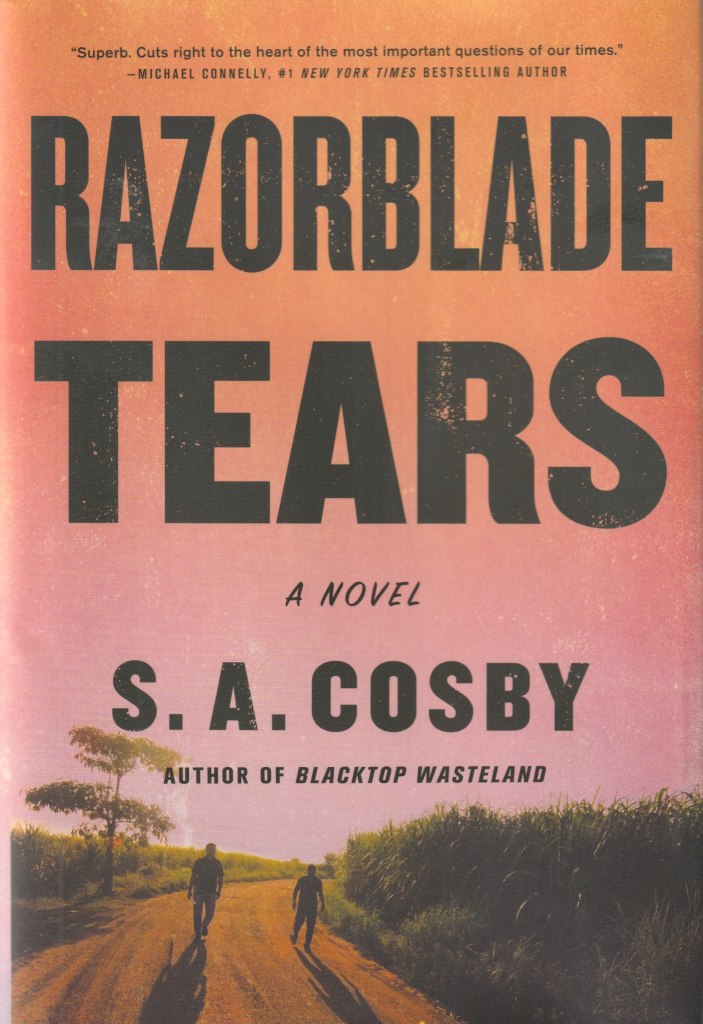
Ike tried to remember a time when men with badges coming to his door early in the morning brought anything other than heartache and misery, but try as he might, nothing came to mind.

The two men stood side by side on the small concrete landing of his front step with their hands on their belts near their badges and guns. The morning sun made the badges glimmer like gold nuggets. The two cops were a study in contrast. One was a tall but wiry Asian man. He was all sharp angles and hard edges. The other, a florid-faces white man, was built like a powerlifter with a massive head sitting atop a wide neck. They both wore white dress shirts with clip-on ties. The powerlifter had sweat stains spreading down from his armpits that vaguely resembled maps of England and Ireland respectively.

Ike’s queasy stomach began to do somersaults. He was fifteen years removed from Coldwater State Penitentiary. He has bucked the recidivism statistics ever since he’d walked out of that festering wound. Not so much as a speeding ticket in all those years. Yet here he was with his tongue dry and the back of his throat burning as the two cops stared down at him. It was bad enough being a Black man in the goo ol US of A and talking to the cops. You always felt like you were on the edge of some imaginary precipice during any interaction with an officer of the law. If you were an ex-con, it felt like the precipice was covered in bacon grease.

“Yes?” Ike said.

My faulty memory doesn’t remember how and when I first became aware of S. A. Cosby. What I do remember is that I bought and read one of his earlier works (perhaps his debut?) My Darkest Prayer, and enjoyed it thoroughly. Hard-boiled with a healthy dose of noir, I had a great time reading it–and was thrilled when his Blacktop Wasteland debuted to raves and attention and lots of recognition. Cosby can write like a house afire; and while he keeps up a rat-a-tat pace of story, he also manages to construct sentences and paragraphs beautifully, with a poet’s gift for language–spare and tight, yet poetic and beautiful at the same time (Megan Abbott is the Galactic Empress of this).

So, when I heard the “elevator pitch” for Razorblade Tears, I inwardly winced a bit, even as I had to admit Shawn’s guts; taking on bury your gays is a ballsy move–and also a bit of a dangerous one. If you don’t stick the landing…you’re fucked.

For those of you who don’t know what bury your gays means, it’s very simple: a show, or a book, or a movie, will introduce gay characters (lesbians, queers, whatever initial in the all encompassing umbrella those characters might choose for their identity), get the audience (and especially the queer viewers) deeply vested in them–and then kill them off suddenly and unexpectedly, all so the other queer characters (but usually the straight ones) will experience some kind of personal growth…in other words, you introduce a gay man into your narrative simply to later use him as a plot device, so the other characters can mourn and experience personal growth.

That’s probably explained badly, but you get the gist: gays will inevitably die. A good example of this is the so-called groundbreaking AIDS movie, Philadelphia–but the Tom Hanks character in that movie existed so that Denzel Washington’s character could grow and develop and move on from his own homophobic beliefs and fears about HIV/AIDS; as Sarah Schulman, one of our community’s finest minds, once said, “the entire point of Philadelphia is to make straight people feel better about HIV/AIDS and the gay men dying from it.” (Sections of her book Stagestruck: Theatre, AIDS, and the Marketing of Gay America are absolutely brilliant; it should be required reading for any Queer Studies course.)

The plot of Razorblade Tears is so deeply steeped in “bury your gays” that the gays are already dead when the book opens. The gays in question–Derek and Isiah–were brutally murdered, and the police don’t seem to care too much about looking into who killed them. Their homophobic fathers–both ex-cons–decide to look for their son’s killers. Both Ike and Bobby Lee feel a lot of guilt about their sons and how they rejected them both–their relationship, their eventual marriage, their child–while they were alive; finding their killers isn’t just about revenge but also a matter of atonement. In some ways, it’s like this book is borne from the anger every queer child rejected by their parents feels–you’ll be sorry when I’m dead.*

Ike and Bobby Lee are, indeed, sorry now that their sons are dead.

This also falls into another long-existent fictional trope: don’t fuck with a father. How many films (I’m looking at you, Liam Neeson), books or television shows are about a father’s rage, a father’s revenge, what a father will do to save or avenge their children?

Ike and Buddy Lee aren’t supermen, though. Cosby’s strength (besides his ability with words and images) is how well he creates characters and makes them human through their faults and frailties. Ike and Buddy Lee don’t much like each other as the story begins to move along–I kept thinking of the old Sidney Poitier/Tony Curtis movie, The Defiant Ones–but their ability to look past their own internal prejudices to see the commonalities between them as they unite in this foolhardy crusade to avenge their murdered sons is the real strength of the book here. (As well as the language.) You eventually start to understand them, care about them, want them to get their vengeance…even as you know it will bring them no peace.

I have to admit, I was hesitant to start reading this. I really was concerned I wasn’t going to be able to read it with the empathy necessary for Ike and Buddy Lee and their suffering–that I would think, yeah, well, maybe you should have thought about that when he was alive–but the book ultimately isn’t about their redemption, either; which is a genius move by Cosby. He makes their pain all too real–I cannot imagine the pain any parent should feel when their child dies–but he makes it clear there’s no easy answers here for Ike and Buddy Lee, and that pain will go on even if they get justice for their sons.

Shawn is also a master of writing about the Southern working class–about the poverty, the lack of opportunity, the societal neglect and how those factors all combine to keep those already mired in it trapped with little chance of escape; he clearly loves the rural South but not so much that he can’t expose the tragedy and ugliness that exists there.

It’s a powerful book, and I do recommend it….although the people who probably should read it inevitably won’t. I can recommend it, and do, enthusiastically; it’s a very powerful book, and it made me think–and what more can you want from art?

*sadly, I have seen all too often that a lot of those parents aren’t sorry when their rejected child dies; far too regularly they will say something along the lines of “So-and-so died for me years ago.”
Between Two Islands

One of the best parts of the Reread Project is reminding myself how much I truly love and appreciate certain writers.

Mary Stewart is certainly at the top of that list.

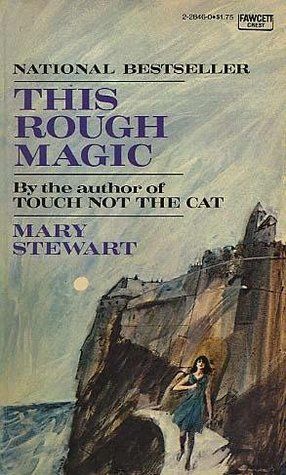
As I’ve mentioned before, I read most of Mary Stewart’s so-called “romantic suspense” novels when I was a teenager or in my early twenties, my favorites being The Ivy Tree and Airs Above the Ground.  Unfortunately, the mists of time and my faulty memory have robbed me of just how good the other books she wrote were; I recently reread The Moon-spinners and loved it more than I remembered loving it the first time; likewise, I started rereading This Rough Magic this week (finishing yesterday) and it, like The Moon-spinners, is fucking brilliant; far better than I remembered it being–and frankly, far better than it had any right being (says the incredibly jealous author).

Like most of Stewart’s novels, the book is set somewhere other than England–this one is Corfu, just off the coasts of Greece and Albania. (The Moon-spinners was set on Crete, and My Brother Michael was also set in Greece.) I’ve always wanted to visit Greece; it’s on my bucket list with Egypt, France, Germany and England. I loved Greek mythology and history when I was a kid, and of course I absolutely loved Mary Renault’s novels about ancient Greece. Lately I’ve become more and more interested in the history of the Eastern Roman Empire; aka the Byzantine empire, as well. Paul also would love to return to Greece–he spent a summer there as a teenager as an exchange student.

Stewart is often described, and counted amongst, romantic suspense novelists of the mid to late twentieth century, primarily because she was a female writing suspense novels about women in a time period where publishing didn’t know how to market women-driven suspense novels written by women. While there are slight elements of romance included in her novels, it’s often an afterthought, and rarely actually drives the plot–it’s more like a little lagniappe; something extra tossed in to appease editors and readers that she really had no interest in exploring. At first, you think, wow, her characters kind of fall in love awfully quickly with total strangers–and then you realize, oh, of course they did–women weren’t really allowed to be sexual beings in those days so it had to be masked as falling in love plus the “romance” elements were easily explained by the “trench warfare mentality”–in which soldiers become bonded to the guys they are serving with because they are responsible for each other’s lives; it’s not a stretch to see a romantic attachment grow between two people who are in a tough, difficult situation in which they could easily both wind up dead.

35bf4dd563c369f8ea00531721b47a74

“And if it’s a boy,” said Phyllida cheerfully, “we’ll call him Prospero.”

I laughed. “Poor little chap, why on earth? Oh, of course…Has someone been telling you that Corfu was Shakespeare’s magic island for The Tempest?

“As a matter of face, yes, the other day, but for goodness’ sake don’t ask me about it now. Whatever you may be used to, I draw the line at Shakespeare for breakfast.” My sister yawned, stretched out a foot into the sunshine at the edge of the terrace, and admired the expensive beach sandal on it. “I didn’t mean that, anyway, I only meant that we’ve already got a Miranda here, and a Spiro, which may not be short for Prospero, but sounds very much like it.”

“Oh? It sounds highly romantic. Who are they?”

“A local boy and girl: they’re twins.”

Lucy Waring, a twenty-five year old British aspiring actress, finds herself on the island of Corfu visiting her very pregnant sister who married very well–to a wealthy Italian banker whose family owns an enormous property on Corfu, which includes an enormous castle-style main structure and two guest villas some distance away, all gathered together on the shoreline of a small, private bay. Lucy’s big break has just come and went in a play that closed after only two months, so she has gratefully accepted her sister Phyllida’s invitation to come stay for a while with her on Corfu. There’s a photographer staying in the other villa; the main castle is being rented to a retired British actor, Sir Julian Gale, best known for his performances in Shakespeare (The Tempest in particular) and his son Max, a composer–and trespassers are forbidden and frowned upon. That very first day Lucy decides to go down to the beach and sunbathe, and while she is down there she makes the acquaintance of a friendly dolphin, much to her delight–and the suspense begins when someone starts shooting, with a silenced gun, at the dolphin. She assumes the shots are coming from the castle, so she goes storming up there, and soon becomes entangled in the affairs of Sir Julian and his son Max.

Stewart’s mastery as a story-teller is so complete that she doesn’t waste a word or a scene; her economy of writing is astonishingly complex and clever. For example, that opening sequence, quoted above, seems like simply a lovely back-and-forth introduction to Lucy and her sister while establishing their affectionate closeness; but Stewart uses that dialogue to tell the readers things that are going to be important to the novel: they are on Corfu, references to The Tempest are scattered throughout the book and are incredibly important, not just to the story but for the atmosphere (Stewart was an incredibly literate writer; references to classic literature are scattered throughout her works, be it Shakespeare or Greek mythology or Tennyson, etc.), and even the throwaway line about the twins, Spiro and Miranda, isn’t a throwaway–the two are very important to the story.

And Lucy Waring is no shrinking violet, either–none of Stewart’s heroines are. Lucy courageously thinks nothing of putting herself in danger in order to help catch a monstrous, sociopathic killer:

He must have felt me watching him, for he flicked me a glance, and smiled, and I found myself smiling back quite spontaneously, and quite without guile. In spite of myself, in spire of Max, and Spiro’s story, I could not believe it. The thing was, as I had said to Max, impossible in daylight.

Which was just as well. If I was to spend the next few hours with him, I would have to shut my mind to all that I had learned, to blot out the scene in the cellar, drop Spiro out of existence as if he were indeed dead. And, harder than all, drop Max. There was a curiously strong and secret pleasure, I had found, of speaking of him as “Mr. Gale” in the off-hand tones that Godfrey and Phyllida commonly used, as one might of a stranger to whom one is under an obligation, but whom one hardly considers enough to like or dislike.

There’s also a few amazing chapters in which Lucy, having found the definitive evidence to convict the killer, is trapped with nowhere to go on his sailboat when he returns–she hides, but is spotted, and then reveals herself and in an astonishing display of bravado tries to play the entire thing off, but winds up going overboard herself and trying to make it to shore–only to be helped by the very dolphin she herself had helped rescue earlier in the book.

As I said, nothing happens or is done in a Stewart book that doesn’t have significance or come into play later.

I cannot tell you how much I loved rereading this book, and while I’d love to dive into another Stewart reread, I’m probably going to do another Phyllis Whitney–oh, and I buried the lede! I read the entire thing as an ebook on my iPad–so I have finally broken through that final barrier to reading books electronically, and may never pack a book to take with me when I travel again as long as I live!

Who says you can’t teach an old queen new tricks?

How Do You Talk To An Angel

I’ve always loved Greek mythology.  Reading Greek myths is one of my earliest childhood reading memories (others include Scholastic book catalogues, The Children’s Bible, World Book Encyclopedia, etc.); and I have mentioned before that I would love to write a novel of the Trojan War. Mark Merlis’ brilliant An Arrow’s Flight is one of my favorite gay novels of all time. I also loved Mary Renault’s novels based on Greek myths (The King Must Die, The Bull from the Sea) as much as I loved the ones based on Greek history. And of course, I love love LOVE Rick Riordan’s Percy Jackson series and the sequel series, The Lost Hero.

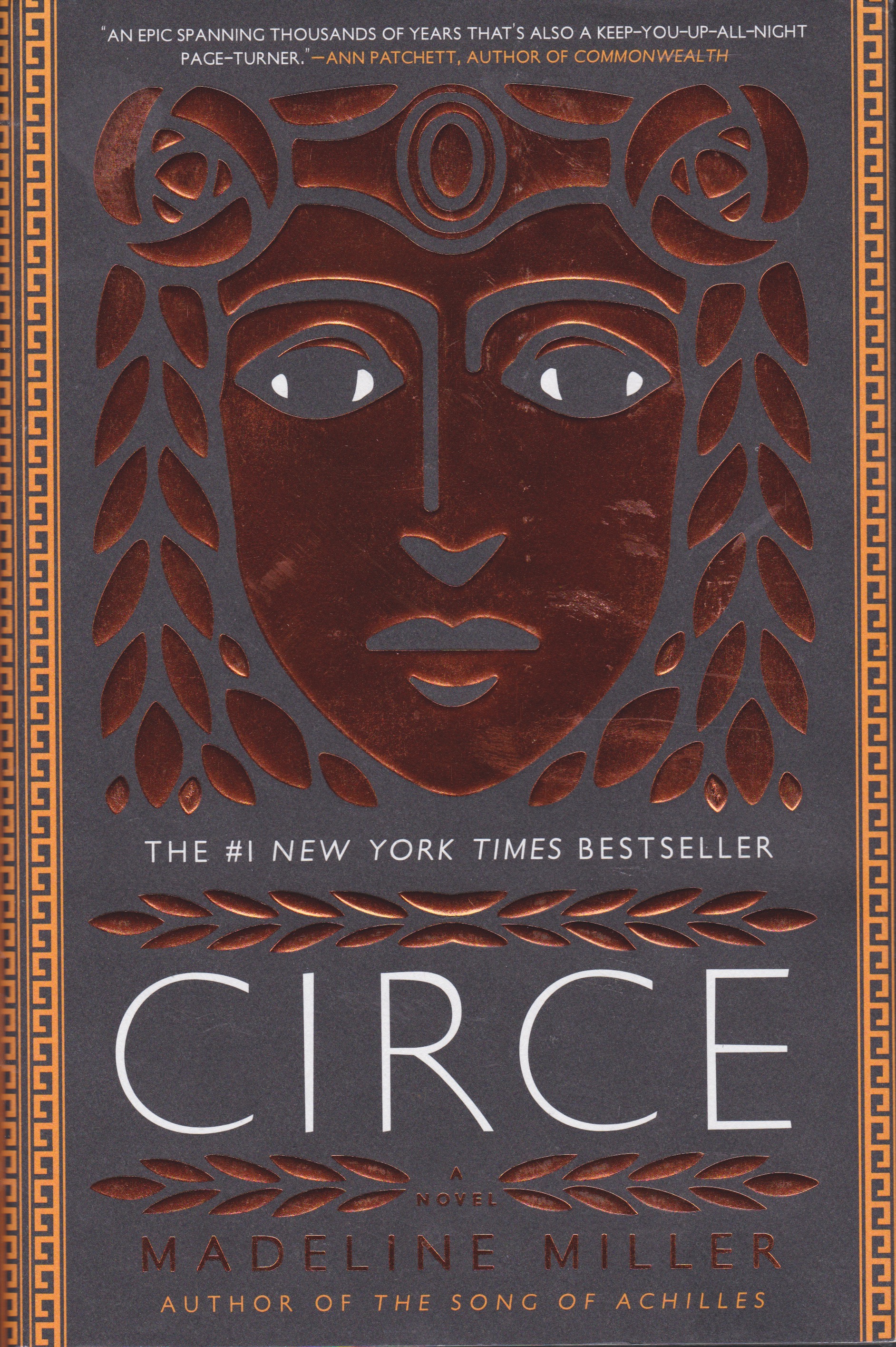
But Madeline Miller’s Circe…it’s just amazing. Absolutely amazing.

circe

When I was born, the name for what I was did not exist. They called me nymph, assuming I would be like my mother and aunts and thousand cousins. Least of the lesser goddesses, our powers were so modest they could scarcely ensure our eternities. We spoke to fish and nurtured flowers, coaxed drops from the clouds or salt from the waves. That word, nymph, paced out the length and breadth of our futures. In our language, it means not just goddess, but bride.

My mother was one of them, a naiad, guardian of fountains and streams. She caught my father’s eye when he came to visit the halls of her own father, Oceanos. Helios and Oceanos were often at each other’s tables in those days. They were cousins, and equal in age, though they did not look it. My father glowed bright as just-forged bronze, while Oceanos has been born with rheumy eyes and a white beard to his lap. Yet they were both Titans, and preferred each other’s company to those new-squeaking gods upon Olympus who had not seen the making of the world.

Oceanos’ palace was a great wonder, set deep in the earth’s rock. Its high-arched halls were gilded, the stone floors smoothed by centuries of divine feet. Through every room ran the faint sound of Oceanos’ river, source of the world’s fresh waters, so dark you could not tell where it ended and the rock-bed began. On its banks grew grass and soft gray flowers, and also the unencumbered children of Oceanos, naiads and nymphs and river-gods. Otter-sleek, laughing, their faces bright against the dusky air, they passed golden goblets among themselves and wrestled, playing games of love. In their midst, outshining all that lily beauty, sat my mother.

The one upside to being sick is it gave me the chance to finish reading Circe. 

It’s…incredible, marvelous, a joy to read and truly exceptional.

It is just as good as The Song of Achilles, her first novel, as beautifully written and lovingly told, and like Achilles, the end of Circe also made me weepy.

Miller, who holds both a BA and MA in Classics from Brown, writes absolutely beautifully. Like Renault, she is able to capture the magical music of words, so that the prose reads like a poem, a song, something the bards would sing around the fire in the houses in Athens, Sparta, Corinth or Thebes. Like Circe herself, Miller weaves a magical spell over her readers, draws them into this stunningly beautiful world where gods sometimes appear to mortals and intervene in their lives.

An unliked, ignored daughter of the sun god, shunned by her fellow nymphs and siblings, Circe grows up an outsider. She doesn’t have the voice of an immortal; the others complain about her screeching voice–it isn’t until much later that she discovers that she actually has the voice of a mortal, which is why the gods cannot abide it. She soon discovers power in plants and in words; she falls in love with a mortal and uses her knowledge to turn him into a god. But once she does this, he spurns her for another nymph, and she goes out in search of more powerful plants, ones that were grown out of the blood of a dead titan. She then transforms her rival into the monstrous beast Scylla, and is punished by being put in exile on the island of Aiaia, where she lives alone and becomes even more powerful by practicing her witchcraft.

She is present when her sister Pasiphae gives birth to the Minotaur; she knows Daedalus and his son, Icarus. Jason and her niece Medea stop on her island for her help in escaping her brother, Medea’s father. Odysseus and his men eventually arrive, and Circe’s life and destiny are changed forever. I won’t go any further than that, for fear of spoiling the story.

Circe is a story about finding strength in yourself when you are despised; of learning to trust in your own strength and power, and that even the most despised is worthy of strength and character and, most of all, love.

It’s beautiful and powerful and moving.

I cannot wait for Madeline Miller’s next book. I do hope she writes about Medea next.

Tell Me What You Want Me To Do

Somehow another week has gone past and it’s Friday already. I am halfway through the second draft revision of Chapter Two (still early enough that I am counting baby steps as milestones), which pleases me enormously. It’s not been difficult so far; it’s actually been a rather pleasant surprise to see oh, that actually works and I don’t need to revise/alter/rewrite that, although I am sure that will start coming soon.

Nothing gold can stay.

Or something.

I’m excited about going to the LSU game tomorrow, and as this week of work comes to a close, I am hoping to get a lot of chores done tonight because putting them off is simply not an option since we will be driving up to Baton Rouge tomorrow in the late afternoon, and I will undoubtedly be completely exhausted when we get home from the game. It’s going to be hot, for one thing, in the stadium, plus all that nervous energy and jumping up and down and screaming? Yeah, I’ll be very drained and tired when we finally roll into the Lost Apartment after the game tomorrow night, and will undoubtedly sleep the sleep of the dead Saturday night.

It is still ridiculously hot; the heat and humidity did not break after Labor Day as it so generally does, but the evenings are getting cooler. This is quite lovely as I generally get home from work after dark and it’s nice to not sweat to death while walking from the car to the door of the house. So glad global warming is a liberal conspiracy…I suspect we may not even get winter this year–not that I mind, of course, but still.

Ozark continues to enthrall. We are limiting ourselves to a single episode per night to make it last longer since we’re enjoying it so much, but man, is this second season dark. I thought the first was, but wow. And seeing how the characters are developing and changing is astonishing. The cast is knocking it out of the park, and everything is coming to a boil…there are only three episodes left before we have finished season two, and I can only imagine what hell is going to break loose in that season finale.

I am also hoping to spend some time finishing Circe this weekend. Like Ozark, I’m taking it slow and relishing every word, every sentence. Madeline Miller is such a brilliant writer, and she reminds me some of Mary Renault, whom I should revisit at some time as an adult (I read most of her work when I was a teenager; I am certain I will enjoy it more now); The Last of the Wine is definitely worth a revisit.

I was thinking the other day (well, last night as I washed the dishes) that I should do a definitive (or somewhat definitive) study of gay representation in work written by non-gay writers; it’s one of the reasons I am still holding onto unread copies of A Little Life and City on Fire. Part of my book-hoarding tendencies come from this notion that someday I will write literary criticism; which is why I hold on to my romantic suspense novels from the 60’s and 70’s, for example. I’m getting a little better about that; donating the hard copies once the ebook goes on sale for ridiculously cheap–it’s also part of the same mentality of someday I’ll be able to support myself again as a full-time writer.

Dreams. Never let go of the dreams. I imagine I’ll still be dreaming as they push my dead body into the crematorium.

And now, back to the spice mines.

IMG_2445