Oddly enough, the second Chanse was the fourth novel I published, and therein lies a tale.
Funny how with these earlier books there’s always a story, isn’t it?
So, I sold Murder in the Rue Dauphine to Alyson in September of 1999–but the pub date wasn’t until February 2002. I saw no point in writing a sequel to the book immediately; primarily because there was a nearly two and a half year wait between signing the contract and when they were able to schedule me in. So, I figured I had about a year and a half before I needed to get it finished (everyone told me it would be released a year after the first, and in all honesty, what was the point of writing two or three books while waiting for the first to come out so the others could be scheduled?), and so, with time to spare and a lengthy period of time to “waste”, I decided to start thinking about the “what ifs”–what if the book sells super-well and is popular? What if this isn’t just a one-off standalone and could be turned into a series? The more I thought about it, the more I liked the idea and I liked letting my mind roam.
So, what would I do if the series took off and I needed to write more?
Being creative and full of energy in my late thirties, and thrilled to death that now I wouldn’t die without having published a novel, I reread the manuscript and my analysis of who Chanse was and why he was who he was, and I started mapping out a personal journey for him, that lasted several books. He was a cynical loner, with a couple of friends, and he was still really not adjusted to being gay when the first book opens. He was estranged from his immediate family of younger sister and brother and his parents; he never returned to Cottonwood Wells after leaving for LSU. He’s ashamed of his family but he also knows they will never accept his sexuality, either, so it’s very easy for him to cut them off almost entirely. So, his journey was going to be like that of the main characters of the show Moonlighting; each case would teach himself something about life and himself, and he would grow from the lesson learned in each book. Each book going forward would have a life lesson for him (Rue Dauphine did as well; the lesson was ‘you can’t just trust someone automatically because they’re queer.’); and the one he’d learn in the second book would be about love and trust (the third would be about sacrifice, the fourth would deal with his family, the fifth would have him fall in love with someone else, the sixth would deal with him dealing with losing his best friend to her husband and realizing he does need other people, and the seventh, the swan song for the story, would find him ready to finally commit to someone and live with them, so the series would be seven books long).
Shortly after I sold the first book, I again learned that lesson myself–the case in the first book was inspired by a gay con artist who’d gotten involved with a non-profit here in the city and then blew out of town overnight, having stolen/embezzled a shit ton of money and leaving a pile of debts behind. I had written to a local color magazine for the gay community (I can’t remember the name!) about writing for them. I wrote something for them, and they hired me to be editor of the magazine, as the business was expanding and it would free up the founder to focus on the new directions while I ran the magazine. It was fun, I got to work with a lot of fun new friends, and…then it all blew up in our faces. It was very similar to the earlier situation–a gay con artist blows into town, makes a lot of promises, runs up a lot of debt and then it just blew up completely. Turns out the guy was a con artist with a record of credit card fraud, and he was on the FBI watchlist so yes, I did get interviewed several times by the local office of the FBI.
The second book, which had the working title Murder in the Rue Royal, was based on that story, but I had already been playing around with a stalker storyline, and then I realized how I could cross the two stories into one seamlessly and write the book. I managed to get another first draft finished when a two-book deal to write the Scotty series for Kensington and Alyson dropped the option for the second book, saying “two mystery series with a gay main character in the same city by the same author are too similar to each other”–which I took as a challenge to make Bourbon Street Blues and Scotty as different as I possibly could to prove them wrong. So, the manuscript went into a drawer and I started happily working on Scotty instead…and again, it was a stand-alone that morphed into a series.
This was the Insightoutbooks edition cover of Murder in the Rue St. AnnThis is the new cover the book got when Bild Strokes Books republished the book as an ebook.
I took a streetcar named St. Charles down to Canal, crossed the street and walked down to Royal.
It was eleven o’clock in the morning on one of those splendidly sunny September days that makes you glad to be alive. Taking the streetcar had been a good idea. The long heat of summer had broken, and the air was crisp and in the mid-seventies. The sky was that blue unique to New Orleans, with wispy white clouds scattered across its expanse. There was just a hint of cool moisture in the air. There were a lot of people milling around the sidewalks on Canal— a good sign for the tourist season. Canal used to be the main shopping drag of the city, with huge department stores like Maison Blanche and D. H. Holmes. Those were long gone. They had either gone out of business or fled to the suburbs— now it was mostly hotels, fast food, and Foot Lockers.
There were hopes that putting the Canal streetcar line back in place would stimulate a recovery for the street. So far, all the construction work had simply made the Quarter difficult to get to from uptown. Add to that the chore of trying to find a place to park that would get me a ticket in two hours or cost ten dollars, and I was kind of glad I was having car trouble—the streetcar down and a cab home was very simple.
Not that riding the streetcar didn’t bring its own set of aggravations. If the cars ran on any fixed schedule, I’d never been able to figure it out. You could wait for one for half an hour and then three in a row, all packed to the gills, would show up. The streetcar ostensibly operated as public transportation, but was also a de rigeur tourist attraction. There was no way of telling when you’d be able to catch one with a place to sit. But when you did, it was nice to find a window seat on a sunny day and enjoy the city clacking by.
So, when Alyson chose to drop the Chanse series after I signed with Kensington, Murder in the Rue Royal went back into a drawer, which was fine–it wasn’t a good book–and I moved on with my life. The advance for signing with Kensington paid for our move back to New Orleans from Washington, and moving back here was absolutely worth ending the Chanse series for, seriously. I still didn’t have an agent, but I’d been signed to book contracts by two publishers already, and I figured it might be easier now. We accomplished the move, get our new apartment set up on Sophie B. Wright Place, and started putting our lives back together. I don’t remember the timeline of how it came to be, but I was still working with Alyson on my first and second erotic anthologies (Full Body Contact and FRATSEX), so I was aware when my editor left and a new person, that I knew slightly, moved from assistant editor to senior editor. We were talking on the phone one day about Full Body Contact and she casually mentioned, “I don’t see your second Chanse book here on the schedule, what’s going on?” and I told her the story, “Oh for fuck’s sake, when can you get it done by?” and that became the second contract for Chanse.
So, after finished Jackson Square Jazz and turning it in, I broke out Murder in the Rue Royal (the title had already been changed on the contract to Murder in the Rue St. Ann; my new editor didn’t like the alliteration) from the drawer, blew the dust off it, and reread the manuscript. I looked at my timeline for the series, and saw that this was the one where he was supposed to fuck up his relationship, but I didn’t see it in the manuscript. I reread the first book, thought long and hard about Chanse and who he was at this point in his life and after several long days of musing it hit me, between the eyes: jealousy. Jealousy would be what fucks up his relationship, and it only made more sense to me that Chanse would be the jealous one. Paul had a loving, accepting family and was more secure in and of himself as a gay man and what he wanted out of life. Paul was considering becoming ground-based at the New Orleans airport so he could settle down and have more of a life with Chanse, which also has Chanse very alarmed and makes the jealousy even more intense….so what would be the thing that would set Chanse’s jealousy off? Something from Paul’s past that Chanse didn’t know but finds out about in the worst possible way?
I had had some issues, believe it or not, with stalkers over the years. I had always wanted to write about a stalker, so what if Paul had a stalker? Why would Paul have a stalker? And then it occurred to me that Paul had a past he wasn’t ashamed of, but had never mentioned to Chanse. Not out of a fear that Chanse wouldn’t understand, but mainly because he had no need to tell him because it wasn’t anything dark. He had done some nude modeling when he was younger and he had also done some soft-core wrestling fetish porn, which is where the stalker came from. And what if I could work the con man he’s been hired by was someone Paul knew from the soft-core fetish porn? What if the guy contacted Paul because he’d been getting threatening notes on top of everything else going on in his life? And what if Chanse ran into Paul when he was leaving the con man’s offices, which brings all this out about Paul’s past? What if it shook a jealous, possessive, insecure Chanse enough for them to fight about it? And what if Paul disappears after the con man is murdered?
That was something I could work with, and so I did.
I’ve always called Murder in the Rue St. Ann my most under-appreciated work. By the time the book had come out, Paul had lost his eye to the muggers and we were in recovery mode. I didn’t do much of anything to promote the book (other than a signing at Outwrite in Atlanta, where I signed all of my books until they closed), and it kind of came and went quickly. I felt it was the most unappreciated of all my books. Jackson Square Jazz had come out earlier in the year before Paul was attacked, and it sucked all the oxygen up that year intended for me–it was the Lambda nominee, not Rue St. Ann–and I didn’t pay much attention to the book after it came out, either. The ‘christians” came for me a few months after the book’s release as well, and then Katrina…so yeah, Rue St. Ann got no press, got no attention, but somehow still managed to sell well.
I did have the next one planned, Murder in the Rue St. Claude, which there was a proposal in for, but Alyson was also going through other, deeply concerning changes that showed how little the higher-ups knew about anything, let alone publishing. But that’s a tale for another time, I think.
He met Marmalade down in old New Or-leenz, strutting her stuff on the street, she said “hello, hey Joe, you want to give it a go?“
That classic song by Labelle came out while I was in high school, during the early to mid-1970’s, and there was a lot of prurient young teenager thrill in knowing that the French lyrics translated to “do you wanna have sex with me tonight?” But the song–essentially about a hooker in New Orleans and a man’s experience with her–was an introduction to another side of New Orleans–one you wouldn’t find in the World Book Encyclopedia.
It was very important to me, for a variety of reasons, to make Scotty someone who embraced his sexual orientation and sexuality. I wanted to write someone who LOVED having sex, loved beautiful men, and felt no Puritan-American based shame about enjoying sex. Those kinds of characters were few and far between in gay fiction, let alone in gay crime fiction. After writing the typical miserable cynical bitter gay man with Chanse, I didn’t want to do that again. I wanted Scotty was to be the obverse of Chanse in everything, except their mutual love of New Orleans.
(This was, in part, in response to being briefly dropped by Alyson when I signed the Scotty series with Kensington, being told “two mystery series set in New Orleans would be too alike.” I took that personally, as an insult to my talent, ambition, creativity, and abilities…and I think I proved my point. Once Murder in the Rue Dauphine and Bourbon Street Blues were released–and Rue Dauphine sold super well for them and was nominated for a Lammy–Alyson changed their minds. I’m still mad at myself for not asking for more money.)
But while Scotty was highly sexually active, he never got paid for it. He also never did porn–although I did consider that at one point as an option; I thought a murder mystery built around a porn shoot would be interesting and kind of fun. And of course, in this book he mentions that he and the guys have recorded themselves having sex, and have sexted each other.
Scotty always preferred to keep his status amateur–but he was a go-go boy (stripper, exotic dancer, dick dancer, whatever you prefer to call the guys who dance for dollars in gay bars wearing various kinds of male undergarments), and he was certainly someone who was not averse to having a sexual encounter with a handsome stranger. (There’s a joke about this in Mississippi River Mischief where Frank comments after they’ve met someone, “I’ve been with you for almost twenty years. If you think I can’t tell by now that you’ve recognized someone but you’re not sure from where, which means you’ve probably slept with them, think again”–a paraphrase, but you get the gist; Scotty is often running into men who look vaguely familiar, and that usually does mean he slept with them a long time ago.)
New Orleans, despite it’s rather prim-and-proper high society set (on the surface, anyway), with the Pickwick Club and the Boston Club and the mysterious Mystick Krewes of Rex and Comus and so on, has always been a city of loose morals and freewheeling attitudes towards sex and sexuality. We had a zone where prostitution was legal for three decades or so (Storyville) and I wouldn’t be surprised if there were several bordellos operating within the city limits as we speak. There was the arrest of the Canal Street madam; and of course local author Chris Wiltz wrote The Last Madam, a biography of notorious Norma Wallace–the last well-known madam in the city. (Which I need to reread…) Bourbon Street was known for its strippers and vice for decades; there are still strip clubs on the infamous strip running from Canal downtown to Esplanade–and there are usually men in bikinis or something equally scanty on the bars of the gay clubs down down around the St. Ann/Bourbon queer nexus of the Quarter. When I was starting my deep dive into New Orleans/Quarter history, I wasn’t surprised to find out there were “stag” bars down along the riverfront along the levee; and if someone at one of the fancy houses in Storyville had a predilection for the Greek vice that needed scratching, the madam would send one of her bouncers down there to find someone willing to turn a trick, with a fair share going to the house, of course.
I think that’s fascinating, really; and something I want to explore in a story. I’ve started the story (it’s “The Blues Before Dawn” which I’ve mentioned from time to time) but can’t quite nail down the crime part of it. The set-up is great, though, he typed modestly.
I didn’t intend for Scotty to wind up in what is now known as a throuple–a three way couple, or a relationship of three people–on purpose. I wanted to create the dynamic of two men being interested in him at the same time, and have some fun with that in the first book. I absolutely did, and when I sent Colin away at the end of the first one, that was deliberate. I couldn’t decide who Scotty should wind up with, and I wanted Frank to be really who he logically should end up with–but this bad boy with a mysterious background who was so hot and sexy? I couldn’t NOT bring him back, and so I decided I had three books to wrap up the romantic dilemma. I wasn’t certain what the backstory of the dilemma would be, or how it would turn out, or how it would go–but when I was writing Jackson Square Jazz I found the perfect place and perfect way to bring Colin back. That book ended with them deciding to try a throuple to see how it works out. It was going pretty well until Mardi Gras Mambo–and I tried really hard with that book to not end the romantic story the way it ended in that book…and finally decided, since the series was actually turning out to be popular, that I would finish it by the end of the fourth book.
I’ve also not talked about it in the books or on this blog at all, but….they also have an open relationship. (Someone asked me about this at some point after the last book came out.) Nothing else would work for Scotty–he may not take advantage of the opportunities that pop up now the way he used to, but that’s because he has the freedom to make that choice. If he was forbidden from outside sexual relationships, he would cheat–and he doesn’t want to do that because that’s hurtful and wrong. He never wants to hurt Frank or Colin–but both of them are also away from New Orleans for long periods of time; Colin off doing his international agent stuff, while Frank is on the wrestling tour doing shows and promo events; so they are on their own a lot and temptation is always there–after all, all three of them are gorgeous–so while it is unspoken on the page, it’s an open throuple. And usually, Scotty finds outside sex to be kind of dull, unemotional, and not nearly as much fun as it is with one or both of the guys. That’s a character development arc. I also don’t show Scotty going out to clubs or waking up with hangovers with a stranger in his bed anymore, either. He does still go out–he loves dancing–but the gay bar scene has changed since he was younger and he doesn’t find it to be nearly as much fun as he used to.
Though he won’t say no to a hit of Ecstasy during Carnival or Decadence.
How subtle are the changes in Scotty as he has grown, aged and evolved? I think they are miniscule, but a revisit of the first two books in the series has shown a lot of change and growth over the years for him. He is definitely not that same flighty twenty-nine year old who booked a gig dancing at Southern Decadence all those years ago to make rent and wound up kidnapped by neo-Nazis deep in a swamp–I think he’s a little less flighty and a lot more responsible than he used to be…though he’s not as responsible as most people his age. Turning him into a property owner in the Quarter from a renter–and letting Millie and Velma ride off into the sunset in Florida as retirees–has also made him grow up, as now taking care of the property is his responsibility.
I will always be fond of my Scotty, though, and hope to keep writing him till I can no longer type into a computer or speak into a word-to-text app.
my neighborhood is so beautiful at night, isn’t it?
I never really meant to write a vampire story. For one thing, Poppy Z. Brite and Anne Rice had already done the New Orleans vampire story and set the bar super-high for anyone else wishing to write about vampires in New Orleans; Charlaine Harris also kind of cornered the market on Louisiana supernatural novels, too. It really seemed cliché to do New Orleans vampires, and I never would have, had I not been asked, and offered a lot of money, to do so. I make no bones about writing for money; if that renders me an unreadable hack, so be it.
I was initially asked to write a New Orleans vampire novella for a collection of four to be called Midnight Thirsts, which Kensington was publishing. Once I signed the contract and got paid half the advance, I decided to adapt a vampire short story I’d written, probably in or around 1997 or 1998, called “The Nightwatchers”; the main character was a young wannabe actress with a lot of talent but a lot of insecurity, who discovers that the reason she hasn’t been getting good roles in her theater company is because the woman who does is fucking the director. The story wasn’t good–she is easy prey for a vampire looking for a companion, who kills the director and the competition actress before turning her–but there was some lovely stuff about the French Quarter in the fog and her crumbling apartment–this was when you could still get a decent enough apartment in a crumbling old building in the Quarter for a price that seems unbelievable and unrealistic today–that I thought I could use. I also like the title, and as is my wont, when I started world-building and creating, I went overboard on back story. There were two point of view characters; the main, Philip Rutledge, who works as an escort, and his best friend Rachel, an aspiring singer who works in a coffee shop on Frenchmen Street, as well as a third; an older man who is a “nightwatcher,” member of an ancient society that reins in supernatural threats to humanity all the while keeping them in the dark about the reality of supernatural creatures and beings in the world. He has followed a rogue vampire to New Orleans, who has set his sights on Philip. I left the ending open, because I thought there was more story–if not a book, if not an entire series–in this idea. I decided I was going to write the vampire novel after finishing Mardi Gras Mambo…which wound up being delayed over a year. Then Katrina happened, and by the time I was ready to write about vampires again, too much time had gone by, alas. But they were doing another collection of vampire novellas, and asked me to do a Todd Gregory story for them (they had started publishing the Todd Gregory fraternity novels by this time), and that story became the novella “Blood on the Moon.” But rather than starting fresh, I used the same structure and world I’d created with “The Nightwatchers”–and tied it into the fraternity novel world as well, making the main character a member of the fraternity’s University of Mississippi chapter, visiting New Orleans for Carnival and winding up getting turned (it’s a longer, more complicated story than that, but that’s the bottom line). I brought Rachel and the old man from “The Nightwatchers” back–and when I was doing the anthology Blood Sacraments, I wrote a short story “Bloodletting”, that basically picked up where “Blood on the Moon” left off.
So, when Kensington asked for an erotic vampire novel rather than another fraternity book, I decided to use “Bloodletting” as the first chapter and build on the story from there, also using “Blood on the Moon” as the foundational story and the supernatural world I’d created for “The Nightwatchers.” This was to serve as an introductory work to a new supernatural Todd Gregory series.
It’s working title was A Vampire’s Heart. The powers that be didn’t like that title, thinking it sounded more like a romance novel title (which wasn’t wrong), and suggested Need, which was a recurring theme in the book.
And I really loved the cover.
The damp air was thick with the scent of blood.
It had been days since I had last fed, and the desire was gnawing at my insides. I stood up, and my eyes focused on a young man walking a bicycle in front of the cathedral. He was talking on a cell phone, his face animated and agitated. He was wearing a T-shirt that read Who Dat Say They Gonna Beat Dem Saints? and a pair of ratty old paint-spattered jeans cut off at the knees. There was a tattoo of Tweetybird on his right calf, and another indistinguishable one on his left forearm. His hair was dark, combed to a peak in the center of his head, and his face was flushed. He stopped walking, his voice getting louder and louder as his face got darker.
I could smell his blood. I could almost hear his beating heart.
I could see the pulsing vein in his neck, beckoning me forward.
The sun was setting, and the lights around Jackson Square were starting to come on. The tarot card readers were folding up their tables, ready to disappear into the night. The band playing in front of the cathedral was putting their instruments away. The artists who hung their work on the iron fence around the park were long gone, as were the living statues. The square, so teeming with life just a short hour earlier, was emptying of people, and the setting sun was taking the warmth with it as it slowly disappeared in the west. The cold breeze coming from the river ruffled my hair a bit as I watched the young man with the bicycle. He started wheeling the bicycle forward again, still talking on the phone. He reached the concrete ramp leading up to Chartres Street. He stopped just as he reached the street, and I focused my hearing as he became more agitated. What do you want me to say? You’re just being a bitch, and anything I say you’re just going to turn around on me.
I felt the burning inside.
Desire was turning into need.
I knew it was best to satisfy the desire before it became need. I could feel the knots of pain from deprivation forming behind each of my temples and knew it was almost too late. I shouldn’t have let it go this long, but I wanted to test my limits, see how long I could put off the hunger. I’d been taught to feed daily, which would keep the hunger under control and keep me out of danger.
Need was dangerous. Need led a vampire to take risks he wouldn’t take ordinarily. And risks could lead to exposure, to a painful death.
You see why they suggested we rename it Need? That opening pretty much says it all.
I had never really put a lot of thought into writing about vampires, in all honesty. To date, I have only published two novellas, one short story, and the novel, of course, but while I was writing Need that world began to expand and grow in my head as I worked on the story. I wanted to tie both “The Nightwatchers” and “Blood on the Moon” together, with Need as the continuation, so I brought back both Rachel and Nigel from the former, while keeping Cord from the latter as the main character. Cord Logan (how is that for a gay porn star name) was, despite being young in terms of being a vampire, quite powerful and growing in his power exponentially by the day. Headstrong, he’d broken away from the coven of vampires that turned him during Carnival, without learning everything he needed to learn first. What he didn’t know–and his former coven also didn’t–was that because of the circumstances involved in his own turning–when a male witch also tried to steal his power from him, he inadvertently wound up transferring his own power to Cord, who was then turned into a vampire to save his own life. This combination of witch/vampire is actually quite dangerous–as are any vampires Cord himself might create, which was the entire problem he faced in the story “Bloodletting” and didn’t understand.
The Supreme Council wants Cord summarily executed, but Nigel wants to keep him alive, to study and learn from, as well as to try teaching him how to control his powers. For me, Need was the introductory tale to a much longer story, where I’d be able to bring in vampires and shifters and witches and faeries and pretty much every kind of supernatural being. The next book was going to be called Desire, and every book was going to have a one-word title. I had a lot of fun with writing Need, and was really getting excited and writing lots of note for Desire…but the book didn’t do very well. It did okay, but not in the kind of numbers that would make a sequel a no-brained, and by then I had already moved on to writing the young adult books. The reviews weren’t great, either–but I never really care or pay much attention to them. The real problem is that there were sex scenes, and I don’t write the kind of gay sex scenes people want to read anymore. Mine are physical, lots of sweats and smells and experiencing how it feels and so on…most people want the sex scenes to be more esoteric and romantic and sweet.
I don’t think I’ve ever had sweet, romantic sex. I’ve certainly never written it.
Every once in a while, when I am writing something more along the lines of horror or with a supernatural tones, I remember my vampires and the world I created for them with a slight ping of sadness.
Maybe someday I’ll write Desire, but it’s highly unlikely at this point.
I never really thought much about writing vampire fiction.
I’ve been a Stephen King fan since I read a battered paperback copy of Carrie when I was fourteen, and ‘salem’s Lot continues to be a top 5 King novel for me, if not my favorite (it’s always a toss-up between this and The Stand, frankly) and despite my attempts to turn myself into a King clone in the 1980’s, I’ve never been very good at writing horror. I love to read it–there are some truly terrific horror writers publishing now (if you’ve not read Paul Tremblay, you really need to start), and they are, if you’ll pardon the incredibly cheap pun, killing it. I can do creepy. I can do Gothic. I can do atmosphere and all those marvelous things I love in horror fiction. But I cannot, for the life of me, scare people. I don’t know why I can’t write anything that gets under your skin and into your nervous system; the kind of thing that makes you leave a light burning after you go to bed. I wish I could write like that. I’ve certainly tried a few times…I still have an idea for a horror novel sitting in the back of my brain that I am really going to have to try to get around to writing at some point, because I really should give it a real try sometime.
I have always enjoyed reading vampire stories. “salem’s Lot has always been one of my top five Stephen King novels; I loved Dracula (oh to write an epistolary novel!) and numerous other such tales. It took me awhile to come around on Anne Rice’s The Vampire Chronicles (a tale for another time), but I did eventually. Twilight never struck any chords with me. But the one thing I never thought I would do was write about vampires, despite loving them the way I do–going all the way back to my childhood and Dark Shadows. I don’t think I ever would have written about vampires, but my editor at Kensington thought I could; thought I would do a good job at it, and encouraged it, beginning with an offer to write an erotic vampire novella for a collection to be called Midnight Thirsts.
Go home, old man, Rachel thought, tapping her black fingernails on the counter.
It was aquarter till nine, fifteen minutes before she could lock the doors. Everything was clean and the cash register was already counted down. All she had really left to do was dump the remains of the day’s coffee down the sink, lock the cash drawer in the safe, and turn everything o. She’d be gone by ten minutes after at the latest.
She glanced out the big windows fronting the coffee shop. The streetlight just outside cast a yellowish glow in the thick mist pressing against the glass. She shivered and looked back at the old man. He was sitting at one of the tables in the far corner, with the same cup of coffee he’d ordered when he came in around seven thirty. He hadn’t touched it. It was still as full as when she’d filled the cup, only no steam was coming off the black surface now. He didn’t seem to be watching for anyone, or waiting. He never glanced at this watch, which she’d spotted as a platinum Tag Heuer, nor did he ever look out the window. Every once in a while. he would look up from his newspaper and catch her staring. He’d smile and nod, then go back to his reading.
Apparently, he was determined to read every word.
She stood up, bending backward so her back cracked. The night had been really slow. The Jazz Café, even on weeknights, usually was good for at least thirty to forty dollars in tips. Tonight, when she counted out the tip jar, it yielded less than seven dollars. Just enough to get her a pack a cigarettes and a twenty-ounce Diet Coke at Quartermaster Deli on her way back to her apartment. It wasn’t, she thought, wiping down the counter yet again, even worth coming in for.
Usually, on this kind of night, cold and damp and wet, Rachel was kept busy with orders for triple lattés. The tables would be full of people who would coming in shivering, bundled against the cold wetness in the air, which seemed to penetrate even the thickest coat. They’d hold their steaming cups of coffee with both reddened hands, talking and laughing. SOme would be doing their homework on laptops.
She liked busy nights, when the orders kept coming and the tip jar filled. Then, the time seemed to fly by, her closing shift passing in the blink of an eye. She hated the slow nights, when every passing minute seemed to take an eternity. She glanced back at the clock on the wall, then back at the old man. If you would just leave, she thought, I could go ahead and close early.
He’s kind of good-looking, she thought as she sipped her tepid cup of green tea, for an older guy.
At that moment he look up, and their eyes met. His were blue, a deep blue with some green in it. Once again, he nodded his head to her and smiled, but this time he didn’t go back to his newspaper. He held her eyes.
Not to worry, my child, I’ll be gone soon enough.
She turned away, shaking her head, the hair on the back of her neck standing up…
As is frequently the case with my work, The Nightwatchers began as a short story. Within a year of moving here, Paul had struck up a friendship with the director of the Tennessee Williams/New Orleans Literary Festival (which is where he now works), and as such he volunteered us both to help out with the 1997 Festival. I worked at the sign-in desk, where people picked up their badges and so forth, and it was in the lobby of Le Petite Theatre de Vieux Carre, a marvelous old theater on the corner of Chartres and St. Peter, right across the street from the Cabildo, and kitty-corner to Jackson Square. It was very old, and the main stage was named for Helen Hayes, who’d actually played there before. It was haunted, too–every building in New Orleans is–and I heard some of the stories. Being a volunteer, I had access to back stage, upstairs to the balcony, the prop attic; everywhere. (I eventually used some of this knowledge in Jackson Square Jazz.) At some point during the weekend I had an idea for a story–a horror story–about a theater company rehearsing in an old haunted theater in the French Quarter, where the person always cast in the lead female roles is also sleeping with the director. The young actress who deserved the part doesn’t listen to company gossip, but she does eventually find out that the rumors are true, and at some point made a deal with a devil who appeared to her in her dressing room, on and on and on. I called the story The Nightwatchers, because to me, that was what the devils/demons were called–they watch at night for souls to prey on. When I was asked to write this novella, I dug out the story and reread it, deciding it was perfect to adapt into something new.
I played with it a while, and couldn’t quite get it right in my head until I decided to abandon the theater idea; I’d tried turning the girl into a gay guy but it didn’t really work. I also couldn’t seem to get the atmosphere right, either, and I was convinced–still am, in fact–that the atmosphere had to be just right or the story wouldn’t work. Then one night I was walking through the lower Quarter in December–meeting Paul somewhere, I think–and it was one of those evenings when the fog is so insanely thick that you literally can’t see more than a foot or so in front of you at any time. As I walked along the sidewalk, with the old buildings pushing up against the sidewalk, when I heard the sound of hooves on the street–and realized, bemusedly, that in the fog and the only light from a gaslight–that I could have traveled back in time. Only in New Orleans can you feel like you’ve traveled back in time when it’s foggy, I thought, and wrote an entire scene around that feeling when I got back home. It was the perfect mood/atmosphere for the story, and it worked very well.
And as I wrote the novella, I got more and more into the characters and started imagining my own supernatural world, with vampires and witches and werewolves and everything else, including a ruling council over the paranormal world, the Council of Thirteen, and the old man Rachel sees in the coffee shop is a representative of the Council, in New Orleans to hunt a rogue vampire…a vampire who believes her young friend Philip Rutledge (now the center of the story) is the reincarnation of someone he loved hundreds of years earlier when he was human (shades of Dark Shadows!) and so wants to turn Philip into his eternal companion, and it’s up to Nigel and Rachel to rescue Philip.
It was a lot of fun to write, and I left the ending a bit open so I could write more about the characters if I ever chose to do so; I actually slotted a continuation novel into my writing schedule; it was supposed to be what I wrote next after finishing Mardi Gras Mambo…needless to say, life conspired to keep me from ever getting around to this book. I am still a bit disappointed I never carried on with the story; I used this same mythology when I returned to writing about vampires again several years later with Blood on the Moon.
So, that’s how The Nightwatchers came to be a story. Writing this now I see the parallels between what I wrote and some things I read and enjoyed (or watched, a la Dark Shadows); and is my “Nightwatcher” group that different from Anne Rice’s Talamasca? Probably not.
I did read and enjoy the other novellas back in the day; I’ve been meaning to revisit Michael Thomas Ford’s because it was particularly memorable.
I do not recall which was my first story under the name Todd Gregory, and I am far too lazy to wade through everything to try to find out. I used the name the first time sometime between the release of Bourbon Street Blues and Mardi Gras Mambo, so we’re looking at sometime between 2003 and 2006, and I think it was either “The Sea Where It’s Shallow” or “The Sound of a Soul Crying”; I could also be mistaken in my memory. I’m not really sure of much anymore, and when I try to pin down a specific moment in the timeline of my life I am inevitably proven to be incorrect.
Although maybe my CV may hold the answer–hang on, let me check. Okay, per my CV I started using the name in 2004, and it was actually a story called “Wrought Iron Lace,” which was published in an anthology called A View to a Thrill, with the connecting theme voyeurism (the other two stories, to be fair, came out the same year). Ah, “Wrought Iron Lace,” my gay erotica version of Rear Window, in which a gay man in a wheelchair with two broken legs watches someone move in from his balcony across the courtyard, and his balcony also affords him a view into his new young neighbor’s bedroom, with the inevitable of course happening. (The courtyard set up was one I had wanted to use for quite some time; I loosely touched on it in Murder in the Rue Dauphine but I had wanted to do a kind of Tales of the City kind of thing about gay men living around a courtyard in the Quarter and kind of forming a little family group, a la the Maupin novel as well as Valley of the Dolls and call the novel The World is Full of Ex-Lovers. I returned to the courtyard set-up for another story, written and published as Greg Herren called “Touch Me in the Morning,” where I also used two of the characters I thought up for that novel. Another scene I originally imagined for that novel became the short story “Someone to Lay Down Beside Me,” which appeared as a Todd Gregory story in the anthology Dirty Diner.)
But one of the things that had interested me, the more time I was out and around gay people, was how many gay men I knew had been in college fraternities–myself included. Almost every gay man I knew who’d been in a fraternity also had lots of prurient tales of illicit sexual experiences with their fraternity brothers–something that never once happened to me (I never once had sex with any of my fraternity brothers; to the best of my knowledge I am the only gay man to pass through the doors of my chapter), and that eventually led to me doing my final erotica anthology under my own name: FRATSEX.
FRATSEX was a good anthology, but I was not prepared for it to become a phenomenon. It earned out, thanks to preorders and subsidiary rights sales, before it was published, something that has never happened to me since; I got a royalty check for the book a month before it was released–and it continued selling for years. I got substantial checks for FRATSEX every six months until Alyson decided it no longer need to honor its contracts and pay its authors and editors the contractually obligated royalties twice a year it had agreed to, before it finally went belly-up after years of bad management and even worse business decisions. (I should point out that usually erotic anthologies had a very short shelf life; they usually never sold out their initial run, never did additional print runs, and certainly were gone within a year of release. FRATSEX was most definitely not that.)
But when Kensington decided to pass on the next Scotty book, they came back to me with another offer for something else: a gay erotic fraternity novel intended to follow the same sales path as FRATSEX. I had no idea what to call the book–but the money was too good to pass up, and so I signed the contract for a book whose working title was Fraternity Row. (I had suggested A Brother’s Touch or My Brother’s Keeper for titles; both of which icked out Marketing.) I think it was my editor who struck gold with Every Frat Boy Wants it.
As I walk into the locker room of my high school to get my backpack, I’m aware of the sound of the shower running. Even before I walk around the corner that will reveal the rows of black lockers and the communal shower area just beyond, I can smell that pungent smell; of sweat, dirty clothes and sour jocks. I would never admit it to anyone, but I love that smell. Especially when it’s warm outside—the smell seems riper, more vital, more alive. For me, it is the smell of athletic boys, the smell of their faded and dirty jockstraps. At night, when I lie in my bed alone jacking off in the dark quiet, I close my eyes and I try to remember it. I imagine myself in that locker room after practice, the room alive with the sound of laughter and snapping towels, of boys running around in their jocks and giving each other bullshit as they brag about what girls they’ve fucked and how big their dicks are. I try to remember, as I lie there in my bed, the exact shape of their hard white asses, whose jock strap is twisted just above the start of the curve, and below the muscled tan of their backs. It’s the locker room where I first saw another boy naked, after all—the only place where it’s acceptable to see other boys in various states of undress. The locker room always haunts my fantasies and my dreams.
And now, as I reach the corner, I hesitate. Who could still be showering at this time? Everyone else has left; baseball practice is long over, and I’d be in my car heading home myself if I hadn’t forgotten my bag and I didn’t have that damned History test tomorrow. Could it be Coach Wilson? I shudder as I have the thought. I certainly hoped it wasn’t him. He was a nice man, but Coach Wilson was about a hundred years old and had a big old belly that made him look like he’d swallowed every single basketball in the equipment room. I take a deep breath and walk around the corner.
Maybe it was—um, no, that was too much to hope for. Just get your bag and go.
The locker room is filled with steam from the hot water in the shower. Wisps dance around the overhead lights, and it was so thick I could barely see the floor and make out the row of black painted metal lockers. Yet, through the steam, I can barely see a tanned form with his back turned to me, his head under the water spigot, hot water pouring down over his muscled back and over the perfectly round, hard whiteness of a mouth-wateringly beautiful ass. I catch my breath as I stare, knowing that I shouldn’t be—the right thing to do is call out a ‘hello’, pretend not to look, get what I need and get the hell out of there. But I am utterly transfixed by the sheer beauty of what I am seeing. I bite down on my lower lip, aware that my dick is getting hard in my pants as I watch. I can’t tear myself away—I don’t want to turn and go or stop staring, the body is too perfect. And with the wetness cascading down over it, the glistening flow of the water emphasizing every defined muscle in the lovely male form that has haunted my dreams and my fantasies ever since I transferred here my junior year and started going to this small rural high school. Go, hurry, before he turns around and catches you watching—what are you going to say? Um, sorry I was staring at your ass?
But still I keep standing there, continuing to run the risk he’ll catch me, every second passing making it more likely. How long can he stand there like that without moving?
We-ell, that certainly starts off with a literal bang, doesn’t it?
I had no idea how to write this book, or what it was even going to be about when I signed the contract (I always say yes to money and try to figure it all out later). I’d had an idea, years before, for a book about a fraternity while I was actually living in one, and came up with three main characters: Eric Matthews, Chris Moore, and Blair Blanchard. The three were all friends, all pledge brothers, and all different. Eric came from an upper middle-class family, Chris was strictly middle-class and had a job, and Blair was the son of two movie stars, an aspiring actor himself, and was always intended to be gay gay gay. I had originally wanted to write a Lords of Discipline sort of novel about a fraternity and a secret society within the fraternity–still might; I think it’s a good idea–and so I thought, well, you belonged to a fraternity, and you created a fictionalized version of it for this book idea, so start there.
I fictionalized both Fresno and Fresno State into Polk and CSU-Polk, and my fictional fraternity’s physical house was based on the actual fraternity house, as well as the way its parking lot adjoined a sorority’s at the end of a cul-de-sac, with the fraternities’ parking lots on one side of the little road and the sorority ones on the other side, just like at Fresno State. My fictional fraternity house had a two story dormitory wing attached to the chapter room and meeting/party space/cafeteria, and so on. I created an entirely new character, closeted eighteen year old Jeff Morgan, who had just moved to Polk right after high school graduation (his family was transferred) and enrolls in summer school. In the opening sequence, Jeff is actually in his Economics class and bored, having a very vivid and erotic daydream about a boy he’d had a crush on in high school. Jeff is so involved and vested in the daydream he doesn’t even notice that the class was dismissed until a handsome classmate snaps him out of the daydream…that classmate is Blair Blanchard, who befriends Jeff and invites him to come hang out at his fraternity. It’s also soon apparent that Blair is not only openly gay but has no issue with it; he doesn’t really talk about it around the house, but everyone knows. Blair is the first openly gay person Jeff has ever known–Jeff is from Kansas and hopelessly naïve–and thinks he’s falling in love with Blair; but he isn’t sure how Blair feels about him.
Every Frat Boy Wants It is really Jeff’s story, and about how Jeff slowly comes into himself as a person; accepting his own sexuality and embracing who he is–while having a strange relationship with Blair that he doesn’t quite understand. It’s his first relationship of any kind, and he doesn’t understand why Blair keeps pushing him away–leads him on, turns him off, and so forth, on and on and on–and is told really in a series of vignettes, essentially sex scenes with both elaborate set-ups and follow-ups that have lasting impacts on him, with the story of his unrequited love for Blair running through them all. He even winds up shooting a porn film while on vacation with Blair in Palm Springs at Blair’s movie star father’s place. Eric and Chris turn out to be pledge brothers of Jeff’s–he eventually has a three way with them; they don’t identify as gay but “play around with each other”–until, of course, the very end when Blair and Jeff finally get past all their misunderstandings and disagreements and jealousies and commit, once and for all to each other.
The book did very well–that scorching hot cover also didn’t hurt–and they asked me for a sequel.
That sequel became Games Frat Boys Play, and was adapted from another novel idea I’d had lying around for quite some time (never throw anything away!).
My favorite memory of this book, though, is that I had to go to a conference in Atlanta for the weekend for a queer specfic event. (I still don’t know why I was invited; at that point I had edited one horror anthology and that was it, really) and the book was due. I was in Atlanta for four days; I did my panels and spent the rest of the time holed up in my room, writing madly in a desperate attempt to get this damned book finished and venturing across the street for Arbys whenever I got hungry. I set a writing record for myself that weekend–21000 words in three days–and the book was finished before I drove back to New Orleans. So whenever I talked about writing over twenty thousand words in a weekend? This is the book I am talking about.
Wednesday and Pay the Bills Day yet again. Huzzah?
Whatever, bill BASTARDS!
I also woke up this morning to a lovely review of A Streetcar Named Murder in Library Journal; what a lovely way to start the morning even before I’ve had my first sip of coffee. I can’t remember the last time I was reviewed there, if at all; I think my Scotty books with Kensington (the first three, in other words) were reviewed by LIbrary Journal, but it’s also been a hot minute since the release of Mardi Gras Mambo–Fat Tuesday, 2006, to be exact–so I don’t think it’s too beyond if I don’t remember.
Yesterday was a very busy day at the office; we were short-staffed during walk-in testing to I had to pitch in and help out, which put me behind with my appointments and got me out of there later than I usually get out of the office. I’d planned to run uptown to get the mail, but I was pretty worn down by the end of my shift (oh, yes, everyone showed up for their appointments as well, which never happens; there’s always at least one no-show every day) and so decided simply to drive straight home, especially since there was inclement weather; the air felt like with maybe one more degree of humidity the air would turn to mist or water or something–which is par for the course in late August in New Orleans. I always forget, from year to year, how dreadful late August can be and that the heat/humidity generally doesn’t break until about a week after Labor Day. It’s been so miserably hot for so long already this year that it wouldn’t surprise me in the least if the summer heat lasted all the way until October this year. I didn’t write at all yesterday either, because when I got home I was drained, as I said. I didn’t even have the energy to do the dishes or anything around the house–which of course made Scooter enormously happy, since i just collapsed into my easy chair and made a kitty lap-bed for him almost as soon as I changed out of my work clothes. I’d slept well Monday night–I did again last night–but like I said, sometimes my clients require a lot of assistance and yesterday was one of those days, so I was tired by the time I got out, and it was later than usual, too.
I like it when my clients require assistance from me. I mean, it’s my job, and I like knowing when the appointment is over that I’ve helped them in some way–whether it’s easing their mind, helping them strategize how to reduce their risk of infections, and giving them a plan for what to do if they think they’ve put themselves at risk. It was also a pleasant reminder of how and why I love my day job. Maybe one of these days I’ll talk about my day job; maybe on my next work anniversary, this coming January when it will mark eighteen (!!!) years of my employment there.
I did watch Rafa play his US Open match last night; having Serena retire after this tournament made me also recognize that soon he, Roger Federer, and probably Novak Djokovic as well as Andy Murray will all be retiring from the sport. It’s the end of an era–an era of giants in tennis. Will we ever have a span like this, with so many great top-tier players in the sport ever again? Between them all–Serena, Venus, Roger, Rafa, Djoker, and Andy–they account for over 100 grand slam titles since 1999. That’s fucking incredible, especially when you figure there have only been about 172 titles awarded in that same time period. That’s pretty fucking impressive.
But I slept very well last night, and feel rested this morning. I don’t want to jinx anything but I’ve been consistently getting good sleep pretty regularly now, and I think it’s changing my perspective. I know having COVID changed something in my brain–I know when I came out of it I felt more rested than I had in I don’t know how long, and my brain had kind of reset. My memory is still shot–I asked a co-worker a question yesterday that I already knew the answer to but had completely forgotten which resulted in a very weird look and you knew that already and of course, once I’d heard the answer I was like d’oh, you’re right, I did know that, sorry. But I feel better emotionally, if that makes any sense, and I feel like whatever malaise/funk or whatever you want to call it that I’ve been in since the pandemic shutdown was finally lifted after I actually had the goddamned plague.
And on that note, I am heading into the spice mines. Happy Wednesday, Constant Reader, and I will check in with you again later.
As I get ready to write another Scotty book, I am busy making his acquaintance all over again. It might seem strange, but yes, although I’ve written eight books about my ex-go-go boy/personal trainer/private eye, it remains true in this as in all other aspects of my life that my memory is not what it once was; in fact, I don’t think I’ve ever written a Scotty book since the first three without having to go back and revisit the series again. I have made continuity errors over the years (Scotty’s mother’s name changed over the course of the series, from Cecile to Marguerite and back to Cecile again), and I may forget things about his past and things I’ve written in previous books, but the one thing I never ever forget is his voice.
No matter what else is going on in my life, Scotty’s voice is very easy for me to slip back into, like a house shoe, and it somehow always feels like coming home to me in some ways. This is odd–because I would have always thought Chanse was the series character I was more connected to rather than Chanse, but that’s not the case at all. Scotty just won’t go away; but I ended the Chanse series and only every once in a while do I regret it (although I am beginning to suspect that I am going to probably end up writing another Chanse novel at some point in my life; I have two ideas that he’d be perfect for, but it also might be better and more challenging for me to simply come up with a whole new character for those stories rather than resurrecting Chanse); Scotty just won’t ever go away.
The idea for the Scotty series famously came to me during Southern Decadence, 1998.
(Well, I don’t know about famously, but I know I’ve told this story before many, many times. Feel free to skip ahead if you don’t want to see how I remember the birth of the character and the series now)
It was a Sunday afternoon, and Paul and I had somehow managed to get prime balcony standing spots–at the Bourbon Pub/Parade, right at the corner of St. Ann and Bourbon where the railing curves at the corner to head alongside the upper floor down the St. Ann side; so we could look down directly into the roiling mass of sweaty, almost completely naked bodies of hundreds of gay men from all over the country. That was my favorite spot for Decadence sight-seeing (Halloween, too, for that matter), and as I looked down into the crowd, I saw a guy in booty shorts and a very very loose fitting tank top, carrying a bag and trying to get through. I recognized him as one of the out-of-town dancers working at the Pub/Parade that weekend (I may have tipped him the night before) and as I watched in sympathy as he tried to get through that tightly-packed crowd of gays in various stages of being wasted, I closed my eyes and an image of him–or someone like him–fighting his way through the Decadence crowd while being chased by bad guys with shaved heads popped into my head just as Paul said, next to me, “You should really write a story set during Decadence” and then it popped into my head: someone escaping the bad guys has slipped a computer disc into one of the dancers’ boots on Friday night as he danced on the downstairs bar, and the bad guys want the disc back.
I didn’t have any way to write it down, obviously–I was wearing booty shorts, socks, and half-boots that came to my ankles, with nothing underneath the shorts and I had my tank top tucked through a belt loop like a tail in the back–yet even the title popped into my head: Bourbon Street Blues. The idea clearly stuck, because when I got home the next morning at about six or seven, dehydrated, drenched in sweat and having lost the tank top at some point during the night, I remembered it and wrote it down.
At some point over the next two years, I wrote a short story called “Bourbon Street Blues” about my stripper–only instead of being from out of town, I made him a local, filling in for someone booked from out of town for the weekend who had to cancel–and wrote about seven thousand words. It felt very rushed to me–the story–and I kept thinking it’s too long for a short story, it would have to be a novel but I also wasn’t sure there was enough story there for a novel. But I liked the idea, no one (at least, to the best of my knowledge) had written anything like it, and I thought, someday I’ll get a chance to write this story and develop this character.
Flash forward to 2001. This was during the time Paul and I had moved to DC to work for the Lambda Literary Foundation, we were miserable there and wanted to move back to New Orleans but didn’t have the money to do so, and the release of Murder in the Rue Dauphine was still at least a year away. I was talking to an editor on the phone about one of his new gay releases, and out of the blue I just pitched Bourbon Street Blues to him. He loved the idea, and asked me to write a proposal and email it to him. I had never written a proposal before, but I thought what the hell, how hard can it be? and so I wrote a two page proposal for the book. Two months later they made me a two-book offer–and the money was good enough to pay for Paul and I to move back to New Orleans as well as to live on for a while. I had only seen the book as a one-off, but they wanted a series. I needed and wanted the money, so I thought I can figure this out later and signed it.
Three months later, we moved back to New Orleans and I started writing the book.
The original cover is on the left.*
The one thing I wanted to do with Scotty was make him unabashedly, unashamedly, gay. I didn’t want him to have any hang-ups, a sad backstory, or parental issues. I wanted him to be a free spirit who embraces life with both hands, lived in the Quarter, and loved having sex, loved being found desirable, and never really said anything or thought anything mean about anyone else. I made him a personal trainer, and his poverty–he agrees to do the dancing gig for Decadence because he’s behind on his rent and other bills; he teaches aerobics and was a personal trainer–comes from his grandparents freezing his trust funds when he dropped out of college to go to work for a booking agency for male dancers. He has since stopped doing that, but fills in when needed (and when he needs the money) at the Pub/Parade. I also based the shitty politician running for governor–and trying to mount a Christofascist takeover of the state, beginning with an attack on Southern Decadence–on an actual politician who ran for the US Senate shortly after we moved here; we saw him being interviewed on the news and couldn’t believe it wasn’t a joke, some kind of performance art–but forget it Greg, it’s Louisiana.
I also want to let you know that while I was working on this manuscript my first book, Murder in the Rue Dauphine, was released–and I got a “damned with faint praise” review from the Bay Area Reporter, which complained that “it would have been nice to see inside the heads of the other characters”, which took me aback as the book was a first person narrative, which made that impossible. What the reviewer I think was trying to say was that she wished the book had been told in the third person; that to her that would have made the book more interesting to her. But in my baby-author naïveté, all I could think was how can you see inside the heads of other characters in a third person narrative unless the main character was psychic?And the proverbial lightbulb came on over my head. Make Scotty a psychic. This was also an integral key to the puzzle of who Scotty was; the reviewer also yawned over my “gay stereotypes” in Rue Dauphine, so I decided to make Scotty the embodiment of all the worst stereotypes of muscular gay men who worked out and had a lot of sex. Just writing that down now, I realize how incredibly insane it was for me to use my new series book and character to respond to criticism o my debut novel; and when the book came out I braced myself for the inevitable backlash to come.
No one was more surprised than I was at how readers embraced him. The book got great reviews, even from Publishers Weekly and Library Journal (Kirkus, of course, has always pretended I don’t exist). Bourbon Street Blues was even nominated for a Lambda Literary Award for Best Gay Mystery of 2003 (I lost, I think to John Morgan Wilson?) shortly after the sequel, Jackson Square Jazz, was released.
Jackson Square Jazz’s story was actually a recycled idea I had for a spin-off book for Chanse’s best friend Paige. The original concept was that someone would steal the Louisiana Purchase from the Cabildo–and somehow Paige stumbled onto the theft, and knew that the one on display currently there was a copy. (I was calling it, originally enough, Louisiana Purchase.) I decided to make that the basis of the second Scotty book. (This was inspired by a documentary I’d seen about the Cabildo fire of 1989–that may be the wrong date–and how the fire department tried saving everything in the museum before fighting the fire. I remembered how in the documentary they literally were placing historical objects and paintings against the fence at Jackson Square and thinking, anyone could have walked off with something during the fire…and my imagination immediately was off to the races.) Unfortunately, when I met with the museum director–whose actual first day on the job was the day of the fire–I found out that 1) the copy of the Louisiana Purchase at the Cabildo was actually only a replica and the original was stored in the weather-protected underground archive at the Library of Congress and 2) it was more than one page long–I’d imagined it was one large document like the Declaration of Independence; it is not. However–he also suggested I make the MacGuffin the Napoleon death mask–one of the three originals made when Napoleon died–and gave me some great backstory on it as well that I don’t remember if I used in the book or not; but it was a lot of fun talking to him (his name escapes me at the moment, alas) and was a great example of why it is important to actually do research and talk to people.
I also wanted to include figure skating–the working title for the book was Death Spiral, which the publisher made me change, asking for something alliterative, like Bourbon Street Blues–and so I decided to open the book with Scotty having a horrific hangover and then realizing someone was in the bed with him (it’s to this day one of my favorite book openings; what slutty gay man hasn’t been there?)…and then I remembered I’d introduced two love interests for Scotty in book one, and here he was in bed with someone else entirely. (The young man he woke up with was a figure skater in town to compete at Skate America, being held in the Smoothie King Arena.) I loved both of his love interests, and knew I was going to have to bring both of them back somehow, and then I was going to have to figure out which one he’d end up with. (Spoiler: I couldn’t decide, so he wound up with both of them.) I also threw in a ghost, a billionaire artifact collector, and pretty much everything but the kitchen sink. I turned in the book, along with a proposal for Book Three, in which I finally decided I was going to resolve the threeway relationship personal story, and that would be the end of the Scotty trilogy.
Man plans and God laughs. (Jackson Square Jazz was also nominated for a Lambda; I think this was the time I lost to Anthony Bidulka.)
Mardi Gras Mambo turned out to be an entire other kettle of fish.
I’m not entirely sure I remember exactly what the original plot of Mardi Gras Mambo was going to be, but I know it had to do with the Krewe of Iris (Scotty’s sister Rain belongs) and the book opened at the Iris parade on the Saturday morning before Fat Tuesday. It was due in June of 2004, and of course, I wasn’t nearly finished by the time Memorial Day rolled around, and was planning on asking for another month on the manuscript on the Tuesday after. Of course, that was the Memorial Day weekend when Paul was attacked and everything went to hell in my personal life. My publisher was incredibly kind; they took the book off schedule, told me to take care of Paul, and get the book done whenever I got the book done.
I started writing it again in January of 2005, shortly after I began keeping a blog in order to get me writing again. That was when the Christian/Virginia nonsense happened, and everything got derailed again. When I started writing the book again, I threw out everything except that first chapter at the Iris parade–which did wind up in the final book–and I do not recall what the second plot I chose to write was at this time, other than I knew I was bringing in a Russian character, inspired by someone I’d seen around in the bars for years and had always been just awestruck by his body–and yes, that Russian turned out to eventually be Wacky Russian, my personal trainer. I actually kept this as an inspiration–Eclipse used to be the nightlife insert for IMPACT News, a queer newspaper that died out in the early aughts:
Finally, it was April 2005, and I started writing Mardi Gras Mambo again. I had the plot all figured out–it was completely insane–but I also realized I couldn’t end the personal story with Scotty the way I had hoped and wrap it all up with Book Three. There had to be a Book 4, and so when I finished the book at last and turned it in, I included a proposal for a fourth Scotty, Hurricane Party Hustle–which was going to be set during an evacuation for a hurricane that missed New Orleans…I always thought it would be interesting to write a mystery story set during such an evacuation.
Of course, I turned the book into Kensington on August 14th, 2005. Fourteen days later, Paul, Skittle and I fled from New Orleans in the face of Hurricane Katrina.
I wouldn’t come back for good until October 11. Paul didn’t come home until after Thanksgiving.
Of course, I wrote to my editor a day or so after the levee failure to say, well, I don’t think I can write that book I proposed now.
I didn’t see, for a very long time afterwards, how I could write another Scotty book–light, funny, zany–in the aftermath of Hurricane Katrina. Then one day I was walking to work from where I’d parked my car and some people on bicycles came riding toward me. They smiled and waved and I smiled and waved back…and realized oh my God, that was Brad and Anjelina. Their house wasn’t far from my office–in fact, it was quite literally around the block from where Scotty lived–and I thought, you know, Brad kind of looks the way I describe Scotty–wouldn’t it be funny if someone tried to kill Scotty because he looked like a movie star who lived in his neighborhood? The more I thought about it, the funnier it became, and I started writing the proposal for Hollywood South Hustle when I got home from work that night. I was so certain they would take it that I started developing the characters and writing out a detailed synopsis…and they turned it down.
I wasn’t expecting that, but it was a marketing decision. Even if they signed the book immediately, it would still be another year before it would come out, and they felt by then Scotty’s audience was long gone, if it wasn’t already. It was disappointing, but right around the same time Alyson came back to me for a fourth Chanse book but they needed it right away–like within ten weeks–so I turned the Scotty story into Murder in the Rue Ursulines. I finished the book, turned it in, and figured the Scotty series was dead, alas.
Shortly thereafter, during the Gay Easter Parade an idea for a different Scotty book occurred to me . The parade was over and I was walking back to my car to drive home when I walked underneath a balcony…just as they started watering their plants. I got soaked–you can’t get mad, it happens in the Quarter periodically and it’s just one of those New Orleans things–and I thought, you really need to write about this. As I walked to the car, dripping, I pictured Scotty hurrying to catch a ride on his parents’ business’ float for the Easter Parade–and of course, he’d wear a white bikini, rabbit ears, and have a rabbit tail–when the exact same thing happened to him, only his bikini would become see-through when wet. By the time I’d driven home, I’d figured that the person on the balcony would be an old friend of his parents’, he’d invited Scotty in to dry off, and when Scotty was on his way home from the parade, the cops would be there because the friend had been murdered. Using The Moonstone as my inspiration, I came up with another MacGuffin story, a way for Colin to come back and explain everything that happened during Mardi Gras Mambo, and I had the perfect ending to Scotty’s story. I just didn’t have a publisher.
But Bold Strokes Books, a primarily lesbian publisher, had started doing books by and about gay men. I’d taken an erotica anthology to them when it was orphaned by the death of its original publisher, and so I wrote and asked if they wanted a Scotty story. They did, and thus Scotty came back to life one more time…and I figured that was the end of it. I wrapped up the personal story about the three-way relationship in a way that was organic and made sense; and I also added a new wrinkle to Scotty’s personal life: Frank’s late-in-life decision to become a professional wrestler. (One of the things we locals learned from Hurricane Katrina was to not put off following or chasing dreams or goals; my attitude thus became go for it and I started chasing down dreams I’d pushed to the side for years.) Mardi Gras Mambo and Vieux Carré Voodoo were both nominated for Lambdas, but at this point I can’t remember who I lost to in both of those cases–for the record, Lambda has never rewarded a Scotty book with an award–probably because they are inevitably funny and over-the-top, which never wins awards because funny is seen as “not serious,” despite the fact that humor/comedy is much harder than drama/tragedy.
I didn’t think I was going to write another Scotty book then, either. But then something miraculous happened: the New Orleans Saints won the Super Bowl, and I wanted to write about what it was like to live here during that incredible time. It didn’t seem like the right story for another Chanse book, so I thought, well, I can pull Scotty back out and write it from his point of view.
And of course, Who Dat Whodunnit was just sitting there for the title. How could I not write that book?
I had already established over the course of the series that the two sides of his family–the Diderots (maternal) and the Bradleys (paternal) didn’t really get along. The Diderots go back to Iberville and the 1718 settling of New Orleans; the Bradleys were Americans who came after 1803, and thus are not only parvenus to the aristocratic Diderots, but also l’Américains. Perish the thought! We’d also established that the Diderots were not nearly as conservative as their State Street living in-laws, but we’d never actually seen much of the Bradley side of the family, so I thought why not do the Bradleys and let us get to know the other side of Scotty’s family? It was around the same time I started reading about a megachurch out in Kenner (or Metairie? I don’t recall) that was rising to prominence in local politics and was, as you can imagine, homophobic. The same-sex marriage wars were also being fought at this time; and during one of those pageants (Miss America? Miss USA?) the reigning Miss California was asked about same-sex marriage during the question portion by judge Perez Hilton (why was he judging a beauty pageant for women is a mystery for the ages) and she responded that her faith had taught her that marriage was between a man and a woman (the audience started jeering) and she apologized by saying “I’m sorry, but that’s how I was raised!” She wound up as First Runner-Up, and some felt, rightly or wrongly, that her “politically incorrect” answer cost her the title. In some ways, I felt bad for her (although it’s not my fault it’s how I was raised I have always thought was an incredibly stupid thing to say; you have free will, and you should be capable of making up your own mind rather than simply parroting things without question you were raised to believe. So if your parents were racist white supremacists…) but then of course, the Right tried to turn her into a martyr and heroine, and she dove right into that headfirst, erasing any sympathy I might have felt for her (I still think the question was inappropriate for a pageant, as would be anything polarizing–and yes, well aware that same-sex marriage shouldn’t be polarizing, but here we are), and of course, Miss Upright Moral Christian had a bit of a shady past that eventually came out and that was that. I decided to base the murder victim in the book on this girl, and tried to explore the influence of this megachurch on her. I also gave Scotty a first cousin who was the darling of the Bradley grandparents because he was a jock and was on the Saints team as a player–but also a homophobic asshole. The Bradleys were like something out of Tennessee Williams–I think I even named Scotty’s uncle (the football player’s dad) Uncle Skipper as an homage to Cat on a Hot Tin Roof.
There’s a lot of story there left in the Bradley side of the family, now that I think about it–and I’ll be digging into that in the new one, rest assured!
Funny story: After I wrote Who Dat Whodunnit, I decided I was not going to write another Scotty book. This had been Book 5 of what started as a stand-alone and then became a trilogy and yet somehow, I’d kept going on top of that. I kind of felt played out a bit with Scotty, and the longer the series went on, the more problems I was having with things like character ages–Scotty was getting older, which meant his parents were getting older, which meant his grandparents were getting older, too. I didn’t want to deal with the deaths of his grandparents (or Aunt Sylvia, who was his grandmother’s age and had married Uncle Misha), and so I had two options: pretend they weren’t getting older and not talk about their ages, or let the series go. I was still writing Chanse at the time, and I kind of figured that would be the series that went on longer. But I was on a panel at Saints and Sinners and someone from the audience asked me if there would be another Scotty.
GREG: Probably not, but if I can figure out a way to include Mike the Tiger (the live tiger mascot at LSU), Huey Long, and a treasure hunt for Huey’s deduct box, I will.
(I had read T. Harry Williams’ award winning biography Huey Long and had become fascinated completely with him. All I had known about Long going into reading that biography was that he’d been a demagogue (thanks, US History textbook from high school) and Robert Penn Warren’s All the King’s Men had been loosely based on his life and career. Mention Long’s name to anyone and they immediately reply with “oh, he was so corrupt”–which amused me, since every Louisiana politician is corrupt to a degree–and I knew Roosevelt and others had worried about him as a populist politician who reminded them of Hitler (and the way he crushed his opposition in Louisiana and essentially became the state’s dictator, who could blame them?), but what was the real story? And Huey Long made me start to have what was at first a grudging admiration for him which grew into a kind of fandom the more I learned. (There are some similarities–more than one would think–between Long and LBJ in the Caro biographies, as well as with Robert Moses, another Caro biography; which would make for a very interesting comparison/contract essay at some point.) But the more I read about Long, the more I wanted to write about him. He fascinated me, and the fact that his trove of cash–the deduct box–was never recovered after his murder was even more fascinating to me.)
And don’t you know, later that night, it came to me. A few months earlier there had been a bomb threat at the LSU campus, and there had been some controversy about how the administration had handled the situation–they’d evacuated Mike the Tiger off the campus before the mass evacuation call for the students. It made sense to me (but I didn’t blame the students for being upset because it absolutely looked like the administration cared more about the tiger’s safety than the students’)–in the chaos of evacuating the campus, getting the tiger out safely would have been a nightmare, and God forbid something happen and Mike got loose. Then it hit me: what if some animal rights’ activists had staged the bomb threat in order to steal the tiger in order to set him free somewhere? (Mike is a frequent target of PETA, who often calls for him to be released into the wild–not in the US, of course–, or sent to a big cat sanctuary.) So, I had the tiger kidnapped, and since Huey Long was responsible for LSU being what it is today, it only made sense for the treasure hunt to have to do with his missing “deduct box”–Huey always used cash, after his assassination the deduct box containing thousands and thousands of dollars in cash disappeared–and there we had it: a plot involving Mike the Tiger, Huey Long, and the deduct box.
This was also the book where I decided to extend Scotty’s family a bit further by adding a new, younger gay character to the mix: Taylor, Frank’s nephew, disowned by Frank’s sister and her homophobic husband after he comes out to them after a semester in Paris, and so he comes to live with Scotty and the boys in the house on Decatur Street. I wanted to bring in someone younger, and gay, with literally hardly any gay experience in the world to reflect the change between generations of gay men and how they view being gay and the rest of the world.
I also figured this would be the last one, but like I said, Scotty just won’t go away.
SIDENOTE: I had to write to the administrators of the Huey Long website for permission to use some quotes from the site in the book. Needless to say, they were very wary of me when they responded, so I emailed them the chapter where I would use the quotes–Scotty was doing some research on Long, and came across the website. Like me, Scotty had always been told Long was corrupt and a demagogue…but demagogues also don’t get things done, which Long did. Some of Long’s programs–like the Homestead Exemption–still exist as public policy in Louisiana. They wrote me back, granting permission…and that was when I found out the person I was talking to was Long’s great-granddaughter, who was rightfully suspicious of anyone writing about her great-grandfather. I sent her a copy of the book when it was finished, and she sent me a lovely thank you card, which is probably one of my favorite writing souvenirs.
The genesis of Garden District Gothic was weird, but yet serves as yet another example of my adage never throw anything you’ve written away.
I had always wanted to spin Chanse’s best friend, journalist Paige Tourneur, off into her own series. I had always intended to do so; from the first time I thought her up for Murder in the Rue Dauphine I thought, “she’s fun and witty and interesting and that weird name–there’s so much more story there than we can get to as a supporting player in a series about someone else.” I have so much written down about Paige and her origin story; how she came up with that name and why; how she wound up at LSU; and so on and so forth. A friend started an ebook publishing company, and wanted me to write Paige novellas for her; I did two–Fashion Victim and Dead Housewives of New Orleans–but the sales, frankly, weren’t there and I didn’t have the necessary time to put in marketing them to help drive the sales, so even though I’d started a third, The Mad Catter, we agreed to kill the series and pull the first two from availability; ultimately, I was working too hard for too little pay-off. I was disappointed, obviously; Paige was kind of a passion project for me–I’d made any number of false starts writing a series book for her, and it was sad to see that there wasn’t an audience for her after all. But I had about four chapters of The Mad Catter in place, and I didn’t want to waste the time spent on them…so I decided to turn them into a Scotty book, which became Garden District Gothic.
I also brought in a new character–a true crime writer with a shady past of his own–who actually wrote a book, a la Midnight in the Garden of Good and Evil, about the case. The name of his book? Garden District Gothic. I brought him in, thinking I would spin him off into his own book/series–I thought it might be fun to write about a writer…(I thought about using him as the main character in another book based on an actual unsolved string of murders in a rural Louisiana parish, but very quickly realized he was simply an amalgamation of Scotty and Chanse, so that book–The Bodies in the Bayou–went onto the backburner. I think I may have created the character before, in the Chanse series, but I could be remembering that wrong. I also used this book to sort of set up the next; I will explain that further when I am talking about Royal Street Reveillon. I also crossed the character of Paige Tourneur over from the Chanse series into the Scotty series (I loved the character, hated to sideline her after I ended the Chanse series and the novella series didn’t pan out); not that she will be a big part of the Scotty series, but hey, every so often I need a journalist, and why not use a character I am very fond of already and wasn’t ready to stop writing about?
The book was loosely based, obviously, on the Jon-Benet Ramsey case–a decades old notorious murder of a child in the Garden District that was never solved. I wanted to examine and explore issues of class in New Orleans, but I am not entirely sure I pulled off what I intended with the book.
Then again, I think that with every book, don’t I?
And we now come to the (so far) most recent book of the Scotty series, Royal Street Reveillon.
Originally I’d envisioned the Scotty trilogy (when it morphed from a stand-alone) as encompassing the three big gay holidays in New Orleans: Southern Decadence, Halloween, and Mardi Gras. Jackson Square Jazz wound up taking place just before Halloween, alas; Scotty talks about their costumes in the epilogue, but I hit the other two holidays out of the park. When I added a fourth book, I tied it to the Gay Easter Parade–Scotty is on his way to ride on the Devil’s Weed’s float when the book opened–and then of course the next book was sort of Christmas/sort of Mardi Gras/sort of the Super Bowl. Baton Rouge Bingo was the first book that wasn’t tied to a holiday of some sort; neither was Garden District Gothic. But for the next Scotty book, I wanted to do a Christmas book. I’ve never really written much about Christmas, and I do love the season, especially in New Orleans. I wasn’t sure what kind of plot I was going to use, but I knew it was going to be set during Christmas season and I knew I wanted to use reveillon, the Christmas season meal you use to break your fast for Mass, in the title. I had introduced one of the characters from Dead Housewives of New Orleans in Garden District Gothic, so it only made sense to me (or so it seemed at the time) for me to take the framework of Dead Housewives–the entire Real Housewives spoof I wanted to write–and build this new story around it. I changed a lot–made the overarching story much more complicated, and especially complicating the “whodunnit” aspects of the three murders that all occurred within twenty-four hours of the premiere party for Grande Dames of New Orleans.
I also did a couple of horrible things to Scotty and his loved ones over the course of this book…which will have to be dealt with in the new one, alas. I hate when I do this to myself! But with Royal Street Reveillon and its darker themes, I wanted to show how much Scotty has grown and changed over the course of the series; he’s evolved as a person, partly because of the changes to his life and partly because of what he experiences through the murders he finds himself involved in. Do I wish, as I start writing Mississippi River Mischief, that maybe I hadn’t given so many growth opportunities over the years to Scotty and his gang of family and friends? Absolutely. But that’s part of the challenge of writing a series, and what makes it so much fun.
*Funny story about the original cover of Bourbon Street Blues. Back in the day, publishers used to meet with reps from Barnes & Noble and Borders to show them covers and get their input; covers were changed based on those meetings. The Bourbon Street Blues cover was so in-your-face it took me aback when I first saw it; and they had toned the original image down dramatically, mainly smoothing down the bulge so it wasn’t so in-your-face. The Barnes & Noble buyer told them, “he needs a bigger bulge” so they made it bigger–but were still cautious; the image’s original bulge was still bigger. I do think that story is hilarious.
Yesterday was kind of lovely, really. As I took a vacation day to get caught up on things, get some rest, and try to get the Lost Apartment under control again (I also discovered, among other things, that vacuum cleaners have filters you are supposed to clean monthly, which explains so much), it was kind of a nice day. I did get the bed linens laundered and a load of laundry done; I did the dishes and ran the dishwasher, and I also intended to vacuum, which is when I realized my vacuum cleaner has not been sucking properly in quite some time (I’d even looked into buying a new one, several times) and then thought, why don’t you google it and see if it’s something you can fix, which of course led to the shocking discovery about the filters. I removed it and washed it thoroughly (so disgusting, really). But, embarrassing as that was, it was also lovely to realize that I do not, in fact, need to buy a new one–at least until the filter has finished air drying, I reinstall it, and see if it starts picking things up again.
I also got a lovely notice on Facebook that my former editor at Alyson, Joe Pittman, had tagged me in a post, and when I went there to see what it was, was greeted with a reminiscence of his days at Alyson, and:
Hi everyone, it’s Joseph. It’s September. I’ve got another story of my publishing life, one of the most rewarding moments from my varied career. Let’s call it Love, Alyson Books.Okay, let me go back in time. It’s 2005 and I was hired by a small publisher named Alyson. The company had just relocated from Los Angeles to New York, and they were searching for a new staff. I applied for the Executive Editor position I saw advertised, got called in that day for an interview. I wasn’t exactly dressed for a job interview, but the woman I spoke with said that was fine. “I assume you have grown up clothes.”
I got the job, and two weeks later started. Every staff member had just been hired, and we had lots of manuscripts and contracts to cull through. From the publisher, to the marketing director, an editor, a production editor, and an assistant and me. That’s it, six of us. We had a big task set before us. Alyson had a storied history in the world of LGBT publishing and had released many iconic books. There was a lot on our shoulders.Our job? To bring Alyson into the 2000s, and show how LGBT themes had hit the mainstream. We had to totally revamp the list. We published 50 books a year, we had a very small budget, and as Executive Editor, I was told by the boss that I would be “the face of the imprint.” I embraced the role until it came to an ignominious ending.But in two and a half years, I felt I did some of the most important work of my career.
It started, horribly, with Hurricane Katrina, but led to a book and a series that would help define the LGBT past, present and future. It was a series with titles that began with the word “Love.” And that’s what these books were, love stories dedicated to a certain city, to a movement, to a community.The thing about working at Alyson, it wasn’t like traditional publishing, where agents sent you a manuscript, you read it, you liked it, you acquired it. Sure, we did a bit of that, but mostly we had to come up with our own ideas, track down authors who would be ideal in crafting our idea into a book. I hit the jackpot with an existing Alyson author, mystery writer Greg Herren. Greg lived in New Orleans, and he and his partner Paul Willis went through hell that late August. Katrina ripped their lives apart, as it did to so many others in the region. My idea, let’s get a bunch of writers together to pen nonfiction stories about their city. Why they lived there, what they loved there. Greg was reticent at first. The wounds of the city too fresh. But the book happened.
LOVE, BOURBON STREET was published to great acclaim, and that next year it won the prestigious Lambda Award for Best Anthology. I remember sitting in the audience when the book was announced the winner. I couldn’t have been more proud of Greg and Paul’s dedication to the project, I couldn’t have been happier for the city New Orleans.
Love, Bourbon Street is a book I don’t really remember much about, to be perfectly honest. It happened, and came about, in that gray time after the evacuation and before we were able to move back into the Lost Apartment (which, to me, closed the circle, even though the city’s recovery would still take more time–a lot more time); I think it even came out while we were still living in the carriage house amidst the clutter and boxes and praying every day that the Lost Apartment would be suitable for living again soon. I remember I was still house sitting for my friend Michael on the North Shore in Hammond when Joe called me with the idea–the great irony was earlier that day Paul had called me, and suggested we do a fundraising anthology about New Orleans by New Orleans writers, and I had emphatically said no. Most every one of the writers we knew were still displaced, no one could come back to New Orleans even if they wanted to, and we were all, from the blogs and emails I was reading, in bad places emotionally. I didn’t even know if I could write anymore; I was grimly writing a blog post almost every day so that the creativity wouldn’t completely stagnate, but other than that–nothing was happening. I had pitched a fourth Scotty book to Kensington, but at some point while I was on the road I’d emailed my editor there to say obviously I cannot write that book now–it was, ironically, going to be called Hurricane Party Hustle and be set during a hurricane evacuation when most everyone in the city had left, only for it to turn east at the last minute and spare the city (which had happened at least three or four times since we’d moved to New Orleans in 1996)–and I certainly never thought I was going to write another Chanse book; the second one had come out the previous year while Paul and I were still getting over the Incident and I think I did one signing for it; it came and went with very little fanfare and I had pretty much figured that series was dead in the water as well. I had been rewriting the manuscript that would eventually be published as Sara because an editor at a Big 5 publisher had asked me to write a y/a for them earlier that year and I’d decided that was what I would do after I, if I, ever finished Mardi Gras Mambo.
But I wasn’t sure if I would ever write about New Orleans again, or if there would even be a New Orleans for me to write about.
Given the fact, though, that Paul wanted to do this and my publisher called me later the same day to suggest it, my superstitious lizard brain decided it was something we needed to do; I don’t remember how long it took for me to either call Joe back or email him that we would do it, but we did. It was difficult to do, primarily because recruiting people spread out all over the country wasn’t easy, nor was getting people who were terribly depressed to try to write something about why they loved New Orleans when 90% of the city lay in ruins was a bit much. Also, people would agree to write something and then change their mind right before the deadline, which kept pushing the delivery date–already a tight turn around, because Alyson wanted to release it on the one-year anniversary–back. Finally, I pulled all the essays together into a single document, saw how many words were left to reach the contracted minimum, and started pulling together my own essay, the anchor piece, “I Haven’t Stopped Dancing Yet.” I remember I worked on it over the weekend that Paul had his eye finally removed, and so he was asleep thanks to painkillers most of the time and would only wake up for me to clean the socket before going back to sleep. It ended up being almost thirty thousand words, and I really don’t remember very much about writing it, if I’m going to be honest; I don’t. I just remember pulling it into the word document of the manuscript, seeing that we now had the length requirement covered, saved the document, and hit send.
That same fall, as we were doing the whole Love Bourbon Street, Joe was also calling and emailing me, trying to convince me that I had a duty and obligation to write another Chanse novel. “You’re right there,” he kept saying, “and who better to let the world know how it felt, how it feels, and what’s it like to go through something like this?” Again, I kept resisting. I didn’t know if I could write, I didn’t know when i would write, I didn’t know anything. And then, in late September, I drove back into the city once it was reopened, to check out the damage to the house and see what all we had lost, as well as to see if anything clothes-wise was salvageable from the upstairs. As I crossed the causeway bridge and saw all the damage to Metairie, I recoiled from it all, felt sick to my stomach and a headache coming on; by the time I got onto I-10 I had gone numb again so I could handle it all. As I noticed the mud-line on the walls along the highway, the words It was six weeks before I returned to my broken city popped into my head, and as I came around the curve in the highway, right near the Carrollton exits and the Xavier campus and the Superdome came into view, the words started coming into my head and I knew that not only could I write this book, I needed to write this book.
As soon as I got back to my sanctuary in Hammond, I emailed Joe and said, I am going to do the Chanse book and it’s going to be called Murder in the Rue Chartres.
And yes, both books won Lambda Literary Awards (my only wins, out of 14 or 15 nominations in total) in back to back years.
So that’s the story of how a very kind and generous editor essentially saved my career as a writer.
It’s funny, because whenever I think about possibly doing a collection of essays, it always takes me a while to remember, well, you’ve already published one that will take up a quarter of the book.
And now, to have some serious cleaning joy with my clean-filtered vacuum cleaner.
How was your Thanksgiving? Ours was rather lovely; we had our deep dish pizza and a lovely visit with our friend Lisa; then Paul and I watched three movies on Netflix: Fourth Man Out, Closet Monster, and Handsome Devil. We also watched another episode of a Hulu original series, Future Man; which we had given one more episode to get better. And the fourth episode definitely delivered. We laughed a lot all the way through it; and it finally started delivering on its premise.
The three movies were all gay films, which we generally don’t watch very often. I know I should be supportive of gay films, but so often they’re aren’t very good–or at least that used to be the case. When a major studio makes one (Philadelphia, In and Out, To Wong Foo, etc.) they’re awful; indies always mean well but don’t have the budget to really do them well or cast good actors, so we stopped watching them a long time ago. Every so often, a film like Beautiful Thing or Latter Days will come along, but still, fairly rare. My incredibly cynical self is very pleased to say that the three films we watched yesterday were enjoyable in varying degrees, which also makes me tend to think that perhaps we should watch more gay cinema. And really, isn’t mainstream film always a crapshoot, too?
Fourth Man Out was the first movie we watched; its about a group of four guys who’ve been best friends since they were kids and then one of them comes out to the others. It was a comedy, so the coming out was handled in a comedic fashion; the friends were a little taken aback, and then there was some awkwardness about what you can or can’t say around your gay friend which was sweet and kind of cute. The gay character was a mechanic, so there was a sense to me of ‘see, a gay guy can be just a regular guy’ about the movie which was well-intentioned but…the really charming part of the movie was watching the friends try to help him navigate the gay dating world, and there was a really charming scene where they take him to his first gay bar. And the ‘meeting someone from on-line’ trope was treated as comedy (and who hasn’t met someone whose picture wasn’t them?) and there were some moments that I thought might have been in questionable taste–but overall the film was charming. The lead, gay Adam, was played by Evan Todd, who’s very good-looking:
His best friend, Chris–and their relationship/chemistry was quite charming, was played by the impossibly good-looking Parker Young:
Another one of the guys was played by Glee’s Chord Overstreet, almost recognizable in a heavy beard. But the movie’s true charm was the relationship between Adam and Chris; how they learn from each other and grow and finally find their perfect matches because of their friendship.
Closet Monster starred Connor Jessup from American Crime, who is an appealing and talented young actor I would pretty much watch in anything.
This movie was apparently very popular on the indie art film festival circuit and won lots of awards; for me, it was the weakest of the three and were it not for Connor Jessup, we would have probably stopped watching. As a little boy, around the time his parents broke up in a very nasty and volatile break-up, young Oscar witnessed a violent hate crime against a gay teenager–and that, plus the divorce, have been deeply internalized and traumatized him as he comes of age as a gay teenager with an interest in horror movies and a desire to become a make-up artist for horror films. He’s applied to the best school for this in New York, and cannot wait to get away from this awful town he lives in. He’s desperately unhappy–who can’t relate to that–with big dreams, and is developing a crush on another boy he works with at a Home Depot type store. Wilder, played by Aliocha Schneider, is coolly confident in himself and tries to draw Oscar out of his own shell, with some success.
The point of the movie is ultimately that Oscar needs to stop spinning his wheels and move in a positive direction in his life; and it does eventually get there after a bizarre costume party where he has his first sexual experience with a stranger and comes to terms with his feelings for his mother; his relationship with his father remains unresolved. But it was an arty film; Oscar’s hamster speaks to him in Isabella Rossellini’s voice–he got the hamster originally the day his mother left his father so it symbolizes the last time he was happy; and there’s a lot of moments where the director slaps the viewer in the face with his symbolism and hidden depths. There are some gorgeous shots, particularly at the end, but there are also some serious plot holes. But as I said, Connor Jessup is a very talented and appealing young actor, and he carries the entire movie.
The last film we watched, Handsome Devil, was by far and away the best of the three. Set in an Irish boarding school obsessed with its rugby team, it’s from the point of view of young Ned, who is bullied by his schoolmates in no small part because he doesn’t care about rugby and doesn’t fit in; he is played charmingly by Fionn O’Shea. He comes back to school against his will–his father and stepmother live in Dubai and for some reason he can’t live with them there; it’s kind of implied that he’s an inconvenience for them. He’s delighted when he gets to school to find out he’s got a single room and won’t be sharing. There’s also a really funny sequence where he talks about his English teacher; he simply turns in the lyrics to old songs for papers and get’s A’s; the song that is handed back to him with an A written on it to illustrate this voice over is Lou Reed’s “Walk on the Walk Side,” which is hilarious if you know the words.
But he winds up with a roommate after all, Connor. Connor can’t go back to his old school–he was kicked out for ‘fighting’–AND it turns out Connor is a great rugby player; the long-missing piece for the school’s team which will make them champions. Ned reacts by moving all of their furniture to the center of the room, kind of forming a Berlin wall. They also have a new English teacher this term, Mr. Sherry, who is played by Sherlock’s Andrew Scott. Mr. Sherry, and his class, reminded me of Dead Poets’ Society, and I don’t think that was accidental. But Ned and Connor slowly become friends–Connor is Ned’s first friend, really–and of course there’s the requisite homophobia (they all treat Ned like he’s gay, but we never really know for sure) and obstacles for the boys to face before the film’s end. This movie is really charming, and is about friendship, and has some absolutely lovely moments. O’Shea is fantastic as Ned, and you can’t help but root for him as he learns who he is and what being a friend really means; Nicholas Galitzine plays Connor and does a fine job with a less complex part; but the chemistry between the two boys is terrific. I highly recommend this movie.
It was also highly educational to watch these films, and it also made me realize that I’m a bit of a snob when it comes to gay-themed films; I should probably watch more of them in the future–and I think I’m going to. Watching these movies reminded me of the kinds of novels Kensington used to publish after the turn of the century; particularly the novels of Timothy James Beck. I miss those novels, and Kensington did a great job of finding and publishing fun gay-themed novels in those days. I was one of Kensington’s authors; Kensington was where the first three Scotty books were published, and pulling together the Scotty Bible has also put me in mind of those days again. Kensington first published Rob Byrnes, and also those wonderful novels by Michael Thomas Ford. Kensington was also home to William J. Mann’s fiction, from The Biograph Girl to The Men from the Boys, All-American Boy, and several others; Kensington also published Andrew Beierle’s The Winter of Our Discotheque, which remains to this day one of my favorite gay novels.
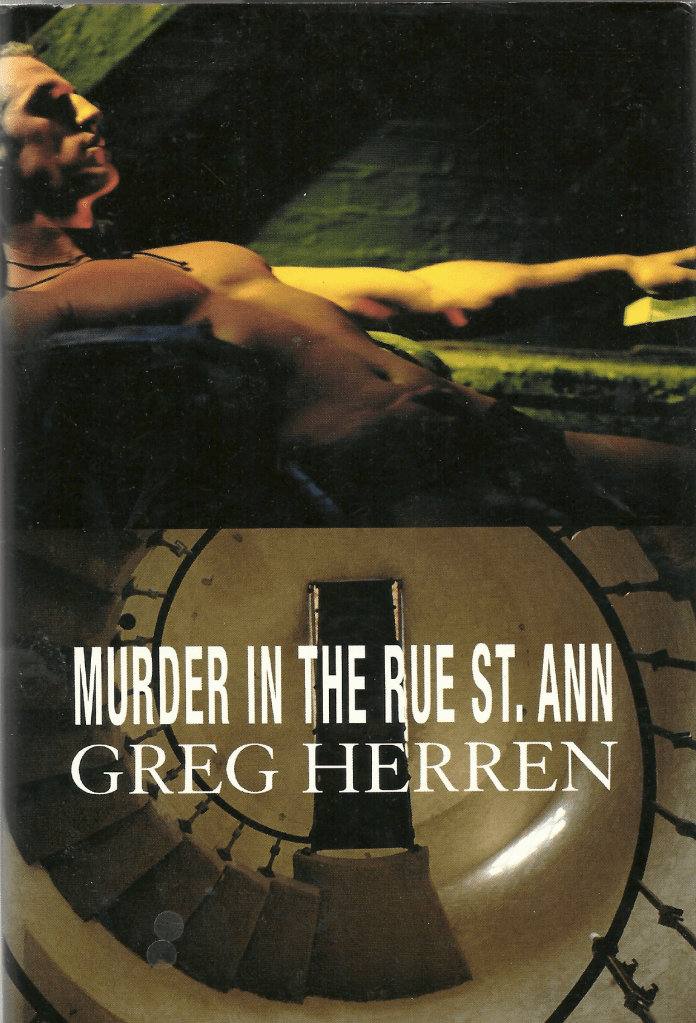
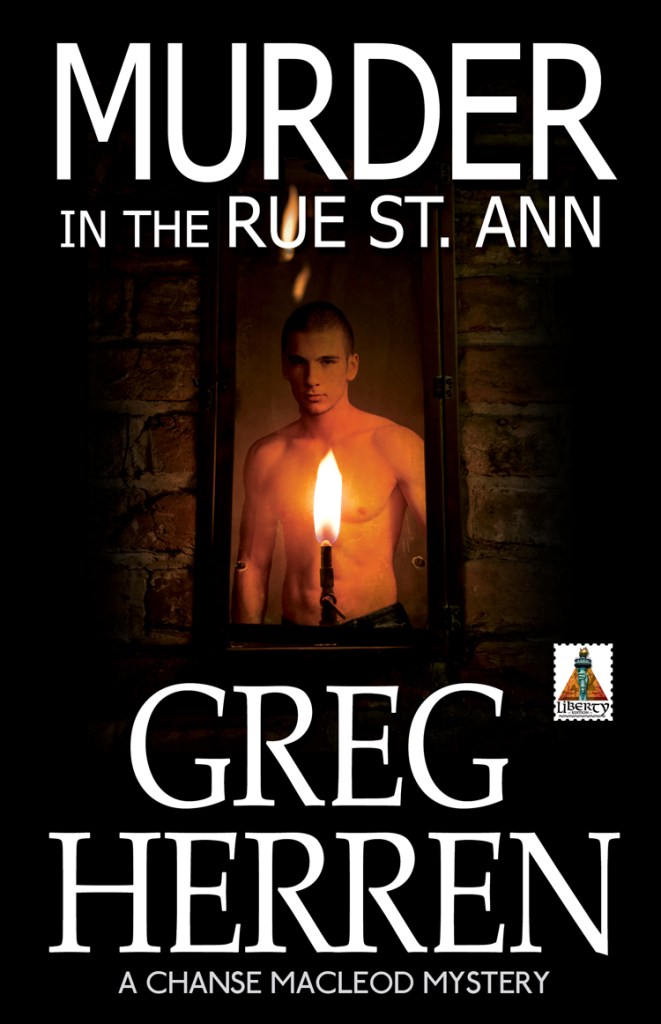
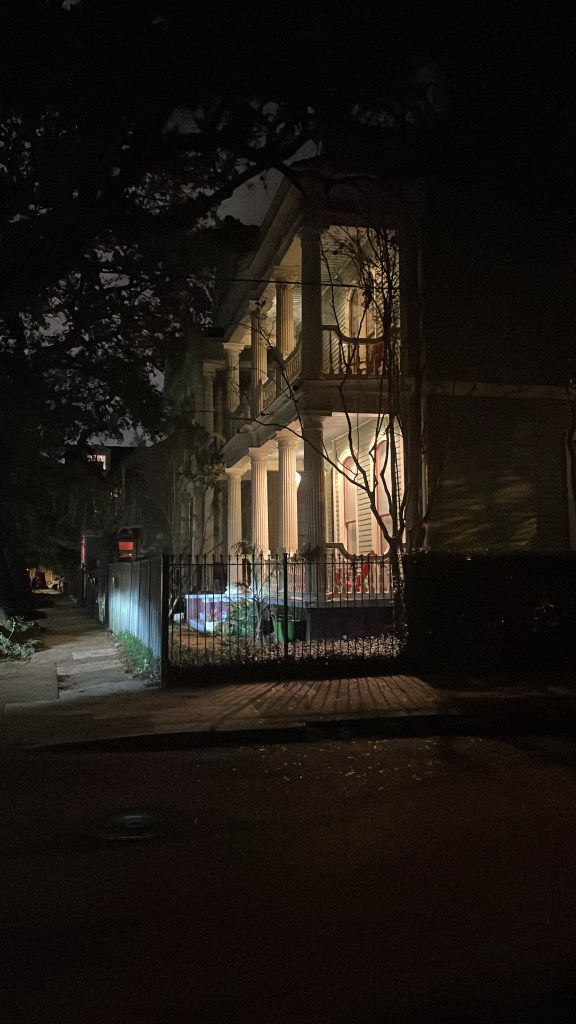
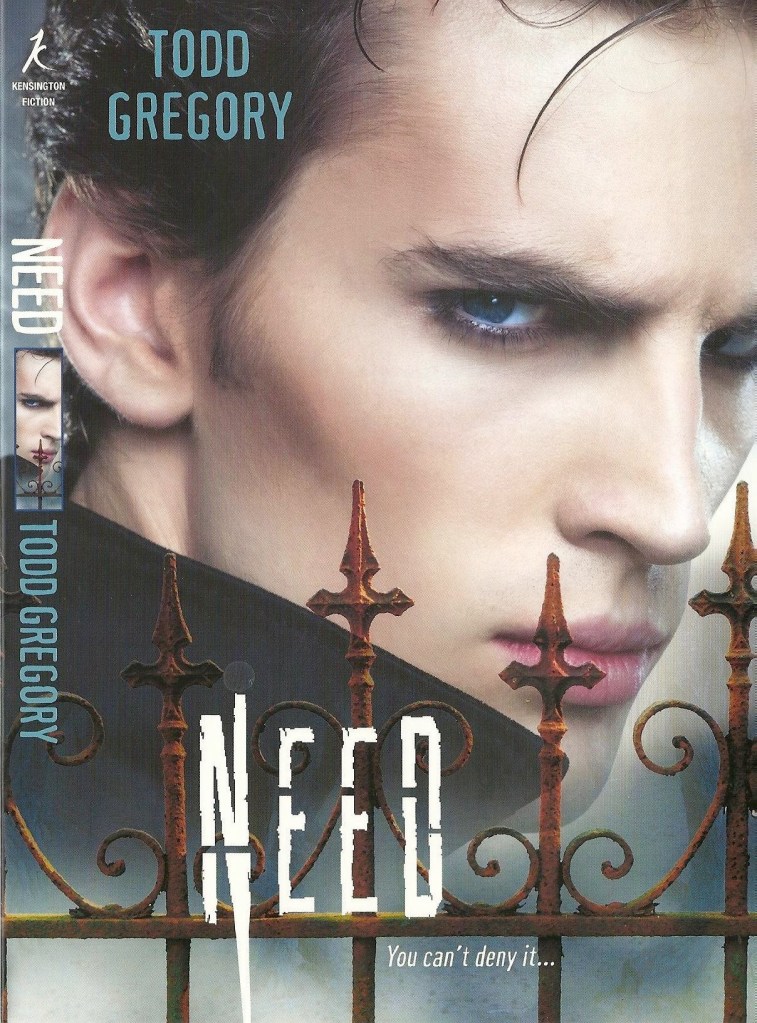
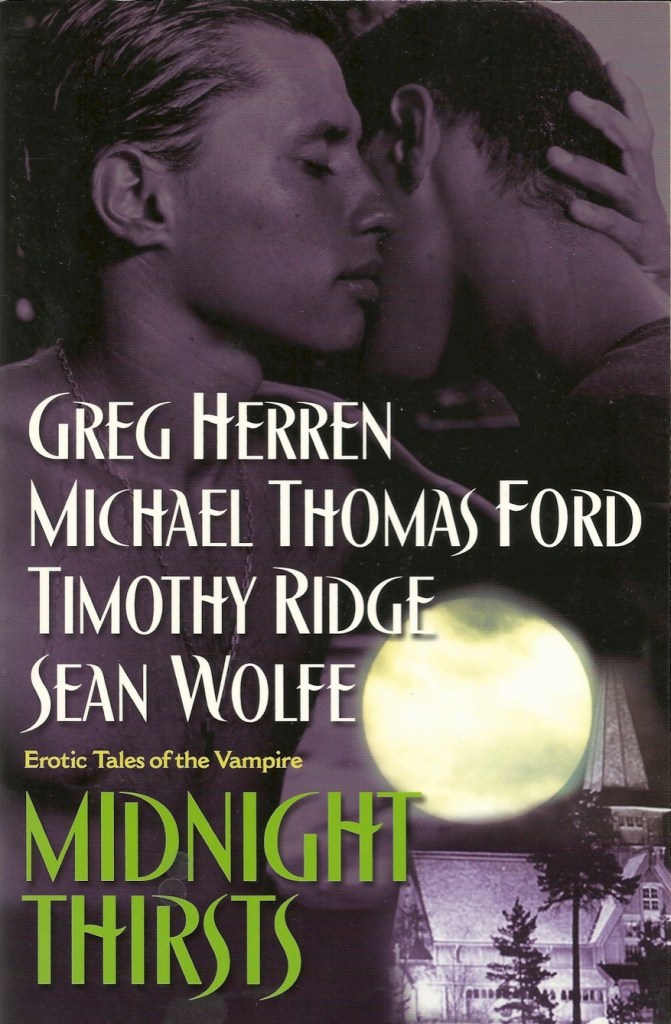

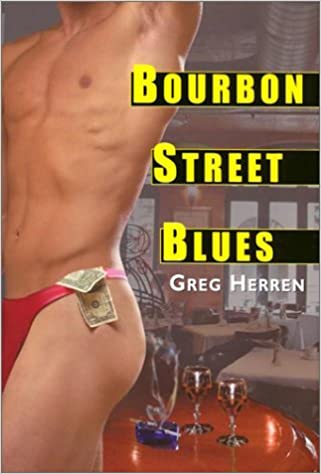
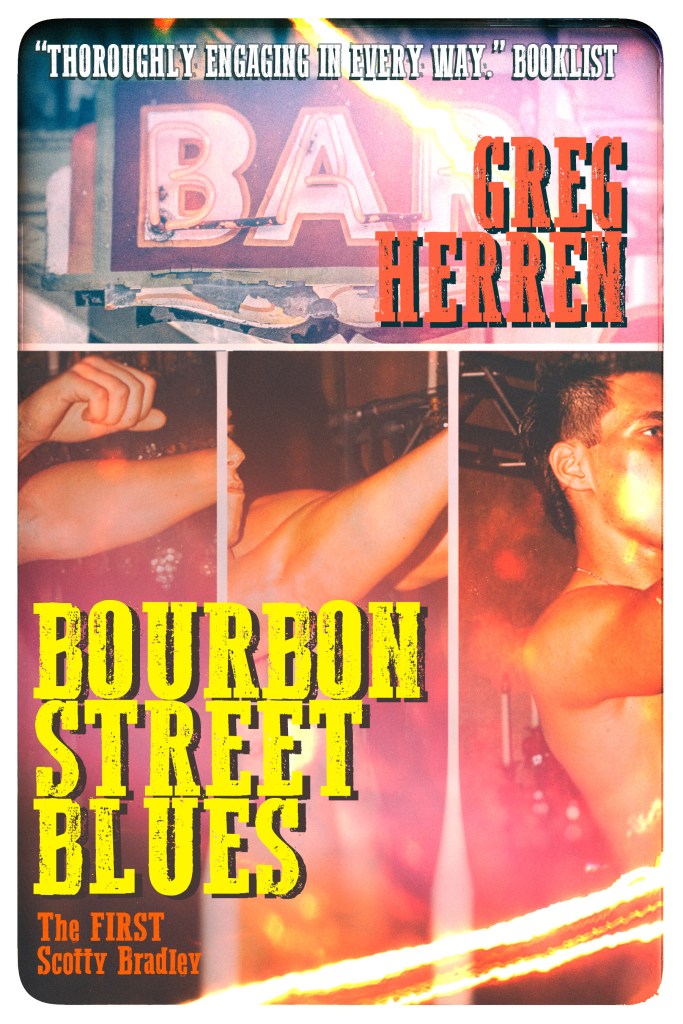
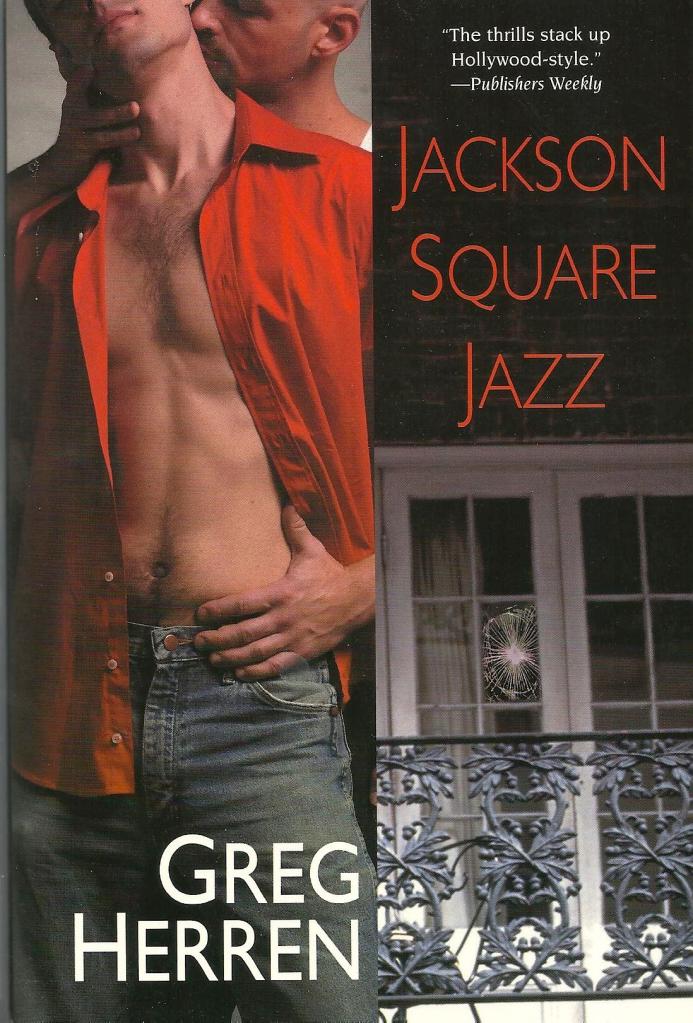
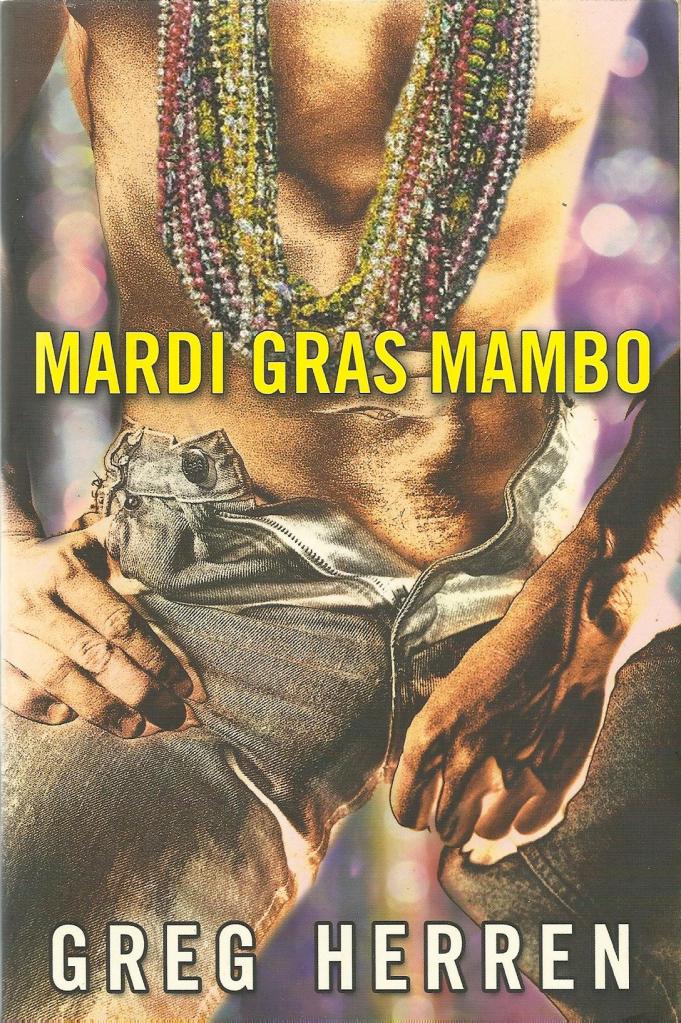
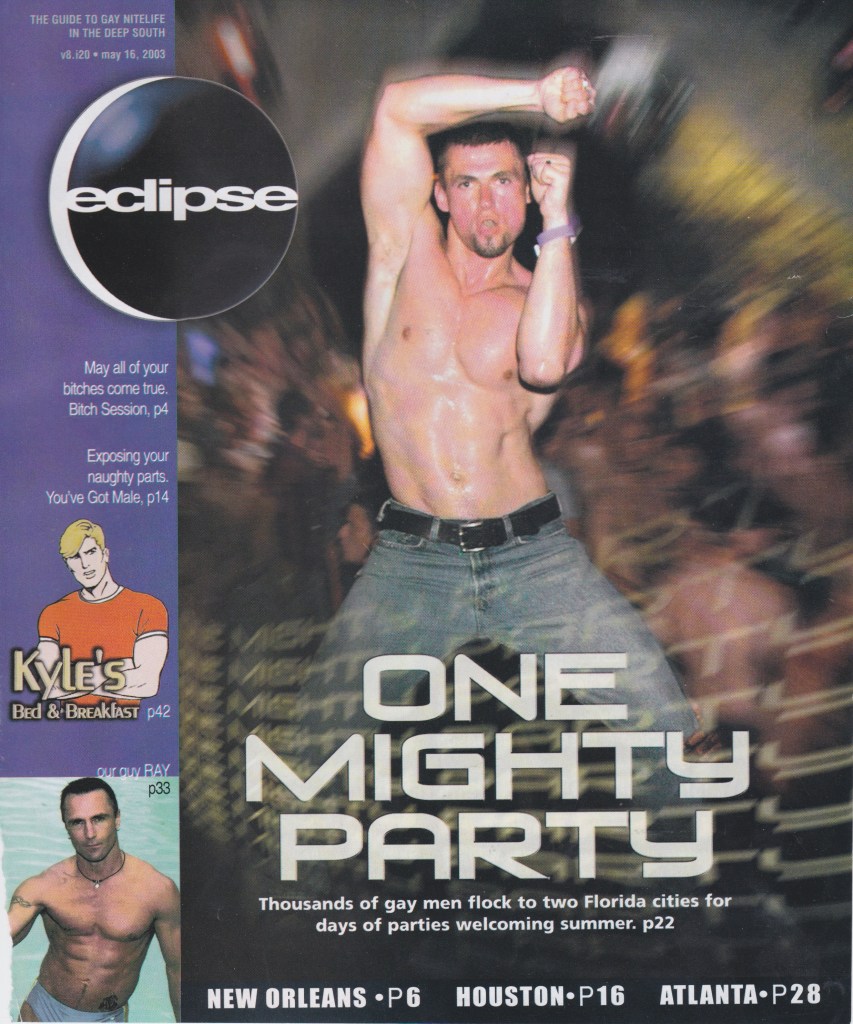
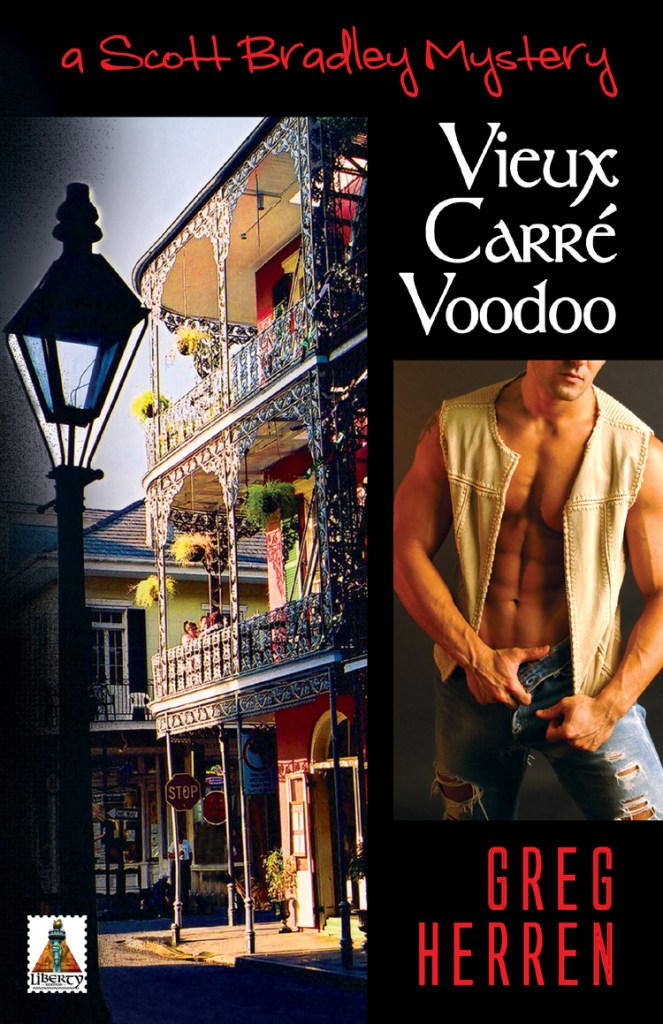
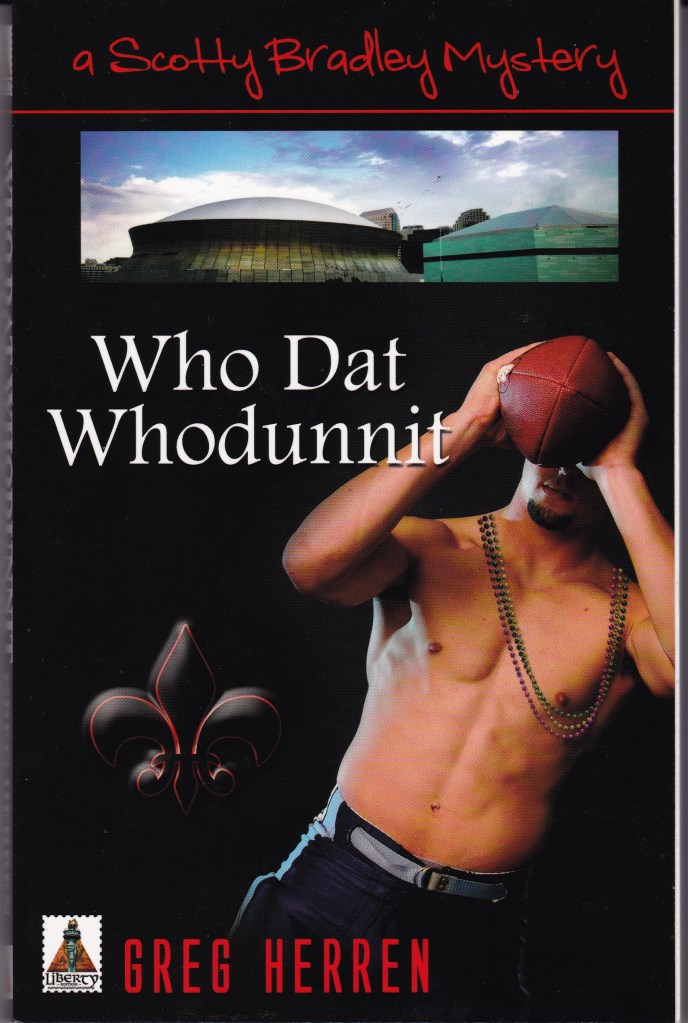
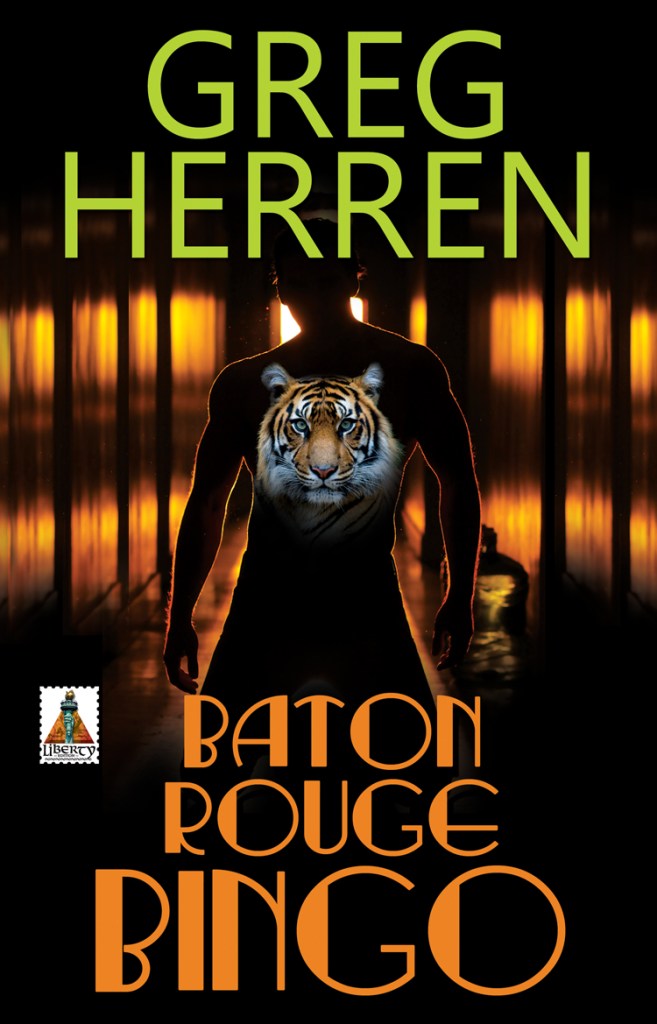
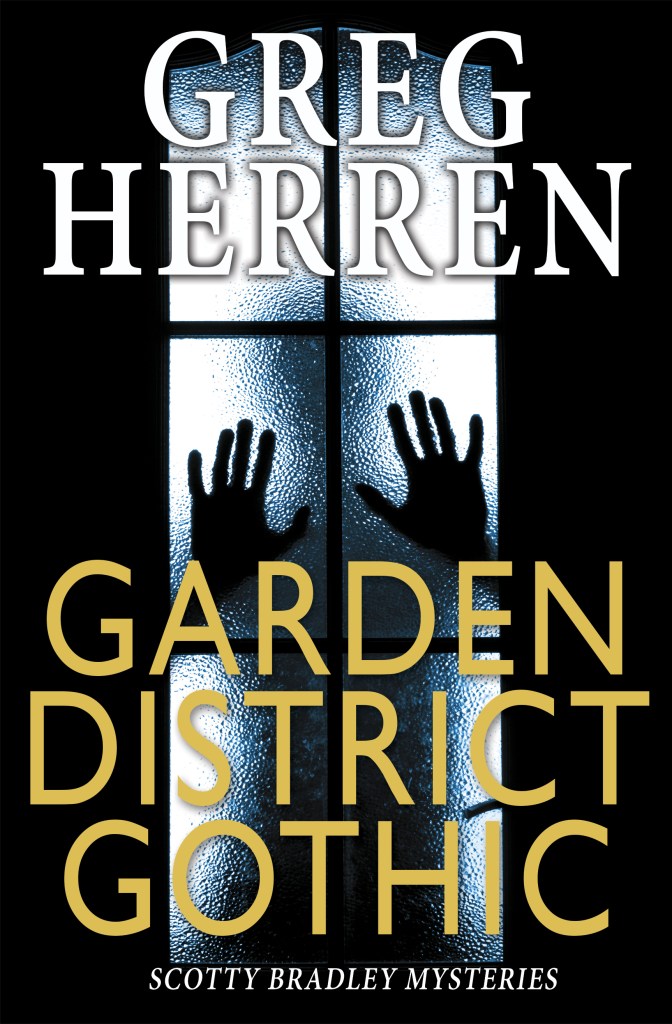
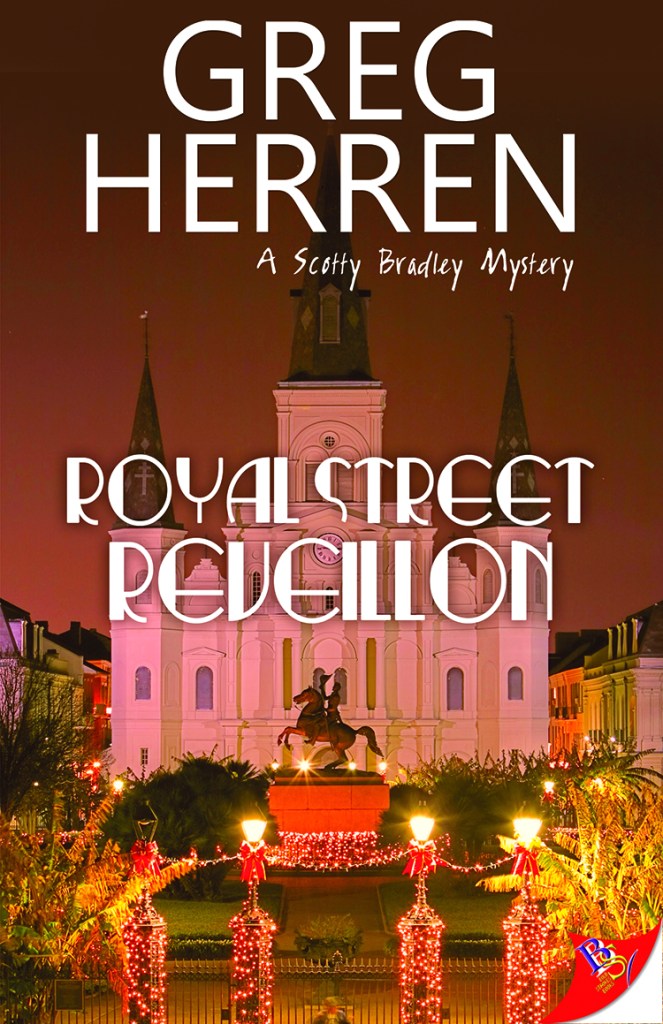
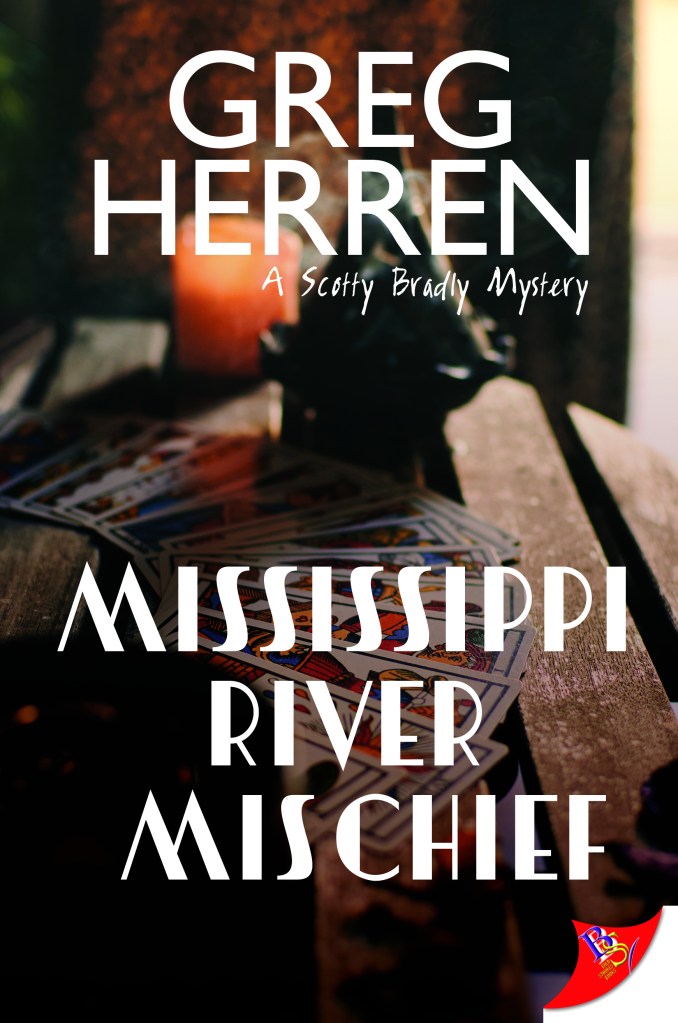


 Queer and Loathing in America