Cool, Cool Considerate Men

We are taking a break from our regularly scheduled blog to talk about US History and current affairs, which is something I don’t do very often here. But since it’s the 4th of July, how can we not reflect on our most imperfect union and the journey to where we are now?

Today’s title is from the musical 1776, which doesn’t get near enough attention. I was thinking about using something from Hamilton, but…I don’t think Lin-Manuel will mind, do you? I saw the film version of 1776 when I was in junior high school (I think it was; we used to go see movies periodically; which is how I saw both Fiddler on the Roof and Jesus Christ Superstar1). But 1776 seems to have been largely forgotten.
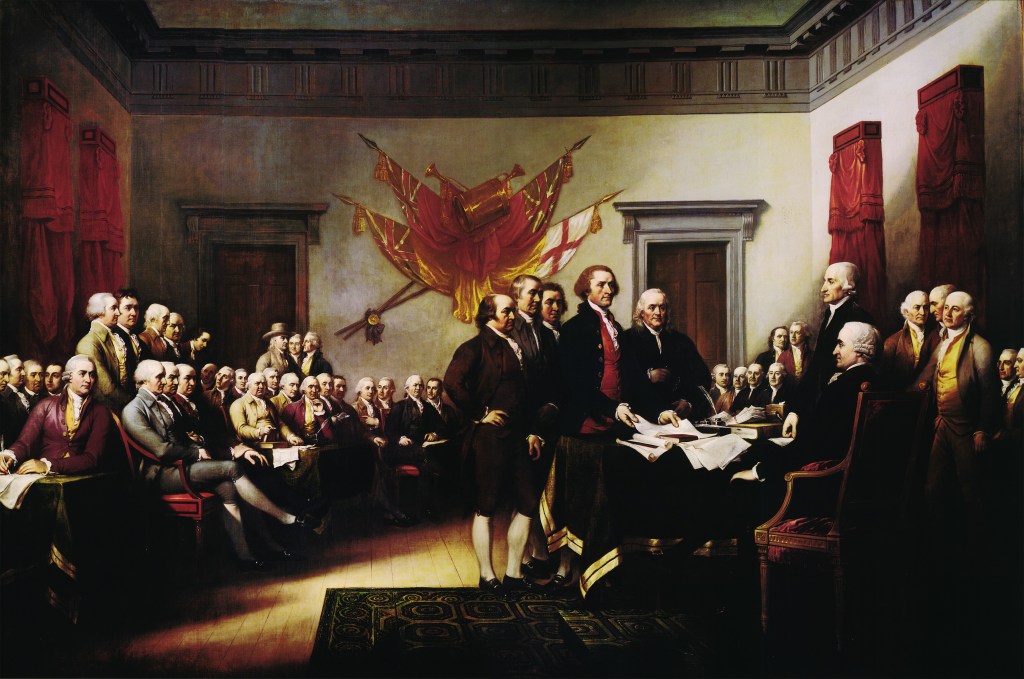
It’s hard to imagine, really, how courageous the American rebels actually were. They were farmers and lawyers and doctors; yet they believed in their cause enough to defy and stand up to, and take on, the mightiest Empire the world has ever seen. 2They were imperfect humans, as we all are; the attempt by the Right to frame them as infallible gods, guided in their work by the Christian god, is offensive and insulting. The greatest of humans are still human, and all humans have frailties and flaws, and enshrining any human as an infallible instrument of God is, at the very least, blasphemy. The Founding Fathers were both racists (more than a few enslaved people) and misogynists (where are the rights for women?), which made them….fallible. They weren’t gods, they were men.

I grew up in the 1960s and 1970s, and my education was tailored to the times. We were in a Cold War with the “evil” Soviet Union, when the possibility of nuclear annihilation was always in the back of our heads. Communists were the enemy, and they were evil; so…we all had to be brainwashed into the mentality of American exceptionalism. The right of white Europeans to the continents of the Americas, despite the fact people already lived there, was never to be questioned…the ends justifying the means, I suppose. The true horrors of enslavement weren’t taught; it was just something that happened, we fought a civil war to end it, and then it was over…we weren’t taught about the racism baked into the country and society from colonial days that continues to the present day.

And a lot of the failures of the Constitution were primarily due to the Founding Fathers being unable conceive of things that are just taken for granted by us today–politics as a profession; primaries and elections as a multi-billion dollar industry, and the levels of corruption in our political class, as well as the failures of the news media to hold the government accountable.

The passage of yesterday’s foul and evil legislation was the final betrayal of the Founders, and I think people are finally waking up to the clear and present danger in Washington. Funny that the people always screaming about their freedom and their liberties are too blind to see how their freedom and liberties are being taken from them–and how happy they are to give them up so long as they think other people will suffer. I see a lot of social media posts since yesterday talking about the new authoritarianism, yet have never noticed how the Right has been building to this point for decades. The police state’s foundational legislation was the PATRIOT Act–which has never been repealed and has been reauthorized by Congress several times.

I don’t see a great future for us over the next ten years, frankly. I do not see a way out of this situation we’re in without it becoming really ugly. MAGA isn’t going to go down in any electoral defeat because, as we have seen, they will not accept the results and are more than willing to use violence to get their way. That will get ugly, don’t you think? And let’s face it, our current situation isn’t much different than the one the country was in during the 1850s–when enslavers controlled the Supreme Court, Congress, and the White House. Losing that control led to the Civil War, because enslavers weren’t willing to give up the power they’d enjoyed for so long because they feared losing their slaves.

How long before the people in the prison camps are contracted to work in the fields and doing the grunt work we’ve pushed off onto immigrants for decades?

I always suspected our system was collapsing, rotting from the inside and spreading the foul disease across the nation. I always hoped I was wrong, but the logical side of me couldn’t deny the evidence of the decay.

My one hope was that if I was correct, I wouldn’t live long enough to see the collapse. Ah, well. That ship has sailed, hasn’t it?

Yeah, not up for celebrating seventeen million people losing their health insurance, or the many millions of children who will go hungry.

But there’s always hope, no matter how bleak it seems. As Winston Churchill once said, “You can always count on Americans to the do the right thing–after they’ve exhausted every other possibility.”

I also believe this will not end well for corporations and billionaires–as it did not for the French and Russian aristocracies.
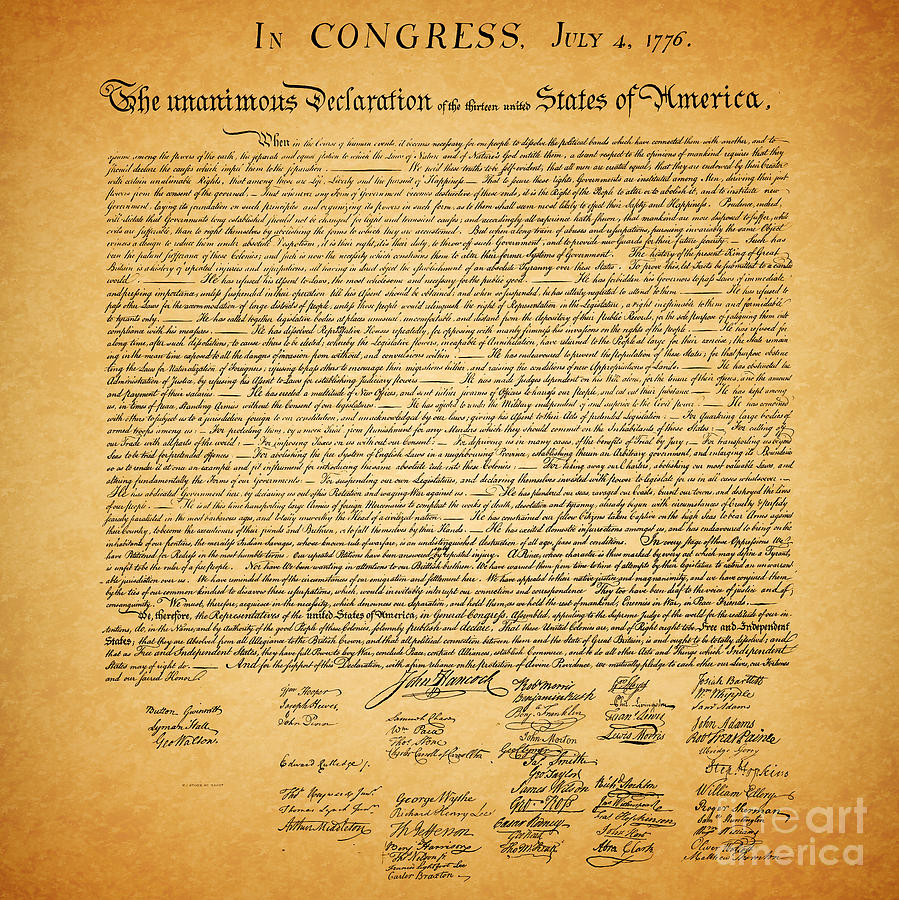
And in case you’ve forgotten (or never knew) the text:

When, in the course of human events, it becomes necessary for one people to dissolve the political bands which have connected them with another, and to assume, among the powers of the earth, the separate and equal station to which the laws of nature and of nature’s God entitle them, a decent respect to the opinions of mankind requires that they should declare the causes which impel them to the separation.

We hold these truths to be self-evident, that all men are created equal, that they are endowed by their Creator with certain unalienable rights, that among these are life, liberty, and the pursuit of happiness. That, to secure these rights, governments are instituted among men, deriving their just powers from the consent of the governed. That, whenever any form of government becomes destructive of these ends, it is the right of the people to alter or to abolish it, and to institute new government, laying its foundation on such principles, and organizing its powers in such form, as to them shall seem most likely to effect their safety and happiness.

Prudence, indeed, will dictate that governments long established should not be changed for light and transient causes; and, accordingly, all experience has shown, that mankind are more disposed to suffer, while evils are sufferable, than to right themselves by abolishing the forms to which they are accustomed.

But, when a long train of abuses and usurpations, pursuing invariably the same object, evinces a design to reduce them under absolute despotism, it is their right, it is their duty, to throw off such government, and to provide new guards for their future security. Such has been the patient sufferance of these colonies; and such is now the necessity which constrains them to alter their former systems of government. The history of the present King of Great Britain is a history of repeated injuries and usurpations, all having in direct object the establishment of an absolute tyranny over these states. To prove this, let facts be submitted to a candid world.

He has refused his assent to laws the most wholesome and necessary for the public good.

He has forbidden his governors to pass laws of immediate and pressing importance, unless suspended in their operation till his assent should be obtained; and when so suspended, he has utterly neglected to attend to them.

He has refused to pass other laws for the accommodation of large districts of people, unless those people would relinquish the right of representation in the legislature; a right inestimable to them and formidable to tyrants only.

He has called together legislative bodies at places unusual, uncomfortable, and distant from the depository of their public records, for the sole purpose of fatiguing them into compliance with his measures.

He has dissolved representative houses repeatedly, for opposing, with manly firmness, his invasions on the rights of the people.

He has refused for a long time, after such dissolutions, to cause others to be elected; whereby the legislative powers, incapable of annihilation, have returned to the people at large for their exercise; the state remaining in the meantime exposed to all the dangers of invasion from without, and convulsions within.

He has endeavored to prevent the population of these states; for that purpose obstructing the laws for naturalization of foreigners; refusing to pass others to encourage their migrations hither, and raising the conditions of new appropriations of lands.

He has obstructed the administration of justice, by refusing his assent to laws for establishing judiciary powers.

He has made judges dependent on his will alone, for the tenure of their offices, and the amount and payment of their salaries.

He has erected a multitude of new offices, and sent hither swarms of officers to harass our people, and eat out their substance.

He has kept among us, in times of peace, standing armies, without the consent of our legislatures.

He has affected to render the military independent of and superior to the civil power.

He has combined with others to subject us to a jurisdiction foreign to our constitution, and unacknowledged by our laws; giving his assent to their acts of pretended legislation:

For quartering large bodies of armed troops among us;

For protecting them, by a mock trial, from punishment for any murders which they should commit on the inhabitants of these states;

For cutting off our trade with all parts of the world;

For imposing taxes on us without our consent;

For depriving us, in many cases, of the benefits of trial by jury;

For transporting us beyond seas to be tried for pretended offenses;

For abolishing the free system of English laws in a neighboring province, establishing therein an arbitrary government, and enlarging its boundaries, so as to render it at once an example and fit instrument for introducing the same absolute rule into these colonies;

For taking away our charters, abolishing our most valuable laws, and altering fundamentally the forms of our governments;

For suspending our own legislatures, and declaring themselves invested with power to legislate for us in all cases whatsoever.

He has abdicated government here, by declaring us out of his protection, and waging war against us.

He has plundered our seas, ravaged our coasts, burnt our towns, and destroyed the lives of our people.

He is at this time transporting large armies of foreign mercenaries to complete the works of death, desolation, and tyranny, already begun with circumstances of cruelty and perfidy scarcely paralleled in the most barbarous ages, and totally unworthy the head of a civilized nation.

He has constrained our fellow citizens, taken captive on the high seas, to bear arms against their country, to become the executioners of their friends and brethren, or to fall themselves by their hands.

He has excited domestic insurrections amongst us, and has endeavored to bring on the inhabitants of our frontiers, the merciless Indian savages, whose known rule of warfare is an undistinguished destruction of all ages, sexes, and conditions.

In every stage of these oppressions, we have petitioned for redress, in the most humble terms. Our repeated petitions have been answered only by repeated injury. A prince, whose character is thus marked by every act which may define a tyrant, is unfit to be the ruler of a free people.

Nor have we been wanting in attentions to our British brethren. We have warned them from time to time of attempts by their legislature to extend an unwarrantable jurisdiction over us. We have reminded them of the circumstances of our emigration and settlement here. We have appealed to their native justice and magnanimity, and we have conjured them by the ties of our common kindred, to disavow these usurpations, which would inevitably interrupt our connections and correspondence. They too have been deaf to the voice of justice and of consanguinity. We must, therefore, acquiesce in the necessity, which denounces our separation, and hold them, as we hold the rest of mankind, enemies in war, in peace friends.

We, therefore, the representatives of the United States of America, in General Congress assembled, appealing to the Supreme Judge of the world for the rectitude of our intentions, do, in the name, and by authority of the good people of these colonies, solemnly publish and declare, that these United Colonies are, and of right ought to be free and independent states; that they are absolved from all allegiance to the British Crown, and that all political connection between them and the state of Great Britain is and ought to be totally dissolved; and that, as free and independent states, they have full power to levy war, conclude peace, contract alliances, establish commerce, and to do all other acts and things which independent states may of right do. And for the support of this declaration, with a firm reliance on the protection of Divine Providence, we mutually pledge to each other our lives, our fortunes, and our sacred honor.

Funny how some of their indictments of George III also apply today…

  1. I still can’t believe we saw Jesus Christ Superstar and no parents complained. That wouldn’t happen today. The show and movie and music were highly offensive to Christians back in the day, but they don’t complain much about it anymore. ↩︎
  2. I’m always amazed at how the people screaming the loudest that they are the REAL American patriots…would never put themselves at risk for their values and beliefs. For the record, conservatives in 1776 were called…Tories. ↩︎

Turn the Beat Around

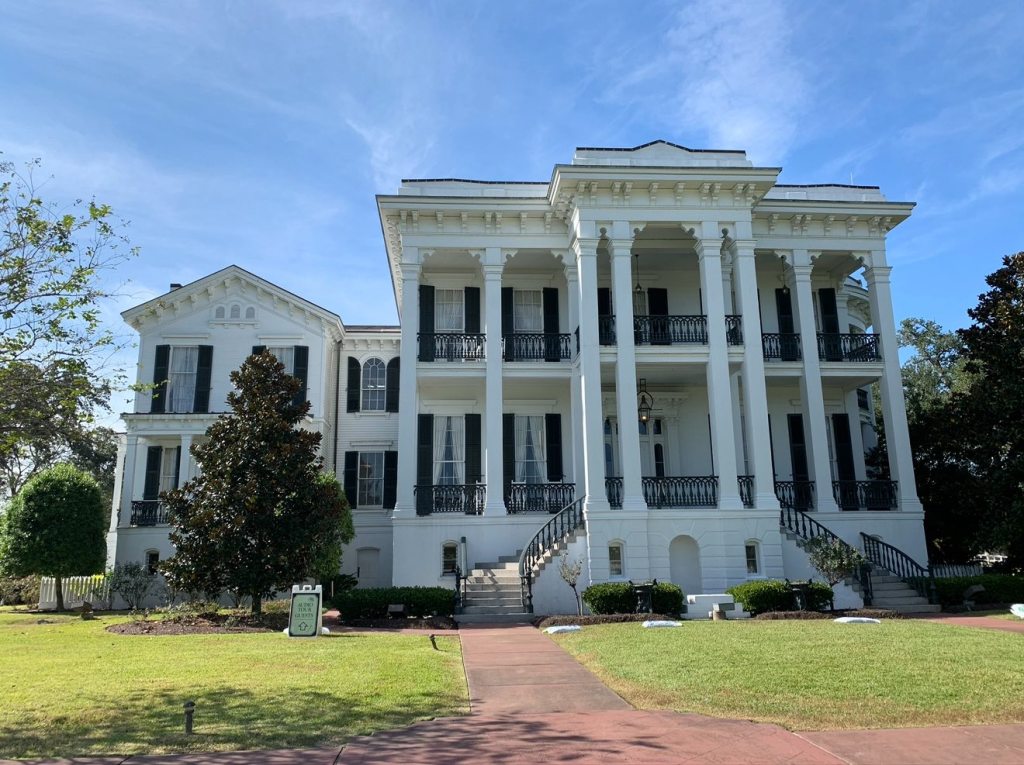
Nottoway Plantation, one of the beautiful old homes along the River Road north of New Orleans, burned to the ground Thursday.1 But what that lovely old historic home actually was? Just a monument to enslavement and stolen wealth. I also can’t help but hope the backstory to the fire is some Gothic shenanigans, a la Rebecca and Manderly burning to the ground.

I’ve certainly come a long way from that kid who was raised to believe in white supremacy and the Lost Cause ideology, haven’t I? My relationship to the South has always been fraught, once I began to read more and understand more and deprogram myself from that horrific grooming as a child. I can remember, though, reading Gone with the Wind when I was ten or eleven for the first time and my hackles being raised by the happy, contented enslaved people and how they were described and how they talked. (I loved the story itself, but the racism was so unrelenting and unending and horrible; I need to do a deconstruction of that book sometime–as well as other “make white people feel better about racism” books.)

Nottoway was a beautiful home, but it was also one of the most monstrous sugar plantations in Louisiana with an excessively brutal history. I am not sorry in the least this horrific place–where they teach nothing about the true history of the place and rent out for weddings and parties for white people (“yes, you too can have a Scarlett O’Hara wedding on an old plantation! So what about the brutal treatment of generations of enslaved people?”). It really was nothing more than a monument to oppression, cruelty, and the evil that men can do.

I started dealing with the ghosts of my own Southern past in Bury Me in Shadows, and this new repurposed book from an old manuscript is also going to deal with race in Alabama, too. I just have to finish this damned Scotty book and get it out of my scalp. New Orleans also has its own dark, bloody and brutal history I have to deal with at some point, too. I was reading a piece about Madame LaLaurie and her abuse of her enslaved people, and wondering how to turn that into a short story–and likewise, my Sherlock story will also have to deal with race, because of the Voodoo Queen. I’m not afraid to address any of these issues, really; as long as I do it and am mindful of the potential for offense and/or getting it wrong (I have a great editor, thank God) and tread carefully. You really can’t write about the South authentically without talking about race.

After I finished working yesterday, Paul and I ran some errands (including Costco) and by the time we got back I was completely worn out and exhausted. I started reading a Dana Girls 2mystery (one of the kids’ series I collect) titled Mystery at the Crossroads, which was originally published in 1954–right around when the Hardy Boys/Nancy Drew books began being revised to remove problematic content–and ho boy, is there some problematic content in this book! It’s about “gypsies”–and every handy stereotype about the Romani people is crammed into this book. But it was easy to read, it engaged my brain, and now maybe today I can get back into reading something substantial.

I also rewatched two movies last night–the animated Beauty and the Beast (yes, I get that it’s problematic but I love it) and Jesus Christ Superstar before falling asleep in my chair. Paul woke me at one, and I managed to sleep through the night and this morning I feel rested and good. I have some errands to run today, but I am going to try to just clean and read and rest and relax as much as humanly possible. I am still not 100% recovered from the illness, but I am getting there.

And on that note, I am going to head into the spice mines. Have a lovely day, Constant Reader, and I’ll be back on the morrow, if not sooner.

  1. And yes, the Lost Cause traitors are weeping publicly of the loss. Since it was one of those destination wedding/party places that glossed over its hideous history…good riddance. ↩︎
  2. I will be writing about the Dana Girls for my newsletter at some point; I want to write about all the kids’ series I read growing up. ↩︎

Would I Lie To You?

Is it sad that I will read a themed anthology, and then will think up a short story based on that theme that I would have written had I been asked?

I find myself doing this a lot lately; I think it has a lot to do with the Short Story Project and reading themed anthologies. As I read the terrific stories, I start wondering what would I have written for this had I been asked and then my mind starts to wander a little bit, which is both irritating and distracting. Yesterday I went looking for Edward Hopper paintings, and found two that would have worked as story inspirations. One day last week I found an image of my favorite Salvador Dali painting on-line, and grabbed it to my desktop so I could look at it and wonder what kind of story it would inspire within me. And obviously, Jim Fusilli’s Crime Plus Music made me wonder what song would inspire me to write a crime/music story, and of course, thought of a Stevie Nicks/Fleetwood Mac song, and then scribbled down a potential title and some thoughts on the story.

Because I don’t have anything else to write, obviously.

I did get some things done yesterday; I cleaned the kitchen and get caught up on laundry. I must have left my copy of Bryan Camp’s The City of Lost Fortunes at the office, as I could put my hands on it anywhere, which was really annoying as I had intended to finish reading it this weekend; I can’t find it, so I must have taken it out of my backpack at the office on Thursday and walked out at the end of the day without putting it back. At least, I hope that’s what happened to it. I’d really hate the have to wait until I buy the hardcover before I can finish reading it. But in lieu of that, I read a shit ton of short stories yesterday, getting very caught up on the Short Story Project. I will probably get even further on that today, since I don’t have my novel to read. Today I need to write and edit, finish cleaning the living room, and get everything ready for tomorrow; the final day of my three day weekend, and I need to definitely make progress, else I will spend most the week berating myself until the next weekend rolls around. Paul will return home on Wednesday. If I can simply stick to what I need to do, and check things off the list, I can go to work on Tuesday feeling terribly accomplished.

It’s very cold this morning; it rained most of the day yesterday, so today we have the predictable temperature drop. It’s really making me want to just curl up in the easy chair with a book–which is fine, I can do that, as long as it’s the manuscript or one of the short stories or all of the above.

Must. Stay. Focused.

I did watch a couple of movies yesterday; the original 1973 film version of Jesus Christ Superstar (I didn’t remember what a fucking hot daddy Caiaphas was) and Legion, a horror film that came and went many years ago; the Syfy series Legion, which I started watching and never finished, was a sequel of sorts to it. I never finished watching because it was difficult to find, or when I remembered to try the episodes weren’t available anymore, and having not seen the film, I was a bit lost. Now that I’ve watched the film, which I kind of liked, I am looking forward to starting the TV show over again.

All right, I need to get some things done around here. So here are two short stories I read yesterday:

First up is “Shaderoc the Soul Shaker” by Gary Phillips,  from Crime Plus Music, edited by Jim Fusilli.

On for the days when he could snort him a line of flake while some groupie was down on her knees, her head buried between his spread leather-clad legs, pleasuring him like he was a visiting pharaoh. Goddamn, that time in his room backstage at the Forum…the two big-titty blondes. Sheeet, the top of his head damn near blew off that night as they sexed him up, down, and sideways.

Churchill “Church” Gibson shook his head, regretfully cycling away from the glorious past into the stone-cold reality of now. He glared at the screen of his laptop as if it were an adversary. He put aside his coffee and tapped the keyboard and the music app replayed his most troubling tack through external speakers. The green audio readout traveling from left to right as the music filled his compact home studio space.

This is a terrific story. Gary Phillips is one of those crime writers who should be much more successful than he is; he wrote a story for Blood on the Bayou that was fantastic and this one–about a formerly successful, hard-living musician whose career has waned but has a chance to get back on top by writing the soundtrack to a film but is having a terrible time creating anything decent, is terrific. As a writer, I can certainly understand that feeling of why can’t I do this anymore and it used to be easy to do this. But as he works, he starts seeing people from his past, who talk to him and remind him of what he used to be capable of, and as he creates he remembers past times and past crimes…it’s absolutely fantastic.

Next up, also from Jim Fusilli’s Crime Plus Music, was “The Long Black Veil” by Val McDermid.

Jess turned fourteen today. With every passing year, she looks more like her mother. And it pierces me to the heart. When I stopped by her room this evening, I asked if her birthday awakened memories of her mother. She shook her head, leaning forward so her long blond hair curtained her face, cutting us off from each other. “Ruth, you’re the one I think of when people say ‘mother’ to me,” she mumbled.

She couldn’t have known that her words opened an even deeper wound inside me and I was careful to keep my heart’s response hidden from my face. Even after ten years, I’ve never stopped being careful. “She was a good woman, your mother,” I managed to say without my voice shaking.

Jess raised her head to meet my eyes then swiftly dropped it again, taking refuge behind the hair. “She killed my father,” she said mutinously. “Where exactly does ‘good’ come into it?”

This is a haunting story about love and family, friendship and class, all set in a small town somewhere which is never specifically named. McDermid, an enormously successful and award-winning crime writer (you should read her if you haven’t; start with A Place of Execution and The Mermaids Singing), manages to tell this story from two different point of views, and so captures small town America perfectly that it is almost eerie. It’s a terrific story, heartbreaking and tragic in its very simplicity. I don’t think I’ve read a McDermid short story before, but this is a great example of why her work is so popular.

And on that note, it’s back to the spice mines with me.

20139726_1483071895137171_270669942309726059_n

Misled

Saturday morning, and everything is dripping outside. A thunderstorm woke me up in the middle of the night, but the rain lulled me back to sleep almost immediately. I feel very rested this morning, which is a good thing. Today I am going to write and edit and clean and go to the gym; it’s been a while–I haven’t been to the gym since before the Tennessee Williams Festival, which is not only shocking but scandalous–and I have to make sure this mess of an apartment is under control. I also want to do some reading today; I am rather behind on the Short Story Project, and I really want to finish that Bryan Camp novel. (Preorder it, seriously.)

I reached the halfway point of the Scotty novel yesterday, which was both a relief and a little off-putting. It’s not very good so far, but it’s also a messy first draft; first drafts are supposed to be messy. This weekend i am going to reread it, as well as track the various plots while doing an outline of the first half; this will hopefully help me to catch mistakes and errors, and places where the story may have gotten off track. Sigh. The drudgery that must be done. It’s lovely to not be on a deadline, though, so I don’t that horrible pressure, that sense of time running out. I think that’s all part of the reason I have never felt satisfied with anything I’ve ever published; I always feel like I ran out of time.

So last night I watched the end of Jesus Christ Superstar, and then, bored, scrolled through all of my Apple TV apps until I found Red Dawn–not the remake, but the 1984 original–and thought, Hmmm, I wonder how this holds up, particularly in reading Molly Ringwald’s piece about The Breakfast Club, so I watched that, and have some thoughts. (And yes, I know it was remade recently, and perhaps that might be worth a watch at some point–Chris Hemsworth–but I was more curious to see the 1984 version as a time capsule of its original period).

So, Jesus Christ Superstar. I remember when it originally surfaced in the late 1960’s, a new take on the New Testament and the ubiquitous Christ story. It’s hard for people who weren’t alive during that time to understand how different the world was then than it is now; the changes that the 2016 election was a reaction to were beginning. Christians felt Jesus Christ Superstar was an abomination, a heresy, an attack on their faith; a modern day reinterpretation of the story, an attempt to make all the characters of the New Testament human was seen as an attack on their faith. Telling the story from the viewpoints of Judas and Mary Magdalen was even more offensive; the betrayer and the fallen woman? An attempt to justify and understand Judas, who committed the biggest crime in the history of the Christian faith? And well, the whore?

It was, regardless, incredibly popular; it made Tim Rice and Andrew Lloyd Webber stars (paving the way for everything they’ve done since; so in some ways we can blame Cats on Jesus), and the music was everywhere. “I Don’t Know How To Love Him” and “Superstar” played on Top 40 radio incessantly; even Helen Reddy recorded the former and had a hit with it. Ben Vereen was the original Judas and it made him a star. It was made into a film by Norman Jewison, which sparked more outrage and yet the soundtrack was a huge seller, with Yvonne Elliman playing the Magdalen again, with Carl Anderson as Judas and Ted Neeley as Jesus. I loved the film soundtrack–those vocals by Ted Neeley are intense–and listened to it all the time. I think I know the score by heart; but I also remember being criticized by classmates when I moved to Kansas for loving it so much.

I was rather dreading this live concert staging, to be honest; I like John Legend, but just wasn’t sure he had the vocal power to hit those intense notes. I also liked that they had cast a man of color as Jesus; Judas has always been a role for a man of color, and knowing that Brandon Victor Dixon, who’d played Burr on Broadway in Hamilton and Sara Bareilles was playing the Magdalen was reassuring. I didn’t watch it as it aired; we were watching something else Sunday evening, but I was following the live tweets and Facebooking, and the reviews were definitely mixed. But when I watched it myself, despite my misgivings and how much I associated the roles/vocals as already having been definitely performed, I thought it was very powerful and beautifully done.

Even as a child, certain tenets of Christianity, and the mentalities that went with it, made no logical sense to me (I know, trying to find logic and reason in religion is a fool’s game; which is why it’s called faith). The vilification of Judas, for example, never made sense to me. If Jesus is venerated, not just as the son of God but because his sacrifice made our salvation possible, didn’t it stand to reason that had he not be crucified our salvation through faith and Christ wouldn’t be possible? So, to me, it only made sense that Judas also should be venerated; without his betrayal the rest of it wouldn’t have happened. Likewise, the anti-Semitism reverberating through the century, based in the Jews being Christ-killers; if Christ hadn’t been crucified there would be no Christian faith, and no salvation. 

No one I ever asked these questions of were ever able to give me an answer that made sense to me.

So, my watching Jesus Christ Superstar as an adult who no longer considers himself to be Christian was vastly different from the twelve-year-old who saw the film after church on a Sunday. As I watched this time, I was able to see it from a new perspective, a new appreciation of the story; how would people see something like this happening in their lives, in their reality today? Over the centuries Jesus’ Jewishness has been whitewashed out of him; images of the blond blue-eyed Jesus are everywhere (Ted Neeley in the original film is one of those great examples) and I also realized that all the fiction about the mythology of the Christ (and there are a lot of them, from Ben-Hur to The Robe to Quo Vadis and on and on and on; the enormously successful mid-twentieth century author Taylor Caldwell wrote enormous, bestsellers taken from these stories–Dear and Glorious Physician about Luke, Great Lion of God about Paul of Tarsus, and I, Judas) always played up the supernatural and religious aspects of the story; Jesus Christ Superstar is one of the very few I am aware of that actually tells the story from a human perspective. Who were these human beings, these apostles, who listened to the message of Jesus and saw religion and faith and the world in a new light? Who witnessed the events described in the contradictory gospels of Matthew, Mark, Luke and John?

To me, looking at the story from that perspective–“he’s a man, he’s just a man”–is a lot more interesting, and can provide fresh insight; make it relatable to newer generations. I always thought the resistance of organized Christianity to Jesus Christ Superstar, which made the story more accessible to younger generations, was kind of strange. But times, as I said, have changed. In 1970, the possibility of a live broadcast of Jesus Christ Superstar was unthinkable. And yet here we are today.

Red Dawn, in its 1984 original version, is a whole other ball of wax. And yet, as a historical document, watching it again now was an interesting experience. We forget the paranoia of the Cold War years, and people now in their thirties don’t remember the Cold War, the Soviet Union, the anti-Russia anti-Communist sentiment that was, in truth, the precursor to the prejudices of today. The fall of the Soviet Union and eastern European communism, the fear of world domination by Communism and the end of “Western freedom” as understood by Americans, was a serious thing; and while it heightened after the end of the Second World War, it existed since the Romanovs fell and the old Tsarist Russian empire became the USSR. Cuba was a huge part of that, too, and the anti-Castro hatred; a Soviet outpost just ninety miles from Florida, the fall of Central American countries under the sway of Cuban Communism…the geopolitical world of that time is incredibly hard to imagine today if you didn’t live through it, and even I forget…yet watching Red Dawn brought it all back vividly.

This is not to say it’s a good film, because it’s not. As a film it fails on many levels, not the least of which is acting and the script itself.

At the time of its original release, the movie was a big deal. People my age–early twenties, teenagers–made it into a hit, and also saw themselves as the characters in the movie, which even then I was all, yeah, right. (We always identify with the heroes in movies; we never see ourselves as the quislings.) The movie is about the outbreak of World War III and a Soviet invasion of the United States; it opens with Patrick Swayze dropping off his younger brother (an incredibly young Charlie Sheen) and his best friend (C. Thomas Howell) at the local high school. The score from the last football game is still up on the scoreboard; a loss for the local team, some good natured joshing about how it’s a disgrace and an embarrassment, the usual straight boy ribbing, and then it’s time for school. During History class soldiers start dropping in from the sky; when the African American teacher goes out to see what’s going on, he becomes the first casualty of the invasion (and my first thought was, of course the only black character in the movie is killed in the first five minutes). There is chaos, a group of the boys escape when Swayze comes back for them–why they drive past any number of commandos and soldiers who are killing everyone in sight and blowing shit up and aren’t targeted or killed themselves is move magic) and then rush out to hide out in the nearby mountains and forests, armed and dangerous, with no idea of what’s going on. Eventually two sisters join them–Lea Thompson and Jennifer Grey–and again, there’s really not much development of the characters; ‘something happened’ to the Lea Thompson character which is never discussed, but it’s changed her. Eventually, the kids become the Resistance, calling themselves Wolverines after their high school mascot, fighting back against the invaders.

There’s also a rather telling shot in the opening of the film, where you see the bloodstained back of a pick-up truck, with a close up of the bumper sticker reading You can have my gun when you pry it from my cold dead fingers. The camera then pans down to the dead body holding a gun; a commando reaches down and literally pries the gun from the cold dead fingers.

Eventually, they hook up with an American soldier who teaches them strategy, tactics, and they become an impressive teen fighting unit; he also explains to them how it all happened (paraphrasing): “All our allies in Europe stayed out of it because they’ve forgotten how to fight especially when they’re not the ones being invaded” and “Cubans infiltrated the country, coming in through Mexico pretending to be refugees from Central America or workers, and were able to get into our bases, ready for the signal.”

You can connect all those dots for yourself. All I will say was I sat there, watching and listening to all of this, and was like, really? And they talk about Hollywood’s liberal agenda?

There’s also a scene where the invaders have lined up a bunch of Americans who refuse to be re-educated, to be machine gunned, and they start singing “America the Beautiful” just before the Wolverines take the invaders out.

I also found myself wondering if anyone in 1984 saw this film as problematic, but I also rather doubt it. I know all my friends thought it was amazing, imagined themselves as freedom fighters, etc.

I know I thought about writing a book about an invasion of the United States; a seed of an idea that over the years has encompassed many themes and realities. Rewatching Red Dawn when my imagination had already been triggered by Jesus Christ Superstar  was an interesting experience.

But the most interesting thing was to see how much my own perspectives have changed over the last thirty or so years.

And now, to get some shit done.

IMG_1913

Voices Carry

FRIDAY! Huzzah! MY short day of the work week, and I also took this Monday off because I have things to get done. So, I am on the verge of a three-day weekend, and desperately looking forward to it. I’ve been having a great week of getting things done, frankly–I’ve been killing it on the Scotty book, and hope to be half-way finished the first draft today–getting so ridiculously close it’s not even funny–and I have a lot of cleaning to do around the house as well. I want to finish reading Bryan Camp’s The City of Lost Fortunes this weekend, and I also want to get some final revisions done on some short stories. I have errands to run, places to go, people to meet, things to do….

But Paul is also gone for the weekend, so outside of Scooter’s neediness, I will get a lot done out of, if nothing else, a sense of utter boredom.

I started watching this week’s broadcast of Jesus Christ Superstar last night, and actually was liking it before it was time for me to go read in bed–I got all the way up to the Last Supper, and was actually amazed at how quickly it went past. I have some thoughts about this musical/concert/whatever you want to call  it–particularly about how scandalous it was back when it originally debuted, and how appalled Christians were by it, but it will have to wait until I am actually finished watching it.

I am also thoroughly enjoying The City of Falling Angels; it makes me want to write about Venice, which I fell in love with during our brief twenty-fours there several years ago. Paul wasn’t as crazy for Venice as I was; so getting back there isn’t going to be as easy as I would like, but I do want to return there and spend more time there, especially now that I’ve read more history of the city and know what to look for. Interestingly enough, as I was reading the book last night I thought, you know, I think we actually walked by the Fenice Opera House while we were there, and I just looked on Google Maps and sure enough, we had. (I just knew it was the opera house at the time; I didn’t realize it was the opera house, and that John Berendt had built his entire book about Venice around the fire in 1996 that destroyed it.)

And now I cannot stop thinking about writing the Venice story I’ve been thinking about ever since we visited, “Festival of the Redeemer.”

Heavy sigh.

I’ve also fallen a bit behind on my short story reading–between reading the Bryan Camp novel and all the writing I’ve been doing, I’ve simply not found the time to read stories, so I’ll have to devote some time to that this weekend. I read one last night, but I am not ready to talk about it just yet; as a very stubborn creature of habit, since I don’t have a second one to talk about this morning I can’t seem to bring myself to write about just the one. It’s a good one, though–Gary Phillips is the author, and he’s fantastic–and I am hoping to read some more Shirley Jackson as well as get deeper into Crime Plus Music, which is where the Phillips story is from.

I’ve done quite a bit of Scotty writing this week, which pleases me to no end. I am goingto carve out some time this weekend to read/revise/make notes on the first ten chapters, which will help me envision what is going to happen in the final ten. I have an idea, but I am not sure if it’s a direction I want to take…ugh, this Scotty book has been so difficult.

Ah, well, best to get back to it.

IMG_1096