The All American Boy

I was a bit productive last night after work. I got off later than usual–after five–and we’d been busy all day as well, which was lovely. We’ve not seen that many people in a day in quite some time, and I’d forgotten what that felt like. I chose to take the highway home again after work, and it wasn’t terrible, to be honest. Yes, the ramp to 90/Westbank was backed up as always, and so was the twin spans over the river, but it was better than driving through the city and dealing with all the idiots and stupidity–which I was definitely not in the mood for. I came home, hung out with Sparky for a while, and then started working. I finished a load of laundry and started another. I emptied the dishwasher and refilled it. I cleaned off my desk and filed stuff (I really need to get the overall organization in this corner revamped, revised, and made more efficient and less clutter-prone). I have a meeting this morning on-line, after which I will do my work-at-home duties and do some writing. I was going to run some errands later, but I think they can keep until tomorrow, as I’d rather be around here all day and get things done. It’s a good plan, at any rate. We’ll see how well I obey those dictates.

I also slept well before Sparky decided it was time for me to get up and feed him. I went back to bed, and then of course that started his passive/aggressive ways of getting me up. I do like having a cat alarm–I’d missed that in our cat-free months last year. Sparky still has a lot of extra energy, but I like that about him, and I like that he has his own way of being affectionate. Such a completely different kind of cat personality than Scooter, but all cats are different and getting to know them is part of the joy of having one.

Mmmm, my coffee is quite marvelous tasting this morning.

I was checking my blog drafts page and was stunned to see how many drafts of entries I’ve started and not completed; several books, movies, and topics I wanted to write about, and of course, I need to either finish them or abandon and delete them. Some were kind of similar and started months (years) apart, so I need to get that figured out, and I really should finish writing about the things I started writing about. It was also startling to see that now my blog has become like everything else I write about–drafts and ideas and notes that aren’t completed. Heavy heaving sigh. In the olden days of live journal, I never did this; I always finished every entry I started (probably because I didn’t know whether you could save unfinished drafts there; I discovered the feature when I moved it over here). As a completionist, you can imagine how much this gets under my skin. I’m trying not to let it bother me, but it’s not working so far.

Sigh.

It’s been a weird week, really. I lost my respect for some people–looking at you, Dwayne Johnson, but I always preferred John Cena anyway, and turns out he’s an actual ally–and my concerns and worries about the decline in freedom for everyone (except straight white cisgender men) and the establishment of the 4th Reich in this country, depending on how the election turns out this fall. All of us who tried to warn you back in 2016 (and earlier, in my case) were 100% right about everything, so by all means don’t listen to us again now. I don’t understand the nihilistic mentality of voting third party to “teach us a lesson about progressive purity”–but it’s usually people too young to understand (and they don’t want to understand) how everything works. The irony that they think the Constitution and the system will protect them from a right-wing autocracy is so misinformed to the point of willful ignorance shows me, at any rate, why they shouldn’t be taken seriously or listened to. Back in 2016 I worked with two young cisgender white girls who couldn’t bring themselves to vote for Hillary because “she didn’t leave her husband for cheating on her” and “she’s corrupt and gross.” How does your loss of reproductive freedom feel, you willfully ignorant bitches? Thank God you proved your feminist and progressive purity! I, for one, will never forgive anyone who refused to see the danger we were facing in 2016, and I especially will never forgive people who mocked me for my concerns. Hope you need an abortion this year, bitches.

There’s been a lot of talk over the last decade or so about the art v. the artist; the first time I think I heard about this was the issue of H. P. Lovecraft’s deeply rooted racism in the speculative fiction community. I’ve not read much Lovecraft, if any, and that was something I felt I was missing in my education in speculative fiction, and probably why I never really have thought of myself as a specfic writer–I’d never read Lovecraft, and hadn’t reread or revisited Poe since high school. I still intend to at some point–thank you, Project Gutenberg, so I didn’t have to pay for them–but that will certainly effect my opinions whenever I can bring myself to read some of the stories. I used to read things all the time when I was growing up and throughout my adult life that don’t hold up now on rereads that went right past me on the first read because that was how things were in society and the culture at the time. I loved Gone with the Wind, both book and film, for decades before I began to realize how incredibly problematic both were. I keep meaning to go back and read it again now, but I don’t know that I can handle the idyllic portrait it paints of the old South, the war, and Reconstruction. (By the way, you know those white lady Trumpers? They are in this book as the ladies of Atlanta, and saintly Melanie was the worst of them…although a retelling as a Real Housewives of Reconstruction would be interesting. I know a Black writer retold the story from the perspective of a biracial half-sister of Scarlett’s, which I’ve always wanted to read.) Even Margaret Mitchell herself has some issues with the movie’s depiction of Tara because, in her words, it was a “working farm.”

The reason I am bringing this up is because the Chatelaine of Castle TERF showed her flat ass again this week. I did read the Harry Potter series and I did see all the movies, and I did enjoy them, even if I never had any desire to revisit them. The longer the series went on, the worse the books got, in my opinion, longer and more convoluted the stories got and she often never wrapped up anything; there were a lot of subplot false starts that looked promising that she abandoned. There was veiled anti-Semitism and fatphobia in the books that I marked as I read them as well as in the movies–straight from her hard drive. There were no queer people in her books until she retconned Dumbledore long after the fact–something all queer people should have been so fucking grateful for that we (in her mind) should have fallen on our knees in front of her and kissed the hems of her skirts for all eternity. She is the perfect example of how money corrupts weak minds. This week her TERFdom showed itself in announcing she would never accept apologies from Emma Watson and Daniel Radcliffe for daring not to agree with her hateful stance against transpeople, that she veils in worries about bathroom/changing room rapes…which basically comes from her assumption that all men want to do is rape women, to the point they’ll pretend they have gender dysmorphia merely to gain access to women only spaces for ease of rape/sexual assault. That’s kind of anti-male misogyny on top of the transphobia. All men are rapists, transwomen are actually men, and therefore all transwomen are rapists…and her wealth, like Elon Musk’s, have convinced her somehow that she is special and therefore her opinions have more value and weight than anyone else’s. Seriously TERF Queen, I am so sorry you had the entire world at your feet and your dark and twisted soul made you Housemaster of Slytherin and Voldermort’s mistress. I take a lot of pleasure in knowing how miserable your money and success have made you…and that you’ve decided the message of your Harry Potter series–everyone is equal, no one is better than anyone else and love is the key–was as phony as she is.

So, yes, it’s hard for me to enjoy art when I know the artist is a horrible person. And I don’t have to consume or pay for their art, just as I wouldn’t expect people who don’t like my values and beliefs to buy and consume mine.

Whew! I think I better get going on my day–this turned out longer than intended! Have a great Friday, Constant Reader, and I may be back later. Stranger things have happened on a Friday!

Storm in a Teacup

I first discovered Stephen King when I was a sophomore in high school. A friend was carrying a paperback copy of Carrie around with her, and I neither recognized the title nor the author. The cover was interesting looking, in that weird kind of alternate reality type way that speculative fiction covers so often got at that time. “What is this about?” I asked when I picked it up and examined the book.

“It’s about a bullied girl with psychic powers,” she replied. “My mom was worried about letting me read it because she’s afraid I’m like her.”

It rather broke my heart a little to hear my friend, who was overweight and had very bad skin but also incredibly kind and intelligent, say this; but I could also relate a bit because I, too, was picked on and bullied. I, too, knew what it was like to walk past a gaggle of kids both pretty and “cool”, notice that they stopped talking as I approached only to whisper and laugh once I walked by…while simultaneously feeling grateful that they had the decency to whisper so I couldn’t hear what was said (and typing that really made me sad).

I opened the book to the first page and there it was, about halfway down the first page, in italics: Carrie White eats shit.

The preceding sentence, not italicized, read: “Graffiti scratched on a desk of the Barker Street Grammar School in Chamberlain:”

The realism of this, its brutal reality and recognition of the horrors bullied kids face, was like a 2 x 4 across my forehead. I started reading, and kept reading, until the bell rang and I was about thirty pages in, completely drawn into the story. I’d never read anything like it before; it was so real, so honest, so like what high school was actually like as opposed to the cutesy stories I was accustomed to reading about teenagers, where the concerns were “who will take me to Prom?” or “should I go ahead and have sex now or do I wait till I get married?” This was visceral, and I regretfully passed the book back to my friend, thinking, “I’ll look for it at Zayre’s when we go there next.”

My friend, who shared my love of reading, just smiled and said, “I haven’t started it yet–why don’t you go ahead and finish it and then give it back?”

I read it instead of paying attention in my next class–it was Drama, the little play we were rehearsing for class had me assigned stage managing duties, so I really had nothing to do since I wasn’t rehearsing–so I sat in a seat in our school theater, reading. I read it on the bus ride home. I read it when I got home, sitting on my bed with my back propped up by cushions. And I finished it that night–establishing a pattern with King’s fiction that lasted for decades: I would read the book as soon as I got a copy from start to finish, usually in one sitting (It kept my up all night because I couldn’t put it down).

When I saw Night Shift on the wire racks of the News Depot several years later in Kansas, I was terribly excited. A new Stephen King! I bought it immediately and took it home…slightly disappointed to discover it was merely a short story collection, and I wasn’t a big fan of reading short stories; I only read the ones I was required to read for a class assignment.

I read the first story, “Jerusalem’s Lot,” and didn’t like it at all; I put the book aside and didn’t return to it until months later…the next story, however, was “Graveyard Shift” and it was amazing…suffice it to say, I read the rest of the book through in one sitting–and it’s also been my go-to for rereads and so far when I don’t have a lot of time, or I want to simply relax and enjoy reading…one of the reasons for years I would often reread a favorite book.

But last night we started watching Chapelwaite, which I knew was an adaptation of that first story I didn’t care for–and have never reread as a result–and so I decided to go ahead and revisit the story.

I am really glad that I did.

Oct. 2, 1850

Dear Bones,

How good it was to step into the cold, draughty hall here at Chapelwaite, every bone in an ache from that abominable coach, in need of relief from my distended bladder–and to see a letter addressed in your own inimitable scrawl propped on the obscene little cherry-wood table beside the door! Be assured that I set to deciphering it as soon as the needs of the body were attended to (in a coldly ornate downstairs bathroom where I could see my breath rising before my eyes).

I’m glad to hear that you recovered from the miasma that has so long set in your lungs, although I assure you that I do sympathize with the moral dilemma the cure has affected you with. An ailing abolitionist healed by the sunny climes of slave-struck Florida! Still and all, Bones, I ask you as a friend who has also walked in the valley of the shadow, to take all care of yourself and venture not back to Massachusetts until your body gives you leave. Your fine mind and incisive pen cannot serve us if you are clay, and if the Southern zone is a healing one, is there not poetic justice in that?

Yes, the house is quite as fine as I had been led to believe by my cousin’s executors, but rather more sinister. It sits atop a huge and jutting point of land perhaps three miles north of Falmouth and nine miles north of Portland. Behind it are some four acres of grounds, gone back to the wild in the most formidable manner imaginable–junipers, scrub vines, bushes, and various forms of creeper climb wildly over the picturesque stone walls that separate the estate from the town domain. Awful imitations of Greek statuary peer blindly through the wrack from atop various hillocks–they seem, in most cases, about to lunge at the passer-by. My cousin Stephen’s tastes seem to have run the gamut from the unacceptable to the downright horrific. There is an odd little summer house which has been nearly buried in scarlet sumac and a grotesque sundial in the midst of what must once have been a garden. It adds the final lunatic touch.

But the view from the parlour more than excuses this; I command a dizzying view of the rocks at the foot of Chapelwaite Head and the Atlantic itself. A huge, bellied bay window looks out on this, and huge, toadlike secretary stands beside it. It will do nicely for the start of that novel which I have talked of so long (and no doubt tiresomely).

When I first read this story (and disliked it so intensely) I was a teenager completely turned off by the archaic style of writing, as well as the concept of a story told in letters and diary entries (I wasn’t aware of the concept of epistolary fiction at the time; it was also why I stopped reading Dracula when I first tried as a teenager), and the story itself was just kind of…weird–with all its references to things inside the walls and “great worms” and “horrors from beyond the cosmos”…it wasn’t until I read King’s study Danse Macabre that I became aware of Lovecraft’s work and eldritch horrors; but remembering how much I disliked this story, it didn’t exactly inspire me to go on to read Lovecraft or works in a similar vein (the cultural war over Lovecraft in the speculative fiction community over the last decade–not sure of the time line, frankly, and don’t care enough to go look; I am loosely affiliated with that community and have many friends in it, so can’t not be aware but simply observed).

But watching Chapelwaite put me in mind of this source material for the show again, and I decided to reread it this morning, since I’ve never reread the story since its initial read back in the 1970’s. I’ve since read Dracula; Les Liaisons Dangereuses was the book that cured me of my disdain for epistolary fiction–the book is extraordinary–but yet, never gave “Jerusalem’s Lot” another try.

I’m glad I did.

This second read made me appreciation the story a lot more than I did over forty years ago. A quick glance at the copyright page for Night Shift shows that the story was an unpublished work included in this collection and seeing print for the first time; a shame, because it not only shows King’s incredible versatility as a writer but also it’s chilling and creepy; it’s almost Gothic in tone, certainly using a writing style from the past (although I don’t know that a man in 1850 would mention needing to relieve his bladder in a letter to a friend); one that is very formal and I didn’t care for much as a teenager but have come to greatly appreciate in the years since. The story is simple: Charles Boone, after some ill health after the loss of his beloved wife, has inherited a family estate on the coast of Maine. There was a family rift between his grandfather and great-uncle; the death of the former master of Chapelwaite has left Charles as the lone survivor of the family. Once he and his man-servant arrive, they begin to experience strange phenomena that they originally tribute to rats in the walls; but rats don’t explain when no one in the nearby town of Preacher’s Corners will come near the place, or will have anything to do with Charles. A few miles from the house is a pristine yet abandoned village: Jerusalem’s Lot (yes, the same name of the town from King’s classic vampire novel ‘salem’s Lot), and Charles–despite being warned (do people in horror stories ever listen to warnings?) investigate the little town, and…yeah.

GREAT story, and the end is *chef’s kiss*.

Very glad I decided to revisit the story, so thank you, Chapelwaite, for getting me to do so.

And I will add there’s another Jerusalem’s Lot story in Night Shift, “One for the Road”–which I deeply love.

And now back to the spice mines.

I Love Saturday

It’s true. I do love a Saturday.

Yesterday was gloomy in New Orleans–clouds everywhere; white and fluffy, but too thick for the sun to get through, so there was kind of a weird dullness to the light. I spent most of the day doing data entry for my work-at-home chores, and then starting proofing the pages of #shedeservedit, which are due on Monday. I hope to get a lot done this weekend; I have writing to do and edits to make and everything else; I am leaving on a trip on Tuesday to the northeast so writing is probably not going to be much of an option while I am traveling. I will try, however; just as I will try to write here every day so you won’t miss me terribly. (I crack myself up, seriously; no one would notice if I didn’t post! I am not that arrogant.)

But today is bright and sunshiney; I woke up feeling really good after a very lovely night’s sleep–long and deep and restful–and I feel like this morning is the start of a great new time for me. (It’s really amazing what a great sleep will do for one’s outlook, isn’t it?)

Yesterday was a work-at-home day, and by the end I was bleary-eyed from staring at a computer screen entering data for the most part. I was very glad to finish–it’s tedious, and while it does appeal to my obsessive-compulsive side as well as the completist aspects of my persona, any kind of simple data entry work can become tedious and make your eyes cross after awhile. After Paul got home last night we caught up on this week’s episode of The Morning Show and started watching Chapelwaite, with Adrien Brody from EPIX, which is, of course, based on Stephen King’s short story “Jerusalem’s Lot” from the Night Shift collection (which I now want to go back and reread, at least this particular story). “Jerusalem’s Lot” was never a favorite of mine of King’s, and I never revisited it; it was written a very old Gothic style, like Dracula–mostly epistolary, in the form of letters and journal entries–and King himself has said it was very Lovecraftian in influence and style (I’ve never read Lovecraft; something I should perhaps remedy at some point. I’ve always admitted my education in classics is sorely lacking.) and I didn’t much care for it as a callow youth. But as an adult I’ve become more enamored both of epistolary tales (I love the concept of people writing incredibly lengthy letters to each other; and Les Liaisons Dangereuses, one of my favorite books and stories of all time, is completely epistolary), and I suspect a quick reread of the story will actually give me a better appreciation for it. Plus, I think to get back into the habit of reading again, I may need to revive the Short Story Project. I’ve been struggling with my reading again lately, not sure why, but maybe reading short stories will help me work my way around it.

Today I have writing to do, as always. I am going to finish writing this and continue to swill coffee while finishing some odds and ends here in the kitchen; I’ve made some impressive (to me) progress with the organizational project I’ve undertaken (goal: to be completely organized by the end of the year), and I might even sit outside and read for a bit this morning. It’s definitely fall here now–yesterday it was in the 60’s–and quite lovely. I do want to go for a walk in the neighborhood where my book is set, to get another feel for it–so that will probably be on the agenda for either today or tomorrow.

In other exciting news, I may have found a home for one of my own short stories, a particularly dark and twisted tale no one I’ve submitted it to wants to touch. An editor compiling an anthology of gay-themed and written crime stories reached out to me this week; I spent a couple of days thinking about it, and realized that this story actually, with a few tweaks, could easily be made into something that fits this theme. So, add that to the list of things to do. I didn’t really do anything in the world of short stories this past year–something I hoped wouldn’t turn out to be the case; I’d been hoping to write and sell a few every year going forward, but this crazy year has just slipped through my fingers and as such, don’t really have much in the way of short stories to show for myself, which is terribly disappointing. Then again I rarely cease to find myself disappointing….

And on that note, I am going to grab my iPad and read that Stephen King short story. Have a lovely Saturday, Constant Reader, and I will check in with you yet again tomorrow.

Breathe

One of the things I love most about books being turned into television series–or mini-series–is reading the book while I am watching the show. I discovered how amazingly fulfilling and fun and joyous this could be with Big Little Lies, and I’ve tried–sometimes failing–to do this every time Paul and I start binge-watching and loving another adaptation.  (Little Fires Everywhere remains my biggest disappointment; I cannot believe I did not have a copy of the book on-hand, or waited to watch until I had one in my clutches)

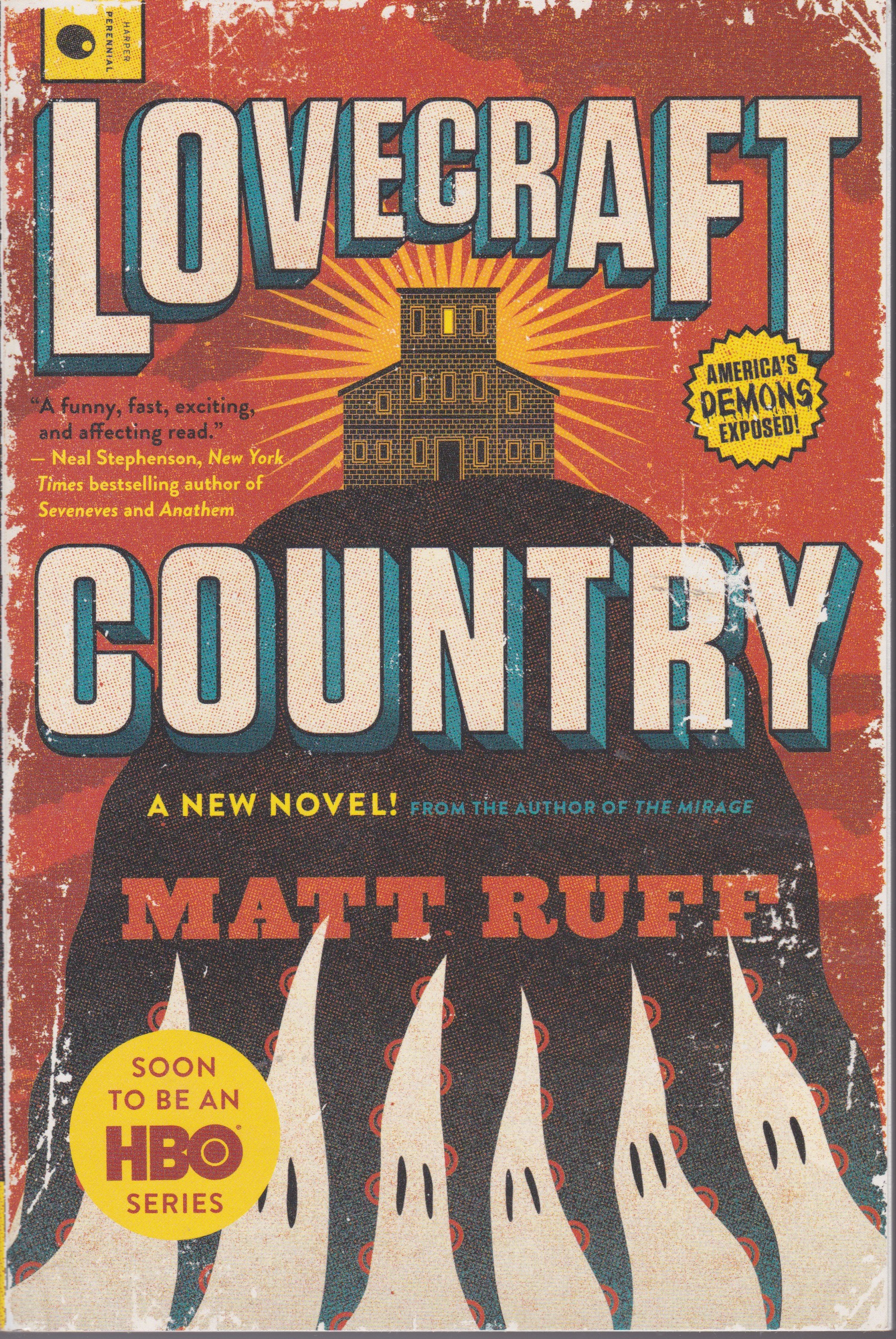
When I saw the first preview for HBO’s Lovecraft Country, it literally blew me away. I literally thought to myself, wow, I cannot WAIT to watch that, and was even more delighted to discover that it was, in fact, a novel. I got a copy, placed it on the mantle, and the week the first episode aired, I started reading. (Obviously, I do not read as fast as I used to.) I love love LOVE the show, and the book is actually pretty marvelous, as well. I finished it last night as I waited for the way-outer bands of Hurricane Laura to reach us here in New Orleans–all we got was a tropical storm effect, I am terrified frankly to look up what actually happened where the eye came ashore, and will have to gird myself with more coffee before I do look–and I am pleased to report the book finishes just as strongly as it starts–and that the entire book is fucking fantastic.

lovecraft country

Atticus was almost home when the state trooper pulled him over.

He’d left Jacksonville two days before in the secondhand ’48 Cadillac Coupe that he’d bought with the last of his Army pay. The first day he drove 450 miles, eating and drinking from a basket he’d packed in advance, stopping the car only to get gas. At one of the gas stops the colored restroom was out of order, and when the attendant refused him the key to the whites’ room, Atticus was forced to urinate in the bushes behind the station.

He spent the night in Chattanooga. The Safe Negro Travel Guide had listings for four hotels and a motel, all in the same part of the city. Atticus chose the motel, which had an attached 24-hour diner. The price of the room, as promised by the Guide, was three dollars.

I’m going to be honest right up front: I’ve never read H. P. Lovecraft. Oh, the horror, literally, right? When I was a kid I bought a copy of The Dream Quest of Unknown Kadath and other Stories, and it just…well, it just didn’t do it for me. I lost interest several pages in, and gave up; and have never since returned to try the Lovecraftian waters. As I grew older and became more and more aware of the horror genre, I also became aware of how much of an impact and influence Lovecraft had, not just on horror, but on the sisters that genre is usually lumped in with, fantasy and science fiction. Lovecraft is honored and saluted and studied and written about, over and over again; new anthologies explore his worlds and “cosmic horror”; so many horror writers and fans claim, on their social media pages, to have attended “Miskatonic University” (which, to be fair, is far less annoying than those who claim “the School of Hard Knocks,” har har); and of course, over the past decade (perhaps longer; who knows? I don’t, and don’t care to find out) you cannot be involved in publishing, or a fan, as I am, of the horror genre and not been aware of what I have come to call “the Lovecraft Wars.” (The Lovecraft Wars, in short, debate the legacy of Lovecraft and his vile, racist beliefs; the standard defense is a shrugged ‘he was a man of his time’–to which the only proper response, frankly, is so was Hitler–and whether or not he should continue to be honored as an influential author; I don’t know the answer to those questions, frankly, and it’s not my writing community so I have no skin in the game. But you cannot help but be aware of this ongoing conflict.)

Anyway, I was pleased when I saw the trailers for HBO MAX’s Lovecraft Country, which clearly centered Black people, and when I found out it was also a book, I decided to get it and read along while watching the series. I was also a little disappointed to see, based on the author photo on the back cover, that author Matt Ruff appeared to be white–which also seemed to be a whole other field of land mines; the #ownvoice debate.

And then I started reading, and watching.

The book is set in a post-Korean War pre-Brown v. Topeka Board of Education United States; when racism was not only permissable and acceptable to the majority of white people but was often enshrined into law; separate bathrooms, denial of service, mob violence and burning crosses were, horrifyingly enough, just a part of everyday life for Black people. The police weren’t there to help protect them; they were there to force them to continue to live their lives on their knees–and kill them if they tried to rise. Lovecraft Country doesn’t flinch away from this or try to downplay it in any way (either book or television show), and there were times I found it hard to keep reading and would put the book down–only to think to myself, that’s some serious privilege there, bud–this is what Black people experience to this very fucking day and they can’t just ‘put down the book’ and walk away from it; refusing to read it because it makes you uncomfortable and makes you squirm makes you even more complicit than you already are. So, yes, there are some parts to the book that will make white people uncomfortable–but you need to get over it, for any number of reasons but at least one is because the book itself is a revelation.

As I’ve said, I’ve not read Lovecraft, but I got the sense from reading the book that the interconnected stories that make up the book are all inspired by, or retellings of, some of Lovecraft’s; only now centering Black people and their struggle against not only supernatural forces but against the casual, every day racism of the society in which they live. Atticus is returning to Chicago from Jacksonville because he received a letter from his estranged father about a family legacy; Atticus’ mother, it turns out, was descended from a slave who was raped and impregnated by a master who was also a very powerful warlock and part of an ancient society with peculiar beliefs centered in the book of Genesis. His uncle George is the publisher/editor of the travel guide mentioned in the opening of the book; eventually Atticus and George go on a road trip to Massachusetts–to Lovecraft Country–along with a childhood friend named Letitia (Tish)–to find Atticus’ father and they wind up in a very chilling and scary place called Ardham (Lovecraft wrote about Arkham–and I will always wonder if Arkham Asylum from the Batman universe was an homage to Lovecraft as well). They deal with racism every step of the way, “sundown towns” (towns where people of color were required to be outside the city limits by sundown or else suffer the consequences), and corrupt racist cops.

Each section of the book focuses on another person who is a part of their immediate family/friends group, dealing with some kind of different, supernatural experience: the next part of the book centers Tish buying a big empty old mansion in a whites-only part of Chicago that also happens to be haunted, and so on–Tish’s sister has her own story; Atticus and his father go looking for journals of another warlock and encounter a haunting; George’s wife and son have their own stories as well–but all these stories are connected by a thread that goes back to Atticus’ family legacy and a war between different covens of warlocks for not only supremacy, but knowledge and power.

The book is exceptionally well-written, and as I said earlier, unflinching in its depiction of a racist society from the point of view of those consistently victimized by it, and it’s a toss-up between who is scarier–the warlocks and the forces they unleash, or the horrible racists, so entrenched in their horrific beliefs and values that they can’t see Black people as human beings. The fact Ruff chose to call his primary character Atticus didn’t escape me, either; Atticus being also the name of the noble white hero of To Kill a Mockingbird, which is, while a beautifully written novel, one which has become increasingly problematic to me over the years for any number of reasons. I greatly enjoyed reading the book–and in all honesty, it made me curious to read Lovecraft at some point after all these years; although it’s certainly not going to be a priority for me.

I will read more of Ruff’s work, though; the descriptions of his other books sound incredibly subversive, which appeals to me.

I recommend this book highly.