Rooms on Fire

Good morning! We made it to Tuesday, didn’t we? Yesterday was a bit off for me, not going to lie. But I’m up early, didn’t hit snooze more times than I should, and I am waking up slowly. We’re going to be extremely busy in the clinic today and I am, once again, working an almost full appointment schedule by myself. Heavy heaving sigh. But tis the trials and tribulations of one Gregalicious life, and all one can do is bear it and power through. I do feel less wrung-out than I did yesterday, which is, clearly, a strong and steady improvement over Monday’s horror. It really wasn’t bad, actually, I just felt kind of inside-out all day. Work was its usual, and I stopped to make groceries on the way home–amazing how what I got would have cost about fifty bucks last year but is almost eighty now. Sigh. But we have to eat, don’t we?

We watched another episode of His and Hers last night, which is a very interesting show. I don’t think there’s anyone in the show to root for–they all seem like pretty terrible people, and we are learning everything very slowly, which is interesting but also doesn’t really draw you in because you don’t completely understand. It’s more observing than actually watching, if you know what I mean? It’s very well done, and it’s always fun to look at Jon Bernthal (who should be a bigger star in my opinion). The Beauty drops another episode tomorrow night, so tonight is looking like another His and Hers episode or two. I have to run errands tonight after work–have to go all the way uptown to get the mail and some more prescriptions–and I need to do a load of dishes and a load of laundry, too. Stay focused. I also want to work on the short story I started this weekend. I have a great idea for a story for an anthology that was recently announced, I just have to write the damned thing now. I really need to write something fictional soon–the creative writing muscles are atrophying as I type this.

I was also thinking more about Judgment at Nuremberg and societal guilt some more yesterday–and the subject of “what do the everyday people think” that this movie kind of addresses. The short story–set in a slightly future dystopian Louisiana–has me thinking about all of this sort of thing. I had always believed, since childhood, that the South was utterly and completely racist–and whenever I read a historical novel set during Jim Crow and before Civil Rights that centers heroic anti-racist Southern whites I roll my eyes. (Don’t even get me started on the To Kill a Mockingbird nonsense.) But as I read more actual Southern history, and talk to my dad about it more, turns out the South really isn’t a monolith–there were Southerners who opposed secession and fought on the other side, which sometimes led to horrible atrocities–a distant relative fought for the North, came home on leave, and was skinned alive by the Home Guard (sometimes you supposedly can hear his screams late at night in the back hollers)–aka the Confederate version of the Gestapo. The power structures of the Southern states were in the hands of the racists and the Klan (the argument could be made that they still are) so whites who actually opposed Jim Crow were also afraid. (One of the many striking aspects of Tananarive Due’s The Reformatory was the white family who were in the Klan that the teenaged Black girl worked for; the daughter, who reluctantly helps her, knows Jim Crow is wrong but will only do so much out of fear.) So, were Southerners who opposed enslavement and secession but kept quiet out of fear for their own safety any different from the everyday Germans just living their lives under an evil regime, without the power or safety to do anything? Again, that brings up that morality question–does silent opposition matter when atrocities are being committed?

This is why reading Black authors writing about the South is so important. Progressives are so frequently told we live in a bubble and not reality; but people who don’t read authors from different demographics are also living in a bubble of supremacy and racism that bears no resemblance to reality. (As well as Due, read Wanda M. Morris and Cheryl Head, for a start–and S. A. Cosby is always a sure bet.)

I had a lot of laughs yesterday at the pathetic white people outrage as the casting of gorgeous Lupita N’yongo as Helen of Troy because “historical accuracy.” Just out of curiosity, how many ancient Greeks are actually in the cast? Or Greeks, for that matter? Were you there and can conclusively state Helen was a white woman? Her father was Zeus, who fucked her mother in the form of a swan, and she was hatched from an egg. How many Greek gods are being played by actual Greek gods? Just say you’re a racist piece of shit and miss me with your coward-ass dog whistling.

And on that note, I am heading into the spice mines. Have a lovely Tuesday, and I will be back tomorrow.
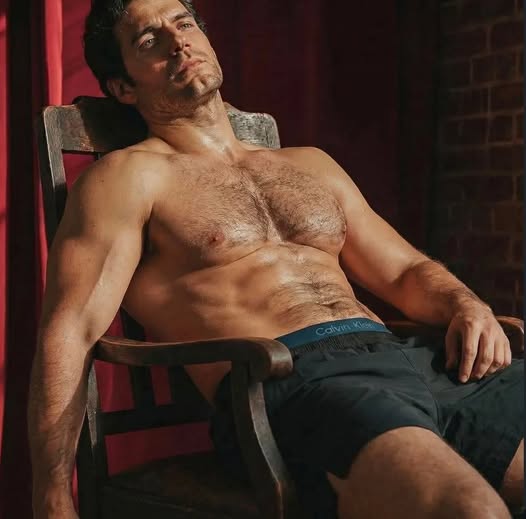
I will never stop being awed by how insanely beautiful Henry Cavill is….

The Look of Love

It truly is incredible what a shithole of a site The Site Formerly Known as Twitter has become under the tenure of that brilliant modern thinker Elon Musk (Narrator voice: those adjectives were meant as sarcasm). Every time I go there to cross-post the blog or something, it only takes a moment or two before I am getting the fuck out of that hellish place. I know I should probably just deactivate and be done with it as it fades away into memory like MySpace did once upon a time, but something keeps me there–despite knowing its immoral to even scroll a little bit, and definitely against my own personal ethics–but I think it’s more along the lines of watching a slow-motion disaster movie, frame by frame.

If only it would bankrupt him financially, to go along with his moral and ethical bankruptcies.

Yesterday wasn’t a very good day around the ranch. I was low energy all day, and while i did get all of my work-at-home duties taken care of and handled, after running errands and having a ZOOM call with three very dear friends (who undoubtedly are sick of me talking too much on ZOOM calls), I was just flat out exhausted and simply collapsed into my easy chair with my purr kitty for the evening. I did watch a lengthy documentary about the Eastern Roman Empire, and how the Holy Roman Empire was western Europe’s attempt to recapture and regrasp the legacy of Imperial Rome, to the point of rebranding the real Roman Empire as the Byzantine, or Greek, Empire. (The history of “western” civilization is full of these sorts of reclaimings and rebrandings, as the West sought to basically claim the history of civilization in general.) It just goes to show you–the history we all learned in public school was biased and written to enhance and create a foundation for white supremacy to rest upon. There’s a rather lengthy personal essay to be written about having to relearn everything I learned as a child as an adult because it was all wrong–or people could just read Howard Zinn’s work.

Today I do have some errands to run and vaccines to get injected into my arms; I also have things around the house I need to get done. I am going to make Swedish meatballs today in the slow cooker, I think; that’ll be a nice treat to go along with the LSU game tonight against Georgia State. There really aren’t many great games today–everyone has an “easy” game scheduled for the weekend before the Thanksgiving rivalry games, many of which this is the last go-around for. It’s weird to think LSU won’t be playing their most hated rival, Florida, every year any more (but how delightful to go out with a five game winning streak over them, ha ha ha ha and fuck off, Gators), or that other classic games won’t occur anymore. I don’t know why or when LSU’s Thanksgiving rivalry weekend opponent changed from Arkansas to Texas A&M; that was a fun rivalry with the Razorbacks pulling off some upsets over the years–why is it that everyone plays lights-out when they play LSU?–but that was also a manufactured rivalry that didn’t exist before Arkansas joined the SEC.

I also want to spend some time reading this morning; Lou Berney’s Dark Ride is calling my name and I am really enjoying it. The fun thing about Lou’s work is everything is always different; no two books are ever the same, or even the same kind of voice or style. Every book is an original in every way, and I will go to my grave with The Long and Faraway Gone as one of my favorite crime novels of all time. The one thing I am looking forward to after this surgery is more time to read, and if need be, I can read on my iPad–it’s not like I haven’t downloaded hundreds of books over the years. I’m still enjoying The Rival Queens–man, I love that period of French history–and I think my next read after Lou’s will be Zig Zag, by J. D. O’Brien; since it’s about a weed dispensary heist, coming after Lou’s stoner noir seems like the proper pairing, and then after that I am moving on to the new Angie Kim.

I was exhausted last night so I slept incredibly well. I even slept in this morning, not getting out of bed before eight-thirty like a slag. I feel much more rested and emotionally even this morning, which is a very good thing. I want to get a lot done today–I really need to move furniture and figure out how to make my work station more Big Kitten Energy proof, which is possible but will take some figuring out, and I won’t be able to move anything after Tuesday’s surgery, after all, so I have to get all this stuff done before hand. I don’t feel like I’ve had the chance to think everything through the way it needs to be thought through, nor do I feel like I am prepared for the aftermath and recovery period–which I think was the explanation for yesterday’s low energy; created and maintained completely by my anxiety.

I also want to read this original text version of The Mark on the Door, a Hardy Boys mystery.

We watched Blue Beetle last night, and I really enjoyed it. First, it was lovely seeing a Latinx family centered in a super-hero movie, and to have a super-hero of Mexican ancestry. It had some really funny moments (as well as some that made me go huh?), and as far as DC/Marvel movies go, it was one of the more solid plots and origin stories, but I’m also not terribly familiar with the Blue Beetle character. I primarily remember/knew him from the Justice League comic books of the late 1980’s/early 1990’s, and he was often teamed up with Booster Gold for comedy. I don’t know what has happened to the character with all the reboots since then, but I appreciated seeing something different from a comic book movie. The lead actor, young Xolo Maridueña, was handsome and appealing and charismatic, and the rest of the cast is fine other than the old witch who gave us Presidents Nader and Sanders because she doesn’t vote with her vagina (maybe you should have, you fucking piece of trash, since your mouth and going everywhere all over 24 hour news to trash Hillary helped give us the current Supreme Court, and you should be shunned and forced to take a Game of Thrones walk of shame down Pennsylvania you fucking hateful bitch–I will carry that grudge to the grave, skank). Seeing that fucking trash was in the cast made me seriously reconsider watching, frankly, and her “acting” was a joke and so horrific that Paul and I spent a good hour recasting with actresses who wouldn’t have just cashed the check and phoned it in the way she did.) The movie is actually strongest when it focuses on the Reyes family and their dynamic (Nana is the absolute best), and while it didn’t pull down the kind of financial numbers a movie like this is intended to (and odds that it’ll be blamed by Hollywood on centering a Latinx family are pretty strong), I do think this is one of the movies that in the future will be reclaimed as a classic and one of the best in the field. I hope there will be a sequel, as was teased at the end.

But I think they’re rebooting the movie universe for DC, so who knows.

And on that note, I am heading into the spice mines. Have a marvelous, marvelous Saturday, Constant Reader, and may whatever teams you’re rooting for today have a nice win–unless you’re a Georgia State fan, of course.

Gold

Everyone has heard of Constantinople at some point in their life, I should think–at least they’ve heard that annoying song “Istanbul (Not Constantinople)”. Some may even know that it fell to the army and navy of the Ottoman Turks under Sultan Mehmet II in 1453, ending the Eastern Roman Empire after a thousand years of existence. The Ottomans relocated the capital of their empire there, renaming it as Istanbul. (Christian Europe continued calling it Constantinople for centuries; it’s only over the last hundred years or so that Istanbul has come into more common usage.) But few know much more about the city and the empire it served as capital for over a millenium. Of those, some may know the basics–the Emperor Constantine, the first Roman Emperor to convert to Christianity, recognizing that the enormous Roman Empire had become impossible to rule or enforce law or protect, split the empire into eastern and western halves, and founded a capital for the east on the site of the village of Byzantium, renaming it Constantinople. The Western Roman Empire collapsed in 473 when the city fell; yet the eastern empire continued until 1453. Western Europe, always trying to reclaim the heritage of the Roman Empire (and ambitiously planning to rebuild it), always referred to the still existing Roman Empire as “Greek” rather than “Roman,” although the citizens of that great city and the vestiges of its empire continued calling themselves Romans until the Turks finally ended it.

But that thousand year history? It’s not easy to find information or books with much information; even the one history of the Empire I did read–Lost to the West by Lars Brownworth, along with his City of Fortune, a history of the Venetian Empire–glossed over centuries and only hit highlights. I’ve always wanted to write something historical set in the new Rome.

The Eastern Empire out-lasted its western counterpart by nearly a thousand years. Constantinople was one of the greatest Christian cities of all time; there was certainly nothing even remotely close to it in western Europe in terms of population, art, culture, education, and trade. It’s location put it in control of access and egress from the Black Sea; it also controlled the trade routes between Europe and Asia. Its fall in 1453 meant that those trade routes were now controlled by the non-Christian Islamic Ottoman Empire–and as such, other ways to reach the far east became necessary to the western Europeans, hence the Portuguese circumnavigating Africa and the Spanish attempt to sail west to find a route, leading to the “discovery” of the Americas. The fall of Constantinople was an incredibly important and necessary piece of the interlocking puzzle that led to European colonization and the global empires that resulted from it (as well as the oppression and enslavement and genocide of native populations); but Western historians–in particular, those monastic scholars in Catholic orders–have always tried to erase and /or lessen the importance of the eastern Empire and its capital, calling them “Greeks”, renaming the Eastern Roman Empire as the “Byzantine Empire,” etc.–and in no small part, this was also because of the Christian Schism of 1054, in which the Eastern Orthodox Church and the Roman Catholic Church split in two over questions of dogma. Therefore, it was in the interest of the Western Europeans to underplay the vital importance to European history of the remains of the Roman Empire because western Catholics considered their Orthodox brethren as heretics; their church was the true one, even if it was in the east that the religion originally came from, and it was in the eastern half of the empire the tenets and dogma of the “true” faith were established. The Pope in Rome always tried to assert his own authority over the Patriarch in Constantinople; the Patriarch considered himself to be the head of the faith and the Pope just another bishop. Thus, when Charlemagne conquered most of central Europe, he and the Pope created the Holy Roman Empire (which wasn’t holy, or Roman, or even really an empire in the traditional sense); the Romans in Constantinople were not pleased. (At the time, through some political machinations and drama, a woman was seated on the throne in Constantinople–the Empress Irene, one of the most interesting women in European history; she was also pretty terrible. The Pope decided there could be no such thing as a female Emperor, and so he crowned Charlemagne.)

The Holy Roman Empire also lasted over a thousand years.

Anyway, I’ve always been interested in the eastern Empire, even though it’s largely neglected in European histories. But one event in its history has always been interesting to me in particular –the fall of Constantinople to the Catholic 4th Crusade in 1204, which essentially set the stage for the second fall of the city, to the Ottomans in 1453. I also have an idea for a Colin book–which I’ve had for a very long time–that would have its beginnings in the 1204 sack of Constantinople.

It’s remarkably hard to find much information–granted, it’s not like I’ve tried very hard, but the fact that you have to try hard to find histories and/or books about the Empire and its capital, let alone the 4th Crusade–even histories of the Crusades themselves gloss over the fact that a Crusader army, blessed by the Pope, allowed itself to be diverted by the Venetians to capture and sack two Christians cities (Zara and Constantinople), and established “Latin” (western European) kingdoms and principalities out of the provinces that were once the Eastern Roman Empire. These Catholic kingdoms were so despised by their subjects that they didn’t last long, with another dynasty of the old empire arising to drive them out. The sack of the city and the pillaging and destruction that followed created such a deep hatred for the Catholic Church and the kings that followed the Pope that they preferred the Ottomans to a reconquest by the Catholic nations–which is saying something. Ernie Bradford’s The Great Betrayal: The Great Siege of Constantinople is a very thorough account of the tragedy and how it came to pass; the destruction of the mighty city–along with the destruction of priceless books and documents and art forever lost to us–was on a par with the burning of the Great Library at Alexandria.

The book itself is very interesting; the siege took nearly a year, and it’s actually kind of shocking that the Crusaders succeeded in taking the city, bearing in mind the strong defenses and so forth. A lot of things had to fit into place for it to happen, and they all did. The city came so close to holding them off successfully; it’s almost as though, as they would have said at the time, it was God’s will for it to happen. The city was also filled with all kinds of priceless Christian relics; after all, the religion was founded in the east, and as city after city fell to foreign invaders, a lot of priceless artifacts and holy relics were moved to the capital. (The great horses from the Hippodrome, for example, are proudly on display in the Piazza San Marco in Venice to this day.) A lot of the art was destroyed, jewels picked out of reliquaries, the gold or silver or bronze melted down for coin, and so forth.

As someone who has always loved history, and also has always loved treasure hunts–especially those that are involved with the history and development of Christianity, many years ago (I will freely confess to being inspired by Indiana Jones movies) I thought about writing such a treasure hunt story–where the ‘treasure’ being hunted was some important document or book or relic from the earliest days of Christianity that would revolutionize the faith as well as show how off-course it had gone since the earliest days…and wouldn’t it have made sense that whatever it was could have been kept in Constantinople, deep in the archives of the Orthodox Church? And with western, Catholic Europeans besieging the city, wouldn’t the Patriarch have wanted to keep it out of the hands of the Pope, and smuggled it out of the city to be hidden somewhere else, safe from the prying eyes of Rome?

And of course, when I created Colin–actually, when I brought him back in Jackson Square Jazz–I loved the character so much that I considered spinning him off; what about the jobs he’s on when he’s not in New Orleans? “Oh,” I thought, “my fall of Constantinople story! That could work for Colin!” And it even occurred to me the other day that I could even do them as “case files,” setting them throughout the past, both before and after he met Scotty and woven in between the Scotty stories. (It also occurred to me that I could do Scotty stories to fill in the years between books, if I wanted to…)

And reading this book–which i recommend if you want to know more about “holy wars” and how corrupt and unholy they actually were–made me think about it even more. I do want to include something about the Empress Irene, too.

Something to brainstorm at some point. Like I have the time to squeeze in another book…but it would be fun; although I don’t know how good I would be at writing action/adventure/thrillers.

It would be fun to find out, though.