Blowing Kisses in the Wind

Rereading ‘salem’s Lot again, after many years, has proven to be quite a treat: there was clearly a reason why I loved this book so much and why I’ve reread it about a gazillion times. It has always been my favorite vampire novel, and certainly one of my favorite horror novels. It scared the shit out of me when I first read it back when I was a teenager, and it has always entertained me, every single I’ve read it, even though I know what’s going on in the town, what’s going to happen, who lives, who dies. I remember there’s been talk over the years–I think even Stephen King may have aided and abetted this at times–that there might be a sequel; I’ve long since given up on that hope–despite always wanting to know whatever became of Ben Mears and Mark Petrie…and did they ever return to that awful town in Maine?

In the 1980’s, I decided that I wanted to be a writer like Stephen King. I started writing horror short stories, and even came up with an idea for a full-length horror novel called The Enchantress; I still have those four chapters I wrote in my files before I finally put it away for good. The book itself, while influenced most strongly by King, was also influenced by Peter Straub’s Floating Dragon, which I had also recently read–I’d loved Ghost Story and If You Could See Me Now–and wanted to write about, the way King did so often, a small town where something supernatural–and terrifying–happens. I blatantly copied the narrative structure of Floating Dragon (oh look! Four different point of view characters! One an old man, one a child, one a man in his early thirties, and the other a woman with psychic abilities that have basically cursed her life!) but I was also trying to weave some other elements into the story that might not have ultimately worked; it was set in the panhandle of Florida, for one thing, and it had to do with the curse of a witch on four different families (a la Floating Dragon, only he didn’t have a witch), and I don’t think that would have ultimately worked. The idea was also built around a concept I had, an idea, about evil, killer mermaids. I eventually used some of the story and the concepts for Dark Tide, whose original working title was Mermaid Inn.

It’s funny that rereading ‘salem’s Lot brings back such weird memories, isn’t it? I may get around to writing The Enchantress someday–it just can’t be set in Florida, because it needs cliffs–so maybe I’ll move it to a fictional town on the California coast.

Like King–another thing I stole from him–almost all of my books are connected to each other in some way. For years, the connection between the Chanse and Scotty series were my cops–Venus Casanova and Blaine Tujague–appeared in both series; why have different homicide cops in the same city? I had originally intended to connect everything; Woodbridge in California, from Sleeping Angel and Sorceress are connected to the small town in Kansas from Sara; I don’t recall off the top of my head how Lake Thirteen plays into my world-building; but I think the Chicago suburb where the main character in that book is from was the same suburb that the kid from Sara was from, and so on. I always wanted to go back and write some more about Woodbridge; I kind of saw my teen/young adult fiction as being similar in type and style as the Fear Street series by R. L. Stine; which were all in the same town and often minor characters in one book was the main character in another. (Woodbridge was loosely based on Sonora, where some of my college friends were from; I visited them several times up there in the mountains and it was stunningly beautiful up there. One of the few great things about spending the 1980’s in Fresno was accessibility to Yosemite, Sierra National Forest, and Kings Canyon.)

I may get back to this at some point; Bury Me in Satin is connected in that it returns to the part of Alabama where the main character in Dark Tide is from, and more connections might develop as I write the book. I’ve pretty much decided to try to get the first draft of Bury Me in Satin written for Nanowrimo, which is something I’ve never done before; but why not? I am not going to officially participate, but why not use it as a goal to get the first draft of the story done?

I am on chapter nineteen of the revision of Royal Street Reveillon; one big strong last push is all it will take for me to get that finished by the end of the month, and I am enormously pleased at the prospect. It’s shaping up nicely; I think there are still a few holes in the story I am going to have to figure out how to plug later, but that’s perfectly fine.

And now, back to the spice mines.

IMG_4284

Mysterious Ways

I hate being sick.

I noticed on Saturday something was off–I just assumed it was the disappointment of the LSU loss, but on Sunday I knew I was coming down with something; achy joints, burning eyes, fever that came and went, lack of energy, congested sinuses, etc. I took a Claritin-D, dosed myself occasionally as warranted with DayQuil, and slept decently that night. Monday I was still off–congested, achy, etc.–but it was bearable. Yesterday I was again low energy and achy, but was still hopeful I could ward it off.

Silly Gregalicious. When will you ever learn?

Yes, it hit with a vengeance this morning. All of my joints ache. I have a fever. I am constantly blowing my nose. I have a headache. Nausea. Draining sinuses and constant fits of wet, phlegmy coughing. Lovely.

So I regretfully called in sick. I will spend the day resting in my easy chair, reading, dosing myself with DayQuil and Vitamin C and juice and water. My throat is very scratchy and feels raw. There is so much pressure behind my eyes it feels like they’ll both pop out if I cough hard enough.

Yes, in case I haven’t made it clear, I am feeling absolutely miserable. Miserable.

Of course, it could be worse. It can always be worse. This is just some flu-ey thing that will go away. It’s not a chronic illness I have to live with the rest of my life, or something potentially fatal. New Orleans is being spared from the fury of Hurricane Michael (do stay safe, Floridians). So, yeah, all this whining for a minor inconvenience is pretty pathetic and sad, in the big picture.

Fuck the big picture. I feel sick.

I’ve been watching Season 3 of The Man in the High Castle, which is quite good. I am having trouble remembering Season 2–which I know I watched and enjoyed–but the show is very interesting…and somewhat troubling to watch. If you don’t know the premise, it’s based on a popular Philip K. Dick novel of the same title, which was an alternate history which imagined that the Nazis developed an atomic bomb, which they dropped on DC, ending World War II with an Axis victory. The United States has been divided up between Japan and Germany–the Germans have everything from the eastern seaboard to the Rockies; the Japanese everything on the other side to the Pacific coast (no mention of the Italians, which is interesting in and of itself), and the growing Resistance to the Fascist tyrants. After watching the first season I read the book, which is significantly different but equally compelling, but the show is really taking off. I do remember some terrific moral dilemmas for the characters–this is one of the show’s great strengths, frankly; when you are living under a fascistic regime, what is moral? It’s also an interesting look at collaborators, because of course there would be some–many, in fact.

I also read some more of Circe last night in my misery, and it is, as always, still compelling and beautifully written. Maybe between naps and misery i can actually finally finish reading it today.

And now to the easy chair with me.

IMG_2528

Make It Happen

Friday! Huzzah! Huzzah!

Yesterday I did something I’ve not done in a long time: posted a Throwback Thursday picture. I have a folder of pictures I got from my family and scanned from my childhood, and I picked one from there.

This one, to be more precise:

Scan 18

As you can see, it was developed in February of 1974, which means it was taken on my sister’s little Kodak pocket camera in the summer of 1973. I also know that beach–Panama City Beach, Florida, where my aunt and uncle had a cabin about three blocks or so from the water they rented out and we often stayed at when we went south in the summertime.

As I posted the picture, I smiled fondly; I’ve never really written an awful lot about the Gulf Coast of Florida–there’s a couple of short stories I’ve never published, and ideas for more–but the most amazing thing about this picture, to me, is how empty the beach is for a July afternoon. I can’t even imagine that being possible today. Back then, there were no resorts, hotels, or luxury condos built on the beach side of the shore road; and there were no high rise buildings in Panama City Beach, either. Just little beach houses, very few year round residents in the area. The shore road wasn’t exactly lined with chain restaurants and fast food, either; mostly little mom-and-pop souvenir shops that also sold gasoline and cold soda and beer. Scattered along the shore road were family-owned seafood diners–I remember some amazing meals at these places. On the beach side of the road I remember there were these enormous ditches, with worn, weather-beaten wooden footbridges leading over them to the dunes–covered with sea grass and sea oats–and then on the other side you could climb down some weather-beaten gray wooden stairs to the actual sugar powder white sand. It was so beautiful there…the beautiful panhandle beaches spoiled me for all beaches I’ve been to ever since; setting a standard that is hard to beat. We used to go to Miracle Strip Amusement Park; the adults would sometimes go to the dog races at Ebro. The cabin had a big screen porch with a tin roof where all the kids would sleep in front; with just one of those little hooks to keep the screen door closed.

I can’t imagine parents letting their children sleep in such an unsecured location now; it seems like a recipe for children disappearing, doesn’t it?

Someday I suppose I will write about the panhandle of Florida back in the 1970’s; the only thing I’ve done thus far is an unpublished horror short story that is kind of cliche and will probably never be published anywhere (I am not a horror writer, but I keep trying. Or maybe I’m just not a good short story writer in general; or some combination of the two, I don’t know).

And now, back to the spice mines.

38531481_1909614639332770_2519910578747604992_n

Go Home

Sunday morning, with lots to do and a long, relaxing day ahead in which to do it all. I woke up relatively early this morning, which was a wonderful and pleasant surprise, and feel rested. I have a short story to work on, a reread of Royal Street Reveillon to get through, and I’d also like to make some progress on my reading of Eryk Pruitt’s What We Reckon. I cleaned and did errands and read yesterday; along with some note taking on various projects as well as filing. This coming week should be interesting, to say the least; I am doing some testing on Monday and Thursday at the Blacks in Government conference at the Riverside Hilton, which will be a lovely change from my ordinary routine, and I have a three day weekend next weekend in honor of my birthday.

Yes, the old man officially turns fifty-seven next weekend; although I always change my age on New Year’s. After this next New Year’s, I’ll be telling people I’m fifty-eight. Age has never mattered  much to me; for the early portion of my life I was always younger than everyone else around me; later on I was always older than everyone else I hung around with. I learned early on that age is a relative concept.

Yesterday was kind of a lovely day for me. It rained off and on most of the day, and there really is nothing lovelier than being inside and dry while it rains outside, and our rain is do torrential and tropical–so lovely to deal with when you’re inside rather than when you’re actually outside dealing with it. As the bed linens agitated in the washing machine and the wool blankets tumbled dry in the laundry room, I was filing and getting my desk area organized, listening to the rain and looking out my windows to see all the leaves outside glistening and wet, and water cascading out of the rain spout on the house next door when a phrase formed in my head, and I scribbled into my journal, standing up at the kitchen counter: It was one of those lovely summer Saturdays New Orleans gets sometimes in August–where thunderstorms roll through the city all day, the dark clouds creating an artificial twilight at three in the afternoon. Perfect for staying inside and cleaning, the washing and drying and folding of clothes. The cat sleeps lazily in the desk chair, waking up every now and then to groom before curling up again into a tight ball of differentiated ginger stripes.

I may never use that in something I write, be it a short story or a novel, but it’s a nice piece of writing nonetheless. My notebooks and journals are filled with such scraps of writing, of ideas and thoughts and fragments and character descriptions or settings.

And next up in Florida Happens, for the Short Story Project is “The Fakahatchee Goonch” by Jack Bates.

jack bates

Goonch is just another name for a catfish. A really big catfish.  Sometimes it’s called the Devil Fish or Black Demon because it lurks deep down there in the murkiest part of the Fakahatchee Preserve. Bottom feeders mostly. They eat gator leftovers or anything else that might get tossed into the swamps. Back in the mauve and neonMiami Vice days, legend had it the Everglades was a good place to dispose of a problem quick.  People think that’s how the goonch developed a taste for meat.

Of course, the guys who trawl for catfish say those fish are just as apt to eat water weeds and such if the pickings are slim.  Sometimes they feed on their own.  Had some guys drag in twenty to thirty pounders, about three feet long. That ain’t no fish tale.

Neither is this one. The catfish I’m talking about is an eight-man goonch. Know what that is? That’s when eight grown men stand in a line, shoulder to shoulder, and that goonch lays across all of their extended hands from tip to tail. That’s how big the Fakahatchee goonch was said to be. Had a mouth like the gaping orifice of hell, or so I’m told. I ain’t never seen it, but I know it’s there.

There have been nights when I’m frog hunting where the frog croaking will go quiet and the swamp gets real still. Something big enough to rock my aluminum skiff passes through the water. Up ahead in the dark there’ll be a splash and a few ticks off a clock later my skiff will rock a second time except maybe a little more treacherously on the creature’s return pass. and I’ll have to sit down, clutch the sides so I don’t tip out. Only way I know it’s safe to leave is when the frogs start croaking again.

Sometimes though, a frog will puff its chest and blowout its braggadocio regardless of the danger it’s in.

Jack’s bio reads “Jack Bates writes some pretty good crime fiction from the comfort of his loft office. His stories have appeared all around the web, in various anthologies, and in a few magazines. Three have been finalists for the Derringer Award from the Short Mystery Fiction Society. He’s also written award-winning scripts for stage and screen including a short-lived web series. An incomplete list of his works can be found on his blog http://flashjab.blogspot.com/.   When not writing, he plots or travels or runs errands or chats it up with other old movie buffs on twitter. He pens the Harry Landers, PI, series for Mind Wings Audio Books. He’s also released several ebooks with Untreed Reads which launched the Hack Ward PI series with Monkey See, Monkey Murder. In 2012, his YA Steampunk novel, Colt Buchanan and the Weather Walkers, was released by Red Willow Press.”

This short story is quite fun, and in the classic mold of slightly off, wacky Florida noir. Set in a dive bar on the west coast of Florida in a nothing town on the edge of a swamp, a stranger walks in with a wad of cash and an air of mystery about him; two tough rednecks are playing pool with their girlfriends when the two men decide to win some of the stranger’s money off him–and things continue to spiral downward from there. It reminded me of John D. Macdonald with maybe a dash of Hiassen thrown in for good measure, and is a very fun and satisfying read; one that I’m glad is in the book.

And now, I have spice to mine.

I’ll Be Over You

Saturday morning in the Lost Apartment. I have work to do, errands to run, an apartment to clean, and weights to lift. And rather than getting started on any of it this morning, I am rather sitting in my chair, swilling coffee, and wasting time on the Internet.

Meh, it happens.

Today I am going to spend some time writing, and reading–I want to get further along in Eryk Pruitt’s What We Reckon (#boucherconhomework) and last night I had an absolutely brilliant idea of how to structure that panel. Mwa-ha-ha. The panelists may not think it’s brilliant, but do, and am in charge.

Power corrupts, and absolute power corrupts absolutely.

MWA-HA-HA-HA-HA!

This is going to be fun.

Next up in the Florida Happens anthology is a story by Debra Lattanzi Shutika. From her website:

“Hello, I’m Debra Lattanzi Shutika, author of Beyond the Borderlands: Migration and Belonging in the United States and Mexico (2011, University of California Press), an ethnography that explores the lives of Mexican immigrants and their American neighbors in Kennett Square, Pennsylvania and the transformation of their home community in Mexico.  Beyond the Borderlands is the winner of the 2012 Chicago Folklore Prize.

I direct the Field School for Cultural Documentation, a collaborative project with the American Folklife Center at the Library of Congress.  The Field School has completed eight community-based documentation projects, including the occupational culture of Arlington National Cemetery, two years in the Columbia Pike neighborhood in Arlington, VA (2011-12) the Alexandria Waterfront (2014), Arlington County Community Gardens in 2016 & 2017. We have also held two residential field schools in West Virginia. One in Morgan County in 2012 and most recently in the West Virginia Coalfields in 2018.

I also write fiction. My short story “Frozen Iguana” will appear in the 2018 Bouchercon anthology Florida Happens, and “Mirrors” appeared in Richard Peabody’s Abundant Grace: The Seventh Collection of Fiction by D.C. Area Women.  I’m revising a novel, The Other Kate, a mystery about postmodern changelings.

My current academic projects include a book-length ethnography about a documentation project with the National Park Service on the 50th Anniversary of Summers in the Parks.

I teach Folklore, ethnographic writing and ethnographic research methods at George Mason University.”

Her website is here.

debra lattanzi shutika

And here is how “Frozen Iguana” opens:

Thunk

Jimmy turned off the water and stood in the shower, shivering.

Thunk

Thunk, thunk thunk.

He looked up at the ceiling tile expecting a dent from the last—

Thunk

He wrapped a towel around his waist and eased out of the steamy bathroom, the trailer floor creaking with every step.

Jimmy pulled the blinds back from the front door window. The thermometer read 36 degrees, the sixth day of the Florida freeze. The iguanas had started to fall out of the trees like junkies after a hit. Across the way a car door slammed. At midnight, Jimmy watched his neighbor Kate, wearing her scrubs, her auburn hair tied back in a ponytail, hop down from her truck and head for her trailer. For the next hour, he made the pilgrimage to the window to watch the comings and goings of the park. Three and a half Buds later, Jimmy fell asleep for the night on the couch.

There is nothing more annoying that the repetitive sound of frozen iguanas hitting the roof of your trailer, with the possible exception of a man hammering at your neighbor’s door. Jimmy stumbled out of bed and looked outside. It was six in the morning and there was a cop. At Kate’s door.

As the unofficial mayor of Paradise Lake trailer park, Jimmy Dickson knew every resident’s story. Jimmy stayed clear of the junkies and pushers, and he watched over the lost souls who somehow ended up here. Kate was one of his favorites.

He grabbed his hat and stepped outside.  Kate hollered, “Calm down!” Her breath rose in small clouds.

“You Kate Lucci?” The cop towered over Kate.

This is a terrific story, and I love so much that she chose to write a story around the south Florida iguana issue. I have a friend who lives on the Wilton River in Fort Lauderdale, and the iguanas–who live on an island just across from his property–drive him insane. They eat the fruit from his trees, they leave piles of iguana shit everywhere, and I have to say, in the morning when you are relaxing alongside the pool with your morning coffee, it’s a bit of a shock to see something moving out of the corner of your eye and then look over and see an enormous iguana just on the other side of the screen.

And yes, during a cold spell there a few years back there was, as Steve said, an ‘iguana holocaust’–most of them freezing to death. But it wasn’t permanent, and they are back.

The story is set in a trailer park in Broward County during a freeze–with frozen iguanas falling out of the trees fairly regularly. Kate works in a rehab facility, and one of her neighbors is in recovery for opioid addiction–and has overdosed. The cops dismiss it as just another relapsed junkie overdosing, but Kate doesn’t believe the story. The victim’s addiction had cost her custody of her kids, who were being brought over for a visit the next day–which means the relapse, at least to Kate, doesn’t make sense. Dismissed by the cops, with the assistance of another resident in the park Kate keeps looking into the strange relapse, continuing to find other indications that it may have been murder, and finally solves the case herself. What a great lot of fun!

And now I suppose I should get back to work.

Your Wildest Dreams

Good morning! It’s Thursday, everyone, and with a short day at the office ahead of me and just one more day before the weekend, I am feeling good. Not as good perhaps as I should, but I slept really well last night, don’t have to be at work until later this afternoon, and I am going to even go to the gym this morning before it’s time to go to work.

I call that a winning day, don’t you?

I am reading Lori Rader-Day’s The Day I Died as prep work for my moderating duties at Bouchercon next month. I am, in case you weren’t paying attention, Constant Reader, moderating the panel highlighting the Anthony Award finalists for Best Paperback Original. After I finish Lori’s book I’ll be reading Bad Boy Boogie by Thomas Pluck, What We Reckon by Eryk Pruitt, Cast the First Stone by James Ziskin, and Uncorking a Lie by Nadine Nettmann. I’m enjoying Lori’s book–I also enjoyed the previous one of hers I’d read, Little Pretty Things, and as I’ve said before, there’s no one more fun to traverse the back roads of rural Alabama on a rainy morning with. All of these books had been in my TBR pile for quite some time, so it’s great to have an excuse to pull them out and read them.

I worked a little more on “Please Die Soon” yesterday; the story is becoming even creepier the more I work on it–although I think I may have done some overkill with it. But I am going to keep going with it, and once I am finished with the first draft I’ll figure it out in the revision process. I am also letting “A Whisper from the Graveyard” sit for a while–I know there’s some serious tweakage needed in it as well before submitting it–and I am starting to get to work on the August/September project as well. Exciting times for a Gregalicious.

And before I go to the gym this morning, I’m going to try to get the house straightened up a bit.

And while I know I’ve already talked about my story in Florida Happens (“Cold Beer No Flies”) I intend to spend the rest of this month’s focus on The Short Story Project on the stories and authors in the book, to try to whet your appetite for either preordering the book or buying it at Bouchercon. We are doing a launch for the book there on Thursday at 1; all the authors present gathering to sign and/or discuss the book and their story. And of course, it’s just easier for me to start by talking about my own.

Dane Brewer stepped out of his air-conditioned trailer, wiped sweat off his forehead and locked the door. It was early June and already unbearably hot, the humidity so thick it was hard to breathe. He was too far inland from the bay to get much of the cooling sea breeze but not so far away he couldn’t smell it. The fishy wet sea smell he was sick to death of hung in the salty air. It was omnipresent, inescapable. He trudged along the reddish-orange dirt path through towering pine trees wreathed in Spanish moss. The path was strewn with pine cones the size of his head and enormous dead pine needles the color of rust that crunched beneath his shoes. His face was dripping with sweat. He came into the clearing along the state road where a glorified Quonset hut with a tin roof stood.  It used to be a bait and tackle until its resurrection as a cheap bar. It was called My Place. It sounded cozy—the kind of place people would stop by every afternoon for a cold one after clocking out from work, before heading home.

The portable reader board parked where the parking lot met the state road read Cold Beer No Flies.

Simple, matter of fact, no pretense. No Hurricanes in fancy glasses like the touristy places littering the towns along the gulf coast. Just simple drinks served in plain glasses, ice-cold beer in bottles or cans stocked in refrigerated cases at simple prices hard-working people could afford. Tuscadega’s business was fish, and its canning plant stank of dead fish and guts and cold blood for miles. Tuscadega sat on the inside coast of a large shallow bay. The bay’s narrow mouth was crowned by a bridge barely visible from town. A long two-lane bridge across the bay led to the gold mine of the white sand beaches and green water along the Gulf Coast of Florida. Tourists didn’t flock to Tuscadega, but Tuscadega didn’t want them, either. Dreamers kept saying when land along the gulf got too expensive the bay shores would be developed, but it hadn’t and Dane doubted it ever would.

Tuscadega was just a tired old town and always would be, best he could figure it. A dead end the best and the brightest fled as soon as they were able.

 He was going to follow them one day, once he could afford it.

Towns like Tuscadega weren’t kind to people like Dane.

“Cold Beer No Flies” was originally conceived of back when I lived in Kansas, as far back as when I was a teenager. There was a bar in Emporia called My Place, which was an okay place–it had a concrete floor, just like the one in my story–and it also had one of those rolling readerboard signs along the road, and it literally read that: MY PLACE COLD BEER, NO FLIES. I always thought that was funny, and I always wanted to write a story called “Cold Beer No Flies.” I think I wrote the original first draft of the story in the 1980’s, and it languished in my files all these years. When it came to be time to write something for Florida Happens, I picked out “Cold Beer No Flies”, read the first two drafts of what I had written before, and decided to reboot the story and adapt it to the Florida setting. I’d always seen it as a noir story, and in rewriting/adapting it to fit this I needed to obviously move the setting from Kansas to Florida. I also had the bright idea to set it in the panhandle; I figured (rightly) that the majority of stories would be set in the beach communities literally the southern coasts of the state, and not many people would be moved to right about either the interior parts or the panhandle. I picked a dying, rotten little small town and placed it on a panhandle bay, similar to the little town my grandparents retired to in the early 1970’s. I also wanted to look at, and explore, what it’s like to grow up gay and working class in such a place–very redneck, very conservative, very backwards, very religious, very homophobic. The story turned out very creepy, I think, which was precisely what I was going for, and I hope you enjoy it when the time comes, Constant Reader.

And now, back to the spice mines.

536a946bd2915add3da2f3ce62e4968b--rugby-men-rugby-players

Burning Heart

Sunday morning, and yet another good night’s sleep. It truly is amazing what a difference that can make in one’s life; I miss the days when I could simply tumble into bed and close my eyes and, as Paul once put it, “sleep through a nuclear holocaust.” Yesterday was a good day; I got groceries and did some cleaning. I read both “This Town” and “Don’t Look Down” aloud, did the necessary clean-ups on them, and this morning I am going to read “Fireflies” aloud and see if it, indeed, does hold together. I wrote the first draft of “Fireflies” something like thirty years ago (!) and it’s still in the file folder, handwritten (because until computers, I almost always hand-wrote everything); I am still not entirely certain the story works; but we will find out today when I read it out loud.

I was very pleased with the two stories I read aloud yesterday, and if I do say so myself, I feel “This Town” is one of the better stories I’ve written. I’m going to read “Fireflies” aloud this morning, and then I’m going to work on “This Thing of Darkness” for a little bit, see how that goes, and then maybe dive into one of the two novels I am working on (focusing on, really; there’s a third I started writing a couple of weeks ago, which I am itching to get back to, but that’s just crazy talk). I also started reading Alex Segura’s Blackout yesterday, not getting very far, alas; but I am looking forward to getting further into it. I also started reading Martin Edwards’ Edgar Award winning The Golden Age of Murder, which is my new ‘read a chapter or two before bed’ book. We also started watching Harlan Coben’s new Netflix series, Safe, and are really enjoying it thus far.

My kitchen is also a disaster area; I made ravioli last night and yes, well, a mess is a bit of an understatement.

I also stopped at Office Depot yesterday to purchase pens. I’ve discovered a new brand of pen that I absolutely love: Tul, with a dash over the u. They sent us a couple of them at the office a month or so ago, and I absconded with them, as is my wont, and then bought a couple more. Yesterday I bought several more packs of them. I’ve always been a bit of a pen nerd, and I also noticed last night, as I made notes in my journal, that my blank book is almost full; time to get a new one soon. Yay! I really am glad I’ve gone back to keeping a journal to write notes and ideas down into; I’ve worked out issues with several of my short stories this year in it, as well as the books.

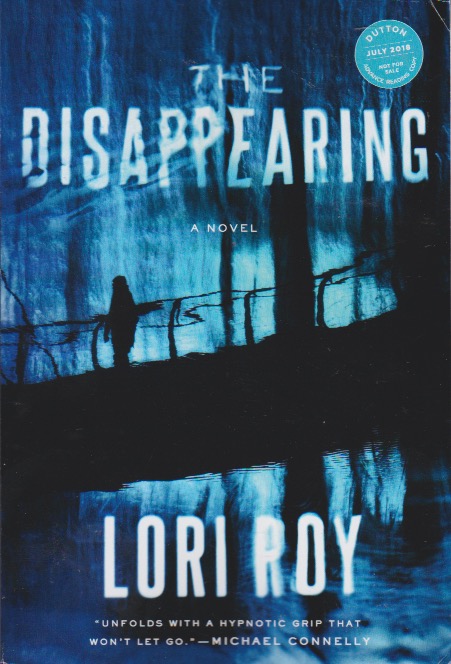
I also managed to finish Lori Roy’s upcoming new release, The Disappearing, last night.

the disappearing

Lane Wallace is alone inside Rowland’s Tavern when the front door flies open. A man stumbles inside, bringing with him a spray of rain that throws a shine on the hickory-brown floors. He scans the dark rooms, stomps his feet, and draws both hands over his wet, round face. If the man says anything, Lane doesn’t hear him for the rain pounding the tin roof and the palm fronds slapping the front windows. It’s supposed to rain through the night, and all around Waddell, people will be keeping a close eye on the river.

Lane smiles because maybe the man is a friend of a friend and not a stranger. She’s expecting a big crowd tonight, and one of her regulars might have invited him. But he doesn’t smile back. Slipping her phone from her back pocket. she lays it on the bar top where the man will be sure to see it. It’s a subtle warning, but if the man is looking for trouble, it’ll make him reconsider.

He’s a little on the heavy side; doughy, a person might say. From behind the bar, Lane asks the main if a beer’ll do him, and as he slides into a booth near the front door, he nods. Hr regulars, men who’ve known her all her life, or rather who have known her father, won’t show up for another hour or so but Rowland Jansen will be back any time now. He ran out to move his car and Lane’s to the higher and drier ground of the parking lot out front, so she won’t be alone with the man for long.

This is Lori Roy’s fourth novel, and it’s quite an achievement. His first three novels–Bent Road, Until She Comes Home, and Let Me Die in His Footsteps–were all shortlisted for Edgar Awards; she won Best First for Bent Road and Best Novel for Let Me Die in His Footsteps, raising her up into the exalted, rarified air of the Multiple Edgar Winner Circle. I’ve only read Bent Road–I do own the others, will every intent to read them at some point; too many books, not enough time–and it blew me away with its stunning depiction of rural Kansas, its juggling of two separate time-lines, and its thematic exploration of how the pains and evils of the past can influence the present.

That same theme runs through this stunning new novel, The Disappearing, as well, and is explored even more deeply and explicitly than in the first. Waddell is a small town in north Florida, amorphously near Tallahassee; Roy’s captured the feel of rural small town Florida deftly (there is, as not many know, a huge and significant difference between the coastal cities of Florida and the insular, small towns of the state’s interior). She plays with the memories of Ted Bundy’s journey through the area; a young woman, a student at Florida State doing some internship work at a local, fading plantation is missing, which has stirred up all those fearful memories of Bundy’s spree. The plantation also shares a boundary with a closed reform school for boys, whose own violent and possibly deadly past has also come back to haunt Waddell.

But it’s also an exploration of family, and how the damage from a past history of deep violence and emotional abuse, locked away and ignored, can reverberate through the years and have deep, horrific implications on the present. Susannah Bauer’s disappearance triggers a chain reaction of emotion and violence and horror, spread over the course of a few days after the night of the heavy rain, that will continue to cycle through the future unless honestly and painfully dealt with in this present.

There are four point of view characters in The Disappearing: three women from generations of the same family–Erma, the matriarch of the Fielding family, with her guilts and secrets festering inside her for decades; Lane, her daughter, whose own emotional damage and baggage perpetuates the cycle; and Lane’s younger daughter, Talley, whose wanderings due to her own loneliness and unhappiness makes her the holder of most of the secrets and truths of the present. The fourth point of view character is Daryl, a mentally disabled young man who is the groundskeeper at the church, and his story is told in the recent past rather than the present, as Lori Roy deftly spins all the secrets and lies and horrors of the town of Waddell into an astonishingly well-blended tale of flawed people and the damage they can leave in their wake.

Even more impressive than the characters and the story itself is the mood and the voice; the way she maintains this almost dreamy tone, creating the perfect mood for the story is masterful. The voices of her characters are compelling and real; only Daryl tells his story in the first person; the others are a very tight third person present tense. The shifts in voice, the tone, the tense and the word choices and the imagery, kept reminding me of Faulkner’s brilliant The Sound and the Fury, and in a very good way.

The Disappearing is an extraordinary achievement, and is destined to make awards short-lists and all the Top Ten lists for 2018.

Say It Isn’t So

Yesterday I gave up on a short story that was so fucking painful to write. I’ve literally been working on this story stubbornly for over a week, crested three thousand words yesterday, was nowhere near finished, and it took me about five hours to get about five hundred words done–and I questioned every single one of them. Do I still think it’s potentially a great story? Yes, I do. Am I going to waste any more time trying to write it right now? Hell no. I had wanted to submit it for the MWA anthology, which has a deadline of December 1, but if I am having this much trouble trying to get a first draft finished…there just ain’t no way I would have a polished and pristine version to submit that would have a chance of getting published against the hundreds of other amazing stories being sent in. Getting into one of the MWA anthologies is on my bucket list, but this year apparently isn’t going to be the year. It’s enormously disappointing, to say the least, but I should have given up on this story before now. I have too many other things to do before December 1 to justify having wasted so much time trying to get this story written. It just rings so false.

And it had so much potential. Oh, well. Sometimes that’s just the way the ball bounces, you know?

Slogging through writing that stupid fucking story has also fucked with my self-confidence, seriously. Not that I have a lot to begin with, but when you’re a writer you are in a constant state of questioning yourself: can I still do this? What if I’m burned out? What if I’ve suddenly lost the ability to do this? WHat if I can’t write anything decent anymore?

I mean, not being able to bang out the first draft of a short story? I used to be able to do that in about three hours, if I focused. And now I am wondering if I no longer have the ability to focus. See how that works?

Ah, well. So, now I am going to try to go work on another short story; a completely different one, a more noir-esque tale of lust and desire turned to murder in a damp Florida panhandle town, reeking of the sea and Spanish moss and towering pine trees and white sand. And I need to get back to work on the Scotty book, and I’ve got some editing to do.

Whatever.

Here’s another Calvin Klein underwear ad.


l-WKQCaBZXKNCBFARn


Pass the Dutchie

Bouchercon next year will be in St. Petersburg, Florida. It will be hot and sticky, but there will be lovely gulf breezes and a sun shower every afternoon right around three o’clock.

Last night we watched LSU beat Ole Miss 40-24; we’re on a three game win streak now and bowl eligible. There’s a bye next week, and then LSU has to play at Alabama. Heavy sigh. I don’t know if I’ll even watch that game…I know I will, but it’s going to be hard to watch. LSU hasn’t beaten Alabama since 2011, and it’s not very likely they will this year. The fan in me is hopeful; the realist in me isn’t.

I did manage to finish reading Anna Dressed in Blood yesterday. I’m not going to review it, though–it was okay; I can see why it appeals to tweens and young teens, but it doesn’t really work on an adult level. I think maybe if I hadn’t watched all eleven or twelve or however many seasons of Supernatural there are, I might have enjoyed it more; but it was too reminiscent of the show for me. The main character’s name is even Cas…and of course, there’s a Cas on Supernatural. Apparently the author, Kendare Blake, has turned it into a series, and that’s terrific. I doubt I’ll read another. I only knew of the book because a tween reviewer raved about my own Sara and compared the two to each other favorably; she also compared it to Pretty Little Liars, which I also appreciated. I started my reread of The Haunting of Hill House last night as well, and also finished reading Craig Pittman’s Oh, Florida!, which I also enjoyed. It reminded me a lot of childhood summers spent in Florida, and even inspired me to drag out an old short story set in the Panhandle, “Cold Beer No Flies,” which I’ve been sort of working on since getting back from Toronto. I do recommend the book highly; while it doesn’t fully explain the weirdness that is Florida, it is very informative, at times funny, and I enjoyed it tremendously.

51eCxTDS8iL

It’s even got me thinking about writing a new series set in Florida, if you can believe that. But that’s how my mind works. I’ve been toying with a couple of ideas for noir novels set in Florida for a long time–I also have an idea for a funny noir style novel set there as well–and the lovely thing about having this book on my shelf is I can always take it down and reread a section to get my inspiration jump-started.

I also need to get that damned copy edit of Jackson Square Jazz finished this week. That’s my goal; get the copy edit done, start the final revision of the WIP, and do two chapters of the new Scotty this week while writing some short stories. It’s lofty, but I think I can get it all done.

And on that note, t’is off to the spice mines.

Up Where We Belong

Oh, Florida.

I am connected to Florida, and despite all the negative reactions just saying Florida can often trigger simply by saying the word, I have a genuine fondness for the pork chop shaped state. My grandparents retired there, to the Panhandle, when I was a kid; an aunt owned a summer house a few blocks from the Gulf in Panama City Beach. I spent a lot of time there during the summers when I was young (part of the annual jaunt to Alabama); and I wound up living there in the early 90’s when I worked for Continental Airlines. I visited Miami and South Beach frequently; I have many friends who live (or have residences) in Fort Lauderdale. I’d intended to set my novel Timothy there originally–the house was going to be on one of the islands across the Intercontinental Waterway from Miami. (I did have my couple meet and fall in love on South Beach, although the story moved them back to the beautiful house on Long Island, near the Hamptons.) I’ve always wanted to write about Florida, and I’ve always loved reading about Florida. There’s something noir and gritty and hardboiled about Florida, yet at the same time there’s this zany wackiness to Florida (so people will post link to bizarre news stories about things that happen there on social media and say “Oh, Florida.”)

There are so many wonderful books about Florida; so many amazing writers have set their novels there–from Robert Wilder’s Flamingo Road to John D. MacDonald’s noirs and Travis McGee novels to Elaine Viets’ badass Helen Hawthorne series to Edna Buchanan to the sublime Vicky Hendricks (you MUST read Miami Purity, Constant Reader) to Randy Wayne White’s Doc Ford series–the list could go on and on and on. Everything works in Florida; whether it’s hard-boiled crime or hilariously funny crime or noir.

There’s actually a Florida noir in my mind right now, that I am hoping to get to at some point this year (if I don’t run out of time; if I do, it’ll be next year.)

medium

On the fifteenth of March, two hours before sunrise, an emergency medical technician named Jimmy Campo found a sweaty stranger huddled in the back of his ambulance. It was parked in a service alley behind the Stefano Hotel, where Jimmy Campo and his partner had been summoned to treat a twenty-two-year-old white female who had swallowed an unwise mix of vodka, Red Bull, hydrocodone, birdseed and stool softener–in all respects a routine South Beach 911 call, until now.

The stranger in Jimmy Campo’s ambulance had two35-mm digital cameras hanging from his fleshy neck, and a bulky gear bag balanced on his ample lap. He wore a Dodgers cap and a Bluetooth ear set. His ripe, florid cheeks glistened damply and his body reeked like a prison laundry bag.

“Get out of my ambulance,” Jimmy Campo said.

“Is she dead?” the man asked excitedly.

And so begins my latest Carl Hiaasen read, Star Island. 

I chose to read another Hiaasen rather something heavier and darker because, quite frankly, this entire past week had been so crazy on every level–what with what was going on in the country in general, madness at home, madness at the office–that I wanted something that would help me escape from it all, and Hiaasen always delivers. His books, which seem so zany and wild and yes, fluffy, on the surface are actually much more; there are layers and depth there that may not be readily apparent. Star Island not only has the trademark Hiaasen wacky wit, but it’s also a very subtle critique of our current celebrity culture,  and how an entire media has built up around ‘entertainment news.’

Star Island focuses on the misadventures of a young pop star who rose to fame by selling sex in her videos at age fourteen: Cherry Pye, and her team of handlers who really see her as a cash cow and not as a human being. Cherry is beautiful and sexy, but not much talent–relying on autotune and back up vocalists being dubbed in and over her own off-tune warblings. Cherry is the worst kind of diva: spoiled, selfish, narcissistic, and used to having her team–which includes her awful parents–clean up her messes so she never has, and is wholly incapable of, taking any responsibility. Because she is so frequently in and out of rehab, her team has had to hire a look-alike, Annie DeLusian, an actress, play her in public to cover up overdoses, etc. The book opens with Cherry on the verge of another comeback with a new album, Skantily Klad, and also overdosing on the combination of things in the excerpt above while partying with a young three-named actor. Annie fills in for her to fool the paparazzi while the team slips the girl out the back–and the story is off to the races. Will her team be able to keep Cherry sober and out of trouble long enough for the investment in her new album put her back on top again? Will the paparazzo completely obsessed with her get the shots he needs to get himself out of the hole? And what about Annie, the only decent person in this whole mess? Tired of playing Cherry and dealing with her horrible team, will she be able to find her way out of this and maybe get some gigs that actually use her talent?

Star Island also brings back two Hiaasen characters from past books: Skink, the ex-governor of Florida who now lives in the wilderness and wreaks havoc on corrupt developers and others who work to destroy the complex Florida ecosystem; and Chemo, the criminal sociopath who lost a hand to a barracuda and had it replaced with a weed whacker. (Yes, it sounds crazy. The first Hiaasen I read, over twenty years ago, was Chemo’s first adventure, and was so silly and over-the-top that I refused to read another Hiaasen until I picked up Bad Monkey off a sale table at a Barnes and Noble in DC a few years ago; now I get what Hiaasen is doing with his work and enjoy it.)

Star Island made me laugh out loud several times, and somehow, with all of its twists and turns, everything was wrapped up at the end in a very satisfying package. Hiaasen novels are intricately and complexly plotted, which I admire–plot is always an issue for me, and I am always afraid I am leaving threads hanging when I finish writing a novel.

The book was exactly what I needed to read this weekend.