Delusions of Grandeur

So, we survived yet another manic quarantine Monday, did we not? And here we are, ready to get on with our week with another Tuesday. Huzzah! Or so I think. The jury may still be out on this week.

I am working an early shift today, which is why I am awake while there is still dark pressing against my windows. But I’m on my first cappuccino (of the two I allow myself,  only on days when I have to get up this early) and so soon my mind will be dusted free of cobwebs and I can face looking at my email inbox…ha ha ha, just kidding! The only thing that would prepare me for my inbox is a good belt of bourbon, methinks–and one might not even be enough.

Focus.

I need to focus, for I have too much to do for me not to.  What else is new, though, right?

We started watching a dreadful new Netflix show, Outer Banks, last night. We’d finished the concluding chapter of Tales of the City on Sunday night, and thus needed something new to watch. It’s not good, but it was entertaining enough for us to watch the first three episodes (it’s really hard to decide based on a first episode alone–we made that mistake with Schitt’s Creek initially, and yes, it was a complete mistake)–it’s essentially set up as a locals vs. rich people struggle, Pogues against Kooks, and of course, as always, the poor scrappy law-breaking Pogues are who we’re supposed to root for; and there’s also a treasure hunt and murders involved–a ship carrying four hundred million dollars in gold sank off the Outer Banks back in the 1800’s, our hero’s missing father was looking for the ship, and so on. I doubt we’ll continue–when it was time for bed and turning off the television, we both decided, meh, it’s good as a back-up when we’ve exhausted every other possibility. 

And given how much I love me a treasure hunt story…yeah.

I also started reading Katherine Anne Porter’s story of the Spanish influenza, “Pale Horse Pale Rider,” and am reminded again how much I really dislike Katherine Anne Porter’s writing style. Several pages into the story, I don’t really give a shit about her characters, Miranda and Adam, because I don’t really know anything about them. Porter writes in a strange style, that follows Miranda’s thought processes, yet at the same time gives us nothing to make us care about Miranda. She comes across as relatively cold; living in her boarding house, worrying about money, dating Adam, with the war as a background in the distance that kind of always is in the back of everyone’s mind. The Spanish influenze pandemic is occurring at the same time yet it doesn’t seem real to Miranda; one thing I will give Porter is she does manage to capture precisely how self-absorbed we all are, and how that self-absorption blinds us to what is really going on all around us, but we ignore it until it directly affects us (writing this note in my journal last night I realized this is something du Maurier also does in her stories–distracting her characters with their own little personal dramas so that they don’t pay attention to what is going on right under their noses, especially in “Don’t Look Now”–and that also was a theme in Thomas Mann’s “Death in Venice”). I don’t know that I’ll go back and finish reading the Porter story; as I said, I am not a fan, and yes, am aware that she won awards and was highly acclaimed as a writer. But…just not feeling it, frankly, not on this read nor on previous ones.

It’s funny that I am reading famous fiction about plagues and epidemics during a global pandemic, and it only just now occurred to me that I’ve not read any writing about HIV or AIDS in years. My novella “Never Kiss a Stranger” is, actually, my first attempt at writing this kind of fiction myself–and I am no longer so familiar with current gay literature that I don’t know if that’s something that has passed out of fashion with gay writers. I don’t think the m/m writers ever address it much; I’ve certainly never written about it before–for a number of reasons. When I first came to discover queer lit, there was a lot of it; almost every book or story about gay men being published, or that had been published since the mid-1980’s, involved it on some level or another. When I first started writing, it was still a question being debated in queer lit circles: was it irresponsible not to mention it, even in passing, in queer lit? Was it irresponsible to write erotica without the use of condoms? And while at the time I started publishing the drug cocktail had been discovered and the breakthroughs to extend life and lessen the impact of the diagnosis, when it came. I’ve very deliberately set “Never Kiss a Stranger” in the New Orleans of 1994, when HIV/AIDS was essentially wiping out the gay community in New Orleans, and I’m trying to capture that feeling of impending doom that hung over all of us back then, the sense of inevitability when it came to getting infected and dying, and how that felt to live through and experience.

The panel we did the other night for the Bold Strokes Book-a-thon was about writing during a pandemic; the interesting thing about that panel was two of us–J. M. Redmann and I–had both written during the previous HIV/AIDS epidemic; COVID-19 is our second time around. I think back to those days before I was a writer, when I was reading gay lit left and right, trying to familiarize myself with topics and themes; I think about the questions that we debated about our own work as we did panels and readings and so forth when my first book came out, and the other new writers doing the same. I remember that the big question then was whether or not we considered ourselves gay writers, or whether our books are gay (I distinctly remember Poppy Z. Brite replying to that question on a panel with “I don’t know, I’ve never asked my books if they were gay”); that all seems kind of silly now. (Frankly, it seemed silly then; it didn’t matter whether we considered ourselves gay authors or our books to be gay; that’s how they were going to be classified whether we liked it or not, and it was cute we thought we had come control over that–we had absolutely none.)

One of the things I am trying to do this week is determine how many things I have in some sort of progress–and I am not including the short stories that have lain unfinished in my files for years; I just want to get a handle on everything that’s in progress for now so I can get a better sense of where I stand on my next short story collection(s), and to see how many novellas there are that need completing–off the top of my under-caffeinated brain this morning, I can only think of three, but I think there are four in total–at least “Never Kiss a Stranger,” “Fireflies,” and “Festival of the Redeemer” are the ones I can remember–perhaps later on I can remember more of them; there should be at least one more, because I remember thinking I could publish them all together in one book so there has to be one more–maybe it was “A Holler Full of Kudzu”? I don’t remember.

And on that note–my lack of memory–I’m going to dive back into the spice mines. Have a lovely Tuesday, Constant Reader.

IMG_0529

I Will Always Love You

Constant Reader should know by now that one of my favorite writers is Daphne du Maurier. I was a teenager when I first got my hands on a copy of Rebecca, and I have reread the book every few years ever since. Around this same time–I think I was thirteen?–I also got a copy of her short story collection, Echoes from the Macabre, and become forever also enchanted by her story “Don’t Look Now.” These short stories were kind of a revelation to me; I hadn’t read many short stories at this point outside of the ones I had to read for English classes (and quite frankly, forcing teenagers to read “The Minister’s Black Veil”, with all due respect, should be considered a violation of the Geneva Convention, as is making them read “Sinners in the Hands of an Angry God”), and her mastery of subtlety, and weaving small details that turn out to be hugely important later was one of the things I admired the most about du Maurier. Over the course of the next few years I would return to du Maurier, to read The Flight of the Falcon, Frenchmen’s Creek, The Winding Stair, Jamaica Inn, The King’s General, and Rule Britannia. I didn’t love these other novels as much as I loved (love) Rebecca, but I became an enormous fan of du Maurier and her writing style; I also loved how she subverted tropes and genre expectations with her novels. I also loved that she wrote across a broad range of genres and styles with her work; you never really know what you’re going to get when you pick up one of her novels.

I had gotten a copy of her short story collection The Breaking Point several years ago; it contains some of the same stories as Echoes from the Macabre (“The Pool,” “The Blue Lenses”–bloody fantastic story, and “The Chamois”), and opens with “The Alibi,” which I read as part of the Short Story Project a few years back (was it last year? The year before? Does time have any meaning anymore?) but the other day (was it last week? Two weeks ago? Time has no meaning anymore) when I was talking about “Death in Venice” in reference to du Maurier’s “Don’t Look Now” and someone asked had I read du Maurier’s “Ganymede”? I had not, so I looked it up and was most delighted to see it was included in The Breaking Point; I just hadn’t gotten into the book far enough, and it is sandwiched between “The Blue Lenses” (which you really must read) and “The Pool”; which explains when I never progressed further in the book, having already read those two stories.

So, having now read both “Don’t Look Now” and “Death in Venice”, I thought it was perhaps time for me to read “Ganymede,” which is the du Maurier tale most often academically associated with “Death in Venice”–but it is very different.

They call it Little Venice. That was what drew me here in the first place. And you have to admit that there is a curious resemblance–at least for people like myself, with imagination. There is a corner, for instance, where the canal takes a bend, fronted by a row of terraced houses, and the water has a particular stillness, especially at night, and hte glaring discordancies that are noticeable during the day, like the noise of the shunting from Paddington Station, the rattle of the trains, the ugliness, all that seems to vanish. Instead…the yellow light from the street lamps might be the mysterious glow you get from those old lanterns set in brackets on the corner of some crumbling palazzo, whose shuttered windows look blindly down upon the stagnant sweetness of a side-canal.

It is, and I must repeat this, essential to have imagination, and the house-agents are clever–they frame their advertisement to catch the eye of waverers like myself. “Two-roomed flat, with balcony, overlooking canal, in the quiet backwater known as Little Venice,” and instantly, to the famished mind, to the aching heart, comes a vision of another two-roomed flat, another balcony, where at the hour of waking the sun makes patterns on a flaking ceiling, water patterns, and the sour Venetian smell comes through the window with the murmur of Venetian voices, the poignant “Ohé!” as the gondola rounds the bend and disappears.

In Little Venice we have traffic too. Not sharp-nosed gondolas, of course, gently rocking from side to side, but barges pass my window carrying bricks, and sometimes coal–the coal-dust dirties the balcony; and if I shut my eyes, surprised by the sudden hooting, and listen to the rapid chug-chug of the barge’s engine, I can fancy myself, with my same shut eyes, waiting for a vaporetto at one of the landing-stages. I stand on the wooden planking, hemmed in by a chattering crowd, and there is a great surge and throbbing as the vessel goes hard astern. Then the vaporetto is alongside, and I, with my chattering crows, have gone aboard and we are off again, churning the water into wavelets with our wash, and I am trying to make up my mind whether to go direct to San Marco, and so to the piazza and my usual table, or to leave the vaporetto higher up the Grand Canal and thus prolong exquisite anticipation.

As Constant Reader knows, I spent a mere twenty-four hours in Venice on our trip to Italy back whenever that was (2014? 2015? Time has certainly ceased to have any meaning), and it was certainly not enough. Our trip was timed beautifully to avoid crowds of tourists I expected to see in Venice, Florence, and Pisa; it wasn’t planned that way but simply worked out for us. We arrived in the city on a bright sunny early afternoon; lugged our bags through the narrow streets to find our hotel, which was a charming family business on a back canal, not far from the Rialto Bridge and a very short walk to the Piazza San Marco. It did turn gray and start drizzling a bit as we walked around exploring the beautiful city, and I was completely enchanted by it; twenty four hours was certainly not enough. I did stand in the Piazza San Marco and say, quoting Indiana Jones and the Last Crusade, “ah, Venice.”

I’ve also been writing a story set in Venice, which I’ve been wanting to do since I was there–and probably should have done before now. It’s called “Festival of the Redeemer,” and in some ways it’s yet another homage to “Don’t Look Now”, but it is also it’s own story–it was kind of inspired by “Don’t Look Now”, but as I write it it’s become something else entirely. So, I wanted to reread “Don’t Look Now”–and then of course moved on to “Death In Venice,” before coming around to “Ganymede.”

I can see why the latter two stories (“Death in Venice” and “Ganymede”) are academically linked; there are similarities between the stories: two older men coming to Venice on a holiday; the city wasn’t either’s first choice of vacation spot; and soon after their arrival they find themselves obsessed with a beautiful teenaged boy. In the Mann story, his main character is a rather stuffy and pompous author whose successes and literary brilliances have earned him an honorary nobility in Germany; in the du Maurier, he is a classics scholar, an utterly unbearable pretentious snob, and basically a pedophile with a taste for post-pubescent boys. In the Mann story, Aschenbach’s obsession with teenager Tadzio is portrayed as both something noble and pure and beautiful; no lust, nothing impure, nothing to see here; it’s an aesthetic and pure admiration for the young man’s classical and breathtaking beauty, which inevitably leads to Aschenbach’s death because he has become aware of the cholera outbreak but he cannot bear to leave his beautiful young man behind. The story has thus been embraced by academia as a classic–even though the entire story rings with a hollow inauthenticity that renders the entire thing a pointless masturbatory exercise on Mann’s part: by trying to make a bold sentence about aging and death and the pursuit of beauty and love in a pure form, it overlooks the simple, basic thesis that Aschenbach is drooling over the good looks of a fourteen year old. Aschenbach is nothing more than another Humbert Humbert, convinced that his “love” for a child is something noble and pure rather than its tawdry reality.

Du Maurier doesn’t have that same sentimentality and nobility of purpose than Mann apparently had when undertaking his tome; she saw right through it and saw the story for it was, and her pastiche–if it was indeed influenced by the Mann story, and not something she thought up herself–lacks sentimentality and doesn’t pretend to be anything other than what it actually is: the self-justification of a pedophile for what happened to him in Venice–and the damage his peculiarity of taste causes. But du Maurier’s unnamed narrator (another trick of which du Maurier was fond; not naming her main characters) reads much like Humbert Humbert; he is trying to justify his tastes, predilections, and desires for young boys as something noble–but du Maurier exposes the tawdriness underlying his unsavory tastes. The object of his obsession also goes without name other than Ganymede; which our pedophile starts calling him once he sees him waiting tables in the Piazza San Marco, and is reminded, not only by what he does for a living but by his youthful beauty, of the myth of Ganymede–the only time in Greek mythology in which the beauty of a young man so moved Zeus that he brought him to Olympus, made him divine, and replaced his female cupbearer, Hebe, with him. And so the young man becomes Ganymede in the myth being spun by our narrator.

Nor is our narrator the only villain in this tale; Ganymede’s uncle notes the narrator’s interest in Ganymede and thus prepares to exploit the attraction; one is never certain whether Ganymede himself is in on the scam, or is an unwitting prop in his uncle’s procuring. The story, of course, concludes with a tragedy–most du Maurier tales do–but unlike Aschenbach, our narrator does not die in Venice; but causes the death of his obsession. The story concludes with our narrator back in London, living in his two-room flat in Little Venice, remembering his experience and remembering his Ganymede and the tragedy that ensued…but the story closes with him talking about another young waiter at another restaurant, in this “little Venice”, one who reminds him of Ganymede and the delusions he built up around him; he is doing the same thing with this new shiny object that has crossed his path…it is clearly, as du Maurier makes plain, his pattern.

I greatly enjoyed this story, and while I can see the parallels, as I said, with “Death in Venice”, I feel du Maurier took a more honest and realistic approach to telling her story than Mann did with his. I will reread this story again–its a great story–and will probably dive into some more du Maurier this summer.

cin2-play hard4

The Chair

I finished reading “Death in Venice” last night, and it occurs to me that I might have been better served rereading “The Masque of the Red Death,” actually. I’ve not read it since high school, and yet it is always there, somehow, in a corner of my mind. There have been several instances, for example, in my life where the story has come to me as the perfect analogy for whatever was going on or whatever situation I found myself in; and its underlying theme–there is no escape from death–is one I’ve always wanted to write about, but whether to do it in fiction or non-fiction form; that is, as ever, the question.

Don’t get me wrong, “Death in Venice” was perfectly fine, and I can see why it is so acclaimed. It didn’t really connect with me as much as I would have liked to engage with it, but Mann’s style is so formal and distant that the characters are kept from the reader as a sort of arm’s length; it’s a very distinct picture of a particular character and I got a very strong sense of who he is from it–but he isn’t someone who particularly interests me very much, nor is the strange obsession with the beautiful young Polish boy Tadzio–absolutely pure, of course, and entirely intellectual; nor sordid thoughts of lust or physical desire to be found on that particular beach on the Lido in Venice, interesting. The extraordinary passivity of the man as he is subconsciously aware that his inability to leave Venice because he must continue to look at, follow, and stalk this teenager will inevitably lead to his death was something I never really quite grasped or understood; perhaps, as ever, I am too stupid to understand the big underlying point of the story, with my low peasant tastes and faulty, not classically educated intellect. It was sort of a Lolita-esque type story, and I think my tastes are too honed to favor writers like du Maurier, Shirley Jackson, and Patricia Highsmith to not expect there to be some dark noir twist to it at the end, and to be disappointed to not find it there. (I also thought the whole part of him having his hair dyed and his face painted wasn’t really anything to do with trying to look younger or because Tadzio made him care about his appearance more, so much as it was like getting the corpse ready for the viewing; but your mileage, as always, might vary.)

It has been a long, trying week, and like everyone, I am trying to muddle through the best I can using a combination of judicious amounts of alcohol and prescription medication. I love my day job (although I will now and forever always reserve the right to be highly annoyed by it from time to time), but even under the best of circumstances, it can be emotionally and mentally exhausting–and when you’re both emotionally and mentally exhausted, you feel that way physically as well. I find myself having to force myself to do normal, every day routine things; putting the dishes away seems like an unconquerable chore and when it’s finished, I need to sit for a bit. I watch the clock every night dreading the inevitable time I have to go to bed–because then I have to wake up to what has been almost consistently worse news every morning since before Carnival started, and somehow pull myself together to go to work. I also know that I’m lucky to have a job to go to every day, and I am hopeful I’ll remain lucky.  But…my primary whine now is that I have to get up at six to be at work every day–yesterday, today, and Friday, at any rate–and that just is too early for me to be completely functional. But it beats the twelve hours days I usually put in when I get up this early, I suppose.

Today my goal is to get through most of my emails and try to get some things settled; as much as I can, at any rate, and make some decisions about things I have to make decisions on. Maybe tonight I can get some writing done; if not, I am going to finish reading du Maurier’s “Ganymede,” and reflect on the influence/effect of Venice on not only her two stories (including “Don’t Look Now”, which i reread this past weekend) but on “Death in Venice,” as well as whether I can see influences of the Mann story on her two stories on death in Venice. It’s an intellectual challenge of the sort I used to rather enjoy; the kind of essay and/or article I love to write that no one wants to publish or see from me. (And maybe I can find a copy of the “The Masque of the Red Death” somewhere on line free to download; all of Poe’s work is in the public domain, so it shouldn’t be difficult to locate, frankly.)

At some point I also need to get to work on some of these short stories and the Secret Project again, but who knows when that time will present itself again? I find myself so tired when I get home from the office–at least yesterday, and certainly those days of last week when I went in rather than working from home–and this getting up so goddamned early is also a challenge for me, to not be tired when I get home; although it is rather lovely to get home so quickly, regardless of the time of day.

Last night we continued with The Chilling Adventures of Sabrina, which is truly so much better than I ever dared to hope. It did occur to me last night, as we watched two episodes back-to-back, that the show is following the same trajectory as both Dark Shadows and True Blood–a small town with all the typical dysfunction any soap viewer knows to expect from a show centered in a small town; and how the supernatural aspects begin to amp up in an accelerated fashion once the show actually begins. Dark Shadows brought forth first ghosts and then a phoenix; after that came the vampire and the flood gates opened. Likewise, on True Blood, once Bill the vampire showed up, the little Louisiana town of Bon Temps began the epicenter of all kinds of crazy and bizarre supernatural events and creatures. I understand the necessity of it all, but once you go so far, there’s really no dialing it back. I’m glad they decided to send Sabrina to the witch school and leave her traditional school; by embracing the witch half of DNA and signing her name to the Book of the Beast it defied the way these types of shows usually go, with the mortal half always holding sway over the witch half, and not using her powers, etc. etc. etc.–which has always felt…contrived to me; after all, if Darren had no problem with Samantha being a witch and using her powers, 90% of the plots of Bewitched wouldn’t have been possible. (More on that later–and the implicit sexism of that show, which really needs to be explored.) But we’re enjoying Sabrina, and hoping that it doesn’t eventually–as these shows always, inevitably do–“jump the shark”–which is why we finally stopped watching Supernatural a few years ago (although we still love the show and remember it fondly; we have no desire to go back and watch the last few seasons).

And on that note I now have to go get ready for another day in the spice mines. Have a lovely day, Constant Reader, as much as you can.

beto-malfacini-model

Wide Open Spaces

Well, here we are in the midst of the new normal–a term I’ve always hated, absolutely hated–and the adjustment has been…problematic, but not anything I can neither handle nor deal with. I am up at the break of dawn today because today, tomorrow and Friday I get to start my work-day at 7:30 am at the screening stations. As we all know, Gregalicious absolutely is not a morning person, so this is going to be…interesting, to say the least.

I cannot be held responsible, quite frankly.

I started reading Daphne du Maurier’s story “Ganymede” last night, and no, I still haven’t finished reading “Death in Venice”; I opened the Kindle app on my iPad to see if the ebook was there–it was–and then I opened it and clicked on the table of contents for “Ganymede” so it would be ready when I was and I started reading and…three pages later I tore my eyes away and stopped. I can see, yet again, this is du Maurier in top form; I can’t wait to finish reading it so I can discuss it, along with “Death in Venice” and “Don’t Look Now”, altogether; particularly as there are some thematic similarities between the three tales. As I am working on my own Venetian story (“Festival of the Redeemer”), I think it’s interesting and fun to read other classic stories set in Venice. (Don’t come for me, I know “Ganymede” is more influenced directly by “Death in Venice’:, but I can see, and would argue, that “Don’t Look Now” also shows some of the Mann influence–perhaps not as much as “Ganymede,” but it’s definitely there.)

I was also thinking last night about Anne Rice’s Cry to Heaven, which is also set in Venice. It’s one of my favorite Rice novels (along with The Witching Hour and The Tale of the Body Thief) but it’s also been quite a while since I read it, and I think I only read the book the once, to be perfectly and completely honest. It’s set in the Venetian world of opera and power politics within the Venetian government; and of course John Berendt’s The City of Falling Angels is also about the burning of the primary opera house in Venice and the political fallout that followed within the city. Venice and New Orleans, at least in my mind, are very similar; both cities are dominated by their proximity to water, after all, and their relationship to that water affected the way the cities developed and also the kind of cities they are. I hope to one day be in Venice for Carnival–but that would also require me to be filthy rich, but like all Americans I still cling to that dream that someday I’ll become a one-percenter, even though it becomes more and more unlikely every passing year.

We are still watching the highly addictive and thoroughly entertaining Chilling Adventures of Sabrina, and as it gets progressively darker and darker and more and more appealing, as I did the other day, I can’t help but think how much better Riverdale would have turned out under the more loose standards of Netflix, as opposed to the CW.

This version of Sabrina is ever so much more entertaining than the old Melissa Joan Hart version, that’s for fucking sure. But I also tend to prefer the dark side.

The light is coming up outside. It feels like it’s been about a million years since I got up this early; but then again–the old pre-pandemic quarantine world seems like a different time and place, as though it belonged to someone else; which is kind of how the pre-Katrina world has seemed to me since the evacuation. Some of my co-workers brought up the imminence of the upcoming hurricane season–which begs the question: how and when and where would New Orleanians evacuate to during a quarantine, when the vast majority of hotels and motels everywhere have been closed and shuttered?

Then again, in these days and times, it’s probably best not to think about that until it becomes absolutely necessary. That’s the key to surviving these times, or at least how I survived the Katrina aftermath: don’t look ahead, don’t think about tomorrow; just think about today and what you can do to get through it because every passing day is a victory, one to go into the win column, and yet another step forward to that unknowable future.

I didn’t write anything last night when I got home from the office;  I was very tired–both physically and emotionally–and so I just kind of wanted to relax and rest. I did the dishes and retired to my easy chair for the rest of the evening, knowing I’d have to go to bed fairly early, and so I did. Tomorrow and Friday both I have to get up at this ungodly hour; although I am hopeful it is only for this one particular week. And who knows what tomorrow, or next week, will hold at the day job?

Hang in there, Constant Reader–these are tough and strange times.

Chris-Campanioni-18

Blue Eyes Crying in the Rain

Well, we made it to Monday again, Constant Reader, and I suppose that’s reason enough to be happy in these uncertain times, right?

Paul’s building officially goes on lock-down at three. He’s been going into the office, wearing gloves and maintaining social distancing, primarily to get things done that could only be done from there while preparing for the move to working from home. I’m quite relieved, frankly, that he won’t be going back into the office anymore; that’s one less thing I have to worry about. I am going to be working at the office on a hit-or-miss basis mostly; our clinic is still open for patients, but our STI clinic is closed for the duration (although there’s apparently a conference call this week between upper level department personnel and the Office of Public Health about that. Social distancing or no social distancing, in times of distress…people tend to hook up more, and the fatalism that comes with times of distress generally means condoms aren’t be used…I hope a protocol to keep both us and our clients safe can be found so we can commence with testing again); most of us from our department have been helping with screening the patients who arrive for appointments, to use the food pantry, or pick up prescriptions at the Aveeda pharmacy on the second floor.

Yesterday I reread Daphne du Maurier’s “Don’t Look Now” and was once again, as I have been every time I’ve read it, by the mastery on display in that story. I will undoubtedly post a blog entry about it again–I started writing one yesterday–and when I was finished, I started reading Thomas Mann’s “Death in Venice”, which is a new-to-me story and one I’ve been meaning to get to for quite some time. Others have mentioned I need to read du Maurier’s “Ganymede” as well; it’s included in her collection The Breaking Point, which I have a copy of somewhere, but couldn’t put my hands on it yesterday, so this morning I downloaded the ebook. (And bravo to the du Maurier estate; it wasn’t that long ago that a lot of her work was unavailable as ebooks; they are all up now and ready to go, which is very cool and exciting for a du Maurier aficionado like myself. It means no more scouring eBay or aLibris for used copies of uncertain provenance and condition.) I hope to finish reading “Death in Venice” tonight; and get started on “Ganymede” either tonight or tomorrow.

I did manage to get some writing done; I revised a story for one of those blind-read submissions I was talking about earlier, and was very pleased to have the intellectual challenge of writing something again–even if it was simply a matter of revising. I am going to spend some time at some point today revising the other story for the other blind read; the Sherlock story’s deadline was pushed back a month so I can go ahead and focus on these other two stories–which, as I said, are merely revisions, which makes them a bit easier. I am hopeful doing these revisions will help me out in the long run and get me back into writing again, just as reading those short stories will get me back into reading.

We also started watching The Chilling Adventures of Sabrina on Netflix this weekend. I had tried the first episode when the series originally dropped its first season whenever that was, and frankly, wasn’t too terribly impressed with it so stopped watching. Paul at some point over the last few months was over at a friend’s, who had it on in the background, and he suggested to me that we give it another whirl. Very glad we did; it’s extremely dark and incredibly well done; far superior to its sister show Riverdale (I can’t help but think how much better Riverdale would be if it aired on Netflix rather than the CW), and we are pretty much caught up in it now. I love that there’s a gay main character who is actually being allowed a love life (Ambrose) and a non-binary character who may or may not be a lesbian and is depicted carefully, honestly, and authentically; this is actually rather huge, and I am curious to see where the character of Susie goes.

Louisiana’s cases–in particularly, the confirmed in New Orleans–continue to rise every day, and as more testing is done I suspect will go through the stratosphere. There have been twenty deaths in Louisiana this far–fifteen of them in New Orleans–and I have yet to check the latest death/infection toll. Our rates are climbing must faster than Italy’s did; which is not a good sign, and our health care infrastructure here is going to be overwhelmed very quickly, if it’s not already happened. I suspect (and hope) that Crescent Care might become a designated COVID-testing drive thru site at some point this week; it only makes sense that we do–we have the perfect set up for it, really; the way our building was constructed, with the garage on the first floor with a different entrance and exit and the clinics on the two floors above–but I of course don’t make those calls. Ironically as this first started, I did think and hope that upper management would make that offer to OPH and CDC; I hope that we are going to be a part of the solution to this pandemic, rather than on the sidelines.

And let’s face it–for some of us who work there, this isn’t our first deadly pandemic.

And on that note, it’s back to the spice mines. Shelter in place if you can, Constant Reader, and have a lovely, quiet, safe and healthy day.

charlie

D-I-V-O-R-C-E

Well, the number of positive cases for COVID-19 in Louisiana has now jumped to 867, with 20 deaths; by my brain calculator that is somewhere between 2 and 3 percent, which isn’t great, but isn’t terrible. As we start amping up our testing here–and I suspect my day job is going to eventually become a testing center–the numbers will only continue to rise, which means an even longer period of self-isolation and this “shelter-at-home” order.

As I said to a friend earlier this morning, I’ve seen New Orleans this empty and quiet before; it’s just weird that a hurricane isn’t involved. I realized yesterday I was sort of expecting there to be an evacuation order eventually in my subconscious, which is where this sense of anxious waiting was coming from. And of course, once I realized my mind had lapsed into “hurricane prep mode”, the anxiousness went away.

I didn’t do much writing yesterday, but I’m fine with it, really. I’m going to try to focus today, and at least finish the revision of one story while hopefully getting to work on another. All of these writing projects, the ones that began before the virus outbreak, seem like they are from a different place and time; almost as though they are someone else’s stories. But that’s okay, really; I am hoping that I’ll be able to start focusing better now that I’ve achieved what passes for mental stability around here. I’ve decided to start reading short stories, picking up the Short Story Project again because my attention span doesn’t seem particularly well-suited to reading longer works of fiction at the current moment. I tried getting back into the book I was reading before all of this started, but unfortunately it had been so long I couldn’t really remember what was going on and who the characters were, so I sadly put it aside. I also am not sure where this came from, but I am going to look for my copy of Thomas Mann’s Death in Venice; although now that I think about it more, I think someone was making a joke about watching the movie. I’ve not read the story but am vaguely familiar with it; I think it takes place during a cholera outbreak in Venice which is why someone mentioned it on Twitter yesterday. I refreshed my vague memory of what Death in Venice is about, and I began to wonder–how much of Daphne du Maurier’s is an homage/pastiche to Death in Venice? I had also been thinking about rereading “Don’t Look Now,” perhaps I should read them back to back to get a grasp on whether there is anything to the thesis. As one of my many projects-in-progress is set in Venice, it cannot hurt to read other works about Venice, and my own story was sort of an homage to “Don’t Look Now” in some ways, so yeah, it can’t hurt.

I also want to get some straightening/organizing done in the living room, which has been let go for far too long. Books are piled up everywhere, I haven’t vacuumed in God knows how long, and every time I sit in my easy chair to watch something on the television, I get a little perturbed looking around at the settled dust and so forth. It’s also time to do another cull of the books; I have books I haven’t read that I’ve forgotten that I own, and if reading short stories again will get me reading muscles flexed and warmed up and ready to go again, it’s not a bad idea to start looking through the stacks to see what I want to read next. Maybe something by Michael Koryta? He’s one of my favorite writers, and I’ve yet to read a book of his that I haven’t thoroughly enjoyed, and then there also my Alafair Burke backlist; some Daphne du Mauriers I’ve not read yet; and so it goes.

Having so many unread books by so many talented authors around the house makes it  hard to decide what to read next–especially when you’re also trying to reread things.

SO, for now, I am going to make myself another cup of coffee, curl up in my easy chair with du Maurier’s “Don’t Look Now,” and once I am finished reading that, I’ll find my copy of Death in Venice and read it before heading back to the computer to finish revising this short story, and then I’m going to try to get everything organized that I need to get organized so I can sail into the week prepared and ready for whatever challenges the pandemic will be sending my way.

Have a lovely Sunday.

antmadam

You Belong to the City

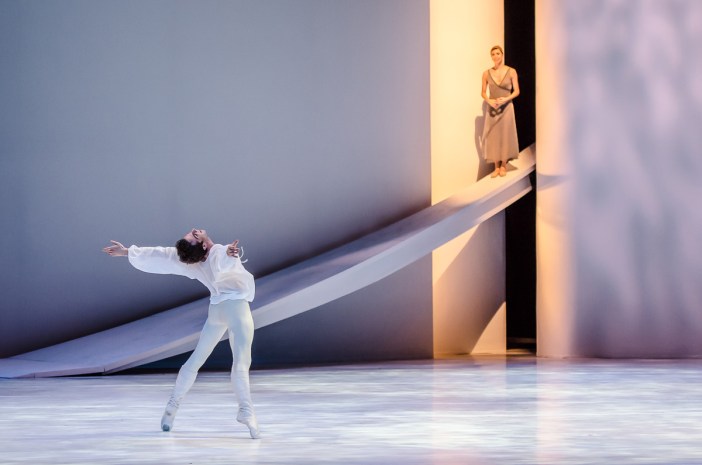
Saturday morning and I have sooooo much to do it’s terrifying. Tonight we have tickets to the ballet; Les Ballet de Monte-Carlo, to be precise. They are performing Romeo and Juliette. I have, as I have said before countless times, never seen ballet performed live. I am very excited, obviously. I have an idea for a ballet noir–I have so many ideas, really–and I love that I merely mentioned this one night while watching the superb ballet documentary Bolshoi Babylon, and that he remembered, with the end result we have the tickets for tonight.

He really is quite a dear.

sw-romeo-noelani-pantastico-lucien-postlewaite-balcony_1000

I am writing so many things right now, and working on so much, that it can overwhelm me a bit when I stop to think about it; therefore it’s best not to think about it. The Scotty novel is going to be the most complex plot I’ve written since Mardi Gras Mambo, which means I have to really be careful and pay attention in order to prevent enormous mistakes and errors as I go along. The short stories I am writing…it’s interesting, but in some cases it’s so much easier to just have an idea and then write to figure it out; sometimes when I finish the first draft and get to the end I know what has to be fixed, added, and changed; in other cases, I literally have no idea. My writing process is so bizarre and different than anyone else’s, and I cannot say I honestly recommend the way I do things to any beginning writer.

Take, for example, a story I wrote and submitted to the MWA Anthology Ice Cold numerous years ago. The anthology was for stories set during the Cold War, and I decided to risk writing a story with a gay theme, even if that theme was buried deep inside the story until about the middle. I also started with an image; a man in the depths of winter, standing on a stone bridge over Rock Creek in Rock Creek Park in Washington DC, dropping a gun into the cold, gray water. Stubbornly,  I held onto that image as the opening of the story through numerous revisions and rewrites. The story was rejected; and I’ve tried revising it again and again. It was recently rejected by another market, with a lovely note: You’re too good of a writer to get a standard rejection letter. This story moved too slow, but do send us more of your work. (And it is a sad indication of this ego-destroying business that said email made my day: they like me! They like my work!) And yet the best part of that rejection email was this minor, five word piece of feedback: this story moved too slow. As soon as I read that I realized that the structure of the story was its ultimate failing: the dropping of the gun into the creek wasn’t where the story began, so I am going to revise the story another time, reordering the events of the story. Maybe it doesn’t even begin where I’m thinking it does now; but I won’t know until I start working on it again.

Likewise, another story I am in the midst of writing right now opens with the sentence The ID’s were fake but no one seemed to care. It’s a great opening line, and it was the first thing to come to mind when I started writing the story, and it just evolved from that opening line; I wasn’t really sure what the story was, but I wanted to use that as an opening line, and so I started writing there. Am I tied to that as the opening line? I tend to be a bit stubborn about these things…which is definitely a fault of my own. I was so determined, for example, that the WIP must begin at a certain place that I was trying to make it work–but soon realized that its Chapter One was really Chapter Three, and a lot of the things I was doing were trite and cliche; so I moved the timing of the story back a few weeks. Sometimes, being stubborn is not a plus for a writer.

I am also going to, in today’s edition of the Short Story Project, talk about two Daphne du Maurier short stories that I read for the first time this week, from the New York Review of Books collection Don’t Look Now and Other Stories. As I have said before, I’ve not read all of du Maurier’s work; I hold back because I don’t ever want to run out of things of hers to read. I have several of her short story collections on hand (my favorite, of course, being Echoes from the Macabre, which I read first when I was a teenager, shortly after I read Rebecca for the first time–which also reminds me, I am terribly overdue for a reread of Rebecca), but unfortunately the problem with du Maurier collections is they often overlap; stories tend to appear in more than one collection: “Don’t Look Now,” for example, not only is in Echoes from the Macabre but headlines this particular volume; “The Birds”, which I talked about the other day, also appears in both.

Today’s stories, though, are of a type: “Indiscretion” and “Ls Sainte-Vierge” are both relatively short, and, like several of her other stories, wait until the very end to twist and shove the knife into your throat. This is not easy to do, and I’ve tried it with stories with little to no success; I think my best successes with these style have been “Keeper of the Flame” and “Annunciation Shotgun.”

“La Sainte-Vierge” doesn’t even seem all that dark, through most of it:

It was hot and sultry, that oppressive kind of heat where there is no air, no life. The trees were motionless and dull, their drooping leaves colorless with summer dust. The ditches smelt of dead ferns and long-dried mud, and the grasses of the fields were blistered and brown. The village seemed asleep. No one stirred among the few scattered cottages on the hill-side; strange, uneven cottages, huddled together for fear of loneliness, with white walls and no windows, and small gardens massed with orange flowers.

A greater silence still filled the fields, where the pale corn lay heaped in awkward stacks, left behind by some neglectful laborer. Not even a breeze stirred the heather on the hills, lonely treeless hills, whose only dwellers were a host of bees and a few lizards. Below them the wide sea stretched like a sheet of ice into eternity, a chart of silver crinkled by the sun.

It’s set in a small fishing village on the coast of Brittany; the point-of-view character is Marie, a fisherman’s wife who is very young and desperately in love with her husband. He is about to go out on another fishing voyage, and she has these terrible premonitions that something terrible is going to happen. He brushes aside her concerns repeatedly, telling her she’s completely foolish and superstitious (never a good sign in any story, let alone a duMaurier), so after he leaves in the evening to get the boat ready, she creeps out of the house to a local church to pray to a statue of the Virgin. Du Maurier’s description of the poor village’s cheap and tattered statue and the church is which it resides is morbid, sad and a bit tragic; yet as Marie prays the moonlight comes into the church and transforms the statue before her believing eyes, and she is shown a vision in her religious ecstasy. Happy and content, she returns to her home…but that something terrible the story has foreshadowed all along does occur, just not what she, or the reader, could have possibly seen coming.

The other story, “Indiscretion,” is equally marvelous in the same way but different; this story, in structure and ending, reminded me a lot of de Maupassant’s “The Necklace.”

I wonder how many people’s lives are ruined by a momentary indiscretion? The wrong word at the wrong time–and then finish to all their dreams. They have to go on living with their tongues bitten a second too late. No use calling back the spoken word. What’s said is said.

I know of three people who have been made to suffer because of a chance sentence flung into the air. One of them was myself; I lost my job through it. The other fellow lost his illusions. And the woman…well, I guess she did not have much left to lose, anyway. Maybe she lost her one chance of security. I have not seen either of them since. The curt, typewritten letter came from him a week later. I packed up then and came away from London, leaving the shreds of my career in the waste-paper basket. In less than three months I read in a weekly rag he was claiming a divorce. The whole thing was so needless, too. A word from me–a word from her. And all through the sordid little street that runs between Shaftesbury Avenue and Leicester Square.

This story basically is about fate and coincidence conspiring to wreck the lives of three people who, again, never saw it coming; and how happiness can be destroyed in just a matter of seconds. It’s bitter and sad and melancholy, like most of du Maurier’s work; but it also works beautifully, and her gorgeous writing style contributes to its terrible beauty.

And now, back to the spice mines.


When You Close Your Eyes

Well, Constant Reader, we made it to Wednesday, didn’t we? I’m going to do this blog and then run off to the gym for my second workout of this week; sorry if this is getting tedious, but I worry that if I don’t say anything that’s when I’ll start slipping and NOT doing my workouts; a slippery slope I am reluctant to set my foot on, if you will. It’s so lovely to be doing this again and being motivated to do it; it’s more than a little infuriating that I allowed myself such a long break from taking it seriously, and doing it so little. But there’s no sense in crying over spilled milk at this point, is there? I am just happy that I’m at where I am at with it.

I am also very stoked to be jazzed about writing again. It’s interesting, on every level, how gong back to the beginning (both with working out and writing) has turned out so well, isn’t it? I am really pleased with these short stories I’ve written over the last week or so, the chapter of the WIP I wrote Monday, and the rethinking of the Scotty book I’ve done. I am definitely going to keep moving positively forward; and I am going to keep seeking an agent once I get this first fifty pages of the WIP whipped into better shape. This weekend I plan on rewriting and editing the four short stories I’ve done, plus I need to start working on the Bouchercon anthology, which I am also excited about–how long has it been since I was excited to edit an anthology, well might you ask? It’s been a long frigging time would be the proper answer, I am afraid.

I also finished reading Sarah Weinman’s sublime anthology Troubled Daughters Twisted Wives, and am the better for it. If you’ve not read this collection, you really should; particularly if you’re a writer. These stories hold up incredibly well, with only the occasional dated reference–and none of them so jarring that they take you out of the story. I’ve also added several new-to-me authors to my TBR list; alas, I shall have to track down copies of their works via secondhand dealers and eBay, as so much has sadly fallen out of print. I am also disappointed in myself for waiting so long to read this collection; but now that I have, I am glad. I am also grateful to Weinman for her hard work in pulling this together and shining a light on these terrific writers of the past.

It also occurs to me that a similar volume could be done for gay and lesbian crime writers whom modern readers don’t recall or remember; I doubt, though, that there would be a market for such a thing. That’s the tricky thing, isn’t it? Finding a market?

Sigh.

troubled daughters twisted wives

First up was “Lost Generation” by Dorothy Salisbury Davis:

The school board has sustained the teacher. The vote was four to three, but the majority made it clear they were not voting for the man. They voted the way they had because otherwise the state would have stepped in and settled the appeal, ruling against the town…

Tom and Andy, coming from the west of town, waited for the others at the War Memorial. The October frost had silvered the cannon, and the moonlight was so clear you could the words FOR GOD AND COUNTRY on the monument. The slack in the flagpole allowed the metal clips to clank against the pole. That and the wind made the only sounds.

Then Andy said, “His wife’s all right. She came up to Mary when it was over and said she wished he’d teach like other teachers and leave politics alone.”

“Politics,” Tom said. “Is that what she calls it?”

This was my first experience reading Mystery Writers of America Dorothy Salisbury Davis; despite being aware of her for quite some time. Sara Paretsky wrote a brilliant tribute to her after she died a few years ago; she’d been on my radar before that, but again, this is my first time reading her. This story is dark and amazing. We never know what the teacher’s politics are, but given the time period it’s not too hard to imagine what they were, given the fact that the group of men who gather to take care of him also include police officers–which was an all-too true and horrible aspect of the anti-Civil Rights whites of the South; the men paid with tax dollars and charged with protecting everyone were racists who abused their privilege and power to abuse and kill people of color and civil rights workers. There’s an amazing twist in this story, and the denouement is eminently satisfying and dissatisfying at the same time–not an easy thing to do.

Some of Ms. Davis’ books are now back in print, so snap ’em up, peeps!

“The People Across the Canyon” by Margaret Millar

The first time the Bortons realized that someone had moved into the new house across the canyon was one night in May when they saw the rectangular light of a television set shining in the picture window. Marion Borton knew it had to happen eventually, but that didn’t make it any easier to accept the idea of neighbors in a part of the country she and Paul had come to consider exclusively their own.

They had discovered the sight, had bought six acres, and built the house over the objections of the bank, which didn’t like to lend money on unimproved property, and of their friend, who thought the Bortons were foolish to move so far out of town. Now other people were discovering the spot, and here and there through the eucalyptus trees and the live oajs, Marion could see half-finished houses.

But it was the house directly across the canyon that bothered her the most; she had been dreading this moment ever since the site had been bull-dozed the previous summer.

I’ve written about Millar before; I’ve become an enormous fan of her work, and have been slowly making my way through her canon over the past few years. I do have the wonderful reprinted set of her books Collected Millar; a quick glance over at Amazon shows that many of her books, including the Edgar Award winning Beast in View are available as ebooks at fairly reasonable prices.

This story, about a couple and their young daughter, whose increasing obsession with the new neighbors across the way makes the stay-at-home mother not only jealous but concerned about the intensity of the obsession, strikes several chords: the mother becoming aware that her child is growing away from her and lamenting the ways her own every day life has allowed time to slip away, regretting that she didn’t spend more time paying attention to her child; the growing realization that you can influence and affect your child’s personality, behavior and temperament unknowingly; and ultimately, the exquisite torture and pain of being a parent. Millar only had one child, a daughter; it’s not hard to imagine where the roots and inspiration for this story came from. Quite excellent.

“Mortmain” by Miriam Allen Deford

“I’ll be back on Thursday, Miss Hendricks, and I’ll drop in here in the afternoon. It’s only three days, and I don’t anticipate any change. You know what to do. If anything happens, you can call Dr. Roberts; he knows all about the case. I wouldn’t go away, with Marsden like this, but–well, it’s my only daughter, and she’ll never be married again–at least, I hope not!–and she’ll be heartbroken if her old dad weren’t there to give her away.”

Dr. Staples turned to his patient.

“Good-bye, old man; I’m leaving you in Miss Hendricks’ charge till Thursday. You won’t be sorry to have three days free of me, eh?”

This gem of a creepy short story is straight out of what (thanks to Stephen King) I call the EC Comics playbook. The sad, dying patient has a load of cash in his safe; the nurse in whose care the doctor has left him for three days wants it to start a new life with the cad she’s in love with, and there we have the setup for a most clever game of cat-and-mouse in which each sentence builds the suspense and tension. If you want a great example of how to write suspense, this short little tale is all you need. In fact, if I ever teach writing again, this story is going to be one of the things I teach. It may even be one of those stories, like du Maurier’s “Don’t Look Now,” that I reread every now and again, to savor in its delightful brilliance.

And finally, “A Case of Maximum Need” by Celia Fremlin:

“No, no telephone, thank you. It’s too dangerous,” said Miss Emmeline Fosdyke decisively; and the young welfare worker, only recently qualified, and working for the first time in this Sheltered Housing Unit for the Elderly, blinked up from the form she was filling in.

“No telephone? But, Miss Fosdyke, in your–I mean, with your–well, your arthritis, and not being able to get about and everything…You’re on our House-Bound list, you know that, don’t you? As a House-Bound Pensioner, you’re entitled–well, I mean, it’s a necessity, isn’t it, your telephone? It’s your link with the outside world!”

This last sentence, a verbatim quote from her just-completed Geriatric Course, made Valerie Coombe feel a little bit more confident, She went on, “You must have a telephone, Miss Fosdyke! It’s your right! And if it’s the cost you’re worrying about, then do please set your mind at rest. Our Departmenet–anyone over sixty-five and in need–“

“I’m not in need,” asserted Miss Fosdyke woodenly, “Not of a telephone, anyway.”

The tale of Miss Fosdyke, and why she doesn’t want a phone, is the perfect ending to this wonderful collection of short stories. This story is chilling, surprising, and turns around so brilliantly at the end in a way that you do not see coming, and then everything makes sense. Superb, dark, macabre…you name it, it’s all there in this story…and I’ve added Celia Fremlin to my TBR list. Some of her books are currently in print, and if this story is indicative of the pleasures that await in her novels…well, I just can’t wait.

Well done, Ms. Weinman, well done.

And now, back to the spice mines.

Rock a Little (Go Ahead Lily)

Happy Twelfth Night!

It rained all night, the temperature (as threatened by meteorologists) dropped, and it looks grim and dreary outside today. I got another good night’s sleep last night, and feel rested this morning. I am about to get my second cup of coffee, and cut into our first King Cake of the season. Woo-hoo! I do love me some king cake! Tomorrow I am on a panel about villains at New Orleans Comic Con, which should be a lot of fun; and yesterday I finished editing, and turned in, the next J. M. Redmann Micky Knight novel, The Girl on the Edge of Summer. Now, I have some more things to get done this weekend, and then I am sort of free from the constraints of deadlines; I have to write a piece for the Sisters in Crime newsletter, and I have an essay due by the end of the month for another book. I am also heading to Kentucky at the end of the month. Yikes! Oh, January.

Last night, before watching another episode of the oddly compelling Ray Donovan, I read a Daphne du Maurier short story I hadn’t read before; “Escort,”, from the Don’t Look Now and Other Stories collection. I recently got a copy when I realized that this collection had several stories in it I hadn’t read; her collection Echoes from the Macabre is my usual go-to for her short fiction. The problem has always been, for me–and I could be wrong–but her short story collections seem to all be named for stories that were also in Echoes from the Macabre, and in fact, several of the stories in this collection are also in that one. But there are some stories I’ve not read–which is why I decided to go ahead and get this one.

There is nothing remarkable about the Ravenswing, I can promise you that. She is between six and seven thousand tons, was built in 1926, and belongs to the Condor Line, port of register Hull. You can look her up in Lloyd’s, if you have a mind. There is little to distinguish her from hundreds of other tramp steamers of her particular tonnage. She had sailed that same route and traveled these same waters for the three years I had served in her, and she was on the job some time before that. No doubt she will continue to do so for many years more, and will eventually end her days peacefully on the mud as her predecessor, the old Gullswing, did before her; unless the U-boats get her first.

She has escaped them once, but next time we may not have our escort. Perhaps I had better make it clear, too, that I am myself not a fanciful man. My name is William Blunt, and I have the reputation of living up to it. I never have stood for nonsense of any sort, and have no time for superstition. My father was a Non-conformist minister, and maybe that had something to do with it. I tell you this to prove my reliability, but, for that matter, you can ask anyone in Hull. And now, having introduced myself and my ship, I can get on with my story.

We were homeward bound from a Scandinavian port in the early part of the autumn.

I’ve talked before about how, when I was a kid, I not only was an avid reader of mysteries for kids and novels and history but comic books as well. The EC Comics that Stephen King read and was influenced by when he was a kid were no longer around, but I read DC’s House of Secrets and House of Mystery, and Gold Key comics used to produce Mystery Comics Digest bimonthly; collections of stories from three different comic books they used to produce, and the digests rotated between the three titles–and they also included new stories, too. The three titles were The Twilight Zone, Ripley’s Believe It or Not (which I loved to read in the daily paper, too), and Boris Karloff’s Tales of Mystery. These stories were creepy and had elements of horror in them; there were almost always big surprise twists at the end. I loved these, and read them over and over and over again.

“Escort” reminded me very much of those digests. I also love du Maurier–she’s one of my favorites, as Constant Reader is already aware–and she also specialized in twists in her grim and dark short fiction. This story is set in the early days of World War II, and the captain of the ship falls ill–probably appendicitis–and Blunt has to take over control of the ship. A German u-boat shows up, and they play cat-and-mouse for a while…until a freezing cold fog drops down over the sea, and an escort ship shows up–and that’s when things get strange.

The story is very well done; du Maurier is quite the master at the slow build and the sudden burn, but this isn’t one of her better stories. Don’t get me wrong, it’s a good story–it’s just that stories like “Don’t Look Now” and “The Blue Lenses” and “The Birds” and “Kiss Me Again, Stranger” have set the bar so high that it would be impossible for any writer to consistently match the brilliance of those stories. It is definitely worth the read, and there are other stories in this collection I’ve not yet read, either….which is really lovely.

Huzzah!

And in honor of the story, here’s a sailor:

The Edge of Heaven

The end of the year is nigh.

I have a lot to do (of course, as always) over the next few days. I am already tired, just thinking about it, of course, but hey–such is life. I have to work late tonight again, and really should have made a grocery run this morning but I overslept, so there’s that. There is, of course, still time, if I get my act together and get moving, but right now that doesn’t sound particularly appealing. Heavy sigh.

But–probably better to get it done today than to try over the weekend. Nothing will be open on Sunday because of the holiday, and I can’t imagine that Saturday morning before out lunch at Commander’s Palace would be any better. Possible to do, but still most likely a madhouse.

Although Monday is a paid holiday for me, and apparently Costco will be open. Hmmmm. If I can do the grocery store this morning, and Costco on Monday…

Ah, the best laid plans of mice and men.

Anyway, I feel confident I can get the errands run I need to this weekend around writing and football games….although to be honest, I don’t really care about the bowl games other than LSU’s this year; I may watch some to kill some time or while reading, but other than that–meh.

I am going to read George Pelaconos’ The Way Home next, and then I am going to start trying to get caught up on series I have fallen behind on–I’m looking at you, Ranger series by Ace Atkins, in particular–and of course, January’s goal is to read and write about a short story every day, so I am gathering my short story collections and anthologies close. I don’t want to write about a story I’ve already read and written about (alas, “Don’t Look Now” by Daphne du Maurier will have to be excluded from this as I’ve talked about it ad nauseum; but a reread of “A Rose for Emily” is definitely in order), so the idea is to read stories that are new to me, and then write about them.

And now, I need to get ready for work and mine some spice.

Here’s today’s hunk: