Burning Heart

Sunday morning, and yet another good night’s sleep. It truly is amazing what a difference that can make in one’s life; I miss the days when I could simply tumble into bed and close my eyes and, as Paul once put it, “sleep through a nuclear holocaust.” Yesterday was a good day; I got groceries and did some cleaning. I read both “This Town” and “Don’t Look Down” aloud, did the necessary clean-ups on them, and this morning I am going to read “Fireflies” aloud and see if it, indeed, does hold together. I wrote the first draft of “Fireflies” something like thirty years ago (!) and it’s still in the file folder, handwritten (because until computers, I almost always hand-wrote everything); I am still not entirely certain the story works; but we will find out today when I read it out loud.

I was very pleased with the two stories I read aloud yesterday, and if I do say so myself, I feel “This Town” is one of the better stories I’ve written. I’m going to read “Fireflies” aloud this morning, and then I’m going to work on “This Thing of Darkness” for a little bit, see how that goes, and then maybe dive into one of the two novels I am working on (focusing on, really; there’s a third I started writing a couple of weeks ago, which I am itching to get back to, but that’s just crazy talk). I also started reading Alex Segura’s Blackout yesterday, not getting very far, alas; but I am looking forward to getting further into it. I also started reading Martin Edwards’ Edgar Award winning The Golden Age of Murder, which is my new ‘read a chapter or two before bed’ book. We also started watching Harlan Coben’s new Netflix series, Safe, and are really enjoying it thus far.

My kitchen is also a disaster area; I made ravioli last night and yes, well, a mess is a bit of an understatement.

I also stopped at Office Depot yesterday to purchase pens. I’ve discovered a new brand of pen that I absolutely love: Tul, with a dash over the u. They sent us a couple of them at the office a month or so ago, and I absconded with them, as is my wont, and then bought a couple more. Yesterday I bought several more packs of them. I’ve always been a bit of a pen nerd, and I also noticed last night, as I made notes in my journal, that my blank book is almost full; time to get a new one soon. Yay! I really am glad I’ve gone back to keeping a journal to write notes and ideas down into; I’ve worked out issues with several of my short stories this year in it, as well as the books.

I also managed to finish Lori Roy’s upcoming new release, The Disappearing, last night.
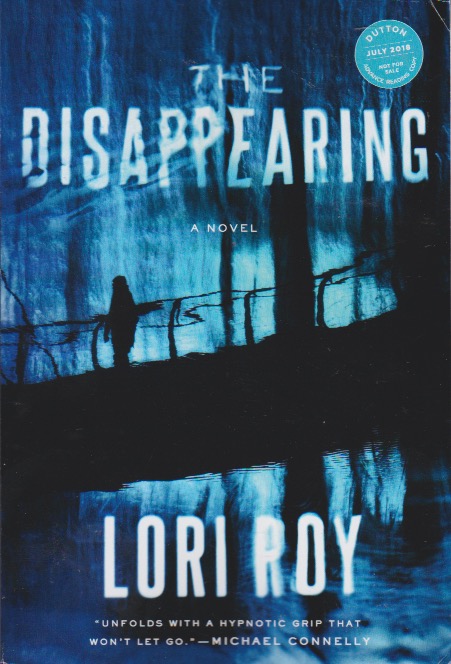
the disappearing

Lane Wallace is alone inside Rowland’s Tavern when the front door flies open. A man stumbles inside, bringing with him a spray of rain that throws a shine on the hickory-brown floors. He scans the dark rooms, stomps his feet, and draws both hands over his wet, round face. If the man says anything, Lane doesn’t hear him for the rain pounding the tin roof and the palm fronds slapping the front windows. It’s supposed to rain through the night, and all around Waddell, people will be keeping a close eye on the river.

Lane smiles because maybe the man is a friend of a friend and not a stranger. She’s expecting a big crowd tonight, and one of her regulars might have invited him. But he doesn’t smile back. Slipping her phone from her back pocket. she lays it on the bar top where the man will be sure to see it. It’s a subtle warning, but if the man is looking for trouble, it’ll make him reconsider.

He’s a little on the heavy side; doughy, a person might say. From behind the bar, Lane asks the main if a beer’ll do him, and as he slides into a booth near the front door, he nods. Hr regulars, men who’ve known her all her life, or rather who have known her father, won’t show up for another hour or so but Rowland Jansen will be back any time now. He ran out to move his car and Lane’s to the higher and drier ground of the parking lot out front, so she won’t be alone with the man for long.

This is Lori Roy’s fourth novel, and it’s quite an achievement. His first three novels–Bent Road, Until She Comes Home, and Let Me Die in His Footsteps–were all shortlisted for Edgar Awards; she won Best First for Bent Road and Best Novel for Let Me Die in His Footsteps, raising her up into the exalted, rarified air of the Multiple Edgar Winner Circle. I’ve only read Bent Road–I do own the others, will every intent to read them at some point; too many books, not enough time–and it blew me away with its stunning depiction of rural Kansas, its juggling of two separate time-lines, and its thematic exploration of how the pains and evils of the past can influence the present.

That same theme runs through this stunning new novel, The Disappearing, as well, and is explored even more deeply and explicitly than in the first. Waddell is a small town in north Florida, amorphously near Tallahassee; Roy’s captured the feel of rural small town Florida deftly (there is, as not many know, a huge and significant difference between the coastal cities of Florida and the insular, small towns of the state’s interior). She plays with the memories of Ted Bundy’s journey through the area; a young woman, a student at Florida State doing some internship work at a local, fading plantation is missing, which has stirred up all those fearful memories of Bundy’s spree. The plantation also shares a boundary with a closed reform school for boys, whose own violent and possibly deadly past has also come back to haunt Waddell.

But it’s also an exploration of family, and how the damage from a past history of deep violence and emotional abuse, locked away and ignored, can reverberate through the years and have deep, horrific implications on the present. Susannah Bauer’s disappearance triggers a chain reaction of emotion and violence and horror, spread over the course of a few days after the night of the heavy rain, that will continue to cycle through the future unless honestly and painfully dealt with in this present.

There are four point of view characters in The Disappearing: three women from generations of the same family–Erma, the matriarch of the Fielding family, with her guilts and secrets festering inside her for decades; Lane, her daughter, whose own emotional damage and baggage perpetuates the cycle; and Lane’s younger daughter, Talley, whose wanderings due to her own loneliness and unhappiness makes her the holder of most of the secrets and truths of the present. The fourth point of view character is Daryl, a mentally disabled young man who is the groundskeeper at the church, and his story is told in the recent past rather than the present, as Lori Roy deftly spins all the secrets and lies and horrors of the town of Waddell into an astonishingly well-blended tale of flawed people and the damage they can leave in their wake.

Even more impressive than the characters and the story itself is the mood and the voice; the way she maintains this almost dreamy tone, creating the perfect mood for the story is masterful. The voices of her characters are compelling and real; only Daryl tells his story in the first person; the others are a very tight third person present tense. The shifts in voice, the tone, the tense and the word choices and the imagery, kept reminding me of Faulkner’s brilliant The Sound and the Fury, and in a very good way.

The Disappearing is an extraordinary achievement, and is destined to make awards short-lists and all the Top Ten lists for 2018.
Party All The Time

Saturday morning. I need to read aloud some stories this morning–“Don’t Look Down,” “This Town,” and “Fireflies”–and I’d like to get some work done on either Scotty or the WIP this weekend. I need to clean this weekend; I got started lasted night, washing the bed linens and blankets, a pre-vacuuming downstairs, organizing books, putting away a load of dishes; I also spent a lot of time in my easy chair reading Lori Roy’s stunning new novel, The Disappearing, which is giving me all kinds of thoughts and things to think about. It’s really extraordinary; you should, by all means, preorder it.

I am also working on a much longer blog piece; about being a gay writer, “own voices,” “we need diverse books”, and various other hashtags and ‘movements’ that have occured over the years on social media. There was an instance lately where an encounter with an albeit well-meaning straight lady kind of took me aback; I wasn’t really sure how to react to what she said. Albeit was well-intended, it was still kind of a backhanded slap in the face.

I find myself thinking weirdly deep thoughts about being a gay writer these days; because no matter what I write and no matter what I do, no matter how hard I might try to run away from it, gay is so inextricably a part of me that I cannot wall it off; no matter what I think or do or write or say, that different point of view is always going to be there; it cannot be turned off. There was, back in the day, a lot of talk about a gay sensibility that queer writers brought to their work; I don’t know if that conversation is still being had. But then, this is all fodder for that other blog entry I want to write; I shouldn’t get that in-depth with it here.

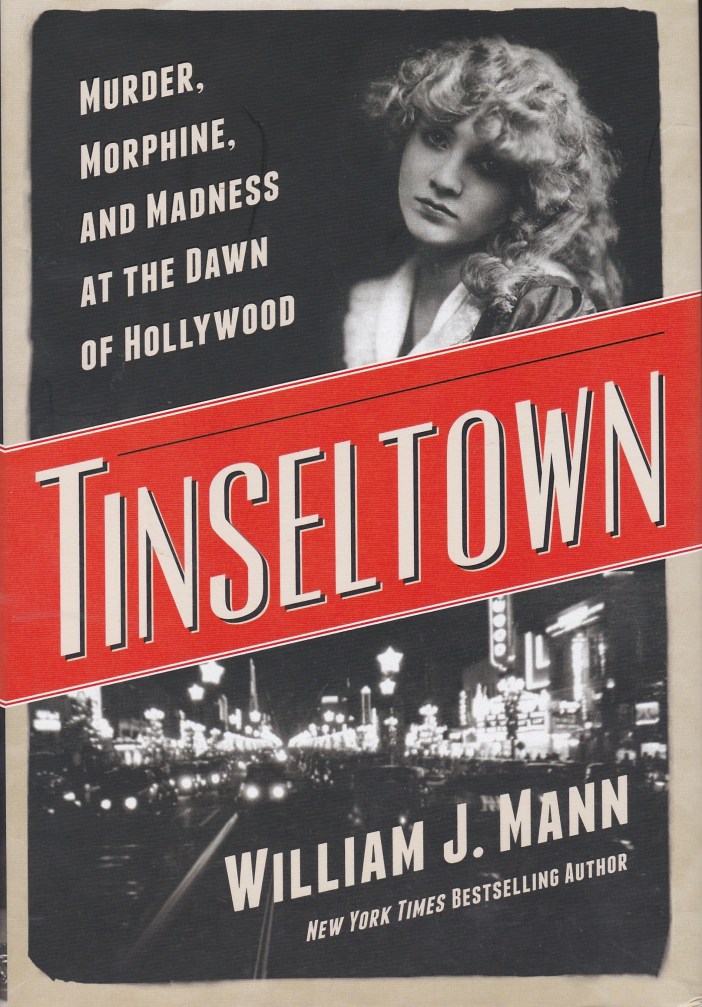
I did finish reading William J. Mann’s Edgar Award-winning Tinseltown: Murder, Morphine and Madness at the Dawn of; Hollywood, last night. Bill is one of my oldest friends in publishing of any kind; we’ve known each other well over twenty years, I would say. I interviewed him years ago for his first publication, the novel The Men from The Boys, and again later with the release of his first Hollywood history/biography, Wisecracker,  a biography of William Haines, the first openly gay movie star; who chose to give up his career when Louis B. Mayer told him he needed to give up his partner and marry a woman. He then went on to have a long career as an interior decorator; he was a close friend of Joan Crawford’s, who said of his long-time partnership, “it’s the only happy marriage in Hollywood.” Tinseltown tells the story of the murder of the director William Desmond Taylor in 1920, and how the big-wigs in Hollywood not only tried to cover up important details of the murder for their own reasons, but how the murder affected the lives of three Hollywood women: major star Mabel Normand (immortalized by Stevie Nicks in song on one of her most recent albums); up-and-coming star Mary Miles Minter; and fringe actress wannabe Patricia Palmer. It’s a well-crafted, well-researched reconstruction of what happened nearly a hundred years ago: it’s also an interesting overview of how Hollywood became what it was; how the Hays Production Code was born as well as the big studio systems; and how hoydenish religious groups have always made a lot of noise and tried to force their point of view down the throats of the rest of the country. I enjoyed it thoroughly, and highly recommend it.

tinseltown

I’ve always wanted to write a book or two set in old Hollywood; maybe not in the days of the silents, but perhaps one in the 1930’s and another in the 1950’s. The one about the 1950’s has more of a shape in my head; even a title (Chlorine), but there’s so much else I need to write.

But first I need to get my act together today and do all the things I need to get done today; I also need to probably come up with a schedule and list of goals. There are so many books I want to write, so many short stories I want to write, so many short stories I need to revise. There’s only so much time in every day.

And now, back to the spice mines.

PS So far, cutting the cable chord is going swimmingly. I couldn’t be more pleased.

Say You Say Me


Progress on “Don’t Look Down” is going very well. The short story is probably going to wind up being a novella–it currently sits at about 9000 words and will probably be longer than that; but I don’t think I can whittle it down to shorter length. As I worked on it yesterday–and the work, I have to say, was so much easier than it had been; I think I finally understand the voice, tone, and main character’s P.O.V., at long last–I was revising my way along and looked down and saw that I had crested 8900 words. I knew it was going to be a longer story; I’d always intended and envisioned it that way, but at the same time, since this is for a collection rather than a magazine or an anthology, I can make it as long as I want it to be.

Which is actually very freeing, to be honest. One of the issues I have with short stories is length. I am always worried that I’m going to run out of room to tell the story the way I want it to read, to get the reaction from the reader that I want to get. (There are stories, of course, that I write and worry are too short; “The Problem with Autofill” sits currently at about 3300 words, and I fear it needs to be longer than that.)

But it’s such a good feeling when the story starts to click in your head, and you don’t worry about things like length, and you start to feel confident in yourself and your ability to tell the story you want.

I’ve also decided to stop beating myself up over not getting as much done as I want to. That’s a losing battle anyway; I always over-estimate how much work I can get done in any given period of time and so I am constantly going to be berating myself and feeling bad. And wasn’t the entire point of going off-contract to write to relieve stress? So why am I continuing to create stress for myself by trying to get too much done in too short a period of time?

Madness.

The to-do list should be viewed, instead of as things I have to get done this week rather as the things I need to get done; important as a reminder of things I need to do, so I don’t forget and/or let something important fall through the cracks. That’s the point.

Oy. Sometimes I wonder about myself.

And now, back to the spice mines.

IMG_1240

I Miss You

Well, “Don’t Look Down” is now ready for the read-aloud phase. Huzzah! I am pretty darned excited about it, too. I think this most recent draft is actually not bad, to be honest–and I am pretty psyched to be so close to done with this collection. Huzzah! Perhaps it will happen this very weekend. Hope springs eternal.

The question is, does it need an author introduction? I don’t think it does, to be honest; and every time I’ve tried to write one I’ve either drawn a blank or written something that sounded so pompous it annoyed me.

I’m really uncomfortable talking up my accomplishments, because it feels like bragging, and every time I do, I hear a voice sneering in my head, really? I hate that; it always undermines my confidence and makes me doubt myself, which then leads to me not getting anything done or not putting myself forward for anything, and on and on and on it goes.

I also reread the fourth chapter of the most recent revision of the WIP, and it was embarrassingly bad. I literally cringed reading it–and this is not me being self-deprecating or not taking myself seriously. I mean, it’s bad. I’ve not gone back and reread the first three chapters, and I do realize that a lot of this has to do with switching from limited third person POV to first person POV–I am basically just going through and changing the POV, but as I was doing that in this chapter I was really struck by how bad so much of the actual writing was. It was kind of boring, and that’s death for a y/a.

I guess now I know why no agent responded to my queries. I was also right in worrying that it was too early to send it out. The problem is I need to learn how to discern between serious, honest concerns about my writing and the tendency to trivialize, minimize, and self-defeat myself.

Case in point: I was convinced Royal Street Reveillon was terrible. I reread some bits to revise, and realized, nope. it’s not terrible at all. It needs some polish and some work, but it’s pretty good.

I need some serious therapy.

And now back to the spice mines.

32231135_1842660146028220_4874801715049660416_n

Sentimental Street

It’s Saturday morning! Lots to do today; Chapter Fifteen, read “My Brother’s Keeper” aloud, work on “Don’t Look Down,” revise “Burning Crosses,”–the list goes on and on. It’s supposed to rain today as well; not sure if that’s going to actually be a thing today, but it does look sort of gloomy-esque outside my windows this morning.

And the Apartment is, of course, a complete and total mess.

I was thinking last night, as I started reading Megan Abbott’s extraordinary Give Me Your Hand, about my own writing (reading amazing writers always makes me contemplative) and putting into some perspective. Megan is one of our best writers, and the crime genre is very lucky to have her writing within our boundaries. Reading her work is always very humbling for me, whether it’s a novel or one of her jewels of a short story (hello, publishers! A Megan Abbott short story collection is way overdue! Get! On! It!), as I find myself wondering how does she think of putting these words together? Her sentences are never overly complicated and yet she manages to put them together in such a way as to create a very vivid and complex image, not to mention how she uses her sentence structure to create these characters that are so nuanced and real and complicated…she really is a master of the written word. I will dive back into her novel today, when I am finished with all of the things I must, I have to, do today; it’s always lovely when there’s a wonderful reward waiting for you at the end of tedious writing and editing and cleaning. (I also have ARC’s of Lori Roy’s The Disappearing and Alex Segura’s Blackout; I cannot wait to dive into those as well.)

And while I should be thinking, of course, about where the Scotty novel needs to go in Chapter Fifteen and going forward from there, I was thinking last night about short stories. I always abhorred writing short stories before, thought them incredibly difficult to write, and a discipline of writing that I was not particularly good at (I am also horrible at writing horror fiction, for example). I always believed that whenever I was actually successful at writing a short story, it was purely by accident; not anything conscious that I managed because I wasn’t good at the form. But in writing these reams of short stories this year, I am finding that not to be true; I am having to revise my thinking about so many things I once believed true about me as a writer. Yes, a short story might fail; everyone makes false starts. The Archer Files, with its final section of short story fragments that Ross Macdonald had started yet never finished, taught me that. My own files are filled with fragments of short stories that I began yet never finished; first drafts of stories I never finished because I wasn’t sure, I wasn’t convinced, that I knew how to fix and repair, how to edit and revise to make right. But that doesn’t mean I am a failure at writing short stories. It simply means those stories are ready to be finished; that Ifor whatever reason, am simply not ready to finish them. And there’s nothing wrong with that, of course.

This is, and has always been, just another way my lack of self-confidence in my ability to write manifests itself.

I started writing another story last night, currently untitled; I’m not sure what its title will be but I do have a vague idea of what it’s about. There’s a great little place to eat in my neighborhood, in the same block as my gym, called simply Tacos and Beer; I am meeting someone in town for an early dinner there on Sunday. That, of course, got me thinking about that great simple name for the place, and what a wonderful opening that would make for a story; someone going there to meet someone for dinner and choosing that place because it’s simple, straightforward name pleases them so much. The story is still amorphous, of course. But perhaps I’ll be able to work on it today. I’m also thinking I might even get to work on Muscles  a little bit today.

Who knows? The day is fraught with possibilities still. I may wind up being lazy and not doing a fucking thing.

Here’s the raw opening of “Burning Crosses”:

“Population four thousand four hundred and thirty two,” Leon said as they passed the Welcome to Corinth sign. There were a couple of bullet holes in it, as there had been in every official green sign they’d passed since crossing into Corinth County. “I guess it’s not hard to imagine lynching here.”

“I can come back with someone else,” Chelsea Thorne replied. Her head ached. She needed coffee. Her Starbucks to go cup was long empty. “Can you check on your phone and see if there’s a Starbucks in town?”

Leon laughed. “I don’t have to look to know the answer is no,” he shook his head. “There’s not even five thousand people in this town, girl. There ain’t no Starbucks. I’ll bet there’s a McDonalds, though.”

“It’ll have to do.” The throbbing behind her temple was getting worse. It didn’t help they’d gotten lost trying to find this little town, the county seat of a county she’d never heard of, let alone knew where to find. It wasn’t even near a highway. They’d had to take a state highway out of Tuscaloosa and drive about an hour or so, depending on the roads and depending on traffic. It took longer to get out of Tuscaloosa than they’d planned, thanks to some road work and then another delay because of Alabama Power cutting down some tree limbs, but they’d finally gotten out of town when she was halfway through her latte. Leon had dozed off, snoring slightly with his head against the window as they got out of town on the state road, passing through fields of cotton and corn and orange-red dirt. The state road was stained orange on the edges, the white lines looking like her fingertips after eating a bag of Cheese Puffs. It was supposed to be an easy drive; she didn’t need to make any turns, just keep following the state road that would take them straight to Corinth. But a bridge over a stream was being worked on and there was a detour, taking them down an unpaved road with cotton fields on either side, barely room for her Cooper Mini, and God help them if they met a truck or something coming the other way. Ten minutes down that dirt road and her latte was gone, finished, nothing left. Then she’d turned the wrong way when she’d reached the other state road—but it wasn’t her fault. She’d thought the sign was wrong—how could a right turn take her back to Tuscaloosa? But then she’d figured there must have been more twists and turns on the back road than she’d thought, and turned left. She’d gone almost seven miles before she say the TUSCALOOSA 7 miles sign, and had to make a U-turn in someone’s driveway.

She knew it was wrong, she knew it was stereotyping, but she hated driving on country roads in rural parts of the South.

You can see how rough the story is in its initial stage; it definitely needs work. There are also things missing from it in this draft; things I need to add in to make it stronger, to add nuance, to make the sense of dread and discomfort the characters feel more clear; I want the reader to feel that same sense of unease.

And I do think writing all these short stories this year has been enormously helpful to me, not only as a short story writer but as a writer in general; short stories give you the opportunity to stretch and try things you can’t try in a novel; different themes and voices and styles.

And now back to the spice mines.

IMG_4241

Fresh

Well, I managed to get that slog of Chapter Fourteen finished yesterday; only managed about twenty-seven hundred words, but as I mentioned in the morning, I was tired and slightly out of sorts all day. I also worked on “My Brother’s Keeper” a little bit; not enough to get it finished and ready for what I call the “read aloud polish”, in which I read the story out loud to make sure the language and sentences flow properly. It also helps me catch repetitions. But its getting closer to that stage, and I am most happy about that; perhaps I’ll be able to do the read-aloud this weekend. I’d also like to do a read aloud of another story–not “Don’t Look Down,” there’s a lot more work necessary on that story, pruning and tweezing and adding things; since it’s a longer story I need to know my main character a lot more, and I am still not sure I have the opening right.

I have also decided that I am going to try to write a story for the Malice Domestic anthology for 2019; it has a gastronomy theme. I love testing myself with themed anthologies; to see if I can write to the theme, stretch the theme, and stretch myself as a writer. I rarely, if ever, get into these anthologies, of course; but I enjoy the challenge of trying.

(Oh, sure, I get a little bitter when I don’t get accepted, but then I move on and get over it. Life’s too short, you know. Well, is IS.)

We were also terribly distressed to realize last night that we were caught up on The Terror; I hadn’t realized the show was still airing. Sigh. Now we have to find something else to watch, as another episode won’t be available until next week. Incredibly annoying, but there you have it. I do have some thoughts about it–some especially about the gay character of Cornelius Hickey, adroitly played by Adam Nagaitis, who may be stealing the entire series out from under the rest of the cast–but I am going to reserve those opinions until I finish watching the series. It does, however, speak to how compelling and good the show is that Paul and I were both enormously disappointed to realize we had to wait until next Wednesday for another episode; we were really looking forward to seeing it through until it’s inevitable end this week.

Adam Nagaitis:

The-Terror-Episode-2-Season-1-Gore-08

And here’s hoping Chapter Fifteen will not be the slog Chapter Fourteen was.

And now back to the spice mines.


Do What You Do

Ah, it’s only midweek and I’ve not made much progress on anything; the kitchen is a mess, and time is just slipping through my fingers on a daily basis. It’s a frustrating feeling, made even all the more frustrating because I know, even as I procrastinate, that I am going to deeply regret the procrastination the following day; and yet, I do it. I suppose this would be fodder for my therapist; why do I defeat myself all the time, or set myself up to fail? Is it a fear of failure, so if I do it to myself it won’t feel like failure?

These are the mysteries of Greg that I ponder on a daily basis.

I did work on a story yesterday, rather than the Scotty book or the website writing I’d promised to do, which I need to do, both of which I should just fucking do and get out of the way. Eye roll.  The story isn’t one I am sure about; it’s one that I originally wrote back in the late 1980s during one of my I’m going to take this writing thing seriously even though I have no idea what I’m actually doing periods when I used to write piles of short stories (rather like I have done this year already), and it’s one that I’ve always thought would work. I’ve taken a run at it again several times over the years, but at last I think I have it in a place where it will actually work. The voice is the key to this story, and I think I’m getting it right; the story itself is working itself out, but once I am finished with it this time around I need to go back and make sure I’ve got the voice right. This is, of course, not one of the stories I’m including in the collection, or the one I need to get the edits done on (of course, see what I mean about being self-defeating?), and the irony, of course, is that the edits aren’t that involved; and yet somehow I just can’t make myself do them.

Idiot.

But so it goes, and how it goes every day of my life. I am often called prolific, which always amuses me to a degree; I think of myself as lazy, because I know how much more I could get–or should be getting–done. I also know about all the time I waste, and how that time could have been used ever so much more productively.

In my own defense, however, I will say that I like this story I am working on–“Fireflies”–and I’ve always liked the story, and am glad that I am finally getting to it. I have so many story partials; so many stories that have been dancing around elusively in my brain for so long, yet whenever I try to finish them they dance away just out of the reach of my fingertips; “Fireflies” is one of those stories. It’s nice to finally be getting it finished, even though I should be working on other things. But I’ve diagnosed what’s wrong with both “Don’t Look Down” and “My Brother’s Keeper” this week; I’ve also figured out what’s wrong with “Once a Tiger” and how I can move forward with it. These are good things, really; and I am getting somewhere with the Scotty book as well with my brainstorming.

I just need to get past this feeling that Chapter Eleven is such a sloppy mess that I don’t want to even look at it again. I either need to go fix it, or move on to Chapter Twelve instead of agonizing over it like an idiot.

We started watching Shooter, a really terrific Ryan Philippe series last night; I think it was a limited series–a one-off, because I don’t really see how it could go another season. He plays one of the top Marine sharpshooter/snipers, who has retired; he is dragged back into the business by an old Marine buddy who now works for the Secret Service to figure out how someone is going to try to assassinate the president. He doesn’t realize he is being set up to take the fall for the assassination, and the conspiracy runs pretty fricking deep; but he manages to get away from the authorities and has to prove his innocence. It’s pretty good–and Ryan Philippe never disappoints. I’ve been a fan since his days as gay teenager Billy Douglas on One Life to Live back in the early nineties; and I am glad to see him keeping his career going on television now that he’s no longer in demand for film roles. He really makes a hot dad.

I also read two short stories for the Short Story Project. First up was “A Bus Ticket to Phoenix” by Willy Vlautin, from Jim Fusilli’s Crime Plus Music:

Otis woke that morning to Lenny in the bathroom yelling on the phone. It was past 11 a.m. at Winner’s Casino in Winnemucca, Nevada. Under the covers he shivered in the cold and could his breath fall out and disappear into the room. He got up to find the window open and the heat off.

He set the thermostat to high, shut the sliding glass window, and looked out to see some snow falling. It covered the van and trailer and the houses behind the motel. He stood seventy-seven years old, tall and thin with greasy brown hair. He found his clothes on the floor, dressed, and walked across the street to the casino. He used the toilet, lost five dollars on video poker, and went to the casino restaurant for breakfast.

Vlautin, the author, is a seasoned professional musician, which explains why this story rings so true and authentic, I suspect. Some old guys, professional musicians who are now getting old and have never made it big, just always managed to find work and have spent almost their entire lives on the road, are now touring with some musclebound young up and comer in country music. The crime is that their stuff keeps disappearing, with something being stolen at every stop on this tour. The singer is kind of a dick, and so is his manager…and while the crime aspect of the story isn’t it’s strength, the depiction of the lonely, melancholy life on the road–and coming to the end of your lives without ever having made it big while continuing on because you can’t do anything else, is the most poignant and powerful part of this story.

I then moved back to Ross Macdonald’s The Archer Files, for another Lew Archer story, “Wild Goose Chase.”

The plane turned in towards the shoreline and began to lose altitude. Mountains detached themselves from the blue distance. Then there was a city between the sea and the mountains, a little city made of sugar cubes. The cubes increased in size. Cars crawled like colored beetles between the buildings, and matchstick figures hustled jerkily along the white morning pavements. A few minutes later I was one of them.

The woman who had telephoned me was waiting at the airport, as she had promised. She climbed out of her Cadillac when I appeared at the entrance to the waiting room, and took a few tentative steps towards me. In spite of her height and her blondness, the dark harlequin glasses she wore have her an oddly Oriental look.

“You must be Mr. Archer.”

A man is on trial in this unnamed northern or central California city for the murder of his much older, much wealthier wife. He clearly killed her for her money, or so the prosecution would have you believe. His only defense is at the time of the murder, he was with another woman–another woman whom he will not name, despite her being his only real chance at acquittal since everyone thinks he’s guilty. It is this woman who has hired Archer, and she has her own reasons for not wanting to be named…and so as Archer goes about his investigation, another murder is committed and he finally solves the case by finding the real killer…and yet everyone involved is guilty to some degree; perhaps not legally, but at least morally. This is the kind of case where the detective needs a long hot shower after to wash the stink off; which is of course, for me as a reader, the best kind of story. (Oh, yes, all that time period racism and misogyny is on display in this story; which kind of, as always, put me off–as you can see in the above opening paragraphs of the story.)

And now, to stop procrastinating and get back to the spice mines.

97612dfb2e439db8a71f6394e6f11103

Lonely Old Night

Monday morning, and a pretty good weekend of sleep has worked it’s magic. I’m not tired this morning, neither mentally nor physically, and that has to count for something. I was getting rather down on myself last evening , as we watched Friends from College on Netflix; I hadn’t gotten nearly enough done as far as writing and editing are concerned, managing to procrastinate almost the entire weekend. Oh, sure, I got chores done and errands run, but yeah, didn’t really do much of anything yesterday other than work on the revision of a story and read some more short stories. This means I am behind schedule yet again, but feeling good this morning has to count for something. I tend to think having days like yesterday–days with zero motivation to write/edit–are my subconscious telling me I need to take a break and let my mind relax a little bit.

Or, that could just be my justification.

And on the other hand, if that’s the case, so be it.

But I also realized, over the course of this incredibly lazy weekend, that part of the problem I am having with some of these short stories is that I don’t know the characters as well as I should–particularly with “Don’t Look Down”–and I need to know them better; I also need to know what their story is. Same with the Scotty; part of the reason I am having such an issue moving forward with Chapter Twelve isn’t just that Chapter Eleven is a sloppy mess; I need to at least have a better understanding of where the book is going rather than trying to write my way into it. So, I’m going to brainstorm a bit between clients today and tomorrow; as I said before, this is probably the most complicated Scotty book since Mardi Gras Mambo, and so I need to be a lot more careful with it than I’ve been with the previous ones. It can easily go off the rails, and I don’t want that. God, how I don’t want that!

But i am hoping–hoping–to break through on it today; I’d love to get the short story collection finished by this weekend and at least four more chapters of the Scotty so I can have the entire thing finished by the end of May. Goals.

I also read two short stories from Jim Fusilli’s Crime Plus Music.

The first was “1968 Pelham Blue SG Jr.” by Mark Haskell Smith.

While one of us was fucking the middle-aged Goth chick against a dumpster in the alley, we went and got beer. We didn’t think it would be a big deal. This kind of thing happened all the time and we tried to give each other space for a quick bang whenever we could. It made being in the van easier and gave us stories to share. For some of us, the sex was the main reason we played these gigs. It wasn’t for the money.

We found a bar a block away. It was one of those places that calls itself a tavern and has a list of beers written on a chalkboard behind the bar. They had mismatched sofas and coffee tables scattered around the room and shitty electro-groove music dripping out of the speakers. Maybe this is what people are into these days. It’s not like anyone came to our show. We had seventy-nine paying customers and one horny soccer mom wearing vintage Hot Topic. Maybe everyone else was sitting in thrift-store living rooms listening to laptops making music.

The second was “Are You With Me, Dr. Wu?” by David Corbett.

Shocker Tumbrel first encountered the loving Buddha inside a padded holding cell at San Francisco County Jail.

Twelve hours earlier, a SWAT team had dragged him out of a shooting gallery two blocks from the Bottom of the Hill, the club where his band had joined a handful of other outfits in a benefit to save the venue, one of the few left in town to offer live music, now targeted for condo gentrification at the hands of the usual cabal of city hall sellouts and bagman developers.

In all honesty, I didn’t care for either of these stories. The first is a Barry Hannah-style stream of consciousness story, about a band who go out for a beer after a show while one of their own, for want of better phrasing, “fucks a middle-aged Goth chick behind a dumpster.” When they come back, both of them are gone along with a lot of their equipment; they track them down and that’s the end of it. A lot of telling, not much showing, and characters I didn’t care much about. The second story was kind of all over the place; opens with two older guys from a punk band, with one of them overdosing on heroin while the other is too high to do anything about it, and he winds up in rehab, and that’s when the story gets really strange and all over the place. Not two of the stronger stories in the book, but the book is still worth reading–don’t get me wrong!

And now, back to the spice mines.

1026-1

Lay Your Hands on Me

I managed to get all the errands done yesterday, and didn’t feel exhausted until I was in the process of putting away all the groceries and things. I went to both the grocery store and Costco yesterday; I was rather impressed that I wasn’t worn out much sooner. I did get the bedding laundered as well. But I didn’t get any writing done; I am going to need to do that today.

There are a lot of things I am going to need to do today. Sigh.

I’ve been invited to contribute to an anthology; and I am not certain I have anything ready to send along. I do have this one incredibly disturbing story that I would like to make even more disturbing–that’s just how I roll–and I need to get back to work on the Scotty draft. I’d like to revise Chapter 11 a bit today, get it cleaned up more so it isn’t nearly as sloppy as it currently is, and I want to get these other two stories cleaned up as well. I need to spend some more time with “Don’t Look Down” than I have been; I need to get inside the characters more, understand who they are better, and then I think the story will wind up being a lot more strong. The same goes with the Chanse story; the story is really about his relationship with his brother and that’s not strong enough in the story as it sounds right now. That is also, I think, the problem with the Scotty book. I need to spend some time today with it as well, figuring out motivations and so forth.

Ah, being a writer. Always such a challenge.

We finished watching Collateral last night, and I was rather pleased with it; it was written by David Hare, the playwright, and you could tell it was written by someone good. Carey Mulligan was terrific, and I highly recommend it for anyone who enjoys complex, multi-layered crime dramas. I think tonight we may watch Justice League, to just to see if it really is as terrible as everyone seemed to think; I didn’t hate either Man of Steel or Batman vs. Superman, so I am not going into it as a hater.

I’m also still reading Tinseltown, which I am greatly enjoying. I don’t know a lot about the early days of Hollywood; the early 1920’s and late 19-teens, other than what I know from reading biographies of David O. Selznick, whose father was a producer and tried to build up a studio at the same time Adolph Zukor was building Paramount, and before the big merger that created Metro-Goldwyn-Mayer (MGM). So all this is new information to me, and William J. Mann is a terrific historian and researcher. (I am more familiar with later periods of Hollywood, but hardly an expert.) I’ve always wanted to write about Hollywood’s past; I have an idea for a noir novel to be set in the late 1940’s, but my lack of familiarity with the nuts and bolts of Hollywood in that period makes it difficult–or rather, makes my already vast insecurity about writing about another period even stronger. Although I’ve already written one short story about that time–an ambiguous setting of the early 1950’s–I don’t know. Maybe I should try it as a short story first, see if I can get the sense of the period?

I don’t know.

I’m also saddened to say that I’ve now finished reading both of Lawrence Block’s art-inspired anthologies, In Sunlight or in Shadow and Alive in Shape and Color, but I’ve heard through the grapevine that he is putting together another, which is great. So, for today’s edition of the Short Story Project, I am sad to say this is the last story from a Block anthology: “A Woman in the Sun,” by Justin Scott, from In Sunlight or In Shadow.

Could she change his mind? Four steps to the open window, lean out and call, “Don’t.”

Or walk to the window and call, “Go ahead, do it.Good luck.”

Or stand here and do nothing.

He had left her his last cigarette. She had talked him into leaving the gun and he had kept his word. It was still on the night table, wrapped in one of her stockings. She had the time of the cigarette to make up her mind. More time, if she didn’t smoke it. Let it smoulder.

This is an interesting story; in that it leaves more questions unanswered than it actually answers. We never know the characters’ names, nor do we really know what has brough them to this point. All we do learn, as the story progresses, is that both are at the end of their ropes and done, basically; they are both ready to die. The only question is whether she will stop him or will she join him, and this rather uninvolved, distant approach makes the story even more poignant and sad; there’s a very strong sense of melancholy that runs throughout this story, and the reader soon realizes you don’t have to know the whys and hows and whats of their pasts–all you need to know and feel is their now.

Powerful.

I then started reading through Jim Fusilli’s Crime Plus Music, and the next story up was”Me Untamed” by David Liss.

She covered the black eye with makeup, but I could still see it was there, something alien and unaccountable. Like a vandal’s scrawl across a museum painting, the dull outline of her bruise was an outrage. Carla smiled and greeted everyone good morning, defying us to say a word, to let our eyes linger too long. It was, I supposed, how she protected herself.

Jim Baron, the senior partner in the practice, met my gaze and flicked his head toward Carla as she walked past with a stack of case folders under her arm. Carla was getting ready, as we did every Tuesday and Thursday, for surgeries–no office visits on those days, just procedures. The practice felt a bit like a gastrointestinal assembly line, and sometimes I hated how we moved patients in and out, hardly taking the time to look at them, but Jim cracked the whip. It was volume, volume, volume as far as he was concerned. We were there to heal, not to socialize, and the more healing, the better.

The point of view is that of a divorced, shy, quiet Milquetoasty doctor,  who is kind of in love with Carla, or maybe he is not. She’s married to a thug of a guy, a man’s man, who works out and so forth, the kind of man a Milquetoast would hate. And he decides to do something about Carla’s abuse…decides to make himself into the kind of man he’s always wanted to be, the kind of man that he thinks Carla would like and love. This is a terrific story, with a terrific twist at the end that lifts it up even higher in terms of craft. Well done, sir!

And now, back to the spice mines.

KONICA MINOLTA DIGITAL CAMERA

I’m on Fire

Friday, and the day and the weekend stretch out before me like an unpainted canvas; blank and full of possibilities. I have a short day at work today, and I slept relatively well last night, so am feeling fairly good this morning. My left shoulder is mysteriously sore, tbough. Not sure what that’s about, but there you have it.

We finished watching Episodes last night, and it ended perfectly; very meta, and very funny. The entire show was kind of meta, really, and I have to give Matt Leblanc credit for not only playing himself, but playing himself as a complete egotistical self-absorbed asshole actor. Not sure what we’re going to watch now that we’ve finished both The Alienist and Episodes, but I have faith in us to find something–although we haven’t had much luck lately in finding something new; although The Alienist was absolutely a lucky find.

My kitchen is a mess this morning, which indicates that I need to get this mess cleaned up, and the sooner the better. Heavy heaving sigh. But….since I don’t have to go into the office until later, perhaps I could spend this morning cleaning the kitchen so I don’t have to do it tomorrow, which makes all the sense you can imagine, you know? I generally try to do some cleaning when I get home on my early day as well, so the weekend is freer to write or edit or do whatever it is that I want to. I need to write this weekend, as I’ve not been doing as much of that lately on the weekends as I need to. I’ve been asked to contribute to an anthology this week; which means I need to either find something I already have in a draft form, or write something entirely new. I don’t know how I feel about writing something entirely new, if I am going to be completely honest. I have the book to catch up on, some other stories that need to be finished so the collection is done, once and for all–primarily work on “My Brother’s Keeper” and “Don’t Look Down”–but there are an awful lot of stories that I have in various stages. I NEED TO REVISE THAT STORY BASED ON EDITORIAL NOTES AS WELL. WHY CAN’T I EVER REMEMBER I NEED TO DO THAT?

Heavy sigh.

Okay, I read a couple more stories for the Short Story Project, and first up was “Thinkers” by Kristine Kathryn Rusch, from Lawrence Block’s Alive in Shape and Color:

1970

Leo’s blood, warm against her cold hands, steamed in the frosty night air. Like hot coffee in a paper cup.

Lisa tried not to giggle, because she knew the giggle would be hysterical. She ran a hand over Leo’s face. He was leaning against the marble edge of the empty pool surrounding the Fountain of the Waters, legs splayed, head pointed toward Wade Lagoon.

Irv was just staring at him, and Helen–God knew where Helen had gotten off to, because Lisa didn’t. Her ears still rang from the explosion, which had been louder than she had expected.

This is a good story, flipping back and forth through time. In 1970, it’s about a group of student revolutionaries, planning to blow up Rodin’s “The Thinker” statue as a blow against the ruling class. The bombing goes awry and one of them is killed, and the viewpoint character, seeing death and destruction in person for this first time, starts rethinking her own radicalism and the ‘revolution.’ In the present day, the viewpoint character is a docent/intern/volunteer, working at the museum to advance herself, and she witnesses eventually a confrontation between a museum volunteer and a museum donor, and it doesn’t make any sense to her…but for the reader, they can see that’s the two women from the group in 1970, and how they, themselves, have gone from counter-culture revolutionaries to the ruling class they once despised. It’s very The Big Chill in some ways, and these theme–youthful radicalism aging into conservatism–has been explored in crime novels/films/television shows, and it’s always interesting, at least for me.

Next was “Gaslight” by Jonathan Santlofer, also from Alive in Shape and Color:

It was true, she hadn’t been feeling well, hadn’t been herself, the headaches, the nausea, the slight vertigo. But she was fine. She’d always been predisposed to colds and flu, periods of time when she didn’t feel quite right, sensitive, her mother used to say, and that was true. It was a virus, that’s all, at least she’d thought so for the first few weeks. But now, after three months, she wasn’t so sure.

“Give it time, Paula, you know how these New York colds can linger, especially in winter,” Gregory, her husband of six months, always so sweet, always trying to reassure her.

But what sort of cold lasted three months?

I loved this story; about a young, wealthy woman married to a struggling artist, who soon begins to suspect her husband might have married her for her money and might just be poisoning her…and what is she going to do about it? This is a classic romantic suspense trope, from the title being borrowed from the film that won Ingrid Bergman an Oscar to the trope which was the plot of almost every Victora Holt novel and was also used by any number of romantic suspense writers back in the day–but Santlofer turns it on its head, and shows how the line between romantic suspense and noir is actually rather blurry. The twists in the story are fantastic and earned, and the way Santlofer builds the suspense is magnificently done. Bravo, sir!

And now, back to the spice mines.

30728171_10155109528711486_2604031885516472320_n