Thursday, and it’s my last day in the office for the week. Huzzah! I am very pleased with myself for somehow managing to make it through the entire week without any super-fatigue or brain fog–which means I am getting better and more healed. I ordered a pair of wired ear buds for my new phone, and am going to try to start going for walks regularly. I also want to start stretching a couple of times per week. It’ll make me feel better in the long run and less sore all of the time, and while it may not burn a lot of calories, it will burn some.
Plus, being stretched regularly will do wonders for the muscles themselves.
I’m very much dragging this morning, since it’s Thursday, and I have to do a ZOOM panel tonight after work. Not sure how that’s going to go, since I am sure I will be very tired this evening. I feel rested this morning, so it’s just a matter of the groggy feeling this morning. I slept deeply and well, and of course tomorrow morning I can sleep a bit later–Sparky permitting probably goes without saying. I had a quiet evening last night after I ran my errands on my way home. Tonight I am coming straight home, and will probably relax for a bit while doing some chores–the kitchen is a mess yet again–and I did try to do some chores last night, so I won’t have as much to straighten and clean up on the weekend. Paul was late getting home last night, so I just kind of sat in my chair catching up on the news (always a tense, fraught experience) until he did get home. I also watched this week’s Real Housewives of Salt Lake City, and once Paul was home we got caught up on The Morning Show, which we are really enjoying.
I will have to consult my to-do list at some point today, to see if I am getting anything done this week. This weekend will mostly be a resting and reading and cleaning weekend, I suspect. Having the LSU game on early Saturday will be helpful; sure, there are other games for the rest of the day but they aren’t anything I would be horribly upset that I didn’t watch, so I am hoping to get some reading done this weekend. I need to finish a couple of newsletter essays (reread of The Haunting of Hill House; Frendo Lives) and start looking at one about Boots. The end of the month is sneaking up on us, too, and then it will be NOVEMBER….and then it’s the end of the year. 2026 is a bit daunting, because that’s the year I turn sixty-five. Yikes, indeed!
I’ve also not watched anything scary this month, other than the first episode of the 1990 reboot of Dark Shadows. I was a little bummed that Scream, my favorite “scary movie,” isn’t available to stream for free anywhere, and I’ve seen the movie far too many times to justify paying to watch it again. I think Scream 2 is probably available? Maybe I will watch that tomorrow while I am doing quality assurance so I can write about my favorite slasher series. (I was also disappointed to see that the original Halloween isn’t available for free anywhere–the same rationale exists for not paying to see a movie I’ve seen multiple times; maybe I should look for A Nightmare on Elm Street1–it’s been years–or Prince of Darkness or The Omen, which could be fun, or even the original Carrie. IT’S SPOOKY SEASON GODDAMMIT!) The weather has become cooler, too–the breeze is chilly rather than warm; the sun is shining every day so it’s in the eighties, but the cool breeze plus lack of humidity is a marvelous reminder of how magical October weather can be here.
I also am doing an on-line ZOOM panel about supernatural mysteries, which should be fun; That Bitch Ford will also be on it.
And on that note, I am heading into the spice mines. Have a lovely Thursday, and I’ll be back tomorrow morning!
The Nile River in upper Egypt
I looked and it’s streaming on HBO! Huzzah! And Prince of Darkness is free on Prime. Looks like I know what I’ll be watching Sunday morning before Paul gets up! Huzzah! ↩︎
So, in honor of Pride Month, I’ve decided to do things a little bit differently than I usually do when it rolls around every year. Usually, I’ll share book covers by queer authors that I either enjoyed or influenced me, either personally or professionally, in some way–or could be used for that hoary old cliché this made me gay. In a way, it’s a trip down memory lane for me, going back to my childhood, my teens, and twenties; places I am currently revisiting as I plan out The Summer of Lost Boys.
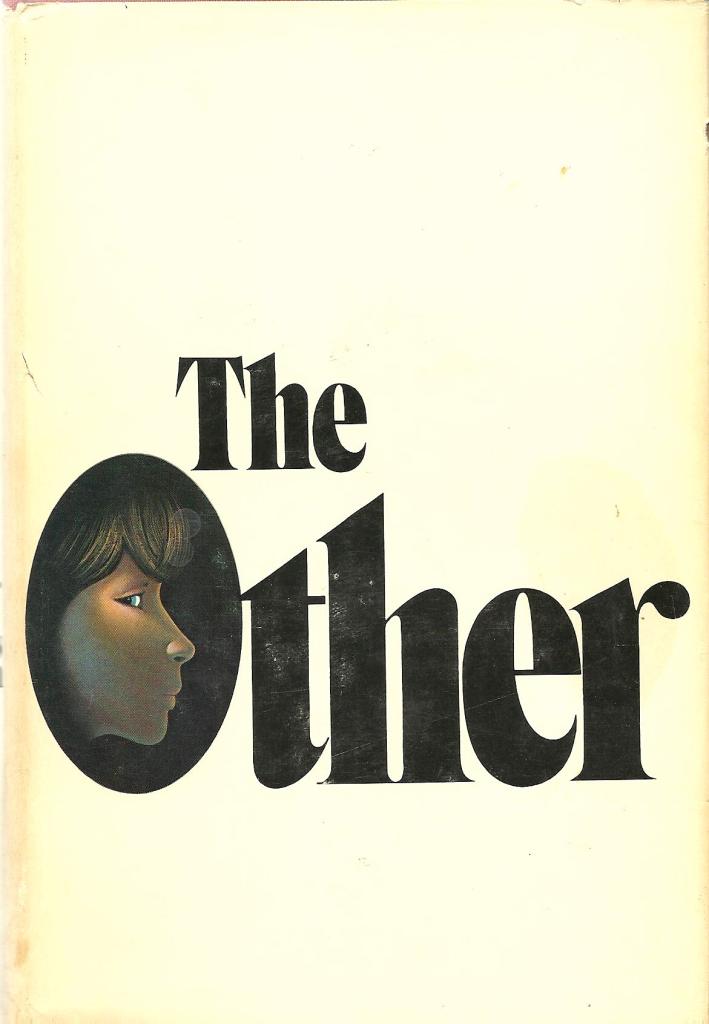
Thomas Tryon’s debut novel, The Other, is often heralded as one of the books (the others being The Exorcist and Rosemary’s Baby) that kicked off the horror craze of the 80’s and 90’s; Stephen King’s Carrie was released in 1974 and shifted the craze into four-wheel drive. I read this book when I was in the seventh grade, and it resonated with me in ways I didn’t fully understand or comprehend at the time. It drew me in, and fascinated me in ways I’d never been fascinated with a book before. Part of it was the transition I was making from reading kid’s books to more adult fare; I was already reading at a collegiate level by the seventh grade. (The Ken Holt series also resonated with me, as did the Rick Brant–which are getting their own entries.)
I wouldn’t learn until years later that Tryon was gay–although I should have known, were I more mature and gay wasn’t one of those things people didn’t talk about when I was a kid; it’s certainly there in his books–and then it made even more sense to me why the book resonated so much with me, why it intrigued me so much, and why I identified with it so much. Niles Perry, the point of view character, is a shy, reticent boy who mostly lives in his own head and world and doesn’t really interact a lot with people. He’s a nice kid who is always worried about getting in trouble and doing the wrong thing; his identical twin brother, Holland, is more of what we would now call a sociopath. But Holland has no fear, has no dread of consequence, and is more outgoing and adventurous; he’s more of a troublemaker and relishes getting revenge on people who’ve done him, in his mind, grievous wrongs. Niles loves his brother–adores him, wants to be like him, wants to be less timid–but is also afraid of him. He knows all Holland’s secrets and he knows everything that Holland does, and often he figures out Holland’s schemes and even tries to stop him…but Holland always outsmarts him, and leaves Niles to clean up his mess.
This brotherly dynamic–the closeness and the dominant/submissive relationship between the twins spoke to me. I saw myself as more of a Niles type than a Holland; shy and quiet and mostly keeping to myself–and always being drawn to flashier, more outgoing types as friends, to whom I was both devoted but also jealous of–a pattern I followed for most of my life. This is the same reason certain books drew me in as a teenager in most cases; A Separate Peace has that same underlying relationship theme–the flashier more outgoing more popular friend, and the quiet best friend content to live in his shadow but also being a bit resentful and jealous.
And then about two-thirds of the way through the book comes a plot twist that changes everything you’ve already read and processed and you have to see the book in an entirely new way–every time I reread it (which is every year or so since I got a hardcover copy off eBay), I try to find the clues to the twist in the first two-thirds, and they are there, but cleverly disguised so you don’t put it together until it’s literally revealed in such an incredibly powerful scene that just thinking about it–and its creepy conclusion–makes the hairs on my arm tingle a bit.
I didn’t have a brother, so I wasn’t sure about the brother dynamic Tryon explored so beautifully in the book; is that the way things work in real life between brothers? Probably not, as every set of brothers is different, of course. (I’ve rarely written about brothers, now that I think about it. Chanse has one who turned up in a short story and Scotty has Storm) But the relationship interested me, and it’s a trope that is often used in every style of fiction; two people, either siblings or close friends, one is more outgoing and daring and likes to take risks while the other is more nervous and afraid and namby-pamby, and that weird combination of love/jealousy that can often get involved in those stories.
It’s also a strong dynamic that can play out within gay couples, as well.
The Other is also written in a lyrical, beautiful, dream-like style; that lovely sense of remembering the past nostalgically, when everything was magic and the world seemed full of wonder.
I was paging through the book the other day and I began to realize that it’s impacted and influenced me as a writer far more than I had ever realized.
I love Stephen King, and have since I first read Carrie when I was thirteen.
I will also go out on a limb and say that while he has written some amazing fiction and novels in the last forty years, the run of novels between (and including) Carrie and Misery in the 1970s and 1980’s was probably one of the greatest runs of incomparable work ever accomplished by any writer in any sub-genre or genre of fiction, period. There wasn’t a single stinker in that run, and even the one I personally dislike ( Pet Sematary) isn’t bad–it’s actually a testament to King’s skill that I’ve refused to reread it since that first time; it made me incredibly uncomfortable in so many ways viscerally that I’ve really never wanted to read it again.
And isn’t that the real point behind horror?
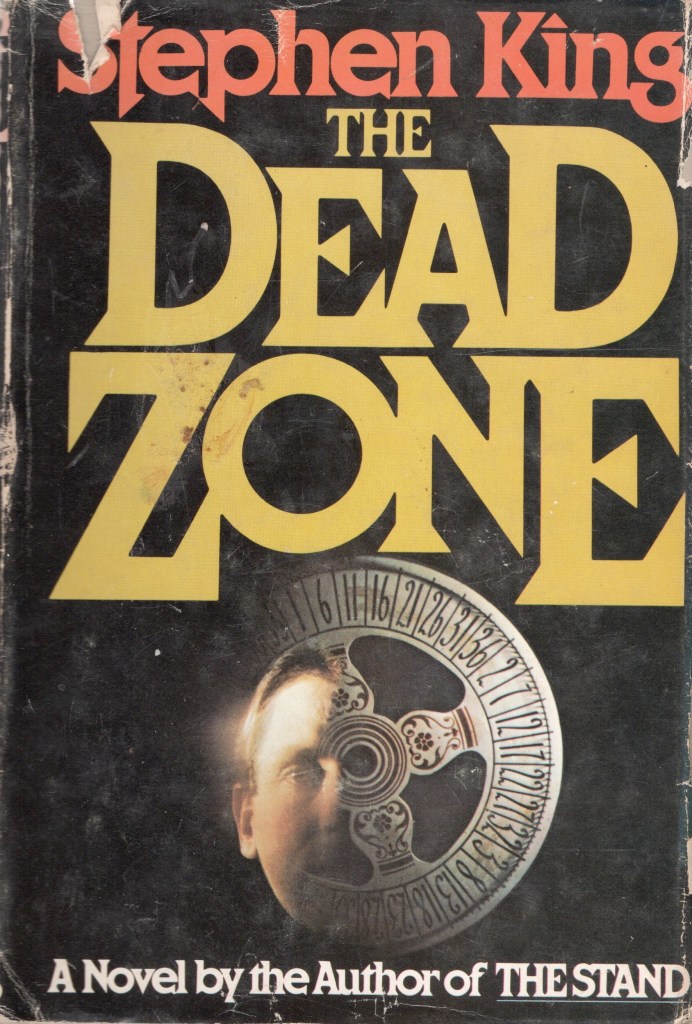
I also saw something recently about how people who suffer from anxiety often rewatch movies/television shows and reread books when they are anxious because there’s comfort in knowing how something ends. It had never occurred to me that this was a thing, but I used to reread books all the time when I was younger, often picking one up and just opening it at random and diving into the story again. I reread most of the earlier Stephen King novels countless times, as I have also reread books like Gone with the Wind and kids’ series books and other particular favorites. I still reread some periodically, like Rebecca and The Haunting of Hill House. When I picked up The Dead Zone to reread it–I realized that I don’t really reread the way I used to when I was younger. On the rare occasions when I thought about it, I figured it was because I don’t have the time and there are so many unread books around the house that I shouldn’t revisit something when I have unread books collecting dust and moldering on the shelves. But reading that about people with anxiety made me recognize myself and I also realized that I don’t reread as much as I used to (or rewatch) because I don’t have as much anxiety as I did when I was younger. (Don’t get me wrong, I still have too much of it for me to be comfortable going forward without doing something for it, you know.)
I’d thought about rereading The Dead Zone in the wake of the 2016 election; I had posted on social media early on during that campaign season, “Is anyone else reminded of Greg Stillson?” But I couldn’t, just as I couldn’t go back and revisit Sinclair Lewis’ It Can’t Happen Here or The Handmaid’s Tale or any of the other great collapse of American democracy novels. But this reread…made me truly appreciate all over again what a literary genius Stephen King actually is–and an American treasure.
By the time he graduated from college, John Smith had forgotten all about the bad fall he took on the ice that January day in 1953. In fact, he would have been hard put to remember it by the time he graduated from grammar school. And his mother and father never knew about it at all.
They were skating on a cleared patch of Runaround Pond in Durham. The bigger boys were playing hockey with old taped sticks and using a couple of potato baskets for goals/ The little kids were just farting around the way little kids had done since time immemorial–their ankles bowing comically in and out, their breath puffing in the frosty twenty degree air. At one corner of the cleared ice two rubber tires burned sootily, and a few parents sat nearby, watching their children. The age of the snowmobile ws still distant and winter fun still consisted of exercising your body rather than a gasoline engine.
Johnny had walked down from his house, just over the Pownal line, with his skates hung over his shoulder. AT six, he was a pretty fair skater. Not good enough to join in the big kids’ hockey gamesyet, but able to skate rings around most of the other first-graders, who were always pinwheeling their arms for balance or sprawling on their butts.
Now he skated slowly aruond the outer edge of the clear patch, wishing he could go backward like Timmy Benedix, listening to the ice thud and crackle mysteriously under the snow cover farther out, also listening to the shouts of the hockey players, the rumble of a pulp truck crossing the bridges on its way to U. S. Gypsum in Lisbon Falls, the murmur of conversation from the adults. He was very glad to be alive on this fair, winter day. Nothing was wrong with him, nothing troubled his mind, he wanted nothing…except to be able to skate backward, like Timmy Benedix.
So begins the prologue to The Dead Zone, a King classic that doesn’t get nearly the respect it probably should–especially in wake of the 2016 election. Johnny does, in fact, learn how to skate backwards, but is so excited about it he doesn’t notice he is heading right into the hockey game, where he gets hit broadside by a teenager and sent sprawling, hitting his head on the ice and knocking himself out. As he slowly comes back to consciousness, he starts muttering things that make no sense to the worried kids and adults gathered around him, including saying to “stop charging it’ll blow up”. But then he wakes up, is fine, goes home and doesn’t even tell his parents what happened (imagine a child knocking himself out and the parents not even being told today–never happen). A few days later one of the men’s car battery is dead, he jumps it–and it blows up in his face; only no one remembers the things Johnny was muttering; everyone’s forgotten about it.
The second part of the prologue introduces us to the other main character of the book, or the person who is fated to have the biggest impact on John’s existence, which also begs the question of fate and destiny; these two men’s lives are going to intersect, and the rest of the book follows their lives–primarily focused on Johnny’s, with the occasional swing over to see what’s going on with Greg Stillson and his climb to power and success. That prologue introduction to the traveling Bible salesman in Oklahoma who kicks a dog to death lets us know who he is right from the very start–he’s the bad guy, the reason all these things are happening to Johnny so their lives will cross.
Johnny’s story has three acts: first, the car accident that leaves him in a coma for five years (and introduces us to him, his love interest Sarah, and his parents) and inevitably ends with him catching the Castle Rock Strangler, using the abilities that he woke up from the coma with; the second, which concludes with the vision about the graduation party ending in fire and mass death; and the third, where he realizes he is the only person who can stop Stillson’s political rise, the country’s descent into fascism and a final cataclysmic nuclear war (which was an every day reality for us all back when this book was written, by the way).
The most interesting character to me, always, from the story of The Trojan War (I loved mythology and ancient history as a child) was Cassandra, the princess who was given the gift of prophecy accidentally (her ears were licked by one of Apollo’s temple snakes; he cursed her by having no one believe her and this frustration drove her mad); I always wanted to write from her perspective. John Smith is a modern-day Cassandra, a young man who unwillingly was given the gift to see the future as well as have psychic visions, and his story plays out very similarly to Cassandra’s, and asks the big question: if you had the knowledge and foresight to stop Hitler in 1932, even if it meant killing him, would you do it? The personal good vs. the collective good?
I thoroughly enjoyed this reread, and it definitely holds up, even if it is a time capsule of the 1970s, which also made it a big more fun.
(Oh, and that fall he took as a child? While it is never really explained where his abilities come from, King implies that that first head injury awakened the talent in him; the later head injury and coma woke it up again and gave it more power.)
I don’t remember how old I was the first time I saw Robert Wise’s film The Haunting; all I do remember was it was late at night–in Chicago, one (maybe more) of the local affiliates always ran films after the news at 10:30; they also ran afternoon movies at 3:30 Monday thru Friday–which is where I got most of my education in classic Hollywood movies. But The Haunting was probably the most terrifying movie I’d ever seen; it wasn’t until a rewatch later in my life that I realized that perhaps the most terrifying and unsettling thing about the movie was you never saw whatever it was that was creating the happenings at Hill House–and they were never really explained, either. I had nightmares after watching it the first time, and those nightmares became recurring. To this day I am not comfortable climbing a metal spiral staircase…
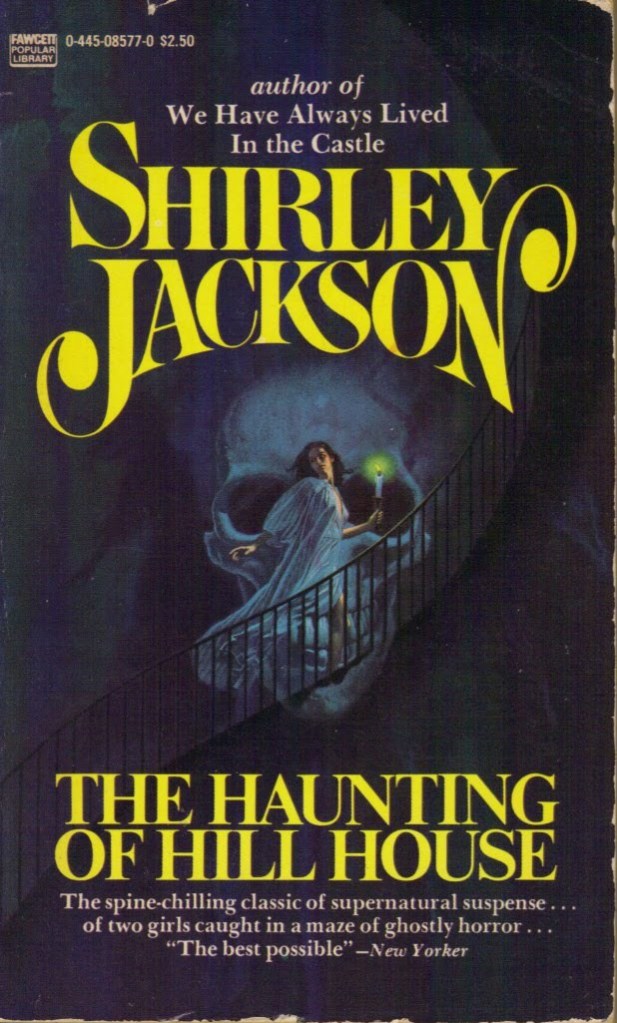
One afternoon when we were at Zayre’s for whatever reason–we went there almost weekly, although I am not sure why–I found a copy of Hell House by Richard Matheson on the paperback racks. It sounded, from reading the back, similar to the movie that had scared me so when I was younger, and I couldn’t help but wonder if the movie was taken from the book? I bought it and read it–loved it, in fact–but while it was similar to the story of The Haunting, it was also different enough for me to be certain they weren’t the same. (Hell House was filmed actually as The Legend of Hell House, which was also a terrifying film–more on that later). It wasn’t until years later, when I was in a used bookstore in Emporia, that I stumbled across this:
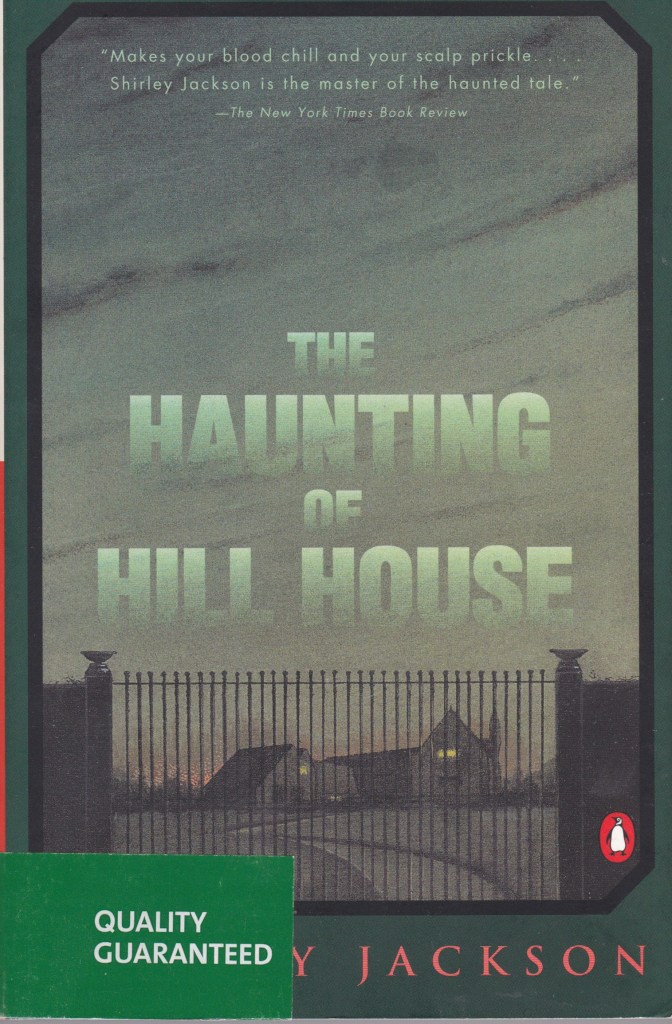
It was only a quarter, and looking at the back I recognized the characters–Nell, Theo, Dr. Montague, Luke–and of course, the name of the haunted house–Hill House. I bought it and a couple of others, and I started reading at the first opportunity, and was completely mesmerized. It quickly became one of my favorite novels of all time–I already knew Jackson’s story “The Lottery”, because at some point in school I’d been shown the film (why was this appropriate school viewing? Imagine trying to show it to students today!) and in a Drama class we’d actually read the stage adaptation and even put it on for the school (I think I had one line in our production?). Reading Stephen King’s Danse Macabre also told me more about both Jackson’s writing and the Robert Wise directed film, which was my first exposure to Julie Harris; I also remembered that the opening of Jackson’s novel was used by King as an epigram in ‘salem’s Lot; he also dedicated a book to her “because she never had to raise her voice,” which is a very poetic way to describe the softly macabre writing style and voice she used in her works. I lost my original copy at some point during moves over the years, and I acquired another copy after we returned to New Orleans in 2001 from our brief, preferably forgotten interlude in Washington DC–and have made a point to reread it every year since.
And no matter how many times I reread it, I never tire of its haunting, terrifying beauty.
No live organism can continue for long to exist sanely under conditions of absolute reality; even larks and katydids are supposed, by some, to dream. Hill House, not sane, stood by itself against its hills, holding darkness within; it had stood so for eighty years and might stand for eighty more. Within, walls continued upright, bricks met neatly, floors were firm, and doors were sensibly shut; silence lay steadily against the wood and stone of Hill House, and whatever walked there, walked alone.
Dr. John Montague was a doctor of philosophy; he had taken his degree in anthropology, feeling obscurely that in this field he might come closest to his truest vocation, the analysis of supernatural manifestations. He was scrupulous about the use of his title because, his investigations being so utterly unscientific, he hoped to borrow an air of respectability, even scholarly authority, from his education. It had cost him a good deal, in money and pride, since he was not a begging man, to rent Hill House for three months, but he expected to be compensated for his pains by the sensation following upon the publication of his definitive work on the causes and effects of psychic disturbances in a house commonly known as “haunted.” He had been looking for an honestly haunted house all his life. When he heard of Hill House he had been at first doubtful, then hopeful, then indefatigable; he was not the man to let go of Hill House once he had found it.
Dr. Montague’s intentions with regard to Hill House derived from the methods of the intrepid nineteenth-century ghost hunters; he was going to go and live in Hill House and see what happened there. It was his intention, at first, to followthe example of the anonymous Lady who went to stay at Ballechin House and ran a summer-long house party for skeptics and believers, with croquet and ghost-watching as the outstanding attractions, but skeptics, believers, and good croquet players are harder to come by today; Dr. Montague was forced to engage assistants. Perhaps the leisurely ways of Victorian life lent themselves more agreeably to the devices of psychic investigation, or perhaps the painstaking documentation of phenomena had largely gone out as a means of determining actuality; at any rate, Dr. Montague had not only to engage assistants but to search for them.
That opening paragraph alone is a masterpiece.
I parodied it for the beginning of one of my Scotty books–it gave me great pleasure to write the words New Orleans, not sane, stood by itself within its levees–and of course, this book was a pretty heavy influence on Bury Me in Shadows. The book reads almost like a fever dream, with its rhythms and poetries of language, and the story itself is as mysterious as one could possibly hope. The genius of Jackson is knowing that the biggest fear of all is the unknown; so we never know what is actually going on at Hill House–is the house actually bad, or just unlucky? The house’s history is bad and tragic from the very beginning, as we are told in Jackson’s spellbinding voice; who precisely was Hugh Crain, who built the house for his wife and family but never knew any kind of peace within its walls? What went wrong? Jackson never lets us know anything other than that the house is bad. Her primary point of view character is perhaps the must untrustworthy and unreliable of narrators, Eleanor Vance, Nell. Dr. Montague invited Nell because of a strange occurrence that happened when she was a small child; stones rained down on their house out of clear blue sky; her mother darkly blamed it on the neighbors (this also happened to Carrie White’s house when she was a little girl in Stephen King’s Carrie–in the newspaper write-up included in the book Mrs. White also blamed it on “the neighbors”), but other than that, Nell is pretty ordinary and small. She’s wasted most of her adult life taking care of her invalid mother; she’s now in her early thirties and living with her sister’s family, sleeping on the couch. She’s meek but capable of anger–she has a lot of anger and rage buried deep inside of herself–anger at the world, at the injustice of her wasted life, at the lack of a viable future; she has no prospects, no job, no friends, no nothing. The invitation to Hill House awakens a joy in her that she’s never known–she’s wanted somewhere. Her sister and brother-in-law refuse to let her take their mutual car; she gets up early and rebelliously takes the car anyway and heads to Hill House. As she drives she daydreams and observes everything along the road, making up a lovely fantasy for herself about living in a house with stone lions at the foot of the driveway; she stops for lunch and observes a little girl who refuses to drink her milk because she doesn’t have her special cup with stars on the bottom she can she as she drinks. Mentally, Nell urges the little girl not to give in, to not surrender to the injustice of not having her proper cup–as it will be the first of many surrenders of herself she’ll end up making throughout her life until she, like Nell, becomes invisible.
And then, hopeful and happy and excited, she arrives and gets her first look at Hill House:
The house was vile. She shivered and thought, the words coming freely into her mind, Hill House is vile, it is diseased; get away from here at once.
Which then gives Jackson the opportunity, as the next chapter opens, to describe Hill House:
No human eye can isolate the unhappy coincidence of line and place which suggests evil in the face of a house, and yet somehow a maniac juxtaposition, a badly turned angle, some chance meeting of roof and sky, turned Hill House into a place of despair, more frightening because the face of Hill House seemed awake, with a watchfulness from the blank windows and a touch of glee in the eyebrow of a cornice. Almost any house, caught unexpectedly or at an odd angle, can turn a deeply humorous look on a watching person; even a mischievous little chimney, or a dormer like a dimple, can catch up a beholder with a sense of fellowship; but a house arrogant and hating, never off guard, can only be evil. This house, which seemed somehow to have formed itself, flying together into its own powerful pattern under the hands of its builders, fitting itself into its own construction of lines and angles, reared its great head back against the sky without concession to humanity. It was a house without kindness, never meant to be lived in, not a fit place for people or for love or for hope. Exorcism cannot alter the countenance of a house; Hill House would stay as it was until was destroyed.
Nell’s sanity, never the strongest, is affected deeply by the house–she both hates and loves it, separate parts of her nature begging her to flee while the other telling her she’s come home, to stay. The other three in the party–Dr. Montague, Theo the lesbian with some psychic ability, and Luke, due to inherit the house one day–become aware very quickly that the house is having an odd effect on her; they also hate and fear the house, but that welcoming feeling Nell experiences, that desire to never leave, is for her and her only. The rest of the book is quietly terrifying–the noises in the night, the realization that whatever is going on in the house has a sly intelligence of a sort–and the scene where Nell is terrified in the night and holds Theo’s hand…until Theo turns on the lights and Nell realizes she was across the room so whose hand was I holding? is one of the most horrifying moments in horror fiction. And then, the chilling, tragic end.
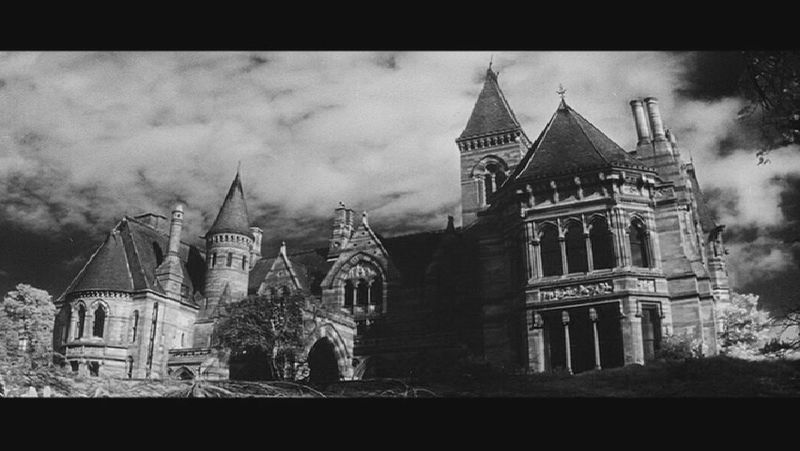
I also always see the house the way it was shown in the movie.
I also rewatched the movie while I was rereading the novel–not the execrable remake but the original–and it holds up just as terrifying and unsettling as it was the first time. Julie Harris is fantastic as Nell, fragile and frayed and slowly unraveling; in the movie isn’t not quite as left to the viewer as it is to the reader the notion that Nell herself is the one haunting Hill House; the house gains its power through her. (This was done beautifully in the Netflix adaptation, The Haunting of Hill House, which is loosely based on the book but updated and adapted and changed significantly; I thought the series was fucking fantastic and an excellent homage to both the book and the original film. You can’t improve on what came before, so why not reinterpret it? I know Jackson purists were outraged, but having seen the dreadful 1999 remake…yeah, this wasn’t that, for sure.)
Also, because of the movie, whenever I read the book I see it in my mind in black and white. The film wouldn’t work in color, either.
If you’ve not read the book, you really should. It’s a masterpiece on every level.
I never really thought much about writing vampire fiction.
I’ve been a Stephen King fan since I read a battered paperback copy of Carrie when I was fourteen, and ‘salem’s Lot continues to be a top 5 King novel for me, if not my favorite (it’s always a toss-up between this and The Stand, frankly) and despite my attempts to turn myself into a King clone in the 1980’s, I’ve never been very good at writing horror. I love to read it–there are some truly terrific horror writers publishing now (if you’ve not read Paul Tremblay, you really need to start), and they are, if you’ll pardon the incredibly cheap pun, killing it. I can do creepy. I can do Gothic. I can do atmosphere and all those marvelous things I love in horror fiction. But I cannot, for the life of me, scare people. I don’t know why I can’t write anything that gets under your skin and into your nervous system; the kind of thing that makes you leave a light burning after you go to bed. I wish I could write like that. I’ve certainly tried a few times…I still have an idea for a horror novel sitting in the back of my brain that I am really going to have to try to get around to writing at some point, because I really should give it a real try sometime.
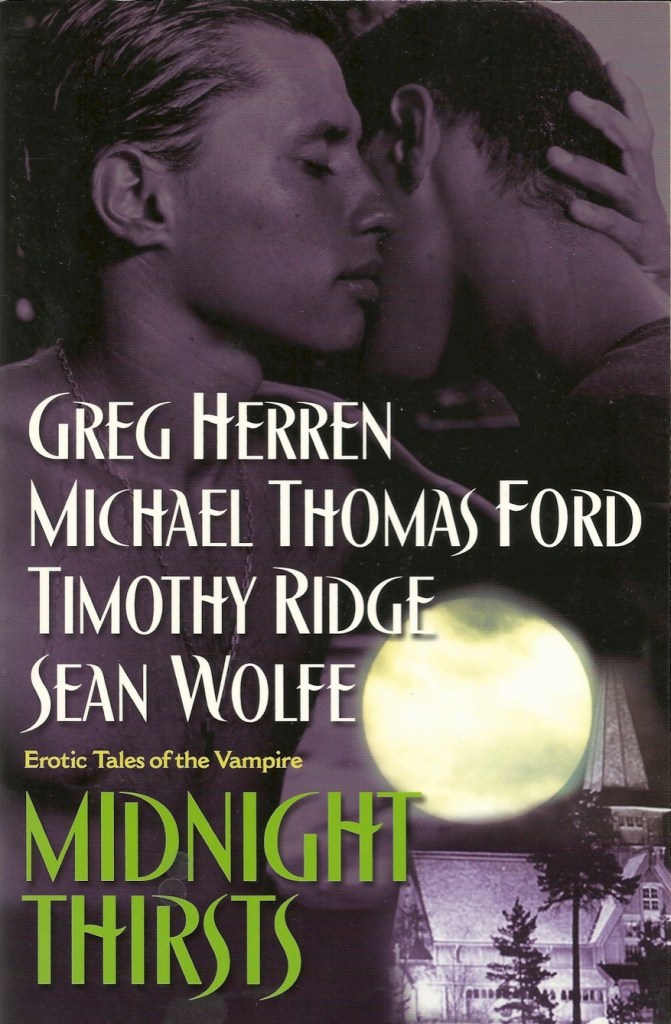
I have always enjoyed reading vampire stories. “salem’s Lot has always been one of my top five Stephen King novels; I loved Dracula (oh to write an epistolary novel!) and numerous other such tales. It took me awhile to come around on Anne Rice’s The Vampire Chronicles (a tale for another time), but I did eventually. Twilight never struck any chords with me. But the one thing I never thought I would do was write about vampires, despite loving them the way I do–going all the way back to my childhood and Dark Shadows. I don’t think I ever would have written about vampires, but my editor at Kensington thought I could; thought I would do a good job at it, and encouraged it, beginning with an offer to write an erotic vampire novella for a collection to be called Midnight Thirsts.
Go home, old man, Rachel thought, tapping her black fingernails on the counter.
It was aquarter till nine, fifteen minutes before she could lock the doors. Everything was clean and the cash register was already counted down. All she had really left to do was dump the remains of the day’s coffee down the sink, lock the cash drawer in the safe, and turn everything o. She’d be gone by ten minutes after at the latest.
She glanced out the big windows fronting the coffee shop. The streetlight just outside cast a yellowish glow in the thick mist pressing against the glass. She shivered and looked back at the old man. He was sitting at one of the tables in the far corner, with the same cup of coffee he’d ordered when he came in around seven thirty. He hadn’t touched it. It was still as full as when she’d filled the cup, only no steam was coming off the black surface now. He didn’t seem to be watching for anyone, or waiting. He never glanced at this watch, which she’d spotted as a platinum Tag Heuer, nor did he ever look out the window. Every once in a while. he would look up from his newspaper and catch her staring. He’d smile and nod, then go back to his reading.
Apparently, he was determined to read every word.
She stood up, bending backward so her back cracked. The night had been really slow. The Jazz Café, even on weeknights, usually was good for at least thirty to forty dollars in tips. Tonight, when she counted out the tip jar, it yielded less than seven dollars. Just enough to get her a pack a cigarettes and a twenty-ounce Diet Coke at Quartermaster Deli on her way back to her apartment. It wasn’t, she thought, wiping down the counter yet again, even worth coming in for.
Usually, on this kind of night, cold and damp and wet, Rachel was kept busy with orders for triple lattés. The tables would be full of people who would coming in shivering, bundled against the cold wetness in the air, which seemed to penetrate even the thickest coat. They’d hold their steaming cups of coffee with both reddened hands, talking and laughing. SOme would be doing their homework on laptops.
She liked busy nights, when the orders kept coming and the tip jar filled. Then, the time seemed to fly by, her closing shift passing in the blink of an eye. She hated the slow nights, when every passing minute seemed to take an eternity. She glanced back at the clock on the wall, then back at the old man. If you would just leave, she thought, I could go ahead and close early.
He’s kind of good-looking, she thought as she sipped her tepid cup of green tea, for an older guy.
At that moment he look up, and their eyes met. His were blue, a deep blue with some green in it. Once again, he nodded his head to her and smiled, but this time he didn’t go back to his newspaper. He held her eyes.
Not to worry, my child, I’ll be gone soon enough.
She turned away, shaking her head, the hair on the back of her neck standing up…
As is frequently the case with my work, The Nightwatchers began as a short story. Within a year of moving here, Paul had struck up a friendship with the director of the Tennessee Williams/New Orleans Literary Festival (which is where he now works), and as such he volunteered us both to help out with the 1997 Festival. I worked at the sign-in desk, where people picked up their badges and so forth, and it was in the lobby of Le Petite Theatre de Vieux Carre, a marvelous old theater on the corner of Chartres and St. Peter, right across the street from the Cabildo, and kitty-corner to Jackson Square. It was very old, and the main stage was named for Helen Hayes, who’d actually played there before. It was haunted, too–every building in New Orleans is–and I heard some of the stories. Being a volunteer, I had access to back stage, upstairs to the balcony, the prop attic; everywhere. (I eventually used some of this knowledge in Jackson Square Jazz.) At some point during the weekend I had an idea for a story–a horror story–about a theater company rehearsing in an old haunted theater in the French Quarter, where the person always cast in the lead female roles is also sleeping with the director. The young actress who deserved the part doesn’t listen to company gossip, but she does eventually find out that the rumors are true, and at some point made a deal with a devil who appeared to her in her dressing room, on and on and on. I called the story The Nightwatchers, because to me, that was what the devils/demons were called–they watch at night for souls to prey on. When I was asked to write this novella, I dug out the story and reread it, deciding it was perfect to adapt into something new.
I played with it a while, and couldn’t quite get it right in my head until I decided to abandon the theater idea; I’d tried turning the girl into a gay guy but it didn’t really work. I also couldn’t seem to get the atmosphere right, either, and I was convinced–still am, in fact–that the atmosphere had to be just right or the story wouldn’t work. Then one night I was walking through the lower Quarter in December–meeting Paul somewhere, I think–and it was one of those evenings when the fog is so insanely thick that you literally can’t see more than a foot or so in front of you at any time. As I walked along the sidewalk, with the old buildings pushing up against the sidewalk, when I heard the sound of hooves on the street–and realized, bemusedly, that in the fog and the only light from a gaslight–that I could have traveled back in time. Only in New Orleans can you feel like you’ve traveled back in time when it’s foggy, I thought, and wrote an entire scene around that feeling when I got back home. It was the perfect mood/atmosphere for the story, and it worked very well.
And as I wrote the novella, I got more and more into the characters and started imagining my own supernatural world, with vampires and witches and werewolves and everything else, including a ruling council over the paranormal world, the Council of Thirteen, and the old man Rachel sees in the coffee shop is a representative of the Council, in New Orleans to hunt a rogue vampire…a vampire who believes her young friend Philip Rutledge (now the center of the story) is the reincarnation of someone he loved hundreds of years earlier when he was human (shades of Dark Shadows!) and so wants to turn Philip into his eternal companion, and it’s up to Nigel and Rachel to rescue Philip.
It was a lot of fun to write, and I left the ending a bit open so I could write more about the characters if I ever chose to do so; I actually slotted a continuation novel into my writing schedule; it was supposed to be what I wrote next after finishing Mardi Gras Mambo…needless to say, life conspired to keep me from ever getting around to this book. I am still a bit disappointed I never carried on with the story; I used this same mythology when I returned to writing about vampires again several years later with Blood on the Moon.
So, that’s how The Nightwatchers came to be a story. Writing this now I see the parallels between what I wrote and some things I read and enjoyed (or watched, a la Dark Shadows); and is my “Nightwatcher” group that different from Anne Rice’s Talamasca? Probably not.
I did read and enjoy the other novellas back in the day; I’ve been meaning to revisit Michael Thomas Ford’s because it was particularly memorable.
I finished my reread of ‘salem’s Lot (entry to follow at some point) and really enjoyed it, as much as I have every time I’ve reread it. It’s a marvel that the book was King’s second published novel, and while yes, it was, like Carrie, horror–but it was a completely different kind of book, in style, tone, voice and structure. How can anyone have read King’s first two books and not seen the rise of a major new force in publishing? The pacing is stunning as well; the first act is kind of charming and meanders here and there, introducing us to the characters and the town as well as letting us know something bad is coming, and it just keeps picking up steam, faster and faster, until the last hundred pages or so just fly. The ending was left open to a sequel–I remember reading once that King had written the opening of a sequel, or had the idea or something–but it never happened.
Probably just as well.
I also started my reread of The Haunting of Hill House and as ever, am completely captivated by the power of that first chapter and Shirley Jackson’s writing style.
Yesterday’s LSU game was quite fun, if stressful. As always, they got off to a relatively slow start by playing a little loose and sloppy at first; early in the second quarter LSU fell behind 17-3 because of miscues and mistakes–it easily could have been 17-14–but then the team found it’s rhythm and went on a 42-3 tear against a 7-0 6th ranked Mississippi team (who, to be fair, really hadn’t played the meat of the schedule so far; their biggest win had been Auburn, who is floundering this season) to win the game handily 45-20, and to look pretty impressive while doing so. The last time Mississippi came to Baton Rouge 7-0 and in the top ten (#3, actually) was in 2014 when an underachieving LSU beat them 10-7 (apparently, LSU is 1-5 against Mississippi when they are ranked in the Top 10–is it any wonder they hate us so? Add in to that the fact that LSU’s most legendary and iconic play of all time–Billy Cannon’s Run–was against them, and you see where their antipathy comes from. I’ll be the first to admit, I wasn’t a fan of Brian Kelly’s or his fire, but he is 100% turning this program around from the depths of the last two seasons and it’s entirely possible LSU could go 9-3 this season–maybe even 10-2 (I daren’t to dream yet; a win over Alabama this year seems almost too much to hope for; but if it happens Brian Kelly will immediately be crowned King of Louisiana) but hearing people talking about SEC titles and play-off games this year seems to be a bit premature–but watch out for LSU next year. Jayden Daniels is really quite a player–I wasn’t completely sold on him, either, to be honest, but he’s really turned out to be quite the player; fun to watch, and getting better and more seasoned and acclimated as the season goes on. Seriously, next year LSU will be a contender for sure.
And yes, it’s petty, but I also kind of enjoyed that Texas A&M lost to South Carolina last night, and good for USC, really (I started to write “good for the Cocks” because I am ten years old; but in fairness they call themselves the Cocks). Petty because they wanted Jimbo Fisher at LSU, and now having seen what he can do with all the money and resources behind him at A&M? Yeah, glad you chose College Station instead of Baton Rouge, Jimbo. Have fun with the Aggie alumni, and let us know how that goes. I can’t believe they wanted him so bad that his buy-out had no restrictions…they are either going to be stuck with him for a very long or getting him out is going to be extremely costly. Again, oh, well, too bad so sad. You had some success at Florida State, but they were already circling the drain before you bailed on them, Jimbo…and this is yet another year A&M won’t be in the SEC title game. Oh, well.
Another rather interesting football season. Tulane also won, so they are 7-1 now, too. Good on you, Wave!
I feel very rested and relaxed this morning. I was stressed during that first quarter of the LSU game, so rather than sitting in my chair stewing in my worry and letting myself get worked up (I literally sometimes get so into games that I have to remind myself, Dude, it’s a sporting event, not the end of the world) so I decided to use that nervous energy to clean the house and work on the book while I watched the game. I planned some of the next act of the book, so I can get some chapters written in the meantime, and I also pruned the books; did some more laundry; did the dishes; and cleaned the floors. I also did some filing that needed doing. Paul had some errands to run in the afternoon–he didn’t check the game time when he made appointments–so he didn’t get home until the fourth quarter, and then we watched the short programs from Skate America, which I’d recorded. The young American “quadgod” Ilia Malinin is definitely a rising star, as is Isabeau Levito, the young American woman who looks like she’ll be our best and most successful since at least Sasha Cohen, if not Michelle Kwan (although achieving more than Kwan is unlikely for any other skater). Today there’s not a Saints game, and I am going to finish this and do some things before diving deep into my book to get it going again. Paul will be gone next weekend, and LSU is on a bye week, so I have literally no excuse next weekend for not being highly productive and getting caught up on things–I still have to empty the dishwasher and fold clothes; and I want to make white bean chicken chili today as well–it’s getting to be soup and chili season in New Orleans, and I do love this time of year and would even more if it didn’t get dark so early.
I’m glad I feel rested this morning, to be sure. Hopefully I will be able to motivate myself to work my way down and through my to-do list. But I am not getting there by doing this, so I am going to bid you farewell now, Constant Reader, and head back into the spice mines.
Who dat? Who dat? Who dat say dey gonna beat dem Saints?
I am a very proud member of Who Dat Nation, and have been since we moved here in 1996. I never really paid a lot of attention to the NFL before moving to New Orleans; I vaguely was aware of who was good and who wasn’t–and I knew very certainly that the Saints had routinely been one of the worst football teams, consistently, in the league since they were formed in 1966. You couldn’t not be aware of how hopelessly bad the Saints were, year in and year out. I always root for underdogs–a particularly American trait, I might add, which is another good essay topic (how we always root for underdogs, especially in our entertainment–film, television, books–but in the real world we either look the other way or actually pile-on. We all feel bad for poor bullied Carrie White in Stephen King’s Carrie and hate the cruel kids…but how many of us ever stood up for some kid being bullied in school? My experience as the bullied is NONE.)–and so I always wanted to see the Saints somehow turn their program around. Paul and I always watched the games–or had them on–when they aired; there were many times the games were blacked out locally because they didn’t sell out the Superdome.
Three things were inevitable in New Orleans: hot summers, termites in the spring, and the Saints would suck in the fall. When we first moved to Louisiana LSU was also in a downturn slump; some seasons they’d win, some they’d lose, but they were rarely, if ever, in contention for the conference title. I had a Saints ball cap and a Saints T-shirt, of course, but I was an idle fan of theirs for a very long time.
As with so many other things, my attitude towards the Saints was completely changed by Hurricane Katrina.
It was the best of times.
It was the craziest of times.
Well, what it really had to be was the end times, which was the only logical explanation for what was going on in the city of New Orleans.
Pigs grew wings and nested in the branches of the beautiful love oaks everywhere in the city. Some thought the pilot light in hell had gone out, so that icicles hung from the noses of shivering demons in the realm of the dark lord. Others started watching the horizon for the arrival of the Four Horsemen, for surely the Apocalypse must be coming. Surely the earth was tilting on its axis. Maybe aliens would land in Audubon Park, or the Mississippi River would start flowing backward.
Anything and everything was possible, because the Saints were winning.
GEAUX SAINTS!
People who don’t live in the South don’t really understand how important football is down here. Football is more than a religion in the Deep South. I’m not sure what it is–my mom claims it’s because the South lost the Civil War–but it’s true. On Saturdays, when the colleges play their games, the entire region comes to a complete halt. People live and die by their teams–whether it’s LSU, Ole Miss, Alabama, Auburn, Florida, Georgia or Tennessee–and how they face on Saturday. I myself grew up cheering for the LSU Tigers–even though attending Vanderbilt was a family tradition on my mother’s side. Whenever Papa Fontenot gives me crap for dropping (well, flunking is probably a more accurate word) out after my sophomore year, I give him a withering look and reply, “Maybe I’d have done better at LSU.
That always shuts him up.
I don’t think even the Saints organization knew how much the team actually meant to New Orleans until they tried to move the team after Katrina.
Everyone knows the Superdome was damaged by Katrina and the aftermath. I’ll never forget driving back into the city in either late September or early October and seeing it as I came around that curve in I-10 just past Metairie Road and the cemeteries; I wrote in Murder in the Rue Chartres that it resembled a half-peeled hard-boiled egg. One of the saddest things for me about seeing the wreckage of the Lost Apartment was finding my beloved Saints ball-cap lying on the rug in the living room and consumed by black mold. It seemed so symbolic of everything that had happened to us and our city.
Obviously, the Saints had nowhere to play home games and arrangements had to be made. Some games were played at Tiger Stadium in Baton Rouge, others in San Antonio–and San Antonio made it very clear they would be more than happy to give them a permanent home.
It felt like the Saints organization was not only stabbing New Orleans in the back, but the entire state. I know I took it very personally; the city had supported and loved that team through decades of mediocrity if not outright suckage, and now when the city is at its lowest point, they’re going to move to San Antonio? But the NFL wasn’t having it–Tom Benson always made it seem like it was his decision, but the NFL was committed to New Orleans and wouldn’t let the Saints leave. The Dome was renovated and fixed in record time; the season tickets for 2006 sold out for the first time in years, and the new Saints–with our new coach and quarterback–debuted on Monday night football against the hated Atlanta Falcons. I wasn’t even aware of it, I was paying so little attention to everything going on around the country and world, to be honest. I ran my errands that day and noticed Saints flags were everywhere and people were wearing Saints jerseys and there was this strange sense of excitement in the air. Paul and I were living in the carriage house and we only had this tiny little black-and-white television, but we watched that night. And when Steve Gleason blocked that punt and the Saints recovered in the end zone–we both cried as we jumped up and down and screamed. (Everyone remembers the punt, but the entire game was amazing from beginning to end.) People call the blocked punt “the moment Louisiana healed,” and maybe they were right about that…but all I knew was for the first time in over a year we had something to be excited about, cheer about, and be proud of–and the Saints made it all the way to the NFC title game, so close to making it to the promised land of the Super Bowl.
I’ve been a rabid Who Dat ever since (2005 I also switched my first college allegiance from Auburn to LSU, but that’s a story for another time.).
And that magical season when the Saints not only went to, but won the Super Bowl? I had to write about it. I had never lived in a city that won a championship before, and let me tell you–it was insane in New Orleans that season, insane–as were the play-offs and the Super Bowl. I cried when Tracy Porter picked off Peyton Manning in the fourth quarter and ran it back for a touchdown to ice the game, and I cried again when the clock ticked to zero and the impossible had finally happened: the Saints had won the Super Bowl. It was so noisy that night; cars were honking their horns all night long, the streetcars rang their bells non-stop, and people were just chanting and cheering all over the city. We could hear the crowd at the bar on the corner, we could hear our neighbors, it was just insane and celebratory. Paul and I to this day have regretted not getting dressed and heading down to the Quarter to see it all; when will that ever happen again? The Saint may win a Super Bowl again, but it will never be the first time ever again.
I remember later that spring a friend asked if I thought the Saints would be good again the next year, and I just smiled. “I don’t know and I don’t care. All I know is we finally won the Super Bowl and I can die happy, and I think a lot of us feel that way.”
The Saints are New Orleans, and New Orleans is the Saints. (I also am a little disappointed in myself for forgetting that A Streetcar Named Murder is actually set during football season; I didn’t mention it once and that’s a significant flaw in the book, honestly.)
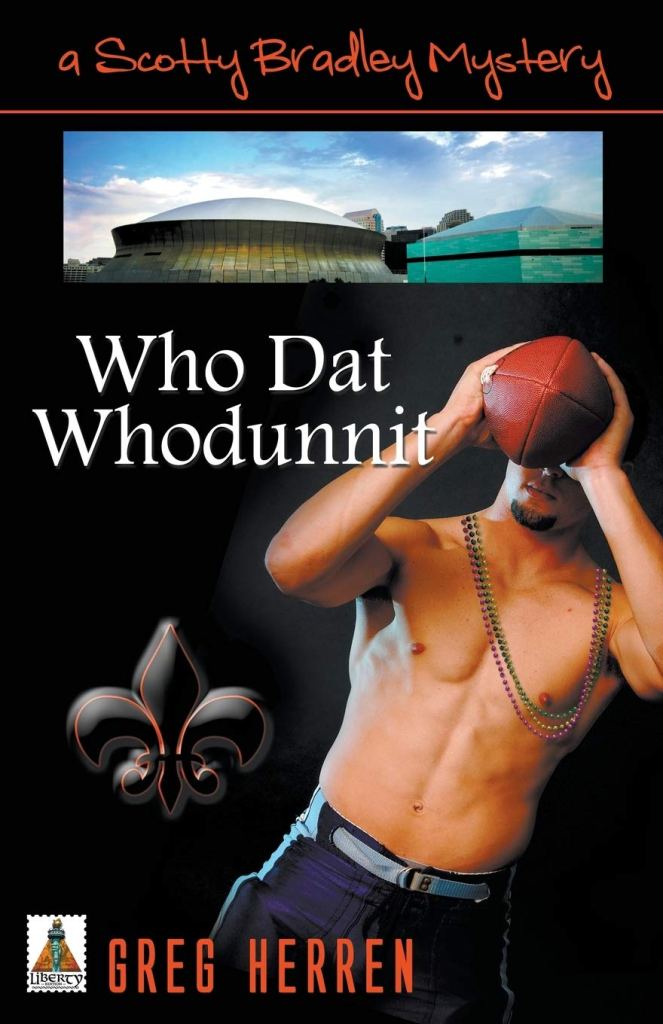
So I decided to write another Scotty book, set it in that period between the Saints winning the NFC Championship and the Super Bowl so I could document that time, and I also decided to bring the other side of his family–the Bradleys–into the mix and give him a cousin who actually was on the Saints team and kind of a dick.
It was around this time, when I was planning or writing the book, that same-sex marriage was in the news a lot. Several suits were winding their way through the courts, and public opinion–thoroughly anti-queer in 2004 when it was on the ballot on a lot of states–was starting to swing back the other way. There was an incident at a beauty pageant when Miss California (her name escapes me now) was asked by Perez Hilton (who shouldn’t be judging anything, frankly) about same-sex marriage. She had to say she was against it, and even apologized, saying “I’m sorry, it’s how I was raised!” as the crowd began booing and jeering. She didn’t win, and I actually felt like it was kind of a shitty question to ask, but on the other hand, California had passed Prop 8 in 2008 (which was kind of the catalyst for the public opinion change, I believe). I also have always believed the old “it’s how I was raised” is a copout for bad or unpopular opinions–most white people are raised racist, after all–and questioning and reevaluating values and beliefs you were raised with is part of the maturation process of becoming your own person. But I was willing to cut her a break–she was young, it was a “gotcha’ kind of question, and kind of unfair–until she doubled down and decided to became the Patron Saint of Homophobia, following in the pumps of another runner-up pageant queen who became the face of hate and bigotry, wrapping it all up in religion and “concern for children”: yep, the hateful old bitch Anita Bryant herself, may she burn in hell for all eternity. She didn’t last long–its hard to paint yourself as a martyr for family values when you’ve been caught sexting (and recording yourself masturbating to send your man–and that was the end of that. I decided to make the reigning Miss Louisiana a homophobe who got that question at Nationals and is now dating Scotty’s cousin the Saints player–and he brings her to Christmas, with the end result that she gets slugged by Scotty’s mother and their family storms out.
And the night the Saints win the NFC championship, she’s murdered.
It was fun because I got to involve a megachurch in Jefferson Parish (there actually is one), and a sordid history of her own that the beauty queen was keeping secret for her own reasons–(coughs LESBIAN coughs) and even got to bring some more past characters back into the mix, like Emily who worked at the Devil’s Weed, and I had a lot of fun with this look into the other side of Scotty’s family (the one I am working on now also deals with another branch of relatives).
And I got to write about the Saints winning the Super Bowl, which was even more awesome. This was the book where I really thought I was done with Scotty. The year after it came out, at the next Saints and Sinners, was when I was asked if I would do another Scotty book; this was when I made my famous reply, “if I can figure out a way to include Mike the LSU Tiger, Huey Long, and his deduct box into a book, I will write another Scotty book.”
Of course, later that night it hit me like a 2 by 4 across the forehead, and I made some notes that eventually became Baton Rouge Bingo.
I first discovered Stephen King when I was a sophomore in high school. A friend was carrying a paperback copy of Carrie around with her, and I neither recognized the title nor the author. The cover was interesting looking, in that weird kind of alternate reality type way that speculative fiction covers so often got at that time. “What is this about?” I asked when I picked it up and examined the book.
“It’s about a bullied girl with psychic powers,” she replied. “My mom was worried about letting me read it because she’s afraid I’m like her.”
It rather broke my heart a little to hear my friend, who was overweight and had very bad skin but also incredibly kind and intelligent, say this; but I could also relate a bit because I, too, was picked on and bullied. I, too, knew what it was like to walk past a gaggle of kids both pretty and “cool”, notice that they stopped talking as I approached only to whisper and laugh once I walked by…while simultaneously feeling grateful that they had the decency to whisper so I couldn’t hear what was said (and typing that really made me sad).
I opened the book to the first page and there it was, about halfway down the first page, in italics: Carrie White eats shit.
The preceding sentence, not italicized, read: “Graffiti scratched on a desk of the Barker Street Grammar School in Chamberlain:”
The realism of this, its brutal reality and recognition of the horrors bullied kids face, was like a 2 x 4 across my forehead. I started reading, and kept reading, until the bell rang and I was about thirty pages in, completely drawn into the story. I’d never read anything like it before; it was so real, so honest, so like what high school was actually like as opposed to the cutesy stories I was accustomed to reading about teenagers, where the concerns were “who will take me to Prom?” or “should I go ahead and have sex now or do I wait till I get married?” This was visceral, and I regretfully passed the book back to my friend, thinking, “I’ll look for it at Zayre’s when we go there next.”
My friend, who shared my love of reading, just smiled and said, “I haven’t started it yet–why don’t you go ahead and finish it and then give it back?”
I read it instead of paying attention in my next class–it was Drama, the little play we were rehearsing for class had me assigned stage managing duties, so I really had nothing to do since I wasn’t rehearsing–so I sat in a seat in our school theater, reading. I read it on the bus ride home. I read it when I got home, sitting on my bed with my back propped up by cushions. And I finished it that night–establishing a pattern with King’s fiction that lasted for decades: I would read the book as soon as I got a copy from start to finish, usually in one sitting (It kept my up all night because I couldn’t put it down).
When I saw Night Shift on the wire racks of the News Depot several years later in Kansas, I was terribly excited. A new Stephen King! I bought it immediately and took it home…slightly disappointed to discover it was merely a short story collection, and I wasn’t a big fan of reading short stories; I only read the ones I was required to read for a class assignment.
I read the first story, “Jerusalem’s Lot,” and didn’t like it at all; I put the book aside and didn’t return to it until months later…the next story, however, was “Graveyard Shift” and it was amazing…suffice it to say, I read the rest of the book through in one sitting–and it’s also been my go-to for rereads and so far when I don’t have a lot of time, or I want to simply relax and enjoy reading…one of the reasons for years I would often reread a favorite book.
But last night we started watching Chapelwaite, which I knew was an adaptation of that first story I didn’t care for–and have never reread as a result–and so I decided to go ahead and revisit the story.
I am really glad that I did.
Oct. 2, 1850
Dear Bones,
How good it was to step into the cold, draughty hall here at Chapelwaite, every bone in an ache from that abominable coach, in need of relief from my distended bladder–and to see a letter addressed in your own inimitable scrawl propped on the obscenelittle cherry-wood table beside the door! Be assured that I set to deciphering it as soon as the needs of the body were attended to (in a coldly ornate downstairs bathroom where I could see my breath rising before my eyes).
I’m glad to hear that you recovered from the miasma that has so long set in your lungs, although I assure you that I do sympathize withthe moral dilemma the cure has affected you with. An ailing abolitionist healed by the sunny climes of slave-struck Florida! Still and all, Bones, I ask you as a friend who has also walked in the valley of the shadow, to take all care of yourself and venture not back to Massachusetts until your body gives you leave. Your fine mind and incisive pen cannot serve us if you are clay, and if the Southern zone is a healing one, is there not poetic justice in that?
Yes, the house is quite as fine as I had been led to believe by my cousin’s executors, but rather more sinister. It sits atop a huge and jutting point of land perhaps three miles north of Falmouth and nine miles north of Portland. Behind it are some four acres of grounds, gone back to the wild in the most formidable manner imaginable–junipers, scrub vines, bushes, and various forms of creeper climb wildly over the picturesque stone walls that separate the estate from the town domain. Awful imitations of Greek statuary peer blindly through the wrack from atop various hillocks–they seem, in most cases, about to lunge at the passer-by. My cousin Stephen’s tastes seem to have run the gamut from the unacceptable to the downright horrific. There is an odd little summer house which has been nearly buried in scarlet sumac and a grotesque sundial in the midst of what must once have been a garden. It adds the final lunatic touch.
But the view from the parlour more than excuses this; I command a dizzying view of the rocks at the foot of Chapelwaite Head and the Atlantic itself. A huge, bellied bay window looks out on this, and huge, toadlike secretary stands beside it. It will do nicely for the start of that novel which I have talked of so long (and no doubt tiresomely).
When I first read this story (and disliked it so intensely) I was a teenager completely turned off by the archaic style of writing, as well as the concept of a story told in letters and diary entries (I wasn’t aware of the concept of epistolary fiction at the time; it was also why I stopped reading Dracula when I first tried as a teenager), and the story itself was just kind of…weird–with all its references to things inside the walls and “great worms” and “horrors from beyond the cosmos”…it wasn’t until I read King’s study Danse Macabre that I became aware of Lovecraft’s work and eldritch horrors; but remembering how much I disliked this story, it didn’t exactly inspire me to go on to read Lovecraft or works in a similar vein (the cultural war over Lovecraft in the speculative fiction community over the last decade–not sure of the time line, frankly, and don’t care enough to go look; I am loosely affiliated with that community and have many friends in it, so can’t not be aware but simply observed).
But watching Chapelwaite put me in mind of this source material for the show again, and I decided to reread it this morning, since I’ve never reread the story since its initial read back in the 1970’s. I’ve since read Dracula; Les Liaisons Dangereuses was the book that cured me of my disdain for epistolary fiction–the book is extraordinary–but yet, never gave “Jerusalem’s Lot” another try.
I’m glad I did.
This second read made me appreciation the story a lot more than I did over forty years ago. A quick glance at the copyright page for Night Shift shows that the story was an unpublished work included in this collection and seeing print for the first time; a shame, because it not only shows King’s incredible versatility as a writer but also it’s chilling and creepy; it’s almost Gothic in tone, certainly using a writing style from the past (although I don’t know that a man in 1850 would mention needing to relieve his bladder in a letter to a friend); one that is very formal and I didn’t care for much as a teenager but have come to greatly appreciate in the years since. The story is simple: Charles Boone, after some ill health after the loss of his beloved wife, has inherited a family estate on the coast of Maine. There was a family rift between his grandfather and great-uncle; the death of the former master of Chapelwaite has left Charles as the lone survivor of the family. Once he and his man-servant arrive, they begin to experience strange phenomena that they originally tribute to rats in the walls; but rats don’t explain when no one in the nearby town of Preacher’s Corners will come near the place, or will have anything to do with Charles. A few miles from the house is a pristine yet abandoned village: Jerusalem’s Lot (yes, the same name of the town from King’s classic vampire novel ‘salem’s Lot), and Charles–despite being warned (do people in horror stories ever listen to warnings?) investigate the little town, and…yeah.
GREAT story, and the end is *chef’s kiss*.
Very glad I decided to revisit the story, so thank you, Chapelwaite, for getting me to do so.
And I will add there’s another Jerusalem’s Lot story in Night Shift, “One for the Road”–which I deeply love.
Saturday morning in New Orleans and all is right–for now–in the world. I slept in this morning, which felt great, and while I have some errands to run–mail, drop off a return, make groceries, take books to the library sale–overall I pretty much have the day free. The LSU-Kentucky game isn’t until six thirty, and I don’t have any need to actually watch any of the other games today–although I will undoubtedly have the television on and tuned into said games–but I want to work on cleaning today, getting organized, and potentially doing some writing. I started writing another Blatant Self Promotion (BSP) post for Bury Me in Shadows the other night, and I really would like to get that finished and posted (I had hoped to write a post a day to try to sway you, Constant Reader, into opening your wallet and buying the book, but there’s only so much time in a day and I do need to rest and refresh both body and brain) at some point either today or tomorrow. But the book–and therefore the self-promotion–walk a line that I have to be very careful with, which always makes me nervous. It’s never my intent to ever offend or upset anyone, but my books are my books and my personal politics, values, and beliefs do affect what I choose to write about–and if you’re looking for a conservative point of view (or a white supremacist one) you are definitely buying the wrong books should you buy one of mine.
Yesterday was actually kind of lovely. I did some work, I made some condom packs, and I rewatched a film from the 1970’s that fits both into the Cynical 70’s Film Festival as well as the Halloween Horror Film Festival: Brian de Palma’s The Fury, based on a book by John Farris, which I read at the time (I eventually originally saw the film on HBO; I never rented it nor saw it in the theater). Horror fiction and films made an enormous comeback in the 1970’s; one could see the genre actually achieved never before see heights in that decade. Part of this, naturally, was the publication of Stephen King’s first novel, Carrie, and the enormously successful, Oscar-nominated film adaptation of it a few years later (still one of the best King adaptations of all time). Both publishing and film responded accordingly, and also in the late 1970’s the one-two punch of Halloween and Friday the 13th took the slasher film to new heights, taking the horror genre along with them. The 1970’s also saw the debut of Anne Rice’s Interview with the Vampire, which wound up spawning an enormously successful series of books that completely changed the vampire dynamic in fiction–following the lead of Dark Shadows and making vampires into deeply flawed, romantic heroes. But horror was everywhere in the latter part of the decade (you should really check out Grady Hendrix’ marvelous Paperbacks from Hell, which examines the proliferation of horror titles in the 1970’s and 1980’s, through the window of their cover art), and so, naturally, The Fury–with the same director as Carrie, Brian de Palma–was primarily viewed as a rip-off trying to cash in on the success of Carrie.
But if The Fury is similar to Carrie in some ways, it is much more like Firestarter than any other King work; as I rewatched I kept being reminded of Firestarter and thinking about it (and thinking it, too, was due for a reread). The premise of the film/book is that there is a secret government agency (1970’s paranoia again) tasked with exploring and examining the potential of young people with some psychic gifts, whether it’s ESP, telekinesis, etc., with an eye to weaponizing them as well as advancing science (the government will turn anything into a weapon of war; this moral debate is mentioned very briefly during the film but to no great degree). Kirk Douglas plays the father of an extremely gifted young man, played by Andrew Stevens (which may or may not have been my first exposure to the handsome son of Stella Stevens; he also appeared in a two-part television adaptation of John Jakes’ The Bastard, and I don’t remember which came first. Nevertheless, he was quite handsome and had a terrific, sexy body). The very first scene of the film shows them on the beach somewhere in the Middle East; there’s a terrorist attack and Douglas is the target, but Stevens is kidnapped by the bad guys and Douglas manages to escape, embarking on a lifelong quest to find and rescue his son from these bad guys operating under the aegis of the government (I cannot emphasize how deeply distrust of the government ran in this time, in the wake of Watergate and Vietnam, there was a definite shift in public perception). The movie then switches over to Amy Irving, daughter of wealthy parents attending an extremely exclusive girls’ school in Chicago. Amy (another tie to Carrie) also has powers she doesn’t understand and can’t control; a bully starts harassing her in the cafeteria, and Amy blurts out the girl is pregnant–and the girl starts bleeding from her nose profusely, causing a panic, etc. Amy is then recruited to a school to test her talents–the same people who kidnapped Andrew Stevens, but their end game is never really explained; they’re all just bad guys who work amorphously for the government. Amy and Andrew are somehow connected; being able to see each other’s thoughts and so forth, so Douglas helps her escape from the school and they go looking for Stevens. SPOILERS: Stevens and Douglas finally end up dead, basically killed by the government people–not really, but they are definitely the reason they do–and in the final scene Amy uses her powers to punish the bad guys (again, very similar to Firestarter, which The Fury predates by several years). It’s not a bad movie, per se, but it’s also not a great one; it’s certainly not as engaging as Carrie–and I remember thinking that about the book as well; that it was just a quickly written attempt to cash in on King’s success.
What was interesting–what is always interesting–about watching these old movies is seeing actors who have not yet made it big in bit roles. There were three I picked out in this one: Melody Thomas, yet to become Nikki Newman on The Young and the Restless for decades; Daryl Hannah as one of the bitchy mean girls at the private school Irving attends; and Dennis Franz, playing a cop years before NYPD Blue.
We watched the season finale of Ted Lasso (oh, Nate, you poor broken man) which made us both laugh and cry, as it always does; the show really is a joy and I am rather distraught we have to wait now for the next season, and then a new show on Apple TV called Acapulco. This show is interesting; a wealthy older Latino man is explaining to his nephew his life story; how he came up from nothing to become wealthy, and how it all began with him getting his first job at a ritzy resort hotel in Acapulco called Las Casinas when he was a teenager. The parts with the older man talking to his young nephew are not engaging at all; there’s a mimicry of The Princess Bride with just a hint of the story-telling structure of How I Met Your Mother as well; it didn’t work for me in this instance. But the teenagers working at Las Casinas back in the 1980’s? Very charming, engaging, and likable. We’ll keep watching, but I want to see less of the present and more of the past, which is the show’s true strength.
That’s about it here from the spice mines. I think I’ll have some more coffee and try to get that BSP post finished. Have a great Saturday, Constant Reader!
And here we are on Friday yet again. The nights this weekend are a return to the frigid climes of earlier this week, but the days promise highs in the 50s, at least, and it’s supposed to get back up into the 70’s next week…or so it said the last time I checked. I generally tend not to look at weather forecasts more than a few days out, primarily because New Orleans weather is completely unpredictable and defies expectations all the time. It feels chilly this morning–I’ve not checked the temperature yet–but the space heater is on, as always, and I am shivering a bit under my layers and considering going to get a blanket. The HVAC guys were here yesterday, but there’s still no heat and there’s also no sign of them outside this morning. Which is fine; I can huddle under blankets as I do my work-from-home duties this morning. Okay, I checked, and it’s thirty-five with a high of 48 predicted. Yikes! Sometimes, methinks, it’s better not to know some things.
The forecast for next week looks much better. It’s simply a matter of getting through this last blast over this weekend.
We finished watching season two of Mr. Mercedes last night, and it was…well, it was a bit disappointing. The season wound up diverging significantly from the book it was based on (End of Watch, the concluding book of Stephen King’s Bill Hodges trilogy), and while the middle of the season was compelling and impossible to turn away from, the last two episodes, for me and Paul at least, significantly went off the rails. The third season starts airing on March 4, based on the second book of the trilogy, and we’ll watch because we really like the characters–and I think Book 2 was my favorite of the trilogy–but now It’s a Sin has dropped and so has something else we wanted to watch as well, but right now I can’t think of what that other show might be. Oh, yes, The Luminaries with Eva Green.
I also watched, while making condom packs yesterday, the original film version of The Amityville Horror, which fits into both the Cynical 70’s Film Festival as well as the Halloween Horror Film Festival. I actually saw this movie in the theater when it was released all those years ago, and just like then, I found it unimpressive, not particularly scary, and farfetched. I had read the book, of course–I think I bought it off the wire racks at the Safeway in Emporia on 6th Street–but the book wasn’t very well written and the story–theoretically something that actually happened–wasn’t convincing and, I thought, pretty poorly written (and I wasn’t a particularly discerning reader back then, either). It was, however, a phenomenon; a huge bestseller and the movie also made a ton of money, spawning numerous cheesy sequels (none of which I watched). Horror made a big comeback as a genre in the 1970’s; it could even be seen as a “golden age”–there was a glut of films and movies in that decade, and the demand didn’t taper off until the late 1980’s/early 1990’s. Amityville was a big part of that–following The Exorcist and Rosemary’s Baby and Carrie; it was the decade when both Stephen King and Peter Straub’s careers are writers took off, and there were a lot of books published….a LOT. (I do highly recommend Grady Hendrix definitive Paperbacks from Hell–it will trigger a lot of memories for you if this was a period when you were actually alive…it certainly did for me.) But the movie is still bad, after all these years–James Brolin was certainly handsome, coming off his years on Marcus Welby and before he spent the 80’s managing Arthur Hailey’s Hotel on ABC. (Although I couldn’t help thinking, “wow, of someone would have told me back then Brolin would marry Barbra Streisand and live happily ever after and his son Josh would become a major star, I would have laughed and laughed and laughed.”) Margot Kidder plays his wife, Kathy, and this is the best, I think, she’s ever looked on film–they are a handsome couple and have some chemistry together, even though both performances eventually descend into one note, repeated over and over again. Rod Steiger also has a supporting role to which he brings all his Method bombast in a role that doesn’t really make a lot of sense, nor does what happens to him. The movie’s end, like the book’s, explains nothing other than the family abandoned the house and never returned. (Of course, the house has changed hands with people living in it for decades and none of them have experienced anything the Lutzes claim to have. Even cynical teenager me, when reading the book, thought, oh, you bought a house you couldn’t afford and dreamed up a crazy story to try to get out of the mortgage..the movie only convinced me further that I was correct in my theory. I looked it up on line, and the lawyer for the kid who murdered his family in the house later admitted he and the Lutzes, “over many bottles of wine”, came up with the story…to not only get them out of the mortgage but to try to get his client a new trial. The Lutzes still claim it all really happened. *insert ‘sure Jan’ GIF here*)
I think I bought another copy of the book several years ago–still in print all these years later!–to reread and see if it was as bad, if not worse, than I remembered. I have yet to get around to it…but watching the movie made me think I need to reconsider that urge to reread it.
But the 1970’s were, as I have said before, a weird decade of transition and change. Conspiracy theories were running rampant everywhere about everything–the JFK assassination in particular was talked about and theorized about a lot–but this was also the decade of the Bermuda Triangle, when UFO’s really became a topic of discussion, when The Late Great Planet Earth truly began shifting certain sects of Christianity into doomsday prophecy and end-times philosophy, and of course, we cannot forget the existential threat of Communism that had some people seeing Russian agents everywhere and there was the ever-present threat of nuclear annihilation.
Although there are times, too, when I think about the 1970’s as the last gasp of American naiveté and innocence. The one-two punch of Vietnam and Watergate made everyone start distrusting the government…and HIV/AIDS was just around the corner.
Hmmm. Some pretty heavy thoughts on a shiveringly cold Friday morning in New Orleans.
And now back to the spice mines. Stay warm, everyone, and stay safe.





 Queer and Loathing in America