I Am Woman

Ira Levin has always one of my favorite writers, but I often forget about him when I am talking about influences. I don’t know if Levin’s work influenced me; he was very sparing with his prose, and I am most definitely not that, but I know he has written some of my favorite novels of all time and his incredible popularity–based on very few novels written, most of them pretty short–was such that titles of his books became part of the popular culture; a “tl;dr” if you will to explain something: Rosemary’s Baby, The Stepford Wives, The Boys from Brazil. He wrote one of my favorite crime novels with a shocking twist (two thirds of the way in!), A Kiss Before Dying, which won an Edgar and should be considered one of the best crime novels of all time (the problem with it is a big part of the genius is in the twist, and it’s such a massive spoiler it can’t really be talked about except in criticism).

I knew about Rosemary’s Baby–everyone alive the year the movie came out knew what it was and what it referred to (I was wanting to do an entire post about Levin, but I couldn’t find my copy of Rosemary’s Baby) so settled for rereading The Stepford Wives over the weekend (it’s very short, very chilling, and downright terrifying in places. It was also the first Levin novel I read; I bought the Fawcett Crest edition pictured below, and I think I read the entire thing in a single afternoon. I’ve also seen both movies, both of which were okay, but again, the great thing about Levin is how he played his cards and which ones he withheld; the movie editions couldn’t get away with what he did in the book, which made the movies less compelling and less terrifying.

And it definitely holds up. In fact, it’s kind of compelling reading in this post-Dobbs time in which we find ourselves living these days.

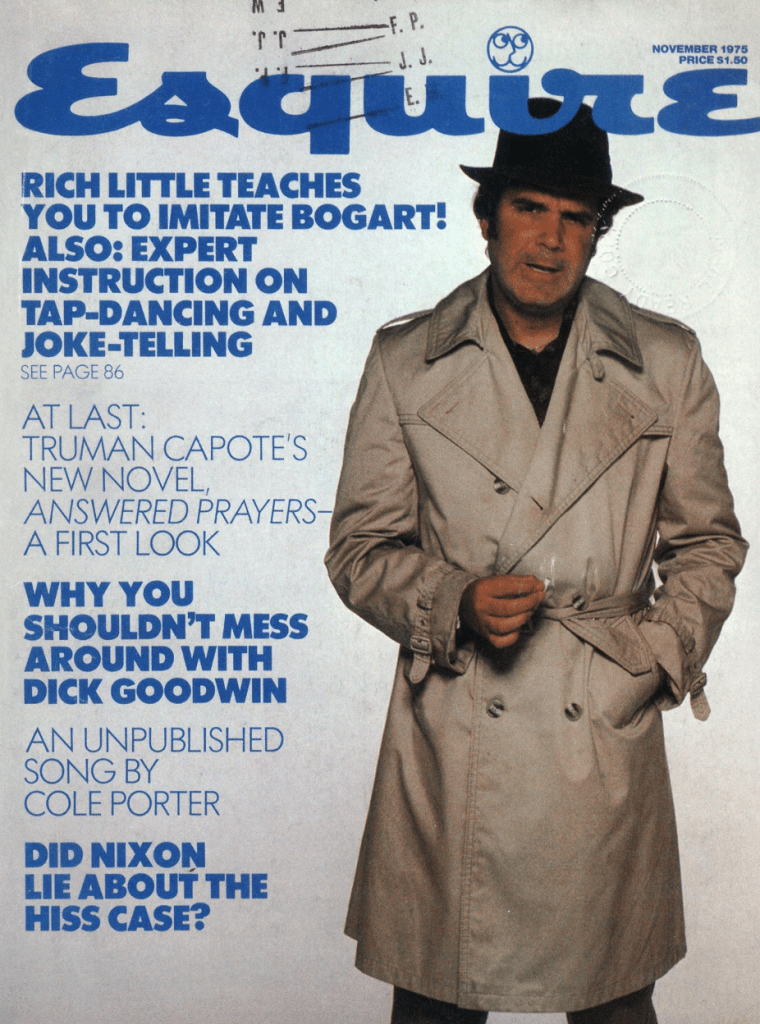
This is the actual copy I had, and read. It looks very Gothic on the cover, but it’s not that at all.

The Welcome Wagon Lady, sixty if she was a day but working at youth and vivacity (ginger hair, red lips, a sunshine-yellow dress), twinkled her eyes and teeth at Joanna and said, “You’re really going to like it here! It’s a nice town with lots of nice people! You couldn’t have made a better choice!” Her brown leather shoulderbag was enormous, old and scuffed; from it she dealt Joanna packets of powdered breakfast drink and soup mix, a toy-size box of non-polluting detergent, a booklet of discount slips good at twenty-two local shops, two cakes of soap, a folder of deodorant pads–

Enough, enough,” Joanna said, standing in the doorway with both hands full. “Hold. Halt. Thank you.”

The Welcome Wagon lady put a vial of cologne on top of the other things, and then searched in her bag–“No, really,” Joanna said–and brought out pink-framed glasses and a small embroidered notebook. “I do the ‘Notes on Newcomers,'” she said, smiling and putting on the glasses. “For the Chronicle.” She dug at the bag’s bottom and came up with a pen, clicking its top with a red-nailed thumb.

Are there still Welcome Wagon Ladies? And what a clever way to open a novel about a bedroom community town for New York–what else but the Welcome Wagon Lady welcoming a new family to Stepford. It puts the reader at ease, too–something very familiar to people in the 1970s was the Welcome Wagon Lady, so opening a novel with something ordinary and normal is an interesting choice, given what’s to come. (For the record, there will be spoilers here. I’m sorry, the book came out in the early 1970s, as did the original film version and even the dreadful remake is now at least twenty years old.) Joanna Eberhart is a stay-at-home mom who gave up a promising career as a photographer when she got married, but now that the kids are older, she and her husband have found a lovely home in an idyllic seeming town where he can commute into the city1, and they’re in the midst of the chaos of moving in. There’s an extra room that even had running water to function as a developing room2, so Joanna can get back to pursuing her photography career. Good schools, lots of space, all kinds of enticements to get a young family to move out there3

It’s difficult for young people today to even imagine what a different world it was I grew up in, and the 1970’s might as well be the 1870’s to the younger generations…then again. didn’t 1945 and World War II seem a million years ago when I was a kid…but I was much closer in time to WW2 than teenagers today are to the 1970’s. (The actual equivalent would be fifty years ago, which would have been 1921 to me; when my grandparents were born there was still a German Empire, an Ottoman Empire, an Austria-Hungary, and the Romanovs were still on the throne in St. Petersburg.) But when this book was written the Women’s Movement was just really gaining a lot of traction (it was called Women’s Lib, and proponents of it were scathingly called “Libbers” by those who thought women were better off in the kitchen, unseen and unheard), and women were beginning to understand they didn’t have to subscribe to the old, tired gender roles that basically were invented after the Second World War. They could have a career. They didn’t have to get married. Among the things they were protesting was not being allowed to get bank loans, credit cards, or bank accounts without a husband–which was very difficult for widows and divorcees (and why a lot of women stayed with abusive jerks.) It wasn’t a crime to beat or rape your wife because you owned her. The Pill freed them–both married and unmarried–from the terror of getting pregnant and abortion was illegal. Sound familiar?

Levin, who was also an incredibly sly critic of social structures, the culture, and society in general, saw the beginnings of women starting to assert their independence, and asked the question so many bewildered men, unaccustomed to women’s freedom, didn’t know the answer to: if women were free and independent and could choose their own course in life, what was the new role in all of this for men? What was their place anymore? There was pushback against women’s liberation and not just from men; some of the most vocal opponents to women being made into whole people came from women.4 If it was, indeed, a “battle of the sexes” as the conservative gadflies kept insisting (or a “war on men”), what would men do?

The Stepford Wives was the chilling answer.

Once Joanna moves in, she begins noticing how the other wives in town are all beautiful, have great figures, and always have their hair done, a face of make-up, and are devoted to making their husbands happy. She meets another recent relocator, brash Bobbie Marlowe, whose house is just as messy as Joanna’s, and they begin to bond over the weirdness of the other women in town. They make another friend, Charmaine, and the three women kind of bemusedly wonder if there’s something in the water in Stepford that makes the women behave like such 1950’s June Cleaver housewives. There’s also the Men’s Association, a men’s club that all the men of Stepford belong–a secretive organization in a big house. Joanna and Bobbie are appalled at the sexism in the very idea of such a club, and their husbands promise to try to make including women an option–the old “change from inside” shtick we’ve all heard a million times. Joanna’s husband brings some of the club officers for her to meet and get a read on. One of them is a Frank Frazetta-style artist, who does a series of sketches of Joanna. Another used to work in the animatronic section of Disney. Another is doing a research project he asks Joanna to help with, having to do with accents and the way people speak, which requires her to record an insane amount of words into a tape recorder.

And then…Charmaine becomes one of the Stepford wives, and the two women are terrified.

Bobbie is convinced now there’s something from nearby chemical plants in their drinking water, and goes to extremes in her paranoia. Joanna forces Walter to agree to move, and then they start looking for other places in nearby towns. Heightening their paranoia is finding out there actually HAD been a Women’s Club in Stepford, and even had Betty Friedan come speak to them4! What happened to these women? Levin is exceptionally brilliant at writing paranoia, and the reader becomes wrapped in them, what is happening to them, and hoping that they’ll get away somehow. But the biggest betrayal of all is yet to come: their husbands, whom they loved and married and started families with, are also in on it.

The message of The Stepford Wives was that men don’t really want a full partner; they want a home manager who takes care of everything, including the kids, so they can focus on work.

Sound like tradwives or something Senator Katie Britt would love to impose (on other women, of course; tradwife for thee but not for me) on the country, doesn’t it? Women with no imaginations, animatronic creatures who feel like women, and cater to their every whim and desire?

Maybe The Stepford Wives should be required reading for all teenaged girls. And sadly, the book still holds up. It’s not a reach to believe that there’s a town like this somewhere, where the men have murdered their wives and replaced them with droids. I certainly see enough troglodyte men on-line who think that way.

  1. This was a HUGE trope in 1970’s horror; moving away from the city to get fresh air and space…only to have that dream of a bigger house and a lawn and fresh air turn into a fucking nightmare, which I hope to write a longer essay about at some point. ↩︎
  2. Yes, we used to take pictures with “cameras” on “film” that had to be processed and developed; Fotomats were popular, or you could get it done at Walgreens. There used a developer on Decatur Street just off Jackson Square; I had a lot of pictures developed there when I was in the Quarter more regularly. ↩︎
  3. Interesting that Rosemary’s Baby also opens with a young married couple, hoping to have kids, moving into a new place. ↩︎
  4. I hope Phyllis Schlafly is frying in hell, and is sharing a cast iron skillet with the Reagans and Jerry Falwell. ↩︎
  5. If you don’t know who Betty Friedan is, shame on you and use google. ↩︎
Hell is for Children

Hollywood has always been interesting to me, ever since I was a kid. I am not as obsessed with Hollywood and celebrity culture as I used to be; I used to love awards shows but now find them kind of tedious and a lot of to-do about nothing very much. Paul and I used to watch any and every awards show, regardless of what they were for; now it’s just easier to follow live updates and skip the forced, awkward scripted banter and speeches where winners attempt to thank everyone they know before the band starts playing them off.1 That’s always cringey to me–not for the person the band is playing for, but for the event itself. I get that they want it to end on time, but at the same time it seems bad form to celebrate someone and then cut them off as they do celebrate? Your mileage, as they say, may vary.

One thing I did notice when my Hollywood fascination was at its peak was how cleaned up and sanitized Hollywood bios were, as opposed to the fiction written about Hollywood. You’d never know, for example, from reading a biography of Spencer Tracy that he wasn’t just “good friends” with Katharine Hepburn, or that Roddy McDowell never married for a reason, or that some stars may have been forced to have sex with casting directors, agents, and producers to get started. But those marvelous Hollywood novels (dismissed and disdained by critics as trash) were so much fun to read, and they always ended in tragedy. I also always wondered–affairs and divorces were also fairly common amongst Hollywood celebrities–how much truth there was in those stories; often I could identify characters as real people (for some books–cough Valley of the Dolls cough–trying to figure out who the characters were based on was part of the fun of reading them). And of course, the existence of “studio fixers”–yeah, there’s still a bunch of stories from Hollywood’s past we may never know the real story behind, let alone the stuff they buried so completely it’ll never be known–definitely speaks to the need for them, so yeah, Hollywood had a lot of secrets.

And now, knowing what I know about powerful Hollywood figures and how they behave? I’d be more surprised if they didn’t see the contract players as a harem of men and women for them to play games with.

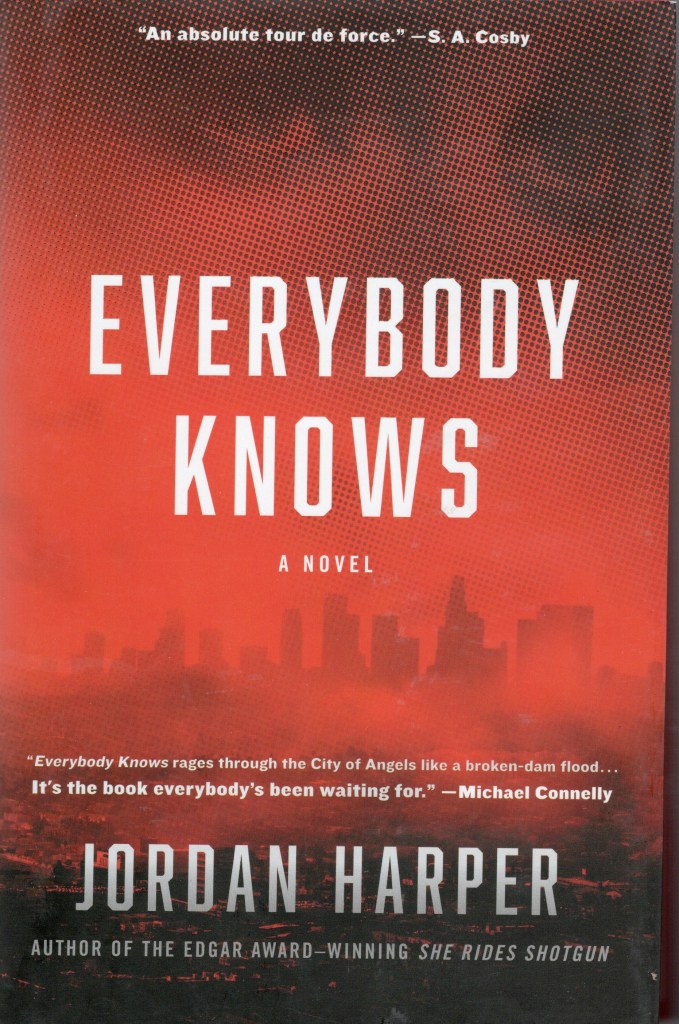
I also have a tendency to avoid highly praised writers and books (and other forms of entertainment, of course), because I always end up disappointed, which is fault of neither author nor their work. Jordan Harper has been praised a lot, so I was hesitant to read him…but having now read Everybody Knows, I don’t regret waiting to read it because I saved a real treat for myself.

For want of a better word, wow.

Los Angeles burns.

Some sicko is torching homeless camps. Tonight they hit a tent city in Los Feliz near the 5. The fire spread to Griffin Park. The smoke makes the sunset unbelievable. The particles in the air slash the light, shift it red. They make the sky a neon wound.

Mae waits outside the secret entrance to the Chateau Marmont. She watches Saturday-night tourists wander Sunset Boulevard, their eyes bloodshot from the smoke. They cough and trade looks. They never thought the Sunset Strip would smell like a campfire.

Mae moves around the sidewalk like a boxer before the fight. Her face is sharp and bookish, framed in a Lulu bob. She wears a vintage floral jumpsuit. She’s got eyes like a wolf on the hunt–she hides them behind chunky oversized glasses. Nobody ever sees her coming.

Jordan Harper is an amazing writer. That’s where we need to start with this book. Yes, the story is compelling and fascinating and dirty and sleazy and makes you kind of want to take a Silkwood shower. The characters–all of them, from the two leads on–are defined and fully dimensional, with interior lives and motivations. Our two main characters, Mae and Chris, are modern-day fixers…but in modern times they’re called “flacks” and work for “p.r. firms”, even if their job is the same as the tough guys who worked for MGM and Warners and Fox back in the day. But the writing is what sold me on book and writer; those opening paragraphs are as fine a series of opening paragraphs I’ve ever read. The dialogue is real, the characters are awful but you understand why they are awful–and both Mae and Chris have seen their fair share of horrific cover-ups and helping their clients get off scot-free every time they get in over their heads. In the very first chapter, Mae is on the job helping a young former child actress transitioning into adult roles out of drug overdose situation in her rooms at the Marmont, and her quick thinking and moving gets the young woman out of there without being seen or caught.

Mae is very good at her job.

Her boss sets up a meeting with her–off the books, away from the office–but on his way to meet her, he is murdered. It’s supposedly a car-jacking go wrong, but Mae has to wonder, is it? He’d seemed like he was about to hit a financial bonanza, but needed her help. Mae decides to look into his murder–which Chris winds up working as well from another direction. Mae and Chris didn’t work out the first time–but they’ve never forgotten each other, and soon join forces. Both were coming to the conclusion that their jobs were sleazy and they were helping bad people get away with doing bad things, and when they realize what is at the root of all the trouble, they see it as an opportunity to make some cash and perhaps do a little good on their way out to retirement.

And what’s going on in Hollywood is something horrible, indeed.

I loved this book, and deeply resented not having the time to read it all the way through in one sitting, so am really glad I made the time to sit down and finish it–in one sitting. I was about forty or fifty pages in, and sat down and didn’t budge till it was done. That authorial voice! The influence of the hardboiled masters is clearly there, but Harper has his own distinctive style and authorial voice that makes him unique in the business–and that’s not an easy thing to do.

I can’t wait to read more of his work.

  1. I do think this aversion, or lack of interest, in awards shows has come from attending so many writing awards banquets, and yes, it’s a lovely problem to have. At some point I will go talk about my antipathy to awards…but must and always will confess to loving being nominated for things. My jones for that itch to be scratched has happened more than I could have ever dreamed. ↩︎

Ruby Baby

And Saturday morning has rolled around again, and it’s a lovely morning here in the Lost Apartment. The LSU game tonight is being televised (SEC Network) so I can flip back and forth between LSU and the Georgia-Alabama game. There aren’t many games on today that I feel the need to watch or even follow, but I can have the games on while I do other things. Yesterday I ended up taking the day off–I didn’t know how long I’d be out with the errands so I just bit the bullet and took a personal day. It ended up being a lovely day; the weather was very spectacular; in the heat of the summer it’s easy to forget how gorgeous it is here the rest of the year. After the errands were done, I finished reading Jordan Harper’s superb Everybody Knows (more on that later), cleaned up the house some, and had a rather nice day at home with Sparky. I think for the weekend I am going to reread two rather short horror novels to get in the mood for Halloween Horror Month, and the first read of that month will be Gabino Iglesias’ House of Rain and Bone.

We started watching Grotesquerie last night, and it’s really superb. Niecy Nash-Betts is a fantastic actress with incredible range, and this part is perfect for her. The show is very creepy and reminiscent in some ways of the classic Seven, from the 1990’s with Brad Pitt and Morgan Freeman (which is also my favorite Gwyneth Paltrow film), and we were sucked in again. I hope the show doesn’t wind up going off the rails, as so many of Murphy’s shows do, but I am looking forward to watching. I’m actually also still thinking about Monsters–isn’t the point of great art to unsettle you, make you see things from a different perspective, and perhaps even change your mind about something? I don’t know that I’m interested in learning any more about the case–not doing any deep dives into the Menendez case, but watching the show did give a fresh perspective on the case, and society and the culture have changed significantly since the murders and the trials.

I do have some errands to run today–I need to get the mail, drop books off at the library sale, wash the car, and make a grocery run. I ordered a new desk chair (my old one was torn to shreds by Skittle…and he’s been gone for fourteen years) because this old one is definitely ready to be retired and sent to the dumpster. I don’t think I am going to cook out this weekend–unless I decide to barbecue that pork tenderloin in the freezer; tenderloin always tastes better when it’s got a bit of burnt crust. Note to self: either set it out to defrost or get something else at the Fresh Market for dinner tomorrow. Of course, I could just get a pizza for tomorrow…decisions, decisions. I also want to make some more progress on the book today and the Scotty Bible; I need to mark pages in the last two Scotty books, and I am also trying to decide how this current one works out (I did solve problems I was having with two other works-in-progress, Muscles and Chlorine; reading good writers always gives me inspiration for my own; thanks, Jordan!). The Saints play the Dirty Birds tomorrow, and I’ll probably do a grocery run tomorrow, too. I also want to get caught on some blog posts that have been in drafts for a while, and I’ve not done a Substack in quite a while–you can’t build an audience (I blocked a right-winger yesterday who started following me; no fucking thanks, treasonous scum) without posting.

And there’s always, always, cleaning to do.

But…truth be told, I don’t feel anxious or stressed about anything. That’s actually kind of lovely, you know? I also want to watch Saturday Night Live tonight–at least the cold open, I can always stream it tomorrow–but not sure if I want to stay up that late. I stayed up later than I intended to last night, which was fine, but I managed to get up at eight anyway (thanks to Sparky) and I feel good today. I need some more coffee and some breakfast, and to get cleaned up, but I kind of want to get the kitchen and so forth under control before I run my errands before coming home to watch games and do things. I had the Eras tour on yesterday while I read and cleaned, and it really is very excellent; reminding me again of what a force of talented creativity Taylor Swift is–and the way those massive crowds react to her is really something to see, the joy on the faces of people actually there as they dance and sing along with her as she puts on a helluva show. (I still wish she’d done “Red,” but her choices from the Red album were pretty good ones, and the ten-minute version of “All Too Well” certainly belongs on the set list.) So, of course MAGA has targeted her–they want to kill all joy. Period. The Joy Killers is what we should be calling them.

And on that note, I am going to bring this to a close so I can get more coffee and have breakfast. Have a spectacular Saturday, Constant Reader, and I’ll be back for sure.

Screenshot

Backstabbers

Let me tell you about the very rich. They are different from you and me. 

So F. Scott Fitzgerald wrote in his short story “The Rich Boys,” and he was, of course, very right in that observation, and that hasn’t changed in the hundred years since he typed the sentence.

It’s been very clear, since I started watching Capote v. the Swans, that my ignoring aspects of Truman Capote’s personal life because of my own internal distaste to his effeminacy (due to both internalized homophobia and self-loathing) was probably a mistake, and what I really needed to do was take a long hard look at myself as well as examine his life in more detail–I will read the Gerald Clarke biography at some point over the summer–and as such, while I was slightly aware of what happened between him and his swans, I didn’t know of the Ann Woodward involvement. When I bought the below book, I actually thought it was fiction, not true crime. Once I started watching the show, I decided to find the book and read it.

And I enjoyed it.

If Ann Woodward had resolved to live a quiet life in Europe, where she could mourn her late husband, Billy Woodward, far from the madding crowd of the American press, the town of Saint Moritz, high in the Swiss Alps, was certainly an unusual place to retreat to. Renowned for its winter sports, popular as a spa hamlet, and exclusive as a community where entertainers, celebrities, and assorted socialites gathered, Saint Moritz was a lesser European sun around which various society moons revolved. While summer tourism was popular, it was in winter that this small city shined. Luminaries descended in head-to-toe furs inthe daytime and flashy jewels at night, their diamonds and bangles competing with the glittering snow. In the fall of 1956, Ann Woodward was once again the center of attention as she sat down for dinner at one of Europe’s most elite restaurants.

Back in the United States, those familiar with Ann Woodward–and lately there were few who had not heard of her, whether over lunch at the Colony on New York’s Upper East Side, or on the front pages of tabloids–believed that she had been banished to Europe by her formidable mother-in-law, Elsie Woodward, and was now likely leading a lonely life, without family or friends, much less a lover, with plenty of time to reflect on the transgressions that had forced her into exile.

But as Truman Capote watched her from a table across the restaurant, he saw that she was not the solitary widow they expected. Capote was not only surprised to see her in this particular location, but astonished to see her in the company of a man, which was cause for raised eyebrows, considering she had entered her widowhood by her own hand not so very long ago. But Ann Woodward did not seem rattled by the patrons staring with obvious disdain as she exchanged languid looks with her companion.

(The man with her was none other than Claus von Bülow, who would have his own notoriety splashed across newspaper headlines for decades, and about whose alleged attempts to murder his wealthy heiress wife, was the basis for the film Reversal of Fortune.)

I knew about the Woodward case before, but as I have mentioned numerous times, I didn’t know about Truman Capote’s role in her life and eventual suicide. I remember when Dominick Dunne published his first novel, The Two Mrs. Grenvilles, which was a huge bestseller and was made into a television film with Ann-Margret and Claudette Colbert. It was mentioned that the book was based on a real case, which I assumed was the murder of Zack Smith Reynolds, and the suspicion that his actress/wife Libby Holman might have done it and the tobacco rich Reynolds family covered it all up. (This was the basis for the Robert Wilder novel Written on the Wind, which was filmed–and altered–with Rock Hudson, Lauren Bacall, Robert Stack and Oscar-winner Dorothy Malone.) A few years later I heard about the Woodward case, and realized that it was the basis for Dunne’s book (all of his novels were based on actual murders; Dunne himself kind of took Capote’s métier after Capote’s death, writing about gossip and murder in the world of the rich and powerful; I could do another entry on Dunne’s work, and probably will. I downloaded the ebook of The Two Mrs. Grenvilles, as well as anthologies collecting his true crime reporting for Vanity Fair.) but still had no idea of the connection between Capote and Woodward.

I greatly enjoyed Montillo’s book. She covers the story of the Woodwards, and then moves onto the feud between Capote and Woodward; opening the book with the confrontation that made Capote viciously turn on her and nickname her “Mrs. Bang Bang,” and always talking about how she got away with murder. It’s well written and moves fast; it’s a marvelous and very quick read. If you’re interested in either true crime, Mrs. Woodward, or Capote, I do recommend it. I enjoyed it very much, and Montillo is kind to both of her main characters.

(While in one of the many Capote wormholes I’ve gone down, I’ve started getting an inkling of why Capote turned on his wealthy swans, writing about them so cruelly and viciously in that short story but the time is not right for this discussion–but I totally understand why he did, in terms of this explanation; whether it was true or not remains to be seen.)

The Second Time Around

…for Chanse, that is.

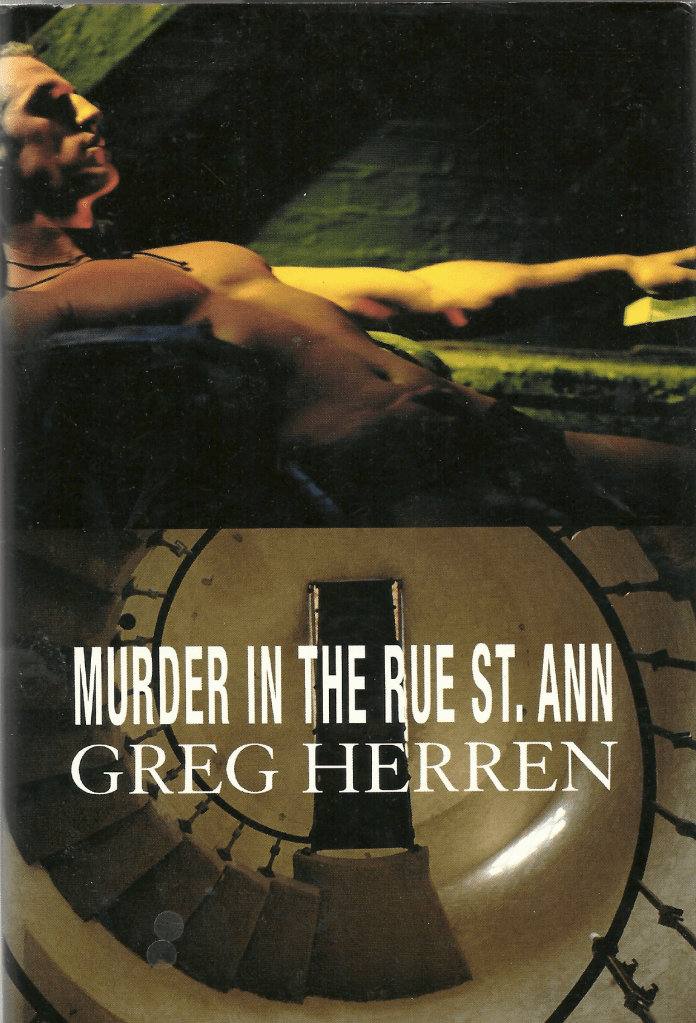
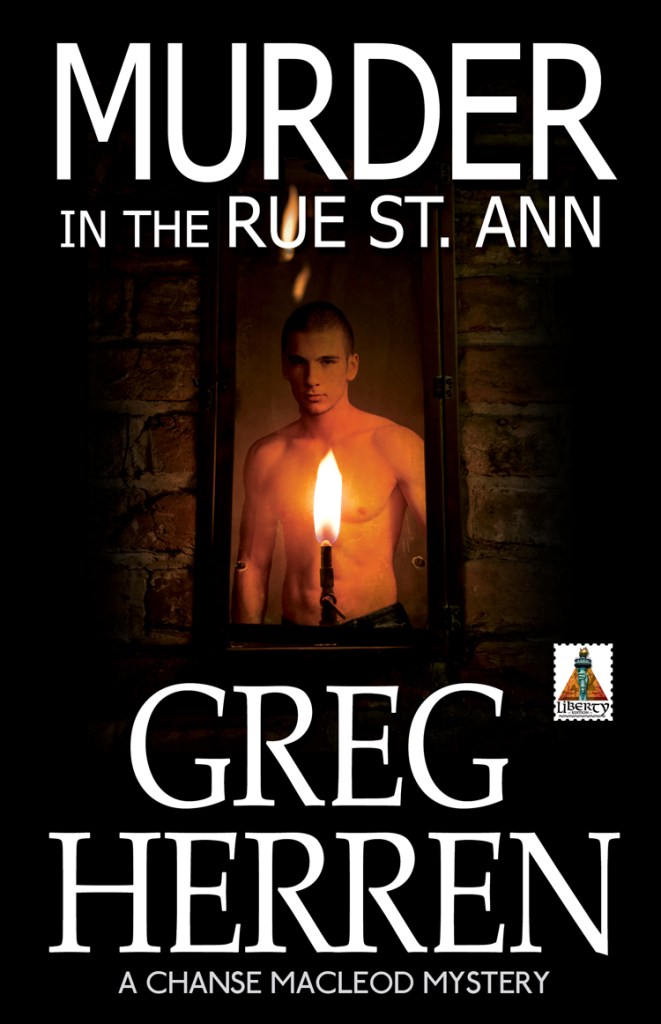
Oddly enough, the second Chanse was the fourth novel I published, and therein lies a tale.

Funny how with these earlier books there’s always a story, isn’t it?

So, I sold Murder in the Rue Dauphine to Alyson in September of 1999–but the pub date wasn’t until February 2002. I saw no point in writing a sequel to the book immediately; primarily because there was a nearly two and a half year wait between signing the contract and when they were able to schedule me in. So, I figured I had about a year and a half before I needed to get it finished (everyone told me it would be released a year after the first, and in all honesty, what was the point of writing two or three books while waiting for the first to come out so the others could be scheduled?), and so, with time to spare and a lengthy period of time to “waste”, I decided to start thinking about the “what ifs”–what if the book sells super-well and is popular? What if this isn’t just a one-off standalone and could be turned into a series? The more I thought about it, the more I liked the idea and I liked letting my mind roam.

So, what would I do if the series took off and I needed to write more?

Being creative and full of energy in my late thirties, and thrilled to death that now I wouldn’t die without having published a novel, I reread the manuscript and my analysis of who Chanse was and why he was who he was, and I started mapping out a personal journey for him, that lasted several books. He was a cynical loner, with a couple of friends, and he was still really not adjusted to being gay when the first book opens. He was estranged from his immediate family of younger sister and brother and his parents; he never returned to Cottonwood Wells after leaving for LSU. He’s ashamed of his family but he also knows they will never accept his sexuality, either, so it’s very easy for him to cut them off almost entirely. So, his journey was going to be like that of the main characters of the show Moonlighting; each case would teach himself something about life and himself, and he would grow from the lesson learned in each book. Each book going forward would have a life lesson for him (Rue Dauphine did as well; the lesson was ‘you can’t just trust someone automatically because they’re queer.’); and the one he’d learn in the second book would be about love and trust (the third would be about sacrifice, the fourth would deal with his family, the fifth would have him fall in love with someone else, the sixth would deal with him dealing with losing his best friend to her husband and realizing he does need other people, and the seventh, the swan song for the story, would find him ready to finally commit to someone and live with them, so the series would be seven books long).

Shortly after I sold the first book, I again learned that lesson myself–the case in the first book was inspired by a gay con artist who’d gotten involved with a non-profit here in the city and then blew out of town overnight, having stolen/embezzled a shit ton of money and leaving a pile of debts behind. I had written to a local color magazine for the gay community (I can’t remember the name!) about writing for them. I wrote something for them, and they hired me to be editor of the magazine, as the business was expanding and it would free up the founder to focus on the new directions while I ran the magazine. It was fun, I got to work with a lot of fun new friends, and…then it all blew up in our faces. It was very similar to the earlier situation–a gay con artist blows into town, makes a lot of promises, runs up a lot of debt and then it just blew up completely. Turns out the guy was a con artist with a record of credit card fraud, and he was on the FBI watchlist so yes, I did get interviewed several times by the local office of the FBI.

The second book, which had the working title Murder in the Rue Royal, was based on that story, but I had already been playing around with a stalker storyline, and then I realized how I could cross the two stories into one seamlessly and write the book. I managed to get another first draft finished when a two-book deal to write the Scotty series for Kensington and Alyson dropped the option for the second book, saying “two mystery series with a gay main character in the same city by the same author are too similar to each other”–which I took as a challenge to make Bourbon Street Blues and Scotty as different as I possibly could to prove them wrong. So, the manuscript went into a drawer and I started happily working on Scotty instead…and again, it was a stand-alone that morphed into a series.

I took a streetcar named St. Charles down to Canal, crossed the street and walked down to Royal.

It was eleven o’clock in the morning on one of those splendidly sunny September days that makes you glad to be alive. Taking the streetcar had been a good idea. The long heat of summer had broken, and the air was crisp and in the mid-seventies. The sky was that blue unique to New Orleans, with wispy white clouds scattered across its expanse. There was just a hint of cool moisture in the air. There were a lot of people milling around the sidewalks on Canal— a good sign for the tourist season. Canal used to be the main shopping drag of the city, with huge department stores like Maison Blanche and D. H. Holmes. Those were long gone. They had either gone out of business or fled to the suburbs— now it was mostly hotels, fast food, and Foot Lockers.

There were hopes that putting the Canal streetcar line back in place would stimulate a recovery for the street. So far, all the construction work had simply made the Quarter difficult to get to from uptown. Add to that the chore of trying to find a place to park that would get me a ticket in two hours or cost ten dollars, and I was kind of glad I was having car trouble—the streetcar down and a cab home was very simple.

Not that riding the streetcar didn’t bring its own set of aggravations.  If the cars ran on any fixed schedule, I’d never been able to figure it out. You could wait for one for half an hour and then three in a row, all packed to the gills, would show up. The streetcar ostensibly operated as public transportation, but was also a de rigeur tourist attraction. There was no way of telling when you’d be able to catch one with a place to sit. But when you did, it was nice to find  a window seat on a sunny day and enjoy the city clacking by.

So, when Alyson chose to drop the Chanse series after I signed with Kensington, Murder in the Rue Royal went back into a drawer, which was fine–it wasn’t a good book–and I moved on with my life. The advance for signing with Kensington paid for our move back to New Orleans from Washington, and moving back here was absolutely worth ending the Chanse series for, seriously. I still didn’t have an agent, but I’d been signed to book contracts by two publishers already, and I figured it might be easier now. We accomplished the move, get our new apartment set up on Sophie B. Wright Place, and started putting our lives back together. I don’t remember the timeline of how it came to be, but I was still working with Alyson on my first and second erotic anthologies (Full Body Contact and FRATSEX), so I was aware when my editor left and a new person, that I knew slightly, moved from assistant editor to senior editor. We were talking on the phone one day about Full Body Contact and she casually mentioned, “I don’t see your second Chanse book here on the schedule, what’s going on?” and I told her the story, “Oh for fuck’s sake, when can you get it done by?” and that became the second contract for Chanse.

So, after finished Jackson Square Jazz and turning it in, I broke out Murder in the Rue Royal (the title had already been changed on the contract to Murder in the Rue St. Ann; my new editor didn’t like the alliteration) from the drawer, blew the dust off it, and reread the manuscript. I looked at my timeline for the series, and saw that this was the one where he was supposed to fuck up his relationship, but I didn’t see it in the manuscript. I reread the first book, thought long and hard about Chanse and who he was at this point in his life and after several long days of musing it hit me, between the eyes: jealousy. Jealousy would be what fucks up his relationship, and it only made more sense to me that Chanse would be the jealous one. Paul had a loving, accepting family and was more secure in and of himself as a gay man and what he wanted out of life. Paul was considering becoming ground-based at the New Orleans airport so he could settle down and have more of a life with Chanse, which also has Chanse very alarmed and makes the jealousy even more intense….so what would be the thing that would set Chanse’s jealousy off? Something from Paul’s past that Chanse didn’t know but finds out about in the worst possible way?

I had had some issues, believe it or not, with stalkers over the years. I had always wanted to write about a stalker, so what if Paul had a stalker? Why would Paul have a stalker? And then it occurred to me that Paul had a past he wasn’t ashamed of, but had never mentioned to Chanse. Not out of a fear that Chanse wouldn’t understand, but mainly because he had no need to tell him because it wasn’t anything dark. He had done some nude modeling when he was younger and he had also done some soft-core wrestling fetish porn, which is where the stalker came from. And what if I could work the con man he’s been hired by was someone Paul knew from the soft-core fetish porn? What if the guy contacted Paul because he’d been getting threatening notes on top of everything else going on in his life? And what if Chanse ran into Paul when he was leaving the con man’s offices, which brings all this out about Paul’s past? What if it shook a jealous, possessive, insecure Chanse enough for them to fight about it? And what if Paul disappears after the con man is murdered?

That was something I could work with, and so I did.

I’ve always called Murder in the Rue St. Ann my most under-appreciated work. By the time the book had come out, Paul had lost his eye to the muggers and we were in recovery mode. I didn’t do much of anything to promote the book (other than a signing at Outwrite in Atlanta, where I signed all of my books until they closed), and it kind of came and went quickly. I felt it was the most unappreciated of all my books. Jackson Square Jazz had come out earlier in the year before Paul was attacked, and it sucked all the oxygen up that year intended for me–it was the Lambda nominee, not Rue St. Ann–and I didn’t pay much attention to the book after it came out, either. The ‘christians” came for me a few months after the book’s release as well, and then Katrina…so yeah, Rue St. Ann got no press, got no attention, but somehow still managed to sell well.

I did have the next one planned, Murder in the Rue St. Claude, which there was a proposal in for, but Alyson was also going through other, deeply concerning changes that showed how little the higher-ups knew about anything, let alone publishing. But that’s a tale for another time, I think.

Take a Chance On Me

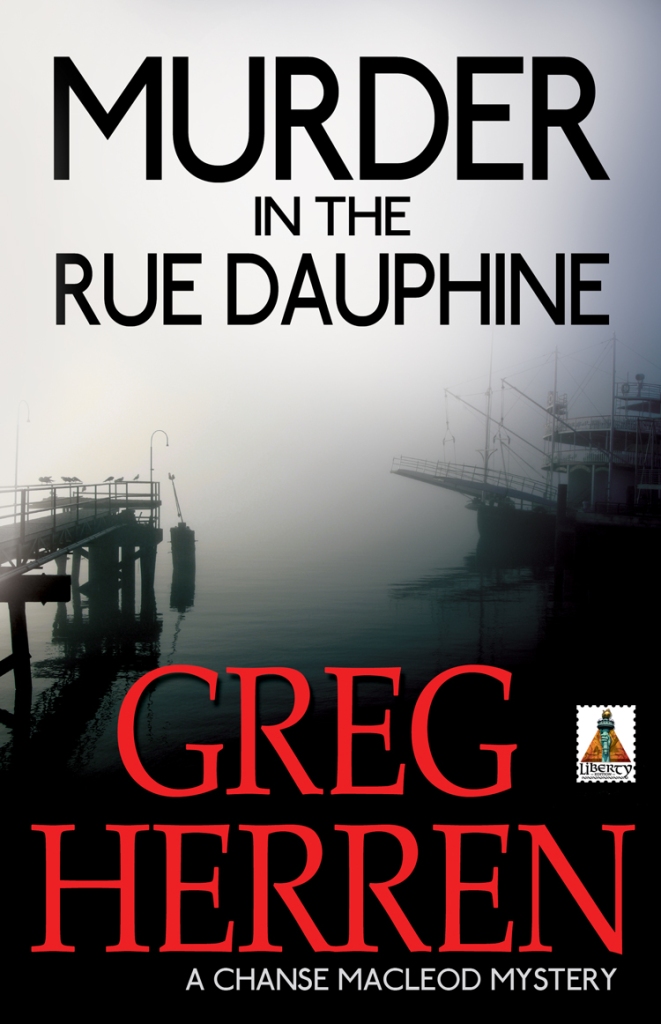
Ah, Murder in the Rue Dauphine.

It’s always weird for me to talk about my writing and my books and so forth on here; I always worry that I am either contradicting and/or repeating myself. When you’re as self-obsessed as I am, that can be a problem; talking about myself is probably my favorite thing to do–on here, at least. And I feel like I’ve told the story of where Chanse came from and how the series developed from the very beginning many, many times.

It was when I was living in Houston that I rediscovered crime fiction, and the old love was even deeper once it was rediscovered. This was the period when I read most of the Perry Mason novels, discovered Paretsky and Grafton and Muller, and decided to give Travis McGee and John D. MacDonald another try. (I had read The Dreadful Lemon Sky when I was a teenager, but I hadn’t liked it; I was more into the classic detective mystery, with lots of suspects and a denouement with everyone gathered in a drawing room as the identity of the killer was unveiled–the McGee series was definitely not that. But MacDonald had written a superb introduction to Stephen King’s first short story collection, Night Shift, and I had always wanted to give him another chance–pun fully intended.) I devoured the McGee series this time around; and I really admired the character and how fully rounded and developed he was (I should give the series a reread; I’d be curious to see how they hold up now)…and armed with all these new private eye novels and Perry Mason puzzles, so I started coming up with my own version. Even the name was a shout out to McGee. My character was also tall with sandy/dirty blond hair, a former college football player, and he lived in Houston, with an office downtown and a secretary named Clara. The title of the first book was going to be The Body in the Bayou, and I started basing the case on the tragic Joan Robinson Hill case, immortalized in Tommy Thompson’s Blood and Money (the premise of the story was that the character representing Joan’s father hires Chanse after Joan’s death to find dirt on John–and then John is murdered; fictionalized, of course.) I wrote about six or seven really bad chapters long hand before giving up. I didn’t know how to write a novel then nor did I understand the concept of rewrites and revisions and drafts. (My ignorance was truly astounding.) The hurdle I couldn’t clear was typing. I was a terrible typist. I’d had a job in California working for an insurance brokerage that was computerized, and had a word processing program that I used to write short stories on; it made such an incredible difference that I knew I would have a much better shot at actually making my dreams come true if I only had a word processor…

In 1991, after I moved to Tampa, I managed to get a word processor, and that was what I wrote my first two and a half young adult novels on–the original drafts of Sara, Sorceress, and Sleeping Angel–and used it happily for several years until it finally died on me. But by then, I was living with Paul and had swung back around to wanting to write adult crime fiction again, and I wanted to write the Chanse character that I’d already created…so I picked back up on The Body in the Bayou, moved it from Houston to New Orleans, got rid of the office and the secretary, and made Chanse gay. I kept the title, but threw away the story; I wanted it to be a gay story, too. I don’t really remember the plot, but it had to do with the murder of a beautiful boy-toy for a wealthy closeted gay man in New Orleans…and Chanse knew the boy-toy from his days working as an escort before he landed the rich man, I wrote about six or seven chapters of this before we moved to New Orleans….and I realized I’d have to throw it all out again because it was all wrong; I’d made the classic mistake so many writers make when writing about New Orleans: writing about it having never lived here, I only had tourist experiences–which are vastly and dramatically different from the actually “living here” experiences. So, once again, I threw it all out and started over, this time calling it Tricks instead of The Body in the Bayou.

The title morphed again to the less saleable Faggots Die after the first draft; and I remember talking to Felice Picano–he was coming into town for the Tennessee Williams Festival, and I picked him up at the airport. As we drove back into the city from Kenner, we talked about my book and the series, and he nixed the new title as well as the old one. “No one, ” he wisely said, “will pick up a book called Faggots Die, and Tricks sounds like a pornographic memoir of your sex life.” Felice was actually the one who suggested I mimic titles for the series from a classic writer…and we were throwing titles around in the car when I said, “You know, the streets in the Quarter are technically rues–Rue Bourbon, Rue Royale, Rue Dumaine–and the murder happens on Dauphine. Maybe Murder in the Rue Dauphine?”

“That’s perfect,” Felice said, and then we played with Poe titles the rest of the way into the city–incidentally, one of them was The Purloined Rentboy, which became my short story “The Affair of the Purloined Rentboy”, so never throw anything away.

And thus was Murder in the Rue Dauphine titled; and the plan for the series titles was also devised–the branding was changed by the publisher, but I can honestly say my first book was titled by Felice Picano.

Never come to New Orleans in the summer. It’s hot. It’s humid. It’s sticky. It’s damp. It’s hot. Air conditioners blow on high. Ceiling fans rotate. Nothing helps. The air is thick as syrup. Sweat becomes a given. No antiperspirant works. Aerosols, sticks, powders, and creams all fail. The thick air just hangs there, brooding. The sun shows no mercy. The vegetation grows out of control. Everything’s wet. The build­ings perspire. Even a simple task becomes a chore. Taking the garbage out becomes an ordeal. The heat makes the garbage rot faster. The city starts to smell sour. The locals try to mask the smell of sweat with more perfume. Hair spray sales go up. Women turn their hair into lacquered helmets that start to sag after an hour or so.

Even the flies get lazy.

My sinuses were giving me fits as I left the airport and headed into the city. It was only 7 o’clock in the morning but already hotter than hell. The air was thick. I reached for the box of tissue under my seat and blew my nose. The pressure in my ears popped. Blessed relief.

As I drove alongside the runways I could see a Transco Airlines 737 taxiing into takeoff position. I saluted as I drove past, thinking it might be the flight that my current lover was working. Paul looked good in the uniform. It takes a great body to look sexy in polyester. He does.

He’d be gone for four days on this trip. I was at loose ends. I’d wrapped up a security job for Crown Enterprises the previous Wednesday. The big check that I’d banked guaranteed I wouldn’t have to worry about money for a while. I like when money’s not a concern.

And so began a series that lasted for seven titles and about twelve years or so; I don’t remember what year the last book in the series was published. I never expected anyone would publish it; it was intended to be a “practice novel” so I would get used to rejections and learn. It was also the first manuscript I ever wrote that went through multiple drafts before I thought it was finished enough to send out on query. It was supposed to be an exercise in learning humility and getting experience with the business while I wrote the book I did expect to get an agent with and sell–which was what I’d always called “the Kansas book” for over a decade at this point. (It eventually morphed into #shedeservedit.) But you never really learn what you’re supposed to when you’re stubborn, thin-skinned, and used to being demeaned and talked over and not taken seriously, for any number of reasons. I sent the manuscript to three agents: two sent me lovely but form rejections, which was disappointed but not surprising. I took this well, put the manuscripts away to send to three more once the final rejection came.

It came on a Friday, if I recall correctly. I went to pick-up the mail and my manuscript was there. Not a surprise, of course, but still a little disappointing. I went out to my car and opened the package…and paper-clipped to the title page of the rubber-band bound manuscript was a torn piece of used paper, with a note in ink reading I find this manuscriptand characters neither interesting or compelling with the agent’s initials at the bottom.

It was like being slapped in the face.

By the time I got home I was in a raging fury. I was literally shaking with rage when I came inside. How fucking unprofessional, I thought as I sat down at my computer to check my emails, trying to decide how I would enact my vengeance on this rude piece of shit.1 There was an email there from the editor I was working with on an anthology which had taken my first-ever fiction short story and thus would be my first publication. I had never read the signature line–mainly because I was so excited for my first fiction sale (NARRATOR VOICE: it was porn). This day, he concluded his email with Please send us more work. We definitely want to see more from you and as my ego preened, slightly soothed from the insulting agent note from earlier in the day2, I also looked down at the signature line and realized I was communicating with the senior editor at Alyson Books! I immediately wrote him back a very short note: I’ve written a novel with a gay private eye set in New Orleans, would you be interested in that? and before I could talk myself out of it, hit send.

He wrote back immediately and said please send it to me ASAP!

I put the same manuscript back in a new envelope, and drove back to the postal service to get it in the mail before I changed my mind, and breathed a sigh of relief once I got back to the car–and immediately forgot all about it.

Six weeks later I came home to a phone message from the editor. I called him back, he made me an offer, and my career leapt forward much faster than I expected…and it started a roll of good luck and “being in the right place at the right time” that has kept me publishing almost non-stop since Murder in the Rue Dauphine was released in 2002.

It sold really well, got mostly favorable reviews, and scored me my first Lambda Literary Award nomination.

Not bad for a manuscript and characters who were neither interesting or compelling, right?3

It also took me a long time to realize–or rationalize–that the note wasn’t meant for me. (I was most offended that I wasn’t even worthy of an actual form rejection letter; that was the truly insulting part for me.) I realized when telling this story on a panel somewhere, that the note was probably meant for an intern or a secretary or an assistant, who just shoved the whole thing in an envelope to do the rejection and through some wild Lucy-and-Ethel office shenanigans, it went out without the rejection letter and with the note intended for internal eyes only…and made me wonder, how different would my career and life be had that fuck-up not happened?

We’ll never know, I guess.

  1. Not really proud of this reaction, but I did get the last laugh. ↩︎
  2. Said agent died a few years later. I may have smiled and said good, a la Bette Davis vis a vis Joan Crawford’s death. ↩︎
  3. I may be more forgiving about a lot of things these days, but I will always be petty about that hateful agent. ↩︎

Hurting Each Other

Friday morning after Muses, and I am a little tired–physically. Mentally I am alert as ever and feel great, but I am not used to standing on the sidewalk for so long anymore. Chaos last night was my first parade (the floats were hilariously inappropriate; all I will say is the theme of the parade was “balls” and leave it at that), and we came home to rest before Muses arrived. We didn’t stay out for long, I was tired and sleepy and it got here around ten; we lasted out there for about an hour before I started flagging and came back inside. However, I realized I should have gone to parades to warm up for this weekend; I forgot that it takes a parade day to warm you up and get you in the proper spirit; I should be good to go tonight if my PT this morning isn’t too vicious.

And yes, we got a really cool shoe.

I had a good day at work yesterday, got a lot of things done and caught up and feel confident not being in the office again until Ash Wednesday will not be disastrous for me or put me really behind on things. I came home early (it took me an hour), and I came inside and watched this week’s episode of Capote v. the Swans, which was done in documentary style, which was an interesting take. I’m not quite as obsessed as I was about Capote when I first started watching, but I do want to read the Gerald Clarke bio of him, and maybe even George Plimpton’s Capote. It’s taken me awhile to get interested in Capote, and while I wouldn’t say it’s an obsession anymore, I am still very much interested in this incredibly famous openly gay man in the middle of the twentieth century. I have added Deliberate Cruelty, a true crime narrative about Ann Woodward’s feud with him by Roseanne Mantillo, to the books I am reading and I finished it last night.

And yes, I am beginning to understand precisely why he wrote “La Côte Basque 1965” and why he published it, but more on that when the show is finished and I give it, and Capote, an entry of their own.

As for me and the weekend, I have taken Monday off and so I am hoping that I’ll be able to get some reading and writing done today, Sunday and Monday (I will always take Saturday off from everything to go to Iris). I want to finish editing this one short story and finish writing another, and perhaps get them submitted somewhere. I have laundry going already and a dishwasher to unload and reload. I have PT this morning, a prescription and the mail to pick up, and then the car won’t move again until Monday at the earliest, as I will need to probably make a grocery run. I also should be able to finish reading Deliberate Cruelty so I can focus on Lina Chern’s Playing the Fool, which I am greatly enjoying. I also have some blistering blog entries to write, so this weekend should be fun on that score.

And hopefully I’ll be able to get this place ship-shape and get myself caught up on everything that needs catching up on.

And on that note, I am heading into the spice mines. Have yourself a lovely Friday, Constant Reader, and I may be back later.

Oh Very Young

So, are you ready for some MORE blatant self-promotion?

During the Bold Strokes Book-a-thon, the other panel I was on had to do with writing young adult fiction (the other panelists were amazing, I might add), and once again, I am answering the questions sent to us by the moderator to turn into an interview with JUST me (because it’s all about ME ME ME) but I do urge you to seek out the video of the panel. It was terrific, and I was definitely the most uninteresting person on the panel, seriously; this is NOT self-deprecation. (I bought everyone’s books during the panel, I might add; definitely check out Lauren Melissa Ellzey.)

What is the definition of Young Adult? How does it differ from other genres?

I think it’s primarily an age distinction, to be honest, which is something that always makes me uncomfortable. Growing up I read far above my age level; when I was in seventh grade I was reading at a college level, per the tests and so forth. I mean, I did read The Godfather when I was ten; my parents, despite their conservative religious beliefs and values, let me read whatever I wanted without having to ask permission–I think when I asked Mom if I could read something the last time she replied “Read whatever you want, I don’t care” and after that I never asked again. When I was a kid, there was no such thing as young adult; everything was either for adults or “juvenile.” The juvenile category contained multitudes, beginning with the Little Golden Books and picture books to kids’ mysteries to Judy Blume. I think sometime in the 1980’s the genre was separated into “juvenile” for kids 8-12 and “young adult” for 12-18.

But there are kids like me, who can read above their age/class level and others who can’t read at their age/class level, and I think in some ways that differential could be harmful for those who are below-average readers–reading is the most crucial aspect of education, because if you can’t read…and no matter how many ways they try to make the language around slower readers more accepting and less stigmatizing…it doesn’t really help kids to be told they’re below average or not as smart or quick as the other students. (One of my primary problems throughout my education is I would understand something the first time, while others inevitably didn’t, and as the teacher explained for a second or third or more time, my ADD would kick in and my mind would wander because I didn’t need to listen and then wouldn’t be listening when the teacher moved on.

Ah, well. 

Oh, and all subgenres of fiction also have the middle grade/juvenile and young adult sub-sub-genres.

Why or how did YOU choose YA?

I don’t know that I chose y/a so much as it chose me.

I started writing when I was a child (all my childish scribblings are lost to moves and time passing), and I wrote about kids my age. My first attempts at writing were always some kind of kids’ mystery series, a la The Hardy Boys and The Three Investigators (I’d still like to do this, frankly), and when I became a teenager, I started writing about teenagers. I wrote a bunch of short stories while in high school about the same group of kids going to the same high school. Those stories slowly but surely grew into a sprawling, handwritten novel about the county with plots and subplots and main characters and minor characters and all of this history; a “Peyton Place in Kansas kind of thing”. I worked on it for like five years, and eventually had this enormous sprawling mess that needed to be revised and rewritten and typed…and since I didn’t know how to type, made that part of it a problem. So I shoved it into a drawer and started pulling from it rather than revising it; taking out plots and characters and using them in other books and other stories.

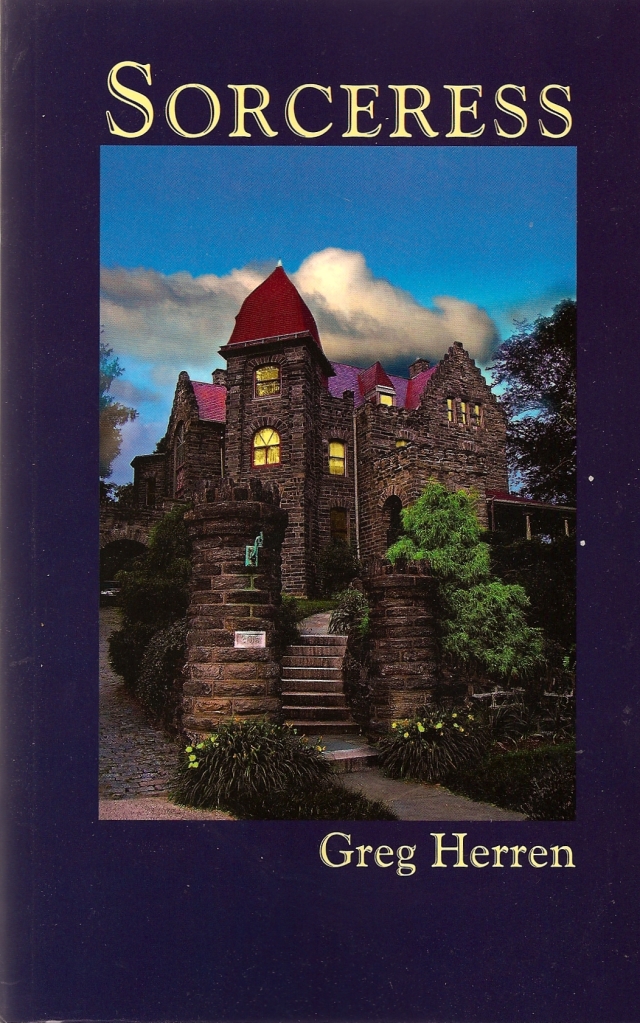
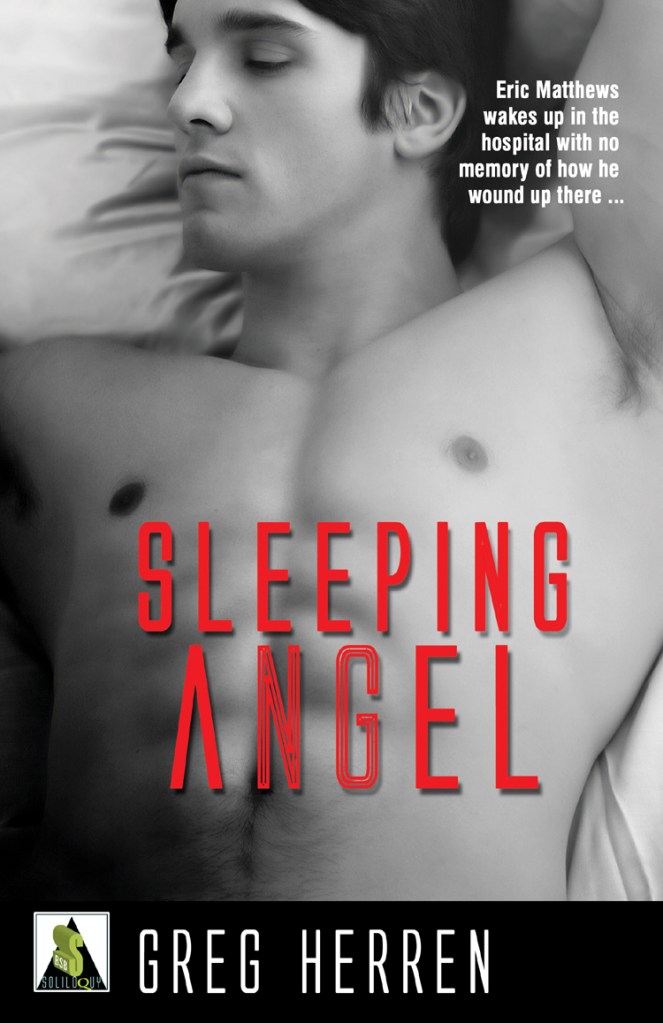
After I finished that, I spent the next five years mostly working on short stories. I started another book, more horror than anything else, but never got further than the third chapter. I finally decided to write a horror novel built from my old manuscript and those short stories from high school. I was about three chapters into it when I discovered two things: there was a big market in y/a horror at the time (Christopher Pike and R. L. Stine were HUGE during this period) and so I bought some of them. When I finished, I thought, “You know, I should turn Sara into a y/a novel” (because I thought somehow that would be easier? Foolish, foolish rookie) and so… I did. I was right in that thinking of it in those terms made it possible for me to finish a draft, but I wasn’t very happy with it so I put it aside and started writing another one, Sorceress, which was also horror but also had some strong Gothic moments in it. When I finished that one, again I wasn’t pleased with it so I started another–Sleeping Angel–which was the one I thought really had potential. I never finished that draft–by this time I’d discovered that gay fiction and nonfiction existed, so I started reading that and trying to write about gay characters instead.

Those manuscripts remained in my drawer for well over a decade, until a friend of mine took a job as a young adult acquisitions editor, and she wanted to work with me. I told her I’d written three (although it was technically two and a half), and gave her a brief synopsis of them. She liked Sorceress the best, so I started revising and editing it and turning it into something publishable. Once it was all done, she’d left that publisher, but started her own small press for y/a books for underrepresented teens, and she wanted to launch the press with Sorceress. I said “okay” and we were off. I eventually realized I needed to let Bold Strokes know, and when I did, I got an email back saying you know we do y/a, too? And so I sold the other two to them, and have never looked back since then.

Are there specific rules for writing YA (things you can’t do)?  Does Bold Strokes add on or impose specific or additional rules?

I don’t pay too much attention to rules, frankly. There’s no graphic sex in my books, but it’s hinted at. I also try to swear less in young adult books than I do in adult fiction, which is probably not as big of a deal as I think it is? The society I grew up in was a lot more puritanical–believe it or not–that the one we live in today. So I always default to that setting, and then have to shake it off. Swearing isn’t as big of a deal as it used to be. No one thinks they’re marrying a virgin anymore, and on and on. And having been attacked for daring to accept an invitation to speak to queer high school students, I tend to tread softly. There have been a couple of times where I’ve had to change language, or how a scene went, because my editor thought it might be problematic; and frankly, I never want to be offensive, so I have no problem with it. I don’t see it as a free speech issue the way so many intentionally offensive writers claim it is. I shouldn’t take offense to someone calling me a faggot? Grow the fuck up. The so-called free speech “crusaders” are always defending hate speech as well as trying to shut up the people who find it objectionable. You do not have a constitutional freedom from consequences or getting a negative response to things you say and do, period. It’s really not hard to understand unless you want to be passive/aggressive and childish and a moron.

How do you remember back to these days, specifically how it felt or feels? (this is coming from your moderator who is much older than you are)

Well, for one thing, I’ve always kept a journal and I still have them all. (I was insufferable when I was younger, seriously.)

My sister has a theory that we forget a lot of the pleasant memories from our childhoods, but remember the traumas in great detail. I believe the truth of that, because school was a nightmare for me from the day we moved to the suburbs until I was done with it. I remember how it felt to read Greg Herren sucks cock on a desk at school. I remember how it felt to be mocked, laughed at, and bullied by assholes. I do remember the good things, though I tend to always focus on the bad.

The first thing I always do is abandon whatever “wisdom” about life I’ve theoretically learned since leaving high school, and put myself into the teenager mindset: they think they are the main characters in everyone they know’s story, and everything is the end of the world or their life is ruined and you are the most horrible parent ever! I’m not entirely sure I’ve escaped thinking that way, to be brutally honest: I am horribly selfish.

How do you come up with your characters?  Your stories? 

I am weird in that I inevitably always start with a title. I hear something or read something and think, that would make a good title. The next question is what story would fit that title? And it kind of goes from there. The title may change, the character names and story might change and evolve, but I can’t write anything that doesn’t have a title. Bizarre, I know. Usually with my young adult stuff it’s an idea I’ve had for a number of years and finally decide to explore whether it’s a novel or a short story, and go from there.

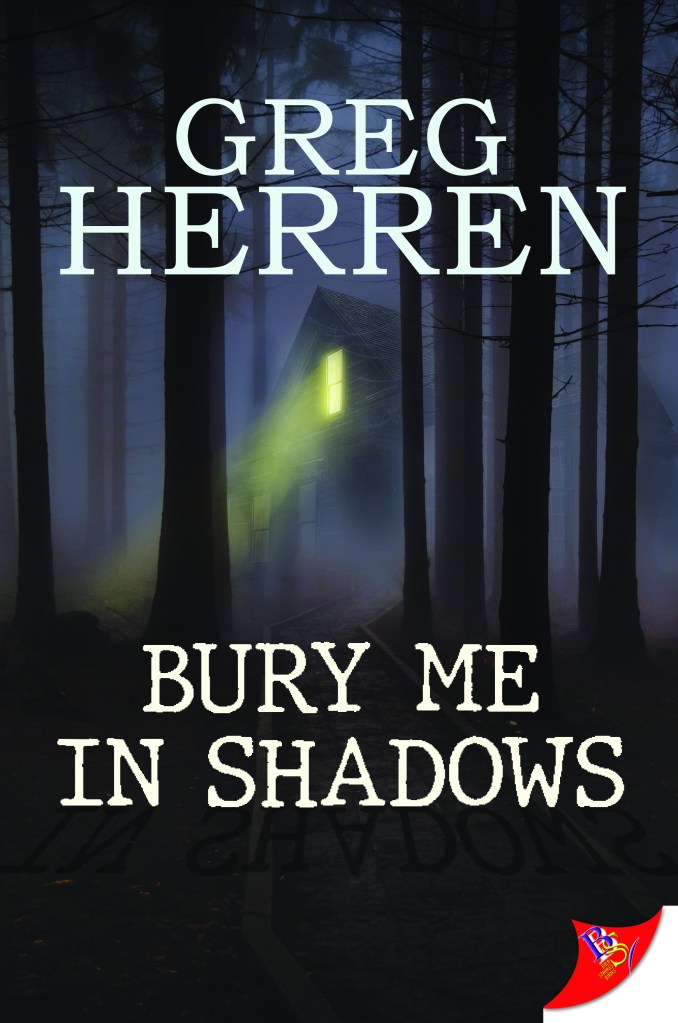
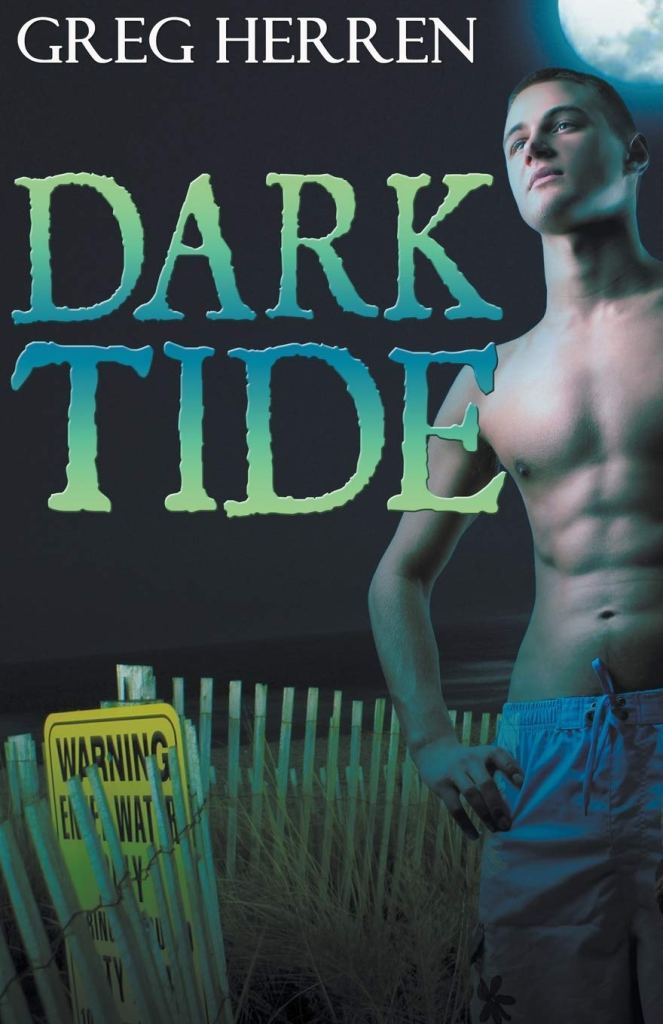
Dark Tide was originally called Mermaid Inn, Bury Me in Shadows was originally Ruins, but the others pretty much stayed the same from beginning to end.

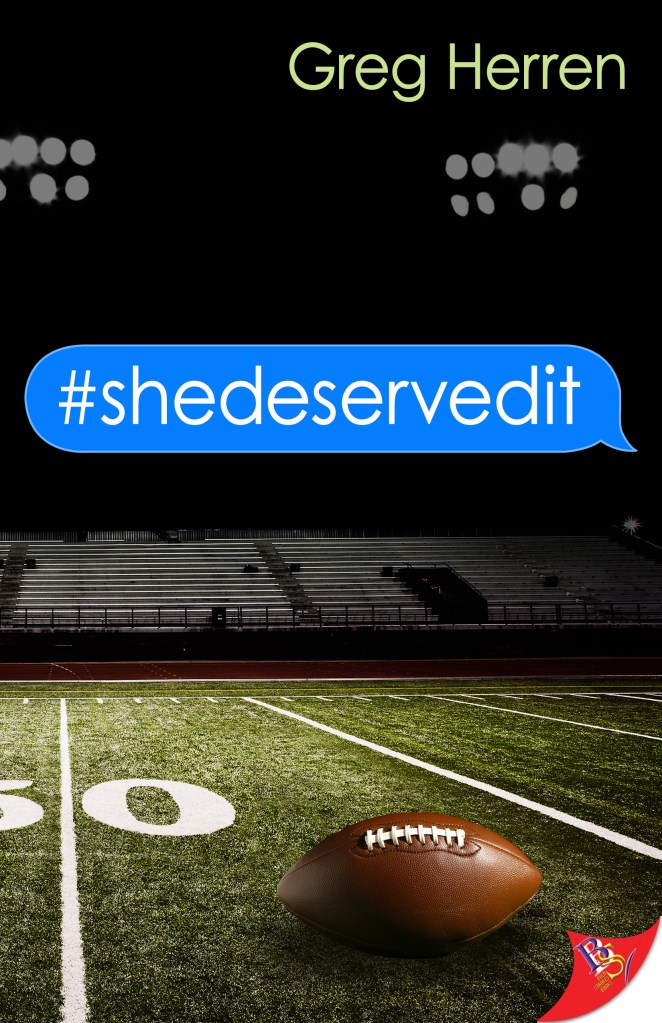
I wrote #shedeservedit because I was angry about the Steubenville/Maryville rape cases, and remembered stories and gossip from when I was in high school and college…and rethinking them through a more evolved brain about women and misogyny… well, it made me angrier. I had already planned on writing a story set in the same town with the same characters and opening with the same murder (I always referred to it as “the Kansas book” for years), but the motive was something I always had trouble grounding in reality. After those cases…it clicked in my head. You need to write this story about small town misogyny, protecting the star jocks from the girls at all cost, and make that the plot. It was easy to write because I was angry. Making it a compelling read was harder, because the subject matter was sickening to me.

I needed to write that book, and I don’t regret doing it, either…but it’s not exactly a feel good story people can escape into, either.

Why do you think YA is so popular?

It’s more accessible, I think. I mentioned reading ability before, and I do think that most readers aren’t into the Great Literary Tomes, hundreds of pages of beautiful writing with no real point or story. People kind of want to escape their cares and worries, and y/a books tend to be really entertaining. We’re competing with phones and tablets and streaming, so we need to write entertaining and engaging books.

Any specific must do-s or must-haves to get your writing each day?

I’m not nearly as anal about that as I used to be, before I returned to work full-time. I am very aware that I have little time to waste when I write, and thus must seize whatever opportunities to write show up. But if pressed, coffee. I can’t write unless I’ve had coffee when I got up.

Every Day I Write the Book

Okay, that’s technically not true. I don’t write fiction every day, and I don’t work on a book every day. I generally don’t count the blog as actual writing, but it is writing, I suppose, so I do write that pretty much every day. But I’ve never included the blog in daily word counts or anything; just as I wouldn’t (and didn’t) consider emails, text messages, and social media posts as being part of the daily production output (although I suppose I should; I estimated how many words of blog I’ve done since starting this nineteen years ago–twenty in December–and it was a staggering amount, especially since it was probably dramatically under-counted), and never will.

I do think about writing fiction every day, even the days when I am so exhausted and brain dead I don’t think I’m capable of much of anything creative. I am always thinking, and it’s very rare that the brain turns off, unless I go to sleep (thank you, sleeping pills!); as long as part of my mind is awake and alert my mind will eventually wander into creative thinking. It’s just how my mind works.

During the Bold Strokes Book-a-thon last month, I was on a couple of panels, and as usual have decided to turn the questions sent by the moderators as the basis for self-promotional posts. It has been a hot minute–I’ve not done a hell of a lot of promotion since the surgery knocked me off my tracks for a few months–and while I know many other books have come out since and the Greg has a new book excitement amongst my readers has already died down long since, but what the hell, right? I’m nothing if not a narcissist (or have, at best, some narcissistic traits at any rate), and let’s face it, one of my favorite subjects is ME, so why not? No one has to read these self-promotional posts, either. Just scroll on by, if that’s how you feel; my feelings will not be hurt in the slightest, and I no longer have the anxiety of oh my god no one likes me how can I make everyone like me?

Thank GOD.

This is from the Prolific Authors panel1.

How do you ensure that your latest work is not similar to something you have written before? Can you even remember everything you have written before?

After the eighth (?) Scotty book, someone on social media commented on one of my posts asking how many car accidents has Scotty been in? I’d never really thought much about it, but in that moment I realized quite a fucking lot, and that doesn’t include my other, non-Scotty books, either. I realized that I had been in a car accident in 2008 (the first in decades, and I wasn’t at fault) and my car was totaled. It was so weird, and so different from anything I’d ever imagined being in a serious accident like that would be; it took me days to get the taste of chemicals from the airbag out of my throat and my voice was scratchy and husky for about a week or so after. So, of course, I wrote about it in my next book…and then I think I started having a car accident in a lot more of my books. There was also a car accident in one of the earlier Scotty books–Jackson Square Jazz–and so…I didn’t put one in Mississippi River Mischief.

I had never truly worried about repeating myself until that moment of oh my God do I have a car accident in every book? And so now, I try to be really careful. Am I just rewriting a scene I’ve written before? Scotty is on book nine now; I don’t think it’s feasible for me to sit down and reread the entire series every time I am about to write another one. I have always intended to make a Scotty Bible–what all the regular characters look like, their relationships to each other, where they live, little tidbits I’ve dropped over the years that are clues to their personalities–so that I could verify the information in the series and not have to go looking for it (because I am nothing if not lazy, so I’d put it off and forget it and then realize it’s too late to change that now! FUCK!). I also should go back and outline the books, too–just to have something easy to reference when writing another one.

Since I write more than one series and I also write stand-alone novels, I just realized I should probably do this with all of my books…but I am way too lazy to ever get that done. So I will go on trusting my brain and my memory…which is clearly a mistake!

When naming your characters, do you completely avoid names which you have used in the past or do you feel that the characterization alone is enough to differentiate?

I have names I always fall back on–I also tend to like names that start with L’s and J’s for some reason–so I have to be careful with that. I don’t keep track of all character names I’ve used, and I suppose it’s possible that I could “recreate” a character with a name I’ve used before, and even make them the same…but I also re-use characters; they cross over from series to series and back and then to the stand alones. When I was writing Death Drop, I was originally going to have Blaine and Venus be the cops; they were the cops in both of my previous series with a gay male protagonist, so why not keep expanding my New Orleans universe? I eventually changed my mind–I don’t know why, really, or remember, which is probably a more accurate statement–and changed the names; I think I wanted to differentiate the Killer Queen series and make it more distinct from Chanse and Scotty.

I’m worried more about creating characters that are similar to others I’ve written about more so than the name. I was thinking about starting another series–one with a true crime writer as the main character, and he’s already appeared in both the Scotty and Chanse series; I even had an idea for the story. But when I started creating him, I began to realize he was like a mash-up of Chanse and Scotty, so I abandoned the idea. Now that I am thinking about it again, so what if their backgrounds are similar? He’s nothing like either one of them, and it was a good story idea, so…you never know. I try not to ever conclusively rule anything out. I even think about bringing Chanse back every once in a while.

A question I’m sure most of you have received—do you ever worry that you will run out of ideas?

That’s the least of my concerns. I am more worried I won’t live long enough to write everything I want to.

After all these books, do you still enjoy the writing process?

The primary goal of my life has always been to try to surgically remove anything I don’t enjoy from my existence. I am very blessed in that not only do I get to write and tell my stories and people want to read them but I also have a day job that I enjoy and can feel good about the work I do there. So, the only way I would ever stop writing if I stopped enjoying it, and I can’t ever see that happening. Sure, I’ve had times where I had to step away because of burn out or exhaustion, but I always knew it was a break and I would come back to it again. It’s been difficult for me since my surgery in November to get back into it, but I am making progress. I love writing, and am so grateful this childhood dream came true.

  1. I used to bristle a bit when people called me prolific; I just love to write. But I finally stopped that nonsense and accepted the descriptor when I hit my tenth book…which was over thirty books ago. If that’s not prolific, I don’t know what is. ↩︎

Ladies Who Lunch

Americans have always been fascinated by rich people.

We all want to be rich, after all; as someone once said, “The United States is a nation of temporarily distressed millionaires.” So, in lieu of actually being rich, we obsess about them. The rich used to be celebrities for no other reason than being rich. It’s always been interesting to me that in our so-called “classless” society (which was part of the point; no class privilege, everyone is the same in the eyes of the law) we obsess about the rich, we want to know everything about them, and we lap up gossip about them like a kitten with a bowl of cream. I am constantly amazed whenever I watch something or read something set in Great Britain, because that whole “royalty and nobility” thing is just so stupid and ludicrous (and indefensible) on its face that I don’t understand why Americans get so into it; the fascination with the not-very-interesting House of Windsor, for one. We fought not just one but two wars to rid ourselves of royalty and nobility…yet we can’t get enough of the British royals, or the so-called American aristocracy. (Generic we there, I could give a rat’s ass about the horse-faced inbred Windsors and their insane wealth, quite frankly.)

I wanted to be rich when I was a kid; I spent a lot of time in my youth fantasizing about being rich and famous and escaping my humdrum, everyday existence and becoming a celebrity of sorts with no idea of how to do so. I was intrigued by the rich and celebrities; I used to read People and Us regularly, always looked at the headlines on the tabloids at the grocery store, and used to always prefer watching movies and television programs about the rich. (Dynasty, anyone?) I loved trashy novels about obscenely wealthy (and inevitably perverted) society types and celebrities–Valley of the Dolls has always been a favorite of mine, along with all the others from that time period–Judith Krantz, Harold Robbins, Jackie Collins, Sidney Sheldon and all the knock-offs. I was a strange child, with all kinds of things going on in my head and so many voices talking to me and my attention definitely had an extraordinary deficit; I always referred to it as the “buzzing.” The only time I could ever truly focus my brain was either reading a book or watching something on television–and even as a child, I often read while I was watching television. (Which is why I read so much, even though that buzzing isn’t there anymore and hasn’t been for decades.)

As I get older and start revisiting my past (its traumas along with its joys) I begin to remember things, little clues and observations that stuck in my head as a lesson and remained there long after the actual inciting incident was long forgotten. I’ve always had a mild loathing for Truman Capote, for example, which really needs to be unpacked. Capote was everywhere when I was a child; there was endless talk shows littering the television schedules those days–Dick Cavett, Merv Griffin, Mike Douglas, John Davidson, and on and on and on–and Capote was always a popular guest on these shows. I wasn’t really sure what he did or who he was, but he was someone famous and he was on television a lot. I saw him in the atrocious film Murder by Death, and I know I knew/had heard that he was a homosexual, a gay; and I also knew I was a gay. It terrified me that I was destined to end up as another Capote–affected high-pitched speech and mannerisms, foppish clothing that just screamed gay at anyone looking; Capote made no bones about who or what he was and refused to hide anything…yet he gained a kind of celebrity and fame and success in that incredibly homophobic time period, and no one had a problem with putting him front and center on television during the day time.

But this isn’t about my own self-loathing as evidenced by my decades of feeling repulsed by Truman Capote; that I will save for when I finish watching Capote v. the Swans.

“Carissimo!” she cried. “You’re just what I’m looking for. A lunch date. The duchess stood me up.”

“Black or white?” I said.

“White,” she said, reversing my direction on the sidewalk.

White is Wallis Windsor, whereas the Black Duchess is what her friends called Perla Apfeldorf, the Brazilian wife of a notoriously racist South African diamond industrialist. As for the lady who knew the distinction, she was indeed a lady–Lady Ina Coolbirth, an American married to a British chemicals tycoon and a lot of woman in every way. Tall, taller than most men, Ina was a big breezy peppy broad, born and raised on a ranch in Montana.

“This is the second time she’s canceled,” Ina Coolbirth continued. “She says she has hives. Or the duke has hives. One or the other. Anyway, I’ve still got a table at Côte Basque. So, shall we? Because I do so need someone to talk to, really. And, thank God, Jonesy, it can be you.”

I do want to be clear that once I started reading Capote, he quickly became a writer whom I admired very much; I don’t think I’ve ever read anything he’s written that didn’t take my breath away with its style and sentence construction and poetry. He truly was a master stylist, and perhaps with a greater output he might have become one of the established masters of American literature, required reading for aspiring writers and students of American literature. In Cold Blood is a masterpiece I go back to again and again; I prefer his novella Breakfast at Tiffany’s to the film without question; and I was blown away by his debut novel, Other Voices Other Rooms, which was one of those books that made me think my childhood, and my being from Alabama, might be worth mining for my work.

I read “La Côte Basque 1965” years ago, and didn’t really remember it very much other than remembering I didn’t care for it very much. I was aware of the scandal that followed its publication and that all of Capote’s carefully cultivated rich society women friends felt betrayed by it and turned on him, which sent him into a decline from which he never recovered, before dying himself. I’ve always seen Capote as an example of wasted talents. Anyway, I read the story but not being familiar with his social set, I didn’t recognize any of the people gossiped about in the story or who the woman he was lunching with represented (Slim Keith, for the record), and so it kind of bored me; it was a short story about someone having lunch and gossiping about people the reader had no way of knowing who they were or anything about. I assumed this was because the story was an excerpt from the novel, and the novel itself would establish who all these women were and their relationships with each other. But I did know it was all thinly veiled gossip about his friends, and they never forgave him for it. (I also didn’t recognize “Ann Hopkins” in the story as Ann Woodward; I hadn’t known until the television series that he was involved in her story. I primarily knew about her from reading The Two Mrs. Grenvilles and articles in Vanity Fair, and I actually thought, when reading that book, that it was based on the Reynolds tobacco heir murder that Robert Wilder based his book Written on the Wind on; it wasn’t until later that I learned about the Woodward incident) so I thought, well, it was an entertaining if confusing read.

It was kind of like listening to two strangers talk in a Starbucks and gossip about people you don’t know; entertaining but nothing serious, not really a story of any kind, and I didn’t at the time see how it would all fit into a novel as a chapter in the first place. What purpose to the overall story did this nasty gossip play? Why was it necessary for Ina to share these stories at this particular lunch (and don’t get me started on White Duchess and Black Duchess)? Were these people she was talking about important to the book as a whole? It was hard for me to tell, and I put it away, thinking at the time probably a good thing he never finished the book.

Watching the show about fallout from the story’s publication, I decided to read the story again.

And I still question why Esquire chose to publish it, as well as why Capote thought this chapter was the one to send them. Capote was a genius, of course, and after In Cold Blood was one of the biggest names in American literature (he truly invented the true crime genre); of course they are going to publish whatever he sent them, no matter how bad it was. It wasn’t promoted as a story, after all, it was a novel excerpt.

What I’ve not been able to figure out from any of this is why he thought he could publish this without any fallout from his “swans.” I guess it went to the grave with Capote, who clearly didn’t–and I don’t think ever did–understand why they were so upset with him, which just astonishes me. (Someone once thought I based a character on her–I didn’t–and was very angry with me. I didn’t care, because I neither cared about the person nor her concerns, but I know how careful you have to be as a writer with these sorts of things.)

I wish I could say I liked it better on the reread. I did not. It’s still the same mess it was when I originally read over twenty years ago. It’s just a rich woman being bitchy to her gay friend she feels free to be bitchy about her friends with, and when you have no context (even knowing this time who the actual people were, and yes, he barely disguised them) about the women being discussed or anything about them…it’s just boring, gossip about people you don’t know and you don’t know enough to care about, so it’s just a bitchy little boring lunch. I don’t know what could come before that or after, as an author myself; had I been the fiction editor at Esquire I would have been pissed that was what he sent in, and I would have definitely taken a red pencil to it before I would have published it–and Esquire? Why did Esquire, a men’s lifestyle magazine, publish this when the right place would have been Vogue or Vanity Fair or even The New Yorker. None of it made sense then, none of it makes sense to me now; and if this is the best example we have of Answered Prayers, maybe it’s not such a bad thing that the manuscript–if it ever existed–disappeared.

Sorry, Truman, you were a great writer but this one was a swing-and-a-miss.