Sunday morning and I managed to get a lot done yesterday while watching games occasionally. I got bored watching Georgia throttle Florida, laughed about the Kansas win over Oklahoma, watched Tulane almost blow a significant lead and lose to Rice, and got bored with Tennessee-Kentucky so switched over to Elité on Netflix–and this seventh season is simply terrible. We have one more episode in this season and it’s over, and I can’t say I’m sorry to see it go.
But I did get a lot done yesterday. I cleaned. I ran errands,,,and I worked on the filing. Yes, there’s still work to be done, but my workspace no longer looks like I need to. just take a flamethrower to it, and even the laundry room is beginning to look like it’s more together than it should be. I do have to do some refiling, but everything is properly sorted and where it needs to be, if not alphabetized properly. I also discovered a lot of duplicate files–I am sure there are even more to be found, once the filing truly starts getting compiled and sorted properly. I also need for some of these files to just go away; I am never going to get to all of these ideas and I am never going to write all these stories and novels or essays and nonfiction books, either. But which ones to keep, which ones to abandon for good? I’ve been saving ideas and files and stories and scenes and characters for well over forty years now; you can only imagine how much I’ve forgotten about that are buried deep within this insane file-hoarding situation; it’s almost as bad as my book situation.
But getting all this clutter and debris sorted and put into a semblance of order also helped me get focused more–I think perhaps that’s been part of the problem with focusing on writing anything, really; knowing how out of control the filing had gotten and not knowing where anything was, or what I was working on could be found, and so forth. I’m going to try to get back to work on my next book today–after I get some more of these blog entry drafts completed and posted–and I am also going to try to work on the files some more. I decided that I am not, after all, going to be able to get my story “The Blues Before Dawn” finished in time to submit to the Bouchercon anthology, so it’ll go back into the files for now for a while. I never could quite get the story write, but that opening–my main character walking home in the misty morning hours of the Quarter while listening to someone playing the blues on a saxophone on a balcony, hidden away in the fog. I love that image, and I know that my main character is an apprentice waiter at Galatoire’s and sometimes turns tricks for money at Ma Butler’s bordello in Storyville; I also know it’s a Sherlock Holmes story from the perspective of someone who has a crush on Mr. Holmes–and now has to depend on Sherlock to save him from wrongly being accused of murder. The rest? Not so much…and it’s due on Tuesday, so that’s not going to happen. A pity, yes, but a Sherlock story from the perspective of a sometime male harlot was a long shot for the Bouchercon anthology anyway.
I did start reading The Lonely Ghost by Mike Ford, which is quite delightful, along with a reread of Ammie Come Home by Barbara Michaels (also one of my favorite books of all time, and definitely one of the greatest ghost stories of all time) when I had a few down moments to spend (I’ll get back to The Lonely Ghost later on this morning), and I also have to make a cheesecake this morning and get the white bean chicken chili started so it’ll be ready for tonight and the rest of the week, of course. Halloween is going to be one of those frantic unsettling days, but that’s okay; I can make it through it all.
I slept really well last night, which was lovely; my sleep lately has been pretty marvelous, honestly. Relaxing in the evenings last week, letting the anxiety not get to me, and getting good night’s sleeps this past week was really kind of lovely and nice. I also slept late this morning, opting to stay in bed later than I usually do because it frankly felt nice, you know? Today I am also planning some self-care and grooming, which will be nice. Maybe even take a walk later in the day, when it starts cooling down? Although without the humidity yesterday’s low eighties felt marvelously and delightfully cool.
And on that note, the spice ain’t gonna mine itself, so off I go. Have a marvelous Sunday, Constant Reader, and I’ll check in with you again.
Saturday and no LSU game, so the day stretches out in front of me a yawning empty chasm. But I feel incredibly well rested after a very relaxing deep good night’s sleep, which is simply marvelous. I have things to do this weekend–out of the ordinary things, different from the usual to-do list–so I have to figure out when to get those things done. I’m going to need to make a grocery run at some point–I have to make a cheesecake for a work potluck this week, and I am thinking it’s probably smart to make some white bean chicken chili in the crockpot at some point (soft food, after all); regardless, I need more ice cream and microwave ramen. I really like that super-hot ramen, and am also very low on yogurt. Maybe I’ll get up tomorrow and head for a grocery run on the West Bank or to the Rouse’s on Carrollton–which I could also just do this afternoon, depending on how I feel. I want to really clean up the house and get stuff done–filing, organizing, and so forth–and I can always have the football games playing on my computer while I am in the kitchen, which desperately needs work. I also want to go for a walk around the neighborhood later on today, to get a look at how the neighborhood has dressed up for Halloween.
Yesterday was a pretty good day. I managed to get my work-at-home duties taken care of and made it to my pain management appointment, which was unnecessary as I am not in pain–I think my surgeon thought I was in pain from the injury, which is cute–I wouldn’t have let it go this long had I been in actual constant pain from it. But it was one more box to check off on the list of things that need to be done before the surgery, so that makes it one step closer to when I am going to be rehabilitating the arm. I think having this hanging over my head isn’t helping much with my anxiety or getting things done; I can try to compartmentalize all I want, and try not to think about things, but the truth of the matter is I cannot control my subconscious–especially when I don’t know what’s going on with it. I think I’ve been more relaxed and rested this week because I’ve not been trying to get much done or worrying about anything; I just came home, sat in my chair with Tug sleeping in my lap (Paul is calling him Puma now, because his claws are so sharp), and read or watched television. I did watch another episode of Moonlighting yesterday while doing work-at-home chores (“My Fair David”) and then finished reading The Dead Zone but also Adam Cesare’s marvelous Clown in a Cornfield (more on both later), and am now trying to decide what horror to read next before Tuesday–which is the end of Halloween season as All Hallow’s Eve itself falls on Tuesday. I am leaning toward Mike Ford’s middle grade The Lonely Ghost, which has been in the TBR pile for far too long, and then maybe something by Chris Grabenstein if I get that done quickly–The Hanging Hill looks like it could be quite fun, or perhaps a reread of my favorite ghost story of all time, Ammie Come Home by Barbara Michaels. I also have a kids’ ghost story anthology–Alfred Hitchcock Presents Ghosts and More Ghosts, actually edited and compiled by Robert Arthur, who created one of the best kids’ series of them all: The Three Investigators. After Paul got home from the gym we also watched this week’s The Morning Show.
And just looking at the college football television schedule, I am not seeing anything other than Georgia-Florida to watch with any degree of interest, and it’s tough–I despise Florida with every molecule of my existence, but I also kind of want Georgia to lose…but I just can’t root for Florida. (Georgia always winds up being my default team in the East because I hate Florida and Tennessee both with the white-hot intensity of a dozen burning suns, and pretty much everyone else is kind of irrelevant. Kentucky and Missouri never break through, nor does South Carolina, and Vanderbilt is…well, Vanderbilt.) I’m trying not to get overly worked up for the LSU-Alabama game, which is a must-win for both. I don’t get nearly as worked up over college football as I used to, which is a good thing–as I have slowly began to recognize that while they may be athletes, they’re also kids, and they shouldn’t be subjected to the scorn from fans. The coaching staffs and administrations, on the other hand, can have all the scorn, as can the conference hierarchy AND the NCAA. I’m not overly excited about all the conference expansion because I’m not so certain that the needs of the student-athletes are being taken into consideration as much as they should be in the pursuit of the almighty television deal dollar, and that NIL stuff isn’t something I quite understand other than that college athletes are now getting paid.
I can’t get over how good I feel this morning, and how good I felt all week, frankly. I’ve got to get all this filing under control and work on the kitchen, too–the living room and the laundry room are complete disasters; although I did start working on the laundry room shelves a bit yesterday. I do get to go for the final fitting for my dentures on Tuesday morning (the same day I am taping Susan Larson’s “My Reading Life” at UNO), so I am hoping to get back to solid food in a couple of weeks–and I am definitely going to reboot my eating habits once I have teeth again. I now am down to somewhere between 205-209 pounds, depending on the day and what is in my pockets, and I’d like to get down to 200 again; but until I am able to exercise again I am going to have to do that by changing the way I eat. I’ve frankly enjoyed the ramen (and the Velveeta shells and cheddar) and may continue to eat it going forward–same with the yogurt–but the calories from Haagen-Däzs will need to be replaced by something healthy. It wouldn’t hurt me to go back to having turkey sandwiches and salads for lunch occasionally. It’s the heavy steady diet of red meat I need to dial back on, mostly; and some of the other fatty stuff I eat far more regularly than I should–and go back to looking at Five Guys as an occasional treat for good behavior.
I can but do better in the future.
And on that note, I think I am going to indulge myself in some self-care this morning and get cleaned up before taking on the rest of the day. Have a great Saturday, Constant Reader, and I’ll be back soon enough, no worries–I have blog posts on “Don’t Look Now”, The Dead Zone, and Clown in a Cornfield to finish writing, too.
I don’t remember which of her books I read first; I am thinking it was The Sea of Lost Girls, but that may be wrong (probably is; my memory is for shit these days) but I DO know I first met her in person at the HarperCollins cocktail party at Bouchercon in St. Petersburg, and she’s just as marvelous as a person as she is a writer. Since then I’ve delved into her canon of brilliant books–have yet to come across one that is even slightly disappointing–and each one makes my fandom flame burn even more brightly.
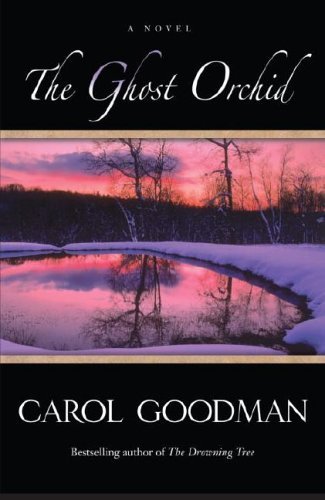
And then in Minneapolis, over lunch with a few friends at that wonderful Irish pub near the hotel, I discovered the clincher: she is also a Dark Shadows fan. She even joked, “I’ve realized that most of my books are really about Barnabas Collins and Maggie Evans”–which made me think even more deeply about how much of an influence the show was on my own writing (Bury Me in Shadows owes a HUGE debt to the show). She has a new book coming out this summer, which is very exciting–I have that weird thing about never wanting to have read everyone’s entire backlist, so there’s always one more book for them to read without me having to wait to get my hands on it–and during my trip to Alabama for the First Sunday in May I listened to The Ghost Orchid, which was so good that when I got home that Sunday night, I grabbed my headphones and listened to the final thirty minutes of the book while unpacking and doing things around the apartment.
I came to Bosco for the quiet.
That’s what it’s famous for.
The silence reigns each day between the hours of nine and five by order of a hundred0year-old decree made by a woman who lies dead beneath the rosebushes–a silence guarded by four hundred acres of wind sifting through white pines with a sound like a mother saying hush. The silence stretches into the still, warm afternoon until it melts into the darkest spot of the garden where spiders spin their tunnel-shaped webs in the box-hedge maze. Just before dusk the wind, released from the pines, blows into the dry pipes of the marble fountain, swirls into the grotto, and creeps up the hill., into the gaping mouths of the satyrs, caressing the breasts of the sphinxes, snaking up the central fountain allée, and onto the terrace, where it exhales its resin- and copper-tinged breath out onto the glasses and crystal decanters laid out on the balustrade.
Even when we come down to drinks on the terrace there’s always a moment, while the ice settles in the silver bowls and we brush the yellow pine needles off the rattan chairs, when it seems like the silence will never be broken. When it seems that the silence might continue to accumulate–like the golden pine needles that pad the paths through the box-hedge maze and the crumbling marble steps and choke the mouths of the satyrs and fill the pipes of the fountain–and finally be too deep to disturb.
Then someone laughs and clinks his glass against another’s, and says…
“Cheers. Here’s to Aurora Latham and Bosco.”
“Here, here,” we all chime into the evening, sending the echoes of our voices rolling down the terraces lawn like brightly colored croquet balls from some long-ago lawn party.
“God, I’ve never gotten so much work done,” Bethesda Graham says, as if testing the air’s capacity to hold a longer sentence or two.
Carol Goodman’s books are, above and beyond anything else you might want to say about them, incredibly literate and smart. She reminds me of Mary Stewart in that way; Stewart’s novels, often dismissed as “romantic suspense” (don’t even get me started on that misogyny), were smart, clever and incredibly literate, with Shakespearean references and quotes and allusions to classical literature. Goodman’s works are also the same; Goodman’s background in classics scholarship is utilized in every one of her books but not in a way that feels intrusive or showing off. It’s all integrated into the story and not only moves the story forward but deepens and enriches the characters as well as the plot, which is not easy to do. Her books are often built around some sort of academic/intellectual backdrop, from boarding schools to small colleges to actual archaeological digs (The Night Villa is absolutely exquisite; superb in every way), and her heroines, aren’t pushovers (as in most “romantic suspense”) but strong and smart and driven, if haunted by their own insecurities and past failures. Goodman is also not afraid to cross the line over into supernatural occurances, either; the previous one I’d read had a touch of the woo-woo, as does The Ghost Orchid, but it’s not intrusive and it actually plays out so honestly and realistically that you don’t question it.
The main character of the book is a young woman named Ellis Brooks. Ellis is a young author-to-be who is working on a novel based on what is called “the Blackwell Affair.” She had already written and published a short story based on an old pamphlet she found; the book research makes her a natural to be chosen for a residency at Bosco, an old estate in upstate New York that has become an artist’s colony, sort of like Breadloaf, but for a much more extended stay and for fewer artists. “The Blackwell Affair” actually took place at Bosco, when the original mistress of the estate, Aurora Latham, brought an experienced medium named Corinth Blackwell to Bosco to hold seances to try to reach the spirits of her dead children–any number of whom were either stillbirths or died shortly after being born; she had four children who lived but lost three of them to a diphtheria outbreak the year before. Corinth Blackwell and the only surviving Latham child disappeared one night after a seance; hence “the Blackwell Affair.” As Ellis does her research and gets to know her fellow artists better, she becomes more and more aware that the past at Bosco doesn’t rest, and the untold stories of the past must be unearthed before everyone at Bosco can be safe.
Goodman is also a master of the dueling timeline; one in the past and one in the present, and weaves the stories together so intricately that I marveled at the mastery, as the present day characters wonder about something and then we get the answer in the past. There are so many secrets, so many lies, so many spirits; but as always with the best ghost stories, the past is finally laid to rest when the truth is exposed.
I loved this book, and it reminded me not only of Dark Shadows (knowing she’s a fan I’ll always see it in her work now) but also of Barbara Michaels’ best along with Mary Stewart. Can’t wait to dig into another Goodman novel!
Monday morning and I got home from Malice Domestic yesterday afternoon after a rather odd but interesting time at the airport–more on that later. I was very tired–exhausted would not be hyperbole–but also very glad I was home. I had a lovely, wonderful, splendid time; the only regrets I have are that there were times when I was tired and had to go rest in my room for a while and take a break rather than spend that time catching up with old friends while getting to know the new ones. I had trouble sleeping the entire trip, which was unfortunate; even going two days without having any Coke didn’t do the trick (and once it didn’t work, why continue depriving myself?). But what a marvelous, friendly event Malice Domestic turned out to be this year! I also got to thank some people in person for their kindnesses over the last year which was also lovely. I read Ellen Byron’s marvelous Wined and Died in New Orleans on the trip up, so didn’t mind the flight delay or the rush hour traffic my cab from the airport was unfortunately timed to cross paths with. But because of the delay I went for a long time without eating–nothing from my yogurt before I left for the airport until about eight o’clock that evening–so my blood sugar dropped and I never really caught up on it over the course of the weekend. That and the no sleep resulted in a very tired Gregalicious who arrived at the Lost Apartment much later than scheduled–which was yet another life lesson.
On my way to the airport in a Lyft (wonderful, friendly driver named Tyrone who got a 25% tip), just as he dropped me off Southwest texted me of a half hour delay on my flight. No worries–I got to the airport about two hours before the flight, so…an extra half hour, no big deal. Of course, it’s Washington National…small, cramped, overcrowded, and not many options for food once you’re past security. And then it seem like every half hour there was another text with another hour delay. Tired and uncomfortable, I started getting annoyed. But as the delays continued to pile up–along with gate changes, which meant moving and trying to find another place to sit–I moved from irritation to acceptance to amusement, along with a lot of empathy for the airline employees. While they never said what the problem was, I’d assumed it was weather–but now this morning, I am beginning to think it was a mechanical issue. The last text I got extending the delay to make it another two and a half hours after the airport was followed shortly thereafter by another text changing the gate and now moving the flight up from its previous 3:45 departure (originally scheduled for 12:45) to 2:00 pm, which clearly meant they’d exchanged an aircraft and crew for the original one I was supposed to be on. So, that was cool, and the flight was two-thirds empty, so I got an entire row to myself just as I did on the way up to DC. I also hadn’t eaten, and there was nowhere to eat during the delay other than a pizza place (and I wasn’t in the mood for pizza) so was starving by the time I retrieved my bag and car and headed for home. I stopped and got Paul and I dinner–I knew there wouldn’t be anything in the Lost Apartment to eat–and then came home, exhausted and happy to be back home. I love conferences; I love seeing my people and my friends and making new ones and discovering new books and writers to enjoy. My Agatha nominees panel was marvelous, and excellently moderated by Alan Orloff. I was fun being on a panel with Elizabeth Bunce again (and her Myrtle series is marvelous; check it out) and Frances Schoonmaker was an absolute delight. We also somehow all three wound up wearing red and black to the banquet, which was a delightful surprise. I got to sit next to Valona Jones (aka Maggie Toussaint) at the table–she’s lovely– as was everyone else at my table. Didn’t win–so, as per my post the other day, it now seems real to me, and I got my nominees’ certificate which I am going to proudly hang somewhere in the my office space. But there’s also no disgrace in losing to Nancy Springer and Enola Holmes, either. I got to talk about my book, which was nice-–when you’re as prolific as I am, sometimes conferences fall in such a way that I’ve had two out since the last conference, so sometimes I don’t get to talk about a book that I’ve written anywhere publicly other than here and social media. I also loved the questions Alan asked us on the panel; I’m thinking I may answer them at length on here because they were that great kind of question that you could literally spend an hour talking about instead of just the limited time we had for the panel. (I was also thinking I should maybe talk more about the book again? I don’t know. It was lovely. I had a lot of people tell me they’d read it and even more telling me it was a great title…so maybe I should talk about it some more? I don’t know.) I got to sit next to Mariah Fredericks at the signing, so I got to meet and talk to her a bit and she’s delightful (her latest, The Lindbergh Nanny, sounds amazing). I am glad I got to spend some time with friends, too–there was lots of laughter, which was wonderful–and I never got over-served, which was also a first for me at a mystery conference! Maybe that was why I couldn’t sleep? Nah, definitely not that. I also got to talk about being banned for the first time in years; for one thing, it’s hard to believe it happened eighteen years ago and now everyone is dealing with the shit I dealt with back then, too….so it occurs to me that in light of the return of the banning, I should probably write about it again from the perspective of how things are now. I also was thinking I should write about how much I love Elizabeth Peters/Barbara Michaels after going to the appreciation panel; she helped found Malice, which always puts Malice into a special place in my heart already because I loved her work.
Anyway, I got home while it was still light out, unloaded my suitcase into the washing machine and got that started; put my dress clothes in a pile to take to the dry cleaner’s; and then spent the evening relaxing with Paul and Scooter while we watched Ghosted (the new Chris Evans/Ana de Armas action/adventure rom-com which was actually kind of cute and fun–the two stars are likable and charming and have good chemistry) and then more episodes of The Watchful Eye, which is quite strange and oddly entertaining. We’ll probably finish off the series tonight. I do have a lot to do today–I took the day off, and am very glad I did, as I was exhausted and OMG, I slept so good; there’s nothing like your own bed, seriously–and then we’ll need to find something new, although I think there are some shows we watch dropping new seasons this month. I have to get the mail, pick up a prescription, gas up the car, have a doctor’s appointment, need to get groceries, and have a ZOOM meeting tonight. I also have to dig back into the book; I am so horribly behind on this revision it’s not even funny. ANd it’s May already. Jesus. I also started reading Lori Roy’s marvelous Edgar winning Let Me Die in His Footsteps from 2015; Constant Reader, it is quite wonderful and I honestly can’t wait to finish reading it. Lori Roy is one of my favorite current authors, and doesn’t get nearly the attention she should. (She’s also one of those rare authors who hit the ultimate dual–Edgars for Best First Novel and later for Best Novel.) The kitchen is a mess, as always, but I’m glad I spent some time before the trip trying to get that shit caught up because it isn’t nearly as bad as it could be (and was).
And now I have a day to get caught up on life after being in my author bubble for a few days to ease my reentry into my regular life. I won’t get to be AUTHOR again until Bouchercon in San Diego. But that’s okay, you know. I like the balance of the two different parts of my life, and there’s nothing like working in an STI clinic to keep you not only humble but grounded in the real world.
And on that note, I am heading into the spice mines. Have a lovely day, Constant Reader, and thanks again to everyone at Malice Domestic for a simply marvelous weekend.
I’ve always been—undoubtedly in part because I love history so much—an enormous fan of books where secrets from the past (even the far distant past) play an enormous part in the present lives of the characters in the story, and that solving those mysteries, learning the truth about the past, is necessary in the present for conflict resolution. As a history buff, the lack of a lengthy history as a nation is something I’ve always thought unfortunate; without ancient buildings and the way that history isn’t sort of always there in our faces the way it is in Italy or other older nations, it’s difficult for many Americans to either grasp, be interested in, or give a shit about our history—we have as a nation the attention span of a goldfish (thanks, Ted Lasso, for that reference).
To make a side by side historical comparison, for example, the Habsburg dynasty dominated central Europe for almost six hundred years, whereas the first European to actually arrive and establish a colony were under the aegis and flag of the Habsburg king of Spain—and that was in the early sixteenth century.
Secrets of the past casting a shadow over the lives of the living is often a theme in Gothics, my favorite style of novel/writing (noir is a close second). Rebecca is of course the master class in secrets of the past; the first Mrs. deWinter might not actually be haunting the halls of Manderley literally, but her ghost is definitely there. Victoria Holt’s romantic suspense novels inevitably were set in some enormous old mansion or castle, with potential ghosts a-plenty everywhere you turn. Phyllis A. Whitney’s one novel set in Britain—Hunter’s Green—also has a classic old British mansion with a potential ghost in it. Maybe it was the childhood interest in kids’ series, with the reliance on secret passages, hidden rooms, and proving that ghosts were frauds; every episode of Scooby Doo Where Are You? had the gang proving something supernatural was quite human in origin.
One of my favorite Nancy Drew books when I was a kid was The Ghost of Blackwood Hall; I don’t really remember much of the story now, other than a fraudulent haunting was involved and a woman—Mrs. Putney—was being swindled by a medium? (Reading the synopses on a Nancy Drew website, apparently part of the story involves Nancy and the gang coming to New Orleans, which I absolutely do not remember; my only Nancy Drew-New Orleans memory is The Haunted Showboat—involving yet another haunting. Interesting.) When I was writing the original short story (“Ruins”) I needed a name for the old burned-out plantation house; I decided to pay homage to Nancy Drew by naming it Blackwood Hall, and naming Jake’s maternal ancestor’s family Blackwood (his grandmother was a Blackwood, married a Donelson; Jake has his father’s last name, which is Chapman). I did think about changing this from time to time during the drafting of Bury Me in Shadows, but finally decided to leave it as it was. It might make Nancy Drew readers smile and wonder, and those who didn’t read Nancy Drew, obviously won’t catch it.
Hey, at least I didn’t call it Hill House.
But writing about ghosts inevitably makes one wonder about the afterlife and how it all works; if there is such a thing as ghosts, ergo it means that we all have souls and spirits that can remain behind or move on after we die. So what does writing about ghosts—or writing a ghost story—mean for the writer as far as their beliefs are concerned?
Religion primarily came into existence because ignorant humans needed an explanation for the world around them, combined with a terror about dying. It is impossible for a human mind to comprehend nothingness (whenever I try, I can’t get past “there has to be something in order for there to be nothing, you cannot have nothing unless you have something” and that just bounces around in my head until it starts to hurt); likewise, whenever I try to imagine even the Big Bang Theory, I can’t get past “but there had to be something to explode” and yeah, my head starts to hurt. Even as a kid in church, studying the Old Testament and Genesis, I could never get past “but where did God come from?” I don’t begrudge anyone anything that gives them comfort—unless it starts to impede on me. I’ve studied religions and myths on my own since I was a kid; the commonalities between them all speak to a common experience and need in humanity, regardless of where in the world those humans evolved; a fear of the unknown, and an attempt to explain those fears away by coming up with a mythology that explains how everything exists, why things happen, and what happens when you die. (I am hardly an expert, but theology is an amateur interest of mine, along with Biblical history, the history of the development of Christianity, and end-times beliefs.)
Ghosts, and spirits, have been used since humanity drew art on cave walls with charcoal to explain mysterious happenings that couldn’t be otherwise explained. I am not as interested in malevolent spirits—ghosts that do harm—as I am in those who, for whatever reason, are trapped on this plane and need to be freed. This was a common theme in Barbara Michaels’ ghost stories (see: Ammie Come Home, House of Many Shadows, Witch, Be Buried in the Rain, The Crying Child) in which the present-day characters must solve the mystery from the past; why is the ghost haunting this house and what happened to them that caused them to remain behind? I used this theme—spirits trapped by violent deaths in this plane whose truth must be uncovered in so they can be put to rest—in Lake Thirteen and returned to it with Bury Me in Shadows. I did, of course, worry that I was simply writing the same book over again; repeating myself is one of my biggest fears (how many car accidents has Scotty been in?), but the two books, I think, are different enough that it’s not the same story.
At least I can convince myself of that, at any rate.
There’s a few more ghost stories I want to write, actually; (it also just occurred to me that there was a ghost in Jackson Square Jazz, the second Scotty book) any number of which come from those legends my grandmother used to tell me as a child. I have this great idea for one I’ve been wanting to write set here in New Orleans for a very long time called “The Weeping Nun;” I have the entire ghost’s story written in my head, I just don’t have a modern story to wrap around it (same issue I have with my New Orleans ghost story book, Voices in an Empty Room) and of course there’s “The Scent of Lilacs in the Rain,” a short story about another Corinth County ghost I started writing and got to about five thousand words before the ghost even made an appearance. That great length is why I shelved the story—and now, of course, I realize I can do it as a novella, which is amazing news and life-changing, really. “Whim of the Wind,” the very first Corinth County story I ever wrote, is also kind of a ghost story, and maybe someday I’ll find the key to making it publishable (although I think I already did figure it out, thanks to the brilliance of an Art Taylor short story).
I’ve always believed part of the reason I was drawn so strongly to New Orleans is because the past is still very much a part of the present here—though not so much as we New Orleanians would like to believe, as several Facebook groups I belong to about the history of New Orleans often show how often and rapidly the cityscape has changed over the years—and you can sometimes even feel here, at times, under the right conditions (fog and/or mist are usually involved) like you’ve gone back in time, through a rip in the time/space continuum; which is something I’d actually like to write someday here—but that’s just an amorphous idea skittering through my brain.
And of course, I have an idea for a paranormal series set in a fictional parish here in Louisiana. I think about it every now and again, but am really not sure how I want to do it. I know doing a paranormal Louisiana town series will get me accused of ripping off Charlaine Harris’ Sookie Stackhouse novels, but that’s fine. I don’t think I would be doing vampire kings or queens or any of the directions Ms. Harris went with her series. (Monsters of Louisiana and Monsters of New Orleans—paranormal/crime short story collections—may also still happen; one never knows, really.)
As hard as it was sometimes to write, I think Bury Me in Shadows turned out better than I could have hoped. I think it captured the mood and atmosphere I was going for; I think I made my narrator just unreliable enough to keep the reader unsure of what’s going on in the story; and I think I managed to tell a Civil War ghost story (it’s more than just that, but that’s how I’ve always thought of it and that’s a very hard, apparently, habit for me to break.
I hope people do read and like it. We shall see how it goes, shall we not?
I was a little bleary when I got up yesterday morning (my Fitbit advises me I only slept deeply for 3 hours, 48 minutes; the rest was “light sleep” and I woke up three times), but for whatever reason, I decided to start getting to work on things. I started answering emails (I am very careful with email. I refuse to let it control my life, which it easily can; so I answer emails over the weekends and in the mornings, save my responses as drafts, and send them all after lunch. I do not send emails after five pm CST; I do not read them, either. Email at one point took over my life, which made getting anything done impossible and raised my stress levels to unbelievable heights. I realized anyone who absolutely, positively needs to reach me has my cell phone number…and if I don’t trust you with my cell phone number…you don’t really need an answer right away. And guess what? The world didn’t end, I didn’t miss out on anything, and nothing became harder) while reading coverage of the LSU debacle from Saturday night (one thing I did mean to mention and didn’t yesterday; I try not to be overly critical of college athletes because they are basically kids. It’s easy to forget that when you’re watching on television, but when you see them on the sidelines with their helmets off, or while walking down Victory Hill to the stadium in their suits and ties…you see a bunch of teenagers and young men in their early twenties. They are kids—and those baby faces on those big muscular bodies is a very strange juxtaposition sometimes). I decided on the way home from Baton Rouge that while I do, indeed, love football, I really shouldn’t give up my weekends to it all fall. Now that LSU is definitely out of the running for anything, I’ll probably not watch as much football as I would if they were still in contention for anything. I’ll still watch LSU, and occasionally I may spend an afternoon watching a big game—the SEC title game, the play-offs—I am not going to spend every Saturday pretty much glued to the television all day, flipping between games all day. And I also rarely enjoy watching the Saints—I love them, they’re my guys, my team, my heart—but their games are so damned stressful it’s hard to enjoy them, and when the games is over I am always, win or lose, emotionally and physically and mentally exhausted. So, I decided it made more sense to get things done, check in on the score periodically, and not sweat it too much. (Good thing. Like LSU, the Saints led the entire game, folded like a newspaper in the fourth quarter and wound up losing.) I made groceries, filled the car’s gas tank, and before going, I started weeding shit out of my iCloud and saving it all to my back-up hard drive. I wound up freeing up over four hundred and seven gigabytes in my flash storage, and suddenly my computer was running very quickly again.
And yes, it’s my fault.* I have a gazillion pictures files, going back to digital camera days. I used to back up my hard drive and my flash drives regularly to the cloud—and those folders are enormous. I don’t probably need all of it—I was weeding through bits here and there as I moved the files over to the back-up hard drive (eventually planning on copying them up to Dropbox), and started finding all kinds of interesting things. Story fragments I’d forgotten, book ideas and anthology ideas and essays I’d started; some of these things are in very rough, first draft form—and got left behind as my addled, AHDH-like brain moved on to the next thirty or forty ideas for all of the above. I also was kind of amused to see how I often I plagiarize myself; I had a completely different idea for the book I wanted to call A Streetcar Named Murder fifteen years ago—which I can still use at some point, just have to come up with a new title. I’d forgotten that all the way through the process Need was called A Vampire’s Heart; my editor suggested changing it after I turned the book it. It was a wise choice; my title was very romance sounding and Need was hardly that. It was also interesting seeing, over the years, how many different ideas I’ve had for a gay noir set in the world of ballet (damn you, Megan Abbott!). I discovered that Murder in the Garden District actually began as Murder on the Avenue (a title I can repurpose for an idea I had last week); I found the original files for Hollywood South Hustle, the Scotty book that turned into a Chanse MacLeod, Murder in the Rue Ursulines; I found the files for the Colin book that tells us what he was doing and where he was between Mardi Gras Mambo and Vieux Carré Voodoo; I found the original Paige novel I started writing in 2004, in which an Ann Coulter-like pundit from New Orleans is murdered; I found the first three chapters of the Scotty Katrina book, Hurricane Party High, in which they don’t evacuate during a fictional hurricane, and the chapters where I rewrote it, had the, evacuate to Frank’s sister’s in rural Alabama (and we meet Frank’s nephew Taylor for the first time—and I also remembered that they belonged to some weird kind of religious cult and that Taylor was going to come to New Orleans in the future to visit during their version of rumspringa, but eventually abandoned the idea completely and never did a Scotty/Katrina book; was reminded that Dark Tide began as Mermaid Inn; that I wrote the first chapter of Timothy during the summer of 2003; and if I even tried to list all the iterations that wound up being #shedeservedit, we would be here all day (Sins of Omission, I think, was my favorite earlier title; again, a completely different book with some slight similarities…I may have to take a longer look at some of those iterations because being reminded of them all, I also remembered that I really liked all the versions).
I also found many, many nonfiction pieces I’ve written over the years—many of which I’d long since forgotten about—so maybe that essay collection won’t take quite as long to pull together as I had originally thought. Huzzah!
And I also discovered something else that I knew but had slipped out of my consciousness: that Bury Me in Shadows was called, for the first and second drafts, Bury Me in Satin—which gives off an entirely different vibe, doesn’t it? I wrote a very early version of it as a short story while in college, called it “Ruins,” but never wrote a second draft because I knew it wasn’t a short story; it needed to be a book, and one day I would write it. I was never completely comfortable with the story, to be honest; I wasn’t sure how I could write a modern novel built around a Civil War legend in rural Alabama. I absolutely didn’t want to write a fucking Lost Cause narrative—which is what this easily could have become, and people might come to it thinking it is, and are going to be very angry when they find out it is not that—but I really wasn’t sure how to tell the story…and in my mind, I thought of it as Ruins—which I freely admit is not a great title, and has been over-used.
As luck would have it, I was watching some awards show—I can’t begin to try to remember what year—and one of the nominated groups performed. I’d never heard of The Band Perry before; and the song they performed, “If I Die Young,” absolutely blew me away. (I just remembered, I kind of used the title as guidance when writing Need—always trying to remember he became undead very young) The first two lines of the chorus are this:
If I die young,
Bury me in satin
And I thought to myself, Bury Me in Satin is a perfect title for the Civil War ghost story! Melancholy and sort of romantic; I’ve always thought of hauntings as more about loss than being terrifying (you do not have to go full out jump scare, use gore or blood or violence to scare the reader, and if you doubt me, read Barbara Michaels’ Ammie Come Home), which is why I’ve always loved the Barbara Michaels novels that were ghost stories. That was the feeling I wanted to convey, that sad creepiness, and longing—I wanted a Gothic feel to the book, and I felt that line captured what I wanted perfectly. But as I wrote it, it didn’t quite feel as right as it did in that moment (I still love the song—and the video is interesting and kind of Gothic, doing a Tennyson Lady of Shalott thing), and then one day it hit me: changed ‘satin’ to ‘shadows’, and there’s your perfect title.
And so it was.
Oh dear, look at the time. Till tomorrow, Constant Reader! I am off to the spice mines! Have a lovely Monday!
*I will add the caveat to this that anything stored in the Cloud should not affect the flash storage in the actual computer and its operating system, and yes, I am prepared and more than willing to die on that hill.
I have always loved strong female characters, having cut my reading teeth on Nancy Drew, Trixie Belden, Vicki Barr, the Dana Girls, Judy Bolton, and Cherry Ames, just to name a few. As an adult reader of mysteries, two of my favorite series are Elizabeth Peters’ Amelia Peabody series (simply the best) and Donna Andrews’ Meg Langslow series (also a gem of a series); primarily because I love the characters of Amelia and Meg both so very much. They are both fiercely intelligent women with a very dry sense of humor, and are the kind of strong women that everyone around them comes to depend on for support–and droll wit. The death of Dr. Barbara Mertz (who wrote as Peters AND as Barbara Michaels) ended the Peabody series forever, much to my heartbreak; the Meg Langslow series is going strong still, so I am hopeful that I will have years and years of reading pleasure yet to come from Donna.
And then, last year I discovered Mary Russell.
The envelope slapped down onto the desk ten inches from my much-abused eyes, instantly obscuring theblack lines of Hebrew letters that had begun to quiver an hour before. With the shock of the sudden change, my vision stuttered, attempted a valiant rally, then slid into complete rebellion and would not focus at all.
I leant back into my chair with an ill-stifled groan, peeled my wire-rimmed spectacles from my ears and dropped tjem onto the stack of notes, and sat for a long minute with the heels of both hands pressed into my eye sockets.
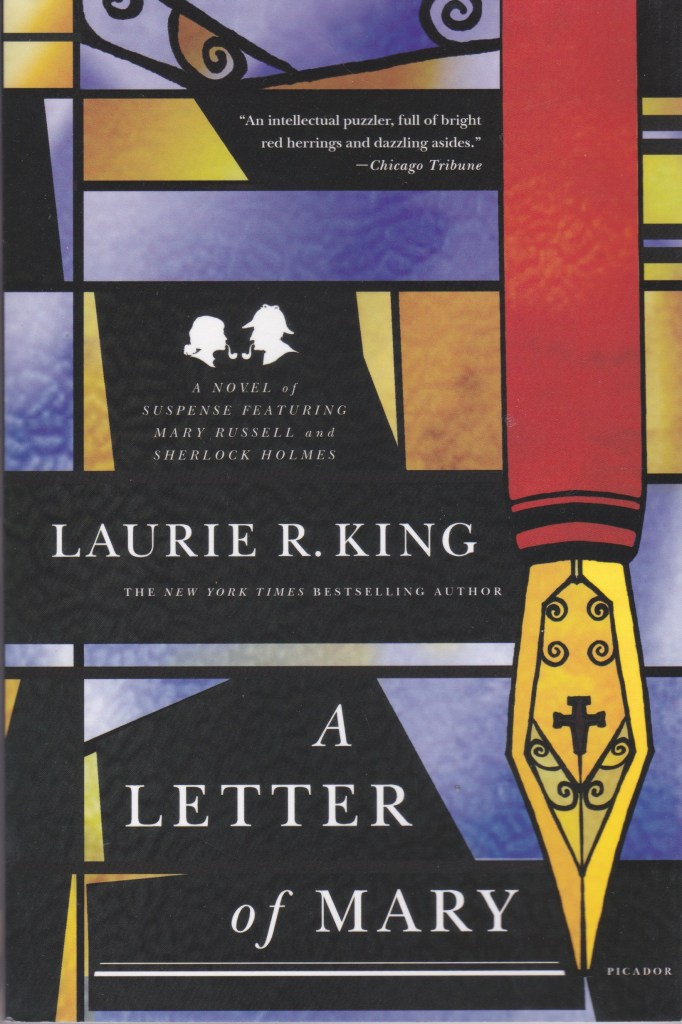
I was already a fan of Laurie R. King from her brilliant Kate Martinelli series, about a lesbian police detective. (If you’ve not read that series, you need to–it’s one of the best of the last thirty years.) I was reluctant to read the Mary Russell series, as Constant Reader may remember from my previous posts about earlier books in this series; for any number of reasons, but primarily not ever really getting into the Sherlock Holmes/Conan Doyle stories. This shifted and changed when I was asked to contribute a Sherlock story to Narrelle Harris’ The Only One in the World anthology; this required me to go back and do some reading of Doyle, and having worked with Laurie R. King on the MWA board, I decided to give her feminist take on Sherlock a go.
And I have not regretted that decision once.
Mary has stepped up to replace Amelia Peabody as one of my favorite on-going series; I love the character–a strong-minded, fiercely independent woman of no small intelligence who is more than capable of going toe-to-toe with Mr. Holmes. Theirs is, despite the age difference, a true partnership of equals; I love that Holmes, in King’s interpretation of him, isn’t quite so misogynistic or incapable of feeling–which I don’t think I’ve ever seen in a male-written version. I like King’s Holmes; the strong female character who is his equal was the perfect solution to whatever misogynistic issues I may have had with other interpretations. I also love that Russell is also pursuing a life of the mind; her studies into theology at Oxford are not just asides to add color and flavor to the character but are just as important to whom she is as a character as the love interest/relationship with Holmes. As I also have an amateur’s curiosity into the history of Christianity and how the faith changed and developed throughout the centuries following the New Testament stories…how that was shaped and influenced by men with not the purest of motives…is something I’ve always been interested in.
I think the first book that challenged Christian orthodoxy in a fictional form that I read–the first time I became aware of the possibilities that the BIble wasn’t actually the pure word of God and had been edited and revised repeatedly in the centuries since Christ ostensibly lived, died and was resurrected–was, of all things, a book by Irving Wallace called The Word (Wallace isn’t really remembered much today, but he wrote enormous books of great length that were huge bestsellers, and the subject matter and style of the books was essentially that they were very bery long thrillers: The Prize was about the maneuvering to win a Nobel; The Plot was about an international conspiracy to kill JFK; The Second Lady was about a Soviet plan to kidnap the First Lady and replace her with a lookalike who was a Soviet agent; etc etc etc). The premise of The Word is simply that a new testament, a document hidden away for centuries in a monastery in Greece, claims that not only did Jesus not die on the cross but went on to live for many decades, preaching his own ministry and even visiting Rome. This, of course, is a cataclysmic document–it would change everything everyone had ever known and believed…if it is indeed authentic.
I’ve always loved a good thriller with a base in theology, ever since; and A Letter of Mary is just that, even if more of a mystery than a thriller. The role of Mary Magdalen has been questioned a lot in the last few decades–not the least reason of which is Holy Blood Holy Grail–an interesting concept if one that has been proven to based in a falsehood in the times since (or was THAT part of the Vatican’s plot?)–which inevitably led to Dan Brown’s The Da Vinci Code. I don’t find the idea that the Magdalen was a beloved disciple of Jesus–and that she may have been his favorite–a reach; likewise, there’s nothing I’ve ever seen in the actual New Testament that essentially says she was a prostitute, a “fallen woman.”
This book begins with Russell despairing over her research only to receive a letter that she and Holmes are going to be receiving a visitor–someone they met during their time in the Holy Land some time earlier–glossed over in The Beekeeper’s Apprentice but apparently explored more deeply in O Jerusalem! The visitor, an older heiress of no small means who is fascinated with archaeology and has been funding digs in the Holy Land, presents the pair with a gift as well as an ancient letter, unauthenticated, which is ostensibly a letter from Mary Magdalen some years after the death of Christ, written to a sister as the city of Jerusalem falls under seige by the Romans during the Jewish Wars, around 70 AD, that saw the sack of the city and the start of the diaspora; which makes it very clear that, if authentic, the Magdalen was one of the disciples and heavily involved in the ministry of the Christian church. Their guest returns to London, and is killed when she is stuck by a car the following day. Holmes and Russell sniff around the crime scene and find evidence that the old woman was murdered…but by whom? Why? Is this about the letter from Mary?
King always tells a great story–you never can go wrong with one of her books, really–and the characters are so well-defined, so real, that even if she didn’t tell a great story, you want to read about those characters more, get to know them better, and cheer them on to their successes and sympathize with their failures. Her writing style is also a joy to read; the Mary Russell voice is so different and so clearly distinct from Kate Martinelli that you can’t not marvel at her mastery.
The next book in the series is The Moor, and I am really looking forward to it.
Lonesome is such a great word. It really doesn’t get used much nowadays, and may be bordering on archaic, but I think it summons up an entirely deeper (and possibly different) emotion than lonely. It was usually used in songs–“I’m So Lonesome I Could Cry” sounds more effective than “I’m So Lonely I Could Cry”, for example–and for some reason (maybe it was country music, I can’t be certain) I’ve always thought of it as a rural, Southern word. But, as I said, there’s something almost poetic to the word for me, and I really do want to write either a story or a book called Kansas Lonesome, because the prairie in rural Kansas, to me, is truly symbolic of the word; whenever I think about it, I think about a house out in the middle of nowhere and the winter winds howling around it.
It’s cold again this morning, and even now the sky is slowly starting to get lighter. It was pitch dark out there beyond the windows as I made my cappuccino this morning, and it should be a good morning/day. I slept very well last night–I did wake up at four briefly, but as able to fall back asleep for another two hours–and I even got some work done on my story yesterday. The first draft still isn’t finished–I was thinking last night, as I binge-watched news, that I’ve never really recovered from finishing the book, which is why I’ve been so lackadaisical and unable to truly focus; this happens a lot in the aftermath of finishing a book, because I actually need to recharge more than I ever did before–but I have every confidence that I will finish it today. Tomorrow I am taking a personal day, as I have medical appointments and so forth (just routine annual maintenance, nothing to be concerned about) and am hoping that around said appointments that I will be able to get some more work on the story finished. I also just realized the 15th, which is the due date, is actually Friday and not Thursday, so that’s definitely promising; a bit of a reprieve, if you will. This is also a three day weekend, so I can actually have a day of resting and cleaning and errands before diving headfirst into the revisions of #shedeservedit, which is going to require a thorough reread first, and then picking it apart from top to bottom (along with the character names) before stitching the whole thing back together again.
Paul’s been busy working the last two nights, so we’ve not been able to pick up on Bridgerton again, which is a shame as we are both thoroughly enjoying it. I really want to get back to reading; next up is Laurie R. King’s first Mary Russell Sherlockian tale, and just from looking at the opening I can tell already I am going to love it, because Mary’s voice reminds me of that of one of my all-time favorite fictional characters, the inimitable Amelia Peabody. And that reminder also served to remind me of one of the greatest influences on my writing career, one whom I never pay enough homage to and never properly credit: one Elizabeth Peters/Barbara Michaels. Reading her works, under either name, is a master class in plot, character, setting and voice; the books are not only entertaining but incredibly smart, and she also had a penchant for some of the best opening lines in crime fiction. The Peters novels all have brilliant first sentences; the Michaels novels incredible opening paragraphs. I’d be hard pressed to select a favorite Peters novel–every Amelia Peabody novel is a joy; same with her stand-clones, Vicky Bliss, and Jacqueline Kirby series–but I can unequivocally state that my favorite Barbara Michaels novel is Ammie Come Home, and her Gothics heavily influenced mine. Bury Me in Shadows and Lake Thirteen are perhaps where the influence are most obvious; I even worried, numerous times, that Shadows was too derivative of Lake Thirteen. I have a New Orleans Gothic in the back of my mind–Voices in an Empty Room–that I may get to sometime over the next few years, but again, I worry that it’s derivative of the earlier ones.
Welcome to the world of the prolific, where you always fear you are recycling plots and characters!
Oh! I got a 12 hour Twitter ban yesterday, and I must say I was enormously disappointed that pundits and right-wingers didn’t immediately rush to defend my freedom of speech. I will admit that I deserved the ban; it’s what I get for being stupid. My standard rule of thumb is whenever I see an incredibly stupid and/or offensive tweet, I allow myself to type out a snarky response. Usually I never finish, thinking better of them before getting to the end and hitting send. Alas, I tried this on my phone yesterday. I’d started typing a truly angry response when I thought, “no, you can’t send that, not cool” and tried to delete the draft but instead accidentally sent it–resulting in an immediate ban. It wasn’t there long enough for someone to report it or for Twitter to actually review it (I am not kidding when I am saying it was immediate), so Twitter is clearly policing itself and what is being allowed on their site. I own it; it was a terrible thing to even think, let alone say in response to someone no matter the provocation, and thus I will not complain about it. I would even go so far as to thank them for reminding me that such angry tweets aren’t cool, and while I am allowed to be angry about the sack of the Capitol, I need to be a better person than I have been lately. So thanks, Twitter.
I’ll do better.
And while perhaps this should have started back in the days of birtherism, I am fine with having such algorithms in place now.
And on that note, I am heading into the spice mines. Have a lovely Impeachment Wednesday, everyone, and I will catch you tomorrow.
And now we found ourselves at the dawn of a Saturday, the first day of a new weekend, which are always, inevitably, far too short.
I have requested a book from the library which is the beginning of my research into Chlorine; and I will be picking that up today as I run a couple of errands in the heat of the day. My goals for the weekend are to finish reading Blacktop Wasteland and get Chapters 1-10 of Bury Me in Shadows completed; which of course is preparatory to getting the next ten chapters revised and redone and rewritten over the next week. It is a rather ambitious program, to be sure–and I am also certain at some point I’ll get tired and stop, then berate myself all week that I’m not further along with it than I am. You know, second verse, same as the first.
Yesterday–hell, this entire past week–was not a particularly pleasant one, and my usual go-to when I am not having a good week–being kind to people and trying to help them–also blew up in my face, which, while incredibly unpleasant, is actually fine. Usually, when there’s not a pandemic, I get to be kind and caring and helpful to my clients pretty much every day of the week, and that, inevitably, always makes me feel better about the world (and people) in general. I miss having that daily release of kindness and caring, of being sympathetic to people and listening to their concerns and helping them to feel better about things, but…I also need to recognize that outside of my job, in the real world other people don’t necessarily give a shit about my help, or need it, or particularly want it, and that the people I help at work are actually my clients, and they want help, they’re worried and need someone to be empathetic and kind and ease their fears. I also need to remember that people in my every-day-not-coming-in-for-an-appointment life might actually see my offers of help and caring as something else entirely, and not receive it well. I also need to remember that people I only know through pleasant enough internet interactions actually aren’t people I know, and I should save my empathy, caring, and kindness for people who actually are my friends–of whom there are, in fact, a lot.
It was, all in all, a stressful week, an up and down rollercoaster of emotions and triggers and psychological distress. As I tell my clients at the office, it’s normal to feel stress and worry and fear about getting any kind of diagnostic medical test, even when you’re absolutely mostly certain there’s nothing to worry about–there’s always that gnawing fear that this will be the time the news is bad, and being who I am, I inevitably try to prepare myself for the news to be bad. This is no doubt the psychological residue of years of getting HIV tests and nervously waiting the two or more weeks to get the results back while people I knew were going into the hospital and not coming back out; of going in and having the blood drawn and going through the entire session of data gathering and demographics and behavioral risks that always –while not the intent of the counseling, of course–left me feeling like an irresponsible drunken whore who deserved to die. One of the reasons I went into this line of work was to make sure that everyone who comes in to get tested knows that the person testing them cares about them, doesn’t judge them, and is doing everything in their power to make them more comfortable and relaxed. I treat all my clients with dignity and respect and empathy, and I have found that actually works, for the most part, in the world outside of my testing office as well.
I really miss doing my job every day.
And yesterday, of course, I had to take Paul out to Metairie to get his eye cleaned, and while it’s been sixteen years, being reminded by something as innocuous as an eye cleaning appointment inevitably still weighs heavily on me emotionally. Some years I make it through the anniversary without thinking about it; most days it doesn’t cross my mind, and sometimes can go for great stretches of time without thinking about or being reminded of it; it’s now mostly a part of the distant past. Yet it still lives on in my memories, even if they are pushed to the back most of the time, they are still there, and when something like yesterday’s appointment rolls around those memories will crowd their way up to the front of my mind, and even though I try not to allow them to affect (for fuck’s sake, it’s been sixteen years) me emotionally, they still somehow weigh heavily on me and drag me down. All the way to Metairie yesterday I was snapping and cursing out other drivers–okay, I do that every time I drive because New Orleans seriously has the worst and stupidest and most careless drivers of anywhere I’ve ever lived–but yesterday I felt particularly angry with them all for putting our lives at risk with their carelessness and stupidity.
Which is why I never understand how people are amazed about the anti-vaxxers and the anti-maskers; all you ever have to do to see how little most people care about anyone else’s lives or safety is go for a drive. I saw a meme months ago about the “shopping cart test” being an excellent way of determining what kind of person someone is; do you leave the cart abandoned in the middle of the parking lot, blocking a parking space, or do you return it to the front of the store or to a cart corral which is a short walk, at most, from wherever you are parked? (It should come as no surprise to anyone that most people just abandon the carts where they are once they’ve finished using them–which means a low wage employee has to walk around the entire parking lot retrieving the carts, sometimes in the broiling sun. I always either put the cart in the corral or walk it back to the front of the store–but with the caveat being that in college I worked at Toys R Us and sometimes, in the broiling heat of 115 degree summer days, had to go on cart duty. I know firsthand how shitty of a job that is, and so I try to do my little part to make it easier for the unfortunate soul whose job it is. On the rare occasions when I eat fast food I always throw my trash away and leave the tray on the space provided in every fast food place for them, usually on top of the actual trash bin. I honestly don’t think it’s mean-spirited; I think it’s thoughtlessness for the most part–someone else will take care of this for me. And sure, it is someone’s job–but there’s no rule that says we can’t make things easier for someone doing their job by doing something as simple and easy as dumping your trash or returning a shopping cart to a corral–just like I don’t understand why people don’t drive with a concern for the safety of themselves, let alone others.
We finished the second season of Babylon Berlin last night with a massive binge of almost the entire season in one sitting, beginning at seven pm and finishing just after eleven–I hesitate to think we actually watched as many as seven episodes, but I really think we must have, because I seem to recall finishing Season One and watching the first episode of Season 2 on Thursday night. I cannot praise the show nearly enough–Paul and I are getting to the point where we have very little interest in watching American television programs anymore, because the foreign ones are so much better. There are about, on a quick check, three or four books in the series; I do have the first one on hand, and I may move on to it when I finished Blacktop Wasteland, hopefully this weekend.
So, my plan is to shake off yet another shitty week and get my head cleared and back on straight and dive back into my work. I am treating myself to making cappuccinos this morning rather than having my usual coffee; grinding beans and frothing milk and making espresso–it’s really not a lot of trouble, honestly; it’s more about the mess it makes more than the process–a lot of moving parts that need to be cleaned afterwards more than anything else. (I love the smell of beans being ground!) The kitchen/office is, as always on a Saturday morning, messy and in need of being put in order; the ongoing battle to get organized rages on.
Yesterday, after making my phone calls and while making my daily quota of condom packs, I discovered that the old ABC Movie of the Week The Night Stalker was available on Youtube –a lot of those old made for television movies from the early 1970’s/late 1960’s are on Youtube–. but not particularly good copies; whenever I try to watch one I am inevitably disappointed by the poor quality of the film. It seems like someone used their VCR to record them as a general rule, and then uploaded them–with all the usual glitches and scratchiness and poor reproduction one would expect from an old VCR tape (this was the case with some I have watched, like Go Ask Alice and The House That Would Not Die, which was based on Barbara Michaels’ brilliant novel Ammie Come Home); I was delighted to see that this was not the case with The Night Stalker–it was almost like the film had been digitized before uploading. The picture was very clear, the colors bright, and absolutely no fuzziness. The sound quality was also very high. The Night Stalker, and its sequel, The Night Slasher, were two of the more popular ABC Movies of the Week, and wound being the basis for a series, Kolchak: The Night Stalker, which was kind of a mid-to-late 1970’s version of The X Files. The series didn’t do very well, was pretty roundly mocked for cheesiness and poor quality, and didn’t last more than a season, but surprisingly enough, The Night Stalker holds up pretty well, despite being obviously dated and produced on a shoestring budget (the producer was Dan Curtis, of Dark Shadows fame); but the heart of the movie is Darren McGavin’s brilliant portrayal of Carl Kolchak, a world-weary, down on his luck investigative journalist who has been fired from many major newspapers in his career and had wound up working at a paper in Las Vegas, which at the time was kind of a backwater casino town (its still a casino town, but a much bigger city now; I don’t know if one would consider it a backwater or a comedown from Boston or Chicago or Washington anymore; maybe). The premise of the film is young women are being murdered, and their bodies drained of most of their blood; the second body is found in a dried out gulley with no footprints around it; which means it must have been thrown quite a distance to get where it was. Kolchak begins to slowly believe that there’s a vampire in Vegas (Vampire in Vegas is actually a great title), despite resistance from both the higher-ups at the paper and the police, and he begins to gather the evidence. He tracks down the vampire finally, and kills it by driving a stake through it’s heart just as the police arrive–and of course, his story is spiked and he is threatened with prosecution for murder if he doesn’t leave town. The girl he is seeing, who works in a casino, is played by Carol Lynley; she is also forced to leave town without even getting a chance to say goodbye to him. The story holds up pretty well–and it is interesting seeing Las Vegas as it was in the early 1970’s, which is vastly different than it is now; and watching it made me a little sad–the death of print journalism for the most part over the last twenty years has forced that kind of character, once so integral to the crime genre–the crusading, world-weary journalist–into retirement. Journalists and journalism was also a popular genre of television and film, too–remember Lou Grant? I had always wanted to write a book about a newspaper and how it operates, a kind of Arthur Hailey type thing, with characters at every level, from the publisher down to the copy clerks. Maybe it could still be done today; I don’t know. It’s an interesting idea, but one that has languished in my files for decades and will probably continue to do so.
I also think a study of the evolution of the vampire story would be an interesting read, going back to pre-Dracula writings and then tracing its evolution through modern times; how Dark Shadows and Chelsea Yarbro Quinn changed the face of the vampire tale and made Anne Rice’s novels possible; and all the other vampire stories, like ‘salem’s Lot and Poppy Z. Brite’s Lost Souls. Maybe someone already has? I know Stephen King covered some of this material in Danse Macabre, but that is nearly forty years (!) out of date, and I doubt he will be doing an updated version anytime soon.
And on that note, tis back to the spice mines with me. Have a lovely Saturday, Constant Reader.
I’ve always enjoyed a good mystery with a supernatural edge to it; the line between crime fiction and horror is often blurred. Take, for example, The Silence of the Lambs. It’s often lauded as the first horror film to win an Oscar–but there’s no supernatural beings involved, no ghosts or vampires, or anything like that; the protagonist is an FBI agent trying to catch a serial killer…so is it really horror? Are slasher films/books actually horror or crime? (I think it depends on whether or not the slasher is actually something not human–like Freddy Krueger and Michael Myers, or just crazed human killers, like the Scream movies or even the first Friday the 13th, which is the only one I’ve actually seen.)
But then it’s really hard to define and delineate what work falls into what genre; and oft-times, there’s crossover between the various ones–there’s western horror, for example, just like romantic suspense bridges the line between romance and mystery. So where precisely on the spectrum of genre does the work of Barbara Michaels lay? There are often supernatural elements to her fiction; sometimes there aren’t. Ammie Come Home is my favorite ghost story of the many I’ve read–and I enjoy it just as much every time I reread it–but it’s also a mystery, and there’s also some romance in the book. The romance itself is rarely the focus of her books, but it is there and cannot be ignored; likewise, most stories that have supernatural elements (ones that are actually supernatural in origin or man-made frauds) inevitably have some mystery to them; what do the supernatural forces want–or in the case of fraud, what are those who are committing the fraud after? What do they want?
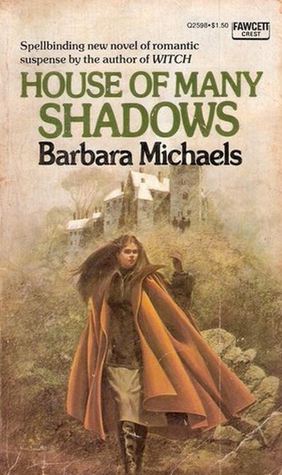
House of Many Shadows was the second Barbara Michaels novel I read, and remains one of my favorites to this day.
The sounds bothered Meg most. Calling them auditory hallucinations helped a little–a phenomenon is less alarming when it has a proper technical name. Meg had always thought of hallucinations as something one saw. She had those, too, but for some illogical reason it was easier for her to accept visual illusions as nonreal than to ignore the hallucinatory sounds. When you were concentrating on typing a letter, and a voice says something in your ear, it was impossible not to be distracted.
The problem was hard to explain, and Meg wasn’t doing a good job of explaining. But then it had always been difficult to explain anything to Sylvia. Sylvia knew all the answers.
“The dictaphone was absolutely impossible. I couldn’t hear what Mr. Phillips had said. Voices kept mumbling, drowning out his voice. Once the whole Mormon Tabernacle Choir cut out the second paragraph of a very important memo.”
She smiled as she spoke. It sounded funny now, but at the time it had not been at all amusing.
Sylvia didn’t smile. “The Mormon Tabernacle Choir? Why them?”
Meg shrugged helplessly. “No reason. That’s the point; they are meaningless hallucinations. The doctor says they’ll go away eventually, but in the meantime…Mr. Phillips was very nice about it, he said he’d try to find an opening for me when I’m ready to work again, but I couldn’t expect him to keep me on. I had to listen to some of those tapes three times before I got the message clear, and there was always the chance I’d miss something important. And I’d already used up all my sick leave. Three weeks in the hospital…”
“You should be thankful you weren’t killed,” said Sylvia. “To think they never caught the man who was driving the car! New York is an absolute jungle. I don’t know how you can stand living here. May I have another cup of tea?”
Meg poured, biting back an irritated retort. She couldn’t afford to offend Sylvia, especially now, when she was about to ask a favor, but the cliches that were Sylvia’s sole means of communications had never annoyed her more. Why should she be thankful she hadn’t been killed? She might as well be thankful she didn’t have leprosy, or seven-year itch; or thank God because she had not been born with two heads. It was just as reasonable, and a lot more human, to feel vexation instead of gratitude. Why me, God? The old question, to which there was never any answer…Why did it have to be me in the path of that fool driver; why did I have to land on my head instead of some less vulnerable part of my anatomy; and why, oh, why, God, did Ihave to have these exotic symptoms instead of a nice simple concussion? Why do I have to be the poor relation, with no savings to fall back on, while Sylvia…
Sylvia’s close-set gray eyes were intent on the teapot. “Such a nice piece of silver,” she murmured.
I love Barbara Michaels’ work, and one of the happiest days of my reading life was the day I discovered she also wrote as Elizabeth Peters, which meant even more reading joy for me (and eventually, I came to prefer the Peters books to the Michaels; but make no mistake, I love all the books). The set-up for House of Many Shadows is right there in the beginning; poor Meg’s life has been upended by being hit by a driver who didn’t stop, and because of the hallucinations she suffers from as a result–with no idea of how long she will suffer through them–she is unable to work, and her distant relative Sylvia–whom she doesn’t seem to care much for–is her only hope. Sylvia–we all know people like Sylvia; without a sense of humor and whose response to any crisis is to come up with a plan and make it work–has a house in the Pennsylvania Dutch country, she’s not sure what she wants to do with it, but Meg can stay there rent-free, and Sylvia even comes up with a “make-work” solution so Meg won’t feel like she’s freeloading (it isn’t until much later she realizes that is what Sylvia was doing; at the time she kind of resents it); doing an inventory of the contents of the house and its attic, as Sylvia is thinking of donating the house to the local historical association. Sylvia’s stepson from the previous marriage that wound up with her owning the house is living on the property as a caretaker, in a cottage behind the main house–Meg remembers him from their childhood as a horrible tease she couldn’t much stand–and soon she is off to the wilds of the Pennsylvania country side.
At the end of the second chapter-the first after she arrives at the house–Meg experiences a hallucination in front of Andy, the stepson, and their relationship hasn’t changed much, apparently–which rattles Andy terribly; when it happens again a chapter or so later is when Andy confesses that he, too, has seen the same hallucinations she did–so are they hallucinations? Or are they seeing ghosts?
This set-up, of course, is absolutely brilliant: what better heroine for a supernatural story than a woman who’s had a brain injury that causes her to see hallucinations? The chilling touch that Andy has also seen the same hallucinations in the house that she has is terrifying; and as she slowly gets to work in the attic, she and Andy start discovering things about the history of the house, including the fact that the original property owners, back before the American Revolution, were brutally murdered in the original house that stood on the property; the current one was built over it. So, what happened 250 years earlier? Both Meg and Andy become a bit obsessed with the ancient murders, and as they continue to see things in the house, they slowly but surely start putting together the truth of what happened to the original property owners–while falling in love, of course.
One of the great things about the Michaels books is that she brooks no foolishness with her supernatural elements; it’s clear Dr. Mertz (her real name) was well read on the subject of the occult and other belief systems–they pop up, again and again, throughout the Michaels novels, and in many instances, I first heard of certain occult books and cults from reading them. I know I first read of The Golden Bough in a Michaels novel; Dr, Mertz knew her folklore and occult religions, and made very good use of that knowledge, not just in this book but in others–Prince of Darkness comes to mind–and of course, she was an excellent, excellent writer.
House of Many Shadows also holds up; despite the dated quality of the book–no Internet or computers or cell phones–it’s still a great story.







 Queer and Loathing in America