Honky Tonk Women

I made a little progress on the book yesterday; only another couple of hundred words or so, but progress is progress. I also started reading Colson Whitehead’s The Underground Railroad yesterday (I am going to see him speak tomorrow night); the book is extraordinary, and I have a lot of thoughts about it already–despite only being half-finished. I may have to wait a few days after I finish reading it before I write about it, because it’s something I am going to have to mull over and think about; not a blog entry I’ll be able to just dash off the top of my head while I drink my morning coffee and try to wake up.

I did make it to the gym this morning for the first time in weeks (stupid Carnival) and I am very tired. I always feel better after I work out–until the endorphins wear off, anyway–and I really need to get back into a regular routine; I also need to start eating better and in a more healthy way. I realized during Carnival–as my feet, back, legs, knees, ankles, and hips all ached–that I DO need to get into better physical condition, and the longer I wait to get started on that the harder it will be and the worse things will get. My schedule is crazy, of course, but I do need to make time for self-care and doing things for me. I also realized, with a stunning shock of self-awareness, that I used to always think that I worked out and ate healthy in order to be healthy; looking better physically was just a lovely side-effect.

Obviously, the fact that I can’t motivate myself to get to the gym regularly on my own and eat right proves that I was deluding myself all those years; and without the motivation of wanting to look good when I went out and to look good for Carnival and Halloween and Southern Decadence, as well as no longer doing the wrestling–in other words, as soon as it was no longer important for me to look good the motivation to go to the gym vanished.

It’s a bit sobering to realize you were deluding yourself for a really long time, but I prefer being honest with myself, and it’s better to figure these things out sooner rather than later–although I will say this was pretty late to figure this out!

So, this weekend I am going to commit to getting to the gym at least twice more a week. I’ve already started eating better–or trying to, at any rate–and while I don’t think I’ll ever get down to the lean 180 pounds I was ten or eleven years ago…I can probably lose twenty pounds.

Here’s a shot of me eleven years ago.

I Can’t Get Next To You

Ugh, Tuesday morning of the first normal week since Carnival. It always takes a while to re-acclimate to normal life again; the time before the parades started already seems a distant memory. For that matter, so do the parades. It’s hard to believe Fat Tuesday was one week ago. Maybe after this weekend I’ll get back to normal.

As if.

So, I spent the last couple of evenings proofing the pages of Wicked Frat Boy Ways, and as I said the other day when I was going over the copy edits, the book is actually much better than I thought it was when I turned it in. I mean, I am my own worst critic (although there are some amazon and Goodreads reviewers giving me a run for my money), and this book was very tricky for me; something I’d never tried before, and a real challenge. I think I was a bit worried that because it was so foreign to me, and so different from anything I’d ever tried to do before, that I had no confidence in my ability to make it work; but it actually did.

PHIL I stopped listening to him a couple of minutes ago. It doesn’t matter. He just wants someone to listen to him drivel on and on.

He won’t notice, either, that all I do is smile and nod, my eyes as wide open as I can make them without worrying about them popping out, and all I am saying is “oh” or “really” with the right, interested inflection when I can tell by his tone that some noise from me is required for him to keep talking. He’s probably the most conceited and self-absorbed alumnus I’ve met, and that is saying something, since I’ve never met any alumnus who isn’t a boring drone who stays involved with the house because they think it was the best time of their life, and being active in the alumni association somehow makes them still a part of the brotherhood. I prefer the ones who just write a check when they get a fundraising letter and never come around.

I mean, I get it. When you’re putting in sixty hours a week at some high-stress job and then come home to a bunch of spoiled kids and a trophy wife who spends all your money faster than you can make it and your own mortality is staring you in the eye, you miss your days in college living at the Beta Kappa house when you didn’t have an asshole boss and your phone wasn’t blowing up all the time with needy asshole clients who act like you’re their own personal slave and all you had to do was show up for class and study every once in a while and spent most of the rest of your time drinking and smoking pot and snorting coke and fucking every girl you could get so wasted she couldn’t say no or stop you from taking their clothes off and doing what you wanted. How many times have I had to listen to some alumnus whose body has gone to seed, who’s gone bald and whose best days were long behind him relive the debaucheries of his youth, getting that sad faraway look in his eyes as he thinks back fondly to that time before he had to be at the office all day only to come home to some bitch of a wife and deal with assholes all the fucking time, remembering when they didn’t have to deal with all the horseshit they have to put up with to get the damned paycheck to keep up the front that they’re living the American fucking dream?

It’s pathetic, really.

It’s just another reason I am glad I am gay.

It’s told in alternating first person point of view present tense; which means everything is happening as you read it. And if you think that isn’t hard to do, well, it sure as hell was for me. It was a risk, a stretch, and a challenge–and I was absolutely certain I was messing it up the entire time I was working on it.

So, it’s kind of a relief to not only have my editor love it, but to reread it and see that I was, as always, expecting the worst of myself. Maybe someday (HA!) I’ll stop doing that.

I also come to a realization about Crescent City Charade over the last few days, and as such, I was able to get started on it yesterday. It was only 517 words, but I will take it!

And now, back to the spice mines.

Here’s a hunk for today:

Aquarius/Let the Sunshine

I stayed up late last night reading, and as such slept through my morning. When I got home from running errands yesterday I couldn’t find my copy of Peaches and Scream, which meant I either left it somewhere yesterday (the horror! It was signed) or I left it in the car–which I will check shortly–but while I was cleaning and doing laundry and all of that yesterday, I decided not to walk back out to the car but to just pick up another book–the next on the TBR pile–and I got very caught up in it, caught up so much that I wanted to see how it ended.

The book was Big Little Lies by Liane Moriarty.

“That doesn’t sound like a school trivia night,” said Mrs. Patty Ponder to Marie Antoinette. “That sounds like a riot.”

The cat didn’t respond. She was dozing on the couch and found school trivia nights to be trivial.

“Not interested, eh? Let them eat cake! Is that what you’re thinking? They do eat a lot of cake, don’t they? All those cake stalls. Goodness me. Although I don’t think any of the mothers actually eat them. They’re all so sleek and skinny, aren’t they? Like you.”

Marie Antoinette sneered at the compliment. The “let them eat cake” thing had grown old a long time ago, and she’d recently heard one of Mrs. Ponder’s grandchildren say it was mean to be “let them eat brioche” and also that Marie Antoinette never said it in the first place.

Mrs. Ponder picked up her television remote and turned down the volume on Dancing with the Stars. She’d turned it up loud earlier because of the sound of the heavy rain, but the downpour had eased now.

She could hear people shouting. Angry hollers crashed through the quiet, cold night air. It was somehow hurtful for Mrs. Ponder to hear, as if all that rage was directed at her. (Mrs. Ponder had grown up with an angry mother.)

I’ll be completely honest: I would have never heard of this book were it not for the HBO show, which Paul and I are watching. I primarily focus, when it comes to fiction, first on crime novels, followed by young adult, then horror, and finally queer fiction; as my reading time is relatively limited I can barely keep up with what’s au courant in crime, let alone anything else. Liane Moriarty, an enormously successful Australian novelist, is classified as chick lit, a term I’ve always found to be, at the very least, demeaning–not just to those who write it but to those who read it.

And there are a LOT of readers in this particular field.

The primary problems–which I will address now, before moving on to the things I really enjoyed–I had with this novel really are all about me, rather than the book itself. As someone who writes crime fiction, and therefore reads a lot of it, has edited a lot of it, has judged it for awards, Big Little Lies actually can be considered a crime novel, particularly if you look at the definition of the genre from Mystery Writers of America; because the book is about a crime, in a way; and the way the book is structured is a very much a crime trope: from the very beginning we know some kind of crime has happened, but we don’t know who or what or how. The book unspools by giving us all the backstory leading up to the commission of the crime, exposing all the secrets and lies involving a trio of three women, connected by having a child in kindergarten at one particular school, and then it gives us the crime itself, and it’s aftermath. There’s kind of a Greek chorus of voices at the end of each chapter, snippets from police or newspaper interviews, from various other characters but not the main ones, and Moriarty uses this device to not only build suspense but keep the reader hooked and intrigued and turning the page. The problem, of course, is that if you are a regular reader of crime fiction, many of the big surprises and twists to the plot…well, they aren’t shocking and surprising; in fact, I predicted every single one of them many chapters before the reveals. But I didn’t know who the victim would be, or how it would happen, or who would actually do it; Moriarty does an excellent job of juggling all the little threads and making you guess how it would all come down when you finally reach the climax of the novel, which kept me turning the page.

Those quibbles aside, Big Little Lies is compulsively readable. Moriarty does an excellent job of creating characters the reader can not only identify with but sympathize with, and there is also a lot of wit and sly social commentary in the book as well. As I mentioned earlier, the three main characters–Jane, Celeste, Madeline–are all connected by having a child in kindergarten. On the morning of kindergarten orientation, Madeline gets out of her car to lecture the teenaged driver of the car in front of her at a stoplight about texting and driving, only to turn her ankle on her way back to her car. Jane, new to the area, is in the car behind her and gets out to help her, and a friendship is born. Celeste is eventually drawn into their orbit, and we get to know these three women very well–as well as their secrets. Celeste is filthy rich, Celeste middle class, Jane borderline poor; Moriarty does an excellent job of showing the contrasts in their lifestyles as well as how those differences affect their behavior as well as their relationships. She also does an excellent job at showing the sensitivities and competitiveness between the moms who stay at home and the moms who work; Moriarty takes us into the world of women as mothers of young children and is very sly about the modern world of the helicopter parent; particularly on that first day of kindergarten orientation, when one of the children has been bullied and accuses Jane’s son of doing it, and how that accusation splits the school into two warring factions; of what it’s like to have your child accused of something heinous and the worry that comes along with that; the fierce desire to protect your child even if it means calling another child a liar; the terror that there is something psychologically wrong with your child. Moriarty is excellent at this; this women are incredibly real and fully developed and realized. She also writes with wit and flair and clever use of language; she has an innate ability to hook her reader and keep them reading.

It’s easy to see why she is an international bestseller.

I can highly recommend the book, despite the slight problems I had with it; it’s a great, enjoyable ride, and like I said to begin with, I stayed up until almost two in the morning reading it, and the first thing I did when I got up this morning, rather than messing about on-line and answering emails and reading social media, was get my cup of coffee and get back in my easy chair to finish reading it.

And that says a lot about Liane Moriarty as a writer. I do intend to read more of her work.

I’ll Never Fall in Love Again

Ah, the weekend. Today I am going to run some errands–including taking the car for a car wash, it’s first ever–and then I am going to spend part of the day, at least, reading the page proofs for Wicked Frat Boy Ways, the latest (and possibly last) Todd Gregory erotic fraternity novel. When I was going through the edits last week, I wasn’t really paying a lot of attention to anything story or character wise, just ploughing through the edits. Yesterday I started reading through the page proofs, just to familiarize myself with the story–hey, I’ve written another book since then, and my memory isn’t quite what it used to be–and was surprised to see that it’s actually much better than I thought it was when I turned it in. I often loathe the book I am working on while I am working on it, and am much too close to it to actually evaluate it properly (sometimes that loathing never goes away, even years later), but I was very pleasantly surprised with this one as I skimmed my way through it.

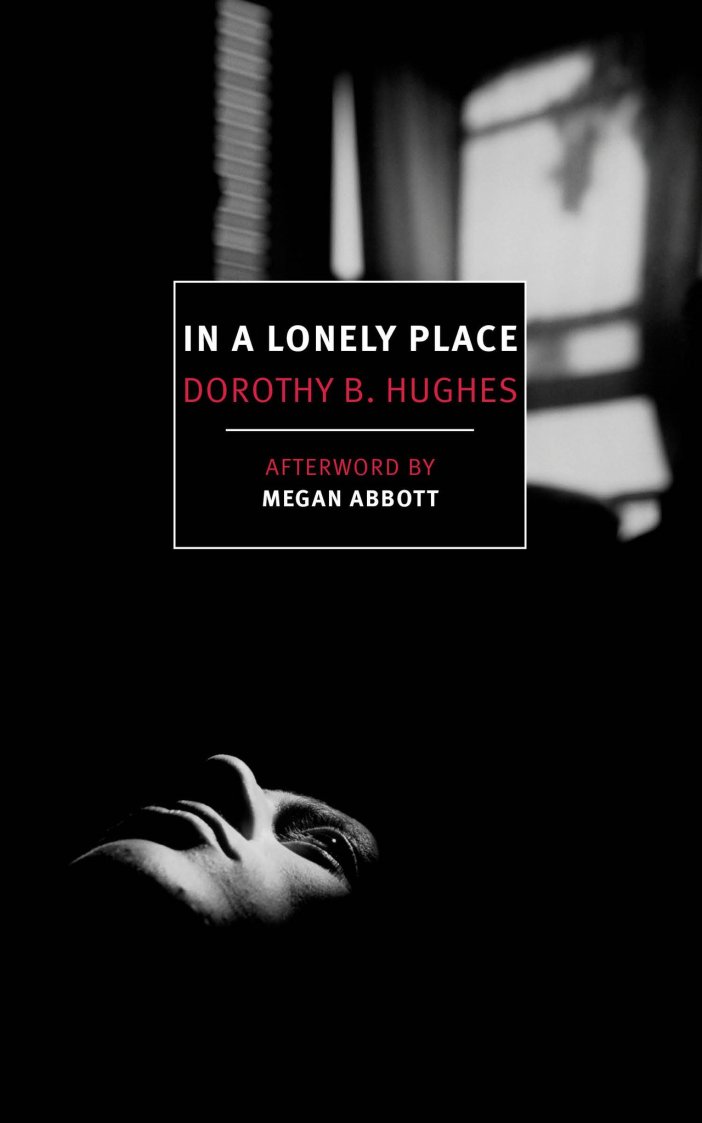
And I do love the cover.

The book’s official release date is May 16th. How exciting! It’s been awhile (September) since I had a book come out, and it feels like it’s been an eternity, frankly. I know, I know, it’s weird, but that crazy writing schedule I’ve been on since about 2008–which was hardly normal–got me accustomed to having a new book out every few weeks. And this one is different from the other Todd Gregorys; I’m not sure how people are going to react to it. My editor loved it, so it has that going for it.

We shall see. The earlier frat boy books are still selling–which is kind of a shock, really; erotica generally doesn’t have much of a shelf life. Then again, FRATSEX, the anthology that kind of started it all, was still earning royalties and selling when Alyson folded; the book came out in 2004 and was still selling strong five years later. I can’t hope this one will do as well as those earlier efforts; it would be, of course, lovely if it did but in this business you really can’t count on anything. And like I said, it’s vastly different from the earlier novels. It’s not set on the same campus–Cal State-Polk; it’s set at UC-San Felice, a new coastal city I invented, even if it is the same fraternity, and one of the primary supporting characters in the previous one, Brandon Benson, is one of the main characters in this one, having transferred. Jordy, the main character from the last one, also appears briefly, as do Jeff and Blair, the focal characters from the original.

I don’t know that I will do another one, to be honest. But I am very pleased with how this one turned out. I hope the readers will be, too.

And now, off to the spice mines.

Telephone

The Carnival hangover continues.

I worked twelve hours yesterday, including bar testing last night, so that could account for feeling drained this morning. It’s probably a combination of the two–long day, post Carnival malaise–but I only have to get through today and tomorrow and then it’s the glorious weekend again, which is quite lovely. These abbreviated work weeks always feel somewhat off, much as I love long weekends. I started work on Crescent City Charade yesterday morning but didn’t get very far; I am thinking it wasn’t smart to try to get it going in the wake of Carnival–smart or not, I am not beating myself up because it didn’t come easy. I do have those days when nothing really comes out on the page, and it really can’t be forced. (I mean, it can, but it usually ends up being such garbage it has to be completely redone or thrown out; on the other hand sometimes when I force it, it’s hard going at first and then it truly gets going. I can usually tell the difference, though, and I could tell yesterday wasn’t going to be one of those good days of work.)

In other good news, my editor liked Wicked Frat Boy Games, which was absolutely lovely news to wake up to. Now I just have to go over her edits. Hurray!

Paul and I are watching Big Little Lies on HBO and we’re enjoying it so far; great performances not only by the actresses in the leads (Reese Witherspoon, Nicole Kidman, Shaillene Woodley, Laura Dern) but also good roles for the supporting males, and the kids are also pretty good. It’s beautifully shot, and the suspense is doing a slow build. Paul did comment that it seemed a little Real Housewives of Monterey-ish to him, but I suspect that any film or television vehicle driven by women interacting is going to feel that way for a while.

I do enjoy the Real Housewives, I’ve never denied that; it’s a fascinating phenomenon, and as ‘staged’ and manipulated as these shows can be (the Lifetime series UnReal did a really great job of tearing away the veil on these sort of shows; the first season was fantastic; I didn’t watch the second season but from everything I’ve read it wasn’t nearly as good as the first; I may go back and watch it at some point when I have time–I crack myself up); Alison Gaylin wrote a wonderful y/a ebook about a young girl whose family had a reality show called Reality Ends Here which I highly recommend. I explored the ‘real housewives’ in a Paige book called Dead Housewives of New Orleans (no longer available; long story) but because of rushing and publisher deadlines and so forth I wasn’t able to make that book all I wanted it to be, so I am rebooting the concept and making it the Scotty book I am working (or not working, as the case may be) on, but it will be vastly different in this incarnation. Pretty much the only thing that is going to stay the same is the background set-up of the book; a reality show about social climbing upper class New Orleans women. I really want to get this right, you know?

And on that note, I am going to get my day going.

Here’s a hunk for you, Constant Reader:

G. U. Y.

I love James M. Cain.

I generally give one of his books a reread every year; Double Indemnity is a personal favorite, although I also have soft spots for Mildred Pierce, Serenade, Love’s Lovely Counterfeit, and, of course, The Postman Always Rings Twice. I’ve not read all of his books, partly because I don’t ever want to be finished with the entire Cain canon, but also because many of his lesser-known are no longer in print. But yesterday, after I finished Lori Rader-Day’s sublime Little Pretty Things, I pulled out The Butterfly and read it in a little over an hour. (Many of Cain’s works are really short.)

She was sitting on the stoop when I came in from the fields, her suitcase beside her and one foot on the other knee, where she was shaking a show out that seemed to have sand in it. When she saw me she laughed, and I felt my face get hot, that she had caught me looking at her, and I hightailed it to the barn as fast as I could go. While I milked I watched, and saw her get up and walk all around, looking at my trees and my corn and my cabin, then go over to the creek and look at that and pitch a stone in. She was nineteen or twenty, kind of a medium size, with light hair, blue eyes, and a pretty shape. Her clothes were better than most mountain girls have, even if they were dusty, like she had walked up from the state road, where the bus ran. But if she was lost and asking her way, why didn’t she say something and get it over with? And if she wasn’t, why was she carrying a suitcase? When I was through milking, it was nearly dark, and I picked up my pails, came out of the barn, and walked over. “How do you do, miss?”

And so this is how Jess Tyler, abandoned eighteen years earlier by his wife, meets his now grown youngest daughter, Kady.

Cain’s novels are all relatively short (I think Mildred Pierce is actually the longest, at least of the ones I’ve read)–which is interesting on its face; many of my favorite writers (Cain, John D. Macdonald, Megan Abbott, Margaret Millar, Charlotte Armstrong) write short novels–and The Butterfly is only 118 pages long. The book is set in Appalachia; West Virginia, to be precise, and Cain’s grasp of what life is like for poor rural Southern people is spot-on, as he always was with every book. He also manages to get across the poverty, and the acceptance of that poverty, across without using vernacular; Jess says “hollow” instead of “holler,” as an example. It’s also amazing how he managed to get this book (or any of the others, really) published at the time he did; the subject matter seems a little bit much for the time. If Mildred Pierce is an opus on motherhood, and the strain of loving a child who is a monster; The Butterfly is the obverse, telling the tale of paternal love for his child that crosses that line that shouldn’t ever be crossed; from love to lust and desire. It’s quite chilling and disturbing, but also quite good because he makes it understandable, which makes it all the more chilling and disturbing.

The book was eventually filmed, as so many of his novels were, but this film was notorious as the screen debut of Pia Zadora. I’ve never seen it, actually–the only Pia Zadora movie I’ve ever seen is Voyage of the Rock Aliens, although I’ve heard The Lonely Lady is so bad it reaches epic camp proportions–but now I am kind of curious.

I also started reading Donna Andrews’ latest, Die Like an Eagle, yesterday while waiting for Paul to come home so we could go to the Parades.

And happy Mardi Gras to one and all.

Speechless

Yesterday afternoon I received a text from my supervisor letting me know they’d given out all the condoms for the weekend, and therefore I do NOT have condom duty today; instead getting a lovely four day weekend. How great is that? So I can spend the day doing whatever I feel like it–although I will most likely be cleaning and organizing, maybe writing. (I did, after all, start writing Crescent City Charade yesterday…) I am also probably going to get out the good camera and take a walk around the neighborhood taking pictures of the Bead Trees. Tonight is the end of Carnival for Paul and me–we never do anything on Fat Tuesday–so with the Proteus and Orpheus parades tonight we ring down the curtain.

Pretty cool.

We also decided to spend the day yesterday in recovery mode; skipping the parades and just chilling out inside. I cleaned the kitchen and got the laundry caught up before repairing to my easy chair, where I finished reading Little Pretty Things by Lori Rader-Day, and started The Butterfly by James M. Cain (which I intend to finish today; it’s only 118 pages).

The walkie-talkie on the front desk hissed, crackles, and finally resolved into Lu’s lilting voice: “At what point,” she said, “do we worry the guy in two-oh-six is dead?”

The couple across the counter from me glanced at once another. Bargain hunters. We only saw two kinds of people at the Mid-Night Inn–Bargains and Desperates–and these were classic Bargains, here. The two kids, covered in mustard stains from eating home-packed sandwiches, whines that the place didn’t have a pool. The mother had already scanned the lobby for any reference to a free continental breakfast. We didn’t offer continental breakfast, not even the not-free kind.

I slid their key cards to them, smiling, and flicked the volume knob down on the radio before Lu convinced them they’d prefer to get back in their car and try their luck farther down the road.

“Which room are we in, again?” said the woman.

“Two-oh-four,” I said.

“And you said we could go to Taco Bell,” cried the little girl, five or so. A glittering pink barrette that must have started the day neatly holding back her corn-silk hair now clung by a few strands. She threw herself at her mother’s feet and wailed into the carpet. “But they don’t even have a Taco Bell.”

This is Lori Rader-Day’s second novel, and I bought it in Alabama a few weeks ago when I was there with her. I’d run out of things to read that I’d brought with me, and the amount of time it took me to finish reading this wonderful sophomore novel has nothing to do with the quality of the book or its writing; it has everything to do with my lack of time the last few weeks because of Carnival. It was wonderful to have the time yesterday to sit down in my easy chair with a purring kitty and finish the second half of the book, savoring the twists and turns and the writing. I do have Lori’s first novel The Black Hour in my TBR pile, and I am looking forward to her new book, coming out this spring, The Day I Died.

Rader-Day’s main character, Juliet Townsend, is the heart of this exquisitely dark novel about lost chances, bad choices, and how incredibly easy it is to spiral down into the hopeless darkness of poverty and failure. Juliet was an accomplished distance runner in her small Indiana hometown of Midway when she was in high school, always finishing in second place to her best friend and teammate Maddy. Now, years later, after they missed running in the state championship meet, Juliet works as a housekeeper at the run down Mid-Night Motel just off the highway, living with her withdrawn mother who has never recovered from her husband’s death–which also resulted in Juliet dropping out of college. And then one night–the week of their high school ten year reunion, Maddy shows up at the Mid-Night; successful and beautiful and rich–and later winds up dead.

The mystery aspects of the book are quite good, but Rader-Day’s real strength is character. The tragedy of Juliet’s life–the missed opportunities, the road not taken, the sustained drudgery of her job and the concurrent poverty, and not knowing how to get out of it–is detailed in painful precision, and echoes the situation of so many people, who once had bright futures but circumstances beyond their control dragged them down into the hell of the paycheck-to-paycheck life; the not knowing where your next meal is going to come from, the praying nothing goes wrong with your car because you can’t afford to get it fixed or to get a new one, the death grip that all the horrors of high school can still hold on to your head some ten years later…but Juliet, in wondering who could have killed her old best friend, starts remembering, starts looking into things, and starts kicking over some old stones that might best be left undisturbed.

Wonderful. I highly recommend this.

Marry the Night

Four parades today: Okeanos, Mid-City, Thoth, and Bacchus tonight. I am not even remotely as tired as I was yesterday morning; the fact Endymion takes a different route, which allowed us to take the rest of the day off after Tucks yesterday probably helped a great deal. I woke up this morning feeling rested. Spending the evening getting caught up on our television shows helped a great deal as well. And the left-over Deep Dish pizza from That’s Amore? It ensured there was no hangover last evening after the effects of the day drinking wore off, which was truly lovely. So a deep-dish pizza is definitely going to have to be on the prep list going forward.

I do enjoy Thoth. Paul wants to take the day off and rest up for Bacchus tonight; I don’t know whether I will skip any parades. We usually don’t go to any on Fat Tuesday, so that would mean all we have left to attend would be Bacchus tonight and Orpheus tomorrow. And since I am feeling rested…we shall have to see, I suppose.

Of course, I could just spend the entire day inside relaxing and reading. Maybe even doing some writing. There certainly is some cleaning necessary, I’ve let the entire apartment slide these last few days, and usually it’s the weekend where I make up for my lack of cleaning during the week, or the things I let slide. But I am going to try to get the laundry done this morning, and maybe some of the kitchen. But relaxing in the easy chair also sounds terrific. We shall see. I do want to finish my Lori Rader-Day novel, and I think I’ve chosen my next book as well. Tomorrow I am going to walk about ten miles again for Lundi Gras outreach (yay), so maybe resting today isn’t such a bad idea. I don’t know. We’ll see how I feel. But as I glance around at the mess in my kitchen, I know I probably won’t let that stand.

I have to say yet again how much I love Carnival. It occurred to me last night that probably the reason New Orleans is such a progressive city in a sea of red is because of Carnival; when you’re standing out on the parade route, you see everything: people of every size, shape, color, ethnicity, sexuality; probably the most diverse of crowds, and everyone is getting along, hanging out, talking, chatting with total strangers, hanging out and just having a good time. It’s very hard to ‘other’ people when you are around them all the time. Don’t get me wrong, it’s still possible to do so, of course; racism and sexism and homophobia certainly exist in New Orleans, but somehow it doesn’t seem as ingrained here as it is in other places.

Then again, I’m a white male, so I tick two of the boxes on the Privileged Card.

In other hilarity, one of the reasons (there are many) I’ve not started working on the new Scotty book (tentatively titled Crescent City Charade; that may not last) is because I start each Scotty book by satirizing the opening of a famous book (my favorite was Mardi Gras Mambo: “Last night I dreamed I went to Mardi Gras again.”) and I’ve not been able to figure out one that would work. Yesterday morning, as I sipped my second or third coffee and Bailey’s, it hit me like a 2 x 4 across the face, I looked it up, and it’s perfect.

So maybe this week I will get started on it. Who knows?

And now, back to the spice mines.

Here’s a shot from the parade route yesterday:

Applause

So, I went to see my doctor for my annual check-up and I am HEALTHY. My blood pressure is good, heart rate good, I’ve lost a total of nine pounds since the last time I saw her (and I only started trying a few weeks ago, with time off for Carnival, of course), I’m sleeping well–everything is remarkably better than when I last saw her six months ago. She also gave me a referral to a cardiologist, since we have recently discovered, thanks to the hemorrhagic stroke my mother had just before Christmas, that a congenital heart defect runs in her family (and may be why her father died in his sleep when he was in his late thirties). If I do have it, they may have to to preemptively put a stent in to correct it and prevent me from eventually having a stroke. Yay. But hey–it’s better to know so you can do something about it rather than just having a stroke, right?

I am going to give full credit to my good health to NO DEADLINES.

After work tonight I will have to walk home up the parade route–always fun–and tonight’s parades are Druids and Nyx. Druids is kind of dull, but Nyx is usually fun. I also have tomorrow off so I can run errands and stock our larder since I won’t be able to move the car again until next Wednesday, and of course, tomorrow night is Muses, after two others. Will this be the year our shoe-streak ends? I am a little concerned that it may be. We’ve had a really great run with shoes, though, so can’t really complain too much should a drought occur. But since I can’t move the car, I took the streetcar to see my doctor and then took it all the way back to the Quarter so I could walk the rest of the way to the office. It was a lovely ride–I really should take the streetcar more and go explore, just you know, go see things and play sight-seer in my own home town–and I got to read some more of my book (seriously, peeps, I know it’s taking me a long time to finish it but Lori Rader-Day’s Little Pretty Things is REALLY GOOD), which I hope to finish tomorrow. I’m not sure what to read next; I will certainly keep you in the loop, Constant Reader.

I have been obsessed by a true crime case lately; one that I am peripherally connected to (a friend knows one of the people from the case); which is kind of weird, when I think about it–I also have a connection to the whole Bobby Durst The Jinx mess; again, through some friends. I won’t talk about the case much–it involves a closeted millionaire/entrepreneur being brutally murdered, and the police had arrested a gay porn star for the crime…only to release him recently. I don’t want to write it as an actual true crime book; I’m not a good enough journalist to do something like that. But I think it’s an interesting basis for a novel, and I am chewing around ideas on how to do that–because there are several different angles to take and all of them, at least to me now, are fascinating and interesting. I’m just toying with it for now–I have a couple of other books I’d like to write first–but this part of creating a book, brainstorming and thinking and wondering what point of view you want to have, what you want the book to say–is so much more fun than actually writing it.

Ah, well.

And on that note, back to the spice mines.

Here’s today’s hunk:

Born This Way

Monday and we survived Weekend One of Carnival Parades. *whew*. I am exhausted, though, which is never a good thing for a Monday morning of a new work week. Heavy heaving sigh.

Now I know what ‘bone tired’ means. And speaking of ‘bone tired’….

As Constant Reader knows, I taught a session on writing LGBTQ characters at the SinC into Great Writing workshop at Bouchercon this past September in New Orleans. It was an amazing experience, and it was enormously flattering to be asked to do so in the first place. I was also asked to write something for the Sisters newsletter, pretty much given carte blanche to write whatever I wanted to, and since I had an essay about being a gay writer on the backburner (I’ve been toying with it for almost a year) which I was calling “Death by a Thousand Cuts,” I said sure. As I was wrapping up deadlines and looking ahead to the glory days of NOT HAVING ANY DEADLINES, I started writing the essay again, whittling away things from the original unfinished draft that no longer fit my thesis and…I got about halfway through and stopped.

The reason why I stopped? Because it is next to impossible to write about the challenges of being a gay crime writer writing about gay characters without sounding like the biggest whiner in the world, and I don’t want to be that guy.

Then, a question posted on a list-serve I belong to for crime writers triggered some answers that were so horrific, so thoughtless, and so ignorant that I suddenly knew how to write the essay–or at least how to address it with a starting place.

One of the current ‘boiling points’, if you will, in our current society is the question of ‘cultural appropriation’ as well as ‘cultural insensitivity’, and how these questions apply in a broader sense with the American guarantee of First Amendment rights under the Constitution (without getting into the reality–which most people either don’t understand, or chose to ignore– that ‘freedom of speech’ is actually only guaranteed as a protection from persecution and prosecution from the state; not from other people, and certainly not from consequences. The example I always use is, “Well, when I worked at the ticket counter I couldn’t tell a passenger to go fuck himself, could I, without getting fired?”) Recently–I don’t remember where I saw this, but it was on Facebook; I don’t know if it was from an industry publication or a newspaper or something–I read a piece about the major publishers hiring what were called ‘sensitivity readers’ to read manuscripts dealing with characters who were out of the author’s experience to make sure the characters weren’t offensive. I am of two minds about this, and I can certainly understand why people would find this alarming/concerning; how much control/power would these ‘sensitivity readers’ have over the author’s work? Not to mention the fact that no one can speak for an entire community; what one gay man finds offensive the next three you ask may not.

So, yes, I do have a bit of a problem with the concept of sensitivity readers. However, if I were writing a character from a culture not my own; say, a New Orleanian of Vietnamese descent, wouldn’t I want to talk to a New Orleanian or two of Vietnamese descent? Wouldn’t I want my character to be as authentic and realistic as I can possibly make him or her? I’ve talked to cops, private eyes, and FBI agents to make my characters are grounded in reality as I can. So, why wouldn’t a heterosexual writer creating a gay character want to get some insight from a gay person? And so on, and so on, and so on. I don’t see a problem here, but again, that is the work that should be done before the manuscript is turned into the editor and publisher, and I’m not sure how comfortable I would be with that for myself.

Of course, there are those who, because of this, have pulled out the ‘censorship’ battleflag, thoroughly missing the point. The First Amendment does not guarantee anyone a publishing contract, nor does it guarantee a platform; if it does I’d like to be booked on both The Daily Show and Stephen Colbert when my next book comes out, thank you very much. Oh, wait, it doesn’t mean that, after all?

Blimey.

Which is my roundabout way of getting to the latest provocateur, Milo. People were rightly outraged when the conservative imprint of Simon & Schuster gave him a book deal; people were rightly outraged when he started getting invitations to speak at colleges and universities; people were outraged when he got invited to go on Real Time with Bill Maher (whom I also have problems with, but we’re talking about Milo now). As loathsome as the things he says are, I will defend his right to say them against any attempt by the state to silence him. Simon & Schuster is a business; they have a right to give a book deal to anyone they think will make them money (although I seriously doubt this book will make them any money; I see it going onto the remainder table pretty damned quickly, and not even being released in paperback; unless, of course, conservative clubs and organizations buy it in bulk at a deep discount as giveaways for fundraising drives and so forth–which is often how people like Ann Coulter wind up on the bestseller lists), and likewise, college/university groups have a right to invite anyone they want to come speak to them…but rescinding those invitations (and promise of payments and expenses) when said invitations blow up in their faces is not censorship as defined by the law and the Constitution. The same law that gives Milo the right to say what he does also applies to those who oppose the things he says.

That’s um, kind of how our country works.

Being utterly uninterested in anything he has to say (I’ve never enjoyed listening to transphobia or racism), I didn’t watch Real Time with Bill Maher, only watching the clips of Larry Wilmore telling him to go fuck himself, which I will also admit to enjoying immensely. (Of course, now that clips of him talking approvingly of sex between children and adults have turned up–and really, who didn’t think something like this was going to come up; it was just a matter of time–he won’t be getting invited to speak anywhere anymore, and I suspect S&S will be cancelling their book contract.) But Milo–like Ann Coulter before him–fascinates me. (And for the record, I use ‘fascinate’ with the old meaning of like how a snake fascinates its prey; I do think he is kind of dangerous, and snake-like.) I always wonder how people like him come to be. I wrote eighty pages of a Paige novel in which the victim was a Coulter-like character, attempting to peel back the layers and see what could create someone like her/him (that manuscript is in a drawer, as no one had the slightest interest in publishing it). Coulter apparently sees herself as a comedian/performance artist; I sadly know people who know her, and they state she doesn’t really believe what she says but it makes her money; I suspect Milo is kind of similar to her in that regard, yet at the same time…

Take, for example, his appearance on Bill Maher. Milo is precisely the kind of gay stereotype that triggers homophobic reactions from the right, and even from some gay men: he isn’t particularly masculine, and wore enormous faux pearls around his neck on the show, which he played with as he spoke (damn it, I am going to have to watch); he is an effeminate gay man (think a conservative Jack from Will & Grace, or Emmett from Queer as Folk: the kind of gay man that ‘straight-acting’ gay men loathe and despise). The loathing of homophobes for effeminate gay men (and, let’s be honest, a number of GAY MEN as well) has everything to do with the culture of masculinity and the fear of ‘not being a man’; which, really, is where homophobia and sexism and transphobia comes from.

I just saw on Twitter that Milo may lose his job at Breitbart over the pedophilia comments; I am not holding my breath, nor will I hold my breath about losing the contract with S&S. He has, always, positioned himself as a spokesperson for the First Amendment; all of this should give him more material to work with, and of course, I am sure it’s the fault of the ‘politically correct’ who ‘want to silence him.’

So, I doubt he will go gently into that good night, and he will undoubtedly continue to fascinate me the way cobras fascinate their prey before they kill and eat them.

I always am curious at to what made these types of people what they are.