In My House

Monday and sort of a normal work week; I don’t have to go in until later today, which is lovely, so I kind of have my morning free. I overslept–I’d intended to go to the gym this morning, but just couldn’t get out of bed. I don’t know what that’s all about, but I am tired of skipping the gym all the time. Skipping has become a habit, when going was developing into a habit. I am most unhappy about this development.

Yesterday I worked on “Don’t Look Down,” which was incredibly difficult; the story didn’t want to come nor did it want to finish. I managed to get about two thousand words, and finish the first draft; but I think the story is going to wind up being around eight thousand words long. This is actually fine, to be honest; it’s going into the short story collection rather than trying to be sent out for publication anywhere, and so length isn’t an issue for it. I’m going to let it sit for about a week or so, and maybe revise it over the next weekend. I am going to start working on Scotty again today; I am sort of dreading it, but I have to do it; I’ve been putting it off for far too long. I also want to get the Chanse story, now titled “My Brother’s Keeper,” revised this week. Once I’ve whipped “Don’t Look Down” and “My Brother’s Keeper” into shape and written an introduction, the collection will be finished, which is a lovely thing.

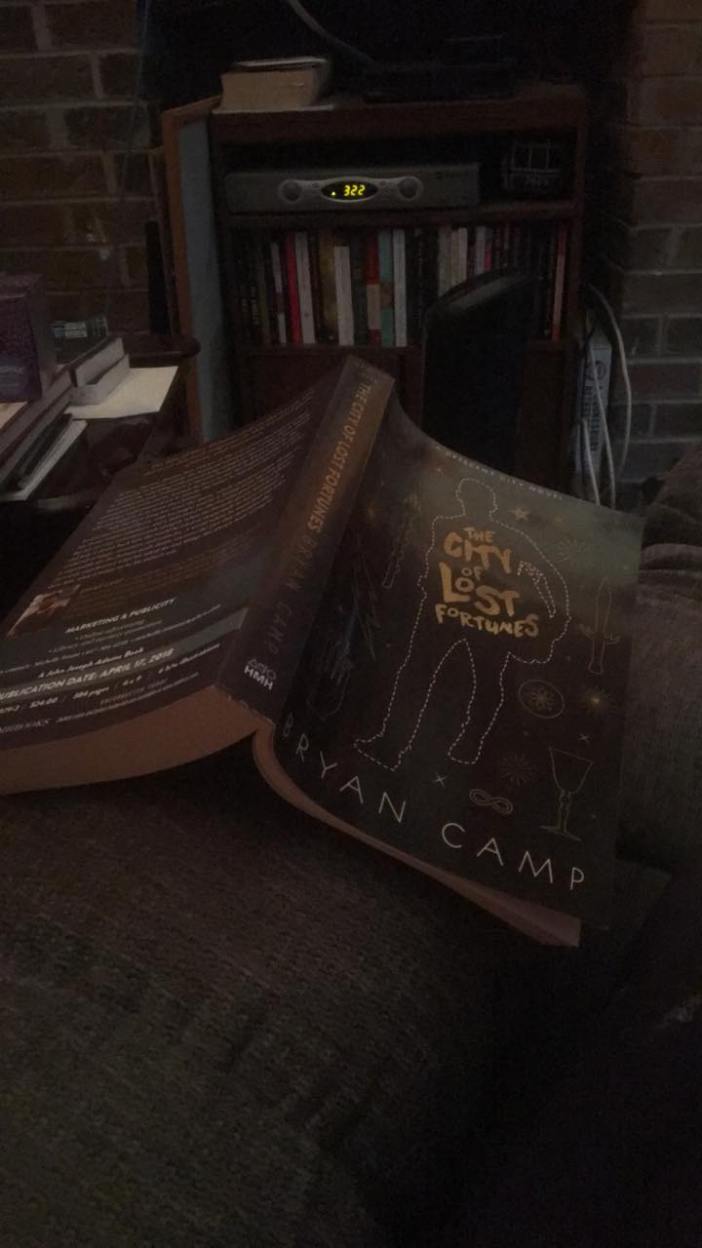
I’ve almost finished Ronson’s So You’ve Been Publicly Shamed, which I am finding to be fascinating. I also started reading Bryan Camp’s The City of Lost Fortunes, which I am also really enjoying. It’s smart, well-written, and interesting. A rather impressive debut.

29745013_10157444118224012_5732163382933471268_o

I also read some short stories. I actually finished the Kinsey stories in Sue Grafton’s collection Kinsey and Me–there are some other stories and an essay in the book, but I’m not finding it pressing to get to them or read them. I greatly enjoyed reading the Kinsey short stories, and they actually inspired me to try writing private eye short stories; these two Chanse stories I am struggling with wouldn’t have even occurred to me had I not read the Kinsey stories, along with the Ross Macdonald Lew Archer stories and Laura Lippman’s Tess Monaghan stories. The first of these last Kinsey stories was “A Little Missionary Work”:

Sometimes you have to take on a job that constitutes pure missionary work. You accept an assignment not for pay, or for any hope of tangible reward, but simply to help another human being in distress. My name is Kinsey Millhone. I’m a licensed private eye, in business for myself, so I can’t really afford professional charity, but now and then somebody gets into trouble and I just can’t turn my back.

I was standing in line one Friday at the bank, waiting to make a deposit. It was almost lunchtime and there were eleven people in front of me, so I had some time to kill, As usual, in the teller’s line, I was thinking about Harry Hovey, my bank-robber friend, who’d once been arrested for holding up this very branch. I’d met him while I was investigating a bad-check case. He was introduced to me by another crook as an official “expert” and ended up giving me a crash course in the methods and practices of passing bad paper.

And the second was “The Lying Game” :

This is my definition of misery. Pitch-black night. Cold. Hunger. Me in the wilderness…well, okay, a California state park, but the effect is the same. I was crouched in the bushes, peering at a camp-site where identical twin brothers, alleged murderers, were rustling up supper: biscuits and a skillet full of eggs fried in bacon grease. The only bright note in all of this was my Lands’ End Thermolite Micro insulation. On a whim, I’d ordered the parka from a Lands’ End catalog, little knowing that within weeks I’d be huddled in the woods, spying on fellows who cooked better than I did.

Both stories are satisfying reads–the second is only a few pages long, and very clearly a riff on the Menendez brothers–and move quickly. Grafton knew Kinsey’s voice and there was never a misstep in any of the novels or the short stories; which is, I think, part of what made reading the stories so enjoyable. I’ve always loved that character, and loved the way Grafton wrote her; it’s sad to think there won’t be any more Kinsey novels. I’ve been hoarding the last few, wondering what she was going to do when she finished the alphabet; sadly, she didn’t, and I know when I finish the series I will be done with Kinsey. That kind of makes me sad.

And now, back to the spice mines.

The Heat Is On

Ash Wednesday, and Valentine’s Day, to boot.

Another Carnival is in the books, and a good time was had by all. We didn’t do as much parading as we usually do; me being in Alabama for the first weekend had a lot to do with that, and I was a lot more tired, physically, than I usually am during parade season. I suspect I am getting to that sad place in life where I am too old to handle the walk to and from the office all of those days in a row. I am, however, going to continue with my new workout routine and hopefully that will make a difference the next time Carnival rolls around.

Fingers crossed, at any rate.

Today an anthology I contributed a story to drops; The Trouble with Cupid. I was very happy and thrilled to be asked to contribute a story–I always am thrilled and happy when I’m asked to contribute to anything, frankly–but therein lay a conundrum for me: what would I write about? I still struggle to write crime short stories, and this call was for romantic suspense, or some combination of romance and crime, possibly; and I was frankly absolutely clueless what to write or how to go about writing something.

So, I decided instead to write a sequel to my story “Everyone Says I’ll Forget In Time,” which I wrote a long time for the Fool for Love anthology, edited by R. D. Cochrane and Timothy J. Lambert. In that story, Terry, my main character, was still coming to terms with the death of his partner; his best friends have decided it’s time for him to move on and set him up with a sort-of-blind-date thing; and the blind date turns out to be a guy he had a crush on before; that he met when he and his partner had briefly separated during a rough patch. I’d always wanted to do a sequel to the story, and even had the title picked out: “Passin’ Time,” which is a phrase we here in New Orleans use to describe waiting when you have no other choice; it’s most frequently used to talk about waiting for a parade during Carnival; what we do on the street while waiting for a parade to show up is passin’ time.

the trouble with cupid -%0D%0A final2.jpg

I OPENED THE front door and Trouble wasn’t there.

The food bowl I’d set out for him was empty. The water bowl was upside down next to the cement step. He had a habit of doing that, I’d noticed. I wasn’t sure why, but it was just one of his quirks. I picked it up and walked it over to the sink and refilled it. I set it down and sat down on the step, looking around. This was the first morning since he’d shown up that he wasn’t out there, waiting for me with his eager eyes and twitching black tail.

And it made me sad.

You need a pet of your own, I said to myself, looking up at the blue sky. It was a gorgeous morning, not even ten yet, and already warm. The ladies of Iris and the gentlemen of Tucks had lucked out this fine Saturday before Fat Tuesday. Fat Tuesday was early this year, so I’d worried my favorite parade day might be cold—or worse, rainy. There had been a downpour on Iris Saturday a few years earlier, but the parades still rolled—the floats speeding past at breakneck speed, the marching bands and dance groups sitting out the parades—and I’d stood out there, soaked through and having the best time, even if my glasses were covered with beads of water and it was also cold out there. It had taken me a while to warm up again after that, curled up on my loveseat under woolen blankets and drinking hot chocolate spiked with peppermint Schnapps while I watched Endymion roll through mid-city on television.

Endymion.

I hadn’t been to Endymion since Paul died.

Trouble is a crime-solving black cat, I should probably add; Carolyn Haines has gathered an extraordinary group of writers together to write a series of books about Trouble; I hung out with the Mad Catters in Alabama at Murder in the Magic City and Murder on the Menu, and even agreed to try my hand at writing a Trouble book, when I have the time. Every story in the anthology had to include Trouble (hence the title The Trouble with Cupid), and all proceeds from the book are going to the Best Friends Animal Sanctuary; if you know Carolyn, you also know she’s all about helping the animals, and I can certainly get behind that–given that we have somehow wound up with five outdoor cats and one indoor rescue.

I hope you’ll check out the anthology, Constant Reader, and I also hope you like my story.


I Want to Know What Love Is

It’s been raining pretty much most of the weekend, which is fine. I went to get groceries, pick up a prescription, and get the mail before getting home and starting to work on the mess that is my home; I also finished writing a chapter of one manuscript and started writing another–which was my writing goal for yesterday. Today’s is to do second drafts of two short stories to prepare them for submission. I also have to go to the gym and finish the cleaning of the apartment and organizing my office. I started reading the big y/a best seller One of Us Is Lying by Karen McManus yesterday; I can see why it’s a bestseller and I can also see why it’s being developed into a television series a la Thirteen Reasons Why; it’s a deceptively simple yet surprisingly complex story, and likewise–well, I’ll talk some more about it once I’ve finished.

I’m enjoying writing again for the first time in years, which is a good thing, and I am actually putting a lot of thought and planning into what I’m writing, which is a really good thing. What I’ve written over the last six or seven years has been a lot more organic, coming to me as I wrote it from a basic premise and perhaps knowing what the end was; without putting near as much thought into theme and what I am trying to say, what I am trying to explore with the story, than I used to–I mean, it worked, but it also made the work a lot harder than it needed to be. I think this is particularly true of short stories; I think that’s primarily what I’ve been doing wrong in writing them–my entire approach to short stories has been wrong, and I’ve been, as I said, making it a lot harder on myself than it necessarily needs to be.

Which is, sadly, what I always tend to do for myself: make things harder than they need to be.

Heavy heaving sigh.

In addition to cleaning and everything else I did yesterday, I also managed to start watching Season 2 of Black Sails, which continues to enthrall. I am still liking the idea of finally writing my pirate novel (Cutlass), but not as much as before; it remains one of those dreams that I hold on to for when I am making a living as a writer again and able to not have a day job any longer. (There are several of those; they also require not only making a living but making enough money to travel and do research.)

Some day. I never give up on the dream.

The Short Story Project also continues; yesterday I read a story by Ross MacDonald from The Archer Files and one by Karl Edward Wagner from the gorgeous two volume collection The Best Horror Stories of Karl Edward Wagner, produced by Centipede Press maybe seven or eight years ago.

MacDonald’s story, “The Bearded Lady,” was quite good, as everything written by MacDonald is.

The unlatched door swung inward when I knocked. I walked into the studio, which was high and dim as a hayloft. The big north window in the opposite wall was hung with monkscloth draperies that shut out the morning light. I found the switch beside the door and snapped it on. Several fluorescent tubes suspended from the naked rafters flickered and burned blue-white.

A strange woman faced me under the cruel light. She was only a  charcoal sketch on an easel, but she gave me a chill. Her nude body, posed casually on a chair, was slim and round and pleasant to look at. Her face wasn’t pleasant at all. Bushy black eyebrows almost hid her eyes. A walrus mustache bracketed her mouth, and a thick beard fanned down over her torso.

The door creaked behind me. The girl who appeared in the doorway wore a starched white uniform. Her face had a little starch in it, too, though not enough to spoil her good looks entirely. Her black hair was drawn back severely from her forehead.

Lew Archer, on his way from Los Angeles to San Francisco, decided to stop in the small town of San Marcos and look up an old army buddy, inadvertently stumbling into a murder case. The story is interesting, the writing whipcrack smart, with MacDonald’s trademark, cynical short paragraphs immediately getting to the essence of a character. Don’t we, as readers, already have a strong impression of who that young woman is as a person after those three sentences? I’ve often wondered how one solves a murder in a short story–or writes a detective short story. I’ve tried and failed often enough. But the great thing about the Short Story Project is I am starting to understand how to write them, how they work, and how to make them work; which is a lovely thing. I have several ideas for Chanse short stories that I’ve never written because I didn’t know how; now I rather do, or at least have an idea, thanks to The Archer Files and Kinsey and Me (Sue Grafton). Both books are great learning tools for people who want to write detective stories, and MacDonald’s influence on Grafton is clear. (Although I’d still love to see someone do an essay, or book of criticism, comparing and contrasting MacDonald’s work with that of his wife: The Murderous Millars would be a great title.) MacDonald’s stories usually have to do with damaged and dysfunctional families; “The Bearded Lady” is another one of those, and is very well done. I highly recommend it.

The Wagner story I read was from the second volume of he Best Horror Stories of Karl Edward Wagner, which was titled Walk on the Wild Side, and was titled “The Last Wolf.”

The last writer sat alone in his study.

There was a knock at his door.

But it was only his agent. A tired, weathered old man like himself. It seemed not long ago that he had thought the man quite young.

“I phoned you I was coming,” explained his agent, as if to apologize for the writer’s surprised greeting.

Of course…he had forgotten. He concealed the vague annoyance he felt at being interrupted at his work.

Nervously the agent entered his study. He gripped his attache case firmly before him, thrusting it into the room as if it were a shield against the perilously stacked shelves and shelves of musty books. Clearing a drift of worn volumes from the cracked leather couch, he seated himself amidst a puff of dust from the ancient cushions.

I received both volumes of Wagner when I was judging the Bram Stoker Award for Best Single Author Collection, or whatever it is called; it was so long ago that I don’t even recall who the finalists were or who actually won. My memory is perforated like Swiss cheese nowadays, with holes and gaps; it also works like a sieve as new knowledge, and new books I’ve read, tend to pass through it without catching hold (I used to be able to name every book I’ve read, the plot, the main characters–and even some of the minor; over the years that ability has been sadly lost to time). I don’t, for example, remember the titles or the contents of the Wagner stories I read; but the books are beautiful volumes and I remember being impressed by his writing, so I kept them on my shelves. It was only a week or so ago that I realized, that I remembered, them; and that they might make a good addition to my year-long study of short fiction.

I’ve often said that writing about writers, about the business of writing and publishing, sometimes (often) feels masturbatory to me; only other writers would be interested in such a story. And yet writers pop up in my work all the time; Paige is a journalist and wannabe novelist in the Chanse series (and now that I’ve retired that series she’s migrated, apparently, over to the Scotty); another writer character I’ve created has appeared in several novels of mine–one Scotty, The Orion Mask, and one pseudonymous; he also appears to be the voice I used in several first-person short stories, including “An Arrow for Sebastian.” I have another such short story in process; I’ve not quite worked out how to make the story work, but there you have it. I was tempted to write an entire series about a writer, but as I started to develop my gay male writer character more I soon realized I had turned him into a hybrid of Scotty and Chanse; there was nothing new or original about him other than he was a writer and not a private eye. (I really do want to reread Azimov’s Murder at the ABA, though, and Elizabeth Peter’s brilliant Die for Love and Naked Once More.)

“The Last Wolf” is also about a writer, a writer who firmly believes in himself and his work, and that his work is art, and art should never be compromised for commerce. The world in which he lives is one where he is the last (apparently) person attempting to still write fiction; novels have fallen by the wayside and short stories are no longer published; the world has completely changed and his agent wants him to try to write for television shows–which, as described, sound horrifically awful. The writer refuses, the agent leaves, and he goes back to his typewriter. This story could easily be seen as angry, or even whiny; in the hands of a lesser author, the story would be precisely that. But Wagner paints a picture with his words, and maybe it resonated with me more because I am an author myself, but the sympathy rests entirely with the author. (Although I am one of those whose eyes roll so hard that  they almost unscrew when I hear another author speak of their ‘art’; but that’s a topic for another day.) I am looking forward to digging back into Wagner’s work again this year.

And now, I need to file and organize, perhaps vacuum, before I head to the gum. I want to get some things written today, and I need to revise those stories.

Hello, spice mines.

Sigh.

26196451_321860411641954_3040436925599999815_n

Magic

Congratulations, everyone!!!

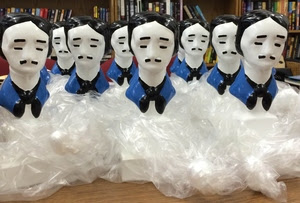
Edgar Statues

January 19, 2018, New York, NY – Mystery Writers of America is proud to announce, as we celebrate the 209th anniversary of the birth of Edgar Allan Poe, the Nominees for the 2018 Edgar Allan Poe Awards, honoring the best in mystery fiction, non-fiction and television published or produced in 2017. The Edgar® Awards will be presented to the winners at our 72nd Gala Banquet, April 26, 2018 at the Grand Hyatt Hotel, New York City.

BEST NOVEL

The Dime by Kathleen Kent (Hachette Book Group – Little, Brown & Co./Mulholland Books)
Prussian Blue by Philip Kerr (Penguin Random House – G.P. Putnam’s Sons)
Bluebird, Bluebird by Attica Locke (Hachette Book Group – Little, Brown & Co./Mulholland Books)
A Rising Man by Abir Mukherjee (Pegasus Books)
The Twelve Lives of Samuel Hawley by Hannah Tinti (Penguin Random House – The Dial Press)

BEST FIRST NOVEL BY AN AMERICAN AUTHOR

She Rides Shotgun by Jordan Harper (HarperCollins – Ecco)
Dark Chapter by Winnie M. Li (Polis Books)
Lola by Melissa Scrivner Love (Penguin Random House – Crown)
Tornado Weather by Deborah E. Kennedy (Macmillan – Flatiron Books)
Idaho by Emily Ruskovich (Random House)

BEST PAPERBACK ORIGINAL

In Farleigh Field by Rhys Bowen (Amazon Publishing – Thomas & Mercer)
Ragged Lake by Ron Corbett (ECW Press)
Black Fall by Andrew Mayne (HarperCollins Publishers – Harper Paperbacks)
The Unseeing by Anna Mazzola (Sourcebooks – Sourcebooks Landmark)
Penance by Kanae Minato (Hachette Book Group – Little, Brown & Co./Mulholland Books)
The Rules of Backyard Cricket by Jock Serong (Text Publishing)

BEST FACT CRIME

Killers of the Flower Moon: The Osage Murders and the Birth of the FBI by David Grann (Penguin Random House – Doubleday)
The Road to Jonestown: Jim Jones and Peoples Temple by Jeff Guinn (Simon & Schuster)
American Fire: Love, Arson, and Life in a Vanishing Land by Monica Hesse (W.W. Norton & Company – Liveright)
The Man From the Train: The Solving of a Century-Old Serial Killer Mystery by Bill and Rachel McCarthy James (Simon & Schuster – Scribner)
Mrs. Sherlock Holmes: The True Story of New York City’s Greatest Female Detective and the 1917 Missing Girl Case that Captivated a Nation by Brad Ricca (St. Martin’s Press)

BEST CRITICAL/BIOGRAPHICAL

From Holmes to Sherlock: The Story of the Men and Women who Created an Icon by Mattias Bostrom (Grove/Atlantic – The Mysterious Press)
Manderley Forever: A Biography of Daphne du Maurier by Tatiana de Rosnay (St. Martin’s Press)
Murder in the Closet: Essays on Queer Clues in Crime Fiction Before Stonewall by Curtis Evans (McFarland Publishing)
Chester B. Himes: A Biography by Lawrence P. Jackson (W.W. Norton & Company)
Arthur and Sherlock: Conan Doyle and the Creation of Holmes by Michael Sims (Bloomsbury USA)

BEST SHORT STORY

“Spring Break” – New Haven Noir by John Crowley (Akashic Books)
“Hard to Get” – Ellery Queen Mystery Magazine by Jeffery Deaver (Dell Magazines)
“Ace in the Hole” – Montana Noir by Eric Heidle (Akashic Books)
“A Moment of Clarity at the Waffle House” – Atlanta Noir by Kenji Jasper (Akashic Books)
“Chin Yong-Yun Stays at Home” – Alfred Hitchcock Mystery Magazine by S.J. Rozan (Dell Magazines)

BEST JUVENILE

Audacity Jones Steals the Show by Kirby Larson (Scholastic – Scholastic Press)
Vanished! By James Ponti (Simon & Schuster – Aladdin)
The Assassin’s Curse by Kevin Sands (Simon & Schuster – Aladdin)
First Class Murder by Robin Stevens (Simon & Schuster – Simon & Schuster BFYR)
NewsPrints by Ru Xu (Scholastic – Graphix)

BEST YOUNG ADULT

The Cruelty by Scott Bergstrom (Macmillan Children’s Publishing Group – Feiwel & Friends)
Grit by Gillian French (HarperCollins Publishers – HarperTeen)
The Impossible Fortress by Jason Rekulak (Simon & Schuster)
Long Way Down by Jason Reynolds (Simon & Schuster – Atheneum Books for Young Readers)
The Hate U Give by Angie Thomas (HarperCollins Publishers – Balzer + Bray)

BEST TELEVISION EPISODE TELEPLAY

“Episode 1” – The Loch, Teleplay by Stephen Brady (Acorn TV)
“Something Happened” – Law and Order: SVU, Teleplay by Michael Chernuchin (NBC Universal/Wolf Entertainment)
“Somebody to Love” – Fargo, Teleplay by Noah Hawley (FX Networks/MGM)
“Gently and the New Age” – George Gently, Teleplay by Robert Murphy (Acorn TV)
“The Blanket Mire” – Vera, Teleplay by Paul Matthew Thompson & Martha Hillier (Acorn TV)

ROBERT L. FISH MEMORIAL AWARD

“The Queen of Secrets” – New Haven Noir by Lisa D. Gray (Akashic Books)

GRAND MASTER

Jane Langton
William Link
Peter Lovesey

RAVEN AWARD

Kristopher Zgorski, BOLO Books
The Raven Bookstore, Lawrence Kansas

ELLERY QUEEN AWARD

Robert Pépin

* * * * * *

THE SIMON & SCHUSTER MARY HIGGINS CLARK AWARD

The Vineyard Victims by Ellen Crosby (Minotaur)
You’ll Never Know Dear by Hallie Ephron (HarperCollins – William Morrow)
The Widow’s House by Carol Goodman (HarperCollins – William Morrow Paperbacks)
Uncorking a Lie by Nadine Nettmann (Llewellyn Worldwide – Midnight Ink)
The Day I Died by Lori Rader-Day (HarperCollins – William Morrow Paperbacks)

# # #
The EDGAR (and logo) are Registered in the U.S. Patent and Trademark Office by the Mystery Writers of America, Inc.


Church of the Poison Mind

Sue Grafton very famously said that if you want something, you have to voice that desire out loud; say it to someone.

It’s very strange; we are often taught–at least I was–that ambition in slight moderation is a good thing, but over-weaning ambition is a bad thing. I was taught that bragging is unbecoming; because if you truly did something well or a great job at something, you wouldn’t need to boast, would you? This was drilled into my head for as long as I can remember: you get complimented, you don’t brag, and if you do get complimented, you are gracious and self-deprecating.

This is so deeply ingrained in me that it is very hard for me to be ambitious, or share my ambitions with anyone; it’s hard for me to take pride in what I’ve accomplished; and I always look for a way to turn any compliment into a “if I can do it, anyone can” kind of thing.

Another friend of mine thinks daily affirmations is also a way to get what you want; if you say what you want out loud to your mirror (or your computer, whatever), you can create the kind of mindset that will help you attain your goals. I wrote some out last year, at the beginning of the year, but after a few weeks I started feeling self-conscious about doing it, kind of silly, and I stopped.

Self-defeating, isn’t it?

So, in the interests of breaking this cycle, and of getting better at taking compliments and believing more in myself, here are some goals I want to achieve:

I will take my career to go to the next level.

I will get an agent.

I will write reviews for the New York Times.

I will sell short stories to high paying markets.

I will get a story selected for the Best American Mystery Short Stories series.

I will get a short story published as part of the Bibliophile series.

I will win a major writing award.

Whew. I already feel like writing all the down is going to jinx me in some way. NO NEGATIVITY NO NEGATIVE THOUGHTS.

So, there’s that. I’ve also made some great progress on the Short Story Project, including “Dear Penthouse Forum (A First Draft” and “The Babysitter’s Code.”

You won’t believe this, but this really did happen to  me just last fall, and all because I was five minutes late, which seemed like a tragedy at the time. “It’s only five minutes,” that’s what I kept telling the woman behind the counter, who couldn’t be bothered to raise her gaze from her computer screen and make eye contact with me. Which is too bad, because I don’t need much to be charming, but I need something to work with. Why did they make so many keystrokes, anyway, these ticket clerks? What’s in the computer that makes them frown so? I had the printout for my e-ticket, and I kept shoving it across the counter, and she kept pushing it back to me with the tip of a pen, the way I used to with my roommate Bruce’s dirty underwear, when we were in college. I’d rounded it up with a hockey stick and stashed it in the corner, just to make a pathway through our dorm room. Bruce was a goddamn slob.

“I’m sorry,” she said, stabbing that one key over and over. “There’s just nothing I can do for you tonight.”

And so begins yet another delightful Laura Lippman story, only written in the style of a letter to Penthouse Forum. That premise, very clever in and of itself, also makes the story a bit of a time capsule; does Penthouse and it’s sister digest of letters, Penthouse Forum Letters, even exist anymore? How long before no one even remembers their existence anymore? And why did I not ever try to write them? It was good money. But I am digressing. This clever story goes on to have our main character trapped in the Baltimore airport overnight; unable to swing the money for an airport hotel or can back to his apartment, and then a beautiful woman in her thirties shows up to not only save the day for him, but to entice him with the possibility of incredible, strings-free sex. (Which was pretty much the theme of every letter to Penthouse Forum; there were erotic flash fiction.) But being a Lippman story, there’s more going on than just incredible, no strings attached sex, and when the story turns, it’s unexpected and quite delightful.

This second story from Hardly Knew Her, “The Babysitter’s Code,” was originally published in Plots with Guns in 2005; and this is the period when Lippman moved from her delightful Tess Monaghan series (which I should reread) to writing her stand-alone thrillers; or literary fiction about crime, which is what they really should be described as. That broadening of her scope, and stretching of her talents, is very clear in this story.

The rules, the real ones, have seldom been written down, yet every girl knows them. (The boys who babysit don’t, by the way. They eat too much, they leave messes, they break vases while roughhousing with the kids, but the children adore the boys who babysit, so they still get invited back.) The rules are intuitive, as are most things governing the behavior of teenage girls. Your boyfriend may visit unless it’s explicitly forbidden, but the master bedroom is always off-limits, just as it would be in your own house. Eat what you like, but never break the seal on any bag or box. Whatever you do, try to erase any evidence of your presence in the house by evening’s end. The only visible proof of your existence should be a small dent on a sofa cushion, preferably at the far end, as if you were too polite to stretch across its entire length. No parent should come home and peer into the Pringles can–or the Snackwell’s box or the glass jar of the children’s rationed Halloween candy–and marvel at your capacity. There is nothing ruder that a few crumbs of chips at the bottom of a bag, rolled and fastened with one of those paper clips, or a single Mint Milano resting in the last paper cup.

This story is more of a character examination than an actual story, and it’s also slightly reminiscent of Raymond Carver’s “Neighbors,” and talks about an essential truth we all tend to really ignore: when someone is alone in our homes, whether they are watching our children or pet-sitting or cleaning, they are privy to our secrets. And this house has plenty of secrets, in this affluent suburb of Baltimore; secrets that are too hard for our young babysitter to resist, as she snoops through the lady of the house’s closet and underwear drawers, and observes the crumbling marriage of the wealthy homeowner, his much younger trophy wife, and their genetically damaged baby. This story is both wistful and sad, more so than suspenseful, although the fear of being caught is always there. It’s also a very insightful look at how a teenage girl’s mind works. Brava, Ms. Lippman, brava.

I also discovered a volume I’d forgotten, and was very excited to rediscover. I’d forgotten that one year Sue Grafton skipped a book in the Alphabet Series and instead published a short story collection, Kinsey and Me, and I am really looking forward to diving into it. Yay!

I am really enjoying the Short Story Project of 2018.

Here’s a hunk for you.

47e2523bc858fca1cffee55a6058b425--sexy-guys-sexy-men

Give It Up

It rained overnight, and is still damp and gloomy this morning. There really is nothing like sleeping during a downpour, is there, the constant strumming of the rain, the comfort and warmth of the mattress and under the blankets, is there?

Yesterday was a crazy busy day for one Gregalicious, who got up in the morning and did some work, cleaned, and then walked to Comic Con for a signing and a panel. The signing was fun, and the panel discussion about creativity and creativity triggers was also a lot of fun; as exhausting and draining as it is to do public appearances, I also always somehow forget, in the nervousness and terror of having to speak in front of a room full of people, how much I actually enjoy talking about writing and creativity. So, there’s that. I then came home, watched the ice dance final at US Nationals, and then the Saints play-off game, which was a nail-biter down to the very last play of the game (GEAUX SAINTS!). We stayed up and watched the Golden Globes before going to bed; I also managed to get some brainstorming done in my journal, and I also read a short story, to keep the Short Story Project going.

One of the truly fun things about the panel was that Tom Cook was on it. Tom was an animator/director for Hanna-Barbera in the late 1960’s/1970’s, and of course, one of the shows he worked on was Scooby Doo Where Are You, which tremendously influenced me in the direction of mysteries and crime when I was a kid. So meeting Tom, and thanking him for the influence, was kind of a thrill for the weekend for me. I am starting to feel energized about writing again, which is very cool.

The short story I read was “East Wind,” from Daphne du Maurier’s The Doll and Other Lost Stories.

the doll

Nearly a hundred miles west of the Scillies, far from the main track of ships, lies the small, rocky island of St. Hilda’s. Only a few miles square, it is a barren, rugged place, with great jagged cliffs that run deep into deep water. The harbour is hardly more than a creek, and the entrance like a black hole cut out of the rock. The island rises out of the sea a queer, misshapen crag, splendid inits desolation, with a grey face lifted to the four winds. It might have been thrown up from the depths of the Atlantic in a moment of great unrest, and set there, a small defiant piece of land, to withstand forever that anger of the sea Over a century ago few knew of its existence, and the many sailors who saw its black outline on the horizon imagined it to be little more than a solitary rock, standing like a sentinel in mid-ocean.

“East Wind” is an early du Maurier tale, from early in her career (which people seem to want to divide into ‘pre’ and ‘post’ Rebecca); and in some ways the inexperience shows. The story is, as so many of her later stories are, very matter-of-fact; simply told with a move this  to that to the other; unemotional and simple. However, what is actually missing from this story that shows up in her later stories are layers of detail and complexity; stories like “Don’t Look Now” and “The Birds” have so many layers to burrow through, so much detail, and so much creepy, quiet horror that they continue to haunt the reader once the story is told. “East Wind” is an equally unpleasant tale, but doesn’t have the impact of the later stories in its telling.

As I started reading it, it reminded me of one of my favorite Stephen King stories, “The Reach”, which was the final story I think in Skeleton Crew, and was originally called “Do the Dead Sing?”, which is, in my opinion, a far superior title. That story was from the point of view of an old woman, dying in her bed on a cold, blustery winter night, and remembering something that happened many years ago–while also hearing her beloved dead one’s calling to her to join them. The story was brilliant and beautiful and haunting, and as I said, remains one of my favorite King stories to this day.

The du Maurier tale is similar in that it is about a remote island, where the inhabitants have very little contact with the outside world and because of a limited pool, have become more than a little inbred. The east wind of the title is brutal, blasting away at the little island and making the seas rough, so a brig of foreign sailors is forced to take shelter in the harbor, foreigners who don’s speak the same language. These exotic to the islanders strangers have an odd impact on the islanders, who become intoxicated in the strangeness and newness of this experience, which eventually leads to seduction and murder, changing and scarring the island forever; and of course, once this has happened and the east wind stops blowing, they get back in their ship and sail away because, of course, it was nothing to them. This is, of course, a terrific theme that du Maurier returns to again and again in her work; the dionysian influence of an outside force that causes trouble and then moves on without a care, leaving damage in its wake. The story itself, which is short and unemotional, is important as an early work because the reader, the duMaurier afficionado, can see how she developed themes she used extensively in her later career; her fascination with the concept of the unfeeling outside force on ordinary people’s lives, and the disruption such an influence can cause.

And now, back to the spice mines.

Love is a Battlefield

Yesterday I made an attempt to run errands; but after I went to the bank I felt dizzy and nauseous, so skipped the grocery store and came home. I spent the rest of the day alternating between fevers and normal, and so on, so I simply parked myself in my easy chair with a book, a blanket, and a cat. I finished reading Joan Didion’s A Book of Common Prayer, which was extraordinary, and started another that I’m not too wild about. I also started watching a documentary of the history of the Papacy on Prime, which conveniently now has an app for AppleTV. I shall continue to try to read the book I’m not wild about, but it may not survive the fifty-page rule. Harsh, I know, but I have a lot of books to read.

I am hoping that I am in the last stage of this illness; I am still coughing so hard that my lungs and diaphragm hurt, and right now my eyes are kind of warm, but I think I am going to be able to hang with a quick (ha!) trip to get groceries and then spending the rest of the day curled up underneath a blanket with a book. My kitchen of course is a disaster area, but I feel confident that I’ll be able to get it cleaned up today as well. This is a big transition from yesterday, I might add, when I felt like a limp dishrag for most of the day.

Hope springs eternal.

In other exciting news, I’ll be signing and speaking on two panels at Comic Con in New Orleans in two weeks. Huzzah! Of course, this appearance is contingent on my living that long; which is a moment by moment thing. I am feeling odd again right now; not sure what that’s about, or even how to describe it, but I guess the easiest way to sum it up in one word is fuzzy; like I am out of my body and observing but not participating. It’s unnerving, and it definitely needs to stop.

All right, I think I might need to lie down again. Heavy sigh.

18953035_10213420277288443_320740805906235544_n

Islands in the Stream

I am officially on Christmas vacation! It’s only four and a half days, but I will take it, thank you very much. I am still not at 100%, but today is much better than the nadir of Wednesday, and even yesterday. My throat is raw and my chest still hurts from coughing so hard, but I am down to DayQuil, cough drops, and the occasional tablespoon of honey. I had planned originally to get a lot done today; and I still might try. I am a bit foggy right now, but then I’ve only been up for about an hour thus far. I think the worst part of this illness has been the utter exhaustion. Yesterday was the worst on the score; I was so tired everything ached.

And to add insult to injury, I’ve gained two pounds this week. Where is the justice in THAT?

I’ll tell you where: nowhere.

I am over halfway through with Joan Didion’s A Book of Common Prayer, and it is really quite marvelous. I tend to shy away from literary fiction, as a general rule, but this is not only gorgeously written but it’s telling an interesting story as well. That’s my primary complaint with literary fiction; if the story isn’t interesting the writing has to be beautiful, and so often it isn’t. I’ve never really understood the cults of writers like William Styron, Philip Roth, Jonathan Franzen; I’ve read their books and not been overly impressed with them. (Although they all have their moments.) But I generally simply say “I guess I’m just not smart enough to understand or appreciate their brilliance” and end the conversation there. I guess I’m just not a fan of the “plight of the straight white male” school of literature.

All right, I’m feeling a wave of illness coming on, so I am going to retire my easy chair with the book.

17798925_1312229192158475_4033782346156936879_n

Let the Music Play

I had already decided to make January a theme month on the blog, and to once again make it Short Story Month, with the goal to read a short story every day. As such, I was looking around the shelves of the Lost Apartment for anthologies and single-author collections, and it occurred to me that I have a book at the office that would be absolutely pitch-perfect for this: The Best American Noir of the 20th Century, edited by James Ellroy and Otto Penzler. It’s a gorgeous volume; absolutely beautiful, and it’s also signed by Otto. I must have picked it up one year at the MWA Board event at the Mysterious Bookshop. But it literally is a time capsule of great noir stories, going back to 1923, and what better education in not only short stories, but noir, than to read this marvelous collection, one story at a time, day by day?

I’ve also ordered Lawrence Block’s latest anthology of crime stories inspired by pictures, Alive in Shape and Color.  I may have to extend Short Story Month to Short Story Quarter, and read a story a day until April. Which really isn’t a bad idea, frankly. This is also the period where I’ll be putting together Sunny Places Shady People, the St. Petersburg Bouchercon anthology, so reading short stories should be a priority, don’t you think?

I certainly do.

I also finished reading Krysten Ritter’s Bonfire last night–Paul was at a play.

bonfire'.jpeg

 State Highway 59 becomes Plantation Road two miles after the exit for Barrens. The old wooden sign is easy to miss, even among the colorless surroundings. For years now, on road trips from Chicago to New York, I’ve been able to pass on by without any anxiety. Hold my breath, count to five. Exhale. Leave Barrens safely behind, no old shadows running out of the dark woods to strangle me.

That’s a game I used to play as a kid. Whenever I would get scared or have to go down to the old backyard shed in the dark, as long as I held my breath, no monsters or ax murderers or deformed figures from horror movies would be able to get me. I would hold my breath and run full speed until my lungs were bursting and I was safe in the house with the door closed behind me. I even taught Kaycee this game back when we were kids, before we started hating each other.

It’s embarrassing, but I still do it. And the thing is, it works.

Most of the time.

Alone, locked in a gas station bathroom, I scrub my hands until the skin cracks and a tiny trickle of blood runs down the drain. It’s the third time I’ve washed my hands since I crossed the border into Indiana. In the dinged mirror over the sink, my face looks pale and warped, and the memories of Barrens bloom again like toxic flowers.

This was a bad idea.

The trauma that is high school is something that many of us apparently never get over, and it’s certainly becoming a crime fiction trope. But this isn’t a bad thing. As I said, almost all of us have traumatic memories of high school, and therefore can relate to the characters and the stories in these types of books. Hell, I’ve drawn from my own high school traumas enough times in my own work to recognize it as a trope of my own (Sara, Lake Thirteen, and both Chanse and Scotty have moments of reflection on their own past that are directly drawn from mine).

Bonfire is a compelling read, and very well written. Abby Williams, our main character who is telling the story in a first-person point of view, fled her hometown of Barrens after a traumatic childhood that included the painful death of her mother from cancer, her father’s religious mania and the resultant brutal parenting that came from it, being not popular, and having her best, childhood friend, Kaycee Mitchell, turn on her and terrorize her with a group of mean girl new friends. But towards the end of their senior year, Kaycee and her friends all became ill–with very odd and strange symptoms. It turned out they were faking it, and Kaycee disappeared. Now, there are some complaints about the factory near town, Optimal Plastics, that has revitalized the dying town but may possibly be poisoning it. Abby, now an environmental lawyer for a non-profit firm that handles such cases, is leading the investigative team and thus has to come back to Barrens to not only run this investigation but deal with her own demons. But are her theories and investigation tainted by her past, and her relationships with people from when she as a child? And why is she so obsessed with the missing Kaycee–whatever happened to her? Was she really faking it, or were the girls really sick? And what the hell is going on in Barrens?

Obviously, the sickness of the girls reminded me a lot of Megan Abbott’s brilliant The Fever from a few years ago; which was based on an actual case. And Ritter’s debut novel is crisply written, with a powerful sense of scene, character and plot that continues to build until it comes to its conclusion. I really enjoyed the book tremendously, and resented not having the time to actually sit down and read it through; I did manage to do so last night while Paul was at a play. It’s probably one of my favorite reads from the year, and I highly recommend it. Well done, Ms. Ritter.

And now back to the spice mines.

Tonight, I Celebrate My Love

Thursday. The weekend is nigh, and Paul and I are considering going to see It at long last, as there is no LSU game on Saturday. I also am going to Costco, and want to make it to the gym to do some detestable cardio. But I will also do some stretching, so there’s that. I really need to start getting into a regular habit of going again. I always feels so much better after I work out…you’d think that would be enough motivation to go, you know?

But you would be wrong.

I also am looking forward to getting back into my reread of The Haunting of Hill House, which blows me away on every reread. October is almost over, and so my concentration on just reading horror will come to an end with October 31st; I will go on to End of Watch by Stephen King when I finish this reread, and then I’m going to dig into all the ARCs and advance copies I got at Bouchercon, which is terribly exciting. Laura Lippman, Alison Gaylin, Ivy Pochoda, and Adam Sternburgh! My new Donna Andrews, The Finch Who Stole Christmas, also arrived yesterday, which is terribly exciting. I have a lot of great reading in store.

I worked on revising the new Scotty a bit yesterday, and was terribly pleased to discover that what I’d already written wasn’t, in fact, a steaming pile of crap like I thought it was. Distance does, in fact, help. So I am going to try to get those initial chapters all revised by Sunday before putting it aside again and diving back into the WIP, for it’s last tweaks. I’m feeling a lot better about all of this, to be honest…not sure where this burst of out of nowhere self-confidence has come from, but there you are.

And on that note, ’tis back to the spice mines.

For Throwback Thursday, here’s one of my sluttier Halloween costumes, Gay Beach Volleyball Player.

DSCN0425