We Built This City

Mardi Gras is a marathon, not a sprint.

I am already tired and achy, and we’re only on Friday. I live inside the St. Charles parade route–the parades pass by the corner at my house–which can make Carnival a challenge. I can’t get my car home from work–even if I dared brave the horror of parade traffic, I can’t get across St. Charles anyway–so I generally have to walk to and from work (the streetcar isn’t reliable during Carnival, and it’s always packed with tourists like a can of sardines), which is about 2.5 miles in each direction. On the way home, of course, the parades are already rolling which means mobs of people to try to get through, many of them already intoxicated and the rest well on their way. Right now, on Friday morning of the home stretch, my lower back is already sore and I have a blister on one of my toes; my hip and knee joints are achy and tired, and my shoulders are sore from holding them up in the air to try to attract the attention of riders. Heavy sigh. And living in the parade route also means routine chores–grocery store, etc.–require about the same amount of planning and attention to detail as the Normandy invasion. I managed to get that taken care of yesterday morning before heading to the office; and I sure hope we’re good for the weekend, because the next window of opportunity is Monday.

But I love Carnival, I do; I just wish I had the energy and the fit body of my younger self. It does take a toll on you; when I got home from work last night I was so tired and achy and mentally fatigued I seriously considered skipping Muses, which is one of my favorites. But once I was out there and caught my first throw, I forgot about everything and felt like a kid again; laughing and dancing to the marching bands, running out into the street and yelling with my hands up, jumping up and down with a big ole silly grin on my face. We caught everything that makes Muses special: a shoe, a shoe bracelet, a shoe medallion, duck medallions, and the inevitable go-cups. At one point a go-cup landed at my feet and a woman asked me if I minded if she took it: “I have a Muses cup from every year but I haven’t gotten one this year yet.” Not only did we let her have it, but I gave her the ones I’d already caught.

Carnival is about many things, but not the least of them are generosity, civility, and community; I got so annoyed at people who are bitchy or greedy during parades. You’re missing the point of Carnival, I want to say to them, it’s not just about catching things; it’s about our sense of community and that we all have to get along together; a reminder that we’re all in this together.

There’s not enough of that in this country anymore.

The Lost Apartment is in ruins as well; I need to spend this morning creating some semblance of order before the madness of the weekend. If I don’t do it today, it will take the entire day Monday.

Heavy heaving sigh.

And now back to the spice mines.

f309b4fe5192fe5bb79c967294ef344b--hot-hunks-sexy-men

Can’t Fight This Feeling

Parades tonight–three to be exact. I have to walk to the office today; and then I get to walk home tonight after work. Ah, Carnival, how you mess with my life. It’s also supposed to rain throughout the day; huzzah! Can’t wait.

There’s actually a lot of rain forecast over this final weekend of Carnival, and the police chief has already said they cannot accommodate rescheduled parades; so it’s roll or cancel. That’s actually kind of a relief, to be honest; I’ll never forget that year Endymion was rescheduled to follow Bacchus on Sunday night. It was absolutely insane in the ‘hood; I don’t think Endymion finished passing until three in the morning. There was another year when all the Thursday parades were moved to Friday; again, they were still going past in the wee hours of the morning. I mean, sure it sucks for the krewes and the riders to have to cancel; but rescheduling totally sucks when you live inside the parade route.

Needless to say, as I continue to work on Sunny Places Shady People the Short Story Project has kind of taken a few days off; I’ll probably get back to it at some point over the weekend. I also got back to work on the new Scotty this evening; Chapter Three is getting there. I only managed to write about six hundred words today, but I’ve not written since last Thursday so I am taking six hundred words as a win. Hopefully I’ll get more this week.

I didn’t want to get up this morning, and the weather is actually looking relatively pleasant out there–no sign of the rain yet–and I decided not to go to the gym this morning; more out of a sense of not being rushed and stressed. I don’t have to be at the office tomorrow until around one, which gives me the morning to work out, get some things done around here, and plenty of time to walk to the office and be on time. I also don’t have to be there until later on Friday as well–condom outreach–so I am going to commit the cardinal sin of lifting weights two days in a row. Oh, dear! But it’ll be fine, and I am glad I am getting into a regular routine, which means that even if I have to miss it’s not out of laziness but rather practicality, and I plan to replace that day’s workout. And we all know how much I love planning.

Yay!

All right, I’d best be getting back to the spice mines. Here’s a shirtless hunk to tempt the fascists at Facebook to ban me yet again.

IMG_1245


Everytime You Go Away

There really is nothing like your own bed.

My inability to sleep in a hotel bed is becoming increasingly problematic the older I get; it’s hard for me to do public speaking events when I have trouble sleeping. I can rest; I just don’t fall deeply asleep and instead wind up in that half-sleep all night. In the morning I feel rested physically but not mentally, and I start getting tired. I also wind up drinking a lot more caffeine than I need to stay alert and focused, which then further complicates the inability to fall asleep. Heavy heaving sigh.

But the two events I did in Alabama this weekend–Murder in the Magic City on Saturday in Birmingham at the Homewood Library; Murder on the Menu in Wetumpka Sunday at the Civic Center–are wonderful events. They draw lovely crowds, all of whom love to read and also buy books, and are incredibly well organized. A special shout out to Margaret Fenton, who organizes Murder in the Magic City, and to Tammy Lynn Rushing and Fran Holland, who put together the Wetumpka event. If you ever get invited to speak, or have the chance to attend, you really should. Despite my inability to sleep, I always feel creatively invigorated as well as personally rewarded. I also really love the little town of Wetumpka; as weird as it sounds, I would like to go back there and spend a weekend exploring. I’ve always wanted to write about a small town in Alabama; and there’s lots of material, I suspect, there. I love that there’s a casino and a meteor crater there; one of the only concrete suspension bridges in the country; and two rivers. Driving from Birmingham to Wetumpka is always interesting; as at least a third of the trip is on state highways and not interstates, and as I drove, listening to my music and observing my surroundings, again I had many flashbacks to my own childhood and my own memories of Alabama. I also got re-inspired on a short story idea I had a couple of months back, and serendipitously an anthology it would be perfect for just popped up on my radar. Huzzah!

I took today off from work–a wise move–so I can get caught up on everything that slid while I was away this weekend. I have errands to run, some cleaning to do, some writing and editing, and a lot of organizing. *Whew*. Just thinking about it makes me feel very very tired. But I slept really well last night–there’s really nothing like your own bed, as I mentioned before–and I also need to get to the gym. I missed both Friday and Sunday workouts this weekend; I can make up the Sunday workout today but Friday’s, alas, is gone. I do miss it, and my body is all, what the hell man? And with Carnival getting back into full swing on Wednesday; it’s not going to be easy. I am going to skip cardio these next few workouts; I have to walk to and from work every day from Wednesday thru Friday, so those cardio workouts aren’t as necessary. I can go lift weights today, Wednesday, and Friday; I have Lundi Gras off so can replace the Sunday workout with one on Monday, and then get back to my regular schedule after Fat Tuesday. Huzzah!

And maybe I should start looking into eating healthier, too….sob.

I did manage to keep going on the short story project while I was in Alabama; I took Laura Lippman’s Hardly Knew Her collection with me and read the stories “Femme Fatale,” “Honor Bar, ” and  “A Good Fuck Spoiled.” (There were other stories there, like “Pony Girl” and “ARM and the Woman”, which I’d already read in their original publications; I even reprinted “ARM and the Woman” in my co-edited –with J. M. Redmann–anthology Women of the Mean Streets.) I loved these stories, and one of the things I love the most about Lippman’s short stories is how dark they are; they are most definitely hard-boiled and noir. I also love that the stories are about women who aren’t what would typically be called ‘nice girls;’ these are women with shady pasts who aren’t sorry about their pasts and will do what they need to do.

“A Good Fuck Spoiled” though, isn’t about a woman, although in some ways it is; it actually spins the tired trope of the older man/younger woman adulterous affair on its head. This is one of those stories where someone who is basically your average, every day husband and father is pushed over the edge into doing something dark in order to get out of a bad situation his own apathy kind of allowed him to drift into. It’s also exceptionally clever by playing with the entire concept of ‘betrayed wife’ against ‘golf widow,’ and of course, the husband, once he does what he needs to do–sees it exactly that way; I love how Lippman shows how someone can do something amoral and then completely justify it. God, this collection is amazing. Laura Lippman is definitely respected as one of our best crime writers today–but I don’t think she gets near enough credit as a short story writer.

And on that note, I need to make a list and start checking things off it.

IMG_1924

Take on Me

Well, that was a week. Here it is Friday morning and I haven’t posted in days. I started writing a post the other day about a short story I’d read, but there’s a lot to digest and think about in regard to that story, so it’s not an entry I can just dash off the top of my head while I am waking up over coffee, the way I usually do. (I have several of those posts in the draft file.) This week also signaled the deadline for submissions for this year’s Bouchercon anthology, Sunny Places Shady People, so I was downloading stories, sending acknowledgements of receipt, and then logging them all into the submissions spreadsheet. The deadline was yesterday, so I am pleased to report that’s all done and caught up. Now comes the tricky part, though, and I only have a month to corral the initial readers, assign stories, track their scores and then sent out rejections and acceptances, corral the contracts and bios, and pick the story order. At least Mardi Gras will be over week after next.

Anticipating having to work on the anthology so extensively this month, I was trying to get as much done on everything else as I could before this weekend–later this morning I am off to Alabama–and I am pleased to report that I am now partway through Chapter Three of the new Scotty, and also on Chapter Three of the WIP. The Scotty book actually feels like a Scotty book in this iteration, which was an enormous relief; I was worried I might have been done with him and not by choice.

I also revised two short stories this week of my own, which wasn’t as easy as I would have liked. One of them needs to go through another revision/rewrite, I think; the other is finally done. Huzzah! I have two more that I also need to revise/rewrite, but there’s no rush on those as there’s no particular anthology or deadline for them to be submitted; those are going out into slush piles. I also got a submissions call for another anthology I want to try for; I actually have multiple first drafts of short stories that would fit that anthology, so it’s a matter of picking one and going from there.

So, Gregalicious has turned back into a writing/editing machine, and it kind of feels good you know? It’s been a while since I’ve been motivated and working this hard. Is there a connection between that and also getting back into the gym regularly? Perhaps, but I’m not looking either gift horse in the mouth, you know?

And now, I need to clear out my email inbox before I go the gym and then hit the road.

Happy weekend, Constant Reader!

tumblr_o5h18dblnH1uzn77yo1_540

I Want to Know What Love Is

It’s been raining pretty much most of the weekend, which is fine. I went to get groceries, pick up a prescription, and get the mail before getting home and starting to work on the mess that is my home; I also finished writing a chapter of one manuscript and started writing another–which was my writing goal for yesterday. Today’s is to do second drafts of two short stories to prepare them for submission. I also have to go to the gym and finish the cleaning of the apartment and organizing my office. I started reading the big y/a best seller One of Us Is Lying by Karen McManus yesterday; I can see why it’s a bestseller and I can also see why it’s being developed into a television series a la Thirteen Reasons Why; it’s a deceptively simple yet surprisingly complex story, and likewise–well, I’ll talk some more about it once I’ve finished.

I’m enjoying writing again for the first time in years, which is a good thing, and I am actually putting a lot of thought and planning into what I’m writing, which is a really good thing. What I’ve written over the last six or seven years has been a lot more organic, coming to me as I wrote it from a basic premise and perhaps knowing what the end was; without putting near as much thought into theme and what I am trying to say, what I am trying to explore with the story, than I used to–I mean, it worked, but it also made the work a lot harder than it needed to be. I think this is particularly true of short stories; I think that’s primarily what I’ve been doing wrong in writing them–my entire approach to short stories has been wrong, and I’ve been, as I said, making it a lot harder on myself than it necessarily needs to be.

Which is, sadly, what I always tend to do for myself: make things harder than they need to be.

Heavy heaving sigh.

In addition to cleaning and everything else I did yesterday, I also managed to start watching Season 2 of Black Sails, which continues to enthrall. I am still liking the idea of finally writing my pirate novel (Cutlass), but not as much as before; it remains one of those dreams that I hold on to for when I am making a living as a writer again and able to not have a day job any longer. (There are several of those; they also require not only making a living but making enough money to travel and do research.)

Some day. I never give up on the dream.

The Short Story Project also continues; yesterday I read a story by Ross MacDonald from The Archer Files and one by Karl Edward Wagner from the gorgeous two volume collection The Best Horror Stories of Karl Edward Wagner, produced by Centipede Press maybe seven or eight years ago.

MacDonald’s story, “The Bearded Lady,” was quite good, as everything written by MacDonald is.

The unlatched door swung inward when I knocked. I walked into the studio, which was high and dim as a hayloft. The big north window in the opposite wall was hung with monkscloth draperies that shut out the morning light. I found the switch beside the door and snapped it on. Several fluorescent tubes suspended from the naked rafters flickered and burned blue-white.

A strange woman faced me under the cruel light. She was only a  charcoal sketch on an easel, but she gave me a chill. Her nude body, posed casually on a chair, was slim and round and pleasant to look at. Her face wasn’t pleasant at all. Bushy black eyebrows almost hid her eyes. A walrus mustache bracketed her mouth, and a thick beard fanned down over her torso.

The door creaked behind me. The girl who appeared in the doorway wore a starched white uniform. Her face had a little starch in it, too, though not enough to spoil her good looks entirely. Her black hair was drawn back severely from her forehead.

Lew Archer, on his way from Los Angeles to San Francisco, decided to stop in the small town of San Marcos and look up an old army buddy, inadvertently stumbling into a murder case. The story is interesting, the writing whipcrack smart, with MacDonald’s trademark, cynical short paragraphs immediately getting to the essence of a character. Don’t we, as readers, already have a strong impression of who that young woman is as a person after those three sentences? I’ve often wondered how one solves a murder in a short story–or writes a detective short story. I’ve tried and failed often enough. But the great thing about the Short Story Project is I am starting to understand how to write them, how they work, and how to make them work; which is a lovely thing. I have several ideas for Chanse short stories that I’ve never written because I didn’t know how; now I rather do, or at least have an idea, thanks to The Archer Files and Kinsey and Me (Sue Grafton). Both books are great learning tools for people who want to write detective stories, and MacDonald’s influence on Grafton is clear. (Although I’d still love to see someone do an essay, or book of criticism, comparing and contrasting MacDonald’s work with that of his wife: The Murderous Millars would be a great title.) MacDonald’s stories usually have to do with damaged and dysfunctional families; “The Bearded Lady” is another one of those, and is very well done. I highly recommend it.

The Wagner story I read was from the second volume of he Best Horror Stories of Karl Edward Wagner, which was titled Walk on the Wild Side, and was titled “The Last Wolf.”

The last writer sat alone in his study.

There was a knock at his door.

But it was only his agent. A tired, weathered old man like himself. It seemed not long ago that he had thought the man quite young.

“I phoned you I was coming,” explained his agent, as if to apologize for the writer’s surprised greeting.

Of course…he had forgotten. He concealed the vague annoyance he felt at being interrupted at his work.

Nervously the agent entered his study. He gripped his attache case firmly before him, thrusting it into the room as if it were a shield against the perilously stacked shelves and shelves of musty books. Clearing a drift of worn volumes from the cracked leather couch, he seated himself amidst a puff of dust from the ancient cushions.

I received both volumes of Wagner when I was judging the Bram Stoker Award for Best Single Author Collection, or whatever it is called; it was so long ago that I don’t even recall who the finalists were or who actually won. My memory is perforated like Swiss cheese nowadays, with holes and gaps; it also works like a sieve as new knowledge, and new books I’ve read, tend to pass through it without catching hold (I used to be able to name every book I’ve read, the plot, the main characters–and even some of the minor; over the years that ability has been sadly lost to time). I don’t, for example, remember the titles or the contents of the Wagner stories I read; but the books are beautiful volumes and I remember being impressed by his writing, so I kept them on my shelves. It was only a week or so ago that I realized, that I remembered, them; and that they might make a good addition to my year-long study of short fiction.

I’ve often said that writing about writers, about the business of writing and publishing, sometimes (often) feels masturbatory to me; only other writers would be interested in such a story. And yet writers pop up in my work all the time; Paige is a journalist and wannabe novelist in the Chanse series (and now that I’ve retired that series she’s migrated, apparently, over to the Scotty); another writer character I’ve created has appeared in several novels of mine–one Scotty, The Orion Mask, and one pseudonymous; he also appears to be the voice I used in several first-person short stories, including “An Arrow for Sebastian.” I have another such short story in process; I’ve not quite worked out how to make the story work, but there you have it. I was tempted to write an entire series about a writer, but as I started to develop my gay male writer character more I soon realized I had turned him into a hybrid of Scotty and Chanse; there was nothing new or original about him other than he was a writer and not a private eye. (I really do want to reread Azimov’s Murder at the ABA, though, and Elizabeth Peter’s brilliant Die for Love and Naked Once More.)

“The Last Wolf” is also about a writer, a writer who firmly believes in himself and his work, and that his work is art, and art should never be compromised for commerce. The world in which he lives is one where he is the last (apparently) person attempting to still write fiction; novels have fallen by the wayside and short stories are no longer published; the world has completely changed and his agent wants him to try to write for television shows–which, as described, sound horrifically awful. The writer refuses, the agent leaves, and he goes back to his typewriter. This story could easily be seen as angry, or even whiny; in the hands of a lesser author, the story would be precisely that. But Wagner paints a picture with his words, and maybe it resonated with me more because I am an author myself, but the sympathy rests entirely with the author. (Although I am one of those whose eyes roll so hard that  they almost unscrew when I hear another author speak of their ‘art’; but that’s a topic for another day.) I am looking forward to digging back into Wagner’s work again this year.

And now, I need to file and organize, perhaps vacuum, before I head to the gum. I want to get some things written today, and I need to revise those stories.

Hello, spice mines.

Sigh.

26196451_321860411641954_3040436925599999815_n

Wake Me Up Before You Go-Go

I overslept this morning, which is really fine; I feel very rested, which means I needed the sleep and my muscles, which have felt tired all week, don’t this morning; so there you have it. I have some errands to run in the early afternoon, and I also have some writing to do today; I need to finish a chapter in the WIP and finish one in the Scotty. I should probably do so organizing and of course, the Lost Apartment is a mess. I also need to revise two short stories, whose due dates are rapidly approaching. Next weekend I will be in Alabama for the Murder in the Magic City/Murder on the Menu events, and the next weekend is the final parade weekend of Carnival (yes I am missing the first weekend for the first time in years). I do hate missing the King Arthur parade; I have lots of friends and acquaintances in that one, so I generally get buried in beads. I can’t believe I agreed to miss that weekend, but I also was so busy making sure it wasn’t the final weekend of Carnival that I didn’t notice.

Stupid, stupid, stupid Gregalicious.

Heavy sigh. I finished watching the first season of Black Sails last night, both at the gym and then when I got home after; I am, as I have said, really enjoying the show. I can’t quite figure out why I didn’t like this show when I tried to watch it several years ago, but I am really enjoying it now and glad I gave it another chance. I suspect I didn’t pay enough attention to it as I watched, and you kind of need to pay attention. There’s a lot going on, there are a lot of cross-plots, and lots of scheming. I don’t think I much cared for the way the women were treated in the first episode or two, either; it appeared that the women were all whores or mistreated terribly by men. But that’s not the case; the women are stronger and smarter than the men, and Eleanor Guthrie, who runs Nassau, is developing into quite the cold-blooded manipulative she-devil, which I am also rather loving. And of course, you can never go wrong with a hot, sweaty men in tight leather pants. My favorite, of course, is Tom Hopper, but Zach MacGowan, who plays Captain Charles Vane (and also played Roan on The 100; I thought he looked familiar) isn’t a slouch either.

Zach-Mcgowan-main

I also read two short stories last night, both horror, to keep the Short Story Project going.

The first, “Minuke,” by Nigel Keale, is from a very thick book edited by Marvin Kaye called Ghosts:

The estate agent kept an uncomfortable silence until we reached his car. “Frankly, I wish you hadn’t gotten wind of that,” he said. “Don’t know how you did: I thought I had the whole thing carefully disposed of. Oh, please get in.”

He pulled his car forward and frowned. “It puts me in a rather awkward spot. I suppose I;d better tell you all I know about the case, or you’d be suspecting me of heaven-knows-what kinds of chicanery in your own.”

As we set off to see the property I was interested in, he shifted the cigarette to the side of his mouth,

“It’s quite a distance, so I can tell you on the way there,” he said. “We’ll pass the very spot, as a matter of fact, and you can see it for yourself. Such as there is to see.”

This is a ghost story, or more properly, the story of a haunting;  it was originally written and published in 1950–which makes the story sixty-eight! It’s also told in a classic horror trope that is hardly used anymore, because it’s become cliche–someone is telling the story of what happened to someone else, a disinterested party. Stephen King has used this method a time or two; most notably in his novella “The Breathing Method” from Different Seasons, and sometimes in short stories. It’s a very classic trope–Dracula is an epistolary novel, after all, told in diary entries and letters. But at the time “Minuke” was originally published, horror wasn’t considered a form of literature and as such tropes hadn’t evolved into cliches quite yet, and it’s a well-told tale. The house of the title is merely a bungalow, built in the housing boom of the post-war era, and therefore its tenants are the first to live there; it is too young of a house to have a haunting, and yet it does. It turns out, you see, when the foundations were being dug, they came across some ancient Norse grave markers…(of course, at the time the story was written Poltergeist was many years away in the future, and the ‘never build on an Indian burial ground’ theme hadn’t become deeply engrained in the culture).

(Aside: the collection Ghosts is a gorgeous, leather bound edition with gold inlay and a ribbon page marker that I purchased for a few bucks off a sale table at Borders many years ago; I don’t know why I’ve never dipped into it before, but it’s going to definitely play a role in this year’s Short Story Project.)

The second story I read was “Fallen Boys” by Mark Morris, from Best Horror of the Year Volume Three, compiled and selected by Ellen Datlow, and originally published in Jonathon Oliver anthology The End of the Line:

When the child screamed, Tess Morton felt guilty for having to repress the urge to snap at it. She was aware that it wasn’t Matthew Bellings who should be punished, but his tormentors, and yet the boy’s cry of pain or distress was so whiny that it grated on her nerves.

The reason she felt little compassion for the child was because she knew it took almost nothing to provoke a wail of complaint from him. Matthew would cry out whenever someone barged into him in the school corridor; whenever a football was kicked towards him in the playground; whenever a classmate flicked a paper pellet at him, or snatched a text book out of his hand, or pushed in front of him in the lunch queue. Indeed, the merest slight would cause Matthew’s red-cheeked, strangely wizened face to crumple, his mouth to twist open and that familiar, toe-curling bleat to emerge.

This story, about a class field trip to an abandoned tin mine (now open as a tourist attraction and advertised as an education experience for children), is predicated on a horrific truth about bullying that we don’t like to acknowledge or understand; one that Stephen King exposed and explored powerfully in his own debut novel, Carrie. 

When we read accounts about bullying, and how teachers and other adults look the other way, we are horrified by it; when we read short stories and novels about bullying  our hearts naturally go out to the victims and we loathe the bullies and their enablers; long for their comeuppance, and are infinitely satisfied when it does come. But that bears no resemblance to the reality. That comes from the emotional distance, and the pleasant lies we so often tell ourselves, the lies about who we are as people, and how we would behave in certain circumstances–we identify with heroes and see ourselves as heroes; part of the brilliance of Stephen King’s work is he so often lays bare that horrific truth that we aren’t all heroes.

Take Tess Morton, the teacher taking her kids on this field trip. The story is completely told from her point of view. She knows that kids are bullying Matthew, and she also knows that as the voice of authority she has to try to put a stop to it. She does try, but it’s not taking because Matthew himself irritates her and sometimes she herself wants nothing more than to give him a good slap. This is the same way Miss Desjardin, the gym teacher who stops the shower assault on Carrie White in the opening scene of Carrie, feels about the victim; she has to punish the girls who did it, but Carrie irritates her, she wants to smack her a good one, and she understands why Carrie is bullied.

This is also why school–the hallways, the playground, the cafeteria, the gym–is so scarring for so many people, because they are so evocative of Lord of the Flies or The Hunger Games.

This is a great story; Morris builds his suspense beautifully, and the denouement is rather sudden when it happens–more than a little reminiscent of EC Comics, but it’s also rather satisfying.

And now. back to the spice mines.

Careless Whisper

So, for those of you who are keeping score, I rewrote/revised/edited /redid whatever-the-hell-you-want-to-call-it-Chapter-One of the new Scotty last night and you know what? I found Scotty’s voice again. I don’t know, but when I opened the word document for this next attempt to write this book, I knew what the first sentence was going to be, and when I typed it: I love Christmas…somehow Scotty was there again; I could hear his voice, get into his head, everything I need to do in order to write a Scotty book. My God, I might actually get this thing finished.

Huzzah!

I also made it to the gym yesterday morning before work; without complaining, without once trying to think of a reason or rationale to not go. I just got up, had a couple of cups of coffee, did my morning toilette, and when it was time, I put on my sweats and went out the front door. It’s amazing how much better I feel; how much more energy I have,  I’ve not been sleeping as great as I would like this week–not sure what that’s all about–but maybe I just don’t need as much sleep as I used to? A possibility, no doubt. I’m seeing my doctor again next month; perhaps I can discuss it with her then. I know she’ll be pleased I’m working out more regularly.

I also did some things I’ve been procrastinating about–made an eye appointment, called AT&T because I am paying for cellular service on my iPad and not getting it, called my doctor for a prescription refill, cancelled a digital newspaper subscription–and so I am feeling rather proud of myself.  Yay, me!

I also read some Agatha Christie short stories, from her collection The Golden Ball and Other Stories. I originally read, and enjoyed, these stories when I was a teenager; and they were originally published in the 1920’s. To be honest, while I still enjoyed them, on some levels they bothered me. I’ve actually read criticism of Agatha Christie for being, among other things, classist in her writings; this can be problematic in a present-day reading (I didn’t notice when I originally read her). I also had some other issues with these stories that I didn’t originally; Christie, not only in her short stories but her novels, enjoyed romantic happy endings, which happens in a couple of these stories even though they aren’t a real pay-off and kind of clumsily tacked on.

Listen at me, criticizing Agatha Christie! Some nerve, huh?

The first story in the collection is “The Listerdale Mystery”:

Mrs. St. Vincent was adding up figures. Once or twice she sighed, and her hand stole to her aching forehead. She had always disliked arithmetic. It was unfortunate that nowadays her life seemed to be composed entirely of one particular kind of sum, the ceaseless adding together of small necessary items of expenditure making a total that never failed to surprise and alarm her.

Who hasn’t been there? The St. Vincents are what Christie calls “poor gentlefolk,” essentially, people who used to have money or are technically part of the upper classes but no longer have the funds to live the way they are used to, and are pretty much living hand-to-mouth. Her daughter has prospects–a young man with money–but they are living in shabby place they can’t even afford anymore which won’t “show her off properly.” Mrs. St. Vincent stumbles on a rental advertisement in the paper that seems too good to be true–servants the tenants won’t have to pay; a lovely home with rent so cheap there has to be a catch–but it’s only for the ‘right sort of tenant.’ The St. Vincents qualify; they move in, and everything is wonderful. The daughter, having a proper home that shows her off in the right way, gets engaged to her young man with money. But the son, Rupert, is certain something is wrong about the place and wrong with the deal. The owner, Lord Listerdale, has not been seen nor heard from in quite a while, and Rupert starts looking into things. The ending isn’t quite as sinister as one might think if this were a Stephen King short story, but it’s a pleasant little story. But you see what I mean about the classism; “the right sort of people”…and “poor gentlefolk who suffer in silence” as opposed to the working poor who aren’t the right sort of people and apparently suffer loudly?

“The Girl in the Train” is also quite fun; but again–our main character is a young man whose wealthy uncle has become irritated with him, fired him from his employ, and cut him off financially (shades of Wodehouse!). Our young hero takes this all in stride, and isn’t sure what to do with himself, so he gets on a train to a town that bears the family name: Rowland’s Castle. But before the train pulls out of the station a beautiful young woman leaps into his compartment, begs for help, and dives under the other seat. Thus begins a kind of fun adventure which inadvertently gets him involved not only with the possible kidnapping of an heiress, but with a Scotland Yard investigation into a gang of spies! It’s a fun tale, and all works out in the end….and it very much reminded me of Wodehouse, whom I love.

“The Manhood of Edward Robinson” is also quite fun–if dated. Edward has a good job, good prospects, and everything he could wish for–even if he is a little henpecked by his fiancee who wants to wait several years to get married, which is more sensible. He has won a contest with a prize of 500 pounds–and in a bit of rebelliousness against his fiancee, buys a sportscar, and then lies to her and goes driving out of London one night. He winds up on quite an adventure involving a stolen diamond necklace and a car switch (he winds up with someone else’s car–wouldn’t happen today, but could back then). He comes out of the whole adventure with a whole new outlook on life, and again, the end is quite satisfying.

The fourth, “Jane is Search of a Job,” is perhaps my favorite of the bunch. Jane is poor, needs a job, and finds an interesting advertisement, which she answers and soon finds herself body doubling for eastern European royalty. But all is not what it seems with Jane’s new high paying job, and soon she is off on an adventure all of her own. What makes this story work–along with other Christie novels of the time, like The Man in the Brown Suit–is the female character, who is quite realistic, doesn’t ever get hysterical or lose her head, and greets each new twist in the tale with determination, grit, and a very practical, level-headed  “okay, how do I get out of this” attitude. A very fun read, even if at the end she winds up riding off into the sunset with a man she’s just met and who has fallen madly in love with her. Farfetched as that may seem, though, it is a charming end to the story of Jane’s financial woes–although the message “have a wealthy man fall in love with you” isn’t the most practical of advice.

And now,  back to the spice mines.

IMG_3589


Major Tom (Coming Home)

Tuesday morning.

I made an enormous decision regarding the point-of-view in the WIP; one that I should have made a long time ago: instead of third person point of view, I am going to revise and rewrite it in the first person. It makes more sense; I don’t know why I didn’t do it that way in the first place when I wrote the first draft; but that was so fucking long ago who knows why I did anything back then? I revised the first chapter yesterday, and it seems much more real, much more immediate, and much more involving than it did before. I think this was, indeed, a wise decision–at least until next week, when I am pounding my head against the wall again and wondering why the hell I decided to do it this way?

Why am I a writer again? Because I clearly hate myself.

Sunday Paul and I binge-watched It’s the End of the F**king World, a Netflix original series, and were quite taken with it. We wound up watching the entire season Sunday night–the episodes are only about twenty-one minutes long–and the two young kids who play the leads, Alyssa and James, are really quite appealing. James lives alone with his father and is a self-diagnosed psychopath; when Alyssa first crossed his path in the school cafeteria, he decides she’s interesting and he decides to kill her. He’s been killing animals for a while now, and has decided to move on to people, and she’s as good a victim as anyone. Alyssa lives with her mother and her perfectly awful stepfather, who have two kids of their own, and it’s obvious Alyssa isn’t wanted there, and her mother is too dominated by her new husband to stand up to him or for her. As a result, Alyssa has a bit of an anger issue. She also hasn’t seen her father since she was eight and he left her mother–but even though he doesn’t see her he sends her a birthday card every year. These two oddballs decide to steal James’ father’s car and run away together…but it continues its dark path. James and Alyssa are, if nothing else, oddly compelling and you can’t help but root for them to find some kind of a happy ending, although the events that keep happening to them make that virtually impossible; their crimes gradually get worse and worse, and I couldn’t help but think of them in terms of Bonnie and Clyde (no doubt because I am still reading Pictures at a Revolution) and Natural Born Killers; they didn’t mean to start committing crimes but once they did, they had no choice but to keep committing crimes. It’s all kind of noirish and charming; funny yet disturbing, and incredibly original. We also get to know the two–as they grow closer to each other and start to truly care about each other, they start sharing their childhood traumas and frankly, with all that scar tissue it’s no wonder they didn’t fit in anywhere.

I’ll be very curious to see how the second season turns out.

I also have two more short stories to discuss.

First up, I returned to Lawrence Block’s In Sunlight or in Shadow for Stephen King’s “The Music Room”:

The Enderbys were in their music room–so they called it, although it was really just the spare bedroom. Once they had thought it would be little James or Jill Enderby’s nursery, but after ten years of trying, it seemed increasingly unlikely that a Baby Dear would arrive out of the Nowhere and into the Here. They had made their peace with childlessness. AT least they had work, which was a blessing in a year when men were still standing in bread lines. There were fallow periods, it was true, but when the job was on, they could afford to think of nothing else, and they both liked it that way.

Mr. Enderby was reading The New York Journal-American,  a new daily not even halfway through its first year of publication. It was sort of a tabloid and sort of not. He usually began with the comics, but when they were on the job he turned to the city news first, scanning through the stories quickly, especially the police blotter.

This short story is one of the creepiest things I’ve read during this edition of the Short Story Project. King is always good for creepy stories, but the casual, calm matter of fact way the Enderbys go about their ‘business’ is what sets this story apart. The fact that they sit around and chat, quite normally, about the ‘business’ as though they were talking about nothing more important than the weather is very chilling; the kind of thing that would make a lovely episode of Twilight Zone. Very well done, very creepy.

Next I read “The Splintered Monday,” by Charlotte Armstrong, which Sarah Weinman included in her terrific anthology Troubled Daughters Twisted Wives. This story was originally publishing in Ellery Queen’s Mystery Magazine and was a nominee for the Best Short Story Edgar.

Mrs. Sarah Brady awakened in the guest room of her nephew Jeff’s house, and for a moment or two was simply glad for the clean page of a new day. Then she found her bookmark between the past and the future. Oh, yes. Her sister, Alice, had died on Monday, been buried on Wednesday. (Poor Alice.) This was Saturday. Mrs. Brady’s daughter, Del, was coming, late today, to drive her mother back home tomorrow.

Now that she knew where she was, Mrs. Brady cast a brief prayer into time and space, then put her lean old feet to the floor.

The house was very still. For days now it has seemed muffled, everyone moving in a quiet gloom, sweetened by mutually considerate behavior. Mrs. Brady had a feeling that her own departure would signal a lift of some kind in the atmosphere. And she did not particularly like the idea.

I first discovered Charlotte Armstrong when I was in junior high school; she was still alive and still being published, and was still rather popular. I got a Charlotte Armstrong Omnibus from the Mystery Guild; the novels included were The Witch’s House, Mischief, and The Dream Walker. I read and greatly enjoyed the first two–Mischief was made into a movie starring Marilyn Monroe, retitled Don’t Bother to Knock–and they weren’t like anything I’d ever read up to that point. I did read some more of her books back then, and I never forgot her. I was quite pleased when Sarah, along with Jeffrey Marks, began shining a light on Ms. Armstrong and bringing her back to her proper place in the history of the genre.

“The Splintered Monday” is a great example of Ms. Armstrong’s gifts as a writer. The premise, as seen above in the opening paragraphs that set the stage for the story, is quite simple. A woman, who was a hypochondriac but also ill–she was, as we learn as the story progresses, a narcissist as well who insisted on being at the center of everything, and everything was all about her–has died. Her sister was visiting and her sister is quite aware of what the deceased Alice was like. But something is off, something is wrong, and Mrs. Brady can’t quite put her finger on it…so she decides to find out for herself. At first, she doesn’t learn anything useful; and it’s more along the lines that everyone is coddling her, protecting her from the truth about her sister’s death for ‘her own good’ which annoys the crap out of her. But someone in the house has a very good reason for keeping things from Mrs. Brady…because if Mrs. Brady knows everything, she’ll put the truth together and will catch a very clever killer. Armstrong’s mastery is evident in every paragraph; there is a sweetness to her writing and a sweetness to her main characters, but there’s also a very strong sense of right and wrong, of common sense, and a heroic purpose to their investigations. This is why I love Armstrong so much…and was thrilled to read this story.

And now, back to the spice mines.

13233127_1085752474819105_4062313888774090464_n

New Moon on Monday

I made it to the gym again yesterday, which felt fantastic–despite the fact that I added a set to everything, and upped the speed of the treadmill by .2 miles per hour. The stretching helps; I can’t believe I worked out all those years without bothering to ever take the time to stop and stretch (okay, yes, I was naturally flexible, but I wouldn’t have lost the level of flexibility I had if I’d been stretching all those years). I also organized a bit, did some chores around the house, and wrote the first draft of a story for an anthology with a deadline of February 15th. The story’s not quite there yet, but I think it’s not only a good idea but one that revisions and rewrites will only make stronger. Huzzah! And yay for me!

It was also in the seventies (!!!) yesterday; considering just three days ago we had a hard freeze…yeah, the weather in southeastern Louisiana might be a bit bipolar. I also had a breakthrough on how to revise the first chapter, not only of the WIP but of the Scotty as well. Hallelujah! I really think this focus and positivity mantra might actually be working. Granted, it’s still only January, but between the working out, and the writing…yeah, this is turning into a much better year already than last.

I also read some short stories!

First up was “Music for Chameleons.” by Truman Capote, from his collection Music for Chameleons:

She is tall and slender, perhaps seventy, silver-haired, soigne, neither black nor white, a pale golden rum color. She is a Martinique aristocrat who lives in Fort de France but also has an apartment in Paris. We are sitting on the terrace of her house, an airy, elegant house that looks as if it was made of wooden lace: it reminds me of certain old New Orleans houses. We are drinking iced mint tea slightly flavored with absinthe.

Three green chameleons race one another across the terrace; one pauses at Madame’s feet, flicking its forked tongue, and she comments: “Chameleons. Such exceptional creatures. The way they change color. Red. Yellow. Lime. Pink. Lavender. And did you know that are very fond of music?” She regards me with her fine black eyes. “You don’t believe me?”

During the course of the afternoon she had told me many curious things. How at night her garden with filled with mammoth night-flying moths. That her chauffeur, a dignified figure who had driven me to her house in a dark green Mercedes, was a wife-poisoner who had escaped from Devil’s Island. And she had described a village high in the norther mountains that is inhabited entirely by albinos: “Little pink-eyed people white as chalk. Occasionally one sees a few on the streets of Fort de France.”

I love Truman Capote’s work–I reread In Cold Blood every few years or so, and his short fiction is also pretty compelling. I started reading this story before, but never finished; but in reading it now I realize I kind of borrowed the opening of this one for the opening of a chapter of Garden District Gothic, when Scotty goes to see Vernita Godwin, who is sitting on her front gallery in the Garden District sipping absinthe. I really love that image, of two people on a gallery sipping absinthe while ceiling fans turn overhead. The story isn’t really a story, in the classic definition of what comprises a story; this is more of the slice of life school of short stories, because it’s really just about a conversation between two people after dinner, about life in Fort de France, Guadeloupe. Part of the conversation is about a homophobic hate crime that had occurred on the island in the past; surprisingly, justice was actually served because, as the lady puts it, ‘we don’t tolerate murder here.’ But the strongest image of this poetically written story is the lady, sitting at the piano playing classical music for the iguanas, who listen in the doorway to the terrace and bob their colored heads in time with the music. That’s what I read Capote for–those poetic images.

Next up was “The Intoxicated” by Shirley Jackson,  from The Lottery and Other Stories:

He was just tight enough and just familiar enough with the house to be able to go out into the kitchen alone, apparently to get ice, but actually to sober up a little; he was not quite enough a friend of the family to pass out on the living-room couch. He left the party behind without reluctance, the group by the piano singing “Stardust,” his hostess talking earnestly to a young man with thin clean glasses and a sullen mouth; he walked guardedly through the dining-room where a little group of four or five people sat on the stiff chairs reasoning something out carefully among themselves; the kitchen doors swung abruptly to his touch, and he sat down beside an enormous white enamel table, clean and cold under his hand. He put his glass on a good spot in the green pattern and looked up to find that a young girl was regarding him speculatively from across the table.

“Hello,” he said. “You the daughter?”

“I’m Eileen,” she said. “Yes.”

I’m also a huge fan of Shirley Jackson who, as Stephen King once said, ‘never had to raise her voice.’ This story, like the Capote, is a slice of life type story, with a bit of a bizarre twist to it. The drunk party guest and the teenaged daughter have a lengthy conversation about how his generation has ruined the world and how it is up to hers to burn everything to the ground so it can start over, and be the better for it. It’s unsettling, but the end–when he returns to the party a little more sober than when he left it–leaves you to wonder what is going to become of Eileen–and what that story would be like.

I haven’t read a lot of Jackson’s short fiction–I’ve not read “The Lottery,” although I’ve seen the short film made of it in grade school and in an Acting class in high school we did the play, but I intend to remedy this grave error and lack in my reading history during this Short Story Project.

The third story I read was “Pastorale” by James M. Cain,  included in Best American Noir of the Twentieth Century, by editors  James Ellroy and Otto Penzler;

Well, it looks like Burbie is going to get hung. And if he does; what he can lay it on is, he always figured he was so damned smart.

You see, Burbie, he left town when he was about sixteen years old. He run away with one of them traveling shows, “East Lynne” I think it was, and he stayed away about ten years. And when he came back he thought he knowed a lot. Burbie, he’d got them watery blue eyes what kind of stick out from his face, and how he killed the time was to sit around and listen to the boys talk down at the poolroom or over at the barber shop or a couple other places where he hung out, and then wink at you like they was all making a fool of theirself and nobody didn’t know it but him.

This was Cain’s first published story, and it is not only a macabre, dark little story but it also, as the editors point out, contains themes Cain would return to again and again in his short novels; amoral man has affair with beautiful woman and they plan together to kill her husband. “Pastorale” though, isn’t told from the point of view of the amoral man, like The Postman Always Rings Twice or Double Indemnity; the story is told by a third party, someone who knows what happened and is telling the story to someone–the reader, but it’s told almost entirely in vernacular and in that man’s voice, which is arresting and very strong and very rural; the voice reminded me a lot of his Appalachian saga of incest and murder, The Butterfly, and it also reminded me of Faulkner. The tale teller passes no judgment on Burbie or his lady love for their adultery and murder; if anything, he thinks they were fools because Burbie’s own vanity is what wound up bringing them down. It also gave me some thoughts about voice, and point of view, and story-telling.

If you cannot tell, Constant Reader, I am greatly enjoying my self-education in The Art of the Short Story, and I hope you are enjoying following me on this path half as much as I am enjoying going down it.

And now, back to the spice mines.

On the Dark Side

Sunday morning. I didn’t get as much done as I would have liked yesterday, but I did get some things checked off my to-do list, so i call that a win. I finished a first draft of my short story “The Trouble with Autofill,” which will need some serious revision and work–not a problem–but while I am displeased with the result, I am pleased that I got the first draft done. As I always say, you can always fix what you wrote–but you have to have something to fix. 

We finished watching Broadchurch last night, and my, was that series finale, wrapping up not only the story of the Latimers–whose son was murdered in Season One–but also the rape case that opened Season 3. I have to say, the show was really terrific; I greatly enjoyed it, and I thought it did a great job of putting real human faces on terrible tragedies. As I processed what I’d seen once it was finished, I realized that probably the reason I enjoy crime fiction so much is precisely that; it’s exploration of humanity through dealing with the unimaginable; and that’d also kind of what I’m doing with my short stories. I’m also really glad that I made the Short Story Project a year-long thing; I’m learning so much about short stories by reading so many different ones by so many different writers.

I also have to correct myself; I  do have a hard copy of Lawrence Block’s anthology In Sunlight or in Shadow. I was moving books around in the bookcases yesterday–and uncovering more anthologies and single-author collections as I went–and even though I’d spent a lot of time trying to find it over the past week to no avail, yesterday there it was, right next to Cary Elwes’ memoir of filming The Princess Bride, As You Wish. Why I hadn’t seen it or noticed it prior to this moment in time is one of the unsolved mysteries of my life and brain.

We also watched the first episode of American Crime Story: The Assassination of Gianni Versace, and I wasn’t overly impressed with it beyond the surprisingly strong performance of Darren Criss as Andrew Cunanan. Visually, it’s splendid, but…I’ll give it another episode or two before consigning it to the scrapheap. The beauty of our streaming society is I can always give it another shot later; maybe I’ll like it better at another time. Black Sails, for example, continues to be something I really am enjoying; I watched half of Episode 3, Season 1, on the treadmill Friday and yes, I can’t help but keep asking myself why on earth did you not like this the first time?

The only problem I’m really having with the Short Story Project is that I am not reading any novels; so my TBR pile is not being reduced in any way. I want to read John Morgan Wilson’s Moth and Flame, and it’s been sitting on my side table next to the easy chair for over a week now; but I’m in such a short story groove…anyway.

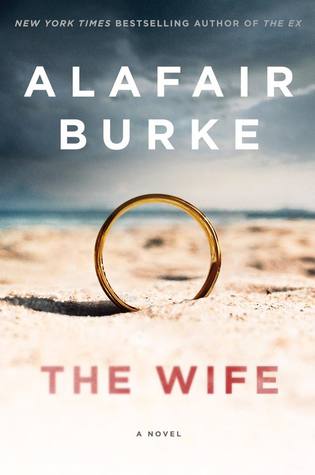
Tomorrow is the release day for a book I read in ARC (advanced reader copy) form months ago, The Wife by Alafair Burke.

34971475

In an instant, I became the woman the assumed I’d been along: the wife who lied to protect her husband.

I almost didn’t hear the knock on the front door. I had removed the brass knocker twelve days earlier, as if that would stop another reporter from showing up unannounced. Once I realized the source of the sound, I sat up straight in bed, hitting mute on the TV remote. Fighting the instinct to freeze, I forced myself to take a look. I parted the drawn bedroom curtains, squinting against the afternoon sun.

I saw the top of a head of short black hair on my stoop. The Impala in front of the fire hydrant across the street practically screamed “unmarked police car.” It was that same detective, back again. I still had her business card tucked away in my purse, where Jason wouldn’t see it. She kept knocking, and I kept watching her knock, until she sat on the front steps and started reading my paper.

Alafair Burke’s The Ex made my Top Ten list of 2016; it was the first of Alafair’s books I’d read (I have a bunch more in the TBR pile) and it absolutely blew me away. I wasn’t sure what to expect, and having met and liked Alafair, there was an element of worry; what if I don’t like her book? But it wasn’t an issue; from page one on, I was hooked and it was a book I deeply resented having to put down to do other things. Obviously, I was really looking forward to The Wife–maybe I’ll focus this year on reading the rest of her canon–and was thrilled when I got an ARC at Bouchercon this year.

The Wife does not disappoint, either, and boy is it ever timely! Angela Powell, the wife of the title, has a pretty terrific life; married to a very successful man who is getting even more successful every day, a beautiful home in Manhattan, good friends she can rely on, and a son she dotes on. Angela’s almost too-perfect, too-good-to-be-true life slowly but surely begins to unravel when one of her husband’s interns goes to the police and files a criminal complaint for sexual harassment against him. But Angela is not only rocked by the charges against her husband–she’s also worried about any investigation into their lives, particularly by the press…because she has some dark secrets in her own past that she doesn’t want seeing the light of day. No one, other than her husband and her mother, knows anything more about her past other than she was a catering service waitress who eventually started her own business and is a great chef–she met Jason at a party she was working at–but there is a lot more there. And as the truth about Angela’s past slowly is revealed to the reader, each revelation is even more shocking than the last.

The book has a powerful enough story, with just Angela dealing with this assault on their life and having to wonder if her husband has done what he’s being accused of, and if so, how did she not see it–or whether she should believe in his protestations of innocence and stand by his side? The exploration of what does a woman do in this instance might have been enough for a lesser novelist, but it’s not for Alafair Burke; there’s a reason why she has moved onto my ‘must-read’ list.

The Wife is going to be one of the best books of the year, and will be surely nominated for every crime writing award in 2019. I urge you to read it. You won’t be sorry.