Song of the South

I am both of the South and not of the South.

I was born in Alabama but didn’t grow up there. I was two years old when my parents migrated north in search of work, good jobs, and a better life for our family. My parents, however, were very Southern, so I was raised with their values and beliefs (which were very Southern and of their time) but being confronted with very different values and beliefs at school every day opened up my mind in ways that it may not have been had I grown up in Alabama. Our neighborhood in Chicago, near Lawndale Park (our nearest major cross street was 31st and Pulaski), was the perfect representation of America’s vaunted ‘melting pot’; our neighborhood was filled with first or second generation European immigrants; many from eastern Europe, who fled either before or after the war. There were Czechs, Poles, Austrians, Hungarians, and Serbs; in the fourth grade we even had a Muslim girl from Yugoslavia. She had the most delightful first name which I’ve never forgotten–Zlatiça–even as her last name is lost in the clouds of memory. It was also very confusing trying to figure out where the immigrant kids (either they were born in another country or their parents/grandparents were) came from, given that the maps of Europe had been redrawn barely twenty years earlier. The Czech children I knew didn’t identify as Czech but rather as Bohemian; they also called their language that. It took years of study and reading up on history to realizing Bohemia became Czech after the first world war; for many years I believed Bohemia still existed under that name but had somehow been folded into another country or something; I don’t remember. I do remember being confused. Until I finally wrapped my mind around the post WWI renaming of the region, I always just assumed Bohemia was a German region. Reading history didn’t help much in that regard, as Bohemia was part of the Holy Roman Empire for centuries (in fact, the Thirty Years’ War kicked off in Bohemia).

But there was a lot of racism in our neighborhood too; the white European immigrants detested the brown immigrants from Mexico and Central America; I vividly remember the way our babysitter would sneer the word Mexican when referencing anyone brown. There was also a lot of strife in Central America at that time; I think both Guatemala and Nicaragua were enduring civil wars of some sort, hence the influx of Central American refugees and immigrants. I remember Martha, a girl in the sixth grade, telling me about how soldiers came and shot up her village, killing dozens of people she knew and members of her family. She was very calm and unemotional as she told me about it, which is pretty remarkable for a child who couldn’t have been more than ten or eleven, talking about a trauma she witnessed when she was six or seven. (Now I know she was dissociating; and I do remember her telling me calmly that she felt like she wasn’t even there as it happened; like she was watching it all happen from a distance.) Ironically, we became friends because we exchanged Nancy Drew or Hardy Boys mysteries; this conversation came about because we were reading a Hardy Boys book set in Central America; I want to say Footprints Under the Window, but it may have been something else….but she wanted me to know that the depiction of Central America in the book was nothing like the reality.

My grandmother used to tell me wonderful stories when I was a kid about my family history and the history of the county we’re from in Alabama. As a wide-eyed innocent and naïve child, I believed everything she told me, and always wanted to fictionalize those stories. I was in my early twenties when I wrote a short story based on one of those tales; about the Lost Boys and the evil renegade Yankee soldier who burned the house down and presumably murdered the two boys of the house. The story was called “Ruins,” and while I was pleased with the story I felt the story was too short; there was more to the story than I could fit given the length restrictions. I always thought of the story as a kind of an abstract or lengthy synopsis of the novel I would write someday. But it was also a Civil War story, and I wasn’t sure how I could write a Civil War ghost story without being, frankly, offensive. I tucked it away in a drawer and would think about it from time to time–usually when driving through Alabama on my way north–but still couldn’t wrap my mind around it. I worried and fretted and feared and doubted myself constantly. I told the story once to another writer friend of mine, and she urged me to write it…in fact, she hounded me about it for about twelve or thirteen years before I decided to take a deep breath, put on my big boy pants, and take that risk.
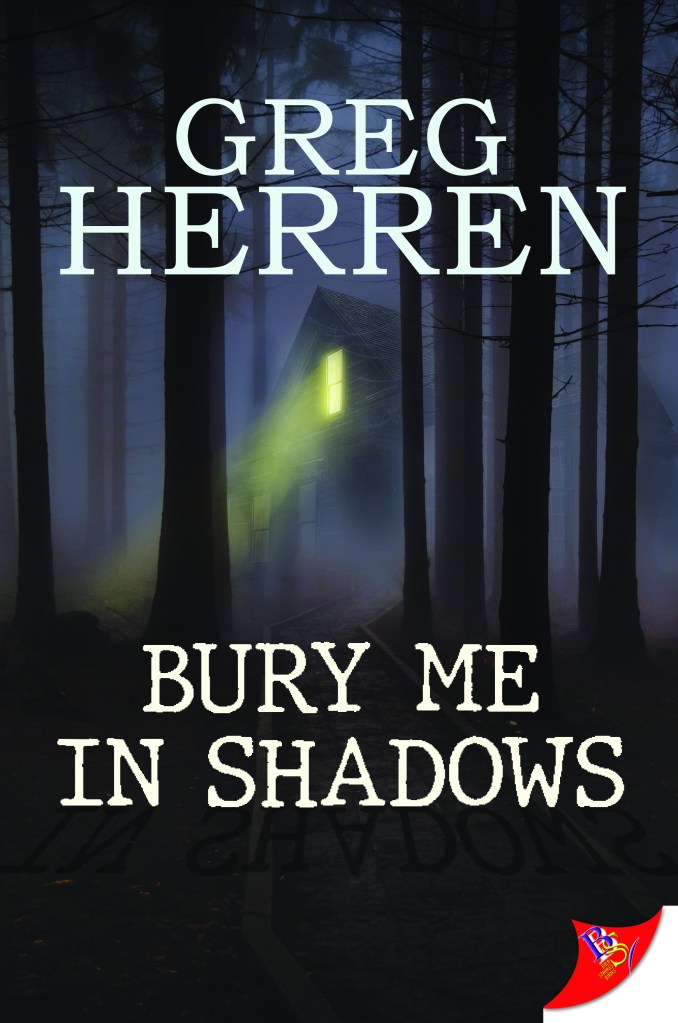
“Was this an accident, or did you do it on purpose?”

I opened my eyes to see my mother standing at the foot of my hospital bed, her heart-shaped face unreadable as always. The strap of her Louis Vuitton limited edition purse was hooked into the crook of her left arm. Her right hand was fidgeting, meaning she was craving one of the rare cigarettes she allowed herself from time to time. Her dove gray skirt suit, complete with matching jacket over a coral silk blouse, looked more rumpled than usual. Her shoulder length bob, recently touched up as there were no discernible gray roots in her rigid part, was also a bit disheveled. She wasn’t tall, just a few inches over five feet, and always wore low heels, because she preferred being underestimated. Regular yoga and Pilates classes kept her figure slim. She never wore a lot of make-up, just highlights here and there to make her cheekbones seem more prominent or to make her eyes pop. Looking at her, one who didn’t know better would never guess she was one of the top criminal attorneys in the country or that her criminal law classes at the University of Chicago were in high demand.

I could tell she was unnerved because she’d allowed her Alabama accent to creep slightly back into her speech. She’d worked long and hard to rid herself of that accent when she was in law school, because she said no one took her seriously when she spoke or else thought she was stupid once they’d heard it. The only times she used it now was when she wanted someone to feel superior to her, or she’d been drinking, or she was upset.

It worked like a charm getting her out of speeding tickets.

I hadn’t been asleep, nor had I been awake either, hovering in that weird in-between state where it seemed like I’d been living for the last three or four days.

“It wasn’t on purpose.” I managed to croak the words out. My throat was still raw and sore from having my stomach pumped. My lips were dry and chapped, and my eyes still burned from the aftermath of the insane drug-and-alcohol binge I’d gone on in the aftermath of the break-up with fucking Tradd Chisholm. “It was an accident.” I shifted in the hospital bed, trying to sit up more, the IV swinging wildly. The memory of that last and final fight with Tradd flashed through my head.

The main character in the original short story was only twelve, and the cousin he shares the adventure with was supposed to be fourteen. I was writing a lot of short stories at the time set in Alabama, with the idea to tie them all together in some ways–and was also reading a lot of Faulkner at the time, so yeah, a fictional county in Alabama where all the stories were set and were interconnected was kind of derivative; I kind of smirk to myself now when I think about the hubris of aspiring to be Faulkner-esque, especially at that time, when everything I wrote was pretty much garbage. Ah, the hubris of youth. But I did write a lot of “Corinth County” short stories back in the day, and while the writing may have been atrocious, the idea behind them and the core themes were good and had potential.

When I started thinking about turning the short story into a novel, I soon realized that the characters were too young, so I aged them. I originally aged them to teenagers, and in the first attempt at a rough first draft, I got about two chapters in with my main character, Jake, being banished the summer before his senior year to help take care of his dying grandmother back in rural Corinth County. The original first line was something like The summer before my senior year my mother ruined my life. Properly self-absorbed, narcissistic, everything’s about me teenager, right? My original thought was he was a student at a Catholic all boys’ school, was openly gay, and had a crush on a classmate…and having just found out said classmate had gotten a summer job lifeguarding, managed to get himself and his female best friend jobs at the concession stand at the pool, so he could be around his crush and see him all the time. His banishment for the summer had to do with his lawyer mother accepting a co-counsel role in a major trial in California and being gone; she has also kicked out her fourth husband (a much younger tennis pro) and so she can’t leave him alone in Chicago for the summer. The other option was staying with his father and his second family in the suburbs, which was equally unappealing, so he choses Alabama…and is picked up at the airport in Birmingham by another teenager who’d been taken in by Jake’s grandmother when his own mother died. This character, Kelly Donovan, was originally meant to become close with Jake and participate in all the mysteries Jake encounters at his grandmother’s. I also wanted to play with Jake’s being strongly attracted to Kelly, who is some kind of distant cousin, and straight.

But I scrapped that beginning, too. Would a young senior in high school in rural Alabama, a star athlete, be so accepting and open to Jake’s sexuality? Probably not…and he would also be worried and nervous about his patron’s grandson coming to stay there. As I delved more deeply into Jake’s character and who he was, I started thinking it made more sense for him to be older. Why not have him be a student at Tulane, and living in New Orleans? But if he was living in New Orleans, what would make his mother exile him to rural Alabama for the summer? And the more I thought about Jake…the more I realized there was underlying trauma in his life. I didn’t want his mother to be homophobic, but her mother, the dying family matriarch? Yes, yes, that worked better. I made him a loner, but someone who didn’t want to be a loner. He didn’t ever feel like he had friends at his Catholic school; and coming to Tulane he met his first, real boyfriend…which ended up being a disaster. And then realized, what if he goes on a binge–easy enough to do in New Orleans–after a bad break-up and winds up in the hospital? And if he had tried once before to kill himself…yes, yes, this is a MUCH better backstory and pulls the actual plot of the book together much better.

I also knew I wanted to touch on themes of homophobia in the rural South, as well as the horrors of modern-day Southern racism and the South’s racist past.

When I started doing research for the book, I soon learned that many of the old family/county stories my grandmother used to enthrall me with were all apocryphal; almost every region of the South has some version of the stories she told me; the story of the Lost Boys, a local legend which was the foundation of the book, pops up all over the old South–almost every state and every region of the old Confederacy has a version of the story, complete with renegade Union soldier (think Gone with the Wind), and so I decided to address that trope in the book while also using it. But I also added another layer to the story–the Lost Boys may not be the only ghosts at the old Blackwood place, which has a tragic and bloody and horrifying history, as does the entire county. I also started lessening Kelly’s importance to the story–he’s still there, he’s still a character who also gets a big reveal later in the book–but Kelly’s behavior to Jake is abominable and homophobic, establishing some conflict between the two of them as well. Part of this was because of the change in the story, but then I needed to partner-in-crime as well as potential love interest, so I came up with Beau Hackworth (the Hackworths are a large and poor family in the county; I’ve used that family before in stories; my main character in Dark Tide was a Hackworth from Corinth County).

And of course, when you’re writing about a Southern rural county and the Civil War, you cannot avoid the issues of race, prejudice, Jim Crow, and enslavement. I wanted to make it very clear that this wasn’t some “Lost Cause” romantic fantasy that perpetuates the lies and mythologies that sprang up in the South decades after the actual war ended. Jake’s mother raised him not to be racist or prejudiced, as she tells him several times, “We do not take pride in the fact our ancestors enslaved people. The heritage is hate, and don’t ever forget that.” I did wonder if I was being too generous to white people with this, but on the other hand I wasn’t interested in writing from the perspective of someone racist. I will be the first to admit that I worried about being offensive in this book; the last thing I would ever want to do is be insensitive on the subject of race. But I also knew and trusted my editor enough to know she wouldn’t let me get away with anything, and I also had to trust myself to handle it all sensitively. There were a couple of things she saw in the manuscript that could potentially be considered problematic–but they were also easily fixed.

I was very pleased with the end result, and I do think it is one of my best books. I was absolutely thrilled when it was nominated for two Anthony Awards last year at Bouchercon.

And it also goes to show that you cannot play it safe, and things that scare you are precisely the things you should write about .

(For the record, I will add Cheryl A. Head’s Time’s Undoing is one of the best crime novels ever written about racism in Alabama. Beautifully written and brilliantly told, it should really be required reading.)

How to Bring a Blush to the Snow

Monday, and the 3rd of July. It is back to the office with me today, but of course tomorrow is a day off with pay so this week is going to be weird and off-kilter too. Yay? But this week I have page proofs to go over, errands to run, and a life to get back on track. I feel rather disoriented from being gone for an entire week for a change, which was weird. I did wind up feeling much better yesterday as the day progressed; we made a Costco run in the midst of that dreadful heat advisory (felt like 114) and I also did a lot of laundry. I emptied the dishwasher and reloaded; it isn’t full yet. I am going to try to stay efficient this week, and hope that efficiency–doing the dishes when I get home from work every night, keeping up with the laundry, putting things away rather than let them pile up–is maintained as we move sluggishly through the rest of this blazing hot summer.

We started watching a true crime documentary series last night called The Suspect, and got two episodes in (out of four total). The show is from CBC, and is about a murder and trial in St. John, Nova Scotia. It’s always interesting to watch these shows and see how the police and prosecution actually operate as opposed to the way they do in fiction. It’s actually kind of terrifying, really, and of course, it gave me an idea for a book to go with this great title I came up with in the car the other day.

I’ve also been thinking about my writing and what I want to do with it and where I want to go. I really am not in a place where I should be coming up with new concepts and structures and characters for a new novel when there are already so many in progress around here that I need to finish at some point, not to mention the short stories, too. Heavy heaving sigh.

But I slept so deeply and well last night. I woke up a few times, always afraid that’s the end of the sleep for the night, but I was literally out like the power after a hurricane. And I had no resistance to getting up to the alarm, either. I feel rested, which is wonderful. I wish I could figure out a way to get sleep like that while I am traveling, but I also think I over-caffeinate when I travel, too. I don’t nearly follow my necessary daily routines when I am traveling; I don’t drink nearly as much water and, like I previously said, over-caffeinate. This inevitably results in me becoming dehydrated, and when I am dehydrated I generally don’t get hungry, either, and I often wind up skipping meals and so forth, which means my blood sugar drops precipitously as well. In other words, I need to retrain what I do when I am traveling and/or on the road and take care of myself better than I usually do while away.

I feel terrific this morning and my mood has also significantly improved. I don’t think I’ve completely rehydrated yet, either; but I feel so much better today than I did yesterday that it’s almost like I’m an entirely new person. This is always lovely, frankly. There’s nothing like a good night’s sleep; I just wish I could unlock the secret to getting good rest every night, but no such luck.

We also watched Rock Hudson: All That Heaven Allowed, which was okay. If you’ve never read a biography of Hudson, or seen any previous documentaries about his life, there’s nothing much new here. I’ve learned a lot about Rock Hudson doing research for Chlorine–if you’re writing a novel about a closeted gay actor in the 1950’s, who better to read about than Rock?–so this documentary was nothing new for me. It was well done, and I liked that they interviewed his surviving gay exes or gay friends (for the record, I’ve also researched Tab Hunter–whom I met a few times–and Montgomery Clift, Anthony Perkins, and several others. I find that I really like doing research, to be honest. The whole time I was gone at Dad’s I was reading and learning more about Alabama history, which I think will make my future Alabama novels much better than they would have been, and also inspired more ideas for Alabama books.

And on that note, I am heading into the spice mines for the rest of the day. It’s been so long since I’ve been at work…anyway, have a great pre-holiday Monday, Constant Reader, and I’ll check in with you again later.

Lazy Calm

Monday morning and in Jasper, Alabama. Today is my parents’ anniversary, and the first since we lost Mom earlier this year. Dad and I are going to the grave to put flowers on it, and then we’re going to convoy up to Kentucky. There’s no plan, really, other than having breakfast here and then checking out and so forth. The firsts are always the hardest; both of their birthdays, which are only a day apart, will be rough come October; him being alone on his and then her not being here for hers. Their birthdays are weekdays, so I don’t know if I can make it up here for that–unless he decides to do it on a weekend, but he’s also retired, so his time is his own. I do worry about him, though. It’s very easy to put myself into his place by imagining the horror of losing Paul. I mean, I’ve already had to confront that hideous possibility several times already, but even so it’s not going to be easy. The selfish part of me kind of hopes I go first, to be honest…but I would prefer not to; because I don’t want Paul to go through what my dad is going through right now. I’d rather shoulder that grief and burden then put him through it, if that makes sense? My life would be empty and bleak and there wouldn’t be anymore joy in it, but I’d rather I deal with that than him.

I hate even thinking in terms of “who goes first,” really. Kind of hard not to have thoughts about our mortality when having to go through this sort of thing.

The drive was lovely, but there was a lot more traffic than I am accustomed to; but then I never drive north on a Sunday, either; it’s usually mid-week or not on the weekend. We’ll probably get to Nashville just in time for rush hour (hurray!), and then the rest of the drive up, but at least the drive was broken up a bit. I was able to get Whataburger in Tuscaloosa (seriously, the simple pleasures mean everything to me), and then drove on up through the countryside. Alabama is so beautiful; everything is in bloom and everything is green. I had wondered about kudzu the last time I came up here; I’ve seen a lot of it on this trip so maybe May was too early for it to get leafy and green? The mystery of kudzu is just another one of those things I’ll probably always be interested in and never completely understand.

I’m also thinking about writing about Alabama again.

On the drive, I kept thinking about stories that are in progress–particularly one, which I wrote first in 1983 and have been sitting on ever since–and I was even thinking about my next book to start writing (yes, I have others that have to be finished but…) and I want to write another Gothic. I was listening to Carol Goodman’s marvelous The Widow’s House (and yes, absolutely loving it) which got me to thinking about Gothics again, and a New Orleans ghost story I’ve been wanting to tell, set on Camp Place in my neighborhood and roughly titled Voices in an Empty Room. I’ve had the idea forever, and I love that title–does it get more Gothic than that title?–and I was also thinking about another short story I’ve rewritten and revised and haven’t been able to sell anywhere; I may do another draft and try again, but it will probably just end up in my next short story collection. One of the things I love about being an avid reader as well as a writer is that great craftsmanship in novels is something that always inspires me to be better myself. Carol Goodman does that whenever I read/listen to one of her books; many authors do, frankly. I often am amazed that they consider me a colleague, let alone speak to me. I always feel like a rank amateur when I am reading a master like Carol.

As for the grieving, it’s still hard for me to talk about Mom without getting upset or getting teary-eyed and my voice cracking. I try very hard to hold it together in front of Dad–not in a toxic masculinity sense of “men don’t cry” but more in the sense that he’ll lose it completely if I do; he’s never going to get over this. It’s funny, but I never have ever felt completely comfortable crying in front of my parents. Maybe it’s a holdover from childhood? I cry easily, actually; television shows and movies and books make me cry all the time. I don’t like crying in front of anyone, really; maybe that is a toxic masculinity thing after all? I’ve always wept privately, away from people and by myself. Maybe it’s a vulnerability thing? I don’t like showing my vulnerability–primarily because whenever I have, those I thought were safe enough to let in, eventually went on to exploit it and I have always regretted it.

I’ve always been a magnet for shitty people, seriously. (That isn’t to say I don’t have marvelous, wonderful friends now; the kind I used to dream about having when I was younger.) Maybe, for whatever reason, there’s something about me that makes people be shitty to me? This is a distinct possibility; I am terrible with verbal and physical cues and often misread situations and say or do something inappropriate or unintentionally offensive; if I had a dollar for every person I’ve accidentally offended, I could retire now. I never want to offend anyone–even people I don’t much care about or like (racists and misogynists and homophobes, on the other hand, oh, yes, make no mistake–I am definitely determinedly trying to offend the fuck out of all of you trash). I don’t ever want to make anyone feel bad, for any reason. Even when someone deserves it, I always feel terrible and guilty about making them feel bad later when I’ve calmed down. I know I have a temper, and a bad one at that, so I am constantly trying to not lose it. Knowing that I have a terrible time grasping what is obvious to everyone else and being bad at reading social cues, I am often asking myself do I have a right to be angry about this or am I being unreasonable? Because I also know that when I AM angry, I am completely unreasonable, and I don’t like that because it’s not fair, for one thing, and for another, I prefer to be rational and logical.

It’s a constant struggle, but I do try.

The Tinderbox of a Heart

Yesterday I was very tired. I’ve not been sleeping well this week, but at least on Tuesday I felt rested; yesterday I just felt tired, physically and intellectually. I did get some work done last night on the book, and today I feel very rested; I slept wonderfully last night, which was absolutely marvelous, quite frankly, and am very glad for it. Today is the last day in the office for me until a week from Monday–this is the weekend I’m going north to see Dad (I may not be around on here at all once I leave on Sunday) which is yet another reason why I need to get this revision finished. I feel confident that I can get it done before I go on this trip; I keep thinking that I’m almost done…

I haven’t started reading the new Megan Abbott; I’d hoped to spend some time with her new book last night but I was fried when I finished working on the book and just collapsed into my chair to provide a cat bed for Scooter. It was very cool yesterday morning when I left for the office, but the inferno had returned by the time I got off work. A small but welcome respite from the summer’s heat (Facebook memories reminded me that we’d been in a heat advisory at this time of year several times over the past few years–proving yet again the long COVID of last year did affect my memory. I saw an article I meant to read yesterday that said even mild cases of COVID caused a type of brain damage, or brain rewiring of a sort, which needs to be studied. I know my memory changed during the pandemic, but I also turned sixty during it, too. Was it the long COVID experience I had that rewired/altered my brain, or was that an after-effect of the trauma imposed by the shutdown and everything that followed in its wake? I can’t remember if I was having memory issues before I got sick last summer; but if that was indeed the case, it got much worse after I recovered…and was really bad while I was sick. It’s so hard to tell, so hard to remember, you know?

A case in point about my memory has been these last two manuscripts I’ve been working on since last fall. For one thing, it took me a lot longer than usual to write and revise both of them (I must also provide the caveat that the end of the last year and the beginning of this one was a very difficult time, all things considered) but as I am revising this manuscript I am continually amazed at how little I remember of it, let alone remember writing it. Again, this is very alarming, but at the same time I can also honestly say I’ve never stacked books like this before while writing them; going from one to another and then back and forth again repeatedly; I don’t remember much of the Scotty book, to be honest, either–but I remember more of it than I do this one. It’s a good manuscript, though; I like the characters and I like the story, and it seems like they want me to write a sequel to it, which is also kind of cool; I already have a title for the next one and an idea, amorphous yet still an idea, for what the story would be. After I get back from Kentucky, I’ll tell you a bit more about this project; I realize I’ve been very mysterious about it, but there’s not any reason for it other than my own superstition and fear of jinxing things by talking about them–which is just another symptom of my own neuroses, of course.

There are two tropical systems trying to form in the Atlantic right now. One looks like it’s going to head up the Atlantic coast, or will never come near land and just head north before dissipating; the other looks like it’s heading for the Caribbean Sea and the Yucatan. Yay for hurricane season, he typed sarcastically. I was also thinking last night about future Scotty books; I think I am going to cap that series at ten. I think Mississippi River Mischief is the ninth Scotty, which would only give me one more title for the series. No, scratch that; I will make no promises or any commitments regarding the future of that series, and will leave it the way I always have in the past: if I get an idea for one, I will write another one.

What I have been thinking about lately is that I want to write books I feel passionate about; I want to tell stories and write books that will have some kind of impact, or require a lot of emotional and intellectual work on my part, if that makes any sense. Last night Scott Heim tweeted an excerpt from the opening of Jim Grimsley’s beautiful novel Winter Birds, and I remembered again how much I love Jim Grimsley’s writing and his authorial voice (I inevitably default, when it comes to Jim, to Comfort and Joy, which is one of my favorite Christmas stories of all time; but his other work is also lyrical and poetic and beautiful, too). It also made me think about my own writing and my own authorial voice. Do I have a distinctive authorial voice? Can someone read my work without knowing its mine and be able to tell that it’s mine? I know that I can write beautifully and poetically when it suits the story; I know I can do a voice that can sound haunting and sad. I try to always do different things when I write out of series; I want to write different types of stories and use different kinds of authorial voices and write in different styles. I think my best work inevitably tends to be Gothic in voice and style; those are certainly the favorites of my own works that I’ve written (Timothy, Bury Me in Shadows, Lake Thirteen, Sorceress, The Orion Mask), and whenever I write about Alabama, I seem to lapse into this very lovely, literate-sounding voice. I’m not quite sure why that is, but it’s been mostly in short stories; I do want to write more about Alabama and my complicated relationship with my home state. I am passionate about writing both Chlorine and Muscles, which are on deck for me; I am wavering about whether to leave “Never Kiss a Stranger” as a novella or whether to expand it out into a novel; I can see it working either way. I don’t want any of the novellas to turn into novels, frankly; I don’t have the time necessary left to me to write everything that I want to write in the first place. But am I trying to force novels into novellas because that’s how I decided to write them, or are they better off as novellas? These are the things that make you want to load your pockets with heavy stones and walk into the river.

And LSU did beat Wake Forest yesterday, forcing a third game to determine who plays Florida in the finals of the College World Series. GEAUX TIGERS!

And on that note, I am heading back into the spice mines. Have a lovely Thursday, Constant Reader, and I will check in with you again tomorrow.

YMCA

Ah, the Young Men’s Christian Association.

One of my favorite things about homophobic straight people is how clueless they are (the homophobia is really a tipoff) when it comes to queer stuff. (In fairness, if they don’t know any queer people why would they know anything about queer stuff?) Nothing amuses me more than watching crowds of straight people–whether it’s a sporting event, wedding, or a party– start doing the “YMCA” dance when the deejay puts it on. It’s particularly funny to me when it’s a sporting event, particularly something more on the unenlightened side with their fan base when it comes to queer equality, like NASCAR or hockey (although NASCAR had been doing rainbow stuff all month…). As I watch them all stand up and do the ‘YMCA dance”–always out of rhythm, never to the beat–I smirk to myself and think, you clearly don’t know that this song is about the sexual smorgasbord a YMCA was back in the day for gay men, do you? It’s about GAY SEX, homophobes! You’re singing along to a song about getting fucked at the Y!

It always makes me laugh. Every. Single. Fucking. Time.

I’m sure the founders of the YMCA system would have been quite nonplussed to know that in some major cities, gay men turned YMCA’s into essentially bath houses. There were a couple in Manhattan that were notorious for hook-ups, but of course a YMCA would draw gay men. For a long time they were the only places for men to go and get exercise, unless they belonged to a men’s club, like the New Orleans Athletic Club (which used to be for men only), and since gay men, especially after Stonewall, liked to be fit and keep their bodies worked out and in good shape (to draw lovers, of course) they wound up at the Y. And when you get a bunch of gay men thrown together in an environment that includes pools, weights, saunas, steam rooms and showers, you’re going to get hook ups. YMCA’s also provided cheap rooming alternatives, too–and of course, that meant that you could get a room at the Y (just like you could at a bath house) which meant you could bring partners back to the room for sex.

When we first moved to New Orleans there was still a Y at Lee Circle (now Harmony Circle); the Lee Circle Y had been there forever and was actually kind of historic; one of the Israeli athletes murdered at the Munich Olympics was a Tulane student who worked out at the Y. I thought that should at least have some kind of commemorative memorial plaque–and had preservation-minded folk cared about the Lee Circle Y, it could have been declared a historic landmark, instead of closing and the land being sold for yet another hotel. Maybe a murdered Israeli athlete isn’t enough of a connection for historical landmark status. But I used to train people there, and also taught aerobics until it was closed permanently. They had redone the weight room and bought all new equipment a few years earlier, too. Some things–like the locker room and so forth–were musty and moldy smelling, with that distinct stench of decades of male sweat baked into the walls.

But yes, the Village People of “YMCA” fame–every one of them was dressed as a particular gay archetype (leather man, Indian chief, fireman, cop, etc.) and all of their songs were thinly veiled odes to the joys of being gay and having lots of no-strings-attached sex; “Macho Man,” “In the Navy,” “YMCA,” “San Francisco”–and the village in their name was Greenwich Village, the gayborhood in Manhattan. (The promotional video for “YMCA”–taken mostly from the movie Can’t Stop the Music–which is a topic for another time, because yes, that movie needs discussion–really says it all.)

There were bath houses, of course (Bette Midler famously got her big break performing at the Continental Baths in Manhattan); New Orleans had two when we first moved here–the Club New Orleans in the Quarter on Toulouse Street and Midtown Spa on Baronne in the CBD, across from where the Rouse’s is now. Both are long gone now, ain’t dere no more as we say down here. We used to do testing in the bath houses, which was always a weird experience. Every room had a television with porn on a loop; the room they used to let us at CNO to test in also was the sling room. So I’d sit on the bed/cot, with porn playing on the television hanging from the ceiling in the corner, and a sling in the opposite corner from the television. I bet that sling could tell some tales….or could have before it was consigned to the dustbin of history.

I also remember the battle over closing bath houses during the height of HIV/AIDS. Rewatching It’s a Sin reminded me of a lot of the struggles back when the disease was new and we didn’t know much about it other than almost everyone who got infected died. It seems kind of counter-intuitive now, but there was an argument that could be made that restricting gay sexuality was also a repressive attempt to push gays back into the closet as well as further stigmatizing gay men. It seems silly now, of course, knowing what we know now, but the mask argument during the pandemic kind of took me back to the struggle to get gay men to wear condoms. (I’m so old I remember when herpes had everyone freaking out in the late 1970s.)

I keep thinking I should write about the Lee Circle Y, just to preserve that piece of New Orleans history. “Never Kiss a Stranger” originally started with my main character getting off a Greyhound bus and lugging his duffel bag down Howard Avenue to the Lee Circle Y, where he gets a room while looking for a place to live. (I later realized the story actually begins with him finding that place to live; the rest is just filler and not very interesting.)

Maybe someday.

Speak No Evil

Well, if there was any doubt left, summer has returned in full force to New Orleans. It’s a heat wave; in which the heat index has been over 110 for several days. When I ran my errands yesterday I was completely exhausted after getting back home and the groceries inside; this kind of heat saps your strength and your energy and sometimes, even your will to live. Opening the apartment door was like opening a preheated oven. I managed to get all my work-at-home duties taken care of, but tried to spend the rest of the day battling feeling tired and getting chores done. This is a three-day weekend, and I have a lot of work to try to get through over the course of this holiday weekend. I am also hoping to not set foot outside at any time until I have to go back to work Tuesday morning. It’s nice having another short work week, and then of course the next week I am heading north to spend some time with Dad. It’s hard to believe this year is nearly half over, isn’t it?

I was thinking yesterday that Elmore Leonard’s most famous piece of writing advice was “never start with the weather,” which is a “rule” that I break all the fucking time. The weather, especially in New Orleans, is almost a character here; it tells you everything you need to know about the time of year the story is set, for one thing. You can’t set a book or story in New Orleans in the summer time and not mention the weather; you just can’t. The weather impacts everything here, because we have what I lovingly and sort-of-jokingly refer to as “aggressive.” The heat and humidity is aggressive; hurricanes and thunderstorms here certainly are, and even the cold spells we get every winter (brief, always brief) can be also considered aggressive. It impacts people’s moods and what happens, really; so that advice cannot be followed when writing about New Orleans. I was primarily thinking about this yesterday when I was out in the heat and losing my will to live, mostly, which was completely understandable. Paul walked to the gym to ride the bike for a while yesterday and went through two bottles of water. So, yes, the weather here is aggressive and oppressive, and impacts story and character and setting and scene and place in New Orleans.

We started watching an ID true crime documentary series about the serial killers in Baton Rouge around the turn of the century and just after, Butchers on the Bayou, which is kind of interesting. I remember when it was happening–yes, a serial killer in Baton Rouge will make the news in New Orleans–and I remember when the first one was caught; I didn’t remember there was a second one operating at the same time. No wonder the police were overwhelmed; especially with all the crossing of jurisdictions and so forth–it’s the same problem they had with trying to solve the murders of the Jeff Davis Eight (eight women murdered over a several year period in Jefferson Davis Parish). And yes, I do at some point want to base a novel on the Jeff Davis Eight case; I keep thinking it fits more as a Chanse story but I’m not really sure I want to write another Chanse book. It wouldn’t really work as a Scotty story, and I have wondered and considered writing a new series–I have a character, Jerry Channing, who writes true crime and is a gay man that has appeared in several different books of mine; the problem with Jerry was when I was fleshing him out I realized what I was doing was combining Chanse and Scotty into a single person, and that wasn’t working for me. This also probably had something to do with me trying to come up with something whilst I was immersed in numerous other projects and not really being able to give it my full attention. I still might just go ahead and do it once I have all these current projects off my plate once and for all.

It is a good story, and it makes sense for him to be the one to investigate it–since he writes true crime. My primary concern about this is, obviously, there’s tons of novels about true crime podcasts and true crime writers and bloggers–Only Murders in the Building, anyone?–but it does make sense and works better. I guess there’s naught to do but give it a try and see.

I’m hoping to be able to spend some time reading this morning, too, before i head into the spice mines. I want to finish writing this and maybe write another Pride post over the course of the weekend; I’ve started several, but am trying to decide if I want to be Angry or if I want to be up-lifting. Some of the posts are angry–it’s hard to write about homophobia you’ve experienced without getting angry; and in one of them I am calling out homophobia I’ve personally experienced from the mainstream crime community. Sometimes I wonder if I should call this stuff out; there’s a part of me that sees talking about it and calling it out as vengeful–like ha ha ha, you were awful to me so now I am calling you out years later–and there’s a part of me that worries that I’ll come across as self-serving. (There’s nothing I hate more than the narcissistic activist; those who are only in it for themselves and don’t care about the broader picture and the macro.) I’ve known and seen some of this over the years more times than I’d care to–like the author who was all over #ownvoices, until she won a major award and now no longer mentions it at all, or “we need diverse books”–so, now that you’ve made it the work no longer needs to be done? Way to pull up the ladder behind you, sister! I certainly don’t want anyone to think that my primary concern is revenge or for me to become more successful; my mentality is “this happened to me and I don’t want it to happen to anyone else because it really sucked for me.” But times have changed, and while there are still instances of it that pop up from time to time within the community, it’s becoming a thing of the past and people are starting to call it out when they see it–which is a huge switch from when I was first getting started. The crime fiction community is a lot more welcoming to queer people in 2023 than it was in 2002. It’s lovely, of course, but I do think we should never forget our less progressive past–particularly since it wasn’t that fucking long ago.

Some things for me to ponder, I suppose.

And on that note, I am going to drink some more coffee and do some chores around the kitchen before I read for a bit and then work. Have a lovely Saturday, Constant Reader, and I will check in with you again at some point.

Wax and Wane

Thursday and last day in the office for the week. I was very tired yesterday, despite not working on Tuesday, and so when I got home I didn’t do a whole lot of anything. No chores, nothing of that sort. I didn’t even read anything! The heat and humidity have returned and it was so miserable when I went out to the car after work yesterday that I felt drained by the time I got into the coolness of the Lost Apartment. I slept decently last night–not great, but restful, waking up a couple of times throughout the evening, but I feel a bit groggy this morning, which is also fine. I think we have a fairly light schedule today at the office and I have some other things I need to get done around seeing my clients. But I’ve almost made it through another week, survived it all, and now we’re at another three-day weekend, which is lovely. I have a lot of work to get done around here this weekend, so the extra day is going to be super great to have.

I need to get caught up on my emails–which won’t take nearly as long as it used to, because I don’t get nearly as much as I once did, which is kind of nice. It’s not that I consider email to be an odious chore or anything, and it’s not like I get problem emails anymore (thank God; I no longer cringe and cower and have to steel myself before pulling up my email), but there’s also not as much urgency with them anymore, either. The decline in the amount as well as the not-quite-as-urgent sensibility of it has resulted in my being pretty lazy about it. (My email provider also recently changed a lot, which is irritating because I don’t like the way it looks now and it wasn’t an improvement to make it easier to use; the Spotify app on my phone recently did the same thing. The lovely thing about technology is the constant need to have to relearn how to fucking use it. That was sarcasm font, by the way.)

So, rather than being my usual lazy self and wasting time finding things on Youtube (primarily to see if they are there), lately as I sit in the easy chair with a purring kitty in my lap I’ve been trying to do some research, that hopefully will stick in my head. Mostly I’ve been looking up videos about the HUAC and Confidential magazine in the 1950s, among other things for that period–also beefcake and peplum–as research for Chlorine. I’m also digging into the 1970’s–mostly music and pop culture, along with historical stuff from the decade–because I want to write a book called The Summer of Lost Boys, which has been simmering in my head since the earliest days of the pandemic. I’m leaning towards setting it in 1975–the summer I turned fourteen and started my sophomore year of high school. It has some potential I think, and while the idea is still amorphous up there in the clouds in my brain, I really like the idea and think it could be a really good book…but I really want to get these two noirs done in first draft this summer. If the heat and humidity doesn’t wear me down too much, I should be able to get both drafts finished by the end of summer.

Unless I get lazy, which is always a possibility. The heat seriously doesn’t help, either. But the thing I always forget is the best thing to do when you get home from work in New Orleans in the summer is take another shower and get cleaned up. I sleep better and I feel better and it generally results in me being a lot more productive. I need to do laundry tonight, put away dishes, and reload the dishwasher, and I am going to start rereading this book that I am about to revise per my editorial letter (I still will be getting one for Mississippi River Mischief, too) and I want to finish reading my book, which I’ve stalled out on now for a couple of weeks…but I need to finish it if I want to move on to my AMAZING TBR pile. I have some errands to run tomorrow morning, too, before starting in on my work-at-home duties, and after that–I am hoping to not leave the house again until Tuesday when I return to work. It would be nice to get some more de-cluttering done this weekend, but I also want to relax, write, and read a lot.

And on that note, I am heading into the spice mines. May you have a lovely Thursday, Constant Reader, and I will see you again tomorrow.

You Must Love Me

Many years ago, at a Bouchercon in the far distant past, I was lucky enough to be assigned to a panel with several strangers. It was Raleigh, and I don’t remember what the panel was about–other than none of us on the panel actually wrote what the topic was about–but it ably helmed by Katrina Niidas Holm. That was the weekend where I was lucky enough to meet both her and her husband, Chris. Also on the panel were Liz Milliron, Lou Berney, and Lori Roy. I always intend to read my co-panelist’s work before panels, so I can talk to them intelligently about their books–but it’s not near as pressing as it is when I moderate, and this was one of those years where I was busy and simply didn’t have the time. The panel was marvelous. I had the best time, and I loved everyone on the panel. I have since gone on to read their work and have become a besotted fan of all three of them, really.

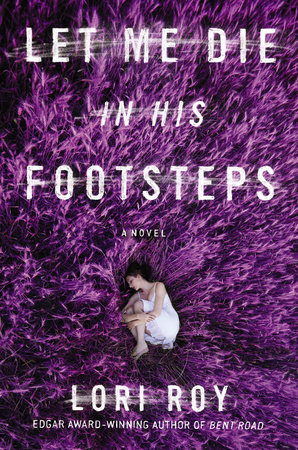
My first Lori Roy novel was Bent Road, which won her (deservedly) the Edgar for Best First Novel. I absolutely loved it, and made sure I got the next two as well. (At the Edgars following the Raleigh Bouchercon, both Lou and Lori won Edgars; her second, also making her one of the few authors to win Edgars for Best First and Best Novel.) I’ve read everything she’s published since then, but have never gotten to the second novel (an Edgar Best Novel finalist) or Let Me Die in His Footsteps, her second nomination for Best Novel and her second Edgar win. I don’t remember why I decided to finally read Let Me Die in His Footsteps, but I am very glad I did.

It’s really quite marvelous.

Annie Holleran hears him before she sees him. Even over the drone of the cicadas, she knows it’s Ryce Fulkerson, and he’s pedaling this way. That’s his bike, all right, creaking and whining. He’ll have turned off the main road and will be standing straight up as he uses all his weight, bobbing side to side, to pump those pedals and force that bike up and over the hill. In a few moments, he’ll reach the top where the ground levels out, and that front tire of his will be wobbling and groaning and drawing a crooked line in the soft, dry dirt.

Theyre singing in the trees again today, those cicadas. A week ago, they clawed their way out of the ground, seventeen years’ worth of them, and now their skins hang from the oaks, hardened husks with tiny claws and tiny, round heads. One critter calls out to another and then another until their pulsing songs made Annie press both hands over her ears, tuck her head between her knees, and cry out for them to stop. Stop it now. All these many days, there’s been something in the air, a spark, a crackle, something that’s felt a terrible lot like trouble coming, and it’s much like the weight of those cicadas, thousands upon thousands of them crying out to one another.

Annie has known all morning Ryce would be coming. It’s why she’s been sitting on this step and waiting on him for near an hour. She oftentimes knows a thing is coming before it has come. It’s part of the curse–or blessing, if Grandma is to be believed–of having the know-how.

Let Me Die in His Footsteps is set in rural Kentucky, with a dual timeline–the present in the book is 1952; the past is 1936. Both timelines feature two sisters, one normal and the other with the “know-how.” In the present, Annie is the sister with the know-how while her sister Caroline is normal and pretty and sweet and pretty much beloved. The 1936 section focuses on Caroline’s mother, Sarah, and her sister with the know-how, Juna. It is soon made clear in the present day that something terrible happened back in 1936, something whose repercussions are still being felt to this present day of 1952. Annie isn’t Caroline’s sister, but rather her cousin; Sarah is Caroline’s mother while Juna was Annie’s. Juna also had a bad reputation around the county, having played a pivotal role in the 1936 tragedy. The book opens with Annie reaching her ascension; the halfway mark between sixteen and seventeen, when she is supposed to look down into a well at midnight, where she will see the face of the man she is going to marry. Annie sneaks out of the house late at night to go next door and peer down into the Baine family well; there’s trouble and tension between the two neighboring families…dating back to 1936. All the Baine sons are long gone; the only one left is old Mrs. Baine, who sits out on her porch with a shotgun in case of her worthless sons try to come home. Caroline follows Annie and sees someone in the well; Annie sees no one. But after the look into the well, they discovered Mrs. Baine’s dead body in the yard…and all the secrets and lies from 1936 start to not only unravel but impact 1952.

We’re never really sure what the “know-how” is, or if it’s just an old wives’ tale, a superstition. The rural south in both 1936 and 1952 were dramatically different than modern times; the rural areas weren’t as exposed to television or films or the newspapers, really and the old ways still held sway. I can remember being told about someone with the sight that everyone was supposed to stay away from in rural Alabama when I was a kid; those kinds of superstitions and beliefs still exist in some of these more backward rural areas. But one thing I truly appreciate about Roy–who often writes about poor rural Southern people–is that her writing isn’t what I call “poverty porn”; her characters are very real and this just happens to be their situation. The Hollerans have a lavender farm, having eschewed tobacco in the recent past after Grandpa Holleran died from lung cancer. Lavender infuses the novel almost from the very first page. I love the smell of lavender, although I would imagine fields and drying houses filled with it might be a lot. The story plays out in a slow burn, terrific build to the end, and all kinds of secrets from the past must be dealt with in order for the present-day characters to get on with their lives.

Roy is such a good writer that it almost takes my breath away. She uses a distant third person point of view, one in which we don’t really get inside her character’s heads that much, so the reader has a kind of distant remove from the characters, but it really works. Her work reminds me of Faulkner without the racism, and of other great Southern writers. Her novels are very smart, with a lot of depth and emotional honesty that resonates with the reader, compelling us to keep reading.

Highly recommended; Let Me Die in His Footsteps clearly deserved to win the Edgar for Best Novel.

Hopefully there will be a new Lori Roy soon, because all I have left of her canon is her second novel, Until She Comes Home, which was also an Edgar finalist.

Sorry

And we have cycled around once again to work-at-home Friday. Huzzah? Huzzah.

I will be taking a short break from my work-at-home duties today to interview Margot Douaihy today for S&S’ Pride Month extravaganza. Ah, the terror of not sounding stupid when interviewing someone really smart and talented. Heavy heaving sigh. I will of course post a link to it when it goes live, so you can hear how smart she is and how much I fumble in interviews. Her Scorched Grace is probably the best debut novel you’re going to read this year, and I highly recommend it. It’s not too late to get a copy, either. (You can order it https://bookshop.org/p/books/scorched-grace-a-sister-holiday-mystery-margot-douaihy/18283014?ean=9781638930242–I don’t understand why this stupid site won’t let me do short hyperlinks like it used to, but it’s fucking annoying. Anyway, buy the book. It’s terrific.)

And it’s a three day weekend! Huzzah! I am looking forward to getting some rest, getting a lot of editing and revising done, and hopefully some cleaning and reading.

I was terribly tired yesterday, the way I inevitably am on Thursdays, and really didn’t want to run errands when I got off work, but I put on my big boy pants and did it anyway. I decided my brain was too mushy to work on the book–I went ahead and read the next few chapters I’ll be editing after work today, so I did do something, at any rate–while relaxing with a purring cat in my lap after I did some chores. I had to unload the dishwasher and reload it, plus fold the clothes in the dryer before moving the load in the washer (I started this on Wednesday night but completely forgot once I was in the clutches of Vanderpump Rules), and tried to do some things to straighten up the kitchen before the energy flagged and I was forced back to the easy chair by mental and physical fatigue. There are, after all, worse things. But I can get a lot of revising done this weekend, which is terrific. It would be great if I can get the whole thing finished by next weekend, wouldn’t that be marvelous? I slept deeply and well last night, too–and managed to sleep in all the way until seven thirty, which is when I usually get to the office. I was exhausted last night when I crawled up the stairs to bed, but as Paul noted, “it’s not that you’re old, you just get up really early every morning now” which is true. Funny how I managed to go almost my entire life without having a 9 to 5 job for very long, and now my body clock is adjusting to it at this late stage of my life. My body is now used to it; I just have to retrain my brain to stop thinking in terms of losing time by going to bed earlier since I get up earlier and thus have more time during the day.

We started watching Platonic these last few nights, a new Apple Plus show starring Rose Byrne and Seth Rogan. I do like Seth Rogan and think he’s funny, and of course love Rose Byrne since her days on Damages, which I feel doesn’t get nearly enough credit for how fucking good of a show it was, and its amazing cast, led by GLENN CLOSE, who was phenomenal as Patty Hewes, super attorney and all around horrible person. Platonic is quite funny, and the chemistry between the two as platonic former best friends who come together again after Rogan’s character gets divorced (the Byrne character didn’t like the woman he married) like no time has passed. Luke McFarlane is beautiful as always as her gorgeous husband, essentially the Ricky to her Lucy. I do recommend it, it’s clever and funny and well written, and, like all Apple shows, very high production values.

I also managed to proof my short story “Solace in a Dying Hour,” forthcoming in an Australian anthology titled This Fresh Hell yesterday, as well as reviewed a book contract for signing–and emailed the corrections necessary to the contract in order for me to sign it. I also spent some time doing research for this afternoon’s interview; I’ll spend some time reviewing the research and coming up with great questions for her, or at least ones that won’t embarrass me by being too stupid and the kind of thing she’s been asked a million times. We also started watching the Hillsong documentary, which is interesting because I really don’t know much of anything about that church; but it’s a megachurch which probably means the heresy of the prosperity gospel, and yes, it’s a heresy. Jesus was not about “believe in Me and you’ll get earthly treasures”; the promise was supposed to be about a wonderful afterlife. (It always has amused and saddened me that so many people miss that Christianity isn’t about life but death and the afterlife; the point is to be the best possible person in your human life to earn a good afterlife, so yes, the prosperity gospel is heresy–“it is easier for a camel to pass through the eye of a needle than for a rich man to get into heaven”–does that ring any bells? At some point I am going to have to talk about religion and how it’s been perverted from a guide to life to so many things that it isn’t supposed to be…)

I also rewatched the first part of the Vanderpump Rules reunion in its longer, no commercials version on Peacock, and that version is by far the best of the two. It flows better, is edited better, and the extra seventeen minutes of public shaming for the Toms (Sandoval and Schwartz) was worth every second. I really need to spend some time on that blog entry about reality television I started after the wrap of the last season of Real Housewives of Beverly Hills; because those two shows are entwined; Rules was initially a spin-off of Beverly Hills, with Lisa Vanderpump going back and forth between the two shows (until she quit Housewives). So much has already been written about the Scandoval that what new or interesting thing can I find to say about it, or the layers to levels of cheating and adultery being laid out on the show by its cast? I am sure none of the players involved in this had the slightest idea how explosively this would go viral, turning the three players (Sandoval, his mistress, his enabling best friend) into pariahs. Not even Camille Grammer in her legendarily villainous first season on Beverly Hills got this kind of publicity or exposure–she did get the cover of People magazine–and of course, the legal troubles of Erica Girardi/Beverly Hills cast drama got some coverage in major papers because of the massive frauds perpetrated by her husband (and get the fuck out of here with the “she didn’t know” bullshit), but still–nothing in reality television prepared anyone, let alone Bravo, with how this affair within the cast would explode and become a worldwide fascination…while Andy Cohen and the network count their cash as the money keeps rolling in. The reunion episode got over two million viewers, which is huge for a reality show. The question is, do I finish my entry about reality shows and their appeal before the reunion episodes finish airing, or can I go ahead and do it now?

Always the question, really.

And on that note, I am going to make another cup of coffee and head into the spice mines. Have a lovely morning, Constant Reader, and I’ll be back with you again tomorrow.

Ray of Light

The cemetery where Mom rests is small. I remember it as being much bigger, of course, but everything there is smaller than I remember. But most of my memories of Alabama predate my adulthood, so things that seemed enormous to a child don’t seem quite so large to an adult.

I’ve written about it before, just as I’ve written plenty of stories (and even a book! Or two!) set in the county of my birth, where my people are from as we say in the South, and where my people are buried. Before Mom died, I hadn’t been to this cemetery since we laid my paternal grandfather to rest in those blurry years between the turn of the century and Hurricane Katrina. But I’ve written about this cemetery in an unpublished short story I originally wrote in 1983, called “Whim of the Wind” that opens When I was young and spending the summers in Alabama, the graveyard at White’s Chapel held a peculiar fascination for me. When I wrote those words, I was living in California and hadn’t been back to Alabama in at least two or three years; it would be another eight before I returned for my last visit pre-funerals. That story was loved and appreciated not only by my professor but by the class as well. I tried several times to get it published, but to no avail; there’s something missing from the story itself that makes it incomplete, but no editor whose ever read it has been able to put their finger on it. (I do recall having solved the problem after reading Art Taylor’s brilliant story “The Boy Detective and the Summer of 1974”, but of course didn’t write it down and don’t remember what it was. (I shall reread Art’s story at some point to see if it triggers my memory; it really is upsetting that I didn’t write it down–which I always do)

And yes, it’s called White’s Chapel. I always assumed it was called that because it was “whites only”; Dad told me over the weekend of the funeral that it was built by someone named White, which is how it got its name. Hurray for it not being racist in origin? Small victories. But when I was there that time, we drove around the county and through the little town/village which was really where all the Blacks in the county were forced to live, which is no longer the case but was when my parents were children. Lovely, right? I still don’t remember ever seeing any Black people during my childhood visits, which seems hardly possible, does it?

I am both of Alabama and not of Alabama. Dad and I talked about that this weekend, too–I don’t think my sister feels the same tug from Alabama that I do. It’s weird for him to go back there, too–there’s hardly anyone left that he knows; even my aunt commented that she didn’t know a lot of people in the county anymore, and thats kind of sad. The land my grandmother’s house sat on has been sold and the house itself–uninhabitable for years–will be torn down and that part of my history, that part of my life story, will be gone forever. My grandfather’s house, where Dad grew up, is long gone and I think my eldest cousin’s son is going to build a house there. The small, battered old houses I remember from when I was a kid are also all gone; enormous McMansions of brick and mortar with columns and muli-car garages dot the landscape now, so it doesn’t seem as poor down there as it used to.

We started the day at the cemetery where my maternal grandparents rest alongside my youngest uncle, thrown from a rolling car when he was eighteen and the car rolled over him; I remember the funeral but never knowing much more than he died in a wreck (the driver was drunk; the other two riders escaped with minor injuries). There are lots of relatives and ancestors at Studdard’s Crossroads cemetery, which is also well off the paved county road on an incredibly narrow red dirt road. We stayed there for a few hours, and then headed over to see where my mother’s grandparents were buried; another where my other uncle is buried, and finished off at White’s Chapel, with Mom and my paternal two uncles (one died when he was two). It’s so beautiful there, and so different than what I remembered and have written about–which is actually a good thing; I completely fictionalized the present-day county predicated on my childhood memories–but yes the pine forests and the red dirt, the incredibly blue sky, and fall away drops alongside the roads (not near as steep and deep as I remembered).

I’m glad I went. Seeing Dad again, seeing that he’s okay, lifted an enormous weight from my shoulders–I was terribly worried and hated being almost eight hundred miles away–but also being able to talk to him about Mom, and their shared histories, as well as more family histories on both sides that I didn’t know, was a big help. I by no means think I am over the hump or well on the way to recovery; I know from my own bitter experience that you can have a good day after a trauma and thus think with relief, oh good now I can get on with everything only to have one of the dark days immediately after. It takes time to heal, and I am never going to stop missing my mother. I just have to get used to not having her anymore.

(I had originally intended to post this yesterday, but then I got the Anthony news and that kind of sidetracked the day for me.)