Saving All My Love For You

Saturday morning. I have an eye appointment in Metairie this afternoon, but I definitely need new glasses. I also have to get groceries this morning (ugh), and I should probably figure out some time to go get the mail as well. Heavy sigh; the house is also a mess and this kitchen needs a-cleanin’. Paul’s going into the office today, so I’ll be alone; I am hoping, after I get home, to spend some time writing. I was very tired and didn’t feel good yesterday; my throat’s kind of sore this morning as well; I woke up a lot last night, but I did sleep. Tomorrow I am going back to the gym to get my workouts going again, so hopefully that will help in the sleep department. I’ve noticed that I’m not sleeping as well since Carnival started and I stopped having time for working out.

I can’t not sleep. I have too much to do and I can’t be tired. Yesterday was my short day at the office and after I got home, I didn’t feel well and was too tired to do anything besides sit in my easy chair and watch Adam Rippon videos on Youtube. (I told you I was stanning.) Then it was time to watch the Olympic figure skating, which was terrific. Very proud of our US skaters! Nathan Chen had six quads in his program, and made Olympic history, and young Vincent Zhou skated magnificently as well. All three of our skaters wound up in the Top Ten, which was terrific, and Nathan came close to medaling. If only he’d turned that second quad in his short program into a combination jump and gotten points for it, he would have. He had the highest score in the long program. Had they both skated clean short programs, they both would have medaled. So, there’s a lot of hope there for the future. Part of the fun of the Olympics is also seeing the future of the sport out on the ice as well–the silver medalist, Shoma Uno, is very young as well, and there was a young Russian who is very artistic. Worlds this year will be very fun to watch.

Oh, Adam. What would it have meant to fifteen year old me, deeply closeted and terrified someone might find out who I really was, to see you skate at the Innsbruck Olympics in 1976? Watching you this past week brought tears to my eyes every time; my heart was in my throat every time you went into a jump. You made me laugh in your interviews, you made me cry with your oh-so-beautiful skating. I can’t remember the last time I was so emotionally invested in seeing a skater do well? Michelle Kwan, whom I loved and still miss? Rudy Galindo in 1996? And how happy and proud to see all the love for you, to the point where even the trash tweeting shit about you could just make me smile and think he has a bronze medal, and you have your phone and bitterness. I feel SORRY for you that you can’t find joy in this, what a sad, bitter, pathetic life you must lead. Especially the gay Republicans, so desperate for the love and acceptance they’ll never get from their abusive relationship with a party that hates them. Adam is a star; will be a star, and he’ll always, always, have these Olympics, three gorgeous performances, and a bronze medal. No one can ever take that away from him with petty nastiness.

Watching Adam and his great joy in his sport and doing his best also made me realize something; it’s about doing something you love, and doing your best. I had already realized that I had lost my joy in writing sometime ago; I’m not sure when it went from being something I loved doing to an odious chore. But this year I’ve rediscovered how much I love it, how much I’ve missed it; how I love creating characters and telling stories and expressing myself on the page. I was already getting there on my own, but watching Adam, seeing him, took me to that final place. It’s not about medals, it’s not about awards, it’s not even about money; it’s about joy in doing something you love.

Thanks, Adam, for that–and for making me realize how I’ve been neglecting my eyebrows.

DVzJ3fZVoAADMDi

I also read some more short stories.

To be fair, I had already read Daphne du Maurier’s “The Birds”; her Echoes from the Macabre: Selected Stories is one of my favorite single-author collections of all time. But it had been awhile since I’d read this story; I knew it was vastly different from the Hitchcock film based on it, so I read it again.

On December the third the wind changed overnight and it was winter. Until then the autumn had been mellow, soft. The leaves had lingered on the trees, golden red, and the hedgerows were still green. The earth was rich where the plough had turned it.

Nat Hocken, because of a wartime disability, had a pension and did not work full-time at the farm. He worked three days a week, and they gave him the lighter jobs: hedging, thatching, repairs to the farm buildings.

Although he was married, with children, his was a solitary disposition; he liked best to work alone. It pleased him when he was given a bank to build up, or a gate to mend at the far end of the peninsula, where the sea surrounded the farm land on either side. Then, at midday, he would pause and eat the pasty that his wife had baked for him, and sitting on the cliff’s edge would watch the birds. Autumn was the best for this, better than spring. In spring the birds flew inland, purposeful, intent; they knew where they were bound, the rhythm and ritual of their life brooked no delay. In autumn those who had not migrated overseas but remained to pass the winter were caught up in the same driving urge, but because migration was denied to them followed a pattern of their own. Great flocks of them came to the peninsula, restless, uneasy, spending themselves in motion; now wheeling, circling in the sky, now settling to feed on the rich, new-turned soil, but even when they fed it was as though they did so without hunger, without desire. Restlessness drove them to the skies again.

One of the best parts of the film is that there’s no explanation why the birds have turned on humans; they just have, and there’s no way of knowing if they’ll ever go back to normal. The end of the movie is kind of left hanging; when I saw it the first time when I was a kid I was deeply dissatisfied with how the film ended. But there wasn’t really any way to end the film, and du Maurier herself gave no clues to what was going to happen at the end of her story. The story ends much the same as the movie; no end to the menace in sight, and even more chilling–I don’t remember if this was in the movie–but the BBC had stopped broadcasting; the horrifying part of this story is the incredible sense of isolation the family feels–are they the only people left alive in the world? On that level, the story is even more disturbing than the film; in the movie there are other people all around in the town. The story is set out in the country…and du Maurier never lets the reader know. The way the horror builds is almost unbearable; her mastery is truly amazing.

I also went back to the Laura Lippman well for “Easy As A-B-C’, from her collection Hardly Knew Her.

Another house collapsed today. It happens more and more, especially with all the wetback crews out there. Don’t get me wrong. I  used guys from Mexico and Central America, too, and they’re great workers, especially when it comes to landscaping. But some contractors aren’t as particular as I am. They hire the cheapest labor they can get and the cheapest comes pretty high, especially when you’re excavating a basement, which has become one of the hot fixes around here. It’s not enough, I guess, to get the three-story rowhouse with four bedrooms, gut it from top to bottom, creating open, airy kitchens where grandmothers once smoked the wallpaper with bacon grease and sour beef, or carve master bath suites in the tiny middle rooms that the youngest kids always got stuck with. No, these people have to have the full family room, too, which means digging down into the old dirt basements, putting in new floors and walls. But if you miscalculate–boom. Nothing to do but bring that fucker down and start carting away the bricks.

The premise of this story; a guy who owns a construction company is hired to renovate his grandparents’ old house for a young woman he finds attractive, despite his many years of marriage–is pretty clever. It also has a lot to say, in a very sly way, about gentrification and how old neighborhoods and their character are ruined by it; this is something going on to a very large extent in New Orleans, and has been for quite some time, and there’s a strong sense for us locals that with these changes, some of what made New Orleans so special, unique and different, is also being lost. Lippman inhabits the voice of this middle-age blue-collar man perfectly; she never once slips and makes an error that jars the reader out of the voice. And as the story builds to its own inevitable dark climax, you really can’t stop reading because you really aren’t sure how she is going to finish playing her cards. That’s the great joy of Lippman, and what makes her special and unique as a writer; you’re never really sure how this is all going to play out, but she never deliberately misleads you, ever–she doesn’t cheat, and once you get there, you think, yes, that’s the only way this could end.

Seriously, her new novel dropping this week, Sunburn, is definitely one of her best; check it out, if you haven’t already.

And now, I’ve got a jam to get Scotty and the boys out of.
Shout

It doesn’t seem like Thursday; this short post-Mardi Gras week has messed up my inner clock and pretty much everything else you can think of; Carnival messed up my sleep and workout schedules as well. I was going to go to the gym this morning, but I am worn out still and have little to no energy; so I am going to wait and get back on track this weekend.

I did manage to start writing a short story yesterday (2800 words of it) and finish a chapter of the new Scotty (1800 words) for a grand total of 4600 words written yesterday, which is pretty freaking awesome, and I am going to count that as a major win. The writing muscles were, frankly, rusty, but I’m hoping I was able to shake the rust out some. I’d say I managed to do just that; it was difficult at first, but then the words started coming so I took it and ran with it.

I was also commenting yesterday to a friend and fellow writer yesterday about how crazy this business is; we are so constantly beaten down by not only the industry but by readers and reviewers that even little things like an email I found yesterday–I am still digging out from under–rejecting a story I’d submitted but read You’re too good of a writer to get a standard form rejection letter; this story was too slow for us, but please send more of your work–can make your day.  Heavy sigh.

I also saw a lot of chatter on social media–before the mass shooting–about charity anthologies and writers needing to be paid for their work. I have some thoughts about that as well, but I’ve not had enough coffee yet this morning to coherently put them together; although I found it interesting that one of the people talking about not writing for free and needing to be paid said I hate writing, so…

Wow. That one caught me off guard. Maybe he/she was simply being flippant in the moment, but no matter how hard it is sometimes, how stressful, and how much I loathe doing it, I never really hate writing, and would never say that I do. I love writing. I have a love/hate relationship with the publishing industry, but the writing itself? I love doing it. I enjoy it. It gives me pleasure. I wouldn’t do it if I hated it because I don’t have to do it. I miss it when I’m not doing it; and not writing definitely affects my moods; not for the better. To each their own, I suppose.

Over the weekend, between parades, I read a shit ton of short stories for The Short Story Project. It really is amazing how many anthologies and single-author collections I have here on hand.

For example, I have Flannery O’Connor’s National Book Award winner The Complete Stories. I read the first story in the book, “The Geranium,” Monday afternoon, I think it was.

Old Dudley folded into the chair he was gradually molding to his own shape and looked out the window fifteen feet away into another window framed by blackened red brick. He was waiting for the geranium. They put it out every morning about ten and they took it in at five-thirty. Mrs. Carson back home had a geranium in her window. There were plenty of geraniums at home, better-looking geraniums. Ours are sho-nuff geraniums, Old Dudley thought, not any er this pale pink business with green, paper bows. The geranium they would put in the window reminded him of the Grisby boy at home who had polio and had to be wheeled out every morning and left in the sun to blink. Lutisha could have taken that geranium and stuck it in the ground and had something worth looking at in a few weeks. Those people across the alley had no business with one. They set it out and let the hot sun bake it all day and they put it so near the ledge the wind could almost knock it over. They had no business with it, no business with it. It shouldn’t have been there. Old Dudley felt his throat knotting up. Lutish could root anything. Rabie too. His throat was drawn taut. He laid his head back and tried to clear his mind. There wasn’t much he could think of to think about that didn’t do his throat that way.

Many authors whom I respect often speak reverently of Flannery O’Connor. Many years ago, I read A Good Man Is Hard to Find and wasn’t overly impressed with it, to be honest. I bought this collection after reading a list of great Southern Gothic classics. I honestly think back when I first tried to O’Connor I was not in the kind of place where I could appreciate her work–similar to reading Carson McCullers and not getting the big deal and recently reading Reflections in a Golden Eye and getting it–because “The Geranium” is a really great story; and a very Southern one, at that, about family responsibility. The story is basically about old Dudley, whose family has now judged him too old to live by himself or to take care of himself, even in a boarding house, so he has to move in with one of his children. The daughter who takes him in lives in New York, and she doesn’t take him in out of love and wanting to help out; it’s done out of responsibility and a desire to show her siblings that she’s a better daughter than they are. That responsibility clearly chafes at her (Southern child martyr syndrome; I’ve seen it in my own family), and he is very unhappy to be there as well. He focuses on two things–the geranium across the alley in the window, and the fact that a man of color has moved into the apartment next door. The daughter and her family think nothing of it; he, as a Southern man, is horrified by it (he doesn’t say ‘man of color,’ either, FYI) and the two obsessions juxtapose against each other. It’s more an in-depth character study than anything else; one that you can’t stop thinking about after it’s over, and it’s kind of awful and true and sad all at the same time.

I definitely wasn’t in a place to appreciate O’Connor when I tried before.

I then went back to Alive in Shape and Color, Lawrence Block’s second anthology of stories inspired by paintings, and read Michael Connelly’s “The Third Panel.”

Detective Nicholas Zelinsky was with the first body when the captain called for him to come outside the house. He stepped out and pulled the breathing mask down under his chin. Captain Dale Henry was under the canopy tent, trying to protect himself from the desert sun.  He gestured toward the horizon, and Zelinsky saw the black helicopter coming in low under the sun and over the open scrubland. It banked and he could see FBI in white letters on the side door. The craft circled the house as if looking for a place to land in tight circumstances. But the house stood alone in a grid-work of dirt streets where the planned housing development was never built after the big bust a decade earlier. They were in the middle of nowhere seven miles out of Lancaster, which in turn was seventy miles out of LA.

“I thought you said they were driving out,” Zelinsky called above the sound of the chopper.

Michael Connelly is one of the most successful and prolific crime writers of our time. I read his first Bosch novel several years ago and absolutely loved it; but as much as I loved it the thought of even trying to get caught up on his canon is overwhelming–so many books! It would almost be like a year-long project, a la the Short Story Project, to read the entire Connelly oeuvre. But this story–which is quite short, actually–is taut and suspenseful and well-written; a team of detectives and crime scene techs are investigating a meth-lab murder when the FBI agents show up, with a rolled up copy of a Heironymous Bosch painting, and reveals that there’s a group going around killing ‘sinners’ in ways based from images from the painting. Very clever, and the twist at the end is also really well done.

And now, back to the spice mines.

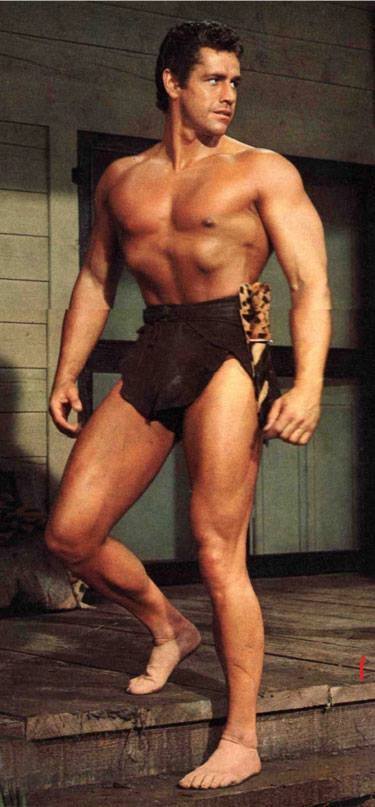
Here’s a Throwback Thursday hunk for you, actor and physique model Gordon Scott:

20728242_10212670337849946_4851579278645951324_n

Think of Laura

Zulu is passing now; I can hear the drums of the marching bands. It’s a gorgeous morning, the sun is shining and I am betting the crowds up at the Avenue are deep; they certainly were last night for Orpheus. Paul and I both have to work tomorrow, so we’re ending our Carnival early; taking today to rest and recover so we can hit the ground running on Ash Wednesday. I also have a lot of things to do today; emails to answer, things to write, things to edit, things to read, a kitchen to clean. Even though it was abbreviated this year (I was in Alabama for the first weekend of parades), I enjoyed every bit of Carnival this year; and am already melancholy to see it end as always.

I’ve also been enjoying the hell out of the Winter Olympics, and like millions of people worldwide I am–what’s the word kids use now? Oh yes–stanning Adam Rippon. As a long time figure skating fan, I’ve known of Adam long before these games; I remember when he had a mop of floppy curls; when gossip websites were pairing him and Ashley Wagner as a couple (I rolled my eyes every time I saw the photos), and I remember when he came out. I blogged about homophobia in figure skating a while back; when Adam came out while still on the Olympic eligible circuit I thought to myself you’re never going to win anything now; so I was pleasantly surprised to see him win US Nationals and make the world team in 2016; he missed last season with a broken foot, and this season he is full-on out: his short program is to gay club music, and his long program, as everyone saw the other night, is breathtaking. I’m so happy for both him and Mirai Nagasu, who became the first American woman to land a triple axel at the Olympics that same night; they earned bronze medals as part of the team competition, and I couldn’t be happier for both of them–all of the Americans on the team, to be honest. Adam is so funny and refreshingly himself; a big personality and a natural wit he doesn’t try to hold back, and that honesty…I just can’t get enough. I had tears in my eyes when he finished his long program the other night; Paul and I both screamed when Mirai landed the triple axel. Seeing the trashy homophobes on Twitter trashing him or going after him makes my blood boil; I’ve resisted the urge to reply to them He’s got an Olympic medal and you’re a fifth-rate Twitter troll. Congratulations.

So. There’s that.

And in other news of the fabulous, the lucky world of readers can look forward to the upcoming release of a new Laura Lippman novel, Sunburn. I got an ARC at Bouchercon and read it in one sitting on a rainy Saturday back in October.

sunburn

It’s the sunburned shoulders that get him. Pink, peeling. The burn is two days old, he gauges. Earned on Friday, painful to the touch yesterday, today an itchy soreness that’s hard not to keep fingering, probing, as she’s doing right now in an absentminded way. The skin has started sloughing off, soon those narrow shoulders won’t be so tender. Why would a redhead well into her thirties make such a rookie mistake?

And why is she here, sitting on a barstool, forty-five miles inland, in a town where strangers seldom stop on a Sunday evening? Belleville is the kind of place where people are supposed to pass through and soon they won’t even do that. They’re building a big by-ass so the beach traffic won’t have to slow for the speed trap on the old Main Street. He saw the construction vehicles, idle on Sunday, on his way in. Places like this bar-slash-restaurant, the High-Ho, are probably going to lose what little business they have.

High-Ho. A misprint? Was it supposed to be Heigh-Ho? And if so, was it for the seven dwarfs, heading home from the mines at day’s end, or for the Lone Ranger, riding off into the sunset?  Neither one makes much sense for this place.

Nothing about this makes sense.

Laura Lippman has been one of my favorite writers since I read Baltimore Blues years and years ago. I tore through her Tess Monaghan series, and she very quickly became one of my buy in hardcover authors. I’ve never regretted making that switch, and as she has expanded her skills and pushed herself with her exceptionally brilliant stand alone novels, I’ve never once quibbled but I want another Tess novel! (I do, always, but the stand alones are so fucking fantastic that it doesn’t matter–I really just want a new Lippman, and wish she was on a yearly schedule rather than an eighteen month one.)

Laura’s career trajectory has been most impressive from a writing perspective; because as a writer of stand alones, she has gone from being a literary crime writer to a literary writer about crime, if that makes sense. Each of her stand alones are unique and different from the others; about as far removed from her series as any novels can be and still be by the same author. Each one of these novels are rare pearls, individual and vastly different from the others; different themes, different explorations, different everything. The one common thread that runs through these novels is that they are, for the most part, about women, and what women face in their lives; how they deal with crimes and tragedies that take them out of the ordinary and into the extraordinary. Laura also regularly experiments with form and voice and tense; enormous, dangerous risks as a writer that she somehow always manages to pull off, make engaging and enjoyable, and always manages to tell a story that makes a very compelling point.

Sunburn,  her latest, is as different from anything she has done before as it could be unless she decided to write about vampires or a zombie apocalypse; but she also brings her incredibly powerful sense of empathy to this tale of murder, vengeance, and oh-so-careful planning. The book opens with the main character, Polly Costello, walking away from her husband and child on a beach vacation and winding up in the hard-knock town of Belleville; she is being observed by Adam, who is being paid to keep an eye on her, follow her–but not to become obsessed by her, which is what happens. Their story is told in a very limited third person point of view, alternating between them, and as we slowly get to know them, watch their physical attraction expand and develop into something more, the questions remain: why did Polly walk away from her family and child? How could she do such a thing? Who is this enigmatic redheaded bar waitress?

And just how fucking good does Adam’s grilled cheese sandwich taste?

The prose in this book is lean; not an extra word to be found anywhere, and it is an homage of sorts to the kind of lean, tight, dark noir that the great James M. Cain wrote. (Cain is a hero of mine, and I have always wanted to write something that dark and lean and tight…ironically, one of the ideas I had for such a noir–gay, of course–was also titled Sunburn) I’ve seen, in some of the early reviews, comparisons to Cain’s Double Indemnity and The Postman Always Rings Twice, which seem obvious; there’s an insurance scam buried deep in the plot, it’s set in a bar/diner, it’s about an unexpected, explosive attraction between a man and a woman; there are side plots that end in mysterious deaths… but if anything, I’d say Sunburn is more reminiscent of Cain’s The Cocktail Waitress than anything else.

The book is extraordinary, and probably Laura Lippman’s best work to date; that wisecracking, tight prose; a complicated and complex plot that grows even more complicated as you read another page; fully developed characters you can help but root for, even if their motivations aren’t exactly pure; and ultimately, the book is about a woman with everything stacked against her all of her life, who  never gives up, and makes plans…risky plans; where she gambles everything, including her own happiness and desire, for her future, yet is flexible and smart enough to always adapt.

Polly Costello is a heroine Cain would have been proud to call his own.

St. Elmo’s Fire (Man in Motion)

Lundi Gras, and the downward slope of the marathon. Huzzah! I have a lot to do today; all trying to get it finished in the window before the streets close for tonight’s parades, Proteus and Orpheus. I need to run to the grocery store, get the mail, and am also hoping to get to the gym as well; I’ve not been since last Sunday, but the combination of all the cardio involved with the walking to and from the office, as well as shortened hours because of the parades, has conspired to keep me from my workouts. I cannot go Wednesday morning, either, because the gym is closed until noon; by then I will be at work. So, if I don’t work out today I can’t get to the gym again until Thursday morning, which would be most inopportune. But I am confident I will get back into the swing of my workouts again; despite the Mardi Gras interruption–that always happened in the past, after all, and I was always able to get back to it.

Exhaustion has also precluded me from writing and/or editing over the last week or so; I have plans to get some writing done today as well as some laundry. I have to decide on a story to write for two anthologies, and I desperately need to rewrite/revise/edit another that is due by the end of the month. I am also behind on revisions of the WIP, and I need to get moving on the Scotty book as well. This will, of course, be a short work week; Wednesday thru Friday, so I am hopeful that I can get a lot accomplished in this time period. I should probably get dressed and head out for the errands; the later I wait, the more likely there won’t be a place to park when I get back.

I started reading Killers of the Flower Moon before bed, but it just didn’t grab me right away; I’ll go back to it, I am sure. Instead I started reading The Black Prince of Florence by Catherine Fletcher (Florence! Medicis! History!), and am loving it so far. I doubt that I’ll ever tire of either Italian history, or the Medici family.

I did manage to get back to reading on The Short Story Project as well this weekend, between parades and physical exhaustion. The first was the title story of Joe Hill’s collection, 20th Century Ghost:

The best time to see her is when the place is almost full.

There is the well-known story of the man who wanders in for a late show and finds the vast six-hundred-seat theater almost deserted. Halfway through the movie, he glances around and discovers her sitting next to him, in a chair that had moments before been empty. Her witness stares at her. She turns her head and stares back. She has a nosebleed. Her eyes are wide, stricken. My heart hurts, she whispers. I have to step out for a moment. Will you tell me what I miss? It is in this instant that the person looking at her realizes she is as insubstantial as the shifting blue ray of light cast by the projector. It is possible to see the next seat over through her body. As she rises from her chair, she fades away.

Then there is the story about the group of friends who go into the Rosebud together on a Thursday night. One of the bunch sits down next to a woman by herself, a woman in blue. When the movie doesn’t start right away, the person who sat down beside her decides to make conversation. What’s playing tomorrow? he asks her. The theater is dark tomorrow, she whispers. This is the last show. Shortly after the movie begins she vanishes. On the drive home, the man who spoke to her is killed in a car accident.

This is a great short story; a ghost story about a haunted movie theater. It moves very quickly, and I love how Hill sucks you in almost immediately. I am greatly enjoying reading Hill’s short stories; and am looking forward to getting back into this collection. It also wraps up perfectly. I’ll be honest; I tried reading two of Hill’s novels and simply couldn’t get into them–which is probably more on me than on him–but as I said, I am loving the short stories, and will undoubtedly go back to the novels; I often find something that didn’t grab me the first time will wind up being something I love when I try it again later.

Then I moved back to Lawrence Block’s Alive in Shape and Color, and the next story up was “Girl with a Fan” by Nicholas Christopher.

On the fifth of June, 1944, a young man stepped off the 9:13 train from Lyon, squinting into the morning light. Tall and slender, he had an asymmetrical face: the right eye higher than the left, the left cheek planed more than the right. He was wearing a brown suit, black shirt, yellow tie, and brown fedora. His suit was rumpled, his boots scuffed. He was carrying a leather briefcase with a brass lock. His pants cuffs were faintly speckled with yellow paint.

He cast a long shadow as he walked down the platform. Halfway to the station, two men in leather coats came up from behind and gripped his arms. One of them pressed a pistol in his side, the other grabbed his briefcase. They veered away from the station, guiding him roughly down an alley to a waiting car. A man in dark glasses was behind the wheel. He was bald, with an eagle tattooed at the base of his skull.

At first, this story seemed a bit off to me; it didn’t really fit with the rest of the stories I’ve read in Block’s ‘inspired by a painting’ anthologies. For one thing, it jumped around in time and place, going from Nazi-occupied France to the south seas back to France in the late nineteenth century again; but linking these three different narratives was Gauguin’s painting, “Girl with a Fan”: where the fan came from, when the work was actually painted, and what happened–was happening–with the painting under the Nazi pillaging of the occupied country. Once I grasped what Christopher was doing with his story, I began enjoying it; it’s not easy to juggle three different stories, locations, and time-lines in the space of one short story. Well done, Mr. Christopher, well done indeed!

I also read some others, and will probably continue reading some more today; but I shall save those for a future entry.

And now, back to the spice mines. Here’s a hunk to get you through your own Lundi Gras.

26239311_1968685823379963_6551530354373772271_n

Don’t You (Forget About Me)

I hit the wall yesterday during Iris. I came back home to rest for a bit before Tucks arrived, and was so exhausted from everything that I decided that it was wiser to just stay in the house and rest, otherwise there was no way I’d make it to any of today’s parades. There are four today; Okeanos, Mid-City, Thoth, and Bacchus. I usually make Okeanos and Mid-city; but am too tired for Thoth and Bacchus. I’ve never seen Thoth; we used to go to the Quarter in the afternoon on Sundays, and then I worked outreach during Thoth. The last few years I’ve not done outreach on Sundays I’ve been too tired; and I don’t think I’ve seen Bacchus since Drew Brees reigned. I’m going to give it my best shot today.

The rain held off yesterday until Endymion; I was ensconced in my easy chair streaming Spiderman Homecoming when the thunderstorm arrived and it was a beaut. The thunder was so loud and long the house shook; and the downpours so intense that there was some street flooding (nothing major, like in August; but still it sucked for both the Endymion riders and the folks out there watching).

I also watched, in my ongoing quest to rewatch as many of the disaster movies of the 1970’s as possible, Earthquake, which was, without a doubt, one of the worst movies ever made. The whole point of the disaster formula was to see how people–character archetypes, really–placed in extraordinary circumstances having to experience physical difficulties and hardships and emotional distress, to see if they can overcome this and survive; and at the end, some do: the damaged plane lands safely, the fire is put out, they get off the sinking ship. But by it’s very nature, making a film about an earthquake doesn’t end with the characters getting to safety; therefore there is no way to end the film on a satisfying note for the viewers. So, Earthquake merely ends with the camera pulling away from the characters who’ve just escaped the flooding tunnel, showing a ever expanding view of the ruins of Los Angeles, where many fires are still burning; a most unsatisfying end to the film. But it’s not like we cared about any of the characters in the first place, particularly the main character, played woodenly by Charlton Heston. Heston was never the best of actors to begin with; his idea of acting was over-acting under the best of circumstances and at worst, woodenly reading his lines with absolutely no emotion whatsoever. The casting choices made for the movie were also curious; Lorne Greene was playing Ava Gardner’s father and Heston’s father-in-law, despite being only seven years older than the former and eight years older than the latter; his current love interest was played by Genevieve Bujold, who was only thirty. I’m a fan of Gardner, to be honest, but she’s terrible in this film. Everyone is terrible in this film, from the afore-mentioned stars to the rest of the cast, which includes Richard Roundtree, George Kennedy, Victoria Principal, and Marjoe Gortner. Even by 70’s standards, the special effects are particularly bad; and there really isn’t a cohesive story for any of the characters, so the actors have no center for their performances. It was just an attempt to cash in on the success of the Airport movies and the disaster movie craze of the time; with the end result that it’s a terrible, terrible film.

Spiderman Homecoming, however, is just as charming on a second viewing as it was on the first; and Tom Holland is so appealing, as are all of the diverse young actors who play his friends, or frenemies, at his high school. Michael Keaton makes a great bad guy, and the guest appearances by the other Marvel heroes–Iron Man and Captain America–successfully weave the character of Spiderman into the Marvel/Avengers universe. Also, by not  making it an origin story–we already see Peter with his powers, his uncle is already dead–and instead making it about him trying to adapt to his powers while juggling his life as a high school teenager, made it a much stronger film. Well done, Marvel.

After that, we watched the Olympics. I also did some reading, getting back to the Short Story Project, and then I slept deeply and well; I even allowed myself to sleep in, and this morning other than some slight aches in my lower back I feel terrific. Okeanos starts in fifteen minutes; I am not sure which parades I’ll be watching today. There’s rain again in the forecast, and this morning the windows are covered with condensation, just like yesterday. It does seem bright out there, but there’s an awful lot of cloud cover as well. Paul is still sleeping, so there’s that as well. 😉 I don’t like waking him up on the weekends, and besides, Okeanos won’t be here for another hour at least. Iris kept stalling yesterday; despite moving up an hour it still wasn’t finished passing here until almost one thirty.

I don’t have to work tomorrow; Paul’s going into the office for a bit, so I will most likely make a grocery run in the morning and try to get some work done around here as well. I need to get back to work on everything; just because everything in New Orleans comes to a screeching halt for Carnival, we sometimes forget that the rest of the world does not.

Ah, well. And I need to clean the kitchen again; I’m hoping to cook out today, should the weather hold.

Here’s a hunk for your Sunday:

IMG_3587

The Power of Love

The sun is shining. I haven’t checked the weather yet, but both Iris and Tucks were moved up an hour today due to thunderstorm forecasts. It may rain, despite the sunshine this morning; my windows are covered in condensation so it’s definitely humid out there.

A quick perusal of the weather forecast, however, shows a possibility of a thunderstorm this afternoon around 2–although the little image of the cloud with a lightning bolt on it also says, right above it, “0% chance of rain.” It’s also going to be in the 70’s today; beautiful weather for Iris and Tucks; though it might rain on Endymion tonight. I’m not concerned–Endymion doesn’t go down St. Charles so we never watch it. We used to go out dancing on Endymion Saturday, so we would walk down the parade route to get to the Quarter, and be buried in beads on the way (it does follow St. Charles in the CBD, and goes around Lee Circle before heading back up to the Superdome). But we don’t go dancing during Mardi Gras anymore–I don’t think  my old legs could handle it; they are very tired and sore this morning from all the walking and the outreach yesterday.

Yesterday was beautiful; I walked to work around one o’clock and took lots of pictures along the way. The Quarter was a madhouse; second lines and marching bands everywhere. We gave away 4500 condoms yesterday; we started at 3:15. I was supposed to work the second shift as well as the first, but at 6:00 when the others showed up we were down to less than 200 condoms, so I wished them well and walked home. Paul had been invited to a parade party at the New Orleans Advocate office on St. Charles; I couldn’t go because of outreach. But as I walked home, and walked past their office, I glanced in through the entry way and saw Paul; so I called his name and I got in. Their building, which used to house Michaud’s Cajun restaurant for years, are gorgeous; it’s where I saw Colson Whitehead speak last year. But I had never been up onto their balcony, which is way up there. We went up and watched the start of the Hermes parade, and the decided to walk home. I got some great pictures from up there as well.

This one is a particular favorite:

IMG_3865.JPG

Gorgeous, right?

We came home, fed the cats, and I took a shower while Paul watched the end of the LSU-Missouri gymnastics meet on-line, and then we headed out to the corner for Krewe d’Etat and Morpheus. We caught a shit ton of stuff out there–Morpheus is a great parade, but by the time it arrives the crowd has thinned out so much it’s easy to catch things, and they throw a lot. Then when it was all over, around 11:36 last night, we came inside and chilled. I finished reading Pictures at a Revolution last night, which I’ll blog about at some point after all the madness is over–just a few more days!

But now I have to pick another non-fiction book to read before bed, and I am leaning towards some true-crime-ish; perhaps the Edgar nominated Killers of the Flower Moon: The Osage Murders and the Birth of the FBI. I don’t read near enough true crime, and I also just realized I am not reading anything fictional, either; between the trip to Alabama, working on the anthology, and Carnival, I’ve not really sat down and picked something out to read. And I am also behind on the short story project. Heavy heaving sigh.

But I did take Monday off–tomorrow is going to be insane, four parades on the Avenue–so I am hoping to be able to use that day to get some rest, get back to the gym, and get caught up on things I am too tired to do over this weekend.

And now, back to the spice mines. Iris rolls in a little over half an hour!

We Built This City

Mardi Gras is a marathon, not a sprint.

I am already tired and achy, and we’re only on Friday. I live inside the St. Charles parade route–the parades pass by the corner at my house–which can make Carnival a challenge. I can’t get my car home from work–even if I dared brave the horror of parade traffic, I can’t get across St. Charles anyway–so I generally have to walk to and from work (the streetcar isn’t reliable during Carnival, and it’s always packed with tourists like a can of sardines), which is about 2.5 miles in each direction. On the way home, of course, the parades are already rolling which means mobs of people to try to get through, many of them already intoxicated and the rest well on their way. Right now, on Friday morning of the home stretch, my lower back is already sore and I have a blister on one of my toes; my hip and knee joints are achy and tired, and my shoulders are sore from holding them up in the air to try to attract the attention of riders. Heavy sigh. And living in the parade route also means routine chores–grocery store, etc.–require about the same amount of planning and attention to detail as the Normandy invasion. I managed to get that taken care of yesterday morning before heading to the office; and I sure hope we’re good for the weekend, because the next window of opportunity is Monday.

But I love Carnival, I do; I just wish I had the energy and the fit body of my younger self. It does take a toll on you; when I got home from work last night I was so tired and achy and mentally fatigued I seriously considered skipping Muses, which is one of my favorites. But once I was out there and caught my first throw, I forgot about everything and felt like a kid again; laughing and dancing to the marching bands, running out into the street and yelling with my hands up, jumping up and down with a big ole silly grin on my face. We caught everything that makes Muses special: a shoe, a shoe bracelet, a shoe medallion, duck medallions, and the inevitable go-cups. At one point a go-cup landed at my feet and a woman asked me if I minded if she took it: “I have a Muses cup from every year but I haven’t gotten one this year yet.” Not only did we let her have it, but I gave her the ones I’d already caught.

Carnival is about many things, but not the least of them are generosity, civility, and community; I got so annoyed at people who are bitchy or greedy during parades. You’re missing the point of Carnival, I want to say to them, it’s not just about catching things; it’s about our sense of community and that we all have to get along together; a reminder that we’re all in this together.

There’s not enough of that in this country anymore.

The Lost Apartment is in ruins as well; I need to spend this morning creating some semblance of order before the madness of the weekend. If I don’t do it today, it will take the entire day Monday.

Heavy heaving sigh.

And now back to the spice mines.

f309b4fe5192fe5bb79c967294ef344b--hot-hunks-sexy-men

Can’t Fight This Feeling

Parades tonight–three to be exact. I have to walk to the office today; and then I get to walk home tonight after work. Ah, Carnival, how you mess with my life. It’s also supposed to rain throughout the day; huzzah! Can’t wait.

There’s actually a lot of rain forecast over this final weekend of Carnival, and the police chief has already said they cannot accommodate rescheduled parades; so it’s roll or cancel. That’s actually kind of a relief, to be honest; I’ll never forget that year Endymion was rescheduled to follow Bacchus on Sunday night. It was absolutely insane in the ‘hood; I don’t think Endymion finished passing until three in the morning. There was another year when all the Thursday parades were moved to Friday; again, they were still going past in the wee hours of the morning. I mean, sure it sucks for the krewes and the riders to have to cancel; but rescheduling totally sucks when you live inside the parade route.

Needless to say, as I continue to work on Sunny Places Shady People the Short Story Project has kind of taken a few days off; I’ll probably get back to it at some point over the weekend. I also got back to work on the new Scotty this evening; Chapter Three is getting there. I only managed to write about six hundred words today, but I’ve not written since last Thursday so I am taking six hundred words as a win. Hopefully I’ll get more this week.

I didn’t want to get up this morning, and the weather is actually looking relatively pleasant out there–no sign of the rain yet–and I decided not to go to the gym this morning; more out of a sense of not being rushed and stressed. I don’t have to be at the office tomorrow until around one, which gives me the morning to work out, get some things done around here, and plenty of time to walk to the office and be on time. I also don’t have to be there until later on Friday as well–condom outreach–so I am going to commit the cardinal sin of lifting weights two days in a row. Oh, dear! But it’ll be fine, and I am glad I am getting into a regular routine, which means that even if I have to miss it’s not out of laziness but rather practicality, and I plan to replace that day’s workout. And we all know how much I love planning.

Yay!

All right, I’d best be getting back to the spice mines. Here’s a shirtless hunk to tempt the fascists at Facebook to ban me yet again.

IMG_1245


Wake Me Up Before You Go-Go

I overslept this morning, which is really fine; I feel very rested, which means I needed the sleep and my muscles, which have felt tired all week, don’t this morning; so there you have it. I have some errands to run in the early afternoon, and I also have some writing to do today; I need to finish a chapter in the WIP and finish one in the Scotty. I should probably do so organizing and of course, the Lost Apartment is a mess. I also need to revise two short stories, whose due dates are rapidly approaching. Next weekend I will be in Alabama for the Murder in the Magic City/Murder on the Menu events, and the next weekend is the final parade weekend of Carnival (yes I am missing the first weekend for the first time in years). I do hate missing the King Arthur parade; I have lots of friends and acquaintances in that one, so I generally get buried in beads. I can’t believe I agreed to miss that weekend, but I also was so busy making sure it wasn’t the final weekend of Carnival that I didn’t notice.

Stupid, stupid, stupid Gregalicious.

Heavy sigh. I finished watching the first season of Black Sails last night, both at the gym and then when I got home after; I am, as I have said, really enjoying the show. I can’t quite figure out why I didn’t like this show when I tried to watch it several years ago, but I am really enjoying it now and glad I gave it another chance. I suspect I didn’t pay enough attention to it as I watched, and you kind of need to pay attention. There’s a lot going on, there are a lot of cross-plots, and lots of scheming. I don’t think I much cared for the way the women were treated in the first episode or two, either; it appeared that the women were all whores or mistreated terribly by men. But that’s not the case; the women are stronger and smarter than the men, and Eleanor Guthrie, who runs Nassau, is developing into quite the cold-blooded manipulative she-devil, which I am also rather loving. And of course, you can never go wrong with a hot, sweaty men in tight leather pants. My favorite, of course, is Tom Hopper, but Zach MacGowan, who plays Captain Charles Vane (and also played Roan on The 100; I thought he looked familiar) isn’t a slouch either.

Zach-Mcgowan-main

I also read two short stories last night, both horror, to keep the Short Story Project going.

The first, “Minuke,” by Nigel Keale, is from a very thick book edited by Marvin Kaye called Ghosts:

The estate agent kept an uncomfortable silence until we reached his car. “Frankly, I wish you hadn’t gotten wind of that,” he said. “Don’t know how you did: I thought I had the whole thing carefully disposed of. Oh, please get in.”

He pulled his car forward and frowned. “It puts me in a rather awkward spot. I suppose I;d better tell you all I know about the case, or you’d be suspecting me of heaven-knows-what kinds of chicanery in your own.”

As we set off to see the property I was interested in, he shifted the cigarette to the side of his mouth,

“It’s quite a distance, so I can tell you on the way there,” he said. “We’ll pass the very spot, as a matter of fact, and you can see it for yourself. Such as there is to see.”

This is a ghost story, or more properly, the story of a haunting;  it was originally written and published in 1950–which makes the story sixty-eight! It’s also told in a classic horror trope that is hardly used anymore, because it’s become cliche–someone is telling the story of what happened to someone else, a disinterested party. Stephen King has used this method a time or two; most notably in his novella “The Breathing Method” from Different Seasons, and sometimes in short stories. It’s a very classic trope–Dracula is an epistolary novel, after all, told in diary entries and letters. But at the time “Minuke” was originally published, horror wasn’t considered a form of literature and as such tropes hadn’t evolved into cliches quite yet, and it’s a well-told tale. The house of the title is merely a bungalow, built in the housing boom of the post-war era, and therefore its tenants are the first to live there; it is too young of a house to have a haunting, and yet it does. It turns out, you see, when the foundations were being dug, they came across some ancient Norse grave markers…(of course, at the time the story was written Poltergeist was many years away in the future, and the ‘never build on an Indian burial ground’ theme hadn’t become deeply engrained in the culture).

(Aside: the collection Ghosts is a gorgeous, leather bound edition with gold inlay and a ribbon page marker that I purchased for a few bucks off a sale table at Borders many years ago; I don’t know why I’ve never dipped into it before, but it’s going to definitely play a role in this year’s Short Story Project.)

The second story I read was “Fallen Boys” by Mark Morris, from Best Horror of the Year Volume Three, compiled and selected by Ellen Datlow, and originally published in Jonathon Oliver anthology The End of the Line:

When the child screamed, Tess Morton felt guilty for having to repress the urge to snap at it. She was aware that it wasn’t Matthew Bellings who should be punished, but his tormentors, and yet the boy’s cry of pain or distress was so whiny that it grated on her nerves.

The reason she felt little compassion for the child was because she knew it took almost nothing to provoke a wail of complaint from him. Matthew would cry out whenever someone barged into him in the school corridor; whenever a football was kicked towards him in the playground; whenever a classmate flicked a paper pellet at him, or snatched a text book out of his hand, or pushed in front of him in the lunch queue. Indeed, the merest slight would cause Matthew’s red-cheeked, strangely wizened face to crumple, his mouth to twist open and that familiar, toe-curling bleat to emerge.

This story, about a class field trip to an abandoned tin mine (now open as a tourist attraction and advertised as an education experience for children), is predicated on a horrific truth about bullying that we don’t like to acknowledge or understand; one that Stephen King exposed and explored powerfully in his own debut novel, Carrie. 

When we read accounts about bullying, and how teachers and other adults look the other way, we are horrified by it; when we read short stories and novels about bullying  our hearts naturally go out to the victims and we loathe the bullies and their enablers; long for their comeuppance, and are infinitely satisfied when it does come. But that bears no resemblance to the reality. That comes from the emotional distance, and the pleasant lies we so often tell ourselves, the lies about who we are as people, and how we would behave in certain circumstances–we identify with heroes and see ourselves as heroes; part of the brilliance of Stephen King’s work is he so often lays bare that horrific truth that we aren’t all heroes.

Take Tess Morton, the teacher taking her kids on this field trip. The story is completely told from her point of view. She knows that kids are bullying Matthew, and she also knows that as the voice of authority she has to try to put a stop to it. She does try, but it’s not taking because Matthew himself irritates her and sometimes she herself wants nothing more than to give him a good slap. This is the same way Miss Desjardin, the gym teacher who stops the shower assault on Carrie White in the opening scene of Carrie, feels about the victim; she has to punish the girls who did it, but Carrie irritates her, she wants to smack her a good one, and she understands why Carrie is bullied.

This is also why school–the hallways, the playground, the cafeteria, the gym–is so scarring for so many people, because they are so evocative of Lord of the Flies or The Hunger Games.

This is a great story; Morris builds his suspense beautifully, and the denouement is rather sudden when it happens–more than a little reminiscent of EC Comics, but it’s also rather satisfying.

And now. back to the spice mines.

Dancing in the Sheets

The sun is shining, and the temperature has climbed to 49 degrees. The boil-water advisory ended finally last evening–it’s just not a crisis in New Orleans unless we have a boil-water advisory!–and here I sit this morning, ensconced at my desk with a cup of coffee, a load of laundry tumbling in the dryer, with great expectations of the day. I went to the gym last evening after work, and my muscles, while a bit tired, still feel stretched and worked and supple, if that makes sense. Probably the best thing about rededicating myself to physical exercise again is how much better I feel; I don’t ache or feel tired the way I did just last week, and the stretching and the treadmill are also making me feel ever so much better. Today, I am going to clean (if it’s Saturday I must be cleaning) but I am also going to write, edit and read today. Paul is going into the office to work (it’s that time of year again) and so I have the day to myself. I want to finish the first draft of “The Trouble with Autofill” and I want to edit “Cold Beer No Flies.”

Among many other things; my to-do list is ridiculous, quite frankly. But the only way to make progress is not to get overwhelmed by the enormity of the list but rather to keep plugging away at it.

I finished reading Miami by Joan Didion earlier this week, and it was quite good. Didion’s writing style is quite amazing, actually, and while the story of the book might seem, at first glance, to be rather dated; the truth is it is still very much appropriate to our modern times. Miami is a look at the Cuban exiles in the city, how they relate to each other, and how they impact south Florida politically; and to a lesser extent, the relationship between the US government with them as well as with Castro’s Cuba. During the Cold War Cuba was a much more terrifying apparition, close as it was to Florida, and it’s amazing how people do not realize the political clout, as a result of their sheer numbers, that the Cuban immigrants weld in that part of the state, and in the entire state as well. The importance of Florida as a swing state cannot be discounted; and therefore the Cuban-American community’s influence on national politics is something that has to always be considered. (A present day comparison would be the Puerto Ricans moving to Florida today in great numbers as a result of the hurricane destruction of their island; the difference being those Puerto Ricans are already American citizens who can register to vote and can impact 2018 already.) Didion’s look at Miami in the 1980’s, as a Caribbean city on the mainland, is also reminiscent of descriptions of New Orleans as the northernmost Caribbean city; the thing I love the most about Didion’s work is how she makes you think. Reading Miami made me want to write about Miami; I’ve been wanting to write about Florida for a long time, as Constant Reader already knows. Something to ponder.

miami

I also started reading Mark Harris’ Pictures at a Revolution, which is a look at the film industry through the lens of the five films nominated for the Academy Award for Best Picture in 1967, and how they were made. Harris’ thesis is that was the year that bridged the gap between old and new Hollywood; and the five Best Picture nominees illustrated that perfectly: an expensive musical flop (Doctor Dolittle); two old style Hollywood pictures about race (Guess Who’s Coming to Dinner and In the Heat of the Night), and two films that illustrated new Hollywood and its influence by European filmmakers like Truffaut and Fellini and Antonioni (Bonnie and Clyde and The Graduate). I, of course, have always been fascinated by Hollywood history and have been ever since I read Garson Kanin’s Tracy and Hepburn and Bob Thomas’ Selznick as a kid; this book is right up my alley, and since it’s been awhile since I’ve read any Hollywood history, I am looking forward to reading this (and his Five Came Back–I’ve already watched the documentary based on it).

The Short Story Project also moves apace; I am frequently surprised as I look through my shelves for something to read how many single author collections and anthologies dot them. My Ipad also has quite a few loaded onto the Kindle app; I often buy them when they are either free or reduced in price, and so my Kindle app is filled with books I’ve not yet read, primarily because I don’t like to read on it (which I realize is nothing more than stubbornness; if I can watch movies or television programs on it, why resist reading books there?) Yesterday I found my battered old Dell paperback of Agatha Christie’s The Golden Ball and Other Stories, which I remember loving as a child. I was looking for my copy of Lawrence Block’s first anthology inspired by paintings–those of Edward Hopper– In Sunlight or in Shadow, which I would have sworn I’d purchased in hardcover; yet it wasn’t anywhere on the shelves or in any of the TBR piles, before remembering I’d bought it as an ebook when the Macavity nominations come out; Block’s story “Autumn at the Automat” was a finalist, along with mine (I still can’t believe it) and I wanted to read all the other nominated stories for an entry, so the immediacy of the need required buying the ebook. It is a handsome volume, though, so I’ll need to buy a hard copy to pair with the new one. (New bucket list item: write a story for one of these anthologies by Lawrence Block)

Once I’d located it on the iPad, I scoured the table of contents and landed on a Joyce Carol Oates story, “The Woman in the Window.” I have to confess I’ve not read much of Ms. Oates; I am not even remotely familiar with what she writes. But she, too, was a Macavity finalist last year, for her story “The Crawl Space” (which also won the Stoker Award), and that story creeped me the fuck out. I know she’s been a Stoker finalist before, but I also think she tends to write across genre a lot and therefore isn’t pigeon-holed in one way or the other.

Beneath the cushion of the plush blue chair she has hidden it.

Almost shyly her fingers grope for it, then recoil as if it were burning-hot.

No! None of this will happen, don’t be ridiculous!

It is eleven A.M. He has promised to meet her in this room in which it is always eleven A.M.

This story, frankly, isn’t as strong as “The Crawl Space,” but it’s an interesting exercise in how thin the line between lust and loathing is; the woman of the title is a secretary having an affair with a much wealthier man, and as she gets older and older she is feeling more and more trapped in the relationship; he is married and he often has to break plans with her for his wife. There is also a shift occasionally to his point of view, and he’s not so fond of her anymore, either. Passion has cooled but habit has set in; and the way those lines can get crossed is chilling–and how destructive such a relationship can be to both parties, emotionally and mentally, is explored in great detail yet sparse language by Ms. Oates. The story’s not as creepy, as I said, as the other; but the end–which she leaves kind of hanging–you do feel that something awful is going to happen; maybe not today, maybe not tomorrow, but eventually.

I’ve not read Joe Hill before, and there are several reasons for that; none of which would make any sense to anyone who is not me; I am nothing if not aware of my own eccentricities, which is why I generally don’t share them with people; I don’t need someone else to point out that something doesn’t make sense. But I do have a copy of his short story collection 20th Century Ghosts, which I spied on the shelves as I looked for my copy of the Block anthology. Aha, I thought, perfect. I can read a Joe Hill story for the Short Story Project. So, I curled up under a blanket in my easy chair, waited for Scooter to get settled in my lap, and started reading “Best New Horror.”

A month before his deadline, Eddie Carroll ripped open a manila envelope, and a magazine called The True North Literary Review slipped out into his hands. Carroll was used to getting magazines in the mail, although most of them had titles like Cemetery Dance and specialized in horror fiction. People sent him their books, too. Piles of them cluttered his Brookline townhouse, a heap on the couch in his office, a stack by the coffee maker. Books of horror stories, all of them.

No one had time to read them all, although once–when he was in his early thirties and just starting out as the editor of America’s Best New Horror–he had made a conscientious effort to try. Carroll had guided sixteen volumes of Best New Horror to press, had been working on the series for over a third of his life now. It added up to thousands of hours of reading and proofing and letter-writing, thousands of hours he could never have back.

He had come to hate the magazines especially. So many of them used the cheapest ink, and he had learned to loathe the way it came off on his fingers, the harsh stink of it.

I did not mention the elephant in the room; said elephant, of course, being that Joe Hill is Stephen King’s son. (The Kings are a very literary family; Mr. King’s wife Tabitha is a poet and a novelist; their other son Owen also writes, as does Owen’s wife, Kelly Braffet; I read a novel by Ms. Braffet sometime in the last couple of years–not aware of the King connection–and greatly enjoyed it.)

But simply based on a reading of “Best New Horror,” I have to say Joe Hill is also a terrific writer. And while it, like some of his father’s work, bears a strong resemblance to something I would have read in an Tales from the Crypt or House of Mystery comic book–that is not a criticism. I loved those comics, and the stories I read in them; they had a deep influence on me not only as a writer but as a reader. “Best New Horror”, as you can tell by the opening, tells the tale of Eddie Carroll, a writing teacher and a long-time editor of the Best New Horror series, a chore he has learned to loathe and, basically, phone in every year for the money. This resonated with me; as an anthology editor myself, one of the reasons I stepped away from editing them–or took a break from doing it–was because it was becoming rote; a chore rather than something I found joy in doing. Eddie is an example of why I stopped–I didn’t want to become like him; embittered by the experience and tired of not finding anything fresh or new (unlike Eddie, I was able to keep the experience fresh because each anthology I did was a new topic; if I had done twenty anthologies with the same theme I would have gone on a killing spree). But in the mail comes a story from a new writer that is simply brilliant; original and fresh and resonant and horrifying in its reality; the story reinvigorates Eddie and makes the editing job no longer a chore; he has to have this story, and will do whatever he has to in order to track the writer down…but as with any horror  tale of obsession, it’s not going to end well. But Hill brilliantly keeps stringing the reader along, and the ending is just absolutely brilliant and clever. I am really looking forward to reading more of these stories.

And now, I must get back to the spice mines. There are clothes to fold, dishes to wash, floors to clean, stories to write and edit; I am probably coming back here for another entry later as I am trying to get caught up on posting the stories I’ve read–but I make no promises. I have another story to write as a call for submissions crossed my computer screen on Thursday; I have an unfinished story that I can repurpose, but I also need to get a first draft done so I can work the story out.

Until later, Constant Reader.