Broken Wings


I have written, from time to time, about the issues I face  as a “gay author.”  I try not to get into it often; I always fear there’s a stench of sour grapes when I talk about the challenges of being a gay author of fiction that place gay men in the center of their own stories. Revolutionary, right?

When I first started publishing, back when dinosaurs roamed the earth, ironically there was a movement by gay authors to not be called or considered “gay” authors. More than one disdainfully told me when refusing to be interviewed for either Lambda Book Report when I was editor or for one of the queer newspapers I wrote for, or said on panel discussions at conferences, “I’m not a gay writer; I’m a writer who happens to be gay. You don’t call them straight writers, after all.” This statement, which I heard on more than one occasion, always took me aback, because the truth was it didn’t matter what you called yourself; booksellers and reviewers and readers would still see you that way. There was an arrogance, a smugness, to it; kind of saying yes, technically I am but I am not one of those writers, don’t lump me in with THEM.

Basically, you can call yourself whatever you want, but the market and the industry won’t give a rat’s ass what you call yourself.

Case in point: without fail, when you’re a gay author (or a queer author, or whatever kind of minority writer you might be) and you attend a mainstream writer’s/reader’s conference for whatever genre you may write in, you will inevitably find yourself assigned to what’s called a diversity panel. Make no mistake about it: these panels are important and do need to be held. My primary objection to them is their ghettoization aspect; i.e., the only thing of value these authors have to add to the conference conversation is whatever it is that marginalizes them. I have always argued that any minority writer assigned to a diversity panel should also be assigned to another panel. Reducing a minority writer’s value to simply being able to speak to diversity issues doesn’t help the author; and if we are really concerned about increasing diversity in publishing/whatever genre we are discussing, then audiences besides those who show up for diversity panels should also be exposed to those minority writers. People who come to diversity panels already are hungry for diversity in their reading and writing, which makes it a little bit of preaching to the choir.

Case in point: I was at a mainstream genre conference a few years ago, and of course was assigned to the diversity panel. (I was assigned to another, so I was fine with it.) It was an interesting mix of people, but as we talked about how to find and help new minority writers, a noted editor on the panel, cut me off and passionately said, But it has to be about the WRITING. The WRITING has to be good.

In other words, the reason we don’t have more diversity in publishing in general is because the writing isn’t good.

My jaw literally dropped, and I was stunned into silence by the implications of this noted, and relatively powerful, editor’s statement.

And it takes, as you can imagine, a lot to stun me into silence.

During the years 2004-2008 I kind of withdrew into myself and wasn’t really paying attention to the world of LGBTQ publishing as I had from 1997-2004; a lot of things were going on in my personal life, Katrina happened, and I basically just kept my head down and did my work. It seems, to me, looking back, that the world of LGBTQ publishing changed dramatically during that four years I wasn’t paying attention, when I wasn’t deeply immersed in it; perhaps these things were around before and I simply hadn’t been aware, or noticed; but when I started looking around again at queer publishing I became very aware of something that I hadn’t been aware of before: a new-subgenre of fiction called “m/m”; which was fiction about gay men written by straight women for other straight women (a generalization, of course; some of it is written by gay men and some of the authors are queer-identified women, and likewise, the readership is not all, but primarily, straight women). I found it to be a rather interesting phenomenon; I had always argued that gay male writers should market our work to heterosexual women, so it didn’t bother me that straight women were writing about gay characters and gay themes. I’ve always believed writers should write about subjects and characters they are passionate about, and if straight women were passionate about writing about gay men, more power to them, and welcome to our little niche of the publishing world. I certainly don’t want anyone telling me what I can and cannot write, or who I can write about, any more than any other writer would. There was a bit of a kerfuffle over the Lambda Literary Awards back then making a rule stating the awards were only for actual LGBTQ writers, and there was some outrage about that. I completely concurred with the outrage; the awards were for books and writing rather than the actual author. In my opinion, if a straight woman wrote a great and deserving book about a gay man, why not allow her to enter the Lambdas? The book and its writing is what, ostensibly, was being judged; let it be judged on those merits.

Yet I also noticed, in the wake of this decision by the Lambdas (which was later reversed), some horrific commentary and borderline, if not outright, homophobic statements being made by some of these ostensible so-called allies; homophobic statements always seem to rear their ugly heads whenever any gay man dares question the validity and/or authenticity of these works:

If authors only wrote from their experience, we wouldn’t have science fiction or vampires or werewolves.

Funny how a community that wants to be accepted and treated equally will discriminate.

The first is so fucking offensive on its face I don’t think I really need to explain precisely why it is; but imagine if a white writer said that in defense of writing about a black main characterYes, Virginia, queers ARE like mythological creatures or beings from another planet, so you just go right ahead! Frankly, if this is your line of thinking, you definitely shouldn’t be writing stories about characters with experiences different than your own. Imagine if I said well, of course I can write about a straight woman because it’s really no different than writing about werewolves or vampires or Martians.

If that’s not clear enough for you, try this: WE ARE HUMAN BEINGS.

The second is an implied threat; you need our support to get your equal rights as citizens so how dare you question us? You’d better shut your mouth and toe the line or else, you know, I might vote for homophobic candidates!

Ah, yes, the blackmail argument, which begs the question: Are you really an ally? A real ally doesn’t support a community so long as it toes the line of cisgender straight white people’s way of thinking.

Has there been a more flagrant and obvious expression of clueless straight privilege?

Another favorite was well, the best novels about gay men have always been written by straight women! Mary Renault and Patricia Nell Warren, to name two!

Ah, nothing like a nice straight white lady turning actual lesbians into straight ladies in order to prove their point. Um…yeah.

Or, my personal favorite, gay fiction largely began on the Internet, which erases decades of powerful writing by successful LGBTQ fiction writers, and their careers–not to mention all those Lambda Literary Awards given out, apparently, to “Internet writing” in the late 1980’s thru the mid 1990’s….

Needless to say, when I denounced the exclusion of their books but called out the homophobia…if you guessed they ignored the fact that I was on their side in general but instead focused on me calling out their comments as homophobic, you guessed correctly.

Seriously?

In 1998, Sarah Schulman published Stagestruck: Theater, AIDS, and the Marketing of Gay America. As a gay man of a certain age, reading (and reviewing) this book was an eye-opening experience. In that year, we were in approximately the seventeenth year or so of the HIV/AIDS crisis in the United States, but things were starting to change and look different. Medications were being developed and prescribed that lengthened life and reduced the impact of the HIV virus on immune systems; there was light at the end of the proverbial tunnel, and it looked like an HIV/AIDS diagnosis might not be the death sentence it had been since its first discovery.

Schulman’s book opened with her being made aware of similarities between her novel People in Trouble and the hit Broadway musical Rent.

Here’s what happened: I was twenty-eight years old in 1987, the year I joined ACT UP (the just-born AIDS Coalition To Unleash Power) and full throttle into a love affair with a married woman. An artist, she was very conflicted about sexuality with women and had contempt for the gay community in general. She practiced an art ideology that equated formal invention with radical content, something I contest passionately. My fantasy was that by exposing her to the realities of the AIDS crisis, she would drop her blinders about the functions of homophobia and simultaneously develop an understanding of the value of artwork based in experience. Needless to say, older now, I understand that my project was doomed from the start.

That year I completed my fourth novel, People in Trouble, about a love triangle composed of a married artist couple and the woman’s younger lesbian lover. The novel was set against the backdrop of the AIDS crisis and featured many scenes and feelings that came out of my actual experience. People in Trouble is about an East Village performance artist who is at the end of a relationship with a male artist and who, despite her own homophobia, falls in love with a lesbian. She creates a performance piece that targets a greedy landlord who is evicting people with AIDS. There is a subplot about an interracial gay male couple–one a queen, one an activist–in which ones dies of AIDS. A second subplot involves an activist group called Justice, who devise a credit card scam to feed homeless people. It was, as David Leavitt wrote in 1990, “the first work of fiction that portrays the enormous activist response the epidemic has generated.” And the book clearly showed how this response was firmly rooted in the gay and lesbian community, despite the neglect and inaction of dominant society.

Does the plot of her novel sound familiar?

The first part of Stagestruck, about Schulman trying to get someone, anyone, to acknowledge the great similarities between her book and Rent, was interesting to me, but what was even more interesting to me was the sudden realization she had, which led to the rest of her book, and her thesis: her book, which was well-received and sold well, basically told the same story as one of the behemoth Broadway musical successes of all time; the primary difference being her book centered the point of view of the lesbian in the love triangle while the musical centered the straight male POV. She then took this thesis; that gay and lesbian works can only be presented to a mass audience if told from a heterosexual point of view, and ran with it. She examined marketing of products, the how things are sold to gays and lesbians (and how those marketing techniques differed); film and television, using Philadelphia (the great HIV/AIDS movie, told from the point of view of the homophobic lawyer, whose experience with the dying gay man was used as an opportunity to grow as a person) as a prime example; the entire book absolutely fascinated me, and it changed forever my perceptions of what is now known as “own voices” in terms of film, books, plays, and television programs.

The other day, on a social media thread, initiated by a female writer about how tired she was of trying to convince straight white male crime writers that representation of other voices and characters wasn’t oppression, I blithely commented, I love to ask them to name a crime novel by a gay man with a gay main character. A very well-meaning straight woman posted a link to a review of one such book as comment in response to mine, adding, here’s a great one to recommend when you run out of the handful.

When. You. Run. Out. Of. The. Handful.

In all honesty, I wasn’t sure whether I should be offended or not. She didn’t mean to be offensive, and props to her for actually knowing such a book to recommend. She clearly had no idea who I was or the kinds of books I write (and have been writing for nearly twenty years), nor how extensive my knowledge of the literature of my community actually is.

And yet…yeah.

The other day, there was some interesting threads going on Twitter because of a book announcement: a nice straight lady, with no doubt good intentions, announced the sale of her latest young adult manuscript, which is about teenagers in 1983 dealing with the HIV/AIDS crisis.

There was some pushback.

First of all, there’s absolutely no reason why a straight woman cannot write a novel about the HIV/AIDS crisis in 1984. I want to be absolutely clear about that. But yes, like Philadelphia, a book about HIV/AIDS that centers the heterosexual point of view on the subject rather than the gay male one is kind of intrinsically offensive. Is that invalid to write about? No, it’s not. But, as Schulman said about Philadelphia, “making straight people the heroes of the HIV/AIDS crisis is a lie.” It wasn’t straight people who created ACT UP or the Gay Men’s Health Crisis or any of the HIV/AIDS organizations that sprang up in response to the epidemic, and the recent historical revisions like the mini-series The Reagans that try to paint Ronald and Nancy Reagan somehow as heroes of the AIDS crisis is a slap in the face to everyone who died during the 1980’s and the people who loved them. Don’t get me wrong: there have always been, and always will be, straight allies in the fight against HIV/AIDS; but the truth is the crisis became an epidemic because of deliberate societal and institutional neglect; or to quote the bigot on the powerful episode of Designing Women, one of the first prime time television series to address the crisis, “At least it’s killing all the right people.”

Because this is what people actually believed at the time.

The beleaguered author also went on to tweet: First off, I was actually in high school in ’83 and the fear affected everyone in different ways which is what this addresses. Second, I worked for a state government’s outreach office in the early ‘90’s bringing money in for prevention and support of AIDS programming 1/2 Third, I worked closely on this with a knowledgeable and generous AIDS activist. Also, there are currently NO YA books about this time in this context. I’m not taking space from a gay male author. Feel free to write one. Seriously. Teens today need to know what it was like.

Those responses, by the way, were written to a gay man who questioned her about her profiting on the experiences and suffering of gay men.

Now, let’s dissect this woman’s tweets, shall we?

  1. “I was actually in high school in 1983 and the fear affected everyone”: ‘I am going to write about the AIDS epidemic in 1983 and center straight people and their fears because that was the most important thing about HIV/AIDS in 1983.
  2. “I worked for a state’s outreach office in the early 90’s bringing money in for prevention and support of AIDS programming”: how very dare you question me, you ungrateful gay man after everything I’ve done for your community!
  3. “I worked closely on this with a knowledgeable and generous AIDS activist”: I have a gay friend. Please note she didn’t actually go so far as to name the activist; so yeah, this is the ever-popular dodge. Nor does she say this activist is a gay man.
  4. “There are currently NO YA books about this time in this context. I’m not taking space from a gay male author. Feel free to write one. Seriously. Teens today need to know what it was like.” Dripping with contempt and privilege here; so this is the one I really want to break down.

First of all, there are very few y/a books from mainstream presses written by gay men about gay teenagers.

I suppose it’s never occurred to Nice White Lady that maybe there are reasons why there aren’t any of these books; namely, for one, we lost almost two entire generations of writers to societal neglect and homophobia which led to the prolonging of this epidemic in the first place.

There is actually plenty of what is called “witness fiction” out there about HIV/AIDS and the 1980’s; in addition to Schulman’s People in Trouble, there are also Christopher Bram’s In Memory of Angel Clare; Felice Picano’s Like People in History; William J. Mann’s The Men from the Boys, simply to name a few—and that’s just in fiction. Paul Monette’s memoir  Borrowed Time is pretty brilliant, as well. It actually won the National Book Award.

And yes, she is right on that score: none of the witness fiction is young adult. Imagine, just imagine, a gay male author trying to sell a young adult novel to a major publisher about HIV/AIDS and gay teens in the 1980s, the 1990’s, or even in the aughts.*

But let’s not forget: I was personally banned from speaking at a GSA in Virginia in 2005. Nancy Garden’s Annie on My Mind was tried for obscenity in Kansas in the early 1990’s.

So…yeah, I can’t imagine a y/a about HIV/AIDS from a period when the majority of people writing about it were gays and lesbians going out to auction in New York.

When I started writing fiction and getting published, of course HIV/AIDS was something I had to think about. Did I want to talk about it in my fictions? In my stories and my novels? I decided not to; fully knowing that some people might see, or consider, this to be an abdication of responsibility. But writing from my own experience, my own witness fiction, drawing from that emotional well, isn’t a place I ever wanted to go to in fiction. I decided not to because there was already plenty of fiction and non-fiction, beautifully rendered and written, that told the HIV/AIDS story. There was also a very strong sense in publishing that I recall in the early aughts that it was time for gay writers to move away from the HIV/AIDS narrative, that we had other stories to tell.

This woman’s book sold at auction, which kind of denies her statement that she “isn’t taking space from a gay male author.” Yes, dear, you actually are, because there aren’t many out gay men either writing books about HIV/AIDS or just telling gay stories that are going out to auction to every publisher in New York.

I don’t wish her ill. I hope her book is well-researched and well-written, and I hope she has written a great novel exploring the issues of HIV/AIDS in 1983 amongst teenagers. I don’t know whether I will read it or not—it’s very title seems a bit, well, distasteful to me—but I might; I cannot speak about something I’ve not read. I think it’s terrific she wants to bring this story, and that year, to life for modern teen audiences.

But if this book centers straight white people as the heroic center of the HIV/AIDS crisis in 1983; if the focus is the fears and worries of straight teenagers about HIV/AIDS; if this book doesn’t show realistically the overwhelmingly homophobic heterosexual response to not only the epidemic but to gay men in general; then it is not only an ahistoric and offensive lie, but a slap in the face to everyone currently living with the disease, to everyone who died, and to those of us who are still mourning the overwhelming losses we suffered.

*I am merely taking this woman at her word that there are no such books. I am not as widely read in queer fiction as I once was, and I certainly am not well versed in what’s out there for young adult fiction.



West End Girls

Sunday morning and yet again, I have overslept. I wasn’t feeling particularly well yesterday, and managed to get nothing–outside of some errands in the hideous heat and humidity–accomplished yesterday. The end result was I parked my not-feeling-great ass in my easy chair and watched Netflix for most of the day; beginning with an original Netflix show, The Kissing Booth–a teen rom/com, which was actually kind of cute–and then it was back to the misery/drama porn of Season Two of Thirteen Reasons Why.  Season Two is nowhere near the quality level of Season One; without the connecting hook of the cassette tapes telling the stories of the individual kids, it loses a lot. The connective tissue being used for the second season is the trial, where Hannah’s parents are suing the school for not doing more to help their daughter before she killed herself. Therefore, each episode focuses on each kid and is kind of told from their perspective, based on who is testifying that day: because, of course, only one person per day can testify. There are a lot of really good moments in this season, which shows glimmers of how good the season could have been; yet the need to weave the now-dead Hannah into this season without a reason for her to be there is a weakness. I do feel that it would have been smarter to simply have shown her from the point-of-view of the kids in this season–last season was seeing the others through hers–without the ghost/voice of reason/conscience/whatever-the-fuck-she-is that keeps appearing to Clay; which also, unfortunately, weakens Clay. It makes him unreliable as a narrative voice, and we are also not entirely sure he’s not simply lost his mind in his drive and desire to avenge Hannah. This undermines the character and the performance being given by Dylan Minnette, who was so terrific in the first season; which is unfortunate.

But…I continue to watch to see how this is all going to play out.

It’s difficult for a series based on a single novel to be adapted into a regular television series; Thirteen Reasons Why’s first season was a great example of how it can be done, and beautifully so. I greatly enjoyed that first season. But when the show is successful–and let’s face it, in the entertainment industry success  means continue to build on that success, or at the very least, keep milking that cash cow until you’ve squeezed every penny out of it. There wasn’t a need for a second season of this show, nor a third; where I thought they might go in a second season isn’t where they’ve gone. But the series does get stronger after the first weak episodes; maybe it will continue to get stronger. But the standout of this season is the character of Alex, and the young actor playing him, Miles Heizer. The first season ended with someone being shot, and we weren’t sure who it was. Turns out it was Alex, and he survived. This season, the bullet, which entered and exited through his skull, didn’t kill him but partially paralyzed him and messed up his memories. So, watching him struggle with physical therapy, and trying to figure out what went on the month before he tried to take his own life is incredibly powerful and he is knocking it out of the park. It’s really a shame; the first season was about finding out why Hannah killed herself, and the second season should focus more on the kid who tried to kill himself and now not only has to live with the consequences of that decision but try to figure out why he did it, and deal with the pity and cruelty of his classmates.

Now, there’s a story for a young adult novel. Hmmmm. *makes notes*

I am hoping to get some cleaning out of the way today as well as some writing. I’ve been seriously slacking lately, and I need to stop doing that. Granted, yesterday I didn’t feel good, but I need to get motivated and get back to writing. There’s also a lengthy blog entry I  need to finish writing.

But I’ve been thinking about young adult fiction a lot lately; the WIP is young adult, and there’s another one I want to write, or at least get started on, before the end of the year, Bury Me in Satin. It’s going to require some research, which isn’t a bad thing, and perhaps a drive up to Tuscaloosa. I really have been wanting to write this book for a very long time, and I think it’s time. It’s a dangerous topic, but I kind of want to do it. I also want to finish “Burning Crosses” today; it’s ready to be read aloud so I need to go ahead and do that. I also want to finish the first draft of “This Thing of Darkness”, and I have some reading I need to get done. I seriously need to get off my lazy ass and get a move on you know? There’s also that filing shit I started and need to finish. So, yes, indeed, I need to get motivated. But next weekend is a glorious three day weekend, and I am also planning on requesting Friday off and taking a short day on Thursday, not only to maximize the weekend but enable myself to have more time to work, as well as to have a day or two where I have literally nothing to do except read and relax; we’ll see how that turns out.

And I am not missing the cable. Not in the least little bit. This is wonderful.

And now, back to the spice mines.

For your viewing pleasure, here is Jacob Elordi, who plays the romantic lead in The Kissing Booth:

Jacob-Elordi-in-The-Kissing-Booth-20180515-02

Party All The Time

Saturday morning. I need to read aloud some stories this morning–“Don’t Look Down,” “This Town,” and “Fireflies”–and I’d like to get some work done on either Scotty or the WIP this weekend. I need to clean this weekend; I got started lasted night, washing the bed linens and blankets, a pre-vacuuming downstairs, organizing books, putting away a load of dishes; I also spent a lot of time in my easy chair reading Lori Roy’s stunning new novel, The Disappearing, which is giving me all kinds of thoughts and things to think about. It’s really extraordinary; you should, by all means, preorder it.

I am also working on a much longer blog piece; about being a gay writer, “own voices,” “we need diverse books”, and various other hashtags and ‘movements’ that have occured over the years on social media. There was an instance lately where an encounter with an albeit well-meaning straight lady kind of took me aback; I wasn’t really sure how to react to what she said. Albeit was well-intended, it was still kind of a backhanded slap in the face.

I find myself thinking weirdly deep thoughts about being a gay writer these days; because no matter what I write and no matter what I do, no matter how hard I might try to run away from it, gay is so inextricably a part of me that I cannot wall it off; no matter what I think or do or write or say, that different point of view is always going to be there; it cannot be turned off. There was, back in the day, a lot of talk about a gay sensibility that queer writers brought to their work; I don’t know if that conversation is still being had. But then, this is all fodder for that other blog entry I want to write; I shouldn’t get that in-depth with it here.

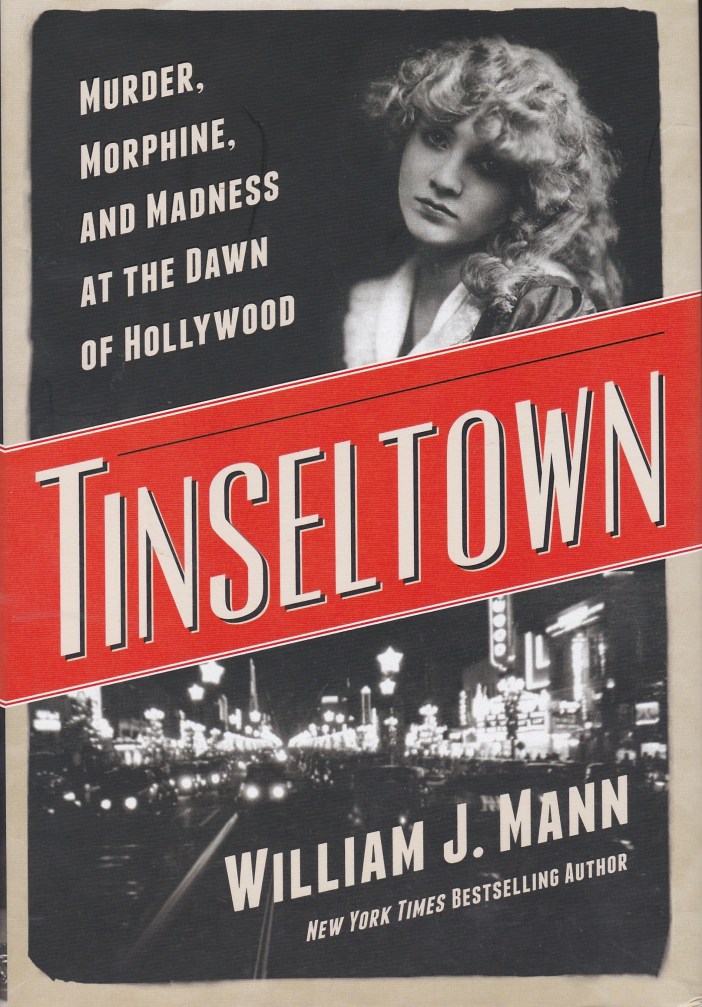
I did finish reading William J. Mann’s Edgar Award-winning Tinseltown: Murder, Morphine and Madness at the Dawn of; Hollywood, last night. Bill is one of my oldest friends in publishing of any kind; we’ve known each other well over twenty years, I would say. I interviewed him years ago for his first publication, the novel The Men from The Boys, and again later with the release of his first Hollywood history/biography, Wisecracker,  a biography of William Haines, the first openly gay movie star; who chose to give up his career when Louis B. Mayer told him he needed to give up his partner and marry a woman. He then went on to have a long career as an interior decorator; he was a close friend of Joan Crawford’s, who said of his long-time partnership, “it’s the only happy marriage in Hollywood.” Tinseltown tells the story of the murder of the director William Desmond Taylor in 1920, and how the big-wigs in Hollywood not only tried to cover up important details of the murder for their own reasons, but how the murder affected the lives of three Hollywood women: major star Mabel Normand (immortalized by Stevie Nicks in song on one of her most recent albums); up-and-coming star Mary Miles Minter; and fringe actress wannabe Patricia Palmer. It’s a well-crafted, well-researched reconstruction of what happened nearly a hundred years ago: it’s also an interesting overview of how Hollywood became what it was; how the Hays Production Code was born as well as the big studio systems; and how hoydenish religious groups have always made a lot of noise and tried to force their point of view down the throats of the rest of the country. I enjoyed it thoroughly, and highly recommend it.

tinseltown

I’ve always wanted to write a book or two set in old Hollywood; maybe not in the days of the silents, but perhaps one in the 1930’s and another in the 1950’s. The one about the 1950’s has more of a shape in my head; even a title (Chlorine), but there’s so much else I need to write.

But first I need to get my act together today and do all the things I need to get done today; I also need to probably come up with a schedule and list of goals. There are so many books I want to write, so many short stories I want to write, so many short stories I need to revise. There’s only so much time in every day.

And now, back to the spice mines.

PS So far, cutting the cable chord is going swimmingly. I couldn’t be more pleased.

Lay Your Hands on Me

I managed to get all the errands done yesterday, and didn’t feel exhausted until I was in the process of putting away all the groceries and things. I went to both the grocery store and Costco yesterday; I was rather impressed that I wasn’t worn out much sooner. I did get the bedding laundered as well. But I didn’t get any writing done; I am going to need to do that today.

There are a lot of things I am going to need to do today. Sigh.

I’ve been invited to contribute to an anthology; and I am not certain I have anything ready to send along. I do have this one incredibly disturbing story that I would like to make even more disturbing–that’s just how I roll–and I need to get back to work on the Scotty draft. I’d like to revise Chapter 11 a bit today, get it cleaned up more so it isn’t nearly as sloppy as it currently is, and I want to get these other two stories cleaned up as well. I need to spend some more time with “Don’t Look Down” than I have been; I need to get inside the characters more, understand who they are better, and then I think the story will wind up being a lot more strong. The same goes with the Chanse story; the story is really about his relationship with his brother and that’s not strong enough in the story as it sounds right now. That is also, I think, the problem with the Scotty book. I need to spend some time today with it as well, figuring out motivations and so forth.

Ah, being a writer. Always such a challenge.

We finished watching Collateral last night, and I was rather pleased with it; it was written by David Hare, the playwright, and you could tell it was written by someone good. Carey Mulligan was terrific, and I highly recommend it for anyone who enjoys complex, multi-layered crime dramas. I think tonight we may watch Justice League, to just to see if it really is as terrible as everyone seemed to think; I didn’t hate either Man of Steel or Batman vs. Superman, so I am not going into it as a hater.

I’m also still reading Tinseltown, which I am greatly enjoying. I don’t know a lot about the early days of Hollywood; the early 1920’s and late 19-teens, other than what I know from reading biographies of David O. Selznick, whose father was a producer and tried to build up a studio at the same time Adolph Zukor was building Paramount, and before the big merger that created Metro-Goldwyn-Mayer (MGM). So all this is new information to me, and William J. Mann is a terrific historian and researcher. (I am more familiar with later periods of Hollywood, but hardly an expert.) I’ve always wanted to write about Hollywood’s past; I have an idea for a noir novel to be set in the late 1940’s, but my lack of familiarity with the nuts and bolts of Hollywood in that period makes it difficult–or rather, makes my already vast insecurity about writing about another period even stronger. Although I’ve already written one short story about that time–an ambiguous setting of the early 1950’s–I don’t know. Maybe I should try it as a short story first, see if I can get the sense of the period?

I don’t know.

I’m also saddened to say that I’ve now finished reading both of Lawrence Block’s art-inspired anthologies, In Sunlight or in Shadow and Alive in Shape and Color, but I’ve heard through the grapevine that he is putting together another, which is great. So, for today’s edition of the Short Story Project, I am sad to say this is the last story from a Block anthology: “A Woman in the Sun,” by Justin Scott, from In Sunlight or In Shadow.

Could she change his mind? Four steps to the open window, lean out and call, “Don’t.”

Or walk to the window and call, “Go ahead, do it.Good luck.”

Or stand here and do nothing.

He had left her his last cigarette. She had talked him into leaving the gun and he had kept his word. It was still on the night table, wrapped in one of her stockings. She had the time of the cigarette to make up her mind. More time, if she didn’t smoke it. Let it smoulder.

This is an interesting story; in that it leaves more questions unanswered than it actually answers. We never know the characters’ names, nor do we really know what has brough them to this point. All we do learn, as the story progresses, is that both are at the end of their ropes and done, basically; they are both ready to die. The only question is whether she will stop him or will she join him, and this rather uninvolved, distant approach makes the story even more poignant and sad; there’s a very strong sense of melancholy that runs throughout this story, and the reader soon realizes you don’t have to know the whys and hows and whats of their pasts–all you need to know and feel is their now.

Powerful.

I then started reading through Jim Fusilli’s Crime Plus Music, and the next story up was”Me Untamed” by David Liss.

She covered the black eye with makeup, but I could still see it was there, something alien and unaccountable. Like a vandal’s scrawl across a museum painting, the dull outline of her bruise was an outrage. Carla smiled and greeted everyone good morning, defying us to say a word, to let our eyes linger too long. It was, I supposed, how she protected herself.

Jim Baron, the senior partner in the practice, met my gaze and flicked his head toward Carla as she walked past with a stack of case folders under her arm. Carla was getting ready, as we did every Tuesday and Thursday, for surgeries–no office visits on those days, just procedures. The practice felt a bit like a gastrointestinal assembly line, and sometimes I hated how we moved patients in and out, hardly taking the time to look at them, but Jim cracked the whip. It was volume, volume, volume as far as he was concerned. We were there to heal, not to socialize, and the more healing, the better.

The point of view is that of a divorced, shy, quiet Milquetoasty doctor,  who is kind of in love with Carla, or maybe he is not. She’s married to a thug of a guy, a man’s man, who works out and so forth, the kind of man a Milquetoast would hate. And he decides to do something about Carla’s abuse…decides to make himself into the kind of man he’s always wanted to be, the kind of man that he thinks Carla would like and love. This is a terrific story, with a terrific twist at the end that lifts it up even higher in terms of craft. Well done, sir!

And now, back to the spice mines.

KONICA MINOLTA DIGITAL CAMERA

Be Near Me

It’s a gray Monday, and I have a lot to do today before I return to work tomorrow. Yesterday was a complete waste of a day; I did manage to reread the first half of the first draft of the Scotty novel and spent some time reading/editing “Don’t Look Down”; not really sure how it needs to be fixed but am going to try to get that taken care of today. I need to run an errand at some point, and I must go to the gym today. But I need to get past the schedule I always am stubbornly stuck with; I’ve always done errands/gym around elevenish/noon; which is insane. There’s no required schedule as such; I can do errands or go to the gym at any time I please. So, yes, I am going to  work my way through things this morning, and try not to waste my time with social media, the way I always do.

It really is a time suck.

I’m not sure why I had such low energy yesterday; whether it was the gloom or the cold or whatever; but I had intended to go to the gym yesterday and run the errands. Instead I found myself listless and drained of all energy; I had to force myself to make lunch yesterday afternoon. I spent most of the day lying in bed reading–although I did managed to muster the energy to come downstairs and watch The Ritual on Netflix around eight o’clock last night. I feel better today so obviously the low-energy was something my body insisted on; it’s just been a long time since I’ve had such a day where I couldn’t force myself to do anything. I usually just brush all that aside and make myself do things. It didn’t work yesterday, alas.

I suppose the best thing to do is just accept that it was something my body needed and be done with it.

I also read some some short stories yesterday. First up was  “Taking Care of Business,” by Craig Ferguson, In Sunlight or in Shadow

The Reverend Jefferson T. Adams, beloved and respected minister of this parish for over fifty years, pulled deeply on the long fragile Jamaican-style reefer and held the smoke deep in his lungs. There was no sensation of getting high anymore, or indeed panic or paranoia or any of the other unpleasantness. No sensation at all really but he enjoyed the ritual.

He listened to the music from outside the church. It was too nice a day to go inside. Cold and still with a high milky cataract of cloud diffusing the sunlight enough to flatter the landscape, softening the edges and blanching out the imperfections like an old actor’s headshot.

The sea was guilty and quiet, like it had just eaten.

This is a poignant and sad story, about a minister who is dying from cancer and smoking medical marijuana with an old friend every day as his life fades away from him. The two old men talk about things, reveal secrets to each other they’ve kept hidden away from the world their entire lives, and finally, as every story about death must, it ends with the death of the reverend, but it’s not sad, it’s kind of poignant and beautiful. Craig Ferguson is an actor/comedian/writer; he was on The Drew Carey Show and later hosted The Late Show (or something like that); I was pleased to see he is also quite talented as a writer.

Next up was “Guilt-Edged Blonde” by Ross Macdonald, from The Archer Files.

A man was waiting for me at the gate at the edge of the runway. He didn’t look like the man I’d expected to meet. He wore a stained tan windbreaker, baggy slacks, a hat as squashed and dubious as his face. He must have been forty years old, to judge by the gray in his hair and the lines around his eyes. His eyes were dark and evasive, moving here and there as if to avoid getting hurt. He had been hurt often and badly, I guessed.

“You Archer?”

I’d taken a long break from reading Macdonald’s short stories; while I appreciate and quite like his hard-boiled style, sometimes though it becomes a bit much to deal with, and in the short stories, that is particularly obvious and somehow more difficult to deal with. I do love the way the stories twist and turn and become something far different than they start as; this story has Archer hired as a bodyguard, only to arrive to meet with his client who’s already been murdered, and a blonde woman is seen fleeing the scene. The client had basically been a mob accountant and stole money from them; and was worried they were going to come after him. However, the story has nothing to do with how it’s set up, and it’s quite a twisty and strange tale. This is one of the stronger Archer short stories, but…again, a little of that hardbitten, hard-boiled, macho straight man sensibility goes a long way in my book; so it’ll probably be a while before I return to The Archer Files. I don’t to make it sound like I don’t like Macdonald and these stories…I do. Reading a Macdonald novel is a bit different. Most of the Archer novels are short and they move so quickly you’re so wrapped up in the story–and the focus is on the story more so than the style; the short stories, oddly enough, because they are short the style is more apparent than in the novels. I’m not entirely sure if that makes sense, but I think it does, even if I can’t seem to put it into words properly.

tumblr_p2iqqx41tz1sh6rbgo1_540

Would I Lie To You?

Is it sad that I will read a themed anthology, and then will think up a short story based on that theme that I would have written had I been asked?

I find myself doing this a lot lately; I think it has a lot to do with the Short Story Project and reading themed anthologies. As I read the terrific stories, I start wondering what would I have written for this had I been asked and then my mind starts to wander a little bit, which is both irritating and distracting. Yesterday I went looking for Edward Hopper paintings, and found two that would have worked as story inspirations. One day last week I found an image of my favorite Salvador Dali painting on-line, and grabbed it to my desktop so I could look at it and wonder what kind of story it would inspire within me. And obviously, Jim Fusilli’s Crime Plus Music made me wonder what song would inspire me to write a crime/music story, and of course, thought of a Stevie Nicks/Fleetwood Mac song, and then scribbled down a potential title and some thoughts on the story.

Because I don’t have anything else to write, obviously.

I did get some things done yesterday; I cleaned the kitchen and get caught up on laundry. I must have left my copy of Bryan Camp’s The City of Lost Fortunes at the office, as I could put my hands on it anywhere, which was really annoying as I had intended to finish reading it this weekend; I can’t find it, so I must have taken it out of my backpack at the office on Thursday and walked out at the end of the day without putting it back. At least, I hope that’s what happened to it. I’d really hate the have to wait until I buy the hardcover before I can finish reading it. But in lieu of that, I read a shit ton of short stories yesterday, getting very caught up on the Short Story Project. I will probably get even further on that today, since I don’t have my novel to read. Today I need to write and edit, finish cleaning the living room, and get everything ready for tomorrow; the final day of my three day weekend, and I need to definitely make progress, else I will spend most the week berating myself until the next weekend rolls around. Paul will return home on Wednesday. If I can simply stick to what I need to do, and check things off the list, I can go to work on Tuesday feeling terribly accomplished.

It’s very cold this morning; it rained most of the day yesterday, so today we have the predictable temperature drop. It’s really making me want to just curl up in the easy chair with a book–which is fine, I can do that, as long as it’s the manuscript or one of the short stories or all of the above.

Must. Stay. Focused.

I did watch a couple of movies yesterday; the original 1973 film version of Jesus Christ Superstar (I didn’t remember what a fucking hot daddy Caiaphas was) and Legion, a horror film that came and went many years ago; the Syfy series Legion, which I started watching and never finished, was a sequel of sorts to it. I never finished watching because it was difficult to find, or when I remembered to try the episodes weren’t available anymore, and having not seen the film, I was a bit lost. Now that I’ve watched the film, which I kind of liked, I am looking forward to starting the TV show over again.

All right, I need to get some things done around here. So here are two short stories I read yesterday:

First up is “Shaderoc the Soul Shaker” by Gary Phillips,  from Crime Plus Music, edited by Jim Fusilli.

On for the days when he could snort him a line of flake while some groupie was down on her knees, her head buried between his spread leather-clad legs, pleasuring him like he was a visiting pharaoh. Goddamn, that time in his room backstage at the Forum…the two big-titty blondes. Sheeet, the top of his head damn near blew off that night as they sexed him up, down, and sideways.

Churchill “Church” Gibson shook his head, regretfully cycling away from the glorious past into the stone-cold reality of now. He glared at the screen of his laptop as if it were an adversary. He put aside his coffee and tapped the keyboard and the music app replayed his most troubling tack through external speakers. The green audio readout traveling from left to right as the music filled his compact home studio space.

This is a terrific story. Gary Phillips is one of those crime writers who should be much more successful than he is; he wrote a story for Blood on the Bayou that was fantastic and this one–about a formerly successful, hard-living musician whose career has waned but has a chance to get back on top by writing the soundtrack to a film but is having a terrible time creating anything decent, is terrific. As a writer, I can certainly understand that feeling of why can’t I do this anymore and it used to be easy to do this. But as he works, he starts seeing people from his past, who talk to him and remind him of what he used to be capable of, and as he creates he remembers past times and past crimes…it’s absolutely fantastic.

Next up, also from Jim Fusilli’s Crime Plus Music, was “The Long Black Veil” by Val McDermid.

Jess turned fourteen today. With every passing year, she looks more like her mother. And it pierces me to the heart. When I stopped by her room this evening, I asked if her birthday awakened memories of her mother. She shook her head, leaning forward so her long blond hair curtained her face, cutting us off from each other. “Ruth, you’re the one I think of when people say ‘mother’ to me,” she mumbled.

She couldn’t have known that her words opened an even deeper wound inside me and I was careful to keep my heart’s response hidden from my face. Even after ten years, I’ve never stopped being careful. “She was a good woman, your mother,” I managed to say without my voice shaking.

Jess raised her head to meet my eyes then swiftly dropped it again, taking refuge behind the hair. “She killed my father,” she said mutinously. “Where exactly does ‘good’ come into it?”

This is a haunting story about love and family, friendship and class, all set in a small town somewhere which is never specifically named. McDermid, an enormously successful and award-winning crime writer (you should read her if you haven’t; start with A Place of Execution and The Mermaids Singing), manages to tell this story from two different point of views, and so captures small town America perfectly that it is almost eerie. It’s a terrific story, heartbreaking and tragic in its very simplicity. I don’t think I’ve read a McDermid short story before, but this is a great example of why her work is so popular.

And on that note, it’s back to the spice mines with me.

20139726_1483071895137171_270669942309726059_n

Misled

Saturday morning, and everything is dripping outside. A thunderstorm woke me up in the middle of the night, but the rain lulled me back to sleep almost immediately. I feel very rested this morning, which is a good thing. Today I am going to write and edit and clean and go to the gym; it’s been a while–I haven’t been to the gym since before the Tennessee Williams Festival, which is not only shocking but scandalous–and I have to make sure this mess of an apartment is under control. I also want to do some reading today; I am rather behind on the Short Story Project, and I really want to finish that Bryan Camp novel. (Preorder it, seriously.)

I reached the halfway point of the Scotty novel yesterday, which was both a relief and a little off-putting. It’s not very good so far, but it’s also a messy first draft; first drafts are supposed to be messy. This weekend i am going to reread it, as well as track the various plots while doing an outline of the first half; this will hopefully help me to catch mistakes and errors, and places where the story may have gotten off track. Sigh. The drudgery that must be done. It’s lovely to not be on a deadline, though, so I don’t that horrible pressure, that sense of time running out. I think that’s all part of the reason I have never felt satisfied with anything I’ve ever published; I always feel like I ran out of time.

So last night I watched the end of Jesus Christ Superstar, and then, bored, scrolled through all of my Apple TV apps until I found Red Dawn–not the remake, but the 1984 original–and thought, Hmmm, I wonder how this holds up, particularly in reading Molly Ringwald’s piece about The Breakfast Club, so I watched that, and have some thoughts. (And yes, I know it was remade recently, and perhaps that might be worth a watch at some point–Chris Hemsworth–but I was more curious to see the 1984 version as a time capsule of its original period).

So, Jesus Christ Superstar. I remember when it originally surfaced in the late 1960’s, a new take on the New Testament and the ubiquitous Christ story. It’s hard for people who weren’t alive during that time to understand how different the world was then than it is now; the changes that the 2016 election was a reaction to were beginning. Christians felt Jesus Christ Superstar was an abomination, a heresy, an attack on their faith; a modern day reinterpretation of the story, an attempt to make all the characters of the New Testament human was seen as an attack on their faith. Telling the story from the viewpoints of Judas and Mary Magdalen was even more offensive; the betrayer and the fallen woman? An attempt to justify and understand Judas, who committed the biggest crime in the history of the Christian faith? And well, the whore?

It was, regardless, incredibly popular; it made Tim Rice and Andrew Lloyd Webber stars (paving the way for everything they’ve done since; so in some ways we can blame Cats on Jesus), and the music was everywhere. “I Don’t Know How To Love Him” and “Superstar” played on Top 40 radio incessantly; even Helen Reddy recorded the former and had a hit with it. Ben Vereen was the original Judas and it made him a star. It was made into a film by Norman Jewison, which sparked more outrage and yet the soundtrack was a huge seller, with Yvonne Elliman playing the Magdalen again, with Carl Anderson as Judas and Ted Neeley as Jesus. I loved the film soundtrack–those vocals by Ted Neeley are intense–and listened to it all the time. I think I know the score by heart; but I also remember being criticized by classmates when I moved to Kansas for loving it so much.

I was rather dreading this live concert staging, to be honest; I like John Legend, but just wasn’t sure he had the vocal power to hit those intense notes. I also liked that they had cast a man of color as Jesus; Judas has always been a role for a man of color, and knowing that Brandon Victor Dixon, who’d played Burr on Broadway in Hamilton and Sara Bareilles was playing the Magdalen was reassuring. I didn’t watch it as it aired; we were watching something else Sunday evening, but I was following the live tweets and Facebooking, and the reviews were definitely mixed. But when I watched it myself, despite my misgivings and how much I associated the roles/vocals as already having been definitely performed, I thought it was very powerful and beautifully done.

Even as a child, certain tenets of Christianity, and the mentalities that went with it, made no logical sense to me (I know, trying to find logic and reason in religion is a fool’s game; which is why it’s called faith). The vilification of Judas, for example, never made sense to me. If Jesus is venerated, not just as the son of God but because his sacrifice made our salvation possible, didn’t it stand to reason that had he not be crucified our salvation through faith and Christ wouldn’t be possible? So, to me, it only made sense that Judas also should be venerated; without his betrayal the rest of it wouldn’t have happened. Likewise, the anti-Semitism reverberating through the century, based in the Jews being Christ-killers; if Christ hadn’t been crucified there would be no Christian faith, and no salvation. 

No one I ever asked these questions of were ever able to give me an answer that made sense to me.

So, my watching Jesus Christ Superstar as an adult who no longer considers himself to be Christian was vastly different from the twelve-year-old who saw the film after church on a Sunday. As I watched this time, I was able to see it from a new perspective, a new appreciation of the story; how would people see something like this happening in their lives, in their reality today? Over the centuries Jesus’ Jewishness has been whitewashed out of him; images of the blond blue-eyed Jesus are everywhere (Ted Neeley in the original film is one of those great examples) and I also realized that all the fiction about the mythology of the Christ (and there are a lot of them, from Ben-Hur to The Robe to Quo Vadis and on and on and on; the enormously successful mid-twentieth century author Taylor Caldwell wrote enormous, bestsellers taken from these stories–Dear and Glorious Physician about Luke, Great Lion of God about Paul of Tarsus, and I, Judas) always played up the supernatural and religious aspects of the story; Jesus Christ Superstar is one of the very few I am aware of that actually tells the story from a human perspective. Who were these human beings, these apostles, who listened to the message of Jesus and saw religion and faith and the world in a new light? Who witnessed the events described in the contradictory gospels of Matthew, Mark, Luke and John?

To me, looking at the story from that perspective–“he’s a man, he’s just a man”–is a lot more interesting, and can provide fresh insight; make it relatable to newer generations. I always thought the resistance of organized Christianity to Jesus Christ Superstar, which made the story more accessible to younger generations, was kind of strange. But times, as I said, have changed. In 1970, the possibility of a live broadcast of Jesus Christ Superstar was unthinkable. And yet here we are today.

Red Dawn, in its 1984 original version, is a whole other ball of wax. And yet, as a historical document, watching it again now was an interesting experience. We forget the paranoia of the Cold War years, and people now in their thirties don’t remember the Cold War, the Soviet Union, the anti-Russia anti-Communist sentiment that was, in truth, the precursor to the prejudices of today. The fall of the Soviet Union and eastern European communism, the fear of world domination by Communism and the end of “Western freedom” as understood by Americans, was a serious thing; and while it heightened after the end of the Second World War, it existed since the Romanovs fell and the old Tsarist Russian empire became the USSR. Cuba was a huge part of that, too, and the anti-Castro hatred; a Soviet outpost just ninety miles from Florida, the fall of Central American countries under the sway of Cuban Communism…the geopolitical world of that time is incredibly hard to imagine today if you didn’t live through it, and even I forget…yet watching Red Dawn brought it all back vividly.

This is not to say it’s a good film, because it’s not. As a film it fails on many levels, not the least of which is acting and the script itself.

At the time of its original release, the movie was a big deal. People my age–early twenties, teenagers–made it into a hit, and also saw themselves as the characters in the movie, which even then I was all, yeah, right. (We always identify with the heroes in movies; we never see ourselves as the quislings.) The movie is about the outbreak of World War III and a Soviet invasion of the United States; it opens with Patrick Swayze dropping off his younger brother (an incredibly young Charlie Sheen) and his best friend (C. Thomas Howell) at the local high school. The score from the last football game is still up on the scoreboard; a loss for the local team, some good natured joshing about how it’s a disgrace and an embarrassment, the usual straight boy ribbing, and then it’s time for school. During History class soldiers start dropping in from the sky; when the African American teacher goes out to see what’s going on, he becomes the first casualty of the invasion (and my first thought was, of course the only black character in the movie is killed in the first five minutes). There is chaos, a group of the boys escape when Swayze comes back for them–why they drive past any number of commandos and soldiers who are killing everyone in sight and blowing shit up and aren’t targeted or killed themselves is move magic) and then rush out to hide out in the nearby mountains and forests, armed and dangerous, with no idea of what’s going on. Eventually two sisters join them–Lea Thompson and Jennifer Grey–and again, there’s really not much development of the characters; ‘something happened’ to the Lea Thompson character which is never discussed, but it’s changed her. Eventually, the kids become the Resistance, calling themselves Wolverines after their high school mascot, fighting back against the invaders.

There’s also a rather telling shot in the opening of the film, where you see the bloodstained back of a pick-up truck, with a close up of the bumper sticker reading You can have my gun when you pry it from my cold dead fingers. The camera then pans down to the dead body holding a gun; a commando reaches down and literally pries the gun from the cold dead fingers.

Eventually, they hook up with an American soldier who teaches them strategy, tactics, and they become an impressive teen fighting unit; he also explains to them how it all happened (paraphrasing): “All our allies in Europe stayed out of it because they’ve forgotten how to fight especially when they’re not the ones being invaded” and “Cubans infiltrated the country, coming in through Mexico pretending to be refugees from Central America or workers, and were able to get into our bases, ready for the signal.”

You can connect all those dots for yourself. All I will say was I sat there, watching and listening to all of this, and was like, really? And they talk about Hollywood’s liberal agenda?

There’s also a scene where the invaders have lined up a bunch of Americans who refuse to be re-educated, to be machine gunned, and they start singing “America the Beautiful” just before the Wolverines take the invaders out.

I also found myself wondering if anyone in 1984 saw this film as problematic, but I also rather doubt it. I know all my friends thought it was amazing, imagined themselves as freedom fighters, etc.

I know I thought about writing a book about an invasion of the United States; a seed of an idea that over the years has encompassed many themes and realities. Rewatching Red Dawn when my imagination had already been triggered by Jesus Christ Superstar  was an interesting experience.

But the most interesting thing was to see how much my own perspectives have changed over the last thirty or so years.

And now, to get some shit done.

IMG_1913

Cherish

I was a little boy in the 1960’s; I was eight when the decade came to an end. The world was a very uncertain place for a kid during that time period; people really believed the country was falling apart, or being pulled apart. The divide between the generations, the divide between left and right, the concept of American exceptionalism vs American responsibility; the Vietnam War and the opposition to it; the rise of the civil rights movement and the struggle to end Jim Crow once and for all; the rise of the women’s movement; and even the beginnings of a queer rights movement–all in the 1960’s. A president was murdered and men landed on the moon. There was a huge societal upheaval that changed everything that people had come to know and expect; television also began to change and grow up some, which led to some groundbreaking series in the latter half of the decade as well as set the stage for what was to come in the 1970’s. The after shocks from the 1960’s are still being felt today.

It was also a strange time for films; at the beginning of the decade the big studios and the old systems of American filmmaking were starting to erode away. The best picture Oscar winner in 1961, for example, was West Side Story, the film version of a hugely successful Broadway musical that recast the feuding Montagues and Capulets from Shakespeare’s Romeo and Juliet into juvenile gangs–one white, one Puerto Rican. (I rewatched this film shortly after the 2016 election, and was amazed at how differently I saw it then I did before) The Academy Award for best picture in 1969 was Midnight Cowboy, to date the only Oscar winner to have an X rating (although by today’s standards the film is remarkably tame), a movie which would have never been made in 1961. (Midnight Cowboy is another film I need to see again, quite frankly; I also would like to read the book it was based on again.)

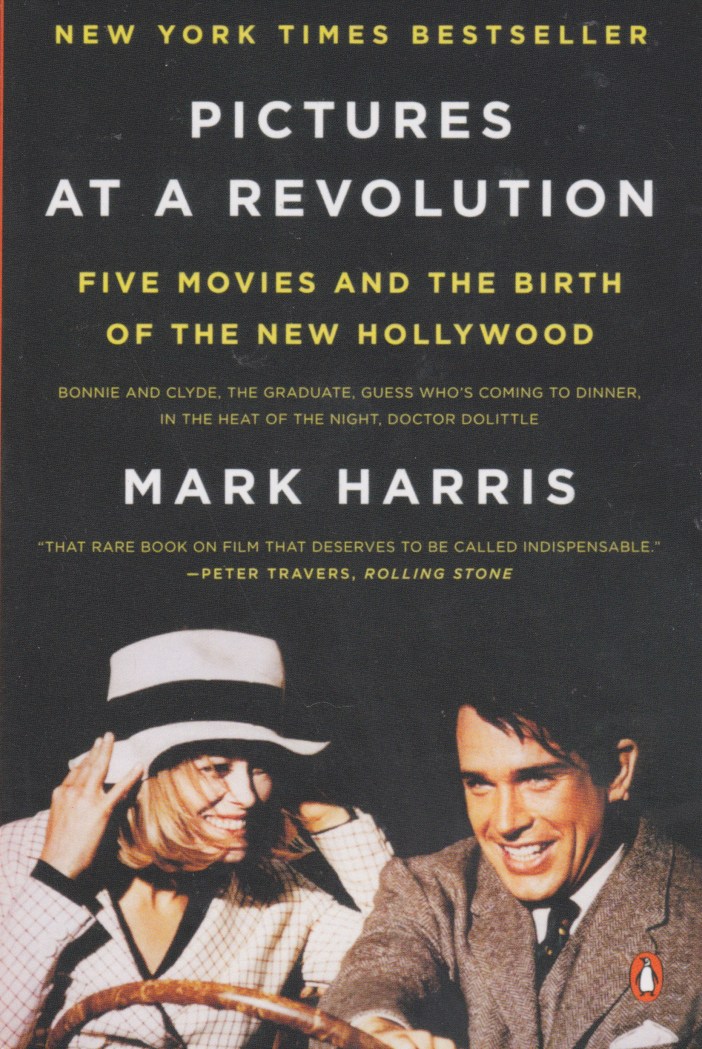
Mark Harris, a Hollywood historian whose book Five Came Back was made into a documentary which I enjoyed, wrote a brilliant book called Pictures at a Revolution, which looked at how film, and the film industry, changed during that decade through the framework of the five films nominated for the Academy Award for Best Picture in 1967; which, if any year was indicative of the changes being made and the changes to come, was indeed the perfect illustration. Two of the films were old style Hollywood–Guess Who’s Coming to Dinner and Doctor Dolittle–two were of the new Hollywood–Bonnie and Clyde and The Graduate–and the fifth, and ultimate winner  (In the Heat of the Night) seemed to straddle the line in some ways, and whose win–and other four wins–seemed to be a compromise between the old and the new.

Harris’ book, which follows all five films from conception to script development to production and then release, culminating in the Oscar ceremony itself, is riveting and informative. You learn who all the players in each case were; you follow along the studio politics and behind-the-scenes deal-making that went into the making of each film, and in each case, Harris brilliantly illustrates how each film represents an aspect of his thesis. Guess Who’s Coming to Dinner and In the Heat of the Night both dealt with the current issues of race; one as a gentle family comedy and the other through the darker lens of a murder investigation in a small Mississippi town, Dr. Dolittle represented the beginning of the end of the big Hollywood musical; the early part of the 1960’s gave the world the Oscar winners West Side Story, My Fair Lady, and The Sound of Music; the immense musical flops of the second half of the decade were ushered in with this epic disaster (there’s also a book in tracing the rise and fall of the big Hollywood musical in the 1960’s).

I greatly enjoyed this book, and if you’re a fan of movies, or have an interest in the industry, this is a great read for you. I’m not so interested in the film industry of today, but I am interested in its past, to be honest; I don’t really care about the Academy Awards anymore and often change the channel while it’s on–there are no surprises anymore, and the ridiculous amount of awards leading up to the Oscars, from the Golden Globes to the SAG Awards to the Writers’ and Directors’ Guild awards, have taken away any mystery or suspense as to who is going to win; it’s much more interesting to read about the old days when they were always kind of up for grabs, and hadn’t become the expensive, overblown spectacle they’ve become today.

The book also made me want to watch these films again; it’s been years since I’ve seen any of them, and in most cases, I only saw them in their edited-for-television versions.

pictures at a revolution

Don’t You (Forget About Me)

I hit the wall yesterday during Iris. I came back home to rest for a bit before Tucks arrived, and was so exhausted from everything that I decided that it was wiser to just stay in the house and rest, otherwise there was no way I’d make it to any of today’s parades. There are four today; Okeanos, Mid-City, Thoth, and Bacchus. I usually make Okeanos and Mid-city; but am too tired for Thoth and Bacchus. I’ve never seen Thoth; we used to go to the Quarter in the afternoon on Sundays, and then I worked outreach during Thoth. The last few years I’ve not done outreach on Sundays I’ve been too tired; and I don’t think I’ve seen Bacchus since Drew Brees reigned. I’m going to give it my best shot today.

The rain held off yesterday until Endymion; I was ensconced in my easy chair streaming Spiderman Homecoming when the thunderstorm arrived and it was a beaut. The thunder was so loud and long the house shook; and the downpours so intense that there was some street flooding (nothing major, like in August; but still it sucked for both the Endymion riders and the folks out there watching).

I also watched, in my ongoing quest to rewatch as many of the disaster movies of the 1970’s as possible, Earthquake, which was, without a doubt, one of the worst movies ever made. The whole point of the disaster formula was to see how people–character archetypes, really–placed in extraordinary circumstances having to experience physical difficulties and hardships and emotional distress, to see if they can overcome this and survive; and at the end, some do: the damaged plane lands safely, the fire is put out, they get off the sinking ship. But by it’s very nature, making a film about an earthquake doesn’t end with the characters getting to safety; therefore there is no way to end the film on a satisfying note for the viewers. So, Earthquake merely ends with the camera pulling away from the characters who’ve just escaped the flooding tunnel, showing a ever expanding view of the ruins of Los Angeles, where many fires are still burning; a most unsatisfying end to the film. But it’s not like we cared about any of the characters in the first place, particularly the main character, played woodenly by Charlton Heston. Heston was never the best of actors to begin with; his idea of acting was over-acting under the best of circumstances and at worst, woodenly reading his lines with absolutely no emotion whatsoever. The casting choices made for the movie were also curious; Lorne Greene was playing Ava Gardner’s father and Heston’s father-in-law, despite being only seven years older than the former and eight years older than the latter; his current love interest was played by Genevieve Bujold, who was only thirty. I’m a fan of Gardner, to be honest, but she’s terrible in this film. Everyone is terrible in this film, from the afore-mentioned stars to the rest of the cast, which includes Richard Roundtree, George Kennedy, Victoria Principal, and Marjoe Gortner. Even by 70’s standards, the special effects are particularly bad; and there really isn’t a cohesive story for any of the characters, so the actors have no center for their performances. It was just an attempt to cash in on the success of the Airport movies and the disaster movie craze of the time; with the end result that it’s a terrible, terrible film.

Spiderman Homecoming, however, is just as charming on a second viewing as it was on the first; and Tom Holland is so appealing, as are all of the diverse young actors who play his friends, or frenemies, at his high school. Michael Keaton makes a great bad guy, and the guest appearances by the other Marvel heroes–Iron Man and Captain America–successfully weave the character of Spiderman into the Marvel/Avengers universe. Also, by not  making it an origin story–we already see Peter with his powers, his uncle is already dead–and instead making it about him trying to adapt to his powers while juggling his life as a high school teenager, made it a much stronger film. Well done, Marvel.

After that, we watched the Olympics. I also did some reading, getting back to the Short Story Project, and then I slept deeply and well; I even allowed myself to sleep in, and this morning other than some slight aches in my lower back I feel terrific. Okeanos starts in fifteen minutes; I am not sure which parades I’ll be watching today. There’s rain again in the forecast, and this morning the windows are covered with condensation, just like yesterday. It does seem bright out there, but there’s an awful lot of cloud cover as well. Paul is still sleeping, so there’s that as well. 😉 I don’t like waking him up on the weekends, and besides, Okeanos won’t be here for another hour at least. Iris kept stalling yesterday; despite moving up an hour it still wasn’t finished passing here until almost one thirty.

I don’t have to work tomorrow; Paul’s going into the office for a bit, so I will most likely make a grocery run in the morning and try to get some work done around here as well. I need to get back to work on everything; just because everything in New Orleans comes to a screeching halt for Carnival, we sometimes forget that the rest of the world does not.

Ah, well. And I need to clean the kitchen again; I’m hoping to cook out today, should the weather hold.

Here’s a hunk for your Sunday:

IMG_3587

Round and Round

So, I did it. I went to the gym yesterday for the first time in months, and God knows when the last time I went without a trainer appointment. I am very proud of myself for taking this first step, and I have to remember to stay motivated. It felt fantastic. I’d forgotten how great endorphins feel. I went in, and did some stretches before heading to the weight machines. I went all the back to my origins (something I seem to be doing a lot this year), and started doing my work outs the way I did when I first got back in shape way back in 1995: a full body workout (chest, back, shoulders, biceps, triceps, leg press, and calf raises, then abs and cardio) and did low weights, tried to not overdo it, and only did one set of 15 on everything. I will go up to two sets of everything on the fourth workout; three sets on the seventh, and up the weights on the tenth, and then on every fourth thereafter. I am not concerned about gaining size; this is more of a cardiovascular than strength workout. Maybe by the summer I might change to something more muscle building, but any workout with weights is going to gain some size. I’d like to hit my goal weight of 200 by July; we shall see. I also am not certain what that is going to do to my build, to be honest. But I can adapt…and posting publicly about this is also going to shame me into being more consistent.

And this morning I still feel good; I can tell I exercised, but am not sore. Yay! SO lovely to know I am doing it right. It’s hard to believe that it’s been so long since I learned about the body and how to exercise properly. I wonder–yes, I just googled my old gym in Tampa; it closed in 2003 and was still owned by the same person when it closed as when it opened. Good ole Metroflex and Alan. When I wrote Murder in the Rue Dauphine I based the gym Chanse worked out at on Metroflex; I even named the manager Alan. I’d completely forgotten about that until just now….

We watched I, Tonya last night and really enjoyed it. I have a lot of thoughts about it, but I’m going to let them digest for a few days before I post about it. The cast is excellent, and I think the movie is, too.

I have lots I want to get done on this holiday Monday; I am making an excursion to Metairie, and have lots of writing to do, and lots of editing, and tons of emails to anwer and get caught up on.

The Short Story Project continues. Yesterday I read the first story in Sue Grafton’s Kinsey and Me, “Between the Sheets”:

I squinted at the woman sitting across the desk from me. I could have sworn she’d just told me there was a dead man in her daughter’s bed, which seemed like a strange thing to say, accompanied, as it was, by a pleasant smile and carefully modulated tone. Maybe I’d misunderstood.

It was nine o’clock in the morning, some ordinary day of the week. I was, I confess, hungover–a rare occurrence in my life. I do not drink often or much, but the night before I’d been at a birthday party for my landlord, Henry Pitts, who’d just turned eighty-two. Apparently the celebration had gotten out of hand because here I was, feeling fuzzy-headed and faintly nauseated, trying to look like an especially smart and capable private investigator, which is what I am when I’m in good form.

My name is Kinsey Millhone. I’m thirty-two years olds, divorced, a licensed P.I., running my own agency in a town ninety-five miles north of Los Angeles. The woman had told me her name was Emily Culpepper and that much made sense. She was very small, one of those women who at any age will be thought “cute,” God forbid. She had short dark hair and a sweet face and she looked like a perfect suburban housewife. She was wearing a pale blue blouse with a Peter Pan collar, a heather-colored Shetland sweater with grosgrain ribbon down the front, a heather tweed skirt, hose, and Capezios with a dainty heel, I guessed her to be roughly my age.

“Between the Sheets’ is a delight, if for no other reason than the fact that it’s actually a traditional mystery story; one that is solved by viewing the crime scene, interviewing people, and observing the clues left behind by the killer and making deductions. This is particularly fun because the Kinsey novels are hardboiled style private eye novels, tough with sparse prose and told from Kinsey’s slightly cynical, world-weary point of view. This short story, still in that voice, though, has several moments os humor, and could easily have been an Erle Stanley Gardner Perry Mason story, or an Agatha Christie–although Christie’s short stories always seemed to me to border on the noir side.

The other story I read was “Barn Burning” from The Collected Stories of William Faulkner, an enormous volume I’ve only occasionally dipped into:

The store in which the Justice of the Peace’s court was sitting smelled of  cheese. The boy, crouched on his nail keg at the back of the crowded room, knew he smelled cheese, and more: from where he sat he could see the ranked shelves close-packed with the solid, squat, dynamic shapes of tin cans whose labels his stomach read, not from the lettering which meant nothing to his mind but from the scarlet devils and the silver curve of fish–this, the cheese which he knew he smelled and the hermetic meat which his intestines believed he smelled coming in intermittent gusts momentary and brief between the other constant one, the smell and sense just a little but of fear because mostly of despair and grief, the old fierce pull of blood. He could not see the table where the Justice sat and before which his father and his father’s enemy (our enemy, he thought in that despair; ourn! mine and him both! He;s my father!) stood, but he could hear them, the two of them that is, because his father had said no word yet:

“But what proof have you, Mr. Harris?”

Faulkner is one of my all-time favorite writers; his “A Rose for Emily” is one of the greatest short stories ever written–if not the greatest–and both Sanctuary and The Sound and the Fury are works of art most writers can only aspire to. There’s no sentimentality in Faulkner, at least not to me; he doesn’t romanticize poverty, he doesn’t romanticize the rural Southern experience, nor does he write about heroic figures. He writes about damaged and flawed human beings, and while his work is called “Southern Gothic,” I’m not sure if gothic is the right word. For me at least the descriptor gothic conjures up an entirely different image and style of story and writing. Reading Faulkner reminds me of home, reminds me of relatives and summers spent in rural Alabama, of orange-meat watermelons and fireflies and  four o’clocks and screen doors and ticks on dogs and red dirt and big red Coca-Cola coolers with a bottle opener on the side. “Barn Burning” is told from the perspective of a young boy, Colonel Sartoris Snopes, and opens with his father being found not guilty, for lack of evidence, of burning the Harris barn after a dispute about a loose hog; but despite the lack of evidence the Snopes family is banished from the county and sent on their way to the next sharecropping farm, where things go bad yet again, but this time Sarty can’t let it happen. It’s about learning the difference between right and wrong, and learning that sometimes loyalty to blood simply because of blood isn’t enough. It’s a terrific story, with great imagery and beautiful language use, and yes, reminded me of my long love affair with Faulkner’s work. He’s not easy to read by any means; but so worth the effort.

And now,  back to the spice mines.

tumblr_o5h18dblnH1uzn77yo1_540