What About Me

It is fall in New Orleans, and the light has changed. Summer is a brutal season here, and it is easy to wonder, as you bake in the sun and get drenched in sweat from the thick humidity, why on earth you ever thought you could live here. Then fall comes, and you remember; the extreme heat and thick humidity are gone and the light is just spectacular. The blue of the sky is simply stunning, like the Mediterranean Sea where it’s shallow, and the sunlight itself, softened and not quite as harsh after the shifting of the earth on its axis, bathes everything with a gorgeous glow.

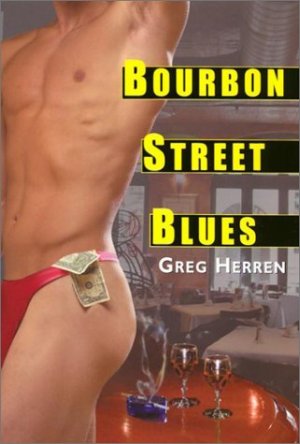
I am off to Thibodeaux today, to do testing at Nicholls State University this afternoon with some of my co-workers. I’ve never actually been there before; I’ve never explored Louisiana south of the city–now that I have a new car, once football season is over I am going to rectify that by not only exploring more of New Orleans but more of Louisiana as well. I printed out Bourbon Street Blues last night preparatory to doing a copy edit and some tweaks to the story; it is still firmly fixed in 2004 so I won’t be updating some things that I don’t think should be changed: Scotty still won’t have a computer nor a cell phone, and will still be a a bit of Luddite when it comes to the Internet (he still is, but not to the degree he was when we first met him). It’s pretty amazing to realize how much technology has changed since the book was first written, back in 2001-2002. It’s also going to be kind of fun to go back to Scotty’s roots, as it were, and reacquaint myself not only with his origins but who he was when I first created him.

That can only help me write the new one, you know?

I also found the original electronic draft of the short story I started rewriting this week, but the whole story isn’t there. I don’t know if I ever wrote the entire first draft, or if I just did so in my head. I was pretty certain I’d written the entire thing, so I might have to go digging through the files this weekend to see if I can find it. I am off tomorrow, which is lovely, and Saturday as well. I am now reading Anna Dressed In Blood, by Kendare Blake. I’m enjoying it so far; a y/a reviewer compared my book Sara to it, so I thought I should read it, and am finally now getting around to it. I’m toying with the idea of another paranormal y/a with a gay main character, and so it’s kind of nice to see what other stuff is out there as well.

We got caught up on American Horror Story last night; although the stupid FX app skipped last week’s episode, so we were a bit lost, but after we finished we didn’t see any reason to go back and watch the previous one–although apparently there was a hot sex scene with Billy Eichner and Colton Haynes. Meh, don’t care enough; maybe this weekend.

So, I should probably dive back into the spice mines this morning before I leave for work. For Throwback Thursday, here’s the original cover of Bourbon Street Blues.

BourbonStreetBlues

Try Again

Stephen King, in his seminal work on horror Danse Macabre, talked about two different kinds of house horror novels–the haunted house, and the bad place. The primary difference between the two is that a haunted house story is about the actual spirits and what they do; what must be done to put the spirit to rest (Barbara Michaels’ brilliant Ammie Come Home fits into this category), and the bad place where you don’t really know what is causing whatever it is that is going on in the place; it’s just a bad, bad place. Examples of the bad place  are of course Shirley Jackson’s The Haunting of Hill House, Stephen King’s The Shining, and Michael MacDowell’s The Elementals.

While I was traveling to and from Toronto, I read two short novels about ‘bad places’; Robert Marasco’s Burnt Offerings and Christopher Rice’s The Vines. 

I remember Burnt Offerings from when I was a kid, and we used to go to the Zayre’s department store every Saturday. I would spend the entire time my mother was shopping looking at every book in the book racks, and I picked it up numerous times only to always set it back and pick something else; I’m not sure why. I remember it was also made into a movie with Bette Davis that I’ve also never seen, and periodically it appears on lists of ‘best haunted house’ novels. Vaillancourt Books recently reissued it, and I bought a copy. It’s good, even if it subscribes to one of those horror tropes that always requires the suspension of belief–if something seems too good to be true, it usually is. A family from the city–Queens, i believe–take a summer rental out on Long Island that, of course, is too good to be true; a dilapidated but once stately manor. Husband, wife, young son, and the husband’s aunt–despite the husband’s misgivings–move out there for the summer; the only requirement of them (other than the rent) is that three times a day the wife must take a tray of food up to the owners’ mother’s suite of rooms and never knock–just leave the tray outside. The wife soon becomes obsessed with the house and cleaning it, putting it into order; finding treasures in closets and cupboards and bringing them out…and ignoring the distance growing between her and her husband, his aunt, and her son. Strange things start to happen, and occasionally she is aware that something’s terribly amiss…and then goes back to cleaning. The story is told very simply, the setting is perfect, and the descriptions of the treasures she finds are lovingly written–and the sense of growing impending doom and claustrophobia are perfect.

The Vines is Christopher Rice’s second horror novel (The Heavens Rise is the first; it’s still in my TBR pile) and it, too, is a variation of the bad place horror convention; Spring House is a gorgeously restored house outside of New Orleans with a horrifying history of its own. The night of owner Caitlin Chaisson’s birthday party, she sees her husband having sex with a beautiful young woman who works for the catering company; emotionally distraught, she leaves the house intent on slashing her wrists and killing herself in the estate’s gazebo. But as she cuts at her wrists, her husband and his one-nighter come outside to the gardening shed, and something monstrous grows up out of the ground to drink her blood and avenge her betrayal. The one-nighter loses her mind and the husband disappears; none of this makes any sense to the police who arrive and are not willing to upset the wealthiest woman in the parish. There are two other primary characters–Nova, the African-American daughter of Caitlin’s groundskeeper and a student at LSU who is there that night, and Caitlin’s former best friend, a gay nurse who has been estranged from her since he told her the truth about her husband’s infidelities–and years earlier, Blake and his teenaged boyfriend were attacked in a hate crime, the boyfriend dying…the true story of the attack has never come out, and it’s a lot more complicated than anyone ever knew. It’s a terrific tale of vengeance from the past and vengeance for the present, with the tension building as it hurries to its climax. I was also impressed with how Christopher handled the bloody, slave-owning history of Spring House–something I’ve wondered about how to handle without being too heavy-handed with a ghost story I’ve been wanting to write with its origins in the Civil War period in rural Alabama.

And now, back to the spice mines.

Your Love Is Driving Me Crazy

Tomorrow morning at this time I will be running around, hoping that I am not forgetting to do something before we leave for Toronto. I haven’t had much of a chance to get excited about the trip, but this morning it’s starting to be kind of real to me. The kitchen is a mess–I made Swedish meatballs last night–and so I need to get the dishwasher loaded, start gathering things to pack for the trip, etc.

I also queried another agent yesterday, and submitted another short story. I have three more agents to query on my list today, and I might submit yet another short story to another market. We’ll see how that goes.

I also printed out Jackson Square Jazz last night; I am going to do the ever popular copy edit with it. It also occurred to me that this is a golden opportunity, as the ebooks for the first two Scottys are about to go live, to re-edit them and therefore make the ‘new’ versions of them worthwhile to have for people. I haven’t completely decided whether I am going to re-edit the books or not, but we shall see how it goes. It’s really dependent on the time factor, and since I am trying to finish writing another Scotty at the same time…it’s also not a bad idea, as rereading the originals will put me in a Scotty mindset, which can’t hurt, you know?

I started reading Robert Marasco’s Burnt Offerings last night, and was very quickly absorbed into the story. The beginning is reminiscent of several other horror classics–Rosemary’s Baby, Harvest Home, The Haunting of Hill House–and thoroughly enjoyable. It’s clearly a ‘haunted house/bad place’ story; I’ve never seen the movie nor had I read the book before, so I am kind of excited about it. I also need to pick out the books I’m going to be taking with me on the trip.

We also finished watching Harlan Coben’s The Five mini-series last night on Netflix. There are ten episodes, and it’s a interesting show with several different mysteries, several different crimes, and they are all connected in some strange way to the disappearance of a small boy some twenty years earlier. The main characters–Slade, Danny, Mark, Pru–were all friends, and one afternoon they were off in the woods playing, with Mark’s younger brother Jesse in tow. Being older kids, they wanted to go off and do their own thing, so they sent Jesse off on his own and he disappeared. A child molesting serial killer later confessed to killing him…but the body was never found. Flash forward twenty years, and Jesse’s DNA has turned up at a brutal crime scene, which begs the question, is Jesse still alive? How did his DNA wind up at a crime scene twenty years after he disappeared? And then his DNA turns up at another brutal crime scene. What is the connection between the cases? Lots of twists and turns, and several big surprise twists made it quite enjoyable to watch. The cast was also really good, and the mini-series format gave the writers the opportunity to delve into the characters and their lives a lot more. It also was very haunting in that it’s theme–the damage the disappearance of a child can do to those left behind–is something I am fascinated by.

Harlencobenthefive

Highly recommended.

And now, back to the spice mines.

All This Love

Monday, and in two days I’ll be jetting off for Toronto. Huzzah! Needless to say, this is a very exciting thing for me; Bouchercon has become one of my favorite times of the year.

In other exciting news, I discovered an electronic final copy of Jackson Square Jazz yesterday. It was there the whole time, but I didn’t think it was the final copy because the first chapter, every time I opened the file, was only like 3300 words and I thought, no, that’s not it because it’s not long enough…and then I looked at it again yesterday, saw how many actual chapters there were, pulled them all into one document and realized that yes, indeed, this actually was the version I turned in. So, it’s not copy edited, which means I’ll need to copy edit it and it won;t be the same version, ultimately, as the print version when the book goes live…but I don’t have to retype the entire thing.

I’d much rather do a final polish than retype almost a hundred thousand words, believe you me.

Another horror novel bit the dust last night, not surviving the fifty-page test. (For those of you who are wondering that that is, I give a book fifty pages to engage me in some way. If by page fifty I don’t care about the book in any way, or it has annoyed me in some way, into the donation pile it goes.)  Likewise, I try to give a television show at least three episodes before giving up on it. I’m also trying to break the habit of watching shows that I once enjoyed once they’ve run out of steam. Much as I hate to say it, Paul and I have abandoned a lot of the superhero shows currently airing because they’ve either run out of steam or just gone off the rails. I loved Flash, but seriously–how many times do you go back in time and alter the timeline and fuck up everything before you decide “hey, maybe this is a bad idea”?

For the record, it should have only taken one.

So much to do before I leave for Bouchercon on Wednesday! I’ve made my packing list, still need to put together a to-do list, and figure out if it’s a stupid idea to take things with me to work on (since I never work on anything at these things, but of course, you know the one time I don’t take anything with I’ll not only have the time but will want to work on something and be enormously frustrated I didn’t bring anything); decide what books to take along to read (remember: I am only reading horror for October–I am thinking about reading Burnt Offerings by Robert Marasco next), and get the suitcase started.

But I have to get through this week first. Two days at the office. Heavy heaving sigh. And I need to send out some more queries this morning.

C’est la vie.

And now, back to the spice mines. Here’s a hunk for you, to get your morning rolling.

1e3769b75af0e60ee6016d9974644998


It’s a Mistake

Tropical Storm soon to be Hurricane Nate is out there, drawing nearer by the minute and moving pretty fast across an incredibly warm Gulf Of Mexico. I slept very well last night–woke up a few times, one of course being the daily five a.m. purr kitty lying on me and kneading my chest with his paws, but was able to fall back into a restful sleep every time. It’s gray out there this morning, and the storm seems to continue shifting eastward (sorry, Biloxi!), and they’re now saying we’re going to get tropical storm strength winds. The west side of a hurricane is usually the dry side, too, so we won’t get as much rain. I have to stop by the grocery store today to get a few things, but I imagine it won’t be quite the madhouse it would have been yesterday when STORM PANIC mode was gripping the city. I also don’t need water or bread, so am not too worried about the few things I need to get. I can’t imagine there was a run on cat food, for example.

Paul had some late afternoon/early evening meetings last night, so while I waited for him to come home I read R. L. Stine’s The Lost Girl and started reading Colson Whitehead’s Zone One. It’s a zombie apocalypse novel, so I figured it fit with my Halloween Horror reading for this month. It’s also remarkably good, and while it is not my first zombie apocalypse novel (I’ve only read Michael Thomas Ford’s Z, which is really good and vastly under-appreciated), it’s not like how I imagined any zombie apocalypse novel to be (I still have one of Joe McKinney’s in my TBR pile, but I don’t think I’ll get to it this month).

Scan

What I remember most about that afternoon was the shimmering scarlet and yellow of the sky, as if the heavens were lighting up to join our family’s celebration. The sunlight sparkled off the two-day-old snow at teh curb, as if someone had piled diamonds in the street.

I think I remember everything about that day.

Running all the way home on the slushy sidewalks from my weekend job at the Clean Bee Laundry. The smell of the dry cleaning and the starch still on my clothes and my skin. I remember the blood thrumming at my temples as I ran and the feeling that, if I raised my arms high, I could take off, lift off from the crowded sidewalks of the Old Village, and glide easily into the pulsating colors of the sky.

The Lost Girl is a Fear Street novel, one of many R. L. Stine has published, set in the small city of Shadyside where Fear Street is located, where the ruins of the old Fear mansion, which had burned to the ground decades earlier, remained…only now, in this relaunched Fear Street series, the ruins have been cleared away and it’s a vacant lot. Stine built quite an empire with the Fear Street books, but his scary books for children, Goosebumps, were what really made him an industry. They were adapted into a TV show, and movies, and as the Goosebumps took off, the Fear Street books became less and less important and disappeared eventually. A quick glance at his Wikipedia page shows that there are, to date, 166 young adult novels written by Stine; the majority of them having something to do with Fear Street. I read a lot of those books in the early 1990’s–he and Christopher Pike and Jay Bennett, and those are the books that gave me the idea to write young adult novels in the first place–Sara, Sorceress, and Sleeping Angel were written in first drafts during that time. The Fear Street books were also what gave me the idea to link all of my y/a novels in some way; not all being set in the same town because that didn’t seem realistic, but linked in some way. I did manage to do that.

The Lost Girl is an entertaining enough read–it took me about two hours to get through it before I moved on to the Whitehead–and it’s very much what I remembered of the Fear Street books; very likable protagonist caught up in something terrible and awful through no fault of his own…loses some friends to the supernatural force, but eventually figures out how to bring it all to an end. It was a pleasant way to spend the evening while I waited for Paul to come home, and that was kind of how I read Stine back in the day; I always kept a few of them around on hand to read when I had some time to kill but didn’t want to get into anything truly heavy.

Stine is also a very nice man; I met him at the Edgars several years ago, and he was a Guest of Honor at Stokercon in Vegas, so I got to arrange his travel and email back and forth with him a few times. He’s very gracious, very kind, and it was kind of a thrill for me. Since I was representing Stokercon and the Horror Writers Association, I couldn’t gush and make a fool of myself the way I probably would have otherwise–which is probably a good thing.

And now, back to the spice mines. I want to find some more markets to submit my short stories to, and get some of this mess cleaned up.

Have a great day, Constant Reader!

Heart to Heart

Gah, it’s Wednesday and the week is half over and I’ve not scratched many items off my to-do list. Heavy heaving sigh. Although the weather seems to have turned here and it’s been lovely the last few days. I worked in the storage unit for about an hour yesterday; got a few more book donation boxes together and threw some things away, which was progress of a sort. The primary problem, however, is discovering that almost everything in there appears to be cases of copies of my own books, or my kids’ series–the Hardy Boys, Nancy Drew, etc.–that I will never get rid of; so I think my next move is to swap out boxes of books in the attic (or decoratively hidden around the apartment), books that I want to keep (copies of books written by friends, etc.) for the cases of my own books; it only makes sense to have easier access to them in order to donate for charity auctions or for book events where they don’t have copies of my books or aren’t able to get copies of my books. Or to sell myself. I do think from time to time I should resell my used books and make some money off them, but it also seems like an incredible pain in the ass and I barely have time to keep up with everything I need to get done, let alone adding another chore.

We’ll see.

I am one step closer to sending out the query letters. With the assistance of some amazing friends, I think I had a damned good query letter put together that just needs a tweak here and there, and has also helped me figure out what tweaking, oddly enough, needs to be done in the manuscript itself. So, the goal is to send out a wave of query emails by the end of the week, work on Scotty, finish the final revision of a short story to get sent out there, and make those manuscript tweaks.

I also put another book in the donation pile this week that didn’t pass the fifty page test, and am about to start reading R. L. Stine’s The Lost Girl. I read a lot of Stein and Christopher Pike novels in the early 1990’s–which helped inspire me to write the drafts that became Sorceress, Sara, and Sleeping Angel–so I am interested to see some of his newer work. I met him, not only at the Edgars one year, but at Stokercon in Vegas, and he is a lovely, very nice man. My original thought with those y/a’s was to link them all together at some point, the way he’d linked the Fear Street novels together, and in a way, all of my young adult novels are sort of linked together–Sara is set in a small town in Kansas; that town is where Laura, the main character in Sorceress is from; the town in California Laura moves to is where Sleeping Angel is set; and Scotty’s parents in Lake Thirteen are from the small town in Alabama where my main character in Dark Tide is from…and the town where Scotty lives now, in the suburbs of Chicago, was where Glenn in Sara moved to Kansas from. All connected. I sometimes forget that my young adult books all are in the same world and are all connected…

And on that note, I’m not going to finish my to-do list by sitting here thinking about getting things done.

Today’s Hump Day Hunk is actor Aaron-Taylor Johnson.

 IMG_1671


Straight from the Heart

Well, I tried to make pho last night and it was an absolute disaster. Heavy sigh. But hey, you gotta try sometimes, right? I’m not entirely sure what I did wrong–but it tasted terrible, and I overcooked the noodles, and yes, Gregalicious does have the occasional epic fail in the kitchen. I shall try again another time, of course, but I am certain it will most likely be a really long time before I try again. It was so disappointing, and I really wanted some pho last night. Ah, well.

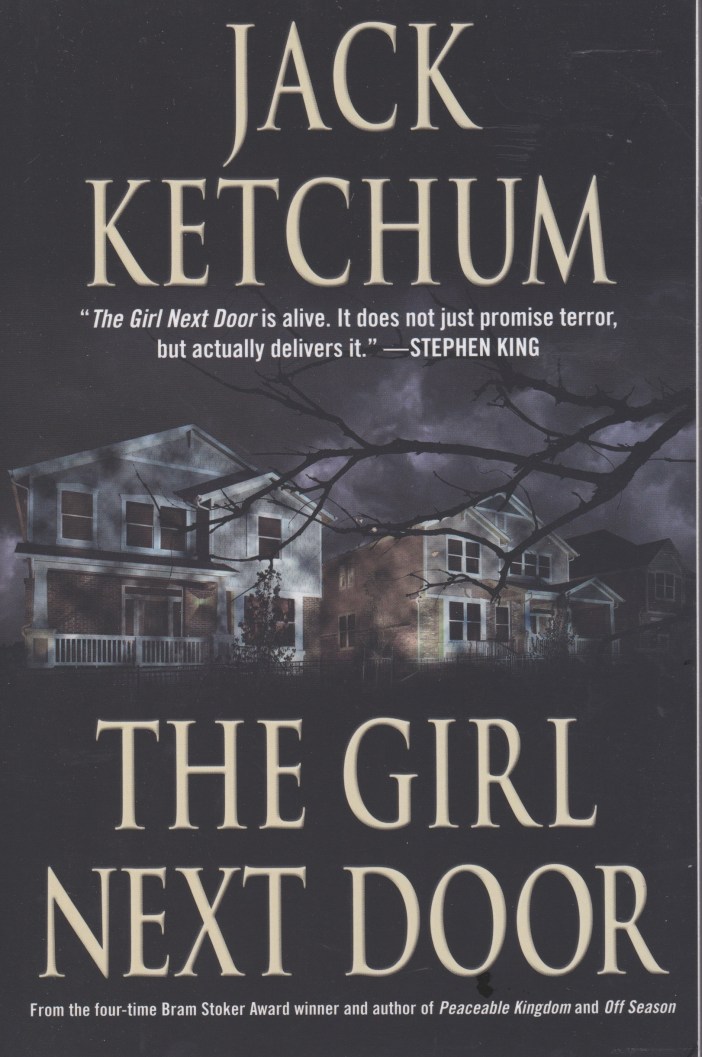
Paul went to see a local play production last night, so I was left to my own devices. After I trashed the pho, I went on to make tacos–always so reliable–and sat in my easy chair and finished reading Jack Ketchum’s The Girl Next Door.

Well, THAT was disturbing.

the girl next door

You think you know about pain?

Ask my second wife. She does. Or she thinks she does.

She says that once when she was nineteen or twenty she got between a couple of cats fighting–her own and a neighbor’s–and one of them went at her, climbed her like a tree, tore gashes out of her things and breasts and belly that you can still see today, scared her so badly she fell back against her mother’s turn-of-the-century Hoosier, breaking her best ceramic pie plate and scraping six inches of skin off her ribs while the cat made its way back down her again, all tooth and claw and spitting fury. Thirty-six stitches I think she said she got. And a fever that lasted days.

My second wife says that’s pain.

She doesn’t know shit, that woman.

That’s a pretty amazing image for the start of a book, don’t you think?

I was on a panel with the divine Megan Abbott several years ago where she mentioned that the suburbs are incredibly noir; I’d never really thought of it that way before, but I soon realized she was absolutely right (as she so frequently is). One of the major disconnects in our culture and our society is our idealization of children and childhood; as well as the time when children are at the in-between stage between childhood and adulthood, hormones raging and passions and emotions are their height; she has explored this beautifully in novels like The End of Everything and Dare Me. Stephen King writes beautifully about children; idealizing the innocence of childhood against the very real terrors that exist in that time; nowhere is this more evident than in his novel It. That idealized world is partly because of 1950’s sitcoms like Father Knows Best and Make Room for Daddy; a sanitized, unreal world that everyone seems to look back on and thinks was real–when it was anything but.

Jack Ketchum’s The Girl Next Door is also set in that time; 1958, to be exact, in a small suburb/town in New Jersey, a tranquil world of fairs and carnivals and playing pick-up games of baseball in the park; of trying to catch crayfish in the creek and beginning to wonder about the way your body is changing. But this ‘idyllic’ world has some dark edges–there’s a sociopathic bully up the street, beaten by his alcoholic father who also beats his mother and sister; and the three boys next door don’t seem quite right in the head, either. Their single mother, Ruth, is the “cool mom” of the neighborhood, who lets the kids drink beer and smoke in her presence. The death of her brother and his wife brings two more kids–girls–into her home, Meg and Susan. And then the dynamic begins to change…and Ruth’s own sociopathy begins to reveal itself…and soon Meg is tied up and being tortured in the basement…and the other kids in the neighborhood also soon are slowly drawn into the terrifying game in the basement.

And the main character, whose first person POV this is told in, is not exactly innocent. Told in reminiscence; looking back on what happened as an adult, exploring why he didn’t blow the lid off what was going on and how he himself got roped into helping in the torment, is as terrifying as what is going on. The descent of these kids into monsters, how easy it is for that thin line between being decent and moral as opposed to criminal and animalistic to be crossed is what truly makes this horrifying. The fact that it is based on a true story makes it even worse…because this may be fiction, but things like this happen in the real world. Every day.

And it is written beautifully; Ketchum is a great writer, knowing how to build suspense and unease, able to use words and construct sentences and paragraphs to create a chilling mood; and you keep turning the pages not only to find out how the story is going to resolve itself–obviously, it has to–but to see how the main character, Danny,  resolves his own inner conflict about what’s going on…and it is clear, just from the way the story is told, that adult Danny is still damaged by what happened, what he witnessed, what he was involved in.

The book is classified as horror, but it’s more suburban noir than anything else.

It’s also a pretty chilling indictment of how powerless children are.

And now, back to the spice mines.

All Right

It’s gloomy this morning, and my heart is heavy upon waking to the news from Las Vegas. Yay, Monday.

I have a lot to get done this week, as ever. Bouchercon and our trip to Toronto looms on the horizon; I went to work on the stuff in the storage attic over the laundry room this weekend. Cleaning out the storage spaces, of course, is an exercise in letting go; I donated three boxes of books last week and will probably donate that many more this week.

I want to get at least three more chapters on the Scotty book done this week; I also want to revise a short story one final team before sending it out into the world; and I am going to get the WIP whipped into final shape so I can start sending that out to agents. It should work, as long as I don’t get sidetracked or distracted or lazy. Tonight when I get home from work I am going to make pho, for the first time; I’ve found a ‘quick” recipe that should only take about forty minutes to make.

I started reading another book yesterday that didn’t pass the first fifty page test; into the donate pile it went, and I started reading another, The Girl Next Door by Jack Ketchum. I’ve never read Ketchum, but I’ve know who he is for years. I met him at Stokercon in Las Vegas; and since he was one of the guests of honor, I arranged for his travel and so forth. What an absolutely charming man! I bought my copy of this book that weekend, but never ran into him again after I’d bought it. It’s quite excellent so far.

And on that note, tis off to the spice mines with me for the rest of the day.

Here’s a hunk to slide you into the week.

ed467dbea523fb9e7d271c2b364acb56


I Won’t Hold You Back

Being from, not only the South but also from Alabama, I am very particular about Southern fiction, and fiction set in Alabama (there is more of it than you might think; there is certainly much more of it than To Kill a Mockingbird). Robert McCammon has written some exceptional Southern horror fiction set in Alabama; I absolutely loved Boy’s Life, while I have yet to read Gone South (which is in the TBR pile). He actually  set a book in the part of Alabama I am from; it was a good book, but it bore no more actual resemblance to that county than anything other book set in the rural South; it was as though he simply put up a map of Alabama and stuck in a pin in it, said “okay this is where it will be set” and worked from there. But it was a good book that I enjoyed; it had some interesting things to say about religion–particularly the rural Southern version of it. I myself want to write about Alabama more; I feel–I don’t know–connected somehow when I write about Alabama in a greater way than I do when I am writing about New Orleans, and that’s saying something. Mostly I’ve written short stories, the majority of which have never been published; only two have seen print, “Smalltown Boy” and “Son of a Preacher Man.”

I remember Michael McDowell from the 1980’s, when the horror boom was at its highest crest; I never read his work but I was aware of it. I remember reading the back covers of his Blackwater books and not being particularly interested in them; there was just something about them, and their Alabama setting, that somehow didn’t ring right to me; I don’t remember what or why, but I do remember picking them up several times in the bookstore, looking them over, and putting them back.

In recent years, McDowell has enjoyed a renaissance of sorts; he was a gay man who died from AIDS-related complications in 1999. I wasn’t aware that he was part of the writing team who published a gay mystery series under the name Nathan Aldyne until sometime in the last few years, and I’d been meaning to get around to finally read one of his horror novels, the reissue of The Elementals (which included an introduction by my friend, the novelist Michael Rowe–whose novels Enter, Night and Wild Fell are quite extraordinary)–which again is set in Alabama, only this time Mobile and the lower panhandle of Alabama that sits on either side of Mobile Bay (the same area, in fact, where I set my novel Dark Tide, only my novel was set on the other side of the bay). My friend Katrina Niidas Holm recently asked me to read the book so we could discuss it drunkenly over cocktails at Bouchercon in Toronto later this month; this morning I sat down and read it through. (It’s not very long; 218 pages in total.)

the elementals

In the middle of a desolate Wednesday afternoon in the last sweltering days of May, a handful of mourners were gathered in the church dedicated to St. Jude Thaddeus in Mobile, Alabama. The air conditioning in the small sanctuary sometimes covered the noise of traffic at the intersection outside, but it occasionally did not, and the strident honking of an automobile horn ould sound above the organ music like a mutilated stop. The space was dim, damply cool, and stank of refrigerated flowers. Two dozen enormous and very expensive arrangements had been set in converging lines behind the altar. A massive blanket of silver roses lay draped across the light-blue casket, and there were petals scattered over the white satin interior. In the coffin was the body of a woman no more than fifty-five. Her features were squarish and set; the lines that ran from the corners of her mouth to her jaw were deep-plowed. Marian Savage had not been overtaken happily.

In the pew to the left of the coffin sat Dauphin Savage, the corpse’s surviving son. He wore a dark blue suit that fit tightly over last season’s frame, and a black silk band was fastened to his arm rather in imitation of a tourniquet. On his right, in a black dress and a black veil. was his wife Leigh. Leigh lifted her chin to catch sight of her dead mother-in-law’s profile in the blue coffin. Dauphin and Leigh would inherit almost everything.

Big Barbara McCray–Leigh’s mother and the corpse’s best friend–sat in the pew directly behind and wept audibly. Her black silk dress whined against the polished oaken pew as she twisted in her grief. Beside her, rolling his eyes in exasperation at his mother’s carrying-on, was Luker McCray. Luker’s opinion of the dead woman was that he had never seen her to better advantage than in her coffin. Next to Luker was his daughter, India, a girl of thirteen who had not known the dead woman in life. India interested herself in the church’s ornamental hangings, with an eye toward reproducing them in a needlepoint border.

On the other side of the central aisle sat the corpse’s only daughter, a nun. Sister Mary-Scot did not weep, but now and then the others heard the faint clack of her rosary beads against the wooden pew. Several pews behind the nun sat Odessa Red, a thin, grim black woman who had been three decades in the dead woman’s employ. Odessa wore a tiny blue velvet hat with a single feather dyed in India ink.

Before the funeral began, Big Barbara McCray had poked her daughter, and demanded of her why there was no printed order of service. Leigh shrugged. “Dauphin said do it that way. Less trouble for everybody so I didn’t say anything.”

This is an auspicious beginning to a novel that straddles the line between Southern Gothic and horror; but in using the word horror I am thinking of the quiet kind of horror, the kind Shirley Jackson wrote; this isn’t the kind where blood splatters and body parts go flying or you can hear the knife slicing through flesh and bone. This is the kind of horror that creeps up on you slowly, building in intensity and suspense until you are flipping the pages anxiously to find out what happens next.

McDowell introduces all of his characters in those few short sentences; Dauphin and his wife, Leigh; her mother Big Barbara; her brother Luker and her niece, India. Odessa also has a part to play in this story, and the only other character who doesn’t appear in this opening is Big Barbara’s estranged husband, Lawton. Lawton, like Mary-Scot, only plays a very small part in this tale, and so the reader doesn’t need to meet him until later.

(I do want to talk about character names here; the Savage family all have names that have something to do with Mary Queen of Scots; the deceased is Marian, her long dead husband Bothwell; Mary-Scot is as plain a reference as can be, whereas her two brothers were Mary Stuart’s husbands: Dauphin–her first husband was Dauphin Francois, later King Francois I of France–and the deceased elder brother, Darnley; the romantic Queen’s second husband was Lord Darnley. Marian’s –of Mary–deceased husband Bothwell bore the name of the Scottish Queen’s third husband, the Earl of Bothwell. These Savage men died in reverse order of the Queen’s husband’s though; Bothwell first followed by Darnley,  and of course, as the only one living, Dauphin will die last. Also, there’s never any explanation for why Big Barbara is called Big Barbara; usually in Southern families the reason you would call someone “Big” is because there is a “Little;” there is no Little Barbara in this story, and I’m not sure where Luker came from as a name, either. I wondered if it was a colloquial pronunciation; names and words that end in an uh sound turn into ‘er’ in Alabama; Beulah being pronounced Beuler, for example, so I wondered if his name was Luka…)

The McCrays and the Savages are families bound by decades of friendship and now marriage; they have three identical houses on a southern spit of land in the lower, western side of the Alabama panhandle in a place called Beldame; Beldame is very remote, bounded by the Gulf on one side and a lagoon on the other; during high tide the gulf flows through a channel into the lagoon and turns Beldame into an island. There are no phones there nor power lines; electricity is provided by a generator and there is no air conditioning. Oh, how I remember those Alabama summers without air conditioning! One of the three houses is being lost to a drifting sand dune and is abandoned…and as the days pass, the reader begins to realize there’s something not right about that dune…or about that house.

The book reminded me some of Douglas Clegg’s brilliant Neverland; that sense of those sticky hot summers in the South, visiting a place you’re not familiar with and is kind of foreign (the primary POV once the story moves to Beldame is India, who has never been there before); those afternoons where the heat and humidity make even breathing exhausting, the white sugary sand and the glare from it, lying in a shaded hammock just hoping for a breeze–the sudden rains and drops in temperature, where eighty degrees seems cold after days of it being over a hundred…the sense of place is very strong in this book, and Beldame is, like Hill House, what Stephen King called in his brilliant treatise on the genre Danse Macabre, ‘the bad place.”

I really enjoyed this book. A lot. And it has made me think about writing about Alabama again; this entire year I’ve been thinking that, and now feel like it’s a sign that maybe I should.

And now back to the spice mines.
Wanna Be Startin’ Something

Well, I finished the tragic mess that is currently known as Chapter Seven’s first draft yesterday. And it is a mess; this is easily one of the sloppiest first drafts of a novel I’ve ever written. In fact, I feel so bad about how shitty it is I may even go back and rewrite the entire first half once I finish Chapter Ten. This book is so bad, I can’t even believe how badly I can write a Scotty novel. Oh, well, that’s what rewrites and revisions and future drafts are for.

I also finished rereading It yesterday. Wow, you are undoubtedly saying, that’s a lot of reading. But truth be told, much like the Losers Club when they return to Derry twenty-seven years later, the more I read the more I remembered. And yes, I skimmed some sections, and skipped some entirely. It’s a perfectly fine novel, and I would recommend it..but there are problematic sections, and yes, I do feel like I’m committing treason by saying anything negative about Stephen King and his work, because he is my writing idol, and he has been since I was a teenager. What works in this book works extremely well; no one writes about the lives of children, how they relate to other children, and what it’s like to be a loser as a child (or feel like one) the way he does. I identify with every one of those kids, I feel for them, I desperately want them to succeed and have great lives and live happily ever after. Their return as adults doesn’t work quite as well as the parts that are set in the past; the characters are still richly defined, and their relationships still work–but I still didn’t like the resolution of the story, either when they were kids or when they were adults; I didn’t like the way the book ended (but for the life of me, I couldn’t write such a book nor could I think of a way to end such a book), and it reminded me a lot of Floating Dragon by Peter Straub in many ways (or vice versa; I think I read the King first and then the Straub originally and was struck by the similarities; I do love both books and think of them fondly). I’m not sorry I took the time to reread It and reacquaint myself with Derry and the Losers Club; there are some genuinely good scares in the book, and it’s one of the best books about a small city I’ve read–King really does a great job of depicting life in these smallish towns/cities and how the social dynamics work in them, whether it’s Derry, Castle Rock, or Jerusalem’s Lot. (That was one of the best parts of Needful Things for me; how the town dynamics worked and how the characters and their lives and their petty foibles and feuds all were entwined so intricately together.)

One of the other interesting things I found in rereading It was there was an LSU connection in it; in the town Ben has moved to and currently lives in there was a local kid who was a star athlete and went to LSU, only to party too hard and flunk out, and wound up coming back to the small town as an alcoholic. The town is Hemingford Home, where of course Miss Abigail lived in The Stand; also in that same book when Nick Andros is jumped, one of the assailants was wearing his fraternity ring from LSU–he was the sheriff’s brother-in-law, and he partied too hard and flunked out of LSU as well. Methinks Mr. King knows someone who went to LSU and flunked out for partying too hard. Those are the only two references to LSU in King’s work that I know of; would that Rocky Wood was alive so I could email and ask him.

Maybe someday I’ll get to ask Mr. King.

And of course, It is very reminiscent of the novella “The Body.” which is probably my favorite work of King’s, if pressed to name a favorite–the Losers Club, like the smaller group of friends in “The Body”, has the fat kid, the kid whose brother died and parents haven’t gotten over it, the poor kid (only switched from male to female in It), and the kid who gets beaten up a lot because of his smart mouth.

And there’s also the writer character–King often throws a writer in his work (Ben in ‘salem’s Lot, Jack in The Shining), but this was the first book where he really went all-in on  writer character with Bill Denbrough–and of course, his next novel was Misery, which of course took the writer character, and the dangers of fame, to a whole new level.

But yeah, the gang bang scene has a whole different vibe about in 2017. It didn’t phase me thirty-one years ago, but now it’s just kind of…icky.

As I said, I’m not sorry I reread it; most of it still stands up, and I still think it’s a terrific, if flawed, novel.

Today I need to get this kitchen in order, and I want to work some more on both the WIP and the new Scotty, maybe even a short story. Next up for my reading is Michael MacDowell’s The Elementals.

And now, back to the spice mines. Here’s a hunk to get your week off to a nice start.

17523549_1306428822738512_2755094986544804343_n