Nightshift

Yesterday I kind of hit a writing wall; not a big deal, really, just that I was mentally and physically tired for some reason (I suspect upsetting my usual routine by having to go have blood work done in the morning, and now of course I want to write a story called Blood Work), and so I was only about to get about 2300 words out on a short story. I had hoped to not only finish the draft of that particular short story but also get another one done, perhaps even getting to work on a Scotty chapter. Heavy heaving sigh. Ah, well. I’m not going to beat myself up over the lack of productivity here; I am simply going to embrace that I got a pretty decent 2300 words done. So, that is a victory, and one that I am very pleased to have. Each word is another step closer to finished, after all, and once should never berate one’s self for not getting everything done you wanted to as long as you got something done.

I’d intended to go to the gym this morning but didn’t want to get out of bed. I had a good night’s sleep for the first time this week so, well, yeah, that happened. I’ll just have to go after work tomorrow; I have to keep my eye appointment tomorrow morning before work. It’s getting increasingly harder to keep to three times a week; primarily because of my problems sleeping. Heavy heaving sigh.

But…I am liking what I am writing, and I do enjoy going to the gym. (I was wondering what to watch now that Black Sails is over, only to discover season 2 of Versailles is up on Netflix, and I believe this is the season of the Affair of the Poisons!) I just wish I didn’t always get off so late at night that I can’t make it to the gym. There has to be a more efficient way of doing this; there simply has to be.

So,  my plan is to get these two short story drafts finished this week, as well as another chapter of Scotty; I want to have this finished by the weekend, which means a lot of writing today and tomorrow. I also need to get some short stories read for the Short Story Project, and then I think I want to read a novel. (I’ll still read short stories, but I want to read a novel; it’s been awhile since I’ve plunged into the pages of one. Kellye Garrett’s Hollywood Homicide is calling to me, for one thing, and there are any number of wonderful novels in the TBR Pile, you know.) I also want to get the order of the Bouchercon anthology stories finished this weekend, and I need to get my taxes finished and off to my accountant: MUY IMPORTANTE.

The Lost Apartment is again a pigsty; it’s amazing how easily that happens. It’s not as bad today as it was last Thursday, but still. I just don’t seem to be able to manage time properly anymore. I don’t know what that’s all about, but it definitely needs to STOP.

All right, I need to get some things done before I leave for the office this morning; I need to run errands as well before I head in.

For today’s short story discussion, we are going to look at a crime story by Lia Matera, and a literary fiction story by Irwin Shaw.

Lia Matera’s story is “Destroying Angel,” copyright Lia Matera, 1990, and this short story was first published in Sisters In Crime Volume II, 1990, edited by Marilyn Wallace.

I was squatting a few feet from a live oak tree, poison oak all around me (an occupational hazard for mycologists). I brushed wet leaves off a small mound and found two young mushrooms. I carefully dug around one of them with my trowel, coaxing it out of the ground.

I held it up and looked at it. It was a perfect woodland agaricus. The cap was firm, snow white with a hint of yellow. The gills under the cap were still white, chocolate-colored spores hadn’t yet tinged them. A ring of tissue, an annulus, circled the stipe like a floppy collar. A few strands of mycelia, the underground plant of which the mushroom is the fruit, hung from the base. I pinched the mycelia off and smelled the gills. The woodland agaricus smells like it tastes, like a cross between a mushroom, an apple, and a stalk of fennel.

Lia Matera is one of my favorite crime writers, and her Star Witness is one of my favorite crime novels; deliciously sly and incredibly witty and clever. As I was reading this short story of hers, I also lamented that she’s not published a novel in quite a while. This story is incredibly well-constructed, and devious as well; there’s a lot of information in it about mushrooms, as Our Heroine is a mycologist who works at a local nature museum and is dramatically underpaid; as she talks about her work and her mushrooming and working at the museum, and of course how careful one must be to differentiate between the deadly ones and the safe ones…well, you just know someone is going to be poisoned by mushrooms, don’t you? Matera pulls off a delightful sleight of hand in that regard, though, and the overwhelming sense of melancholy and sadness she permeates the story with is masterful. Her novels are available as ebooks now; treat yourself to one and you’ll never look back.

The Irwin Shaw story I read (reread, actually) was “The Girls in their Summer Dresses” by Irwin Shaw.

Fifth Avenue was shining in the sun when they left the Brevoort and started walking toward Washington Square. The sun was warm, even though it was November, and everything looked like Sunday morning–the buses, and the well-dressed people walking slowly in couples and the quiet buildings with the windows closed.

Michael held Frances’ arm tightly as they walked downtown in the sunlight. They walked lightly, almost smiling, because they had slept late and had a good breakfast and it was Sunday. Michael unbuttoned his coat and let it flap around him in the mild wind. They walked, without saying anything, among the young and pleasant-looking people who somehow seem to make up most of the population of that section of New York City.

“Look out,” Frances said, as they crossed Eighth Street. “You’ll break your neck.”

You never hear much about Irwin Shaw anymore, but he was one of the more successful American writers from the 1950’s to the 1970’s; his books were critically acclaimed and best sellers; the novels in included The Young Lions, Rich Man Poor Man and its lesser sequel Beggarman Thief, Evening in Byzantium, and Aurora Dawn (which was lesser known but one of my favorites; it was about a radio show sponsored by Aurora Dawn soap and was clever and biting satire about art vs. commerce). I read most of Shaw’s work in the 1970’s when I was a teenager; I would love to reread some of them again.

I read “The Girls in their Summer Dresses” for an English course in college; I don’t remember which course or which college; but the fact the story was taught gives you an indication of how well-regarded Shaw was. The insights the instructor gleaned from the story–a switch of roles between the young couple, where she took on the more traditionally masculine role while the husband took on the more passive, traditionally feminine role–struck me, at the time and on this reread some thirty years later as more of that MFA program claptrap taught and regurgitated by people who don’t really understand and appreciate the art of fiction. (Yes, as you can tell, I embrace my role as a non-intellectual.) At the time I read the story in college it struck me as a really sad story about a newly married couple whose relationship was, in fact, doomed to fail; and the point of the story showed how it was either doomed to fail, or if it was going to last, how the wife was going to have to completely subsume herself and sublimate her own needs and desires to his, constantly biting her tongue and becoming increasingly bitter about those compromises as the years pass. The young husband is a narcissist and an asshole, who, despite his wife very clearly telling him how much his ‘window shopping’ of every woman they pass on the street bothers and disturbs her–cares so little about how this behavior hurts and disturbs her that his attitude is too bad so sad I’m the man and I’m not going to change so you need to get over it. This is kind of the prequel, in some ways, to Susan Glaspell’s “A Jury of Her Peers”–I can see this woman gladly strangling her husband in his sleep in the future after twenty years of being beaten down and humiliated over and over again.

Of course, I always tend to look at stories from the perspective of a crime writer now; so there’s that, too.

And now, back to the spice mines. Here’s a Throwback Thursday hunk for you:
IMG_2951

We Belong

Wednesday morning, and I have go have blood work done. No worries–it’s just for the semi-annual check-up, but I hate this whole process of fasting/not having anything to drink after midnight, plus the abject misery of having blood drawn–my veins roll, so they always have to DIG for them, generally leaving me with an enormous bruise–blah blah blah. Yay.

Plus, I can’t have coffee until I get back home.

AIEEEEEE!

Heavy heaving sigh.

Well, it wasn’t as bad as feared. She managed to get the blood vials filled on the first try, without having to dig! For once, I don’t mind getting one of those damnable “how was your visit?” emails, as now I get to recognize my technician for a job very well done. I don’t even have a bruise!

It’s been an interesting week. I’m watching the Netflix series Seven Seconds, which I am enjoying the hell out of, and Paul and I are watching also a BBC series called Retribution, which is one of the best concepts for a crime series I’ve seen in quite a while: a young married couple, who grew up as neighbors in rural Scotland, are murdered a few weeks after the wedding by a junkie robbing their apartment; the wife is about seven months pregnant. As the families get the news and grieve, the very next night after the bodies are found the killer for some reason is coming to see them and buys guys at a station twenty miles from where they live. There is a terrible storm that night and he wrecks his car, and the families find him and bring him inside. After they do, they see a news report which identifies him as the killer…and he is at their mercy. They drag him out to the barn, and sometime during the night someone cuts his throat…and now they have to cover up the crime. Juicy, right?

I also started writing two new short stories this week; don’t ask me why, I don’t know why I am on such a short story roll lately. One of them is my Italian short story, the one I’ve been wanting to write since we visited Panzano; I wanted to set a story there ever since I first saw that gorgeous village in Tuscany. The other is one I started a long time ago, but only wrote the opening paragraph; for some reason the rest of the story revealed itself to me this week so I started working on that as well. Who knew?

I also read some short stories this week.

First was “Where Are You Going, Where Have You Been” by Joyce Carol Oates; which was originally published in 1966 and is now available for free pdf download on-line;

Her name was Connie. She was fifteen, and she had a quick, nervous giggling habit of craning her neck to look into mirrors or checking other people’s faces to make sure her own was all right. Her mother, who noticed everything and knew everything and who hadn’t much reason any longer to look at her own face, always scolded Connie about it. “Stop gawking at yourself. Who are you? You think you’re so pretty?” she would say. Connie was raise her eyebrows at these familiar old complaints and look right through her mother, into a shadowy vision of herself as she was right at that moment: she knew she was pretty and that was everything. Her mother had been pretty once, too, if you could believe those old snapshots in the album, but now her looks were gone and that was why she was always after Connie.

I’m not sure how I came across this story, but wow, is it ever disturbing. I’ve really enjoyed my discovery of Oates’ talents through reading the occasional short story, and each one makes me want to read more. Connie, so confident in her looks and the power they give her, unfortunately attracts the attention of the wrong guy who turns up at her house one day with a friend when she is there by herself. As Connie tries to handle the situation…the sense of dread Oates evokes in her prose is palpable. I couldn’t stop reading, while at the same time was afraid to keep reading.

The next story I read was “A Jury of Her Peers” by Susan Glaspell.

When Martha Hale opened the storm-door and got a cut of the north wind, she ran back for her big woolen scarf. As she hurriedly wound that round her head her eye made a scandalized sweep of her kitchen. It was no ordinary thing that called her away–it was probably further from ordinary than anything that had ever happened in Dickson County. But what her eye took in was that her kitchen was in no shape for leaving: her bread all ready for mixing, half the flour sifted and half unsifted.

She hated to see things half done; but she had been at that when the team from town stopped to get Mr. Hale, and then the sheriff came running in to say his wife wished Mrs. Hale would come too–adding, with a grin, that he guessed she was getting scary and wanted another woman along. So she had dropped everything right where it was.

“Martha!” now came her husband’s impatient voice. “Don’t keep folks waiting out here in the cold.”

She again opened the storm-door, and this time joined the three men and the one woman waiting for her in the big two-seated buggy.

When I was in high school, I was in a contest play; one of the many disciplines for what was called Speech Competition in the state of Illinois was one-act plays. I auditioned for the contest one-act at my high school and was cast in Susan Glaspell’s one-act play Trifles, which was based on this short story. As a teenager, I thought the play was kind of silly and dumb, to be honest. We did well, but didn’t make it out of regional competition; we placed third, with every judge placing us third; if any judge had given us a first we would have moved on. But hey, it was my high school’s first time doing a contest play, we had practically no budget or set, and the two schools that beat us did the first act of Antigone, complete with sets and costumes, and the other did the first act of The Importance of Being Earnest, again, with an apparently bottomless budget for sets and costumes; both schools were also known for their drama departments.

Reading the original short story, all these years later, as both a fan and writer of crime fiction, made me appreciate the tale all the more. It’s about psychology; what drove the woman to kill her husband, after years and years of a miserable existence, why now? And the two other wives, the ones who find the motive, and understand it and sympathize with her, have to decide whether to share that with the condescending men/husbands, who basically spend the whole story mocking them and women in general, when they are the ones who actually solve the case…it’s actually genius and actually quite brilliant.

And now, back to the spice mines.

12795475_1033437423383944_9161554592569797704_n

A View to a Kill

God, yesterday.

Have you ever had one of those days where you took the morning off from your day job to drive out to the suburbs for an appointment with your eye doctor, only to arrive and find out that you don’t have an appointment after all–and the doctor isn’t even IN–and then after further investigation it turned out that when you called to make your appointment for March 2nd they made it for February 2nd? Yeah, that was how MY day started yesterday. So, I left with a new appointment for next Friday, which means taking ANOTHER morning off from work, and means I still don’t have my new contact lenses and my new glasses are still off somewhere in the future.

Honestly. It’s amazing there was no body count. Seriously. And, as always when something goes wrong in a day, everything else the rest of the day just seemed to go wrong, too. But today is going to be better.

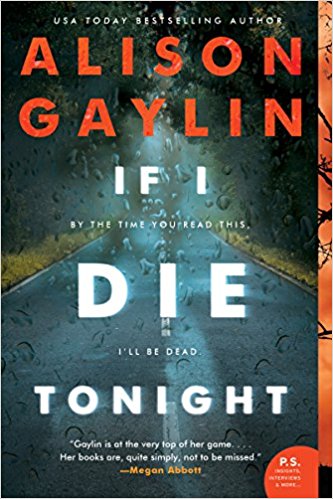
Speaking of better, Alison Gaylin’s new novel comes out this week, and if you haven’t already preordered it, you need to do so. RIGHT NOW.

51G2hiEFpEL._SX331_BO1,204,203,200_

From the Facebook page of Jacqueline Merrick Reed.

October 24 at 2:45 am

By the time you read this, I’ll be dead.

This isn’t Jackie. It’s her son Wade. She doesn’t know where I am. She doesn’t even know I can get on her FB page, so don’t ask her. This isn’t her fault. I am not her fault.

I am writing to tell my mom and Connor that I’m sorry. I never meant to hurt anyone. I wish I could tell you the truth of what happened, but it’s not my truth to tell. And anyway, it doesn’t matter. What matters, what I want you both to know, is that I love you. Don’t feel sad. Everything you did was the right thing to do. I’m sorry for those things I said to you, Connor. I didn’t mean any of it.

Alison Gaylin has been nominated for an Edgar Award three times: Best First Novel, Best Paperback Original, and Best Novel. (For the record, let it show there are many many horrible things I would do to be nominated once, let alone three times.) Her most recent novel, What Remains of Me, was a tour-de-force (Best Novel nominee), juggling two different time-lines as she told the story of two murders thirty years apart and yet connected. But somehow she has managed to surpass that novel with her latest, If I Die Tonight, which is powerful, compelling and beautifully written.

The book begins with the above Facebook post, which immediately pulls the reader into the story. Who is Wade? What is he talking about? Why is he going to kill himself? And from there, the book goes back to five days earlier, where the story truly begins. Jackie, mentioned in the post, is a single mother, estranged from her ex-husband and his current wife. The father of her two children has also pretty much abdicated any responsibility for his sons, other than the monthly check. Jackie is a realtor, and struggles to make ends meet. Her eldest son Wade is her primary worry: over the last few years he has withdrawn, become more insular, barely speaks to her. Friends don’t stop by to visit him or hang out, he doesn’t leave the house much. He is also no longer close to his younger brother, Connor. Jackie’s co-worker at the real estate agency is also her best friend; Wade used to be infatuated with her daughter but is no longer.

The peace and quiet of this little town in the Hudson Valley, Havenkill, is abruptly shattered in the early hours of a weekend morning when an attempted carjacking ends with a popular young athlete at the high school, Liam, hospitalized in critical condition; he and a friend came to the rescue of the woman being carjacked, but the car was stolen anyway and the comatose boy was run over. Who would do such a thing? The woman in the car is a one-hit wonder from the 80’s, Aimee En, and yet pieces of her story don’t make sense. What happened that night? And when Liam dies and it becomes a murder investigation, Jackie becomes increasingly more terrified that Wade was involved somehow.

Gaylin’s mastery of character is on full display in this novel; every character is real, believable, and alive. Even when they behave in ways that are either self-destructive or selfish, it makes sense and fits with the character; no one ever does anything that doesn’t make sense in order to advance the narrative. The plot is devilishly complex and layered, with twists and turns that make the truth almost impossible for the reader to ferret out. Gaylin makes you care for and understand every character, even if you don’t approve of what they’re doing.

But the heart of this novel, its true theme, is the relationships between parent and child. Jackie and Wade, police detective Pearl Maze and her estranged father, her co-worker Helen and her daughter–every step along the way Gaylin is examining those relationships: what goes wrong between them? Can distance, once it develops, be overcome? What is and isn’t acceptable for a parent to accept from their child in terms of behavior, and vice versa? How well can a parent know a child, and vice versa? What is enough space, and what is too much?

And every twist in this novel is earned, as it barrels along to its satisfying conclusion.

This is going to be one of the top books of the year; in fact, 2018 has–with Gaylin’s, Laura Lippman’s Sunburn, and Alafair Burke’s The Wife–already gotten off to an amazing start for crime fiction, and there’s a Megan Abbott coming this summer. If these women are indicative of how high the bar is being risen in crime fiction…it’s going to be a great year in our genre.

One More Night

Thursday. I overslept this morning and thus didn’t make it to the gym–I’ll have to go tomorrow night after work–but I also had a really great night’s sleep and so am taking that as a win; now that I am out of bed my muscles aren’t tired or sore. I’ll do some stretching and my abs this morning before getting in the shower. I also have to get up tomorrow morning and go to the eye doctor; instead of my usual wimpy not complaining and accepting things, I called them and told them I can’t read in my progressive contacts so I need a stronger prescription. So, I am going in tomorrow to get a new trial pair and perhaps order my new glasses and a year’s supply of the contacts; depending on how the new ones feel.

The decisions have been made on the Bouchercon anthology, and all the people who submitted have been duly noted. This weekend I will read the chosen again and put them in order. I am currently waiting to hear back from all the selected authors. I think we’ll make the announcement of the table of contents next week. Huzzah!

Yesterday I also started writing, of all things, a Chanse MacLeod short story. I know, right? I don’t think I’ll ever write another Chanse novel, but there are ideas I had for him that I don’t want to really waste, and hey, why not write short stories about him? I always had in mind to write about him returning to the town of his birth; I also had a story in mind involving his younger brother; another with him dealing with his fraternity past in Baton Rouge–all stories my publishers were never interested in since they weren’t set in New Orleans. As I have said before, I’ve never really known how to write a private eye mystery short story, but all this short story reading I’ve been doing has kind of opened my eyes in that regard; so thank you, Sue Grafton, Ross Macdonald, Laura Lippman, etc. I’ve already realized that the opening doesn’t work, and it’s just extraneous crap I don’t need. But I am going to soldier on, and hopefully today I will finish the first draft. I also have an idea for a short story involving Chanse’s partner, whose name I cannot recall; I’ve always been interested in writing about her–the straight girl who paid for college by stripping on Bourbon Street. I cannot for the life of me think of her name right now, which is annoying, but I always thought she was interesting. I’d even thought about spinning her off, even using Chanse as a supporting character in the books–but then, is there an audience for a series about a female private eye who used to work as a stripper? But I think I can make it work as a short story. We’ll see.

Last night while I was making dinner I reread some of the short stories I have in progress, and was quite pleased with them. I am going to try to get those revisions done as quickly as I can, so I can get them out of my hair so I can focus on getting the new project done.

I’m still behind on the Short Story Project, but I did manage to read Raymond Chandler’s “Red Wind” yesterday; someone recently talked about it somewhere on social media as the perfect hard-boiled short story. It had been a while since I’d read Chandler–and I haven’t read all of Chandler, either, something I need to remedy–and so I thought it was a great opportunity to read this story, which I wasn’t familiar with.

There was a desert wind blowing that night. It was one of those hot dry Santa Anas that come down through the mountain passes and curl your hair and make your nerves jump and your skin itch. On nights like that every booze party ends in a fight. Meek little wives feel the edge of the carving knife and study their husbands’ necks. Anything can happen. You can even get a full glass of beer at a cocktail lounge.

I was getting one in a flossy new place across the street from the apartment house where I lived. It had been open about a week and it wasn’t doing any business. The kid behind the bar was in his early twenties and looked as if he had never had a drink in his life.

I’ve not read all of Chandler, or his hard-boiled cohorts Dashiell Hammett, Ross Macdonald, or noir master James M. Cain. What I have read I’ve greatly enjoyed; as I have greatly enjoyed John D. Macdonald. I think I’ve been influenced by all of them to some degree; and there simply isn’t enough time to read. I’d love to go back and not only finish reading all of their works but to reread the ones I’ve already read; The Maltese Falcon, for example, is way overdue for a reread and so are the Travis McGee novels; The Big Sleep, Farewell My Lovely, and The Lady in the Lake, along with Love’s Lovely Counterfeit and of course, the Archer novels (although I am reading the Archer short stories). Anyway, I’ve always loved these writers and their work, and I do need to go back and reread them, problematic as some of them may be to modern eyes.

“Red Wind” is a really good story, complicated and complex, but still moves relatively easily from A to B to C. It opens with Marlowe stopping in at a bar across the street from where he lives in an apartment building, and a murder occurs right in front of him and the other denizens of the bar. After dealing with the police he heads back to the apartment building where he runs into the proverbial ‘dame’ of these types of stories, she lies to him, of course, but also manages to save his life when the murderer shows up to eliminate the witnesses. But while the mystery of the murder is now cleared up, turns out the victim has left some loose ends behind–involving the dame and some others. He was a blackmailer; the murder had nothing to do with the shooting (a very clever shift by Chandler), and Marlowe is on the case, trying to solve the blackmail cases and dealing with the LAPD. The writing is choice, terse, and all throughout the story the Santa Ana wind plays a role, almost like another character, driving people to do things they might not do under normal weather circumstances.

And now, back to the spice mines; since I didn’t go to the gym I need to get other things done.

IMG_3978

Heaven

So, I survived my voyage out to Metairie. I like the new eye doctor–Dr. Moses at Target–and I am trying out progressive contact lenses. I never really got the sense from my previous eye doctor of how they worked–basically, it sounded like witchcraft–but Dr, Moses very patiently explained how they work in a way which was incredibly easy for me to understand–and it wasn’t that hard. Basically, the pupil expands to see far away and contracts to see up close; so the progressive contact lenses are for distance viewing with a small spot in the center for reading; the pupil will contract and see through that small spot for reading, etc. Was that really that hard to explain? But they are…odd. I have a tester pair, for me to try out and get used to; and they are definitely going to take some getting used to. I can see fine for working on the computer and pretty much everything else, but reading things on say, the television–I can read it but it’s blurry. I’m assuming this is part of the adjustment process; or if it’s not, I need to have the prescription altered. I also tried reading with them in–a couple of books–and I couldn’t. I doubt that is part of the adjustment process. Heavy sigh. But I’ll have to go back in  have my eyes looked at again, I suppose, if these issues aren’t part of the “getting used to them” process.

I was very tired yesterday; I didn’t sleep as well as I should have on Friday night, so I really knocked myself out last night and feel very rested this morning, which is great. I think part of the sleep issue I’ve been having has to do with both not working out in a couple of weeks in addition to drinking more caffeine–I’d cut back dramatically on both coffee and Coke–and so today I am off to the gym and I am going to try to not drink as much caffeine. I need to drink more water anyway.

I didn’t get as much writing done yesterday as I had wanted to; I hadn’t originally planned to even try–errands and so forth generally don’t put me in a very good hey let me write place; and I was right. Plus the contacts made it seem weird, if that makes any sense? I’m sure it doesn’t. So I tried to get chores done–I laundered the bed linens, cleaned the kitchen, etc. I also got caught up on Real Housewives of Beverly Hills and Riverdale; when Paul finally got home last night we got caught up on How to Get Away With Murder. I also did some serious thinking about the things I am working on–a recently rejected short story, for example, that I’ve been having trouble figuring out how to fix for years and it finally hit me last night; the Scotty book and where it’s going; the WIP and where it’s going; a couple of other short stories I am working on (Christ, I am working on a lot of shit, aren’t I).

So, this morning, after sleeping in for a bit, I am going to get some filing done, do some writing in my journal (to work around some thought about what I am writing now) and then I am going to go to the gym, come home and get cleaned up, and then I am going to write/edit for a few hours before it’s time for the ice dancing tonight on the Olympics (I already miss Adam Rippon).

And of course, I read some more stories for the Short Story Project.

First up was “Black-eyed Susan” by Laura Lippman, from Hardly Knew Her:

The Melville family had Preakness coming and going, as Dontay’s Granny M liked to say. From their rowhouse south of Pimlico, the loose assemblage of three generations–sometimes as many as twenty people in the three-bedroom house, never fewer than eight–squeezed every coin they could from the third Saturday in May, and they were always looking for new ways. Revenue streams, as Dontay had learned to call them in Pimlico Middle’s stock-picking club. Last year, for example, the Melvilles tried a barbecue stand, selling racegoers hamburgers and hot dogs, but the city health people had shut them down before noon. So they were going to try bottle water this year, maybe some sodas, although sly-like, because they could bust you for not paying sales tax, too. They had considered salted nuts, but that was more of a Camden Yards thing. People going to the track didn’t seem to want nuts as much, not even pistachios. Candy melted no matter how cool the day, and it was hard to be competitive on chips unless you went off-brand, and Baltimore was an Utz city.

Parking was the big moneymaker, anyway.

Every fall, Paul and I try to attend as many LSU games as we can at Tiger Stadium. It’s so much, frankly, to be in the stadium and being in a crowd of like-minded LSU fans, yelling and screaming and jumping up and down. The first two years we went to games we parked in an African-American church’s parking lot–they were so nice, and would give us cans of soda as well as letting us park there–because it was very easy to get out of there with post-game traffic. The church sold its property, alas–no idea why, but then we needed another place to park. About a block or two closer to the stadium we found a place–Miss Fay’s. Miss Fay is an older woman of color who owns a vacant corner lot next to her house and can fit about twenty cars in there for twenty dollars each; not a bad haul for a Saturday. She’s very friendly and nice, as are the rest of her family, and so we’ve been parking there for about seven years now–and they also keep watch over the cars. The walk is a little less than a mile to the stadium from there, and even on the hottest days (that Auburn game in 2015, Jesus!) it kind of gets you in the mood for the game to walk there, and after the game–we always stay to the end–the walk back allows the traffic to thin out a bit so it’s not so bad. I’ve always wondered about Miss Fay and her family; as well as the other families renting out parking spaces in the yards we walk past on our way to the stadium.

That’s what this Lippman story is about; it’s from the point of view of a teenager whose family rents out spots in their yard for parking during the Preakness, and the myriad other ways they try to think of to make bank from the race-goers. The young man works as basically what we called at the airport a skycap; helping people lug their full coolers and so forth to the track. On this particular day he helps a really pretty woman who looks like a black-eyed Susan; and the next day he also works to  help clean up the mess at the track. Her coolers are still there, and therein lies a tale. This story is filled with social commentary and it’s done in an incredibly easy way; it’s about the reality of being lower income and scrambling to find ways to make money; and of course, it takes a turn that has nothing to do with the young man who was only peripherally involved. I was worried he might get pulled into the investigation, but I was very pleased with how Lippman handled the story, and I haven’t been able to stop thinking about it since.

I also read Lippman’s “Ropa Vieja”, from the same collection.

The best Cuban restaurant in Baltimore is in Greektown. It has not occurred to the city’s natives to ponder this, and if an out-of-towner dares to inquire, a shrug is the politest possible reply he or she can expect.

On the fourth day of August, one such native, Tess Monaghan, was a block away from this particular restaurant when she felt that first bead of sweat, the one she thought of as the scout, snaking a path between her breasts and past her sternum. Soon, others would follow, until her T-shirt was speckled with perspiration and the hair at her nape started to frizz. She wasn’t looking forward to this interview, but she was hoping it would last long enough for her Toyota’s air conditioner to get its charge back.

Lippman created the character of Tess Monaghan, an accidental private eye who works the mean streets of Baltimore, in her first novel, Baltimore Blues, and continued writing about her for years before branching out into her brilliant stand alones. The Tess novels are amongst my favorites in private eye fiction, and Lippman began winning awards and making short lists left and right from the very beginning. “Ropa Vieja” is a Tess story; and a good one. It’s been several years since the last Tess novel, Hush Hush, and despite that I slipped easily right back into the rhythm of her voice and her world without issue; it was remarkably easy, like putting on a comfortable old baseball glove or a pair of slippers. This is an interestingly twisted little tale, about a pitcher for the Orioles who got sick on the mound in a late season game; and it had to do with the traditional pre-meal dish of ropa vieja he’d eaten from the afore-mentioned restaurant. The owner hires Tess to somehow prove that it wasn’t the restaurant’s fault–and boy, does this story take some serious turns on its way to its ultimate denouement.

As I’ve mentioned before, Lippman is an extraordinary writer–she’s one of my favorites–and her effortlessly brilliant short stories always are surprising, clever, and smart. I am starting to get a better idea of just how one writes a private eye short story from reading hers; there may actually be a Chanse MacLeod short story brewing in my head–or at least, one featuring his partner that has to do with the recent shutdowns/raids of strip clubs in the Quarter. It would certainly be an interesting experiment to try.

And now, back to the spice mines.

Have a great Sunday, Constant Reader!

tumblr_ololkyEQSm1u3ef6to1_500

Saving All My Love For You

Saturday morning. I have an eye appointment in Metairie this afternoon, but I definitely need new glasses. I also have to get groceries this morning (ugh), and I should probably figure out some time to go get the mail as well. Heavy sigh; the house is also a mess and this kitchen needs a-cleanin’. Paul’s going into the office today, so I’ll be alone; I am hoping, after I get home, to spend some time writing. I was very tired and didn’t feel good yesterday; my throat’s kind of sore this morning as well; I woke up a lot last night, but I did sleep. Tomorrow I am going back to the gym to get my workouts going again, so hopefully that will help in the sleep department. I’ve noticed that I’m not sleeping as well since Carnival started and I stopped having time for working out.

I can’t not sleep. I have too much to do and I can’t be tired. Yesterday was my short day at the office and after I got home, I didn’t feel well and was too tired to do anything besides sit in my easy chair and watch Adam Rippon videos on Youtube. (I told you I was stanning.) Then it was time to watch the Olympic figure skating, which was terrific. Very proud of our US skaters! Nathan Chen had six quads in his program, and made Olympic history, and young Vincent Zhou skated magnificently as well. All three of our skaters wound up in the Top Ten, which was terrific, and Nathan came close to medaling. If only he’d turned that second quad in his short program into a combination jump and gotten points for it, he would have. He had the highest score in the long program. Had they both skated clean short programs, they both would have medaled. So, there’s a lot of hope there for the future. Part of the fun of the Olympics is also seeing the future of the sport out on the ice as well–the silver medalist, Shoma Uno, is very young as well, and there was a young Russian who is very artistic. Worlds this year will be very fun to watch.

Oh, Adam. What would it have meant to fifteen year old me, deeply closeted and terrified someone might find out who I really was, to see you skate at the Innsbruck Olympics in 1976? Watching you this past week brought tears to my eyes every time; my heart was in my throat every time you went into a jump. You made me laugh in your interviews, you made me cry with your oh-so-beautiful skating. I can’t remember the last time I was so emotionally invested in seeing a skater do well? Michelle Kwan, whom I loved and still miss? Rudy Galindo in 1996? And how happy and proud to see all the love for you, to the point where even the trash tweeting shit about you could just make me smile and think he has a bronze medal, and you have your phone and bitterness. I feel SORRY for you that you can’t find joy in this, what a sad, bitter, pathetic life you must lead. Especially the gay Republicans, so desperate for the love and acceptance they’ll never get from their abusive relationship with a party that hates them. Adam is a star; will be a star, and he’ll always, always, have these Olympics, three gorgeous performances, and a bronze medal. No one can ever take that away from him with petty nastiness.

Watching Adam and his great joy in his sport and doing his best also made me realize something; it’s about doing something you love, and doing your best. I had already realized that I had lost my joy in writing sometime ago; I’m not sure when it went from being something I loved doing to an odious chore. But this year I’ve rediscovered how much I love it, how much I’ve missed it; how I love creating characters and telling stories and expressing myself on the page. I was already getting there on my own, but watching Adam, seeing him, took me to that final place. It’s not about medals, it’s not about awards, it’s not even about money; it’s about joy in doing something you love.

Thanks, Adam, for that–and for making me realize how I’ve been neglecting my eyebrows.

DVzJ3fZVoAADMDi

I also read some more short stories.

To be fair, I had already read Daphne du Maurier’s “The Birds”; her Echoes from the Macabre: Selected Stories is one of my favorite single-author collections of all time. But it had been awhile since I’d read this story; I knew it was vastly different from the Hitchcock film based on it, so I read it again.

On December the third the wind changed overnight and it was winter. Until then the autumn had been mellow, soft. The leaves had lingered on the trees, golden red, and the hedgerows were still green. The earth was rich where the plough had turned it.

Nat Hocken, because of a wartime disability, had a pension and did not work full-time at the farm. He worked three days a week, and they gave him the lighter jobs: hedging, thatching, repairs to the farm buildings.

Although he was married, with children, his was a solitary disposition; he liked best to work alone. It pleased him when he was given a bank to build up, or a gate to mend at the far end of the peninsula, where the sea surrounded the farm land on either side. Then, at midday, he would pause and eat the pasty that his wife had baked for him, and sitting on the cliff’s edge would watch the birds. Autumn was the best for this, better than spring. In spring the birds flew inland, purposeful, intent; they knew where they were bound, the rhythm and ritual of their life brooked no delay. In autumn those who had not migrated overseas but remained to pass the winter were caught up in the same driving urge, but because migration was denied to them followed a pattern of their own. Great flocks of them came to the peninsula, restless, uneasy, spending themselves in motion; now wheeling, circling in the sky, now settling to feed on the rich, new-turned soil, but even when they fed it was as though they did so without hunger, without desire. Restlessness drove them to the skies again.

One of the best parts of the film is that there’s no explanation why the birds have turned on humans; they just have, and there’s no way of knowing if they’ll ever go back to normal. The end of the movie is kind of left hanging; when I saw it the first time when I was a kid I was deeply dissatisfied with how the film ended. But there wasn’t really any way to end the film, and du Maurier herself gave no clues to what was going to happen at the end of her story. The story ends much the same as the movie; no end to the menace in sight, and even more chilling–I don’t remember if this was in the movie–but the BBC had stopped broadcasting; the horrifying part of this story is the incredible sense of isolation the family feels–are they the only people left alive in the world? On that level, the story is even more disturbing than the film; in the movie there are other people all around in the town. The story is set out in the country…and du Maurier never lets the reader know. The way the horror builds is almost unbearable; her mastery is truly amazing.

I also went back to the Laura Lippman well for “Easy As A-B-C’, from her collection Hardly Knew Her.

Another house collapsed today. It happens more and more, especially with all the wetback crews out there. Don’t get me wrong. I  used guys from Mexico and Central America, too, and they’re great workers, especially when it comes to landscaping. But some contractors aren’t as particular as I am. They hire the cheapest labor they can get and the cheapest comes pretty high, especially when you’re excavating a basement, which has become one of the hot fixes around here. It’s not enough, I guess, to get the three-story rowhouse with four bedrooms, gut it from top to bottom, creating open, airy kitchens where grandmothers once smoked the wallpaper with bacon grease and sour beef, or carve master bath suites in the tiny middle rooms that the youngest kids always got stuck with. No, these people have to have the full family room, too, which means digging down into the old dirt basements, putting in new floors and walls. But if you miscalculate–boom. Nothing to do but bring that fucker down and start carting away the bricks.

The premise of this story; a guy who owns a construction company is hired to renovate his grandparents’ old house for a young woman he finds attractive, despite his many years of marriage–is pretty clever. It also has a lot to say, in a very sly way, about gentrification and how old neighborhoods and their character are ruined by it; this is something going on to a very large extent in New Orleans, and has been for quite some time, and there’s a strong sense for us locals that with these changes, some of what made New Orleans so special, unique and different, is also being lost. Lippman inhabits the voice of this middle-age blue-collar man perfectly; she never once slips and makes an error that jars the reader out of the voice. And as the story builds to its own inevitable dark climax, you really can’t stop reading because you really aren’t sure how she is going to finish playing her cards. That’s the great joy of Lippman, and what makes her special and unique as a writer; you’re never really sure how this is all going to play out, but she never deliberately misleads you, ever–she doesn’t cheat, and once you get there, you think, yes, that’s the only way this could end.

Seriously, her new novel dropping this week, Sunburn, is definitely one of her best; check it out, if you haven’t already.

And now, I’ve got a jam to get Scotty and the boys out of.

St. Elmo’s Fire (Man in Motion)

Lundi Gras, and the downward slope of the marathon. Huzzah! I have a lot to do today; all trying to get it finished in the window before the streets close for tonight’s parades, Proteus and Orpheus. I need to run to the grocery store, get the mail, and am also hoping to get to the gym as well; I’ve not been since last Sunday, but the combination of all the cardio involved with the walking to and from the office, as well as shortened hours because of the parades, has conspired to keep me from my workouts. I cannot go Wednesday morning, either, because the gym is closed until noon; by then I will be at work. So, if I don’t work out today I can’t get to the gym again until Thursday morning, which would be most inopportune. But I am confident I will get back into the swing of my workouts again; despite the Mardi Gras interruption–that always happened in the past, after all, and I was always able to get back to it.

Exhaustion has also precluded me from writing and/or editing over the last week or so; I have plans to get some writing done today as well as some laundry. I have to decide on a story to write for two anthologies, and I desperately need to rewrite/revise/edit another that is due by the end of the month. I am also behind on revisions of the WIP, and I need to get moving on the Scotty book as well. This will, of course, be a short work week; Wednesday thru Friday, so I am hopeful that I can get a lot accomplished in this time period. I should probably get dressed and head out for the errands; the later I wait, the more likely there won’t be a place to park when I get back.

I started reading Killers of the Flower Moon before bed, but it just didn’t grab me right away; I’ll go back to it, I am sure. Instead I started reading The Black Prince of Florence by Catherine Fletcher (Florence! Medicis! History!), and am loving it so far. I doubt that I’ll ever tire of either Italian history, or the Medici family.

I did manage to get back to reading on The Short Story Project as well this weekend, between parades and physical exhaustion. The first was the title story of Joe Hill’s collection, 20th Century Ghost:

The best time to see her is when the place is almost full.

There is the well-known story of the man who wanders in for a late show and finds the vast six-hundred-seat theater almost deserted. Halfway through the movie, he glances around and discovers her sitting next to him, in a chair that had moments before been empty. Her witness stares at her. She turns her head and stares back. She has a nosebleed. Her eyes are wide, stricken. My heart hurts, she whispers. I have to step out for a moment. Will you tell me what I miss? It is in this instant that the person looking at her realizes she is as insubstantial as the shifting blue ray of light cast by the projector. It is possible to see the next seat over through her body. As she rises from her chair, she fades away.

Then there is the story about the group of friends who go into the Rosebud together on a Thursday night. One of the bunch sits down next to a woman by herself, a woman in blue. When the movie doesn’t start right away, the person who sat down beside her decides to make conversation. What’s playing tomorrow? he asks her. The theater is dark tomorrow, she whispers. This is the last show. Shortly after the movie begins she vanishes. On the drive home, the man who spoke to her is killed in a car accident.

This is a great short story; a ghost story about a haunted movie theater. It moves very quickly, and I love how Hill sucks you in almost immediately. I am greatly enjoying reading Hill’s short stories; and am looking forward to getting back into this collection. It also wraps up perfectly. I’ll be honest; I tried reading two of Hill’s novels and simply couldn’t get into them–which is probably more on me than on him–but as I said, I am loving the short stories, and will undoubtedly go back to the novels; I often find something that didn’t grab me the first time will wind up being something I love when I try it again later.

Then I moved back to Lawrence Block’s Alive in Shape and Color, and the next story up was “Girl with a Fan” by Nicholas Christopher.

On the fifth of June, 1944, a young man stepped off the 9:13 train from Lyon, squinting into the morning light. Tall and slender, he had an asymmetrical face: the right eye higher than the left, the left cheek planed more than the right. He was wearing a brown suit, black shirt, yellow tie, and brown fedora. His suit was rumpled, his boots scuffed. He was carrying a leather briefcase with a brass lock. His pants cuffs were faintly speckled with yellow paint.

He cast a long shadow as he walked down the platform. Halfway to the station, two men in leather coats came up from behind and gripped his arms. One of them pressed a pistol in his side, the other grabbed his briefcase. They veered away from the station, guiding him roughly down an alley to a waiting car. A man in dark glasses was behind the wheel. He was bald, with an eagle tattooed at the base of his skull.

At first, this story seemed a bit off to me; it didn’t really fit with the rest of the stories I’ve read in Block’s ‘inspired by a painting’ anthologies. For one thing, it jumped around in time and place, going from Nazi-occupied France to the south seas back to France in the late nineteenth century again; but linking these three different narratives was Gauguin’s painting, “Girl with a Fan”: where the fan came from, when the work was actually painted, and what happened–was happening–with the painting under the Nazi pillaging of the occupied country. Once I grasped what Christopher was doing with his story, I began enjoying it; it’s not easy to juggle three different stories, locations, and time-lines in the space of one short story. Well done, Mr. Christopher, well done indeed!

I also read some others, and will probably continue reading some more today; but I shall save those for a future entry.

And now, back to the spice mines. Here’s a hunk to get you through your own Lundi Gras.

26239311_1968685823379963_6551530354373772271_n

We Built This City

Mardi Gras is a marathon, not a sprint.

I am already tired and achy, and we’re only on Friday. I live inside the St. Charles parade route–the parades pass by the corner at my house–which can make Carnival a challenge. I can’t get my car home from work–even if I dared brave the horror of parade traffic, I can’t get across St. Charles anyway–so I generally have to walk to and from work (the streetcar isn’t reliable during Carnival, and it’s always packed with tourists like a can of sardines), which is about 2.5 miles in each direction. On the way home, of course, the parades are already rolling which means mobs of people to try to get through, many of them already intoxicated and the rest well on their way. Right now, on Friday morning of the home stretch, my lower back is already sore and I have a blister on one of my toes; my hip and knee joints are achy and tired, and my shoulders are sore from holding them up in the air to try to attract the attention of riders. Heavy sigh. And living in the parade route also means routine chores–grocery store, etc.–require about the same amount of planning and attention to detail as the Normandy invasion. I managed to get that taken care of yesterday morning before heading to the office; and I sure hope we’re good for the weekend, because the next window of opportunity is Monday.

But I love Carnival, I do; I just wish I had the energy and the fit body of my younger self. It does take a toll on you; when I got home from work last night I was so tired and achy and mentally fatigued I seriously considered skipping Muses, which is one of my favorites. But once I was out there and caught my first throw, I forgot about everything and felt like a kid again; laughing and dancing to the marching bands, running out into the street and yelling with my hands up, jumping up and down with a big ole silly grin on my face. We caught everything that makes Muses special: a shoe, a shoe bracelet, a shoe medallion, duck medallions, and the inevitable go-cups. At one point a go-cup landed at my feet and a woman asked me if I minded if she took it: “I have a Muses cup from every year but I haven’t gotten one this year yet.” Not only did we let her have it, but I gave her the ones I’d already caught.

Carnival is about many things, but not the least of them are generosity, civility, and community; I got so annoyed at people who are bitchy or greedy during parades. You’re missing the point of Carnival, I want to say to them, it’s not just about catching things; it’s about our sense of community and that we all have to get along together; a reminder that we’re all in this together.

There’s not enough of that in this country anymore.

The Lost Apartment is in ruins as well; I need to spend this morning creating some semblance of order before the madness of the weekend. If I don’t do it today, it will take the entire day Monday.

Heavy heaving sigh.

And now back to the spice mines.

f309b4fe5192fe5bb79c967294ef344b--hot-hunks-sexy-men

Easy Lover

And lo and behold, my Facebook banning has now ended. Will I go back to wasting a ton of time on there? I am not sure; right now I am feeling doubtful. Although I have to say…I’ve spent a lot of time on there since the ban ended, trying to get caught on everything I’ve been behind on in the meantime. Heavy sigh. And I have so much to do today!

But I will get it all done, you just watch and see! I am feeling confident! I can do anything!

LOL. The deadline for the Bouchercon anthology, Sunny Places Shady People, has ended, and I am doing all the editorial work–logging stories, trying to stay organized, and I have to create a tracking spreadsheet so I know where every story is in the process of reading and being judged by the blind readers–and hopefully by next Monday I’ll have some stories in place to be contracted. Exciting, no? I am pretty jazzed about it. We got well over two hundred stories this time–a lot more than we had for New Orleans–and we also have a tighter turnaround then we did for New Orleans, so I’ll be working my ass off this month–and it’s Carnival. YIKES!

I also agreed to write another book–which I’ll talk more about when I am back on top of things again; which I am hoping to be sometime this week. We’ll see, though; it’s been a crazy month and a crazy weekend.

As I said, I did have the best time in Alabama this past weekend.

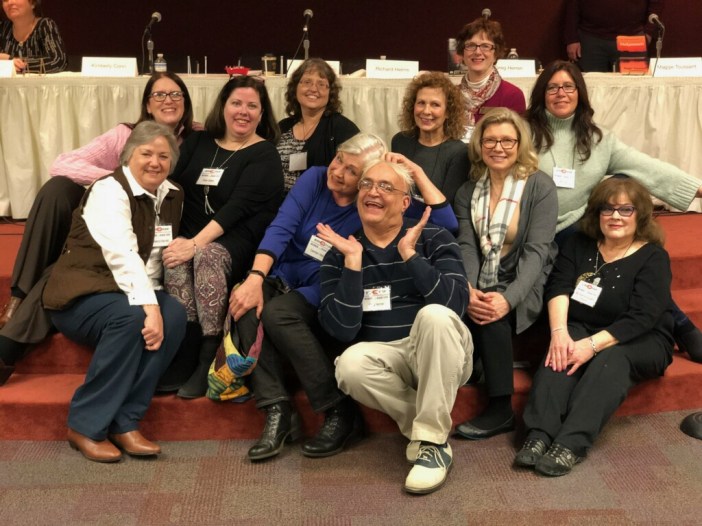
And before I head back to the spice mines, I’m going to leave you with one of the more fun pictures from the weekend:

mad catters

Everybody Wants to Rule the World

Monday morning. The weekends never really quite seem long enough, do they? Oh, it’s fine…I do like my job ((even if I don’t like waking up in the morning so much) but I’ve been going to bed earlier to make getting up easier. Sometimes it works, sometimes it doesn’t, but I do feel considerably more rested than I used to in the mornings. This weekend is the first weekend of parades, but I am off to a weekend of events in Alabama, which I am, oddly enough, looking forward to; lovely people will be there, which is always nice.

I do hate missing the first weekend of parades, though.

Although….it’s not like there won’t be plenty of them the next weekend, right? It’s so weird how greedy  we are when we it comes to parades. There’s probably an entire essay in that, as well.

I didn’t get as much writing done as I would have liked this weekend–I never do, of course, I always think I can get more done than I can–but I am rolling with it. I’m not sure how much–if anything–I can get done while I am in Alabama; as I recall last year, we all hung out together all evening and laughed and laughed, and one of the attendees this year is Carolyn Haines….and if you’ve never met her, she’s good energy and she is pretty damned fun and funny. I suppose I can read.

Speaking of which, I did read two short stories yesterday, and I also read a novel over the course of the weekend (I’ll save the novel for another entry).

The first story was Kristen Roupenian’s “Cat Person,” which was published on-line and in print by the New Yorker last month, and rather went viral; it seemed like everyone was reading it and everyone was talking about it, and Roupenian came out of it all with a healthy book contract (GOOD FOR HER! Seriously, I never understand why other writers get so snarky about the success of other writers. I always see it as a win for one is a win for all). I didn’t read the story at the time–discussions and arguments about it were everywhere, and I didn’t want to be influenced in my reading by the social media furor. But yesterday, after my workout (yes, made it to the gym again!) I curled up in my easy chair and read it.

Margot met Robert on a Wednesday night toward the end of h er fall semester. She was working behind the concession stand at the artsy movie theatre downtown when he came in and about a large popcorn and a box of Red Vines.

“That’s an…unusual choice,” she said. “I don’t think I’ve ever actually sold a box of Red Vines before.”

Flirting with her customers was a habit she’s picked up back when she worked as a barista, and it helped with tips. She didn’t earn tips at the movie theatre, but the job was boring otherwise, and she did  think that Robert was cute. Not so cute that she would have, say, gone up to him at a party, but cute enough that she could have drummed up an imaginary crush on him if he’d sat across from her during a dull class–though she was pretty sure that he was out of college, in his mid-twenties at least. He was tall, which she liked, and she could see the edge of a tattoo peeking out from beneath the rolled-up sleeve of his shirt. But he was on the heavy side, his beard was a bit too long, and his shoulders slumped forward slightly, as though he was protecting something.

I thought this story was very well done, myself–but I can certainly see why it upset men, and why women embraced it. I don’t think I’ve ever read before such an honest depiction of a bad date and bad sex in my life. God knows I’ve had bad sex before, but I’ve certainly never written about it; usually when I write about sex its erotica so it kind of has to be hot, you know what I mean? Whoever writes about bad sex? There were times, when reading it, when she encapsulates a conversation into a paragraph of prose (then he said this, and she thought well this but said that, and so forth) where I would have much rather read the actual conversation, but other than that complaint I kind of enjoyed it; although given all the discussion I’d seen on line made me know where it was going–but that ending was so incredibly perfect. Perfect.

Then I read Michael Bailey’s “I Will Be The Reflection Until the End”, from Tales from the Lake Volume 4:

My sister used to collect cherry plum pits in her napkin secretly, under the kitchen table. A strainer full of mixed yellow and red and deep-purple fruits would separate us each spring, with a small bowl next to it to collect the pits–although mine were typically the only ones in there–and a plate beneath the strainer to collect any drips from the rinsed fruit. My sister was coy like that. Her lie had become our lie, and every once in a while she’d throw a pit in the bowl to make it look like we were being honest. She knew I wouldn’t bring it up to Mom, because that meant I could have more if I kept my mouth shut. It was one of the few secrets we kept from Mom in our  youth. Call it a sibling bonding moment.

This story is on the longlist for the Bram Stoker Award for Outstanding Achievement in Short Fiction, and it is a beautifully written, moving short story. It reminded me a little of one of my favorite Stephen King short stories, “The Last Rung on the Ladder”–it’s a gorgeously written tale about a younger brother remembering his older sister, loving childhood memories of closeness that went away as she got older, and things went wrong with her. I absolutely loved it. I met Bailey and his wife several years ago at Stokercon in Las Vegas, and they charmed me completely; this is my first time reading his work, and it certainly won’t be the last. The only reason I can’t see this story not making the short list (or winning) is because I’m not entirely certain it’s horror; it may qualify, but not the in-your-face, jump scare or gross out horror–it’s a quiet horror of the Shirley Jackson kind; the horror of the heart from what life can do to someone we love.

12243211_778719875584463_322279597921766512_n