Like a Virgin

Well, it’s a chilly, gray Friday morning in New Orleans, Constant Reader, and we’ve managed to survive yet another week Again, this is a short work day for me at the office, so I’ll be able to make groceries this afternoon and go to the gym this evening before curling up in my easy chair with Karen M. McManus’ y/a bestseller, One of Us is Lying. (I will also continue with the Short Story Project, never fear! I just haven’t decided where I want to go next–whether it’s a single author collection or an anthology I want to dip into; or maybe go back to the Laura Lippman and Sue Grafton collections; mystery or horror.) I’m all caught up on posting about short stories after today’s post, too, so I need to decide, and soon.

Last night I worked some more on the WIP; moving on to Chapter Two. This chapter didn’t flow as easily as the first, and I only got about 1800 words done on it (which made the writing day a bit of a failure) but I also tweaked Chapter One a bit and got another 200 words or so added to it; a two-thousand word day is a win, for me, even if the goal is always to do at least three thousand–particularly considering how just last month I would have considered a hundred words a triumph. So, thus far this year I’ve written four short stories, one and a half chapters of the WIP, and one chapter of the Scotty–and I even know what the second chapter is going to be–which is how Scotty books usually work; no plan, but the next chapter reveals itself as I write the current. I also have tossed out the entire plot as it was; new victim, new everything. But I am hopeful I can get this all finished by the end of February; Mardi Gras notwithstanding. I also solved the problem with another manuscript I’ve been sitting on for a long time, and I know how to make it work as well now, but it’ll have to wait until I am finished with these two projects and another.

It feels so good to have my creativity kicking into gear again.

I also watched Riverdale last night, which has replaced Teen Wolf as the gayest show on television. Oh, sure, like Teen Wolf there’s only one gay character on the show; but all of the guys are fricking gorgeous with amazing bodies that are shown off pretty regularly–you haven’t lived until you’ve seen KJ Apa in a low cut singlet without a shirt underneath–and there was even a locker room scene where Archie was talking to gay Kevin, while in the background between them was some amazing hunk wearing only a towel standing at the sink–yay for gratuitous male bodies!

So, as this weekend looms I hope to get a lot done. We shall see how that works, but…hope springs eternal.

Today’s first short story is Sarah Weinman’s “The Big Town”, from Alive in Shape and Color, edited by Lawrence Block:

You don’t expect to see a portrait of your mother hanging on the wall of your gangster boyfriend’s living room. especially when the portrait shows your mother without a stitch of clothing on but for a pair of green heels.

“Where did you get that painting?” I asked, my voice more querulous than I wished. It was my first time in his house. I hesitated about a return visit even before seeing the portrait, but now I knew. I would not be back.

He turned to face the portrait. I looked at his back, the white collared shirt barely covering dark matted hair. I’d run my fingers through that broad, fleshy forest the few afternoons we’d fucked in a Ritz-Carlton hotel suite. Again I remembered what I found attractive about him: power, status, money. And what I found ugly: body, face, manners.

The story is really quite good and a poignant story about love and loss at the same time. The main character is a rural Canadian girl who ran away to the big city to avoid a prearranged marriage, her only future being a farmwife and having a passel of kids; she’s kind of become a good time girl, doing whatever necessary in order to survive on the fringes of society. But once she sees the portrait of her mother, who died when she was young, she becomes obsessed with getting the portrait away from the vile gangster and learning its history; how it came to exist in the first place.

I’ve read a lot of Weinman’s non-fiction before, and of course, just finished reading her stellar anthology Troubled Daughters Twisted Wives, which was exceptional. Nonfiction writing, however, doesn’t necessarily translate into good fiction writing; but Weinman hits the ball out of the park with this one. That yearning, sense of drifting is captured perfectly, and her main character is the kind of woman I like to read about; transitioning from a woman to whom things happen into a woman who makes things happen. The sense of learning more about her mother, that drive to know and understand her biological mother better, is something that resonates with every reader: how well do we really know our parents? Particularly if one parent died really young? This is a great story, absolutely great.

 The second story I read was the last one in Alive in Shape and Color, Lawrence Block’s “Looking for David.”

Elaine said, “You never stop working, do you?”

I looked at her. We were in Florence, sitting at a little tile-topped table in the Piazza di San Marco, sipping cappuccino every bit as good as the stuff they served at the Peacock on Greenwich Avenue. It was a bright day but the air was cool and crisp, the city bathed in October light. Elaine was wearing khakis and a tailored safari jacket, and looked like a glamorous foreign correspondent, or perhaps a spy. I was wearing khakis too, and a polo shirt, and the blue blazer she called my Old Reliable.

We’d had five days in Venice, This was the second of five days in Florence, and then we’d have six days in Rome before Alitalia took us back home again.

I said, “Nice work if you can get it.”

I’ve not read any of the Matthew Scudder novels Mr. Block has been writing for decades; as I have said before, my education in my own genre is often sorely lacking in many regards. But this story was irresistible to me for several reasons–it’s set in Florence, for one, and of course it is inspired by Michelangelo’s David, which also has inspired me for a novel that I hope to someday write. The story begins as above, with Matthew recognizing someone in the piazza that he had arrested, and soon remembers the gruesome butchery of the case. The man comes over, introduces himself, and then invites them to his villa for lunch the following day. Elaine bows out of the lunch, and over the course of the meal the man explains, at last, why he committed the brutal crime Scudder remembers and never knew the motivation behind (he’d pled guilty, served his time, got out and retired to Italy; would that I could do the same!). It’s a macabre story of a stunted gay life, and how once he fell in actual love with another man he abandoned his old life without a care and took up a new one, that ended in tragedy. It’s actually quite good, and bravo to Mr. Block for taking on such a topic without dealing in tropes, or stereotypes; it was also lovely to read a gay villain, as it were.

And now back to the spice mines.

DSCN6869

When You Close Your Eyes

Well, Constant Reader, we made it to Wednesday, didn’t we? I’m going to do this blog and then run off to the gym for my second workout of this week; sorry if this is getting tedious, but I worry that if I don’t say anything that’s when I’ll start slipping and NOT doing my workouts; a slippery slope I am reluctant to set my foot on, if you will. It’s so lovely to be doing this again and being motivated to do it; it’s more than a little infuriating that I allowed myself such a long break from taking it seriously, and doing it so little. But there’s no sense in crying over spilled milk at this point, is there? I am just happy that I’m at where I am at with it.

I am also very stoked to be jazzed about writing again. It’s interesting, on every level, how gong back to the beginning (both with working out and writing) has turned out so well, isn’t it? I am really pleased with these short stories I’ve written over the last week or so, the chapter of the WIP I wrote Monday, and the rethinking of the Scotty book I’ve done. I am definitely going to keep moving positively forward; and I am going to keep seeking an agent once I get this first fifty pages of the WIP whipped into better shape. This weekend I plan on rewriting and editing the four short stories I’ve done, plus I need to start working on the Bouchercon anthology, which I am also excited about–how long has it been since I was excited to edit an anthology, well might you ask? It’s been a long frigging time would be the proper answer, I am afraid.

I also finished reading Sarah Weinman’s sublime anthology Troubled Daughters Twisted Wives, and am the better for it. If you’ve not read this collection, you really should; particularly if you’re a writer. These stories hold up incredibly well, with only the occasional dated reference–and none of them so jarring that they take you out of the story. I’ve also added several new-to-me authors to my TBR list; alas, I shall have to track down copies of their works via secondhand dealers and eBay, as so much has sadly fallen out of print. I am also disappointed in myself for waiting so long to read this collection; but now that I have, I am glad. I am also grateful to Weinman for her hard work in pulling this together and shining a light on these terrific writers of the past.

It also occurs to me that a similar volume could be done for gay and lesbian crime writers whom modern readers don’t recall or remember; I doubt, though, that there would be a market for such a thing. That’s the tricky thing, isn’t it? Finding a market?

Sigh.

troubled daughters twisted wives

First up was “Lost Generation” by Dorothy Salisbury Davis:

The school board has sustained the teacher. The vote was four to three, but the majority made it clear they were not voting for the man. They voted the way they had because otherwise the state would have stepped in and settled the appeal, ruling against the town…

Tom and Andy, coming from the west of town, waited for the others at the War Memorial. The October frost had silvered the cannon, and the moonlight was so clear you could the words FOR GOD AND COUNTRY on the monument. The slack in the flagpole allowed the metal clips to clank against the pole. That and the wind made the only sounds.

Then Andy said, “His wife’s all right. She came up to Mary when it was over and said she wished he’d teach like other teachers and leave politics alone.”

“Politics,” Tom said. “Is that what she calls it?”

This was my first experience reading Mystery Writers of America Dorothy Salisbury Davis; despite being aware of her for quite some time. Sara Paretsky wrote a brilliant tribute to her after she died a few years ago; she’d been on my radar before that, but again, this is my first time reading her. This story is dark and amazing. We never know what the teacher’s politics are, but given the time period it’s not too hard to imagine what they were, given the fact that the group of men who gather to take care of him also include police officers–which was an all-too true and horrible aspect of the anti-Civil Rights whites of the South; the men paid with tax dollars and charged with protecting everyone were racists who abused their privilege and power to abuse and kill people of color and civil rights workers. There’s an amazing twist in this story, and the denouement is eminently satisfying and dissatisfying at the same time–not an easy thing to do.

Some of Ms. Davis’ books are now back in print, so snap ’em up, peeps!

“The People Across the Canyon” by Margaret Millar

The first time the Bortons realized that someone had moved into the new house across the canyon was one night in May when they saw the rectangular light of a television set shining in the picture window. Marion Borton knew it had to happen eventually, but that didn’t make it any easier to accept the idea of neighbors in a part of the country she and Paul had come to consider exclusively their own.

They had discovered the sight, had bought six acres, and built the house over the objections of the bank, which didn’t like to lend money on unimproved property, and of their friend, who thought the Bortons were foolish to move so far out of town. Now other people were discovering the spot, and here and there through the eucalyptus trees and the live oajs, Marion could see half-finished houses.

But it was the house directly across the canyon that bothered her the most; she had been dreading this moment ever since the site had been bull-dozed the previous summer.

I’ve written about Millar before; I’ve become an enormous fan of her work, and have been slowly making my way through her canon over the past few years. I do have the wonderful reprinted set of her books Collected Millar; a quick glance over at Amazon shows that many of her books, including the Edgar Award winning Beast in View are available as ebooks at fairly reasonable prices.

This story, about a couple and their young daughter, whose increasing obsession with the new neighbors across the way makes the stay-at-home mother not only jealous but concerned about the intensity of the obsession, strikes several chords: the mother becoming aware that her child is growing away from her and lamenting the ways her own every day life has allowed time to slip away, regretting that she didn’t spend more time paying attention to her child; the growing realization that you can influence and affect your child’s personality, behavior and temperament unknowingly; and ultimately, the exquisite torture and pain of being a parent. Millar only had one child, a daughter; it’s not hard to imagine where the roots and inspiration for this story came from. Quite excellent.

“Mortmain” by Miriam Allen Deford

“I’ll be back on Thursday, Miss Hendricks, and I’ll drop in here in the afternoon. It’s only three days, and I don’t anticipate any change. You know what to do. If anything happens, you can call Dr. Roberts; he knows all about the case. I wouldn’t go away, with Marsden like this, but–well, it’s my only daughter, and she’ll never be married again–at least, I hope not!–and she’ll be heartbroken if her old dad weren’t there to give her away.”

Dr. Staples turned to his patient.

“Good-bye, old man; I’m leaving you in Miss Hendricks’ charge till Thursday. You won’t be sorry to have three days free of me, eh?”

This gem of a creepy short story is straight out of what (thanks to Stephen King) I call the EC Comics playbook. The sad, dying patient has a load of cash in his safe; the nurse in whose care the doctor has left him for three days wants it to start a new life with the cad she’s in love with, and there we have the setup for a most clever game of cat-and-mouse in which each sentence builds the suspense and tension. If you want a great example of how to write suspense, this short little tale is all you need. In fact, if I ever teach writing again, this story is going to be one of the things I teach. It may even be one of those stories, like du Maurier’s “Don’t Look Now,” that I reread every now and again, to savor in its delightful brilliance.

And finally, “A Case of Maximum Need” by Celia Fremlin:

“No, no telephone, thank you. It’s too dangerous,” said Miss Emmeline Fosdyke decisively; and the young welfare worker, only recently qualified, and working for the first time in this Sheltered Housing Unit for the Elderly, blinked up from the form she was filling in.

“No telephone? But, Miss Fosdyke, in your–I mean, with your–well, your arthritis, and not being able to get about and everything…You’re on our House-Bound list, you know that, don’t you? As a House-Bound Pensioner, you’re entitled–well, I mean, it’s a necessity, isn’t it, your telephone? It’s your link with the outside world!”

This last sentence, a verbatim quote from her just-completed Geriatric Course, made Valerie Coombe feel a little bit more confident, She went on, “You must have a telephone, Miss Fosdyke! It’s your right! And if it’s the cost you’re worrying about, then do please set your mind at rest. Our Departmenet–anyone over sixty-five and in need–“

“I’m not in need,” asserted Miss Fosdyke woodenly, “Not of a telephone, anyway.”

The tale of Miss Fosdyke, and why she doesn’t want a phone, is the perfect ending to this wonderful collection of short stories. This story is chilling, surprising, and turns around so brilliantly at the end in a way that you do not see coming, and then everything makes sense. Superb, dark, macabre…you name it, it’s all there in this story…and I’ve added Celia Fremlin to my TBR list. Some of her books are currently in print, and if this story is indicative of the pleasures that await in her novels…well, I just can’t wait.

Well done, Ms. Weinman, well done.

And now, back to the spice mines.

I Still Can’t Get Over Loving You

Wednesday, and Day 4 of Facebook Jail. You know something? I wonder if they’ve heard of unintended consequences over at the Facebook Community Standards department. I usually spend far too much time scrolling through my Facebook feed and interacting with friends. So far this week, instead of doing that, I’ve revised a short story, worked on an outline, read a book (a wonderful history of The Mary Tyler Moore Show, Mary and Lou and Rhoda and Ted), read several short stories, and gotten some other things done. As this thirty day sentence continues, I will probably visit Facebook less and less–it’s kind of frustrating being able to see things and not respond to them–and by the end of the sentence, probably will be completely broken of the need to go there, and hopefully my attention span will have snapped back to what it was in the days before social media. I’m also liking Tumblr, INstagram and Twitter–you don’t wind up spending nearly as much time there, at least don’t, at any rate. Once I get used to not being on Facebook and having all this free time…look out.

I also read Lois Duncan’s young adult novel Ransom. Originally published in 1967 as Five Were Missing, it’s clear to see why Duncan was named a Grand Master by the Mystery Writers of America shortly before her death. I’ve not read all of Duncan’s work–I’m working my way through them all–but her novels were startlingly original and fresh, particularly when you consider when they were originally published. Ransom, inspired by a true crime in northern California where a school bus was hijacked and the students kidnapped, reads very quickly. The five students on the bus all are fully developed and fleshed out beautifully; and Duncan uses the kidnapping as a way of getting inside the heads of the characters and exposing them for what they are; the golden boy with dark secrets and feet of lead; the spoiled cheerleader who dislikes and resents her stepfather, only to learn that the father she idolizes is unworthy of her love; the military brat, deeply intelligent, who is the first to realize the truth of their situation and finds depths of bravery she never knew she had; the younger brother of the golden boy who realizes his own identity, and finds he has levels of potential strength his brother can only aspire to; and the orphan, being raised by his bachelor uncle with scars of his own to hide who finds out that self-pity only keeps him from enjoying his life. The dialogue is a little stilted and old-fashioned, but as I said, it reads very quickly.

Duncan was definitely a master.

Speaking of masters, I read a short story by Patricia Highsmith yesterday as well, “The Heroine,” which is the lead off story in Sarah Weinman’s Troubled Daughters, Twisted Wives; a brilliant anthology of stories written by women crime writers from the 1940’s thru the 1950’s, a time when women dominated the industry and many of these wonderful writers are sadly, overlooked and forgotten.

troubled daughters twisted wives

The girl was so sure she would get the job, she had unabashedly come out to Westchester with her suitcase. She sat in a comfortable chair in the living room of the Christiansens’ house, looking in her navy blue coat and beret even younger than 21, and replied earnestly to their questions.

“Have you worked as a governess before?” Mr. Christianen asked. He sat beside his wife on the sofa, his elbows on the knees of his gray flannel slacks and his hands clasped. “Any references, I mean?”

“I was a maid at Mrs. Dwight Howell’s home in New York for the last seven months.” Lucille looked at him with suddenly wide gray eyes. “I could get a reference from there if you like…But when I saw your advertisement this morning I didn’t want to wait. I’ve always wanted a place where there were children.”

I love Patricia Highsmith, and I have an enormous volume that contains all of her short stories. It’s really criminal that I, like so many other people, don’t read more short stories (hence my short story project, which I might make a year-long thing rather than just a few months), and it deeply shames me that I’ve had Troubled Daughters Twisted Wives sitting on my shelf collecting dust all this time without taking it down and reading it. This Highsmith story, “The Heroine,” is genius, absolute genius, in the cold, slightly detached way that Highsmith uses as her point of view, which makes her stories and novels so much more chilling. It’s very clear, almost from the start–ah, that foreshadowing–that the Christiansens are probably making a terrible mistake in not checking on Lucille’s references. And how the story develops is so much more chilling than you think it is when you get that uh oh feeling in your stomach when Mrs. Christiansen charmingly says she won’t check Lucille’s references. Highsmith’s authorial voice is so distant, so cold and matter-of-fact, and her word choice is always simple and spare…but she always gets that feeling of suspense, of oh my god what is going to happen that you feel amping up as you finish reading each sentence…and her denouements never disappoint.

Weinman has done an excellent job curating this collection; she also did a two-volume collection of novels by these writers called Women Crime Writers: Eight Suspense Novels of the 1940’s and 1950s: A Library of America Boxed Set. Some of the novels included in that gorgeous set I’ve already read–Charlotte Armstrong’s Mischief, Margaret Millar’s Beast in View, Vera Caspary’s Laura–but I am definitely going to have to get that set down from the shelf and read the others as well. Weinman is also pretty expert on the crime genre in general; very well read, fiercely intelligent and deeply perceptive, her newsletter The Crime Lady is amazing, and I read it every week for her thoughts on true crimes, the books she’s read and recommends…you can sign up for it here. You can thank for me for it later. She’s also writing a true crime of her own right now that I can’t wait to read.

And now, back to the spice mines.

Dance Hall Days

Sunday! I have a panel and a signing at Comic Con today; the Saints have a play-off game, and the Golden Globes are tonight…and sometime today the Olympic ice dancing finals are also airing. Madness! Usually my Sundays are a lot more mellow than this. I did manage to get a lot done yesterday; cleaning and organizing and laundry and filing and even some brainstorming. I am definitely going to be hitting the ground running this week; it’s so lovely to finally feel 100% me again, stupid flu or whatever it was I had.

So, this morning I need to do some more cleaning, am going to do some more brainstorming and perhaps an edit on a story, work on the new Scotty outline, and do some other editing before it’s time to get ready to head down to the Convention Center. Damn it, I also have to copy edit that damn file of Bourbon Street Blues, too, don’t I? Sigh. My work is never done.

And the Scotty Bible. Heavy heaving sigh.

I also read another short story yesterday, Angel Luis Colon’s “My Heart Died on Blackrock Avenue.”

meat city on fire

I’ll never forget my first fight.

And I mean a real fight, not the random tussles with my brothers or cousins. I’m talking a knuckle-busting, lip-splitting, eye-swelling fight. The kind of fight where you go savage and the world’s pure fire, where there’s no concern about whether your punches connect or if they’re going to do permanent damage. A real street fight–drawn blood, scrapes and cuts you find later, and that taste at the back of your throat, as if you’d been chowing on pennies all day long. The kind of fight a person with more brains than heart knows to avoid.

Obviously, my first fight was over a girl–surprise, surprise.

I met Angel in Toronto at this year’s Bouchercon; as is usual with the business, we have a lot of mutual friends. And then he wrote this brilliant piece for Medium, and I thought to myself, I need to read this guy, so I ordered his collection Meat City on Fire and Other Assorted Debacles.

Wow.

I said when I posted about Sue Grafton that she was the writer who brought me back to the crime genre; the stuff that was getting published in the 1970’s and early 1980’s that I was reading held no interest for me; I hadn’t heard the term toxic masculinity yet, but that was primarily what turned me off to crime fiction at the time. To this day, I still have trouble reading some male authors for that very reason; I’m just not interested in reading any more books about the tough, tragic, closed-off man who drinks himself into oblivion because the love of his life is dead, or he’s obsessed with some dead, beautiful woman that makes him reflect on life and the harsh, cold, cruel world in which we live. No thank you. This trope also pops up in what’s called ‘literary fiction’ as well; it’s hard for me to identify with, or care about, these kinds of characters; the plight of the straight white man simply doesn’t interest me that much. Does that mean I’m prejudiced? Maybe.

It’s something I can live with.

So, as I started reading Angel’s first story in this collection, I winced a little bit inwardly. Great, I thought, here we go again with the tough-guy stuff. But the story–which isn’t a crime story at all, I might add–isn’t that; it’s actually fantastic, to be honest. There are so many truths, and so much honesty, in this story that it’s almost painful to read, to digest, to think about. I didn’t grow up in Brooklyn, as the main character in this story did, but I grew up in the working class neighborhoods on the south side of Chicago, where casual racism not only existed but simmered; where prejudice wasn’t just about the color of one’s skin but also about religion and your ethnicity; if you were a Pole or a Slav, etc. Violence was always just there under the surface, and this story took me back to that neighborhood, the innocence of childhood and learning about the cold, cruel world out there. It’s a truly terrific story, and I encourage everyone to read Angel’s collection, or one of his novels.

I’m really looking forward to reading more of his work myself.

If This Is It

Sue Grafton died this week.

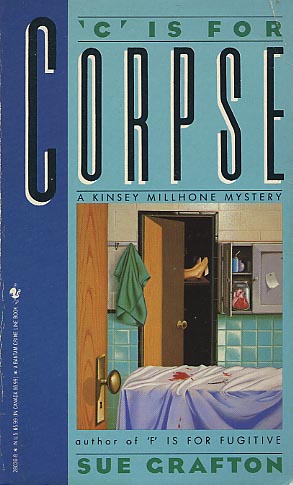
Bookstop in Houston, the late 1980’s. I hadn’t read mysteries in years, abandoning the genre in the late 1970’s because I was tired of the straight white male point of view, and I wasn’t really aware there was any other, to be honest. I’d always loved the genre; as a kid I read every mystery I could get my hands on, from Mary C. Jane’s books for kids to the Hardy Boys to Nancy Drew to Trixie Belden to The Three Investigators. I read all of Agatha Christie and Ellery Queen. I was a huge fan of the Gothic suspense writers, Phyllis A. Whitney and Victoria Holt and Mary Stewart. I read Charlotte Armstrong. But once that store of writers and their works had been exhausted, I tried reading the male voice…and didn’t care for it. I couldn’t quite put my finger on what the problem was, but they weren’t anything I could enjoy. So I moved away from the genre, reading family sagas and romance novels and science fiction and horror and fantasy; literary fiction and historicals; I’ve always read, and I always will. But I remember stopping at the Book Stop in Houston on pay day–I always went to a bookstore on pay day–and they had a little glossy magazine about new books and writers they always put in the bag. The cover story was an interview with a writer I’d never heard of, and about her new book, D is for Deadbeat.  “Wow,” I thought as I read it, “a woman private eye? This sounds interesting.” So on my next pay day I bought the first four books in the series: A is for Alibi, B is for Burglar, C is for Corpse, and D is for Deadbeat.  I enjoyed the first two, and they got me thinking about my own plans about being a writer. (I’d given up the idea of being a crime writer–which was my first inclination–when I lost interest in the genre in the late 1970’s.) And then I read C, which to this day remains my favorite of the entire series. I was hooked, sold, and a Grafton fan for life.

And I realized that despite some of the criticism she received (misogynistic at its heart; male critics dismissing Kinsey as “a man in a skirt,’ which was such utter bullshit I couldn’t believe a paid critic could be that ignorant and obtuse–now, of course, I can readily believe it), she had really reinvented the form; by creating a tough, loner female private eye she had forever changed the form and recreated it. And made me realize, hey, if someone can write a series about a female private eye, why can’t I write a series about a gay one? 

She made me realize that anything was possible in the form; if you only had the courage to shatter the mold and recast it.

Reading Grafton led me to the other great women writers–Sara Paretsky, Marcia Muller–and the ones who came in their wake: Lia Matera, S. J. Rozan, Laura Lippman, Megan Abbott, and so many others. And I grew to love the genre again,  and realized that it was what I was meant to do myself.

I had the great good fortune to meet her here in New Orleans at a party given in her honor; I don’t recall why she was in town, I know she came to the Williams Festival one year and I got all of my books signed. But she made time for a conversation for everyone at the party, was gracious and friendly and kind. I don’t remember what we talked about–I was too in awe and tongue-tied to be anything other than a blithering idiot, so I mostly stuck to  innocuous party conversation, but I remember she was very kind, had a wonderful warm smile. and an infectious, joyous laugh.

I started buying the books in hardcover around I; I am woefully behind on the series, and now there won’t be another to come; the series ended before she reached Z, only falling one short; if I am not mistaken, I have W, X, and left.

Thanks for all the years of great reading, and inspiration.

RIP, Sue.

0553280368


I Just Called To Say I Love You

How was your Thanksgiving? Ours was rather lovely; we had our deep dish pizza and a lovely visit with our friend Lisa; then Paul and I watched three movies on Netflix: Fourth Man Out, Closet Monster, and Handsome Devil. We also watched another episode of a Hulu original series, Future Man; which we had given one more episode to get better. And the fourth episode definitely delivered. We laughed a lot all the way through it; and it finally started delivering on its premise.

The three movies were all gay films, which we generally don’t watch very often. I know I should be supportive of gay films, but so often they’re aren’t very good–or at least that used to be the case. When a major studio makes one (Philadelphia, In and Out, To Wong Foo, etc.) they’re awful; indies always mean well but don’t have the budget to really do them well or cast good actors, so we stopped watching them a long time ago. Every so often, a film like Beautiful Thing or Latter Days will come along, but still, fairly rare. My incredibly cynical self is very pleased to say that the three films we watched yesterday were enjoyable in varying degrees, which also makes me tend to think that perhaps we should watch more gay cinema. And really, isn’t mainstream film always a crapshoot, too?

Fourth Man Out was the first movie we watched; its about a group of four guys who’ve been best friends since they were kids and then one of them comes out to the others. It was a comedy, so the coming out was handled in a comedic fashion; the friends were a little taken aback, and then there was some awkwardness about what you can or can’t say around your gay friend which was sweet and kind of cute. The gay character was a mechanic, so there was a sense to me of ‘see, a gay guy can be just a regular guy’ about the movie which was well-intentioned but…the really charming part of the movie was watching the friends try to help him navigate the gay dating world, and there was a really charming scene where they take him to his first gay bar. And the ‘meeting someone from on-line’ trope was treated as comedy (and who hasn’t met someone whose picture wasn’t them?) and there were some moments that I thought might have been in questionable taste–but overall the film was charming. The lead, gay Adam, was played by Evan Todd, who’s very good-looking:

tumblr_o9jmg5lCng1urvepco3_1280

His best friend, Chris–and their relationship/chemistry was quite charming, was played by the impossibly good-looking Parker Young:

mgid_uma_image_logotv

Another one of the guys was played by Glee’s Chord Overstreet, almost recognizable in a heavy beard. But the movie’s true charm was the relationship between Adam and Chris; how they learn from each other and grow and finally find their perfect matches because of their friendship.

Closet Monster starred Connor Jessup from American Crime, who is an appealing and talented young actor I would pretty much watch in anything.

la-et-vn-emmy-contenders-chat-connor-jessup-20160510

This movie was apparently very popular on the indie art film festival circuit and won lots of awards; for me, it was the weakest of the three and were it not for Connor Jessup, we would have probably stopped watching. As a little boy, around the time his parents broke up in a very nasty and volatile break-up, young Oscar witnessed a violent hate crime against a gay teenager–and that, plus the divorce, have been deeply internalized and traumatized him as he comes of age as a gay teenager with an interest in horror movies and a desire to become a make-up artist for horror films. He’s applied to the best school for this in New York, and cannot wait to get away from this awful town he lives in. He’s desperately unhappy–who can’t relate to that–with big dreams, and is developing a crush on another boy he works with at a Home Depot type store. Wilder, played by Aliocha Schneider, is coolly confident in himself and tries to draw Oscar out of his own shell, with some success.

MV5BMTgxNTcwNTI1M15BMl5BanBnXkFtZTgwNTczOTQyNjE@._V1_UY317_CR10,0,214,317_AL_

The point of the movie is ultimately that Oscar needs to stop spinning his wheels and move in a positive direction in his life; and it does eventually get there after a bizarre costume party where he has his first sexual experience with a stranger and comes to terms with his feelings for his mother; his relationship with his father remains unresolved. But it was an arty film; Oscar’s hamster speaks to him in Isabella Rossellini’s voice–he got the hamster originally the day his mother left his father so it symbolizes the last time he was happy; and there’s a lot of moments where the director slaps the viewer in the face with his symbolism and hidden depths. There are some gorgeous shots, particularly at the end, but there are also some serious plot holes. But as I said, Connor Jessup is a very talented and appealing young actor, and he carries the entire movie.

The last film we watched, Handsome Devil, was by far and away the best of the three. Set in an Irish boarding school obsessed with its rugby team, it’s from the point of view of young Ned, who is bullied by his schoolmates in no small part because he doesn’t care about rugby and doesn’t fit in; he is played charmingly by Fionn O’Shea. He comes back to school against his will–his father and stepmother live in Dubai and for some reason he can’t live with them there; it’s kind of implied that he’s an inconvenience for them. He’s delighted when he gets to school to find out he’s got a single room and won’t be sharing. There’s also a really funny sequence where he talks about his English teacher; he simply turns in the lyrics to old songs for papers and get’s A’s; the song that is handed back to him with an A written on it to illustrate this voice over is Lou Reed’s “Walk on the Walk Side,” which is hilarious if you know the words.

Handsome-Devil2-1024x512

But he winds up with a roommate after all, Connor. Connor can’t go back to his old school–he was kicked out for ‘fighting’–AND it turns out Connor is a great rugby player; the long-missing piece for the school’s team which will make them champions. Ned reacts by moving all of their furniture to the center of the room, kind of forming a Berlin wall. They also have a new English teacher this term, Mr. Sherry, who is played by Sherlock’s Andrew Scott. Mr. Sherry, and his class, reminded me of Dead Poets’ Society, and I don’t think that was accidental. But Ned and Connor slowly become friends–Connor is Ned’s first friend, really–and of course there’s the requisite homophobia (they all treat Ned like he’s gay, but we never really know for sure) and obstacles for the boys to face before the film’s end. This movie is really charming, and is about friendship, and has some absolutely lovely moments. O’Shea is fantastic as Ned, and you can’t help but root for him as he learns who he is and what being a friend really means; Nicholas Galitzine plays Connor and does a fine job with a less complex part; but the chemistry between the two boys is terrific. I highly recommend this movie.

MV5BMjI4ZmRkMTYtNTFmOC00NDFjLWFhYjEtMTJhYjg4ODc5NjQyL2ltYWdlXkEyXkFqcGdeQXVyNDY5NTM2NjY@._V1_UY317_CR20,0,214,317_AL_

It was also highly educational to watch these films, and it also made me realize that I’m a bit of a snob when it comes to gay-themed films; I should probably watch more of them in the future–and I think I’m going to. Watching these movies reminded me of the kinds of novels Kensington used to publish after the turn of the century; particularly the novels of Timothy James Beck. I miss those novels, and Kensington did a great job of finding and publishing fun gay-themed novels in those days. I was one of Kensington’s authors; Kensington was where the first three Scotty books were published, and pulling together the Scotty Bible has also put me in mind of those days again. Kensington first published Rob Byrnes,  and also those wonderful novels by Michael Thomas Ford. Kensington was also home to William J. Mann’s fiction, from The Biograph Girl to The Men from the Boys, All-American Boy, and several others; Kensington also published Andrew Beierle’s The Winter of Our Discotheque, which remains to this day one of my favorite gay novels.

Sigh.

And now back to the spice mines.

Allentown

I was so tired last night when I got home from work–and I worked a short day! After work yesterday, a friend and I went to lunch to a place on the corner of Tulane and Carrollton called Namese, and I had an enormous  bowl of beef pho, which was absolutely delicious. I was in the mood for noodles, and having never actually had pho before, was quite thrilled to try it, and it was amazing. I’ve been wanting to try pho since seeing a show on our local PBS channel, WYES, about the big Vietnamese community in New Orleans, and one of the things they talked about on the documentary was pho. I’d been wanting to try it ever since, and got my chance.

DAMN THAT WAS GOOD.

I’d known we have a big Vietnamese community in New Orleans for quite some time–most of them live in New Orleans East, and were devastated by the flooding after the levees failed back in 2005. Poppy Z. Brite wrote about that community in his brilliant (and deeply disturbing) Exquisite Corpse, doing it so well I never had the nerve to try to write about it myself. (Our first, and only,  Congressman from Orleans Parish was a Vietnamese; Joseph Cao, who defeated “Dollar Bill” Jefferson in the post-Katrina scandal created by the fifty thousand dollars in cash he had stored in his home freezer. Cao was born in Ho Chi Minh City (then called Saigon), and only served one term in Congress–but I liked Congressman Cao; he put New Orleans ahead of party, and I was sorry to see him go.

I have an idea for a noir involving the Vietnamese communities of the Gulf Coast that I hope to write some day. I’ve also been toying with an old idea for a horror novel that’s been dancing in my head for the last thirty years or so–I can tell that I am writing another book; my creativity always spikes when I am writing a book.

Honestly. One would think I could get that under control.

Anyway, I also finished reading Margaret Millar’s Do Evil in Return last night. It wasn’t the below edition I read, but rather one of the volumes of The Collected Millar; this volume also contains Fire Will Freeze, Experiment in Springtime, The Cannibal Heart, and Rose’s Last Summer. But I rather like that Gothic-style cover.

millar-do-evil-in-return-lancer

The afternoon was still hot but the wind carried a threat of fog to come in the night. It slid in through the open window and with curious, insinuating fingers it pried into the corners of the reception room and lifted the skirt of Miss Schiller’s white uniform and explored the dark hair of the girl sitting by the door. The girl held a magazine in her lap but she wasn’t reading it; she was pleating the corners of the pages one by one.

“I don’t know if Dr. Keating will be able to see you,” Miss Schiller said. “It’s quite late.”

The girl coughed nervously. “I couldn’t get here any sooner. I–couldn’t find the office.”

“Oh. You’re a stranger in town?”

“Yes.”

“Were you referred to Dr. Keating by anyone?”

“Referred?”

“Did anyone send you?”

Margaret Millar is a treasure, and her work, despite now being dated because of societal and social changes, are worthy of not only being read by modern audiences but also deserving of study. She, along with Dorothy B. Hughes and Charlotte Armstrong, formed a triumvirate of strong women writing suspense novels featuring women protagonists that were the equal of anything written by male contemporaries; there were numerous other women doing the same, but these three had longer careers and are now being rediscovered, in part thanks to the diligent work of Sarah Weinman and Jeffrey Marks. Library of America has released a two-volume collection of works by great women writers of the time; Soho Crime is releasing thick volumes collecting all of Millar’s work, which I am happily acquiring. I read Armstrong when I was young, and loved her; I am in the process of working my way through the canons of both Millar and Hughes, as well as two other great women writers of the same period, the incomparable Patricia Highsmith and my personal hero, Daphne du Maurier.

Do Evil in Return, originally published in 1950, is ultimately a novel about how society and its hypocritical misogynistic treatment of women can destroy them. The main character of the novel, Dr. Charlotte Keating, is a strong, independent woman with a successful practice in a small California coastal town. She is both single and hard-working; owns her own car and her own home–no small feat for a woman in 1950–and the book opens with a young woman coming to her for help. The woman, Violet O’Gorman, is only twenty and married, but finds herself with a particular problem; estranged from her husband, she had a one-night stand with a married man which has left her pregnant, and she is desperate for an abortion, which of course was illegal in 1950. Dr. Keating–Charley to her friends–refuses to break the law and perform this service, but her heart goes out to her patient and wants to help her, but while distracted by a phone call doesn’t notice the girl slipping out of her office. With a local address her only clue as to how to find Violet, she goes looking for her…and soon finds herself wrapped up in a terrible string of events beyond control, a noose tightening around her own neck. For, like her patient, Charley herself is involved in a love affair with a married man–a platonic one, to be sure, for she refuses to become intimate with him as he is married–and the similarities she sees between herself and young Violet is part of what drives her. The following morning, Violet’s body washes ashore, an apparent suicide, according to the police but Charley herself isn’t so sure.

And of course, she is right.

Millar’s particular genius lies in how casually she lays out her cards; she never tells her reader straight out what’s going on, but allows it to unfurl naturally, leaving it to her reader to figure it out. When we meet Charley’s platonic lover, there is no mention of his being married–Millar simply talks about the stifling existence he has at home with Gwen. As the story continues the reader slowly realizes that Gwen is actually his wife, and she is also one of Charley’s patients. Charley has tried to foist Gwen off on other doctors, but hypochondriac Gwen refuses to see anyone else–and is incredibly needy, ringing Charley for help at all hours of the day or night. Charley’s own feelings for Gwen’s husband also aren’t that simple; and in 1950 divorces weren’t as easy to obtain as they are today.

Perhaps the strongest part of the book is how Millar clearly depicts how claustrophobic a woman’s world was in 1950, and the delicate balance a single, independent professional woman had to maintain. Exposure of the relationship would ruin Charley, both personally and professionally; just as Violet’s unexpected pregnancy has ruined her. Society’s expectations of women, and their sexuality, are the true villains, the true evil in this novel; and the realization that this world Millar so brilliantly depicts was only sixty-seven years ago is truly chilling.

I think this book would be excellent reading for a Women’s Studies course; to let young women know how truly awful and misogynistic society was not so long ago, as a reminder to everyone today how far women have come in a short period of time, and how hard they fought to get to where they are today.


Shame on the Moon

I have, as an almost fifty-six year old gay man, witnessed some history throughout the course of my over half a century on this planet. When I was young, I used to hear about the great wisdom you acquire with age; I’m still waiting for that to happen. I remember when Bobby Kennedy and Martin Luther King Jr. were shot; I remember the Tet offensive and when the first man walked on the moon. I remember the Watergate break-in, the scandal that followed, and how a newspaper toppled a corrupt presidency that was abusing its power. I remember the Iranian revolution and the taking of American hostage in the embassy in Teheran; I remember the slaughter of Israeli athletes in the Olympic Village in Munich. I remember watching my gay brethren die from AIDS while the political establishment laughed and made jokes about the right people dying; and I remember the Towers falling that beautiful September day in 2001. I watched CNN non-stop while a military coalition liberated Kuwait,  when the Berlin Wall fell,  when Communism in eastern Europe collapsed.

There have been times in my life when I’ve shaken my head over the actions of my government, the ruling of our courts, and at legislation debated and passed by Congress.

But never did I imagine, in my wildest dreams, that I would bear witness to Nazis marching with torches in a college town in support of white supremacy, bigotry, anti-semitism, racism, misogyny, and homophobia in the United States of America in 2017–or that scores of people would be defending them.

Have I been a good ally to the oppressed people of this nation? I don’t know, but I tend to doubt it. I tend to focus, as most people do, on my own rights and that of my community; I’ve spent most of my adult life fighting for my rights as a gay man but have always advocated for people of color and women, because I do recognize that the oppression of one is the oppression of all; that none of us are truly equal until we are all equal. I’ve studied history; I’ve studied civics; I’ve studied the Constitution. The entire point of learning and studying is history is to learn from the mistakes of the past so as not to repeat them.

Sinclair Lewis was an extraordinary social critic and fiction writer who probably isn’t remembered, and studied, as much as he should be in this modern day.  I’ve not read enough of Lewis; most of his canon remains, sadly, unread by me. But I did read Elmer Gantry about ten years ago, and was stunned by how true it was; and how it still applied in so many ways today. Shortly after that I read It Can’t Happen Here, which is one of his lesser known works and considered to be highly flawed in terms of being a novel. The point of the book, written and published in the 1930’s, was that so many Americans of the time didn’t believe what was going on in Italy and Germany could happen in the United States; Lewis, ever the social critic and commentarian, took that as a challenge and titled his book that, and wrote a novel detailing exactly how fascism could rise in the US and take over our government. It was chilling reading it, in the wake of some of the laws and executive orders passed in the wake of 9/11. I don’t really remember much of the story, frankly; the days when I could remember plots and characters and quotations from every book I read have long passed. But it is, I think, due for a reread.

We often wonder how the good German people allowed what happened there to happen. It is easy  for evil to persuade basically decent people to take its side, and how, when things are going well, incredibly easy it is for people to only look at the good and turn their heads away from the bad. The towns near the concentration camps, who claimed they didn’t know what was going on? Bitch, please. You never noticed the smell? You never wondered what that smell was? But, hey, I’m prospering and we don’t have to worry about where our next meal is coming from and how to keep the lights on, and aren’t the streets clean and the trains running on time? I don’t believe those stories we’re hearing about what’s happening to the Jews! And since they’ve been oppressed, look at how much better things are!

That’s how it happens, people.

I will do better. We all must do better. No one is free and equal until we are all free and equal.

In 2006 I was invited to speak at the Virginia Book Festival in Charlottesville. I was given a tour of the town and a tour of the University of Virginia campus; I was shown where Edgar Allan Poe lived when he was a student there and other landmarks. I was not only impressed with how beautiful the town and campus were, by how friendly and welcoming the people who lived there were. I always meant to go back again, to spend more time there–I didn’t get to see Monticello–and it was with horror that I watched the news over the weekend, seeing what was going on in the lovely little town I remembered, appalled and ashamed that this was being broadcast to the entire world.

This is unacceptable. The state of the union is unacceptable.

I have to do better. We all have to do better. As a nation we can do better by our most vulnerable citizens, and we must.

The eyes of history are on us.

Have you ever wondered what you would do if you’d been a German in the 1930’s? What you would do during the Civil Rights era of the 1950’s and 1960’s?

This is your chance to find out who you are as a human being and as an American.

This is Heather Heyer, who gave her life on Saturday to oppose evil. May she never be forgotten.

heather-heyer-2


Sweet Dreams (Are Made of This)

Tuesday morning, and my windows are covered in condensation. Nothing new there, of course, but at least I can see blue sky and sunshine through the beads of water. Perhaps today will be our first day this summer without rain? Stranger things have, of course, happened.

I got quite a bit done on the line edit yesterday; at some point I am going to have to input all of this work into the e-document, and I will be very curious to see how much I wind up cutting. As I go through the manuscript, line by line, I am amazed at how often I repeat myself, or how often an entire paragraph is simply a series of sentences saying the same thing only in different words. A very strong push this week, and I might actually have the entire line edit finished by the end of the weekend. It’s not very likely to happen, but there’s always a possibility. My friend Lisa will be in town later this week, and I am going to try to see her for at least a drink and perhaps dinner. I don’t see her enough as it is.

I also got some work done on the Scotty book yesterday as well. The story is starting to take shape in my mind, and I need to get a strong first chapter together before I can get going on the rest. I am trying to take what I can from the several different versions of a first chapter I’ve already started; I think I can make the whole thing come together–at any rate, that’s my goal for today. I hope to get at least two more chapters finished this week, if not more. I also want to revise a short story. It will, I suppose, depend on how much energy and how much time I have.

I am still processing Sunday’s episode of Game of Thrones, “The Spoils of War,” and I also can’t stop thinking about Owen Matthews’ The Fixes. There’s an essay I’d like to write, about straight people writing gay characters that reading this book put into my mind, but it’s not really taking form and I am not really sure if it will–the curse of a creative imagination; too many ideas. But The Fixes is so incredibly well written and well done you’d never know that Owen Matthews himself isn’t gay; but really, if you have any experience whatsoever with alienation, you should be able to write believable gay characters; alienation is the key, now that I think about more deeply, and I wish I had thought of that before I taught my character building workshop at SinC Into Good Writing last September here in New Orleans.

Alienation, in fact, is a constant theme in Harlan Ellison’s oh-so-brilliant work.

Paul and I are thinking about going to see Dunkirk this weekend; whether we actually do or not remains to be seen. I have to work on Saturday, and as such my weekend shall be Sunday and Monday; having a Monday off will actually be rather lovely.

And on that note, I am heading back into the spice mines before I head into the office.

Here’s a Tuesday hunk for you, Constant Reader:

17523292_1312370308811030_8446342023757121711_n

Baby, Come to Me

Yesterday was had a rather intense storm here in New Orleans; there was flash flooding all over the city, cars ruined, water inside buildings; that sort of thing. I don’t know if my street flooded or not (guess I’ll find out if my car got ruined tomorrow morning when I am ready to go to work), but we certainly were lucky and didn’t get water inside of our house. The rain is going to continue some today; there’s an advisory for everyone to stay inside and off the roads, just in case. We get these kinds of storms and flash floods every once in a while–the price of living in a low lying city surrounding by water where parts of the city used to be swamp and are now floodplains, and our pumping system tends to get overwhelmed when we get a lot of water in a short period of time. I’ve been caught out in these storms before, having to wade through water up to my hips at times. My car was flooded when I was on my way home from work the first year we lived here and I got caught in one of these storms. There’s no point in railing against these storms and short-term floods; they happen periodically and you have to deal with them, unfortunately. Last night was also supposed to be White Linen Night, an annual event every August in the Arts District where all the galleries serve food and alcohol, booths are set up on Julia and Magazine streets to sell food and drink, and people wearing white go from gallery to gallery looking at (and hopefully buying) art. Satchmo Fest was also this weekend; clearly, both annual events were cancelled yesterday because of the deluge. I ran my errands early–thank God–and so intended to spend the rest of my day inside and working on the line edit, doing some writing, and reading as well. I did no line editing and no writing yesterday; instead, I was caught up in the last half of Lyndsay Faye’s staggeringly brilliant The Gods of Gotham, and could not put it down until it was finished.

Scan 1

When I set down the initial report, sitting at my desk at the Tombs, I wrote:

On the night of August 21, 1845, one of the children escaped.

Of all the sordid trials a New York City policeman faces every day, you wouldn’t expect the one I loathe most to be paperwork. But it is. I get snakes down my spine just thinking case files.

Seriously, is there anyone who enjoys paperwork?

The Gods of Gotham is the perfect historical crime novel. I’ve read a number of them, and there are some truly excellent ones (one of my favorite novels of all time is The Affair of the Blood-Stained Egg Cosy, set in the 1930’s), but I’ve also staggered my way through some seriously bad ones. But even with the bad ones, I always have tremendous respect for the writer for even trying; I can’t imagine trying, much as I love history, because there are so many gaps; so many things to research, from small to large, intricate intimate details that may be impossible to find out–or you might find them out when it’s too late. To be truly successful, a historical piece of fiction has to be completely immersive; the author has to bring that world to life but make the reader understand it and how it was to live in that period without giving in to the temptation to put everything you’ve researched into the book/story, aka hitting the reader over the head with a history lesson. Writing a convincing, involving story with characters the reader can identify with, appreciate, and root for, is hard enough without setting it in another time period.

Lyndsay Faye has managed this incredible juggling feat, and pulled it off with aplomb. The Gods of Gotham is set in New York City (obviously) in the late summer of 1845; when the city has newly created a police force, identified by the copper stars they wear (which, obviously, is where the slang term copper, and its derivative, cop, came from; this is clearly made obvious throughout the story without Faye stopping to explain; a lesser writer certainly would have made that egregious take-the-reader-out-of-the-story error). Our hero, Timothy Wilde, is a bartender when the story opens; his older brother, Valentine, is a good-time Charlie who likes to get wasted, frequents whorehouses, and also works as a fireman. The relationship between the brothers isn’t great; they lost their parents to a fire when they were children, and they butt heads alot. Valentine is also involved with the Democratic Party. After an enormous fire leaves Timothy jobless and homeless and broke, he rents a room from a widowed German baker, Mrs. Boehm, and is then pressured by his brother into becoming a copper star; a beat cop in the newly formed city police, which not everyone in the city wants or approves of. Soon, Timothy is wrapped up in a bizarre mystery involving a child prostitute he runs across one night; wandering the streets in a nightdress, covered in blood; and soon the investigation expands to involve a possible serial killer of child prostitutes. Politics, nativism, religious and ethnic and racial bigotry all play a part in this tale; as do sexism.

The truly great historical novels not only shine a bright light on the past, but thematically show how little has changed over time. The Gods of Gotham could easily be set in the present day, with Timothy Wilde as a modern police detective. The bigotry against the Irish and Catholics could easily be translated to Middle Eastern refugees and Muslims; it is truly sad to read and see how we as a society and a people fail to learn from the mistakes of the past, repeating the same errors over and over to our own disgrace. Faye has brought New York of 1845 vividly to life with careful brush strokes that never are too big or too broad or invasive to the story; her city streets are alive with noise and people and sights and sounds and smells. Her characters are all-too-real; even the worst of her villains (particularly the diabolical madam, Silkie Marsh) are believable three-dimensional and live and breathe on the page.

I hated seeing the book end, quite frankly; but there are two more Timothy Wilde novels to savor and look forward to, as well as her Edgar nominated Jane Steele (The Gods of Gotham was also an Best Novel Edgar finalist), and her Sherlock Holmes work. (And yes, my recent interest in Holmes was triggered by Lyndsay’s interest in Holmes…and there were times when this book itself reminded me of, in the best possible ways, of Nicholas Meyer’s Holmes pastiches from the 1970’s, The Seven-Per-Cent Solution and The West End Horror.)

The Gods of Gotham, if you haven’t read it yet, needs to be added to your TBR pile immediately.