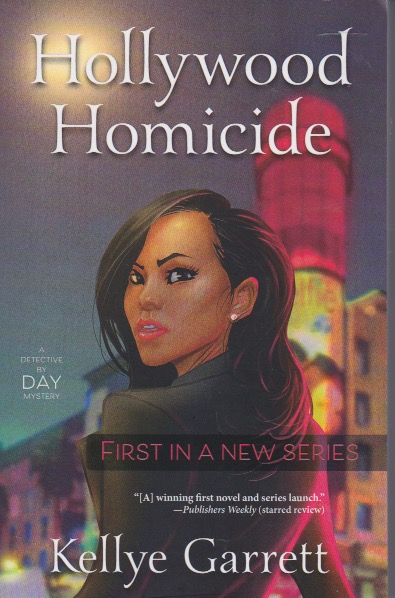
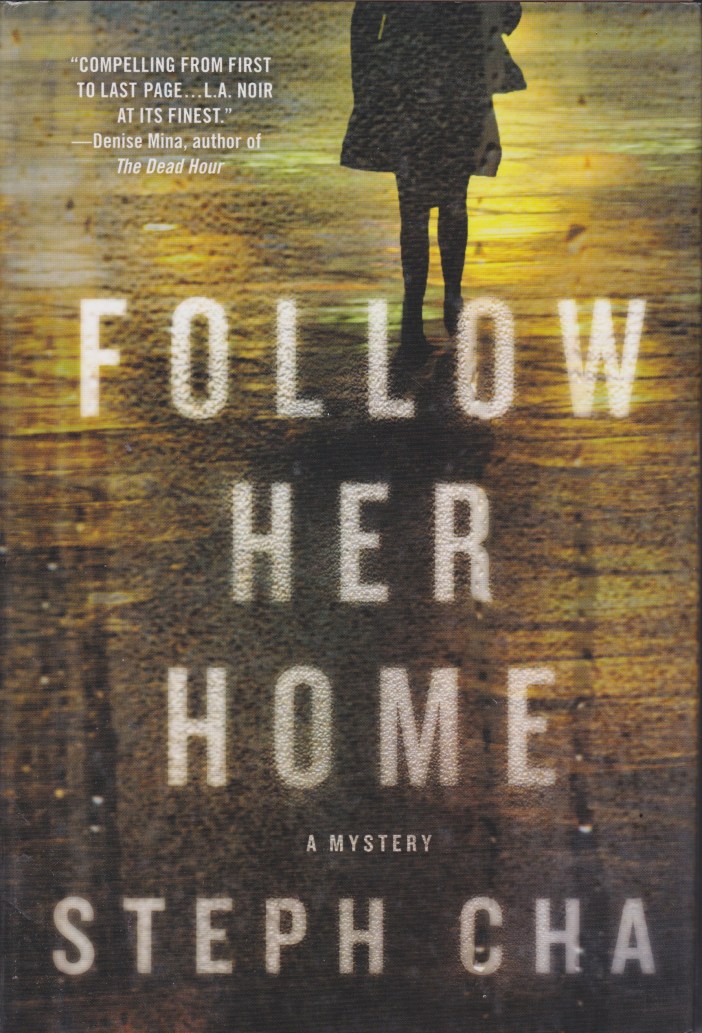
Sara

Memorial Day Monday, and I haven’t gotten near as much done as I intended, according to the “long weekend stay-cation to-do list”, but I got so much more else done that I cannot feel defeated or disappointed in myself.

Which, of course, is a step in the right direction. I’ve also gotten used to waking up in the morning between nine-thirty and ten; tomorrow’s alarm is going to be a very rude awakening, I fear. But it is what it is, I suppose, and at least this is only a four day work week, so that’s something, right?

Always find the upside, you know?

I took a lot more notes in the journal yesterday, figuring out how some other stories are going to play out, and even started brainstorming on Muscles. I know this doesn’t seem like I’m getting very much done as far as actual writing is concerned, and that may be true; but what I’ve done this entire weekend is make the actual writing possible. Today I am going to try to get some of that actual writing done–I know, right? SCARED OF THAT. And I also have some reading to do; I’m participating in a panel of readers to choose some short stories for an anthology. I also have some other busy-work to take care of today as well; so I am going to try to get that done before I start writing.

I am still reading that Roth novel; it’s not very quick going, despite being so well-written and the characters aren’t really quite as awful as the ones I recall from Letting Go, but it’s kind of slow going; there’s not really a reason to keep turning the page, which is always the problem, at least for me, with literary fiction. On my shelves, TBR, are two big literary fiction books that are massively long, Hanya Yanaghara’s A Little Life and Garth Risk Hallberg’s City on Fire, and while there are  gay characters and themes in both…they’re so long. Since they have gay characters, I kind of feel, as a gay author, some responsibility to the community to read them, dissect the gay characters, etc. It is representation, after all, and that representation should be critiqued by someone within the community.

I am sure that was handled by Gay and Lesbian Review Worldwide, which is a lovely magazine, and yet…I feel like it’s sort of my job somehow; a need or feeling which I definitely need to get past and over as quickly as possible. I am sure I will finish reading the Roth this week and I can get back to reading crime novels. (Yay!)

So, yesterday’s journal entries included work on my short stories “The White Knuckler” and “Never Kiss a Stranger” and “Hold on to the Night” and “This Thing of Darkness” and “And the Walls Came Down”; and the novels Muscles and Bury Me in Satin. I am writing a lot in my journal, which is convenient and easy, of course; I love having my journal, and I love having it handy, so whenever something occurs to me I can write it down and riff on it for a little while. This has been working tremendously; I solved the problems with the Scotty novel this way, made progress on the WIP; and at the rate I am going when it’s time to work on Bury Me in Satin the entire thing will have already been written or planned out in my journal.

Which will certainly make the process easier.

I’m all about it being easier, in case you’d never noticed.

As I page through my journal I also see notes I made for two essays; one about the evolution of teen movies from the 1950’s to the present (triggered by watching the original Friday the 13th last night, with a very young, dewy and beautiful Kevin Bacon), and another about Robert Downey Jr.’s career trajectory, and yet another about whether Carrie White from Carrie was a villain or a victim (this popped up on Facebook this week, and the question was very strange; I always considered Carrie a victim and certainly never as a victim; I also made the connecting thought that varied interpretations of what role she played in the novel/film has everything to do with the reader/viewer’s life experience as well as how they see themselves; which is an interesting direction to take, essay-wise; I was also thinking it might not be a bad idea to include Christine’s Arnie in the discussion. I consider both novels to be excellent depictions of teenage life and high school; no one really does childhood or high school quite the way King does).

So, that’s it for today, the end of my stay-cation. I got a lot of brainstorming and problem-solving finished for my writing; the Lost Apartment is in some sort of order at long last, and I am of course making myself all kinds of promises I won’t keep; about staying on top of the household chores and staying on top of the writing and the reading and using my journal to get myself out of sticky situations with both. I am very glad I took the stay-cation, even if I didn’t get close to getting all the things finished that I needed to get finished. My visit to the storage facility had to be postponed because of the recurring back pain; hopefully I can get that handled one day this week; either Thursday or Friday.

Always keep moving forward.

Next up in the Short Story Project is “The Jockey” by Carson McCullers, also from The New Yorker’s The 40’s: The Story of a Decade:

The jockey came to the doorway of the dining room, then after a moment stepped to one side and stood motionless, with his back to the wall. The room was crowded, as this was the third day of the season and all the hotels in the town were full. In the dining room bouquets of August roses scattered their petals on the white table linen and from the adjoining bar came a warm, drunken wash of voices. The jockey waited with his back to the wall and scrutinized the room with pinched, crepy eyes. He examined the room until at last his eyes reached a table in the corner diagonally across him him, at which three men were sitting. As he watched, the jockey raised his chin and tilted his head back to one side, his dwarfed body grew rigid, and his hands stiffened so that the fingers curled inward like gray claws. Tense against the wall of the dining room, he watched and waited in this way.

I’ve never been ashamed to admit that often I don’t get McCullers’ work; but I like the way she writes and the insights into her characters that she shares. This short story, about a damaged jockey who enters a crowded dining room during the season at Saratoga and confronts three people, dining together, who’ve had some impact/will have some impact on his life, and their complete disinterest in him as anything other than an object to be pitied, eventually to be scorned, is well drawn and depicted; and very telling about human nature; how we are with people who are of use to us and who we, as a society, generally are to those who cease to be of use to us. I have to confess, my revisitation of McCullers, between this and Reflections in a Golden Eye, has made me a lot more interested in her and her work; just as reading some of Flannery O’Connor’s stories recently has raised my interest in her work as well.

As I have said before, I often find my failure to get certain writers, seen as masters or geniuses, or in other ways celebrated by the so-called Academy, as a failure not only as a reader or a writer but as an intellectual and even, possibly a moral failure; but my recent reread of The Great Gatsby went a long way towards curing me of that mentality; likewise, the recent re-approaches to the works of McCullers and O’Connor have also made me realize that in some cases, I may not have been intellectually and morally ready to read these works. I am going to give Hemingway another chance at some point  as well, and I do want to read more of Faulkner. I’ve certainly enjoyed reading Sinclair Lewis and Theodore Dreiser a great deal more as an adult than I did in college courses. I didn’t enjoy reading Jonathan Franzen, and I’ve come to believe that David Foster Wallace is a cruel joke played on unsuspecting readers and students of literature by bitter professors. I also found Styron’s Set This House On Fire more readable, more enjoyable, and more of an achievement than Sophie’s Choice or The Confessions of Nat Turner; but I also read the latter when I was in my early twenties, so it may be possible for me to appreciate them more greatly now; I do consider myself to be a more sophisticated reader now than I was in my callow youth.

And now, back to the spice mines.

IMG_4109

Broken Wings


I have written, from time to time, about the issues I face  as a “gay author.”  I try not to get into it often; I always fear there’s a stench of sour grapes when I talk about the challenges of being a gay author of fiction that place gay men in the center of their own stories. Revolutionary, right?

When I first started publishing, back when dinosaurs roamed the earth, ironically there was a movement by gay authors to not be called or considered “gay” authors. More than one disdainfully told me when refusing to be interviewed for either Lambda Book Report when I was editor or for one of the queer newspapers I wrote for, or said on panel discussions at conferences, “I’m not a gay writer; I’m a writer who happens to be gay. You don’t call them straight writers, after all.” This statement, which I heard on more than one occasion, always took me aback, because the truth was it didn’t matter what you called yourself; booksellers and reviewers and readers would still see you that way. There was an arrogance, a smugness, to it; kind of saying yes, technically I am but I am not one of those writers, don’t lump me in with THEM.

Basically, you can call yourself whatever you want, but the market and the industry won’t give a rat’s ass what you call yourself.

Case in point: without fail, when you’re a gay author (or a queer author, or whatever kind of minority writer you might be) and you attend a mainstream writer’s/reader’s conference for whatever genre you may write in, you will inevitably find yourself assigned to what’s called a diversity panel. Make no mistake about it: these panels are important and do need to be held. My primary objection to them is their ghettoization aspect; i.e., the only thing of value these authors have to add to the conference conversation is whatever it is that marginalizes them. I have always argued that any minority writer assigned to a diversity panel should also be assigned to another panel. Reducing a minority writer’s value to simply being able to speak to diversity issues doesn’t help the author; and if we are really concerned about increasing diversity in publishing/whatever genre we are discussing, then audiences besides those who show up for diversity panels should also be exposed to those minority writers. People who come to diversity panels already are hungry for diversity in their reading and writing, which makes it a little bit of preaching to the choir.

Case in point: I was at a mainstream genre conference a few years ago, and of course was assigned to the diversity panel. (I was assigned to another, so I was fine with it.) It was an interesting mix of people, but as we talked about how to find and help new minority writers, a noted editor on the panel, cut me off and passionately said, But it has to be about the WRITING. The WRITING has to be good.

In other words, the reason we don’t have more diversity in publishing in general is because the writing isn’t good.

My jaw literally dropped, and I was stunned into silence by the implications of this noted, and relatively powerful, editor’s statement.

And it takes, as you can imagine, a lot to stun me into silence.

During the years 2004-2008 I kind of withdrew into myself and wasn’t really paying attention to the world of LGBTQ publishing as I had from 1997-2004; a lot of things were going on in my personal life, Katrina happened, and I basically just kept my head down and did my work. It seems, to me, looking back, that the world of LGBTQ publishing changed dramatically during that four years I wasn’t paying attention, when I wasn’t deeply immersed in it; perhaps these things were around before and I simply hadn’t been aware, or noticed; but when I started looking around again at queer publishing I became very aware of something that I hadn’t been aware of before: a new-subgenre of fiction called “m/m”; which was fiction about gay men written by straight women for other straight women (a generalization, of course; some of it is written by gay men and some of the authors are queer-identified women, and likewise, the readership is not all, but primarily, straight women). I found it to be a rather interesting phenomenon; I had always argued that gay male writers should market our work to heterosexual women, so it didn’t bother me that straight women were writing about gay characters and gay themes. I’ve always believed writers should write about subjects and characters they are passionate about, and if straight women were passionate about writing about gay men, more power to them, and welcome to our little niche of the publishing world. I certainly don’t want anyone telling me what I can and cannot write, or who I can write about, any more than any other writer would. There was a bit of a kerfuffle over the Lambda Literary Awards back then making a rule stating the awards were only for actual LGBTQ writers, and there was some outrage about that. I completely concurred with the outrage; the awards were for books and writing rather than the actual author. In my opinion, if a straight woman wrote a great and deserving book about a gay man, why not allow her to enter the Lambdas? The book and its writing is what, ostensibly, was being judged; let it be judged on those merits.

Yet I also noticed, in the wake of this decision by the Lambdas (which was later reversed), some horrific commentary and borderline, if not outright, homophobic statements being made by some of these ostensible so-called allies; homophobic statements always seem to rear their ugly heads whenever any gay man dares question the validity and/or authenticity of these works:

If authors only wrote from their experience, we wouldn’t have science fiction or vampires or werewolves.

Funny how a community that wants to be accepted and treated equally will discriminate.

The first is so fucking offensive on its face I don’t think I really need to explain precisely why it is; but imagine if a white writer said that in defense of writing about a black main characterYes, Virginia, queers ARE like mythological creatures or beings from another planet, so you just go right ahead! Frankly, if this is your line of thinking, you definitely shouldn’t be writing stories about characters with experiences different than your own. Imagine if I said well, of course I can write about a straight woman because it’s really no different than writing about werewolves or vampires or Martians.

If that’s not clear enough for you, try this: WE ARE HUMAN BEINGS.

The second is an implied threat; you need our support to get your equal rights as citizens so how dare you question us? You’d better shut your mouth and toe the line or else, you know, I might vote for homophobic candidates!

Ah, yes, the blackmail argument, which begs the question: Are you really an ally? A real ally doesn’t support a community so long as it toes the line of cisgender straight white people’s way of thinking.

Has there been a more flagrant and obvious expression of clueless straight privilege?

Another favorite was well, the best novels about gay men have always been written by straight women! Mary Renault and Patricia Nell Warren, to name two!

Ah, nothing like a nice straight white lady turning actual lesbians into straight ladies in order to prove their point. Um…yeah.

Or, my personal favorite, gay fiction largely began on the Internet, which erases decades of powerful writing by successful LGBTQ fiction writers, and their careers–not to mention all those Lambda Literary Awards given out, apparently, to “Internet writing” in the late 1980’s thru the mid 1990’s….

Needless to say, when I denounced the exclusion of their books but called out the homophobia…if you guessed they ignored the fact that I was on their side in general but instead focused on me calling out their comments as homophobic, you guessed correctly.

Seriously?

In 1998, Sarah Schulman published Stagestruck: Theater, AIDS, and the Marketing of Gay America. As a gay man of a certain age, reading (and reviewing) this book was an eye-opening experience. In that year, we were in approximately the seventeenth year or so of the HIV/AIDS crisis in the United States, but things were starting to change and look different. Medications were being developed and prescribed that lengthened life and reduced the impact of the HIV virus on immune systems; there was light at the end of the proverbial tunnel, and it looked like an HIV/AIDS diagnosis might not be the death sentence it had been since its first discovery.

Schulman’s book opened with her being made aware of similarities between her novel People in Trouble and the hit Broadway musical Rent.

Here’s what happened: I was twenty-eight years old in 1987, the year I joined ACT UP (the just-born AIDS Coalition To Unleash Power) and full throttle into a love affair with a married woman. An artist, she was very conflicted about sexuality with women and had contempt for the gay community in general. She practiced an art ideology that equated formal invention with radical content, something I contest passionately. My fantasy was that by exposing her to the realities of the AIDS crisis, she would drop her blinders about the functions of homophobia and simultaneously develop an understanding of the value of artwork based in experience. Needless to say, older now, I understand that my project was doomed from the start.

That year I completed my fourth novel, People in Trouble, about a love triangle composed of a married artist couple and the woman’s younger lesbian lover. The novel was set against the backdrop of the AIDS crisis and featured many scenes and feelings that came out of my actual experience. People in Trouble is about an East Village performance artist who is at the end of a relationship with a male artist and who, despite her own homophobia, falls in love with a lesbian. She creates a performance piece that targets a greedy landlord who is evicting people with AIDS. There is a subplot about an interracial gay male couple–one a queen, one an activist–in which ones dies of AIDS. A second subplot involves an activist group called Justice, who devise a credit card scam to feed homeless people. It was, as David Leavitt wrote in 1990, “the first work of fiction that portrays the enormous activist response the epidemic has generated.” And the book clearly showed how this response was firmly rooted in the gay and lesbian community, despite the neglect and inaction of dominant society.

Does the plot of her novel sound familiar?

The first part of Stagestruck, about Schulman trying to get someone, anyone, to acknowledge the great similarities between her book and Rent, was interesting to me, but what was even more interesting to me was the sudden realization she had, which led to the rest of her book, and her thesis: her book, which was well-received and sold well, basically told the same story as one of the behemoth Broadway musical successes of all time; the primary difference being her book centered the point of view of the lesbian in the love triangle while the musical centered the straight male POV. She then took this thesis; that gay and lesbian works can only be presented to a mass audience if told from a heterosexual point of view, and ran with it. She examined marketing of products, the how things are sold to gays and lesbians (and how those marketing techniques differed); film and television, using Philadelphia (the great HIV/AIDS movie, told from the point of view of the homophobic lawyer, whose experience with the dying gay man was used as an opportunity to grow as a person) as a prime example; the entire book absolutely fascinated me, and it changed forever my perceptions of what is now known as “own voices” in terms of film, books, plays, and television programs.

The other day, on a social media thread, initiated by a female writer about how tired she was of trying to convince straight white male crime writers that representation of other voices and characters wasn’t oppression, I blithely commented, I love to ask them to name a crime novel by a gay man with a gay main character. A very well-meaning straight woman posted a link to a review of one such book as comment in response to mine, adding, here’s a great one to recommend when you run out of the handful.

When. You. Run. Out. Of. The. Handful.

In all honesty, I wasn’t sure whether I should be offended or not. She didn’t mean to be offensive, and props to her for actually knowing such a book to recommend. She clearly had no idea who I was or the kinds of books I write (and have been writing for nearly twenty years), nor how extensive my knowledge of the literature of my community actually is.

And yet…yeah.

The other day, there was some interesting threads going on Twitter because of a book announcement: a nice straight lady, with no doubt good intentions, announced the sale of her latest young adult manuscript, which is about teenagers in 1983 dealing with the HIV/AIDS crisis.

There was some pushback.

First of all, there’s absolutely no reason why a straight woman cannot write a novel about the HIV/AIDS crisis in 1984. I want to be absolutely clear about that. But yes, like Philadelphia, a book about HIV/AIDS that centers the heterosexual point of view on the subject rather than the gay male one is kind of intrinsically offensive. Is that invalid to write about? No, it’s not. But, as Schulman said about Philadelphia, “making straight people the heroes of the HIV/AIDS crisis is a lie.” It wasn’t straight people who created ACT UP or the Gay Men’s Health Crisis or any of the HIV/AIDS organizations that sprang up in response to the epidemic, and the recent historical revisions like the mini-series The Reagans that try to paint Ronald and Nancy Reagan somehow as heroes of the AIDS crisis is a slap in the face to everyone who died during the 1980’s and the people who loved them. Don’t get me wrong: there have always been, and always will be, straight allies in the fight against HIV/AIDS; but the truth is the crisis became an epidemic because of deliberate societal and institutional neglect; or to quote the bigot on the powerful episode of Designing Women, one of the first prime time television series to address the crisis, “At least it’s killing all the right people.”

Because this is what people actually believed at the time.

The beleaguered author also went on to tweet: First off, I was actually in high school in ’83 and the fear affected everyone in different ways which is what this addresses. Second, I worked for a state government’s outreach office in the early ‘90’s bringing money in for prevention and support of AIDS programming 1/2 Third, I worked closely on this with a knowledgeable and generous AIDS activist. Also, there are currently NO YA books about this time in this context. I’m not taking space from a gay male author. Feel free to write one. Seriously. Teens today need to know what it was like.

Those responses, by the way, were written to a gay man who questioned her about her profiting on the experiences and suffering of gay men.

Now, let’s dissect this woman’s tweets, shall we?

  1. “I was actually in high school in 1983 and the fear affected everyone”: ‘I am going to write about the AIDS epidemic in 1983 and center straight people and their fears because that was the most important thing about HIV/AIDS in 1983.
  2. “I worked for a state’s outreach office in the early 90’s bringing money in for prevention and support of AIDS programming”: how very dare you question me, you ungrateful gay man after everything I’ve done for your community!
  3. “I worked closely on this with a knowledgeable and generous AIDS activist”: I have a gay friend. Please note she didn’t actually go so far as to name the activist; so yeah, this is the ever-popular dodge. Nor does she say this activist is a gay man.
  4. “There are currently NO YA books about this time in this context. I’m not taking space from a gay male author. Feel free to write one. Seriously. Teens today need to know what it was like.” Dripping with contempt and privilege here; so this is the one I really want to break down.

First of all, there are very few y/a books from mainstream presses written by gay men about gay teenagers.

I suppose it’s never occurred to Nice White Lady that maybe there are reasons why there aren’t any of these books; namely, for one, we lost almost two entire generations of writers to societal neglect and homophobia which led to the prolonging of this epidemic in the first place.

There is actually plenty of what is called “witness fiction” out there about HIV/AIDS and the 1980’s; in addition to Schulman’s People in Trouble, there are also Christopher Bram’s In Memory of Angel Clare; Felice Picano’s Like People in History; William J. Mann’s The Men from the Boys, simply to name a few—and that’s just in fiction. Paul Monette’s memoir  Borrowed Time is pretty brilliant, as well. It actually won the National Book Award.

And yes, she is right on that score: none of the witness fiction is young adult. Imagine, just imagine, a gay male author trying to sell a young adult novel to a major publisher about HIV/AIDS and gay teens in the 1980s, the 1990’s, or even in the aughts.*

But let’s not forget: I was personally banned from speaking at a GSA in Virginia in 2005. Nancy Garden’s Annie on My Mind was tried for obscenity in Kansas in the early 1990’s.

So…yeah, I can’t imagine a y/a about HIV/AIDS from a period when the majority of people writing about it were gays and lesbians going out to auction in New York.

When I started writing fiction and getting published, of course HIV/AIDS was something I had to think about. Did I want to talk about it in my fictions? In my stories and my novels? I decided not to; fully knowing that some people might see, or consider, this to be an abdication of responsibility. But writing from my own experience, my own witness fiction, drawing from that emotional well, isn’t a place I ever wanted to go to in fiction. I decided not to because there was already plenty of fiction and non-fiction, beautifully rendered and written, that told the HIV/AIDS story. There was also a very strong sense in publishing that I recall in the early aughts that it was time for gay writers to move away from the HIV/AIDS narrative, that we had other stories to tell.

This woman’s book sold at auction, which kind of denies her statement that she “isn’t taking space from a gay male author.” Yes, dear, you actually are, because there aren’t many out gay men either writing books about HIV/AIDS or just telling gay stories that are going out to auction to every publisher in New York.

I don’t wish her ill. I hope her book is well-researched and well-written, and I hope she has written a great novel exploring the issues of HIV/AIDS in 1983 amongst teenagers. I don’t know whether I will read it or not—it’s very title seems a bit, well, distasteful to me—but I might; I cannot speak about something I’ve not read. I think it’s terrific she wants to bring this story, and that year, to life for modern teen audiences.

But if this book centers straight white people as the heroic center of the HIV/AIDS crisis in 1983; if the focus is the fears and worries of straight teenagers about HIV/AIDS; if this book doesn’t show realistically the overwhelmingly homophobic heterosexual response to not only the epidemic but to gay men in general; then it is not only an ahistoric and offensive lie, but a slap in the face to everyone currently living with the disease, to everyone who died, and to those of us who are still mourning the overwhelming losses we suffered.

*I am merely taking this woman at her word that there are no such books. I am not as widely read in queer fiction as I once was, and I certainly am not well versed in what’s out there for young adult fiction.


Secret Lovers

I slept so well last night that I didn’t want to get up this morning, which is perhaps the greatest feeling of all. Huzzah! It also means I am not heading into the weekend feeling tired, which will be yet another great feeling. Hurray! Huzzah! Of course, the kitchen’s a disaster area, but I may have the time to correct that this morning before I head into the office. One can always hope, at any rate.

I do think “Burning Crosses” is ready for a read aloud; there’s one more paragraph I need to add, and maybe a sentence here and there, but other than that, it’s close to done. I have also made progress on “This Thing of Darkness,” and I think, as far as short stories go, I am ready to get back to finish/polish/read out loud “Once a Tiger” and “The Problem with Autofill.” I also want to get back to the WIP and the Scotty; I need to read Scotty from the beginning and make notes; and likewise, Chapter Two of the WIP needs to be rewritten, may even need to be a completely newly written chapter because I need to add a scene. But I am hopeful I am setting myself up for an incredibly productive weekend. I am going to a book signing on Saturday afternoon for Bryan Camp’s The City of Lost Fortunes at Tubby and Coo’s (hello, Five Guys!) and I am also supposed to go to a party on Saturday evening, but we’ll see how that all plays out. I may just make Saturday an errand day and try to spend Sunday focusing on writing.

We shall see.

The Terror continues to enthrall, as it moves along to its inevitable end. The ninth episode, which we watched last night, was just non-stop misery and powerful acting from everyone involved. After we finished watching, Paul and I talked about how much we’re enjoying it and The Handmaid’s Tale, and I made the curious realization that the two shows we’re enjoying the most right now are horrific stories of human beings caught up in the most terrifyingly horrible of circumstance, and how interesting is it that we are so enthralled by what basically are, thematically, stories of survival and how much can you take, how much can you handle without giving up entirely?

The writing, and the acting, always stellar, is Master Class worthy in this heartbreaking episode. I fear The Terror will be overlooked for awards, when that season is upon us; which is absolutely wrong. It should win all the awards; I would be hard-pressed, though, to decide on which actor to vote for; there are all that good.

I have to say, yesterday was a lovely day for me professionally. The table of contents for the Murder-a-Go-Go’s anthology I am in was released, and it’s quite stellar. It was lovely to see the social media response; all the likes and retweets and excitement. I am very pleased to be in this book, and I am equally pleased with the story I wrote for it. The book won’t be available until 2019, alas; but it’s going to be a truly good one.

And on that note, it’s back to the spice mines.

32293383_1843901179237450_7087727290112540672_o


Greatest Love of All

So, today I am very pleased to announce that my short story, “This Town”–which I’ve shared the opening to with you already, Constant Reader, will be published in the Murder-a-Go-Go’s anthology, edited by Holly West! Watch this space for more news about the anthology as publication date approaches!

getPart

Pretty cool, huh? I’ve loved the Go-Go’s for going on nearly forty years now, and so it’s kind of cool to be in anthology of crime stories inspired by their music. And editors–if you ever do such a volume based on the music of Fleetwood Mac and don’t include me, I can’t be held legally responsible for what happens. Just sayin’.

And so many awesome people to share the pages of the anthology with!

Jane Wiedlin is writing the introduction! Eeeeeeeeeeeee!

So, yesterday I continued to work on revising the WIP and shifting the POV/tense, which isn’t as easy as it may appear on its face; it’s very easy to miss instances where past tense is used and needs to be switched to present. It’s also an excellent exercise for me, anyway, because I almost always use the past tense in my writing. (I think I’ve maybe used the present tense once, in a short story.) I also realized another short story I’m working on–“Burning Crosses”–would work better in the present tense, so I revised it into the present tense and revised it as well. I think it’s ready to be read aloud this weekend, which is pretty flippin’ cool.

And one more tweak, and my short story collection is ready to be turned in to my  publisher. Huzzah!

Last night, I reread Agatha Christie’s short story, “Philomel Cottage,” from her collection Witness for the Prosecution:

“Good-bye, darling.”

“Good-bye, sweetheart.”

Alix Martin stood leaning over the small rustic gate, watching the retreating figure of her husband, as he walked down the road in the direction of the village.

Presently he turned around a bend and was lost to sight, but Alix still stayed in the same position, absent-mindedly smoothing a lock of the rich brown hair which had blown across her face, her eyes far-away and dreamy.  Alix Martin was not beautiful, nor even, strictly speaking, pretty. But her face, the face of a woman no longer in her first youth, was irradiated and softened until her former colleagues of the old office days would hardly have recognized her. Miss Alix King has been a trim business-like young woman, efficient, slightly brusque in manner, obviously capable and matter-of-fact.

I loved this story when I first read it, when I was either eleven or twelve; it’s a classic domestic suspense tale: young married couple lives in a remote location, they married very quickly after meeting–after the woman inherited some money–and, in fact, she’d been rather in love with someone else but her husband just swept her off her feet. This day, after her husband goes off, she has a chat with her gardener…who mentions that he’d come early (on a Wednesday rather than his usual Friday) because he wanted to ask her about the garden trim “and since they were going off to London the next day” (sic) he wanted to check with her before she left. She laughs, and responds that they aren’t going to London; but he is insistent that her husband had told her that. He then also mentions that the former owner of the cottage, which they bought for three thousand pounds, had only wanted two. As she put up two to her husband’s one…she’s certain he must be mistaken. But in a masterpiece of paranoia and psychological suspense, Alix then begins to wonder, and starts putting together the errant pieces of strange behavior from her husband–each individual instance nothing, but when put together make it very much seem like he married her for her money and is planning to kill her…and she keeps finding more and more evidence to convince her she is right.

And the ending is stunningly perfect.

Christie, such a master of suspense and crime!

And now, back to the spice mines.

Kyrie

Well, I finished “Fireflies” yesterday and got it sent in to the market; we’ll see how it goes. It’s kind of a stretch for that particular market, I suppose, but we’ll see how it goes. If they don’t want it, at least it’s finished. Who knows, there may be some editorial notes that will make it even better.

Two stories I sent out into the world–“Lightning Bugs in a Jar” and “Neighborhood Alert”–were turned down; no surprise, really; I am starting to realize my stories, while crime oriented for the most part, aren’t really mysteries, which kind of precludes their acceptance into mystery magazines. But that doesn’t mean I’m going to stop writing them, of course. I’ve thoroughly been enjoying myself this year writing short stories, so why stop doing something that gives me pleasure? They are also wonderful exercises in voice, tone, character; even in plotting, to a certain degree; I also feel that working on them is improving my writing (although, from looking at the Scotty book and the WIP, I am not so certain that’s true! Ha ha ha–just kidding; no more self-deprecation here). The problem, of course, is how does one monetize that work, so that it’s not just a writing exercise but something that can provide an income stream? The truth is, of course, that there are markets out there for crime fiction that may not be recognized necessarily as markets for crime fiction. But at the same time, getting published in places outside the recognized crime genre could be a way of getting my name out there and recognized, building the brand, as it were.

God damn, how I hate the term brand when it comes to writing! It just seems wrong, but I get it, and why it’s used. But that doesn’t have to mean I like it.

I have to confess, I had a slight crisis of confidence on the WIP yesterday.  I’ve been working on it for so long–off and on for at least two years–that I was starting to think, meh, maybe I should table it for good and be done with it. But as I was watching Harlan Coben’s Safe on Netflix last night (we enjoyed it), it suddenly occurred to me that there was a glaring hole in the middle of the entire thing; I’ve never really understood why some of the things that happen in the book actually do happen. Without that knowledge, is it any wonder I can’t get inside the characters? And without being able to really understand the characters and why they do the things they do, how can I possibly write about them honestly, realistically, and have the story I’ve devised for them actually work? So, the problems with the WIP that I’ve had all along basically stem from two things: a lack of understanding of who the characters are and their motivations, and not really knowing how to end it properly. So, my goal for this week is to do exactly that; go back to the beginning and figure out who my characters are and what the plot of the book really is. I still like the idea of having the entire book play out over the course of a weekend, from Friday night to Monday morning, and I think I can make that work, but I need to know who the characters are, what drives them, what drove them, and why they do the things they do. Which is what is missing from the book, the emotion and the understanding. “Oh, I need this kid to be a bastard, so he is a bastard.” No, that doesn’t work.

So, it’s kind of back to the drawing board for me. I am going to work on those characters and the plot of this book while I work on the Scotty; and if ideas some to me about Muscle, so be it; I will also work on it. But the primary focus has to be the Scotty book, which I need to get finished by July 1. And that’s very do-able. The first draft is nearly half-way finished; so the goal this week is to read what’s already done and take notes, while preparing for the next four or five chapters.

And, as I have always said, it’s never a bad thing to go back to the drawing board sometimes. You shouldn’t ever force a book or a story.

For your enjoyment, here’s the opening for “Don’t Look Down”:

Jase shifted the Fiat’s engine into a lower gear as he started up the steep hill. He hadn’t driven a standard transmission since college, but he did remember hills required downshifting. As the Fiat started climbing he passed two handsome, tanned men on mountain bikes, sturdy thighs straining against their brightly colored Lycra casing. According to the directions, he would be in Panzano when he reached the top of the hill.  There was a parking lot off to the left and just beyond that he could see a stone wall. The hill—or mountain, he wasn’t sure which—dropped off into a valley to the right, vineyards and olive trees spreading out to the next sloping hill.  A low stone wall hugged the right side of the road nearer the crest of the hill, with barely enough space for pedestrians or mountain bikes. All the roads had been incredibly narrow since he’d left the highway, with many sharp blind curves as the road weaved in and out and around and along mountains.  At one point an enormous bus coming the other way had almost forced him onto the shoulder, missing the black rental car by inches. He glanced up at the directions tucked into the sun visor. At the crest of the hill there would be another sharp, almost ninety-degree turn to the left, and to his right would be the triangular town center of Panzano-in-Chianti. To get to the hotel, because of the narrow one-way streets, he’d have to circle around the  triangular town square to get to the little hotel.  

The sunlight breaking through the clouds in the valley was beautiful.

Philip would have loved this, Jase thought. He always wanted us to see Italy.

All he felt was a twinge of sadness, which was better than breaking down into tears. He was healing, needed to get away from the apartment, the neighborhood, seeing Philip everywhere he turned, everywhere he looked.

And what better way to do that than two weeks in Italy?

28684878_1224228877721777_1611553184461666820_n


How Will I Know

Well, somehow I managed to make it to Friday. This wasn’t a great week; sleep issues, mostly, but last night I finally slept well despite some truly strange dreams…which are fading away from me now. That’s fine, but they were seriously weird; I did wake up a few times during the night thinking okay, that was just weird. But as usual, now that I am awake and drinking my coffee, I don’t really remember any of them. I would have loved to stay in bed longer, but I have a meeting this morning at the office. It’s my short day, which is also incredibly lovely, and I am hoping to  have a nice relaxing weekend of catching up on things, including rest.

I managed to get “Fireflies” revised and ready for a read-aloud this weekend; that’s several stories I get to read aloud this weekend, including “Don’t Look Down” and “This Town”. Three stories to read aloud, even if “This Town” is just to check for extraneous words and trim it down a bit, if possible. I also started writing “This Thing of Darkness” yesterday, and it’s coming along swimmingly. I got about 1400 words or so done. I need to get back to the Scotty book this weekend as well; I am going to reread the entire thing before I get back to it, though. I also have to go to the post office as well as do that grocery store thing.

And of course, the apartment is a disaster area.

Heavy heaving sigh.

But I’m pretty jazzed about getting through this day and getting home to start the cleaning, and get to reading Lori Roy’s The Disappearing. She really is quite an extraordinary writer. If you aren’t reading her, you need to be. Seriously.

I am also going to discuss a short story today, which means we are back to the Short Story Project, and might even be able to get another one knocked out tomorrow.

Today’s is “e-Golem” by S. J. Rozan, from the September/October 2017 issue of Ellery Queen’s Mystery Magazine:

Bookstore dust was not the same as other dust. Loew had noticed this before, sweeping out the cluttered aisles of his used-book shop. It settled more gently, but at the same time seemed more weighty, each mote carrying both wisdom and whimsy, erudition and imagination. He shook his head. Loew, he told himself, this is why you’re doomed. WHy you’re barely eking out a living, selling forgotten things no one wants in a store you soon won’t be able to afford.

For most of his life, first working after school in his father’s shop in what was then the Jewish, later the Chinese, and lately the gentry’s Lower East Side, and on through the almost imperceptible transition when the shop became his, Loew had found pleasant this sense of gentle churning. Books no longer needed in one place lodged in the shop until they found a home in another, and customers came periodically to discover what treasures had rolled to the surface. This churning and discovering still went on, he understood, but less tenderly and on the Internet that soul-destroying virtual world where all was about price and little about love. People who bought rare books online did so speculatively, hoping their value would increase. How different from Loew’s customers, who held a book, fingered its pages, inspected its cover, to decide whether this book, this copy, was meant to be theirs. A customer who turned a book down was never a disappointment to Loew. It meant the two didn’t belong together. The customer would find his book, and the book would find its owner. Until it did it had a home here on Loew’s shelves.

S. J. Rozan is one of my favorite crime writers, bar none. This story, which is both clever and slightly sly at the same time, is an example of her work at its best. Loew discovers an old book of mysticism in his store, and half-heartedly tries to create a golem to go after his biggest enemy–Amazon. What happens next is why Rozan is one of the greats of our time in crime fiction; clever twists and turns that one never sees coming. But what really struck me the most about this story is how good she is at voice. Never once does she hit a false note in this story; every word is perfect and fits with the character’s voice. Were I ever to teach a class in crime writing, I’d use this story as an example of how to do voice perfectly.

And now back to the spice mines.

32247206_1671285199636859_5541500018004852736_n

Fortress Around Your Heart

It’s Monday, and I didn’t get near what i wanted to get done over the course of the weekend; which is something I should simply refer to as Monday’s Lament from now on. I did get Chapter Twelve finished, and I got started on Chapter Thirteen; and I sort of know where the (meandering) story is going; and there are some things I am definitely going to need to go back and fill in later. And it’s Monday, of course; the start of a new week in which I can certainly hope to get a lot finished.

We watched a wonderful series from Australia this weekend on Netflix, called Deep Water. It’s a crime show, and it opens with the discovery of the body of a brutally murdered gay man. As the investigating officer starts digging into the case, she begins to suspect that this murder is somehow connected to some other murders–over twenty years earlier–of gay men in the same part of Australia. The more she digs, the more convinced she becomes, and she soon begins to suspect the accidental drowning of her older brother, on Christmas Eve, 1989, is yet another one of a string of murders, hate crimes, committed against gay men all those years ago. It’s extremely well-written, and powerfully acted; it also deals with sexism against women in the police department; the old boys’ network of the police; homophobia; cover-ups; and how much–and how little–society has changed in the past twenty-five years.

We also watched the second episode of Season 2 of The Handmaid’s Tale. I had wondered if the second season of this show would be near as bleak, depressing, and heartbreaking as the first, and so far the show continues to deliver. This particular episode, in addition to dealing with Offred’s situation, also brought back Alexis Bledel’s character, off at the brutal world of the Colonies, where the unwomen are sent. If you will recall from the first season, Alexis Bledel played the lesbian Ofglen/Emily; she was originally punished and then committed another crime, resulting in her being sent to the Colonies. This episode, while focusing on Offred/June as always, shows the Colonies and what her life is like there, while she remembers how the downfall of democracy and the rise of religious fascism and its impact on her as a married lesbian with a child. I love how The Handmaid’s Tale is not afraid to go there, quite frankly; and its message is quite plain: women and queers have common cause against the patriarchy.

Coupled with Deep Water, watching this episode put me into a deep, contemplative place. I haven’t really quite formed the thoughts yet, but there are some nascent ideas and thoughts forming in my head. I read a piece this weekend about Mort Crowley, The Boys in the Band revival on Broadway, and the disappearance of gay culture. I also have had come conversations with younger gay men over the course of the past two weeks. Paul and I were also listening to some gay dance remixes from our partying days of going to clubs and dancing the night away last night before bed, and we recalled those times with a bit of sadness; I do miss the fun we used to have, but do I want the full-on oppression that came with it?

It wasn’t that long ago, as Deep Water showed, that we were seen as disposable, human garbage on the fringes of society and no one cared if we were assaulted, murdered, disappeared. (There’s a serial killing investigation going on in Toronto right now that has been glossed over, ignored, despite all evidence to the contrary, for years: Toronto.) One of the reasons I originally wrote Murder in the Rue Dauphine  was precisely for this reason: who cared if some gay man was murdered? I think about the story line for that book from time to time, and often shake my head, thinking, “oh, that book could never be written today; it wouldn’t hold up, no one would believe that a closeted man would or could be blackmailed today.” And yet there is a story line in my current book along those same lines, that i struggle with; is this realistic in this day and time? Is this a secret someone would be willing to protect today? On the other hand, we do still see outings; there was a recent scandal in Metairie where the parish president was outed for pursuing a teenaged boy who worked at Lakeside mall. So, it’s not completely out of the question for a crime storyline anymore.

And this also makes me reflect, again, on ambition, and my tendency to self-defeat myself; my fear of failure, and how I built my career in such a way as to guarantee that I would never become hugely successful; writing gay characters and gay themes in crime fiction essentially guaranteed, almost from the first, that i would never be a New York Times bestseller or would win an Edgar Award or get reviewed in major newspapers; I could be published, but as a gay writer of gay stories, the expectations were low; no one would expect me to sell hundreds of thousands of copies in my little niche within a niche within a niche market. Did I subconsciously set out to sabotage my own career from the very start, setting myself up for low expectations from the start? I’d always intended–and it is there, in my journals–to eventually move to writing mainstream fiction; mainstream crime fiction. And yet, in all these years, of writing millions of words and creating hundreds of characters and telling all these stories, I’ve only recently (in terms of the years of my career) begun to try to write something more mainstream. It would take very little work to make that book appealing to my current publisher; it’s always there in the back of my head as I struggle with it and try to place my finger on what’s wrong with it and why no agent seems to want it–and then I remember that I’ve actually only sent tentative queries to a handful of agents, and am I giving up on it too soon? The amount of time I’ve actually spent on this piece of work isn’t that long in the overall scheme of things; I’ve worked on it around other things I’ve had under contract.

The entire point of last year was to work on it, get it finished and polished and ready for submission, and yet I allowed myself to waste most of the year in feeling sorry for myself and paralyzed and unable to write anything; was this simply another way of defeating myself, of fearing to fail and therefore not even trying?

You cannot succeed unless you aren’t afraid to fail.

Failure is the best way to learn.

And now, back to the spice mines.

17191400_1290543300993731_6767665762992739786_n

Do What You Do

Ah, it’s only midweek and I’ve not made much progress on anything; the kitchen is a mess, and time is just slipping through my fingers on a daily basis. It’s a frustrating feeling, made even all the more frustrating because I know, even as I procrastinate, that I am going to deeply regret the procrastination the following day; and yet, I do it. I suppose this would be fodder for my therapist; why do I defeat myself all the time, or set myself up to fail? Is it a fear of failure, so if I do it to myself it won’t feel like failure?

These are the mysteries of Greg that I ponder on a daily basis.

I did work on a story yesterday, rather than the Scotty book or the website writing I’d promised to do, which I need to do, both of which I should just fucking do and get out of the way. Eye roll.  The story isn’t one I am sure about; it’s one that I originally wrote back in the late 1980s during one of my I’m going to take this writing thing seriously even though I have no idea what I’m actually doing periods when I used to write piles of short stories (rather like I have done this year already), and it’s one that I’ve always thought would work. I’ve taken a run at it again several times over the years, but at last I think I have it in a place where it will actually work. The voice is the key to this story, and I think I’m getting it right; the story itself is working itself out, but once I am finished with it this time around I need to go back and make sure I’ve got the voice right. This is, of course, not one of the stories I’m including in the collection, or the one I need to get the edits done on (of course, see what I mean about being self-defeating?), and the irony, of course, is that the edits aren’t that involved; and yet somehow I just can’t make myself do them.

Idiot.

But so it goes, and how it goes every day of my life. I am often called prolific, which always amuses me to a degree; I think of myself as lazy, because I know how much more I could get–or should be getting–done. I also know about all the time I waste, and how that time could have been used ever so much more productively.

In my own defense, however, I will say that I like this story I am working on–“Fireflies”–and I’ve always liked the story, and am glad that I am finally getting to it. I have so many story partials; so many stories that have been dancing around elusively in my brain for so long, yet whenever I try to finish them they dance away just out of the reach of my fingertips; “Fireflies” is one of those stories. It’s nice to finally be getting it finished, even though I should be working on other things. But I’ve diagnosed what’s wrong with both “Don’t Look Down” and “My Brother’s Keeper” this week; I’ve also figured out what’s wrong with “Once a Tiger” and how I can move forward with it. These are good things, really; and I am getting somewhere with the Scotty book as well with my brainstorming.

I just need to get past this feeling that Chapter Eleven is such a sloppy mess that I don’t want to even look at it again. I either need to go fix it, or move on to Chapter Twelve instead of agonizing over it like an idiot.

We started watching Shooter, a really terrific Ryan Philippe series last night; I think it was a limited series–a one-off, because I don’t really see how it could go another season. He plays one of the top Marine sharpshooter/snipers, who has retired; he is dragged back into the business by an old Marine buddy who now works for the Secret Service to figure out how someone is going to try to assassinate the president. He doesn’t realize he is being set up to take the fall for the assassination, and the conspiracy runs pretty fricking deep; but he manages to get away from the authorities and has to prove his innocence. It’s pretty good–and Ryan Philippe never disappoints. I’ve been a fan since his days as gay teenager Billy Douglas on One Life to Live back in the early nineties; and I am glad to see him keeping his career going on television now that he’s no longer in demand for film roles. He really makes a hot dad.

I also read two short stories for the Short Story Project. First up was “A Bus Ticket to Phoenix” by Willy Vlautin, from Jim Fusilli’s Crime Plus Music:

Otis woke that morning to Lenny in the bathroom yelling on the phone. It was past 11 a.m. at Winner’s Casino in Winnemucca, Nevada. Under the covers he shivered in the cold and could his breath fall out and disappear into the room. He got up to find the window open and the heat off.

He set the thermostat to high, shut the sliding glass window, and looked out to see some snow falling. It covered the van and trailer and the houses behind the motel. He stood seventy-seven years old, tall and thin with greasy brown hair. He found his clothes on the floor, dressed, and walked across the street to the casino. He used the toilet, lost five dollars on video poker, and went to the casino restaurant for breakfast.

Vlautin, the author, is a seasoned professional musician, which explains why this story rings so true and authentic, I suspect. Some old guys, professional musicians who are now getting old and have never made it big, just always managed to find work and have spent almost their entire lives on the road, are now touring with some musclebound young up and comer in country music. The crime is that their stuff keeps disappearing, with something being stolen at every stop on this tour. The singer is kind of a dick, and so is his manager…and while the crime aspect of the story isn’t it’s strength, the depiction of the lonely, melancholy life on the road–and coming to the end of your lives without ever having made it big while continuing on because you can’t do anything else, is the most poignant and powerful part of this story.

I then moved back to Ross Macdonald’s The Archer Files, for another Lew Archer story, “Wild Goose Chase.”

The plane turned in towards the shoreline and began to lose altitude. Mountains detached themselves from the blue distance. Then there was a city between the sea and the mountains, a little city made of sugar cubes. The cubes increased in size. Cars crawled like colored beetles between the buildings, and matchstick figures hustled jerkily along the white morning pavements. A few minutes later I was one of them.

The woman who had telephoned me was waiting at the airport, as she had promised. She climbed out of her Cadillac when I appeared at the entrance to the waiting room, and took a few tentative steps towards me. In spite of her height and her blondness, the dark harlequin glasses she wore have her an oddly Oriental look.

“You must be Mr. Archer.”

A man is on trial in this unnamed northern or central California city for the murder of his much older, much wealthier wife. He clearly killed her for her money, or so the prosecution would have you believe. His only defense is at the time of the murder, he was with another woman–another woman whom he will not name, despite her being his only real chance at acquittal since everyone thinks he’s guilty. It is this woman who has hired Archer, and she has her own reasons for not wanting to be named…and so as Archer goes about his investigation, another murder is committed and he finally solves the case by finding the real killer…and yet everyone involved is guilty to some degree; perhaps not legally, but at least morally. This is the kind of case where the detective needs a long hot shower after to wash the stink off; which is of course, for me as a reader, the best kind of story. (Oh, yes, all that time period racism and misogyny is on display in this story; which kind of, as always, put me off–as you can see in the above opening paragraphs of the story.)

And now, to stop procrastinating and get back to the spice mines.

97612dfb2e439db8a71f6394e6f11103

Lay Your Hands on Me

I managed to get all the errands done yesterday, and didn’t feel exhausted until I was in the process of putting away all the groceries and things. I went to both the grocery store and Costco yesterday; I was rather impressed that I wasn’t worn out much sooner. I did get the bedding laundered as well. But I didn’t get any writing done; I am going to need to do that today.

There are a lot of things I am going to need to do today. Sigh.

I’ve been invited to contribute to an anthology; and I am not certain I have anything ready to send along. I do have this one incredibly disturbing story that I would like to make even more disturbing–that’s just how I roll–and I need to get back to work on the Scotty draft. I’d like to revise Chapter 11 a bit today, get it cleaned up more so it isn’t nearly as sloppy as it currently is, and I want to get these other two stories cleaned up as well. I need to spend some more time with “Don’t Look Down” than I have been; I need to get inside the characters more, understand who they are better, and then I think the story will wind up being a lot more strong. The same goes with the Chanse story; the story is really about his relationship with his brother and that’s not strong enough in the story as it sounds right now. That is also, I think, the problem with the Scotty book. I need to spend some time today with it as well, figuring out motivations and so forth.

Ah, being a writer. Always such a challenge.

We finished watching Collateral last night, and I was rather pleased with it; it was written by David Hare, the playwright, and you could tell it was written by someone good. Carey Mulligan was terrific, and I highly recommend it for anyone who enjoys complex, multi-layered crime dramas. I think tonight we may watch Justice League, to just to see if it really is as terrible as everyone seemed to think; I didn’t hate either Man of Steel or Batman vs. Superman, so I am not going into it as a hater.

I’m also still reading Tinseltown, which I am greatly enjoying. I don’t know a lot about the early days of Hollywood; the early 1920’s and late 19-teens, other than what I know from reading biographies of David O. Selznick, whose father was a producer and tried to build up a studio at the same time Adolph Zukor was building Paramount, and before the big merger that created Metro-Goldwyn-Mayer (MGM). So all this is new information to me, and William J. Mann is a terrific historian and researcher. (I am more familiar with later periods of Hollywood, but hardly an expert.) I’ve always wanted to write about Hollywood’s past; I have an idea for a noir novel to be set in the late 1940’s, but my lack of familiarity with the nuts and bolts of Hollywood in that period makes it difficult–or rather, makes my already vast insecurity about writing about another period even stronger. Although I’ve already written one short story about that time–an ambiguous setting of the early 1950’s–I don’t know. Maybe I should try it as a short story first, see if I can get the sense of the period?

I don’t know.

I’m also saddened to say that I’ve now finished reading both of Lawrence Block’s art-inspired anthologies, In Sunlight or in Shadow and Alive in Shape and Color, but I’ve heard through the grapevine that he is putting together another, which is great. So, for today’s edition of the Short Story Project, I am sad to say this is the last story from a Block anthology: “A Woman in the Sun,” by Justin Scott, from In Sunlight or In Shadow.

Could she change his mind? Four steps to the open window, lean out and call, “Don’t.”

Or walk to the window and call, “Go ahead, do it.Good luck.”

Or stand here and do nothing.

He had left her his last cigarette. She had talked him into leaving the gun and he had kept his word. It was still on the night table, wrapped in one of her stockings. She had the time of the cigarette to make up her mind. More time, if she didn’t smoke it. Let it smoulder.

This is an interesting story; in that it leaves more questions unanswered than it actually answers. We never know the characters’ names, nor do we really know what has brough them to this point. All we do learn, as the story progresses, is that both are at the end of their ropes and done, basically; they are both ready to die. The only question is whether she will stop him or will she join him, and this rather uninvolved, distant approach makes the story even more poignant and sad; there’s a very strong sense of melancholy that runs throughout this story, and the reader soon realizes you don’t have to know the whys and hows and whats of their pasts–all you need to know and feel is their now.

Powerful.

I then started reading through Jim Fusilli’s Crime Plus Music, and the next story up was”Me Untamed” by David Liss.

She covered the black eye with makeup, but I could still see it was there, something alien and unaccountable. Like a vandal’s scrawl across a museum painting, the dull outline of her bruise was an outrage. Carla smiled and greeted everyone good morning, defying us to say a word, to let our eyes linger too long. It was, I supposed, how she protected herself.

Jim Baron, the senior partner in the practice, met my gaze and flicked his head toward Carla as she walked past with a stack of case folders under her arm. Carla was getting ready, as we did every Tuesday and Thursday, for surgeries–no office visits on those days, just procedures. The practice felt a bit like a gastrointestinal assembly line, and sometimes I hated how we moved patients in and out, hardly taking the time to look at them, but Jim cracked the whip. It was volume, volume, volume as far as he was concerned. We were there to heal, not to socialize, and the more healing, the better.

The point of view is that of a divorced, shy, quiet Milquetoasty doctor,  who is kind of in love with Carla, or maybe he is not. She’s married to a thug of a guy, a man’s man, who works out and so forth, the kind of man a Milquetoast would hate. And he decides to do something about Carla’s abuse…decides to make himself into the kind of man he’s always wanted to be, the kind of man that he thinks Carla would like and love. This is a terrific story, with a terrific twist at the end that lifts it up even higher in terms of craft. Well done, sir!

And now, back to the spice mines.

KONICA MINOLTA DIGITAL CAMERA

Angel

Wednesday morning.The sun is shining outside, Scooter is on my desk staring outside at the outdoor kitties, and my kitchen is a disaster area. In other words, it’s a typical morning here at the Lost Apartment.

We continue to watch, and be enthralled by, The Alienist. There are only three episodes left, which is disheartening, but all good things must come to an end, and we shall simply have to find something else to watch.

I continue to work on “Don’t Look Down,” which is probably the longest short story I’ve ever written and will undoubtedly wind up either a novelette or a novella or however they determine what those things are. Which is fine; it’s just taking a lot longer to pull together than I thought it would, but I am also working on it piecemeal; a bit here, a bit there, and I am not worrying about language or sentence structure or so forth as I sort of map the story out. I’ve worked my way through the first half again, and now I have to work  my way through the back half, which needs to be strengthened and made more creepy. I also worked on “My Brother’s Keeper” a bit yesterday, filling in a couple of scenes that were missing–again, structural issues being repaired and filled in; I’ll go back over it and make it resonate stronger emotionally in a future draft. I also realized I never got around to doing the edits on a short story I got from the editor; I need to get that done, as well as some website writing I forgot about. My bad! Oops! Must get on that….

So here are some short stories. First up is “Trial by Combat,” by Shirley Jackson,  from The Lottery and Other Stories:

When Emily Johnson came home one evening to her furnished room and found three of her best handkerchiefs missing from the dresser drawer, she was sure who had taken them and what to do. She had lived in the furnished room for about six weeks and for the past two weeks she had been missing small things occasionally. There had been several handkerchiefs gone, and an initial pin which Emily rarely wore and which had come from the five-and-ten. And once she had missed a small bottle of perfume and one of a set of china dogs. Emily had known for some time who was taking the things, but it was only tonight that she had decided what to do. She had hesitated about complaining to the landlady because her losses were trivial and because she had felt certain that sooner or later she would know how to deal with the situation herself. It had seemed logical to her from the beginning that the one person in the rooming-house who was home all day was the most likely suspect, and then, one Sunday morning, coming downstairs from the roof, where she’d been sitting in the sun, Emily had seen someone come out of her room and go down the stairs, and had recognized the visitor. Tonight, she felt, she knew just what to do. She took off her coat and hat, put her packages down, and, while a can of tamales was heating on her electric plate, she went over what she intended to say.

Again, what Shirley Jackson is able to do so beautifully is also what, I think, Raymond Carver tried to do in his stories: the small details and foibles that make up human personalities. Emily’s struggle to get up the nerve to confront the person she thinks is stealing from her, how she goes over it again and again in her head before marching down the stairs–it’s just so utterly human, and real. I wish someone would do a movie like Short Cuts from Jackson’s short stories. She’s better than Carver.

“And Now to God The Father” by Daphne du Maurier, The Doll and The  Lost Short Stories

The Reverend James Holloway, Vicar of St. Swithin’s, Upper Chesham Street, was looking at his profile in the glass. The sight was pleasing to him, so much so that he lingered a considerable time before he laid the mirror back upon the dressing table.

He saw a man of about fifty-five years of age, who looked younger, with a high forehead and magnificent iron-grey hair, that was apt to curl slightly at the temples.

The nose was straight, the mouth narrow and sensitive, and he had been told that his deep-set eyes could be in turn humorous, dangerous, and inspired. He was tall and broad-shouldered; he carried his head a little to one side, and his powerful chin was tilted in the air.

This is another of du Maurier’s lost gems. It isn’t so much a story as a character study, of a particular kind of cleric; one who is more interested in his social position and the invitations he gets than actually doing anything to help unfortunate people, which is supposed to be his calling and his purpose. We see him flit through meetings and flirtations with wealthy and titled women…and then he actually causes harm and damage, trying to clean up a mess created by a profligate earl’s son. Of course he does the wrong thing, because he is the worst kind of cleric. Brilliant character study, absolutely brilliant, with that macabre du Maurier twist.

IMG_1242