An Innocent Man

EPIPHANY. King cake season has officially begun! HUZZAH! Although…Christ on the cross, it’s Carnival season already. In fact, a month from tonight there will be parades. As I sit here shivering in my kitchen (although the sun is out) this morning, that thought blows my mind.

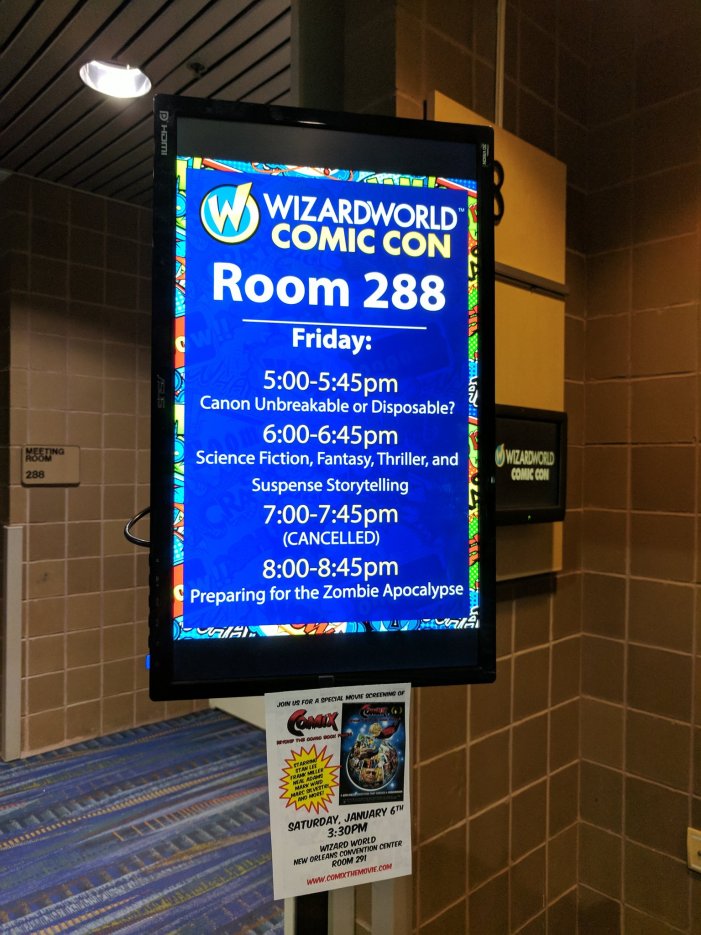
Anyway, Comic Con was very fun yesterday.
DS0NZsWW0AAhYQ4

And this was lovely:

DSz8qtXWkAAKhrF

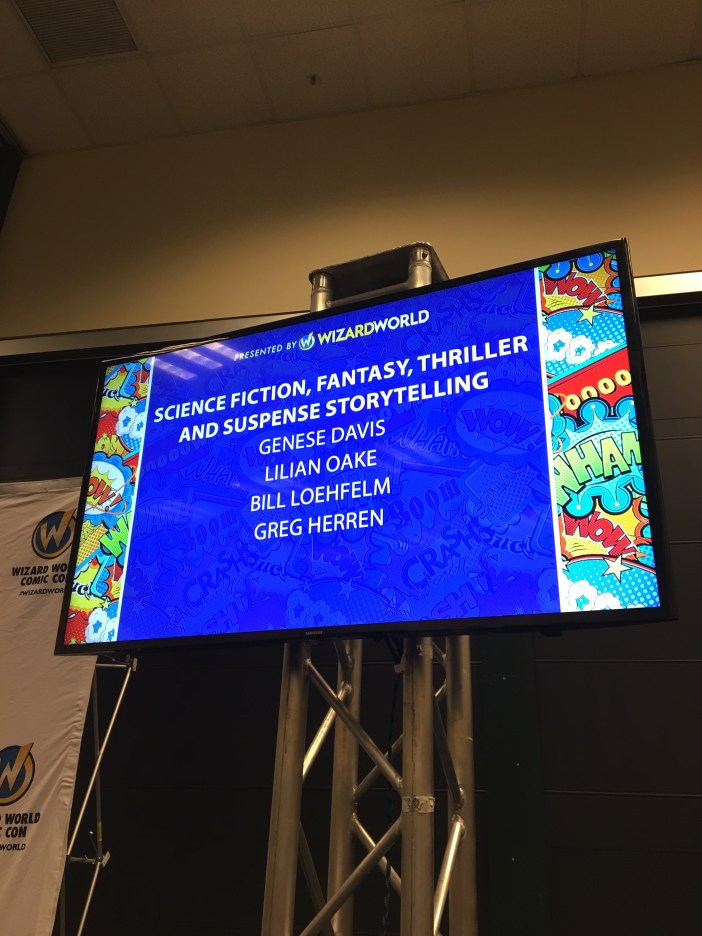
And instead of name plates, they had a MARQUEE:
IMG_3550

How lovely to have one’s name up in lights, as it were!
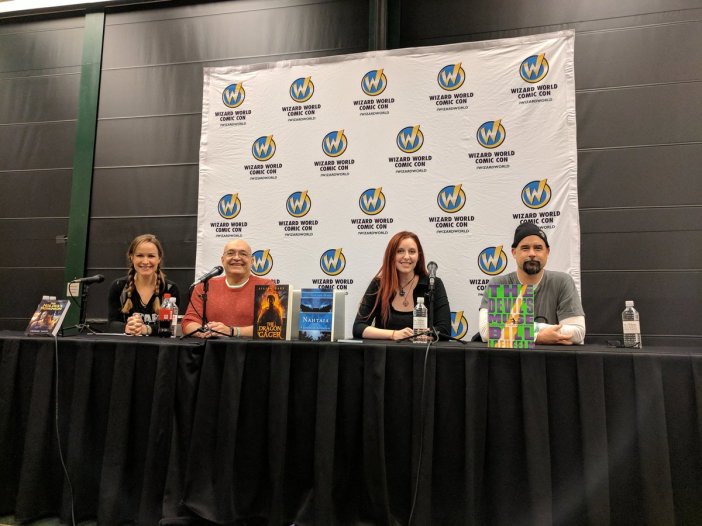
DS3p5WqX0AIKPpS

It was a great panel, lots of great questions from the audience, and some great discussion and tips and hints about writing.

Then I walked home, and watched the live stream of the US Figure Skating National Championships, which reminded me that I had an idea for a figure skating noir, and even started writing the first scene in the book, so here’s yet another fragment for you:

The move is called a charlotte.

The move is not considered masculine so his coach will not let him do it in a program. But he’s proud that he has the flexibility to do it, and he always gets to the rink early so he can practice the moves he will never be allowed to do until he lets his Olympic eligibility go and scoring no longer matters.

Men don’t do spirals.

He reaches the end of the ice and goes into a curved turn, going to the inside edge and letting centrifugal force pull him back around so that he’s facing the other end of the ice. He turns and glides backward. He brings his arms together, crossing them at the wrists in front of his chest and explodes them out in a straight line at his sides at ninety degree angles. With his chest puffed out he bends at the waist, raising the left leg up, perfectly straight, the toes pointed as he brings his chest down to his right knee, grabbing the right ankle with both hands as he continues to glide toward the other end of the rink, his left leg raised in a perfect split, feeling the stretch in his groin and his hamstring. The stretch feels good and he works to catch his breath, his heart still thudding in his chest and his ears, the cold emanating from the ice slapping his cheeks, a drop of mucus hanging from the end of his nose as the slide slows.

When he is almost to the other end of the rink he pushes with his hands off from the ankle, bringing the back leg down and tapping the toepick on the ice, digging it in and launching himself up into the air, pulling his arms back in and together as he spins neatly in the air, ankles crossed and counting.

One….two…three.

After the third revolution he releases the tight arms, exploding them out at ninety degree angles to the side as his right foot comes down and his left leg goes backward. The blade of his right skate lands off balance, on the inside edge and hits a groove in the ice. There’s no way to save the landing. His ankle gives under the pressure of the force and he falls.

This is going to hurt.

Is all he has time to think before he hits the wet, glistening ice. He lands hard, chest first followed by the rest of his torso and his legs tangle. The impact forces all of his air out of his lungs and the thud sends jolts of pain, dull agonizing pain, through his ribs and he gasps for air as he spins on the ice, out of control and unable to stop himself until his crashes into the boards with his right side and bounces back off out onto the ice, finally coming to a stop with stars dancing in front of his eyes and his lungs gasping to take in the icy cold air. He lies there for what seems an eternity, the wet ice soaking through the sweatshirt he is wearing, his ribs aching, his legs screaming in pain from the lactic acid burning through the muscle fibers. He lies there, knowing he needs to get up and start moving before the muscles seize and tighten, knowing he needs to get back up on the blades and build up speed and try the lutz again, it has been drilled into his head so many times to get back up and skate, when you fall you have to get up and try the jump again and keep trying until you land it, otherwise you’ll become afraid and will never be able to land it, you have to be fearless, get up, get up, get up….

But sometimes he wanted to never get up. Sometimes he wanted to just crawl over to the opening, take off his skates and grab his bag and put on his shoes and walk out of the rink never to come back.

He gets up, his breathing still labored, his legs still aching. He starts doing crossovers, even though his legs are shaking, and he picks up speed, going faster and faster and it feels like he is flying…flying…and nothing will ever bring him down.

A little rough, but not bad.

And here’s Guillaume Cizeron, the sexy French ice dancer, for your Saturday viewing pleasure:

13187978_486739044862306_934340098_n

They Don’t Know

Friday, and this afternoon I am paneling (well, I guess it’s more of an early evening panel, really) at Comic Con, and that should be a lot of fun.

My Short Story challenge has not gotten off to the best start; here it is the fifth day of January already and I have only just now managed to finish reading one story; it’s shameful, I know. But I got out my enormous volume The Best American Noir of the 20th Century, and dutifully read the first story, from 1923 (!). 1923! Who knew noir went back so far? Much as I love noir, and as often as I think about it–I really should do a lengthy study of noir, both print and film–I don’t know much about its history; seeing that stories defined as noir were being published as far back as 1923 was a bit of a surprise for me; I guess I just always assumed noir fiction was something that came about in the late 1930’s, and was primarily pioneered by the great James M. Cain.

Shows you how little I know.

But I love noir; I am more drawn to it than actual more traditional crime fiction, to be honest. Most of my short fiction would be classified more readily as noir rather than as crime; as I have said before, I like to write about damaged people, and the stories of damaged people are more prone to wind up categorized as noir. I am currently in the midst of writing two stories that are noir–more details on them both when they become available–but I am very excited about both of them.

But I read this amazing story, “Spurs” by Tod Robbins, which is the opening story in the Best American Noir omnibus.

Jacques Courbe was a romanticist. He measured only twenty-eight inches from the soles of his diminutive feet to the crown of his head; but there were times, as he rode into the arena on his gallant charger, St. Eustache. when he felt himself a doughty knight of old about to do battle for his lady.

What matter that St. Eustache was not a gallant charger except in his master’s imagination–not even a pony, indeed, but a large dog of a nondescript breed, with the long snout and upstanding aura of a wolf? What matter that M. Courbe’s entrance was invariably greeted with shouts of derisive laughter and bombardments of banana skins and orange peel? What matter that he had no lady, and that his daring deeds were severely curtailed to a mimicry of the bareback riders who preceded him? What mattered all these things  to the tiny man who lived in dreams, and who resolutely closed his shoe button eyes to the drab realities of life?

I’m not sure that I would call this story noir in the classic sense; but who am I to argue with James Ellroy or Otto Penzler? The story, which is centered around the performers in a French traveling circus, is reminiscent both of American Horror Story: Freakshow and of course, the classic film Freaks, and, as it turns out, the film was based on the short story. Courbe has inherited money and an estate; he has fallen in love with one of the bareback riders, a large strong woman who agreed to marry him for his money; despite being in love with another one of the bareback riders–she is marrying him for his money, of course, and assuming he won’t live long; if he does live longer than is convenient, she will poison him, and she and her true love with live happily ever after on the little man’s money. But despite the same set-up, the film deviated from the story from the wedding onward; the story isn’t quite as dark as the film (seriously, what could be?) but it’s plenty dark and plenty creepy; and an excellent way for me to kick off short story month.

And now tis back to the spice mines with me; here is a hunk to ease you into your weekend.

IMG_1967

Adult Education

Thursday, and I am sitting in the kitchen shivering just a little bit. Of course, the ‘bomb cyclone’ or whatever it is they are calling it is pounding the eastern seaboard, and we have a bright sunny (if chilly) day here, so I am going to count my blessings rather than complain about how cold it is in my kitchen this morning. I have a space heater, a wool blanket, and coffee. Things could be so much worse, seriously.

Comic Con kicks off tomorrow, which will mean me rushing home from the main office so I can walk to the convention center in time to check in, get my badge, and head up to where my panel is. I don’t have to be there on Saturday, so I can use that day to run errands and do chores around the house as well as get some writing and editing done (also, US National Figure Skating championships are this weekend; we watched the ladies’ short program live last night on the NBC SN app on the Apple TV), and spend Sunday, when I am not at Comic Con, relaxing and trying to get some odds and ends finished.

My mind has been incredibly creative lately, which is not only an interesting thing–it feels like it’s been a long time–but I also find my mind wandering over to some projects that I started and never finished. Sometimes I get an idea for a book or a story, complete with an opening so strong and vivid that  I have to write it down or fear it will be lost forever.

Like this one, the opening for a high school noir about a twisted mother-daughter relationship:

Razor blades look so innocent, really. Clean, precise, glittery silver, utilitarian and oh so useful, so useful they’re tucked away inside a vanity drawer close to the sink basin in everyone’s bathroom. There were so many uses for a razor blade. They cleanly scrape glue left behind when pulling tape off glass, for one thing, and of course a razor will cut that pesky unwanted hair away from skin. How many times had she sat in this bathroom, in this bathtub, using a razor without a second thought? Soaping up her legs, pulling the razor along in a long steady motion, her mind a million miles away but careful, always careful, to make sure she didn’t press too hard so that skin would be cut away along with the blonde hairs? She always put her phone into the iHome on the counter and would hum along with Katie Perry and Taylor Swift and One Direction, it made the effort of shaving her tanned legs so the skin would be silky smooth to the touch go so much faster.

These were safety blades. Safety meant there was a metal cap opposite the sharp side so it could be handled without danger of cutting skin. It seemed crazy, a stupid obeisance to some past lawsuit where someone was too stupid to understand how carefully a razor had to be handled was rewarded by a jury with millions. Flesh is delicate and tears so easily, after all, and once it’s torn, the blood flows so dark and richly red.

She wipes steam off the mirror so she can see herself, distorted, through the moisture on the glass. Distorted. Always distorted. She takes the safety blade and sets it on the side of the white bathtub, the emerald green shower curtain pulled to the side. Steam curls off the top of the water. She drops the robe and steps into the hot water, flinching against the heat against her skin as pores pop open and sweat forms under her arms and above her lip. She pulls the long blonde hair back, securing at the nape of her neck with a pink scrunchie. She lowers herself into the water, bracing herself against the shock. Down into the water she goes until all that is left above the surface is her neck, her head.

 Her lip trembles.

I don’t appreciate your guilt-tripping me. It’s over. His voice echoes in her head.

What the hell is wrong with you? Her father’s voice, screaming at her.

No one likes you because you’re such a bitch. Her former best friend.

A single tear dribbles from the corner of her right eye.

Her nose starts to run.

She picks up the razor blade and presses it to the inside of her left arm.

Next time remember to cut up, not across. Her mother’s voice, always sneering, dripping with contempt.

Always her mother, always.

She presses down and gasps at the unexpected pain, unexpected because she didn’t think she could actually feel anything anymore.

Up, not across.

She drags the blade up towards the crease of her arm.

Blood, not bright but rich and dark.

 It runs down and drips into the water, diffusing and spreading.

The blade goes into the other hand. Presses against the right wrist.

Up, not across.

Finished, she drops the blade into the soap dish.

 She closes her eyes and waits for death.

Creepy, right?

Here’s a hunk for you as I go back to the spice mines.

tumblr_ohjry2OWkv1r5xfbxo7_400


Lucky Star

New Year’s Eve, a time to look back on the past year and reflect on goals either achieved or missed; to look at what was accomplished and what wasn’t, to think about and make plans for the future year.

So, what kind of year was 2017? I didn’t achieve many, if any, of the goals I set for myself at the beginning of the year. I intended to write more short stories (which I sort of did) and publish more short stories (which I didn’t really do); I intended to start my search for an agent (which I did); but I didn’t seem to get much else done. I didn’t start working out more, but I did lose weight–so that one’s kind of a toss-up; I weigh 15 pounds less than I did a year ago. I did buy a new car, which was also a goal, and I’ve not regretted it once, despite the impact on my finances. I also didn’t write nearly as much this year as I had hoped/wanted to; there were no new novels published under my name this year; which is the first time I think that’s happened since 2005. That doesn’t bother me nearly as much as it did in 2005, to be honest; my self-worth and identity as an author apparently no longer requires me to write and publish at the insane pace that I used to keep.

I read a lot of good books in 2017, discovered a lot of great new-to-me writers, watched some amazing television shows and movies, but creatively I spent most of the year in stasis; just kind of getting through the day every day and then watching as those days turned into weeks and then months. I started a number of short stories that I either didn’t finish, or finished but didn’t know how to fix. The WIP, the manuscript I am shopping to agents, needs some more work. I had started sending it out in the fall, but I am going to hold back on it for a few more months as I revise and polish it some more. I always felt it was missing something, even though I thought it was a good manuscript, and I’ve recently figured out what that something is; and I’ve also realized part of the problem I had with the manuscript and fixing it has to do with my own stubbornness. It’s starting point needs to be before where I start the book; I flash back to the beginning of the story and that kind of is not only a cliche but also steps on the action. Also, where I start the book itself is kind of hackneyed and cliched. There’s another subplot or two that needs to be woven into the story, and I  need to develop my main character more; and there are things about him that know that are kind of crucial to the story that don’t actually appear in the story, and some of the relationships between the characters need to be developed and deepened, more layered. It’s a very basic story right now, and it needs to be more complex; and it needs to go deeper into its theme.

So, that’s something, at any rate.

I also had a good year in that I was nominated for a Macavity Award (Best Short Story, “Survivor’s Guilt”) and an Anthony Award (Best Anthology, Blood on the Bayou). Both were completely unexpected surprises, and enormously gratifying.  As Constant Reader knows, I struggle with short stories and have very little to no self-confidence when it comes to them. So, to get nominated for a Macavity Award for a short story I wrote? That was probably one of the most meaningful things to happen to me in my career thus far. And I was nominated against some amazing writers–I read all the stories–and wasn’t in the least surprised when Art Taylor won; any of the other nominated stories were award-worthy. It was such an honor.

I was so certain I wasn’t going to win the Anthony Award that Paul and I booked our plane tickets home from Toronto for Sunday morning; I was boarding my flight to New Orleans when I started getting texts and tweets and Facebook messages that I’d won. It, too, was an incredibly lovely surprise, and I was extremely happy for the contributors, and thankful to them for their amazing stories.

I also realized this year that something I used to do when I was writing–something that was highly effective, and I don’t know why I stopped doing it–was write about whatever I was working on in long-hand in notebooks. I started doing that again this year, in these last few months–and it proved incredibly helpful with a couple of things I was working on at the time. So, I am going to make that a goal for the new year; to return to buying a blank book to carry around with me at all times, to use for notes and questions I have for myself, for developing characters and things. I think I stopped using the blank books because I started keeping physical files, and it was easier to use a spiral notebook for notes that could be removed and put in the files. There’s no reason I can’t stop doing that, either; but the point is that I need to start doing things like that in long-hand again. It was an excellent way of brainstorming and free-associating that I’ve sadly gotten away from over the years.

Despite getting off to a rough start, LSU also had a great season, one with lots of highlights and excitement, and wound up 9-3 on the year, with a chance for a ten-win season with a bowl win. The future also looks fairly bright for the Tigers going forward; the Saints are also having a great season. Back in September this football season was looking really bleak; who could have foreseen that both of our teams would have such a remarkable turnaround?

I had a lot of fun this past year. Last January I did two library events in Alabama, which were way fun, and was invited back again this year; I also spoke at an event at the University of Mississippi as well as at the Alabama Book Festival (both events were in teh same week, so I was driving around the deep South quite a bit then), and of course, Bouchercon in Toronto was a lot of fun. I’m looking forward to this year’s event in St. Petersburg, and I am also looking forward to a trip to England this spring.

We’re having lunch later at Commander’s Palace; our annual New Year’s Eve meal with Jean and Gillian, which is always a lovely way to ring out the old year. I’ve started reading John Hart’s Redemption Road–I greatly enjoyed his The Last Child and Iron House, so am greatly looking forward to this one. Next weekend I am appearing at Comic Con at the Convention Center every day; that should also be a lot of fun.

And so, I should get some things done before it’s time to go to lunch. The spice mines are always calling me, so here’s one last hunk for 2017, Constant Reader, and have a lovely and safe and happy new year.

IMG_1911

You Might Think

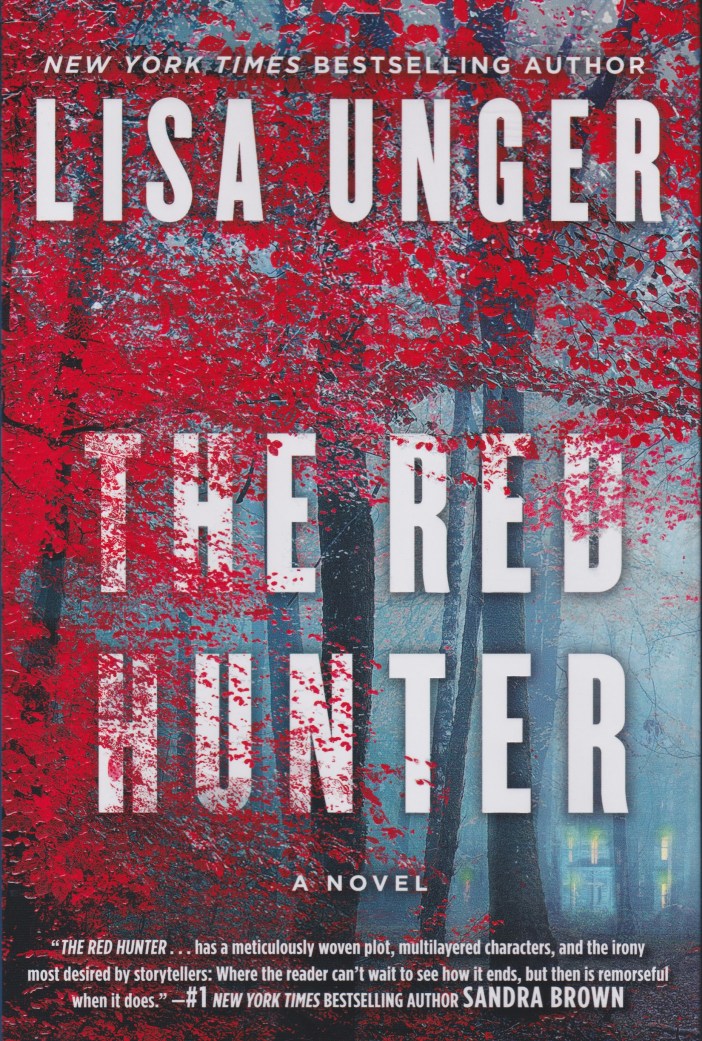
Friday night I finished reading Lisa Unger’s exceptional The Red Hunter. I don’t remember who originally told me to read Lisa Unger’s work, but whoever it was, I really need to say thank you again! She is an exceptionally terrific writer, and as I make my way through her canon, it is startling how fresh, new and completely original every single volume is.

Take The Red Hunter, for example, her April 2017 release. Unger’s books are always about the damage humans do to each other, and how that damage and/or abuse creates ripples that eventually become waves that affect the present, and the necessity of coming to terms with that past in order to solve the problems of the present. The Red Hunter is, at it’s core, the story of a house in rural New Jersey; an old derelict place that is falling to pieces. Claudia, a publishing executive whose personal life is in shambles, decides to renovate the house as a project and blog about it, moving into it with her daughter, Raven. But the house has some terrible secrets.

the red hunter

There’s nothing about me that you would ever notice. I am neither especially thin, nor overweight. My face will not be one you remember. With dark eyes and pale skin, hair the color of straw, cheeks round and just rosy enough that you won’t wonder if I’m ill, I will blend into the sea of other plain faces you saw before and after as you went about your day. nothing about my clothes will capture your notice. No brands that incite jealousy, or anything revealing, no stains, maybe just wrinkled or worn enough that you’ll dismiss me as someone without much money, though not poor enough to be in need. If I’m wearing a uniform, I don’t even exist. I am the checkout girl at the grocery store, or the maid that cleans your hotel room, the girl woh answered the phone, or the young lady at the information desk. No, you would say later, you can’t recall her name or what she looked like, not really. The truth is you don’t see me; your eyes glance over me, never coming to rest. But I see you.

This is Zoey Drake, one of Unger’s point of view characters. Zoey is a young college student at NYU, who studies martial arts and works in a coffee shop; she house and cat sits for a place to stay. Zoey sees herself as the Red Hunter, a vigilante/Batman of sorts, who stops crimes from happening when she comes across them and always dresses nondescriptly; she is trying to right a cosmic wrong. When she was a young girl, her parents were brutally murdered in front of her, and she too was injured and left for dead; she survived that horrible night, but has always been looking, ever since, for answers to the question of who murdered her parents and why.

Claudia herself is surviving a brutal attack; she was assaulted and raped brutally years earlier, which wound up damaging her and her own marriage in ways she couldn’t even comprehend at the time. There has always been a question as to whether her daughter, Raven, is her husband’s or her rapist’s. This is part of the reason why Claudia has brought Raven the old house in the New Jersey countryside; she is trying to rebuild the house and their lives at the same time. Raven has her own curiosity about the question of her paternity.

Their lives are destined to cross because of the house; you see, the house is where Zoey lived with her parents and where they died in front of her. The killers were looking for something in the house that has never been found…and Zoey’s actions have set everything into motion again so that the tangled skeins of their livers are going to cross again as the mystery of how and why what happened when she was a little girl rears its ugly head again, and now all of them are in terrible, deadly danger.

Wow. This book is a thrill-ride from start to finish; fully developed characters that you care about, a fascinating unfolding of a crime with twists and turns that keep the reader balanced firmly on the edge of their seat.

Seriously, if you aren’t reading Lisa Unger, what the hell is wrong with you?

If This Is It

Sue Grafton died this week.

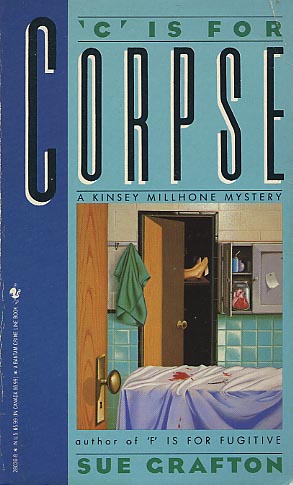
Bookstop in Houston, the late 1980’s. I hadn’t read mysteries in years, abandoning the genre in the late 1970’s because I was tired of the straight white male point of view, and I wasn’t really aware there was any other, to be honest. I’d always loved the genre; as a kid I read every mystery I could get my hands on, from Mary C. Jane’s books for kids to the Hardy Boys to Nancy Drew to Trixie Belden to The Three Investigators. I read all of Agatha Christie and Ellery Queen. I was a huge fan of the Gothic suspense writers, Phyllis A. Whitney and Victoria Holt and Mary Stewart. I read Charlotte Armstrong. But once that store of writers and their works had been exhausted, I tried reading the male voice…and didn’t care for it. I couldn’t quite put my finger on what the problem was, but they weren’t anything I could enjoy. So I moved away from the genre, reading family sagas and romance novels and science fiction and horror and fantasy; literary fiction and historicals; I’ve always read, and I always will. But I remember stopping at the Book Stop in Houston on pay day–I always went to a bookstore on pay day–and they had a little glossy magazine about new books and writers they always put in the bag. The cover story was an interview with a writer I’d never heard of, and about her new book, D is for Deadbeat.  “Wow,” I thought as I read it, “a woman private eye? This sounds interesting.” So on my next pay day I bought the first four books in the series: A is for Alibi, B is for Burglar, C is for Corpse, and D is for Deadbeat.  I enjoyed the first two, and they got me thinking about my own plans about being a writer. (I’d given up the idea of being a crime writer–which was my first inclination–when I lost interest in the genre in the late 1970’s.) And then I read C, which to this day remains my favorite of the entire series. I was hooked, sold, and a Grafton fan for life.

And I realized that despite some of the criticism she received (misogynistic at its heart; male critics dismissing Kinsey as “a man in a skirt,’ which was such utter bullshit I couldn’t believe a paid critic could be that ignorant and obtuse–now, of course, I can readily believe it), she had really reinvented the form; by creating a tough, loner female private eye she had forever changed the form and recreated it. And made me realize, hey, if someone can write a series about a female private eye, why can’t I write a series about a gay one? 

She made me realize that anything was possible in the form; if you only had the courage to shatter the mold and recast it.

Reading Grafton led me to the other great women writers–Sara Paretsky, Marcia Muller–and the ones who came in their wake: Lia Matera, S. J. Rozan, Laura Lippman, Megan Abbott, and so many others. And I grew to love the genre again,  and realized that it was what I was meant to do myself.

I had the great good fortune to meet her here in New Orleans at a party given in her honor; I don’t recall why she was in town, I know she came to the Williams Festival one year and I got all of my books signed. But she made time for a conversation for everyone at the party, was gracious and friendly and kind. I don’t remember what we talked about–I was too in awe and tongue-tied to be anything other than a blithering idiot, so I mostly stuck to  innocuous party conversation, but I remember she was very kind, had a wonderful warm smile. and an infectious, joyous laugh.

I started buying the books in hardcover around I; I am woefully behind on the series, and now there won’t be another to come; the series ended before she reached Z, only falling one short; if I am not mistaken, I have W, X, and left.

Thanks for all the years of great reading, and inspiration.

RIP, Sue.

0553280368


Let the Music Play

I had already decided to make January a theme month on the blog, and to once again make it Short Story Month, with the goal to read a short story every day. As such, I was looking around the shelves of the Lost Apartment for anthologies and single-author collections, and it occurred to me that I have a book at the office that would be absolutely pitch-perfect for this: The Best American Noir of the 20th Century, edited by James Ellroy and Otto Penzler. It’s a gorgeous volume; absolutely beautiful, and it’s also signed by Otto. I must have picked it up one year at the MWA Board event at the Mysterious Bookshop. But it literally is a time capsule of great noir stories, going back to 1923, and what better education in not only short stories, but noir, than to read this marvelous collection, one story at a time, day by day?

I’ve also ordered Lawrence Block’s latest anthology of crime stories inspired by pictures, Alive in Shape and Color.  I may have to extend Short Story Month to Short Story Quarter, and read a story a day until April. Which really isn’t a bad idea, frankly. This is also the period where I’ll be putting together Sunny Places Shady People, the St. Petersburg Bouchercon anthology, so reading short stories should be a priority, don’t you think?

I certainly do.

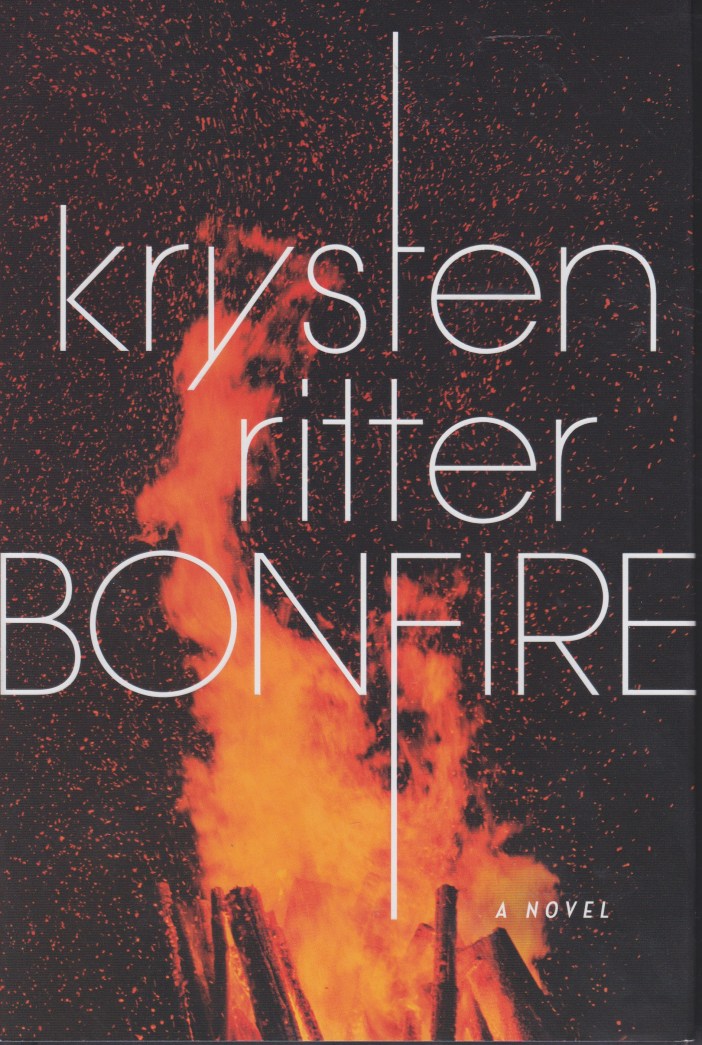
I also finished reading Krysten Ritter’s Bonfire last night–Paul was at a play.

bonfire'.jpeg

 State Highway 59 becomes Plantation Road two miles after the exit for Barrens. The old wooden sign is easy to miss, even among the colorless surroundings. For years now, on road trips from Chicago to New York, I’ve been able to pass on by without any anxiety. Hold my breath, count to five. Exhale. Leave Barrens safely behind, no old shadows running out of the dark woods to strangle me.

That’s a game I used to play as a kid. Whenever I would get scared or have to go down to the old backyard shed in the dark, as long as I held my breath, no monsters or ax murderers or deformed figures from horror movies would be able to get me. I would hold my breath and run full speed until my lungs were bursting and I was safe in the house with the door closed behind me. I even taught Kaycee this game back when we were kids, before we started hating each other.

It’s embarrassing, but I still do it. And the thing is, it works.

Most of the time.

Alone, locked in a gas station bathroom, I scrub my hands until the skin cracks and a tiny trickle of blood runs down the drain. It’s the third time I’ve washed my hands since I crossed the border into Indiana. In the dinged mirror over the sink, my face looks pale and warped, and the memories of Barrens bloom again like toxic flowers.

This was a bad idea.

The trauma that is high school is something that many of us apparently never get over, and it’s certainly becoming a crime fiction trope. But this isn’t a bad thing. As I said, almost all of us have traumatic memories of high school, and therefore can relate to the characters and the stories in these types of books. Hell, I’ve drawn from my own high school traumas enough times in my own work to recognize it as a trope of my own (Sara, Lake Thirteen, and both Chanse and Scotty have moments of reflection on their own past that are directly drawn from mine).

Bonfire is a compelling read, and very well written. Abby Williams, our main character who is telling the story in a first-person point of view, fled her hometown of Barrens after a traumatic childhood that included the painful death of her mother from cancer, her father’s religious mania and the resultant brutal parenting that came from it, being not popular, and having her best, childhood friend, Kaycee Mitchell, turn on her and terrorize her with a group of mean girl new friends. But towards the end of their senior year, Kaycee and her friends all became ill–with very odd and strange symptoms. It turned out they were faking it, and Kaycee disappeared. Now, there are some complaints about the factory near town, Optimal Plastics, that has revitalized the dying town but may possibly be poisoning it. Abby, now an environmental lawyer for a non-profit firm that handles such cases, is leading the investigative team and thus has to come back to Barrens to not only run this investigation but deal with her own demons. But are her theories and investigation tainted by her past, and her relationships with people from when she as a child? And why is she so obsessed with the missing Kaycee–whatever happened to her? Was she really faking it, or were the girls really sick? And what the hell is going on in Barrens?

Obviously, the sickness of the girls reminded me a lot of Megan Abbott’s brilliant The Fever from a few years ago; which was based on an actual case. And Ritter’s debut novel is crisply written, with a powerful sense of scene, character and plot that continues to build until it comes to its conclusion. I really enjoyed the book tremendously, and resented not having the time to actually sit down and read it through; I did manage to do so last night while Paul was at a play. It’s probably one of my favorite reads from the year, and I highly recommend it. Well done, Ms. Ritter.

And now back to the spice mines.

Automatic

Friday morning, and the temperature has dropped yet again. I have to work tomorrow and am going to a Christmas party; Sunday we have tickets for The Last Jedi (woo-hoo!) so my weekend card is pretty full. But next weekend is a four day weekend due to the holiday, which is lovely.

I managed to get a second draft of one story done yesterday, as well as getting about halfway through a rewrite of another. I am very pleased with both; once finished with the other second draft I am going to let them sit until next weekend. I am most pleased with myself. I am also about half-way finished with Krysten Ritter’s Bonfire, am still enjoying it, and will most likely finish it this evening–Paul is going to see a play. Today is also my short work day, so I’ll have time to get some cleaning and so forth done this afternoon, and then will undoubtedly curl up in my easy chair to finish reading the book. I am torn as to what to read next; I’ve got four Louise Penny novels in my TBR pile, but am leaning towards either a Daniel Palmer or perhaps something more y/a-ish; No Saints in Kansas or The Truth About Alice or Reality Boy. I’ll undoubtedly decide once I am done with the Ritter. I also have a lot of filing to do, as always.

I also am toying with a y/a idea; I’ve already started writing out ideas and plans for it; it’s working title is Bury Me in Satin, which I really like, but I don’t know why I am wasting time on it when I have to overhaul the Scotty as well as the WIP.

Heavy sigh.

All right, I need to get ready for work. Sorry this is so short, but hey, it’s Friday.

ef990a3327c8c611b21c1f204a9be3e2-1510778174-1510778175


The Warrior

Wednesday, and I finished the first draft of my short story yesterday. It’s quite dark, and I quite love it, but it needs some serious polishing and editing. I changed my mind about the ending while i was writing it, you see, and that changes some things back at the beginning. I want to have that finished by the end of the weekend, as well as another story I’ve worked on recently. Huzzah!

I am also thoroughly enjoying Krysten Ritter’s Bonfire. I do highly recommend it, even though I am not even halfway finished with it, it’s that engaging. Sure, the plot could go off the rails, but I rather like the main character and the story she is telling–both the crime itself as well as the main character’s story in confronting her past–is quite enjoyable.

This weekend, I have to work Saturday and we are going to a Christmas party that evening; Sunday we have tickets for The Last Jedi and I am very excited. I’m a huge Star Wars fan, of course, and I wisely chose to buy tickets in IMAX during the Saints game, so I am assuming the theater won’t be full. Hoping, at any rate, and since we live close to the Superdome the traffic will be going the other way in both instances as we head out to Harahan to see the movie. It’s a much more busy weekend for me than I would ordinarily prefer, but the next weekend is a four day weekend for Christmas and of course, the next is the three day weekend for New Year’s. So…not really having a full day at home this weekend isn’t going to be nearly as traumatizing as it could be.

Anyway, I am really happy with my story. I was asked to write a story for an anthology of crime stories inspired by the work of Joni Mitchell, and when I chose my song, read the lyrics and listened to it again, I really went down a rabbit hole and man, did it ever get dark. Really dark. But what was also fun about it was having to research malls in the early 1990’s; research can be a bit of a drag sometimes, but for me, most of the time it’s so much fun because it triggers a lot of memories, or inspires me even more if it’s from before my time. (note to self: do some research on Washington DC in the early 1950’s; I’ve written a story set during that time but I’ve never done the back-up research, which could be incredibly fun.) Usually, when I write a story that’s set during a time I lived through, I depend on my memory–which ain’t what it used to be, but priming the pump by looking up things on-line triggered memories; memories of stores and displays, the way malls smelled, the parking lots and so forth.

And on that note, ’tis back to the spice mines.

Calvin-Klein-1980

The Warrior

Yesterday I wrote approximately 3300 words of a short story that is due by the end of the month, and I am rather pleased with how it’s going, if I might be so bold. It flowed rather easily from my keyboard also; I’m hoping that mojo will still be there as I try to finish the draft today. It’s dark–when are my stories anything but dark, really–but I am very happy it’s getting close to completion in this draft. I would love to have it finished so I can spend my weekend revising and editing this and another short story I finished in a first draft recently.

I also mapped out a young adult novel over the weekend I’ve been wanting to write for years. I originally wrote it as a short story back in the 1980’s, calling it “Ruins”; I’ve always thought it would make a really good y/a novel if I could figure out how to deal with some societal and cultural issues with it which really couldn’t be ignored. And then I realized, this weekend, that the best way to deal with them is to face them head on. It will get criticized, of course, and I may even get called out, but you can’t not write something because you’re afraid of repercussions, can you? And hope that good discussion comes from it.

Then again, it could just come and go without notice. That happens, too.

This year has mostly been, for me at least, a struggle to write. I’m not sure what has caused this for me; the year had some remarkable highs–the Macavity Award nomination; the Anthony Award win–but for the most part it’s been a struggle with self-doubt and it’s horrible twin sister, depression. I don’t know why this happens to me; I always find that writing–even if I have to force myself to do it–always makes me feel better, even if the work isn’t going particularly well. Sinking my teeth into a story, feeling the characters come to life in my mind and through my keyboard, always seems to make me feel better. I also can use the writing as a way to channel things that upset or bother me; writing is an excellent way to channel anger and rage and heartbreak and every other emotion under the sun. But as this bedeviled year draws to a close, I am feeling creative and productive again; and most importantly, driven.

Then again, tomorrow I could feel like crap and be all ‘why bother’ again.

This is why writers drink.

I’m also really enjoying Krysten Ritter’s Bonfire, even as it is reminding me of Megan Abbott’s The Fever. There are some similarities; although in Abbott’s novel the mysterious illness in the girls is current and in Ritter’s it’s in the past. But it’s very wwell written, and there is some diversity of representation in her characters. It also reminds me a little of Lori Rader-Day’s Little Pretty Things, with it’s small town Indiana setting and it’s strange story from the past. (If you’ve not read Abbott or Rader-Day, buy their books NOW. You’re in for a magnificent treat!) The book also makes me think of my own Kansas past…and book ideas I have that mine that past. Reading good books always inspires me…and that really is the ultimate compliment I can give Ritter’s book. It’s inspiring me.

And that’s terrific.

And now, back to the spice mines.

Patrick-McGrath-90s-Inspired-Shoot-005