Stay in My Corner

We binged the Netflix series Dear White People last night, and got so involved we couldn’t stop watching; it was one of those shows where you say “oh, just one more won’t hurt” and then it’s over and you’re saying it again and then “well, there’s only ONE left” and then it’s over and you just sit back and think, “wow.” Full realized characters, incredible acting, and the writing? Stellar. Again, it was told from almost everyone’s point of view, so you got to know everyone and their backstories, especially with each other. It was funny, provocative, timely, and diverse. Obviously, my favorite character was the young gay writer, coming to terms with his enormous crush on his hot but straight roommate, trying to figure out who he is while navigating the murky waters of a college campus and institutionalized racism–but no one had an issue with his sexuality. His also gay editor at the independent campus paper got off a line that has me still laughing–and it was repeated by another character in the same episode: “Labels are what keep people in Florida from drinking Windex.”

I finished reading a book yesterday, started a couple more and put them in the donation pile after a couple of chapters, and really was at a loss for what to read next; and finally settled on Victor Gischler’s The Pistol Poets. I did a panel with him years and years ago at the Louisiana Book Festival–really liked him, thought he was smart and funny and engaging–and then read his book Gun Monkeys, which I also enjoyed, and always meant to get more of his books. Sometime last year something reminded me of him, and I finally got some more of them. It has a great opening, and I am looking forward to spending some time with it today, as well as some cleaning, writing, and editing.

The other day, I wrote about the character of Jerry Manning, who appears in Garden District Gothic, and how much I liked the character. I also used him as a character in The Orion Mask–which I had somehow forgotten–and in fact, Jerry is the catalyst for that entire book. I had already created the character of Jerry for the Paige book I’d intended to write, and I liked him so much I actually introduced him to readers in The Orion Mask.
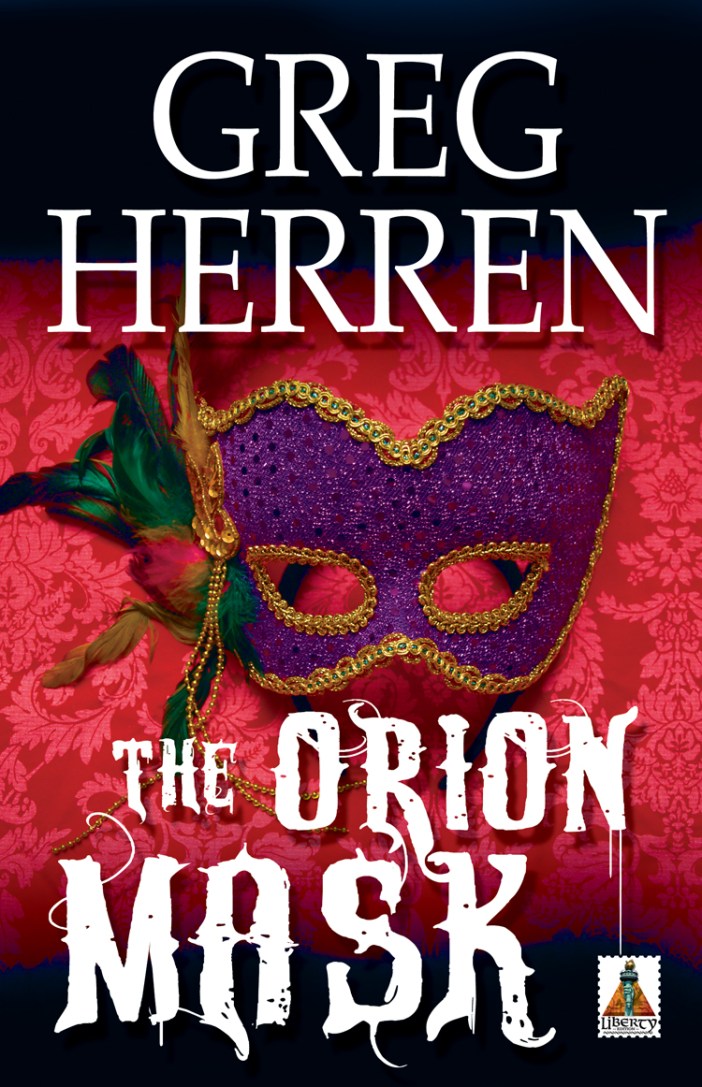
The Orion Mask 300 DPI

I had the idea for that book a long time ago; I’d always loved the romantic suspense novels of Phyllis A. Whitney, Victoria Holt, and Mary Stewart (although I would argue that she wasn’t a romantic suspense writer, simply marketed as one), and of course, Daphne du Maurier’s Rebecca is one of my favorite novels of all time. One of the reasons I loved that style of book so much is because they were not only mysteries, but there was a Gothic feel to them, stylistically and mood-wise, and I always wanted to write one. (I had already published what is my personal favorite of all my novels, Timothy, and really wanted to go back to that well again.) I originally came up with the idea for The Orion Mask many years ago; when I came to New Orleans for Mardi Gras the first time in 1995, only in all my notes and so forth it was called The Orpheus Mask;  the driving idea was a murder that happened a long time ago, and rare, valuable Mardi Gras masks had something to do with the crime. After moving to New Orleans and becoming more knowledgeable about the city and its history, I realized the Krewe of Orpheus was actually too new–plus, I couldn’t really use an actual Mardi Gras krewe. I still wanted to do the book, though, just wasn’t sure how to make it all work. I also knew it had to take place outside of New Orleans; for the story to work, the majority of the action needed to occur at a mansion in the countryside.

Fortunately, there are plenty of those. I was already using one for Murder in the Arts District, that was based on a sort of hybrid of Houmas House and Oak Alley, and thought, oh, what the hell, I’ll just use the same place for this book, too. It is fiction, after all. I’d created a fictional parish as well–Redemption Parish–for that first book, and had based a small town near the plantation on Breaux Bridge, just off I-10 between Baton Rouge and Lafayette that I’d visited with some friends from out of town years ago, but the town never really appeared in that story, so I could really use it for this book. But I still didn’t know how to connect the masks in…and then we went to Italy, and while we were there we went to Venice, and you cannot escape the Carnival masks or the Murano glass there. As we walked the cobbled alleys of that remarkably beautiful city (I so want to go back), it hit me in a flash: someone from Venice who worked with the glass came to America, to Louisiana, and the plantation not only was a farm but also produced glass, using the same techniques made famous by the Venetians, and they could have produced masks for the Kings of the major krewes of Mardi Gras made from the glass. I invented my own, now-defunct krewe–the Krewe of Orion–and everything fell into place.

My story, of course, which was about a young man whose mother died when he was very young, and who was raised by his father and stepmother, completely disconnected from his mother’s family and only comes to see them as an adult, which starts the story, didn’t really have the right hook I needed to get started. Why would he suddenly, after all these years, finally get in touch with his mother’s family?

And that’s where Jerry came in. Jerry, looking for another true crime to write another one of his books, has discovered the murder/suicide involving my character’s mother. I named the character Heath Brandon, after a friend of mine, by inverting his first and middle names (I’d actually given a character his actual name before we met; it was very odd because his name was so familiar to me when we met, but we’d never met before, and then one day I realized I had actually written a character with that name, but I digress.). I put Heath into another fictional city I’d created for another book, Bay City (based on Tampa), and had him work at the airport at an airline ticket counter (a job I’ve actually had), working for the fictitious airline I created for Murder in the Rue Dauphine and have always used ever since whenever I need an airline.

I sat up in a strange bed, wide awake, my heart pounding.

 Disoriented, I looked around in the gloom, not sure where I was or what had woken me up from my already restless sleep. I shivered. A storm was raging outside as my mind began the process of clearing out the fog. Wind was whipping around the house, rattling the windows and the French doors.  The rain was coming down in a steady stream. As I sat up further in my bed, lightning lit up the room, and I recoiled in horror. The brief flash of illumination had exposed the shadow of someone against the curtains over the French doors. I bit back a scream as I wondered if there was anything within reach in this strange room that I could use as a weapon. My eyes were still seeing spots as thunder shook the house as I remembered there was a table lamp on the night stand next to the bed. As my vision cleared, I could see through the gloom that the doorknob on the French doors was turning. I reached my hand out to the table and fumbled for the switch on the lamp. I found it and clicked it on, filling the room with bright yellow light.

I thought I heard footsteps running away along the gallery.  I threw the covers aside and climbed out of the massive bed. I dashed over to the fireplace on the other side of the bed, grabbed one of the brass pokers, and carried it over to the French doors. I flipped the lock off, turned the knob , and the wind immediately grabbed them out of my hands. They slammed against the walls and swung back. The wind pushed me back a few steps. Curtains moved away from the walls, and the canopy over the bed rippled as I struggled to latch the doors against the walls. Once this was accomplished, I tried to step out onto the gallery. Lightning flashed again as I stepped out onto the wide gallery. I wrapped my arms around me and wished I’d put on at least a T-shirt. The wind was blowing the rain onto the gallery, and the heavy drops were splashing my legs with water as I looked through the gloom in each direction.

I didn’t see anyone.

My heart still pounding, I closed and locked the doors again before heading back to the bed, still holding the poker in my hand. I put the poker into the bed next to me and slid underneath the covers. Maybe it had been a dream, maybe there really hadn’t been someone out there on the gallery trying to get into my room, and it was just my imagination working overtime. There wasn’t anyone out there, you fool, I scolded myself, you’re just a little off balance—but it’s understandable. It isn’t every day you meet a family you didn’t know you had a month ago. I switched the lamp off and pulled the covers back up to my chin, and lay there, staring at the canopy over my head.

It was hard to believe it had only been a month since I first noticed the bald man sitting in the airport lobby, and my entire life changed.

The bald man was Jerry, of course, and he tracked Heath down as he investigated the long ago murder/suicide, and it was Jerry who set the stage for Heath to come back to the family estate, Chambord, and  find the truth about what had happened all those years ago, about his mother and the Orion mask.

Writing the book was a lot of fun, and I’d love to do another, similar style book at some point.

I had thought about giving Jerry his own series, or his own stand-alone book; and when I started making notes I realized something: he had been a personal trainer/stripper (so had Scotty) and he came from a repressive small town and a white trash family (Chanse), and thus was basically repeating myself, which is one of my biggest fears. So I shelved the idea…but it runs through my mind periodically because the idea is a good one. I may have to write it about a different character, though.

Heavy sigh.

And now, back to the spice mines.
 

Take Time to Know Her

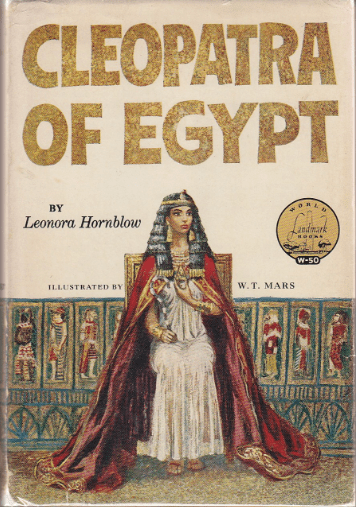
I finished reading  Cleopatra’s Shadows last night. Over all, I enjoyed it, but with all due respect to Emily Holleman, I didn’t love it. I already knew the story of Cleopatra’s sisters, Berenice and Arsinoe, so I wasn’t expecting to learn anything new from it, so that wasn’t the issue I had. I thought it was interesting that the book focused on the brief period of time when Berenice deposed her father and took the Egyptian throne. Usually, fiction about Cleopatra generally begins with Julius Caesar’s arrival in Alexandria and her being snuck into his presence rolled up inside of a rug; which, admittedly, is quite a romantic beginning and you can’t really go wrong starting there. The first book I ever read about Cleopatra–a bio for kids called Cleopatra of Egypt, written by Leonora Hornblow and illustrated by W. T. Mars–began with her fleeing from Alexandria out of fear her brother/husband Ptolemy XIII was going to kill her; and she rose an army and started a civil war. This war interrupted grain shipments to Rome–which was in the midst of its own civil war, between Pompey and Caesar. Caesar had just defeated Pompey, who fled to the court of the Ptolemies; Caesar pursued him there and also aimed to settle the Egyptian civil war. Ptolemy famously beheaded Pompey, thinking he would please Caesar by doing so; instead, he pissed him off, which made Caesar more inclined to be sympathetic to Cleopatra, who was actually Cleopatra VII. But one of the most interesting things to me about Hornblow’s book–which was for kids, mind you–was that she talked about Berenice’s rebellion and usurpation, as well as that of Cleopatra’s younger sister, Arsinoe–and how Cleopatra was present in Rome for the Roman Triumph in which Arsinoe was marched, in chains, behind a chariot…and that was the motivation behind her own suicide when she lost to Rome; she refused to be subjected to the same humiliations in front of the Roman mob that her sister endured.

cleopatra of egypt

I found a copy of it on ebay a few years back, and bought it again. I kind of always wanted to write about both sisters, honestly.

So, obviously, I was very excited to read Cleopatra’s Shadows.

It isn’t that the book wasn’t well-written; it was, and I am sure, as Holleman is a historical scholar, it was undoubtedly incredibly well-researched. What was disappointing to me was that Holleman didn’t give either sister agency. The Ptolemy dynasty,  Macedonian Greeks descended from Ptolemy, one of Alexander the Great’s generals who was rewarded with Egypt after Alexander’s death and the break-up of his empire, was known for it’s intelligent, highly educated and ruthless women. Like the Egyptian pharaohs of old, the Ptolemies married their sisters to keep the dynasty pure, and while there aren’t a lot of records–the burning of the Great Library at Alexandria to blame for this–there is enough evidence that the sister-wives were actually, in many instances, co-rulers and just as ruthless as the males. Each male pharaoh took the name Ptolemy; their sister/wives/queens were named either Cleopatra, Berenice, Arsinoe or Selene–or a combination of two of those names. Again, there is also evidence that Ptolemaic queens disappeared–probably murdered by their husbands, and the ‘pure bloodline’ wasn’t quite so pure, as the unions were sometimes sterile and other women, concubines, were brought in to bear children for the pharaoh. The plotting and machinations of the Ptolemaic court, the struggles for power, are endlessly fascinating to me; even in the children’s book which was my first introduction to the most famous (notorious) Cleopatra this was very clear.

So, the characters of Berenice and Arsinoe as Helleman chose to depict them were disappointing to me. Berenice was, per this novel, the only true child of a royal brother/sister pair; and her father, Ptolemy XII Auletes, the Piper, was not a popular ruler. The premise of this story is that Ptolemy tired of his sister/wife Tryphaena and her inability to bear him a healthy son, so he banished her from court and replaced her with a beautiful concubine, who bore him four children–Cleopatra, Arsinoe, and two young males both named Ptolemy. Berenice’s revolution and overthrow of her father was apparently more based in the bitterness of mother and daughter in being supplanted by the concubine (never named) and her children more than anything else. And while it is all too frequently true that kingdoms and history were shaped by family disputes, rivalries, and romances/loves/jealousies, but I always kind of admired Berenice. The strong woman I always imagined she must have been, strong enough to raise a rebellion against an unpopular king, and to be successful, was not the character Helleman wrote about, who was vacillating, weak, and insecure.

Likewise, the younger sister, whose point of view the story is also told from, Arsinoe, is completely obsessed with her older sister Cleopatra, and barely a page in her point of view passes without so mention of how much she misses her sister. She never thinks about either her father or her mother, and given she is a child, that’s a bit more understandable. But Arsinoe eventually leads her own rebellion against Cleopatra’s rule, so clearly she too is an ambitious young woman as well as intelligent one, one foolhardy enough to rise the Egyptian people up against the Roman legions who have come to Alexandria to back up her sister, and I get no sense of that strong woman in this child. Things just happen to Arsinoe, and while there are slight hints of the politician in her being trained and brought to the fore in the lessons she is learning at the court of a sister who despises both her and her mother, for the most part she is just someone things  happen to–and she never grasps the idea that she should stop being passive and maybe make things happen. The Ptolemies were notoriously ruthless in killing people and relatives who might pose a threat; a pragmatism that may seem horrific to our modern-day sensibilities of family ties but something that was absolutely necessary for them to keep their thrones and their power secure. In fact, Berenice’s advisors want her to kill Arsinoe, but she refuses, and never gives any reason for doing so, which weakens her character still further.

It’s a good read, and it’s well-written and interesting, but I was disappointed with the characters, frankly. I can recommend it to anyone who enjoys historical fiction, and is interested in the period.

And it did revive my interest in the Ptolemies.

And now, back to the spice mines.
Magic Carpet Ride

We had the most marvelous electrical storm last night, which helped me sleep deeply and well. I don’t have to be at work until later–more bar testing tonight–and even as I sit here at my desk, it’s getting dark and gloomy outside, which clearly means another storm is on its way. I also had a weird dream about the Outdoor Kitties last night–I went outside to feed them and Scooter was outside, so I picked him up and brought him in…only another Scooter was inside, along with some gorgeously colored Maine coons and some beautiful kittens. This is when I woke up, confused that Scooter had somehow cloned himself, only to find him sleeping on me. Very weird, right? That’s the first dream I’ve had in years that I could remember when I woke up.

Figures it involves cats.

I still haven’t finished Cleopatra’s Shadows, but since I’m not going in until later today, I might be able to get through it today. It’s irritating, because there isn’t much left, and I really want to get to Universal Harvester. Ah, well. We watched another episode of The Handmaid’s Tale last night, and seriously, with everything else going on in the country today, it’s even more alarming and depressing in its realism. I also want to start watching American Gods; maybe this weekend. I have some appointments on Saturday, and some things to do–I definitely want to start working on the stored books sooner rather than later–and I want to get some work done on the book.

I’ve put the new Scotty aside for now, as I mentioned before. I was talking to a writer friend over lunch the other day–he’s in town for a conference, and very graciously treated me to lunch at Willa Jean in the CBD–and I was able to put my finger on precisely why I wasn’t feeling the new Scotty book. I had a similar problem with Garden District Gothic when I started writing it, and what I really think I need to do before I move forward with the new Scotty is go back and binge-read the first seven (!) books in the series. I kind of think something intrinsic to the series somehow might have gotten lost along the way in the books.

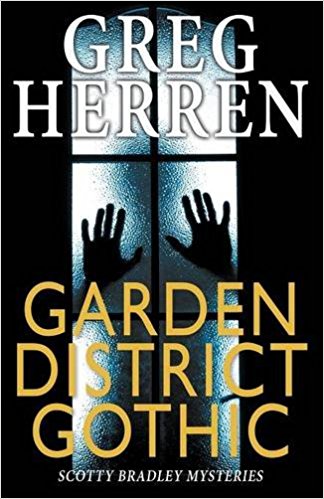
Garden District Gothic wasn’t supposed to be a Scotty book initially; it was intended to be another Paige book. (Just as Murder in the Rue Ursulines was originally intended to be a Scotty, and I turned it into a Chanse.) I won’t get into why the Paige series came to a premature end, but I will say that I love Paige, I loved writing about her, but I will say that I was being pressured to make that series something I wasn’t feeling, and I think it came across in the writing. I had created the character of Jerry Manning for one of the Paige books, with the intent of making him a focal point of the third. But I liked the character so much I also used him in The Orion Mask, and when I decided not to do another Paige, I didn’t want to lose the character in the process. I also liked the idea behind the book, the plot I came up with for it, and so I decided to simply turn it into a Scotty book and rejigger the story somewhat. Jerry was fun–I’ve debated giving him his own solo book, or series; a white trash boy who ran away from his repressive small town in Mississippi where he grew up, and had kind of a hardscrabble life when he got to New Orleans as a sixteen-year-old runaway with not much money. His backstory fascinated me. He worked days as a busboy in a French Quarter restaurant, lived in a crappy, run down roach-infested apartment in the Marigny, and then started dancing at the Brass Rail (my fictional version of the Corner Pocket). But Jerry was ambitious, refused to get caught up in the unfortunate world of the dancers there–although he did things for money he maybe shouldn’t have, while putting aside money with an eye to going to the University of New Orleans and getting a degree in creative writing, which he eventually was able to do. He also became a personal trainer and started working in Uptown, eventually becoming the personal trainer for wealthy women. (Aside: I’ve also always wanted to do a series about a personal trainer. The amazing thing about personal trainers is–at least, in my experience being one and having one–is that they are similar to hairdressers and bartenders, in that there’s a forced intimacy between the trainer and client; I learned a LOT about my clients, things they probably didn’t share with their close friends or in some cases, even their partners. That’s something I’ve always wanted to explore…) Because of this, Jerry was told a lot of insider gossip about New Orleans society, and when a big, shocking murder happened in the Garden District, one that exploded in the national consciousness, Jerry was privy to a lot of insider gossip, which he started recording, and eventually turned into a book he called Garden District Gothic. The book made him rich and gave him a perennial income (sort of like Midnight in the Garden of Good and Evil), and as a well-liked gay man who used pseudonyms for the real life people he wrote about, he wasn’t shunned but was actually welcomed into New Orleans society.

I love that character, and I wanted to tell that story.

Of course, I based the murder loosely on the Jon-Benet Ramsey case, and since it was fictionalized, I was able to make up all sorts of things and follow my own (disproved) original theories on the case. The family was the Metoyers, old New Orleans society/money; the mother in this case was a former runner-up to Miss Louisiana who was the second wife and stepmother to the father’s twin sons from his first marriage; and the daughter was Delilah Metoyer, murdered and found in the carriage house on the grounds of the Metoyer mansion in the Garden District. By timing it the way I did, I also made it possible for the Metoyer twins to be classmates of Scotty’s at Jesuit High School, and also to give them a history together–one of the twins bullied Scotty for being gay, until Scotty went out for the wrestling team and kicked his ass one day. I also added a new element: the twins’ mother, after leaving their father, disappeared, and the bully now wants Scotty and the boys to find his mother, and maybe figure out what really happened to Delilah all those years ago. I also re-utilized a character from one of the Paige books, Serena Castlemaine, and had her buy the old Metoyer house, and throw a housewarming party. It’s at this party that Scotty runs into Jerry–they slept together a million years ago–and also meets Paige, who I decided to move into the Scotty series as well, since her series was dead in the water and I’d ended the Chanse series (I didn’t want to lose her character). This book also, because of the introduction of Serena, Jerry and Paige, was going to serve as the launching point for the next Scotty, in which I rebooted the second Paige novel about a Real Housewives of New Orleans type show and turned it into a Scotty, and wrote the story the way I saw it.

garden district gothic

Writing the book was really a lot of fun, despite the deadline stress, and I liked what I did with it. I liked being able to open it with the Red Dress Run, I liked bringing back the character of Frank’s nephew, Taylor, and showing how he was adapting to life in the Quarter without any worries about being openly gay after being thrown out by his parents. (I still think about giving Taylor his own book someday.)

I also love this opening:

You know you live in New Orleans when you leave your house on a hot Saturday morning in August for drinks wearing a red dress.

It was well over ninety degrees, and the humidity had tipped the heat index up to about 110, maybe 105 in the shade. The hordes of men and women in red dresses were waving handheld fans furiously as sweat ran down their bodies. Everywhere you looked, there were crowds of people in red, sweating but somehow, despite the ridiculous heat, having a good time. I could feel the heat from the pavement through my red-and-white saddle shoes, and was glad I’d decided against wearing hose. The thick red socks I was wearing were hot enough, thank you, and were soaked through, probably dyeing my ankles, calves and feet pink. But it was for charity, I kept reminding myself as I greeted friends and people-whose-names-I-couldn’t-remember-but-whose-faces-looked-familiar, as we worked our way up and down and around the Quarter.

Finally, I had enough and called it a day.

 “I don’t think I’ve ever been so hot in my life,” my sort-of-nephew, Taylor Wheeler, said, wiping sweat from his forehead as we trudged down Governor Nicholls Street on our way home.

“It is hot,” I replied, trying really hard not to laugh. I’d been forcing down giggles pretty much all day since he came galloping down the back steps the way he always does and I got my first look at his outfit. “The last few summers have been mild—this is what our summers are normally like.” It was true—everyone was complaining about the heat because it had been several years since we’d had a normal summer. It hadn’t even rained much the year before, which was really unusual.

“I don’t even want to think about how much sweat is in my butt crack,” he complained, waving the fan he picked up somewhere furiously, trying to create a breeze.

I gave up fighting it and laughed.

And on that note, it’s back to the spice mines.

Ain’t Nothing Like the Real Thing

I had a great workout this morning; the first time in a long time I can say that. Usually, I am so tired and brain-dead I just go through the motions, whining, but this morning, after some good sleep, I was wide awake and rarin’ to go, and also enjoyed it for the first time in a long time.  I didn’t sleep well Monday night; never fully going to sleep, spent most of the night in that horrible half-awake state, and was exhausted all day yesterday, which was a long work day for me culminating in a late night of bar testing. I also had trouble falling asleep last night, but I think I wound up with about five full hours of deep, restful sleep. I woke up before the alarm went off, but even that small amount of good sleep was what my body needed.

I don’t mind not getting eight hours, as long as I get some good sleep.

I was so tired yesterday I couldn’t focus, so of course, got nothing done that I needed to get done. That always sucks, of course, but I am hoping that with the rest, and the endorphin rush I have from working out, that I’ll be able to plough through a lot of things today. I want to finish reading Cleopatra’s Shadows, and then I am going to read Universal Harvester, by John Darnielle. I also am going to start restructuring the WIP, which is going to be probably an odious chore, but I am going to do that before I start the revision/editing process with it to get it ready. In an ideal world, it will be finished by the end of this month; in a realistic world more like the end of June. I also want to get the next draft of “Quiet Desperation” finished. (I have an idea for another story I’d like to get started, “In Lieu of Flowers”, so the sooner I can get the one finished, the sooner I can start working on the new one.)

I’m also thinking about the next book I want to write. I know, it’s crazy to start thinking about the next book I want to write while I am still working on the current WIP, but there are two I am toying with in my head–one would be called Girl X, the other You’re No Good–and I’ve had these ideas floating around in my head for quite some time now. (There are always lots of ideas percolating in my head at any time, in case you haven’t noticed by now.) So I am just going to brainstorm those whenever I get stuck on something else I am writing; both are, ironically, stories about the relationships between mothers and daughters–which is odd, since I am neither. But hey, what can I say?

Well, here’s a hump day hunk for you.

hump day hunk


Jumpin’ Jack Flash

Well, I finished the outline yesterday and am actually feeling pretty good about it. As I finished outlining the last chapters, I began to see with a much greater clarity what the problems with the manuscript were, the changes that needed to be made to it, and what would, in fact, make it a much stronger book than what I originally wrote. It’s going to require a lot of work to fix it, frankly–more than I would have preferred–but hopefully it will turn out to be exactly what I wanted it to be.

And that’s a good thing.

Yesterday was one of those days where I didn’t get as much done as I would have liked; I just felt off center and off-balance for most of the day. I’m not sure why that was; one of those eternal mysteries, I suppose. I did have some trouble sleeping last night as well, which sucked because I have a ten hour day of work today including bar testing tonight. Ah, well, I should sleep well tonight, one would think.

We watched the third episode of The Handmaid’s Tale last night, which continues to chill and disturb me. It is so incredibly well done,  and while the men are repugnant, the absolute most chilling characters to me are the collaborationist women. Atwood’s novel was such genius, really, and I love how the show is taking the time to fill in all of the backstories and develop the characters even more so than she did. The not-knowing in her book was particularly chilling, but I think the show is making it a much richer, complex tale–which is also necessary for something that is visual rather than simply read. I am thinking I need to find my copy and read it again.

We also watched a documentary about H. H. Holmes, billed as America’s first serial killer–although I would posit the Benders in Kansas were the first. I first knew of Holmes because Robert Bloch wrote a fictionalized account of his ‘murder castle’ that I read called American Gothic. (I love Bloch, and went through a period where I read all of his work I could get my hands on; Psycho is still one of my favorite crime novels) The documentary was very well done, but all I could think about while I watched was the Benders and wondering whether there were any books about them. I’ve wanted to write about them ever since I first heard about them, when I was a teenager living in Kansas, but am not sure if I want to do it as a historical crime novel, or as horror….or both. Someday!

I’m almost finished with Cleopatra’s Shadows, which I am sort of enjoying, but wish I was enjoying more. I know that sounds like damning with faint praise, because I am enjoying it, but I only have about sixty pages to go, and I will be curious to see how the author deals with the inevitable (I mean, it’s historical fiction, I know what happens) end.

I’m having lunch with a friend whom I haven’t seen in years today before work, which should be a rather pleasant experience. It’s always lovely to catch up with friends.

And on that note, it’s back to the spice mines with me. Here’s a Tuesday morning hunk for you, Constant Reader:

KONICA MINOLTA DIGITAL CAMERA


The Unicorn

Monday morning, and not only a new week but a new month. May, of course, is when the Formosan termites swarm; usually they join us sometime around Mother’s Day, but I saw people posting about them last night on Facebook. Maybe it was the extremely mild winter; hopefully, the early start means an early end. It really does seem like one of the plagues of Egypt when the termites are swarming; our first experience with it back in May 1997 was absolutely horrifying. Even typing about it now makes my skin crawl. We’ve been relatively lucky over the past fourteen years or so; living in the back as we do, we only get a few inside the house and once they do, off go the lights and we light candles.

It really surprises me that there really isn’t anything that can be done with these things.

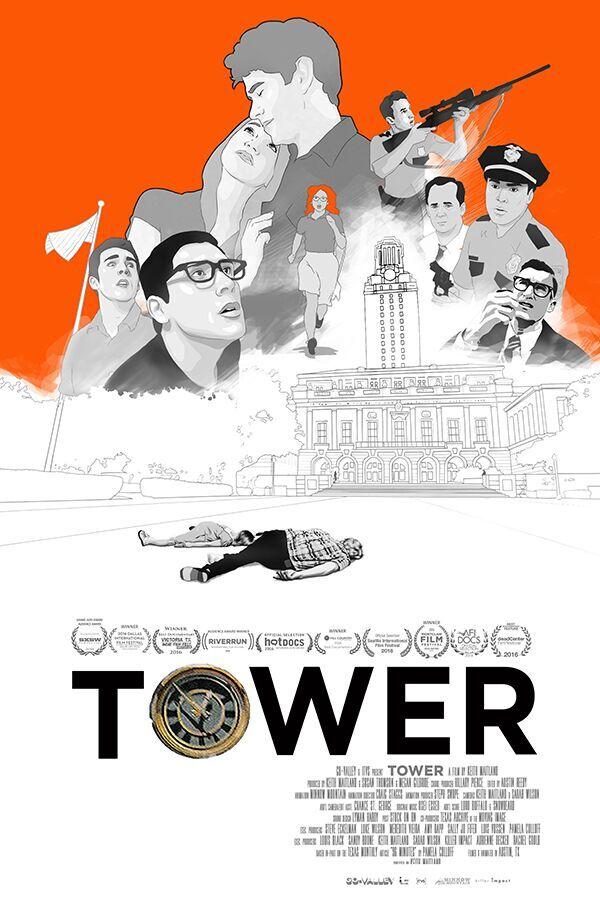
Last night, we watched the documentary Tower, which is about the first mass shooting at  a school, and another episode of The Handmaid’s Tale, which continues to be riveting. I vaguely remember the events of Tower;  I was almost five when Charles Whitman went up to the observation deck of the University of Texas Tower and started shooting people. It really did seem as though the world, and the country, was going crazy. Only a few weeks before the Texas Tower murders, Richard Speck raped and murdered eight nursing students in Chicago, and in retrospect, my mother’s paranoia about our safety–a young woman with two small children and a husband from the rural South living in the big city–really isn’t so surprising. There were also some horrible riots in Chicago in 1996, and of course, the riots in the wake of Dr. King’s murder in 1968 were still to come (in the wake of those riots, some of my father’s relatives who lived in Chicago packed up and moved back to Alabama). The Democratic National Convention was also in Chicago in 1968… and the Chicago Police Department’s brutality against the protestors documented by news cameras for the world to see.

Tower is incredibly powerful, and an interesting way to film a documentary. The filmmakers interviewed and spoke to the survivors, and then used filmed actors the right age to reenact what happened, then animating them, while interspersing actual film footage and photographs from the ninety-six minutes of pure hell the city of Austin, and the University of Texas, endured. What happened that day was horrifying enough, but reliving it through the personal stories of the survivors, and their memories of what happened that day, made it even more heartbreaking and moving. The documentary primarily focuses on the point of view of two of the police officers, one of the students who helped victims, another witness who watched it all happen through the windows of a nearby building (one of the most moving moments is when this woman, a young girl at the time, says, “This sort of thing is a defining moment. I stood there in the window, knowing there were people out there who needed help, but I was too afraid of being shot to do anything. That was when I knew I was a coward.”), the University bookstore manager who climbed the Tower with the three officers to take out Charles Whitman, but the two personal stories that moved me the most was the young paperboy who shouldn’t have even been there, but was filling in on the route for another boy, and had his young cousin riding on his bike with him when he was shot in the leg off his bicycle, and of course, Claire, one of the first victims, eight months pregnant and leaving the student union with her boyfriend, who was killed instantly. Claire’s baby was killed when she was shot in the abdomen, and she lay there, on the cement in front of the Tower, with her boyfriend lying dead near her, unable to move or get helped because anyone who went out there was in the line of fire, roasting on the hot cement in the heat of an August day in Austin. A young woman named Rita ran over to her, talked to her the entire time, lying on the ground near her, keeping her conscious and keeping her alive.

I cannot even imagine how horrible the ordeal must have been for her, or how she has lived with the memories of everything she lost that day for the rest of her life.

24545708303355534

Simply extraordinary.

I’ve almost finished reading Cleopatra’s Shadows–have maybe another hundred pages to go, and also made some serious progress on decluttering the apartment. I’ve decided that I am going to clean out the storage space–both the one over the laundry room as well as the rented one–and try to declutter the Lost Apartment as much as I can. I am only going to  keep research books, my children’s series collections, signed books by friends, and my Stephen King hardcovers. Anything else is going to be donated. If I had more time I might try to sell them on ebay or Amazon, but I just don’t have the time and I don’t want to mess with it, to be perfectly honest. So, every Saturday morning–or every morning when I have to work late–I am going to take boxes out of the storage places, go through them, and start donating. I feel very good about this decision, quite frankly.

I also intend to finish the outline of the WIP this week, as well as a second draft of “Quiet Desperation.”

Onward and upward, y’all.

Light My Fire

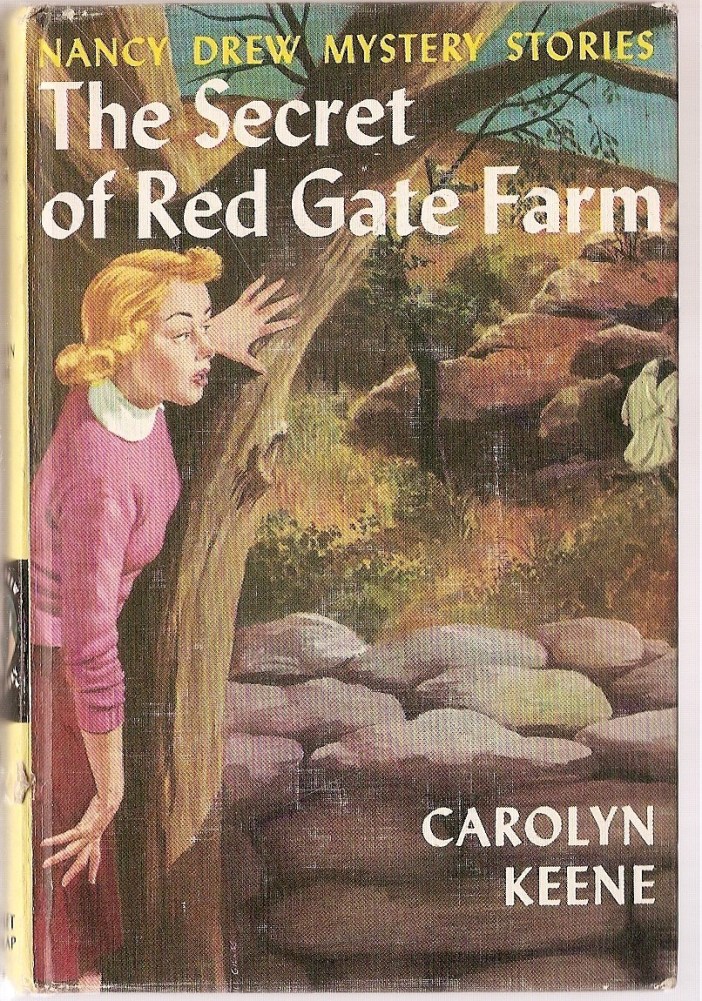
Nancy Drew is eighty-seven, can you believe it?

secret of red gate farm

I first discovered Nancy Drew when I was in the fourth grade, at Eli Whitney Elementary School in Chicago. I was already reading every mystery I could get my hands on, either through the school library, the public library, or what my parents would let me order through the Scholastic Book Club, but I didn’t discover Nancy Drew–or the other series for kids–until the fourth grade. My teacher, Mrs. Pirog, had a big wooden table in the back of the room with discarded books from her own kids spread out on it. One day I noticed the above book, and decided to take it home and read it. I loved it! Nancy and her pals Bess and George helped some poor girl and her grandmother, about to lose Red Gate Farm to the mortgage, while also unmasking a ring of counterfeiters. There were two other volumes back on the table–The Mystery at Lilac Inn and The Haunted Showboat–and I was hooked. At the Woolworth’s where I usually spent my allowance, I acquired The Secret of the Old Clock, The Hidden Staircase, and The Bungalow Mystery. (On the book table was also a Dana Girls mystery, The Secret of the Old Well, but we’re going to focus on Nancy Drew for now.)

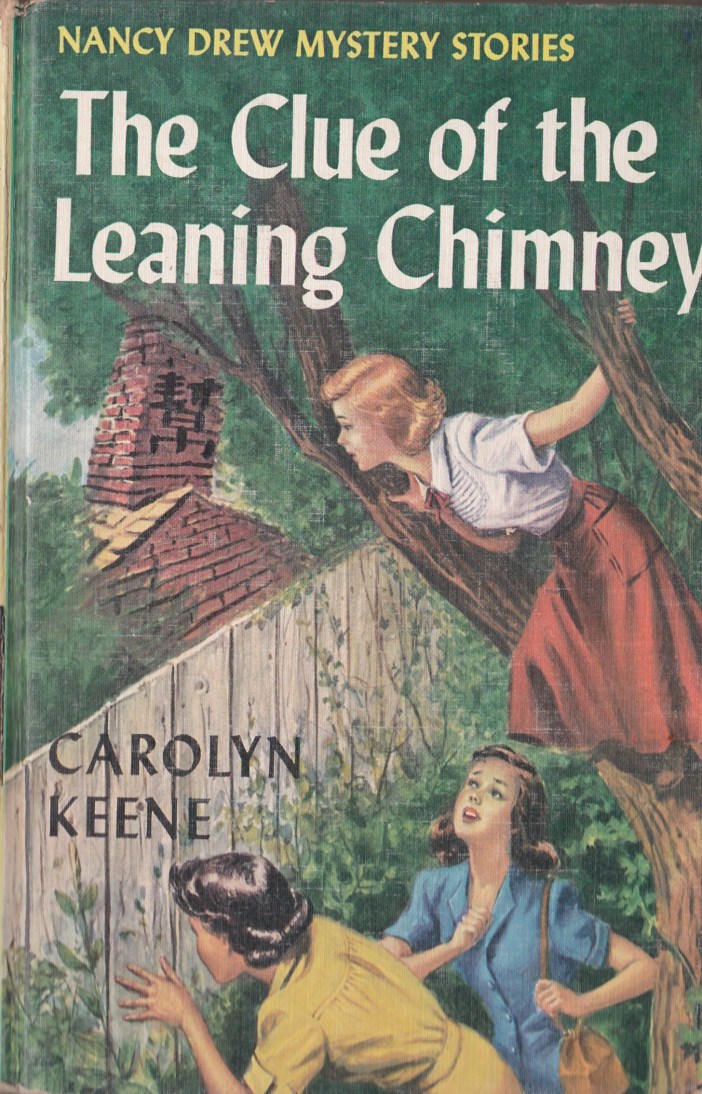
I became obsessed with reading and collecting the entire series. I still collect them, of course, even if my collection is in storage because I don’t have the room to display them in the Lost Apartment. My obsession (I guess this was probably the first example of my OCD-lite coming to light) was driven even further by my parents’ forbidding me to read them; you see, I was a boy and these were books for girls. I started collecting and reading the boys’ series, and buying Nancy Drew, and the other series for girls, on the sly; I would get, say, five Hardy Boys books and slip two Nancy Drews into the stack, and then would bury the Nancy Drews at the bottom of the book bag beneath the Hardy Boys, and pull out one of the Hardy Boys to read in the car on the way home. (I was undoubtedly not fooling my mother, who had to notice that the yellow-spined Nancy Drew collection was mysteriously growing, albeit at a slower pace than the Hardy Boys.)

nancy drew leaning chimney

This was also an early example of my stubbornness, and the streak of “if you want me to not do something, the worst thing you can do is tell me so.”

Hard to believe something as innocuous as Nancy Drew mysteries could be considered contraband, isn’t it? My sister helped out sometimes, too, when she felt like it, by buying them for me. They couldn’t very well tell her she couldn’t have them.

Ghostwriting a Nancy Drew mystery as Carolyn Keene is on my bucket-list, I might add.

While I can’t credit Nancy Drew for my lifelong love of mysteries and my desire to become a mystery writer, she was a big assist, and my first introduction to mystery series. I read almost all of the Grosset & Dunlap series (Nancy, the Hardy Boys, Dana Girls, Judy Bolton, Ken Holt, Rick Brant, Biff Brewster, Cherry Ames, Vicki Barr), as well as the Trixie Belden books and The Three Investigators (which was probably my favorite, along with Ken Holt), and have kept all of my copies all these years. In my early twenties I started finishing the sets, haunting used bookstores for used copies, since many of the off-brand series were no longer in print. After Hurricane Katrina I discovered eBay, and started finishing the sets. Once I had all of the Nancy Drew and Hardy Boys series completed, I went back and started recollecting the series–there were  original texts and revised texts, and my completed sets were combinations of the two. Now I want a complete set of revised texts and one of original texts. I also belong to collectors’ groups on Facebook, and there’s a store in Savannah, Books by the Bay, that specializes in the kids’ series that I am DYING to visit (and will undoubtedly drop a ton of cash at if I ever get there).

So, happy birthday, Nancy. Thanks for all the great memories!

Time Has Come Today

I arrived home from a second trip in less than a week about an hour ago. I made fantastic time from Oxford; I made it back to New Orleans in slightly less than fice and a half hours, including two stops for gas. I had the best time there, as well. I have lots of things to talk about regarding both trips, but right now I am decompressing and trying to get organized because I have to work tonight…and am already running out of steam. Whine. Ah, well, I can sleep late tomorrow. I did fall in love with both Montgomery and Oxford, though, and feel strangely reconnected to my Southern roots.

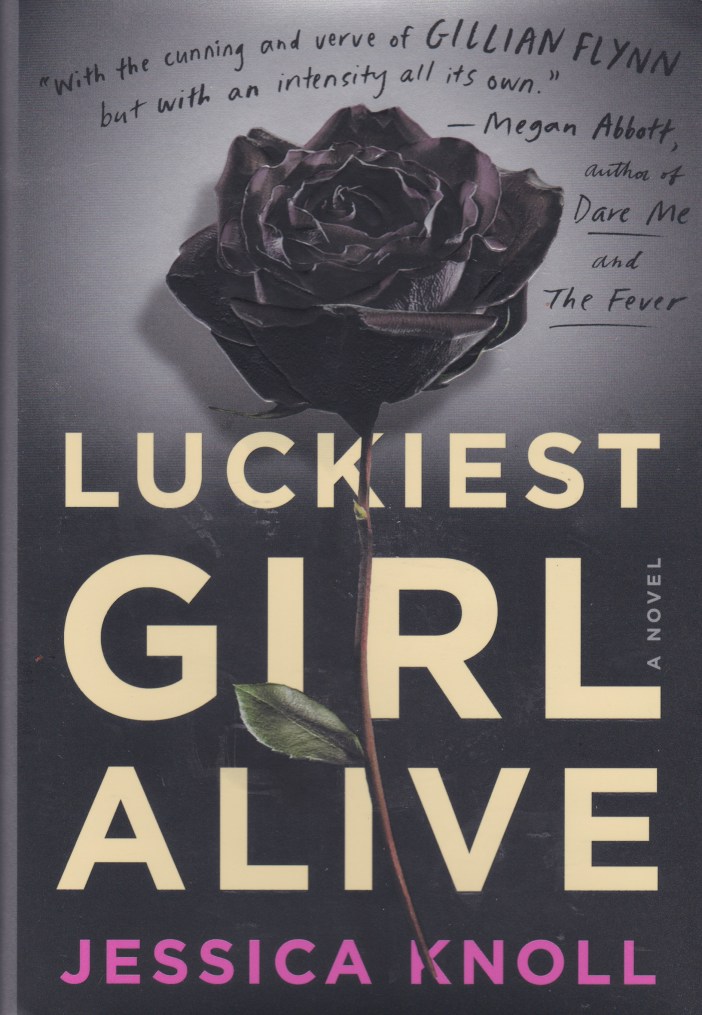
But I  also want to talk about this fantastic book I read on the trip, Luckiest Girl Alive, by Jessica Knoll.

luckiest girl alive

For the record, Constant Reader, anything blurbed by Megan Abbott is generally going to turn out to be fantastic.

I inspected the knife in my hand.

“That’s the Shun. Feel how light it is compared to the Wusthof?”

I pricked a finger on the blade’s witchy chin, testing. The handle was supposed to be moisture resistant, but it was quickly getting humid in my grip.

“I think that design is better suited for someone of your stature.” I looked up at the sales associate, bracing for the word people always use to describe short girls hungry to hear “thin.” “Petite.” He smiled like I should be flattered. Slender, elegant, graceful–now there’s a compliment that might actually defang me.

And so we meet Ani FaNelli, engaged to a successful businessman from old money, and she herself has her dream job at The Women’s Magazine (read: Cosmo). Ani had a horrific experience in her ritzy private high school in Philadelphia, which her social climbing mother forced her to attend, and after this event, focused on reinventing herself and doing whatever she had to in order to get the great life she felt she deserved after that horrific humiliation. But the facade of pretending to be the perfect fiancee is starting to wear thin…and as the book flashes back and forth between her wedding planning in the present day and what happened to her back at the Butler Academy, the edges begin to wear a little thin and she slowly begins to remember who she is beneath her carefully constructed facade, and the unraveling begins.

Ani is probably one of those characters male reviewers like to talk shit about–you know, the “unlikable woman”, which has apparently become so prevalent in suspense thrillers since the enormous success of Gillian Flynn’s Gone Girl, and this one has the obligatory “girl” in the title, even–but the title phrase does come up during the course of the book, and as the story of Ani’s high school experience unspools…it’s so much much worse than you think it could have been.

This was an Edgar Award nominee for Best First Novel (she lost to Viet Thanh Nguyen’s The Sympathizer, which also won the Pulitzer Prize), and it’s riveting. Highly recommended.

Bottle of Wine

Oxford, Mississippi is a beautiful little town. I arrived here yesterday afternoon–the drive didn’t leave me nearly as exhausted as the one to Montgomery did, even though it was longer; I suspect it was because I worked late the night before doing bar testing so was already tired. I checked into the Inn at Ole Miss, and then went foraging for dinner as well as exploring.  I had a lovely dinner at City Grocery; shrimp and grits, similar to the dish I make but slightly better–but I also was able to spot the spice differences, as well as the obvious addition of sautéed mushrooms, so the next time I make it I am going to make those alterations and see if it turns out the same way. I washed it down with a lovely glass of a Napa Chardonnay, and then wandered back down to the Inn, taking lots of pictures and getting all kinds of inspirations and ideas for a campus crime novel.I am not sure what the situation here is as far as campus crime, but I am making notes and a file, and perhaps some other time I can come up for a few extra days, talk to some more people, do some research and figure out how to get the story whipped into shape.

I also finished reading Jessica Knoll’s sublime Luckiest Girl Alive, which was absolutely amazing, and I intend to discuss that wonderful novel in more depth once I am home and at a computer rather than writing this on an app on the iPad (don’t get me wrong, this is very cool, and this is the first trip I’ve taken where I’ve not brought the laptop–and I will most likely never bring it again, as the iPad basically can replace it completely, and it weighs significantly less. I also started reading Cleopatra’s Shadows by Emily Holleman, which I am enjoying and focuses on two women who have always fascinated me: Cleopatra’s sisters, Berenice and Arsinoe, and whom I myself have always wanted to write about.

My panel is this afternoon at four; they are picking me up at 3:30 in front of the Inn and I am really not certain what the discussion is going to be about. It’s a month-long event called the Radical South, a counter-event to Confederate History Month (in a moment of irony, I am here at a counter-event to Confederate History MOnth while the Confederate monuments in New Orleans are being taken down; which is also a subject for another time as I have very strong feelings about that myself) and after that I am being taken out to dinner. Tomorrow I intend to rise early, avail myself of the complimentary breakfast here at the Inn (it was sublime this morning), and then check-out and head home, as I have to work tomorrow night. But that also gets me a short day on Thursday, which is also lovely.

The weather is also sublime; rather cool for late April, but not humid, which is always a plus.

And now, I am going back to the spice mines.IMG_1725


I Say a Little Prayer

Today I venture north to Oxford, Mississippi, home to one of my literary heroes, William Faulkner, and also home to Ole Miss, aka the University of Mississippi. This isn’t going to be a quick ‘in-and-out’ like Montgomery; I am spending two nights there (the event is tomorrow night) and will drive back down to New Orleans on Wednesday. I have to work later that evening, which is daunting and will make for a long, exhausting day, but I feel like I will sleep rather well that Wednesday night, if for no other reason than pure exhaustion. I am feeling rested this morning, but not quite awake; I am going to continue with coffee-swilling before I shave and shower and depart. I am already packed; all I have left to do is put the current book I’m reading (Luckiest Girl Alive by Jessica Knoll) and my iPad into my bag. I believe the event is tomorrow evening, so I will have all day to explore Oxford. I will be taking the camera with me, and I plan on making a pilgrimage, at the very least, to Faulkner’s home. (In an aside, sometimes when I mention that Faulkner is one of my literary heroes I get mocked, or get called pretentious; but I truly enjoy reading Faulkner. He isn’t easy to read, or follow, but the language! The way he builds the story! I still think The Sound and the Fury is the greatest American novel, no matter what–but I have been thinking lately I should, as an adult and more mature reader, give both Hemingway and Fitzgerald another try.)

I did finish reading Thirteen Reasons Why yesterday afternoon, and no, it didn’t end in the same was as the television series, and yes, it’s ending was just as dissatisfying to me, although it made sense. The book makes no judgments of the characters, including Clay, although the relationship between Clay and Hannah wasn’t as developed or as evolved in the show; I didn’t get a sense of why Clay would care as much as he did from the novel. But it was a fun read, and let’s face it–as I said on the panel Saturday, what could be more noir than high school? All of my young adult fiction, frankly, is based on that principle.

We also finished Feud last night, along with the rest of the country, and Jessica Lange was absolutely heartbreaking. Sarandon really was great as Bette Davis, but for some reason, I just think Lange was better as Crawford. The whole cast was terrific, really, and it was horrible what happened to both women as they aged, how the industry turned their back on them, what it’s like to be a woman in Hollywood–and how that hasn’t, really, changed. Ryan Murphy is an interesting writer/producer. American Horror Story seems to go off the rails every season; I never got past the second episode of Scream Queens; and I never watched Nip/Tuck–but really enjoyed Popular. But with American Crime Story and Feud he’s done an extraordinary job; but then again, in both instances he didn’t have to really come up with a plot or an ending to the story he was telling: both were based in reality. I also am terrified of his Hurricane Katrina season of American Crime Story. It could be terrible, absolutely terrible; all I can do is hope that filming in New Orleans–as he did with American Horror Story–made him fall in love with the city the way Jessica Lange did (she now lives here).

Obviously, I’ve not written a word since I left for Montgomery on Friday (other than here), and hope I’ll have both the time and the energy while in Oxford.

And now, back to the spice mines.6f72d89ae05ea0959513f24176fd12e5