Part-Time Lover

Friday! I wasn’t feeling well last night, and was worried I was getting sick, to be completely honest. But this morning I feel much better and well-rested (at least for now) and it’s a short day, so there’s that. Huzzah!

Yesterday I managed to get two more chapters sort-of-revised for the WIP; I think I now have enough material for the agent search; I’ll be double checking that today and perhaps getting it together. I also want to work on the new Scotty today; it’s going in a completely different direction than it originally did, and I am really liking it. While I was lying in bed this morning before getting up, I had some really terrific ideas about where to take this–and while it might be a little on the risky side, I am going to do it, I think.

We watched the skating last night, and while it was terribly sad to see Nathan Chen skate so poorly, he’s also very young. He could come back tonight and have the skate of his life, or be so rocked that he skates terribly again tonight. I do think he’s going to win the World title though next month, and this will set him up for the next Olympics as well. He is very young.

Adam Rippon was terrific last night; I am so delighted to see that all the hate being slung at him from the homophobes on the right wing (American patriots my ass; nothing says patriotic American than hoping an American athlete will fail at the Olympics. Trash.) is just bouncing off him and he is having the Olympic experience he’s always dreamed of. I had a geek moment yesterday when I tweeted at him and his mother and she liked my tweet; yes, I may be 56, but I can fanboy with the best of them. I am looking forward to tonight, let me tell you.

I also started reading the stories in the MWA anthology Manhattan Mayhem,edited by the amazing Mary Higgins Clark. The first story is by Clark herself, “The Five-Dollar Dress”:

It was a late August afternoon, and the sun was sending slanting shadows across Union Square in Manhattan. It’s a peculiar kind of day, Jenny thought as she came up from the subway and turned east. This was the last day she needed to go to the apartment of her grandmother, who had died three weeks ago.

She had already cleaned out most of the apartment. The furniture and all of Gran’s household goods, as well as her clothing, would be picked up by five o’clock by the diocese charity.

Her mother and father were both pediatricians in San Francisco and had intensely busy schedules. Having just passed the bar exam after graduating from Stanford Law School, Jenny was free to do the job. Next week, she would be starting as a deputy district attorney in San Francisco.

A very simple set-up–granddaughter cleaning out grandmother’s apartment–leads her to find news stories and information about the brutal murder of her grandmother’s best friend many years earlier…and the story takes some startling twists along the way. I’ve not read any of Ms. Clark’s short stories before, and I’ve not read any of her books since A Stranger Is Watching when I was a teenager; I’m not sure why, to be honest. I loved both it and Where Are The Children? Meeting her at the Edgar banquet the first year I went was one of the biggest thrills of my life, and what a gracious lady she is, too.

The next story was by Julie Hyzy, titled “White Rabbit”:

The young woman sitting on the bench stopped fingering a strand of her white-blonde pixie cut. Startled, she looked up, shielding her eyes from the sun. “Excuse me?”

“I asked you if you were recapturing your childhood.” The man who had spoken reached down to tap a corner of the book lying on her lap. He had a round face and the sort of little-boy haircut most men ditch long before they hit thirty. Wearing black-framed glasses and a bushy brown beard, he carried a soft paunch and a beat-up messenger bag.

“Interesting reading choice,” he said. “Especially considering the view. My name’s Mark, by the way.”

They are sitting near the Alice in Wonderland statue in Central Park, and she is reading Alice in Wonderland. As the two begin talking, the story appears to be going one way, then turns abruptly into another direction, and makes yet another turn. Very gripping, the suspense building as the story goes along, with a most satisfying denouement.

Ah, and now back to the spice mines. Happy Friday everyone.

tumblr_p2iqqx41tz1sh6rbgo1_540

Shout

It doesn’t seem like Thursday; this short post-Mardi Gras week has messed up my inner clock and pretty much everything else you can think of; Carnival messed up my sleep and workout schedules as well. I was going to go to the gym this morning, but I am worn out still and have little to no energy; so I am going to wait and get back on track this weekend.

I did manage to start writing a short story yesterday (2800 words of it) and finish a chapter of the new Scotty (1800 words) for a grand total of 4600 words written yesterday, which is pretty freaking awesome, and I am going to count that as a major win. The writing muscles were, frankly, rusty, but I’m hoping I was able to shake the rust out some. I’d say I managed to do just that; it was difficult at first, but then the words started coming so I took it and ran with it.

I was also commenting yesterday to a friend and fellow writer yesterday about how crazy this business is; we are so constantly beaten down by not only the industry but by readers and reviewers that even little things like an email I found yesterday–I am still digging out from under–rejecting a story I’d submitted but read You’re too good of a writer to get a standard form rejection letter; this story was too slow for us, but please send more of your work–can make your day.  Heavy sigh.

I also saw a lot of chatter on social media–before the mass shooting–about charity anthologies and writers needing to be paid for their work. I have some thoughts about that as well, but I’ve not had enough coffee yet this morning to coherently put them together; although I found it interesting that one of the people talking about not writing for free and needing to be paid said I hate writing, so…

Wow. That one caught me off guard. Maybe he/she was simply being flippant in the moment, but no matter how hard it is sometimes, how stressful, and how much I loathe doing it, I never really hate writing, and would never say that I do. I love writing. I have a love/hate relationship with the publishing industry, but the writing itself? I love doing it. I enjoy it. It gives me pleasure. I wouldn’t do it if I hated it because I don’t have to do it. I miss it when I’m not doing it; and not writing definitely affects my moods; not for the better. To each their own, I suppose.

Over the weekend, between parades, I read a shit ton of short stories for The Short Story Project. It really is amazing how many anthologies and single-author collections I have here on hand.

For example, I have Flannery O’Connor’s National Book Award winner The Complete Stories. I read the first story in the book, “The Geranium,” Monday afternoon, I think it was.

Old Dudley folded into the chair he was gradually molding to his own shape and looked out the window fifteen feet away into another window framed by blackened red brick. He was waiting for the geranium. They put it out every morning about ten and they took it in at five-thirty. Mrs. Carson back home had a geranium in her window. There were plenty of geraniums at home, better-looking geraniums. Ours are sho-nuff geraniums, Old Dudley thought, not any er this pale pink business with green, paper bows. The geranium they would put in the window reminded him of the Grisby boy at home who had polio and had to be wheeled out every morning and left in the sun to blink. Lutisha could have taken that geranium and stuck it in the ground and had something worth looking at in a few weeks. Those people across the alley had no business with one. They set it out and let the hot sun bake it all day and they put it so near the ledge the wind could almost knock it over. They had no business with it, no business with it. It shouldn’t have been there. Old Dudley felt his throat knotting up. Lutish could root anything. Rabie too. His throat was drawn taut. He laid his head back and tried to clear his mind. There wasn’t much he could think of to think about that didn’t do his throat that way.

Many authors whom I respect often speak reverently of Flannery O’Connor. Many years ago, I read A Good Man Is Hard to Find and wasn’t overly impressed with it, to be honest. I bought this collection after reading a list of great Southern Gothic classics. I honestly think back when I first tried to O’Connor I was not in the kind of place where I could appreciate her work–similar to reading Carson McCullers and not getting the big deal and recently reading Reflections in a Golden Eye and getting it–because “The Geranium” is a really great story; and a very Southern one, at that, about family responsibility. The story is basically about old Dudley, whose family has now judged him too old to live by himself or to take care of himself, even in a boarding house, so he has to move in with one of his children. The daughter who takes him in lives in New York, and she doesn’t take him in out of love and wanting to help out; it’s done out of responsibility and a desire to show her siblings that she’s a better daughter than they are. That responsibility clearly chafes at her (Southern child martyr syndrome; I’ve seen it in my own family), and he is very unhappy to be there as well. He focuses on two things–the geranium across the alley in the window, and the fact that a man of color has moved into the apartment next door. The daughter and her family think nothing of it; he, as a Southern man, is horrified by it (he doesn’t say ‘man of color,’ either, FYI) and the two obsessions juxtapose against each other. It’s more an in-depth character study than anything else; one that you can’t stop thinking about after it’s over, and it’s kind of awful and true and sad all at the same time.

I definitely wasn’t in a place to appreciate O’Connor when I tried before.

I then went back to Alive in Shape and Color, Lawrence Block’s second anthology of stories inspired by paintings, and read Michael Connelly’s “The Third Panel.”

Detective Nicholas Zelinsky was with the first body when the captain called for him to come outside the house. He stepped out and pulled the breathing mask down under his chin. Captain Dale Henry was under the canopy tent, trying to protect himself from the desert sun.  He gestured toward the horizon, and Zelinsky saw the black helicopter coming in low under the sun and over the open scrubland. It banked and he could see FBI in white letters on the side door. The craft circled the house as if looking for a place to land in tight circumstances. But the house stood alone in a grid-work of dirt streets where the planned housing development was never built after the big bust a decade earlier. They were in the middle of nowhere seven miles out of Lancaster, which in turn was seventy miles out of LA.

“I thought you said they were driving out,” Zelinsky called above the sound of the chopper.

Michael Connelly is one of the most successful and prolific crime writers of our time. I read his first Bosch novel several years ago and absolutely loved it; but as much as I loved it the thought of even trying to get caught up on his canon is overwhelming–so many books! It would almost be like a year-long project, a la the Short Story Project, to read the entire Connelly oeuvre. But this story–which is quite short, actually–is taut and suspenseful and well-written; a team of detectives and crime scene techs are investigating a meth-lab murder when the FBI agents show up, with a rolled up copy of a Heironymous Bosch painting, and reveals that there’s a group going around killing ‘sinners’ in ways based from images from the painting. Very clever, and the twist at the end is also really well done.

And now, back to the spice mines.

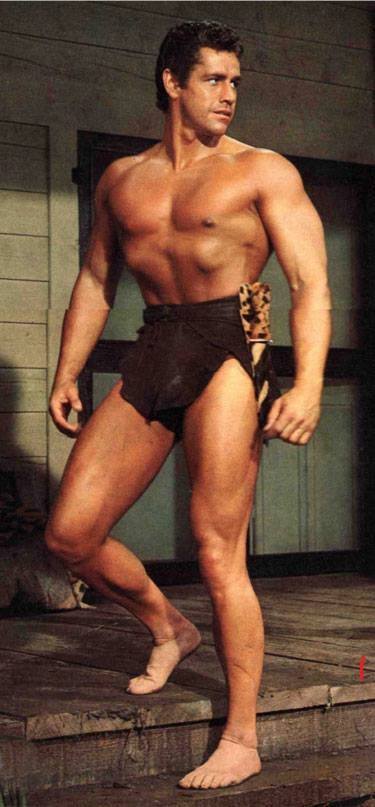
Here’s a Throwback Thursday hunk for you, actor and physique model Gordon Scott:

20728242_10212670337849946_4851579278645951324_n

Think of Laura

Zulu is passing now; I can hear the drums of the marching bands. It’s a gorgeous morning, the sun is shining and I am betting the crowds up at the Avenue are deep; they certainly were last night for Orpheus. Paul and I both have to work tomorrow, so we’re ending our Carnival early; taking today to rest and recover so we can hit the ground running on Ash Wednesday. I also have a lot of things to do today; emails to answer, things to write, things to edit, things to read, a kitchen to clean. Even though it was abbreviated this year (I was in Alabama for the first weekend of parades), I enjoyed every bit of Carnival this year; and am already melancholy to see it end as always.

I’ve also been enjoying the hell out of the Winter Olympics, and like millions of people worldwide I am–what’s the word kids use now? Oh yes–stanning Adam Rippon. As a long time figure skating fan, I’ve known of Adam long before these games; I remember when he had a mop of floppy curls; when gossip websites were pairing him and Ashley Wagner as a couple (I rolled my eyes every time I saw the photos), and I remember when he came out. I blogged about homophobia in figure skating a while back; when Adam came out while still on the Olympic eligible circuit I thought to myself you’re never going to win anything now; so I was pleasantly surprised to see him win US Nationals and make the world team in 2016; he missed last season with a broken foot, and this season he is full-on out: his short program is to gay club music, and his long program, as everyone saw the other night, is breathtaking. I’m so happy for both him and Mirai Nagasu, who became the first American woman to land a triple axel at the Olympics that same night; they earned bronze medals as part of the team competition, and I couldn’t be happier for both of them–all of the Americans on the team, to be honest. Adam is so funny and refreshingly himself; a big personality and a natural wit he doesn’t try to hold back, and that honesty…I just can’t get enough. I had tears in my eyes when he finished his long program the other night; Paul and I both screamed when Mirai landed the triple axel. Seeing the trashy homophobes on Twitter trashing him or going after him makes my blood boil; I’ve resisted the urge to reply to them He’s got an Olympic medal and you’re a fifth-rate Twitter troll. Congratulations.

So. There’s that.

And in other news of the fabulous, the lucky world of readers can look forward to the upcoming release of a new Laura Lippman novel, Sunburn. I got an ARC at Bouchercon and read it in one sitting on a rainy Saturday back in October.

sunburn

It’s the sunburned shoulders that get him. Pink, peeling. The burn is two days old, he gauges. Earned on Friday, painful to the touch yesterday, today an itchy soreness that’s hard not to keep fingering, probing, as she’s doing right now in an absentminded way. The skin has started sloughing off, soon those narrow shoulders won’t be so tender. Why would a redhead well into her thirties make such a rookie mistake?

And why is she here, sitting on a barstool, forty-five miles inland, in a town where strangers seldom stop on a Sunday evening? Belleville is the kind of place where people are supposed to pass through and soon they won’t even do that. They’re building a big by-ass so the beach traffic won’t have to slow for the speed trap on the old Main Street. He saw the construction vehicles, idle on Sunday, on his way in. Places like this bar-slash-restaurant, the High-Ho, are probably going to lose what little business they have.

High-Ho. A misprint? Was it supposed to be Heigh-Ho? And if so, was it for the seven dwarfs, heading home from the mines at day’s end, or for the Lone Ranger, riding off into the sunset?  Neither one makes much sense for this place.

Nothing about this makes sense.

Laura Lippman has been one of my favorite writers since I read Baltimore Blues years and years ago. I tore through her Tess Monaghan series, and she very quickly became one of my buy in hardcover authors. I’ve never regretted making that switch, and as she has expanded her skills and pushed herself with her exceptionally brilliant stand alone novels, I’ve never once quibbled but I want another Tess novel! (I do, always, but the stand alones are so fucking fantastic that it doesn’t matter–I really just want a new Lippman, and wish she was on a yearly schedule rather than an eighteen month one.)

Laura’s career trajectory has been most impressive from a writing perspective; because as a writer of stand alones, she has gone from being a literary crime writer to a literary writer about crime, if that makes sense. Each of her stand alones are unique and different from the others; about as far removed from her series as any novels can be and still be by the same author. Each one of these novels are rare pearls, individual and vastly different from the others; different themes, different explorations, different everything. The one common thread that runs through these novels is that they are, for the most part, about women, and what women face in their lives; how they deal with crimes and tragedies that take them out of the ordinary and into the extraordinary. Laura also regularly experiments with form and voice and tense; enormous, dangerous risks as a writer that she somehow always manages to pull off, make engaging and enjoyable, and always manages to tell a story that makes a very compelling point.

Sunburn,  her latest, is as different from anything she has done before as it could be unless she decided to write about vampires or a zombie apocalypse; but she also brings her incredibly powerful sense of empathy to this tale of murder, vengeance, and oh-so-careful planning. The book opens with the main character, Polly Costello, walking away from her husband and child on a beach vacation and winding up in the hard-knock town of Belleville; she is being observed by Adam, who is being paid to keep an eye on her, follow her–but not to become obsessed by her, which is what happens. Their story is told in a very limited third person point of view, alternating between them, and as we slowly get to know them, watch their physical attraction expand and develop into something more, the questions remain: why did Polly walk away from her family and child? How could she do such a thing? Who is this enigmatic redheaded bar waitress?

And just how fucking good does Adam’s grilled cheese sandwich taste?

The prose in this book is lean; not an extra word to be found anywhere, and it is an homage of sorts to the kind of lean, tight, dark noir that the great James M. Cain wrote. (Cain is a hero of mine, and I have always wanted to write something that dark and lean and tight…ironically, one of the ideas I had for such a noir–gay, of course–was also titled Sunburn) I’ve seen, in some of the early reviews, comparisons to Cain’s Double Indemnity and The Postman Always Rings Twice, which seem obvious; there’s an insurance scam buried deep in the plot, it’s set in a bar/diner, it’s about an unexpected, explosive attraction between a man and a woman; there are side plots that end in mysterious deaths… but if anything, I’d say Sunburn is more reminiscent of Cain’s The Cocktail Waitress than anything else.

The book is extraordinary, and probably Laura Lippman’s best work to date; that wisecracking, tight prose; a complicated and complex plot that grows even more complicated as you read another page; fully developed characters you can help but root for, even if their motivations aren’t exactly pure; and ultimately, the book is about a woman with everything stacked against her all of her life, who  never gives up, and makes plans…risky plans; where she gambles everything, including her own happiness and desire, for her future, yet is flexible and smart enough to always adapt.

Polly Costello is a heroine Cain would have been proud to call his own.

St. Elmo’s Fire (Man in Motion)

Lundi Gras, and the downward slope of the marathon. Huzzah! I have a lot to do today; all trying to get it finished in the window before the streets close for tonight’s parades, Proteus and Orpheus. I need to run to the grocery store, get the mail, and am also hoping to get to the gym as well; I’ve not been since last Sunday, but the combination of all the cardio involved with the walking to and from the office, as well as shortened hours because of the parades, has conspired to keep me from my workouts. I cannot go Wednesday morning, either, because the gym is closed until noon; by then I will be at work. So, if I don’t work out today I can’t get to the gym again until Thursday morning, which would be most inopportune. But I am confident I will get back into the swing of my workouts again; despite the Mardi Gras interruption–that always happened in the past, after all, and I was always able to get back to it.

Exhaustion has also precluded me from writing and/or editing over the last week or so; I have plans to get some writing done today as well as some laundry. I have to decide on a story to write for two anthologies, and I desperately need to rewrite/revise/edit another that is due by the end of the month. I am also behind on revisions of the WIP, and I need to get moving on the Scotty book as well. This will, of course, be a short work week; Wednesday thru Friday, so I am hopeful that I can get a lot accomplished in this time period. I should probably get dressed and head out for the errands; the later I wait, the more likely there won’t be a place to park when I get back.

I started reading Killers of the Flower Moon before bed, but it just didn’t grab me right away; I’ll go back to it, I am sure. Instead I started reading The Black Prince of Florence by Catherine Fletcher (Florence! Medicis! History!), and am loving it so far. I doubt that I’ll ever tire of either Italian history, or the Medici family.

I did manage to get back to reading on The Short Story Project as well this weekend, between parades and physical exhaustion. The first was the title story of Joe Hill’s collection, 20th Century Ghost:

The best time to see her is when the place is almost full.

There is the well-known story of the man who wanders in for a late show and finds the vast six-hundred-seat theater almost deserted. Halfway through the movie, he glances around and discovers her sitting next to him, in a chair that had moments before been empty. Her witness stares at her. She turns her head and stares back. She has a nosebleed. Her eyes are wide, stricken. My heart hurts, she whispers. I have to step out for a moment. Will you tell me what I miss? It is in this instant that the person looking at her realizes she is as insubstantial as the shifting blue ray of light cast by the projector. It is possible to see the next seat over through her body. As she rises from her chair, she fades away.

Then there is the story about the group of friends who go into the Rosebud together on a Thursday night. One of the bunch sits down next to a woman by herself, a woman in blue. When the movie doesn’t start right away, the person who sat down beside her decides to make conversation. What’s playing tomorrow? he asks her. The theater is dark tomorrow, she whispers. This is the last show. Shortly after the movie begins she vanishes. On the drive home, the man who spoke to her is killed in a car accident.

This is a great short story; a ghost story about a haunted movie theater. It moves very quickly, and I love how Hill sucks you in almost immediately. I am greatly enjoying reading Hill’s short stories; and am looking forward to getting back into this collection. It also wraps up perfectly. I’ll be honest; I tried reading two of Hill’s novels and simply couldn’t get into them–which is probably more on me than on him–but as I said, I am loving the short stories, and will undoubtedly go back to the novels; I often find something that didn’t grab me the first time will wind up being something I love when I try it again later.

Then I moved back to Lawrence Block’s Alive in Shape and Color, and the next story up was “Girl with a Fan” by Nicholas Christopher.

On the fifth of June, 1944, a young man stepped off the 9:13 train from Lyon, squinting into the morning light. Tall and slender, he had an asymmetrical face: the right eye higher than the left, the left cheek planed more than the right. He was wearing a brown suit, black shirt, yellow tie, and brown fedora. His suit was rumpled, his boots scuffed. He was carrying a leather briefcase with a brass lock. His pants cuffs were faintly speckled with yellow paint.

He cast a long shadow as he walked down the platform. Halfway to the station, two men in leather coats came up from behind and gripped his arms. One of them pressed a pistol in his side, the other grabbed his briefcase. They veered away from the station, guiding him roughly down an alley to a waiting car. A man in dark glasses was behind the wheel. He was bald, with an eagle tattooed at the base of his skull.

At first, this story seemed a bit off to me; it didn’t really fit with the rest of the stories I’ve read in Block’s ‘inspired by a painting’ anthologies. For one thing, it jumped around in time and place, going from Nazi-occupied France to the south seas back to France in the late nineteenth century again; but linking these three different narratives was Gauguin’s painting, “Girl with a Fan”: where the fan came from, when the work was actually painted, and what happened–was happening–with the painting under the Nazi pillaging of the occupied country. Once I grasped what Christopher was doing with his story, I began enjoying it; it’s not easy to juggle three different stories, locations, and time-lines in the space of one short story. Well done, Mr. Christopher, well done indeed!

I also read some others, and will probably continue reading some more today; but I shall save those for a future entry.

And now, back to the spice mines. Here’s a hunk to get you through your own Lundi Gras.

26239311_1968685823379963_6551530354373772271_n

Cherish

I was a little boy in the 1960’s; I was eight when the decade came to an end. The world was a very uncertain place for a kid during that time period; people really believed the country was falling apart, or being pulled apart. The divide between the generations, the divide between left and right, the concept of American exceptionalism vs American responsibility; the Vietnam War and the opposition to it; the rise of the civil rights movement and the struggle to end Jim Crow once and for all; the rise of the women’s movement; and even the beginnings of a queer rights movement–all in the 1960’s. A president was murdered and men landed on the moon. There was a huge societal upheaval that changed everything that people had come to know and expect; television also began to change and grow up some, which led to some groundbreaking series in the latter half of the decade as well as set the stage for what was to come in the 1970’s. The after shocks from the 1960’s are still being felt today.

It was also a strange time for films; at the beginning of the decade the big studios and the old systems of American filmmaking were starting to erode away. The best picture Oscar winner in 1961, for example, was West Side Story, the film version of a hugely successful Broadway musical that recast the feuding Montagues and Capulets from Shakespeare’s Romeo and Juliet into juvenile gangs–one white, one Puerto Rican. (I rewatched this film shortly after the 2016 election, and was amazed at how differently I saw it then I did before) The Academy Award for best picture in 1969 was Midnight Cowboy, to date the only Oscar winner to have an X rating (although by today’s standards the film is remarkably tame), a movie which would have never been made in 1961. (Midnight Cowboy is another film I need to see again, quite frankly; I also would like to read the book it was based on again.)

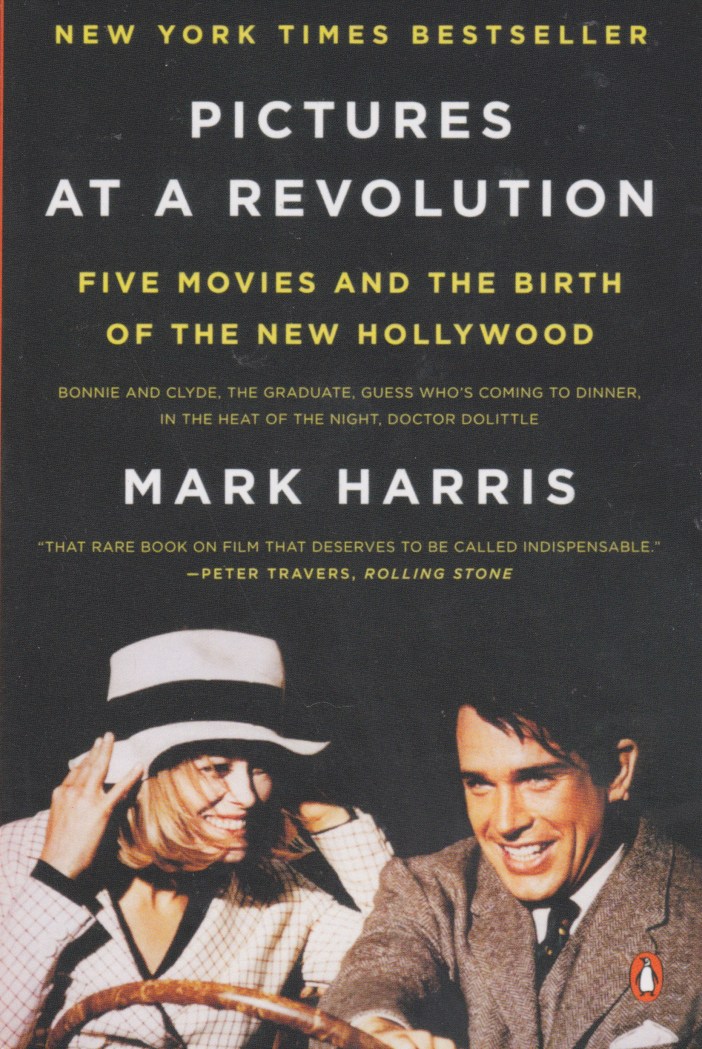
Mark Harris, a Hollywood historian whose book Five Came Back was made into a documentary which I enjoyed, wrote a brilliant book called Pictures at a Revolution, which looked at how film, and the film industry, changed during that decade through the framework of the five films nominated for the Academy Award for Best Picture in 1967; which, if any year was indicative of the changes being made and the changes to come, was indeed the perfect illustration. Two of the films were old style Hollywood–Guess Who’s Coming to Dinner and Doctor Dolittle–two were of the new Hollywood–Bonnie and Clyde and The Graduate–and the fifth, and ultimate winner  (In the Heat of the Night) seemed to straddle the line in some ways, and whose win–and other four wins–seemed to be a compromise between the old and the new.

Harris’ book, which follows all five films from conception to script development to production and then release, culminating in the Oscar ceremony itself, is riveting and informative. You learn who all the players in each case were; you follow along the studio politics and behind-the-scenes deal-making that went into the making of each film, and in each case, Harris brilliantly illustrates how each film represents an aspect of his thesis. Guess Who’s Coming to Dinner and In the Heat of the Night both dealt with the current issues of race; one as a gentle family comedy and the other through the darker lens of a murder investigation in a small Mississippi town, Dr. Dolittle represented the beginning of the end of the big Hollywood musical; the early part of the 1960’s gave the world the Oscar winners West Side Story, My Fair Lady, and The Sound of Music; the immense musical flops of the second half of the decade were ushered in with this epic disaster (there’s also a book in tracing the rise and fall of the big Hollywood musical in the 1960’s).

I greatly enjoyed this book, and if you’re a fan of movies, or have an interest in the industry, this is a great read for you. I’m not so interested in the film industry of today, but I am interested in its past, to be honest; I don’t really care about the Academy Awards anymore and often change the channel while it’s on–there are no surprises anymore, and the ridiculous amount of awards leading up to the Oscars, from the Golden Globes to the SAG Awards to the Writers’ and Directors’ Guild awards, have taken away any mystery or suspense as to who is going to win; it’s much more interesting to read about the old days when they were always kind of up for grabs, and hadn’t become the expensive, overblown spectacle they’ve become today.

The book also made me want to watch these films again; it’s been years since I’ve seen any of them, and in most cases, I only saw them in their edited-for-television versions.

pictures at a revolution

The Power of Love

The sun is shining. I haven’t checked the weather yet, but both Iris and Tucks were moved up an hour today due to thunderstorm forecasts. It may rain, despite the sunshine this morning; my windows are covered in condensation so it’s definitely humid out there.

A quick perusal of the weather forecast, however, shows a possibility of a thunderstorm this afternoon around 2–although the little image of the cloud with a lightning bolt on it also says, right above it, “0% chance of rain.” It’s also going to be in the 70’s today; beautiful weather for Iris and Tucks; though it might rain on Endymion tonight. I’m not concerned–Endymion doesn’t go down St. Charles so we never watch it. We used to go out dancing on Endymion Saturday, so we would walk down the parade route to get to the Quarter, and be buried in beads on the way (it does follow St. Charles in the CBD, and goes around Lee Circle before heading back up to the Superdome). But we don’t go dancing during Mardi Gras anymore–I don’t think  my old legs could handle it; they are very tired and sore this morning from all the walking and the outreach yesterday.

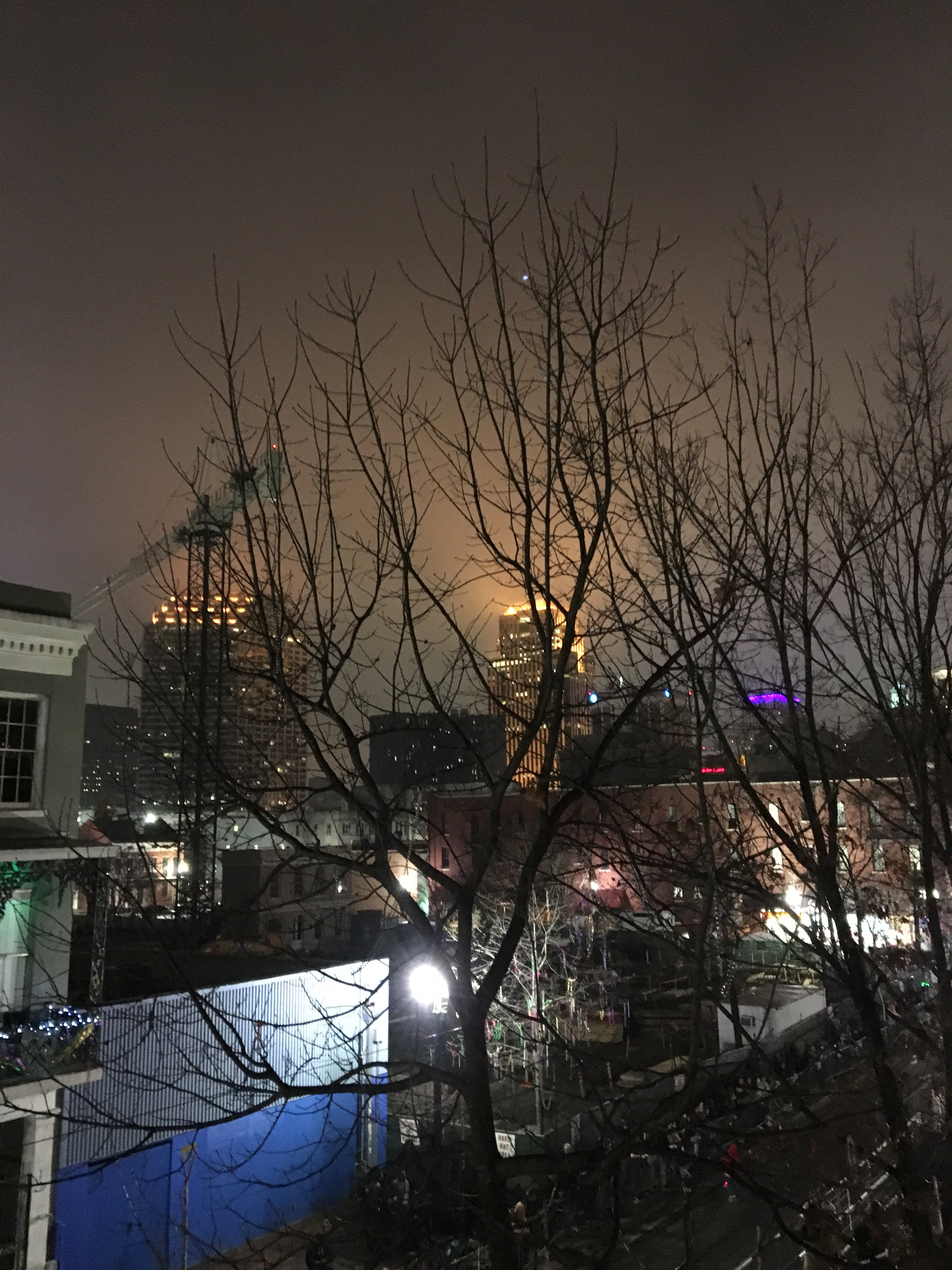
Yesterday was beautiful; I walked to work around one o’clock and took lots of pictures along the way. The Quarter was a madhouse; second lines and marching bands everywhere. We gave away 4500 condoms yesterday; we started at 3:15. I was supposed to work the second shift as well as the first, but at 6:00 when the others showed up we were down to less than 200 condoms, so I wished them well and walked home. Paul had been invited to a parade party at the New Orleans Advocate office on St. Charles; I couldn’t go because of outreach. But as I walked home, and walked past their office, I glanced in through the entry way and saw Paul; so I called his name and I got in. Their building, which used to house Michaud’s Cajun restaurant for years, are gorgeous; it’s where I saw Colson Whitehead speak last year. But I had never been up onto their balcony, which is way up there. We went up and watched the start of the Hermes parade, and the decided to walk home. I got some great pictures from up there as well.

This one is a particular favorite:

IMG_3865.JPG

Gorgeous, right?

We came home, fed the cats, and I took a shower while Paul watched the end of the LSU-Missouri gymnastics meet on-line, and then we headed out to the corner for Krewe d’Etat and Morpheus. We caught a shit ton of stuff out there–Morpheus is a great parade, but by the time it arrives the crowd has thinned out so much it’s easy to catch things, and they throw a lot. Then when it was all over, around 11:36 last night, we came inside and chilled. I finished reading Pictures at a Revolution last night, which I’ll blog about at some point after all the madness is over–just a few more days!

But now I have to pick another non-fiction book to read before bed, and I am leaning towards some true-crime-ish; perhaps the Edgar nominated Killers of the Flower Moon: The Osage Murders and the Birth of the FBI. I don’t read near enough true crime, and I also just realized I am not reading anything fictional, either; between the trip to Alabama, working on the anthology, and Carnival, I’ve not really sat down and picked something out to read. And I am also behind on the short story project. Heavy heaving sigh.

But I did take Monday off–tomorrow is going to be insane, four parades on the Avenue–so I am hoping to be able to use that day to get some rest, get back to the gym, and get caught up on things I am too tired to do over this weekend.

And now, back to the spice mines. Iris rolls in a little over half an hour!

Everytime You Go Away

There really is nothing like your own bed.

My inability to sleep in a hotel bed is becoming increasingly problematic the older I get; it’s hard for me to do public speaking events when I have trouble sleeping. I can rest; I just don’t fall deeply asleep and instead wind up in that half-sleep all night. In the morning I feel rested physically but not mentally, and I start getting tired. I also wind up drinking a lot more caffeine than I need to stay alert and focused, which then further complicates the inability to fall asleep. Heavy heaving sigh.

But the two events I did in Alabama this weekend–Murder in the Magic City on Saturday in Birmingham at the Homewood Library; Murder on the Menu in Wetumpka Sunday at the Civic Center–are wonderful events. They draw lovely crowds, all of whom love to read and also buy books, and are incredibly well organized. A special shout out to Margaret Fenton, who organizes Murder in the Magic City, and to Tammy Lynn Rushing and Fran Holland, who put together the Wetumpka event. If you ever get invited to speak, or have the chance to attend, you really should. Despite my inability to sleep, I always feel creatively invigorated as well as personally rewarded. I also really love the little town of Wetumpka; as weird as it sounds, I would like to go back there and spend a weekend exploring. I’ve always wanted to write about a small town in Alabama; and there’s lots of material, I suspect, there. I love that there’s a casino and a meteor crater there; one of the only concrete suspension bridges in the country; and two rivers. Driving from Birmingham to Wetumpka is always interesting; as at least a third of the trip is on state highways and not interstates, and as I drove, listening to my music and observing my surroundings, again I had many flashbacks to my own childhood and my own memories of Alabama. I also got re-inspired on a short story idea I had a couple of months back, and serendipitously an anthology it would be perfect for just popped up on my radar. Huzzah!

I took today off from work–a wise move–so I can get caught up on everything that slid while I was away this weekend. I have errands to run, some cleaning to do, some writing and editing, and a lot of organizing. *Whew*. Just thinking about it makes me feel very very tired. But I slept really well last night–there’s really nothing like your own bed, as I mentioned before–and I also need to get to the gym. I missed both Friday and Sunday workouts this weekend; I can make up the Sunday workout today but Friday’s, alas, is gone. I do miss it, and my body is all, what the hell man? And with Carnival getting back into full swing on Wednesday; it’s not going to be easy. I am going to skip cardio these next few workouts; I have to walk to and from work every day from Wednesday thru Friday, so those cardio workouts aren’t as necessary. I can go lift weights today, Wednesday, and Friday; I have Lundi Gras off so can replace the Sunday workout with one on Monday, and then get back to my regular schedule after Fat Tuesday. Huzzah!

And maybe I should start looking into eating healthier, too….sob.

I did manage to keep going on the short story project while I was in Alabama; I took Laura Lippman’s Hardly Knew Her collection with me and read the stories “Femme Fatale,” “Honor Bar, ” and  “A Good Fuck Spoiled.” (There were other stories there, like “Pony Girl” and “ARM and the Woman”, which I’d already read in their original publications; I even reprinted “ARM and the Woman” in my co-edited –with J. M. Redmann–anthology Women of the Mean Streets.) I loved these stories, and one of the things I love the most about Lippman’s short stories is how dark they are; they are most definitely hard-boiled and noir. I also love that the stories are about women who aren’t what would typically be called ‘nice girls;’ these are women with shady pasts who aren’t sorry about their pasts and will do what they need to do.

“A Good Fuck Spoiled” though, isn’t about a woman, although in some ways it is; it actually spins the tired trope of the older man/younger woman adulterous affair on its head. This is one of those stories where someone who is basically your average, every day husband and father is pushed over the edge into doing something dark in order to get out of a bad situation his own apathy kind of allowed him to drift into. It’s also exceptionally clever by playing with the entire concept of ‘betrayed wife’ against ‘golf widow,’ and of course, the husband, once he does what he needs to do–sees it exactly that way; I love how Lippman shows how someone can do something amoral and then completely justify it. God, this collection is amazing. Laura Lippman is definitely respected as one of our best crime writers today–but I don’t think she gets near enough credit as a short story writer.

And on that note, I need to make a list and start checking things off it.

IMG_1924

Crazy for You

Wednesday morning, and I am awake ridiculously early. I actually woke up just before four, but stayed in bed until six–at which point I got out of bed and figured might as well be productive instead of just laying here staring at the alarm clock. It’s also my long day at the office, but c’est la vie. It is what it is. If anything, I should sleep really well tonight, at the very least.

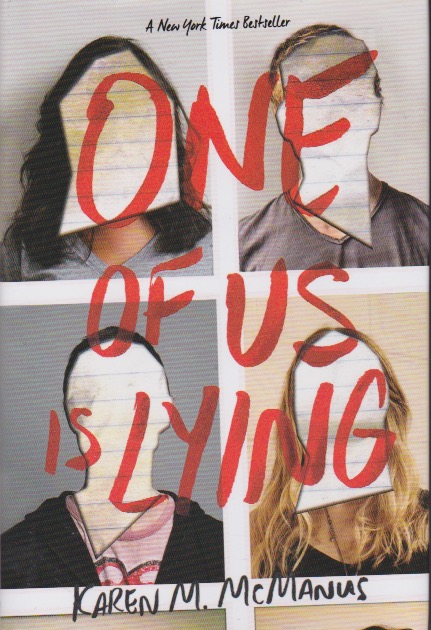
I didn’t read any short stories yesterday, alas, as I spent most of my weekend reading Karen McManus’ One of Us Is Lying, a huge phenomenal bestselling young adult novel that’s being adapted as a TV mini-series, a la Thirteen Reasons Why.

Scan

Bronwyn

Monday, September 24, 2:55 pm.

A sex tape. A pregnancy scare. Two cheating scandals. And that’s just this week’s update. If all you knew of Bayview High was Simon Kelleher’s gossip app, you’d wonder how anyone found time to go to class.

“Old news, Bronwyn,” says a voice over my shoulder. “Wait till you see tomorrow’s post.”

Damn. I hate getting caught reading About That, especially by its creator. I lower my phone and slam my locker shut. “Whose lives are you ruining next, Simon?”

Simon falls into step beside me as I move against the flow of students heading for the exit. “It’s a public service,” he says with a dismissive wave. “You tutor Reggie Crawley, don’t you? Wouldn’t you rather know he has a camera in his bedroom?”

Well, that’s a start, isn’t it?

The book is sort of a Breakfast Club turned on its ear;  if one of the student archetypes from that film had died during detention and all the other kids in there had a reason to want him dead. It’s a clever idea (one I am kicking myself for not thinking of myself), and the story is, above all else, compulsively readable. The book is told in shifting first person point of view; we get inside the heads and see the viewpoint of all four of the kids who are now suspects, which isn’t an easy thing to do McManus not only takes us there, but by seeing their lives through their eyes–their families, their relationships with friends, their ambitions and goals and so forth–we as readers begin to care about them, which makes knowing that one (or more) of them might be a killer even more problematic for the reader because you become emotionally vested.

Like The Breakfast Club, McManus takes the typical student stereotypes–the brain, the jock, the criminal, the beauty, and the outcast–and turns them on their ears.

In the 1980’s, the teen movie was reinvented and made much more real, more relatable, and more fun than what those that had come before. Serious films about teens were usually told from the point of view of the adults (The Blackboard Jungle, Up the Down Staircase) with an occasional exception, like Rebel Without a Cause. The 60’s saw the teen movie evolve into beach and surfing movies, and of course the Disney films like The Computer Wore Tennis Shoes and Now You See Him Now You Don’t–silly comedies that viewed teen life as though it were something frozen in time from the 1950’s (and even that wasn’t particularly realistic–malt shops, sock hops, etc) But beginning with Fast Times at Ridgemont High, the teen films of the 1980’s evolved into something different, something else, and John Hughes was one of the driving factors of that with his films, like Sixteen Candles, The Breakfast Club, and Pretty in Pink, among others (those are the Molly Ringwald trilogy, probably the most famous and best-remembered). In all honesty–and don’t come for me–I never thought The Breakfast Club was that great of a movie; sure, the actors were appealing, there were some great scenes, some funny moments–but the most, to me, honest part of the movie was when they were sitting around talking and Claire said they wouldn’t be friends at school on Monday because that’s what I had  been thinking all along. 

But One of Us Is Lying completely subverts that and turns it  on its head; as it does with a lot of other y/a book tropes, and again, the story moves very well. As someone who has read a lot of crime (and all of Agatha Christie) I was able to figure out who the killer was early on; but most teenagers I suspect would be completely caught unawares.

I really enjoyed this and couldn’t put it down because I wanted to find out what happened to the characters, and I cared about them; and it even ends with a John Hughes moment, which was nice.

Everybody Wants to Rule the World

Monday morning. The weekends never really quite seem long enough, do they? Oh, it’s fine…I do like my job ((even if I don’t like waking up in the morning so much) but I’ve been going to bed earlier to make getting up easier. Sometimes it works, sometimes it doesn’t, but I do feel considerably more rested than I used to in the mornings. This weekend is the first weekend of parades, but I am off to a weekend of events in Alabama, which I am, oddly enough, looking forward to; lovely people will be there, which is always nice.

I do hate missing the first weekend of parades, though.

Although….it’s not like there won’t be plenty of them the next weekend, right? It’s so weird how greedy  we are when we it comes to parades. There’s probably an entire essay in that, as well.

I didn’t get as much writing done as I would have liked this weekend–I never do, of course, I always think I can get more done than I can–but I am rolling with it. I’m not sure how much–if anything–I can get done while I am in Alabama; as I recall last year, we all hung out together all evening and laughed and laughed, and one of the attendees this year is Carolyn Haines….and if you’ve never met her, she’s good energy and she is pretty damned fun and funny. I suppose I can read.

Speaking of which, I did read two short stories yesterday, and I also read a novel over the course of the weekend (I’ll save the novel for another entry).

The first story was Kristen Roupenian’s “Cat Person,” which was published on-line and in print by the New Yorker last month, and rather went viral; it seemed like everyone was reading it and everyone was talking about it, and Roupenian came out of it all with a healthy book contract (GOOD FOR HER! Seriously, I never understand why other writers get so snarky about the success of other writers. I always see it as a win for one is a win for all). I didn’t read the story at the time–discussions and arguments about it were everywhere, and I didn’t want to be influenced in my reading by the social media furor. But yesterday, after my workout (yes, made it to the gym again!) I curled up in my easy chair and read it.

Margot met Robert on a Wednesday night toward the end of h er fall semester. She was working behind the concession stand at the artsy movie theatre downtown when he came in and about a large popcorn and a box of Red Vines.

“That’s an…unusual choice,” she said. “I don’t think I’ve ever actually sold a box of Red Vines before.”

Flirting with her customers was a habit she’s picked up back when she worked as a barista, and it helped with tips. She didn’t earn tips at the movie theatre, but the job was boring otherwise, and she did  think that Robert was cute. Not so cute that she would have, say, gone up to him at a party, but cute enough that she could have drummed up an imaginary crush on him if he’d sat across from her during a dull class–though she was pretty sure that he was out of college, in his mid-twenties at least. He was tall, which she liked, and she could see the edge of a tattoo peeking out from beneath the rolled-up sleeve of his shirt. But he was on the heavy side, his beard was a bit too long, and his shoulders slumped forward slightly, as though he was protecting something.

I thought this story was very well done, myself–but I can certainly see why it upset men, and why women embraced it. I don’t think I’ve ever read before such an honest depiction of a bad date and bad sex in my life. God knows I’ve had bad sex before, but I’ve certainly never written about it; usually when I write about sex its erotica so it kind of has to be hot, you know what I mean? Whoever writes about bad sex? There were times, when reading it, when she encapsulates a conversation into a paragraph of prose (then he said this, and she thought well this but said that, and so forth) where I would have much rather read the actual conversation, but other than that complaint I kind of enjoyed it; although given all the discussion I’d seen on line made me know where it was going–but that ending was so incredibly perfect. Perfect.

Then I read Michael Bailey’s “I Will Be The Reflection Until the End”, from Tales from the Lake Volume 4:

My sister used to collect cherry plum pits in her napkin secretly, under the kitchen table. A strainer full of mixed yellow and red and deep-purple fruits would separate us each spring, with a small bowl next to it to collect the pits–although mine were typically the only ones in there–and a plate beneath the strainer to collect any drips from the rinsed fruit. My sister was coy like that. Her lie had become our lie, and every once in a while she’d throw a pit in the bowl to make it look like we were being honest. She knew I wouldn’t bring it up to Mom, because that meant I could have more if I kept my mouth shut. It was one of the few secrets we kept from Mom in our  youth. Call it a sibling bonding moment.

This story is on the longlist for the Bram Stoker Award for Outstanding Achievement in Short Fiction, and it is a beautifully written, moving short story. It reminded me a little of one of my favorite Stephen King short stories, “The Last Rung on the Ladder”–it’s a gorgeously written tale about a younger brother remembering his older sister, loving childhood memories of closeness that went away as she got older, and things went wrong with her. I absolutely loved it. I met Bailey and his wife several years ago at Stokercon in Las Vegas, and they charmed me completely; this is my first time reading his work, and it certainly won’t be the last. The only reason I can’t see this story not making the short list (or winning) is because I’m not entirely certain it’s horror; it may qualify, but not the in-your-face, jump scare or gross out horror–it’s a quiet horror of the Shirley Jackson kind; the horror of the heart from what life can do to someone we love.

12243211_778719875584463_322279597921766512_n

I Want to Know What Love Is

It’s been raining pretty much most of the weekend, which is fine. I went to get groceries, pick up a prescription, and get the mail before getting home and starting to work on the mess that is my home; I also finished writing a chapter of one manuscript and started writing another–which was my writing goal for yesterday. Today’s is to do second drafts of two short stories to prepare them for submission. I also have to go to the gym and finish the cleaning of the apartment and organizing my office. I started reading the big y/a best seller One of Us Is Lying by Karen McManus yesterday; I can see why it’s a bestseller and I can also see why it’s being developed into a television series a la Thirteen Reasons Why; it’s a deceptively simple yet surprisingly complex story, and likewise–well, I’ll talk some more about it once I’ve finished.

I’m enjoying writing again for the first time in years, which is a good thing, and I am actually putting a lot of thought and planning into what I’m writing, which is a really good thing. What I’ve written over the last six or seven years has been a lot more organic, coming to me as I wrote it from a basic premise and perhaps knowing what the end was; without putting near as much thought into theme and what I am trying to say, what I am trying to explore with the story, than I used to–I mean, it worked, but it also made the work a lot harder than it needed to be. I think this is particularly true of short stories; I think that’s primarily what I’ve been doing wrong in writing them–my entire approach to short stories has been wrong, and I’ve been, as I said, making it a lot harder on myself than it necessarily needs to be.

Which is, sadly, what I always tend to do for myself: make things harder than they need to be.

Heavy heaving sigh.

In addition to cleaning and everything else I did yesterday, I also managed to start watching Season 2 of Black Sails, which continues to enthrall. I am still liking the idea of finally writing my pirate novel (Cutlass), but not as much as before; it remains one of those dreams that I hold on to for when I am making a living as a writer again and able to not have a day job any longer. (There are several of those; they also require not only making a living but making enough money to travel and do research.)

Some day. I never give up on the dream.

The Short Story Project also continues; yesterday I read a story by Ross MacDonald from The Archer Files and one by Karl Edward Wagner from the gorgeous two volume collection The Best Horror Stories of Karl Edward Wagner, produced by Centipede Press maybe seven or eight years ago.

MacDonald’s story, “The Bearded Lady,” was quite good, as everything written by MacDonald is.

The unlatched door swung inward when I knocked. I walked into the studio, which was high and dim as a hayloft. The big north window in the opposite wall was hung with monkscloth draperies that shut out the morning light. I found the switch beside the door and snapped it on. Several fluorescent tubes suspended from the naked rafters flickered and burned blue-white.

A strange woman faced me under the cruel light. She was only a  charcoal sketch on an easel, but she gave me a chill. Her nude body, posed casually on a chair, was slim and round and pleasant to look at. Her face wasn’t pleasant at all. Bushy black eyebrows almost hid her eyes. A walrus mustache bracketed her mouth, and a thick beard fanned down over her torso.

The door creaked behind me. The girl who appeared in the doorway wore a starched white uniform. Her face had a little starch in it, too, though not enough to spoil her good looks entirely. Her black hair was drawn back severely from her forehead.

Lew Archer, on his way from Los Angeles to San Francisco, decided to stop in the small town of San Marcos and look up an old army buddy, inadvertently stumbling into a murder case. The story is interesting, the writing whipcrack smart, with MacDonald’s trademark, cynical short paragraphs immediately getting to the essence of a character. Don’t we, as readers, already have a strong impression of who that young woman is as a person after those three sentences? I’ve often wondered how one solves a murder in a short story–or writes a detective short story. I’ve tried and failed often enough. But the great thing about the Short Story Project is I am starting to understand how to write them, how they work, and how to make them work; which is a lovely thing. I have several ideas for Chanse short stories that I’ve never written because I didn’t know how; now I rather do, or at least have an idea, thanks to The Archer Files and Kinsey and Me (Sue Grafton). Both books are great learning tools for people who want to write detective stories, and MacDonald’s influence on Grafton is clear. (Although I’d still love to see someone do an essay, or book of criticism, comparing and contrasting MacDonald’s work with that of his wife: The Murderous Millars would be a great title.) MacDonald’s stories usually have to do with damaged and dysfunctional families; “The Bearded Lady” is another one of those, and is very well done. I highly recommend it.

The Wagner story I read was from the second volume of he Best Horror Stories of Karl Edward Wagner, which was titled Walk on the Wild Side, and was titled “The Last Wolf.”

The last writer sat alone in his study.

There was a knock at his door.

But it was only his agent. A tired, weathered old man like himself. It seemed not long ago that he had thought the man quite young.

“I phoned you I was coming,” explained his agent, as if to apologize for the writer’s surprised greeting.

Of course…he had forgotten. He concealed the vague annoyance he felt at being interrupted at his work.

Nervously the agent entered his study. He gripped his attache case firmly before him, thrusting it into the room as if it were a shield against the perilously stacked shelves and shelves of musty books. Clearing a drift of worn volumes from the cracked leather couch, he seated himself amidst a puff of dust from the ancient cushions.

I received both volumes of Wagner when I was judging the Bram Stoker Award for Best Single Author Collection, or whatever it is called; it was so long ago that I don’t even recall who the finalists were or who actually won. My memory is perforated like Swiss cheese nowadays, with holes and gaps; it also works like a sieve as new knowledge, and new books I’ve read, tend to pass through it without catching hold (I used to be able to name every book I’ve read, the plot, the main characters–and even some of the minor; over the years that ability has been sadly lost to time). I don’t, for example, remember the titles or the contents of the Wagner stories I read; but the books are beautiful volumes and I remember being impressed by his writing, so I kept them on my shelves. It was only a week or so ago that I realized, that I remembered, them; and that they might make a good addition to my year-long study of short fiction.

I’ve often said that writing about writers, about the business of writing and publishing, sometimes (often) feels masturbatory to me; only other writers would be interested in such a story. And yet writers pop up in my work all the time; Paige is a journalist and wannabe novelist in the Chanse series (and now that I’ve retired that series she’s migrated, apparently, over to the Scotty); another writer character I’ve created has appeared in several novels of mine–one Scotty, The Orion Mask, and one pseudonymous; he also appears to be the voice I used in several first-person short stories, including “An Arrow for Sebastian.” I have another such short story in process; I’ve not quite worked out how to make the story work, but there you have it. I was tempted to write an entire series about a writer, but as I started to develop my gay male writer character more I soon realized I had turned him into a hybrid of Scotty and Chanse; there was nothing new or original about him other than he was a writer and not a private eye. (I really do want to reread Azimov’s Murder at the ABA, though, and Elizabeth Peter’s brilliant Die for Love and Naked Once More.)

“The Last Wolf” is also about a writer, a writer who firmly believes in himself and his work, and that his work is art, and art should never be compromised for commerce. The world in which he lives is one where he is the last (apparently) person attempting to still write fiction; novels have fallen by the wayside and short stories are no longer published; the world has completely changed and his agent wants him to try to write for television shows–which, as described, sound horrifically awful. The writer refuses, the agent leaves, and he goes back to his typewriter. This story could easily be seen as angry, or even whiny; in the hands of a lesser author, the story would be precisely that. But Wagner paints a picture with his words, and maybe it resonated with me more because I am an author myself, but the sympathy rests entirely with the author. (Although I am one of those whose eyes roll so hard that  they almost unscrew when I hear another author speak of their ‘art’; but that’s a topic for another day.) I am looking forward to digging back into Wagner’s work again this year.

And now, I need to file and organize, perhaps vacuum, before I head to the gum. I want to get some things written today, and I need to revise those stories.

Hello, spice mines.

Sigh.

26196451_321860411641954_3040436925599999815_n