Don’t Lose My Number

Easter! April Fool’s Day!

I ran my errands yesterday and got that over with, did some chores around the house and a little bit of writing–a very little bit, which means I must do a lot today–and then settled in to watch some movies: Office Christmas Party, Atomic Blonde, Five Dances, and Alien: Covenant, which was much better than I’d heard it was, although it didn’t make any sense compared to what I remembered of Prometheus, which it theoretically followed in the series. I also started brainstorming another short story, “Malevolence,” while sitting in my easy chair. I may start writing the story today; or I may not. It’ll depend on how I feel once I get home from the gym this morning, and how much progress I make on the disaster area also known as my kitchen.

I also read more of Jon Ronson’s So You’ve Been Publicly Shamed, which I am really enjoying. I also read some more short stories, but I am also about to start reading Bryan Camp’s debut novel, The City of Lost Fortune, so I can review it around its publication, which is rapidly coming up. I’ve also got ARC’s of Alex Segura’s new novel, and Lori Roy’s. So many riches…and that doesn’t even take into consideration everything else in my TBR pile. Sigh, I am such a lucky bastard.

But…I also need to get some writing done, I need to get some cleaning done, and I need to be productive today. I haven’t been the last two days, despite running errands and doing chores, and so  yes, I really have got to get my act together today. Next week is a normal, five day work-week, and then things will be normal again for a while, until Memorial Day weekend, at least. Heavy heaving sigh.

But as I head back into the spice mines, I am going to share with you the opening of Vieux Carre Voodoo, which was not only the fourth Scotty book, but the comeback Scotty book, after several years away in the wake of Katrina.

vieux carre voodoo 1

One of the rules of walking in the French Quarter when the weather’s warm is always look up when you walk underneath a balcony, or you’ll be sorry.

 You’d think having lived in the Quarter all of my life, looking up would be second nature for me by now. But I was lost in thought as I hurried up Governor Nicholls Street. I was really missing Frank and wishing he were here instead of in Ohio. I was on my way to ride on my parents’ float in the Gay Easter Parade, and it felt really strange to be doing it without Frank. I was debating myself as to whether my relationship had descended into an unhealthy level of co-dependency. I was paying absolutely no attention to my surroundings, other than making sure I wasn’t about to walk into a support post for a balcony. I had just decided here was nothing neurotic in missing your boyfriend, and that I should just relax and enjoy myself. It was a beautiful spring day, after all, and riding in a parade was always fun. I took a deep breath, cleared my head of all negativity, and started walking faster so I wouldn’t be late.

And that was when I was completely drenched by a cascade of cold water from above.

My reaction was reflexive and instinctive. “FUCK!” I screamed at the top of my lungs, which got me a really nasty look from the couple pushing a stroller across the street. I sighed, gave them an apologetic shrug, and their disapproving frowns turned into slight smiles at my expense.

I was soaked. Water was running down my back and chest, dripping out of my hair, and to my horror, I realized the white bikini my mother had so thoughtfully provided for me to wear in the parade apparently became see-through when wet. I immediately dropped my hands to cover my crotch as my eyes darted back and forth, looking for other pedestrians. The couple with the stroller shook their heads, gave each other a look, and started pushing the stroller a lot faster.

Obviously, they were tourists.

I shivered. The cool damp breeze coming from the river was much colder on wet skin. I knew I should’ve worn sweats over the costume.

“Scotty? Is that you? Oh, dear, I’m so sorry!” a familiar voice said from above me. There was apologetic concern tempered by a slight bit of amusement in the tone.

I looked up and my initial irritation faded away to embarrassment. “Oh, it’s okay, Doc.” I called up to the bald older man peering down at me through gold-rimmed spectacles. “I wasn’t looking, like an idiot.” I sluiced water off my arms and shook my head from side to side. Droplets of water flew away from my hair.

“Well, come in and let me give you a towel.” He shook his head. “I’ll buzz you in.” His head vanished for a moment before reappearing almost instantly. “And you can explain to me what you’re doing in that ridiculous get-up.”  His face broke into a wide grin, and I couldn’t help but laugh as I dashed over to the metal gate at the side of the building in time to open it when the buzzer sounded.

Dr. Benjamin Garrett was a friend of my parents. He’d taught them both when they’d attended the University of New Orleans. He had been a full professor in both history and political science, and my mother frequently credited him for ‘opening her eyes to all the injustice in the world.’ We all called him Doc—well, when we were young we’d called him “Uncle Doc” until he asked us to drop the ‘uncle’ because he said it made him sound like a relative of the former dictators of Haiti. He loved to debate politics with my parents into the wee hours of the morning over bourbon; his eyes twinkling as he deliberately took an opposing viewpoint to wind my mother up.  I’d always liked Doc. He was fiercely intelligent, a bit of a curmudgeon, and one of the funniest people I knew.

No matter the situation, he always managed to have the absolutely perfect, droll thing to say on his lips. He was the epitome of the old-style Southern gentleman, and he was always dressed stylishly and appropriately. In the summer, he wore seersucker suits, bow ties and Panama hats. After Labor Day he switched to navy blue suits and dark red ties. He liked his bourbon and cigars, and he always seemed to have a mischievous twinkle in his blue eyes. He walked with a cane now that he was older, and had been completely bald for as long as I could remember.

I paused long enough to take a look at myself in the plate glass window of the candle shop on the first floor of Doc’s building. I’d been working hard at the gym since Frank left. Now that I was in my thirties, my body seemed determined to develop love handles. Frank said he didn’t mind them, but I did. My goal was to be as lean as I’d been when we first met by the time he came home and I was making progress. The wet white bikini was unforgiving, but I didn’t see any pesky fat hanging over the sides. I winked at myself and dashed down the dark passageway alongside the building until I reached the back stairs. Another blast of wind brought up goose bumps on my skin as I climbed the stairs.  Doc was standing in the door to his apartment holding a huge fluffy white towel, which he handed to me. One of his gray eyebrows went up as he peered at me over his round gold spectacles.

 “It’s for the Gay Easter parade,” I explained as I toweled my hair and wrapped the towel around my waist. “I’m riding on the Devil’s Weed float.” The Devil’s Weed was the tobacco shop my parents ran on Royal Street.

 “And your mother decided you should dress up as a gay Easter Bunny,” he nodded as he stepped aside to let me in. “And to her, that means a white bikini with a cottontail and rabbit ears.” His eyes twinkled. “Now slip off that bikini—I’ll throw it in my dryer for a few minutes.”

Smooth Operator

April Fool’s Eve!

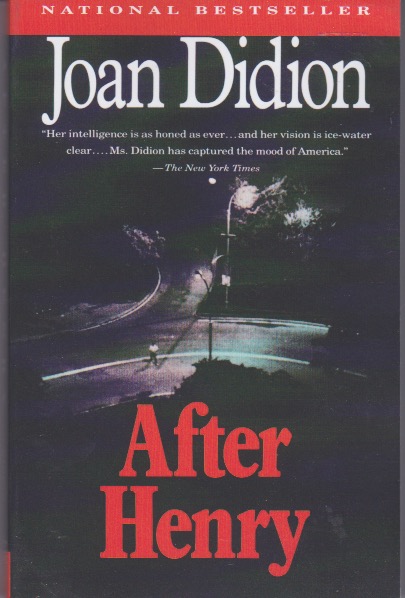
I slept in this morning, after staying up much later than I intended last night. I’d read somewhere that you should stop looking at a screen of any kind–television, computer, phone, iPad–at least half an hour before going to bed to help with sleep, and frankly, I’ll try just about anything that will help in that regard; so I’ve started keeping a non-fiction book on my nightstand, to read for about half an hour every night before attempting sleep. The last two I read were The Black Prince of Florence and Joan Didion’s After Henry; last night I started onJon Ronson’s So You’ve Been Publicly Shamed. I couldn’t stop reading it, of course, and before I knew it, I’d read through the first two people he’d interviewed about their public shamings–Jonah Lehrer and Justine Sacco–and wanted to keep going; but I forced myself to put the book down because it was much later than I wanted to stay up and I was worried about not getting up this morning.

I was right.

It’s kind of interesting to be reading the Ronson book about how public shaming destroyed the lives of two people–one who did something terrible (Lerner) and the other who made a really dumb joke on Twitter that went viral–and Ronson is really a good writer; I actually have some sympathy for the people he is writing about. But this is another, perfect example of why Twitter terrifies and fascinates me at the same time. I can’t imagine how horrible it would be to go viral in such a way on social media, but then again, I try to be very careful with social media. Is that cowardly? Perhaps it is, but i also don’t have time for arguing with people on social media, nor do I have an inclination to do so. I am frequently exposed to different viewpoints on my own social media–but as long as it is couched respectfully and is not in any way nasty or vicious, I like seeing points of view that are different than my own. (Homophobia, misogyny, and racism, however, are always deal-breakers. I never have any sympathy or interest in seeing that point of view.)

As you can tell, I am finding the book to be very interesting.

We also finished watching Season 2 of Santa Clarita Diet, which is hilarious. I highly recommend it. I also got caught up on Krypton and Riverdale yesterday, and did some more writing–not very good writing, mind you; for some reason “Don’t Look Down” is becoming increasingly more and more difficult to write, but I am determined to get that first fucking draft done this weekend. I also want to get some revisions done today. I am going to run some errands and go to the gym in a little bit, and then I am hoping to be able to get home and sit down and just write for the rest of the afternoon, which is going to require me shutting down all social media and closing my web browsers. I think I’ll clean the windows today as well, and maybe do some cleaning…which is the best way to deal with getting stuck on writing.

As I said, I finished reading Joan Didion’s After Henry this week.

after henry

It’s a collections of essays she wrote that were published in various places, and tackle various subjects in that amazing style of writing she had; the way she constructs sentences, and puts words and paragraphs together, is so amazing that it’s hard sometimes to drink in what she is actually saying. These essays, about politics in Los Angeles; natural disasters in southern California; the Central Park jogger case in New York; the political conventions in 1988; the Reagan administration and the face it presented to the world; and several others, are pretty amazing and also serve as a kind of time capsule of recent history. I am really looking forward to reading another non-fiction Didion book, and possibly another of her novels.

I had finished reading The Black Prince of Florence before I took up the Didion.

the black prince of florence.jpeg

As Constant Reader is aware, I am fascinated by the Medici family of Florence, who rose from being merchant class to one of the wealthiest banking families in Europe to popes and queens to royalty in their own right. Alessandro de Medici, the little known subject of this biography, was the first Medici to attain royalty on his own; due to the machinations of his uncle, Pope Clement VII (better known to history as the pope who refused Henry VIII’s request for a divorce from Catherine of Aragon), he became Duke of Florence and the republic came to an end. Alessandro was illegitimate, and there is no proof of whom his mother was; his legitimate sister, Catherine, became queen of France. Fletcher does an excellent job of explaining the tumult of the times; how Italy had been riven by a series of wars between different city-states as well as between France and the Holy Roman Empire, both with extensive claims to various places on the peninsula, along with all the machinations in Rome for the papacy. The question of whether Alessandro’s mother was an African slave, or that was simply a slander to discredit him during his lifetime by his enemies, is one that Fletcher takes up; she also explains the differences between modern day views of race as opposed to those of the sixteenth century. I found the book to be endlessly fascinating, and really helped me get a better grasp of just how the Medici family became royalty. Alessandro’s sister Catherine is probably the most famous (notorious?) member of the family; I have numerous biographies of her on my shelves I look forward to reading.

I’ve also read some more short stories for the Short Story Project. First up is”A Poison That Leaves No Trace” by Sue Grafton, from Kinsey and Me:

The woman was waiting for me outside my office when I arrived that morning. She was short and quite plump, wearing jeans in a size I’ve never seen on the rack. Her blouse was tunic length, ostensibly to disguise her considerable rear end. Someone must have told her never to wear horizontal stripes, so the bold red-and-blue bands ran diagonally across her torso with a dizzying effect. Big red canvas tote, matching canvas wedgies. Her face was round, seamless, and smooth, her hair a uniformly dark shade that suggested a rinse. She might have been any age between forty and sixty. “You’re not Kinsey Millhone,” she said as I approached.

“Actually, I am. Would you like to come in?” I unlocked the door and stepped back so she could pass in front of me. She was giving me the once-over, as if my appearance was as remarkable to her as hers was to me.

This story is kind of clever, with a surprise twist at the end that caught me off guard; a woman hires Kinsey to prove that her niece murdered the woman’s sister for the insurance money. It’s fraud, all right, but not what Kinsey was originally led to believe, and the twists and turns are spooled out very cleverly.

The next up was another Sue Grafton tale from Kinsey and Me, “Full Circle.”

The accident seemed to happen in slow motion–one of those stop-action sequences that seem to go on forever though in tryth no mare than a few seconds have elapsed. It was Friday afternoon, rush hour, Santa Teresa traffic moving at a lively pace, my little VW holding its own despite the fact it’s fifteen years out of date. I was feeling good. I’d just wrapped up a case and I had a check in my handbag for four thousand bucks, not bad considering the fact that I’m a female private eye, self-employed, and subject to the feast-or-famine vagaries of any other freelance work.

I glanced to my left as a young woman, driving a white compact, appeared in my driver’s-side mirror. A bright red Porsche was bearing down on her in the fast lane. I adjust my speed, making room for her, sensing that she meant to cut right in front of me. A navy blue pick-up truck was coming up on my right, each of us jockeying for position as the late afternoon sun washed down out of a cloudless California spring sky. I had glanced in my rearview mirror, checking traffic behind me, when I heard a loud popping noise. I snapped my attention back to the road in front of me. The white compact veered abruptly back into the fast lane, clipped the rear of the red Porsche, then hit the center divider and careened directly into my path. I slammed on my brakes, adrenaline shooting through me as I fought to control the VW’s fishtailing rear end.

This story opens with one of the best descriptions of the slow-motion horror of an accident on the highway; how it happens right before your eyes and how you basically have to rely on instinct and automatic reaction to try to avoid the accident because your brain is so busy processing what it’s seeing. The story is worth reading for that alone, but it turns into a case when the mother of the girl driving the compact, Caroline Spurrier, hires Kinsey because it turns out the accident didn’t kill Caroline; she’d been shot. The man driving the truck also has disappeared. From that point on, it’s a great example of a private eye story.

Sigh. I’m going to miss Sue Grafton.

Axel F

GOOD FRIDAY. I slept in, which was absolutely lovely, and am now enjoying my first cup of coffee this morning. The herd of cats are outside my windows, gathered for their morning feeding, and Scooter is firmly ensconced on my desk–it’s going to be a long day of him needing attention, I suspect–and am looking forward to  my three-day weekend. It looks gorgeous outside, honestly; I think I might clean the windows today, as well as work on cleaning the house. I also need to hit the gym; it’s been well over two weeks at this point, and I’m not going to get leaner sitting on my ass thinking about it, quite frankly.

I am also procrastinating running some errands as well as cleaning. I am also planning on getting some writing done, and some reading. I’ve gotten some fantastic ARC’s this week, and there are a couple of other novels I’ve been meaning to get to  as well; I am hoping to get to one of those this weekend. The primary problem here, of course, is that I can’t decide which to read. I am also almost finished with Joan Didion’s essay collection, After Henry, which, despite its bad name, is quite enjoyable. I am still abstaining from buying new books until I get the TBR more manageable and under control, but am itching to get my hands on another Didion non-fiction.

Yesterday I worked some more on “Don’t Look Down” and another one that’s been languishing, “A Holler Full of Kudzu,” but I also realized yesterday as I looked at the unholy mess that is “Don’t Look Down” that I am going to simply approach these stories as I do a novel; in other words, just write everything as it comes to me, and worry about editing and revising later. That quite often works for me when I am writing a novel, so why not apply it to a short story? I also want to get a final first draft of those stories done this weekend, as well as “Once a Tiger” while also revising and reworking “My Brother’s Keeper”; Sunday is not only Easter but it’s also April 1st, which is when I intended to put all short story work aside and dive back into the novels. (I may use Sunday for the short stories, and move on to Scotty on Monday; I may just use Sunday as a buffer day between them all, who knows? We’ll see, won’t we?)

We are also watching the second season of Santa Clarita Diet, which is just as funny, charming and clever as the first. I have also started watching Krypton, the Superman prequel on Syfy, and I am enjoying it. It’s getting some so-so reviews, but I am enjoying it so far; I’ve always loved the Krypton stories, and John Byrne’s comic book mini-series The World of Krypton from the original DC reboot in the 1980’s is still one of my all-time favorite comics. Some of the elements from that mini-series are showing up in this show–not having followed comics as much over the last twenty years or so has limited my knowledge of things; of what is considered canon now and what is not; but some of the things I am seeing in this show were things I first became aware of in The World of Krypton. I also need to get caught up on Riverdale; at least I have things I can watch while doing cardio at the gym!

I also managed to read some short stories. First up is  “The Downward Path to Wisdom” by Katherine Anne Porter, from The Collected Stories of Katherine Anne Porter.

In the square bedroom with the big window Mama and Papa were lolling back on their pillows handing each other things from the wide black tray on the small table with crossed legs. They were smiling and they smiled even more when the little boy, with the feeling of sleep still in his skin and hair, came in and walked up to the bed. Leaning against it, his bare toes wriggling in the white fur rug, he went on eating peanuts which he took from his pajamas pocket. He was four years old.

“Here’s my baby,” said Mama. “Lift him up, will you?”

This is another one of those Porter stories that just wasn’t for me. I mean, I get what she was doing; the entire story is told from the point of view of a small child, and she manages to really get that way children have no sense of time perfectly. The passage of time either seems incredibly slow and other times is really fast; and the way the child observes the clashes and moodiness and volatility of the adults around him is sort of interesting; but the story itself isn’t interesting at all. Not really for me, I guess; I should just park Ms. Porter’s collection back on the shelf and be done with it, frankly. But I also remember that I had a much greater appreciation of “The Jilting of Granny Weatherall” this time around, and keep thinking, well, maybe I’ll appreciate one of the others in a different way this time.

Yeah, well, it didn’t happen with this story.

Next up was another Sue Grafton story from Kinsey and Me, “Falling off the Roof.”

It was six a.m and I was jogging on the bike path at the beach, trotting three miles in behalf of my sagging rear end. I’m thirty-two years old, weighing in at 118, so you wouldn’t think I’d have to concern myself with such things, but I’m a private eye by trade and I’m single on top of that. Sometimes I end up running for my life, so it will never do to get out of shape.

I had just hit my stride. My breathing was audible but not labored, my shoes chunking rhythmically as the asphalt sped away underneath my feet. What worried me was the sound of someone running behind me, and gaining too. I glanced back casually and felt adrenaline shoot through my heart, jolting it up to jackhammer pace. A man in a black sweat suit was closing ground. I picked up speed, quickly assessing the situation. There wasn’t another soul in sight. No other joggers. None of the usual bums sleeping on the grass.

This story is terrific. Kinsey is hired by a man who thinks his brother brother was murdere; he fell off his roof and the police ruled it an accident. However, he was in a really bad marriage that seemed to suddenly settle down some in the weeks before the death, and the brother suspects the wife had something to do with the death–despite her rigid, airtight alibi. Kinsey starts looking into things, and soon becomes fairly certain that it was a murder; the trick is figuring out how she did it and got away with it…which leads Kinsey to going undercover at a Mystery Book Club. This story is clever, clever, clever, and one of my favorites of the Kinsey short stories.

And on that note, tis back to the spice mines with me.

28947357_10215609280568073_7475821141611561298_o


Better Be Good to Me


Wednesday.

Yesterday was actually a lot of fun; Erin Mitchell had tagged me on a Facebook thing where you have to post seven covers of favorite books without an explanation; just post the cover and that was it. Quite naturally, my first selection was Valley of the Dolls by Jacqueline Susann; and then as I started looking up covers (Rebecca by Daphne du Maurier was the second) I started remembering other favorites from long ago; a lovely sort of triggering memories. Before I knew it I was up to twenty-one covers, and hadn’t even remotely begun to scratch the surface. But engaging with people on social media in such a positive way, about books we all read and loved and remembered so fondly, was one of the most positive experiences involving social media that I can remember having in a long time; social media has become so dank and dark and enraging; a stark reminder of the societal rifts and divisions in not just our country, but in the world. I think I am going to continue posting images of book covers that I love, because there are so many books that I love.

And isn’t doing something positive on social media for a change a really good thing?

I have always been an avid reader; as long as I can remember I was always reading something. Trying to pick influences when being interviewed is never an easy thing for me; everything I’ve ever read has influenced me in some way. Where did my love for history come from? I remember reading Genevieve Foster’s wonderful ‘horizontal history’ books for kids, like George Washington’s World and Abraham Lincoln’s World; but I had to be interested in history before that in order to have picked those up in the first place (they are, for the record, extraordinary books packed full of information and analysis; her explanation of how the marriage of Maximilian of Austria and Mary of Burgundy in 1476 was a direct cause of every major European war from that point on until 1914 was something that always has stuck with me; it was the marriage that created the enmity and rivalry between the French and the Germans, fighting over Flanders and Alsace-Lorraine for centuries, and often dragging the rest of Europe into the war with them); it was American history that interested me from the first, and then that extrapolated into British history, than European and to a lesser degree, world. But I was always fascinated by ancient history as well; Egypt and Greece and Rome. I don’t know how or where that came from; paging through encyclopedias, perhaps. I do know that I read every volume of the World Book Encyclopedia that my parents bought for my sister and I when we were very young, from cover to cover; and I always had a really good memory for things that interested me. Posting these book covers brought back so many memories…of all the times I retreated from a world I didn’t fit into on the back porch of our upstairs apartment in Chicago with a book; all the times I went into my bedroom in whatever house we were living with a book and shut the door, escaping into a different world.

I have been working on the introduction to my short story collection; debating whether or not to pull one of the stories or not (actually two; they are out for submission but one is nearing the one-year anniversary of its submission date, and the other was sent to the same market so….while it would totally suck to invalidate the submission by publishing them in my collection and then have them accepted; I am thinking it’s probably prudent to pull them and replace them with other stories, saving them for either Kindle singles or another collection at a later date, but that might mean delaying the collection, unless I can finish another two stories this weekend, which is always possible…see how that works?)

And on that note, back to the spice mines.

IMG_1958


If You Love Somebody Set Them Free

I have to panel today and tomorrow at Saints and Sinners; one is a genre panel and the other is an on-stage interview with Jewelle Gomez; we are being interviewed by Eric Andrews-Katz. I can’t seem to get it into my head which is which day; old age is not pretty for anyone. The irony is the primary topic has to do with being prolific and/or maintaining a career over a long period of time; considering I haven’t published a novel under my own name since 2016 and the last Todd Gregory was January last year (I think), it seems kind of weird to be talking about being prolific. But I suppose all the stuff I’ve published since 2002 kind of makes up for the last year or so of slacking off.

I guess I can talk about how I used to be prolific.

I’m also supposed to read from my work. Sigh. Not sure what I’m going to read. I can always fall back on Timothy, I suppose; that always goes over pretty well. Or I could read from this story that is eventually going to be available on Kindle as an ebook. (It IS up, but I keep finding mistakes, and having to upload a corrected file; and I am not going to try to start selling it until I have it right. My fabulous friend Erin also put together a better cover for me AND made sure the formatting and everything was done in a new file, but since I had already corrected something on the page–adding a tag line about A new story of suspense from award-winning author Greg Herren–I have to wait until the page corrects before I can put the new file up AND the new cover; and trust me, the next time I do this I am going to make sure I do everything right the first fucking time.)

I have downloaded a copy of the story from Kindle, so I do have an electronic file, so I could just read from my iPad, I suppose. And since I’ve read it out loud a few times already the last few days in order to catch mistakes…I’ve kind of practiced. It’s a thought.

Heavy sigh.

I’ve also been playing around with the short story collection. I realized I was including stories in it that are out for submission, operating on the assumption that if my publisher wants it, it wouldn’t come out until sometime next year, so the stories would either have been accepted or rejected by then; but by including them in the collection I was assuming they would be rejected, and why would I put that kind of energy out into the universe? I know one is going to be used; I’ve already gotten corrections from the editor of the anthology, but the others–well, it will be a while before I hear back from them; and one is notorious for how long it takes to respond; they still have a story I submitted last summer so still keeping my fingers crossed on that one. But again, gay characters in this one, so the odds against me are even stronger than they were for the other story.

It’s funny, but I am so damned stubborn, you know? Twenty-odd years ago when I decided to finally make my dream a reality and started taking writing seriously, I deliberately chose to write about gay characters and gay themes and tell our stories. I knew it was going to limit my success; making them crime novels limited the success still further. I said the other day I never tried writing crime short stories for the longest time because I knew gay crime stories wouldn’t get published in the limited markets for crime stories, and the limited markets for gay fiction wouldn’t publish crime stories. “Annunciation Shotgun” was the first time I wrote a crime story with gay characters, but I also knew it was going to be published; New Orleans Noir’s editor had requested the story, and had requested specifically I write about a gay character. And now that I’m going through this burst of writing short stories, some of these could have been about straight people, sure…but in some instances the story requires the characters to be gay. “The Weight of a Feather,” which I just revised this week, was written years ago for the MWA Ice Cold anthology; stories about the Cold War. It didn’t get used, and I recently took the plunge and sent it somewhere else. It was rejected, but not because of the characters; the story moved too slow, and I immediately saw the value of that critique from the editor, which I used in the revision. (I had always seen, stubbornly, the opening of the story being the image of a man, in winter, in a trenchcoat, standing on a bridge over a creek as snow starts to fall; then he throws a gun into the water and as he walks back home, the story is told in a sort of flashback. I now have rewritten the story to open with the actual commission of the crime, the middle with him walking tells the why; and I am probably just going to use it for the collection. I fucking love that title, too; it comes from the Egyptian Book of the Dead; the goddess Ma’at weighed the heart of the dead against the weight of the feather of truth to determine whether the soul was admitted to the afterlife; my story basically illustrates a situation where, despite the crime, I’d be curious to see how the scales of Ma’at would balance….)

Need to get ready. Later!

1601326_1812273359066899_277009441821308170_n

One Night in Bangkok

A friend advised me the other day that due to the issues and problems with finding home for short stories about queer characters, that I should consider putting them up as Kindle Shorts, ebooks for sale for a low price. Ah, technology. Is there another word that strikes more terror in my heart than technology? No, I don’t think so.

So, last night I played around with making my story “Quiet Desperation” into an e-single. It was ridiculously easy, of course..I just used a stock image from Amazon, used their converter program and voila! An ebook of “Quiet Desperation” was all loaded into Amazon, for sale for ninety-nine cents, and I would get an email from them as soon as it was live–which could take up to seventy-two hours, depending on the complexity of the file itself. As it wasn’t particularly complex, I didn’t think it would take long; and sure enough, when I woke up this morning there was the congratulatory email from Amazon, letting me know that it was live.

Of course, since I had simply been playing around with the file to see hey, is this something a moron like me can actually pull off, I didn’t go over the document before submitting it, and there were some errors in it I discovered last night after hitting the publish button. Ah, well, I thought to myself, this is another learning experience for you. Once the file is live, you can then walk yourself through the steps of correcting it and republishing it.

Which I did this morning. So as soon as I get the notification that the file is live again, I’ll start sharing it so I can start raking in those quarters, dimes, and nickels.

Again, it was ridiculously easy. Frighteningly so. Let’s face it, I am not the most technologically proficient person in the world, and the fact that I was able to do this so easily–and granted, it was simply a short story; a novel or collection of stories would undoubtedly be a lot more complex and would require a much greater attention to detail.

I am curious to see if this will actually help drive sales of my other books; will giving away a short story or doing promotions for it on Amazon actually do anything? I cannot control the cost of the ebook editions of my novels that are already up; that is the publisher’s call. But when I put up Bourbon Street Blues and Jackson Square Jazz at some point, I can control the price points on those. Will that start driving my sales? Or has the world of the ebook boom come to an end after being flooded?

I am curious about this, as I am curious about so many other things. And now I have a lot to get done today before the opening parties tonight.

I did read some short stories for the Short Story Project. First up was  “Film at Eleven,” by S. J. Rozan, from her limited edition collection of short stories, A Tale about a Tiger.

I had followed the case long before I became a part of it because the dead woman was Chinese. Not Chinatown Chinese, like me: Patricia Lin had been uptown Chinese, a doctor’s daughter raised on ballet lessons and music classes, summer camps and private schools. When she’d enrolled in The College of Communication Arts, where she’d met the man alleged to have murdered her, Patricia Lin had been slumming.

I hadn’t known Patricia Lin. I wasn’t tied to her by blood or marriage, home province or village, but she was Chinese, so I followed the case.

It seemed over, of course, before I ever got involved. There was the finding of the body, the arrest, the trial. There was Mitch Ellman, with his gloating, victorious grin, his short blond hair lifting in the wind outside the courthouse as reporters crowded near him. When we’d seen his arrest on the eleven o’clock news his hair had been shoulder-length, tied in a pony tail. I wondered if he would grow it again, now that he’d been found not guilty of murder.

I am a huge fan of S J. Rozan, and I got a copy of this collection from a promotion she did raising money for the Boston Marathon bombing victims. I love her Lydia Chin/Bill Smith series; some of my favorite private eye novels are from this series, particularly the brilliant, Edgar Award winning  Winter and Night. This is a Bill and Lydia story; primarily told from Lydia’s point of view, and it is a master class in writing a private eye story–particularly when it comes to character. Rozan’s major strength is her ability to create characters, and Lydia Chin is one of the best out there.

I also read “Magic” by Katherine Anne Porter, from The Collected Stories of Katherine Anne Porter.

And Madame Blanchard, believe that I am happy to be here with you and your family becaise it is so serene, everything, and before this I worked for a long time in a fancy house–maybe you don’t know what is a fancy house? Naturally…everyone must have heard sometime or other. Well, Madame, I work always where there is work to be had, and so in this place I worked very hard all hours, and saw too many things, things you wouldn’t believe, and I wouldn’t think of telling you, only maybe it will rest you while I brush your hair. You’ll excuse me too but I could not help hearing you say to the laundress maybe some had bewitched your linens, they fall away so fast in the wash.

After rereading, and appreciating, “The Jilting of Granny Weatherall,” I thought I should give Katherine Anne Porter another go. But this story, which is about  something that happened in a whorehouse when the character telling the story worked there–the premise is the maid is telling her mistress the story while she brushes her hair–and there is literally no point. None. If someone worked for me and was telling me this story while brushing my hair and it got to the end and there was no point, I would fire the person on the fucking spot for wasting my time. Are there good things here? Sure, the voice of the maid is pretty well done and compelling, but the story she is telling has no point, and there is absolutely no reason to tell the story. I’ll  try Porter again, but color me unimpressed here.

IMG_1910

Suddenly

Yesterday I finished revisions on four stories, took a deep breath, and submitted them. Now, we wait. I’m not entirely certain the stories were right for the markets I sent them to, but you know what? Letting them just sit in my computer wasn’t getting them out there. Better to try and fail than not to ever try at all.

As I said yesterday, my confidence in my writing, which, despite all appearances to the contrary has never been strong, was dramatically shaken in the last year; I am only now starting to come out of it, and I am coming back out of it by working. I’ve written well over a hundred thousand words thus far in 2018; most of it short stories, some of it work on a new Scotty novel, still other the manuscript I intend to try to lure the ever elusive agent into my web with; and since sitting down and actually taking stock, I am realizing what I’ve accomplished, and am very proud of myself. The stories I worked on again this week, revising and editing and reading aloud, were quite strong; the two I am struggling with perhaps not as strong–although I do like their titles. Forcing myself to continue working on them is futile at this moment; much as I am loath to put them to the side, I am going to; there is nothing more self-defeating and depressing than trying to force yourself to write something that just isn’t coming. The stories are there, of course; I just haven’t yet worked out how to get them down onto paper yet. I think very often we, as writers, get so bogged down in our stubborn determination to finish something we are working on that we just keep fighting, pounding our head determinedly against an immovable wall–when the smart thing is to take a break from it and work on something else; then come back to the wall with fresh eyes and a rested forehead.

A vanity project that I have always had in the back of my mind was to put together a short story collection of my crime stories. I first had the idea several years ago, but didn’t have enough stories and was going to combine my horror and crime together: the folder and table of contents I created at the time was for Annunciation Shotgun and Other Stories. I’ve never forgotten this vanity project; and even now, when I should be preparing the manuscripts of Bourbon Street Blues and Jackson Square Jazz for their long overdue ebook editions, I go back to the vanity project again and again: well, I’ve published THESE stories since then, maybe I can just go ahead and remove these others that don’t fit as well–take these horror stories out, since my horror is clearly not as strong as my crime fiction. I made another table of contents, just the other day; only now I am calling it Survivor’s Guilt and Other Stories. Whenever I’ve been stuck this past week or so, for want of anything else to do, I’ve started pulling the stories together into a single document to get a word count. The realization the other day of how many stories I’ve done so far this year already, and adding them casually to the table of contents–today it hit me: the manuscript is already publishable length, is over eighty thousand words, without an introduction  and without all of the stories I’ve done so far. I removed all the horror–goodbye, “Crazy in the Night” and “Rougarou” and “The Snow Queen” and “The Troll in the Basement”–and added some more of the newer material. It was astonishing to realize how much there actually was; that I cannot add much more because there simply isn’t room, and that I might have enough for a second volume in a couple of years.

Mind-blowing, really.

Short story collections don’t sell as well as novels, of course; short stories are the bastard stepchildren of publishing, and crime stories even more shunned at the family holiday dinner table. I don’t know if my publisher will want this collection, and I may end up having to self-publish it. Whereas I would have shrank in horror from that possibility a few years ago, it doesn’t matter as much to me now as it did then to have a traditional publisher pull the book together; although I would like another pair of eyes on it, some copy editing, a cover design and packaging done for me. But I am very proud of all of these stories; each one of them means something to me in some way. And if my fears about crime stories with gay characters in them not being acceptable to mainstream short story publications, well, I can always get them seen this way. And I am proud of the new crime stories I’ve written with gay characters in them.

I didn’t write crime stories for the longest time because of that fear; the fear that no matter how high the quality of the story, gay characters would make them unpublishable. The two stories I published in Ellery Queen’s Mystery Magazine, “Acts of Contrition” and “The Email Always Pings Twice,” were mainstream–not a gay character in either story. I did publish two stories in Novelists Inc. anthologies with gay characters, “A Streetcar Named Death” and “An Arrow for Sebastian.” My stories in New Orleans Noir and Sunshine Noir (“Annunciation Shotgun” and “Housecleaning”, respectively) were about gay characters. My story in Blood on the Bayou, nominated for the Macavity Award last year, “Survivor’s Guilt,” wasn’t gay in any way, nor was my story “Keeper of the Flame,” published in Mystery Week. Some of the new stories are gay, some are not. Two that went out today were about gay characters, two of them were not. I was originally not intending to write any crime stories with gay characters this year; it just sort of happened. I think the Chanse story I’ve written–which needs a new title–is pretty decent; but am I limiting my chances of getting the stories into print by writing about gay characters? It’s already a difficult haul finding markets that still take short stories, and the competition is obviously fierce.

And again, as I said yesterday, you never can be certain your story was rejected because you wrote honestly about gay characters. It’s all part and parcel of the insanity of being a gay writer, or a writer who is gay, or whatever the hell label fits on my sash as I walk across the stage at the beauty pageant of publishing.

But I’ve got more than enough stories for a collection now, and I am going to keep playing with the manuscript; what is the proper mix of previously published stories versus new material? Should it all be new material, or should it all be previously published material?

Decisions, decisions.

Therein, indeed, lies the path to madness.

I also read some short stories. First was “Still Life with Teapots and Students”, by Shirley Jackson, from the  Let Me Tell You collection.

Come off it, kids, come off it, Louise Harlowe told herself just under her breath. SHe smiled graciously at her husband, Lionel’s, two best students, noticing with an edge of viciousness that they both held their teacups exactly right, and said lightly, “You’re going to have a pleasant summer, then?”

Joan shrugged perfectly, and Debbi smiled back, as graciously as Louise had smiled, but with more conviction. “It will be about the same as the others, I guess, ” Debbi said. “Sort of dull.”

They’re both too well bred to tell me what they’ll be doing, Louise thought, and asked deliberately, “You’ll be together, of course?”

Jackson is one of my favorites, and while she is mostly known for “The Lottery” and The Haunting of Hill House and macabre, Gothic work, she wrote a lot more than people think and not everything she wrote was macabre. This nasty little tale, in which a professor’s wife has two of his students over for tea–during the course of which she lets the rich little bitches she knows about their affair with her husband, and what’s more, doesn’t care because they are nothing more than something of the moment, is quite rich and layered and textured. From a modern day perspective the wonder is why she doesn’t leave him, as it becomes clear this happens regularly; they politely discuss another faculty wife who wasn’t quite as calm in confronting the student her husband was messing around with, and it’s all very polite and reserved…yet, in this modern era of #metoo and power differentials, the agency both Jackson and the wife in the story give the students–and the contempt and hatred for them the wife feels, but never reveals–makes me wonder. I’m still unpacking this story, several days after reading it; which is how amazing it–and Jackson–are.

And then it was time for “The Doll” by Daphne du Maurier, The Doll: The Lost Short Stories.

I want to know if men realize when they are insane. Sometimes I think my brain cannot hold together, it is filled with too much horror–too great a despair. And there is no one; I  have never been so unutterably alone. Why should it help me to write this?…Vomit forth the poison in my brain.

For I am poisoned, I cannot sleep, I cannot close my eyes without seeing his damned face..

If only it had been a dream, something to laugh over, a festered imagination

It’s easy enough to laugh, who wouldn’t crack their sides and split their tongues with laughing. Let’s laugh till the blood runs from our eyes–there’s fun, if you like. No, it’s the emptiness that hurts, the breaking up of everything inside me.

DuMaurier’s story often have a polite, observational distance and formality to them; much like her novels, even in the first person. This story, of obsession and lust and desire, all of which are thwarted, is not only reminiscent of My Cousin Rachel, but also, as I was reading, made me wonder. We never learn the name of the first person narrator, but the object of his obsession is a woman named Rebecca–you see where my mind was going with that, don’t you? And in some ways, it works as an almost prequel for the novel; the deep obsession and need; the mysterious woman who plays out her cards slowly. What of course doesn’t fit is the doll itself; the woman owns a male doll she has a strange attachment to, a doll our narrator despises, hates, is jealous of; it’s a terrific story of darkness and deep passion and obsession and perhaps, madness….a great example of why I love du Maurier so much.

And now, back to the spice mines.

IMG_2256


Raspberry Beret

I am afraid that the last two short stories I am writing, “Once a Tiger” and “Don’t Look Down,” have stalled for the moment. “Once a Tiger” I just need to step away from for a moment; I am definitely having some issues with that story, and it’s just getting harder. I did start it over yesterday, and do think the changes I made to the beginning make the story stronger, but…yeah, not really sure how to not only end it, but how to get it there. So, I am going to let it sit for a while before getting back to it.

Likewise, “Don’t Look Down”, previously known as the Italy story, isn’t so much that I don’t know how to end it; I do. I really need to go back to the beginning of it and start it over; I didn’t know the ending when I started writing and now that I actually do, I need to go back to the start and weave that story into it. But I opened the file yesterday, looked at it for a hot minute, and then went, not feeling this right now, and closed it again. So, rather than writing anything new, I decided to start editing and rewriting other stories. I also did something that a friend of mine does; I read them out loud to make sure the sentences spoke properly. I do not do that nearly enough, and I found a lot of mistakes in the wording, and I also found a lot of mistakes in the stories that needed correcting. One still needs some more work, but the others are close to being ready for submission. Whether there’s an audience for them or not remains to be seen…because, you see, two of the stories have gay characters.

One of the major problems one faces as a gay author is how limiting writing about gay characters, plots, and themes can be. Yes, we need to tell our stories, but when they are short stories–there’s not really a market for them anywhere. And when you send them to mainstream markets…you’re never sure if they are simply going to be rejected because, you know, gay characters, or if the rejection is because the story’s just not up to snuff. I fucking hate that. Part of the bipolarity of being a gay writer is just that; is my work not good, or is it the gay thing?

But as I was editing the stories and reading them out loud last night, I actually started thinking, you know, you’re actually pretty good at this writing thing. Last year was kind of a bad year for me; it started off with my confidence in my abilities as a writer being shaken to their very core–and let’s be honest, that confidence level has never been particularly high. My parents raised me to always be humble, to never accept compliments without being self-deprecating, to never talk about being good at anything: “if you are, let other people point this out.” As such, the promotional part of being a writer, of having a writing career, has always been difficult for me. Teaching classes about writing has always made me feel like an impostor, always waiting for someone in the back of the room to stand up and scream fraud!

But part of the goals for this year are to stop doubting myself, to stop doubting my abilities, and to believe in myself more. I always tell other writers that rejections don’t necessarily mean you suck, all it means is for whatever reason your work wasn’t right for that editor–as a former editor and an anthologist, I am very well aware that can mean any number of different things, none of which are you suck.

I don’t know why, but reading those stories out loud did something for me, made me recognize that I can, in fact, do this.

And I think the smart thing to do from now on is read my work out loud while editing it.

Thank you, Laura Lippman, for that brilliant advice.

As for the Short Story Project, first up today is  “After Georgia O’Keeffe’s Flower,” by Gail Levin, from Alive in Shape and Color,   Lawrence Block’s anthology I am absolutely loving.

I am so excited that Georgia O’Keeffe has finally agreed to meet with me! Getting her to come around wasn’t easy. At first she wouldn’t even reply to my letters. I kept at it. You know, persisted. Finally I reached her secretary on the phone. When I did get word from O’Keeffe, she complained there had been too many interviewers over the years. When I asked, she admitted that most of them were male journalists.

This story kind of threw me for a loop; it’s really not a crime story at all. It’s about a young feminist art historian meeting one of her idols, and finding that the idol isn’t what she imagined her to be. It’s a poignant story, and one I can certainly relate to: is there anything worse than meeting someone whose work you adore and then discovering that person is nothing like you imagined? That somehow disappoints you, and then you can never enjoy or view their work in the same way again? A really good, thought-provoking story.

Next up is “The Day After Victory,” by Brendan DuBois, from Manhattan Mayhem, edited by Mary Higgins Clark.

It was seven a.m. in Times Square, New York, on Wednesday, August 15, when Leon Foss slowly maneuvered the trash cart–with its huge wheels and two brooms–along the sidewalk near the intersection of Seventh Avenue and West Forty-sixth Street, shaking his head at the sheer amount of trash that was facing him, and the other street sweepers from the Department of Sanitation. He had on the usual “white angel” uniform of white slacks, jacket, and cap–which was stiff and felt new–and never had he seen so much trash. It was almost up to his knees.

Brendan DuBois is one of our genre’s top short-story writers, and his novels are pretty damned good as well. This story, set the day after V-J Day in 1945, is incredibly clever. DuBois gets the period right; I actually felt like I was there on the street with his protagonist that day, and the character is so beautifully drawn that everything he does makes complete and utter sense. He tackles something that I’ve not seen much in WW2 fiction, frankly; how were people who got out of serving viewed? Great, great story; and I would love to see it paired with Joe R. Lansdale’s “Charlie the Barber,” which I talked about earlier this week.

And now, back to the spice mines.

IMG_1092

Separate Lives

Well, in typical Greg screw-up fashion, I screwed up this morning. I’d signed up to tour the local FBI office and attend two presentations, all of which I was looking forward to, but I had the time wrong. As Constant Reader knows, I am not good in the mornings. So, I thought I had to be there for nine a.m. No, everything started at nine a.m. I needed to be there for eight thirty. As I was getting ready to shave, I double-checked the address and noticed that on the agenda I needed to be there for eight thirty. It was eight-oh-five; I hadn’t shaved, showered, or dressed, let alone drive across town to the lake front. In other words, I wouldn’t been able, even if I hurried, to leave the house until it was time to be there, and then had to hurry to get there. Sigh. So, I made another cup of coffee and felt like a complete idiot.

And now have my morning free.

And before anyone says anything, no. I won’t show up late. I am not that person. It’s disrespectful to everyone who showed up on time, it’s disrespectful to the FBI, and if they want you to allow half an hour to clear security screening, then I need to be there half an hour ahead of time. Period. Plus, you don’t mess with the FBI. Trust me on this one.

Sigh. I hate when I fuck up. Especially after the chapter went to all the trouble to get this sorted out and put together.

Sigh.

I was really looking forward to it, too.

Anyway.

I finished watching season 2 of Versailles last night, and I have to say, it really ended well. You really can’t go wrong with the Affair of the Poisons and the involvement of the King’s mistress, Madame de Montespan, and her subsequent fall from glory. The show is incredibly well done, and they managed to get the character of the second Duchesse d’Orleans, Elisabeth Charlotte, the Princess Palatine, absolutely correct. Liselotte was always one of my favorite people from this period of French history, and the rapprochement between her and her gay husband, and her gay husband’s lover, was incredibly unique in history. I was worried they’d gloss over it, but no, there it was, front and center. Why no one has done a biography of Monsieur, I’ll never know; I suppose everyone is so dazzled by The Sun King that no one has ever thought that, you know, a view of the French court and Louis XIV through the eyes of his gay brother could be interesting.

Believe me, if I spoke French I’d be all over it.

Then again, were I able to speak French, there are so many things I would have written by now.

Sigh. I often regret my monolinguism.

This weekend I managed to read a lot of short stories, giving me a lot of material for The Short Story Project over the next few days, but the weekend was pretty much a bust for writing. I only managed to eke out slightly over a thousand words on one short story and perhaps one hundred on another, which was, as one would imagine, enormously frustrating for me. I am still choosing to see that as a win; getting closer to being finished and all, but still enormously disappointing. The thousand words or so was basically wheel-spinning, because I don’t know how to end the story yet, and I know I need to go back to the very beginning and start revising it so I can figure that out. It’s so weird; I do this with novels all the time but with short stories, I resist doing it until I’ve got a draft version finished. So incredibly stupid, I know, and yet…here we are.

Heavy sigh.

All right, enough of that nonsense. Here are two of the short stories I read over the weekend, both from Alive in Shape and Color, edited by Lawrence Block.

First up, we have Jeffery Deaver’s “A Significant Find.”

“A crisis of conscience. Pure and simple. What are we going to do?” He poured red wine into her glass. Both sipped.

They were sitting in mismatched armchairs, before an ancient fireplace of stacked stone in the deserted lounge. The inn, probably two hundred years old, was clearly not a tourist destination, at least not in this season, a chilly spring.

He tasted the wine again and turned his gaze from the label of the bottle to the woman’s intense blue eyes, which were cast down at the wormwood floor. Her face was as beautiful as when they’d met, though a little bit more worn, as ten years had passed, many of which had been spent outside under less-than-kind conditions; hats and SPF 30 could only give you so much protection from the sun.

If you’ve not read Jeffery Deaver, you simply must read the Lincoln Rhyme series. I am terribly behind on it, but tore through the available volumes over the course of a month or so when I first discovered him. He’s also a very nice man, and it’s lovely when someone nice enjoys exceptional success.

Anyway, this story is terrific. The couple we see in these paragraphs, whom are the main characters of the story, are an archaeologist team at a conference in France. They, while enormously successful with publications and so forth, have never made what is known in their field as a ‘significant find.’ There’s a very strong possibility that they are about to  make one; based on some information passed on to the husband in casual conversation in the bar; undiscovered cave paintings. It turns out the person passing the information on has his own information, collected from a local boy, wrong; the couple figure out what he had wrong, and are about to go look for the cave. The crisis of conscience is whether or not to share the discovery with the colleague who originally got the information. This is the kind of moral dilemma that characters in Tales from the Crypt episodes find themselves in and almost without fail made the wrong choice; so the story always ends up with their come-uppance. This was what I was expecting out of this story; but Deaver manages some exceptionally clever sleight-of-hand and thus the ending of the story comes out of nowhere and is satisfying in its own way; the pay-off is quite good.

I then moved on to “Charlie the Barber” by Joe R. Lansdale.

Charlie Richards, who thought of himself as a better-than-average barber, was lean and bright-eyed, with a thin smile, his hair showing gray at the temples. He loved to cut hair, and he loved that his daughter, Mildred–Millie to most–worked with him. They were the only father-and-daughter barber team he knew of, and he was proud of that. He was also glad she lived at him with him and her mother, Connie, at least for now.

Next year she was off to the big city, Dallas. Graduated high school a couple years back, hung around, cut hair, but now she was planning to attend some kind of beauty college where she could learn to cut women’s hair as well. Planned to learn cosmetology too. Claimed when she finished schooling she could either fix a woman up for a night out, or spruce up a dead woman for a mortuary production. Charlie had no doubt that would be true. Millie learned quickly and was a hard worker.

This story was inspired by one of those classic Norman Rockwell paintings, with it’s homey, almost propaganda-like charm about American simplicity and virtue. Being a story by Joe R. Lansdale, who is embraced by both the horror and crime writing communities–he won an Edgar for Best Novel, and numerous Stoker Awards–you just know this euphoric American idyll story of a small town barbership in the 1950’s is going to take a truly dark turn. Charlie was a POW during World War II and still suffers from a degree of PTSD; the supply closet in the back of the barn, with its tight, confined space and darkness, always takes him back to the horror of the camp and what he had to do to escape the butchering of the prisoners; he was one of the few survivors. And sure enough, the peaceful charming world of the barbershop is turned upside down just before closing time when something wicked that way came. The story is both horrifying and brilliant; the juxtaposition of the Rockwell Americana painting/world view and the automatic nostalgia the time period conjures, steeped in nostalgia for the 1950’s as a more innocent, charming time (which is completely false), against the horror that walks through the barbershop door and what they have to endure to survive it–the sort of thing that did happen, but without 24 hours news channels and the Internet most people never heard about these things–is stunning. Lansdale is a terrific, terrific writer, and this story is one of the best ones I’ve read thus far in this Short Story Project.

IMG_2254

Missing You

Sunday morning, and after a glorious night’s sleep I am wide awake this morning and pretty ready to give the day my best shot. The Lost Apartment needs to be cleaned, as always, and I am wanting to do some writing/editing today as well. I am going to go to the gym later today–it is my experience that going earlier wears me out, despite the endorphin high, with the end result I often don’t get any writing done. I want to work on revising and polishing a story to get it out of my hair–early submission, since the deadline is a long way’s off–and the same with another. I also want to get that Chanse story–the first one–revised and sent off somewhere as well; and in addition to all that revising I want to work on the Italy story.

My work, as it were, is cut out for me today, is it not? I’ll also probably finish watching season 2 of Versailles as well this evening.

Yesterday I got my contacts ordered and did some shopping at Target, which was lovely. I also went car shopping with a friend; he needed a ride and I took him out there. I merely sat there and read short stories from Sue Grafton’s Kinsey and Me; I finished all the Kinsey short stories yesterday, and read some others as well. I was, frankly, worn out by the time I got home but managed to finish the laundry somehow, despite being so tired; I also watched several episodes of Versailles before finally retiring for the evening once the laundry was finished. Paul moves into the hotel this Wednesday; tomorrow morning I am touring the FBI offices in New Orleans with the local Sisters in Crime chapter, and then Tuesday is my usual long day. Then of course the festivals kick into gear, and the rest of the week/weekend is utter and complete madness.

There’s also some filing needing to be done, as always. I’ve also renamed both the Italy story and the Chanse story–the Chanse title, “Glory Days”, only worked if it were his high school reunion, which I dropped from the story–and I think the new title of the Italy story is better.

Here are two of the short stories I read yesterday”

First up is “Trapped! A Mystery in One Act” by Ben H. Winters, from Manhattan Mayhem, edited by Mary Higgins Clark.

Setting

Studio L, an unremarkable rehearsal studio in a warren of unremarkable rehearsal studios, collectively known as the Meyers-Pittman Studio Complex, located on the sixteenth floor of a tall nondescript building in Chelsea, a couple blocks south and one long avenue over from Port Authority. The walls are mirrored; the floor is marked with tape; tables and chairs are clustered to represent the location of furniture on the real set.

Downstage right is a props table, laden with all manner of weaponry. The play in rehearsal is the Broadway thriller “Deathtrap” by Ira Levin, and the table displays the full range of weaponry called for in that show, viz., “a collection of guns, handcuffs, maces, broadswords, and battle-axes.”

This is an incredibly interesting twist on the short story; it’s actually a short story written in play form, and it’s also an homage to the classic thrilled play Deathtrap by Ira Levin. The play was an enormous hit on Broadway, and featured the wonderful Marian Seldes in a supporting role; she set a record for most consecutive performances by one actor in this play. Ira Levin is also one of my favorite writers. Deathtrap was made into a film; not as successfully as the play, alas; the film starred Michael Caine, a young post-Superman Christopher Reeve, and Dyan Cannon. What makes this story/play so clever is it’s a play on Deathtrap; which is a play about a play which basically tells the same story of the play–and this is a play about a murder during a production of a play about a play; complete with the requisite twists and so forth. Winters is an Edgar-winning author (for The Last Policeman), and one of my favorite novels of the last few years, Underground Airlines. if you’re not familiar with Winters, you should make yourself so. I loved this; clever clever clever.

It also reminded me of a crime short story I wanted to write about the production of a play. *makes note*

Next up is  “Fat” by Raymond Carver, from the collection Will You Please Be Quiet Please?

I am sitting over coffee and cigarets at my friend Rita’s and I am telling her about it.

Here is what I tell her.

It is late of a slow Wednesday when Herb seats the fat man at my station.

This fat man is the fattest person I have ever seen, though he is neat-appearing and well dressed enough. Everything about him is big. But it is the fingers I remember best. When I stop at the table near his to see the old couple, I first notice the fingers. They look three times the size of a normal person’s fingers–long, thick, creamy fingers.

When I talked about Barry Hannah several weeks ago, I mentioned that the other writer my professor in my second attempt at taking Creative Writing wanted us to read, whose glory we should bask in, was Raymond Carver. The only texts for the course were Airships by Barry Hannah and Will You Please Be Quiet Please? by Carver. We read two stories before starting on our short stories; I was unimpressed with both writers. Several years ago I decided to repurchase the collections and try them again (I’ll talk about Hannah another time) thinking that perhaps now, as a more mature adult and reader, I might appreciate them more. It wasn’t the case with Hannah, and it certainly isn’t the case with Carver, either.

I am not sure what the point of this story is; waitress waits on a large gentleman, everyone else on staff is mean and cruel about him whereas she is fascinated in him in some way; it’s rather oblique in its meaning, and in its ending; when she says she feels like her life has changed in some way, why? Why did this man have such an effect on her? It isn’t clear and maybe that’s the intent; is it the recognition of the casual cruelty of her co-workers and her boyfriend? Why is she so fascinated by this customer and how much he eats?

It’s a very small story, and rather intimate; I like the way Carver does his writing and tells his story, yet I fail to see the genius here in the actual story itself. I learn nothing about the waitress, not do we learn anything, really, about her customer other than he is polite, well put together, and enormous. Is it about the waitress seeing, and disliking, the casual cruelty of her co-workers and her lover, seeing them in a different way in their inability to see her customer as anything other than enormously fat, that his size somehow strips him of his humanity? Is that what Carver’s intent is, to be so vague and uninvolved with the story that it’s left to our interpretation? I honestly don’t know, and what’s more, I don’t care. I don’t care about this waitress. I don’t care about her friends. The authorial distance just doesn’t work for me. I’ll keep reading his stories, though–I read “Neighbors” for the class, and I remember it fondly–although it didn’t drive me to read more of Carver’s work.

I suppose this is why I am not a literary writer, and could never be one; my purpose is writing a story is to not only to tell the story but to make the reader understand the characters, get to know them, and hopefully empathize with them; to make, in the case of anything I write, to make the inexplicable explicable. I don’t get that from either Carver or Hannah, to be honest. Ah, well.

And now, back to spice-mining.

IMG_1980