The Calm Before the Storm

Alfred Hitchcock was a great film director, and was responsible for some of the best movies ever made, from Rebecca through Notorious through North by Northwest to Vertigo to Strangers on a Train to The Birds to Psycho; the list of great Hitchcock films goes on and on and on and has been studied by film academics and written about; you certainly cannot forget Truffaut/Hitchcock, either. Lost in the discussions of his abilities as a filmmaker (and how he was somewhat abusive to his leading ladies) is his contributions to the culture in other ways. Alfred Hitchcock Presents ran for years; an anthology show like The Outer Limits or The Twilight Zone, he presented bizarre stories (often based on short fiction; perhaps the most famous episode of all was based on a Roald Dahl short story in which a wife kills her husband with a frozen leg of lamb, which she then cooks and serves to the investigating police officers) on a weekly basis and the show ran for a long time. (It’s available to stream now, and I keep meaning to dive back into the show.

But Hitchcock also was a master, before it was a thing, of licensing his name out for use; his name meant something as a master director of film suspense, and in addition to the television series there were also anthologies, also published under the aegis of Alfred Hitchcock Presents–my grandmother used to buy and read them; so did my parents–and even today one of the best short story markets for crime is Alfred Hitchcock’s Mystery Magazine. There were anthologies for adults, anthologies for teens and anthologies for kids.

And there was also The Three Investigators.

3 investigators 1

Bob Andrews parked his bike outside his home in Rocky Beach and entered the house. As he closed the door, his mother called to him from the kitchen.

“Robert? Is that you?”

“Yes, Mom.” He went to the kitchen door. His mother, brown-haired and slender, was making doughnuts.

“How was the library?” she asked.

“It was okay,” Bob told her. After all, there was never any excitement at the library. He worked there part time, sorting returned books and helping with the filing and cataloguing.

“Your friend Jupiter called.” His mother went on rolling out the dough on the board. “He left a message for you.”

“A message?” Bob yelled with sudden excitement. “What was it?”

“I wrote it down. I’ll get it out of my pocket as soon as I finish with this dough.”

“Can’t you remember what he said? He may need me!”

“I could remember an ordinary message,” his other answered, “but Jupiter doesn’t leave ordinary messages. It was something fantastic.”

“Jupiter likes unusual words,” Bob said, controlling his impatience. “He’s read an awful lot of books and sometimes he’s a little hard to understand.”

“Not just sometimes!” his mother retorted. “He’s a very unusual boy. My goodness, how he found my engagement ring, I’ll never know.”

She was referring to the time the previous fall when she had lost her diamond ring. Jupiter Jones had come to the house and requested her to tell him every move she had made the day the ring was lost. Then he had gone out to the pantry, reached up, and picked the ring from behind a row of bottle tomato pickles. Bob’s mother had taken it off and put it there while she was sterilizing the jars.

“I can’t imagine,” Mrs. Andrews said, “how he guessed where that ring was!”

“He didn’t guess, he figured it out,” Bob explained. “That’s how his mind works…Mom, can’t you get the message now?”

“In one minute,” his mother said, giving the dough another flattening roll. “Incidentally, what on earth was that story on the front of yesterday’s paper about Jupiter’s winning the use of a Rolls-Royce sedan for thirty days?”

And that is how The Three Investigators series (technically, in the beginning  “ALFRED HITCHCOCK and the Three Investigators”) began. While it’s not as smooth, per se, as the opening of the Trixie Belden series in The Secret of the Mansion, this is also a dramatically different series, and will always have a place in my heart as one of the best series for kids–if not the best–ever published. It never reached the same heights of popularity as Nancy Drew or the Hardy Boys; which was a shame, because it was a much better series than either of those. For one thing, the Three Investigators actually considered themselves to be professional detectives; Nancy and the Hardys, amongst with most of the others, were strictly amateurs (although in the Kathryn Kenny books, “the Belden-Wheeler Detective Agency” became kind of a running gag or thing; it was what Trixie and Honey decided they wanted to be when they grew up; and frankly, I’ve always kind of wanted to see a Trixie-as-an-adult hard-boiled series). And while this opening is a little longish about getting to the point, it eventually does; Bob is a highly excitable young man who works at the library, and this is also our first look at Jupiter Jones, and one of the best things about the series is Jupiter; he is the central character and there would be no Three Investigators without him–and he is one of the most remarkable, and original, characters in kids’ mystery series fiction.

I always thought of Rocky Beach as a sort of stand-on for Long Beach in this series; this is where the boys live, and it’s just south of Los Angeles and a drive to Hollywood. This is where the three boys who make up the titular team of the series live; the third investigator, whom we have yet to meet in this opening, is Pete Crenshaw. And that bit about the contest and the Rolls-Royce? It’s very important. Access to a vehicle, and someone to drive them around, is an integral part of the creation of this investigative agency; they can’t always count on getting rides or paying for cabs or only involving themselves in cases they can investigate on bikes; this is the impetus Jupiter has been looking for to open the agency. Jupiter’s message to Bob is impenetrable to his mother; but it makes perfect sense to Bob–and therein lies another one of the great charms of this series: Jupiter lives with his uncle Titus and aunt Mathilda; the couple own and operate the Jones Salvage Yard, a sprawling junkyard where they repurpose other’s people things, or fix them. Jupiter himself is quite adept at wiring and repairing things; just one, as we the readers will find out, of his many skills. Hidden deep within the salvage yard is the wreck of a mobile home, which the boys use as “headquarters”; over the years Jupiter has managed to hide the mobile home behind piles of junk. The yard is also surrounded by an enormous, tall wooden fence, and Uncle Titus has encouraged local artists to paint murals on the fence. With the help of Bob and Pete, Jupiter has created “secret entrances” into the salvage yard, with tunnels through the piled up junk; that way the boys can come and go as they please without having to use the main entrance. They also have a covered workshop in another area hidden from view; Jupiter’s message to Bob is simply Red gate rover, come over come over, the presses are rolling. Bob knows this means,  come to headquarters, use red gate Rover, and we’re printing our business cards. 

“Red Gate Rover” means use the entrance through the fence that is a mural of a team of firefighters fighting an enormous blaze; there’s a dog watching them, and the knothole in the dog’s eye will spring the hidden gate open. And sure enough, once he gets there, the printing press is rolling and Jupiter presents him with a card, that reads:

THE THREE INVESTIGATORS

We Investigate Anything

? ? ?

–and also has their names. Jupiter is, naturally, the first investigator with Pete as second; Bob is Records & Research, since he works in the library and is their best writer; it is his job to write up their cases. As such, and with an understanding that all cases also need to be introduced as well as get sufficient publicity for their agency to get clients, Jupiter has decided on two things: to ask Alfred Hitchcock to introduce their cases, and offer to help find him a truly haunted house, as he is looking for one for his next film. Using the Rolls-Royce, driven by a very proper British chauffeur named Worthington, Jupiter and Pete call on Mr. Hitchcock at the studio. (The Rolls-Royce, by the way, has every luxurious amenity available to a limousine in that time; and is gold-plated, which sticks out. It was originally commissioned by a Saudi oil millionaire.) They bluff their way in–partly because Jupiter pretends to be Hitchcock’s nephew, even arranging his face to imitate his expressions and voice and patterns of speech–but Hitchcock isn’t that interested in introducing their cases, but has no worries about them looking for a haunted house for him. (While they are calling on Hitchcock, Bob has gone to the library to research something–Jupiter writes the words Terror Castle on the back of one of their business cards and offered no explanation.) But when Jupiter does his impression of “Hitchcock as a 13 year old”, Hitchcock is offended and promises to introduce the first case as long as Jupiter will never do the impression again (and, it is to be noted, the introduction and afterward, as supposedly written by Hitchcock, is clearly done so grudgingly; this was a genius touch by author Robert Arthur–and over the course of the series Hitchcock not only grows fond of the boys but starts sending clients their way).

The thing I loved perhaps the most about this series (outside of the wonderful titles for the books) was they actually were investigators. They actually solved the mysteries they were investigating–well, Jupiter did, mostly–through observation and interpretation of data. Jupiter was, in many ways, kind of a young Sherlock–and he often referred to Holmes. Another thing that was very clever about the series is that the stories were rarely, if ever, told from Jupiter’s point of view; Bob and Pete were always the point-of-view characters, representing the reader, who also couldn’t figure out what was going on. Since it mattered for suspense and storytelling to not know what Jupiter was thinking, Bob and Pete stood in for the reader, confused by the cryptic things Jupiter said–or casually observing Jupiter noticing something that didn’t make sense.

Another thing that, in my opinion, makes the series stronger than others is it is made, very plain, from the very beginning that fat-shaming is a bad thing. Jupiter is described as stocky or husky; he deeply resents being called fat, and whenever someone cruelly makes such an observation, both Pete and Bob always get angry and jump to his defense (Jupiter was also a child star, playing Baby Fatso in a Little Rascals type television show; his being a fat child made him the butt of the jokes in the show and he DESPISES being laughed at)–compare that to how Bess is frequently mocked for being hungry and chubby in the Nancy Drew books, or the depiction of the Hardy Boys’ supposed best friend Chet Morton as an always-hungry, overweight comic relief and foil they always laugh at–yeah, not cool, Stratemeyer Syndicate, not cool at all.

The first Three Investigators story I read was The Mystery of the Moaning Cave. We were in Alabama one summer, and staying with a cousin of my mother’s who had a son my age who also loved to read, and loved mysteries. He had a stack of library books, and I picked up my very first Hardy Boys read, The Mystery of Cabin Island, out of the stack. I was two chapters in when he finished reading his book (The Mystery of the Moaning Cave) and asked me to swap books with him. I was enjoying the Hardy Boys, but the cover of the Three Investigators book he was offering me was tantalizing, plus that title! How could a cave moan? I started reading, and was soon swept up in the story–which remains, to this day, one of my favorites in the series. It reminded me of another book I greatly loved as a child, The Mystery of the Haunted Mine, but the problem was my library didn’t have any of these books, and I could never find more of them anywhere. In junior high a friend of mine was a fan of the series, which led me to reread The Mystery of the Moaning Cave, which I loved all over again, and then its predecessor, The Mystery of the Screaming Clock, which was also amazing. I eventually discovered, on a birthday trip to Toys R Us, an entire shelf of the books; I got five–The Secret of Terror Castle, The Mystery of the Whispering Mummy, The Secret of Skeleton Island, The Mystery of the Laughing Shadow, and The Mystery of the  Coughing Dragon. 

I honestly don’t recall how I was able to collect the rest of the series, or where I got them or what order in which I read them, but I did eventually read the entire series. Later, the series moved on to other authors other than Robert Arthur and the quality became more hit-and-miss, but even the worst Three Investigators case was better than the best books in other series. I still love the Three Investigators, and occasionally will take one down to reread it, again marveling at how well constructed the books are; how tight the plots and how strong the characterizations. I also loved how something small and simple, like the search for an escaped parrot (The Mystery of the Stuttering Parrot) would lead to a massively complicated and interesting case about a massive art theft, or the search for a missing cat with mismatched eyes turned into The Mystery of the Whispering Mummy, or a near car crash led them to a small European principality and international espionage in The Mystery of the Silver Spider. Their cases inevitably started small, but eventually grew into something major; like they grabbed onto a loose, seemingly unimportant thread that unraveled a much larger case.

One thing that always amused me was how adults rarely, if ever, took them seriously. Jupiter’s aunt and uncle, and the parents of Pete and Bob, always looked at their “firm” as a “little mystery-solving club”. Inevitably the adults who pooh-poohed their abilities had to eat their words. I also loved that Jupiter wasn’t athletic but was smart. I identified with that a lot more than I did with the Hardy Boys, who were literally good at everything they tried.

The death of Alfred Hitchcock was an enormous blow, and the publisher–Random House, I believe–introduced a mystery writer for a while to replace Hitchcock, but the quality was already starting to decline, and eventually even the fictitious mystery writer, Robert Sylvester, was replaced by another fictitious entity; but the book in which the switch was made didn’t avoid the truth of Hitchcock’s death, and they actually handled it very well.

And some of the earlier books are seriously dated now; The Secret of Terror Castle centered on the home of a silent film horror star whose career was derailed by his speaking voice when talkies came; obviously, that would have happened around ninety years ago now, so there wouldn’t be any contemporaries still alive. Likewise, The Mystery of the Screaming Clock centered on someone who was a sound effects expert for radio suspense shows–which would, at best, have been seventy years ago now.

I’ve never believed this series was as popular as it deserved to be, nor did it get the attention it truly deserved. The books have been out of print for awhile now–maybe you can get used copies, there may even be ebooks now, I don’t know–but they should still be available. I would love to write one of these, to be honest.

They were the shit, y’all.
Who’s That Girl

Ah, Trixie Belden.

Not as well known or as beloved as Nancy Drew, I always kind of preferred Trixie to Nancy; and not just because she was kind of an underdog in comparison. No other kids’ series was/is as popular as Nancy Drew; even the Hardy Boys can’t compare to Nancy’s popularity.

But…I liked Trixie more than I liked Nancy. Sometimes Nancy seemed insufferable; and in all fairness to Nancy, that was more a result of the “new” Nancy that resulted from the revisions of the original texts, beginning in 1959, and this “new” Nancy appeared in the newer books as they were released as well. This Nancy was too perfect; she was good at everything, she was nice and polite, she was such a goody-two-shoes I was amazed Bess and George could stand her–although they weren’t much better. The Nancy of the original texts had more of a personality; she was a goody-two-shoes, to be sure, but she also had a lot of self-confidence and self-assurance, and she was a good person who enjoyed helping people. But when the books were revised–and this new Nancy became the Nancy of record for all new books, going forward–they basically took all of her personality away and left a one-dimensional cardboard cutout. I didn’t give up on the series, by any means, but..new Nancy was someone I wouldn’t have liked in real life.

Trixie Belden, on the other hand…seemed like a real person, or at least she did at first. Like Nancy, there was a definite turning point in her behavior in the series which happened when the original writer–Julie Campbell–stepped aside and was replaced by a bunch of ghostwriters using the pen name Kathryn Kenny. (Julie Campbell, by the way, also wrote some of the Cherry Ames ad Vicki Barr series, using the name Julie Tatham.) Trixie lost her temper, was fidgety, was a tomboy with no use for girly things, and hated doing her chores–to the point where sometimes she hurried through them so quickly she kind of did a shitty job. But she was at heart a nice kid, and regularly felt bad when she had misbehaved and tried to make up for it after the fact. She also sometimes blurted things out that hurt other people’s feelings–immediately feeling horrible about it–and these were all things, aspects of her personality, that made her relatable–as opposed to perfect paragon of virtue Nancy Drew, who was so emotionless she might as well have been a Stepford wife.

images

“Oh, Moms,” Trixie moaned, running her hands through her short, sandy curls. “I’ll just die if I don’t have a horse.”

Mrs. Belden looked up from the row of tomato plants she was transplanting in the fenced-in vegetable garden.

“Trixie,” she said, trying to look stern, “if you died as many times as you thought you were going to, you’d have to be a cat with nine lives to be with us for one day.”

“I don’t care!” Tears of indignation welled up in Trixie’s round blue eyes. She scooped up a fat little worm, watched it wriggle in the palm of her hand for a minute, then gently let it go. “With Brian and Mart at camp this summer, I’ll die of boredom. I mean it, Moms.”

Mrs. Belden sighed. “You declared you’d suffer the same fate if we didn’t buy you a bike three years ago. Remember?” She stood up, frowning in the glare of the hot July sun. “Now, listen, Trixie, once and for all. If you want to buy a horse like the one you fell in love with at the horse show yesterday, you will have to earn the money yourself. You know perfectly well the only reason your brothers could go to camp is because they are working as junior counselors.”

Crabapple Farm, Trixie reflected, was really a grand place to live, and she had always had a lot of fun there, but she did wish there was another girl in the neighborhood. The big estate, known as the Manor House, which bounded the Belden property on the west had been vacant ever since Trixie could remember. There were no other homes nearby except the crumbling mansion on the eastern hill, where queer old Mr. Frayne lived.

The three estates faced a quiet country road two miles from the village of Sleepyside that nestled among the rolling hills on the east bank of the Hudson River. Trixie’s father worked in the bank in Sleepyside, and Trixie and her brothers went to the village school. She had many friends in Sleepyside, but she rarely saw them except when school was in session. Now that her brothers, Brian and Mart, had gone to camp, there was nobody but her little brother, Bobby, to play with.

Trixie impatiently kicked a hole in the dust of the path with her shoe.

“It’s not fair. You wouldn’t let me try for a job as a waitress or anything. Maybe I could have gone, too.”

“You’re only thirteen,” her mother said patiently. “Next year we might consider something of the sort. Dad and I are really sorry, dear,” she added  gently, “that we couldn’t afford to send you to camp this year.”

Trixie suddenly felt ashamed of herself, and she impulsively threw her arms around her mother. “Oh, I know, Moms, and I’m a pest to nag at you. I won’t any more, I promise.”

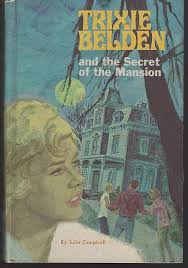
As I said, I greatly enjoyed the Trixie Belden series when I was a kid, and while some of the later volumes were also quite good, it was also very clear that the first six–the Julie Campbell written ones–were clearly written by someone other than those who continued the series, and were also vastly superior in terms of character, plot, setting and the writing, frankly. Just this opening of the first book in the series, The Secret of the Mansion, was quite excellent; look at everything that is set up in those first paragraphs and in the dialogue between mother and daughter: you can tell there’s deep affection there; we establish that Trixie has three brothers, two of whom are spending the summer working as junior counselors at camp; Trixie is prone to being overly dramatic; her father works at the bank and her mother likes to garden and grow her own vegetables; they live near a small town on the east bank of the Hudson River; they only have two other homes nearby–the empty Manor House and across to the road from that one is the Mansion, where a creepy old man lives (I doubt the author was using the word queer in the modern sense here; more likely the old definition, “odd.”).

That’s a lot of background and character work, yet it feels organic and not in the least like the bane of all writers, the infamous “info dump.” Soon, Trixie’s mom agrees to pay Trixie five dollars a week with help around the house and garden and sometimes watching her six year old brother, Bobby, and that way she can save money to buy her horse. Shortly after this, Trixie notices moving trucks arriving at the Manor House–her mother has forgotten to tell her that the wealthy Wheelers have bought the place and are moving in–and they have horses. Trixie grabs Bobby and they take off to meet the new neighbors, where she meets her soon-to-be best friend, Honey, who is sickly and ridiculously well-mannered and pale, along with some of the other staff–including Miss Trask, Honey’s governess, and Regan the groom.

The Secret of the Mansion was probably one of the best first novels of a kids’ series ever published. Not only did it introduce us to the Belden family, it did so slowly–we wouldn’t meet the other two members of the family until the third book, when Mart and Brian returned from camp in The Gatehouse Mystery–and we also met the boy who would become the other important tentpole of the series: red-headed Jim Frayne, crazy old Mr. Frayne’s grand-nephew, whose mother had died leaving him at the mercy of a horrible and abusive stepfather, Jonesy. Jim ran away and came to find his great-uncle, only to find out that he’d been hospitalized and in a coma. There was also some depth to the stories, as well–poor old Mr. Frayne’s wife had been bitten by a copperhead snake, he was rushing her to the hospital and their car broke down, and she died waiting for him to get help; the old man went mad with grief, left the car where it was broken down and would never allow another car on his property. The house also began to crumble and get in pretty bad shape–he supposedly had a lot of money, most of which most people assumed was hidden in his messy mansion (old Mr. Frayne was a hoarder). Trixie and Honey are trying to help Jim–Trixie is sure there is money secreted in the house–and eventually, Jonesy shows up after Mr. Frayne dies in the hospital, and Jim runs away again–leaving a note for Trixie and Honey. The old house also catches fire in the night and burns to the ground the night Jim runs away–there’s a lot of action and excitement in the book, including Trixie saving her brother’s life when  he, too, is bitten by a copperhead–and again, character development, as Honey becomes more and more outdoorsy and healthy and more like Trixie, and the two girls become more bonded in their friendship. The book also sets up the sequel, The Red Trailer Mystery, (which was actually the first book in the series I read)–in which the girls and Miss Trask hit the road to go looking for Jim–who actually inherited the small fortune Mr. Frayne had left behind, safely invested. They do find him–and solve another mystery–and it turned out that Jim’s long-deceased father was a college friend of Honey’s father, so the Wheelers adopt Jim, writing a lovely end to the story of the runaway red-headed boy with nothing.

As I mentioned earlier, there was a noticeable shift in tone, continuity, and who Trixie was as a character with the switch in authors, from one author writing under her own name (I believe her name was actually Julie Tatham Campbell, or the other way around). The last two books she wrote, Mystery off Glen Road and Mystery in Arizona, were kind of light on the mystery and stronger on the development of the characters and their friendships/relationships with each other. With the invention of “Kathryn Kenny” as a pseudonym to make other authors,  the books became more heavy on the mysteries and the new authors didn’t care so much about continuity or the established history of the characters: Trixie became more “girly” than tomboy-ish, for one thing, and they started playing up the “boyfriend/girlfriend” dynamic between, not only Trixie and Jim, but Honey and Brian Belden, as well as Mart with Diana Lynch (who was first mentioned in The Red Trailer Mystery, and joined their club, the Bob-Whites of the Glen, after being the central focus of The Mysterious Visitor). They added yet another member to their group, Dan Mangan, Regan’s nephew, in The Black Jacket Mystery–although the core group of five appeared in every book, Diana and Dan often got left out of their future adventures, begging the question of why were they added into the group in the first place? Some of the later books were good, fun mysteries–The Marshland Mystery, The Mystery of Cobbett’s Island, Mystery of the Emeralds, The Mystery of the Missing Heiress–but that core strength from the characterizations in the initial six books was missing from the rest, and as the series continued beyond those first sixteen (a long period of time passed before “Kathryn Kenny” started writing again) the stories and characters grew weaker, which was a shame.

The series gradually evolved from a “how to start a mystery series for kids” primer to “how to ruin a mystery series for kids” primer, which is a shame. I’d match those first four volumes against the first four volumes of any other kids’ mystery series and Trixie would, almost without exception, win, hands down. She was never as popular as Nancy Drew–no one was–but I always thought Trixie and her friends, having fun and adventures in the Hudson valley north of New York City and in the lower Catskills, would have made a fun television series for kids.

I’ll always have a soft spot for Trixie….and The Secret of the Mansion remains one of the best mysteries for kids ever published.

If You’ve Got the Money, I’ve Got The Time

One of the things I find fascinating about many people is their dedication to nostalgia; their insistence that some past time of their life was somehow this incredibly magical time of innocence (which it could conceivably have been); a utopia paradise of some sort where everything was right with the world and everyone was so happy and–you get the picture. It’s like how people glowingly refer to high school as one of the “best times of their lives” (which, frankly, is terribly sad and tells me more about their present circumstances than I’d care to know); the past wasn’t magic and neither were our childhoods. If they mean I liked life better before I knew how awful it can be, that I can understand–and I do think that is what they actually mean, even if it isn’t what they are actually saying: they preferred life when the bills and putting food on the table was someone else’s responsibility; when the biggest worries were who will I go to the Homecoming dance with and I have to study for that History test and so forth. But my teenaged years weren’t halcyon and rosy. The 1970’s was a very strange decade of reaction to the 1960’s–and for a queer kid, first trapped in a middle to upper middle class suburb of Chicago and then a small rural town in Kansas, it was hard. I’ve no desire to ever relive high school or go back to being a teenager. Sure, it might be easier to be a queer teen  in a Chicago suburb now–but I suspect it’s not that different in a rural high school in Kansas now than it was forty years ago.

Reading was always my escape from the pressures of a world into which I really didn’t fit–and one that from my earliest memories as a child I knew I didn’t belong in. Reading was a godsend for me, and I read ravenously. I was always being told to go outside and play instead of reading; the most effective punishments were the ones either prohibiting me from reading or limiting how much I could read, and the earliest signs of my obsessive/compulsive disorder were evident with my discovery of the mystery series for kids, which was the next gradual move for me as a reader from the Scholastic Book Fair mysteries. My goal has always been to finish collecting all the series I read and collected as a child: the Hardy Boys, Nancy Drew, the Dana Girls, The Three Investigators and Trixie Belden, as well as the lesser known ones like Biff Brewster, Ken Holt (over whom I had a weird bonding moment with James Ellroy), Rick Brant, Vicki Barr, Judy Bolton, Cherry Ames, Kay Tracey, and Connie Blair. (I also collected the Chip Hilton sports series.) I still have the copies I had as a child, and in the aftermath of Hurricane Katrina, I discovered eBay and tried to finish collecting the series. I don’t have room in the Lost Apartment to display them proudly in a bookcase–I have far too many books; and many of them are boxed up and stored–but I refuse to rid myself of them, because I keep holding out hope that someday I will live in an apartment or condo or house where I can have a room filled with bookcases that will also serve as my office.

But eBay gradually led me to collectors’ and fan pages of these books on Facebook..occasionally someone on one of those pages will be selling a copy of something I need to complete my collections.  There is a generic page for series books in general, and then there are individual pages for Nancy Drew and the Hardy Boys, respectively–and probably still others for the other series that I don’t know about. I know there are also fan websites and serious scholarship on the kids’ series–some of them make for interesting reading, if you have some free time (or are wasting time you should be spending on writing). Some of the fan websites also have conferences and trips–the Nancy Drew group, for example, has an annual trip to where one of the books was set, and tours and so forth to visit the places Nancy also went to look for clues in the course of her investigation. (They were in New Orleans a few years ago; I was going to register–it’s not cheap–until I realized it was more about being a fan than anything else.)

And boy, do these people take their series fandom seriously. I’m not as rabid or as devoted as the majority of them; periodically I might reread one of the series books (I’d love to write an essay about the Ken Holt series, which was darker and more hard-boiled than any of the others; which was why James Ellroy and I bonded over them–which is still so weird to me), but I don’t reread an entire series from beginning to end, and while I used to remember plot details quite vividly, as I’ve gotten older those memories are fading.

I’ve not watched the new CW series Nancy Drew–well, I watched the first episode but didn’t keep watching; primarily because I haven’t had time and Paul and I usually watch shows together–at least, I like to give him a chance to watch something I might enjoy before moving on to watch it on my own (like Riverdale). Maybe he’ll be interested in Nancy Drew, maybe he won’t; I thought he’d like Riverdale but he didn’t. Maybe Nancy Drew is something I’ll wind up watching while he’s working in the evenings; I don’t know. But I’ve also not seen the recent film adaptation, Nancy Drew and the Hidden Staircase, either. But boy, do these Nancy Drew fans take their Nancy Drew seriously. They were outraged that Nancy Drew had sex in the first episode (because Nancy of course never had sex in the series; I don’t even think she even enjoyed a chaste kiss from Ned in all 58 of the original books) and Ned Nickerson was black! Nancy Drew was not only having sex but she was having sex with a black teenager!

The pearls were clutched so tightly! And if you stuck a piece of coal up these people’s asses, it would have come out a diamond. There was a lot of moaning and whining about people’s childhoods being ruined (really? Mine is still just fine) and the “horrors of political correctness” and on and on and on. In other words, Nancy should be a virgin and only know white, straight, cishet people. Got it.

Anyway, Hulu recently announced that they are doing a Hardy Boys series; however, instead of Bayport the town is Bridgeport; their first case is their mother’s murder; and rather than being 18 and 17, their ages will be 16 and 12. Their father is off investigating the murder and so he deposits them with their aunt in Bridgeport, but they soon realize their mother’s death is somehow connected to the town–and everyone in town is a suspect.

Yes, these are significant changes to the original canon of the Hardy Boys, but also remember: The Mickey Mouse Club did two serialized versions of the Hardy Boys, making them also about 13 and 14. The Hardy Boys fans are fan with this, of course, and with the other changes Disney made…so what’s the problem? As someone pointed out, in response to all the whining and moaning about ruining characters and childhoods and “political correctness”, someone also commented, grumpily, “I suppose Chet will be slim, gay, and black”–which actually sounded kind of good to me, frankly. The character of Chet is overweight and loves to eat (kind of like Bess in the Nancy series) and also like Bess, his appetite and weight are the subject of lots of jokes, teasing and sometimes humiliation. Not really cool, if we’re being completely honest.

And yes, all of these people are grandparents with graying hair and are white people. All of this whining and complaining over two television series based on characters that have evolved and changed and been rewritten multiple times in the nearly hundred years they’ve been around–to appeal to  new generations of readers. The original versions of the books were all revised in the 1950’s and 1960’s because they were loaded with racial and ethnic stereotypes that were beyond offensive; naturally, the nice old white people prefer the original texts (big shock, right?).

And if any kids’ series need to be turned into television programs, can I vote for The Three Investigators and Encyclopedia Brown?

I am really tired of this whole “you’re ruining my childhood” nonsense. Unless they are traveling back in time to do so, your childhood hasn’t changed.

I’ve always wanted to write a book about kids’ series fans and conventions; I might just have to now. I mean, I get it–people don’t like change, and something that was beloved when you were a child you want frozen in amber forever. But I just wish these people would unpack their issues with the updates and changes–and nothing gets my gorge going more than the ever popular whine of every racist, misogynist, and homophobic piece of shit out there: politically correct. Sorry you don’t feel safe expressing your hateful bigoted opinions any more without consequence.

I’ve also always wanted to write my own middle-grade series; I used to think about that all the time when I was a kid, even up to coming up with characters and titles for the books in the series because of course I did. I don’t know if I can write middle-grade or not; but it’s worth a shot sometime.

And of course, I can talk for hours on the subject of the kids’ series. Perhaps someday I will.

1801217_10152346389544050_285672915_o

All Over the World

One of the most popular tropes in, for want of a better word, women’s fiction from the mid-twentieth century through the 1980’s was the tale of the governess, ripped off and/or inspired from the mother of all governess novels, Jane Eyre. Victoria Holt returned to this well repeatedly, from her first novel Mistress of Mellyn through many others, including The King of the Castle. I even believe her heroine in On the Night of the Seventh Moon returned to the little German principality where she experienced whatever it was she experienced as a teenager as a governess to a young heir of the royal house; but it’s been years since I read the book so could easily be mistaken. Even the classic camp/horror soap Dark Shadows featured a governess as its young romantic lead, Victoria Winters. (Honey in the Trixie Belden series also has a governess, Miss Trask.) I don’t think there is such a job as governess anymore, or really, paid companions; I suspect everything like that, including private secretary, now falls under the title “personal assistant”, while the young women who were previously governesses are now “nannies.”

I could be wrong. It’s not like I know a lot of people who can afford either.

But for the genre known as “romantic suspense” (and I grudgingly include Mary Stewart in this genre; I think she was a terrific suspense writer more than anything else; and while her books did include some bits of romance they were never the driving force of the story–as I’ve said before, they sometimes seemed to be tacked on, to please publishers and readers and reviewers) the governess was an extremely popular trope, and very much Jane Eyre pastiches; inevitably she was young, orphaned and had nowhere to call home, making the job of the utmost importance. Inevitably the master of the house, who was borderline abusive to  her (definitely was in Jane Eyre) eventually was won over by her quiet beauty, charm and devotion to his child, fell in love with and/or married her, which inevitably put her life in some kind of danger–and she had to mistrust and fear that her husband, for some reason, wanted to kill her.

Mary Stewart took that trope and blew it to smithereens in Nine Coaches Waiting.

nine coaches waiting copy

I was thankful that nobody was there to meet me at the airport.

We reached Paris just as the light was fading. It had been a soft, gray March day, with the smell of spring in the air. The wet tarmac glistened underfootl over the airfield the sky looked very high, rinsed by the afternoon’s rain to a pale clear blue. Little trails of soft cloud drifted in the wet wind, and a late sunbeam touched them with a fleeting underglow. And beyond the airport buildings the telegraph wires swooped gleaming above the road where passing vehicles showed lights already.

Some of the baggage was out on the tarmac. I could see my own shabby case wedged between a brand new Revrobe and something huge and extravagant in cream-colored hide. Mine had been a good case once, good solid leather stamped deeply with Daddy’s initials, now half hidden under the new label smeared by London’s rain. Miss L. Martin, Paris. Symbolic, I thought, with an amusement that twisted a bit awry somewhere inside me. Miss L. Martin, Paris, trudging along the tarmac between a stour man in impeccable city clothes and a beautiful American girl with a blond mink coat slung carelessly over a suit that announced discreetly that she had been to Paris before, and recently. I myself must have just that drab, seen-better-days shabbiness that Daddy’s old case had, dumped there among the sleek cabin-class luggage.

But I was here, home after nine years. Nine years. More than a third of my lifetime.

And so we meet Melinda Martin, called Linda by everyone. Her father was English and her mother French; she was born and raised in Paris and after her parents were unfortunately killed when she was in her early teens she was sent to an English orphanage. She is fluent in both English and French, and after aging out of the orphanage, one of the women who took a charitable interest in the place helped her get a job she hated at a boys’ boarding school–but when Madame de Valmy was looking for an English girl to be her nephew’s governess, the woman remembered Linda and recommended her. During the interview it became clear to Linda that the Valmys were looking for an English girl who would only speak in English to the nephew, a nine year old who’d inherited the ancestral estate as well as the title of Comte de Valmy; desperate for the job and desperate to get back to Paris, Linda allows Madame Heloise to mistakenly believe she doesn’t speak French–and is worried she’ll slip and betray herself, and get fired. She arrives at the imposing Chateau Valmy, and also as governess finds herself in that weird in-between where she is not a member of the family but isn’t considered one of the regular servants, either. The young comte, Philippe, who usually lives with a different uncle who has been called away for a lecture series in Greece as well as to work on a dig there (Hippolyte is an archaeologist) is very subdued, clearly afraid of his disabled uncle Leon (Leon is a dynamic personality Linda comes to think of as Lucifer after the fall–later in the book she calls him the King of Demons), handsome and strong and confined to a wheelchair after a car accident. Heloise is his wife, and he has one son from a previous marriage, Raoul, who runs Bellevigne, a chateau with a vineyard and winery, for his father. There are three family estates, each of which was left to one of the three brothers; young Philippe is the only child of the eldest brother and so the title and the vast ancestral estate belongs to him; Leon merely serves as his trustee.

Linda manages to navigate her confusing place in the chateau with the remarkable aplomb all Stewart heroines are blessed with; these are strong young women more than capable of taking care of themselves in a man’s world, and these women are courageous and smart. When Linda realizes her young charge is in danger–someone is trying to kill him because of the complexities of the Valmy inheritance–she has no problem whatsoever in taking the child out of the house in the middle of the night and venturing out into the woods in a desperate attempt to keep him safe until his uncle Hippolyte returns–the next day, which leads the plot against the boy to amp up. The journey to safety–and not knowing who she can and cannot trust–cranks the suspense way up, until the denouement when all is revealed and the truth comes out, with the young boy safe and Linda in the arms of the man she has fallen in love with–but couldn’t be certain whether or not was involved in the plot to kill the child. Stewart manages to make it all seem absolutely real, and once Linda and Philippe were in the woods it was hard to look away.

This book is peak Stewart at the top of her game–and that is truly saying something. I am looking forward to rereading her other novels even more so now than i was before.

U Got the Look

This week, The CW debuted a new version of Nancy Drew. I sort of watched it Thursday night, and will probably watch again so I can pay better attention. It’s definitely a reboot, with a lot of changes–Nancy’s mom died much later in her life, for example, and there’s no Bess. The story is also set in Horseshoe Bay rather than River Heights, and Nancy has hung up her sleuthing cap since her mother’s death and is now working as a waitress in a diner. George Fayne isn’t a close friend but now her boss, and they don’t get along–I expect that to change. Ned Nickerson is not white–a change I liked a lot–and prefers to go by Nick. It’s also a bit more in the vein of Riverdale than the classic Nancy Drew stories, but let’s face it–the real Nancy as originally written is kind of insufferable–bit more on that later.

I’m also sure these changes will enrage the Nancy Drew fanbase–anything other than the way she was originally written by a lot of ghostwriters generally sets them off. I am not such a purist–I recognize that changes have to be made for a different medium, for one thing, and for another–as I said earlier, Nancy was a bit insufferable as originally written.

I did enjoy the movie a few years ago with Emma Roberts (it might be the only time I’ve ever actually enjoyed an Emma Roberts performance, frankly); a lot was changed from the books to the series.

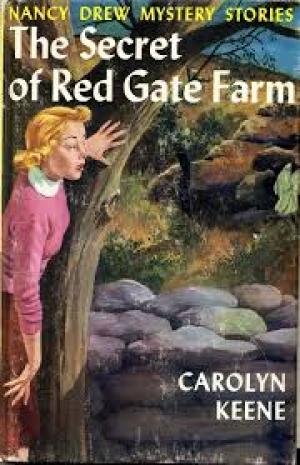
Nancy Drew and I go back to my fifth grade year at Eli Whitney Elementary in Chicago. I was already reading as many mysteries as I could get my hands on–those Scholastic Book Fairs were my favorite part of school–and I was checking out as many mysteries from the library as I could. (This was also the period of time when I discovered Phyllis Whitney’s mysteries for children; the first I read was The Secret of the Tiger’s Eye.) My fifth grade teacher had a big table in the back of the room with books for kids on them; we were on the honor system. We could borrow a book but we were supposed to return it when we finished reading it. The first day of school I wandered back there and looked at the books on the table; the first title to jump out at me was The Secret of Red Gate Farm. Above the title was NANCY DREW MYSTERY SERIES, and on the cover was a picture of a girl with wavy blonde hair, wearing a sweater and a long skirt, hiding behind a tree and looking, her mouth wide open in shock, fear or surprise, staring at the entrance to a cave  as some strangely robed figures entered it. I took it back to my desk, and started reading it.

red gate farm

“That Oriental-looking clerk in the perfume shop certainly acted mysterious, ” Bess Marvin declared, as she and her two friends ended their shopping trip and hurried down the street to the railroad station.

“Yes,” Nancy Drew answered thoughtfully. “I wonder why she didn’t want you to buy that bottle of Blue Jade?”

“The price would have discouraged me,” spoke up Bess’ cousin, dark-haired George Fayne. Her boyish name fitted her slim build and straight-forward, breezy manner. “Twenty dollars an ounce!”

“Oriental-looking.”

Sigh. The great irony is that both the Nancy Drew and Hardy Boys series were rewritten and revised to remove racist stereotypes and language…

Anyway, The Secret of Red Gate Farm enthralled me, as Nancy and her friends tried to help a young girl and her grandmother save Red Gate Farm from mortgage foreclosure while also trying to expose a ring of counterfeiters. There was a list of intriguing-sounding Nancy Drew titles on the back of the book, and back on the table in my fifth grade classroom there were three more titles: The Mystery at Lilac Inn, The Haunted Showboat, and The Clue of the Leaning Chimney. As I scoped around, there was another series novel, but it wasn’t Nancy Drew; it was the Dana Girls The Secret of the Old Well, allegedly written by the same person: Carolyn Keene.

Nancy Drew introduced me to the world of Grosset & Dunlap series–which were actually all produced, for the most part, by the Stratemeyer Syndicate. I eventually found myself reading–and collecting–many of those series, including the Hardy Boys, Dana Girls, Ken Holt, Rick Brant, Biff Brewster, Chip Hilton, and Judy Bolton, among others–I also wound up collecting Trixie Belden and the Three Investigators, too.

I always wanted to write a series like these when I was a kid; I even came up with a list of about forty titles I could use. I wrote one, actually, when I was in the fifth grade–called The Secret of the Haunted Mansion–which, to the best of my recollection, might be the first fiction I ever wrote; alas, it is lost in the mists of time. Periodically, I come back to the thought of writing such a series, but I don’t know that there’s a market for them anymore. Most of the series have gone out of print, with only Nancy Drew and the Hardy Boys, as far as I know, still available; Trixie Belden might be but I’m not sure. I still collect the books–it really pleases my OCD to have the series completed. I’m still missing a few from some of the harder to find series–like Biff Brewster and Ken Holt, and I do think I am missing a couple of Judy Boltons and Dana Girls as well–but I’ve stopped scouring eBay over the last few years because, well, money.

But at some point, I imagine I will go back and try to complete the series.

I do credit these series with a lot of my devotion to the world of crime and crime writing; while I always loved mysteries, it’s entirely possible I would have moved on to something else had I not discovered, and become addicted, to these series. These series led me eventually to Agatha Christie, Mary Stewart, Charlotte Armstrong, and Ellery Queen; and those authors eventually led me to others…and wanting to write crime fiction of my own.

So, thank you, Nancy Drew. It’s kind of your fault.

Bohemian Rhapsody

Is this the real life? Is this just fantasy? Caught in a landslide no escape from reality.

I do love the song. I wasn’t an enormous fan of the movie–primarily because I wasn’t that interested in the trajectory of the bad so much as I was more interested in Freddie and his life–but it was a perfectly good movie about a rock band.

I did finish reading Steph Cha’s Follow Her Home yesterday and I highly recommend it. The writing is exceptionally done well, and her character, Juniper Song, is terrific. I have some other thoughts about the book in my head, but am going to wait until they fully form before I write about it more. But…while I am sure I would have eventually gotten around to reading Steph–I’ve met her and like her–I am glad that I made a point of moving her up in the TBR pile. As I said when I was talking about the Diversity Project the other day, it’s the unconscious bias against minority writers I am fighting against within my own head and within my own choices, and trying to retrain/rewire my brain to not automatically move toward white writers when selecting the next book to read–even if they are women, who are also historically undermined as ‘not as serious as the men’ by not just the industry but by society itself. (I am really itching to start reading Alison Gaylin’s Never Look Back.)

As I’ve mentioned, my reading has always skewed more toward women than men; as a child, I preferred Nancy Drew and Trixie Belden to the Hardy  Boys (although the Three Investigators are my absolute favorite kids’ series, and they were boys), to the point where I was forbidden to read books either by women or about women for a period of time–which quite naturally made me want to read them even more.

The absolute best way to get me to do something is to either forbid me from doing it, or telling me that I can’t do it. Forbidding me makes me want it all the more, and telling me I can’t do something makes me want to prove you wrong.

I am ridiculously excited that Game of Thrones returns tonight for its final season. I am going to be terribly sorry when the show is over; I’ve thoroughly enjoyed the ride from the time Paul and I got the DVD’s from Netflix and starting binge-watching; loved it so much we paid for the HBO app subscription so we could watch it as it aired, once we were caught up. I do want to finish reading the books–I’ve only finished A Game of Thrones–and maybe if I get a long vacation on a beach somewhere, I can finish the entire series that has been published thus far. I really loved the book, and suspect I’ll feel the same way about the rest of the series. Yesterday I spent some time reacquainting myself with some of my favorite moments from the series over the years, thanks to said HBO app–the Battle of the Loot Train, the end of Ramsey Bolton, the trial of Littlefinger, the big reveal about Jon Snow’s parents, the Battle of Meereen, Daenarys conquering the Dothraki by killing all the Khals, Cersei’s revenge on the Sept–and was again, as always, blown away by the sheer scope and scale of the show, and how fucking fantastic it is from top to bottom. Game of Thrones, whether you love it or hate it, is always going to be considered one of the greatest television series of all time, up there with The Wire, The Sopranos,and The West Wing, and deservedly so. We truly are in a marvelous time for television programming.

Friday I was even more ridiculously excited to see the first trailer for the ninth episode of Star Wars and to learn its title: The Rise of Skywalker. I really cannot wait to see this movie, and I suspect we are going to go see it on opening weekend this December if it kills me. It’s very strange to realize that Star Wars has been a part of my life for over forty years now…and while the second trilogy, episodes one through three, aren’t amongst my favorites (I’ve not rewatched them very much), I still have a big love for all things Star Wars, and frankly, Rogue One just might be my favorite Star Wars film of them all.

So, after a really good night’s sleep and waking up later than I usually do, I am going to clean this kitchen and then I am going to work for a while. I might go to the grocery store; we need a few things, but at the same time I should also be able to get the things we need on the way home from work tomorrow, if they are, in fact, so desperately needed. I think I’m going to do that–wait, I mean–because if I’ve learned anything from the Termite Genocide experience, it’s that I hoard food and really need to use the things I already have on hand rather than go out and buy new things to prepare.

I’m actually looking forward to working today, if you can believe that, Constant Reader. I am determined to get the next chapter of the WIP finished, and then I am going to work on these other two ideas I’ve had, and then I am going to spend a couple of hours with the Gaylin novel.

What a lovely Sunday this will turn out to be.

Have a terrific day, everyone–and in one week, it’s Easter!

6a0105349ca980970c014e60bd8fd7970c-500wi

Tonight

SNOW DAY!

Yes, we had freezing temperatures in New Orleans the last two nights, and when I woke yesterday morning it was only 20 degrees; it’s 21 today. There was snow and ice outside both yesterday and today–not much, it’s New Orleans, seriously–but the exciting news yesterday morning was work was canceled because the roads were closed! The text went out around nine in the morning, but I, good boy who is determined to stick to his goals that I am, was at the gym. Yes, I got up yesterday morning, bundled up against the cold, and went to the gym. There were tumbleweeds blowing through there, of course, but I did my stretches, my workout, and twenty minutes  of cardio(okay, it was 17:58, but it was nine and I thought I needed to get home and get ready for work). I came home, did the dishes, packed Paul’s lunch, got cleaned up, packed my own lunch and headed out to the car, which had ice all over its windows. I got inside, started the car and turned the defrosters on, and was about to plug my phone into the stereo when I saw that I had 15 text messages….the initial messages about the office being closed and responses from co-workers. I immediately shut off the car and came inside and put my sweats back on.

Here is the horror that was New Orleans yesterday morning:

Really not much of anything, seriously. But as I told my boss last night, I know how to drive in snow and ice, but these people down here? Not so much.

The problem, apparently, was that the bridges into New Orleans–we’re kind of an island, surrounded by water and swamp and you have to cross a bridge to get into the city no matter from what direction–were icy, and of course, that makes them dangerous because people here don’t know how to drive on ice and the bridges are all pretty high. So the bridges were closed and so commuters couldn’t get into the city; the highways are also raised in many places and therefore dangerous when icy. So basically, the entire city shut down. I could have made it to work, but hey, you know, the office was closed. Today so far I’ve not heard about anything–I doubt very seriously we would close two days in a row, and I have no problem with going in.

But it was nice having a free day to stay home with the cat, you know? I did laundry, and since it was so cold at my desk in the kitchen even with the space heater on, decided to make it a real Snow Day and simply retire to my easy chair with the cat in my lap and work on the Short Story Project. I read a Lee Child story from one of the Lawrence Block painting anthologies, and a Laura Lippman from her collection Hardly Knew Her.

Lee Child’s story was “Pierre, Lucien, and Me”, from Alive in Shape and Color:

I survived my first heart attack. But as soon as I well enough to sit up in bed, the doctor came back and told me I was sure to have a second. Only a matter of time, he said. The first episode had been indicative of a serious underlying weakness. Which it had just made worse. Could be days. Or weeks. Months at most. He said from now on I should consider myself an invalid.

I said, “This is 1928, for fuck’s sake, They got people talking on the radio from far away. Don’t you have a pill for it?”

No pill, he said. Nothing to be done. Maybe see a show. And maybe write some letters. He told me what people regretted most were the things they didn’t say. Then he left. Then I left. Now I have been home four days. Doing nothing. Waiting for the second episode. Days away, or weeks, or months. I have no way of knowing.

I’m a fan of Lee Child, and one of my favorite memories was walking to Green Goddess with Alafair Burke when Romantic Times was here one year, and we ran into Lee on the street. I was a big fan, of course, but had never met him. Alafair, of course, knew him, and she invited him to join us. So I not only got to have lunch with Alafair Burke but also Lee Child. (How awesome are my namedropping skills?)

Anyway, he was as charming and self-deprecating as I’d heard–ridiculously tall and slender as well.

I love his Reacher series, but am many years behind on it, alas–so many books, so little time–but this story was short and quite lovely. The main character, as you can tell from the opening, is dying, and reflecting on his life; thinking back on whom he might need to apologize to or make amends with, and cannot really think of anyone. Then a name pops into his head; a millionaire he rather swindled, and the tale of the swindle makes up the rest of the story. The voice is charming and the swindle itself isn’t really that terrible, as far as these things go; he didn’t cause any harm, really, even if what he did was a crime.

I then moved on to Laura Lippman’s “Hardly Knew Her”, from her amazing collection Hardly Knew Her:

Sofia was a lean, hipless girl, the type that older men still called a tomboy in 1975, although her only hoydenish quality was a love of football. In the vacant lot behind the neighborhood tavern, the boys welcomed her into their games. This was in part because she was quick, with sure hands. But even touch football sometimes ended in pile-ups, where it was possible to steal a touch or two and claim it was accidental. She tolerated this feeble groping most of the time, punching the occasional boy who pressed too hard too long, which put the others on notice for a while. Then they forgot, or it happened again–they touched, she punched. It was a price she was more than willing to pay for the exhilaration she felt when she passed the few yew berry bushes that marked the end zone, a gaggle of boys breathless in her wake.

But for all the afternoons she spent at the vacant lot, she never made peace with the tricky plays–the faked handoffs, the double pumps, the gimmicky laterals. It seemed cowardly to her, a way for less gifted players to punish those with natural talent. It was one thing to spin and feint down the field, eluding grasping hands with a swivel of her nonhips. But to pretend the ball was somewhere it wasn’t struck her as cheating, and no one could ever persuade her otherwise.

Sofia, called Fee by her family and by no one else–she won’t allow it–has a father with a gambling problem; he plays in a game in the neighborhood tavern every Friday night. When he does well, there are gifts for the family on Saturday; when he doesn’t, he takes those gifts in the middle of the night and pawns or sells them, or turns them over as payment for a debt. He’s not a good bluffer, like his daughter, depending on the luck of the draw for his success or failure. But Fee is given a lovely amethyst necklace for her birthday–an heirloom–and when her father takes it to pay a debt, Fee is finished with her father, finished with this existence, and decides she is getting her necklace back. How this all plays out for Fee is a coming-of-age tale like no other I’ve read; one that only a talent like Laura Lippman could write. This collection of short stories is really quite extraordinary; as is the Block anthology; y’all really need to read these two books if you are a fan of short stories.

I also started watching, of all things, original episodes of Scooby Doo Where Are You? through Amazon Prime; I’ve been thinking a lot about Scooby Doo and its predecessor, Jonny Quest, since getting to meet one of the directors/animators for Hanna-Barbera at Comic-Con a couple of weeks ago. Jonny Quest is actually the first memory I have of watching something mystery/adventure related, and my love for Jonny Quest never really abated; I think, therefore, that the show was what triggered my lifelong love of mysteries and the crime genre; Scooby Doo came along around the time I was discovered the Hardy Boys and Nancy Drew and Trixie Belden. I’ll keep watching and musing about this some more, before making a post. I also still owe a post about I Tonya. I also finished reading Joan Didion’s Miami last night; so I’ll have to post about that as well.

So, that was how I spent my Snow Day; resting and relaxing and reading. It was actually quite lovely; we watched two episodes of Broadchurch last night and only have three to go before finishing the show. This third season is also quite good, and it’s cool how they’ve woven characters from the initial story into the present investigation; this entire season is an exploration about sexual assault, sex in genre, and porn. I am looking forward to seeing how it all plays out.

And now, back to the spice mines. As I said, I don’t think we’ll get another Snow Day today, so I have to get back to work. But how lovely to have a day where I didn’t really have to do anything; it’s been a long time. (Okay, I did the dishes and a load of laundry, but overall, it was a light responsibility day.)