Sweet City Woman

I’ve been making an effort over the past few years to get outside of my reading comfort zone and delve into books and writers and subgenres of crime fiction that I’ve sadly been neglecting over the course of sixty years of living on this weird planet. I’ve always been grateful that I developed a love of reading when I was very young; I was set on this path very young and one of the great pleasures of life, I have found, is curling up with a good book. I’m never bored, because there’s always something to read, and I never go anywhere without a book to read if I have to wait and pass time–whether it’s traveling or getting my car worked on or the doctor’s office or anything. (I have regrettably developed a social media/on-line default in those instances; I’m working on breaking that hideous habit…there’s nothing ever on social media that ever needs an immediate exposure or response by any means, and I hate that we’ve all become so addicted to our phones that we prefer to stare at a small screen rather than interact with the world…or get lost in a world created by a truly gifted writer.) I have very limited reading time (if I had my way I would spend at least half of every day reading a book–and even if I did that I don’t think I would ever really clear my TBR pile), and so I should be certain to utilize every bit of down time that I have inside the pages of a book.

Hmmm…kind of veered away from my original point, didn’t I?

Anyway, several years ago I decided to embark on reading sub-genres I usually don’t default to within the umbrella of crime writing, and two of the biggest gaps in my reading were traditional mysteries and writers of color, so I made it a point to stop defaulting to books by straight white people. It actually makes me a bit ashamed that I had to make a point of doing so; my own internal subconscious biases needed to be dragged out of my head by the roots, and while I am ashamed it took me so long to do this, I am so glad that I did. I’ve discovered so much rich and wonderful writing by amazing writers from communities that we as a society and culture have failed for so long…I feel like I’m becoming a better person and a more nuanced reader than I’ve ever been, and as someone who’s always prided himself on being a discerning reader, correcting my failings in my reading choices was certainly long overdue.

And what a marvelous time I had in Coral Beach, getting to know Miriam Quiñones-Smith in Raquel V. Reyes’ wonderful Mango, Mambo, and Murder.

“¡Basta, Alma! I told you I’m not doing the show.” I accentuated each word with the knife I held in my hand before I stabbed the packing tape and sliced open box number five of forty-eight.

“You are perfect for it. And come on, Miriam, what else are you doing?”

I narrowed my eyes and glared at my best friend, Alma. “¿Qué es esto?” I waved my hand like a hostess showing someone to their table. “Is this house going to unpack itself?”

“Porfa, this is not going to take all week. The cooking spot is next Friday. Today is Tuesday. You have a week and a half. It’s a short cooking demo on a morning show.” Alma shook her pinched hand like a stereotypical Italian grandmother. Except, of course, she wasn’t Italian, and neither was I. We’re Cuban American. Both cultures talked with their hands. Or, in my case, with whatever was in my hands at the moment.

I crumpled the New York Post page that wrapped a chipped green dinner plate. Before placing it on the stack that was building in the cupboard of my new Florida home, I shook the plate like a tambourine, “But I don’t cook!”

Representation matters, Raquel said as part of her poignant and moving and impassioned acceptance speech when she won the Lefty Award at Left Coast Crime in Albuquerque a few weeks ago, and while I’ve always known the truth of that two-word sentence, it’s been resonating with me a lot since the Left banquet. The fifth season of Elité and Netflix’s wonderful Heartstopper reminded me, very deeply and emotionally, how much carefully crafted stories about young gay men would have impacted my much younger gay self; it cannot be said enough how many unfortunate queer kids are isolated and feel very much alone in the world.

From page one, Raquel throws her readers headlong into the life of her heroine, a Cuban-American woman named Miriam who fell in love and married a white man; they have a young son Manny who is, along with Roberto, her husband (his name is Robert Smith, but she calls him Roberto affectionately, which I absolutely loved), the center of her life. Her parents have retired to the Dominican Republic, and despite being raised in Miami, she went north for college and fell in love, ironically, with an Anglo from a suburb of Miami–or at the very least a very elite (and very white) bedroom community for greater Miami, Coral Shores. Miriam is an interrupted-academic: her field of study is food anthropology, with a particular emphasis on how colonialism and the Caribbean diaspora affected the development of foods, cooking, and how from one Latinx culture to another, the basics veered into different directions (it actually sounds fascinating) based on the region and cultural adjustments. Her best friend, Alma, is a top realtor in the area and helped Miriam find a house for her family; they’ve moved back because Roberto has gotten a job down there. Alma is very well connected and also gets Miriam a gig on a local Spanish-language talk show doing cooking demonstrations.

Alma drags Miriam along to a women’s club meeting (in which Miriam has no interest in attending, let alone joining) during which an attendee at Miriam’s table face-plants into her plate of chicken salad (flavorless); she is pronounced dead–and little does Miriam know how this sudden death is going to help change the direction of her life.

While this is a fine mystery–I enjoyed following Miriam along her route as she becomes a reluctant amateur assistant to the investigation officer, Detective Pullman to try to clear Alma, who has been accused of not just this death but another that follows shortly thereafter–the real strength of this book is Miriam herself. Reyes had created a lovable character, fiercely proud of her own heritage and determined that her child be appreciative and a part of that heritage (I love that she only speaks Spanish to Manny while Roberto speaks to him in English so he will grow up bilingual), and she is absolutely real; fully developed with a strong history, an inquisitive and intelligent mind, and trying very hard to adapt to being a fish out of water in her own home region–Christ, the microaggressions she has to put up with on a daily basis (I wanted to slap her bitch mother-in-law any number of times)–and despite being off-balance, she is very centered even as life keeps throwing things at her.

I also loved that Miriam brings to an end a long-time family rift as well.

I loved this book, and i am really looking forward to getting to know Miriam more in the future.

NOTE: This is the second book I’ve read where a foreign language–in this case Spanish–was used and never demarcated by italicization. It caught me off-guard at first, but as I got more used to it I began wondering why that was ever done in the first place? Did publishers think readers would be confused and think the foreign words were typos unless delineated as “different”? Oy.

Glad to see that practice ending.
Do You Know What I Mean

The traditional mystery often gets a bum rap by mystery fans. I’m not sure why that is; these books have never gone out of style, have never decreased in popularity, and have always been the backbone of the crime/mystery genre. They are often (wrongly, I think) identified with Agatha Christie–if anything, Christie should be identified with every sub-genre of crime/mystery fiction. She wrote private eye novels (Poirot); dark noir (Endless Night); spy fiction (N or M?, The Man in the Brown Suit, They Came to Baghdad); historicals (Death Comes as the End); and even romantic suspense (as Mary Westmacott). Sure, she often relied on the amateur sleuth–her most famous amateur being probably Miss Marple–but she literally did everything first, really.

Probably why everyone refers to her as the Queen of Crime Fiction.

But the traditional mystery, for some reason, gets short shrift in our modern world, despite being one of the most popular subgenres of crime fiction. Why? I don’t really understand it. Sure, there’s not any blood or sex or violence–the sort of thing generally used to sell everything from television shows to movies to laundry soap and deoderant. Many of us grew up reading books about amateur detectives, from Nancy Drew to the Hardy Boys to Trixie Belden. So why do so many turn their noses up at the traditional mystery, also known as the cozy mystery?

I think it’s much harder to write about crime without using the tough guy male lead (stereotype), blood, violence, swear words, and sex. Is it this lack of the “rougher” aspects of crime that earned these books the nickname “cozy”?

What precisely does the word cozy mean, used as a book descriptor in this way? Ask five mystery fans/writers, and you will get five different answers. It’s often hard to quantify the variety of subgenres within the mystery/crime field. Everything else aside, I think the most important thing, the key, for a mystery novel to get this kind of classification is that the book focuses, on one level, on a sense of community; the reader develops a warm, comfortable feeling, the kind that you usually get from visiting family and friends you don’t get to see all of the time. You open the book and start reading and already feel relaxed and at home; happy to see people you care about, are interested in, and are excited to find out what they have been up to. Donna Andrews’ Meg Langslow series is an excellent example of this; so is Leslie Budewitz’ Spice Shop mystery series (both series, obviously, are favorites of mine). These books welcome you in, invite you to put your feet up, get comfortable, and spend some time with your old friends you’ve not seen in a while.

This, naturally, is very difficult to establish when writing the first book in a new series of this kind; how do you immediately establish this warm environment where the reader feels comfortable enough to kick off their shoes and relax? It’s not the easiest thing to pull off for an accomplished writer; so it’s all the more remarkable when someone nails it in their very first book.

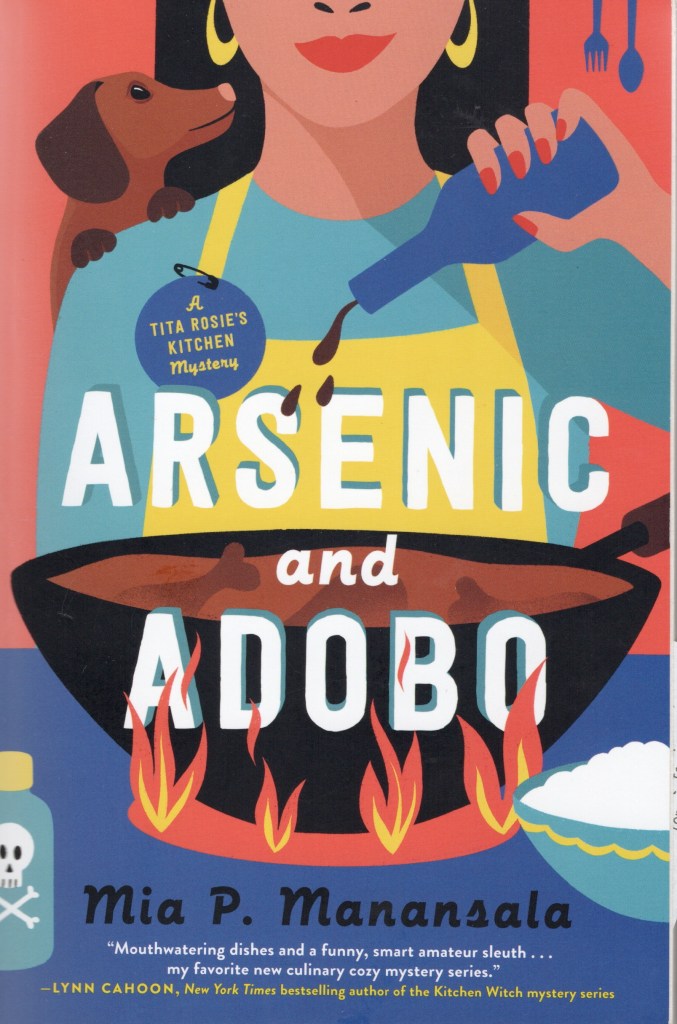
Mia P. Manansala nailed it in her debut.

My name is Lila Macapagal and my life has become a rom-com cliché.

Not many romantic comedies feature an Asian-American (or dead bodies, but more on that later), but all the hallmarks are there.

Girl from an improbably named small town in the Midwest moves to the big city to make a name for herself and find love? Check.

Girl achieves these things only for the world to come crashing down when she walks in on her fiancé getting down and dirty with their next-door neighbors (yes, plural)? Double check.

Girl then moves back home in disgrace and finds work reinvigorating her aunt’s failing business? Well now we’re up to a hat trick of clichés.

And to put the cherry on top, in the trope of all tropes, I even reconnected with my high school sweetheart after moving back to town and discovered the true meaning of Christmas.

Okay, that last part is a joke, but I really did run into my high school sweetheart. Derek Winter, my first love.

First of all, can we talk about the voice?

It is impossible not to fall in love with Lila’s voice from the very first sentence of the book. She is smart and funny and eminently likable, which is important in a traditional mystery (no one wants to read a cozy whose main character is an unlikable bitch) and much harder to do than most people who don’t actually write books think it is. Lila is a remarkable character; very clear-eyed about what she wants and what she doesn’t, as well as who she thinks she is and wants to be. She’s returned from her big escape to the big city to the small town she wasn’t terribly happy in when she was growing up–her past experiences continually are reminding her, and not in pleasant way, of why she left in the first place. She never intended to return home (as Thomas Wolfe said, you can’t go home again), but she is back and rather than focusing on what she is certain everyone she knows or is related to sees as her “failure,” she intends instead to focus on helping save her aunt’s restaurant business.

The immense strength of this story rests upon those family bonds, and Lila’s recognition of just how important those bonds–family, friends, community–actually are to her; and her growing realization, over the course of the books, that those things she once thought were strangling and restraining her are actually where her own power comes from.

The mystery itself is also strong: Lila’s wretched local ex, whose mother has since married a businessman who rents Tita Rosie’s building to her and is a total dick, has taken to writing shitty reviews of local restaurants, apparently targeting one and trying to destroy its business before moving on to another. Lila’s relationship with him is also strained; and she also doesn’t like the dickish stepfather either. It is while she is serving them lunch that her ex keels over face-first into his plate–dead from arsenic poisoning. In the food Lila fed him, and came from her aunt’s kitchen. The financially strapped business is shut down pending an investigation into the murder and a health department inspection, and there is the very real fear that Tita Rosie may lose her restaurant. Lila takes it upon herself to investigate and find the real culprit, to clear herself as well as her aunt and the beloved family business of any wrongdoing and scandal. The journey, which introduces us to her friends and family, and welcomes the reader into their charming world and community, twists and turns and is full of surprises every step along the way–as Lila also learns just how much the restaurant, her family, and her friends really mean to her.

This book is absolutely charming, well-written, and very fun. I cannot wait to revisit Lila and her crew in the second book, Homicide and Halo-Halo. Mia P. Manansala is definitely one to watch, and it’s going to be fun watching her career reaching even more heights than she has already achieved.

The Most Wonderful Time of the Year

Well, I suppose it’s time to start spreading Christmas hunk cheer around here, so enjoy today’s hunky elf–who actually makes me think about my story “The Snow Globe.” I’m not really sure when the anthology it is in will be coming out, but I am looking forward to it. I so enjoy getting short stories into print, and do wish I had more time to write them. Then again, perhaps if i stopped wasting so much of my time maybe I could get more stories written. I know I’ve committed to three more that I’ve got to finish (two only need a final edit/revision; one had to be written almost entirely from scratch) for the new year, and once I get this current book finished–well, after the new year and so forth I am going to be rather too busy to write a book for a while; at least, to focus on writing a book, at any rate. I have the Bouchercon anthology to work on, the release of #shedeservedit is right around the same time as the new book is due, and….yikes.

FOCUS, Greg, you need to FOCUS. And make lists.

And breathe.

Yesterday was a really good day, though. I got up early, got caught up on some blog entries about books I’ve read recently, made serious progress on the cleaning and organizing, and I worked on the book. I got another chapter finished; it’s not very good at the moment, but I know what I need to do to make it better, and I also made it to the gym yesterday afternoon, which was also lovely. I need to work on the book some more today–I also have to make a grocery run at some point–and finish the cleaning and organizing I got started on yesterday. The kitchen office looks a lot better than it has in a very long time, and while there are still some odds and ends to touch up, and file, and forth, I feel much better about everything.

Part of the organizing yesterday also included gathering and sorting all my notes for this book and putting them into one, easily accessible place–as well as sorting out the file folders, etc. that had been gathered at some point that have the same title or a similar title or may have some old notes and so forth; I was actually very surprised to see how many times I’d started writing a traditional mystery over the last decade or so–and in my head I conflated them all as the same story, which SURPRISE! They were most definitely not–but I filed those other fits and starts in an easily accessible place, where I can get to them if this first book turns into a series, or if it doesn’t–well, I can then try again with another idea I’ve already made lots of notes on in the past. (I am talking about physical files here, of course; my electronic files continue to be an utter and complete disaster.) But after a terrific day of getting things done and kicking ass and taking names (okay, Chapter Five isn’t very good but it’s a first draft, okay?) I went to the gym and saw some of the Georgia-Alabama game on the television there. After coming home and doing the dishes and some more filing (and making a protein shake), I curled up in my easy chair with Agatha Christie’s A Caribbean Mystery and turned on the television. I read while glancing up periodically to keep an eye on the game–Jesus, Georgia, even LSU was able to play decent defense when they played Alabama–and kept an eye on my iPad and watched part of the Michigan-Iowa game until Paul got home from the office (late) and we switched over to Gossip Girl (the original is so much better than the sequel that we probably won’t even bother going back to the new series, even though there’s only two episodes left). I also got a pretty good night’s sleep last night as well, which was quite marvelous–I seem to be sleeping better these days, which is lovely.

Today, as I said, I have to make a bit of a grocery run, and need to write and finish these odds and ends of filing around here, as well as write some more on the book–I should do another chapter today–and I’d also like to get some more reading done on the Christie; the murder/mysterious death has already occurred, and now I am wondering if Agatha Christie did, indeed, write cozies; there’s certainly no sense of community here in this book–how can there be, since Miss Marple is visiting a resort hotel on the fictitious island of St. Honoré (an island name I may abscond with at some point), but now that I think about it, the sense of warm community that is a hallmark of most cozy mysteries doesn’t really exist much in any of Christie’s books–but then again, my memory is faulty and I don’t remember much of the plots and stories and characters the way I used (and I do miss that recall skill I used to possess in abundance). But I read almost all of Christie’s books a million years ago, when I was in high school, and I simply cannot revisit all eighty or so of them (I never read the ones she wrote as Mary Westmacott, either), so I will leave commentary on the Christie canon (other than the ones I actually reread) to those who are expert.

But over all, I am feeling pretty good about life in general. As always, I am buried under and busier than any one person probably should be; but it’s how I function best–and I am not sure why that it, probably has a lot to do with the short attention span and having to always balance multiple things at once, and also why taking the time to actually sit down and get organized, making lists and so forth, is the best way to go for me. Paul is getting me an old-fashioned day planner for Christmas, because even though it’s become a thing of the past, I discovered that having a physical journal to write down random thoughts in or brainstorm plots and so forth in was much more effective for me than the electronic system modern technology had forced onto me–so it’s not really much of a stretch to think that having to physically write things down as opposed to making entries into a digital calendar will be even more effective and increase productivity and stop me from forgetting things. (I will continue to use the electronic calendar for bills; that is one thing that has worked remarkably well for me.)

And so now, I shall return to the mines for more spice. Have a lovely Sunday, Constant Reader!

Silver Threads and Golden Needles

If you’ve been sensing a theme in my recent reading, Constant Reader, you are correct. I have been reading a lot of traditional mysteries lately–cozies, if you prefer–and there are any number of reasons why. One, I want to read more broadly across the genre; two, I actually enjoy them, a lot; and three, well, yes, I am writing one. I am only sorry that it took #3 in that sentence to really dig into one of my favorite sub-genres of crime fiction again, since I am having the best time since I started digging them out of the TBR pile and reading them. They are called cozies for a reason; they are generally warm stories about incredibly kind and likable people who wind up getting involved in murders–usually through no doing of their own–and through their own shrewd observations of behavior and brains, inevitably wind up finding the killer’s identity before the police do.

I know I am an anomaly when it comes to this, but I always preferred Agatha Christie’s Miss Marple to Poirot. I loved that the elderly, always under-estimated by everyone spinster from the little village, simply by watching and observing human nature in the microcosm of her village–and her theory about human nature, “people who are similar often behave similarly”, is kind of spot-on. I loved how the suspects in a case would remind her of someone she knew from the village in the past, and her observations were inevitably correct. A traditional mystery is one where there’s no violence or bloodshed on the page (mild, if there is–like a punch in the nose or something like that when trying to evade the killer, etc.), no sex, not much cursing, and so forth. I tend to think of them as stories that take place in the world we’d rather live in, rather than the actual real world we do live in.

Stephen King, in his seminal treatise on horror, Dance Macabre, described horror novels as examples of the conflict between the philosophical concepts of the Dionysian and Apollonian; in which the Apollonian signifies the status quo–peace, order, reason and balance–while the intrusion of the murder/crime into that Apollonian ideal sends the community reeling into the Dionysian: disorder, tragedy, emotional illogic. The solving of the crime brings the community back into balance and returns it to the Apollonian ideal, so the amateur sleuth in these books are agents of reason. And since one of the major precepts of the traditional/cozy mystery is that sense of community–see Donna Andrews’ Meg Langslow series–it is the duty of the amateur sleuth to return the community to the sense of peace, order and serenity that ruled before the Dionysian influence disrupted all of that.

But Mary Feliz’ first Maggie McDonald mystery kind of turns that theory on its ear.

“Awesome! I bet it has bats!” My fourteen-year-old son, David, exploded from the car and mounted the steps of the old house three at a time. He peered through the grubby porch windows.

“Is it haunted?” Brian, my twelve-year-old, leaned into my side as we stood in the front yard. I eyed the dust motes cavorting in a light beam that had escaped the shrubs and overgrown trees surrounding the 100-year-old California Craftsman house. I put a reassuring hand on Brian’s mop of curly hair. “I doubt it, honey.” I hoped it was true.

I swallowed hard and watched my husband, Max, ease his long legs out of the Prius. Like my minivan, Max’ car was overloaded. We’d packed both cars with everything too fragile to transport in the moving van. In among the breakables, our two kids, one golden retriever and two cats, we’d tucked picnic food, cleaning supplies, and sleeping bags.

Today was Thursday. The plan was simple. The movers would arrive tomorrow. Since Monday was Labor Dat, we’d have four days to get settled. The kids would start school on Tuesday, and Max would begin his first full day at the new job the same day. I was giving myself a month to focus solely on house and gamily. After that, I was determined to restart my career as a professional organizer.

Anyone who has ever moved to a new city and started over can relate to the opening chapter of this book. I myself have moved countless times to new communities–from Chicago to the suburbs to Kansas to California to Houston to Tampa to Houston to Tampa to Minneapolis to New Orleans to Washington and back to New Orleans finally. There’s something exciting about starting over in a new place–but there’s also that little thought in the back of your head, what if you were better off where you were before? It can be both scary and intimidating to move–especially when you have children, as Maggie does. Her family was happily living in Stockton when her husband’s aunt died, leaving them the property where he grew up and remembered fondly. They visited the property while the estate was in probate, and Maggie, too, fell in love with the big old beautiful house, and agreed to give up her own business–she’s an organizer, the person you hire when you can’t organize yourself and you need help–and move to Orchard View in Silicon Valley to this big beautiful house where her husband grew up…and right away, her worst fears are coming true. The house somehow has become incredibly run down, with broken windows and dirty inside; there’s a horrible smell coming from the basement, and the power doesn’t work. It doesn’t even look like the same house…and then they find the dead body of the caretaker in the basement.

So the house is soon crawling with cops, and Maggie wants to go back home to Stockton with the kids and wash her hands of the whole mess.

Who could blame her?

But the cops are actually friendly–even if the first neighbor she meets is kind of a dick–and helpful, introducing to people around the town who can help get the house back together and under control, so she and her family can get settled in. The principal of her kids’ school is a problem–as is the recurring acts of vandalism at the house. And then Max’s job sends him off to Bangalore, leaving Maggie to deal with everything on her own. The vandalism amps up, and before she knows it she is stumbling over yet another dead body. Who is killing people who have a connection to Maggie’s family? Is the vandalism connected to the murders, or is it something else entirely? Is one of her new friends and acquaintances actually the culprit?

It’s a fun read, and I appreciated the different spin on the community aspect of a traditional mystery. Having Maggie and her family (her boys are terrific, too) resettling into a new place means that, like the reader, she has no history with either Orchard View or the people who live there; we meet them and get to know them as she does. As Maggie grows more comfortable in her new home, so do we the readers–and that was a pretty big risk to take for the author, and I respect Feliz for taking that risk. It was actually kind of cool to see her establishing those relationships and creating a history with the characters, as opposed to having to dip into a lot of backstory, which is also hard to do with aplomb and without losing reader interest.

I am looking forward to reading more of this series!

Spice World

I didn’t grow up in a household of spices and flavors.

That’s not me being disrespectful to my family; they were from rural Alabama and beyond the basics–salt, pepper, garlic, and sugar–they never had much access to anything beyond that, other than what was used in specialty/special occasion foods, like stuffing/dressing at the holidays. Once my mother stopped working and became a stay-at-home mom, she began teaching herself how to cook–she always had a Betty Crocker cookbook in the kitchen when I was a kid–and began using other spices; but those basics were all I knew and it wasn’t until I got much older–fifty-ish–that I, too, began teaching myself how to cook and learned to stop being afraid of experimenting in the kitchen (alas, this was also around the time I quit smoking and injured my back, which kept me out of the gym. The end result is the long-bemoaned weight gain I’ve been struggling with in the decade since). My friend Michael is a terrific cook, very knowledgeable, and I’ve spent many an hour sitting in the kitchen watching him cook and learning from him tips and techniques; I have also learned to not stick to measurements in recipes and do it from instinct–and not to be afraid to make mistakes here and there. (I put way too much onion in a mac-and-cheese dish I made for the kids at the office once, which was mortifying.)

I also know how the spice trade changed world history–the silk road was also the spice road between Asia and Europe.

So Leslie Budewitz’ Spice Shop mysteries are definitely right up my alley.

“Parsley poop.” The Indian silver chandeliers hanging from the Spice Shop’s high ceiling swayed, their flame-shaped bulbs flickering. The crystal candelabra they flanked burned on defiantly. As I stared up, unsure whether to curse the Market’s hodgepodge of ancient and modern wiring or the fixtures themselves, all three blinked, then went dark.

“Cash register’s got power,” Sandra called from behind the front counter. “And the red light district’s open.”

I glanced over my shoulder at the miniature lamp perched on the Chinese apothecary that displays our signature teas and accessories. The red silk shade glowed steadily, a beacon in the back corner.

“Better call the electrician,” I said at the exact moment as my customer asked, “where’s your panel?” and Lynette, my newest and most annoying employee, said, “I’ll check the breakers.”

Guilty as Cinnamon is the second book in the series, following Assault and Pepper (which I also greatly enjoyed), and this is a worthy successor to that series debut. Pepper Reece runs Seattle Spices, a spice shop in historic Pike’s Market, and is an engaging character for the reader to identify with and root for. Divorced from Tag, a bike cop who pops up regularly (she divorced him for cheating), she also lost her job in HR at a prestigious law firm when some of the partners turned out to be crooks and the firm closed. She bought the spice shop and a gorgeous loft apartment nearby in an attempt to reboot her life and start over, and is a walking encyclopedia of spices–how to blend and mix, what works best in what recipe, and can identify them by smell. (This olfactory knowledge often comes in useful when she’s involved in a crime.)

This time around, Pepper finds herself mixed up in murder and mayhem in the cutthroat world of the restaurant business of Seattle; a former boyfriend, Alex Howard, an Emeril-type figure in Seattle who is also kind of a dick, fires an assistant who is secretly planning to open a restaurant, partnering with another successful restauranteur in the city, Danielle Bordeaux. He fires her because Tamara, who plans on using Pepper as a supplier, comes into the shop and discusses business in front of an incompetent Seattle Spice employee, Lynette; Lynette tips off Alex. Tamara is fired and Pepper fires Lynette–and then Tamara is murdered. Pepper is the one who finds the body, and the case is off and running. Pepper can’t help but feel a little responsible, having found the body, as well as her employee having tipped off Alex, who is the number one suspect. It turns out as well that Tamara was murdered by ghost pepper–an insanely hot pepper that can, per the book, be fatal if ingested in large enough doses. Pepper had given Tamara samples of the ones she carries in the shop during the fateful visit; adding to her sense of responsibility.

She also lands herself a new potential love interest: reporter Ben Bradley (the investigating detectives are Spencer and Tracy; Budewitz loves punny names–and names actually play a vital role in this case). Or will she reunite with her ex, Tag, who seems to be interested in that very thing happening? Can he be trusted?

And are there ghosts involved?

Guilty as Cinnamon is not only an engaging and fun read–several times I had to stop and wonder, who is the killer here, and why–and was wrong every step of the way; but the author doesn’t cheat; like all the best traditional mystery writers, the clues are provided along the way in a nonchalant way that also makes them incredibly easy to miss–but they are there. Budewitz is also a charming writer, weaving a web that it’s very hard for her readers to extricate themselves from. Seattle and Pike’s Market and the shop are drawn so realistically and vividly that they are a workshop in setting as character.

And the food–the spices, the smells, the tastes, the textures–of everything are described so lovingly and with such vivid detail that I found myself getting hungrier and hungrier with every meal–from appetizers to wine to falafel burgers to salads.

What an incredibly fun series, and it’s definitely one I look forward to visiting again.

Different Drum

I am, and have always been, a voracious reader. Mysteries and crime novels of all types have been my favorites, but I also try to read outside the genre every now and again–mainly because I think a constant diet of reading only the genre you write can make your own writing get stale; it’s nice to mix it up every now and again. I’ve never been a snob about reading or what others read and find pleasure in; the fact that so many others are so judgmental about other people’s reading choices has always made me raise my eyebrows and tilt my head slightly to one side in bewilderment (unless it’s, you know, Stephenie Meyer). To me, the most important thing is that people are reading, and I don’t judge anyone for their choices (unless the choice is Stephenie Meyer). Nothing bothers me more than when, upon being asked what they like to read, people squirm with embarrassment and have to be coaxed into revealing what they enjoy. Reading is supposed to be a pleasure, and no one should ever be shamed for what they find pleasure in reading (okay, even if it’s Stephenie Meyer–I would never shame someone to their face for reading her, and really, I am joking when I mock her on this blog. Again, as long as people are reading I don’t care what their choices are)–and once someone opens up and starts talking enthusiastically about books and writers they love, it’s infectious–and I love their excitement.

But reading snobbery also rears its ugly head within the crime fiction genre, which bothers me. I don’t know why it is so difficult for people to simply say, “that *whatever sub-genre* isn’t to my taste”–which is really all it is; reading is subjective and no one person is the authority of what books are worthy and what books aren’t. I like every sub-genre of crime fiction. Like every kind of label you put on books, there are excellent writers, good writers, and bad writers in every section of the library or the bookstore; good writing is good writing, no matter who the author is and what kind of crime novel they’ve written. There are shitty private eye novels and police procedurals–but those kinds of books don’t get the disdain that is reserved specifically for the tradition mystery, i.e. the “cozy.” I’ve often held that this sub-genre of crime fiction gets dismissed because they are the “romance” novels of crime fiction–in other words, not taken seriously because they are mostly written by women for women about women. (There are exceptions, of course; men write in this style and quite well, in fact.) One of the most popular mystery television series of all time is traditional/cozy: Murder She Wrote. I personally enjoy reading them, and don’t read them enough, to be honest. The common denominator in all traditional mysteries is that they are escapist reading–you can escape from the cares and worries of your every day life and world into a world where justice is always done, people are generally kind, and the settings are often places–usually small towns, or a community within a larger one–the reader would love to actually live. There’s often a hook to the series–often built around a business run by the heroine–and there’s a cast of lovable eccentric characters who appear in every book that the reader loves to visit; the books are like the holidays, when you gather with friends and family to celebrate life and love and joy.

My favorite panel I attended at Crime Bake this past weekend was the “Cozy Trends: Home Sweet Home?” moderated ably by Ang Pompano; the panelists were Sarah Osborne, Julia Henry, Barbara Ross, and Tina deBellegarde (Sherry Harris was also listed, but she wasn’t there, alas). They were fantastic, and the discussion was truly terrific. (This is the panel where Julia Henry said something I thought profound and true: “Respect the genre you’re writing.” I want that on a sampler.) I bought books by all the authors, and am really looking forward to reading them. On the flight home from Boston, I finished reading Invisible City by Julia Dahl, and pulled Shucked Apart by Barbara Ross out of my backpack and started reading.

I finished it last night.

“Julia, meet my friend Andie.” My boyfriend Chris, looking tousled and handsome as always, stood in the doorway of my office. He entered the room, confident and casual, and a pleasant-looking woman followed.

“You mean Andie from your poker nights?” I put my hand out to cover my confusion. For two years, I’d been laboring under the misapprehension that “Andy” was a man. “No, we haven’t. I’m Julia.”

She took my hand and shook. “Andie. Greatorex. So glad to finally meet.” Her handshale was firm and strong, which seemed right, given her looks. She was tall, broad-shouldered, and obviously fit. Her sandy-blonde hair, pulled back in a high ponytial, framed a round face with wide set, hazel eyes. She appeared to be in her mid-thirties, like Chris and me. Also, like Chris and me, she wore jeans, work boots, a T-shirt, and a plaid, flannel overshirt, as if we were planning on starting our own Grunge band. Andie’s T-shirt was maroon and had the words, GREAT RIVER OYSTERS on it in white block letters. My T-shirt was navy and said, SNOWDEN FAMILY CLAMBAKE. Chris “doesn’t wear advertising”, quote, unquote, so his T-shirt was black.

In other words, we were dressed appropriately for a morning in coastal Maine in mid-May. Outside, pre-season tourists From Away wore jacket and windbreakers, but we natives are hardier folks.

Barbara Ross was an absolute delight on the panel, and I grabbed the last copy of this book the bookseller had and was able to get her to sign it for me–which is something I am not ashamed to say I completely geek about still; I will always be a fanboy.

Shucked Apart is the ninth (!) book in the Maine Clambake mystery series; Ross’ heroine Julia Snowden lives in the fictional Maine coastal village of Busman’s Harbor. She left a career in high finance in New York to take over her family’s clambake business (highly dependent on tourism and seasonal) and make it thrive. It’s very clear that Julia works very hard but has clearly gone back native–she doesn’t miss her old life at all–and the town is filled with likable and interesting characters. Her live-in boyfriend, Chris, has brought his friend Andie, an oyster farmer, to meet Julia to get her help. Andie was attacked and robbed of $35,000 of oyster spat for her farm (spat being the term for baby oysters), and she wants Julia’s help getting to the bottom of the robbery/assault. Not sure she can really help more than the police, Julia takes a liking to Andie and decides to see if there’s anything she can do to help. There are any number of suspects to investigate–including Julia’s own uncle–and then Andie turns up dead and it becomes a murder investigation.

There’s also a personal story going on during the course of the book–as indicated in those opening paragraphs above, Chris has been keeping Julia away from his friends (most of the mystery and investigation are centered in the nearby town of Damariscotta), and over the course of their relationship there have been a lot of secrets he’s kept from her–and this personal issue is really handled deftly by Ross. The juxtaposition of the crime investigation and the personal dilemma is juggled beautifully; Ross really makes the reader care about Julia and her friends, and the pacing is perfect–and it’s not easy to do this without making one story more important than the other.

As I said the other day, I love to learn things when I read, and I learned a lot about oyster farming, the politics of fishermen vs. oyster farmers vs lobstermen, and the ecology concerns with keeping the delicate balance of the ecosystem from being damaged. Ross casually slips in diverse characters and the issue of the warming of the seas without making a big deal out of them–no small feat, and it’s done so effortlessly it’s almost unnoticeable.

This was a fun, charming read, and I look forward to my next visit to Busman’s Harbor.

How Am I Supposed To Live Without You?

I got up at five yesterday morning for the NO/AIDS Walk; which I worked for five hours. I also worked Saturday, so I gloriously have today off, and don’t have to go in until later tomorrow. I intend to go to the storage unit and retrieve some copies of the first two Scotty books, Bourbon Street Blues and Jackson Square Jazz, because I don’t have any copies in the Lost Apartment, and every once in a while people ask for copies, or I might be able to sell some, or something. In either case, it sucks not having copies on hand. I am a little worried they may be buried in the back of the unit, but I also need to start getting rid of the stuff stored in there anyway. I’m not going to get rid of it all, but obviously, there are things in there I don’t need to keep.

After I came home yesterday I was delighted to watch the Saints win, and we also finished watching Atypical, which is really a charming and funny show you can binge-watch on Netflix, and we also started watching Harlan Coben’s The Five, which is also very well done and interesting.

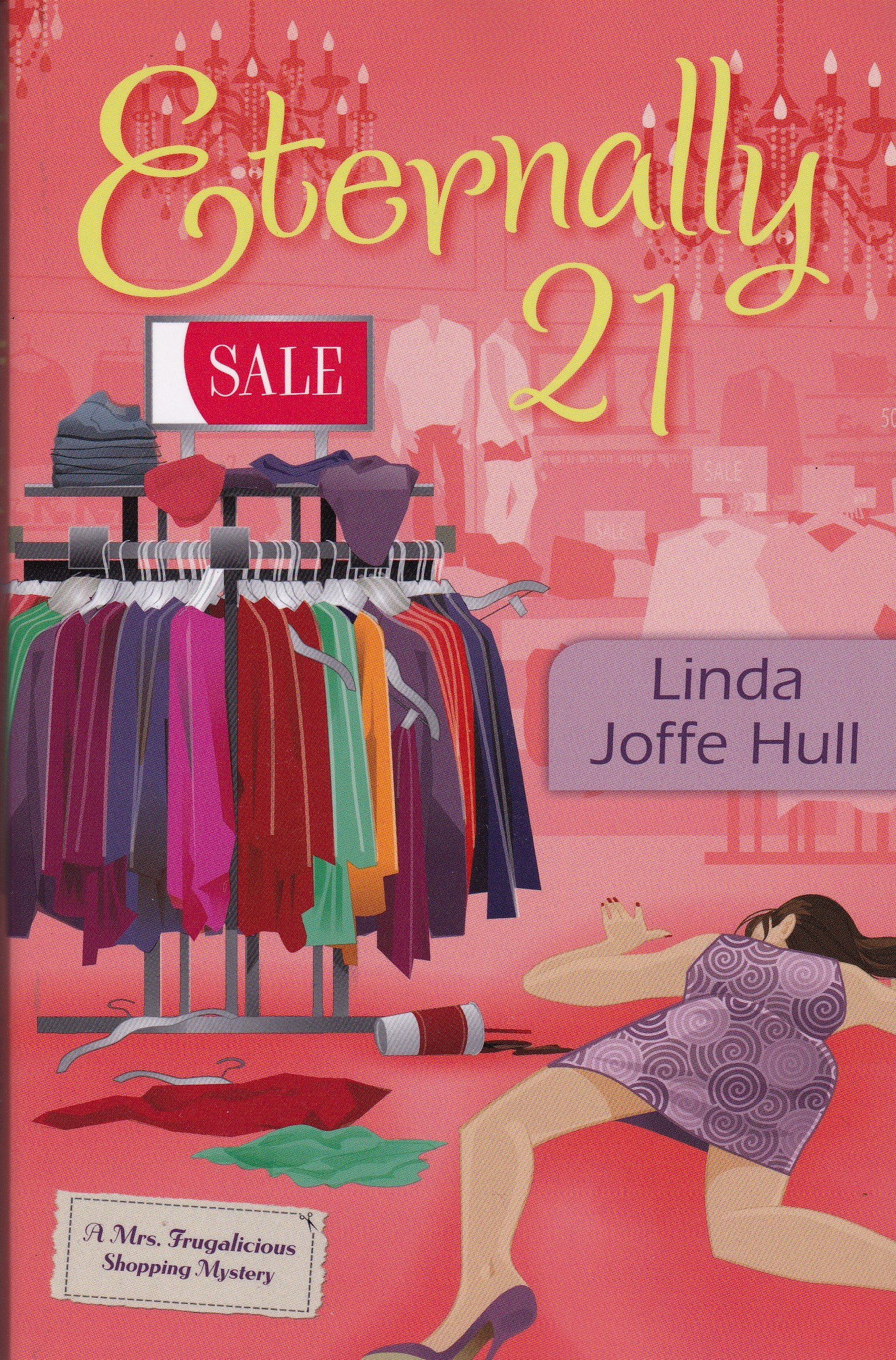
I also finished reading Linda Joffe Hull’s Eternally 21.

eternally 21

I didn’t think things could get much more for worse than the night my husband came home looking like his usual tall, dark, and handsome self but wearing a very unusual shade of  I’m-really-sorry-but-I-lost-everything-in-a-Ponzi-scheme. Suffice it to say, the news was shocking, distressing, mortifying, terrifying, and any number of other disaster-relating –ings. Given my husband happens to be Channel Three’s wealth-management guru, it was also potentially career ending.

After all, who would watch his show, Frank Finance, if Frank “Finance” Michaels was broke?

I needed to help make ends meet, but there was no out-of-the-way bar where I could cocktail waitress in guaranteed anonymity. Not one where I was sure my husband’s face wouldn’t appear on the corner TV. Beside, Frank had to let his personal assistant go, so I stepped in at a salary of hopefully we’ll be able to keep the house.

Under strict gag orders about our financial bind and obligated to keep up the appearance of what was suddenly our former lifestyle, I did was any resourceful, close to middle-age, stay-at-home mom with a computer would do–after I finished crying and had consumed all the Rocky Road, Doritos, and Girl Scout cookies in the house: Welcome to http://www.mrsfrugalicious.com, the website devoted to all things savings!

Four months had passed since I posted those words and I, Mrs. Frugalicious, AKA Mrs. Frank Finance, AKA Maddie Michaels–still felt a little thrill.

Okay, a big thrill.

In that remarkably skillful opening, Linda Joffe Hull sets up her series: Maddie Michaels is our erstwhile heroine; she runs a website devoted to tips saving money; and she explains not only who she is, but why she runs that website. This is also an incredibly, incredibly clever opening, and a mini-master class is defining character: because you see exactly how Maddie sees herself–she is a wife and mother and partner first and foremost, a person second. She even lists, towards the end there, how she sees herself, in order–Mrs. Frugalicious, Mrs. Frank Finance, Maddie Michaels. She herself doesn’t even realize how important being Mrs. Frugalicious is to her; it’s a career and persona she has created herself, by herself, for herself; her second most important identity is as the wife of a television personality, and lastly, herself. And as you turn each addictive page, the real story of Eternally 21 isn’t necessarily the murder mystery itself, but the story of a woman who has long subsumed herself in the identity of being supportive wife and loving mother, slowly coming to terms with, and accepting, her own power.

This isn’t to say that the murder mystery–a horrible store manager at the local mall Maddie frequents dies right in front of her–isn’t interesting and compelling, full of twists and turns, with some big surprises at the end I frankly didn’t see coming. It’s very deftly plotted, and of course, the most important part of any amateur sleuth novel is coming up with a believable way for the amateur to get involved in the case, and want to try to solve it.  And as she solves the mystery, struggles to keep her secret identity secret, continues to be the glue holding her family and household together, and pull off keeping her website going, it quickly becomes clear that Maddie Michaels is a force to be reckoned with. Maddie is someone the reader can identify with and root for, and her twin sons are also incredibly likable…and you begin to wonder why, precisely, she puts up with her narcissistic husband.

It’s a lot of fun. Published by Midnight Ink, an excellent press primarily focused on crime fiction–they also publish Jess Lourey and Catriona MacPherson’s terrific stand-alones and R. Jean Reid’s (J. M. Redmann’s pseudonym) new series–the book is compelling and a lot of fun; there are times when I smiled, others when I laughed out loud.

I do look forward to reading more in this series.