To Turn You On

And today, Paul and I celebrate our thirtieth (gulp) anniversary. YIKES. On August 1, we celebrate moving to New Orleans twenty-nine years ago–and then nineteen days later, I turn sixty-four (cue the Beatles). We are going to a matinee of Superman today–the plans are absolutely definite now–and then we’ll come home and relax. Sparky let me sleep in late this morning, which was much appreciated, and now I am awake and drinking coffee and being a bit reflective.

I had a nice day yesterday. I ran my errands and got home again in less than an hour; and I got a lot of the chores done. There’s still some things that need to be done today, but that’s okay. My kitchen sink and dishwasher are empty and the counters are clear. The laundry is all finished and put away, too. There’s still some things I need to get done today, but that’s okay. I didn’t really read anything yesterday other than things I’ve written–short stories and the Chlorine manuscript–in preparation to get to work on all of these things this week. I feel good this morning, good and rested, so I feel like I am going to be able to get some stuff done today before getting cleaned up and heading out for the movie. It’s gorgeous outside today–the sky is blue and the sun is shining, which probably means it’s in the nineties and feels like over a hundred; we’re going into heat advisories this week, too.

We are in what they used to call the dog days of summer–although I have no idea where that phrase actually came from.

We also finished America’s Sweethearts yesterday–and was very glad to see that the cheerleaders got their raise, and a significant one at that. I’ve always thought, based on the success of their branding over the last fifty years, that they were underpaid and very taken advantage of by the Cowboys organization. It’s a full time job, and they give up a lot of control over their own lives by dreaming to put on that barely-more-than-a-bikini uniform. I’d love to know how the cheerleaders were manifested into what they are today–a brand recognized worldwide, and how the decision was made to to pick those costumes and how they are handled and the rules they live by were developed. I know it happened in the 1970s; I wasn’t really much of a fan because I thought they were being overly sexualized to appeal to the male audience. The one takeaway from watching the show when it was originally on TNN was how the cheerleaders were depicted in that classic Madonna/whore thing: they wear revealing costumes that emphasize their bodies, yet they are all young women who seem to be very chaste and virginal, even the ones that are married or have boyfriends…which always struck me as a bit exploitative.

The two women who run the team, Kelli Finglass and Judy Trammell, are blunt to the point of being rude bitches at time, and the depth of their devotion (each have spent over forty years with the team) to the high standards they want for their performers is kind of impressive, if sometimes over the top (I do find myself thinking from time to time while viewing, “that was just rude” or “Kelli, you could have been a bit more diplomatic there”) and there are some interesting gender politics at play with the show, too–the women are all dressed and made-up to draw the male gaze, yet behind the scenes they are very sweet and supportive of each other to the point that someone cynical (like me) has to wonder how much of it is an act for the cameras. I mean, there’s no conflict between the girls, no personality clashes? But it’s also refreshing–after years of watching reality television and drama manufactured for the cameras for ratings so women can scream at each other–to see women’s relationships depicted as a sisterhood, like a sorority; and sometimes how the group reacts to things looks very sorority-minded. It’s kind of nice to see, actually; women supporting women.

And while I wonder about disordered eating and body dysmorphia for them, based on the pressures placed on them to remain slim yet voluptuous, my favorite quote from Kelli is her saying bluntly to one hopeful at training camp, “The uniform is very unforgiving.”

She wasn’t lying.

And on that note, I am heading into the spice mines. Have a lovely Sunday, Constant Reader, and I’ll be back tomorrow morning.
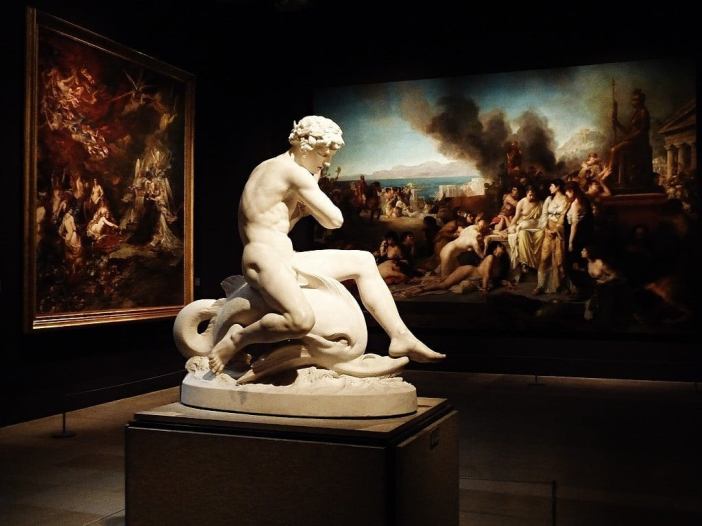
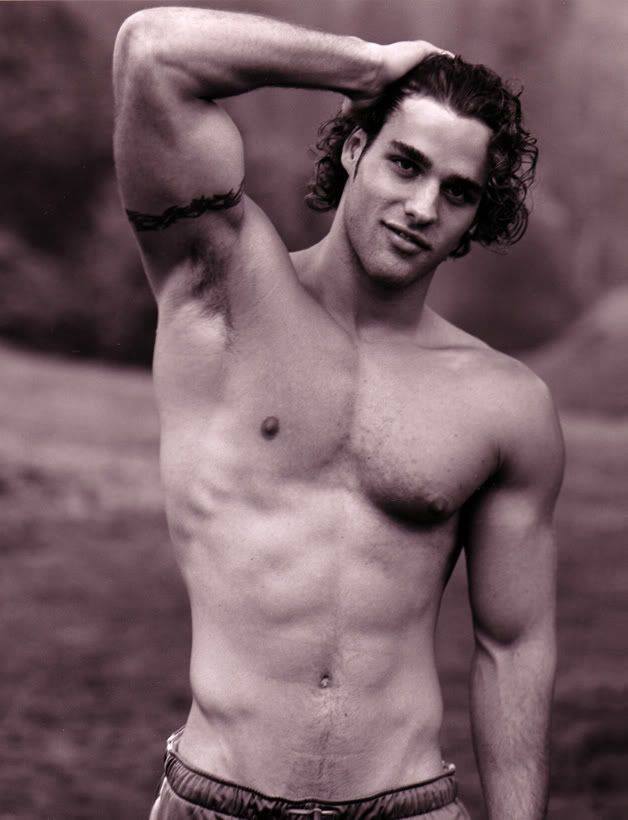
Typical Male

The male gaze.

Per Wikipedia (which isn’t always accurate):  In feminist theory, the male gaze is the act of depicting women and the world, in the visual arts and literature, from a masculine, heterosexual perspective that presents and represents women as sexual objects for the pleasure of the male viewer.

Or, as Laura Lippman likes to quip about crime fiction written by men: A beautiful woman is dead and a man feels bad about it.

Lippman is joking, sort of; much of male-centered crime fiction can be boiled down to that sentence. The sexualization of women in crime fiction, particularly in hard-boiled fiction or noir, has been a thing since the early pulp days; classic English crime fiction, like that written by Agatha Christie and Dorothy L. Sayers and their other contemporaries, probably didn’t sexualize their women characters…although I do seem to recall that Arlene Marshall in Christie’s Evil Under the Sun was not only sexualized, but also highly misunderstood; it isn’t until Poirot solves the crime at the end of the book that we finally begin to understand Arlene as something other than a sex object who devours men like a praying mantis; the Christie version of a femme fatale being softened, as it were, in the final reel.

It is surprising to read books published in prior decades with their attitudes towards women–sometimes my jaw literally drops at how writers used to describe women, reducing them to their sexuality and their sex appeal; older, or less attractive, women, are written about in an almost contemptuous manner. This still pops up from time to time in modern fiction, but it’s not nearly as common as it used to be.

I was sitting at a literary luncheon, for example, while the speaker was talking about his admiration for John D. MacDonald–an admiration I share–and in particular, about MacDonald’s Travis McGee series. I was nodding and smiling when a female author friend leaned over and whispered to me, “I wonder if he’ll mention McGee’s magic wand.”

I was startled at first, and then I stifled a laugh–it wasn’t the appropriate time in the talk to laugh–but the more I thought about it, the more I realized she was right. One of the major things about Travis McGee, and the novels written about him, was how he ‘sexually healed’ the damaged women he was assisting during the course of the book; even his friend and cohort often referred to him as a ‘knight-errant coming to the rescue of the lady.’ It never really dawned on me, when I was reading the books–either the first time or any of the successive times I’ve reread them–that he was actually fucking them back to good emotional and mental and physical health; I always thought, since it usually involved them going sailing on his houseboat and fishing and doing the mindless, physical work while relaxing and getting tan and enjoying life away from the worries and problems of the world and day-to-day life.

I missed the bit about the magic wand because I’m gay and it never crossed my mind.

Which is doubly ironic, considering how much MacDonald and McGee influenced my Chanse MacLeod character and the series I wrote about him; but despite the influence in the creation of the character/series, my series was dramatically different from MacDonald’s.

Being a gay crime writer, while limiting in many ways, is incredibly freeing in others. I fully acknowledge that my books are firmly centered in the gay male gaze; that when I write either Chanse or Scotty, I often devolve in description of male characters the way male writers used to/sometimes still do write about women; their looks, their sex appeal, their fuck-ability factor. Sometimes I wonder if that’s what people mean when they talk about my books being all about sex; because Chanse and Scotty view men as sexual beings and that is something readers aren’t accustomed to seeing?

Perhaps.

Something to ponder.

Today’s short story is “Born of Man and Woman” by Richard Matheson, from  The Best of Richard Matheson collection:

X–This day when it had light mother called me retch. You retch she said. I saw in her eyes the anger. I wonder what it is a retch.

This day it had water falling from upstairs. It fell all around. I saw that. The ground of the back I watched from the little window. The ground it sucked up the water like thirsty lips. It drank too much and it got sick and runny brown. I didn’t like it.

Mother is a pretty I know. In my bed place with cold walls around I have paper things that was behind the furnace. It says on it SCREENSTARS. I see in the pictures faces like of mother and father. Father says they are pretty. Once he said it.

And also mother he said. Mother so pretty and me decent enough. Look at you he said and didn’t have the nice face. I touched his arm and said it it alright father. He shook and pulled away where I couldnt reach. Today mother let me off the chain a little so I could look out the little window. Thats how I saw the water falling from upstairs.

Richard Matheson isn’t as well known as he should be; he is a giant in the horror community and deservedly so, but he should also be highly acclaimed as one of the great writers of any genre from the twentieth century. His novels were filmed frequently–so even if you don’t think you know his work, you do. SOme of the films based on his novels include The Incredible Shrinking Man, Legend of Hell House, I Am Legend (The Omega Man), Somewhere in Time, Stir of Echoes, What Dreams May Come, and countless others. His short stories were often adapted for episodes of Twilight Zone or Night Gallery–probably the most famous being “Nightmare at 50,000 Feet.” Just a creative genius.

This story is chilling, absolutely chilling. We never really know much about the poor young man (or woman) chained in the basement of this family’s home; other than he was born of their union and something went terribly wrong. He is treated terribly and not educated well and they feed him, but they also are so repulsed and horrified by him that they beat and abuse him and keep him chained against the wall…but as the story progresses his pathetic need for love and company turns.

And it’s hard to feel any sympathy for the rest of his family…who are about to become his victims.

And now, back to the spice mines.

33984489_1851989305095304_8619000950679404544_n