Promises

Tuesday morning, and I hope all is well with you, Constant Reader. I slept deeply and well, didn’t want to get under the weight of the blankets, but did and now I am waking up. I just had a piece of King cake (the on I bought Sunday has mysteriously been almost completely eaten since yesterday morning) with my coffee this morning. It’s forty degrees again this morning, only getting into the mid-fifties later. I did pick up my copy of Bemused (and a few other books, Disclaimer plus two non-fiction tomes, one about Appalachia and another about the Satanic panic and the Go Ask Alice literary fraud), came home, and Paul and I started watching season two of The Rig, which is interesting; I remember nothing much about the first season, but the show has shifted from the smaller story of the workers trapped on an oil rig in the North Sea and weird shit happening to a much bigger story that was kind of jolting. I do like the cast (including Emily Hampshire from Schitt’s Creek), and it’s interesting as it shifts from a horror story into The Abyss. Definitely an interesting choice, and one I did not see coming.

This year has turned into something, hasn’t it? Everyone was so glad to see 2024 usher itself out the door that we weren’t prepared for 2025 to be a disaster from day one. A terrorist attack on New Orleans to ring in the new year, and of course California is still burning. The very notion of putting conditions on federal aid, as well as “blaming” California for its own situation, is so not very Christian (looking at you, Mike Johnson–the fact that you consider yourself a modern Moses instead of a modern Jesus is telling) and an absolute joke when we open the federal wallet for hurricane relief without question every hurricane season (AS WE SHOULD)—when what we should be doing is figuring out way to make hurricane relief faster and more effective and efficient and to do better by victims of natural disasters–which are only going to keep increasing and with greater impact as we navigate the treacherous waters of the new regime. They come so fast and furious now that it’s easy to forget even the more recent ones. California is burning while North Carolina continues to recover from it’s unexpected hurricane disaster–does anyone even think about North Carolina now, in the winter? I do find it interesting that their state government is far more interested in overturning a free and fair election in their state while so many of their citizens don’t have shelter or power (or both). But we move on, like we always do, and assume that the recovery is completed once the story is out of the news. Angelenos are suffering a trauma right now, just as the North Carolinians still are, and the effects of those traumas are very long-lasting. Trust me, I know, and it will be years before either region is recovered, if they ever do.

Well, the New Yorker dropped its horrific article on the sexual abuse (re: rapes) perpetrated by Neil Gaiman on a LOT of women, and yes, I needed a Silkwood shower after reading it. It’s awful, and yes, it is terrible, but it doesn’t surprise me as much as it did the Gaiman fanboys and fangirls. I’ve never truly been that kind of a fan boy for anyone, really; there have been a few whose beliefs and values wound up not aligning with mine, but it wasn’t a trauma for me nor did it trigger an emotional meltdown because I don’t get that vested in artists as a general rule, so when they turn out to be awful in some way my reaction is generally well that’s a shame and I don’t read them anymore. Simple. Getting rid of Orson Scott Card from my shelves wasn’t a big deal, nor was never reading any further of Marion Zimmer Bradley’s1. I had read David Eddings’ The Belgariad2 in the 1980s when I went through my fantasy reading period, but didn’t know about his crimes (with his wife and co-writer) against their adopted children3 or that they did jail time until the piece on Gaiman dropped yesterday and the Internet lit up with angry former fans and friends denouncing his behavior. As for me, well, I’ll always be fond of The Sandman and sorry the Netflix series is ending after a wonderful first season, but I probably won’t be reading anything else of Gaiman’s, or revisiting The Sandman again. But I do think you can separate the art from the artist, to some degree; but that’s up to individuals and their own ick factors, I think. My mentality is I won’t ever get a chance to read everything I want to read, so why revisit the works of problematic, or read new works by them? I had no problem whatsoever cutting Dan Simmons out of my must-read list, and he was one of my favorite horror writers.

The Internet blew up at Carrie Underwood yesterday for agreeing to perform at the coronation of the anti-Christ Monday. Hey, if she wants to lick his boots, go for it, bitch. I’m not the one who’ll have to answer for it to God someday. Have at it, but remember no gay will ever listen to, download or buy anything you ever record from now on. Everything he touches dies, and why do you think you’ll be exempt from that? I imagine you lost any non-MAGA listener you had, but hey–you’ve got that Aryan Master Race thing working for you, so have fun performing for the glory of the Fascists. How did that work out for Leni Reifenstahl?

I was also a little saddened to read about the death of one of my favorite soap stars, Leslie Charleson, recently. She was the second actress to play Dr. Monica Quartermaine on General Hospital, and she lasted decades longer than the original. I always liked Monica, and absolutely loved the way Charleson played her. Sure, I enjoyed the whole Luke-and-Laura stuff, but I primarily watched General Hospital for the Quartermaines, who were conniving and backstabbing and fucking hilarious. (Jane Elliott’s Tracy remains my favorite soap character ever; scenes between the two were great television.) I always thought they should have their own show, and the way they kept killing off Quartermaines willy-nilly over the years was really aggravating; I wanted more Quartermaines, not fewer, and they never deserved to be on the back burner.

And on that note, I am heading into the spice mines. Have a lovely Tuesday, Constant Reader, and I’ll check back in with you again tomorrow.

  1. I was a fan of her gay romance, The Catch Trap, and had always meant to read her Arthurian novels…I can live without reading The Mists of Avalon, after all. ↩︎
  2. I’d actually considered revisiting that series, because of my fond memories of it, but now? Ick ick ick. ↩︎
  3. It’s pretty horrible to adopt children so you have victims at your mercy. ↩︎

One Thing Leads to Another

Oh, Elite, what a magnificent ride you were. And how I hate having to wait indefinitely for season four.

For a very long time, I resisted watching shows or films with subtitles. I tried once, many years ago–I went to an “art house” theater, to see a rerelease of Ingmar Bergman’s Cries and Whispers, and it just didn’t work for me. So, since then, I’ve pretty much avoided anything subtitled–which, of course, was robbing me of a lot of enjoyable film and television viewing. Ironically, my addiction to British crime television programs was what got me past the hurdle of subtitles; my hearing isn’t that great–never has been–and as I continue my slow descent into the grave it’s gotten progressively worse. I was having trouble understanding what was going on with a British show due to the accents–perhaps Broadchurch, or maybe Torchwood–so I turned on the closed captioning. Not only wasn’t it an issue, it was enormously helpful; and this was able to follow what was going on. It took a while for the lightbulb to go on that hey, if you don’t have a problem with closed captioning, you can probably handle subtitles–which led us to the marvels that are Spanish Netflix series. Toy Boy was amazingly fun; White Lines a little less so; and after we finished the final, incredibly disappointing season of 13 Reasons Why, someone suggested Elite to me. I know the kids at work watch–it pops on my Continue Watching queue all the time (they use my Netflix account on the big television in the meeting space), and so I suggested it to Paul; we decided we’d give it our old “one or two episodes” rule.

As if. Within ten minutes we were completely addicted.

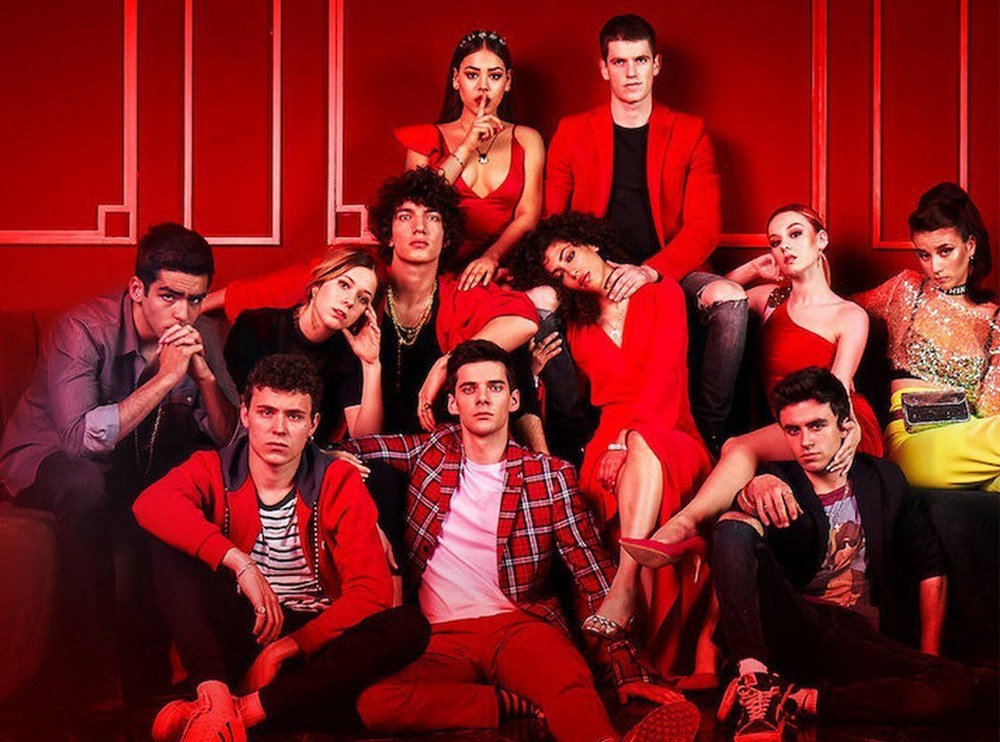
It literally has everything.

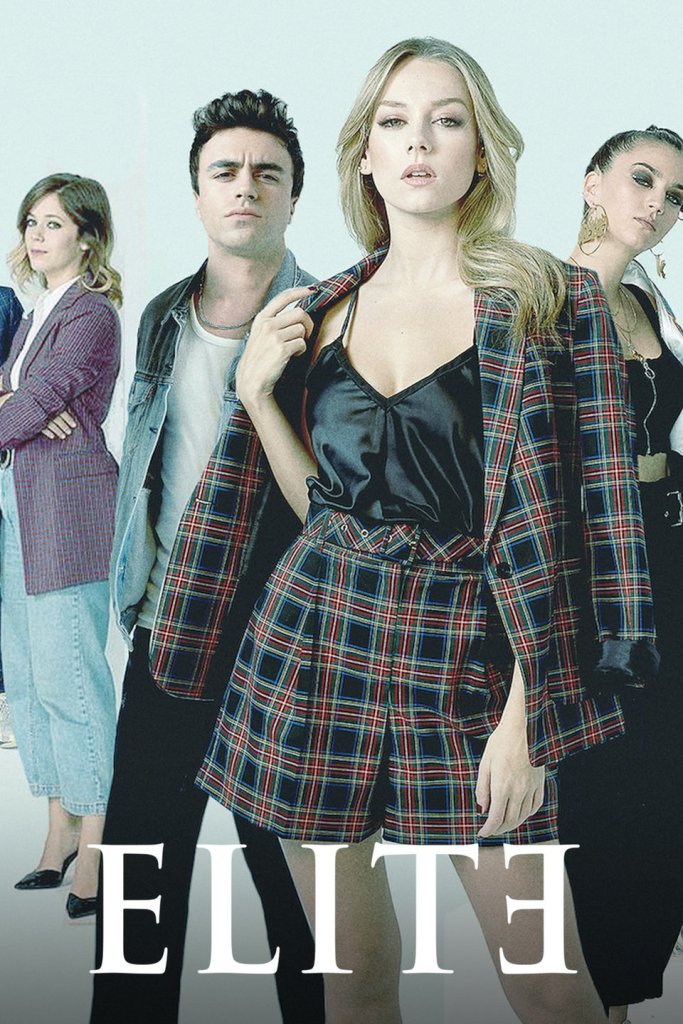
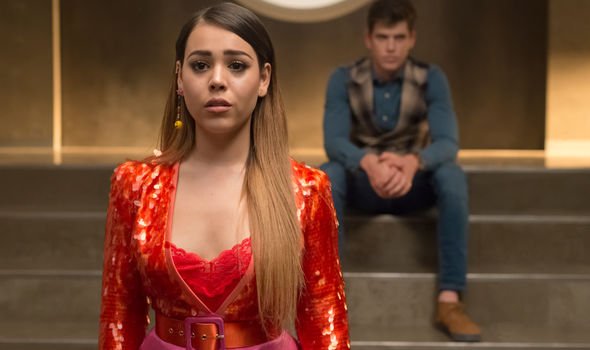
That’s my girl Carla there in the front.

And by everything, I don’t just mean beautiful young women and gorgeous young men–although it definitely has that.

I mean…

I love the serial form; soap operas are simply continuing stories, and so are mystery series. I’ve always preferred ones that followed characters as they grew and changed and lived their lives; I read every Perry Mason book cover to cover and loved them all–but Perry, Della and Paul Drake were always the same in every book, nothing ever changed, and there was never anything personal about them. Maybe that would have spoiled the books, I don’t know–but series books which also followed the personal lives of the series characters were always my favorites; why I think the first six Trixie Belden books are better than the ones that followed, and why I think, overall, the Judy Bolton series was superior to Nancy Drew.

Nancy Drew never had to juggle marriage to an FBI agent and child care with trying to solve a mystery–but Judy Bolton did it and did it well. Nancy was an ideal, while Judy was real.

So, I thought I would enjoy Elite going into it. Set at an extremely expensive excellent school for the rich in Spain called Las Encinas, I was expecting teen angst and high school drama; Riverdale in Spanish, maybe, or Gossip Girl, which I never had any interest in watching. Sure enough, the opening episode, the traditional prep school conflict was set up, one we’ve seen a million times: the poor scholarship students vs. their wealthy snob classmates. An added touch is the scholarship kids are there because their public school collapsed due to shoddy construction, and for public relations purposes the construction company responsible set up the scholarships. The owner of that criminally negligent company is the father of Guzman, the stunningly beautiful Big Man on Campus. His direct opposite is poor waiter Samuel (in Spanish Sam-OO-well, and Samu for short). I’ve seen this is so many teen movies and shows–storylines recycled over and over again, with the subliminal message rich spoiled kids bad, struggling poor kids heroes.

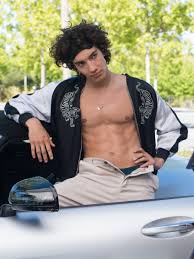
Both are beautiful young men, aren’t they?

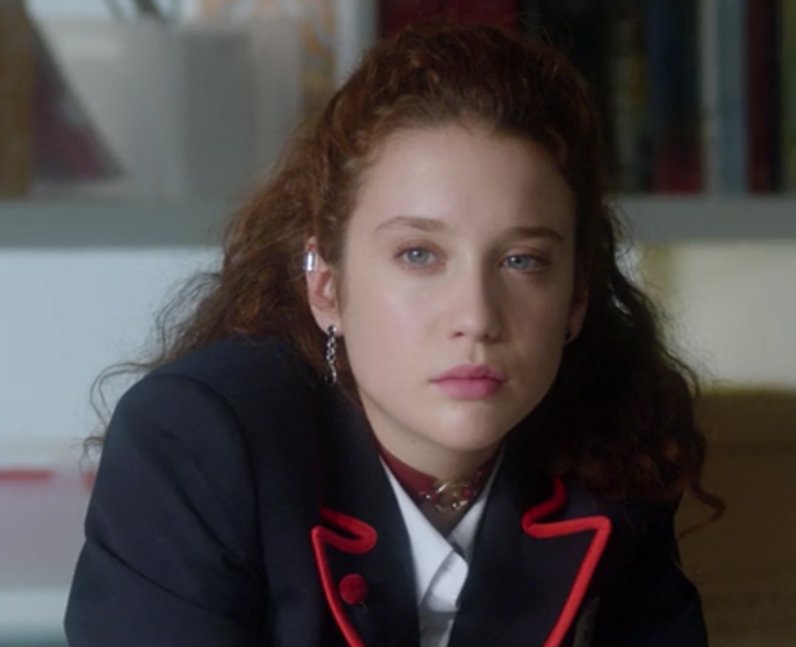
Samu’s two friends, Nadia and Christian, are the other two scholarship students. Nadia is a Muslim; her family are Palestinian immigrants who own and operate a corner store. Christian is a very pretty, devil-may-care muscleboy who just wants to have a good time, and isn’t a very good student.

Nadia is forced to remove her hijab while she is at school–one of the rich kids, determined to make the new kids’ lives miserable, has complained–and Christian’s clothes are stolen while he showers…so he puts his hands over his genitals and walks down the school hallway looking for his clothes. It’s a great scene, and when someone throws his clothes at him, he uncovers his genitals and rather sassily says, “This is what you want to see?” before going back and getting dressed.

The only rich kid who is nice to the new kids is Guzman’s sister, Marina.

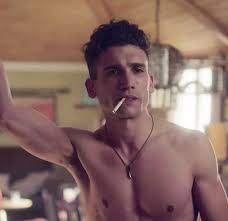
She looked familiar to me–but I couldn’t place her; Paul figured out–recognizing her voice–that she played Triana in Toy Boy. But Marina, who the other rich kids derisively call a “hippie”–has her own problems and issues, particularly with her family and her father’s responsibility for the school collapse. Eventually, she and Samu begin a romance, that is complicated by the fact she is also attracted to Samu’s older brother, Nano–who has just gotten out of prison for drug dealing.

Nano

Guzman’s two best friends are Ander, who is a tennis prodigy and whose mother is also the headmistress of the school, and Polo. Polo’s has two mothers–and this isn’t a big deal to anyone, which is quite refreshing. Ander is very introverted and doesn’t really want to play tennis anymore, but his father keeps pushing him and he doesn’t want to disappoint his parents. Polo has some issues of his own…

Polo’s girlfriend since childhood is Carla, whose mother is a marquesa, a Spanish grandee, and their money comes from wineries. Both families are quite delighted that Polo and Carla are in love, and look forward to their eventual wedding. Despite being in love, Polo and Carla are looking to spice up their relationship–which they feel is getting a bit stale–and this launches one of the best storylines I’ve ever seen on a television show like this. Carla, who starts out kind of bland and undefined, soon became one of the most complex and brilliant female characters I’ve ever seen on television–the actress who plays her, Ester Exposito–is pitch perfect and amazing in the role.

The two remaining cast members are Lucrecia, who is Guzman’s long time girlfriend, and Nadia’s brother Omar, who is still going to a shitty public school.

Lucrecia is the bitch of the show; and originally comes off as unlikable. She always has an insult at the ready, has no problem with being a bitch just to be a bitch, is a snob, and hates that these “riff raff” kids are now at her school. She also is a bit of an exhibitionist–and that tendency also kicks off one of the major stories on the show. She likes to have sex with Guzman in public places where they might get caught–and in the first episode, they are in the girls’ locker room showers doing it when Nadia walks in on them. Since this is an honor code violation–and Lu is the top student in the class, vying for a chance to win a year at a school in Florida, which goes to whoever the best student is–she comes up with a plan to keep Nadia quiet: Guzman will seduce Nadia, and unless she keeps quiet, they’ll tell everyone. At this point, I knew how this would go–this is a classic teen storyline–but Elite subverts and turns all of these cliched plots and characters and makes them entirely original, with twists and turns–there is literally no way to predict what is to come; it’s brilliant.

Omar, Nadia’s brother, is the one the entire family burdens with everything; from working in the store to expectations of marriage. Omar is dealing drugs so he can get enough money to move out and live his own life…and through the drug dealing (weed, mostly) to the rich kids and a hook-up app, he and Ander find themselves outing themselves to each other–which kicks off yet another major storyline for the show, and probably one of the best depictions of a gay romance I’ve ever seen on a television program.

Much like How to Get Away with Murder, each season deals with a crime the kids are all involved with. The first episode opens with a shot of a stunned Samu, spattered with blood, walking up to a glass window. On the other side of the window the police are dealing with a dead body, and he places his bloody hand up on the glass–which brings the cops running to him; and then the show flashes back to the beginning, when he, Christian, and Nadia first arrive at Las Encinas. Unlike American shows, we learn who the victim was about halfway through the first season, and it’s a complete and utter shock. I have never seen a show that was so cleverly and intricately plotted, that kept my attention so fully, and kept surprising me.

And the quality–and excellent casting choices–never let up. In the second season we get some new characters: Cayetana, Valerio, and Rebe (Rebeka).

Valerio is Lu’s half-brother; Cayetana is apparently a jet-setter with a ridiculous amount of Instagram followers, and Rebe is a rough-around-the-edges girl whose family won the lottery. But all three of them are hiding secrets they are desperately trying to keep from their classmates–but are also great characters and do not detract from the brilliance of the show but rather add to it.

And each season has a crime at the heart of the story; and does the terrific back-and-forth in time thing to ramp up the suspense and keep you hooked.

The show has everything, literally: murder, kidnapping, drug dealing, sex, polyamorous relationships, gay relationships, incest, parents pimping out their kids, blackmail, cover-ups…and it’s so beautifully done, so brilliantly acted, that you care about every character as you learn more about them and why they are how they are; the love triangles are heartbreaking because you actually feel guilty for rooting for one couple to come together because you know how much the left out one will be hurt. Even the ones who do bad things–you feel for them.

I’ve never seen anything like this before. It’s amazing. It was literally the highlight of every day we watched; I looked forward to every evening sitting down in my easy chair with Paul on his couch and tuning into Elite. It’s already been renewed for another two seasons, and I frankly can’t wait.