Rooms on Fire

Good morning! We made it to Tuesday, didn’t we? Yesterday was a bit off for me, not going to lie. But I’m up early, didn’t hit snooze more times than I should, and I am waking up slowly. We’re going to be extremely busy in the clinic today and I am, once again, working an almost full appointment schedule by myself. Heavy heaving sigh. But tis the trials and tribulations of one Gregalicious life, and all one can do is bear it and power through. I do feel less wrung-out than I did yesterday, which is, clearly, a strong and steady improvement over Monday’s horror. It really wasn’t bad, actually, I just felt kind of inside-out all day. Work was its usual, and I stopped to make groceries on the way home–amazing how what I got would have cost about fifty bucks last year but is almost eighty now. Sigh. But we have to eat, don’t we?

We watched another episode of His and Hers last night, which is a very interesting show. I don’t think there’s anyone in the show to root for–they all seem like pretty terrible people, and we are learning everything very slowly, which is interesting but also doesn’t really draw you in because you don’t completely understand. It’s more observing than actually watching, if you know what I mean? It’s very well done, and it’s always fun to look at Jon Bernthal (who should be a bigger star in my opinion). The Beauty drops another episode tomorrow night, so tonight is looking like another His and Hers episode or two. I have to run errands tonight after work–have to go all the way uptown to get the mail and some more prescriptions–and I need to do a load of dishes and a load of laundry, too. Stay focused. I also want to work on the short story I started this weekend. I have a great idea for a story for an anthology that was recently announced, I just have to write the damned thing now. I really need to write something fictional soon–the creative writing muscles are atrophying as I type this.

I was also thinking more about Judgment at Nuremberg and societal guilt some more yesterday–and the subject of “what do the everyday people think” that this movie kind of addresses. The short story–set in a slightly future dystopian Louisiana–has me thinking about all of this sort of thing. I had always believed, since childhood, that the South was utterly and completely racist–and whenever I read a historical novel set during Jim Crow and before Civil Rights that centers heroic anti-racist Southern whites I roll my eyes. (Don’t even get me started on the To Kill a Mockingbird nonsense.) But as I read more actual Southern history, and talk to my dad about it more, turns out the South really isn’t a monolith–there were Southerners who opposed secession and fought on the other side, which sometimes led to horrible atrocities–a distant relative fought for the North, came home on leave, and was skinned alive by the Home Guard (sometimes you supposedly can hear his screams late at night in the back hollers)–aka the Confederate version of the Gestapo. The power structures of the Southern states were in the hands of the racists and the Klan (the argument could be made that they still are) so whites who actually opposed Jim Crow were also afraid. (One of the many striking aspects of Tananarive Due’s The Reformatory was the white family who were in the Klan that the teenaged Black girl worked for; the daughter, who reluctantly helps her, knows Jim Crow is wrong but will only do so much out of fear.) So, were Southerners who opposed enslavement and secession but kept quiet out of fear for their own safety any different from the everyday Germans just living their lives under an evil regime, without the power or safety to do anything? Again, that brings up that morality question–does silent opposition matter when atrocities are being committed?

This is why reading Black authors writing about the South is so important. Progressives are so frequently told we live in a bubble and not reality; but people who don’t read authors from different demographics are also living in a bubble of supremacy and racism that bears no resemblance to reality. (As well as Due, read Wanda M. Morris and Cheryl Head, for a start–and S. A. Cosby is always a sure bet.)

I had a lot of laughs yesterday at the pathetic white people outrage as the casting of gorgeous Lupita N’yongo as Helen of Troy because “historical accuracy.” Just out of curiosity, how many ancient Greeks are actually in the cast? Or Greeks, for that matter? Were you there and can conclusively state Helen was a white woman? Her father was Zeus, who fucked her mother in the form of a swan, and she was hatched from an egg. How many Greek gods are being played by actual Greek gods? Just say you’re a racist piece of shit and miss me with your coward-ass dog whistling.

And on that note, I am heading into the spice mines. Have a lovely Tuesday, and I will be back tomorrow.
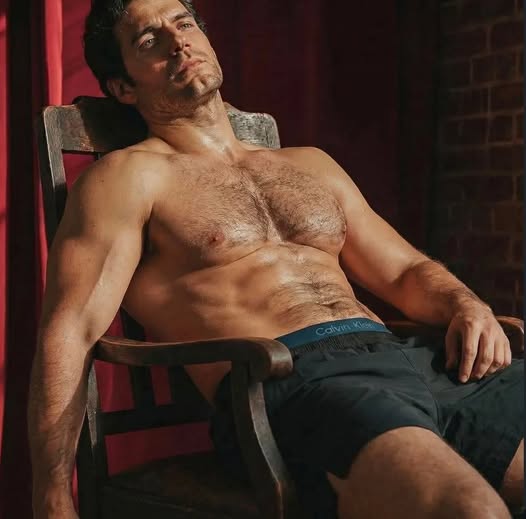
I will never stop being awed by how insanely beautiful Henry Cavill is….

Single

Well, Constant Reader, we’ve made it to Thursday again; how lovely is that?

I have a busy day ahead of me, so I am priming myself with as much coffee as I can hold–which I will undoubtedly regret later, when I can’t sleep tonight. I did sleep well last night–only waking up around six when Scooter decided to lie on me, purring and kneading me with his paws, but I fell back asleep relatively easily. I could have slept for another three or four hours, frankly.

While making my condom packs yesterday I watched two movies on HBO MAX: Eyewitness and Foreign Correspondent. Both were enjoyable, if flawed; the second more flawed for being a product of its time (1940) more than anything else. Eyewitness was also very much of its own time–the late 1970’s/early 1980’s, and is particularly memorable for being the first major film roles for William Hurt and Sigourney Weaver. Watching the movie put me back in mind of the 1970’s and all of its bitter cynicism. Hurt plays Darell Deaver, a Vietnam vet who now works as a janitor in an office building in the evenings; yet can afford a fairly decent apartment in Manhattan–which I suppose was still possible in the 1970’s–and his best friend is Aldo, played by a very young James Woods (also playing a racist Vietnam vet). In the building where Darell works is the office for a Vietnamese businessman (played Chao-li Chi, best known as Chao-li from Falcon Crest; obviously, back then it wasn’t an issue having a Chinese-American actor play a Vietnamese character) whom both he and Aldo remember from Saigon. Mr. Long has gotten Aldo fired from his job, and one night Mr. Long is brutally murdered while Darell is in the building. Darell, thinking Aldo killed him, pretends he didn’t find the body…but the newspaper reporter covering the case (Sigourney Weaver) he’s been watching on the news and has a big crush on, so he begins a minor flirtation with her. She thinks he knows more than he’s saying, and so plays along with the flirtation….not knowing she is more connected to the murder than he actually is. It’s a nice neo-noir film, if a bit flawed, and watching it reminded me of how much things have changed in our society and culture since then–and also reminded me of other things about the 1970’s; the rampant paranoia, for one, and how New York was in decline (or at least, seen to be in decline by the rest of the country), and was a much grittier, messier place. It also reminded me of how much public perception in the United States towards Jews and Israel have shifted–there’s a subplot about Sigourney Weaver’s parents being Russian Jews who managed to escape that is more important than is let on at first, and Christopher Plummer has a role as Weaver’s actual lover who is an activist helping Russian Jews escape from behind the Iron Curtain. Morgan Freeman and the guy who played Adam Schiff for years on Law and Order play the police detectives investigating Long’s murder–which was an interesting twist.

Foreign Correspondent was one of Hitchcock’s first American films, and since it was made in 1940 and was about the possibility of war breaking out in Europe (it already had; the movie was set in August of 1939), as one can expect it was very anti-Nazi and pro-Britain. Joel McCrea plays a reporter for the New York Globe who, as a crime reporter, is seen by the publisher as someone better equipped to handle reporting the double-dealing and backroom deals prior to the possible outbreak of war. McCrea does a good job in the role–if his character is quite a bit naive–and eventually he falls (as one does so frequently in Hitchcock films) madly in love with the daughter of the head of the Peace Party, who is supposedly working very hard to prevent the outbreak of war. There’s a typical Hitchcockian plot about a Dutch diplomat who is party to a secret treaty between Holland and Belgium and a secret clause only known to the signatories who is being pursued by the Nazis; a double stands in for him and is murdered very publicly–but the McCrea character knows he’s a phony and the search is on for the real diplomat. The suspense that Hitchcock is known for is there, and props to the studio and Hitchcock for doing a plane crash at sea in the third act–it’s totally not how a plane crash would work, of course, but no one in 1940 would know that–and, of course, as required by the Hays Code there is a rousing happy-ever-after ending with McCrea reporting from London during a bombing raid a la Edward R. Murrow, and as the credits roll a rousing rendition of a patriotic American song plays.

I had a headache for most of the day yesterday, so I didn’t read or write at all, but despite the headache, I couldn’t help but think about both movies, and how their stories couldn’t really be updated very much to a modern era–perhaps Eyewitness could be, more so, since television reporting isn’t going anywhere, but do newspapers even have foreign correspondents anymore? I don’t think so.

Paul and I are also watching a German Netflix series called We Are The Wave, which is interesting and rather well done; it’s based on the old “Wave” experiment that was actually done at a high school and then made into a movie, with a book adapted from it later; about how easy it is for fascism to take hold. It was done as an experiment, a teaching moment for an instructor for his class to show them–who wondered about how the Germans could embrace such a toxic political philosophy as Nazism–precisely how easy it was. This show is a bit different in that it shows that Nazism is again on the rise in Germany, and the “wave” in this show is actually a resistance movement towards both capitalism and Nazism. It’s interesting, only about six episodes long, and we are almost finished. We won’t be able to finish tonight because I am doing one of those Zoom on-line promotion things for The Faking of the President anthology.

And on that note, I am heading back into the spice mines. Have a lovely Thursday, Constant Reader.