Invisible String

Labor Day morning, and I feel rested. I’ve not felt this good in quite some time, frankly–I am sure ignoring my emails and staying away from social media over the course of the long weekend has something to do with that, indubitably–and now I am having my morning coffee and slowly coming alive. May as well enjoy it while I can, since tomorrow I have to get up unbearably early, but we only have one clinic day this week and it’s also a four-day work week, so maybe it won’t be so bad on my physically.

I worked on the book for a little while yesterday; not very much, not nearly as much writing as needed to be done over the long weekend–which is inevitably always the lament, is it not? But getting rest–both physical and mental–is also inevitably necessary and a necessity. I did manage to not only finish reading Little Fires Everywhere over the course of the weekend, but I also finished The Coyotes of Carthage (which will be getting its own entry eventually) and started reading Paul Tremblay’s The Cabin at the End of the World, which is not only extraordinary but nothing like I was expecting–and I was also going in blind, knowing nothing about the book other than I had read his earlier novel A Head Full of Ghosts and really enjoyed it. It features and centers, for example, a happily married gay couple and their adopted child; didn’t see or expect that coming. I’m about halfway through the book, and while I certainly don’t want to give anything away, I am already planning on spending some more time with it today. Reading is such an escape (always has been) and a pleasure for me my entire life; I never really understand what it’s like for people who don’t read, or who don’t like to read–its so outside of my own experience I’m not sure I could ever understand choosing not to read.

The work I did on the book yesterday, while not a lot, was also quite good work, and I am certain that the rising quality of this novel I am writing has everything to do with the high quality of what I am reading these days. I mean, between Matt Ruff, Celeste Ng, Steven Wright, and Paul Tremblay, one really cannot go wrong, can one? I’ve also come to understand that my deadlines–while arbitrarily set–are also set up to maximize time, and are also predicated on the idea that I can actually have the energy–both physical and creative–to do good work every day. I’m not sure that I can anymore–not sure that I ever could–but the mindset is the key, and I know after seeing clients for eight hours, I really don’t have the bandwidth to write anymore the way I used to; which inevitably, I am sure, has something to do with the malaise this current world in which we live has created. Malaise is probably not the right word; depression is probably closer to what I really mean–there’s this weird depressive thing going on in my subconscious that makes macro issues I would ordinarily blow off or ignore or brush off much more micro and much more draining on me.

So, what is a writer to do in these days? Self-care, as I have noted before, is more important than ever. I am going to use the massage roller this morning, and possibly do some stretching exercises as I get ready to face this day–I intend to write today; it’s been lovely dipping my toe into it most of the weekend but I really need to dive into the pool today–and I’d also like to get some more cleaning done at some point. There are electronic files to sort as well, and filing to be done; floors to be cleaned and laundry to fold; all the endless minutiae I always intend to keep up with as I go but inevitably push the back of the priority list and do nothing about until they reach a point like the one they are at now: a literal mess that requires more focused work than ordinarily they would. And while my energies are frequently scattered…I have found that the binge reading I’ve been doing has done a lot to create a sort of inner peace that I’ve been missing lately. I also think I’ve sort of been in mourning about the loss of football season–yes, I know they are going to try to have a season, but it’s not a real season and thus not the same thing; this will be the first year since 2010 that Paul and I have not gone to at least one game in Tiger Stadium–but at the same time, that has also freed up my weekends. My goal for this week is to read a short story a day, as well as a chapter or two per day of whatever book I am currently reading–I suspect I may finish the Tremblay today, it’s that good and that unputdownable–as well as to do some stretches every morning after I get up and before I take my shower. I think regimenting my days into a sort of routine–since I clearly love routines when I can manage to stick to them–is perhaps the smartest way to go.

We watched the new episode of The Vow last night, and it’s getting more and more chilling the deeper into the series we go; I’m glad it’s currently not binge-able, because watching one episode per week makes it more easily digestible. They are doing a most excellent job as well of showing how attractive NXIVM was; a lot of the things they talk about, when it comes to taking responsibility for yourself and changing your mentality and behavior to become more successful, sounds like practical advice you can apply to improve your life–but there’s certainly a dark side to the whole thing. Last night’s episode, which brought up the branding and master/slave “sorority” within the organization, was positively chilling.

We also started watching the new Ridley Scott series for HBO MAX, Raised by Wolves, which is extraordinary. We watched all three episodes that were made available immediately, and it’s quite an accomplishment; it looks very expensive, with no expense spared on production design and special effects. The story itself is also interesting, if a bit hard to understand to begin with; it’s set in 2145, and Earth has been ravaged to the point of becoming unlivable because of a religious war, between Mithraic religion (worship of the sun) and atheists. Since Earth was becoming uninhabitable, both sides launched space ships to another Earth-like planet to save humanity; and it gets a lot more complicated from there. It’s a very high-concept show, and I am curious to see how it all plays out going forward. If you’re a science fiction fan, I’d recommend it; I don’t know if people who generally don’t watch sci-fi would like it as much–I could be wrong. I would have never guessed, for example, that Game of Thrones would have become the cultural phenomenon that it was.

And I still haven’t decided what short stories to focus on writing, although I am leaning towards “After the Party”, “The Flagellants”, “Waking the Saints”, “Please Die Soon,” and “He Didn’t Kill Her.”

And on that note, tis back into the spice mines with me.

Breathe

One of the things I love most about books being turned into television series–or mini-series–is reading the book while I am watching the show. I discovered how amazingly fulfilling and fun and joyous this could be with Big Little Lies, and I’ve tried–sometimes failing–to do this every time Paul and I start binge-watching and loving another adaptation.  (Little Fires Everywhere remains my biggest disappointment; I cannot believe I did not have a copy of the book on-hand, or waited to watch until I had one in my clutches)

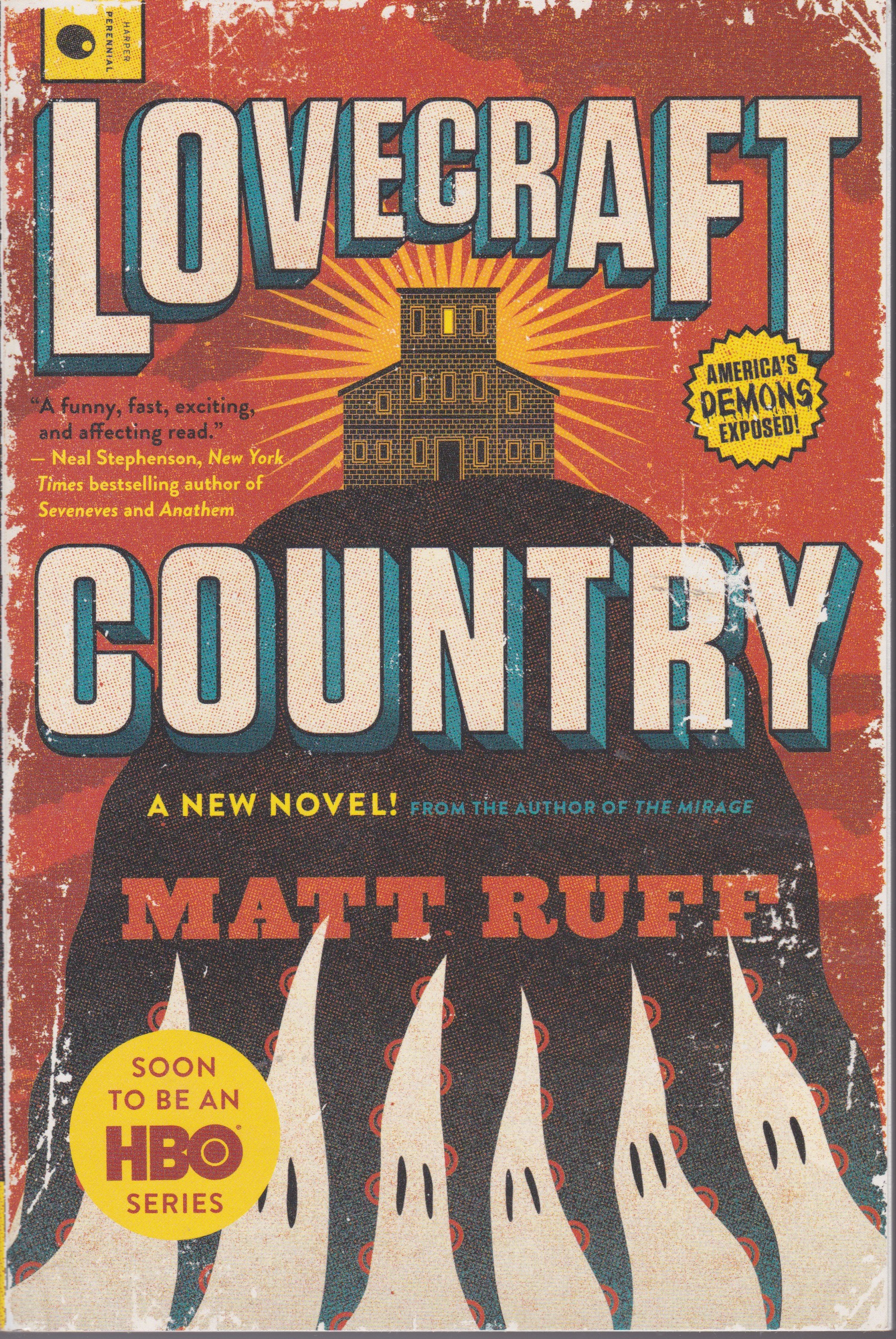
When I saw the first preview for HBO’s Lovecraft Country, it literally blew me away. I literally thought to myself, wow, I cannot WAIT to watch that, and was even more delighted to discover that it was, in fact, a novel. I got a copy, placed it on the mantle, and the week the first episode aired, I started reading. (Obviously, I do not read as fast as I used to.) I love love LOVE the show, and the book is actually pretty marvelous, as well. I finished it last night as I waited for the way-outer bands of Hurricane Laura to reach us here in New Orleans–all we got was a tropical storm effect, I am terrified frankly to look up what actually happened where the eye came ashore, and will have to gird myself with more coffee before I do look–and I am pleased to report the book finishes just as strongly as it starts–and that the entire book is fucking fantastic.

lovecraft country

Atticus was almost home when the state trooper pulled him over.

He’d left Jacksonville two days before in the secondhand ’48 Cadillac Coupe that he’d bought with the last of his Army pay. The first day he drove 450 miles, eating and drinking from a basket he’d packed in advance, stopping the car only to get gas. At one of the gas stops the colored restroom was out of order, and when the attendant refused him the key to the whites’ room, Atticus was forced to urinate in the bushes behind the station.

He spent the night in Chattanooga. The Safe Negro Travel Guide had listings for four hotels and a motel, all in the same part of the city. Atticus chose the motel, which had an attached 24-hour diner. The price of the room, as promised by the Guide, was three dollars.

I’m going to be honest right up front: I’ve never read H. P. Lovecraft. Oh, the horror, literally, right? When I was a kid I bought a copy of The Dream Quest of Unknown Kadath and other Stories, and it just…well, it just didn’t do it for me. I lost interest several pages in, and gave up; and have never since returned to try the Lovecraftian waters. As I grew older and became more and more aware of the horror genre, I also became aware of how much of an impact and influence Lovecraft had, not just on horror, but on the sisters that genre is usually lumped in with, fantasy and science fiction. Lovecraft is honored and saluted and studied and written about, over and over again; new anthologies explore his worlds and “cosmic horror”; so many horror writers and fans claim, on their social media pages, to have attended “Miskatonic University” (which, to be fair, is far less annoying than those who claim “the School of Hard Knocks,” har har); and of course, over the past decade (perhaps longer; who knows? I don’t, and don’t care to find out) you cannot be involved in publishing, or a fan, as I am, of the horror genre and not been aware of what I have come to call “the Lovecraft Wars.” (The Lovecraft Wars, in short, debate the legacy of Lovecraft and his vile, racist beliefs; the standard defense is a shrugged ‘he was a man of his time’–to which the only proper response, frankly, is so was Hitler–and whether or not he should continue to be honored as an influential author; I don’t know the answer to those questions, frankly, and it’s not my writing community so I have no skin in the game. But you cannot help but be aware of this ongoing conflict.)

Anyway, I was pleased when I saw the trailers for HBO MAX’s Lovecraft Country, which clearly centered Black people, and when I found out it was also a book, I decided to get it and read along while watching the series. I was also a little disappointed to see, based on the author photo on the back cover, that author Matt Ruff appeared to be white–which also seemed to be a whole other field of land mines; the #ownvoice debate.

And then I started reading, and watching.

The book is set in a post-Korean War pre-Brown v. Topeka Board of Education United States; when racism was not only permissable and acceptable to the majority of white people but was often enshrined into law; separate bathrooms, denial of service, mob violence and burning crosses were, horrifyingly enough, just a part of everyday life for Black people. The police weren’t there to help protect them; they were there to force them to continue to live their lives on their knees–and kill them if they tried to rise. Lovecraft Country doesn’t flinch away from this or try to downplay it in any way (either book or television show), and there were times I found it hard to keep reading and would put the book down–only to think to myself, that’s some serious privilege there, bud–this is what Black people experience to this very fucking day and they can’t just ‘put down the book’ and walk away from it; refusing to read it because it makes you uncomfortable and makes you squirm makes you even more complicit than you already are. So, yes, there are some parts to the book that will make white people uncomfortable–but you need to get over it, for any number of reasons but at least one is because the book itself is a revelation.

As I’ve said, I’ve not read Lovecraft, but I got the sense from reading the book that the interconnected stories that make up the book are all inspired by, or retellings of, some of Lovecraft’s; only now centering Black people and their struggle against not only supernatural forces but against the casual, every day racism of the society in which they live. Atticus is returning to Chicago from Jacksonville because he received a letter from his estranged father about a family legacy; Atticus’ mother, it turns out, was descended from a slave who was raped and impregnated by a master who was also a very powerful warlock and part of an ancient society with peculiar beliefs centered in the book of Genesis. His uncle George is the publisher/editor of the travel guide mentioned in the opening of the book; eventually Atticus and George go on a road trip to Massachusetts–to Lovecraft Country–along with a childhood friend named Letitia (Tish)–to find Atticus’ father and they wind up in a very chilling and scary place called Ardham (Lovecraft wrote about Arkham–and I will always wonder if Arkham Asylum from the Batman universe was an homage to Lovecraft as well). They deal with racism every step of the way, “sundown towns” (towns where people of color were required to be outside the city limits by sundown or else suffer the consequences), and corrupt racist cops.

Each section of the book focuses on another person who is a part of their immediate family/friends group, dealing with some kind of different, supernatural experience: the next part of the book centers Tish buying a big empty old mansion in a whites-only part of Chicago that also happens to be haunted, and so on–Tish’s sister has her own story; Atticus and his father go looking for journals of another warlock and encounter a haunting; George’s wife and son have their own stories as well–but all these stories are connected by a thread that goes back to Atticus’ family legacy and a war between different covens of warlocks for not only supremacy, but knowledge and power.

The book is exceptionally well-written, and as I said earlier, unflinching in its depiction of a racist society from the point of view of those consistently victimized by it, and it’s a toss-up between who is scarier–the warlocks and the forces they unleash, or the horrible racists, so entrenched in their horrific beliefs and values that they can’t see Black people as human beings. The fact Ruff chose to call his primary character Atticus didn’t escape me, either; Atticus being also the name of the noble white hero of To Kill a Mockingbird, which is, while a beautifully written novel, one which has become increasingly problematic to me over the years for any number of reasons. I greatly enjoyed reading the book–and in all honesty, it made me curious to read Lovecraft at some point after all these years; although it’s certainly not going to be a priority for me.

I will read more of Ruff’s work, though; the descriptions of his other books sound incredibly subversive, which appeals to me.

I recommend this book highly.