Emotional Rescue

So, I managed to fill the plot hole yesterday, and while I am not entirely certain I did it correctly–i.e., there will be no further reverberations from it later on in the manuscript–I did get it done, and I made a note to watch for said reverberations later one. One highly amusing thing that did come up as I reworked the chapter–it just goes to show how, if you don’t write the chapter all in one sitting, you can make a mistake–I had a character wearing a red wrap dress in the beginning of the scene, and then later on Scotty talks about her tight black T-shirt and her black skinny jeans. Um, which is it? (I went with the wrap dress–because one can never go wrong with a wrap dress.)

I had to go into the office early this morning. I had a doctor’s appointment the other day in the middle of my long Tuesday, so I lost three hours I had to make up this morning. It wasn’t horrible–I’m getting used to getting up early, which is sort of terrifying and sort of not. The last few Fridays I’ve gone in and gotten my half-day over by one, and then run my errands and so forth, and that has been absolutely lovely. I made groceries today after work, and now I’m home. I’m going to finish the laundry and the dishes, hopefully before Paul gets home. We’re getting take-out for Valentine’s Day for dinner, which is quite lovely, and I am hoping to be able to relax and just do some reading tonight.

I should also work on the revision some before Paul comes home….or I could just wait and do it tomorrow afternoon…yes, laziness can sometimes be an issue.

But it’s been a good day, and I think I am going to just call it an evening.

Did I mention I’ve decided to read Lori Roy’s Gone Too Long next? I know, I’d said I was going to read Caleb Roehrig’s White Rabbit, but…them’s the breaks, and if I can get it read this weekend I can read Caleb’s book next week.

And on that note, tis back to the spice mines.

41466543_1558264464278808_4078434440051547010_n copy

All Out of Love

Wednesday, feelin’ fine.

Yesterday I didn’t really want to get out of bed–but not really out of a sense of being tired or not getting enough sleep; rather, it was more along the lines of it was raining and in those situations, I would always prefer to stay in bed with my blankets. Here’s hoping it rains this weekend, when I can stay in bed.

I’ve decided to go with my library book as my next Diversity read, White Rabbit by Caleb Roehrig. It’s due next Friday, the first day of parades (!!!) on the St. Charles Avenue route, and so it makes more sense to go ahead and read it now and get it out of the way. That makes it sound like more of an odious chore than I intended it to sound, quite frankly; it isn’t an odious chore at all. I had a lovely time reading his first novel, and I am quite certain I’ll enjoy this one as well. There’s no reason I wouldn’t; but I also need to steer myself into reading short stories. My collection is coming out on April 1, and around that same time the anthology I’m in, Murder-a-Go-Go’s, is also coming out…so I am going to start talking about the stories in both, and I should probably get a jump on that.

The best-laid plans of mice and men…

Yesterday during the revising I was stopped cold by an enormous hole in the plot that threw me off my game. I blinked at the computer screen three times slowly, and as how to fill the hole, or patch it up, as it were, started coming to mind and I began filling said plot-hole with new words, I got exhausted suddenly, very tired and drained…so I stepped away from the manuscript, knowing that trying to force it when I’m tired would just mean having to redo it anyway, so why not just think about it, solve the problem thoroughly in my head, and reserve the energy? A good night’s sleep and a fresh start in the morning would be the most wise course to follow. And I did have a good night’s sleep last night! I feel amazing this morning–rested, awake, energized and ready to go. So, hopefully I can resolve this plot problem this morning, and get another chapter done, as well. Huzzah! I also have to pick up a prescription this morning on the way to work, so I’ll need to leave earlier than I usually do.

I also got an ARC of Lori Roy’s new book, Gone Too Long, in the mail yesterday, so I am most likely going to shunt the Diversity Project aside momentarily in order to read it. Every new book by Lori is kind of an event; her resume of awards and great reviews rather speaks for itself. And the cover copy makes this one sound terrific…and her books usually surpass the cover copy. Huzzah!

I’m in a pretty good mood this morning, no doubt due to the terrific night’s sleep I just enjoyed, and feeling better about my manuscript–despite the plot hole. I’m still on-target to get it finished by the end of the month, and I really am looking forward to getting back to work on the WIP…I may even start doing some revision work/rereading of it this weekend; we shall see. I would really like to get the Scotty done long before the end of the month, but again–we’ll just have to see how it goes, won’t we?

And of course, one of my favorite reality shows, Real Housewives of Beverly Hills, returned last night, so I spent a rather blissful hour last night watching rich women setting up ridiculous drama that will carry the show through this season. My enjoyment of these shows is starting to wane a little; so a good season of this one and New York is really necessary or else I may stop watching entirely.

We started watching PEN15 on Hulu the other night, and it has potential. We’ll have to give it another episode or two before we decide whether we want to continue with it–but it currently looks very promising.

And on that note, it’s back to the spice mines with me. Have a lovely Wednesday, Constant Reader!

andrea4

Live and Learn

So, the governor declared a state of emergency last night for Tropical Storm Gordon, which may be a Category 1 when it comes ashore tonight. Right now it’s projected to pass through here around one in the morning, which means when it’s time to get up in the morning and head to the airport it might still be raining, but the storm should have passed long before. Our flight should be fine, barring any complications from airport damage or a power outage there. Fingers crossed! Paul and I discussed it at great length last night, and decided that in a worst case scenario–rebooking and an inability to get out of here until Friday–that we would just turn it into a stay-cation and bid adieu to Bouchercon for this year. It cannot be helped and while it would be an enormous disappointment, there’s no point in being sad, depressed or upset about it, since it’s completely outside of our control.

I did get some things done yesterday that I needed to get done; today’s plan is to take Scooter to the Kitty Camp where he will board until we return, finish packing, get some things done around here cleaning-wise, and get back to reading The Gates of Evangeline, by Hester Young, which I started last night and am enjoying tremendously. Lori Roy mentioned it recently in an article about top Southern Gothic novels, and I remembered that I had a copy; Lori is someone whose opinion about books I deeply respect (check out her most recent, The Disappearing, which is exceptional, but you can’t go wrong with any of her amazing novels) and she has again proven my faith in her taste to be correct. It’s gorgeously written and perfect Southern Gothic–which last night got me to thinking about Southern Gothic. I really think Southern Gothic, and Southern noir, is really what I should be writing; my best short stories (and therefore what I consider to be my best work) really are Southern Gothic; “Survivor’s Guilt” is a good example of that.

Something to ponder, at any rate.

I also finished reading Thomas Pluck’s Bad Boy Boogie yesterday morning, so my Bouchercon homework is complete, one day ahead of time.

bad boy boogie

When Jay Desmarteaux walked out the gate of Rahway Prison, the sun hit his face like air on a fresh wound. The breeze smelled different, felt charged, electric. A rawboned middleweight, he was broad at the shoulders and hips, as if God had attempted to halt his growth and he’d thickened out of spite.

“Go one,” the guard said. Jay couldn’t remember his name, but he was all right, as far as CO’s went. “Ride’s waiting for you at the curb.”

Jay squinted at the road. The only vehicle waiting in the early summer heat was a black Suburban parked at the yellow curb. The wind played with his shock of black hair. He had spent twenty-five years locked inside a dank Shaolin prison dedicated to violence and human predation while the men who put him there lived free from fear.

Men who needed killing.

Mama Angeline raised him to understand that some folks just needed killing. There was nothing you could do for them.

And she’d been right.

And so begins the final Anthony nominee for Best Paperback Original. I was already acquainted with Jay–he appeared in Pluck’s short story contribution to Blood on the Bayou, “Gumbo Weather,” and was delighted to read about him again. The book reads like a classic old black and white film, as Jay tries to figure out what happened to his life and the people he cared about while he was locked up–as well as looking out for vengeance–and it reads like a cross between a Jim Thompson novel and perhaps a Lee Child; non-stop twists and turns and surprised, written in a style the compels you to keep reading.

And on that note, tis back to the spice mines.

Love Touch

Sunday morning, as I sit here in my cool workspace swilling coffee, trying to wake up and figure out what to do with the rest of my day. I need to go to the grocery store and I should also probably make an attempt to go to the gym; but I can’t seem to find my iPad, which makes doing cardio pointless (I read or watch TV on my iPad while on the treadmill; perhaps not having my iPad is simply an excuse for not going; what if it’s gone, lost, stolen? I am trying not to think that way and am hoping that I simply left it at the office. If not, I am terribly screwed because I don’t know where it is and I currently don’t have the cash on hand to replace it. So, yes, let’s just continue pretending happily that it’s as the office, shall we?)

I could, of course, just go to the gym and do weights. That always feels good, at any rate. Perhaps once I finish swilling this coffee….

I slept late yesterday, and I slept even later today. I spent most of yesterday not only reading but doing chores around the house, on the pretense that today I would not only go to the grocery store and the gym, but I would also spend some time writing today. I need to finish a short story; I need to revise still another, and there’s that new one struggling to take root in my brain that I haven’t really decided what to do with just yet. There are two others swirling around up there in my head, as well as others I’ve not thought about or have forgotten about in the meantime. But now, now as I wake up I feel more confident about running the errands and going to the gym and actually doing some writing today.

I’ve been reading The History of Western Philosophy by Bertrand Russell, and greatly enjoying it; is there anything quite like well-written non-fiction? It’s why I love Joan Didion and Barbara Tuchman; one of the things I love to do while reading is to learn, and non-fiction fills that need quite beautifully. I also like non-fiction that makes me think; which is why I am looking forward to reading Dead Girls by Alice Bolin. I still would love to do a collection of my own essays, book reviews, and so forth; but egad, what an odious chore pulling all of that together would be. I struggle with essays, but I also think that the writing of essays; the ability to pull thoughts from my head and extrapolate them out to their fullest meaning, is vitally important and a skill-set I wish I had honed more properly. A friend once pointed out to me, as I bemoaned my inability to write essays, that my blog itself is nothing more than years of personal essays. That took me aback, because it was, in many ways, correct; there is definitely some truth to that, but it’s hard for me to take the blog seriously in that fashion, because so much of it is simply written off the top of my head in the morning as I wake up and drink coffee and try to figure out what to do with the rest of my day.

One of the problems for me with personal essays is, ultimately, the issue of self-deprecation, which I’ve addressed in previous blog entries about my writing and my career and my books; who am I to write about this subject? Am I expert enough in this to write about it, or am I simply talking about things that smarter, better-educated people have written about long ago and having the hubristic belief that I am the only person to see this truth for the first time? 

And, in considering myself self-deprecatingly as not that special or particularly smart, I defeat myself and never write the essay.

And of course, there is the problem of all the lies my memory tells me.

But yesterday, I took the afternoon to finish read an ARC of Lou Berney’s new novel, November Road, and was blown away by it.

Scan.jpeg

Behold! The Big Easy in all its wicked splendor!

Frank Guidry paused at the corner of Toulouse to  bask in the neon furnace glow. He’d lived in New Orleans the better part of his thirty-seven years on earth, but the dirty glitter and sizzle of the French Quarter still hit his bloodstream like a drug. Yokels and locals, muggers and hustlers, fire-eaters and magicians. A go-go girl was draped over the wrought-iron rail of a second floor balcony, one book sprung free from her sequined negligee and swaying like a metronome to the beat of the jazz trio inside. Bass, drums, piano, tearing through “Night and Day.” But that was New Orleans for you. Even the worst band in the crummiest clip joint in the city could swing, man, swing.

A guy came whipping up the street, screaming bloody murder. Hot on his heels–a woman waving a butcher knife, screaming, too,

Guidry soft-shoed out of their way. The beat cop on the corner yawned. The juggler outside the 500 Club didn’t drop a ball. Just another Wednesday night on Bourbon Street.

Lou’s previous novel, The Long and Faraway Gone, won every crime-writing award under the sun that it was eligible for: Edgar, Anthony, Macavity, and I don’t know what all; it was the crime publishing equivalent of the EGOT. It was, obviously, an exceptional novel. I met Lou when we were on a panel together at the Raleigh Bouchercon, along with Lori Roy and Liz Milliron; moderated by the amazing Katrina Niidas Holm. It was funny, because the panel topic was, I think, writing about small towns which, in fact, none of us on the panel really did, but we had fun with the topic and I know I brought up Peyton Place at least once and pointed out that suburbs are small towns with the primary difference being suburbs are bedroom communities for cities while small towns aren’t attached in any way to a larger city. It was fun and spirited and I liked Lou, thought he was incredibly smart, as were Liz and Lori. Lori and Lou went on to win Edgars for that year; and I admire their work tremendously. I’ve not had the opportunity to read Liz’ work; but she did have a terrific story in the New Orleans Bouchercon anthology, Blood on the Bayou.

Anyway, I digress.

I’ve been looking forward to November Road since I finished reading The Long and Faraway Gone, but I still need to go back and read Lou’s first two novels, Whiplash River and Gutshot Straight. 

I also have to admit, I was a little hesitant about Lou’s new book; it’s built around the Kennedy assassination in 1963, which always gives me pause (I have yet to immerse myself in Stephen King’s 11/22/63). I’m not sure why I don’t care to read fiction around the Kennedy assassination, but there you have: an insight into my mind. But the Kennedy assassination, while a primary plot device, is just that: a device to set the story in motion. Frank Guidry is involved with a mob boss in New Orleans, and after the Kennedy assassination he is given instructions to fly to Dallas, retrieve a car, and drive it to Houston to dispose of it. While he is doing this, he realizes that he is getting rid of evidence that may be of vital importance to the investigation into the president’s murder–and as such, is a loose end who knows too much and figures out he’s got to disappear now because they’re going to want to kill him. And sure enough, they do send someone after him, Paul Barone, a remorseless killer and tracker. The cat-and-mouse game between them builds suspense throughout the book.

But it’s not just about Frank, and it is a credit to Berney’s talent, creativity and imagination in that he throws in another primary character, constructed carefully in all the facets and layers that make her live and breathe: Charlotte. Charlotte is a wife and mother in a small town in Oklahoma, married to a useless drunk fuck-up with whom she had two daughters, and her salary working for the local town photographer is the primary thing keeping a roof over their heads. Her own ambitions for being a photographer herself are constantly shat upon by her boss, her society and culture and environment: she is a woman, a wife and mother, and in 1963 that so thoroughly defines her that any other ambition she might have throws her identity as wife and mother into question. Trapped, with the walls closing in on her closer every day, Charlotte takes the president’s assassination as a sign for her to run away with the girls and start over. Charlotte is an extraordinary character;  her relationship with her daughters is the strong backbone of this story. You root for her, you want her to make her escape and make her dreams come true.

Frank and Charlotte cross paths in New Mexico, and Frank sees them as his salvation; his murderous pursuers might be thrown off as they are looking for a single man, not one traveling with his wife and kids; the book becomes even stronger and more suspenseful once they are all together. Frank and Charlotte become close, despite not being completely honest with each other; they are both keeping their cards close to their vests, but yet form a loving bond. WIll they escape, or will they not?

November Road reminded me a lot of Laura Lippman’s Sunburn; the same kind of relationship building between a man and a woman where a lot of information, important, information, is held back from each other, and that lack of trust while falling in love is an important theme in both books: women trying to make their best lives, even if it means making morally questionable decisions, while becoming involved with a man who isn’t completely honest with her. Berney’s writing style, and tone, and mood, also put me in mind of Megan Abbott’s brilliant Give Me Your Hand. If you’ve not read yet the Lippman and Abbott novels, I’d recommend getting them and holding on to them until Berney’s book is released in October and reading them all over the course of a long weekend.

Bravo.

Sweet Freedom

Ah, Monday, which this week is my short day. I didn’t (of course) get as much done this weekend as I would have liked; but the truth of the matter is I really need a day to run errands and do chores–which exhausts me–and then another day to just chill out and relax to get ready for the next week. But I am not beating myself up over not getting things done as planned any more; a to-do list is merely a list of things that have to be done at some point, without deadlines and/or pressure. (Well, actual deadlines do have to be followed, but you know what I mean.) I did spend the weekend getting caught up on things I watch (Animal Kingdom) and some movies I’ve always meant to watch (The Faculty, which was amazingly and gloriously ridiculous) and an absolutely brilliant documentary about Psycho (78/52: Hitchcock’s Shower Scene) and how it changed everything and influenced everything that came after it. It also called to mind how Anthony Perkins deserved the Best Actor Oscar that year and wasn’t even nominated–one of the biggest crimes in Oscar history.

I also did some reading; I read some short stories, which was fun, and I also read more of  Lou Berney’s November Road, which I am trying to read slowly, so as to savor every word and every moment. It really is brilliant; I have to say this is a top notch year in the world of crime fiction, with terrific novels being released left and right–this year has also seen Laura Lippman’s Sunburn and Alison Gaylin’s If I Die Tonight, with Lori Roy’s exceptional The Disappearing and Megan Abbott’s Give Me Your Hand being released this week, and so many amazing others I haven’t gotten to yet. My reading isn’t as public or as frequent this year as I would like, simply because I am judging an award yet again so am trying to focus on reading for that–hence the Short Story Project–and I worry that the great books are going to continue to stack up in my TBR pile, and thus defeat me in the process of ever catching up.

I really need to stop agreeing to judge prizes.

One of the stories I read yesterday was “Almost Missed It By A Hair” by Lisa Respers France, from Baltimore Noir, edited by Laura Lippman:

Had it not been his body in the huge box of fake hair, I like to think that Miles Henry would have been amused.

At least, the man I once knew would have seen the humor in it: a male stylist who made his fame as one of the top hair weavers in Baltimore discovered in a burial mound of fake hair at the Hair Dynasty, the East Coast;s biggest hair-styling convention of the year. It had all the elements that guaranteed a front page in the Sunpapers, maybe even a blurb in the “Truly Odd News” sections of the nationals. Television reports swarmed the scene, desperate for a sound bite from anyone even remotely connected to Miles. Yes, it all would have been sweet nirvana to Miles, publicity hound that he was. If he had lived to see it.

I knew him pretty well. I knew him when he was Henry Miles, the only half-black half-Asian guy in Howard Park, our West Baltimore neighborhood. His exotic looks ensured that he never wanted for female attention, although they also made him a target for the wannabe thugs who didn’t much cotton to a biracial pretty boy spouting hiphop lyrics. He was a few years older than I was, so our paths crossed only rarely. Besides, he was the neighborhood hottie and I was a shy chubby teenager with acne. The different in our social statures, as well as the difference in our ages, limited us to the socially acceptable dance of unequals. Meaning, I stared at him and he didn’t know I was alive. It was only when we were grown and found ourselves cosmetology competitors that we began to talk to each other.

This is a great story, and yet again further proof of how important the voices of diverse writers are. A murder that takes place at a convention for African-American hair and nail technicians? And frankly, I can’t remember the last time I enjoyed a short story as much as I enjoyed this one. I know nothing –or at least, very little– about African-American hair, although I know it’s a very fraught issue. But from the wonderful opening of the discovery of a dead man’s body in a box of fake hair all the way through the finish, the authorial voice is strong, and what makes it even stronger is how she deftly explains, in a non-info-dumpish way, about weaves and wigs and styles and hair sculpting and everything that goes into what women of color deal with when it comes to hair.

Brilliant, and brava.

33922821_10214050210062421_1612661903551627264_n

Addicted to Love

I solved an enormous problem with the WIP yesterday. As I mentioned in yesterday’s blog post, I diagnosed precisely what was wrong with it and why it wasn’t working on Sunday night; making the executive decision to start spending more time with the characters yesterday morning–I had a terrible sinus headache, went to the office, and wound up coming back home–and after I took a second Claritin (don’t tell anyone) and some antibiotics, I started brainstorming with the characters in my journal and suddenly everything made sense to me. I knew not only what was wrong with it, but also realized my own stubborn clinging to the original idea and form and style and voice that I’d envisioned was, yet again with yet another manuscript, the primary problem. Once I took what was, sadly, cliched about the manuscript out of it, changed some things, and came up with another concept for how to explore the chilling theme I’d originally wanted to explore–again, the only person tying me to that original concept was ME–then I was able to open up my mind to the possibilities. Why did it have to be late in the season? Why not the beginning of the season? Something happens during the summer that drives the narrative of the story, but by pushing it back to Halloween, I’d weakened the story. If the summer incident happens after school starts but before football season starts, and then the night of the first football game, having the second tragedy start makes the stakes higher and puts my main character into more of a difficult place. Plus, it gives me the chance to cut even more out and add even more in.

GOD I AM SO THRILLED CONSTANT READER YOU HAVE NO IDEA.

Now, if I were only to have such a breakthrough on the Scotty book, my month would be made.

Anything can happen, right, peeps?

But this is, quite frankly, an excellent example of two things: one, how reading a great writer can help you with your own work (in this case, Lori Roy’s The Disappearing) and how going back to your old habits–despite the risk of appearing like a Luddite–can bring back creativity. I know it’s lame, and old-school, and all that, but in the early days of my writing career I did everything by hand. Even with the advent of computers, when I started writing on screen rather than in a notebook, I always brainstormed on paper, and that always worked for me. Keeping a journal–and finding a new brand of pen I absolutely love–has made such an enormous difference, Constant Reader. I was sitting at my desk yesterday afternoon, the antibiotics racing through my body to clear up the sinus infection, making color-coded index cards about the characters and the plots, and it all just felt so good and organic; like I was really onto something with the manuscript.

I also realized (thank you, Lori Roy) precisely how the story needed to be told; the voice and point of view and tense was all wrong. So, sure enough, as I revised the first chapter to change the voice and so forth, it started working beautifully.

So, so happy.

And now,  back to the spice mines.

d j cotrona


Burning Heart

Sunday morning, and yet another good night’s sleep. It truly is amazing what a difference that can make in one’s life; I miss the days when I could simply tumble into bed and close my eyes and, as Paul once put it, “sleep through a nuclear holocaust.” Yesterday was a good day; I got groceries and did some cleaning. I read both “This Town” and “Don’t Look Down” aloud, did the necessary clean-ups on them, and this morning I am going to read “Fireflies” aloud and see if it, indeed, does hold together. I wrote the first draft of “Fireflies” something like thirty years ago (!) and it’s still in the file folder, handwritten (because until computers, I almost always hand-wrote everything); I am still not entirely certain the story works; but we will find out today when I read it out loud.

I was very pleased with the two stories I read aloud yesterday, and if I do say so myself, I feel “This Town” is one of the better stories I’ve written. I’m going to read “Fireflies” aloud this morning, and then I’m going to work on “This Thing of Darkness” for a little bit, see how that goes, and then maybe dive into one of the two novels I am working on (focusing on, really; there’s a third I started writing a couple of weeks ago, which I am itching to get back to, but that’s just crazy talk). I also started reading Alex Segura’s Blackout yesterday, not getting very far, alas; but I am looking forward to getting further into it. I also started reading Martin Edwards’ Edgar Award winning The Golden Age of Murder, which is my new ‘read a chapter or two before bed’ book. We also started watching Harlan Coben’s new Netflix series, Safe, and are really enjoying it thus far.

My kitchen is also a disaster area; I made ravioli last night and yes, well, a mess is a bit of an understatement.

I also stopped at Office Depot yesterday to purchase pens. I’ve discovered a new brand of pen that I absolutely love: Tul, with a dash over the u. They sent us a couple of them at the office a month or so ago, and I absconded with them, as is my wont, and then bought a couple more. Yesterday I bought several more packs of them. I’ve always been a bit of a pen nerd, and I also noticed last night, as I made notes in my journal, that my blank book is almost full; time to get a new one soon. Yay! I really am glad I’ve gone back to keeping a journal to write notes and ideas down into; I’ve worked out issues with several of my short stories this year in it, as well as the books.

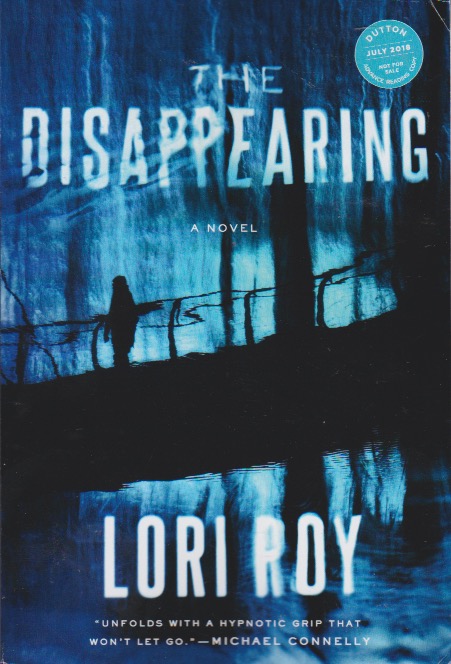
I also managed to finish Lori Roy’s upcoming new release, The Disappearing, last night.

the disappearing

Lane Wallace is alone inside Rowland’s Tavern when the front door flies open. A man stumbles inside, bringing with him a spray of rain that throws a shine on the hickory-brown floors. He scans the dark rooms, stomps his feet, and draws both hands over his wet, round face. If the man says anything, Lane doesn’t hear him for the rain pounding the tin roof and the palm fronds slapping the front windows. It’s supposed to rain through the night, and all around Waddell, people will be keeping a close eye on the river.

Lane smiles because maybe the man is a friend of a friend and not a stranger. She’s expecting a big crowd tonight, and one of her regulars might have invited him. But he doesn’t smile back. Slipping her phone from her back pocket. she lays it on the bar top where the man will be sure to see it. It’s a subtle warning, but if the man is looking for trouble, it’ll make him reconsider.

He’s a little on the heavy side; doughy, a person might say. From behind the bar, Lane asks the main if a beer’ll do him, and as he slides into a booth near the front door, he nods. Hr regulars, men who’ve known her all her life, or rather who have known her father, won’t show up for another hour or so but Rowland Jansen will be back any time now. He ran out to move his car and Lane’s to the higher and drier ground of the parking lot out front, so she won’t be alone with the man for long.

This is Lori Roy’s fourth novel, and it’s quite an achievement. His first three novels–Bent Road, Until She Comes Home, and Let Me Die in His Footsteps–were all shortlisted for Edgar Awards; she won Best First for Bent Road and Best Novel for Let Me Die in His Footsteps, raising her up into the exalted, rarified air of the Multiple Edgar Winner Circle. I’ve only read Bent Road–I do own the others, will every intent to read them at some point; too many books, not enough time–and it blew me away with its stunning depiction of rural Kansas, its juggling of two separate time-lines, and its thematic exploration of how the pains and evils of the past can influence the present.

That same theme runs through this stunning new novel, The Disappearing, as well, and is explored even more deeply and explicitly than in the first. Waddell is a small town in north Florida, amorphously near Tallahassee; Roy’s captured the feel of rural small town Florida deftly (there is, as not many know, a huge and significant difference between the coastal cities of Florida and the insular, small towns of the state’s interior). She plays with the memories of Ted Bundy’s journey through the area; a young woman, a student at Florida State doing some internship work at a local, fading plantation is missing, which has stirred up all those fearful memories of Bundy’s spree. The plantation also shares a boundary with a closed reform school for boys, whose own violent and possibly deadly past has also come back to haunt Waddell.

But it’s also an exploration of family, and how the damage from a past history of deep violence and emotional abuse, locked away and ignored, can reverberate through the years and have deep, horrific implications on the present. Susannah Bauer’s disappearance triggers a chain reaction of emotion and violence and horror, spread over the course of a few days after the night of the heavy rain, that will continue to cycle through the future unless honestly and painfully dealt with in this present.

There are four point of view characters in The Disappearing: three women from generations of the same family–Erma, the matriarch of the Fielding family, with her guilts and secrets festering inside her for decades; Lane, her daughter, whose own emotional damage and baggage perpetuates the cycle; and Lane’s younger daughter, Talley, whose wanderings due to her own loneliness and unhappiness makes her the holder of most of the secrets and truths of the present. The fourth point of view character is Daryl, a mentally disabled young man who is the groundskeeper at the church, and his story is told in the recent past rather than the present, as Lori Roy deftly spins all the secrets and lies and horrors of the town of Waddell into an astonishingly well-blended tale of flawed people and the damage they can leave in their wake.

Even more impressive than the characters and the story itself is the mood and the voice; the way she maintains this almost dreamy tone, creating the perfect mood for the story is masterful. The voices of her characters are compelling and real; only Daryl tells his story in the first person; the others are a very tight third person present tense. The shifts in voice, the tone, the tense and the word choices and the imagery, kept reminding me of Faulkner’s brilliant The Sound and the Fury, and in a very good way.

The Disappearing is an extraordinary achievement, and is destined to make awards short-lists and all the Top Ten lists for 2018.

Party All The Time

Saturday morning. I need to read aloud some stories this morning–“Don’t Look Down,” “This Town,” and “Fireflies”–and I’d like to get some work done on either Scotty or the WIP this weekend. I need to clean this weekend; I got started lasted night, washing the bed linens and blankets, a pre-vacuuming downstairs, organizing books, putting away a load of dishes; I also spent a lot of time in my easy chair reading Lori Roy’s stunning new novel, The Disappearing, which is giving me all kinds of thoughts and things to think about. It’s really extraordinary; you should, by all means, preorder it.

I am also working on a much longer blog piece; about being a gay writer, “own voices,” “we need diverse books”, and various other hashtags and ‘movements’ that have occured over the years on social media. There was an instance lately where an encounter with an albeit well-meaning straight lady kind of took me aback; I wasn’t really sure how to react to what she said. Albeit was well-intended, it was still kind of a backhanded slap in the face.

I find myself thinking weirdly deep thoughts about being a gay writer these days; because no matter what I write and no matter what I do, no matter how hard I might try to run away from it, gay is so inextricably a part of me that I cannot wall it off; no matter what I think or do or write or say, that different point of view is always going to be there; it cannot be turned off. There was, back in the day, a lot of talk about a gay sensibility that queer writers brought to their work; I don’t know if that conversation is still being had. But then, this is all fodder for that other blog entry I want to write; I shouldn’t get that in-depth with it here.

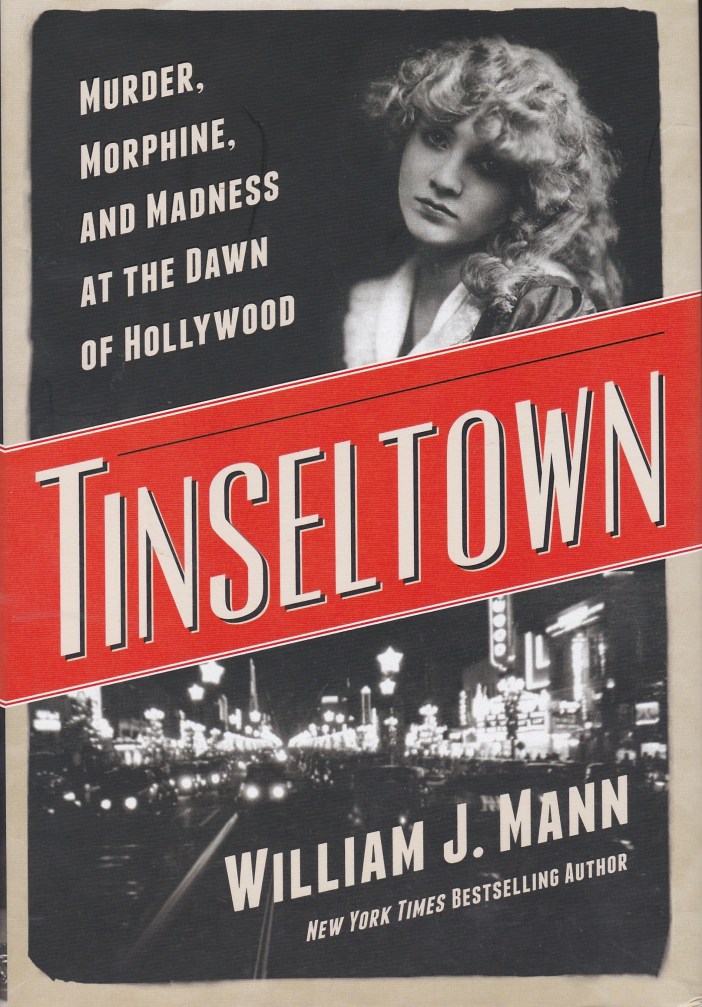
I did finish reading William J. Mann’s Edgar Award-winning Tinseltown: Murder, Morphine and Madness at the Dawn of; Hollywood, last night. Bill is one of my oldest friends in publishing of any kind; we’ve known each other well over twenty years, I would say. I interviewed him years ago for his first publication, the novel The Men from The Boys, and again later with the release of his first Hollywood history/biography, Wisecracker,  a biography of William Haines, the first openly gay movie star; who chose to give up his career when Louis B. Mayer told him he needed to give up his partner and marry a woman. He then went on to have a long career as an interior decorator; he was a close friend of Joan Crawford’s, who said of his long-time partnership, “it’s the only happy marriage in Hollywood.” Tinseltown tells the story of the murder of the director William Desmond Taylor in 1920, and how the big-wigs in Hollywood not only tried to cover up important details of the murder for their own reasons, but how the murder affected the lives of three Hollywood women: major star Mabel Normand (immortalized by Stevie Nicks in song on one of her most recent albums); up-and-coming star Mary Miles Minter; and fringe actress wannabe Patricia Palmer. It’s a well-crafted, well-researched reconstruction of what happened nearly a hundred years ago: it’s also an interesting overview of how Hollywood became what it was; how the Hays Production Code was born as well as the big studio systems; and how hoydenish religious groups have always made a lot of noise and tried to force their point of view down the throats of the rest of the country. I enjoyed it thoroughly, and highly recommend it.

tinseltown

I’ve always wanted to write a book or two set in old Hollywood; maybe not in the days of the silents, but perhaps one in the 1930’s and another in the 1950’s. The one about the 1950’s has more of a shape in my head; even a title (Chlorine), but there’s so much else I need to write.

But first I need to get my act together today and do all the things I need to get done today; I also need to probably come up with a schedule and list of goals. There are so many books I want to write, so many short stories I want to write, so many short stories I need to revise. There’s only so much time in every day.

And now, back to the spice mines.

PS So far, cutting the cable chord is going swimmingly. I couldn’t be more pleased.

How Will I Know

Well, somehow I managed to make it to Friday. This wasn’t a great week; sleep issues, mostly, but last night I finally slept well despite some truly strange dreams…which are fading away from me now. That’s fine, but they were seriously weird; I did wake up a few times during the night thinking okay, that was just weird. But as usual, now that I am awake and drinking my coffee, I don’t really remember any of them. I would have loved to stay in bed longer, but I have a meeting this morning at the office. It’s my short day, which is also incredibly lovely, and I am hoping to  have a nice relaxing weekend of catching up on things, including rest.

I managed to get “Fireflies” revised and ready for a read-aloud this weekend; that’s several stories I get to read aloud this weekend, including “Don’t Look Down” and “This Town”. Three stories to read aloud, even if “This Town” is just to check for extraneous words and trim it down a bit, if possible. I also started writing “This Thing of Darkness” yesterday, and it’s coming along swimmingly. I got about 1400 words or so done. I need to get back to the Scotty book this weekend as well; I am going to reread the entire thing before I get back to it, though. I also have to go to the post office as well as do that grocery store thing.

And of course, the apartment is a disaster area.

Heavy heaving sigh.

But I’m pretty jazzed about getting through this day and getting home to start the cleaning, and get to reading Lori Roy’s The Disappearing. She really is quite an extraordinary writer. If you aren’t reading her, you need to be. Seriously.

I am also going to discuss a short story today, which means we are back to the Short Story Project, and might even be able to get another one knocked out tomorrow.

Today’s is “e-Golem” by S. J. Rozan, from the September/October 2017 issue of Ellery Queen’s Mystery Magazine:

Bookstore dust was not the same as other dust. Loew had noticed this before, sweeping out the cluttered aisles of his used-book shop. It settled more gently, but at the same time seemed more weighty, each mote carrying both wisdom and whimsy, erudition and imagination. He shook his head. Loew, he told himself, this is why you’re doomed. WHy you’re barely eking out a living, selling forgotten things no one wants in a store you soon won’t be able to afford.

For most of his life, first working after school in his father’s shop in what was then the Jewish, later the Chinese, and lately the gentry’s Lower East Side, and on through the almost imperceptible transition when the shop became his, Loew had found pleasant this sense of gentle churning. Books no longer needed in one place lodged in the shop until they found a home in another, and customers came periodically to discover what treasures had rolled to the surface. This churning and discovering still went on, he understood, but less tenderly and on the Internet that soul-destroying virtual world where all was about price and little about love. People who bought rare books online did so speculatively, hoping their value would increase. How different from Loew’s customers, who held a book, fingered its pages, inspected its cover, to decide whether this book, this copy, was meant to be theirs. A customer who turned a book down was never a disappointment to Loew. It meant the two didn’t belong together. The customer would find his book, and the book would find its owner. Until it did it had a home here on Loew’s shelves.

S. J. Rozan is one of my favorite crime writers, bar none. This story, which is both clever and slightly sly at the same time, is an example of her work at its best. Loew discovers an old book of mysticism in his store, and half-heartedly tries to create a golem to go after his biggest enemy–Amazon. What happens next is why Rozan is one of the greats of our time in crime fiction; clever twists and turns that one never sees coming. But what really struck me the most about this story is how good she is at voice. Never once does she hit a false note in this story; every word is perfect and fits with the character’s voice. Were I ever to teach a class in crime writing, I’d use this story as an example of how to do voice perfectly.

And now back to the spice mines.

32247206_1671285199636859_5541500018004852736_n

That’s What Friends Are For

So, yeah, yesterday. I get nearly as much done yesterday as I’d intended, despite my plans in the morning. I wound up getting sidetracked (the whole #cockygate thing was fascinating), I also started reading Lori Roy’s The Disappearing (not far into it, but already it’s fantastic–quelle surprise), and I also had dinner with a friend from high school whom I’d not seen in (gulp) forty years.

I don’t really mind, though. Beating myself up over not getting as much done as I wanted is kind of a waste of time. It’s not like it’s an outcome I can change, after all.

And why worry about things you can’t change?

It was fun seeing someone from high school again; a lot more fun than I thought it would be. The other day  I talked about how my life, or my memoir, would be divided up into decades, because it seemed like, in looking back, every new decade of my life almost coincided with a calendar decade and always signified change of some sort. I left Kansas in early 1981 for California, and I never returned. I’ve written about Kansas–not as much as I’ve written about New Orleans, of course; I’ve never written about anywhere as much as I’ve written about Kansas–and sometimes I think I should go back; but when I write about Kansas I make up the towns and the counties and the rural areas I write about, so I can write from my memory so if my memory turns out to be faulty, well, I made up the town. My fictional places are based on real places, but they are fictional.

The WIP, which I can never seem to find the time to get back to, is actually set in fictional Kansas. It’s been kicking around in my head for at least fifteen years, and the story has changed repeatedly over the years. I think I’ve got the right story now, and I really need to finish the Scotty so I can get back to it and finish the final, first person revision, which I think is the right way to go with this.

Anyway.

I don’t dwell on the past very often; but one of the nice things about seeing someone from high school is it kind of forces me to look back over the years. I mean, sometimes I do think about things, but it’s not something I spend a lot of time dwelling on; the past can’t be changed. But you can look back with a different perspective; with the wisdom that comes with the passing of time–or at least, a different perspective. I was desperately unhappy when I was younger; I also now know that my difficulty in focusing and inability to not have my mind wander would now warrant ADD medication. I spent a very long time of my life being unhappy; feeling like the life I wanted to live was something I would never be able to live. And yet I can honestly say I wouldn’t change any of the experiences I had, no matter how unhappy they may have made me at the time–because all of that made me the person that I am now, and I’m kind of happy with who I am now, and the life I have now. Sure, it would be terrific to have more success and more money; but I also think that would always be the case no matter how much success and how much money I might have.

It’s a weird world, it’s a weird life.

I’ve always been weird.  I never fit in anywhere. I didn’t fit in at either high school, I didn’t fit in at college or in my fraternity. I used to think my not fitting in was because of the gay thing; but then, like I said, I never really fit in with other gay men, either. I’m not sure what that’s about; maybe there’s some kind of social anxiety issue I have that hasn’t ever been diagnosed. But I am always uncomfortable at parties or in large gatherings, particularly when I walk into one alone and there’s no one there that I know; I’ve always envied gregarious, outgoing people who can walk up to total strangers and start a conversation. I am horrible at small talk; and live in deathly fear of saying something completely inappropriate to someone I’ve just met and giving offense; God knows someone I’ve only just met has certainly said offensive things to me before.

Ah, life.

And on that note, it’s back to the spice mines.

IMG_1240