Who Are You?

TRIGGER WARNING: Racism, homophobia, and archaic racist terms.

I learned long ago that the best way to deal with assholes was to develop a razor-sharp quick wit. I don’t know how I trained myself to be snarky and fast with my sense of humor, but at some point in my teens—in college, I think—I realized that not being filtered, and not being able to recognize most social cues, could actually prove to be a powerful defensive tool, if controlled. It has worked marvelously for me ever since. I also learned that a really good thing to do was say things to people I disliked that could be taken as either a compliment or shade, leaving it up to them to decide what I meant.

A few years ago, I had an experience at Left Coast Crime in Albuquerque where my usual biting sense of humor deserted me when I really needed it the most. I’ve grown used to dealing with homophobes and contemptuously cutting them off at the knees; I even relish doing it at times. But this? I’d never dealt with this kind of bigotry before, and my only excuse is that I was caught completely off-guard. I’ve also turned what happened over and over again in my mind in the time since, wondering how I should feel about it. It still hasn’t finished processing yet, and I’ll probably keep processing it for a few more years.

This was my first (and so far, only) time attending Left Coast Crime (unrelated; I want to go again but it just hasn’t worked out). I had always heard wonderful things about it, but the timing was always difficult for me to actually attend; all too frequently it is around the time of the Festivals here. I’d come home to the locks changed, methinks, were I to go away at that time.

At the time, I was still serving as Executive Vice-President of Mystery Writers of America. It was 2021, we hadn’t had any kind of crime publishing events since March 2020, and the events were just starting to slowly to come back. MWA had signed on to sponsor the Lefty banquet, and I felt someone should be there to rep the org at the event, and it wound up being me. I felt a bit uncomfortable about registering and agreeing to do panels; we were a sponsor, and I didn’t want Programming to feel pressured to give me anything because of that (I tried very hard not to use the position to promote myself; I may have been a bit over-zealous on that score, but better safe than sorry). I arrived in Albuquerque on Thursday, had a quiet dinner with a friend, and the next day I went to panels, ran into people, and had a lovely time. I also had dinner plans for Friday that I was excited about–I was having dinner with Marco Carocari, whom I had just met at Saints and Sinners; John Copenhaver, whom I was starting to get to know better; Oline Cogdill, a dear friend of well over a decade; Mia Manansala, whom I met at New Orleans Bouchercon before she was published and I’ve always felt a bit protective of her (my neuroses, not hers) and someone new to me–Wanda Morris, whom I had neither read nor met before.1

Constant Reader, that was such a fun dinner, the kind I always dreamed of being a part of when I was that lonely kid in Kansas wondering what his future would be. We talked about books, writing, gossip, and I believe everyone, other than Oline and I, was up for a Lefty. We toasted their nominations, and when we headed back to the hotel I felt marvelous; giddy almost. I was having a good time and was excited to be around writers again, and I wanted it to keep going. I didn’t want the evening to end…

Little did I know what I was in for as we walked back into the hotel lobby, and we three gays decided to go have a drink at the bar, while the women wisely all went up to bed.

It started with a chair.

So innocuous, so nothing, just a little thing that happens in hotel bars all the time; you join a table without enough chairs so you grab a free one from the next table…but this time? Very different.

Basically, we had decided to join friends at a high-top table with room for eight, with all the chairs already taken and some others pulled up. There was a tall bar chair standing at the next table–a low table, so it didn’t really belong there in the first place–and several people were sitting around that table. I smiled, said, “is anyone using this?” and one of the three people shook their head no, so I took the chair…which bothered the woman who was sitting closest to me and who decided, in her inebriation, that I shouldn’t have the chair.

DRUNK WHITE WOMAN (Henceforth, DWW): You can’t take that chair because you have to sit here and talk to me.

I’d never seen her before in my life, but I’ve also been drunk in public before, so I just smiled as I sat down at the other table, and said politely, with no idea of what I was letting myself in for: “Can’t you talk to me if I sit here?”

DWW: Great!

I nodded to her, hoping that was the end of the interaction. I’d had two drinks at dinner, but wasn’t even slightly buzzed. I had a glass of Pinot Grigio in my clutches, I’d had a marvelous evening already, and I was looking forward to catching up with the others at the table. I started to turn back to the table to talk to my friends, when…she leaned towards me, narrowing her eyes, and saying, in a very low tone, “Are you a mulatto?”2

Needless to say, I was taken aback–not by the assumption, but the language.

I literally thought, are we really still using that word in this year of our Lord 2022?

I didn’t know what to say, I was so stunned and shocked that my ability to lobby back an icy, conversation ending retort, something of which I was so so proud, had deserted me. I just smiled and said, “no,” which she countered with a scoff, “Well, you’re at least a quadroon.3

And rubbed each side of her nose with an index finger, adding with a knowing smirk, “Especially with that nose.”

I said, rather sharply, “I know who all my grandparents were, so no.”

Again, it wasn’t the racial profiling that bothered me, but it was the entitlement and the language she was using.

First and foremost, my racial heritage–anyone’s, really–is no one’s business.

She was being racist to me, but even as I floundered, I couldn’t figure out why I was so flustered and having trouble figuring out what to say next. It didn’t bother me in the least that she thought I was part Black (more on that later), but she was using racist language to inquire, which I was offended by, and I was more than a little insulted by her condescending assumption that I’d lie about it? And again, what business was it of hers if I was or wasn’t? (I’m still not sure how to wrap my mind around this; two years later I am blogging about it in order to process it in my brain.)

AND WHAT IF I ACTUALLY WERE?

And then, finally:

DWW: Where are you from?

ME: New Orleans4.

DWW: (waving her hand, poo-pooing me) Oh, everyone’s mixed there.

Hoping this ordeal was over and still in shock, I turned back to my friends…only to hear her voice loudly asking me, “Are you gay?” I confirmed that yes, I was–and then she went on a long, incredibly tiresome (and repetitive) monologue about how she’s always been good with the “L and the G and the B and the T”, tried bonding with me over hot male asses (in horrific terms: think locker room talk), and just kept on until finally I was able to finally excuse myself. I got up and left my friends, never to return. Definitely made me uncomfortable, so yeah, it also counts as sexual harassment–what I do or don’t do in my bedroom, DWW, is none of your fucking business.

I still can’t believe that happened, that someone felt comfortable using that kind of language to, and about, me about my racial heritage (when I was a child in the 1960’s I knew you don’t use those words, and they usually only appeared in old racist books, like Gone with the Wind), not to mention trying to get into my bedroom and what I do there. It’s not okay for anyone to use those horrible, archaic old terms that were humiliating and degrading even when they were in common use…and I also felt like I’d failed. I should have stopped her, I should have called her out for using racist and homophobic language, not to mention the fact that she felt, in her drunken stupor, perfectly okay to treat me not as a person but as a thing.

That is the real shame I feel. Not that she used such language to me, but I allowed it. I have to do better than that. My silence was complicity.

And yes, I should have filed a complaint with the conference. I’m still ashamed that I didn’t correct her or say anything before I made my escape. But I sensed it also wouldn’t do any good. Alcohol brings your barriers down, after all.

It also wasn’t the first time this has happened–but at least the first time, it wasn’t so offensive.

This, for an illustration, was my second author photo.
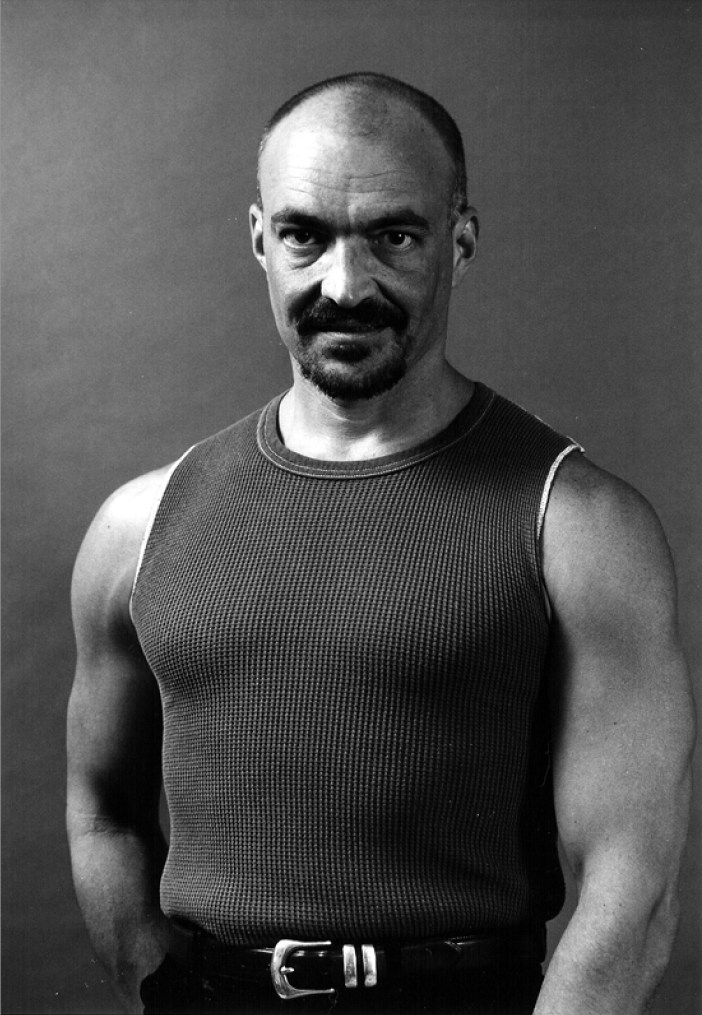
Taken by Sylvester Q, a photographer in New York, he also loaned me the shirt and some other clothes for the shoot. It was my first professional author photo shoot, and this was the best image, in my opinion, to come out of the session. I used it for Jackson Square Jazz (when I got the book down to reread it for the new edit for the 20-year anniversary edition, I noticed the picture) and for several other books. I don’t remember which image I used to replace this one–I think it’s the black and white one of me sitting and hugging my knees–but I am very well aware that I need new author photos. The one I just referenced was taken in either 2008 or 2009; the one of me with my stack of books is from around 2013 or 2014 (and yes, old age has hit me very hard since those last ones were taken). I did a shoot at Sleuthfest with Morgan Sophia in the summer of 2022; the pictures look like me but I don’t like the way I look in them, so I’ve not really used them.

Anyway, this was the image I provided to the Louisiana Book Festival when I was on a New Orleans Noir panel for their program in 2007 (I think). I don’t remember everyone else that was on it, other than editor/moderator Julie Smith and the person I am about to mention.

I was a little taken aback when said contributor sat down next to me, and exclaimed after we were officially introduced, “But I thought you were Black!”

She’d only seen my photograph in the program.

I was more amused than anything else, and perplexed. But when I looked at my image in the program later, it had printed even darker than the image above, which was already pretty dark. I think it had to do with how the shot was lit more than anything else. It was kind of funny, and it became a story that I told sometimes over drinks.

That wasn’t the first time my genetic heritage has been questioned by someone.

White people have this strange curiosity thing about people’s backgrounds, always trying to figure out where you’re from. “Are you German?” “Are you Italian?” That sort of thing. I will comment on a name–“oh, is that French/Spanish/German etc.”–but I would never ask anyone what are you?

I’d never really thought about it before the LCC incident, but people have very often wondered–and asked–what I am.

And in all honesty, I’ve never liked being asked, mainly because I wasn’t entirely sure.

I guess I am what is I’ve sometimes seen referred to as “ethnically ambiguous5“; in other words, had I been a movie star in Hollywood back in the golden age I probably would have been cast in roles that today would be considered offensive for me to play. People have often–again, this weird thing white people have about trying to figure out “what” I am–taken me for everything from Greek to Italian to indigenous to Syrian to Persian to Latino. I’ve never given it much thought, and I don’t really see it. My skin tone is what is called olive, and I’ve always tanned easily, a very dark brown with some red mixed into it (I’ve only been sunburned twice in my life). My facial features are a curious mix of my family; I look like both my parents, and my nose was broken in high school, with the cartilage never reattaching to the bone. I also shave my head, which apparently adds to the confusion.

Almost all of the ancestors (that I’m aware of, but I only know my father’s side, and there’s not anyone left on Mom’s side who’d know more) were British (Scots, Irish, English and possibly some Welsh) but white people have this weird need to classify people. I don’t know if it’s an American thing, or what, but it happens. Not so much anymore as it used to–maybe people are finally starting to realize that it’s offensive or that it doesn’t matter or some combination of the two.

But still. Basically, the woman in Albuquerque othered me. She looked at me and was confused, so she just had to find out what I was.

What I am. “What ARE you?”

And for the record, what happened to me at Left Coast is the kind of horrifically racist and offensive behavior that racialized people have to deal with multiple times every damned day. In some ways I’m glad it happened; that I got to experience racism targeted directly at me, but at the same time…it shouldn’t happen. To anyone, regardless of who they are or how they identify. It also made me very aware of my own privilege, which is something I do need a reminder about periodically; I get so wrapped up in being marginalized as a gay man that I forget how horrible it is to be a person of color in this racialized country and society and culture.

And ultimately, white people? It’s really none of your fucking business in the first place!

And would people have considered me white in the antebellum South? is a question we might have to revisit at another time.

Part of the struggle in writing this all down and sharing it with you, Constant Reader, comes from not wanting to make myself seem like either a martyr or center the conversation about racist bigotry on me. Unsettling as this all was–the privilege on display, the language used, the shame in not putting her in her place–it was momentary, something that didn’t impact or effect my life in any way; another anecdote for cocktail parties or dinner conversation. The sexual harassment aspect of it, had that been all there was (oh yes, during the ass conversation she also talked about mine), would have merely been something I would have laughed about with friends later, but the racial component was horrible. All I could think about was, really, how lucky she was that I wasn’t biracial.

Which makes me squirm more for not reporting it to the conference–what if she does this to authors or readers of color at one of these events? Was I coward for not only not stopping her but not reporting her? It’s been two years now, and I still am not entirely sure what I think or feel about this, which is very unusual for me; it’s very rare that I am unsettled this way.

But putting it all down has helped somewhat. I probably should have written this years ago.

  1. I did buy her book that weekend, and once I read it became a fan. ↩︎
  2. If you aren’t aware of this word, it’s an old, ugly, and pejorative term used for biracial people during the human trafficking era and the Jim Crow time that came after it. I’ve not heard anyone say the word aloud in at least fifty or so years. AT LEAST. If you want to understand just how offensive it is, it’s root word is mule–the product of interspecies breeding. Go fuck yourself, you horrible racist. ↩︎
  3. Again an archaic deeply problematic word that actually comes from antebellum New Orleans, indicating how much Black blood someone had. These were the days of the “one drop” rule, which meant any Black ancestry, no matter how remote, made you Black in the eyes of the state and the law. Quadroon means one quarter, so the person had a single Black grandparent, the “roon” comes from “maroon”, which is another old and archaic racist term for Black people. Despicable, really. ↩︎
  4. Credit where it’s due, she was using racist language that originated in New Orleans. ↩︎
  5. Which I also find kind of offensive, really. ↩︎

New Orleans

Twenty-eight years ago I came to New Orleans for my birthday weekend, and my life changed completely. Earlier that month I had already taken a cold, hard, long look at my life and I didn’t like what I saw. I had been wrapped in misery for years, wallowing in it, and diving so deep into the misery that I allowed it to erase my dreams and any hopes I had for the future. It was, after all, very easy to blame outside forces for my miserable life, and when you dig deep down into the misery, well, it’s a lot easier to just wrap yourself up in self-pity than take any responsibility for your own happiness; making excuses not to try rather than reasons to better myself. I worked for Continental Airlines at the Tampa airport–most times not a bad job for the most part, but the bad days were horrible–and didn’t make much money. I was broke all the time and yes, I wasted a lot of money treating myself to things–like buying lots and lots of books every payday–in an effort to make me feel better about myself and my miserable life. I was horribly lonely.

A bad experience with someone I was romantically interested in was the impetus for the changes I made to my life, because for whatever reason that night everything just bubbled up to the surface; I hated everything about my life, I hated where I was at, I felt trapped and like nothing good was ever going to happen to me. I stayed up the entire night, feeling sorry for myself and unable to sleep, tossing and turning and occasionally crying. At seven o’clock the next morning (it was a day off) I went into my bathroom and took a long, hard look at myself in the mirror. I never want to feel this way ever again, I thought as I looked at red swollen eyes, the unshaved face. the dark purplish circles under my eyes. I then repeated it out loud. I went back to my desk, sat down and opened my latest journal and wrote the words: I hate my life. I stared at the words for a few moments, and then added, I have no one to blame for this but myself. I am the only person who can change things for me. I want to be a writer. I want to be published, and I don’t want to work for Continental for the rest of my life in this job that makes me miserable. I am lonely and it’s probably too late for me to find a life partner. But I have to stop being afraid of everything, and I can’t go the rest of my life NOT living because I am afraid of dying. Other men are not attracted to me because I am overweight–no one ever looks at me twice when I go to bars. I cannot change my face but I can change my body. I will eat healthy. I will drop some of this extra weight. I will do crunches and push-ups every day from now on, and if by January I have been consistent with the workouts and the diet, I will join a gym. I need to start figuring out who I am and how to get what I want because no one is going to knock on my door and just give it to me. The only person who can change the things in my life is me, and I am going to work on being the best possible me that I can. And that means taking the steps necessary to change who I am and what my life is so I can become a writer.

Three weeks later, my birthday weekend rolled around and I flew to New Orleans with a friend for the weekend. We were staying with his on-again off-again boyfriend–who turned out to be one of the nicest gay men I’ve ever known. I really liked him. thought he was a good person–but once they broke up for good that was the end of that; I guess he associated me with his ex and so couldn’t be bothered anymore (or he did a great job of acting the part of the generous host; I am not sure how the invitation to stay with him came about; all I knew was we were going to New Orleans for my birthday and staying with this guy), which was always a shame. I was always grateful to him–have been for twenty-eight years–because coming to New Orleans that weekend was yet another key piece to the puzzle of Greg’s future, a piece I didn’t even now I needed.

I think at that point I may have lost five pounds or so. My friend was gorgeous; one of those perfect gay men with golden skin and very little–if any–body fat; his boyfriend was his counterpart, only with much bigger muscles, bluish-black hair, and that gorgeous gorgeous olive toned skin darker Italians have. They looked beautiful together, too, and I was in some sense a third wheel that weekend, but it was okay with me. They were totally into each other which left me with time on my own to think and reflect. He picked us up at the airport and took us to his apartment (which was in a complex on Sophie Wright Place that Paul and I eventually moved into when we returned from DC in August 2001), we showered and cleaned up, and headed to the Quarter.

I had been to New Orleans before that particular trip, and while I had always felt drawn in some ways to this city since I was a child, I’d never before felt the sense of belonging I felt that weekend. When we stepped out of the cab that night at the corner of Bourbon and St. Ann, I felt this enormous emotional release, as though tension I didn’t know I. had in my shoulders and brain were suddenly gone and a big burden had been lifted from my shoulders. It was as though my soul was saying at last you’ve come home, and I knew then, before we paid the cover charge to go into the bars there at the corner–Oz and the Pub/Parade–that I was going to someday live in New Orleans…and all of my dreams would come true once I did.

I have never been sure what was different about that trip than previous ones. On my brief, previouos visits to the city before, I’d never gotten a real sense of the city before–we stayed in motels by the airport or on the West Bank–and so it wasn’t really possible to get a sense of New Orleans. Waking up in the spare bedroom in the morning, walking out onto the balcony and looking around at the roofs and unique architecture of the lower Garden District, I felt like I was at home. It was also the first time I’d ever come to New Orleans to hang out with other gay people and in the gay section of the Quarter, and maybe that was the difference? I don’t know for certain, but I do know that was the magical trip when everything coalesced in my head on that trip here. I knew New Orleans was my home, and I needed to live there, and my dreams would finally all come true once I’d moved there.

My friend’s boyfriend was a great host. He made sure to take me to see Anne Rice’s home at First and Chestnut (which was also the home of the Mayfair witches in The Witching Hour, a book I’d loved that had only heightened my sense of need to come to New Orleans), and showed me (us) around the entire weekend; we went to Lafayette Cemetery in the Garden District, ate amazing food, and then at night we’d head down to the Quarter to the bars and danced the night away.

That was also the weekend I did Ecstasy for the first time, but that’s a story for a different time.

The entire weekend was a whirl; I have pictures somewhere (or lost many years ago during the course of a move or something) of all the places we went and things we did; the amazing food, dancing all night and going to the Clover Grill in the morning (or La Peniche, over in the Marigny) and then sleeping before going roaming again throughout the city. I fell for New Orleans hard that weekend, and have never really fallen out of love for the city, really, since. We broke up once (that dreadful year Paul and I spent in DC), but we came back and New Orleans forgave us for our desertion and welcomed us back home.

I don’t remember how old I was when I first heard about New Orleans, but I do remember Nancy Drew came to Carnival (called “the Mardi Gras” in the book, eye roll to infinity) in The Haunted Showboat (she also visited briefly during The Ghost of Blackwood Hall), but I don’t really remember much else. I think everyone in the country has a sense of Carnival/Mardi Gras, and always associates that with New Orleans–but New Orleans, obviously, is so much more than that. I was a kid when I watched the James Bond movie Live and Let Die–which whetted my interest in New Orleans and Louisiana–later movies like The Big Easy and Angel Heart and Tightrope expanded that interest, as did Anne Rice’s novels and the Skip Langdon series by Julie Smith. Whenever I had been to New Orleans previously I hadn’t felt anything but a sense that the city was different than everywhere else, and that difference felt alien to me.

But that entire weekend was different. That weekend in the city changed me and changed my life. I’d never felt like I’d belonged anywhere before–I always had felt out of place wherever I lived; part of it was being gay, part of it was being a creative, and the rest had everything to do with being raised by Southern parents with a Southern mentality but not living in the South (not a complaint, I am very grateful to have not been raised down here)–so New Orleans felt special to me; I’d finally found my place or, to quote Pippin, I’d finally found my corner of the sky.

Within a year I’d met the love of my life–who also was in love with New Orleans and wanted to live there–and on August 1, 1996, I drove the U-haul truck with all of our stuff and towing my old car into the city to start the rest of my life. I had already started dipping into the waters of writing–I got a gig with a gay paper in Minneapolis that actually paid me, and had started writing the book that would eventually become Murder in the Rue Dauphine. Within three years of moving to New Orleans I had a book contract and had sold my first ever short stories. Twenty-eight years to the day of that most important visit to New Orleans, and look at me now.

I live in the city I love with the man I love doing the work I love. I’m glad that I didn’t know at the time how important that weekend was going to prove to be; that it was, indeed, really the first day of the rest of my real life, when I finally stopped just enduring my life and actively started living it. It’s not always been easy to live here and love the city; New Orleans can be a hard place a lot of the time. We’ve endured hurricanes and floods, disease and injury, poverty and horror. But even the bad things are made bearable because we live in New Orleans.

I’ve written millions of words about New Orleans. One of the best compliments I can receive is being told that I’ve depicted the city so vividly and lovingly that it’s a character. I do laugh when people call me a “New Orleans expert”–I am anything but an expert; you could fill the Great Library of Alexandria with what I don’t know about New Orleans; every day I discover something new about this wondrous and bizarre place, the only place on earth I’ve ever felt at home. I will never run out of material to write about this magical city, and every day, more ideas and thoughts for stories and characters and essays about New Orleans comes to me.

So, my favorite part of my birthday is the fact that it is also the anniversary of me finding, at long last, where I belong.

And thank you, New Orleans, for always, no matter what, being New Orleans.

I’ve always rather blasphemously called this statue “Drag Queen Jesus”, for reasons that should be fairly apparent.

People Everyday

Hulu is streaming a two-part true crime documentary about a string of unsolved murders of women in Jefferson Davis Parish, Murder in the Bayou. I have a copy of Ethan Brown’s book of the same title, released a few years ago, but haven’t read it yet (instead, it’s sits on a shelf in the mini-bookcase to the right of my desk, where I also keep other nonfiction–histories, true crime, cultural studies–about both New Orleans and Louisiana; books which I delve into periodically in order to come up with ideas for stories (novels and short stories and novellas, etc.), or background for the same. (One of the many reasons I laugh when people refer to me as ‘a New Orleans expert’ is because I am everything but an expert on the city; there are literally hundreds of volumes of reference books information about New Orleans I’ve not read and know nothing about)  Mr. Brown came to the Tennessee Williams Festival a few years ago, but I didn’t get to meet him or see any of his panels, but I did pick up his book that weekend.

So, you can imagine my surprise the other night when I opened the Hulu app on my television (ten years ago that sentence would have been as unintelligible to me as Latin) and I saw it listed as a show I might be interested in. “Huh,” I thought, clicking on it, “I wonder if this is the same story as the book I’ve not read?”

Sure enough, it was.

I finished watching the show yesterday afternoon, and then of course, got the book from the bookshelf and started reading it…and didn’t stop until I was finished. I hadn’t intended to do that; I actually started writing this post after I finished watching the documentary series and simply reached over to the bookcase and pulled it out–mainly to see if there were photographs in it–many true crime books do–and since it didn’t, I started reading…and then couldn’t stop. I’ll talk some more about both the documentary and the book in another entry; I want to think about it some more, and the issues that came to mind while watching/reading–but again, as I said earlier, it was yet another example of how little I know about not just New Orleans, but Louisiana in general. As I read more New Orleans history, and get to know my city better with each read, I find myself expanding my former-tunnel vision view focusing on New Orleans only to expand out into Louisiana as well. It’s a truly fascinating state, really–as someone said in the documentary, there are three Louisianas: New Orleans; north Louisiana; which is really part of the Protestant Bible Belt and could just as easily be part of Arkansas; and south Louisiana, which is overwhelmingly French and Catholic; heavily Cajun, in all honesty. I’ve been thinking a lot about the Atchafalaya basin, too; I sort of have an idea about writing about that area. Most of my Louisiana fiction has been confined to writing about New Orleans, or places on the I-10 corridor between New Orleans and Baton Rouge, and sometimes dabbling on the North Shore. I am sure every state has just as rich and diverse and colorful a history as Louisiana/New Orleans; but I also don’t live there, and Louisiana with its strange mix of Creoles, Cajuns, Spanish, and Americans, with the attendant cultures, brews up a strange and endlessly fascinating gumbo.

I realized also yesterday while going through my blog drafts that I have never published my blog entry about reading Gary Krist’s Empire of Sin, which was what sent me down the Louisiana/New Orleans history rabbit hole in the first place.

empire of sin

“The crime,” as detectives would later tell the newspapers, was “one of the most gruesome in the annals of the New Orleans police.”

At five a.m. on the sultry morning of May 23, 1918, the bodies of Joseph and Catherine Maggio, Italian immigrants who ran a small grocery store in a remote section of the city, were found sprawled across the disordered bedroom of the living quarters behind their store. Both had been savagely attacked, apparently while they slept. Joseph Maggio lay face-up on the blood-sodden bed, his skull split by a deep, jagged gash several inches long; Catherine Maggio, her own skull nearly hewn in two, was stretched out on the floor beneath him. Each victim’s throat had been slashed with a sharp instrument.

A blood-smeared ax and shaving razor–obviously the murder weapons–had been found on the floor nearby.

The book opens with an examination of the strange case of New Orleans’ most famous serial killer: the Axeman. Julie Smith wrote an entire novel  based in the story called The Axeman’s Jazz; it might be the second or third Skip Langdon novel. Poppy Z. Brite wrote a short story with the same name, and of course, American Horror Story: Coven also included the Axeman in its litany of past New Orleans horrors–in the Ryan Murphy version, he stumbled into the Robicheaux School for Girls (read: witches) and they killed him; his ghost haunting the house ever since. The mystery of the Axeman’s identity, of course, has never been solved–as well as the why.

Empire of Sin, however, isn’t about the Axeman entirely; it’s really a history of the Storyville district (again, another notorious part of New Orleans history, probably best known for its appearance in the Louis Malle film Pretty Baby, which probably, with its creepy pedophilia, wouldn’t hold up too well today), and really focuses on the man known as the mayor of Storyville, Tom Anderson, who rose to great wealth, notoriety, and political power through his successful bordellos there–even going so far as to providing the district with its own police force. It’s a story of immorality, the struggle between reformers trying to turn New Orleans into a city free from sin (they won small victories but New Orleans remains New Orleans to this day) and Anderson’s struggle against those “virtuous reforms.” He eventually failed, and Storyville was shut down, but Krist tells a fascinating story, extrapolating his tale of Storyville’s struggle to stay open and functioning (the money being made there brought with it the ability to, of course, buy off the police and politicians), along with the stories of corruption, murder, prostitution, violence and racism extant in the city at the time. It’s also a story of how Storyville also, surprisingly enough, gave birth to jazz music, and provided a way for musicians of color to make a successful living playing music. Storyville was the incubator that provided sustenance to the musicians playing this new form of popular music, enabling them to make a living while developing a wholly American form of music.

Reading Empire of Sin is what sent me down the road to reading history, as I said before, and as I love history, it also made me aware of just how little about New Orleans I actually do know. Discovering little throwaway bits in the book–that there were male prostitutes who serviced men with “more exotic tastes”–reminded me of how frequently, and almost completely, queer history has been successfully erased, and that made me start thinking about, well, doing something more about it. Reading this book inspired two short stories I’ve not finished–“The Blues before Dawn” and “A Little More Jazz for the Axeman”–and also inspired a potential series set during the time. It’s also what gave me the idea for my collection of noir/crime/horror stories that I want to write, Monsters of New Orleans.

I cannot recommend Empire of Sin highly enough.