Saturday morning and I feel good. It looks like it’s going to be a beautiful day outside–yesterday and the day before were gorgeous–and I don’t feel exhausted or fatigued or tired. My muscles are a bit fatigued, but they aren’t sore, which is super great. I also woke up early for a Saturday, too. I am thinking this might turn out to be a terrific day. I am going to go drop books off for the library sale and get the mail and wash the car (it was attacked by a mob of birds, from the looks of it) before coming home and having a nice rest of my day–hopefully productive. I did have a productive day yesterday, too.
My legs are a bit fatigued from walking to the gym yesterday as well as going to Costco, but as opposed to PT, I wasn’t worn out from it nor did I fall asleep in my chair. I’m not sure what that means, really; is my stamina coming back? Does it have to do with the time of the day? I don’t know, but it was a lovely evening for a walk and the program I am doing on my own is relatively short; only eight different exercises. Huzzah! I honestly didn’t know how it would go, and having it go relatively easily was actually quite nice. We’ll see how this continues to go, and then I am going to get back into a regular three times per week routine after the therapy is all done. I am going to have a different mentality completely this time with exercise, as well–more concern about my health than trying to look good. Feeling better is much more desirable than looking better, if that makes sense? (I always tried to keep my mind on the benefit of working out rather than the physical improvement, but it rarely if ever worked because I was so hard on myself about not being in shape and not looking better and so on. Anxiety.)
I didn’t finish putting away everything from Costco last night, so I’ll have to finish that today. I also need to do some filing and organizing, and the floors definitely need to be worked on. I also want to get some reading and writing done, too. My plans for the weekend perhaps might be overly ambitious, but so be it; they always have been historically but you can’t get stuff done unless you’re overly ambitious. We shall see how the day goes, I suppose.
We watched the LSU Gymnastics last night, and then Paul went back upstairs to work some more while I relaxed downstairs and watched a true crime documentary called Down the Hill: The Delphi Murders, which…I don’t know. Doing a true crime documentary about an unsolved case seems…unsatisfying, at least to me as a viewer. (Granted, Murder on the Bayou and all the others about the Jeff Davis Eight also ended with no one being apprehended; yet it was very interesting all the way through.) I am not going to lie–watching true crime documentaries are often inspiring for me and give me ideas about stories and books to write, so I also have an ulterior motive in watching them. Down the Hill wasn’t that interesting of a story, to be honest, but the image of the railroad bridge that ended on the other side with no more tracks is one that will stick with me for a while. (I’m in the process of writing a short story called “The Haunted Bridge”, so that also is kind of helpful in some ways.)
I think this morning–before I run my errands–I may rewatch Saltburn so I can finish my essay about it. This is one of the few movies in recent memory that really resonated with me as I watched, seeing layers and possibilities within the story that straight people apparently didn’t pick up on? Which is why I think it’s important for me to talk about it from a gay male perspective, which sounds rather arrogant now that I’ve written it down, doesn’t it? But the gay perspective is so often not covered in media, and it’s the kind of lens that straight people have trouble seeing. (Hint: the one film that Saltburn reminded me the most of is one that no one ever mentioned, which…renders a lot of the criticisms directed at the film moot? And why on earth did no one compare it to The Great Gatsby, another book/film about someone infiltrating the world of the rich?)
As you can see, my mind is waking up. I’ve noticed this week that my mind seems clearer than it has in a long time, and the fog I’ve been dealing with since having COVID in the summer of 2022 seems to have finally lifted. I made it through the week with energy and not feeling tired and getting things done, as though my Type A personality has finally reemerged from a years-long sabbatical. Which means…that it’s time to bring this to a close and head into the spice mines this morning. Have a lovely Saturday, Constant Reader, and I’ll undoubtedly be back later.
The state’s nickname is “sportsmen’s paradise,” because all of the macho male outdoor sports–hunting, boating, fishing–are available here in abundance. We’re also called the Pelican State (most prevalent) and several other nicknames, not all of which are complimentary.
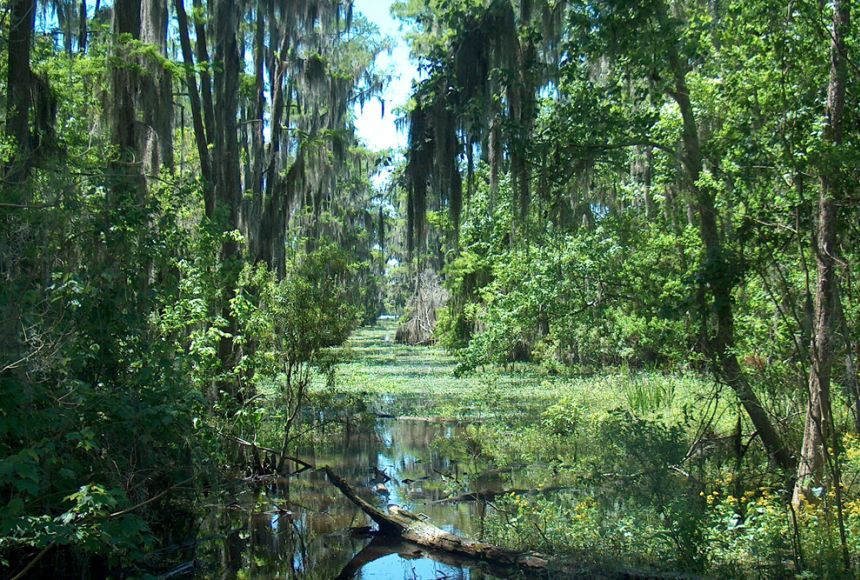
Louisiana has always been a conservative state, despite the existence of New Orleans. Originally French then Spanish before becoming American, Louisiana also was a part of the Confederacy and had an economy based on enslavement. We weren’t that far removed from David Duke’s gubernatorial bid (which came all too close to succeeding), and I remember Paul had gone on site visits with his boss at the Arts Council south of the city, and came home saying, completely in disbelief, that “people had yard signs saying ‘this is Duke country’–and me replying, sadly, “in the South they don’t bother to hide the racism–they see it as a positive.” But you cannot really go anywhere in Louisiana without being awed by the natural beauty on display here. I love Madisonville, and the Tchefuncte River area. It’s always a lovely drive to take 90 east when you head north (yes, I am aware I am saying you take an east-west highway to go north; welcome to New Orleans), and head out through the Venetian Isles area and drive along that narrow strip of land separating the lakes, crossing the Rigolets bridge and heading into Slidell.
A while ago, I was following a Twitter conversation about Burt Reynolds movies from the 1970s. Mind you, when I was living in Kansas our movie options were limited. There was a drive-in movie theater on the way from our little town Americus to the county seat of Emporia, and there was a small twin cinema on Commercial Street. The summer before my senior year Smokey and the Bandit opened on a Friday, and the following Friday Star Wars opened in the other theater. Both movies ran for about three months….so I saw them both repeatedly as there was very little else to do. The 1970’s were an interesting time for depictions of rural Southern sheriffs; Jackie Gleason hamming it up and going completely over the top. This was also the same time period that gave us corrupt politician Boss Hogg and the inept sheriff and deputies he controlled. These were always played for laughs, but the thing is–there really wasn’t anything funny about these types of characters in real life. Political and police corruption have always gone hand-in-hand in the Southern states; the police merely existing to enforce and enable the existing power structure. That Twitter conversation, along with reading Ethan Brown’s Murder on the Bayou and the various true crime documentaries about the Jeff Davis 8, put me in mind of writing about that kind of corruption. But I also kept wondering, but is this still true in the South? Do these kind of corrupt power structures still exist in the South? Would this read like a period piece?
And then the Murtaugh scandal broke.
Guess what? It IS still like this in the rural South. Thanks, Murtaughs!
I already had an idea for the next Scotty, and was pulling it all together, using a relatively minor political scandal here locally as the starting point for the story–which involved a conservative politician getting involved with a teenaged boy who worked at the food court at a mall, mostly buying him presents–clothes, underwear, swimsuits–and having the kid send him pictures wearing it. The age of consent in Louisiana is seventeen, and the kid was over seventeen, but while still being an icky thing, it wasn’t illegal–and they never did anything beyond that. It was mostly a harmless flirtation, until the kid, who was gay, realized that the nice man buying him gifts was actually a hardcore far right family values politician, so he went public. I still needed a murder, but I thought it would be simple to come up with one–the politician would have every reason in the world to kill to protect his secret, and he had his parish sheriff’s department to help commit and/or cover up the crime.
I did borrow two of the Murtaugh crimes for the book, but as starting points more than anything else, and came up with my own theories of said crimes for my own story–I wasn’t writing true crime, after all, and I wasn’t interested in proving the guilt of the Murtaughs. What I was interested in was exploring the decline and fall of a politically powerful family that had controlled a parish in Louisiana for well over a hundred years, almost like an absolute monarchy with primogeniture. I had also originally started the story with the kid coming to Scotty and Frank (through Scotty’s old buddy and former workout partner, David, who now teaches at NOCCA) because he gets a text from an unknown number which contains one of the pictures he has sent his older male friend (that he doesn’t know is a family values politician), and is worried about his own future if the information comes out. I wrote an entire draft of this story, but it didn’t work and I didn’t care for it…which was when it clicked into place: use two of the Murtaugh crimes to start with, and built it out from there. I decided that the kid at the mall wasn’t the original target of the politician, and that the original target was killed in a hit-and-run accident the year before; I also used the boat crash, turning it from a boat hitting a bridge to a pick-up truck hitting a bridge and pitching the passengers in the back into the bayou.
I also liked the teenager/older man dynamic, because it had played out with Taylor in the previous book–and Scotty had his own past with an older man when he was a teenager, which I was finally able to circle back around to.
I also invented the parish–surprisingly enough, there is no St. Jeanne d’Arc Parish in Louisiana–but it’s based loosely on what are known as the bayou and river parishes (Terrebone, Lafourche, St. Charles, St. John the Baptist). I already had a fictional parish on that side of the river (Redemption), but I decided Redemption wouldn’t work for this book, so I made it a neighboring parish.
My first series will always be special to me, even though I’ve retired Chanse MacLeod…at least for now, at any rate; I’ve learned (sometimes the hard way) that I shouldn’t ever say never when it comes to my writing career. Chanse will always be special for me in that he was the main character in my first book to be published as well as the first series of mine to see print. I originally created Chanse in 1989–can you believe that? Thirteen years from the time I first started constructing the character and him getting into print.
When I left California and moved to Houston that year, I decided to put the miseries of the 1980’s behind me, forget the past, and try to move on to the future I wanted for myself. I still had no idea what I wanted to do to make a living, but I knew I was never going to become a writer unless I actually, you know, wrote. When I moved to Houston, I moved away from reading mostly epic fantasy and horror to reading crime and horror. Sue Grafton’s F is for Fugitive had just been released, and the bookstore–Bookstop?–I frequented in Houston had a store catalogue that had book reviews and author interviews, and Sue Grafton was on the cover. I thought the alphabet titles was a great idea, so I bought the first three and took them home. I loved them, and started diving back into the crime fiction genre headfirst. I also started reading the Erle Stanley Gardner Perry Mason novels again–I’d read some when I was a kid–and I also started reading the rest of the Travis McGee series (I’d read, and not liked, The Dreadful Lemon Sky when I was thirteen; I wasn’t old enough to appreciate the series) and absolutely loved them. I loved McDonald’s writing style more than anything else, and the descriptions of McGee sounded, well, hot.
I started creating Chanse MacLeod as a blend of Kinsey and Travis McGee, really; I was driving to work one day and crossed a bayou. noticing the sign for the first time, and thought “The Body in the Bayou would be a great title for his first book” and so i started constructing the character and his world. He was a former cop turned private eye in Houston; he’d played college football at Auburn but suffered a career-ending injury his senior year and so he went into law enforcement, eventually going out on his own. He had a secretary named Clara that he shared with a couple of lawyers in an office suite in downtown Houston, and most of his work involved trying to get evidence of adultery for wealthy and suspicious spouses. In 1994. after I fell in love with New Orleans, I moved Chanse to New Orleans and his college experience to LSU; I also was discovering gay crime novels around this same time, so I decided to make Chanse a gay man; from a small town in Texas with homophobic parents and family, playing a sport where homophobia is rife, and he too discovered and fell in love with New Orlean…so he became a cop when his football career ended, eventually becoming a private eye. I started rewriting the four or five chapters I’d written with the story set in Houston…but once I moved to New Orleans and began to grasp what it was actually like to live here, I threw the entire thing out and started over.
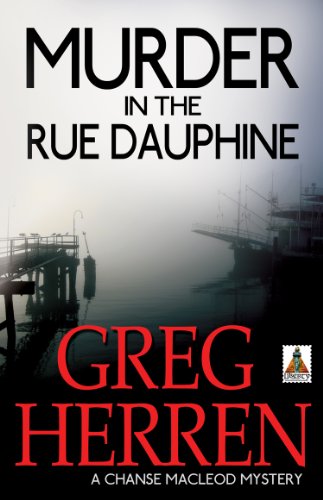
That manuscript I started over became Murder in the Rue Dauphine, and the first place I submitted it to offered me a contract six weeks after I mailed them the manuscript. Alyson was home for the first five books in the series…before Alyson Books went belly-up, without paying me the advance for the fifth book and no longer paying me royalties on the others (the entire series was still in print when Alyson folded).
Burn in hell, corporate trash who bought Alyson.
(The company had been doomed for a while, and the unfortunate last minute attempt to rescue it failed, which I thought was horrifically unfair to the person who they brought in to save it. The final collapse was hardly his fault; his predecessors had made so many unbelievably stupid mistakes there was no saving the business, really. And ebooks and so forth started eroding away at the reader base, at the same time the business began to crumble. I’ve always felt bad for the poor dude who was the last to hold the title of publisher. I don’t think he had any staff and he was the only person working there by the bitter end.)
But when Alyson went belly-up and chose to stop honoring their contractual obligations to pay their writers, I’d already moved the Scotty series to Bold Strokes Books and was doing not only anthologies for them but also editorial work for them, so moving the Chanse series there was a no-brainer.
The last two books in the series were done with Bold Strokes Books.
As with anything with my career, I had a plan for the Chanse series but of course, man plans and the gods laugh. I had always intended the series to be seven books, from the very beginning, and I had this emotional journey for him all mapped out: the series would chart his progression from lonely, damaged and scarred loner with a snide sense of humor to more centered, more grounded, more mature and more settled into his life. So, when the series opened, he was–against his better judgment–seeing a hot flight attendant, and wondering if he was actually falling in love and had the opportunity to be happy for once in his life. I really did give him a miserable backstory; alcoholic mother, abusive drunk redneck father, grew up living in a trailer park in a snotty small Texas town where no one would let him forget he was trash until he showed some football playing ability–and he was just cynical enough to understand they still considered him trash, but trash with a skill they appreciated. He went to LSU and joined a fraternity in a final attempt to banish the homosexuality from his brain (it didn’t work), and then was injured in a bowl game so his career was over–he’d been considering going for the NFL draft. He was a big man, as such; and spent a lot of time in the gym working out and keeping fit. I also had to make a horrific decision while writing the second book–with every intention of walking that ending back in the third.
And then Katrina happened, and everything changed.
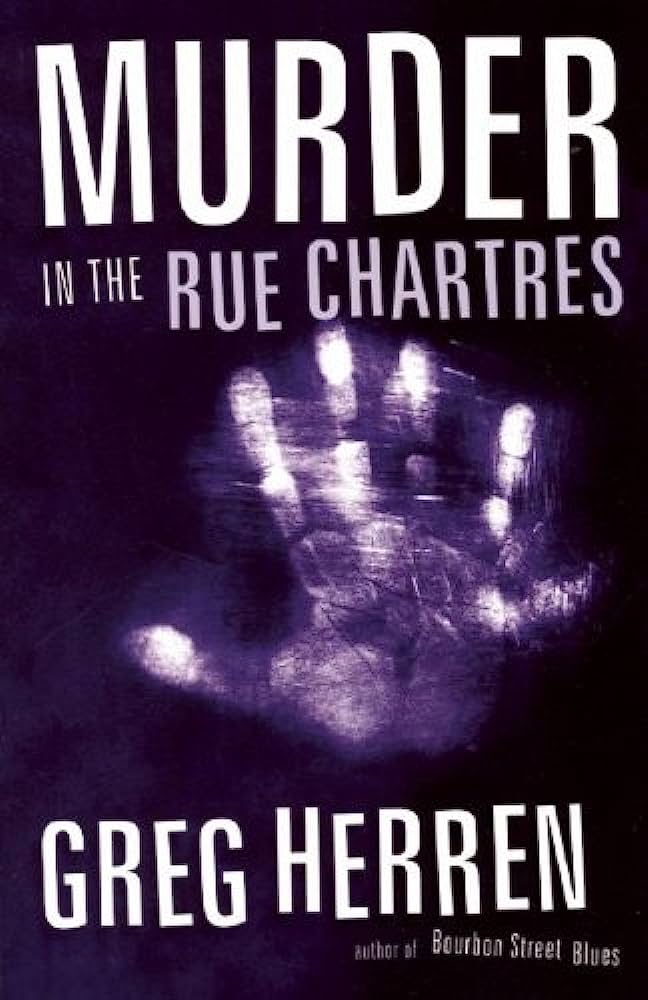
My editor at Alyson Books at the time, Joe Pittman, was new. He had come on board shortly after my previous editor was let go (I had a different editor for each of the first three Chanse books, and in fact had a different for the last two–so the Chanse series went through five editors at Alyson…now I would see that as a sign), and I was assigned to him as a gay mystery writer. He got in touch with me after Katrina to check in on me and of course, to encourage me to write about Katrina, which I did NOT want to do whilst I was in the middle of experiencing the aftermath still. I was still unhoused at the time, staying with my parents in Kentucky, before moving back to Hammond, Louisiana, just before Rita to housesit. Paul and I talked on the phone one morning and suggested we do a fundraising anthology for Katrina victims…but I wasn’t interested. Joe called me that afternoon and with the same suggestion, so I told him Paul wanted to do one and that was how Love, Bourbon Street came to be. Joe also kept insisting to me that I should write a post-Katrina book as the next Chanse book, and despite my reluctance I decided to go ahead and do it. Part of the problem, as I saw it, was, how do you end a book on a hopeful note when the city is still in ruins and most of the population still displaced? Joe kept pushing me, and I finally agreed to write Murder in the Rue Chartres–and I really don’t remember anything about writing the book other than I did actually write it, and it turned out to be one of my best books. It won the Lambda, for one thing, and got great reviews everywhere.
The fourth Chanse novel was, in my opinion, the weakest of the series. They’d fired my editor before I signed a contract for the fourth book, and when that finally happened, they needed me to write in like eight weeks. I asked for a two book contract so I would never have to write another book in eight weeks again (LOL at my naivete), and they were so desperate for the fourth they agreed. (I had already written a Scotty book that was just sitting in a drawer; I turned it into the fourth Chanse and to this day I think it was a mistake.) Of course, they did publish the fifth, but they never paid me a dime for Murder in the Garden District. The only money I’ve made off that book is from the ebook Bold Strokes put up–I gave them the entire Chanse backlist for ebooks, and those Chanse books still sell.
Maybe I shouldn’t have ended the series at seven?
But it felt like the right place to stop. Chanse’s personal story of personal growth and how it happened kind of got lost along the way; he grew and changed as the series progressed, but writing the last two–which I also think are good–felt a little paint-by-the-numbers for me; I felt that writing the sixth and when I felt it again in the seventh, I decided to stop there. I wasn’t getting any satisfaction for writing the books anymore, there was no joy derived from doing them, and since I’d already planned to stop at seven…I stopped at seven.
I still get ideas for Chanse books, of course. I have an LSU fraternity murder that would be a perfect Chanse story–I planned it as a novella–and of course, I’ve always wanted to fictionalize the Jeff Davis Eight murders as a Chanse novel, too. Maybe I could do three Chanse novellas published in one book?
That would make a lot more sense, and could be even more fun to write than one long single story novel.
Or I may not do anything with Chanse at all, and use those stories/plots for something else.
The only reason I know it’s Wednesday is I got a text message confirming that my paycheck was deposited in my checking account, meaning it’s also Pay-the-Bills Day. I did that already over this first cup of coffee–shortly after my daily morning COVID test came back positive again (we are now on Day 5 of this, if the first day doesn’t count; six if it does) and now I am trying to get things done before the daily fatigue sets in. Yesterday was maybe the worst it’s been thus far; I spent most of the day drifting in and out of sleep in my easy chair. I can honestly say I’ve never slept this much in my life in a six day period as I have since last Friday–and yet am still able to fall asleep every night without a problem and don’t want to get up in the morning, and am still fatigued all day and can drift off again in the snap of my fingers. Ironically, I just realized while paying the bills this morning that today is our anniversary; Paul and I have been a couple twenty-seven years today. We obviously don’t make much of it, really–we really aren’t big on holidays, birthdays, and anniversaries as a general rule–as evidenced by the fact that I’d completely forgot about it until writing down the date in my checkbook (and yes, I still use a check register to track my account; many co-workers mock me about this but for fuck’s sake it’s how I learned and I am so fucking paranoid about being overdrawn it’s just easier to keep a running balance and periodically balance it).
And there’s the fatigue. I was wondering how much longer I had before it made its presence known. It’s so weird how it allows me an hour or so every morning, like a tease: today you’re going to feel good even though you still tested positive! PSYCH! Here’s some fatigue for you!
I am going to try to fight through it today to get some things done. If it means ‘get something done then go nap for an hour’ so be it. My house is a disaster area. Laundry and dishes have piled up, and there is mess everywhere I look here in the kitchen. I was so tired yesterday I never even got hungry, so I never made dinner and now that I think about it, I think all I ate yesterday was some coffee cake yesterday morning so I could take my pills. Lack of fuel can certainly play a role in the fatigue, can’t it? It’s so weird, I’ve never experienced anything like this at all. I can actually feel the exhaustion running down my arms and legs until all four limbs, including hands and feet, feel fatigued. Even as I type this the fog is encroaching on my thought processes and making my head feel, for wont of a better phrase, empty and hollow. My eyes are now tired. But…as I remind myself every day as I try to get out of my chair and almost weep from the effort, it could be worse. At least I can breathe, and the slight constriction I felt in my lungs the first few days is now gone. It wasn’t even that bad–the lung thing, I mean; it didn’t hurt or anything or restrict my breathing, I just was aware of it, if that makes sense; kind of like there was a plug or something there in the center of my lungs that I felt whenever I breathed deeply or moved, but was more along the lines of here I am don’t forget you’re sick! rather than Oh my God get me to the emergency room–and I am grateful for that. I feel a little strange complaining about this when it could obviously be ever so much worse; thank goodness for the four inoculations I’ve had.
As I drifted in and out of sleep we watched Mind Over Murder, a documentary series about a bizarre murder case in Beatrice, Nebraska (pronounced b-AT-triss) in which six people confessed to a rape and murder only to be exonerated years later by DNA. (One person never confessed; he was the one who led the charge to get the DNA evidence tested–only to die in a freak accident at work a year and a half after being released.) It’s a very weird story–as true crime stories often are–and it made me start thinking–through the fog–about the Jeff Davis 8, eight women who were murdered in and around Jefferson Davis Parish back in the aughts in similar ways, yet different enough to make it questionable as to whether it was a serial killer or not. I’ve always wanted to write about that case in a fictional novel–it’s the story I keep thinking about bringing Chanse back for–because nothing is as a bizarre as true crime, really.
Anyway, my brain is starting to get cloudier and focus is getting harder. It’s very weird to describe how this feels, really; my legs even as I am sitting here in the chair ache with fatigue, my shoulders feel very tired, and my body is telling me to go lie down again. Should I listen to my body, or fight through it? That’s the worst part of this–trying to decide if pushing through the sickness to get things done is worth risking making it worse, and the last thing I want to do is make this worse. I am really not used to this kind of illness, and I don’t like it–which is a rather silly thing to say; after all, who likes being sick? I am also unused to it. The wearing of masks and constant hand-washing/sanitizing had managed to keep me from getting even a cold over the last two years, so this almost feels like a betrayal of sorts. I have no one to blame but myself, of course. I allowed my diligence to slack off after the fourth vaccination, like a fool; it’s always when you stop being vigilant and become more careless that shit happens, as I well know from a lifetime of experience.
But I am going to try to martial my energy and focus to do some things now, and I know I have some emails that need attention–even though just thinking about doing anything makes me want to weep from exhaustion and frustration. (Usually, too, when I am sick I can read and watch movies and so forth; no such luck with this, which makes it even more frustrating as I feel like I am losing and wasting time.)
And hopefully, tomorrow morning’s test will have only one line.
And Thursday rolls around, which means the weekend looms on the horizon.
Yay, weekend!
It’ll be tense, though, with the LSU-Florida game looming on the horizon (GEAUX TIGERS!) and there’s also a road game for the Saints, I believe. But the LSU game is a night game (it’s Saturday night in Death Valley!) so I have all day to get things done. There are other games on, of course, but none of terrific interest. I find myself becoming less interested in spending the day parked in my easy chair watching college football games, and if I want to turn Bury Me in Shadows in on Monday, I’ll need to buckle down and get some things worked on this weekend as I rather doubt I’ll have the time to get the whole thing finished before the weekend….
I managed to make Swedish meatballs for dinner last night–they turned out the best they ever have, which was nice, especially since I made them without consulting a recipe. That means I’ll probably never make them exactly the same way ever again, as well–but I think that’s part of the joy of cooking, at least for me; I love always trying to improve on recipes I’ve made before with little tweaks here and there. I wish I had more time to cook, to be honest; it is something I rather enjoy doing.
I also slept incredibly deeply and well last night. I’m not really sure what’s going on or what’s different; but I’ve stopped taking my prescription for sleeping–I always worry about addiction issues. Obviously, the last thing in the world I would need would be to get addicted to something, so I’m trying to take the sleeping pills less frequently. Over the last two weeks I only took one on last Saturday evening, and now my sleep seems to be more natural and more restful and longer lasting. I don’t even think I woke up even once during the course of last night, which is a first.
I wonder if it’s because the humidity seems to have finally broken?
Maybe.
But it’s very weird to wake up on a Thursday and not feel exhausted. I’m not sure if how that bodes for the rest of the day, but it would be awesome to come home tonight and be able to bang out some more chapters of Bury Me in Shadows. I’d love to get that finished by the end of the weekend so I can turn it in on Monday; that would be lovely. Finishing it means I could get back to work on the Kansas book with an eye to getting it turned in by the end of the month as well. That would open me up to writing solely Chlorine and short stories through the rest of the year; which would be kind of awesome. Ideally, it would be amazing to get a strong draft of Chlorine finished by the end of the year, so I could start writing this new Chanse novel in January, or perhaps another Scotty; I’m not sure which should come next. The Chanse novel, which would be drawn from–ripped from the headlines, if you will–the Jeff Davis 8 case, would probably be an easier thing to write–the brilliance of using a real life case as the jumping off point for a fictionalization is that a lot of your story is already in place; the only thing I’d need to do is, of course, come up with a fictional solution to the mystery. The next Scotty, on the other hand, is a lot more amorphous, as Scotty books always tend to be; the story kind of comes to me as I write it, rather than planning it out ahead of time. This frequently causes me headaches, of course, but Scotty simply can’t be written any other way. I am torn between writing Hollywood South Hustle, which would be really fun; French Quarter Flambeaux, which is really just a kernel of an idea, as is the other potential Scotty, Lake Shore Limbo. I also have another Scotty title in the hopper, St. Claude Second-Line, which is what the original title, Bywater Bohemia Bougie, evolved into.
Hollywood South Hustle is a summer novel, though, I think; whereas FQF could easily be a March novel, and I think March is the right timing for the next Scotty, since Royal Street Reveillon was a Christmas novel.
I also am thinking that my Chanse short story, “Once a Tiger,” might actually work better as a novella. (As you can see, I have novellas on the brain.) I had originally wanted to call my second short story collection Once a Tiger and Other Stories, but if it’s going to be a novella, it would fit better into the four novella thing I am planning to possibly do. Ah, plans, plans, plans; it really helps if you actually work on the damned things, though!
And on that note, tis time to return to the spice mines for this morning. I don’t have to get ready for work and leave for another two hours, and I might as well put that time to use.
So, rather than working on either the WIP, the other manuscript I need to revise, or any of the short stories I intended to revise this morning…I started writing another Chanse book. Oh, it’s going to have to be shelved for a while–these other manuscripts need my attention and I can’t keep pushing them to the side–but I had the Chanse idea, I wanted to get the first chapter down because I’d seen it in my head, and I managed to write three thousand words, quite easily, in less than two hours.
And all I could think, when I finished, was this is how easy it’s always supposed to be yet never is.
Sigh.
And it’s actually not bad writing. I printed it out to keep in a folder and reread it, and while there are some tweaks needed here and there, and some things that need to be added to it, it can pretty much stand on its own. It was spooky, too, how easily I immediately slipped back into Chanse’s voice and head; how the tone just flowed perfectly out of my fingers as I typed.
And yes, this is why writers drink.
But don’t get your hopes up too high, people and Chanse fans. I have to finish at least two other manuscripts, and do another project, before I can focus on writing this book–if I decide to go forward with it. I’m just trying to get all the ideas down now, as they are coming to me, so when I have the time and can work on it, it’s all there and I don’t have to try to remember it. I’d wanted to finish this WIP, go back and finish revising another manuscript before I have to devote myself to a special project for two months. This is why I wanted to have the first draft of the WIP finished by the end of June; so I could spend July revising the other manuscript before the two-month project–and then I wanted to write the first draft of the next Scotty (working title: Hollywood South Hustle) before revising the current WIP and getting it ready to go. But now I have a Chanse book crowding it’s way into my brain, and I know I am not going to be able to stop thinking about it until it’s fucking finished and written and turned in.
But you know what? So be it. When I finished Murder in the Arts District I thought I was finished with Chanse, and there wasn’t anything else for him to do or say or anything. And yet, here we are, with all kinds of ideas bursting out of my head, for a new Chanse. And yes, it’s inspired by the case of the Jeff Davis 8, but it’s not going to be ripped from the headlines; I’m going to take the basic set-up of the murders and use that for a Chanse book…one that doesn’t take place in New Orleans. I was always reluctant to have either Chanse or Scotty do anything that wasn’t in New Orleans, which was always limiting, and now that I look back on it, kind of stupid. As I said the other day, I am getting more and more interested, not only in New Orleans history, but in the rest of Louisiana as well. I’ve always liked mysteries/crime fiction set in small towns, and why not use a Louisiana small town for one?
And the dynamics of the Jeff Davis 8–the set-up for it, the town, everything–is just too perfect of a starting place for me to just pass up.
And it’s not like it’s the first time I came up with a story idea based on actual events.
Plus, it gives me the opportunity to explore some themes and ideas I’ve been wanting to sink my teeth into for a while.
My beautiful, beautiful state. Louisiana is basically a lush, fertile state chock full of important natural resources, and also sports the nickname “Sportsmen’s Paradise,” because outdoor sports–hunting, fishing, etc.–are abundant here. Lots of hunting, lots of fishing, that sort of thing.
But Louisiana also is known for corruption, being backwards in many ways, and some truly bizarre politics/politicians. It’s easy to say that Louisianans have a very cynical view of politics and politicians–no one is really surprised when one of our elected officials is caught doing something criminal or morally questionable; the basic presumption is that they’re all crooks and liars unless proven otherwise. We can never forget that one gubernatorial election featured bumper stickers and campaign slogans that read Vote for the crook, it’s important–when Governor Edwards, convicted for taking bribes in office, was running again after serving time and his opponent was notorious racist and former Klan Grand Wizard David Duke.
And for the record, that election was in the early 1990’s–not that long ago.
As I said yesterday, I watched a four hour documentary on Hulu this past week called Murder in the Bayou, about what is called the “Jeff Davis 8”–eight women murdered over a period of less than three years in and around the Jefferson Davis Parish village of Jennings. The women all had issues with drugs, and also came from really poor backgrounds. The documentary was interesting, and seemed geared to the idea that there was a serial killer operating in the parish–and for some reason, the cops simply couldn’t track said killer down, and eventually the killings stopped.
I also remembered that there was a book about the murders, with the same title, by New Orleans journalist Ethan Brown, and I had a copy. So, after I finished watching the documentary Friday afternoon, I got the book down from the shelves and looked to see if there were any photographs included. There weren’t–just the flyer with the reward posted, with photos of all the victims on it. I started reading…
On May 20, 2005, Jerry Jackson, a soft-spoken slim African-American retiree with a short salt-and-pepper Afro, prepared to cast a fishing line from a hulking bridge over the Grand Marais Canal on the outskirts of Jennings in southwest Louisiana. Jackson peered down at the muddy rush below, the corroded, cylindrical rain pipes along the canal belching water, the collapsed pedestrian bridge far out in the distance. As he prepped his fishing line, Jackson imagined the catch that day, white perch, a small bass with a strong spine that’s so abundant in Louisiana it’s the state’s official freshwater fish. In low-lying southwest Louisiana, where rain is constantly siphoned to prevent flooding, drainage canals are as common as the perch. These canals provide sustenance for poor Louisianans for whom fishing is both a generations-old tradition and a day-to-day necessity. For hobbyists such as Jackson, who made the approximately ten-mile trip to Jennings from his cramped trailer on a dead-end street in nearby Welsh, drainage canal democratize fishing. Expensive shrimp boats and fishing equipment aren’t necessary–all one needs to do is drop a line into the water.
As Jackson peered deeper into the Grand Marais Canal, he spied the outline of a human body. “It had come up on the news that someone had stole some mannequins,” Jackson told me, “so I thought that one of the mannequins ended up in the water somehow.” Jackson focused his eyes on the figure. “I saw flies, and mannequins don’t attract flies.”
It didn’t take me long to get into the book to realize there was information, crucial information, about the victims in the book that wasn’t included in the documentary; in fact, the documentary left a lot of important information out. Yes, the women all had addiction issues, but they also were sex workers–turning to sex work to either get drugs, or to get the money to buy drugs. The police didn’t cooperate much with Mr. Brown, and the sister of one of the victims played a very prominent role in the documentary; she was only mentioned by name once in the book. Brown also shared the information that many of the victims were witnesses to other crimes, and theorized they were all killed to silence them–and that it wasn’t a serial killer after all. Brown also isn’t convinced completely that the police were so inept and incompetent to handle these kinds of investigations (something that came up a lot in the documentary), but that the parish police were actually corrupt, involved in the drug trade, and connecting all the dots also led to a peripheral involvement by a powerful politician. Naturally, the police and the politician disagree with Mr. Brown’s theories and conclusions…but he also includes, in the book, other crimes in the parish that may or may not have been connected to the murders, as well as corruption within the police department; things that were not in the documentary.
One of the things that struck me, while watching and again when reading the book, is how tragic the cycle of poverty is in these small towns, not just in Louisiana, but across the country. The class divide–marked in Jennings by literally railroad tracks that separate the good part of town from the bad–is truly staggering; I would imagine it’s much the same in big cities only not as obvious. The poor and uneducated people in places like Jennings are trapped in a terrible cycle of poverty that they cannot seem to break, which is truly sad, and the disruptive nature of the families they were born into doesn’t help much, either. And once someone starts spiraling down into drug addiction, there’s nowhere to turn to for help getting off the drugs…and there’s no money for rehab, which is incredibly expensive.
I can’t imagine how horrible it would be to stuck like that, with no hope for the future.
The book is very well written, and it’s not terribly long; I read it in one day, and it’s a terrific read. I do recommend it, and I also recommend watching the documentary as well. I’m curious about why they chose to leave some stuff out of the documentary that’s in the book–perhaps it has something to do with both using the same title but not adapting the book or using it as source material, or something along those lines–but it’s very interesting to see the two very different takes on the murders.
And yes, learning more about these murders did, in fact, give me an idea for another Chanse novel; the first idea I’ve had for a Chanse novel since I wrote Murder in the Arts District. I can easily see fictionalizing this story, with Chanse as the investigating private eye…or someone else, really; it doesn’t have to be Chanse, and the issues at play here–the disposability of drug addicted sex workers, class distinction, and corruption in the parish power structure–are things I would love to explore in a novel.
Like I don’t have anything else to write already, right?






 Queer and Loathing in America