One More Night

Thursday. I overslept this morning and thus didn’t make it to the gym–I’ll have to go tomorrow night after work–but I also had a really great night’s sleep and so am taking that as a win; now that I am out of bed my muscles aren’t tired or sore. I’ll do some stretching and my abs this morning before getting in the shower. I also have to get up tomorrow morning and go to the eye doctor; instead of my usual wimpy not complaining and accepting things, I called them and told them I can’t read in my progressive contacts so I need a stronger prescription. So, I am going in tomorrow to get a new trial pair and perhaps order my new glasses and a year’s supply of the contacts; depending on how the new ones feel.

The decisions have been made on the Bouchercon anthology, and all the people who submitted have been duly noted. This weekend I will read the chosen again and put them in order. I am currently waiting to hear back from all the selected authors. I think we’ll make the announcement of the table of contents next week. Huzzah!

Yesterday I also started writing, of all things, a Chanse MacLeod short story. I know, right? I don’t think I’ll ever write another Chanse novel, but there are ideas I had for him that I don’t want to really waste, and hey, why not write short stories about him? I always had in mind to write about him returning to the town of his birth; I also had a story in mind involving his younger brother; another with him dealing with his fraternity past in Baton Rouge–all stories my publishers were never interested in since they weren’t set in New Orleans. As I have said before, I’ve never really known how to write a private eye mystery short story, but all this short story reading I’ve been doing has kind of opened my eyes in that regard; so thank you, Sue Grafton, Ross Macdonald, Laura Lippman, etc. I’ve already realized that the opening doesn’t work, and it’s just extraneous crap I don’t need. But I am going to soldier on, and hopefully today I will finish the first draft. I also have an idea for a short story involving Chanse’s partner, whose name I cannot recall; I’ve always been interested in writing about her–the straight girl who paid for college by stripping on Bourbon Street. I cannot for the life of me think of her name right now, which is annoying, but I always thought she was interesting. I’d even thought about spinning her off, even using Chanse as a supporting character in the books–but then, is there an audience for a series about a female private eye who used to work as a stripper? But I think I can make it work as a short story. We’ll see.

Last night while I was making dinner I reread some of the short stories I have in progress, and was quite pleased with them. I am going to try to get those revisions done as quickly as I can, so I can get them out of my hair so I can focus on getting the new project done.

I’m still behind on the Short Story Project, but I did manage to read Raymond Chandler’s “Red Wind” yesterday; someone recently talked about it somewhere on social media as the perfect hard-boiled short story. It had been a while since I’d read Chandler–and I haven’t read all of Chandler, either, something I need to remedy–and so I thought it was a great opportunity to read this story, which I wasn’t familiar with.

There was a desert wind blowing that night. It was one of those hot dry Santa Anas that come down through the mountain passes and curl your hair and make your nerves jump and your skin itch. On nights like that every booze party ends in a fight. Meek little wives feel the edge of the carving knife and study their husbands’ necks. Anything can happen. You can even get a full glass of beer at a cocktail lounge.

I was getting one in a flossy new place across the street from the apartment house where I lived. It had been open about a week and it wasn’t doing any business. The kid behind the bar was in his early twenties and looked as if he had never had a drink in his life.

I’ve not read all of Chandler, or his hard-boiled cohorts Dashiell Hammett, Ross Macdonald, or noir master James M. Cain. What I have read I’ve greatly enjoyed; as I have greatly enjoyed John D. Macdonald. I think I’ve been influenced by all of them to some degree; and there simply isn’t enough time to read. I’d love to go back and not only finish reading all of their works but to reread the ones I’ve already read; The Maltese Falcon, for example, is way overdue for a reread and so are the Travis McGee novels; The Big Sleep, Farewell My Lovely, and The Lady in the Lake, along with Love’s Lovely Counterfeit and of course, the Archer novels (although I am reading the Archer short stories). Anyway, I’ve always loved these writers and their work, and I do need to go back and reread them, problematic as some of them may be to modern eyes.

“Red Wind” is a really good story, complicated and complex, but still moves relatively easily from A to B to C. It opens with Marlowe stopping in at a bar across the street from where he lives in an apartment building, and a murder occurs right in front of him and the other denizens of the bar. After dealing with the police he heads back to the apartment building where he runs into the proverbial ‘dame’ of these types of stories, she lies to him, of course, but also manages to save his life when the murderer shows up to eliminate the witnesses. But while the mystery of the murder is now cleared up, turns out the victim has left some loose ends behind–involving the dame and some others. He was a blackmailer; the murder had nothing to do with the shooting (a very clever shift by Chandler), and Marlowe is on the case, trying to solve the blackmail cases and dealing with the LAPD. The writing is choice, terse, and all throughout the story the Santa Ana wind plays a role, almost like another character, driving people to do things they might not do under normal weather circumstances.

And now, back to the spice mines; since I didn’t go to the gym I need to get other things done.
IMG_3978

Think of Laura

Zulu is passing now; I can hear the drums of the marching bands. It’s a gorgeous morning, the sun is shining and I am betting the crowds up at the Avenue are deep; they certainly were last night for Orpheus. Paul and I both have to work tomorrow, so we’re ending our Carnival early; taking today to rest and recover so we can hit the ground running on Ash Wednesday. I also have a lot of things to do today; emails to answer, things to write, things to edit, things to read, a kitchen to clean. Even though it was abbreviated this year (I was in Alabama for the first weekend of parades), I enjoyed every bit of Carnival this year; and am already melancholy to see it end as always.

I’ve also been enjoying the hell out of the Winter Olympics, and like millions of people worldwide I am–what’s the word kids use now? Oh yes–stanning Adam Rippon. As a long time figure skating fan, I’ve known of Adam long before these games; I remember when he had a mop of floppy curls; when gossip websites were pairing him and Ashley Wagner as a couple (I rolled my eyes every time I saw the photos), and I remember when he came out. I blogged about homophobia in figure skating a while back; when Adam came out while still on the Olympic eligible circuit I thought to myself you’re never going to win anything now; so I was pleasantly surprised to see him win US Nationals and make the world team in 2016; he missed last season with a broken foot, and this season he is full-on out: his short program is to gay club music, and his long program, as everyone saw the other night, is breathtaking. I’m so happy for both him and Mirai Nagasu, who became the first American woman to land a triple axel at the Olympics that same night; they earned bronze medals as part of the team competition, and I couldn’t be happier for both of them–all of the Americans on the team, to be honest. Adam is so funny and refreshingly himself; a big personality and a natural wit he doesn’t try to hold back, and that honesty…I just can’t get enough. I had tears in my eyes when he finished his long program the other night; Paul and I both screamed when Mirai landed the triple axel. Seeing the trashy homophobes on Twitter trashing him or going after him makes my blood boil; I’ve resisted the urge to reply to them He’s got an Olympic medal and you’re a fifth-rate Twitter troll. Congratulations.

So. There’s that.

And in other news of the fabulous, the lucky world of readers can look forward to the upcoming release of a new Laura Lippman novel, Sunburn. I got an ARC at Bouchercon and read it in one sitting on a rainy Saturday back in October.

sunburn

It’s the sunburned shoulders that get him. Pink, peeling. The burn is two days old, he gauges. Earned on Friday, painful to the touch yesterday, today an itchy soreness that’s hard not to keep fingering, probing, as she’s doing right now in an absentminded way. The skin has started sloughing off, soon those narrow shoulders won’t be so tender. Why would a redhead well into her thirties make such a rookie mistake?

And why is she here, sitting on a barstool, forty-five miles inland, in a town where strangers seldom stop on a Sunday evening? Belleville is the kind of place where people are supposed to pass through and soon they won’t even do that. They’re building a big by-ass so the beach traffic won’t have to slow for the speed trap on the old Main Street. He saw the construction vehicles, idle on Sunday, on his way in. Places like this bar-slash-restaurant, the High-Ho, are probably going to lose what little business they have.

High-Ho. A misprint? Was it supposed to be Heigh-Ho? And if so, was it for the seven dwarfs, heading home from the mines at day’s end, or for the Lone Ranger, riding off into the sunset?  Neither one makes much sense for this place.

Nothing about this makes sense.

Laura Lippman has been one of my favorite writers since I read Baltimore Blues years and years ago. I tore through her Tess Monaghan series, and she very quickly became one of my buy in hardcover authors. I’ve never regretted making that switch, and as she has expanded her skills and pushed herself with her exceptionally brilliant stand alone novels, I’ve never once quibbled but I want another Tess novel! (I do, always, but the stand alones are so fucking fantastic that it doesn’t matter–I really just want a new Lippman, and wish she was on a yearly schedule rather than an eighteen month one.)

Laura’s career trajectory has been most impressive from a writing perspective; because as a writer of stand alones, she has gone from being a literary crime writer to a literary writer about crime, if that makes sense. Each of her stand alones are unique and different from the others; about as far removed from her series as any novels can be and still be by the same author. Each one of these novels are rare pearls, individual and vastly different from the others; different themes, different explorations, different everything. The one common thread that runs through these novels is that they are, for the most part, about women, and what women face in their lives; how they deal with crimes and tragedies that take them out of the ordinary and into the extraordinary. Laura also regularly experiments with form and voice and tense; enormous, dangerous risks as a writer that she somehow always manages to pull off, make engaging and enjoyable, and always manages to tell a story that makes a very compelling point.

Sunburn,  her latest, is as different from anything she has done before as it could be unless she decided to write about vampires or a zombie apocalypse; but she also brings her incredibly powerful sense of empathy to this tale of murder, vengeance, and oh-so-careful planning. The book opens with the main character, Polly Costello, walking away from her husband and child on a beach vacation and winding up in the hard-knock town of Belleville; she is being observed by Adam, who is being paid to keep an eye on her, follow her–but not to become obsessed by her, which is what happens. Their story is told in a very limited third person point of view, alternating between them, and as we slowly get to know them, watch their physical attraction expand and develop into something more, the questions remain: why did Polly walk away from her family and child? How could she do such a thing? Who is this enigmatic redheaded bar waitress?

And just how fucking good does Adam’s grilled cheese sandwich taste?

The prose in this book is lean; not an extra word to be found anywhere, and it is an homage of sorts to the kind of lean, tight, dark noir that the great James M. Cain wrote. (Cain is a hero of mine, and I have always wanted to write something that dark and lean and tight…ironically, one of the ideas I had for such a noir–gay, of course–was also titled Sunburn) I’ve seen, in some of the early reviews, comparisons to Cain’s Double Indemnity and The Postman Always Rings Twice, which seem obvious; there’s an insurance scam buried deep in the plot, it’s set in a bar/diner, it’s about an unexpected, explosive attraction between a man and a woman; there are side plots that end in mysterious deaths… but if anything, I’d say Sunburn is more reminiscent of Cain’s The Cocktail Waitress than anything else.

The book is extraordinary, and probably Laura Lippman’s best work to date; that wisecracking, tight prose; a complicated and complex plot that grows even more complicated as you read another page; fully developed characters you can help but root for, even if their motivations aren’t exactly pure; and ultimately, the book is about a woman with everything stacked against her all of her life, who  never gives up, and makes plans…risky plans; where she gambles everything, including her own happiness and desire, for her future, yet is flexible and smart enough to always adapt.

Polly Costello is a heroine Cain would have been proud to call his own.

New Moon on Monday

I made it to the gym again yesterday, which felt fantastic–despite the fact that I added a set to everything, and upped the speed of the treadmill by .2 miles per hour. The stretching helps; I can’t believe I worked out all those years without bothering to ever take the time to stop and stretch (okay, yes, I was naturally flexible, but I wouldn’t have lost the level of flexibility I had if I’d been stretching all those years). I also organized a bit, did some chores around the house, and wrote the first draft of a story for an anthology with a deadline of February 15th. The story’s not quite there yet, but I think it’s not only a good idea but one that revisions and rewrites will only make stronger. Huzzah! And yay for me!

It was also in the seventies (!!!) yesterday; considering just three days ago we had a hard freeze…yeah, the weather in southeastern Louisiana might be a bit bipolar. I also had a breakthrough on how to revise the first chapter, not only of the WIP but of the Scotty as well. Hallelujah! I really think this focus and positivity mantra might actually be working. Granted, it’s still only January, but between the working out, and the writing…yeah, this is turning into a much better year already than last.

I also read some short stories!

First up was “Music for Chameleons.” by Truman Capote, from his collection Music for Chameleons:

She is tall and slender, perhaps seventy, silver-haired, soigne, neither black nor white, a pale golden rum color. She is a Martinique aristocrat who lives in Fort de France but also has an apartment in Paris. We are sitting on the terrace of her house, an airy, elegant house that looks as if it was made of wooden lace: it reminds me of certain old New Orleans houses. We are drinking iced mint tea slightly flavored with absinthe.

Three green chameleons race one another across the terrace; one pauses at Madame’s feet, flicking its forked tongue, and she comments: “Chameleons. Such exceptional creatures. The way they change color. Red. Yellow. Lime. Pink. Lavender. And did you know that are very fond of music?” She regards me with her fine black eyes. “You don’t believe me?”

During the course of the afternoon she had told me many curious things. How at night her garden with filled with mammoth night-flying moths. That her chauffeur, a dignified figure who had driven me to her house in a dark green Mercedes, was a wife-poisoner who had escaped from Devil’s Island. And she had described a village high in the norther mountains that is inhabited entirely by albinos: “Little pink-eyed people white as chalk. Occasionally one sees a few on the streets of Fort de France.”

I love Truman Capote’s work–I reread In Cold Blood every few years or so, and his short fiction is also pretty compelling. I started reading this story before, but never finished; but in reading it now I realize I kind of borrowed the opening of this one for the opening of a chapter of Garden District Gothic, when Scotty goes to see Vernita Godwin, who is sitting on her front gallery in the Garden District sipping absinthe. I really love that image, of two people on a gallery sipping absinthe while ceiling fans turn overhead. The story isn’t really a story, in the classic definition of what comprises a story; this is more of the slice of life school of short stories, because it’s really just about a conversation between two people after dinner, about life in Fort de France, Guadeloupe. Part of the conversation is about a homophobic hate crime that had occurred on the island in the past; surprisingly, justice was actually served because, as the lady puts it, ‘we don’t tolerate murder here.’ But the strongest image of this poetically written story is the lady, sitting at the piano playing classical music for the iguanas, who listen in the doorway to the terrace and bob their colored heads in time with the music. That’s what I read Capote for–those poetic images.

Next up was “The Intoxicated” by Shirley Jackson,  from The Lottery and Other Stories:

He was just tight enough and just familiar enough with the house to be able to go out into the kitchen alone, apparently to get ice, but actually to sober up a little; he was not quite enough a friend of the family to pass out on the living-room couch. He left the party behind without reluctance, the group by the piano singing “Stardust,” his hostess talking earnestly to a young man with thin clean glasses and a sullen mouth; he walked guardedly through the dining-room where a little group of four or five people sat on the stiff chairs reasoning something out carefully among themselves; the kitchen doors swung abruptly to his touch, and he sat down beside an enormous white enamel table, clean and cold under his hand. He put his glass on a good spot in the green pattern and looked up to find that a young girl was regarding him speculatively from across the table.

“Hello,” he said. “You the daughter?”

“I’m Eileen,” she said. “Yes.”

I’m also a huge fan of Shirley Jackson who, as Stephen King once said, ‘never had to raise her voice.’ This story, like the Capote, is a slice of life type story, with a bit of a bizarre twist to it. The drunk party guest and the teenaged daughter have a lengthy conversation about how his generation has ruined the world and how it is up to hers to burn everything to the ground so it can start over, and be the better for it. It’s unsettling, but the end–when he returns to the party a little more sober than when he left it–leaves you to wonder what is going to become of Eileen–and what that story would be like.

I haven’t read a lot of Jackson’s short fiction–I’ve not read “The Lottery,” although I’ve seen the short film made of it in grade school and in an Acting class in high school we did the play, but I intend to remedy this grave error and lack in my reading history during this Short Story Project.

The third story I read was “Pastorale” by James M. Cain,  included in Best American Noir of the Twentieth Century, by editors  James Ellroy and Otto Penzler;

Well, it looks like Burbie is going to get hung. And if he does; what he can lay it on is, he always figured he was so damned smart.

You see, Burbie, he left town when he was about sixteen years old. He run away with one of them traveling shows, “East Lynne” I think it was, and he stayed away about ten years. And when he came back he thought he knowed a lot. Burbie, he’d got them watery blue eyes what kind of stick out from his face, and how he killed the time was to sit around and listen to the boys talk down at the poolroom or over at the barber shop or a couple other places where he hung out, and then wink at you like they was all making a fool of theirself and nobody didn’t know it but him.

This was Cain’s first published story, and it is not only a macabre, dark little story but it also, as the editors point out, contains themes Cain would return to again and again in his short novels; amoral man has affair with beautiful woman and they plan together to kill her husband. “Pastorale” though, isn’t told from the point of view of the amoral man, like The Postman Always Rings Twice or Double Indemnity; the story is told by a third party, someone who knows what happened and is telling the story to someone–the reader, but it’s told almost entirely in vernacular and in that man’s voice, which is arresting and very strong and very rural; the voice reminded me a lot of his Appalachian saga of incest and murder, The Butterfly, and it also reminded me of Faulkner. The tale teller passes no judgment on Burbie or his lady love for their adultery and murder; if anything, he thinks they were fools because Burbie’s own vanity is what wound up bringing them down. It also gave me some thoughts about voice, and point of view, and story-telling.

If you cannot tell, Constant Reader, I am greatly enjoying my self-education in The Art of the Short Story, and I hope you are enjoying following me on this path half as much as I am enjoying going down it.

And now, back to the spice mines.

She Bop

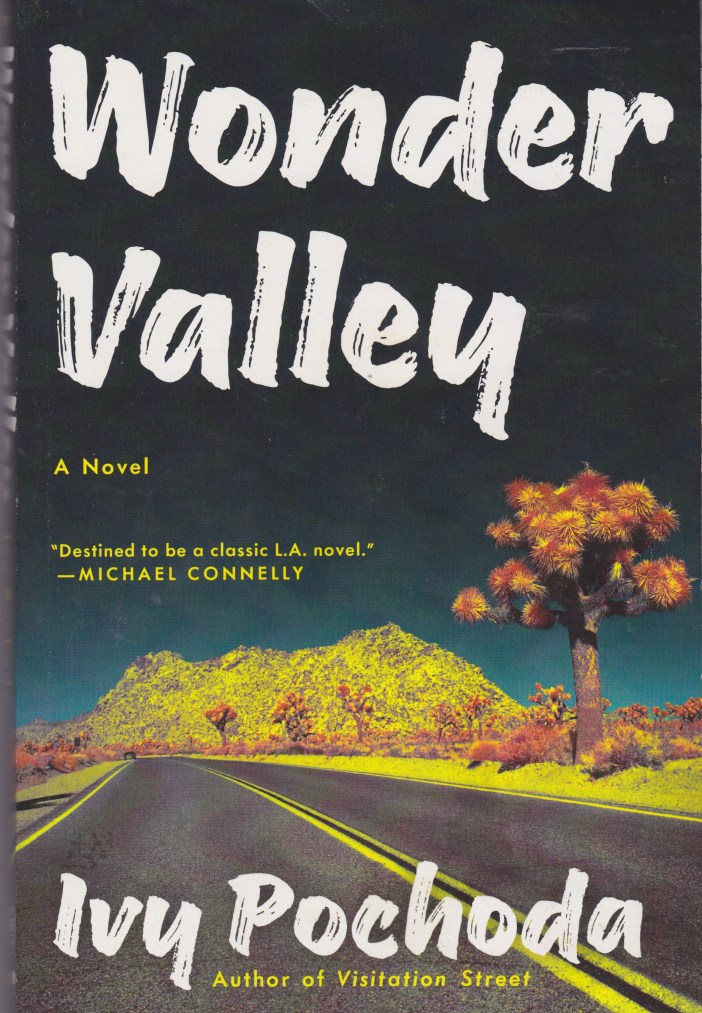
Well, the brake light thing was nothing serious; merely an internal computer malfunction of some sort, so the internal computer had to be reset, which took longer than I would have liked, but I love my dealership and I love my car, and sitting there gave me the opportunity to finish reading the amazing Ivy Pochoda novel, Wonder Valley.

Scan

He is almost beautiful–running with the San Gabriels over one shoulder, the rise of the Hollywood Freeway over the other. He is shirtless, the hint of swimmer’s muscle rippling below his tanned skin, his arms pumping in a one-two rhythm in sync with the beat of his feet. There is a chance you envy him.

Seven a.m. and traffic is already jammed through downtown, ground to a standstill as cars attempt to cross five lanes, moving in increments so small their progress is nearly invisible. They merge in jerks and starts from the Pasadena Freeway onto the Hollywood or the Santa Ana. But he is flowing freely, reverse commuting through the stalled vehicles.

The drivers watch from behind their steering wheels, distracted from toggling between radio stations, fixing their makeup in the rearview, talking to friends back east for whom the day is fully formed. They left home early, hoping to avoid the bumper to bumper, the inevitable slowdown of their mornings. They’ve mastered their mathematical calculations–the distance x rate x time of the trip to work. Yet they are stuck. In this city of drivers, he is a rebuke.

When I was watching the Joan Didion documentary, I was stuck by something that was said about Ms. Didion’s work; that she wrote beautiful sentences about terrible things. It was a terrific quote, and as I was currently savoring Ms. Pochoda’s stunningly brilliant novel, particularly apt: because that is what Wonder Valley is;  beautiful writing about terrible things.

The prose is spare, like James M. Cain’s and Megan Abbott’s; each word chosen with care for its evocative power with an economy of writing that it so much more difficult to do than being overly florid. The novel is complexly structured as well; bouncing around in time between something awful that happened in 2006 and how the ripples from that event are affecting 2010, the current day. She juggles timelines and points of view effortlessly, and changes the rhythm of her words accordingly so that each point of view has a distinctive voice and view point; you can tell by tone and sentence structure what point of view you are seeing the story from without having to know the character.

That is some seriously mad skill.

There were parts of this novel that reminded me of my favorite James M, Cain novel (Serenade); and having been to Palm Springs and that area, she captures the bleak beauty of the desolation of that sun-blasted arid area. Her characters are fully formed, damaged, lost, trying to cope with issues of guilt and damage with varying degrees of success and failure, yet these deeply flawed people are heroic in their simplicity, their desire to move on and affect change in their lives they are somehow powerless to achieve; the shadows of guilt are too long and have consequence. They are so brilliantly drawn and developed that you want them to succeed; whether it’s Britt’s struggle with her own self-destruction; Ren’s attempts to move past a crime he committed when he was twelve; James’ being trapped in a life not of his own design because of a mistake; Blake’s dark desire for vengeance. Their lives cross and intersect on a Los Angeles traffic jam. This is a difficult style of story to pull off; dating back to The Bridge of San Luis Rey by Thornton Wilder; which was a Pulitzer Prize award winning novel about a group of people who died in a bridge collapse, and how their interrelated lives all brought them together on the bridge that fateful day. The lazy way to do this kind of story is, of course, the Arthur Hailey formula (Airport, Hotel), but the way Pochoda has done it is worthy of Wilder, maybe even surpasses his own novel which created the trope. She also explores class in how each of the characters have dealt with their own guilt–and only Ren was actually punished by the system, of course; people of color are always punished by our system, while the wealthy white lawyer, the daughter of privilege, even the white son of the cult leader live in prisons of their own mind and guilt–and even those mental prisons are colored by their own levels of privilege.

It’s not an easy read, but it is a book to be read and savored and cherished.

I’d not read her first novel, Visitation Street, but it’s definitely moved closed to the top of the pile. I would be very surprised if Wonder Valley doesn’t make Best of lists and award shortlists. It’s simply extraordinary writing and story-telling.

You Can’t Hurry Love

I read a lot this weekend! I did work on the writing a little bit, but not nearly as much as I could/should have. I finished reading the Highsmith, reread The Exorcist, and finally got to Ross MacDonald’s The Drowning Pool, which I read yesterday afternoon, and then last night while watching the US Open I started reading Christopher Golden’s Ararat (which is great fun so far; I’m a little less than halfway through and having a great time reading it).

It might interest you to know, Constant Reader, that I’d never read Ross MacDonald until I was on a panel somewhere with Christopher Rice, either in 2002or 2003, and Chris mentioned MacDonald as one of his favorite writers/greatest influences. I’d read John D. MacDonald and Gregory McDonald; but had somehow never gotten around to Ross. I knew of the Lew Archer series, of course, but had never read any of them, nor any of his standalones. Based on Chris’ recommendation, I started reading them, and never looked back–although I have been slowly doling them out, as there is a limited amount of them and no new ones coming anytime soon. I was a little surprised, after finishing The Exorcist, to pick up The Drowning Pool and realize it was one I hadn’t read.

411U1dmvA2L

If you didn’t look at her face she was less than thirty, quick-bodied and slim as a girl. Her clothing drew attention to the fact: a tailored sharkskin suit and high heels that tensed her nylon-shadowed calves. But there was a pull of worry around her eyes and drawing at her mouth. The eyes were deep blue, with a sort of double vision. They saw you clearly, took you in completely, and at the same time looked beyond you. They had years to look back on, and more things to see in the years than a girl’s eyes had. About thirty-five, I thought, and still in the running.

She stood in the doorway without speaking long enough for me to think those things. Her teeth were nibbling the inside of her upper lip, and both of her hands were clutching her black suede bag at the level of her waist. I let the silence stretch out. She had knocked and I had opened the door. Undecided or not, she couldn’t expect me to lift her over the threshold. She was a big girl now, and she had come for a reason. Her stance was awkward with urgency.

“Mr. Archer?” she said at last.

“Yes. Will you come in?”

“Thank you, Forgive me for hanging back. It must make you feel like a dentist.”

“Everybody hates detectives and dentists. We hate them back.”

The Drowning Pool is hard-boiled, borderline noir (based on the fact that Archer works as a private eye), and can’t you imagine the above scene being played, in black-and-white by either Humphrey Bogart or Robert Mitchum, talking to either Gloria Grahame or Ida Lupino or Barbara Stanwyck? The story is simple: Archer is hired by the wealthy-seeming Mrs. Slocum to find out who has written her husband a poison-pen letter accusing her of adultery; back at the time the book was written, adultery was one of the few grounds for divorce recognized in every state. But as Archer begins to investigate, turns out Mrs. Slocum and her husband don’t have money; the money belongs to her mother-in-law, and she keeps them on a tight leash. Her estate is also sitting on a lot of oil, which she refuses to allow anyone to drill for, which would in turn make them even filthier rich. The elder Mrs. Slocum winds up dead in the swimming pool during a party, and soon the case begins twisting and turning left and right–and more bodies continue to pile up as Archer tries to get to the bottom of what is going on at the Slocum estate. It’s a great, fast read–and MacDonald’s grasp of language is extraordinary.

There’s a reason why MacDonald is up there with the greats of crime fiction.

There’s also an interesting subplot–almost a throwaway–about why the second Mrs. Slocum’s marriage is an abject failure. MacDonald doesn’t spend a lot of time on this, but it’s there for the queer reader to pick up on. It would be interesting to compare and contrast this book with MacDonald’s wife, Margaret Millar’s, Beast in View, released a few years later. There’s also an interesting comparison to be made between The Drowning Pool and James M. Cain’s Double Indemnity, in the character of Mrs. Slocum’s daughter Cathy, and the daughter in Cain’s book; also, an interesting comparison between this book could be made with Hammett’s The Maltese Falcon.

Maybe someday when I have more time.


Never Gonna Let You Go

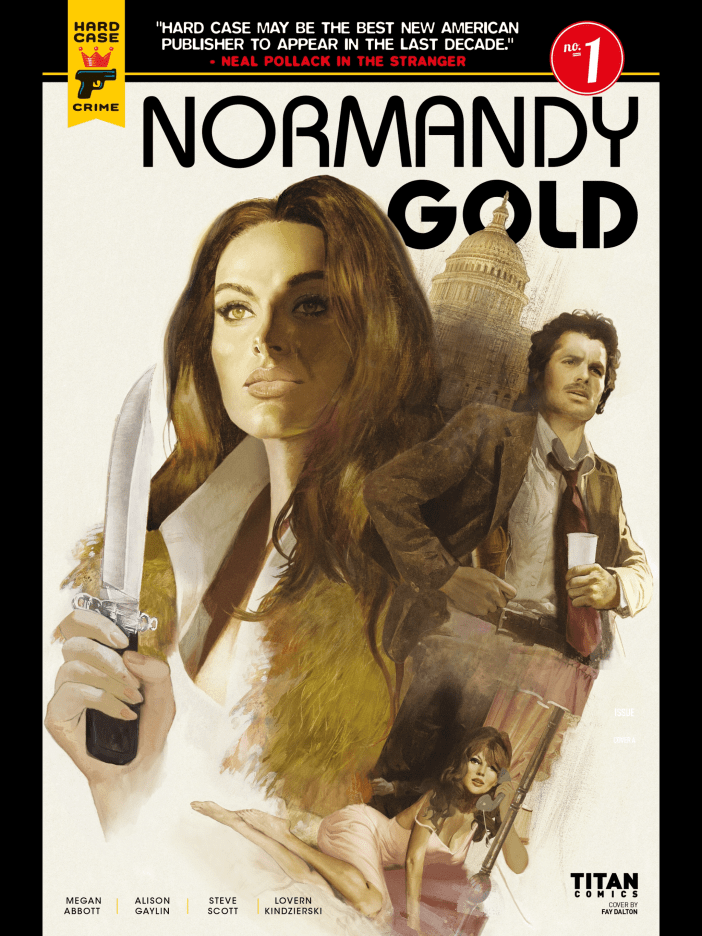
Have you read the comic book co-written by Megan Abbott and Alison Gaylin, Normandy Gold?

IMG_1772

It will come as no surprise that its fantastic. Megan Abbott and Alison Gaylin are two of the best crime writers of our Golden Age of women crime writers.

One of the things that can get confusing with crime fiction is the subgenres and the sometimes slight distinctions between them; take hard-boiled vs. noir as an example. I think the confusion comes because a hard-boiled crime novel, when made into a film, can fit into the film noir category, which is a bit broader than the genre definitions crime novels can use and books can fall into; for example, The Maltese Falcon and The Big Sleep are hard-boiled detective novels; the films, however, are classic film noir. (Your mileage may vary; I am speaking only for myself and how I classify books.) For me, a detective novel that is dark and brooding and cynical in nature is hard-boiled, Sue Grafton and Sara Paretsky’s novels, for me, fall into this category, as do Hammett’s detective fiction and Chandler’s. James M. Cain’s novels were noir, as are Megan Abbott’s. Alison Gaylin’s detective novels are more hard-boiled; her stand alone novels are more noir. For me, a noir novel doesn’t have a professional investigator as the main character; those are hard-boiled.

Charles Ardai’s Hard Case Crime line of novels contains both noir and hard-boiled fiction; the team-up of Gaylin and Abbott with the graphic serial novel Normandy Gold is a fine addition to Hard Case, and one of the best comics/graphic novels I’ve come across in a long while. As I read the first issue on my iPad, all I could think was how glorious this is; excellent, crisp dialogue and incredible storytelling, along with some amazing artwork. If there are awards for graphic novels, just start sending them along to the team that produced this now!

Normandy Gold firmly straddles the line between noir and hard-boiled with guns blazing. Set in the 1970’s, Normandy is a small town sheriff in rural Oregon. Her mother was a prostitute, and she ran away when she was a teen to try to find a better life for herself, leaving her younger sister behind. One day she gets a call from her sister, and is still on the line with her as her sister is murdered. Normandy comes to Washington DC to find out what she can about her sister’s death; the cops have written it off as just another dead whore no one cares about and unsolvable. But Normandy also finds out her sister wasn’t just a prostitute; she worked for a very elite, high level escort service, and decides to go undercover to find what happened to her sister.

This typical-sounding set-up comes alive in the hands of two master storytellers, and the art itself is stunningly beautiful. The story moves very quickly, and the 1970’s setting is perfectly done; not a false note in the entire first issue. This is the kind of story that, as a film in the 1970’s, would have earned a star like Jane Fonda or Ellen Burstyn or Ann-Margret an Oscar nomination, if not the statue itself. Vividly realized, you keep turning the pages to see what happens next…and when you get to the end of the issue, you’re sorry it’s done but can’t wait to read the next.

Highly recommended.


Maneater

Is there a male version of the term maneater? I’ve been wracking my brain trying to think of what it could be; which indicates that the answer to that question is obviously, no. I also would imagine maneater and femme fatale are interchangeable; Phyllis from Double Indemnity is one of the best fictional representations of the type. I’ve always wondered what Phyllis was thinking, and how much more interesting the book would be told from her point of view. There has been a so-called trend in crime fiction lately, where the stories are told from the point of view of the maneater, which has also led to lots of opinion pieces about the rise of unlikable women characters in crime fiction, which strikes me as kind of odd, as those types of characters have been around (male or female) since the very beginning of crime fiction. Gillian Flynn’s Gone Girl is often credited as the book that started the trend, but I think it’s more accurate to say that Flynn’s book was the first major break out bestseller to have an unlikable woman as the focal point of the story.

I made some great progress on reading The Gods of Gotham  last night, and what a marvelous read it is! This is historical crime fiction done right–the last historical crime fiction novel I read that I enjoyed this much was Louis Bayard’s The Black Tower. Lyndsay has somehow managed to weave a tale involving the founding of the New York police department, Irish immigration, religious/ethnic bigotry, racism, politics, and child prostitution; and this world is alive and breathes. It’s really quite an accomplishment, and it’s written with wit and style and compassion; it’s also written in the style of nineteenth century novels but she has also managed to update the style and make it modern; Dickens, as it were, without the cloying over-sentimentality. Faye’s characters are also developed so strongly they all live and breathe and seem absolutely real; the maneater of the book is a madam named Silkie, who is delightful in her scheming and corruption. I intend to read more of the book later today, after I get the errands and chores done, and more of the goddamned line edit. My to-do list for the weekend is rather ambitious, I do confess; perhaps too ambitious to get everything done, but I’d rather overestimate what I can get done than underestimate.

The kitchen is a mess, the apartment is a disaster area, and of course, laundry laundry laundry. Heavy heaving sigh. Paul’s off playing tennis this morning, and I actually woke up feeling rested this morning. So, getting everything done seems like it’s something that’s actually possible. It’s supposed to rain off and on all day; we’ll see. I also made some progress on the Scotty book yesterday. My goal is to try to get a chapter done every day for the next twenty days–which will be, of course, a complete first draft. By that time, the line edit of the WIP should be finished and input–I can only do line edits on hard copies, which is not eco-friendly, but doing it on the computer has proven to not be as effective over the years. I do think this line edit is going well, and making the book even stronger, which is the entire point, right?

I also had a terrific conversation with the moderator of one of my two panels at Bouchercon, and I am very excited about the panel; this is also the first time I’ve been on two panels at Bouchercon–so probably I’ll be lucky to get one on St. Petersburg next year. I am looking forward to the Toronto trip this year; Bouchercon is always one of the highlights of my year.

I am going to read, I think, The Fixes by Owen Matthews (aka Owen Laukkanen) next, once I’ve finished Gods of Gotham.

And on that night, I should probably get back to the spice mines.

Here’s a Saturday hunk for you, Constant Reader:

fitness-male-model-photo-men-71-1124x803

MUSIC: Losing My Religion by REM

MOOD: Cheerful

Take the L (Out of Lover)

I love James M. Cain.

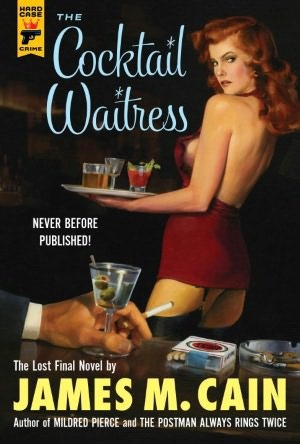
I think the first book of his I read was Love’s Lovely Counterfeit, which is way overdue for a reread. I also read The Postman Always Rings Twice, Double Indemnity, and Mildred Pierce back in my twenties, and in recent years read Serenade and The Butterfly. I love Cain’s work, and would read more of it, but much of it is now out of print (other than the big name novels) and hard–even ridiculously expensive–to find from second hand sellers. So, I was very excited to find out that Hard Case Crime had printed an unpublished Cain manuscript–his last novel–and finally sat down to read it this weekend.

13584306

I first met Tom Barclay at my husband’s funeral, as he recalled to me later, though he made so little impression on me at the time that I had no recollection of ever having seen him before. Mr. Garrick, the undertaker, was in the habit of calling Student Aid, at the university, for boys to help him out, but one of those chosen that day, a junior named Dan Lacey, couldn’t come for some reason, and his father asked Tomas a favor to go in his place. Tom, though he’d graduated the year before, did the honors with me, calling for me and bringing me home in a big shiny limousine. But he rode up front with the driver, so we barely exchanged five words, and I didn’t even see what he looked like. Later, he admitted he saw what I looked like–not my face, as I was wearing a veil, but my “beautiful legs,” as he called them. If I paid no attention to him, I had other things on my mind: the shock of what had happened to Ron, the tension of facing police, and the sudden, unexpected glimpse of my sister-in-law’s scheme to steal my little boy. Ethel is Ron’s sister, and I know quite well it’s tragic that as a result of surgery she can never have a child of her own. I hope I allow for that. Still and all, it was a jolt to realize that she meant to keep my Tad. I knew she loved him, of course, when I went along with her suggestion, as we might call it, that she take him until I could ‘readjust’ and get back on my feet. But that she might love him too much, that she might want him permanently, was something I hadn’t even dreamed of.

And so begins Cain’s last novel, The Cocktail Waitress, which is quite an enjoyable read. In that first paragraph, in his terse style, he introduces not only his main character–Joan Medford, the only time Cain has ever told a story from a woman’s first person point of view–and Tom Barclay, who will be the means to her ultimate destruction. Because Cain’s novels are always about doomed people (so pointing this out doesn’t spoil the book), and how they self-destruct by making the bad choices that ultimately lead them to their ruin.

Joan, like Mildred in Mildred Pierce (one of the other Cain novels told from the point of view of a woman; although it’s third person) is dedicated to her child and completely untethered after her abusive husband’s death in a drunk driving accident. His malicious sister, Ethel–she who cannot have a child and therefore is making a play for Joan’s–keeps hinting to the police that Joan had a hand in the accident, which runs her afoul of the police from the very start. A kind policeman recommends to the young woman a job at a place called Garden of Roses–she is behind on the mortgage; the gas, phone and power have all been turned off–where she becomes a cocktail waitress and, like Mildred, now shed of a worthless husband, begins clawing her way out of the hole the husband has left her in. Joan is beautiful, sexy, and smart–but is she a reliable narrator?

And the big surprise in the book–how Joan is ultimately going to be ruined–comes near the end, and requires an understanding of American history.

Quite chilling.

I’d love to see this filmed, actually. It’s a great, meaty role for a young actress, someone like Jessica Chastain, perhaps.

I’ve now started reading Dan Chaon’s Ill Will, which is also quite exceptional.

And now, back to the spice mines.


G. U. Y.

I love James M. Cain.

I generally give one of his books a reread every year; Double Indemnity is a personal favorite, although I also have soft spots for Mildred Pierce, Serenade, Love’s Lovely Counterfeit, and, of course, The Postman Always Rings Twice. I’ve not read all of his books, partly because I don’t ever want to be finished with the entire Cain canon, but also because many of his lesser-known are no longer in print. But yesterday, after I finished Lori Rader-Day’s sublime Little Pretty Things, I pulled out The Butterfly and read it in a little over an hour. (Many of Cain’s works are really short.)

She was sitting on the stoop when I came in from the fields, her suitcase beside her and one foot on the other knee, where she was shaking a show out that seemed to have sand in it. When she saw me she laughed, and I felt my face get hot, that she had caught me looking at her, and I hightailed it to the barn as fast as I could go. While I milked I watched, and saw her get up and walk all around, looking at my trees and my corn and my cabin, then go over to the creek and look at that and pitch a stone in. She was nineteen or twenty, kind of a medium size, with light hair, blue eyes, and a pretty shape. Her clothes were better than most mountain girls have, even if they were dusty, like she had walked up from the state road, where the bus ran. But if she was lost and asking her way, why didn’t she say something and get it over with? And if she wasn’t, why was she carrying a suitcase? When I was through milking, it was nearly dark, and I picked up my pails, came out of the barn, and walked over. “How do you do, miss?”

And so this is how Jess Tyler, abandoned eighteen years earlier by his wife, meets his now grown youngest daughter, Kady.

Cain’s novels are all relatively short (I think Mildred Pierce is actually the longest, at least of the ones I’ve read)–which is interesting on its face; many of my favorite writers (Cain, John D. Macdonald, Megan Abbott, Margaret Millar, Charlotte Armstrong) write short novels–and The Butterfly is only 118 pages long. The book is set in Appalachia; West Virginia, to be precise, and Cain’s grasp of what life is like for poor rural Southern people is spot-on, as he always was with every book. He also manages to get across the poverty, and the acceptance of that poverty, across without using vernacular; Jess says “hollow” instead of “holler,” as an example. It’s also amazing how he managed to get this book (or any of the others, really) published at the time he did; the subject matter seems a little bit much for the time. If Mildred Pierce is an opus on motherhood, and the strain of loving a child who is a monster; The Butterfly is the obverse, telling the tale of paternal love for his child that crosses that line that shouldn’t ever be crossed; from love to lust and desire. It’s quite chilling and disturbing, but also quite good because he makes it understandable, which makes it all the more chilling and disturbing.

The book was eventually filmed, as so many of his novels were, but this film was notorious as the screen debut of Pia Zadora. I’ve never seen it, actually–the only Pia Zadora movie I’ve ever seen is Voyage of the Rock Aliens, although I’ve heard The Lonely Lady is so bad it reaches epic camp proportions–but now I am kind of curious.

I also started reading Donna Andrews’ latest, Die Like an Eagle, yesterday while waiting for Paul to come home so we could go to the Parades.

And happy Mardi Gras to one and all.