destination unknown

Thursday, and I am so relieved that the recovery is going well, and that I can actually start fending for myself. The brace isn’t rigidly locked anymore, and I have a lot more freedom of movement–plus I no longer need that wretched sling, which I hated, and I am no longer attached to anything. Granted, I haven’t been since last Friday, when the pain ball1 was removed Later this morning I am calling to make my first PT appointment, and another referral to follow up on as well. I also slept in my bed last night for the first time since the surgery. I was sleeping super-well in my easy chair, and was a little worried about going back to the bed (I will worry about anything, thanks, anxiety!) because I usually sleep on my left side–which is the bad arm–but I fell asleep lying on my back and shifted to the right side and back a couple of times, but other than that, I was dead to the world. I also slept for another ten hours last night, and I am thinking that I need to get this rest. My body is demanding it, and it feels marvelous to sleep so deeply and restfully–this is what I am always longing for most of the time….but I’m not going to start going to bed at eight once I am back to work because yeah, that would be terrible.

I took it easy yesterday after getting home from my appointment and a couple of errands. The temperature has turned cold (for New Orleans, don’t @ me), which always makes the apartment feel a bit more snug. I did some straightening up, took a long hot shower (still not easy, but so much better than before), and then curled up in my chair with Sparky and J. D. O’Brien’s Zig Zag, which I enjoyed very much (more on that later). I’m still trying to figure out a way to comfortably type with the brace, which isn’t as easy as one might expect. because the brace raises the hand so it’s not flush with the keyboard. It just feels awkward and so I need to find a position to type that doesn’t feel awkward–or I need to get used to it. I don’t know that I’ll have the brace on long enough to worry about Carpal tunnel syndrome, but you know me–anxiety always on the starting line waiting for the starting gun. We also finished watching Bodies, which I also highly recommend. It’s extremely well done, and very clever. If you liked Dark, you’ll definitely enjoy Bodies. I haven’t picked out my next read yet, but I have some incredibly delightful options to choose from. Yay! I love having a massive TBR-pile filled with terrific books by great writers. I am leaning towards Christmas Presents by Lisa Unger; I do want to read some holiday themed novels this Christmas season.

Christ, it’s Christmas season already. I may have to have my annual viewing of A Charlie Brown Christmas soon. I feel more like being in the holiday spirit this year. We haven’t decorated in years (and what little decorating we did was kind of half-assed, anyway) because the one thing Scooter would–in his long, comfortable life as a lap cat–actually spring into action against was the tree. That first Scooter Christmas was the last time we decorated, and I feel pretty confident that Sparky would see the tree as an amusement park, since everything is a toy to him and all he wants to do is play. I didn’t notice until the other day–and maybe it’s a recent development–but Sparky has some orange in his coat. It’s more obvious when he’s lying on his back, but we did end up with another orange cat, even though we didn’t realize it! The string of orange babies continues!

I was also thinking some more yesterday about being a writer–and the many different ways there are to be one. What is the difference between an author and a writer? Are authors artists? What is literary art and what is not, and who decides? Can genre fiction be art (of fucking course)? This was triggered by one of those things on one of the social media platforms where you were supposed to “quote text” my favorite books by women, and right off the top of my head I rattled off five great ones…and then I started remembering more, and more, and still more. I’ve read hundreds, if not thousands, of marvelous novels and short stories and essays and columns written by women. Why were those the five that popped up into my brain at first, why are they so implanted on my brain that I would come forth with these titles; any such list from me will always include The Haunting of Hill House by Shirley Jackson and Rebecca by Daphne du Maurier, and I will never apologize for that. Which left me with only four, and there were so many options. My mind immediately defaulted to four women writers I love, and then had to pick which of their canon was the best. Then I remembered a beautiful novel about friendship, love and loss that made me weep (Somewhere Off The Coast of Maine by Ann Hood) and thought, damn it, I loved that book and I want it on my list…and then started remembering all the others, the dozens if not hundreds, of other women writers whose works entertain, enlighten, and edify my life. There are so many great women writers, currently and in the past, who wrote so many amazing books that it would be hard to name them all, and I would certainly always forget scores of them. For some reason yesterday I was thinking about Taylor Caldwell–who used to write massive doorstopper books about rich people and industries, as well as interesting historical fiction. If remembered at all today, it would probably be for Captains and the Kings, but that wasn’t one of my favorites of hers–that would probably be Testimony of Two Men, which was about medicine in the late 1800’s and a courageous doctor who believed in modern breakthroughs rather than “we’ve always done it this way”–so of course the entire medical establishment was trying to ruin him as he bravely stuck to his principles and tried to modernize American medicine. I would probably hate it if I read it today for the first time–my politics, ethics, morals, and tastes have dramatically changed since I was a teenager, which was when I read Caldwell–but I do remember it fondly. And there’s Grace Metalious, who wrote Peyton Place; Jacqueline Susann and Valley of the Dolls; Jackie Collins and Hollywood Wives; any number of Agatha Christie novels–I mean, there have always been so many great women writers around. Does anyone remember Rona Jaffe? I’ve always wanted to reread The Best of Everything, and I think I have a copy of it somewhere. Then there’s the scifi/fantasy writers, too–Anne McCaffrey and The Dragonriders of Pern, Ursula LeGuin and A Wizard of Earthsea, the amazing Octavia Butler….as I said on whatever social media platform that was, I could sit here and name women writers who wrote books that I loved all day. Victoria Holt, Mary Stewart, Phyllis A. Whitney, Dorothy Eden, Susan Howatch…seriously. Maybe I should write a book of essays about women writers that aren’t remembered much today? ANYA SETON! How I loved Anya Seton back in the day–and all the crime women–Margaret Millar, Charlotte Armstrong, Dorothy L. Hughes, Mary Roberts Rhinehart, Helen MacInnes, Patricia Highsmith, and Mignon Eberhard, to start.

I bet no one else remembers Edna Ferber–and if they do, it’s for Giant and it’s because of the movie (many of her books became famous films: Cimarron, Saratoga Trunk, Show Boat, and So Big). Now that I think about it, I think she addressed race issues in both Saratoga Trunk and Show Boat….which may be worth revisiting. She was also a member of the Algonquin Round Table.

This entry sounds and feels more like me than the more recent ones have, doesn’t it? I am itching to dive back into the book this morning, after I pay some bills and do some other aggravating chores. I also have a prescription ready to pick up; so since I have to go to a Midcity pharmacy to get it, I may as well make a grocery run on Carrollton.

I didn’t realize what a difference sleeping in the bed would actually make, really.

And on that note, I am heading into the spice mines for the day. Have a blessed Thursday, Constant Reader, and I’ll check in with you again a little later, as I really need to do a lot more promo. OH! That reminds me, here is a lovely review of Mississippi River Mischief; check it out! That absolutely made my day–and reminded me that I need to do more self-promotion.

  1. I had a contraption attached to my left shoulder that dispensed a nerve-deadener to the arm, so I wouldn’t feel pain. It lasted for 72 hours, and by the time it was empty, I didn’t have any pain, which was great. I also had to carry it around in basically a fanny pack, so it was one more thing I had to drag around those stressful first 72 hours. However, if you are going to have surgery, ask for one. It was amazing. ↩︎

DJ Culture

Ah, Kansas.

I only spent five and a half years there, and yet somehow, it more shaped my psyche and who I am than the years as a child in Chicago or the four and a half years in its suburbs; even more so than the eight years spent in California. I’m not entirely sure why precisely that is, but it’s true. I think perhaps it’s because it was there I really and truly started writing, and started seriously thinking that my both life and career were going to be about writing. By the time we took the 1:30 a.m. train out of Emporia for California, my identity as a writer was firmly fixed in my head; when I stepped off the train into the California sunshine, I knew I was going to be a writer someday, somehow, some way.

And when I lived there, in Kansas, I wasn’t really aware of other Kansas writers. (I also wasn’t aware of other gay people there, either.) Now, of course, I know Sara Paretsky is a Kansan, along with Nancy Pickard and Kay Kendall and Lori Roy; I don’t know if Scott Phillips is a native, but he writes about Kansas. Alafair Burke grew up in Wichita.

And of course, there’s Scott Heim.

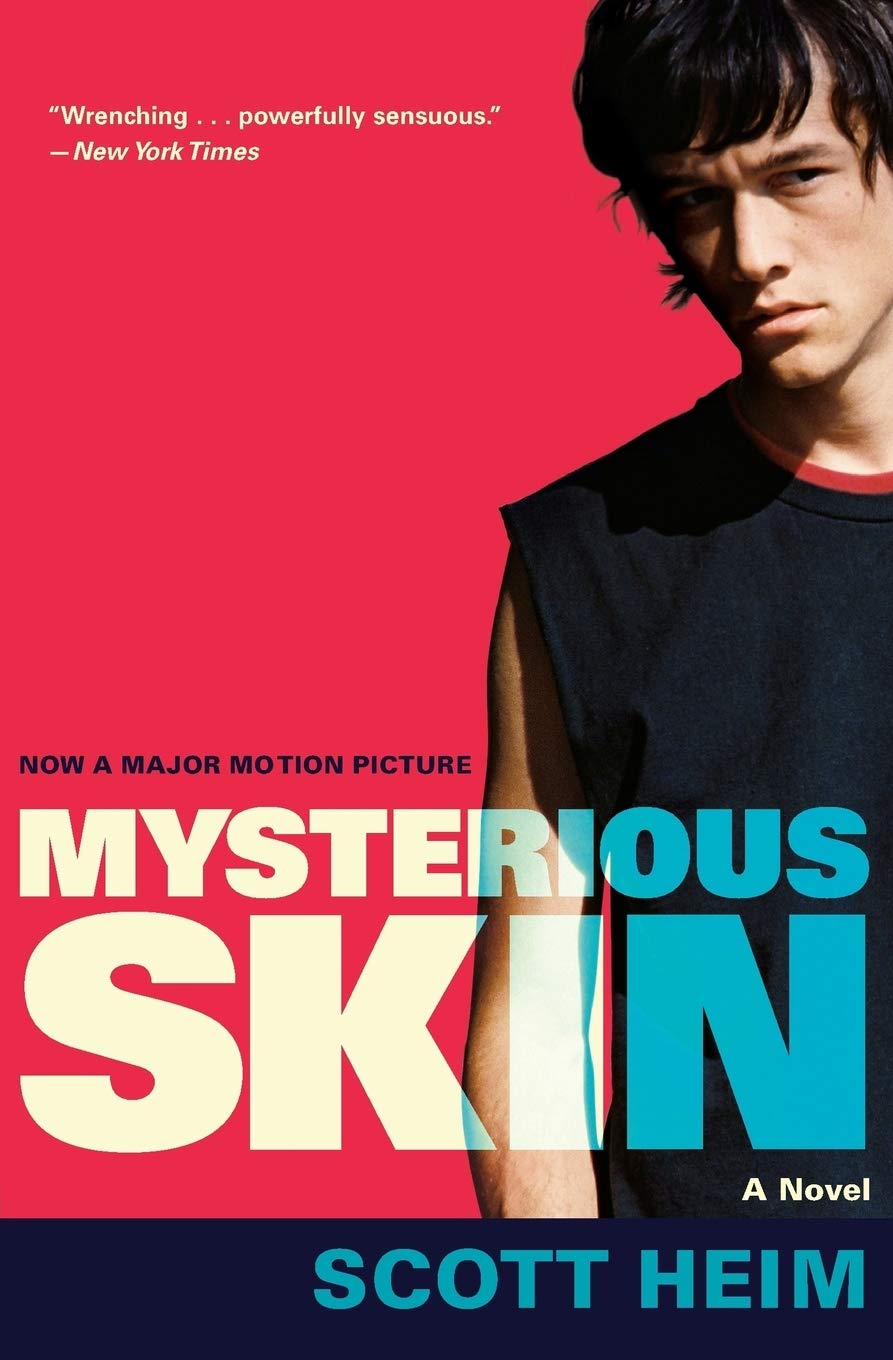
I recently read a novella by Scott, “Loam”, which was really good, and it put me to thinking about Mysterious Skin, the first of three novels he published, and alas, the only one that I’v actually read. I read it back in the late 1990’s, methinks, when I was scrabbling around trying to get caught up on gay lit and read as much of it as I could. I also saw the film (I’ll watch anything with Joseph Gordon-Leavitt in it, quite frankly), and while I have met him and spent a little time with him, and we follow each other on both Facebook and Twitter, I don’t know that I would safe in referring to him as a friend, I do consider him an acquaintance of whom I am very fond. He’s quite witty on social media, and I admire his skill as a writer…so I thought I should take a reread whirl with Mysterious Skin. 

I also wanted to read it as a dark crime novel, borderline noir; I was certain the story would hold up, but since Mystery Writers of America classifies it’s definition of a mystery as writing about the commission, solving, and/or aftermath of a crime….while it can be a stretch, Mysterious Skin kind of fits into that broad definition. Laura Lippman thinks we need to stop claiming literary works, like Crime and Punishment and Sanctuary as crime novels; but I honestly believe Sanctuary absolutely and positively is a masterwork of literary noir; the line between “Southern Gothic” and “crime fiction” is relatively tiny and there is a lot of crossover. Some of Flannery O’Connor’s work, definitely Southern Gothic, crosses over that fine line between literary fiction and crime.

I am not defining literary works, or works from other fields, as crime fiction to try to elevate crime fiction; it doesn’t need elevating to get respect, which was Laura’s point. Crime fiction deserves respect because it is good, and those who dismiss sneeringly as genre need to remember that literary fiction is just as much a genre as anything else.

As Nevada Barr said, “It’s either mystery or romance or just plain boring.”

6132sc9ejNL

The summer I was eight years old, five hours disappeared from my life. I can’t explain.  I remember this: first, sitting on the bench during my Little League team’s 7 P.M. game, and second, waking in the crawl space of my house near midnight. Whatever happened during that empty expanse of time remains a blur.

When I came to, I opened my eyes to darkness. I sat with my legs pushed to my chest, my arms wrapped around them, my head sandwiched between my knees. My hands were clasped so tightly they hurt. I unfolded slowly, like a butterfly from its cocoon.

I brushed a sleeve over my glasses, and my eyes adjusted. To my right, I saw diagonal slits of light from a small door. Zillions of dust motes fluttered through the rays. The light stretched ribbons across a cement floor to illuminate my sneaker’s rubber toe. The room around me seemed to shrink, cramped with shadows, its ceiling less than three feet tall. A network of rusty popes lined a paint-spattered wall. Cobwebs clogged their upper corners.

My thoughts clarified. I was sitting in the crawl space of our house, that murky crevice beneath the porch. I wore my Little League uniform and cap, my Rawlings glove on my left hand. My stomach ached. The skin on both wrists was rubbed raw. When I breathed, I felt flakes of dried blood inside my nose.

Like some of the best crime novels, Mysterious Skin is about survivors of a trauma, and the different ways people react to suffering through trauma. It actually isn’t a stretch to call it a crime or mystery novel; the central story is trying to determine what happened to Brian Lackey when he was seven years old and lost five hours of time. Brian at first becomes obsessed with UFO’s and alien encounters, as those are the only places he can find where other people also lost time; so he becomes convinced that he was kidnapped by a UFO and experimented on; all the evidence, such as it is, certainly points to that. The other boy, Neil, had a sexual relationship with his Little League coach, which he believed was consensual and that Coach loved him; as he grows up he becomes a hustler, tricking with johns cruising a park in Hutchinson (all these small cities in Kansas have/had gay cruising places; Emporia even had one) and eventually moving away to New York, where he continues hustling. Neil’s trauma is actually even unknown to him; he’s convinced himself that he was special and that Coach loved him; their sexual relationship wasn’t perverse or perverted or anything wrong, but rather based in love and consent; his own memories are very clouded, and as a young adult hustler he finds himself drawn to older men, much like Coach was.

It’s very definitely a literary novel, make no mistake, but it is, at heart, a novel about a crime and the trauma that comes from that crime and its aftermath; which fits the definition of “mystery” that comes from Mystery Writers of America. I doubt very seriously the panel of judges for the Best First Novel Edgar the year this was released would have picked it as a finalist (which it deserved to be); the subject matter is hard enough for people to deal with, let alone the sexuality of Neil, who is essentially a teen hustler, getting paid by older men for sex.

Beautifully written with a sparsity of language that Megan Abbott or James M. Cain or Shirley Jackson would embrace; Heim chooses words carefully to evoke powerful images and emotions and realities in as few words as possible, and while some might think the ending a bit of a cheat, leaving the door open to many possibilities–I feel like he found the absolute perfect place to end his novel: Neil coming to realize that what he experienced with Coach wasn’t love (something he has been adamantly refusing to understand since it happened–that whole I’m different than the others thing so many children feel under those circumstances–I’ve known any number of gay men who had relationships with adults when they were very young and didn’t realize it wasn’t love until they aged out of their Lolita-like relationships) and Brian finally piercing through the veil his mind has hidden the truth from all these years because it was too much for him to handle…until he could handle it.

Mysterious Skin is also an incredibly powerful depiction of what it’s like to be grow up working class in a sparsely populated state like Kansas–the worries about money, the beater cars you keep coaxing more life out of, that college might not be an option, and there aren’t that many good jobs to be had–and what it’s like to grow up queer under those circumstances. At one point in the book Heim says something incredibly smart and true–about how the stuff that is hip and cool on the coasts takes about three years to get to the center of the country; which is something I learned very quickly when I moved to California and all of my clothes were dated and wrong and out of style.

This is a truly terrific book, and I encourage you to read it, if you haven’t already.

Long Train Runnin’

Ah, it’s the weekend. I went to bed relatively early last night, after watching the final episode of The Last Czars (which, of course, included the horrific massacre scene in the basement in Ekaterinburg; which is probably why everyone sees the monstrous, people-abusing, careless Romanovs as tragic figures–the way they died, as opposed to the way they lived; it’s impossible to hear the children screaming and the sound of the guns without feeling badly for them) and before that, I watched Spider-Man Into the Spider-verse, which was, without question, the absolute best superhero movie, bar none, that I’ve ever seen. Well-written, well-voiced, and extraordinarily animated, it was quite an achievement in film making, and definitely a high spot when it comes to superhero films The entire time I was watching I kept thinking imagine how incredible this must have looked on the big screen. It took me a moment to get used to the style of animation, but it was absolutely amazing, and should be used as a blueprint for origin stories for superheroes. I do hope they do another; I really loved the character of Miles Morales and his family.

This morning I woke up well rested with a shit ton of work to get done today. Yesterday I was lazy; I got home from work around one and just cleaned the house. I never manage to seem to finish getting my office in order, because there simply isn’t enough space for me to put things, and I am always afraid to put thing into my inbox because they tend to get buried once they are there. I try to put things into it in ways that they can still be seen; but I don’t always have the best luck with that, and out of sight, out of mind if I don’t have it on the to-write list (speaking of which, I don’t see it anywhere, damn it to hell), which is also ridiculous when you consider how much I have to get written, or hoped to have written, by the end of this month.

One thing at a time, cross them off the list, and be done with it.

I’m also looking forward to spending some time with Steph Cha’s Your House Will Pay over the course of the weekend; after which I am going to read S. A Cosby’s My Darkest Prayer. I’d also like to get started reading the other Anthony nominees for Best Short Story (Cosby is one of my fellow nominees, along with Holly West, Barb Goffman, and Art Taylor–three of my favorite colleagues)–I still can’t believe I’m an Anthony finalist. I am very proud of my story, and its genesis; I originally wrote the first draft when I was in my early twenties or late teens, while I was still living in Kansas–close to forty years ago, and here it is, nominated for an Anthony Award.

How fucking cool is that? I had no idea when I wrote that story in long hand on notebook paper that forty years into the future it would be nominated for an award I’d not yet heard of, to be presented at a fan conference I knew nothing about, and that my life would be something I didn’t even dare dream of at that age.

I was thinking about my self-appreciation project last night, the one in which I work on stopping belittling my achievements, learn how to accept compliments, and take some pride in myself and my writing and everything I’ve done thus far in my life. Because I should be proud of myself. I’ve managed to sustain an almost twenty year career in a niche sub-genre of a genre, and not only that, I’ve accomplished quite a bit not even counting the writing itself. I was also thinking last night back to the days when I was editor of Lambda Book Report, which kind of set the stage for my publishing career. I reinvented myself, you know; I went from being a highly knowledgeable industry insider, basically running a magazine that was sort of a cross between a queer Publisher’s Weekly and a queer The Writer; for nearly two years I read a lot of queer fiction, and if I didn’t actually read a queer book, I knew a lot about it. I had already sold Murder in the Rue Dauphine to Alyson Books when I took the assistant editor job at Lambda Book Report, and that was actually the first job I ever had where I kind of flourished. It was the first job that allowed me to be creative in what I did, and where all the lessons I’d learned at various dead-end jobs along the way could be applied in a very positive way. I’d also learned how to treat writers, from being treated myself in very shitty ways by magazines and editors and papers I’d written for by this point–something I continue to do today as an editor (one of my proudest moments of my career thus far was being told by one of the contributors to Florida Happens–Hilary Davidson, a very talented writer whose works you should check out–that working with me was one of the best editorial experiences she’d had in her career thus far). Lambda Book Report seems like it was a million years ago; I actually officially resigned from the job in November 2001, three months before Rue Dauphine was published finally. I resigned because of the conflict of interest involved in running a review magazine while publishing my own novels; there was a strong sense, at least for me, that I couldn’t allow my own books to be reviewed in my own magazine, and as it was the only real game in town nationally (the odds of being reviewed in any of the national gay magazines–Out, The Advocate, Genre–were slim to none; on the rare occasions when those magazines chose to review books, it was either a straight celebrity ally’s (so they could do a feature and put straight celebrity ally’s picture on the cover)or if it was an actual queer book by a queer writer, it was never a genre work. They sniffed disdainfully at queer genre writers; kind of how Lambda Book Report did before I came along, and, all due respect, kind of how the Lambda Literary Foundation (which was always the parent apparatus of the magazine, and now runs a review website) still does. I’ve rarely been reviewed there–either in the magazine I left behind, when it was still being done as a print magazine–or on their website.

But I did a great job running that magazine, if I do say so myself, and I am very proud of everything i accomplished while working there. I met a lot of people, a lot of writers, and made some lifelong friends out of the experience.

I have also been nominated for the Lambda Literary Award, in various categories and under various names, quite frequently. I don’t know how many times I’ve been nominated, to be honest; it’s something like thirteen or fourteen times. I think the only people nominated more times than me are Ellen Hart, Michael Thomas Ford, and Lawrence Schimel. I won twice, once for Anthology for Love Bourbon Street, and once for Men’s Mystery for Murder in the Rue Chartres. The statues are somewhere around here; my Moonbeam Award medals hang from a nail right next to my desk, and my Anthony Award for Blood on the Bayou sits on one of the shelves in the bookcase where I keep copies of my books, but I’m not quite sure where my Lambda Awards are. My Shirley Jackson Award nominee’s rock is in my desk drawer, and even though it just represents a nomination (I didn’t win the award), it’s my favorite out of all the awards I’ve won. I don’t get nominated for Lambda Literary Awards anymore–I think the last time I was nominated was for Night Shadows, which should tell you how long it’s been–and I don’t really care about that anymore, to be honest. After thirteen or fourteen times…yeah, it’s just not quite the thrill it was back when I was nominated the first time. Getting nominated for things like the Shirley Jackson, or the Anthonys, or the Macavitys–those are thrilling because they come from out of nowhere, and are completely unexpected.

And let’s face it, being nominated for Best Short Story awards, for the kid who was told by his first writing instructor that he would never be published, would never have a career as a writer, and had no writing ability whatsoever–opinions all formed by reading a short story written by a kid who’d just turned eighteen–are very thrilling and satisfying. My lack of confidence in my short story writing abilities is pretty extreme, and so whenever one gets published or one gets nominated for an award or I get some great feedback from readers for one, it’s quite reassuring and quite lovely.

All right then–Steph Cha’s novel is calling my name, and I want to get some things written as well before I run my errands later this morning.

Have a lovely day, Constant Reader.

IMG_1829