I am both of the South and not of the South.
I was born in Alabama but didn’t grow up there. I was two years old when my parents migrated north in search of work, good jobs, and a better life for our family. My parents, however, were very Southern, so I was raised with their values and beliefs (which were very Southern and of their time) but being confronted with very different values and beliefs at school every day opened up my mind in ways that it may not have been had I grown up in Alabama. Our neighborhood in Chicago, near Lawndale Park (our nearest major cross street was 31st and Pulaski), was the perfect representation of America’s vaunted ‘melting pot’; our neighborhood was filled with first or second generation European immigrants; many from eastern Europe, who fled either before or after the war. There were Czechs, Poles, Austrians, Hungarians, and Serbs; in the fourth grade we even had a Muslim girl from Yugoslavia. She had the most delightful first name which I’ve never forgotten–Zlatiça–even as her last name is lost in the clouds of memory. It was also very confusing trying to figure out where the immigrant kids (either they were born in another country or their parents/grandparents were) came from, given that the maps of Europe had been redrawn barely twenty years earlier. The Czech children I knew didn’t identify as Czech but rather as Bohemian; they also called their language that. It took years of study and reading up on history to realizing Bohemia became Czech after the first world war; for many years I believed Bohemia still existed under that name but had somehow been folded into another country or something; I don’t remember. I do remember being confused. Until I finally wrapped my mind around the post WWI renaming of the region, I always just assumed Bohemia was a German region. Reading history didn’t help much in that regard, as Bohemia was part of the Holy Roman Empire for centuries (in fact, the Thirty Years’ War kicked off in Bohemia).
But there was a lot of racism in our neighborhood too; the white European immigrants detested the brown immigrants from Mexico and Central America; I vividly remember the way our babysitter would sneer the word Mexican when referencing anyone brown. There was also a lot of strife in Central America at that time; I think both Guatemala and Nicaragua were enduring civil wars of some sort, hence the influx of Central American refugees and immigrants. I remember Martha, a girl in the sixth grade, telling me about how soldiers came and shot up her village, killing dozens of people she knew and members of her family. She was very calm and unemotional as she told me about it, which is pretty remarkable for a child who couldn’t have been more than ten or eleven, talking about a trauma she witnessed when she was six or seven. (Now I know she was dissociating; and I do remember her telling me calmly that she felt like she wasn’t even there as it happened; like she was watching it all happen from a distance.) Ironically, we became friends because we exchanged Nancy Drew or Hardy Boys mysteries; this conversation came about because we were reading a Hardy Boys book set in Central America; I want to say Footprints Under the Window, but it may have been something else….but she wanted me to know that the depiction of Central America in the book was nothing like the reality.
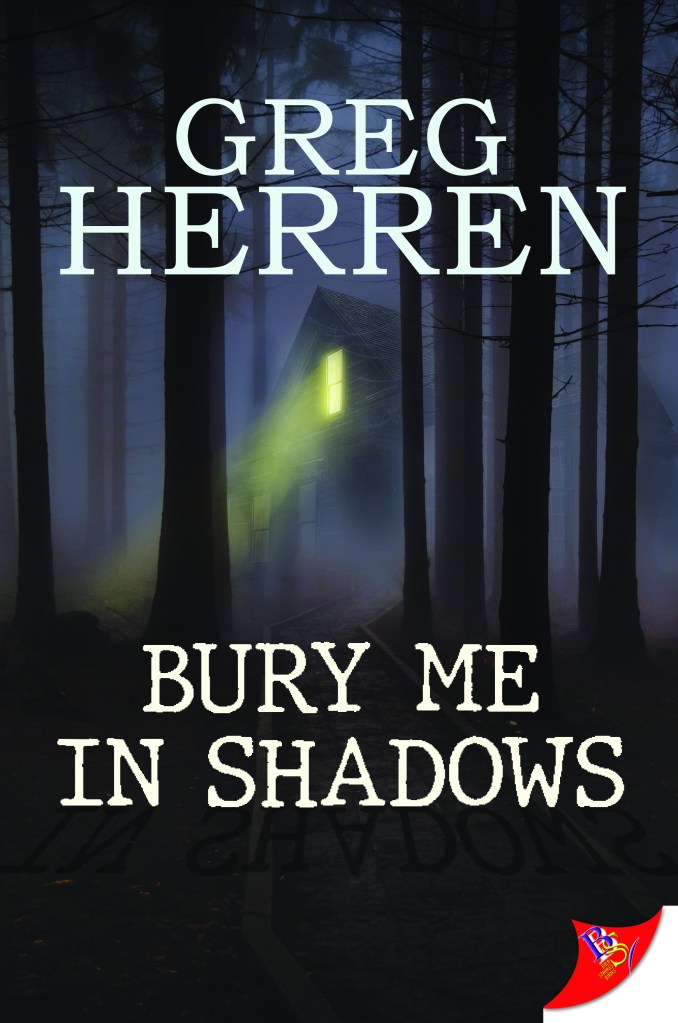
My grandmother used to tell me wonderful stories when I was a kid about my family history and the history of the county we’re from in Alabama. As a wide-eyed innocent and naïve child, I believed everything she told me, and always wanted to fictionalize those stories. I was in my early twenties when I wrote a short story based on one of those tales; about the Lost Boys and the evil renegade Yankee soldier who burned the house down and presumably murdered the two boys of the house. The story was called “Ruins,” and while I was pleased with the story I felt the story was too short; there was more to the story than I could fit given the length restrictions. I always thought of the story as a kind of an abstract or lengthy synopsis of the novel I would write someday. But it was also a Civil War story, and I wasn’t sure how I could write a Civil War ghost story without being, frankly, offensive. I tucked it away in a drawer and would think about it from time to time–usually when driving through Alabama on my way north–but still couldn’t wrap my mind around it. I worried and fretted and feared and doubted myself constantly. I told the story once to another writer friend of mine, and she urged me to write it…in fact, she hounded me about it for about twelve or thirteen years before I decided to take a deep breath, put on my big boy pants, and take that risk.
“Was this an accident, or did you do it on purpose?”
I opened my eyes to see my mother standing at the foot of my hospital bed, her heart-shaped face unreadable as always. The strap of her Louis Vuitton limited edition purse was hooked into the crook of her left arm. Her right hand was fidgeting, meaning she was craving one of the rare cigarettes she allowed herself from time to time. Her dove gray skirt suit, complete with matching jacket over a coral silk blouse, looked more rumpled than usual. Her shoulder length bob, recently touched up as there were no discernible gray roots in her rigid part, was also a bit disheveled. She wasn’t tall, just a few inches over five feet, and always wore low heels, because she preferred being underestimated. Regular yoga and Pilates classes kept her figure slim. She never wore a lot of make-up, just highlights here and there to make her cheekbones seem more prominent or to make her eyes pop. Looking at her, one who didn’t know better would never guess she was one of the top criminal attorneys in the country or that her criminal law classes at the University of Chicago were in high demand.
I could tell she was unnerved because she’d allowed her Alabama accent to creep slightly back into her speech. She’d worked long and hard to rid herself of that accent when she was in law school, because she said no one took her seriously when she spoke or else thought she was stupid once they’d heard it. The only times she used it now was when she wanted someone to feel superior to her, or she’d been drinking, or she was upset.
It worked like a charm getting her out of speeding tickets.
I hadn’t been asleep, nor had I been awake either, hovering in that weird in-between state where it seemed like I’d been living for the last three or four days.
“It wasn’t on purpose.” I managed to croak the words out. My throat was still raw and sore from having my stomach pumped. My lips were dry and chapped, and my eyes still burned from the aftermath of the insane drug-and-alcohol binge I’d gone on in the aftermath of the break-up with fucking Tradd Chisholm. “It was an accident.” I shifted in the hospital bed, trying to sit up more, the IV swinging wildly. The memory of that last and final fight with Tradd flashed through my head.
The main character in the original short story was only twelve, and the cousin he shares the adventure with was supposed to be fourteen. I was writing a lot of short stories at the time set in Alabama, with the idea to tie them all together in some ways–and was also reading a lot of Faulkner at the time, so yeah, a fictional county in Alabama where all the stories were set and were interconnected was kind of derivative; I kind of smirk to myself now when I think about the hubris of aspiring to be Faulkner-esque, especially at that time, when everything I wrote was pretty much garbage. Ah, the hubris of youth. But I did write a lot of “Corinth County” short stories back in the day, and while the writing may have been atrocious, the idea behind them and the core themes were good and had potential.
When I started thinking about turning the short story into a novel, I soon realized that the characters were too young, so I aged them. I originally aged them to teenagers, and in the first attempt at a rough first draft, I got about two chapters in with my main character, Jake, being banished the summer before his senior year to help take care of his dying grandmother back in rural Corinth County. The original first line was something like The summer before my senior year my mother ruined my life. Properly self-absorbed, narcissistic, everything’s about me teenager, right? My original thought was he was a student at a Catholic all boys’ school, was openly gay, and had a crush on a classmate…and having just found out said classmate had gotten a summer job lifeguarding, managed to get himself and his female best friend jobs at the concession stand at the pool, so he could be around his crush and see him all the time. His banishment for the summer had to do with his lawyer mother accepting a co-counsel role in a major trial in California and being gone; she has also kicked out her fourth husband (a much younger tennis pro) and so she can’t leave him alone in Chicago for the summer. The other option was staying with his father and his second family in the suburbs, which was equally unappealing, so he choses Alabama…and is picked up at the airport in Birmingham by another teenager who’d been taken in by Jake’s grandmother when his own mother died. This character, Kelly Donovan, was originally meant to become close with Jake and participate in all the mysteries Jake encounters at his grandmother’s. I also wanted to play with Jake’s being strongly attracted to Kelly, who is some kind of distant cousin, and straight.
But I scrapped that beginning, too. Would a young senior in high school in rural Alabama, a star athlete, be so accepting and open to Jake’s sexuality? Probably not…and he would also be worried and nervous about his patron’s grandson coming to stay there. As I delved more deeply into Jake’s character and who he was, I started thinking it made more sense for him to be older. Why not have him be a student at Tulane, and living in New Orleans? But if he was living in New Orleans, what would make his mother exile him to rural Alabama for the summer? And the more I thought about Jake…the more I realized there was underlying trauma in his life. I didn’t want his mother to be homophobic, but her mother, the dying family matriarch? Yes, yes, that worked better. I made him a loner, but someone who didn’t want to be a loner. He didn’t ever feel like he had friends at his Catholic school; and coming to Tulane he met his first, real boyfriend…which ended up being a disaster. And then realized, what if he goes on a binge–easy enough to do in New Orleans–after a bad break-up and winds up in the hospital? And if he had tried once before to kill himself…yes, yes, this is a MUCH better backstory and pulls the actual plot of the book together much better.
I also knew I wanted to touch on themes of homophobia in the rural South, as well as the horrors of modern-day Southern racism and the South’s racist past.
When I started doing research for the book, I soon learned that many of the old family/county stories my grandmother used to enthrall me with were all apocryphal; almost every region of the South has some version of the stories she told me; the story of the Lost Boys, a local legend which was the foundation of the book, pops up all over the old South–almost every state and every region of the old Confederacy has a version of the story, complete with renegade Union soldier (think Gone with the Wind), and so I decided to address that trope in the book while also using it. But I also added another layer to the story–the Lost Boys may not be the only ghosts at the old Blackwood place, which has a tragic and bloody and horrifying history, as does the entire county. I also started lessening Kelly’s importance to the story–he’s still there, he’s still a character who also gets a big reveal later in the book–but Kelly’s behavior to Jake is abominable and homophobic, establishing some conflict between the two of them as well. Part of this was because of the change in the story, but then I needed to partner-in-crime as well as potential love interest, so I came up with Beau Hackworth (the Hackworths are a large and poor family in the county; I’ve used that family before in stories; my main character in Dark Tide was a Hackworth from Corinth County).
And of course, when you’re writing about a Southern rural county and the Civil War, you cannot avoid the issues of race, prejudice, Jim Crow, and enslavement. I wanted to make it very clear that this wasn’t some “Lost Cause” romantic fantasy that perpetuates the lies and mythologies that sprang up in the South decades after the actual war ended. Jake’s mother raised him not to be racist or prejudiced, as she tells him several times, “We do not take pride in the fact our ancestors enslaved people. The heritage is hate, and don’t ever forget that.” I did wonder if I was being too generous to white people with this, but on the other hand I wasn’t interested in writing from the perspective of someone racist. I will be the first to admit that I worried about being offensive in this book; the last thing I would ever want to do is be insensitive on the subject of race. But I also knew and trusted my editor enough to know she wouldn’t let me get away with anything, and I also had to trust myself to handle it all sensitively. There were a couple of things she saw in the manuscript that could potentially be considered problematic–but they were also easily fixed.
I was very pleased with the end result, and I do think it is one of my best books. I was absolutely thrilled when it was nominated for two Anthony Awards last year at Bouchercon.
And it also goes to show that you cannot play it safe, and things that scare you are precisely the things you should write about .
(For the record, I will add Cheryl A. Head’s Time’s Undoing is one of the best crime novels ever written about racism in Alabama. Beautifully written and brilliantly told, it should really be required reading.)
 Queer and Loathing in America