Rocky Mountain High

I was really into soaps in the late 1970s and up until the mid 1990s or so. My fandom, how it came to be, and how much of an influence soaps were to me as a writer is a topic for another time, perhaps after Pride Month is over because it’s really not Pride related, except for how they related to me as a gay man. But by the late 70s, I was strictly an ABC guy: All My Children, One Life to Live, General Hospital and Edge of Night, with me having a special attachment to Edge, which will also be a subject for another time. But soaps were strictly a daytime medium for a very long time–at least until Dallas premiered. Originally, each episode was a stand-alone but the show very quickly moved to the serial format, and the ratings went through the roof–and of course, “Who Shot J.R.?” was a global phenomenon (I figured it out early on–when I saw that Mary Crosby was only contracted for four episodes in the following season and the reveal that the shooter’s identity would be revealed in episode 4…it wasn’t too big of a leap from there to “it must have been Kristin”. I was right.), and Dallas ruled the ratings from there on out..

The success of Dallas, of course, lead to copycats from other networks trying to cash in on the new craze; television is nothing if not a place where imitating success is seen as a no-brainer; the irony was that so many of the other soaps that launched at night in the wake of the huge success of Dallas…failed for the most part. The only post-Dallas night time soaps that enjoyed long runs were Knots Landing, Falcon Crest, and Dynasty.

I first learned of Dynasty in a People magazine profile on Linda Evans, who at the time was best known as the woman John Derek left for Bo (who was a huge star at the time), and it mentioned she’d done a two hour pilot for a night time soap called Oil. By the time the fall previews started dropping, the show’s name had been changed to Dynasty, and there was going to be a gay character on the show. Once I read that, I knew I was going to watch. And then the premiere of the show was delayed months because of a strike. The show also had some other cast members I knew of and was interested to see–Wayne Northrop, who’d played Roman on Days of Our Lives; Pamela Sue Martin, of Nancy Drew and The Poseidon Adventure fame; and of course long-time television star John Forsythe as Blake Carrington, the patriarch of the family.

The first season was interesting enough, but the show didn’t really catch fire until the second season, when Joan Collins joined the cast as Blake’s first wife and mother of his children, Alexis. By the end of the season Dynasty had climbed from middling ratings to the Top Five, and it had become must-watch television.
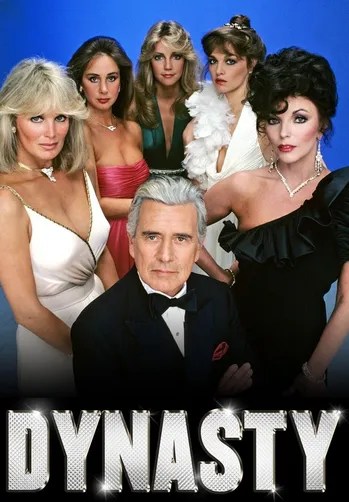
But my primary interest was the character of Steven.
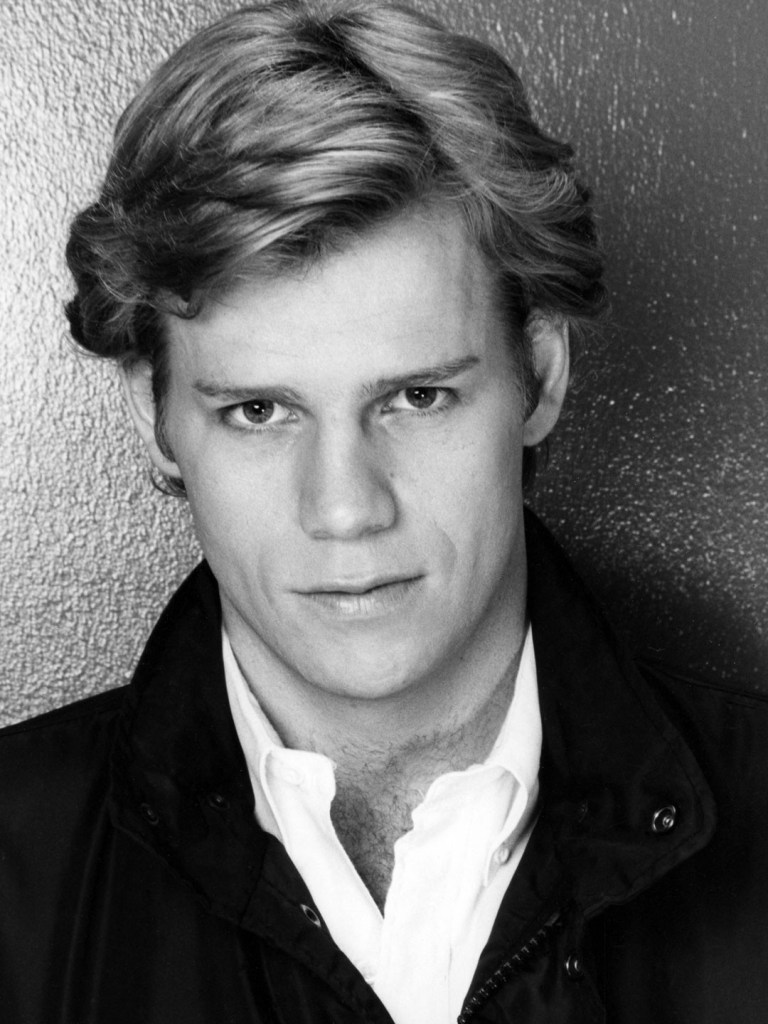
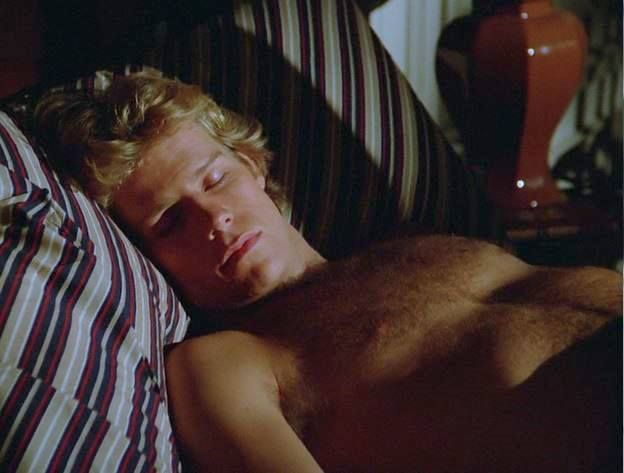
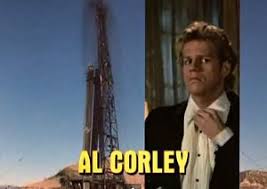
Originally played by Al Corley, Steven’s storylines were made clear in the pilot; Steven is coming to terms with his sexuality, coming back to Denver for his father’s wedding despite the fact that Blake is homophobic and he’s been living with a man (Ted Dinard) in New York for the past few years. Steven still isn’t entirely sure of his sexuality (it never occurred to anyone in production that he could be bisexual; he only had a binary choice during the entire run of the show), and decided to go to work on an oil rig to “become a man.” His co-workers pranked and hazed him for being gay at first, and then tried to “straighten” him out by buying him a hooker, which doesn’t go well. He then embarks on an affair with his boss’ wife Claudia (played by Pamela Bellwood, who was probably one of the best actresses in the cast), who was also mentally ill and her sanity wavered throughout the run of the show. Ted comes to Denver to get Steven to come home, but Steven’s decided to stay in Denver and try to get on with his life and ends things with Ted. Unfortunately, Ted comes to the Carrington estate (which was ‘played’ by Filoli, gorgeous place that was also the ‘setting’ for Laurie R. King’s superb Back to the Garden) to say goodbye, Blake comes home already angry, becomes angrier to learn Ted is in the house, rushes upstairs to see them hugging goodbye, and in a homophobic rage pulls Ted off Steven, punches him and knocks him down–only he is killed when he hits his head on a fireplace guardrail–and now Blake has to go on trial for murdering his son’s gay lover; and now the entire world nows.

Alexis returned for the trial, entering the courtroom wearing a veil, and Fallon gasps, “oh my god that’s my mother” setting the stage for season two, and night time television’s greatest villains, Alexis.

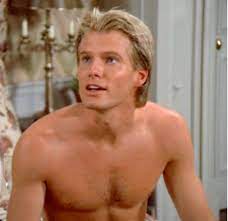
Season 2 was disappointing in terms of Steven as he spent season two trying to be straight, getting involved with and marrying Sammie Jo (Heather Locklear in the role that made her famous), but eventually telling his entire family that he’s gay, he’s tired of trying to be someone he’s not, and leaves Denver. He is reported killed in a oil rig explosion in the south China Sea in season three, which was their way of recasting–“plastic surgery so he doesn’t look the same”–and he was replaced by Jack Coleman (at the time best known for playing a serial killer on Days of Our Lives).
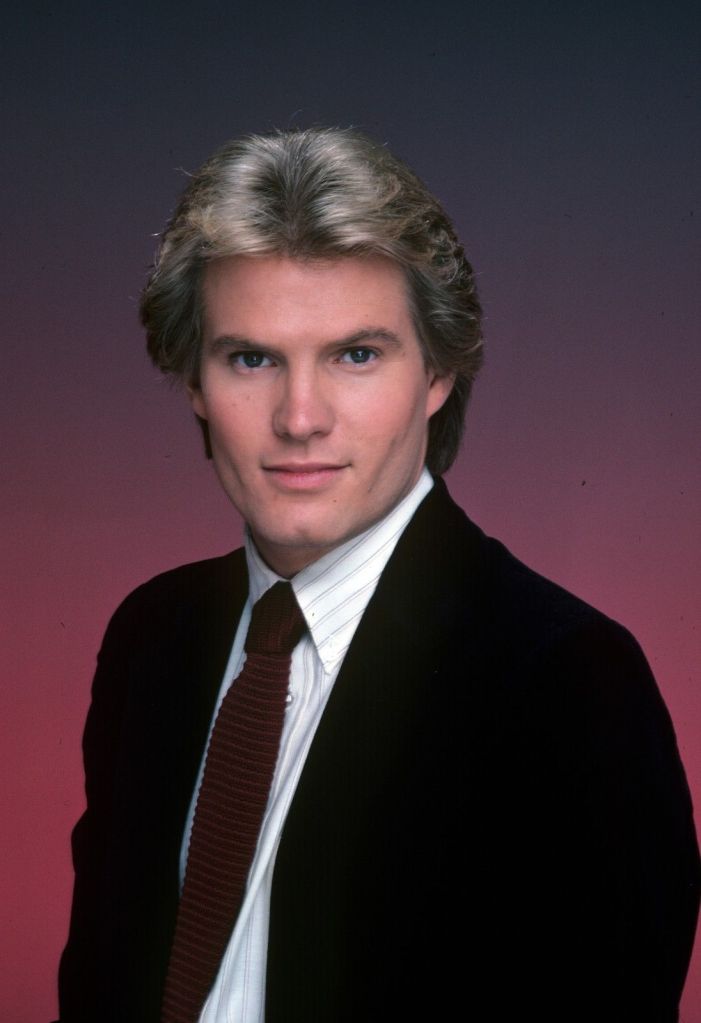
Coleman was fine, but he was different, and the character changed to match the actor. His entire storyline for the rest of the series involved him getting married, ruining that by getting involved with another man–before deciding what to do with him again for the sake of storyline; showing how hard it was to actually integrate someone with a same sex attraction into the cast of a soap. Every man he was involved with was a new character, and soaps–whose mainstay bottom line is thwarted romances, marriage and divorce–really didn’t know what to do with a non-straight character, other than throwing him into relationships with women (???) to have them end badly and so on.

When the reunion film was done in the 1990s, Al Corley returned as Steven (no explanation of why he looked the way he did before the surgery) and he’d made peace with his sexuality, again living in New York happily with another man and raising his son (oh yes, the gay character also impregnated one of his ‘women’)…while never once raising the possibility of bisexuality; I guess getting the 1980’s home audience vested in a gay character was risky enough without bringing in bisexuality–which tells you where we were as a country in the 1980’s…and we shouldn’t also overlook the fact that it was Dynasty that brought HIV/AIDS to the forefront of conversations in this country. Rock Hudson’s AIDS diagnosis became public shortly after he appeared on the show, and there was a lot of panic because he’d kissed the Linda Evans character–had he infected her? (We didn’t know as much then as we do now; now that fear is laughable but it was palpable back then because there was so much ignorance about it then, thanks to the Reagan Administration and the deeply embedded homophobia in post-war American culture.)

I started rewatching the original show once it was available for streaming, and that first season really is a slog; Blake was the primary villain in the first season (Alexis took his place, turning him into a more traditional soap hero–flawed but a good person at heart) and he just didn’t have the gravitas to relish being evil the way Joan Collins jumped in with both hands and feet), so while I was enjoying seeing the more honest and realistic to life way Steven and his dilemma was displayed in that first season–even the affair with Claudia made sense the way it was written–they really didn’t know what to do with him after the recast, and he descended from the fully developed realistic character Corley played to the two-dimensional soap hero he devolved into after the recast.

But…it was still pretty daring for the 1980s, and I did appreciate the attempt at representation. I know the reboot, which I didn’t watch, made Steven straight up gay; even gender swapping Sammie Jo by turning her into Sammy Joe. Progress is progress, and we cannot ever dismiss out of hand the brave attempts at using homosexuality and familial homophobia as a source for story; they were fighting the network censors, the right wing, and most of the country was homophobic, too.

They did the best they could and it was important at the time…even if it doesn’t hold up well under modern understanding.


Keep on Loving You

My friend Laura often says there’s no such thing as a guilty pleasure; that we should embrace anything and everything that provides us with entertainment because life is so damned fucking hard that we such take our joys and pleasures wherever we can find them and to hell with feeling guilt about any of it. It’s a wonderful theory that I’ve tried to adapt, but yet….somehow my reading and viewing choices inevitably make me feel guilty about some of them. I mean, when most writers-to-be were reading Faulkner and Hemingway and Barry Hannah and that other one–ah, yes, Raymond Carver–with an eye to Writing The Great American Novel, I was reading Harold Robbins and James Michener and Sidney Sheldon and any number of “trashy” novels.

My tastes have always skewed low, I’m afraid.

Take, for example, the Real Housewives shows.

Yet…something has changed.

I used to watch all the shows religiously, but finally I hated Teresa Guidice so much–and the fact that she kept her job after going to jail–pushed me away from watching New Jersey. I tired of Nene Leakes and her antics, so put Atlanta on the back burner; never watched Dallas or started Salt Lake City, and while I enjoyed Potomac, never could seem to remind myself to watch. I had eventually gotten to the point where I was only watching two: New York and Beverly Hills, but these current seasons of each have me wondering why do I still bother?

I bailed on the previous season of Beverly Hills before it finished–I had little to no interest in watching Brandi Glanville’s desperate attempt to gain relevance and get back on the show by slandering Denise Richards, and watching the rest of the cast gleefully torturing Ms. Richards over something that could have actually affected her custody struggle with her insane ex, Charlie Sheen was really not the kind of trash television I enjoy watching. I also really started hating Lisa Rinna, whom I’d always enjoyed before, to the point where all I want to do when I see her face is change the channel–let alone how grating the sound of her voice has become.

And while I did watch New York all the way to its bitter end last season, I found myself not really caring about their return this season, and yes, it took me awhile to get interested in even giving them another shot. I was actually of the mindset that, with all the things going on in the world and the pandemic and all, giving these women any more of my time was a waste, and have begun to think that the entire idea of these shows has run its course. In a time where a pandemic is killing people, anti-vaxxer ignorance is making things worse, and the country is being ripped apart over a significant part of the nation’s inability to look beyond themselves and have empathy for people being systemically oppressed…it’s hard to shut that reality off and enjoy the “reality” of spoiled, privileged women wasting their lives arguing over petty bullshit–particularly ones that are so self-absorbed to such a high level of narcissism that it really begs, if not for them to be institutionalized, but at the very least kept away from other human beings for the protection of society as a whole.

And that bothers me. Why has my opinion about these shows changed so dramatically? Is it the pandemic and all the racial reckoning we’ve been dealing with as a country and as a society? Or have I simply outgrown them?

It’s also occurred to me since I wrote about them in a (very thinly) veiled way in my last Scotty book–renaming the series The Grande Dames–that I can really no longer justify watching anymore. I definitely try to subscribe to Laura’s mentality about guilty pleasures, but as I have watched this season’s episodes of both shows, I find myself bored and not enjoying them so much. All shows tend to have a natural tendency to become less interesting the longer they run, and reality shows are no different from their scripted brothers and sisters. These shows are rather like soaps–that comparison has been made before by a lot of television and cultural critics (including the horrible Camille Paglia, which proves the old adage about stopped clocks)–which is why soaps regularly wrote characters out and brought in new ones to try to stay relevant and fresh. The night time soaps eventually ran out of steam–popular characters couldn’t be let go, and how do you keep the villains and heroes fresh when they continually have to make the same mistakes, over and over again, as the stories eventually end up repeating themselves?

I do think that’s what is happening, in my mind, with the Real Housewives…they’ve run their course, the long-running characters’ awful behavior and mistakes get repeated, over and over again, with every new cast member, and it’s hard to watch people behaving the same way for decades and never really learning and growing from the experiences. I guess that isn’t why people watch these shows–for character growth and development–the key to their popularity is how awful the women actually are, and how lacking in self-awareness…but having spent most of my adulthood shedding toxic people from my life as soon they make their toxicity known, it’s weird to watch shows for years about people who are primarily toxic at their core, with few, if any, redeeming qualities. But a show about a bunch of lovely women with money who are decent and do good things with their money wouldn’t be interesting to watch, either. It’s the conflict we watch for, I suppose, and the bad behavior, and deciding who’s right and who’s wrong and being entertained. And sometimes these shows are painful to watch as they go to really dark places occasionally–as I was watching New York yesterday, I found myself thinking about one character–who is clearly in a very bad place and when she drinks too much she blacks out and her behavior is horrifying–and wondering why no one in production, or no one else in the cast, is stepping up and trying to get her the help she so obviously needs?

But this out-of-control behavior drives ratings, I suppose, and that leads to the next question, is it okay to watch these women, who hunger for fame and attention, debase themselves and allow themselves to be debased for our entertainment?

I think that is what is driving my current discomfort with watching–and also driving why I am questioning having ever started watching them in the first place.

I also suppose as long as I continue to watch I can’t really criticize the shows, but I suppose I can critique them as well as the reasons why I watch them.

I also have a real problem with this season’s Beverly Hills primary story; the Erica Girardi/Erika Jayne “was she complicit in her husband’s fraud” story, playing out in real life as we watch how it played out when the story first broke…doesn’t sit well with me. Her decision to continue being the cold-hearted snake she plays on the show on social media–with not a bit of concern for the victims of her husband’s fraud; instead claiming martyrdom/victimhood for herself–will inevitably turn up in court when it comes to that; I cannot imagine what the fuck her lawyers are thinking letting her still have access to her own social media or not advising her to keep her fucking mouth shut while in front of the cameras is, at the very least, legal malpractice. If she even showed the least, smallest bit of concern for her husband’s victims…as opposed to making it all about her and what she’s “lost” (sorry your Sugar Daddy can’t steal more money to buy you jewels with)…I could be sympathetic….but yeah, go fuck yourself, grifter.

But given the state of our society and culture, it wouldn’t surprise me in the least if the grifting Girardis get away with their crimes. But if there’s no reckoning of any kind for her, and she remains on the show…I won’t be watching in the future.

At least the Giudices on New Jersey were white collar criminals who just didn’t pay their taxes. The Girardis–and Jen Shah on Salt Lake City–belong behind bars.

And maybe–maybe it’s time we stopped celebrated bad people behaving badly on television. I don’t know. But I am terribly disappointed with the producers for seeing ratings, instead of suffering. IMAGINE being one of Tom Girardi’s victims and watching her play victim? It turns MY stomach, and I am not one of their victims.

I don’t know. Maybe I can find joy in these shows again. But for now…I really don’t see how I can justify watching another season of either.

Free Ride

So, where were we?

I managed to finish that enormous volunteer project, with lots of thanks due to the others who worked on it with me; it’s so lovely to not have to worry about being organized because you are working with the “ur organizer” of all time, frankly.

Whew. I do know some pretty amazing people, you know?

I need to get started revising the Kansas book, but have just been so worn out and tired lately…it’s a big deal to finish a draft, a short story, and an enormous volunteer project all at the same time, you know? I now have to write an essay, a short story, and get to revising this manuscript but at the same time…it’s kind of lovely knowing I got all that other shit done.

I also managed to do something to my back yesterday at work–sitting in my chair wrong–and it’s been aching ever since. I used the heating pad last night (using it again this morning) and it’s horrible, of course–I can’t imagine what I did to make it hurt, but then…this is just another one of those lovely surprises about getting older: new aches and pains every day and you don’t know where they came from or why or what caused it.

But my book comes out in less than a week, so I should probably talk about it some more, right?

As I mentioned yesterday, I pretty much only regularly watch The Real Housewives of New York and Beverly Hills. I do keep up with Atlanta, and will check in on Orange County every now and then. I tried both Dallas and Potomac (I never watched DC or Miami), but didn’t get through the first seasons–but I’ve heard they’ve become more entertaining, so might check them out. I’ve not watched New Jersey in a long time; I really gave up on it after Caroline left the show; I know she was problematic to a lot of viewers and she did get on my nerves from time to time–but when she left and the show centered Teresa, I was down with it. While watching these shows, and having my loyalties and allegiances shift over the seasons, as the producers manipulate story-lines and decide what the audience will and won’t see, has been interesting. I’ve also been interested in watching the cultural phenomena around the Real Housewives, and while I rarely (if ever) agree with Camille Paglia, she is also a Housewives fan, and in an interview, when the shows came up, she compared them to soaps, and in particular, the popular prime time soaps of the 1980’s: Dallas, Dynasty, Knots Landing, etc. It was an interesting comparison, and not one I agreed with immediately, but the more I think about–and the way people talk about the shows–the more I think she was right. The prime time soaps were addictive, considered guilty pleasures no serious viewer would ever watch, and while several of them were driven by strong male leads, the women were centered and usually more interesting. There were never any male characters as interesting as the women on Knots Landing, and Blake might have been the main character on Dynasty, but the real driving force behind the show were the two women main characters, Krystle and Alexis. The housewives appeal to, like the prime time soaps, primarily women and gay male viewers. When I wrote my thesis on daytime soaps in college, one of the cultural impacts I wrote about the shows having was the decline of what was called “women’s pictures”–movies centering women characters and female stars. Whereas Bette Davis and Joan Crawford and many other women were big stars of the 20’s, 30’s, and 40’s, it was the 1950’s and the rise of television that not only killed the studio system, but also killed off the popular genre of women’s pictures…and I do think that was not only due to television, but because all of daytime television centered, and was focused on, women. Women no longer had to pay money to go lose themselves in a fantasy world focused on strong women facing difficult situations heroically; they could spend all day watching heroic women facing difficult situations–and situations they could relate to more–Monday through Friday. The decline of soaps–both prime time and daytime–created another vacuum, and Bravo and these shows stepped up to fill that void.

There have been already some terrific books centering reality television; Jessica Knoll’s The Favorite Sister was, like her debut novel Luckiest Girl Alive, absolutely fantastic. But as I said, I thought it would be interesting to write my own version of a murder mystery centered on a reality show filmed in New Orleans. I’m fascinated by these people, who are willing to have their lives and interactions be filmed for the entertainment of the masses, be judged for it on social media and in recap columns, and ripped to shreds on message boards and Facebook groups. Some of them use their reality show to promote not only themselves but their businesses–the most famous of these is Bethenny Frankel, who became rich through her various Skinnygirl enterprises, all of which were boosted by her popularity on reality television, and Lisa Vanderpump, who used her reality fame to promote her restaurants in Los Angeles, even getting a spin-off show centered around the staff at one of her restaurants, Vanderpump Rules, which is even more popular than the housewives (I abandoned that show somewhere after season two). I think the Frankel/Vanderpump model is the golden ticket these women are looking for when they agree to be cast; but not everyone is as smart about controlling their image as those two are–nor have the kind of influence on production as they enjoy.

My fascination with these women, and their shows, and who they are and why they would do such a show, gave birth to the idea that eventually became Royal Street Reveillon. I liked the idea of Scotty being a fan, and interacting with the women on the New Orleans show while trying to get to the bottom of a murder…or two, or three. It was also kind of fun to write, frankly, and the older i get and the more I do this, the more important it is to me to enjoy myself while I am doing it.

And on that note, it’s back to the spice mines with me. Have a lovely Thursday, Constant Reader.

270551_363631417062585_321017710_n