Take Time to Know Her

I finished reading  Cleopatra’s Shadows last night. Over all, I enjoyed it, but with all due respect to Emily Holleman, I didn’t love it. I already knew the story of Cleopatra’s sisters, Berenice and Arsinoe, so I wasn’t expecting to learn anything new from it, so that wasn’t the issue I had. I thought it was interesting that the book focused on the brief period of time when Berenice deposed her father and took the Egyptian throne. Usually, fiction about Cleopatra generally begins with Julius Caesar’s arrival in Alexandria and her being snuck into his presence rolled up inside of a rug; which, admittedly, is quite a romantic beginning and you can’t really go wrong starting there. The first book I ever read about Cleopatra–a bio for kids called Cleopatra of Egypt, written by Leonora Hornblow and illustrated by W. T. Mars–began with her fleeing from Alexandria out of fear her brother/husband Ptolemy XIII was going to kill her; and she rose an army and started a civil war. This war interrupted grain shipments to Rome–which was in the midst of its own civil war, between Pompey and Caesar. Caesar had just defeated Pompey, who fled to the court of the Ptolemies; Caesar pursued him there and also aimed to settle the Egyptian civil war. Ptolemy famously beheaded Pompey, thinking he would please Caesar by doing so; instead, he pissed him off, which made Caesar more inclined to be sympathetic to Cleopatra, who was actually Cleopatra VII. But one of the most interesting things to me about Hornblow’s book–which was for kids, mind you–was that she talked about Berenice’s rebellion and usurpation, as well as that of Cleopatra’s younger sister, Arsinoe–and how Cleopatra was present in Rome for the Roman Triumph in which Arsinoe was marched, in chains, behind a chariot…and that was the motivation behind her own suicide when she lost to Rome; she refused to be subjected to the same humiliations in front of the Roman mob that her sister endured.
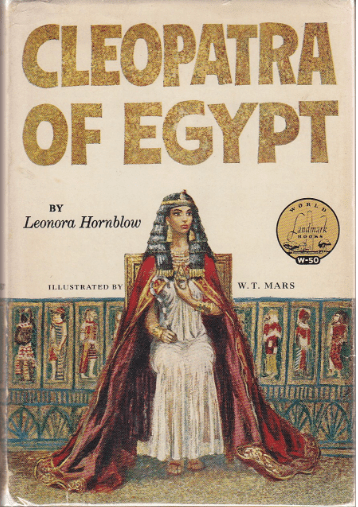
cleopatra of egypt

I found a copy of it on ebay a few years back, and bought it again. I kind of always wanted to write about both sisters, honestly.

So, obviously, I was very excited to read Cleopatra’s Shadows.

It isn’t that the book wasn’t well-written; it was, and I am sure, as Holleman is a historical scholar, it was undoubtedly incredibly well-researched. What was disappointing to me was that Holleman didn’t give either sister agency. The Ptolemy dynasty,  Macedonian Greeks descended from Ptolemy, one of Alexander the Great’s generals who was rewarded with Egypt after Alexander’s death and the break-up of his empire, was known for it’s intelligent, highly educated and ruthless women. Like the Egyptian pharaohs of old, the Ptolemies married their sisters to keep the dynasty pure, and while there aren’t a lot of records–the burning of the Great Library at Alexandria to blame for this–there is enough evidence that the sister-wives were actually, in many instances, co-rulers and just as ruthless as the males. Each male pharaoh took the name Ptolemy; their sister/wives/queens were named either Cleopatra, Berenice, Arsinoe or Selene–or a combination of two of those names. Again, there is also evidence that Ptolemaic queens disappeared–probably murdered by their husbands, and the ‘pure bloodline’ wasn’t quite so pure, as the unions were sometimes sterile and other women, concubines, were brought in to bear children for the pharaoh. The plotting and machinations of the Ptolemaic court, the struggles for power, are endlessly fascinating to me; even in the children’s book which was my first introduction to the most famous (notorious) Cleopatra this was very clear.

So, the characters of Berenice and Arsinoe as Helleman chose to depict them were disappointing to me. Berenice was, per this novel, the only true child of a royal brother/sister pair; and her father, Ptolemy XII Auletes, the Piper, was not a popular ruler. The premise of this story is that Ptolemy tired of his sister/wife Tryphaena and her inability to bear him a healthy son, so he banished her from court and replaced her with a beautiful concubine, who bore him four children–Cleopatra, Arsinoe, and two young males both named Ptolemy. Berenice’s revolution and overthrow of her father was apparently more based in the bitterness of mother and daughter in being supplanted by the concubine (never named) and her children more than anything else. And while it is all too frequently true that kingdoms and history were shaped by family disputes, rivalries, and romances/loves/jealousies, but I always kind of admired Berenice. The strong woman I always imagined she must have been, strong enough to raise a rebellion against an unpopular king, and to be successful, was not the character Helleman wrote about, who was vacillating, weak, and insecure.

Likewise, the younger sister, whose point of view the story is also told from, Arsinoe, is completely obsessed with her older sister Cleopatra, and barely a page in her point of view passes without so mention of how much she misses her sister. She never thinks about either her father or her mother, and given she is a child, that’s a bit more understandable. But Arsinoe eventually leads her own rebellion against Cleopatra’s rule, so clearly she too is an ambitious young woman as well as intelligent one, one foolhardy enough to rise the Egyptian people up against the Roman legions who have come to Alexandria to back up her sister, and I get no sense of that strong woman in this child. Things just happen to Arsinoe, and while there are slight hints of the politician in her being trained and brought to the fore in the lessons she is learning at the court of a sister who despises both her and her mother, for the most part she is just someone things  happen to–and she never grasps the idea that she should stop being passive and maybe make things happen. The Ptolemies were notoriously ruthless in killing people and relatives who might pose a threat; a pragmatism that may seem horrific to our modern-day sensibilities of family ties but something that was absolutely necessary for them to keep their thrones and their power secure. In fact, Berenice’s advisors want her to kill Arsinoe, but she refuses, and never gives any reason for doing so, which weakens her character still further.

It’s a good read, and it’s well-written and interesting, but I was disappointed with the characters, frankly. I can recommend it to anyone who enjoys historical fiction, and is interested in the period.

And it did revive my interest in the Ptolemies.

And now, back to the spice mines.

Ain’t Nothing Like the Real Thing

I had a great workout this morning; the first time in a long time I can say that. Usually, I am so tired and brain-dead I just go through the motions, whining, but this morning, after some good sleep, I was wide awake and rarin’ to go, and also enjoyed it for the first time in a long time.  I didn’t sleep well Monday night; never fully going to sleep, spent most of the night in that horrible half-awake state, and was exhausted all day yesterday, which was a long work day for me culminating in a late night of bar testing. I also had trouble falling asleep last night, but I think I wound up with about five full hours of deep, restful sleep. I woke up before the alarm went off, but even that small amount of good sleep was what my body needed.

I don’t mind not getting eight hours, as long as I get some good sleep.

I was so tired yesterday I couldn’t focus, so of course, got nothing done that I needed to get done. That always sucks, of course, but I am hoping that with the rest, and the endorphin rush I have from working out, that I’ll be able to plough through a lot of things today. I want to finish reading Cleopatra’s Shadows, and then I am going to read Universal Harvester, by John Darnielle. I also am going to start restructuring the WIP, which is going to be probably an odious chore, but I am going to do that before I start the revision/editing process with it to get it ready. In an ideal world, it will be finished by the end of this month; in a realistic world more like the end of June. I also want to get the next draft of “Quiet Desperation” finished. (I have an idea for another story I’d like to get started, “In Lieu of Flowers”, so the sooner I can get the one finished, the sooner I can start working on the new one.)

I’m also thinking about the next book I want to write. I know, it’s crazy to start thinking about the next book I want to write while I am still working on the current WIP, but there are two I am toying with in my head–one would be called Girl X, the other You’re No Good–and I’ve had these ideas floating around in my head for quite some time now. (There are always lots of ideas percolating in my head at any time, in case you haven’t noticed by now.) So I am just going to brainstorm those whenever I get stuck on something else I am writing; both are, ironically, stories about the relationships between mothers and daughters–which is odd, since I am neither. But hey, what can I say?

Well, here’s a hump day hunk for you.

hump day hunk


Jumpin’ Jack Flash

Well, I finished the outline yesterday and am actually feeling pretty good about it. As I finished outlining the last chapters, I began to see with a much greater clarity what the problems with the manuscript were, the changes that needed to be made to it, and what would, in fact, make it a much stronger book than what I originally wrote. It’s going to require a lot of work to fix it, frankly–more than I would have preferred–but hopefully it will turn out to be exactly what I wanted it to be.

And that’s a good thing.

Yesterday was one of those days where I didn’t get as much done as I would have liked; I just felt off center and off-balance for most of the day. I’m not sure why that was; one of those eternal mysteries, I suppose. I did have some trouble sleeping last night as well, which sucked because I have a ten hour day of work today including bar testing tonight. Ah, well, I should sleep well tonight, one would think.

We watched the third episode of The Handmaid’s Tale last night, which continues to chill and disturb me. It is so incredibly well done,  and while the men are repugnant, the absolute most chilling characters to me are the collaborationist women. Atwood’s novel was such genius, really, and I love how the show is taking the time to fill in all of the backstories and develop the characters even more so than she did. The not-knowing in her book was particularly chilling, but I think the show is making it a much richer, complex tale–which is also necessary for something that is visual rather than simply read. I am thinking I need to find my copy and read it again.

We also watched a documentary about H. H. Holmes, billed as America’s first serial killer–although I would posit the Benders in Kansas were the first. I first knew of Holmes because Robert Bloch wrote a fictionalized account of his ‘murder castle’ that I read called American Gothic. (I love Bloch, and went through a period where I read all of his work I could get my hands on; Psycho is still one of my favorite crime novels) The documentary was very well done, but all I could think about while I watched was the Benders and wondering whether there were any books about them. I’ve wanted to write about them ever since I first heard about them, when I was a teenager living in Kansas, but am not sure if I want to do it as a historical crime novel, or as horror….or both. Someday!

I’m almost finished with Cleopatra’s Shadows, which I am sort of enjoying, but wish I was enjoying more. I know that sounds like damning with faint praise, because I am enjoying it, but I only have about sixty pages to go, and I will be curious to see how the author deals with the inevitable (I mean, it’s historical fiction, I know what happens) end.

I’m having lunch with a friend whom I haven’t seen in years today before work, which should be a rather pleasant experience. It’s always lovely to catch up with friends.

And on that note, it’s back to the spice mines with me. Here’s a Tuesday morning hunk for you, Constant Reader:

KONICA MINOLTA DIGITAL CAMERA


The Unicorn

Monday morning, and not only a new week but a new month. May, of course, is when the Formosan termites swarm; usually they join us sometime around Mother’s Day, but I saw people posting about them last night on Facebook. Maybe it was the extremely mild winter; hopefully, the early start means an early end. It really does seem like one of the plagues of Egypt when the termites are swarming; our first experience with it back in May 1997 was absolutely horrifying. Even typing about it now makes my skin crawl. We’ve been relatively lucky over the past fourteen years or so; living in the back as we do, we only get a few inside the house and once they do, off go the lights and we light candles.

It really surprises me that there really isn’t anything that can be done with these things.

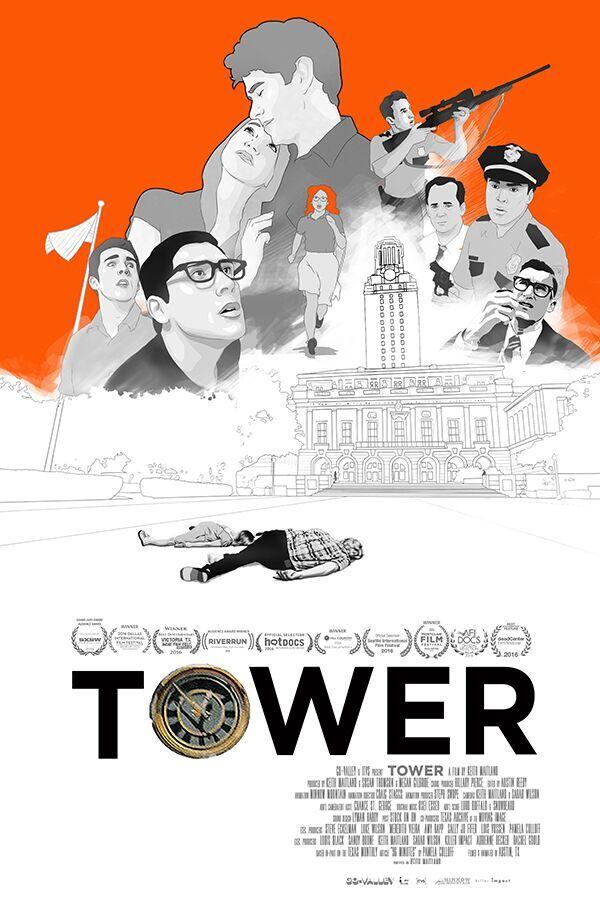
Last night, we watched the documentary Tower, which is about the first mass shooting at  a school, and another episode of The Handmaid’s Tale, which continues to be riveting. I vaguely remember the events of Tower;  I was almost five when Charles Whitman went up to the observation deck of the University of Texas Tower and started shooting people. It really did seem as though the world, and the country, was going crazy. Only a few weeks before the Texas Tower murders, Richard Speck raped and murdered eight nursing students in Chicago, and in retrospect, my mother’s paranoia about our safety–a young woman with two small children and a husband from the rural South living in the big city–really isn’t so surprising. There were also some horrible riots in Chicago in 1996, and of course, the riots in the wake of Dr. King’s murder in 1968 were still to come (in the wake of those riots, some of my father’s relatives who lived in Chicago packed up and moved back to Alabama). The Democratic National Convention was also in Chicago in 1968… and the Chicago Police Department’s brutality against the protestors documented by news cameras for the world to see.

Tower is incredibly powerful, and an interesting way to film a documentary. The filmmakers interviewed and spoke to the survivors, and then used filmed actors the right age to reenact what happened, then animating them, while interspersing actual film footage and photographs from the ninety-six minutes of pure hell the city of Austin, and the University of Texas, endured. What happened that day was horrifying enough, but reliving it through the personal stories of the survivors, and their memories of what happened that day, made it even more heartbreaking and moving. The documentary primarily focuses on the point of view of two of the police officers, one of the students who helped victims, another witness who watched it all happen through the windows of a nearby building (one of the most moving moments is when this woman, a young girl at the time, says, “This sort of thing is a defining moment. I stood there in the window, knowing there were people out there who needed help, but I was too afraid of being shot to do anything. That was when I knew I was a coward.”), the University bookstore manager who climbed the Tower with the three officers to take out Charles Whitman, but the two personal stories that moved me the most was the young paperboy who shouldn’t have even been there, but was filling in on the route for another boy, and had his young cousin riding on his bike with him when he was shot in the leg off his bicycle, and of course, Claire, one of the first victims, eight months pregnant and leaving the student union with her boyfriend, who was killed instantly. Claire’s baby was killed when she was shot in the abdomen, and she lay there, on the cement in front of the Tower, with her boyfriend lying dead near her, unable to move or get helped because anyone who went out there was in the line of fire, roasting on the hot cement in the heat of an August day in Austin. A young woman named Rita ran over to her, talked to her the entire time, lying on the ground near her, keeping her conscious and keeping her alive.

I cannot even imagine how horrible the ordeal must have been for her, or how she has lived with the memories of everything she lost that day for the rest of her life.

24545708303355534

Simply extraordinary.

I’ve almost finished reading Cleopatra’s Shadows–have maybe another hundred pages to go, and also made some serious progress on decluttering the apartment. I’ve decided that I am going to clean out the storage space–both the one over the laundry room as well as the rented one–and try to declutter the Lost Apartment as much as I can. I am only going to  keep research books, my children’s series collections, signed books by friends, and my Stephen King hardcovers. Anything else is going to be donated. If I had more time I might try to sell them on ebay or Amazon, but I just don’t have the time and I don’t want to mess with it, to be perfectly honest. So, every Saturday morning–or every morning when I have to work late–I am going to take boxes out of the storage places, go through them, and start donating. I feel very good about this decision, quite frankly.

I also intend to finish the outline of the WIP this week, as well as a second draft of “Quiet Desperation.”

Onward and upward, y’all.

Bottle of Wine

Oxford, Mississippi is a beautiful little town. I arrived here yesterday afternoon–the drive didn’t leave me nearly as exhausted as the one to Montgomery did, even though it was longer; I suspect it was because I worked late the night before doing bar testing so was already tired. I checked into the Inn at Ole Miss, and then went foraging for dinner as well as exploring.  I had a lovely dinner at City Grocery; shrimp and grits, similar to the dish I make but slightly better–but I also was able to spot the spice differences, as well as the obvious addition of sautéed mushrooms, so the next time I make it I am going to make those alterations and see if it turns out the same way. I washed it down with a lovely glass of a Napa Chardonnay, and then wandered back down to the Inn, taking lots of pictures and getting all kinds of inspirations and ideas for a campus crime novel.I am not sure what the situation here is as far as campus crime, but I am making notes and a file, and perhaps some other time I can come up for a few extra days, talk to some more people, do some research and figure out how to get the story whipped into shape.

I also finished reading Jessica Knoll’s sublime Luckiest Girl Alive, which was absolutely amazing, and I intend to discuss that wonderful novel in more depth once I am home and at a computer rather than writing this on an app on the iPad (don’t get me wrong, this is very cool, and this is the first trip I’ve taken where I’ve not brought the laptop–and I will most likely never bring it again, as the iPad basically can replace it completely, and it weighs significantly less. I also started reading Cleopatra’s Shadows by Emily Holleman, which I am enjoying and focuses on two women who have always fascinated me: Cleopatra’s sisters, Berenice and Arsinoe, and whom I myself have always wanted to write about.

My panel is this afternoon at four; they are picking me up at 3:30 in front of the Inn and I am really not certain what the discussion is going to be about. It’s a month-long event called the Radical South, a counter-event to Confederate History Month (in a moment of irony, I am here at a counter-event to Confederate History MOnth while the Confederate monuments in New Orleans are being taken down; which is also a subject for another time as I have very strong feelings about that myself) and after that I am being taken out to dinner. Tomorrow I intend to rise early, avail myself of the complimentary breakfast here at the Inn (it was sublime this morning), and then check-out and head home, as I have to work tomorrow night. But that also gets me a short day on Thursday, which is also lovely.

The weather is also sublime; rather cool for late April, but not humid, which is always a plus.

And now, I am going back to the spice mines.IMG_1725