The Look of Love

Saturday morning. I was incorrect about the department meeting; it’s later this month (when I’ll be in Bethesda, actually) so I went to the health fair, was told I should increase my exercise (duh, since I do none now) and other than that, I appear to be perfectly healthy–or at least per my vitals and blood work, at any rate.

How fortunate they weren’t testing for mental stability, eh?

But it was a lovely day to work-at-home. It was still cold overnight, but the high yesterday hovered in the high seventies, topping out at a solid, spring-like eighty degrees at one point in the afternoon, which was also nice. I filed and cleaned when taking breaks from work; laundered the bed linens, finished off the dishes, and straightened the rugs as well as sweeping and vacuuming. We got caught up on Yellowjackets and The Mandalorian, and while I was waiting for Paul to come home from the gym, I rewatched this week’s Ted Lasso with the captions on so I could catch things I missed on first viewing (something I do with every episode, as I did with Schitt’s Creek), and I have to say I enjoyed it a lot more on the second viewing than I did on the first. I am very curious to see where the show is going and how it’s going to end–but unlike everyone else, I’ve decided to not theorize about it or jump to conclusions predicated on my interpretation of what I’ve seen; instead I just want to enjoy the ride and trust the writers to do their jobs, which they’ve done superbly on every step of the journey thus far.

I slept really well last night and feel very rested this morning. I have to get the mail today and I should make a small grocery run while I am out, but ugh, how I hate the grocery store lately. It saps my strength and will and makes me want to curl up with Scooter and pretend the rest of the world doesn’t exist anymore out there. There’s not much we really need, to be completely honest; but I need to know what I want to make for dinner this weekend and what I am going to be taking for lunch next week. Decisions, decisions–but it feels good to be rested and clear-headed this morning. I don’t know that I feel particularly inspired this morning, but that’s okay. Once I finish this, I am taking my coffee and repairing to my easy chair to read Scorched Grace, which I hope to finish this weekend.

Anne Perry, a very successful author, died this week. She had an unfortunate past, having committed the crime that Peter Jackson’s film Beautiful Creatures was based on (also known as the film that gave us Kate Winslet and Melanie Lynskey) as a teenager, and served her time. I didn’t know Ms. Perry, nor have I ever read any of her work. This wasn’t out of any sense of oh I can’t possible be supportive of her! She killed someone! but more because they weren’t the kind of stories I particularly enjoy. I did ride in an elevator with her once at a Bouchercon, and she was polite, reservedly friendly (understandable), and seemed kind. I’ve been thinking lately that I’d like to read more historical crime fiction, particularly around the first World War (looking at you, Charles Todd!), but that TBR stack is already way too deep and tall and wide. However, Ms. Perry’s death has, of course, brought all that about her teenaged crime back into the news and onto social media to be rehashed and discussed and, well, frankly beaten into the ground. Ms. Perry’s situation also is key to a broader discussion about criminal justice, and our criminal justice system and how it operates. (Ms. Perry’s crime was committed in Australia, I believe.) I see a lot of people talking about how they don’t believe in redemption, and how they could never bring themselves to support someone who’d done something so terrible, etc. etc. etc. And it’s very true; we as a society tend to look askance at people who’ve served time in prison–and tend to judge them harshly.

How can you believe in a criminal justice system if you don’t believe in the potential of human redemption? I’m not an expert on any of this stuff, let me make that very clear at this point. I am merely examining this from a layman’s perspective and coming from a logical place to try to dissect all of this with nuance and rationality; what can I say, I took Geometry in high school and was on the debate team. I don’t think you can believe in our criminal justice system if you don’t believe in redemption, which seems kind of Old Testament to me; once a criminal always a criminal is what that boils down to, and if there is never even the slightest possibility that someone can be redeemed, what is the point of jailing them? Punishment? That seems kind of draconian and not very humanist, frankly. The odds are stacked against convicts as it is when they are released; as most of us will always keep an eye at them in askance, just waiting for them to commit another crime to prove that they belong in jail and should never be released. I understand the sex-offender registry–women and children are vulnerable and should be aware someone who may be a predator is living in their area now–but at the same time, it feels….punitive. Sex crimes are horrible, to be sure, but if they are so horrible and the offender is statistically going to commit the same kind of crime again–why let them out in the first place? Getting one of those flyers back when we lived on Camp Street is what inspired me to write my short story “Neighborhood Alert,” which is one of my favorite stories that I’ve done, and tried to use the story to illustrate the potential consequences that can come from such alerts.

I also think it’s interesting that people are so unforgiving in real life while they will read–and root for–characters like Tom Ripley or Hannibal Lector or Dexter. But that’s fiction, they say in response, to which I say so you would be repulsed by them if they were real, but you root for them in fiction? Make it make sense to me.

Ultimately, she did her time for her crime, and then spent the rest of her life writing crime novels successfully. Enough people either didn’t know about her past, or didn’t care enough to make them give up the pleasure of reading her work. As I said, I’ve not read her work but it’s not out of any sense of moral outrage or superiority, but because they aren’t the kind of books I ordinarily read–although now I kind of want to read one, to see how good she was. If you don’t want to read her, or didn’t, because of her past that’s your choice and your decision. But please don’t think for one moment you have the right to tell me what I can or cannot read, or what I can or cannot enjoy–because then you are no better than right-wingers trying to ban books and close libraries, and that is something I will not, do not, and cannot, support on any level.

I also kind of believe that redemption is possible, but not unless there is atonement and a desire to change. If I didn’t believe that, well, I don’t know how I could live with myself. This is a question I explored in my nasty little story “This Thing of Darkness”–can you atone for something terrible you did as a teenager? Especially if you are never punished for the crime itself? How do you live with yourself with such a thing on your conscience? (This is also the theme for one of my favorite books of all times, Thomas Thompson’s Celebrity)

And on that note, I am making another cup of coffee and heading to the chair with Margot Douaily. Have a lovely Saturday, Constant Reader, and I’ll be back here again tomorrow, as always.

Don’t Expect Me To Be Your Friend

I’ve always been a voracious reader, and when I was a teenager I loved nothing more than those enormous books that could also be used to shore up the pilings of your house–epic novels with paperback editions that occasionally topped a thousand pages, so thick that reading them inevitably cracked the spine, leaving loose and sometimes lost pages in its wake. They always seemed to lose their book shape, these enormous and theoretically disposable books, and looked ugly on the shelf when you tried to put them back. I’ve always liked clean lines on my bookshelves, and those enormous paperbacks always messed up the ramrod straight line of spines I liked looking at, admiringly, my own personal library.

It was during this time I discovered Herman Wouk.

The first Wouk novel I read was The Winds of War. It was my father’s book, actually, although all the books in the house generally wound up in my room eventually. It was mountainous, enormous, and while I was aware of World War II history–it was still fairly recent, and I had many family members in my grandparents’ generation who served–but it wasn’t my favorite period of history (although I would eventually come around to it and become fascinated by it, a fascination I still hold to this day) and I was particularly interested in reading it. One Saturday I was sitting in the living room, bored, and rather than walking to my room to get the book I was currently reading,  I picked up The Winds of War and started reading. It was summer, we were living in Kansas, and we’d just moved there and I knew no one. Several hours later I was deep into the book, completely fascinated, mesmerized by this story of the Henry family–a Naval family–caught up in the sweep of oncoming war in Europe and in the Pacific. The book closed with the attack on Pearl Harbor and the United States finally entering the war.

And I became a Wouk fan. I started reading all the Wouk I could find, loved them all, from The Caine Mutiny to Youngblood Hawke, and couldn’t wait to check War and Remembrance, the sequel to The Winds of War, out from the library when it was released.

And then there was Marjorie Morningstar.

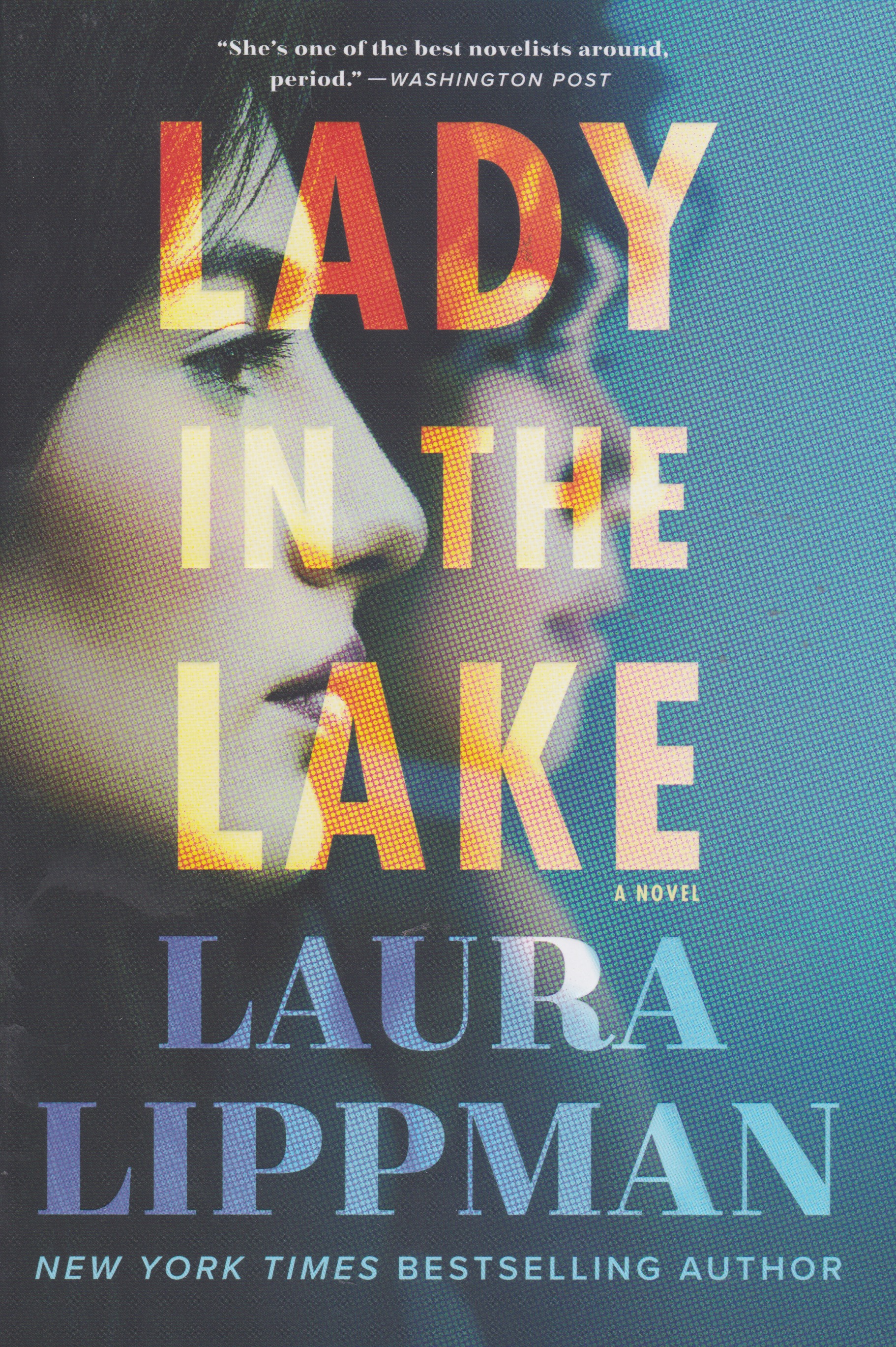
lady in the lake

I saw you once. I saw you and you noticed me because you caught me looking at you, seeing you. Back and forth, back and forth. Good-looking women do that. Lock eyes, then look one another up and down. I could tell at a glance you’ve never doubted you were good-looking and you still had the habit of checking a room to  make sure you were the best-looking. You scanned the crowd of people on the sidewalk and your eyes caught mine, if only for a moment, then dropped away. You saw me, you tallied up the points. Who won? My hunch is you gave yourself the crown because you saw a Negro woman, a poor one at that. In the animal kingdom, the male performs for the woman, woos her with his beautiful feathers or flowing mane, is always trying to out-strut the other men. Why do humans do it the other way? It doesn’t make sense. Men need us more than we need them.

You were in the minority that day, you were in our neighborhood and almost everyone there would have picked me. Maybe even your husband, Milton. Part of the reason I first noticed you was because you were next to him. He now looked exactly like his father, a man I remembered with some affection. I can’t say the same about Milton. I guessed, from the way people gathered around him on the temple steps, patted his back, clasped his hands in theirs, that it must have been his father who had died. And I could tell from the way that people waited to comfort him that Milton was a big shot.

Laura Lippman’s latest novel owes the same kind of debt to Wouk’s Marjorie Morningstar as her Wilde Lake did to To Kill a Mockingbird (and Thomas Thompson’s Celebrity); in some ways, her heroine, Maddie Schwartz, has a lot of the same history as Marjorie; the close strictures and mores of the 1950’s for a young Jewish woman in Baltimore molded and shaped her much as they did Marjorie. The book opens with Maddie walking out of her marriage and away from her young son; she just has a general sense of malaise and an unshakable sense there has to, needs to be, more in life for her. Maddie is beautiful and knows she is; she knows how to manipulate men and get them to do what she wants them to do. Needing money, she pretends her engagement and wedding rings were stolen for the insurance; one of the responding cops, a young black man named Ferdie, soon becomes her illicit lover. Maddie’s discovery of a missing young girl’s body is soon parlayed into a job at a Baltimore paper; she becomes interested in another murder–that of Cleo Sherwood, the so-called “lady in the lake”; a young woman of color murdered and dumped in the fountain in a park. Maddie eventually, in her careless way (one of the strongest character traits Maddie has is carelessness; she seems to just blunder her way ahead without giving a thought to the repercussions and fall out her actions might cause) she starts investigating Maddie’s death, using her position as a clerk at the paper to fool people into talking to her. SHe wants to be a reporter, you see, and this Cleo case–no matter how many people try to dissuade her, no matter how many roadblocks get put up in her way–is a way for her to get upgraded to reporter, and she doesn’t care what damage she might leave in her wake as she goes for what she wants.

Lippman has long been one of the leading lights of the crime fiction community; her Tess Monaghan series is one of the best, and her switch to stand-alone crime novels has firmly established her reputation as one of the best writers of our time. One of the great things about Lippman is how she pushes herself into new directions, new perspectives, and new approaches with every novel; each stand-alone is particularly distinct and exceptional in its own way. She explores in her work what it means to be a woman, whether in today’s world or in the recent past, and how societal mores and expectations can stifle a woman’s needs and ambitions. Her characters struggle against those strictures, but at heart her novels are about the complications, complexities, and layers of being a woman in American society. She’s explored love and marriage, the fallout from lust, what it means to be a mother, and above all else, the complicated relationships between women–whether it’s sisters, mother/daughter, or just friends. Maddie doesn’t regret walking out on her marriage for one moment; she doesn’t even seem particularly concerned that her teenaged son wants to stay with his father and her regular dinners with him are uncomfortable. She knows her leaving has damaged her relationship with her son, but she doesn’t really seem to care too much about that. Maddie is sometimes downright unlikable, yet what she wants, her confusion about who she really is and how to go about building the kind of life she thinks she wants make her sometimes unlikable actions and behaviors forgivable in the reader’s eyes; Lippman has constructed her so carefully the reader can’t help but care what happens to her.

Lady in the Lake is also a departure from other Lippman works in that it’s told in a vast array of points of view; when we are seeing things from Maddie’s point of view, it’s a remote third person pov–but everyone else is in a tight, first person present tense point of view. We even hear from the ghost of Cleo Sherwood from time to time. Multiple points of view are a hard row to hoe for even the best writers; Lippman somehow manages to imbue all these minor and supporting characters with unique voices and perspectives that make the reader regret, just a little, that we don’t get more than just a glimpse of these characters. In that respect, Lady in the Lake is a tour-de-force; a masterwork from a great writer at the top of her game. It’s one of the most unusual crime novels I’ve read, and its originality, along with Lippman’s cool expertise at her craft,  will result in it being one of the top books of the year.

It’s already been an exceptional year for readers–I’ve read so many amazing books this year so far, and am looking forward to reading more.