…Ready for It?

Sunday of the holiday weekend and I am feeling pretty good. I am up earlier than I would prefe, but it seems sleeping in later than six is something rare for me now and it’s okay; it gives me more awake time to get things done. I’m getting some reading done every morning when I get up, and yesterday I did do some chores, but tried to mostly relax while processing Victoria’s death. I also read a little bit, and mostly just tried to relax and gather my strength back. I have to run an errand today–a library book is ready for me, and I can swing by Fresh Market on the way home; oh, never mind, the library is closed for the holiday so that will have to wait until Tuesday after work, but I do need to go to Fresh Market anyway, maybe even wash the car while I’m on Louisiana Avenue. But I did get the bathroom and part of the kitchen under control and finished; so the downstairs looks a lot nice than it has since I fell ill, which is a lovely thing. I can finish it today and then work on the living room next, and maybe, just maybe, my house will finally be under control again and presentable and won’t make me groan with despair every time I walk in.

I also watched one of the few Hitchcock films I’ve never seen–mainly because it’s never been available before when I thought about watching: Suspicion, which stars Joan Fontaine (the only performer to win an Oscar for a Hitchcock movie, although she should have won for Rebecca and Anthony Perkins’ failure to be even be nominated for Psycho remains a hate crime) and Cary Grant. It’s based on the Francis Iles novel Before the Fact (of which I have a copy and have been assured it’s better than the film). It did make me think about a theory I have about domestic suspense and Gothics–that they are about women’s fears and therefore women’s noir of a type–and Suspicion is definitely one of those–does her husband–whom she catches in lies all the time and is kind of a bounder–love her or did her marry her for her money? (This is a very common theme in Victoria Holt novels, by the way, which I loved.) Something to write about for another time, methinks. The film itself was okay, and I am now more convinced than ever that Fontaine’s Oscar was a make-up for Rebecca, a far superior film in every way. (It may be time for my annual reread of Rebecca, in fact.)

I also read a bit more into Moonraker, which is fascinating in its casual misogyny, and it’s really hard-boiled attitude; as I said, Fleming’s Bond is so far removed from the Roger Moore/Timothy Dalton/Pierce Brosnan Bond that they may as well be different characters; Connery and Daniel Craig more captured the Fleming feel of the sociopathic killer/spy. The parallels between the villain in the book, Hugo Drax, and Elon Musk are so prescient as to make me wonder whether Fleming could see the future. More on that later, of course.

We finished watching Overcompensating last night, and it’s such a good show. It does an excellent job of depicting how terrifying it is to come out–to anyone and everyone–and how you wind up being a liar for self-preservation; I think all those lies is why I am so triggered by people calling me a liar these days, and I’ve never really seen this depicted in anything queer before–about how you can’t really be a good friend with people you can’t be honest with and have to lie to all the time. It really can’t be explained, but I still have a lot of shame from that time in my life, from when I was overcompensating and making an absolute fool of myself because no one was actually fooled and my true friends were delighted when I came out. The depression and faulty wiring in my brain certainly didn’t help.

And yes, I will always be grateful to those friends who were delighted.

I’m looking forward to relaxing some more today, to be honest. Paul has his trainer this afternoon, and when he gets home I am going to barbecue burgers and cheese dogs. Yes, I know you’re supposed to actually cook out on Memorial Day itself, but I’d rather do it today. I’ve been experiencing hunger a lot more lately than I can recall, and I am snacking on top of it all. I’ve been spending a lot of time looking at Door Dash to have something delivered, and I’ll probably pop that cherry next weekend. I’ve also been missing my mom’s cooking–her chicken and dumplings were sublime, and she made everything from scratch and from memory; her biscuits and gravy were to die for, and somehow she made the best pancakes I’ve ever had anywhere. I am going to make an easy chicken-and-dumplings recipe tomorrow; will definitely report back.

I am getting stronger every day, but I also still tire far too easily and am not even close to being back to 100% yet, which is fine. I just need to be patient–never my strongest suit–and let my body heal itself from the trauma.

And on that note, I am heading into the spice mines. Have a lovely Sunday, Constant Reader, and I may be back later; I hope to get my newsletter done today as well.

Bette Davis in the opening scene of her Oscar nominated performance in The Letter.

One and One Make Five

So, after feeling human again on Friday and posting about it both then and yesterday, what do you think happened? If you guessed “Greg fucking relapsed,” you would be absolutely correct.

And this was the worst I felt since getting sick all over again. Chills and violent uncontrollable trembling? Check. Fever and headache? Check. Complete and total exhaustion? Check. It was horrible, frankly, Constant Reader. I wrapped myself up in blankets and retired to my easy chair, cued up Jonny Quest on HBO MAX, and drifted in and out of sleep for about five hours as I made it through the rest of the first season of the show–and yes, while I really wasn’t paying much attention (drifting in and out of sleep) I did see a lot of problematic stuff; and as the show progressed more, Hadji became more and more difficult to watch without groaning and thinking Dear God what were they thinking?

This morning I woke up still feeling a little dehydrated, but I wasted all of yesterday–I was too exhausted to do anything much more than use the remote, make some soup, and later make something to eat for dinner–and am hoping that I will feel well enough long enough to get some things done. I have to go back to to work in the clinic the next two days, so I really need to be up to speed for sure those two days. When I looked at our schedule it looked really filled up, so I will be seeing people pretty much all day. I also lost a day of writing yesterday, which really is upsetting. I am going to finish posting this, go through my emails, and then I am going to reread the Sherlock story, make some notes, and work on the revision some more.

My kitchen is also a complete and total disaster area, so I am going to have to do something about that as well.

We tried watching another crime show on Acorn last night but we couldn’t really follow it–there are a lot of disparate threads going on that will eventually come together into the main story, I assume, but at this point it’s hard to follow, and so we finally gave up on it and watched North by Northwest. I had never seen it, and maybe it was because I was so wonky and out of it yesterday, but I didn’t think it was that terrific. I did love the set-up; the whole mistaken identity thing and someone’s life gets terribly disrupted by getting accidentally involved in international intrigue, but it worked much better in The Man Who Knew Too Much. There are some great visuals, though–the crop duster chasing Cary Grant, the climactic scene on Mount Rushmore–but I never really bought into Cary Grant and Eva Marie Saint falling in love, which also kind of spoils it. (Paul and I also enjoyed the fact that Cary Grant looked older than the woman playing his mother.)

So, as long as how I feel right now lasts, I’m going to try to get stuff done. I don’t feel nearly as good as I did on Friday–that was the best I’ve felt this year, I think–but at least this morning I am not feeling sick or exhausted, and I am counting that as a win. I need to stop thinking that once I feel better that it’s all over–same issue with that nagging back injury–and keep doing what it was that got my past feeling sick. For example, I am drinking water this morning before I have a cup of coffee, and I may only have the one cup rather than the three or four I usually do. Caffeine dehydrates, and if dehydration is the root cause of all of this, well, I need to cut it back until I am pretty certain the dehydration is no longer an issue, don’t I?

Still learning, after all these years, to deal with my impatience.

And on that note, I really need to get to work on this kitchen’s utter disaster before heading back into the spice mines. Have a lovely day, Constant Reader.

Jeopardy

So, yesterday was my birthday. Fifty-six officially; although I always add a year to my age on New Year’s Day for the sake of simplicity. I had some trouble falling asleep on Saturday night; a combination of restlessness and heartburn. I wound up sleeping in till almost ten; which is late for me but since I didn’t really fall asleep until around three in the morning it wasn’t that much sleep. But I had a lovely day, really. I kind of just laid around and reread In a Lonely Place by Dorothy B. Hughes, rewatched The Philadelphia Story on TCM (Katharine Hepburn and Cary Grant were both robbed of Oscars), then watched The Nineties and The History of Comedy on CNN before finally watching last night’s Game of Thrones.  I also thought about the new Scotty some; I have today off from work as my birthday gift to myself, so I plan on doing some writing, line editing, and revising, and thinking about what I’m going to write next before actually sitting down at the computer is always a wise thing to do (although usually I never had the time to do that, thanks to deadlines). There’s a serious moral dilemma coming for Scotty in this book; one that really has been needing to be dealt with in the series for quite some time, but I’ve dodged it and avoided it; this is the book where I am finally going to have to have him face up to it, the way I am bringing it to the forefront so he can no longer avoid it is, if I do say so myself, rather clever.

Or it’s just going to be a steaming pile of shit. There’s no middle ground, really.

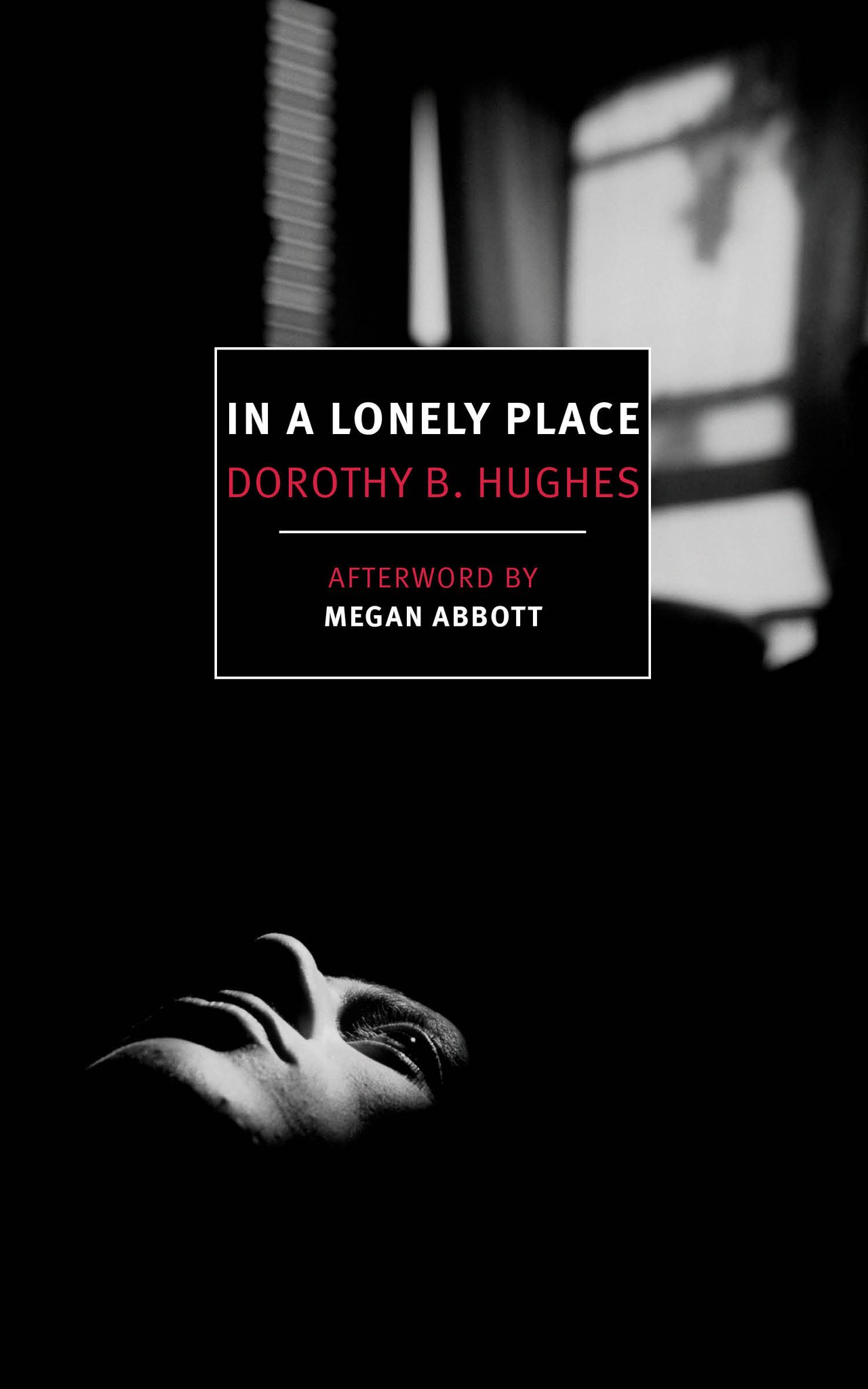
It was kind of fun to reread the Hughes novel; it is a masterpiece of noir that has been sadly overlooked for many years. Hughes was an exceptional writer, and I do admit that opinion is based on my having read only two of her novels, this and The Expendable Man (which, sadly, was her last and published in 1962). It’s not easy to find Hughes’ novels. I do feel safe in calling Hughes one of the best writers of her generation, and certainly one of the best noir writers of all time, based on those two books because they are just that good. I do have a copy of her The Blackbirder, which I want to read before the end of the year. In A Lonely Place was also filmed, directed by Nicholas Ray and starring Humphrey Bogart and Gloria Grahame; the film is significantly different from the novel, but it’s also outstanding. The new edition of the novel, from New York Review Books (who also have republished The Expendable Man and The Blackbirder), includes an afterward by the wonderful Megan Abbott, who is not only one of this generations greatest writers but also one of crime fiction’s most knowledgeable critics; her literary criticism is intelligent, thoughtful, incredibly well-written, and certainly puts me in my place whenever I am lucky enough to read some of it; I would love to read her study of literary and film noir, The Street Was Mine. (Whenever I read her criticism, any thoughts I might have about pursuing academic criticism–gay noir, gay representation in crime fiction, the heyday of romantic suspense from the 1950’s till its unfortunate death in the 1980’s–go out the window.)

Her all-too-short essay in the back of this edition alone makes the cover price worthwhile.

hughes.final_hi-res_2048x2048

It was good standing there on the promontory overlooking the evening sea, the fog lifting itself like gauzy veils to touch his face. There was something in it akin to flying; the sense of being lifted high above crawling earth, of being a part of the wildness of air. Something too of being closed within an unknown and strange world of mist and cloud and wind. He’d liked flying at night; he’d missed it after the war had crashed to a finish and dribbled to an end. It wasn’t the same flying a private little crate. He’d tried it; it was like returning to the stone ax after precision tools. He had found nothing yet to take the place of flying wild.

It wasn’t often he could capture any part of that feeling of power and exhilaration and freedom that came with loneness in the sky. There was a touch of it here, looking down at the ocean rolling endlessly in from the horizon; here  high above the beach road with its crawling traffic, its dotting of lights. The outline of beach houses zigzagged against the sky but did not obscure the pale waste of sand, the dark restless waters beyond.

He didn’t know why he hadn’t come out here before. It wasn’t far. He didn’t even know why he’d come tonight. When he got on the bus, he had no destination. Just the restlessness. And the bus brought him here.

Isn’t that an incredible opening?

Not being an expert in crime fiction–there’s so much of it to read, and there’s more new stuff all the time, so it’s hard to keep up with the new let alone trying to read everything already published–I am unable to place In A Lonely Place into any kind of context as far as the history of crime fiction is concerned, but Abbott does this beautifully in her afterward. But it’s very clear in this opening paragraphs that Hughes is addressing alienation in this book, and toxic masculinity, which may have seen its ultimate pinnacle in the second World War (the alienation of returning veterans, and the difficulty of readjusting from war to peace was also being addressed in films like The Best Years of Our Lives) and by having Dix, her main character, pretend to be writing a novel also took on the glut of post-war war novels that so many returning soldiers were writing; novels that continued to proliferate for several decades beyond the war.

The first time I read the book, having already seen the film, I was more focused on the story itself rather than an examination of how deftly Hughes creates her story, the language and imagery she chooses, and the nuanced way she creates her character. On this read, knowing how it’s going to end, I was able to pay more attention to these things, and was able to marvel at how brilliant the entire package is.

A recurring motif in the novel is fog; Hughes uses the fog as a metaphor for the fog in Dix’s brain; and we are never sure when Dix’s mind changed, making him lethal. He was raised by a puritanical uncle, Fergus, who is currently supporting him while he writes his novel–but there is a limit to the support, and while in our time $250 a month may not seem like much, at the time of the novel it was a fortune, just over $2500 in today’s dollars. Dix’s resentment of the uncle–we never learn what precisely happened to his parents–who is rough on him and has always made him work, even when he was in college at Princeton trying to fit in with the idle rich sons of privilege and then goes into detail how humiliating it all was, doing things for them for ‘tips’ until he could manipulate events to make it look as though he were the wealthy one and the sad unfortunate, unpopular boy he used for money were the dolt. In this way, Hughes also makes a sly commentary about class and privilege (which, in my opinion, she does far better than Fitzgerald did in an entire novel with The Great Gatsby, and she does it only in a few pages). So, there was always some kind of a chip on Dix’s shoulder; the war simply gave him a way to channel that anger and discontent and alienation. Now the way is over, and Dix is having to find a new way to channel those diabolical energies–and he does, in committing murder.

The entire tale is told through Dix’s perspective, which also makes him one of the first unreliable narrators in crime fiction. (It was done before, but never quite so lethally.) So, when we see the other characters–and there are only three: his old war buddy Brub, now a police detective; Brub’s wife Sylvia, whom Dix despises on first sightl and of course, the love interest, Laurel Gray–is she the femme fatale he thinks she is, or is that just a product of his own warped sense of right and wrong? Who is Laurel, of the reddish gold hair and the tempting figure? Is she the hard-as-nails user he thinks she is, or is she an entirely different character altogether?

In  A Lonely Place is a masterpiece of noir, and hopefully, this edition will elevate Hughes to the position both she and the book deserve in the annals of our genre.

And now back to the spice mines.