Kiss

Thursday morning, and the first full day of my mini-stay-cation. Hip hip hurray! Yesterday I got a new journal, which is always a lovely thing; I’d forgotten how much I loved getting new journals once I’d filled the last one. When I started using them again by buying one on New Year’s Eve this year, I was excited to be starting up again with them; I’d forgotten how getting a new one felt–how wonderful and full of possibilities and potential the new journal is; all those blank pages to be filled with thoughts and ideas and titles and characters and sentence fragments and snippets of dialogue. Do I get too excited about the new journals? Maybe; but they also, for my OCD/anal retentive self, symbolize new beginnings as well as completion; even if finishing a journal doesn’t mean completing an actual manuscript or short story, there’s something about filling those pages that is enormously satisfying. When I first started writing when I was in high school, I always wrote on notebook paper long hand; usually in black ink with a fine point (I’ve always been partial to fine point black ink pens; and this new brand I’ve recently discovered, Tul, is amazing. I love these pens), and I think that’s why I get that satisfaction from writing by hand in a journal. Opening a Word document and starting to type isn’t quite the same feeling, and I always have a sense that everything I write that way is somehow incomplete.

I don’t know why that is, but it’s true, and probably is at the root of my deep sense of dissatisfaction with almost everything I write.

Or I’m simply neurotic.

My back is incredibly sore this morning; it was sore yesterday, but the pain is so bad I fear that I am going to be on a heating pad pretty much for the entire day. This is, while enormously disappointing, not the end of the world; I had hoped to be really productive today. I still can be, of course; it simply means not doing what I’d planned to do–which was organize stuff and deal with storage, but that will also include lifting boxes and I am in no place to do that–so maybe today means some light cleaning, writing, and reading. As long as I am productive, that’s all that really matters. And there’s quite a bit of mess that needs tidying up. I am taking the car to the West Bank tomorrow to have the oil changed at the dealership; I am going to treat myself to lunch over there and possibly do a little shopping whilst over there as well. And then I still have the three day weekend, which is lovely, of course.

I’d hoped to go to the gym today, but that’s simply not an option at this point. There’s no way I’m risking weight-bearing exercise with my back like this.

Sigh. I’m turning into that Grumpy Old Man, aren’t I?

I did get some more work done on “Never Kiss a Stranger” yesterday, and I have to say, setting it in the past (1994) was a pretty smart thing for me to do. Thinking about the past, of course, isn’t something I tend to do very often and when I do, it’s rare that I dwell on anything. But trying to remember that time period for a gay man has been kind of interesting; ever since that Twitter kerfuffle about HIV/AIDS the other week and my post the other day about writing about the subject has got me thinking about that time more. Yesterday on Twitter there was a thing–based on I guess something Suze Orman said, about people needing to have twice their salary saved by age thirty-five–and all I could think was how, at age thirty-five, I was just so happy to be still alive that the future wasn’t something I didn’t really think that much about. A few years ago, at work I sat down with a retirement financial planner and as she went over my finances and so forth she very sweetly and gently scolded me for not planning better for my future. Without thinking I replied, I didn’t think I would live this long, to be honest, and watching the implications of what I’d said play on her face and her embarrassment was an interesting experience. She was a younger woman, of course, and as I quickly reassured her that I wasn’t offended by anything she’d said I also marveled that the mentality most of us gay men had back in the early to mid 1990’s is forgotten largely today, not thought about, that fatalistic resignation that infection and death was inevitable.

This heating pad feels fantastic, I must say.

I am also watching The Shannara Chronicles on Netflix, based on the series by Terry Brooks. I read the first, The Sword of Shannara, when I was a teenager and it was new; I never continued with the series despite enjoying that first book. The Shannara Chronicles is/was MTV’s attempt at a Game of Thrones style high-fantasy series. It’s very well done; visually it’s stunning, and apparently the show covers the series beginning with the second book, The Elfstones of Shannara. The primary difference between HBO’s series and MTV’s is that, of course, Game of Thrones is gritty and dark and unafraid to be ugly; the entire cast is an interesting mix from stunningly beautiful young people to older people–an entire range of bodies and faces on the spectrum of looks, just like real life. Shannara is glossy and everyone on the show is quite spectacularly beautiful; and mostly young. I was interested in the show because I remembered the first book fondly and thought I’d give it a chance; it also has Manu Bennett as Allanon the druid, and I’ve been “stanning” (isn’t that what the kids call it?) him since his days on Spartacus: Blood and Sand. 

Austin Butler, who plays lead hero Wil Ohmsford, is quite pretty:

e30a25427e5d658b4e2dd06391312238

As is the primary villain in season 2, Bandon, played by James Trevena.

Shannara08

And who doesn’t enjoy looking at pretty people on their television? One of the things I find interesting is that in Season 1, when Wil was finding himself as a hero he had long hair; which he has cut off in Season 2. Bandon, in season 1, finding himself he had short hair; now in Season 2 as the primary antagonist, he’s grown out his hair.  I’m sure there’s symbolism there; but the longer hair has made the character of Bandon look older and more mature, and likewise, the shorter hair for Wil makes him look more adult.

Strange.

And on that note, I’m heading back into the spice mines. The heat has made me back hurt a lot less, so I am going to take advantage of that until it starts hurting again.

 

Born in the USA

Were I to ever write a memoir, I suppose the easiest thing to do would be divide my life into chapters of every ten years or so; my life has sort of been divided that way, almost corresponding with the calendar decades. I was born in 1961; ten years later one chapter of my life closed and another opened when we moved from the city to the suburbs; ten years later we left Kansas for California; 1991 marked my move to Florida, and 2001 was the return to New Orleans from a year in Washington D.C. (what I often refer to, in my head, as ‘the lost year of misery’). 2011 was the year I turned fifty, the aughts being my first full decade of living in New Orleans. Those chapters could then be divided into smaller brackets; the years in the suburbs, the years in Kansas, the bridging year in Houston, the transitional months in Minneapolis, the pre-published years in New Orleans; the pre-Katrina time as a published author, the post Katrina recovery years; I supposed I could mark 2011 as the beginning of another time, the manic productive years when I wrote so many novels and edited so many anthologies and so many short stories. 2017 was the year I took off, to catch my breath and relax and recharge and recover; it was also the year of paralyzing self-doubt and terror that I was never going to write again. Sometimes I wonder if the manic years were precisely what they were because of that fear: the fear that if I ever stopped I would never start again, that I would never start again.

One would think now, after the prodigious output of the last seventeen years or so, I would never doubt myself anymore, would never fear the fount might run dry; but I am just as worried and nervous and as full of doubts as I was in the years I dreamed of making this my reality and wrote and wrote and wrote. It never gets easier, the doubts and fears never go away. At least not for me; I cannot speak for other writers. But I do define myself as a writer. That has been my identity since I signed that first contract all those years ago; above every other identity I can be labelled, be it male or gay or American or New Orleanian or Southern; above and beyond all else I identify as author. 

In an interview recently about Lindsey Buckingham’s departure from the band and Fleetwood Mac’s decision to continue, and tour, without him, Stevie Nicks said, This is terribly sad for me, but I want to be happy and enjoy the next ten years. That may not be the exact quote, but its very close to what she said, and it hit me right at the core of my being. She–and the others–have always been about writing and creating and performing their music; but now they are getting older and wondering how much more time to do they have to do this thing they love so much? I would imagine Tom Petty’s death weighed pretty heavily on her; they were very close. It also made me feel my own age, and wonder about my own future. How many more years do I have to write the books and stories that I want to? What will I do if the day ever comes when I cannot do this anymore, when people don’t want to read what I’ve written, when no publisher wants to invest in getting my work out to readers?

Heavy thoughts, indeed, my own mortality isn’t something I’ve ever cared enough about to think about. But I would imagine, that no matter what else happens in my life, as long as I can type, as long as I can sit up in my chair and see my computer screen, I will keep writing. This compulsion will probably never go away; I know the stories will most likely never stop coming to my mind. Even when I wasn’t writing last year, the ideas were still coming; characters and stories and plots and those stray thoughts that always begin wouldn’t it be interesting if or I wonder what would make a person do such a thing or I wonder what would happen if…

My conscious decision at the beginning of this year to focus on writing, on rediscovering the joy I once always felt when I was creating, the sense of satisfaction felt upon finishing my work for the day, was perhaps the smartest thing I’ve ever done. I do enjoy doing this, even when it frustrates me, when the words won’t come, when I get behind, when I procrastinate and don’t do it even when I know I must, and that the best way to fight off those horrible self-doubts and fears and insecurities is to just fucking do it.

Nothing else matters, really, when it all comes down to it.

Method of Modern Love

Saturday morning–so lovely to be the weekend! But so many errands to run today, so many chores to do, so much…it’s almost overwhelming. And yet these things need to be done, need to be handled, need to be taken care of; it still doesn’t make doing them any less horrific and horrible, or less time consuming. And really, it’s about the time consumption. There is so much I need to get done, so much I need to do, so much I need I have to get finished and out of the way…that it makes doing the errands seem even less appealing than they usually do.

Sigh.

I just need to get–and stay–motivated.

And isn’t that always the issue?

We started watching a mini-series on Netflix last night, Collateral, starring Carey Mulligan, and it’s quite interesting; every hot button topic you can think of in Britain right now: immigration, crime, drugs, the military and PTSD; it’s quite compelling, and Carey Mulligan is exceptional in it. It all begins with the murder of a pizza delivery boy, and then slowly spreads from there to an enormous conspiracy involving people trafficking and refugees. It’s quite compelling, and all  of the performances are excellent; it’s very similar to Seven Seconds in that the majority of people, no matter what their actions, are understandable through the complexity of their emotional inner lives and who they are…but the underlying villains are quite awful. We watched the first three episodes, and there’s another to watch tonight.

Out of curiosity, we also watched the season finale of The Walking Dead; we didn’t continue watching once the season returned after the winter break because we were, frankly, over it. And while the first part of the show was enormously satisfying, I also understood why there was so much bitter on-line chatter about it afterwards–and I had to agree. I was just glad I hadn’t invested any time on the second half of this season.

I also have some reading to do, and I would like to go to the gym this morning, but I don’t think that’s going to happen, due to that time thing. But perhaps–perhaps--I can get over there after my errands.

We’ll see how it goes.

Meanwhile, for the Short Story Project, I read  “Blood in the Sun” by Justin Scott, from Lawrence Block’s Alive in Shape and Color:

Summer, 1973

New York City

“If you can fly, then this roof is as good as any,” Clyfford Still told Jimmy Camerano.

Jimmy was sitting on the edge of the parapet with one arm hooked around a masonry gargoyle and his legs dangling ninety feet above Tenth Street.

“Zoom from New York. Alight on a calmer island. Paint pictures undisturbed.”

Still was Jimmy’s hero, a unique painter, a founder of abstract expressionism, and a recluse who likened art galleries to brothels, museums to mausoleums, and most of his fellow artists to ambitious backstabbers. Tall, white-haired, and slick in a sharkskin suit, he stood inside the parapet, leaning on his elbows, peering down dubiously at Jimmy’s landing zone.

This is a delightful tale about the world of art in New York City, and how critics apparently wield a lot of power over the work of artists; one of the characters is one of those critics from the New York Times who can either make or break an artist’s career. It’s also a tale of playing a long game for revenge, which seemed a bit much, but only afterwards, when thinking the tale over again–it was enormously satisfying to read but then when you’re finished and remembering you think, well….But the story of an artist on a ledge, ready to commit suicide because a bad review may have destroyed his career, was something a writer (another sort of artist, although I always roll my eyes at writers who call themselves artists and their work art; while i am more than willing to concede that literature is art, styling one’s self an artist always seems pretentious to me) can relate to; although I can honestly admit that while a bad review can make me angry, it never makes me either suicidal or homicidal. But this story was interesting; it held my interest and I was fascinated by the characters and the talk of art, and the twist ending was perfect.

Next up was “Night Windows” by Jonathan Santlofer, from Block’s In Sunlight or in Shadow:

There she is again, pink bra, pink slip, in one window then the next, appearing then disappearing, a picture in a zoetrope, flickering, evanescent, maddening.

Yes, that’s the word. Maddening.

Then he thinks of another: Delicious.

And another: torture.

This story was absolutely chilling, and more than a little disturbing. It’s a stalker story; a man watching a woman from his windows through hers in New York City; watching her undress and move around her apartment in various states of undress, remembering previous victims, thinking about what he’s going to do to her–and the planning stages of how he is going to insinuate himself into her life and destroy her, break her down bit by bit until he has satisfied his disgusting urges. There are surprises here, and twists that tend to catch the reader off-guard; Santlofer delightfully lulls the reader into a sense of security several times about what the story is but actually it isn’t; these twists and turns are wonderful and executed perfectly. I loved Santlofer’s story in the other Block anthology as well; I’m going to have to read more of his work.

And now, best to get those errands and things done.

30624044_10156310060538256_7117381024964967300_n

Misled

Saturday morning, and everything is dripping outside. A thunderstorm woke me up in the middle of the night, but the rain lulled me back to sleep almost immediately. I feel very rested this morning, which is a good thing. Today I am going to write and edit and clean and go to the gym; it’s been a while–I haven’t been to the gym since before the Tennessee Williams Festival, which is not only shocking but scandalous–and I have to make sure this mess of an apartment is under control. I also want to do some reading today; I am rather behind on the Short Story Project, and I really want to finish that Bryan Camp novel. (Preorder it, seriously.)

I reached the halfway point of the Scotty novel yesterday, which was both a relief and a little off-putting. It’s not very good so far, but it’s also a messy first draft; first drafts are supposed to be messy. This weekend i am going to reread it, as well as track the various plots while doing an outline of the first half; this will hopefully help me to catch mistakes and errors, and places where the story may have gotten off track. Sigh. The drudgery that must be done. It’s lovely to not be on a deadline, though, so I don’t that horrible pressure, that sense of time running out. I think that’s all part of the reason I have never felt satisfied with anything I’ve ever published; I always feel like I ran out of time.

So last night I watched the end of Jesus Christ Superstar, and then, bored, scrolled through all of my Apple TV apps until I found Red Dawn–not the remake, but the 1984 original–and thought, Hmmm, I wonder how this holds up, particularly in reading Molly Ringwald’s piece about The Breakfast Club, so I watched that, and have some thoughts. (And yes, I know it was remade recently, and perhaps that might be worth a watch at some point–Chris Hemsworth–but I was more curious to see the 1984 version as a time capsule of its original period).

So, Jesus Christ Superstar. I remember when it originally surfaced in the late 1960’s, a new take on the New Testament and the ubiquitous Christ story. It’s hard for people who weren’t alive during that time to understand how different the world was then than it is now; the changes that the 2016 election was a reaction to were beginning. Christians felt Jesus Christ Superstar was an abomination, a heresy, an attack on their faith; a modern day reinterpretation of the story, an attempt to make all the characters of the New Testament human was seen as an attack on their faith. Telling the story from the viewpoints of Judas and Mary Magdalen was even more offensive; the betrayer and the fallen woman? An attempt to justify and understand Judas, who committed the biggest crime in the history of the Christian faith? And well, the whore?

It was, regardless, incredibly popular; it made Tim Rice and Andrew Lloyd Webber stars (paving the way for everything they’ve done since; so in some ways we can blame Cats on Jesus), and the music was everywhere. “I Don’t Know How To Love Him” and “Superstar” played on Top 40 radio incessantly; even Helen Reddy recorded the former and had a hit with it. Ben Vereen was the original Judas and it made him a star. It was made into a film by Norman Jewison, which sparked more outrage and yet the soundtrack was a huge seller, with Yvonne Elliman playing the Magdalen again, with Carl Anderson as Judas and Ted Neeley as Jesus. I loved the film soundtrack–those vocals by Ted Neeley are intense–and listened to it all the time. I think I know the score by heart; but I also remember being criticized by classmates when I moved to Kansas for loving it so much.

I was rather dreading this live concert staging, to be honest; I like John Legend, but just wasn’t sure he had the vocal power to hit those intense notes. I also liked that they had cast a man of color as Jesus; Judas has always been a role for a man of color, and knowing that Brandon Victor Dixon, who’d played Burr on Broadway in Hamilton and Sara Bareilles was playing the Magdalen was reassuring. I didn’t watch it as it aired; we were watching something else Sunday evening, but I was following the live tweets and Facebooking, and the reviews were definitely mixed. But when I watched it myself, despite my misgivings and how much I associated the roles/vocals as already having been definitely performed, I thought it was very powerful and beautifully done.

Even as a child, certain tenets of Christianity, and the mentalities that went with it, made no logical sense to me (I know, trying to find logic and reason in religion is a fool’s game; which is why it’s called faith). The vilification of Judas, for example, never made sense to me. If Jesus is venerated, not just as the son of God but because his sacrifice made our salvation possible, didn’t it stand to reason that had he not be crucified our salvation through faith and Christ wouldn’t be possible? So, to me, it only made sense that Judas also should be venerated; without his betrayal the rest of it wouldn’t have happened. Likewise, the anti-Semitism reverberating through the century, based in the Jews being Christ-killers; if Christ hadn’t been crucified there would be no Christian faith, and no salvation. 

No one I ever asked these questions of were ever able to give me an answer that made sense to me.

So, my watching Jesus Christ Superstar as an adult who no longer considers himself to be Christian was vastly different from the twelve-year-old who saw the film after church on a Sunday. As I watched this time, I was able to see it from a new perspective, a new appreciation of the story; how would people see something like this happening in their lives, in their reality today? Over the centuries Jesus’ Jewishness has been whitewashed out of him; images of the blond blue-eyed Jesus are everywhere (Ted Neeley in the original film is one of those great examples) and I also realized that all the fiction about the mythology of the Christ (and there are a lot of them, from Ben-Hur to The Robe to Quo Vadis and on and on and on; the enormously successful mid-twentieth century author Taylor Caldwell wrote enormous, bestsellers taken from these stories–Dear and Glorious Physician about Luke, Great Lion of God about Paul of Tarsus, and I, Judas) always played up the supernatural and religious aspects of the story; Jesus Christ Superstar is one of the very few I am aware of that actually tells the story from a human perspective. Who were these human beings, these apostles, who listened to the message of Jesus and saw religion and faith and the world in a new light? Who witnessed the events described in the contradictory gospels of Matthew, Mark, Luke and John?

To me, looking at the story from that perspective–“he’s a man, he’s just a man”–is a lot more interesting, and can provide fresh insight; make it relatable to newer generations. I always thought the resistance of organized Christianity to Jesus Christ Superstar, which made the story more accessible to younger generations, was kind of strange. But times, as I said, have changed. In 1970, the possibility of a live broadcast of Jesus Christ Superstar was unthinkable. And yet here we are today.

Red Dawn, in its 1984 original version, is a whole other ball of wax. And yet, as a historical document, watching it again now was an interesting experience. We forget the paranoia of the Cold War years, and people now in their thirties don’t remember the Cold War, the Soviet Union, the anti-Russia anti-Communist sentiment that was, in truth, the precursor to the prejudices of today. The fall of the Soviet Union and eastern European communism, the fear of world domination by Communism and the end of “Western freedom” as understood by Americans, was a serious thing; and while it heightened after the end of the Second World War, it existed since the Romanovs fell and the old Tsarist Russian empire became the USSR. Cuba was a huge part of that, too, and the anti-Castro hatred; a Soviet outpost just ninety miles from Florida, the fall of Central American countries under the sway of Cuban Communism…the geopolitical world of that time is incredibly hard to imagine today if you didn’t live through it, and even I forget…yet watching Red Dawn brought it all back vividly.

This is not to say it’s a good film, because it’s not. As a film it fails on many levels, not the least of which is acting and the script itself.

At the time of its original release, the movie was a big deal. People my age–early twenties, teenagers–made it into a hit, and also saw themselves as the characters in the movie, which even then I was all, yeah, right. (We always identify with the heroes in movies; we never see ourselves as the quislings.) The movie is about the outbreak of World War III and a Soviet invasion of the United States; it opens with Patrick Swayze dropping off his younger brother (an incredibly young Charlie Sheen) and his best friend (C. Thomas Howell) at the local high school. The score from the last football game is still up on the scoreboard; a loss for the local team, some good natured joshing about how it’s a disgrace and an embarrassment, the usual straight boy ribbing, and then it’s time for school. During History class soldiers start dropping in from the sky; when the African American teacher goes out to see what’s going on, he becomes the first casualty of the invasion (and my first thought was, of course the only black character in the movie is killed in the first five minutes). There is chaos, a group of the boys escape when Swayze comes back for them–why they drive past any number of commandos and soldiers who are killing everyone in sight and blowing shit up and aren’t targeted or killed themselves is move magic) and then rush out to hide out in the nearby mountains and forests, armed and dangerous, with no idea of what’s going on. Eventually two sisters join them–Lea Thompson and Jennifer Grey–and again, there’s really not much development of the characters; ‘something happened’ to the Lea Thompson character which is never discussed, but it’s changed her. Eventually, the kids become the Resistance, calling themselves Wolverines after their high school mascot, fighting back against the invaders.

There’s also a rather telling shot in the opening of the film, where you see the bloodstained back of a pick-up truck, with a close up of the bumper sticker reading You can have my gun when you pry it from my cold dead fingers. The camera then pans down to the dead body holding a gun; a commando reaches down and literally pries the gun from the cold dead fingers.

Eventually, they hook up with an American soldier who teaches them strategy, tactics, and they become an impressive teen fighting unit; he also explains to them how it all happened (paraphrasing): “All our allies in Europe stayed out of it because they’ve forgotten how to fight especially when they’re not the ones being invaded” and “Cubans infiltrated the country, coming in through Mexico pretending to be refugees from Central America or workers, and were able to get into our bases, ready for the signal.”

You can connect all those dots for yourself. All I will say was I sat there, watching and listening to all of this, and was like, really? And they talk about Hollywood’s liberal agenda?

There’s also a scene where the invaders have lined up a bunch of Americans who refuse to be re-educated, to be machine gunned, and they start singing “America the Beautiful” just before the Wolverines take the invaders out.

I also found myself wondering if anyone in 1984 saw this film as problematic, but I also rather doubt it. I know all my friends thought it was amazing, imagined themselves as freedom fighters, etc.

I know I thought about writing a book about an invasion of the United States; a seed of an idea that over the years has encompassed many themes and realities. Rewatching Red Dawn when my imagination had already been triggered by Jesus Christ Superstar  was an interesting experience.

But the most interesting thing was to see how much my own perspectives have changed over the last thirty or so years.

And now, to get some shit done.

IMG_1913

Don’t Lose My Number

Easter! April Fool’s Day!

I ran my errands yesterday and got that over with, did some chores around the house and a little bit of writing–a very little bit, which means I must do a lot today–and then settled in to watch some movies: Office Christmas Party, Atomic Blonde, Five Dances, and Alien: Covenant, which was much better than I’d heard it was, although it didn’t make any sense compared to what I remembered of Prometheus, which it theoretically followed in the series. I also started brainstorming another short story, “Malevolence,” while sitting in my easy chair. I may start writing the story today; or I may not. It’ll depend on how I feel once I get home from the gym this morning, and how much progress I make on the disaster area also known as my kitchen.

I also read more of Jon Ronson’s So You’ve Been Publicly Shamed, which I am really enjoying. I also read some more short stories, but I am also about to start reading Bryan Camp’s debut novel, The City of Lost Fortune, so I can review it around its publication, which is rapidly coming up. I’ve also got ARC’s of Alex Segura’s new novel, and Lori Roy’s. So many riches…and that doesn’t even take into consideration everything else in my TBR pile. Sigh, I am such a lucky bastard.

But…I also need to get some writing done, I need to get some cleaning done, and I need to be productive today. I haven’t been the last two days, despite running errands and doing chores, and so  yes, I really have got to get my act together today. Next week is a normal, five day work-week, and then things will be normal again for a while, until Memorial Day weekend, at least. Heavy heaving sigh.

But as I head back into the spice mines, I am going to share with you the opening of Vieux Carre Voodoo, which was not only the fourth Scotty book, but the comeback Scotty book, after several years away in the wake of Katrina.

vieux carre voodoo 1

One of the rules of walking in the French Quarter when the weather’s warm is always look up when you walk underneath a balcony, or you’ll be sorry.

 You’d think having lived in the Quarter all of my life, looking up would be second nature for me by now. But I was lost in thought as I hurried up Governor Nicholls Street. I was really missing Frank and wishing he were here instead of in Ohio. I was on my way to ride on my parents’ float in the Gay Easter Parade, and it felt really strange to be doing it without Frank. I was debating myself as to whether my relationship had descended into an unhealthy level of co-dependency. I was paying absolutely no attention to my surroundings, other than making sure I wasn’t about to walk into a support post for a balcony. I had just decided here was nothing neurotic in missing your boyfriend, and that I should just relax and enjoy myself. It was a beautiful spring day, after all, and riding in a parade was always fun. I took a deep breath, cleared my head of all negativity, and started walking faster so I wouldn’t be late.

And that was when I was completely drenched by a cascade of cold water from above.

My reaction was reflexive and instinctive. “FUCK!” I screamed at the top of my lungs, which got me a really nasty look from the couple pushing a stroller across the street. I sighed, gave them an apologetic shrug, and their disapproving frowns turned into slight smiles at my expense.

I was soaked. Water was running down my back and chest, dripping out of my hair, and to my horror, I realized the white bikini my mother had so thoughtfully provided for me to wear in the parade apparently became see-through when wet. I immediately dropped my hands to cover my crotch as my eyes darted back and forth, looking for other pedestrians. The couple with the stroller shook their heads, gave each other a look, and started pushing the stroller a lot faster.

Obviously, they were tourists.

I shivered. The cool damp breeze coming from the river was much colder on wet skin. I knew I should’ve worn sweats over the costume.

Scotty? Is that you? Oh, dear, I’m so sorry!” a familiar voice said from above me. There was apologetic concern tempered by a slight bit of amusement in the tone.

I looked up and my initial irritation faded away to embarrassment. “Oh, it’s okay, Doc.” I called up to the bald older man peering down at me through gold-rimmed spectacles. “I wasn’t looking, like an idiot.” I sluiced water off my arms and shook my head from side to side. Droplets of water flew away from my hair.

“Well, come in and let me give you a towel.” He shook his head. “I’ll buzz you in.” His head vanished for a moment before reappearing almost instantly. “And you can explain to me what you’re doing in that ridiculous get-up.”  His face broke into a wide grin, and I couldn’t help but laugh as I dashed over to the metal gate at the side of the building in time to open it when the buzzer sounded.

Dr. Benjamin Garrett was a friend of my parents. He’d taught them both when they’d attended the University of New Orleans. He had been a full professor in both history and political science, and my mother frequently credited him for ‘opening her eyes to all the injustice in the world.’ We all called him Doc—well, when we were young we’d called him “Uncle Doc” until he asked us to drop the ‘uncle’ because he said it made him sound like a relative of the former dictators of Haiti. He loved to debate politics with my parents into the wee hours of the morning over bourbon; his eyes twinkling as he deliberately took an opposing viewpoint to wind my mother up.  I’d always liked Doc. He was fiercely intelligent, a bit of a curmudgeon, and one of the funniest people I knew.

No matter the situation, he always managed to have the absolutely perfect, droll thing to say on his lips. He was the epitome of the old-style Southern gentleman, and he was always dressed stylishly and appropriately. In the summer, he wore seersucker suits, bow ties and Panama hats. After Labor Day he switched to navy blue suits and dark red ties. He liked his bourbon and cigars, and he always seemed to have a mischievous twinkle in his blue eyes. He walked with a cane now that he was older, and had been completely bald for as long as I could remember.

I paused long enough to take a look at myself in the plate glass window of the candle shop on the first floor of Doc’s building. I’d been working hard at the gym since Frank left. Now that I was in my thirties, my body seemed determined to develop love handles. Frank said he didn’t mind them, but I did. My goal was to be as lean as I’d been when we first met by the time he came home and I was making progress. The wet white bikini was unforgiving, but I didn’t see any pesky fat hanging over the sides. I winked at myself and dashed down the dark passageway alongside the building until I reached the back stairs. Another blast of wind brought up goose bumps on my skin as I climbed the stairs.  Doc was standing in the door to his apartment holding a huge fluffy white towel, which he handed to me. One of his gray eyebrows went up as he peered at me over his round gold spectacles.

 “It’s for the Gay Easter parade,” I explained as I toweled my hair and wrapped the towel around my waist. “I’m riding on the Devil’s Weed float.” The Devil’s Weed was the tobacco shop my parents ran on Royal Street.

 “And your mother decided you should dress up as a gay Easter Bunny,” he nodded as he stepped aside to let me in. “And to her, that means a white bikini with a cottontail and rabbit ears.” His eyes twinkled. “Now slip off that bikini—I’ll throw it in my dryer for a few minutes.”

Smooth Operator

April Fool’s Eve!

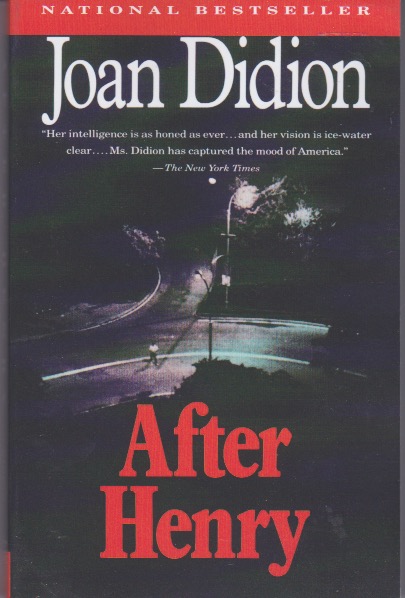
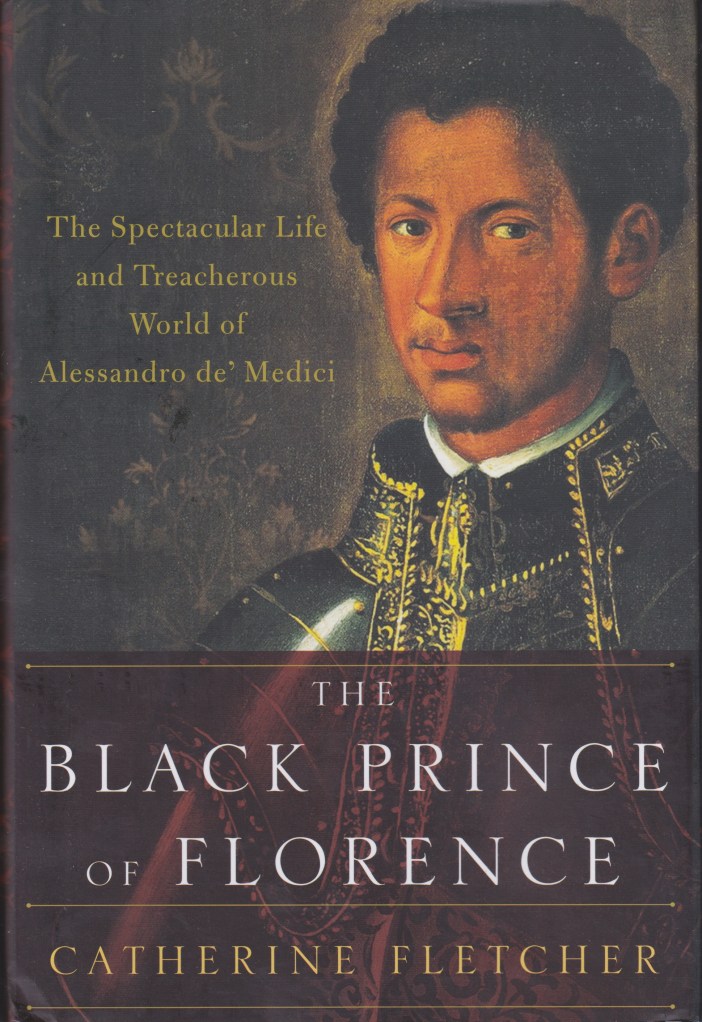
I slept in this morning, after staying up much later than I intended last night. I’d read somewhere that you should stop looking at a screen of any kind–television, computer, phone, iPad–at least half an hour before going to bed to help with sleep, and frankly, I’ll try just about anything that will help in that regard; so I’ve started keeping a non-fiction book on my nightstand, to read for about half an hour every night before attempting sleep. The last two I read were The Black Prince of Florence and Joan Didion’s After Henry; last night I started onJon Ronson’s So You’ve Been Publicly Shamed. I couldn’t stop reading it, of course, and before I knew it, I’d read through the first two people he’d interviewed about their public shamings–Jonah Lehrer and Justine Sacco–and wanted to keep going; but I forced myself to put the book down because it was much later than I wanted to stay up and I was worried about not getting up this morning.

I was right.

It’s kind of interesting to be reading the Ronson book about how public shaming destroyed the lives of two people–one who did something terrible (Lerner) and the other who made a really dumb joke on Twitter that went viral–and Ronson is really a good writer; I actually have some sympathy for the people he is writing about. But this is another, perfect example of why Twitter terrifies and fascinates me at the same time. I can’t imagine how horrible it would be to go viral in such a way on social media, but then again, I try to be very careful with social media. Is that cowardly? Perhaps it is, but i also don’t have time for arguing with people on social media, nor do I have an inclination to do so. I am frequently exposed to different viewpoints on my own social media–but as long as it is couched respectfully and is not in any way nasty or vicious, I like seeing points of view that are different than my own. (Homophobia, misogyny, and racism, however, are always deal-breakers. I never have any sympathy or interest in seeing that point of view.)

As you can tell, I am finding the book to be very interesting.

We also finished watching Season 2 of Santa Clarita Diet, which is hilarious. I highly recommend it. I also got caught up on Krypton and Riverdale yesterday, and did some more writing–not very good writing, mind you; for some reason “Don’t Look Down” is becoming increasingly more and more difficult to write, but I am determined to get that first fucking draft done this weekend. I also want to get some revisions done today. I am going to run some errands and go to the gym in a little bit, and then I am hoping to be able to get home and sit down and just write for the rest of the afternoon, which is going to require me shutting down all social media and closing my web browsers. I think I’ll clean the windows today as well, and maybe do some cleaning…which is the best way to deal with getting stuck on writing.

As I said, I finished reading Joan Didion’s After Henry this week.

after henry

It’s a collections of essays she wrote that were published in various places, and tackle various subjects in that amazing style of writing she had; the way she constructs sentences, and puts words and paragraphs together, is so amazing that it’s hard sometimes to drink in what she is actually saying. These essays, about politics in Los Angeles; natural disasters in southern California; the Central Park jogger case in New York; the political conventions in 1988; the Reagan administration and the face it presented to the world; and several others, are pretty amazing and also serve as a kind of time capsule of recent history. I am really looking forward to reading another non-fiction Didion book, and possibly another of her novels.

I had finished reading The Black Prince of Florence before I took up the Didion.

the black prince of florence.jpeg

As Constant Reader is aware, I am fascinated by the Medici family of Florence, who rose from being merchant class to one of the wealthiest banking families in Europe to popes and queens to royalty in their own right. Alessandro de Medici, the little known subject of this biography, was the first Medici to attain royalty on his own; due to the machinations of his uncle, Pope Clement VII (better known to history as the pope who refused Henry VIII’s request for a divorce from Catherine of Aragon), he became Duke of Florence and the republic came to an end. Alessandro was illegitimate, and there is no proof of whom his mother was; his legitimate sister, Catherine, became queen of France. Fletcher does an excellent job of explaining the tumult of the times; how Italy had been riven by a series of wars between different city-states as well as between France and the Holy Roman Empire, both with extensive claims to various places on the peninsula, along with all the machinations in Rome for the papacy. The question of whether Alessandro’s mother was an African slave, or that was simply a slander to discredit him during his lifetime by his enemies, is one that Fletcher takes up; she also explains the differences between modern day views of race as opposed to those of the sixteenth century. I found the book to be endlessly fascinating, and really helped me get a better grasp of just how the Medici family became royalty. Alessandro’s sister Catherine is probably the most famous (notorious?) member of the family; I have numerous biographies of her on my shelves I look forward to reading.

I’ve also read some more short stories for the Short Story Project. First up is”A Poison That Leaves No Trace” by Sue Grafton, from Kinsey and Me:

The woman was waiting for me outside my office when I arrived that morning. She was short and quite plump, wearing jeans in a size I’ve never seen on the rack. Her blouse was tunic length, ostensibly to disguise her considerable rear end. Someone must have told her never to wear horizontal stripes, so the bold red-and-blue bands ran diagonally across her torso with a dizzying effect. Big red canvas tote, matching canvas wedgies. Her face was round, seamless, and smooth, her hair a uniformly dark shade that suggested a rinse. She might have been any age between forty and sixty. “You’re not Kinsey Millhone,” she said as I approached.

“Actually, I am. Would you like to come in?” I unlocked the door and stepped back so she could pass in front of me. She was giving me the once-over, as if my appearance was as remarkable to her as hers was to me.

This story is kind of clever, with a surprise twist at the end that caught me off guard; a woman hires Kinsey to prove that her niece murdered the woman’s sister for the insurance money. It’s fraud, all right, but not what Kinsey was originally led to believe, and the twists and turns are spooled out very cleverly.

The next up was another Sue Grafton tale from Kinsey and Me, “Full Circle.”

The accident seemed to happen in slow motion–one of those stop-action sequences that seem to go on forever though in tryth no mare than a few seconds have elapsed. It was Friday afternoon, rush hour, Santa Teresa traffic moving at a lively pace, my little VW holding its own despite the fact it’s fifteen years out of date. I was feeling good. I’d just wrapped up a case and I had a check in my handbag for four thousand bucks, not bad considering the fact that I’m a female private eye, self-employed, and subject to the feast-or-famine vagaries of any other freelance work.

I glanced to my left as a young woman, driving a white compact, appeared in my driver’s-side mirror. A bright red Porsche was bearing down on her in the fast lane. I adjust my speed, making room for her, sensing that she meant to cut right in front of me. A navy blue pick-up truck was coming up on my right, each of us jockeying for position as the late afternoon sun washed down out of a cloudless California spring sky. I had glanced in my rearview mirror, checking traffic behind me, when I heard a loud popping noise. I snapped my attention back to the road in front of me. The white compact veered abruptly back into the fast lane, clipped the rear of the red Porsche, then hit the center divider and careened directly into my path. I slammed on my brakes, adrenaline shooting through me as I fought to control the VW’s fishtailing rear end.

This story opens with one of the best descriptions of the slow-motion horror of an accident on the highway; how it happens right before your eyes and how you basically have to rely on instinct and automatic reaction to try to avoid the accident because your brain is so busy processing what it’s seeing. The story is worth reading for that alone, but it turns into a case when the mother of the girl driving the compact, Caroline Spurrier, hires Kinsey because it turns out the accident didn’t kill Caroline; she’d been shot. The man driving the truck also has disappeared. From that point on, it’s a great example of a private eye story.

Sigh. I’m going to miss Sue Grafton.

Axel F

GOOD FRIDAY. I slept in, which was absolutely lovely, and am now enjoying my first cup of coffee this morning. The herd of cats are outside my windows, gathered for their morning feeding, and Scooter is firmly ensconced on my desk–it’s going to be a long day of him needing attention, I suspect–and am looking forward to  my three-day weekend. It looks gorgeous outside, honestly; I think I might clean the windows today, as well as work on cleaning the house. I also need to hit the gym; it’s been well over two weeks at this point, and I’m not going to get leaner sitting on my ass thinking about it, quite frankly.

I am also procrastinating running some errands as well as cleaning. I am also planning on getting some writing done, and some reading. I’ve gotten some fantastic ARC’s this week, and there are a couple of other novels I’ve been meaning to get to  as well; I am hoping to get to one of those this weekend. The primary problem here, of course, is that I can’t decide which to read. I am also almost finished with Joan Didion’s essay collection, After Henry, which, despite its bad name, is quite enjoyable. I am still abstaining from buying new books until I get the TBR more manageable and under control, but am itching to get my hands on another Didion non-fiction.

Yesterday I worked some more on “Don’t Look Down” and another one that’s been languishing, “A Holler Full of Kudzu,” but I also realized yesterday as I looked at the unholy mess that is “Don’t Look Down” that I am going to simply approach these stories as I do a novel; in other words, just write everything as it comes to me, and worry about editing and revising later. That quite often works for me when I am writing a novel, so why not apply it to a short story? I also want to get a final first draft of those stories done this weekend, as well as “Once a Tiger” while also revising and reworking “My Brother’s Keeper”; Sunday is not only Easter but it’s also April 1st, which is when I intended to put all short story work aside and dive back into the novels. (I may use Sunday for the short stories, and move on to Scotty on Monday; I may just use Sunday as a buffer day between them all, who knows? We’ll see, won’t we?)

We are also watching the second season of Santa Clarita Diet, which is just as funny, charming and clever as the first. I have also started watching Krypton, the Superman prequel on Syfy, and I am enjoying it. It’s getting some so-so reviews, but I am enjoying it so far; I’ve always loved the Krypton stories, and John Byrne’s comic book mini-series The World of Krypton from the original DC reboot in the 1980’s is still one of my all-time favorite comics. Some of the elements from that mini-series are showing up in this show–not having followed comics as much over the last twenty years or so has limited my knowledge of things; of what is considered canon now and what is not; but some of the things I am seeing in this show were things I first became aware of in The World of Krypton. I also need to get caught up on Riverdale; at least I have things I can watch while doing cardio at the gym!

I also managed to read some short stories. First up is  “The Downward Path to Wisdom” by Katherine Anne Porter, from The Collected Stories of Katherine Anne Porter.

In the square bedroom with the big window Mama and Papa were lolling back on their pillows handing each other things from the wide black tray on the small table with crossed legs. They were smiling and they smiled even more when the little boy, with the feeling of sleep still in his skin and hair, came in and walked up to the bed. Leaning against it, his bare toes wriggling in the white fur rug, he went on eating peanuts which he took from his pajamas pocket. He was four years old.

“Here’s my baby,” said Mama. “Lift him up, will you?”

This is another one of those Porter stories that just wasn’t for me. I mean, I get what she was doing; the entire story is told from the point of view of a small child, and she manages to really get that way children have no sense of time perfectly. The passage of time either seems incredibly slow and other times is really fast; and the way the child observes the clashes and moodiness and volatility of the adults around him is sort of interesting; but the story itself isn’t interesting at all. Not really for me, I guess; I should just park Ms. Porter’s collection back on the shelf and be done with it, frankly. But I also remember that I had a much greater appreciation of “The Jilting of Granny Weatherall” this time around, and keep thinking, well, maybe I’ll appreciate one of the others in a different way this time.

Yeah, well, it didn’t happen with this story.

Next up was another Sue Grafton story from Kinsey and Me, “Falling off the Roof.”

It was six a.m and I was jogging on the bike path at the beach, trotting three miles in behalf of my sagging rear end. I’m thirty-two years old, weighing in at 118, so you wouldn’t think I’d have to concern myself with such things, but I’m a private eye by trade and I’m single on top of that. Sometimes I end up running for my life, so it will never do to get out of shape.

I had just hit my stride. My breathing was audible but not labored, my shoes chunking rhythmically as the asphalt sped away underneath my feet. What worried me was the sound of someone running behind me, and gaining too. I glanced back casually and felt adrenaline shoot through my heart, jolting it up to jackhammer pace. A man in a black sweat suit was closing ground. I picked up speed, quickly assessing the situation. There wasn’t another soul in sight. No other joggers. None of the usual bums sleeping on the grass.

This story is terrific. Kinsey is hired by a man who thinks his brother brother was murdere; he fell off his roof and the police ruled it an accident. However, he was in a really bad marriage that seemed to suddenly settle down some in the weeks before the death, and the brother suspects the wife had something to do with the death–despite her rigid, airtight alibi. Kinsey starts looking into things, and soon becomes fairly certain that it was a murder; the trick is figuring out how she did it and got away with it…which leads Kinsey to going undercover at a Mystery Book Club. This story is clever, clever, clever, and one of my favorites of the Kinsey short stories.

And on that note, tis back to the spice mines with me.

28947357_10215609280568073_7475821141611561298_o


The Boys of Summer

I finished watching Netflix’ amazing series Seven Seconds last night, and it is some of the best, smartest television I’ve ever seen; it takes on so many issues, and handles them so incredibly brilliantly. The acting and writing is razor sharp; the show is moving and heartbreaking and so incredibly complicated. What is has to say about race and justice and family is just…I will be processing this show for several days. It reminded me very much of American Crime in how it realistically and powerfully presented every side of an issue, and how flawed everyone is, and how it makes you question your own assumptions and thought processes and basically, everything you think and believe. American Crime was an exceptional show; I honestly believe that it was low-rated because it was too complex and real for viewers to handle. Seven Seconds is at that same level of expertise and complexity; it also makes me question what I do within my own work; the layers I don’t peel away, and how my own work might be too simple.

Jean Redmann always says–and I shamelessly steal this at every opportunity–that we become crime writers because we have a desire to find justice in a world where justice isn’t always served, and this, as members of a marginalized community who rarely find justice, makes us want to write stories in which victims find justice–we want to create art in which justice is always served and is an absolute and is available for everyone, accessible, even as we know that it is, in fact, not. I know that I was enormously disappointed by the end of season 2 of American Crime; but it was much more realistic with its ending than it would have been had it been emotionally satisfying. We want to see the bad guys get punished, we want the circle that opened with the commission of the crime to close, be wrapped up and packaged with a neat little bow; we want order to be restored.

But we live in a world, and a society, in which order is an illusion; we pretend, just like we like to pretend we have control over our lives. There’s a wonderful quote which I can’t recall exactly, but it goes something like man  plans and the gods laugh. I know, after the Time of Troubles, I focused on working out and my body; because that was something I had control over. Even now, as I write and plan what I want to do with my career as a writer, I ignore the obvious: I can’t control whether an editor wants to publish my story or whether an agent believes they can sell my manuscript; I can’t control whether someone will buy my books and like them. But thinking about those things is part of what destroyed my will last year; I have to not worry about that, not worry about whether people will get what I am doing or whether I am going to get one-star reviews or whether enough copies of the books will sell so my publisher will continue to invest in my career. I can only do the best that I can and focus on the work itself and push all of that other stuff to the back of my mind. Just like I can’t control whether I am going to be killed in a car accident on the way to the grocery store or any myriad number of other things.

All I can do is make plans and try to control what variables I can. I can drive carefully and pay attention to what I am doing and remain alert to the other drivers and try to anticipate what they are going to do and be prepared for eventualities that I can foresee, while recognizing I cannot foresee everything.

As you can tell, Seven Seconds is a powerful viewing experience.

And Regina King is a goddess.

I think the reason the two stories I am currently failing at telling–“Once a Tiger” and “Don’t Look Down”–are failing because I don’t know the story I am trying to tell nor the characters I am writing about. In both cases, I worry that there’s no market for them; why write them if they have no future? But that’s again out of my control; that’s the kind of second-guessing that is fatal for an author. There are things that are within my control, after all, and my entire career has been guided by choices that I’ve made; I chose to write about gay characters, knowing that made break-out success next to impossible. I don’t regret those choices in any way; there’s no guarantee that writing something more mainstream would have brought greater success. And despite my tendency to overthink and self-deprecate, I am proud of all of my books. Every. Single. One. Of. Them. Some are better than others; some have flaws that I wish I hadn’t missed in the process of writing them. It’s difficult to evaluate one’s own work, no matter how clear-eyed one can be; I tend to always be my own worst critic. And as I get older and my memory begins to fail me more, I don’t remember what I meant to do, what was my goal when I was writing some books–hell, many of them. It never occurred to me, as I was writing the Scotty books, that I was writing a series with what is now called a throuple at the heart of it; that Scotty’s personal story was how a non-monogamous, promiscuous gay man came to be in  a relationship with two men, and how that has changed his life. Now, as I write the eighth in the series, they have gotten older and wiser and even have a young “son”–and not in the sexual way; they all look on Taylor, Frank’s nephew, as their child; kind of like My Three Dads–and I don’t even think about how unusual that is to write about. The series has become about aging as a gay man; moving from being that hot guy everyone wants to have sex with to an older guy not quite as motivated to slut around anymore but to help and mentor a younger gay guy, to make his life and his journey easier. I have to push my worries about these changes in Scotty aside and remember it is the character that people relate to, not him being young and hot and beautiful and going out dancing or doing drugs or picking up strangers; but the fact that he is so unapologetically himself.

And that’s what I’ve forgotten over the last few Scotty books; maybe it’s there, but that sense of who Scotty is as a person is something I feel like I’ve forgotten over time; maybe it’s in my subconscious, but I have to remember that: I need to remember the core of who Scotty is.

Anyway, I should probably get back to the spice mines. I am thinking a lot today, obviously.

IMG_1242

Missing You

Sunday morning, and after a glorious night’s sleep I am wide awake this morning and pretty ready to give the day my best shot. The Lost Apartment needs to be cleaned, as always, and I am wanting to do some writing/editing today as well. I am going to go to the gym later today–it is my experience that going earlier wears me out, despite the endorphin high, with the end result I often don’t get any writing done. I want to work on revising and polishing a story to get it out of my hair–early submission, since the deadline is a long way’s off–and the same with another. I also want to get that Chanse story–the first one–revised and sent off somewhere as well; and in addition to all that revising I want to work on the Italy story.

My work, as it were, is cut out for me today, is it not? I’ll also probably finish watching season 2 of Versailles as well this evening.

Yesterday I got my contacts ordered and did some shopping at Target, which was lovely. I also went car shopping with a friend; he needed a ride and I took him out there. I merely sat there and read short stories from Sue Grafton’s Kinsey and Me; I finished all the Kinsey short stories yesterday, and read some others as well. I was, frankly, worn out by the time I got home but managed to finish the laundry somehow, despite being so tired; I also watched several episodes of Versailles before finally retiring for the evening once the laundry was finished. Paul moves into the hotel this Wednesday; tomorrow morning I am touring the FBI offices in New Orleans with the local Sisters in Crime chapter, and then Tuesday is my usual long day. Then of course the festivals kick into gear, and the rest of the week/weekend is utter and complete madness.

There’s also some filing needing to be done, as always. I’ve also renamed both the Italy story and the Chanse story–the Chanse title, “Glory Days”, only worked if it were his high school reunion, which I dropped from the story–and I think the new title of the Italy story is better.

Here are two of the short stories I read yesterday”

First up is “Trapped! A Mystery in One Act” by Ben H. Winters, from Manhattan Mayhem, edited by Mary Higgins Clark.

Setting

Studio L, an unremarkable rehearsal studio in a warren of unremarkable rehearsal studios, collectively known as the Meyers-Pittman Studio Complex, located on the sixteenth floor of a tall nondescript building in Chelsea, a couple blocks south and one long avenue over from Port Authority. The walls are mirrored; the floor is marked with tape; tables and chairs are clustered to represent the location of furniture on the real set.

Downstage right is a props table, laden with all manner of weaponry. The play in rehearsal is the Broadway thriller “Deathtrap” by Ira Levin, and the table displays the full range of weaponry called for in that show, viz., “a collection of guns, handcuffs, maces, broadswords, and battle-axes.”

This is an incredibly interesting twist on the short story; it’s actually a short story written in play form, and it’s also an homage to the classic thrilled play Deathtrap by Ira Levin. The play was an enormous hit on Broadway, and featured the wonderful Marian Seldes in a supporting role; she set a record for most consecutive performances by one actor in this play. Ira Levin is also one of my favorite writers. Deathtrap was made into a film; not as successfully as the play, alas; the film starred Michael Caine, a young post-Superman Christopher Reeve, and Dyan Cannon. What makes this story/play so clever is it’s a play on Deathtrap; which is a play about a play which basically tells the same story of the play–and this is a play about a murder during a production of a play about a play; complete with the requisite twists and so forth. Winters is an Edgar-winning author (for The Last Policeman), and one of my favorite novels of the last few years, Underground Airlines. if you’re not familiar with Winters, you should make yourself so. I loved this; clever clever clever.

It also reminded me of a crime short story I wanted to write about the production of a play. *makes note*

Next up is  “Fat” by Raymond Carver, from the collection Will You Please Be Quiet Please?

I am sitting over coffee and cigarets at my friend Rita’s and I am telling her about it.

Here is what I tell her.

It is late of a slow Wednesday when Herb seats the fat man at my station.

This fat man is the fattest person I have ever seen, though he is neat-appearing and well dressed enough. Everything about him is big. But it is the fingers I remember best. When I stop at the table near his to see the old couple, I first notice the fingers. They look three times the size of a normal person’s fingers–long, thick, creamy fingers.

When I talked about Barry Hannah several weeks ago, I mentioned that the other writer my professor in my second attempt at taking Creative Writing wanted us to read, whose glory we should bask in, was Raymond Carver. The only texts for the course were Airships by Barry Hannah and Will You Please Be Quiet Please? by Carver. We read two stories before starting on our short stories; I was unimpressed with both writers. Several years ago I decided to repurchase the collections and try them again (I’ll talk about Hannah another time) thinking that perhaps now, as a more mature adult and reader, I might appreciate them more. It wasn’t the case with Hannah, and it certainly isn’t the case with Carver, either.

I am not sure what the point of this story is; waitress waits on a large gentleman, everyone else on staff is mean and cruel about him whereas she is fascinated in him in some way; it’s rather oblique in its meaning, and in its ending; when she says she feels like her life has changed in some way, why? Why did this man have such an effect on her? It isn’t clear and maybe that’s the intent; is it the recognition of the casual cruelty of her co-workers and her boyfriend? Why is she so fascinated by this customer and how much he eats?

It’s a very small story, and rather intimate; I like the way Carver does his writing and tells his story, yet I fail to see the genius here in the actual story itself. I learn nothing about the waitress, not do we learn anything, really, about her customer other than he is polite, well put together, and enormous. Is it about the waitress seeing, and disliking, the casual cruelty of her co-workers and her lover, seeing them in a different way in their inability to see her customer as anything other than enormously fat, that his size somehow strips him of his humanity? Is that what Carver’s intent is, to be so vague and uninvolved with the story that it’s left to our interpretation? I honestly don’t know, and what’s more, I don’t care. I don’t care about this waitress. I don’t care about her friends. The authorial distance just doesn’t work for me. I’ll keep reading his stories, though–I read “Neighbors” for the class, and I remember it fondly–although it didn’t drive me to read more of Carver’s work.

I suppose this is why I am not a literary writer, and could never be one; my purpose is writing a story is to not only to tell the story but to make the reader understand the characters, get to know them, and hopefully empathize with them; to make, in the case of anything I write, to make the inexplicable explicable. I don’t get that from either Carver or Hannah, to be honest. Ah, well.

And now, back to spice-mining.

IMG_1980


Never Surrender

’tis Wednesday already; the week is already half over. Next week is the combination Tennessee Williams Festival/Saints and Sinners weekend (AIEEEEE!), which is going to be, literally, insane. But I can hang; it’ll be lovely seeing everyone, but I can’t believe it has come up upon us all again so suddenly. It’s like I wasn’t paying any attention and the next thing you know, BOOM, there it is.

As I continue to work on this plethora of short stories (I started ANOTHER fucking one yesterday), I am, however, pleased to announce that one of the ones I’ve done since the beginning of the year will be appearing in the anthology Murder-a-Go-Go’s. The book’s theme is crime stories inspired by songs of the Go-Go’s, and will be edited by the amazing Holly West, and published by the crew at Down and Out Books. My story was inspired by the song “This Town” and is also, coincidentally enough, titled “This Town.”

Our IDs were fake, but no one seemed to care. Even when a burly bouncer asked to see them, bare meaty arms adorned with tattoos, bored eyes flicking over the laminate before waving us inside. Celia was right about that, like she was right about everything. She could always find someone with coke to share or sell, or who was happy to share their blunt with us. She was a golden girl, the kind I used to think only existed in books or movies, the girl that’s too perfect to exist, the one every other girl wants to be friends with, wants to be. The one all the guys notice first, their eyes wide open and their jaws gone slack.

 She always had the trendiest new make-up, the first to try out a daring new look we were too cowardly to try but quick to copy, always the first, the one everyone else imitated. She seemed to glow from inside, drawing everyone’s eyes to her effortlessly, and she somehow managed to always look perfect, even when she was drunk, even after dancing for hours when our make-up was running down our cheeks and perspiration dampened our armpits. Her skirts were just the tiniest bit shorter than everyone else’s, her tops seemed to fit her in a way they didn’t fit anyone else, her hair thicker and shinier and bouncier. She pulled in guys like night insects to a white light, caught up in her magic, wanting her. They only noticed the rest of us once she’d turned her attention elsewhere. We didn’t mind taking second place to her because it seemed like the natural order of things. She always knew the right thing to say—whether kind or insulting—and we all gravitated to her, wanting to be her friends, to be her. She was our pledge class president, organized, efficient, determined we be the best pledge class our Omega Psi chapter had ever seen. Even the sisters seemed to be a little in awe of her, grateful she’d picked Omega Psi out of all the offers she’d had—every sorority had offered her a bid, I’d overheard one sister telling another at Monday night dinner, her voice awed as she went on to say that had never happened in the history of the Greek system at Tulane.

And she made us all feel special, whispering “Sisters” to us as we hooked our pinkie fingers and whispered the word back to her, committing to a lifelong bond with her.

I am so glad they liked this story, because I loved it. It’s soooo dark. When I was going through Go-Go’s lyrics to choose a song, I was really surprised; I knew all the songs by heart–if I heard one I can sing every word–and danced like crazy to them, always thought they were these upbeat cheerful songs…and then yikes! Reading the lyrics without hearing the music? JFC, are these songs dark. I mean, check out this verse from “This Town”:

Change the lines that were said before 
We’re all dreamers – we’re all whores 
Discarded stars 
Like worn out cars 
Litter the streets of this town 
Litter the streets of this town

I mean, we’re all dreamers – we’re all whores? As soon as I read that line, the story just jumped into my head; a group of girlfriends, on Fat Tuesday,  wandering around in the Quarter getting wasted…and then the first line of the story popped into my head: Our ID’s were fake but no one seemed to care. That was how it started, and the next thing I knew I had over four thousand words and a very rough first draft.

I love when that happens. And the editor liked it! YAY! Huzzah for good news! It gives me hope for these other short stories I’m writing.

And I also have read some more stories for the Short Story Project. First up is “Damage Control” by Thomas H. Cook, from the MWA anthology Manhattan Mayhem.

She’d been found in the dilapidated Bronx apartment where she’d lived for the past seventeen months. It was a basement apartment and had only a couple small windows, but she’d make it darker still by drawing the curtains. It was so dim inside that the first cop to arrive had stumbled about, looking for a light switch. He’d finally found one only to discover that she’d unscrewed all the light bulbs, even the ones in the ceiling and the fluorescent ones on either side of the bathroom mirror. Neighbors later told police that they hadn’t seen a single sliver of light coming from her apartment for well over a month. It was as if the terrible capacity for destruction that I’d glimpsed in her so many years before had at last grown strong enough to consume her entirely.

This is a truly sad story; in which a man is forced to look back on a painful decision made years earlier, when his family took in a foster child to give their only child a sister. The two girls got along well at first, but the foster child became a problem child, possibly even dangerous, and for the sake of their blood daughter they gave the foster child back to the system. Now an adult, she has died, and he is having to reflect, remember, what happened all those years ago, wonder if things could have been different, if maybe he had tried a little harder maybe things wouldn’t have ended so badly for her. There’s a horrible twist at the end as well, which makes the story all the more poignant and sad; about how a life can be so easily wasted and thrown away, based on a perception that ma or may not be correct.

I then moved on to a Shirley Jackson story, from the recent collection Let Me Tell You. The story is titled “Paranoia.”

Mr. Halloran Beresford, pleasantly tired after a good day in the office, still almost clean-shaven after eight hours, his pants still neatly pressed, pleased with himself particularly for remembering, stepped out of the candy shop with a great box under his arm and started briskly for the corner. There were twenty small-size gray suits like Mr. Beresford’s on every New York block, fifty men still clean-shaven and pressed after a day in an air-cooled office, a hundred small men, perhaps, pleased with themselves for remembering their wives’ birthdays. Mr. Beresford was going to take his wife out to dinner, he decided, going to see if he could get last-minute tickets to a show, taking his wife candy. It had been an exceptionally good day, altogether, and Mr. Beresford walked along swiftly, humming musically to himself.

I absolutely, positively love love LOVE Shirley Jackson. The other night, as I was trying to decide which story to read next, I suddenly realized that I have three short story collections by one of my favorite authors and haven’t read any of them. I immediately grabbed Let Me Tell You and sat down with it. “Paranoia” is brilliant, positively brilliant; to tell you why would spoil it, and if its spoiled the effect is ruined, but it is, with every word and sentence, the perfect fictional story representation of defining the word paranoia. It reminded me, as I kept reading, of precisely why I love Jackson so much. God, what a great story!

And now, tis back to the spice mines with me.

IMG_1984